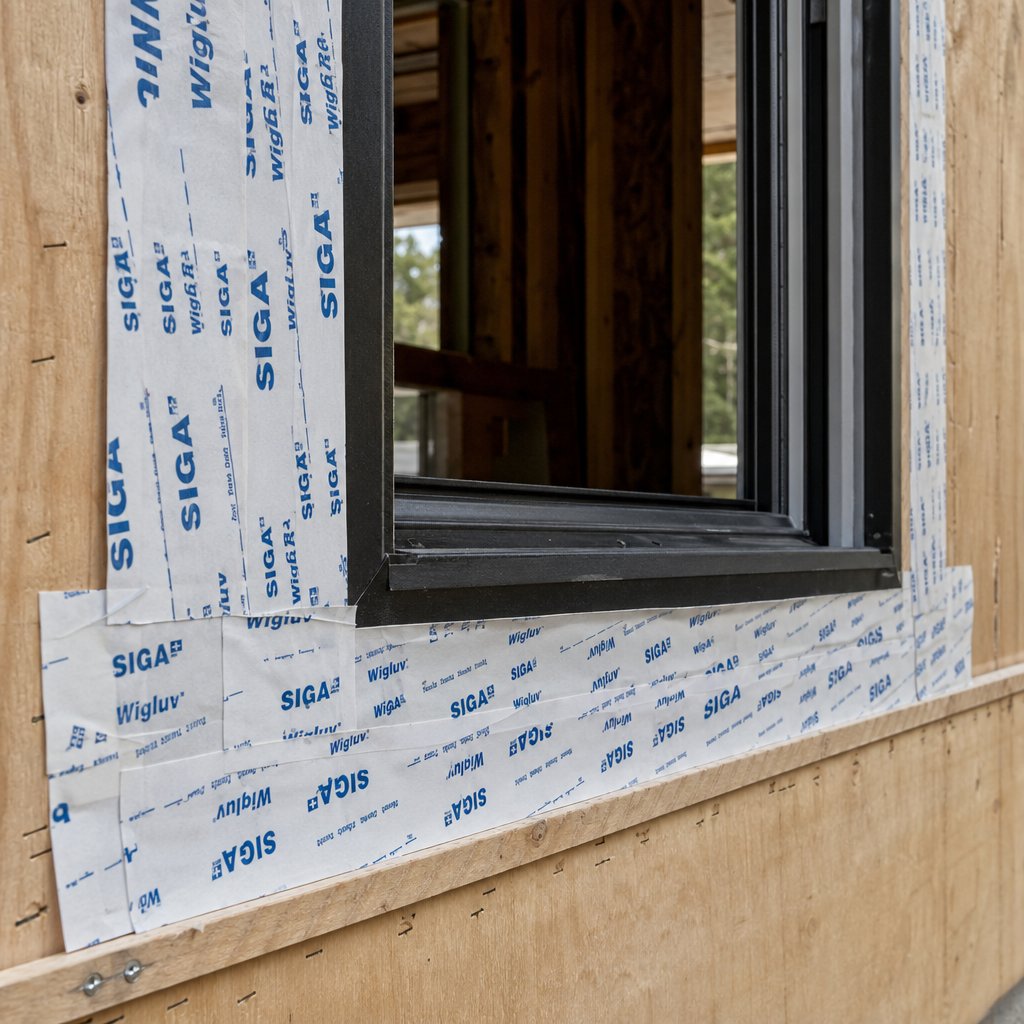
What Aluminium Window Accessories Are and Why They Matter
Your aluminium frame could be the finest extrusion on the market, thermally broken and powder-coated to perfection. But the moment you reach for the handle, everything hinges — literally — on the smaller components bolted to that frame. The handles, locks, stays, seals, tracks, restrictors, and trim pieces that make your window actually work are collectively known as aluminium window accessories, and they deserve far more attention than most homeowners give them.
Defining Aluminium Window Accessories
Aluminium window accessories are the collective term for handles, hinges, locks, friction stays, weather seals, tracks, restrictors, and trim components attached to an aluminium window frame. These parts enable the window to open, close, lock securely, and seal against weather — distinct from the structural frame itself.
That distinction matters more than it sounds. The aluminium profile is the structural shell. The window accessories are the working parts that let you interact with it daily. As Installux Aluminium illustrates in their component breakdown, every element from the locking cremone to the glazing bead and hinges serves a precise functional or technical role within the overall assembly. Strip them away and you have a beautifully extruded rectangle that does nothing.
In practical sourcing terms, these aluminium window components fall into a few core categories: operating hardware (handles, operators, friction stays), security hardware (locks, keepers, restrictors), sealing components (EPDM gaskets, brush seals, compression strips), movement hardware (rollers, tracks, hinges), and finishing elements (trim caps, cover plates, drainage fittings). Each category serves a different job, but they all share one trait — they wear faster than the frame and need periodic attention or replacement.
Why Accessories Deserve as Much Attention as the Frame
A premium aluminium frame paired with low-grade components is a recipe for callbacks and frustration. Poor seals let draughts whistle through on a cold Melbourne night. Cheap zinc-alloy locks corrode within a few seasons on a coastal Queensland build. Incorrect hardware wears unevenly, causing sashes to sag or bind long before the frame shows any sign of age.
Industry voices reinforce this point. Hardware is described as the “glue” that holds windows and doors together, with components needing to meet or even increase a window’s efficiency, reliability, and sustainability according to insights shared in Window and Door Magazine. Security, convenience, weather resistance, and energy performance all trace back to these aluminium window parts — not to the frame alone.
Thermal performance offers a clear example. A window can have the best double-glazed unit and a fully thermally broken profile, yet still leak conditioned air if the multi-point lock fails to compress the sash firmly against its seals. That gap between “looks good” and “performs well” lives entirely in the accessory set.
Who Benefits From Understanding Window Accessories
This guide speaks to three audiences. DIY homeowners replacing a stiff handle or worn roller on a twenty-year-old sliding window will find practical identification and compatibility advice. Builders specifying hardware for new residential or commercial installs can use the material and climate guidance to avoid premature failures. Architects selecting finishes for project consistency across casement, awning, and sliding types will find the taxonomy sections especially relevant for coordinating colour-matched handles, trim, and locking hardware across an entire facade.
Regardless of your role, the principle stays the same: the right accessories matched to the right frame, environment, and window type are what separate a window that lasts decades from one that starts failing within years.
The logical starting point is identifying which accessories your specific window type actually requires — because a sliding window and a casement share almost nothing beyond the aluminium frame surrounding them.
Accessories Matched to Every Window Type
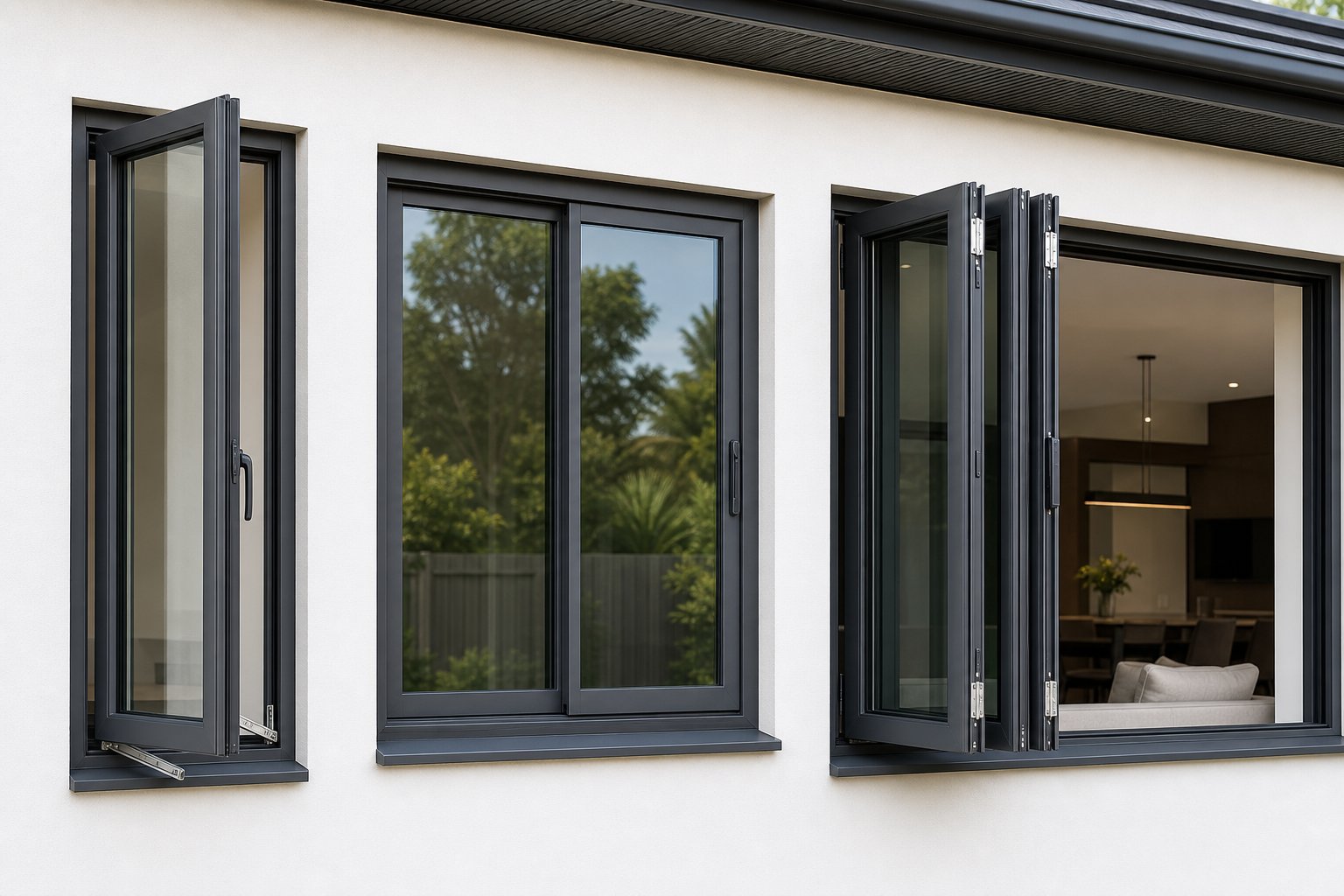
A casement window and a sliding window might sit side by side on the same facade, yet the hardware holding each one together could not be more different. Friction stays, espagnolette locks, track rollers, corner drives — each window style demands a distinct kit of components engineered for its specific opening action and load profile. Getting the wrong hardware fitted is one of the fastest paths to premature failure, so it pays to know exactly what your window type needs.
Casement and Awning Window Accessories
Casement and awning windows hinge outward (or inward, depending on the design) and rely on a shared family of accessories. The core operating component is the friction stay — a telescoping arm that holds the sash open at any angle while resisting wind loads. Stays are sized by sash weight and width, typically ranging from 200 mm for small bathroom windows up to 600 mm or more for large openings.
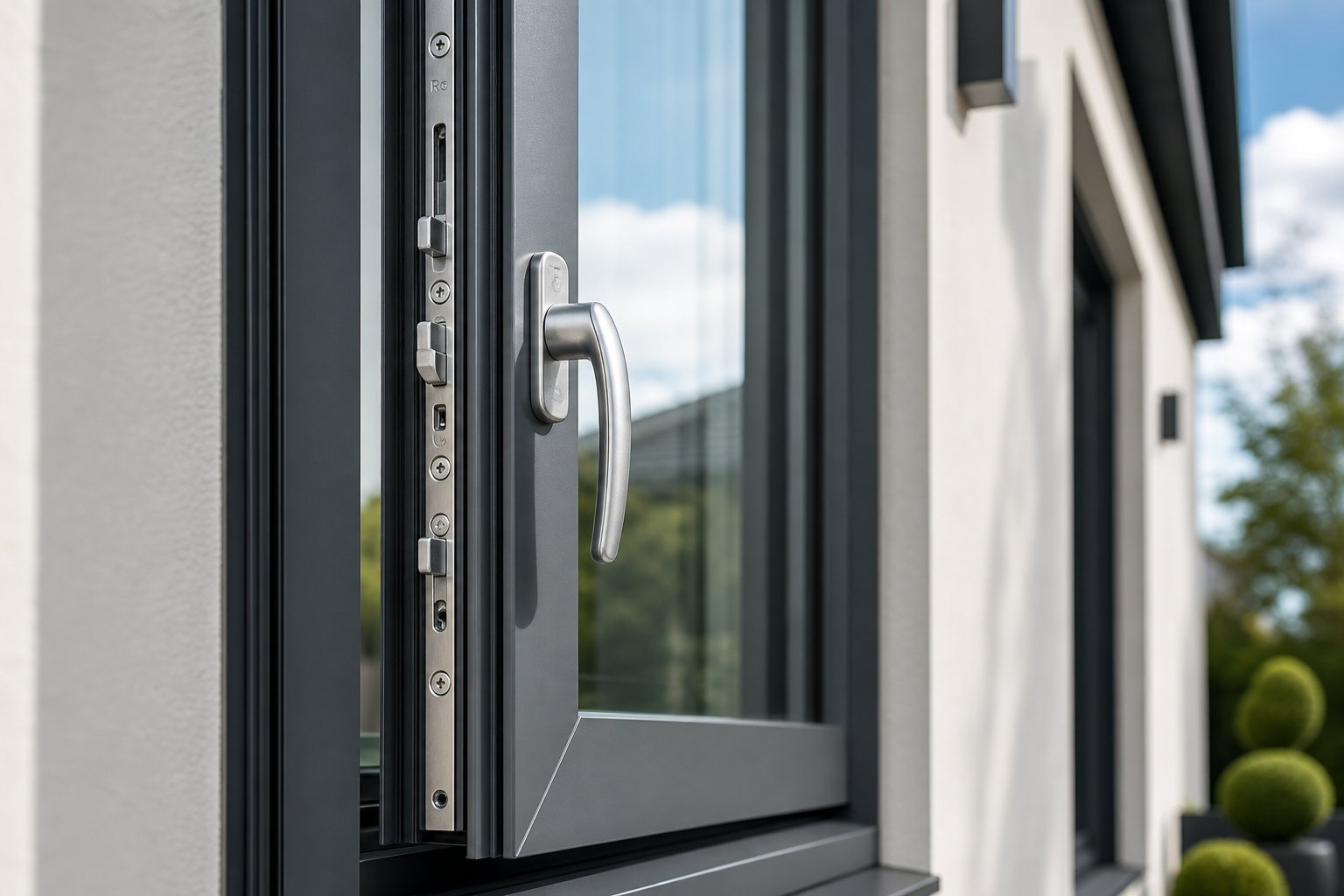
The handle of choice for modern casement windows is the espagnolette, a lever handle connected to an internal spindle that drives a multi-point locking system around the frame perimeter. As Origin Global notes, espagnolette handles engage locking points at multiple positions rather than relying on a single catch, delivering both a tighter weather seal and stronger security than older cockspur-style handles.
Restrictors limit how far the sash can open — critical for upper-storey child safety and for preventing wind damage. Variable restrictor hooks typically cap the opening at around 70 mm and can be fitted on both sides of the frame for added security. Weather seals in EPDM or silicone compression profiles sit in continuous channels around the sash rebate, and their compression under the multi-point lock is what keeps water and draughts out.
For architects seeking cleaner sightlines, a window cassette system conceals the hardware within the frame cavity. The stays, locks, and restrictors still function identically, but none of the mechanical components are visible from the interior — a popular specification on contemporary residential projects where minimal aesthetics matter.
Sliding Window Accessories
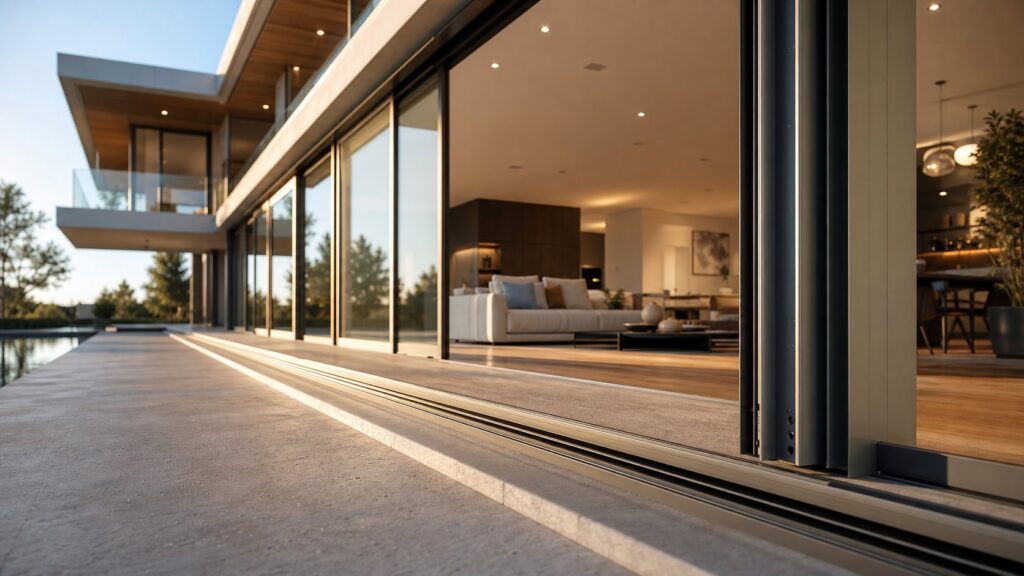
Sliding windows operate on an entirely different principle: horizontal translation rather than rotation. The primary hardware here is the track-and-roller assembly. Aluminium window tracks are typically extruded into the head and sill of the frame, and precision nylon or stainless steel rollers carry the sash along these channels. Smooth operation depends on roller quality and correct adjustment — worn or misaligned rollers make sashes heavy and difficult to move.
Security on sliding windows comes from interlocking stiles (the vertical edges of adjacent sashes that hook together when closed) and flush-mounted sash locks. Flush pulls sit recessed into the aluminium window sash so nothing protrudes into the track path. The sash itself includes components such as pile weatherstripping, drainage slots, and anti-lift blocks that prevent the panel from being forced upward and removed from the outside.
Larger multi-panel sliders may also incorporate intermediate stacking guides, bump stops, and soft-close dampers to protect the frame from impact when heavy sashes reach the end of their travel.
Tilt-and-Turn and Bi-Fold Accessories
These are the most mechanically complex window types, and their hardware reflects that complexity. Tilt-and-turn windows use a gear-driven espagnolette system where the handle position determines whether the sash tilts inward from the top or swings fully open on side hinges. Corner drives transfer the locking rod’s movement around each corner of the sash, while scissor stays support the top rail during tilt mode. As Windoorfull explains, quality tilt-and-turn hardware can support sash weights exceeding 150 kg and window heights approaching 3,000 mm — well beyond what standard casement stays handle.
Bi-fold windows add another layer: shoot bolts that lock intermediate panels to the head and sill when closed, and specialised mullion connectors that join adjacent panels at their meeting points. Snap-in custom window mullions allow modular configurations where panels can be added or removed without re-engineering the entire frame set, making aluminium window mullions a flexible solution for wide openings that need to adapt to different room layouts or staged construction.
Manufacturers that pre-engineer accessory compatibility across their window type lineup simplify the specification process considerably. MEICHEN’s aluminium window range, for example, covers casement, sliding, and awning types with matched hardware systems designed for Australian residential and commercial builds — worth exploring if you want type-specific options without the guesswork of mixing components from different suppliers.
| Window Type | Primary Hardware | Secondary Hardware | Seal Type |
|---|---|---|---|
| Casement / Awning | Friction stays, espagnolette handles, multi-point locks | Restrictors, window cassette systems | EPDM or silicone compression seals |
| Sliding | Track rollers, interlocking stiles, flush pulls | Anti-lift blocks, bump stops, soft-close dampers | Pile weatherstrip and compression fin seals |
| Tilt-and-Turn | Gear-driven espagnolette, corner drives, scissor stays | Mishandling devices, night-vent restrictors | Double-rebate compression seals |
| Bi-Fold | Shoot bolts, bi-fold hinges, top/bottom pivots | Snap-in mullion connectors, stacking guides | Brush seals and compression gaskets |
Each row in that table represents a fundamentally different mechanical system. Mixing accessories between types — say, using a casement restrictor on a tilt-and-turn frame — risks both malfunction and voided warranties. The safest approach is always to match hardware to the specific window system it was designed for.
Material choice is the next critical variable. Two identically specified friction stays — one in stainless steel, one in zinc alloy — will behave very differently over ten years, especially if salt air or extreme UV is part of the equation.
Material Options That Determine Longevity and Performance
That ten-year gap between identical components made from different materials is not hypothetical — it plays out on buildings across Australia every day. A zinc-alloy hinge on a Sunshine Coast home might start showing white oxidation within three years, while a stainless steel equivalent on the same building barely changes. Material selection is where accessory longevity is won or lost, and the decision comes down to balancing corrosion resistance, mechanical strength, cost, and aesthetic match with the frame.
Stainless Steel and Zinc Alloy Hardware
These two metals dominate the market for handles, hinges, and locking mechanisms, but they serve different price points and environments.
Stainless steel is an alloy of iron, carbon, and a minimum of 10.5% chromium — that chromium content is what gives it exceptional corrosion resistance. For window hardware, two grades matter most. Grade 304 suits general residential and commercial use inland, offering strong corrosion resistance at a moderate premium. Grade 316 adds molybdenum to the mix, delivering superior resistance to chloride attack — the non-negotiable choice for coastal architecture, marine environments, and any building within a few kilometres of salt water.
Zinc alloy (often branded under ZAMAK formulations combining zinc, aluminium, magnesium, and copper) offers a more economical alternative. It provides decent corrosion resistance through a natural zinc carbonate layer that forms when exposed to air, and its lower casting temperature makes it cost-effective for high-volume production of handles and lock bodies. The trade-off is lower overall strength and reduced longevity in aggressive environments. Zinc alloy hardware is a solid choice for sheltered, inland applications where budget matters more than extreme durability.
The practical summary: stainless steel costs more upfront but rarely needs replacing within the frame’s lifetime. Zinc alloy saves money initially but may require earlier replacement in exposed locations — especially anywhere salt, humidity, or industrial pollutants are present.
Aluminium Trim and Capping Components
Beyond the operating hardware, aluminium itself plays a major role as an accessory material in the form of aluminium window trim, capping, and cover profiles. These finishing elements wrap exposed frame joints, protect raw cut ends, and create clean transitions between the window and the surrounding wall substrate.
Aluminium capping for windows is especially common in renovation work, where new aluminium profiles are fitted over existing timber frames. The capping provides weather protection while allowing colour coordination with the main window frame. Aluminium trim for windows serves a similar aesthetic and protective function on new builds — covering fixing points, concealing drainage channels, and delivering a sharp finished edge where the frame meets render, brick, or cladding.
The finish applied to these trim components determines their visual lifespan. Two main options exist: powder coating and anodising. Powder coating bonds a pigmented resin layer onto the aluminium surface, offering virtually unlimited colour choice and strong UV resistance when high-quality polyester or PVDF resins are used. It performs well in most Australian climates and allows precise colour matching to any RAL or custom specification.
Anodising takes a different approach — it electrochemically converts the aluminium surface into a hard oxide layer that becomes part of the metal itself. As SAF’s finishing guide notes, anodised coatings cannot peel or flake because the protective layer is integral to the base metal, and the finish can be renewed through cleaning even after decades of service. Anodising excels in high-traffic and high-abrasion situations, though its colour range is more limited than powder coating — primarily metallic silvers, bronzes, and blacks.
For exterior aluminium trim windows exposed to harsh Australian sun and weather, the choice between these finishes depends on project priorities: powder coating for colour flexibility, anodising for raw durability and low long-term maintenance.
Polymer and Composite Accessories
Not every accessory needs to be metal. Engineered polymers and composites handle critical roles where thermal isolation, low friction, or chemical resistance matters more than raw mechanical strength.
Thermal break strips — typically PA66 reinforced with 25% glass fibre — sit within the aluminium profile itself, separating the internal and external faces to reduce heat transfer. Nylon rollers carry sliding sashes along their tracks with minimal friction and no metal-on-metal wear. Composite spacing components maintain precise glass-to-frame distances without creating thermal bridges.
EPDM (Ethylene Propylene Diene Monomer) gaskets form the primary dynamic seals in most aluminium window systems. According to Euplai’s sealing guide, EPDM must stay elastic across temperature swings, UV exposure, and repeated compression cycles — when gaskets harden or shrink, sealing force drops and leakage risk increases. Silicone seals offer an alternative where extreme UV or temperature resistance is required, though at higher cost. Both materials significantly outlast older PVC-based seals that tend to become brittle within a decade under Australian conditions.
Brass deserves a brief mention as a niche material for heritage and traditional applications. It delivers an antimicrobial surface and a warm aesthetic that suits period restorations, though its cost and maintenance requirements (it tarnishes without lacquer protection) limit it to decorative roles rather than high-performance use.
| Material | Corrosion Resistance | Cost Range (AUD) | Best Application | Expected Lifespan |
|---|---|---|---|---|
| Stainless Steel (316) | High | $$$ — Premium | Coastal and marine environments | 25+ years |
| Stainless Steel (304) | High | $$ — Moderate-High | General residential and commercial (inland) | 20–25 years |
| Zinc Alloy (ZAMAK) | Medium | $ — Economical | Budget builds, sheltered locations | 10–15 years |
| Aluminium (powder-coated) | Medium-High | $$ — Moderate | Trim, capping, colour-matched components | 20+ years (finish-dependent) |
| EPDM / Silicone | High (chemical) | $ — Low | Weather seals, gaskets, compression strips | 10–20 years (climate-dependent) |
| Nylon / PA66 Composite | High | $ — Low | Thermal breaks, rollers, spacing components | 15–20 years |
| Brass | Medium | $$$ — Premium | Heritage and decorative hardware | 15+ years (with maintenance) |
The table above gives a starting framework, but real-world performance depends heavily on environment. A zinc-alloy handle rated for 15 years in suburban Adelaide might manage only five in Port Douglas. That relationship between material choice and geographic exposure is where specification gets genuinely interesting — and where the wrong call gets expensive fast.
Security Standards and Ratings Decoded for Homeowners
Material durability keeps your hardware functioning over time — but functioning hardware only matters if it actually stops someone getting in. Security performance is where accessory specification shifts from longevity concerns to active protection, and the standards behind that protection are worth understanding in plain terms before you purchase replacement aluminium window frame parts.
PAS 24 and Secured by Design Explained
PAS 24 is the enhanced security performance standard for doorsets and windows, widely referenced across the UK and increasingly adopted by Australian specifiers as a benchmark for residential security. The standard sets out testing procedures designed to simulate an opportunistic burglar’s attack using tools that are easy to conceal — think pry bars, screwdrivers, and pliers rather than power tools. Products tested under PAS 24 must resist these mechanical attacks for a defined duration without allowing entry.
Secured by Design sits a level above as a police-backed accreditation scheme. It requires products to meet PAS 24 (or equivalent standards like STS 204) as a baseline, then layers additional requirements around complete window assemblies — frame, hardware, and glazing working together as a tested system. The distinction matters: PAS 24 tests the product; Secured by Design accredits the product within a broader crime prevention framework backed by police research into how burglaries actually occur.
BS EN Standards for Window Hardware
Two European standards form the technical backbone for individual hardware components rather than complete window assemblies. BS EN 13126 covers building hardware specifically for windows and door-height windows — defining performance classes for handles, stays, locking devices, and restrictors based on mechanical strength, durability cycles, and operational force. It ensures that a handle or hinge meets minimum engineering thresholds before it reaches your window.
BS EN 1670 addresses corrosion resistance through a five-grade classification system. Grade 1 covers basic indoor use with just 24 hours of salt spray exposure, while Grade 5 demands survival through 480 hours — representing extreme marine and industrial environments. For Australian coastal homes, Grade 4 (240 hours, rated “very high”) is the practical minimum for external aluminum window frame parts, while Grade 5 suits direct oceanfront locations or heavily polluted industrial zones. These grades give you a concrete way to compare hardware durability beyond vague marketing claims.
How Lock and Handle Choices Affect Home Security
Standards set the floor, but the type of locking system you choose determines how much security you actually get. A single-point lock engages at one location on the frame — economical, functional, but offering only a single point of resistance against forced entry. Multi-point locks drive bolts or cams into the frame at three to five positions simultaneously, distributing force across the entire sash perimeter. The result is dramatically better resistance to prying attacks and a tighter seal compression as a bonus.
Handle type matters too. Key-locking handles require a key to operate the window from inside, preventing an intruder from reaching through broken glass to open the latch. Push-button or lever-only handles offer convenience but sacrifice that layer of protection. On the hinge side, security bolts (also called dog bolts or hinge-side shootbolts) lock the hinge edge of the sash into the frame, meaning even if someone removes or defeats the hinges, the sash cannot be pulled free.
When shopping for replacement aluminium window frame parts, these are the security features worth verifying before you buy:
- Multi-point locking engagement — confirm three or more locking points around the sash perimeter
- Key-locking handle operation rather than push-button only
- Hinge-side security bolts that engage into frame keeps
- Corrosion resistance rated to BS EN 1670 Grade 3 or above for external aluminum parts
- Mushroom-head cam locks that resist being pulled apart under force
- Compliance with PAS 24 or equivalent security testing as a complete assembly
- Cylinder manipulation resistance if the lock includes a keyed cylinder
A window with all seven features ticked sits well above the security threshold most opportunistic break-ins can defeat. One with only a single-point lock and no hinge-side bolts represents a substantially easier target — regardless of how strong the aluminium frame itself might be.
Security ratings confirm what hardware can resist, but they assume correct installation into a compatible profile. That compatibility question — how accessories physically attach to the aluminium extrusion — is where many homeowners hit unexpected obstacles, especially when sourcing parts for older windows.
Profile Compatibility and the Eurogroove System Explained
A friction stay rated to the right load, made from the right material, tested to the right standard — and it still won’t fit your window. This is the frustration homeowners and builders hit when they overlook one critical detail: the channel machined into the aluminium profile that the hardware actually clamps into. Two profiles can look nearly identical from across the room, yet their internal routing determines which accessories they accept and which they reject entirely.
What Is the Eurogroove System
The Eurogroove (also written as Euro Groove or European Groove) is a standardised channel configuration machined into aluminium window sash and frame profiles. It is typically 16 mm wide and between 22 mm and 28 mm deep, creating a precise slot that accepts clamp-on hardware from multiple manufacturers without requiring custom milling.
This standardisation did not always exist. As Tyman International documents, aluminium windows before the 1970s were treated much like timber — each profile required individual milling cuts, double stop gaskets, and simple accessories with no perimetral locking. Between the 1970s and 1980s, the push for better performance and simpler processing led extrusion manufacturers toward a shared standard. The Eurogroove emerged as the natural result of that evolution, and it remains the most popular profile system in the world for clamp-style hardware.
Why does this matter for anyone buying replacement parts? Because a Eurogroove profile accepts accessories from different brands. The connecting rod, locking points, handles, and stays all slot into the same standardised channel regardless of which manufacturer made them. That single feature gives you sourcing flexibility — you are not locked into one hardware supplier for the lifetime of the window. The polyamide connecting rod can be cut to size on site, linking all locking points without bespoke machining or brand-specific kits.
The performance benefits extend beyond convenience. The Eurogroove system enables open-joint gaskets to replace older double-hinged gaskets, delivering better perimetral sealing and improved water, air, and wind tightness. It also allows locking points to be added around the entire sash perimeter, which is exactly what modern multi-point security demands.
Proprietary Channels vs Universal Fit
Not every aluminium profile follows the Eurogroove standard. Some manufacturers — particularly those with vertically integrated product lines — use non-standard routing with different channel widths, depths, or positions. These proprietary systems require brand-matched accessories only. Buy a handle or stay designed for a standard Eurogroove and attempt to fit it into a proprietary channel, and you will find the clamp does not engage, the rod sits too high or too low, or the fixing points simply do not align.
Identifying your profile type comes down to measurement. Remove a section of hardware (or access the groove from a corner or end) and measure three things:
- Channel width — Eurogroove standard is approximately 16 mm
- Channel depth — typically 22 mm to 28 mm on standard systems
- Position of the channel relative to the sash face and the rebate
If your measurements fall within those Eurogroove dimensions, you have broad compatibility with most European and Australian-market hardware brands. If the channel is narrower, wider, shallower, or offset from the expected position, you are likely dealing with a proprietary system. In that case, contact the original profile manufacturer or a specialist fenestration supplier who can cross-reference the channel dimensions against their database of profile systems.
The practical impact is significant. Eurogroove profiles give you access to a competitive market of hardware suppliers and let you upgrade individual components without replacing the entire window. Proprietary channels tie you to a single manufacturer’s product range — which may be perfectly fine if that manufacturer still exists and actively produces replacement parts, but becomes a serious problem if the company has merged, rebranded, or ceased production.
Finding Compatible Parts for Older Aluminium Windows
Legacy aluminium windows from the 1960s through the 1980s predate the widespread adoption of the Eurogroove standard. Many of these early systems used milled channels unique to their era and manufacturer, and the original hardware lines have long been discontinued. Owners of old aluminum window parts face a genuine sourcing challenge — the piece they need may not have a direct modern equivalent sitting on any supplier’s shelf.
This problem is especially acute with 1970s combination aluminum storm window parts, where the secondary glazing unit was engineered as a self-contained assembly with latches, clips, and tracks specific to a single product line. The Craftsman Blog highlights that many of these legacy parts require specialist suppliers because mainstream hardware retailers simply do not stock them. Brands like Strybuc and Blaine Window Hardware in the US have carved out a niche supplying discontinued manufacturer hardware for exactly this reason.
Similarly, searches for alenco window parts typically come from owners trying to solve a very specific fit problem on a discontinued product line. The critical step, as noted in guidance from Shengxin Aluminium, is to treat the brand name as a starting clue rather than proof of interchangeability — matching the stamped markings, dimensions, screw pattern, and operating style matters far more than assuming parts cross over from one legacy system to another.
For Australian homeowners with old aluminum window parts from the 1970s or 1980s, the path forward involves careful documentation before ordering anything. Here are the measurements and details you should record:
- Channel width and depth where hardware sits in the profile (use a digital calliper for accuracy)
- Spindle length and diameter on handles — commonly 7 mm square, but legacy systems may differ
- Centre-to-centre distance between fixing screw holes
- Hinge-hole pattern — number of holes, spacing, and diameter
- Roller housing width and wheel diameter on sliding windows
- Backset measurement from the faceplate edge to the spindle centre on locks
- Any stamped logos, part numbers, or series codes on the existing hardware
- Overall dimensions of the component including any mounting flanges or tabs
- Photographs of the part installed, removed, and compared against a ruler for scale
Armed with that data, a specialist supplier can cross-reference against modern equivalents that share the same critical dimensions — even if the original brand no longer exists. In some cases, a current Eurogroove-compatible part will fit if the older profile happens to share similar channel geometry. In other cases, you may need an adapter plate, a different fixing method, or a custom-machined solution.
The broader lesson applies to any aluminium window system, old or new: compatibility lives in the millimetres. Measure first, match precisely, and treat visual similarity as a starting point rather than confirmation. That discipline matters just as much when you step beyond the hardware itself and consider how geography and climate should shape your entire accessory specification.

Selecting Accessories for Coastal and Extreme Climates
Millimetre-perfect compatibility gets you the right part in the right profile. But even a perfectly matched component can fail prematurely if it was never designed for the conditions your building actually faces. A friction stay rated for suburban Melbourne does not belong on a beachfront home in Byron Bay. Climate — not just profile geometry — should drive every specification decision for aluminium parts exposed to the elements.
Coastal and High-Salinity Environments
Salt-laden air is relentless. Properties within roughly eight kilometres of the coast or tidal estuaries face accelerated corrosion that standard hardware simply cannot resist. As Titon’s coastal hardware guide explains, chloride ions from salt spray drive the breakdown of metals at a molecular level, and window hardware is especially vulnerable because its small, exposed, and constantly moving components sit right at the junction between interior and exterior environments.
Standard zinc-alloy handles and hinges develop white oxidation within a few seasons under these conditions. Micro gaps at mechanical joints trap moisture and salt, triggering galvanic corrosion — particularly where mixed metals like steel screws contact aluminium fittings. Coatings wear away faster on moving parts, and lubricants degrade in salty air, exposing bare metal underneath.
The specification response is straightforward: marine-grade stainless steel (316) for all fasteners, hinges, and locking hardware. Nylon-bushed hinges eliminate metal-on-metal contact at pivot points, reducing both friction and galvanic corrosion risk. EPDM seals rated for UV exposure maintain their elasticity where cheaper compounds would harden and crack under the intense Australian sun. Hardware should be tested to a minimum of BS EN 1670 Grade 4 (240 hours salt spray) for exposed coastal locations, with Grade 5 (480 hours) reserved for direct oceanfront builds.
Aluminium window surrounds and external aluminum window casing components face the same salt assault. Even though aluminium itself resists corrosion better than steel, untreated cut ends and poorly sealed joints create entry points for pitting and surface staining over time. Powder coating with a marine-grade polyester or PVDF resin system rated to a minimum 60-micron thickness provides the protective barrier these external elements need. Anodised finishes offer an alternative with inherent chemical resistance, though colour options remain limited compared to powder coating.
Routine maintenance matters here too. Regular rinsing of hardware and aluminium window surrounds with fresh water removes salt deposits before they concentrate and attack protective layers — a simple step that dramatically extends component life in coastal builds.
High-Wind and Cyclone-Rated Zones
Northern Queensland, the Northern Territory coastline, and parts of Western Australia fall within designated cyclone-rated zones under AS 4055. Wind loads in these regions place extraordinary stress on window hardware — stress that standard residential accessories were never engineered to handle.
Friction stays must be rated for larger sash weights and greater holding force. Where a standard stay might comfortably support a sash up to 20 kg, cyclone-zone windows with thicker glass and reinforced frames can weigh 35 kg or more per sash. Heavy-duty stays with higher Newton-metre ratings and corrosion-resistant coatings become essential rather than optional.
Reinforced locking points — more of them, spaced closer together around the sash perimeter — are equally critical. Under extreme wind pressure, a three-point lock that performs adequately in temperate climates may not maintain sufficient seal compression. Five-point or seven-point locking systems distribute the load more evenly and keep the sash pressed firmly against its weather seals even during severe gusts.
Those seals themselves need to be thicker and more resilient than standard profiles. Compression gaskets rated for high-deflection recovery maintain their sealing force under the repeated flexing that wind-driven pressure cycling causes. Standard seals can take a permanent compression set under sustained load, allowing water ingress at the very moment protection matters most.
Extreme Temperature Ranges
Inland Australia experiences temperature swings that coastal regions rarely see — from near-freezing overnight minimums in winter to searing 45-degree-plus days in summer across parts of NSW, Victoria, South Australia, and Queensland. That range has direct consequences for aluminium frames and the accessories attached to them.
Aluminium expands at a higher rate than steel when temperatures rise. As DC Iron’s fabrication guide notes, this expansion becomes significant in longer sections of metal exposed to direct sunlight — aluminium frames can become noticeably warmer than the surrounding air, driving measurable dimensional change throughout the day. When temperatures drop overnight, the frame contracts again. This daily cycle repeats hundreds of times each year.
Hardware must accommodate that movement without binding or creating gaps. Spring-loaded keeps allow locking points to self-adjust as the frame expands and contracts, maintaining engagement without placing stress on the connecting rod. Flexible EPDM seals with high compression-recovery ratings absorb frame movement without losing contact with the sash. Thermal-break hardware — components incorporating polymer isolation between internal and external faces — prevents the hardware itself from acting as a thermal bridge that conducts heat across the insulated profile.
Slotted fixing holes rather than tight-tolerance round holes allow aluminium parts to slide fractionally as the frame moves, preventing the stress concentrations that lead to cracked profiles or loosened fasteners over time. Fabricators working with long mullion runs or wide bi-fold configurations pay particular attention to these tolerances, because cumulative expansion across a three-metre or four-metre span can reach several millimetres — enough to jam a lock or pop a seal if the system has no room to breathe.
Specify every accessory to withstand the most demanding condition your window will face — not the average. A coastal home also exposed to cyclonic wind needs hardware that satisfies both salt-corrosion and high-load requirements simultaneously. Design for the worst day, and every other day takes care of itself.
Climate-matched specification protects your investment from the outside in. But even the best-specified hardware eventually wears — seals compress, lubricants dry out, and moving parts accumulate thousands of operating cycles. Knowing when routine maintenance resolves the issue versus when full replacement becomes necessary is the difference between a small upkeep task and a costly emergency repair.
Maintenance Schedules and When Replacement Becomes Necessary
Seals degrade. Lubricants dry out. Rollers accumulate grit. None of this happens overnight, but it all happens eventually — and the difference between catching it early and catching it late often comes down to whether you have a basic routine in place. Thirty minutes of attention twice a year keeps parts for aluminum windows performing at the level they were engineered for. Ignore them, and minor wear compounds into stiff operation, draughty seals, and hardware failures that cost far more to fix than they would have cost to prevent.
Routine Maintenance Schedule for Window Hardware
You do not need a professional or specialised tools. A seasonal check tied to the start of autumn and the end of winter covers the essentials. Here is the sequence, ordered so each step builds on the last:
- Clear tracks and channels — Use a vacuum with a crevice attachment to remove loose debris from every aluminum window track, then follow up with a stiff nylon brush (an old toothbrush works) to dislodge compacted dirt from corners and grooves. Wipe residue away with a damp cloth.
- Check drainage slots — Inspect the small weep holes along the bottom rail exterior. If they are clogged with paint, grit, or organic matter, clear them with a thin piece of plastic. Blocked drainage causes water to pool inside the frame and accelerates corrosion of internal hardware.
- Lubricate hinges, stays, and locking mechanisms — Apply a light coat of silicone-based or dry PTFE lubricant to all metal-on-metal contact points, then operate the window several times to distribute it evenly. As Ebon Window’s maintenance guide stresses, never use petroleum-based products like WD-40 on window hardware — they attract dust and eventually gum up the mechanism rather than protecting it.
- Wipe all seals with mild soapy water — Run a soft cloth dampened with diluted dish soap along the EPDM or silicone gaskets around the sash perimeter. This removes grit that abrades the seal surface and keeps the rubber supple. Rinse with clean water and let air-dry.
- Inspect fixings for looseness — Gently test each hinge screw, handle bolt, and lock fixing. Vibration from daily operation and thermal cycling can gradually loosen fasteners. Snug any that have worked free, but avoid over-tightening into aluminium — stripped threads turn a simple maintenance task into a repair job.
- Operate every window fully — Open, close, lock, and unlock each window. This is the functional test that reveals binding, excess friction, or lock misalignment before it becomes a failure.
After major weather events — particularly coastal storms or inland dust storms — a quick extra pass on the tracks and a fresh-water rinse of external hardware prevents salt or abrasive grit from sitting long enough to do damage.
Signs That Accessories Need Replacement
Maintenance extends component life, but it cannot reverse mechanical wear or material fatigue. Knowing the specific indicators that signal a part has passed the point of recovery saves you from chasing adjustments that will never hold. Watch for these:
- Handles requiring excessive force — If a handle demands more effort than when it was new, the internal spindle, gearbox, or connecting rod is likely worn or corroded beyond effective lubrication.
- Hinges that sag or bind — A sash that drops at the opening edge or drags against the frame on closing indicates hinge wear, worn friction pads, or elongated pivot holes that adjustment alone cannot fix.
- Locks that no longer engage smoothly — Locking cams or bolts that miss their keeps, require jiggling, or fail to fully seat have likely shifted due to wear, frame movement, or internal component fatigue.
- Visible seal compression set — Press a fingertip into the gasket. Healthy EPDM springs back immediately. Flat, cracked, or permanently deformed seals that hold the indentation have lost their memory and no longer create reliable compression against the sash.
- White oxidation on zinc components — Powdery white deposits on zinc-alloy handles or lock bodies signal active corrosion. Surface cleaning may improve appearance temporarily, but once the protective layer is breached, the metal continues to deteriorate underneath.
- Rattling despite the window being fully closed and locked — This usually indicates either seal failure (the gasket no longer fills the gap) or lock wear (the cams no longer pull the sash tight enough). If re-adjusting the lock does not eliminate the rattle, replacement parts are needed.
Repair vs Replace Decision Framework
Not every stiff handle or squeaky hinge means a trip to the hardware supplier. A simple framework separates fixable issues from replacement scenarios:
Adjust or lubricate when the problem appeared gradually, the component shows no visible damage or corrosion, and the hardware moves freely after servicing. Loose screws, dry pivot points, and minor lock misalignment all fall into this category — a ten-minute intervention with a screwdriver and silicone spray usually resolves them.
Replace when the component shows physical damage (cracked housings, elongated screw holes, bent arms), visible corrosion that has compromised structural integrity, or when lubrication and adjustment provide only temporary relief before the problem returns. If you find yourself re-adjusting the same hinge or re-lubricating the same lock every few weeks, the part has reached end-of-life.
General lifespan expectations help calibrate when replacement becomes reasonable rather than premature. Quality stainless steel hinges and handles typically deliver fifteen to twenty-five years of service depending on operating frequency and environment. EPDM seals last ten to twenty years before compression set reduces their effectiveness — shorter in harsh UV or extreme temperature zones. Locks rated to high cycle counts (50,000 or more open-close operations) can serve a residential window for decades, while budget alternatives may show wear within five to ten years.
When sourcing replacements, remember that aluminium door parts suppliers often stock cross-compatible window hardware. Handles, espagnolette systems, and multi-point locking mechanisms frequently share identical spindle sizes and fixing patterns across door and window applications within the same profile system. If your usual window hardware source cannot match a specific part, a door hardware specialist working with the same profile brand may carry exactly what you need.
Knowing when to maintain and when to replace keeps your windows performing without overspending on unnecessary parts — or under-spending by nursing components past the point of safe function. The final piece of the puzzle is finding a supplier whose range, standards compliance, and technical support match the quality level your windows deserve.

Sourcing Quality Aluminium Window Supplies for Your Next Project
Finding the right part is only half the job. Finding the right supplier — one that stocks compliant hardware, confirms profile compatibility, and backs their products with genuine technical support — determines whether your next window project runs smoothly or stalls on mismatched components and unanswered emails. The sourcing decision deserves the same rigour you would apply to selecting materials or specifying security ratings.
What to Look for in an Accessories Supplier
Not all aluminium window supplies come from the same calibre of source. The market splits broadly into two channels: big-box retail outlets and specialist fenestration suppliers. Each serves a purpose, but they operate very differently once your requirements move beyond a basic replacement handle.
Large retail chains — the equivalent of searching for aluminum windows home depot style in Australia — stock a limited selection of generic hardware suited to the most common residential profiles. They work well for straightforward like-for-like replacements where you already know the exact part number, spindle size, and fixing pattern. Pricing is transparent, stock is usually on the shelf, and you can walk out with the part the same day.
The limitations appear when your project involves anything non-standard. Proprietary profile systems, legacy hardware from discontinued ranges, high-security specifications, or colour-matched finishes across a multi-window facade all push beyond what a general retail environment can support. Staff training tends toward general product knowledge rather than fenestration-specific expertise, and technical documentation — material certificates, corrosion-grade ratings, test compliance reports — is rarely available at the counter.
Specialist fenestration suppliers occupy the other end of the spectrum. As Direct Window Supplies notes, trade-only suppliers maintain dedicated consultants with deep technical knowledge of installation requirements, profile compatibility, and building regulation compliance. Their product ranges are broader, their documentation is more complete, and their teams can answer the kind of questions — “Will this stay fit a 16 mm Eurogroove on a Series X profile?” — that a retail associate simply cannot.
When evaluating any supplier for aluminium window supplies, these criteria separate the reliable from the risky:
- Standards compliance — Can the supplier provide evidence of testing to relevant standards such as AS 2047, BS EN 13126, or BS EN 1670? Hardware without documented compliance is a gamble on both performance and insurance validity.
- Material certifications — Stainless steel grade certificates, powder-coating thickness reports, and EPDM compound specifications should be available on request. If a supplier cannot confirm material composition, you have no assurance the part will perform as expected in your environment.
- Profile compatibility guarantees — The supplier should be able to confirm which profile systems their hardware fits, whether by Eurogroove dimension, brand-specific series, or measured channel geometry. Vague claims of “universal fit” without supporting data invite returns and rework.
- Technical support availability — Can you speak with someone who understands spindle lengths, backset measurements, and hinge-hole patterns? A supplier that offers only a shopping cart and no consultation leaves you solving compatibility problems alone.
- Warranty terms tied to the component — Separate hardware warranties (as opposed to whole-window system warranties) should specify coverage duration, what constitutes fair wear, and whether coastal or high-use environments affect terms.
Builders managing multiple projects benefit from establishing an account relationship with a specialist supplier rather than purchasing ad hoc from retail. Consistent pricing, priority access to technical support, and familiarity with your preferred profile systems all compound into meaningful time and cost savings across a year of work.
The Advantage of Integrated Window Systems
There is a cleaner path than sourcing frame, hardware, seals, and finishes from four different suppliers and hoping everything plays together. Manufacturers who engineer their accessories as part of a complete window system eliminate the compatibility variables discussed throughout this article — the Eurogroove measurements, the profile-specific channel depths, the seal compression tolerances, and the security-test interdependencies between lock, hinge, and frame.
An integrated system approach means every component has been designed, tested, and certified to work within a single assembly. The friction stay is sized to the sash weight of that specific frame. The multi-point lock engages keeps machined at precise positions within that profile. The seals are formulated for the compression gap that lock creates when fully engaged. Nothing is left to assumption or field adjustment.
The practical benefits for homeowners, builders, and specifiers are substantial:
- Pre-tested compatibility — Hardware, seals, and frame are validated together during manufacturing, not assembled hopefully on site.
- Single-source warranty — One manufacturer covers the entire window assembly. No finger-pointing between a frame supplier blaming a hardware supplier when something fails.
- Coordinated finishes — Handles, trim, and capping are powder-coated or anodised in the same batch and colour system as the frame, ensuring visual consistency across every window on the project.
- Performance-rated assemblies — Security testing, weather resistance, and acoustic performance are validated at the system level, not inferred from individual component ratings that may not translate to real-world performance once assembled.
This integrated approach is particularly relevant for Australian projects facing the combined challenges of coastal corrosion, extreme UV, high wind loads, and stringent NCC energy performance requirements. A system engineered for these conditions from the outset avoids the trial-and-error that comes with assembling components from multiple sources with different design assumptions.
MEICHEN’s aluminium window range exemplifies this philosophy — their systems pair frame, hardware, seals, and finishes as a unified package across casement, sliding, and awning types, with custom options engineered for Australian residential and commercial builds. For readers who have followed the compatibility, climate, and maintenance considerations in this article and want to sidestep those challenges entirely, their project-ready systems offer a single point of accountability from specification through to installation.
Whether you source individual accessories from a specialist supplier or invest in a fully integrated system, the underlying principle stays the same: every component attached to your aluminium frame should be selected with the same care as the frame itself. Material grade, profile compatibility, climate suitability, security certification, and supplier accountability are not optional extras — they are the factors that determine whether your windows still operate smoothly in year fifteen or start failing in year five. Specify deliberately, maintain consistently, and your accessories will genuinely outlast the frame they are bolted to.
Frequently Asked Questions About Aluminium Window Accessories
1. What are aluminium window accessories?
Aluminium window accessories refer to the full range of functional components attached to an aluminium window frame, including handles, friction stays, hinges, multi-point locks, weather seals, rollers, tracks, restrictors, and trim pieces. These parts are separate from the structural frame itself and serve three core roles: enabling operation (opening and closing), providing security (locking and restricting), and weatherproofing (sealing against draughts, rain, and dust). Without quality accessories, even premium thermally broken aluminium frames cannot perform to their rated energy, security, or weather resistance levels.
2. How do I find compatible replacement parts for old aluminium windows?
Start by measuring the existing hardware precisely using a digital calliper. Record the channel width and depth where hardware sits in the profile, spindle length and diameter, centre-to-centre distance between fixing screw holes, hinge-hole patterns, and any stamped logos or part numbers. If your profile uses a standard Eurogroove channel (approximately 16 mm wide, 22–28 mm deep), most modern hardware brands will fit. For proprietary or discontinued systems from the 1970s and 1980s, contact a specialist fenestration supplier who can cross-reference your measurements against their database of legacy and current profile systems.
3. What is the best material for aluminium window hardware in coastal areas?
Marine-grade stainless steel (Grade 316) is the recommended material for all exposed window hardware in coastal locations within approximately eight kilometres of the ocean. Standard zinc-alloy components corrode rapidly in salt-laden air, often showing white oxidation within a few years. Grade 316 stainless steel resists chloride attack due to its molybdenum content and should be paired with nylon-bushed hinges, UV-rated EPDM seals, and hardware tested to a minimum BS EN 1670 Grade 4 (240 hours salt spray resistance). Regular fresh-water rinsing of external components further extends service life in these environments.
4. How often should aluminium window hardware be maintained?
A twice-yearly maintenance routine — typically at the start of autumn and end of winter — keeps aluminium window accessories performing reliably. Each session involves clearing tracks and channels of debris, checking drainage weep holes, lubricating hinges and locks with silicone-based or dry PTFE spray (never petroleum-based products), wiping seals with mild soapy water, and checking all fixings for looseness. After major storms or in coastal locations, an additional quick rinse and track clean prevents salt or grit from causing accelerated damage between scheduled maintenance sessions.
5. What is the Eurogroove system and why does it matter for window hardware?
The Eurogroove is a standardised channel machined into aluminium window profiles, typically 16 mm wide and 22–28 mm deep. It allows clamp-on hardware from multiple manufacturers to fit the same profile without custom milling. This matters because it gives homeowners and builders sourcing flexibility — you can choose handles, locks, and stays from different brands rather than being locked into one manufacturer’s range. Eurogroove profiles also enable multi-point perimetral locking and improved sealing systems. To confirm whether your windows use this standard, measure the channel dimensions where existing hardware clamps into the profile.
More Window & Door Guides