What Aluminium Window Manufacturers Do and Why It Matters
When you start shopping for aluminum windows, you’ll quickly run into three types of companies: manufacturers, fabricators, and suppliers. Most people use these terms interchangeably. That’s a mistake, and it can cost you real money.
What Aluminium Window Manufacturers Actually Do
A true aluminium window manufacturer controls the entire production chain. They design the profile systems, extrude the aluminium, apply surface finishes, integrate glass units, and assemble the final product — all under one roof. This end-to-end control means tighter quality standards, faster turnaround, and direct accountability when something goes wrong.
A fabricator, on the other hand, purchases pre-made aluminium profiles from a system supplier and assembles windows to order. They don’t design or produce the core materials themselves. The result? A potential disconnect between what’s specified on your plans and what actually gets built. Suppliers sit further down the chain still — they distribute finished or semi-finished products but typically have no hand in manufacturing at all.
Why does this matter? Imagine you’re replacing aluminum windows on a renovation project and the aluminium window trim doesn’t match the original specifications. If your provider is a fabricator relying on a third-party system supplier, tracking down the issue becomes a game of telephone. A full-chain manufacturer gives you a single point of contact from design through delivery.
Why the Manufacturer You Choose Matters
The manufacturer behind your windows determines far more than aesthetics. Their process quality, material sourcing, and finishing standards directly dictate how long those windows last and how well they insulate your home — often by a margin of 20 or more years between a budget and premium product.
Whether you’re a homeowner planning a single-room upgrade, a renovator tackling a full facade, or a developer specifying across dozens of units, the company that actually makes your windows shapes every outcome — from thermal performance to warranty reliability to long-term maintenance costs.
This guide walks you through the full picture: how aluminium windows are manufactured, how they compare to other frame materials, what certifications to look for, how pricing really works across different tiers, and a practical framework for evaluating manufacturers before you commit. No product pitches — just the information you need to choose with confidence.
That confidence starts with understanding what happens inside the factory itself — the step-by-step process that turns a raw aluminium billet into a finished, weather-tight window.
How Aluminium Windows Are Made From Extrusion to Assembly
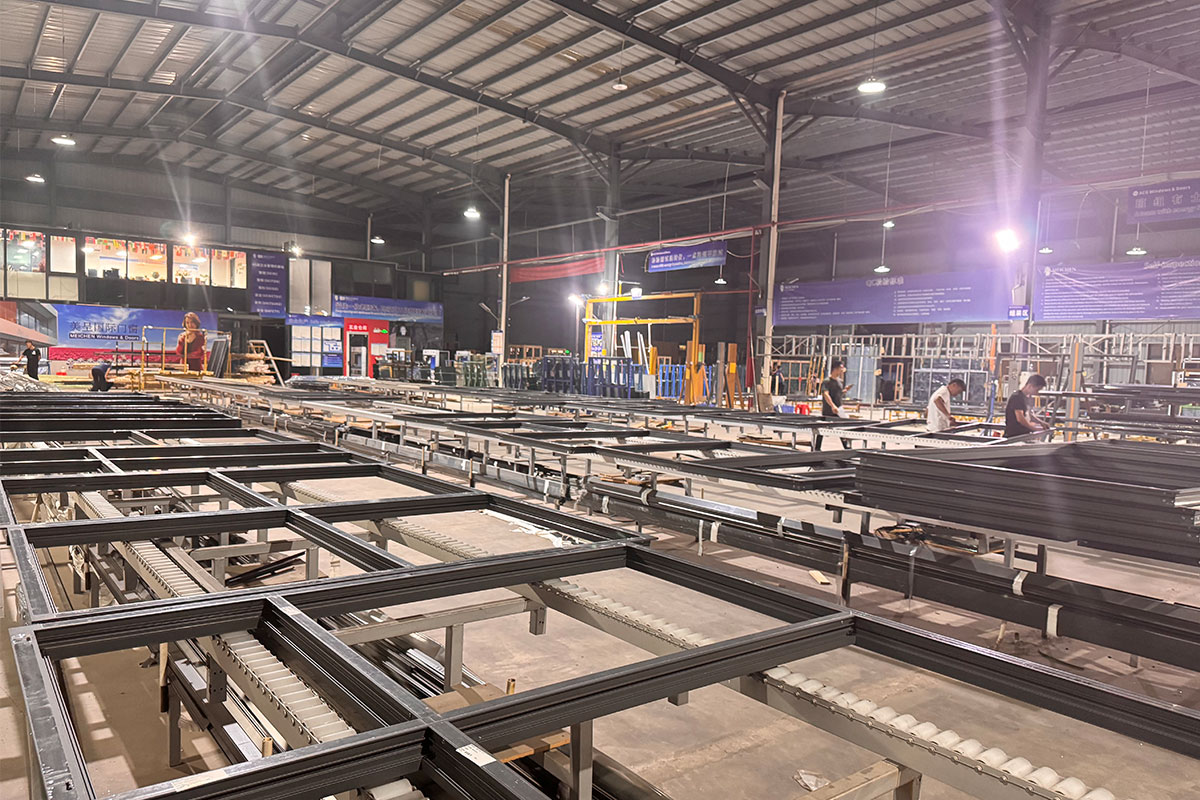
Most buyers never see the inside of a window factory. That’s a problem, because the manufacturing process is where quality is either built in or cut out. Every aluminum window on the market passes through the same core stages — but how each stage is executed varies dramatically between manufacturers. Here’s what actually happens, step by step.
From Raw Aluminium to Finished Window Profile
It all starts with a solid cylindrical block of aluminium alloy called a billet. Think of it like a dense metal log. The billet is heated to between 800 and 925 degrees Fahrenheit, making it soft enough to be forced through a steel die — a precision-cut mould that shapes the aluminium into the exact cross-sectional profile needed for a window frame. The result is a long, continuous metal window frame section with hollow chambers engineered for strength, drainage, and thermal performance.
From there, the extruded profiles go through a carefully controlled sequence:
- Extrusion and quenching — the heated billet is pushed through the die, then rapidly cooled using forced air or water to lock in the desired hardness and structural integrity.
- Stretching and cutting — the cooled profile is mechanically stretched to straighten it and relieve internal stress, then cut to precise lengths.
- Thermal break insertion — insulating polyamide strips are fitted between the interior and exterior aluminium sections, creating a barrier that dramatically reduces heat transfer through the frame.
- Surface finishing — profiles receive either powder coating or anodizing to protect against corrosion, UV damage, and general wear.
- Glass unit integration — sealed double- or triple-glazed units are fitted into the prepared frames using gaskets and pressure plates.
- Final assembly — hardware (hinges, locks, handles), weather seals, and drainage components are installed, and the completed unit undergoes quality inspection.
Each stage builds on the last. Skip the stretching step or rush the quench, and you’ll end up with profiles that warp over time. Use a low-grade thermal break, and the window’s insulation value drops significantly.
Surface Finishing and Quality Testing
Surface finishing is one of the clearest differentiators between manufacturers, and it’s where corners get cut most often. The two primary methods are powder coating and anodizing.
Powder coating applies a dry pigment electrostatically, then cures it in an oven to form a tough, uniform skin. It offers a huge range of colours and finishes, and damaged sections can be touched up relatively easily. Budget manufacturers typically apply a single coat. Premium producers use multi-layer architectural-grade finishes that meet standards like Qualicoat or AAMA 2604/2605, delivering significantly better fade and chalk resistance over decades of sun exposure.
Anodizing takes a different approach. The aluminium is submerged in an acidic solution and treated with an electrical current, forming a hard oxide layer that becomes part of the metal itself. The result is exceptional scratch and corrosion resistance with a distinctive metallic matte finish. The trade-off? Colour options are limited, and repairs are difficult — a damaged anodized metal window frame often needs full replacement rather than a simple touch-up.
The finish you choose affects more than appearance. It determines how your windows hold up against salt air, UV radiation, and daily wear — factors that compound over a 30- to 50-year lifespan. And that lifespan is exactly what makes the next question so important: how does aluminium actually stack up against vinyl, wood, and fiberglass over the long run?
Aluminium vs Other Window Frame Materials Compared
Knowing how aluminium windows are made is one thing. Knowing whether aluminium is the right material for your project is another question entirely. Vinyl, wood, fiberglass, and composite frames all compete for the same wall openings — and each brings genuine strengths to the table. The honest answer? No single material wins across every category.
Aluminium vs Wood and Vinyl Frames
Vinyl is the volume leader in residential windows for a reason: it’s affordable, low-maintenance, and insulates reasonably well. U-factor ratings for vinyl typically fall between 0.20 and 0.40, which is competitive with — and sometimes better than — aluminium. If your primary concern is upfront cost and you’re working in a mild climate, vinyl makes a strong case. The trade-off? Vinyl frames are bulkier, limiting how much glass you can fit into a given opening. They can also warp or discolor in extreme heat, and they’re difficult to paint if you want to change the look down the road.
Wood brings natural insulation properties that are hard to beat, with U-factors in the 0.25 to 0.35 range. It also offers a warmth and character that no other material replicates — especially in heritage or period-style homes. But wood demands commitment. You’re looking at repainting or re-staining every three to seven years, plus ongoing vigilance against rot, moisture damage, and pest intrusion. In humid or coastal climates, that maintenance burden compounds quickly.
Aluminum frames, by contrast, deliver a strength-to-weight ratio that neither vinyl nor wood can match. This is what allows aluminium window manufacturers to produce ultra-slim profiles — sometimes as narrow as 20mm sightlines — that maximize your glass area. When you want large windows or floor-to-ceiling openings, alu frames handle the structural load without the visual bulk. Modern thermal break technology has also closed much of the insulation gap, pushing thermally broken aluminium into the 0.40 to 0.60 U-factor range, with premium systems performing even better.
Where Aluminium Outperforms Other Materials
Aluminium’s real advantages cluster around longevity, design flexibility, and sustainability. A well-finished aluminium window can last 30 to 50 years with minimal upkeep — no repainting, no sealing, no rot. Fiberglass comes close on durability, but it costs significantly more and has fewer manufacturers to choose from. Composite frames offer a middle ground, though long-term performance data is still limited since the material is relatively new to the market.
Recyclability is another area where aluminium stands alone. It can be recycled infinitely without losing structural quality, and recycled aluminium requires only about 5% of the energy needed to produce new material. Vinyl, by comparison, degrades with each recycling cycle and often ends up in landfill. Wood is biodegradable but rarely recycled in practice once it’s been treated with paints and preservatives.
Where aluminium still trails? Raw thermal performance without a thermal break remains poor — U-factors can exceed 1.0 in non-thermally-broken systems. And in very cold, humid climates, condensation on aluminum frames can be an issue if the thermal break quality isn’t up to standard. Coastal environments also require proper finishing — powder coating or anodizing — to prevent corrosion from salt air.
Here’s how the five main frame materials compare across the attributes that matter most:
| Attribute | Aluminium | Vinyl | Wood | Fiberglass | Composite |
|---|---|---|---|---|---|
| Typical Lifespan | 30-50 years | 20-40 years | 50-100 years (with maintenance) | 40-50 years | 30-40 years |
| Maintenance Level | Very low | Very low | High | Very low | Low to moderate |
| Recyclability | Infinite, no quality loss | Limited, degrades each cycle | Biodegradable but rarely recycled | Difficult to recycle | Limited |
| Design Flexibility (Slim Profiles) | Excellent | Poor (bulky frames) | Moderate | Good | Moderate |
| Thermal Performance (U-Factor) | 0.40-0.60 (with thermal break) | 0.20-0.40 | 0.25-0.35 | 0.20-0.35 | 0.25-0.40 |
| Relative Cost Tier | Mid-range ($$) | Budget ($) | Premium ($$$) | Premium ($$$) | Mid to premium ($$-$$$) |
The takeaway isn’t that aluminium is universally superior. It’s that aluminium occupies a unique position: the only frame material that combines slim aesthetics, decades of low-maintenance durability, and full recyclability in a single package. For projects that demand large openings, contemporary sightlines, or long-term environmental responsibility, it’s hard to beat.
That said, not every product marketed as an “aluminium window” is the same thing. Some of the most recognized window brands actually sell aluminium-clad wood products — a fundamentally different construction that affects performance, maintenance, and pricing in ways most buyers don’t expect.
Aluminium-Clad vs Full Aluminium Frame Windows
Here’s a scenario that catches buyers off guard more often than you’d think. You request quotes from four different “aluminium window manufacturers,” and two come back significantly higher than the others. The specs look similar on paper. So what gives? In many cases, you’re not comparing the same product type at all. You’re comparing aluminium-clad wood windows against full aluminium frame systems — two fundamentally different constructions that happen to share a word in their name.
What Aluminium-Clad Wood Windows Actually Are
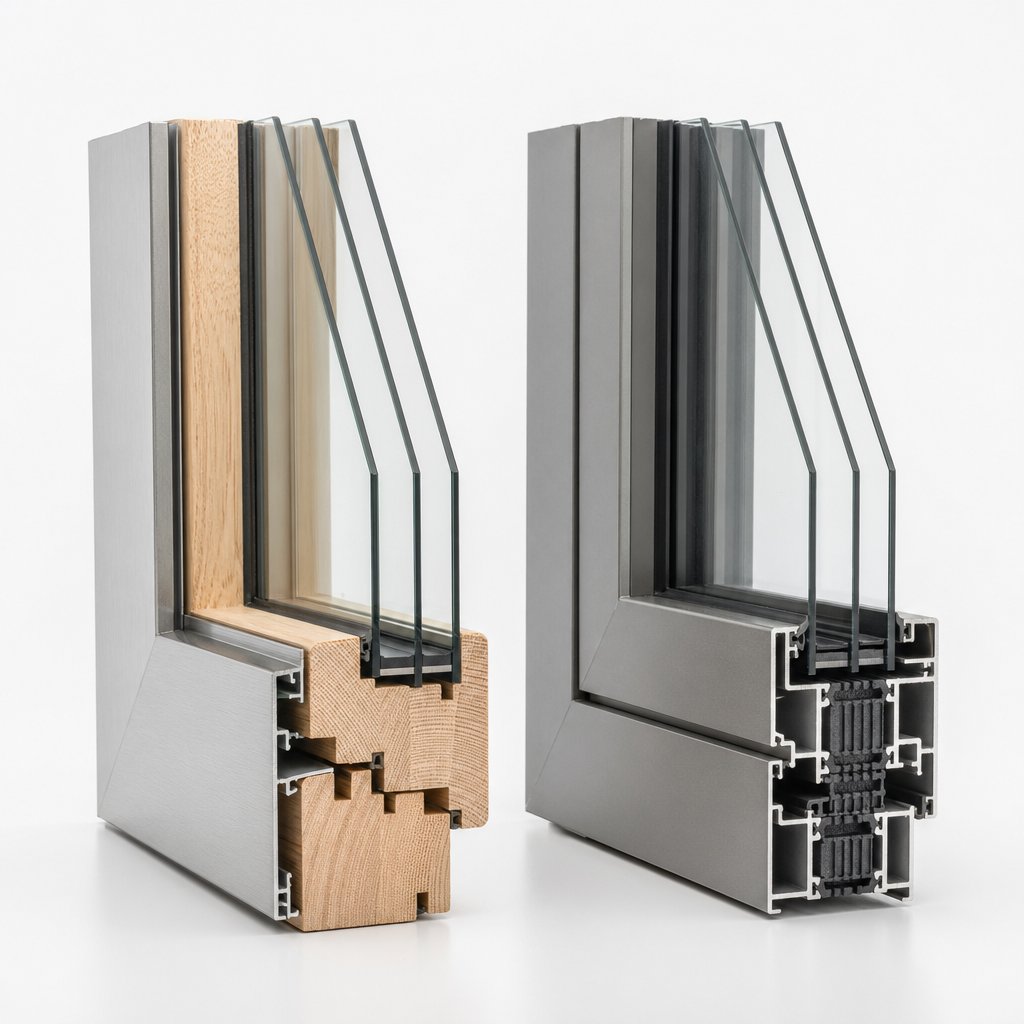
Aluminium-clad windows are, at their core, wood windows. The structural frame is engineered timber, with a thin aluminium shell bonded or mechanically fastened to the exterior face. That outer cladding protects the wood from rain, UV, and temperature swings, while the interior retains the warmth and texture of natural timber. Brands like Marvin and Andersen have built their reputations largely around this hybrid approach.
The appeal is real — you get the visual richness of wood inside with reduced exterior maintenance compared to a fully exposed timber frame. Alu-clad systems can also achieve impressive thermal performance, with U-values as low as 0.7 to 1.1 W/m2K when triple-glazed, partly because wood itself is a natural insulator.
But they’re still wood windows. The interior timber needs periodic attention, the frames are heavier, and the profile depths are typically larger than what you’d find in windows in aluminium-only construction.
Full Aluminium Frame Systems Explained
Full aluminium systems — the kind produced by companies like Schuco and Reynaers — use aluminium for the entire frame structure, inside and out. Thermal break aluminum windows in this category rely on insulating polyamide strips between the interior and exterior profiles to manage heat transfer, rather than depending on a secondary material like wood for insulation.
The result is a leaner, lighter frame with significantly slimmer sightlines. Where an alu-clad profile might measure 80 to 100mm deep, a full aluminium system can achieve similar structural performance at 50 to 70mm. That difference translates directly into more visible glass area per opening.
Here are the practical differences that matter when you’re evaluating quotes:
- Frame construction — alu-clad uses a timber core with aluminium exterior cladding; full aluminium uses thermally broken aluminium throughout
- Profile depth and sightlines — full aluminium frames are slimmer, maximizing glass area; alu-clad frames are deeper due to the timber core
- Weight — alu-clad units are heavier, which can affect hardware selection and installation requirements
- Interior maintenance — alu-clad timber interiors may need refinishing over time; full aluminium interiors are maintenance-free
- Thermal strategy — alu-clad relies on wood’s natural insulation; full aluminium depends on the quality of its thermal break system
- Design flexibility — full aluminium supports larger span openings and more contemporary configurations with less visual frame
- Price positioning — alu-clad from premium brands often costs more than mid-range full aluminium systems, though premium full aluminium can match or exceed alu-clad pricing
The critical point? If you’re searching for aluminium window manufacturers and requesting quotes without specifying which category you want, you’re almost certainly comparing apples to oranges. One quote might reflect a full timber-core hybrid system with architectural-grade cladding. Another might be a thermally broken all-aluminium unit with a completely different performance profile. Clarifying this distinction before you request a single quote saves time, avoids misleading price comparisons, and ensures every manufacturer you shortlist is actually competing on the same terms.
Of course, whichever category you choose, the thermal performance of your windows ultimately depends on one critical component buried inside the frame — and the quality gap between manufacturers on this single element is wider than most buyers realize.
Thermal Break Technology and Energy Efficiency Explained
That critical component? It’s a strip of polyamide plastic, usually no more than 30mm wide, and it single-handedly determines whether your aluminium windows perform like a premium product or a thermal liability. Thermal break technology is the reason aluminium went from being dismissed as an energy-inefficient material to competing head-to-head with vinyl and wood on insulation performance. Yet the quality of this one element varies enormously between manufacturers — and it rarely shows up in a sales brochure.
How Thermal Break Technology Works
Imagine holding a metal spoon in a pot of boiling water. Within seconds, the handle gets hot. That’s thermal conductivity in action, and aluminium behaves the same way. Without intervention, an aluminium frame acts as a direct bridge between the temperature outside and the air inside your home — cold in winter, scorching in summer.
A thermal break solves this by splitting the frame into two separate aluminium profiles — one facing the interior, one facing the exterior — connected by a rigid polyamide strip with very low thermal conductivity. This strip acts as an insulating barrier, dramatically slowing heat transfer through the frame while maintaining full structural integrity.
Not all thermal breaks are created equal, though. The differences between manufacturers come down to three variables:
- Strip width — wider polyamide strips create a larger insulating gap, improving performance. Budget systems might use 14 to 20mm strips, while premium aluminum frame windows use 24 to 34mm or wider.
- Polyamide grade — higher-grade reinforced polyamide (typically PA66 with glass fiber) resists deformation under temperature stress better than standard formulations.
- Bonding method — how the strip is mechanically locked into the aluminium profiles affects long-term durability. Poorly bonded breaks can shift over years of thermal cycling, creating air gaps that undermine insulation.
These aren’t minor details. The difference between a 14mm standard thermal break and a 34mm reinforced one can shift a window’s frame U-value by 30% or more. When you’re comparing quotes from different aluminium window manufacturers, the thermal break specification is one of the first things worth asking about — and one of the last things most salespeople volunteer.
Modern thermally broken aluminium windows can achieve whole-window U-values that rival or exceed vinyl and wood frames, particularly when paired with triple glazing and warm-edge spacers. The thermal break is the single component that made this possible.
Understanding U-Factor and SHGC Ratings
Thermal breaks matter because they directly influence the energy performance metrics you’ll encounter on every product specification sheet. Two numbers deserve your attention above all others: U-factor and Solar Heat Gain Coefficient (SHGC).
U-factor measures how much heat passes through the entire window assembly — frame, glass, and spacers combined. It ranges from about 0.20 (excellent insulation) to 1.20 (very poor). Lower is better. A single-pane metal framed window without a thermal break might register a U-factor near 1.0, while a premium thermally broken aluminium system with triple glazing can drop below 0.30. That’s a massive performance gap, and the thermal break is the primary reason it exists.
SHGC measures how much solar radiation the window admits as heat. It ranges from 0 to 1, with lower values meaning less solar heat enters the building. In hot climates, you’ll want an SHGC of 0.25 or below to keep cooling loads manageable. In cooler regions, a slightly higher SHGC on north- or south-facing windows can actually help with passive solar heating in winter. The frame material has less influence on SHGC than the glass coatings do, but the overall system design — including how the manufacturer integrates the glazing — still plays a role.
There’s a third metric worth knowing: air infiltration rate. This measures how much air leaks through the window assembly under pressure, typically expressed in cubic feet per minute per square foot (cfm/ft2). Even a window with excellent U-factor and SHGC ratings will underperform if the seals and gaskets allow air to bypass the thermal envelope. Tighter manufacturing tolerances and higher-quality weather seals — hallmarks of better manufacturers — produce lower air infiltration numbers.
Here’s how these metrics should shape your manufacturer evaluation:
- Compare whole-window U-factors, not just center-of-glass values. The frame’s thermal break quality shows up in the whole-window number.
- Match SHGC to your climate. Hot regions need low SHGC; mixed climates benefit from moderate values that balance heating and cooling seasons.
- Ask for air infiltration test results. Manufacturers who test to AAMA or NFRC standards will have these numbers readily available. Those who don’t may be hiding something.
- Look for NFRC labels. The National Fenestration Rating Council provides standardized, independently verified ratings that let you compare aluminium windows across brands on equal terms.
Emerging trends are pushing these numbers even further. Slim sightline profiles — where the visible frame width drops below 40mm — are gaining popularity in contemporary architecture, and manufacturers are developing improved polyamide thermal break strips that maintain strong U-values even in these narrower profiles. The result is more glass, more light, and no sacrifice on energy performance.
These performance metrics don’t exist in a vacuum, though. They’re only meaningful when backed by independent testing and recognized certifications — and the gap between what different manufacturers actually certify versus what they simply claim is wider than most buyers expect.
Industry Certifications and Residential vs Commercial Segments
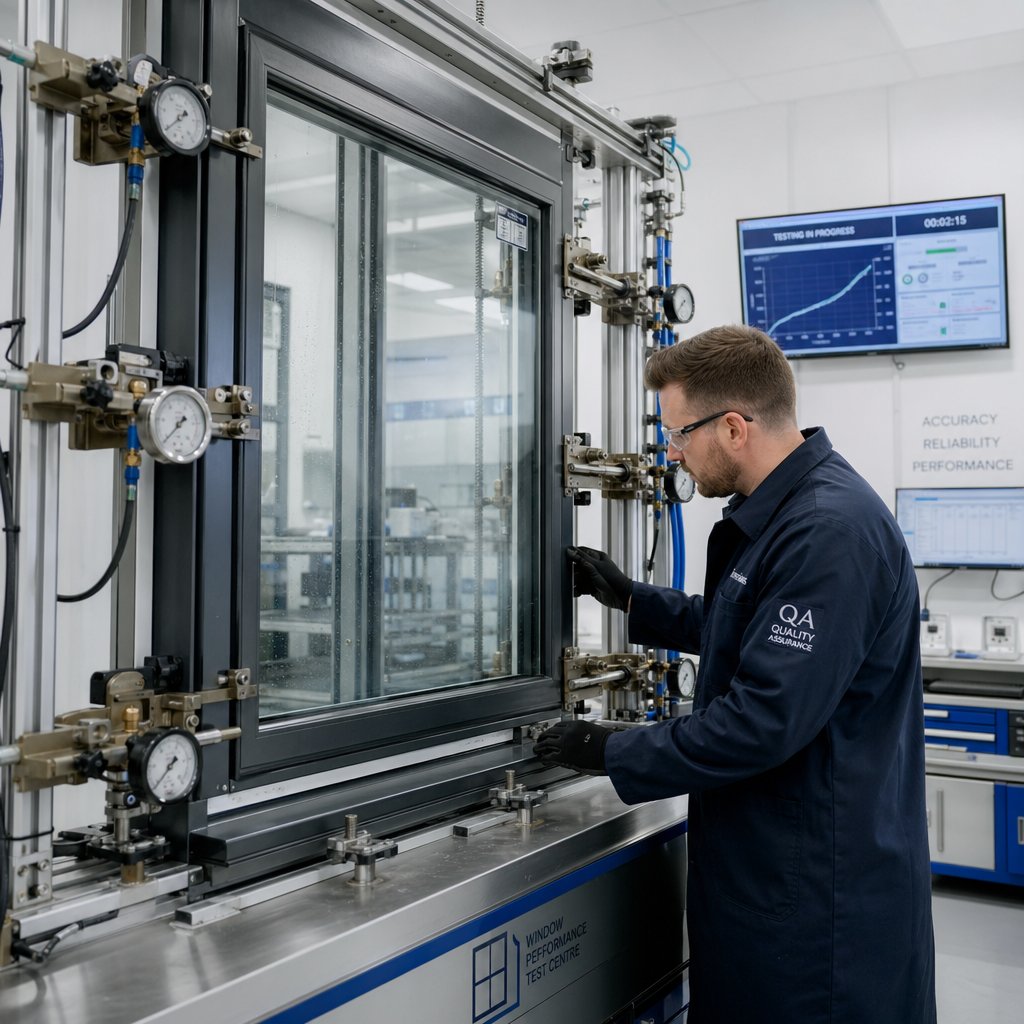
A manufacturer can print any U-factor on a brochure. A certification body makes them prove it. That distinction — between a claim and a verified result — is exactly why industry certifications exist, and why they should be one of your first filters when shortlisting aluminium window manufacturers. The problem? Most buyers don’t know which certifications actually matter, what they test, or how they differ across regions.
Key Certifications and What They Verify
Every aluminum window frame on the market is subject to performance standards, but the specific certification landscape depends on where you’re building. In North America, three bodies dominate. The NFRC (National Fenestration Rating Council) provides standardized energy performance ratings — U-factor, SHGC, visible transmittance, and air leakage — that let you compare products across brands on equal terms. Without an NFRC label, you’re relying on the manufacturer’s own numbers, which may or may not reflect real-world performance.
AAMA certification (American Architectural Manufacturers Association) goes further. It verifies structural integrity, water resistance, air infiltration, and long-term durability through accredited laboratory testing against AAMA/WDMA/CSA 101/I.S.2/A440 standards. Think of NFRC as the energy scorecard and AAMA as the structural stress test. Energy Star certification, meanwhile, confirms that a window meets the EPA’s climate-zone-specific efficiency thresholds — a useful shorthand for residential buyers who want verified energy savings without digging into raw data.
Outside North America, the standards shift. In Australia, AS 2047 is the benchmark. It covers structural performance under wind pressure, water penetration resistance, air infiltration limits, and operating force — all tested by NATA-accredited laboratories. Compliance isn’t optional; it’s referenced directly in the National Construction Code. European manufacturers work under CE marking requirements, which verify conformity with EU construction product regulations covering thermal performance, air permeability, wind resistance, and watertightness.
Here’s how the major certifications break down by region:
| Region | Certification | What It Tests | Why It Matters |
|---|---|---|---|
| North America | NFRC | U-factor, SHGC, visible transmittance, air leakage | Standardized energy ratings for cross-brand comparison |
| North America | AAMA | Structural integrity, water resistance, air infiltration, durability | Verifies physical performance under real-world stress conditions |
| North America | Energy Star | Climate-zone-specific energy efficiency thresholds | Quick confirmation of minimum efficiency for residential projects |
| Australia | AS 2047 | Wind load, water penetration, air infiltration, operating force | Mandatory compliance under the National Construction Code |
| Europe | CE Marking | Thermal performance, air permeability, wind resistance, watertightness | Legal requirement for products sold within the EU market |
A quick rule of thumb: if a manufacturer can’t point you to at least one recognized third-party certification relevant to your region, treat that as a red flag. Any top 10 window manufacturers list worth reading will feature companies that hold multiple certifications across these frameworks — because serious producers invest in independent validation, not just marketing claims.
Residential vs Commercial Product Lines
Certifications also reveal a less obvious distinction: whether a manufacturer primarily serves residential or commercial markets. These aren’t just different sales channels — they’re different engineering worlds.
Commercial aluminium window systems are designed for larger openings, higher wind loads, stricter fire ratings, and more demanding acoustic requirements. Testing standards are more rigorous, with AAMA commercial ratings (like CW and AW classifications) requiring significantly higher performance thresholds than residential grades (R and LC). The procurement process is different too — commercial projects typically involve architects specifying exact systems, with manufacturers providing detailed engineering data, shop drawings, and project-specific testing.
Residential product lines, by contrast, prioritize a broader range of operable styles — think aluminum double hung windows, casements, awnings, and sliders — with more emphasis on aesthetic options, ease of operation, and homeowner-friendly warranty terms. Testing still matters, but the performance bar is calibrated for typical residential wind zones and building heights rather than high-rise or exposed commercial applications.
Some manufacturers straddle both segments. Others specialize. A company that excels at curtain wall systems for commercial towers may not offer the residential configurations you need, and vice versa. This affects more than product availability — it influences pricing, lead times, and the level of technical support you’ll receive. A residential buyer requesting a quote from a commercial-focused manufacturer may encounter minimum order requirements or longer timelines that don’t suit a single-home project.
Understanding which segment a manufacturer serves — and which certifications back their claims — gives you a much clearer picture of what you’re actually paying for. And pricing, as it turns out, is the area where the gap between manufacturer tiers creates the most confusion and the biggest surprises.
Pricing Tiers and What to Expect From Each Level
You’ve probably noticed something frustrating: two aluminium windows that look nearly identical on paper can carry wildly different price tags. One quote comes in at half the cost of another, and neither salesperson can clearly explain why. The reason isn’t mystery markup — it’s that aluminium window manufacturers operate across distinct quality tiers, and each tier reflects a different set of trade-offs in materials, engineering, and long-term performance.
Budget vs Mid-Range vs Premium Manufacturers
Think of the market in three bands. Budget manufacturers offer functional products at the lowest entry point. Mid-range producers balance performance with cost. Premium brands push the boundaries of thermal efficiency, aesthetics, and customization. The gap between them isn’t just about price — it’s about what’s inside the aluminium window profiles and how every component is sourced, finished, and assembled.
Here’s how the three tiers typically compare:
| Attribute | Budget Tier | Mid-Range Tier | Premium Tier |
|---|---|---|---|
| Profile Quality | Standard alloy, basic chamber design | Improved alloy grades, multi-chamber profiles | Architectural-grade alloy, optimized multi-chamber engineering |
| Thermal Performance | Narrow thermal break (14-20mm), double glazing standard | Mid-width thermal break (20-28mm), triple glazing available | Wide thermal break (28-34mm+), triple glazing with warm-edge spacers standard |
| Surface Finish | Single-coat powder coating, limited colour range | Dual-coat powder coating, broader palette including woodgrain | Multi-layer architectural-grade finish (AAMA 2604/2605), anodizing options, custom RAL colours |
| Hardware | Domestic-brand zinc alloy fittings | Mid-grade stainless steel or branded hardware | European-grade concealed hardware, multi-point locking systems |
| Warranty | 5-10 years on frame, 1-2 years on hardware | 10-15 years on frame, 5 years on hardware | 15-25+ years on frame, 10+ years on hardware and finish |
A budget-tier window isn’t necessarily a bad window. For a rental property or a secondary structure where slim sightlines and peak thermal performance aren’t priorities, it can be a perfectly rational choice. The risk comes when buyers choose budget products expecting mid-range results — or when a low quote obscures the fact that you’re getting a narrower thermal break, single-coat finish, and hardware that may need replacing within five years.
What Drives Aluminium Window Pricing
If you’ve ever searched for something like milgard windows prices and found a range so broad it felt useless, you’ve experienced this problem firsthand. The spread exists because pricing isn’t driven by a single variable — it’s shaped by a stack of factors that compound on each other:
- Thermal break complexity — wider, reinforced polyamide strips cost more to produce and integrate, but they deliver measurably better insulation
- Surface finish grade — a single-coat powder finish might cost a third of what a multi-layer architectural-grade coating runs, but the cheaper option fades and chalks years sooner
- Hardware specification — hardware accounts for roughly 8-10% of total window cost, and the jump from zinc alloy to stainless steel or concealed European fittings is significant
- Glass configuration — double versus triple glazing, Low-E coatings, argon gas fills, and warm-edge spacers each add incremental cost but improve energy performance
- Certification level — independently tested and certified products carry the cost of third-party laboratory testing, which budget manufacturers often skip
- Customization — non-standard sizes, shapes, colours, and configurations require additional tooling and setup time
- Profile material cost — aluminium ingots represent 60-80% of the raw profile cost, so global commodity pricing directly influences the base price across all tiers
The profile itself — the extruded aluminium that forms the frame — typically represents 30-40% of the total window cost, with glass adding another 15-20%. That means roughly half your money goes into just two components. The rest splits across hardware, seals, labour, finishing, testing, and overhead. When a manufacturer cuts price, the savings have to come from somewhere in that stack — and it’s usually the thermal break, the finish, or the hardware that takes the hit.
The real question isn’t which tier is “best.” It’s which tier matches your project’s actual requirements. A developer building to minimum code in a temperate climate has different needs than a homeowner specifying high-performance windows for a passive house in a cold region. Setting your budget against the right tier — and understanding exactly where each manufacturer sits within it — prevents the most common and costly mistake in window procurement: comparing quotes that aren’t actually for the same class of product.
Knowing the tiers is half the equation. The other half is having a structured process for evaluating individual manufacturers within your chosen tier — a step-by-step approach that turns pricing clarity into a confident purchasing decision.
How to Evaluate and Choose the Right Manufacturer
A pricing tier tells you what class of product to expect. It doesn’t tell you whether a specific manufacturer will deliver on time, honour their warranty, or produce aluminium window frames that actually match the specs on their data sheet. That gap between category and company is where most procurement mistakes happen — and where a structured evaluation process pays for itself many times over.
Whether you’re a homeowner replacing a handful of windows or a developer specifying across an entire project, the steps below give you a repeatable framework for narrowing the field and making a confident choice.
Step-by-Step Manufacturer Evaluation Process
Think of this as a funnel. You start broad, then progressively filter until you’re left with one or two manufacturers who genuinely fit your project. Rushing straight to the quote stage — which is what most buyers do — skips the steps that prevent expensive surprises later.
- Define your project requirements clearly. Before you contact anyone, document the basics: window types needed (casement, sliding, fixed, awning), approximate sizes, performance targets (U-factor, SHGC, air infiltration), finish preferences, and any compliance requirements specific to your region. A developer building to Australian Standards will have different non-negotiables than someone renovating a home in the American Midwest.
- Shortlist by certification and segment fit. Cross-reference your requirements against each manufacturer’s certifications. If you’re building in Australia, AS 2047 compliance is mandatory — not optional. In North America, look for NFRC-rated and AAMA-tested products. Eliminate any manufacturer that can’t provide documentation for the certifications relevant to your project.
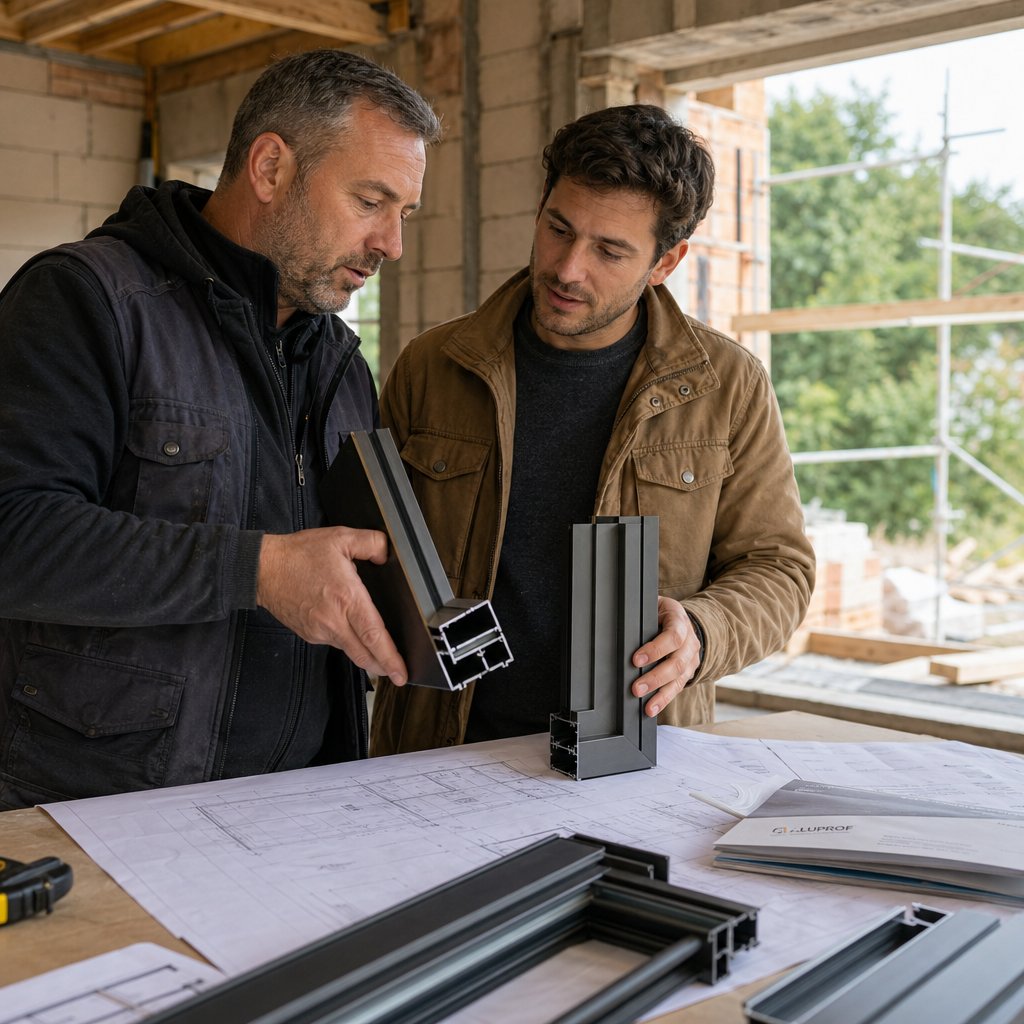
- Request and compare physical samples. Brochure photos and spec sheets only tell part of the story. Ask shortlisted manufacturers for corner samples or profile cut-aways so you can physically inspect the thermal break width, the quality of the powder coating, the gasket material, and how the hardware integrates. You’ll notice differences immediately that no PDF can convey.
- Evaluate warranty terms in detail. A “10-year warranty” from one manufacturer is not the same as a “10-year warranty” from another. Read the fine print. Does it cover the frame, the finish, the hardware, and the sealed glass unit separately? Are there exclusions for coastal environments or specific colour finishes? What’s the claims process — do they send a technician, or do they ship a replacement part and leave installation to you?
- Check references and completed projects. Ask for a list of recent projects similar to yours in scope and specification. Contact those clients directly. Were the windows delivered on schedule? Did the finished product match the approved samples? Were there any issues post-installation, and how did the manufacturer respond? A company confident in its track record will hand over references without hesitation.
- Confirm lead times and logistics. Manufacturing lead times for window aluminium windows can range from four weeks for standard configurations to twelve weeks or more for custom sizes, non-standard colours, or high-volume orders. Get the lead time in writing, and ask what happens if the timeline slips. Projects have stalled because a window delivery arrived six weeks late with no contingency plan in place.
- Compare quotes on equal terms. Only after completing the steps above should you compare pricing. By this point, every manufacturer on your shortlist meets the same certification, performance, and quality benchmarks — so the quotes are genuinely comparable. If one is significantly cheaper, ask specifically which components differ rather than assuming you’ve found a bargain.
For Australian projects, MEICHEN’s aluminium window range is a practical example of what this evaluation process looks like in action. They hold AS 2047 compliance, offer multiple configurations across casement, sliding, awning, and fixed window types, and focus on energy-efficient systems designed for homeowners, renovators, builders, and developers. They’re not the only option — but they check the boxes that matter when you’re filtering by certification, product breadth, and segment fit within the Australian market.
Essential Questions to Ask Before You Commit
Even with a solid evaluation process, the right questions during procurement conversations reveal details that brochures and websites leave out. Knowing which questions to ask separates informed buyers from those who end up surprised after installation. Use this list when speaking with any manufacturer on your shortlist:
- What is the exact thermal break width and polyamide grade used in your standard profiles? (This single answer tells you more about real performance than most marketing materials combined.)
- Which third-party certifications do your products hold, and can you provide the test reports — not just the certificates?
- What powder coating standard do you finish to — AAMA 2603, 2604, or 2605? Or do you offer anodizing? (The difference between these grades affects fade resistance by a factor of years.)
- Who manufactures your hardware, and what is the warranty on hardware specifically?
- Can you provide a corner sample or profile cut-away for physical inspection before I commit?
- What is your standard lead time for my configuration, and what penalties or remedies apply if delivery is delayed?
- Do you offer glazing options beyond standard double-pane — triple glazing, Low-E coatings, argon fills, warm-edge spacers?
- What is your process for handling warranty claims — on-site service, replacement parts shipped, or full unit replacement?
- Can you share references from projects similar to mine in scale and specification?
- Do you manufacture the profiles in-house, or do you fabricate from a third-party system supplier’s extrusions?
- What recycled aluminium content do your profiles contain, and do you have documentation to verify it?
That last question — about in-house manufacturing versus third-party fabrication — circles back to the distinction covered at the start of this guide. It’s the single most clarifying question you can ask, because the answer determines whether you’re dealing with a true manufacturer who controls quality end-to-end, or a fabricator assembling someone else’s components. Both can produce good windows, but the accountability chain is fundamentally different.
One more practical note: if you’re dealing with an older home and your project involves replacing existing units, don’t assume the new manufacturer handles ancillary items like milgard window screen replacement or screen compatibility for legacy frames. Screen systems, trim packages, and retrofit accessories vary widely between brands. Confirm what’s included in the quote and what requires separate sourcing.
A structured evaluation protects your budget. But the manufacturers worth choosing are also the ones paying attention to where the industry is heading — investing in the technologies, materials, and design approaches that will define aluminium windows over the next decade.
Trends Shaping the Future of Aluminium Window Manufacturing
The manufacturers investing in tomorrow’s technology are the ones most likely to deliver lasting value today. That’s not a platitude — it’s a practical filter. A company pouring R&D into next-generation profiles, sustainable sourcing, and smart integration is signaling something important about how they approach quality across their entire operation. Here’s where the industry is heading, and why it matters for anyone specifying alu windows right now.
Emerging Trends in Aluminium Window Manufacturing
The most visible shift is the race toward ultra-slim sightlines. Manufacturers are engineering aluminum window frames with visible face widths below 30mm — profiles so narrow they nearly disappear, leaving almost nothing between you and the glass. This isn’t just an aesthetic trend. Slimmer frames mean a higher glass-to-frame ratio, which improves natural light penetration and can actually enhance thermal performance when paired with high-spec glazing units. The engineering challenge is maintaining structural integrity and thermal break effectiveness in a narrower profile, and the manufacturers solving that problem are the ones worth watching.
Smart glass integration is another frontier gaining real traction. Electrochromic and suspended particle device (SPD) technologies allow glass in aluminum frame systems to dynamically shift from transparent to tinted in response to electrical signals, sunlight, or temperature changes. Imagine windows that automatically darken during peak afternoon heat, reducing cooling loads without blinds or manual intervention. Some manufacturers are also embedding motorized blind systems directly between double- or triple-glazed panes — sealed inside the unit where they never collect dust or need cleaning. These integrated solutions are moving from high-end commercial projects into the residential space faster than most buyers expect.
Thermal break technology continues to evolve as well. Next-generation polyamide strips are getting wider, more thermally resistant, and better engineered for the slim profiles architects demand. The result is a new class of windows that deliver premium U-values in frames that would have been structurally impossible five years ago. For anyone comparing aluminum clad windows against full aluminium systems, this narrowing performance gap makes the all-aluminium option increasingly compelling — especially in contemporary designs where minimal framing is the goal.
Then there’s the sustainability story, and it’s a significant one. Aluminium is infinitely recyclable without any loss in structural quality — a claim no other mainstream frame material can make. The Aluminum Association reports that around 75% of all aluminium ever produced is still in use today, and recycling the metal requires only about 5% of the energy needed to produce it from raw ore. The industry is now pushing toward higher recycled content percentages in new profiles, with some manufacturers already exceeding 50% post-consumer recycled aluminium in their extrusions. For projects where environmental credentials matter — and increasingly, building codes and green certifications require them — this gives aluminium a measurable edge over vinyl, fiberglass, and composite alternatives.
Large-format openings are driving demand from the architectural side too. Floor-to-ceiling sliding systems, corner-opening configurations, and expansive fold-slide doors all depend on the strength-to-weight ratio that only aluminium delivers at slim profile depths. As contemporary residential design continues to blur the boundary between indoor and outdoor living, the structural capabilities of aluminium framing become less of a preference and more of a necessity.
Choosing a Manufacturer That Fits Your Project
The best manufacturer for your project isn’t the biggest name or the lowest price — it’s the one whose certifications, product range, thermal performance tier, and service capabilities align precisely with what your specific build requires.
That’s the thread running through this entire guide. Whether you’re evaluating milgard aluminum windows for a North American renovation or sourcing AS 2047-compliant systems for an Australian new build, the evaluation framework stays the same: define your requirements, verify certifications, inspect physical samples, compare on equal terms, and ask the hard questions before you commit.
If you’re exploring Australian-standard-compliant options, MEICHEN’s aluminium window collection is a solid starting point for comparing energy-efficient configurations across casement, sliding, awning, and fixed window types. It’s a practical way to see how one manufacturer’s range maps against the evaluation criteria covered in this guide — and a useful benchmark as you build your shortlist.
The aluminium window industry is moving fast. Slimmer profiles, smarter glass, better thermal breaks, and greener manufacturing are all converging to make this material more capable than it’s ever been. The manufacturers who embrace that trajectory — and back it with real certifications and transparent pricing — are the ones worth your time and your investment.
Frequently Asked Questions About Aluminium Window Manufacturers
1. What is the difference between an aluminium window manufacturer and a fabricator?
A manufacturer controls the full production chain, from extruding raw aluminium billets into profiles through to surface finishing, glazing, and final assembly. A fabricator purchases pre-made profiles from a system supplier and assembles windows to order without designing or producing the core materials. This distinction matters because a true manufacturer offers a single point of accountability for quality, specifications, and warranty claims, while a fabricator introduces a third-party layer that can complicate issue resolution. When requesting quotes, always ask whether the company extrudes its own profiles or assembles from another supplier’s system.
2. How do thermal breaks improve the energy efficiency of aluminium windows?
Thermal breaks are rigid polyamide strips inserted between the interior and exterior aluminium profiles of a window frame. They act as an insulating barrier that dramatically reduces heat transfer through the highly conductive aluminium. Without a thermal break, an aluminium frame conducts heat rapidly between indoors and outdoors, leading to energy loss and potential condensation. The width and grade of the polyamide strip vary between manufacturers, with premium systems using 28-34mm reinforced strips that can lower frame U-values by 30% or more compared to budget 14-20mm alternatives. When evaluating manufacturers, asking for the exact thermal break width and polyamide grade is one of the most revealing questions you can pose.
3. What certifications should I look for when choosing an aluminium window manufacturer?
The certifications that matter depend on your region. In North America, look for NFRC ratings for standardized energy performance data, AAMA certification for verified structural and weather resistance, and Energy Star for climate-zone efficiency compliance. In Australia, AS 2047 compliance is mandatory under the National Construction Code and covers wind load, water penetration, and air infiltration testing. European products require CE marking. Manufacturers like MEICHEN, for example, hold AS 2047 compliance for their aluminium window range, which is a non-negotiable baseline for any Australian project. Any reputable manufacturer should readily provide third-party test reports, not just certificates.
4. Why do aluminium window prices vary so much between manufacturers?
Price variation stems from differences across multiple components rather than a single factor. The main cost drivers include thermal break width and quality, surface finish grade (single-coat versus multi-layer architectural coatings), hardware specification (zinc alloy versus stainless steel or concealed European fittings), glass configuration (double versus triple glazing with Low-E coatings and argon fills), certification costs, and customization requirements. Aluminium ingots alone represent 60-80% of raw profile cost, so global commodity pricing also plays a role. Budget, mid-range, and premium tiers each reflect a different balance of these variables, and comparing quotes only makes sense when every manufacturer on your shortlist is offering the same class of product.
5. What is the difference between aluminium-clad wood windows and full aluminium frame windows?
Aluminium-clad windows use a structural timber core with a thin aluminium shell on the exterior for weather protection, while full aluminium systems use thermally broken aluminium throughout the entire frame. Clad products tend to have deeper profiles (80-100mm), are heavier, and may require interior timber refinishing over time. Full aluminium frames achieve slimmer sightlines (50-70mm), are lighter, and need virtually no maintenance. The thermal strategy also differs: clad systems rely on wood’s natural insulation, while full aluminium depends on the quality of its polyamide thermal break. Many buyers unknowingly compare these two fundamentally different product types when requesting quotes, which leads to misleading price comparisons. Clarifying which category you need before contacting manufacturers saves significant time and confusion.
More Window & Door Guides