Why Aluminium Window Maintenance Protects Your Home
Aluminium window maintenance is the routine care that keeps frames, hardware, seals, and finishes performing as intended. It covers cleaning, lubricating moving parts, inspecting gaskets, and protecting the surface coating from environmental damage. For homeowners, builders, and property managers across Australia, it represents the difference between a window system that lasts decades and one that deteriorates within a fraction of its potential lifespan.
What Aluminium Window Maintenance Actually Involves
High-quality aluminium windows can last between 25 and 45 years when properly maintained. That figure drops sharply without regular attention. Understanding how to maintain aluminium window frames means recognising that care requirements shift depending on three variables: finish type (powder-coated, anodised, or mill finish), local climate conditions, and the specific hardware fitted to each window. A coastal home in Queensland faces entirely different threats than a property in suburban Melbourne, and the maintenance response needs to reflect that.
Consistent, low-effort maintenance every few weeks protects a window investment worth thousands of dollars. Neglect compresses a 40-year lifespan into 15 years of declining performance followed by full replacement.
Why Neglect Costs More Than Prevention
Skipping routine care invites oxidation, seal failure, hardware corrosion, and eventual structural compromise. These problems compound. A degraded seal lets moisture in, which accelerates frame corrosion, which causes misalignment, which stresses adjacent seals further. Preventing aluminium window frame deterioration costs a fraction of what reactive repairs demand once damage sets in.
Most aluminium window maintenance tips for homeowners online fall into two camps: vague advice to “wipe frames with soapy water” or dense manufacturer specs written for glaziers. Neither serves the person who wants practical, finish-specific, climate-aware guidance they can act on. That practical middle ground is exactly what follows, starting with the science behind why aluminium corrodes in the first place.
Understanding How Aluminium Oxidation and Corrosion Work
Aluminium doesn’t rust the way steel does. Instead, it forms a thin, transparent oxide layer the moment it contacts air. This layer is the reason aluminium windows corrode far less aggressively than iron-based alternatives, but it doesn’t make them invincible. Grasping how this natural defence works, and what breaks it down, turns generic cleaning advice into targeted protection.
How the Natural Oxide Layer Protects Aluminium
Within milliseconds of exposure to oxygen, bare aluminium generates a film of aluminium oxide (Al₂O₃) across its surface. This film is incredibly thin, just a few nanometres, yet it bonds tightly to the metal beneath and resists flaking. Even better, it self-heals. Scratch the surface, and a fresh oxide layer forms almost instantly over the exposed metal.
Think of it as an invisible shield that regenerates on its own. The entire goal of aluminium window maintenance is to keep this shield intact and functioning. You’re not fighting the metal’s nature. You’re supporting a defence system that already wants to protect itself.
Environmental Threats That Break Down Protection
Several environmental factors overwhelm the oxide layer’s ability to repair itself. In Australian conditions, the most common culprits are:
Salt and chlorides. Coastal properties cop the worst of it. Chloride ions from salt spray penetrate the oxide film and trigger pitting corrosion, small but deep holes that concentrate damage in localised spots rather than spreading evenly. Properties within 500 metres of the ocean can show visible pitting within two to five years without regular rinsing.
Dissimilar metals. This is why aluminium windows corrode unexpectedly at fastener points. When aluminium sits in direct contact with a more noble metal like steel or copper, and moisture is present, a galvanic cell forms. The aluminium sacrifices itself electrochemically, corroding at an accelerated rate around the junction. Steel screws in aluminium frames are a classic trigger, particularly in humid or coastal zones.
Pollution and acid deposits. Urban environments expose window frames to acidic particulates from vehicle exhaust and industrial fallout. When rain washes these deposits across the frame, they lower the local pH below the range where the oxide layer remains stable. Over time, this creates uneven discolouration and surface degradation.
Trapped moisture. Anywhere water pools or lingers, whether in drainage channels, gasket interfaces, or poorly designed sill details, corrosion accelerates. Humidity above 80 per cent combined with infrequent cleaning creates the perfect conditions for sustained oxide breakdown.
Chalking on painted surfaces. Powder-coated frames exposed to high UV gradually break down at the coating surface, producing a fine chalky residue. This isn’t corrosion of the metal itself, but it signals that the protective coating is thinning and the aluminium beneath is losing its primary barrier.
Recognising Early Signs of Corrosion
Catching deterioration early makes the difference between a quick clean and an expensive repair. Signs of aluminium window frame deterioration are often subtle at first, but they follow predictable patterns. Look for:
- White powdery deposits on the frame surface (aluminium window oxidation white powder is the oxide itself flaking away)
- Small pits or craters, particularly around screws, joints, or areas exposed to salt
- Surface chalking that leaves residue on your fingers when you wipe the frame
- Discolouration or uneven fading, especially in patches rather than uniformly
- Dark streaks or staining near hardware, drainage slots, or where water tends to sit
Any of these signs means the protective system is under stress. None of them require panic, but all of them call for a response. How to prevent aluminium window corrosion comes down to removing the environmental triggers before they overwhelm the oxide layer’s self-repair capacity.
The practical steps for doing that depend heavily on your window’s finish type, because powder-coated, anodised, and raw mill-finish aluminium each respond differently to cleaning products and maintenance techniques.
Maintenance Differences Between Aluminium Finish Types
Not all aluminium frames respond the same way to a bucket of soapy water. The finish applied to your window frames fundamentally changes what products are safe, how often you need to clean, and what kind of deterioration to watch for. Using the wrong approach doesn’t just waste your time — it can void manufacturer warranties or actively speed up the damage you’re trying to prevent.
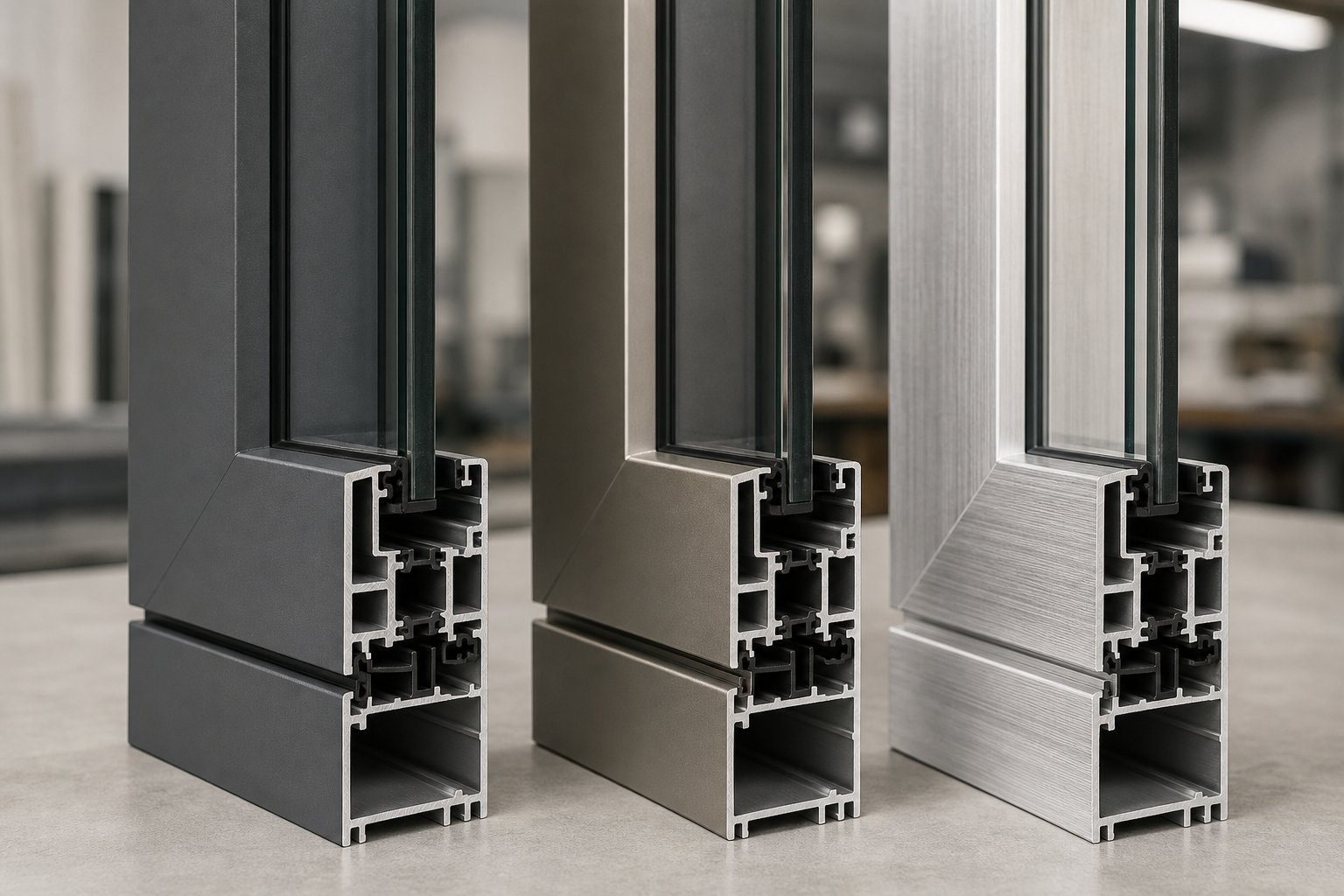
Australian residential windows predominantly use powder-coated finishes, while commercial and architectural projects often specify anodised aluminium. A smaller number of applications use mill finish (raw, uncoated aluminium). Each demands a distinct care strategy.
Caring for Powder-Coated Aluminium Frames
Powder coating creates a thick, cured polymer layer over the aluminium substrate. It’s the most common finish on residential windows because it offers broad colour choice and solid durability against chipping and fading. Learning how to clean powder coated aluminium windows correctly protects both the coating and the warranty attached to it.
The key constraint is pH. Cleaning products safe for powder coated windows must sit within a neutral pH range of 6 to 8. Anything strongly acidic or alkaline attacks the coating’s molecular bonds, causing it to soften, discolour, or flake prematurely. That rules out brick-cleaning acids, bleach-based products, and heavy-duty degreasers.
AL Windows specifies that solvents, caustic cleaners, and abrasive products should never contact powder-coated surfaces. Stick to warm water with a non-abrasive, pH-neutral detergent, applied with a soft cloth or sponge. Rinse thoroughly afterward to prevent detergent residue from sitting on the surface.
Over time, UV exposure causes chalking on powder-coated frames, that fine powdery residue you can feel when running a finger across the surface. Regular cleaning slows this process. If chalking is left unchecked, the coating thins and the underlying aluminium loses its primary barrier against corrosion.
Anodised Finish Maintenance Requirements
Anodised aluminium undergoes an electrochemical process that converts the outer surface into an exceptionally hard oxide layer, comparable in hardness to sapphire. Unlike powder coating, this finish is integrated into the metal rather than applied on top of it. It won’t peel or flake, and it resists UV degradation extremely well.
This anodised aluminium window maintenance guide centres on one rule: avoid chemical attack. Strong acids, alkaline cleaners, and mortar residue are the primary threats. Even brief contact with muriatic acid or cement run-off can cause irreversible discolouration. Once the anodised layer is chemically damaged, the affected section typically needs replacement rather than repair.
For routine cleaning, warm water and a mild pH-neutral detergent work perfectly. If stubborn marks remain, a mild solvent such as kerosene or mineral turpentine can be used with care — a latitude that powder-coated surfaces do not share. Abrasive tools remain strictly off-limits; the finish is hard, but it will scratch if attacked with steel wool or metal scrapers.
Mill Finish Care and Its Unique Challenges
Mill finish aluminium window care presents a different set of problems. This is raw aluminium with no applied coating beyond its natural oxide film. It offers a utilitarian, industrial aesthetic but lacks the added protection of powder coating or anodising.
Without a supplementary barrier, mill finish frames rely entirely on that thin, self-healing oxide layer discussed earlier. Environmental aggressors — salt, pollution, moisture — have direct access to overwhelm it. Mill finish is the most maintenance-intensive option and the most vulnerable to pitting corrosion in coastal or industrial environments.
Cleaning follows similar principles (warm water, mild detergent, soft cloth), but frequency needs to increase significantly. Monthly cleaning is a minimum in sheltered locations; fortnightly in exposed coastal spots. Some owners apply a protective wax or silicone-based sealant periodically to give the raw surface an extra layer of defence, though this adds ongoing effort that factory-applied finishes eliminate.
Finish Type Comparison at a Glance
| Finish Type | Recommended Cleaning Method | Products to Avoid | Maintenance Frequency | Common Deterioration Signs |
|---|---|---|---|---|
| Powder-Coated | Warm water + pH-neutral detergent (pH 6–8), soft cloth or sponge | Solvents, caustic cleaners, abrasive pads, acidic or alkaline products | Every 3–6 months (monthly in coastal areas) | Chalking, colour fading, flaking, loss of gloss |
| Anodised | Warm water + mild detergent; kerosene or mineral turpentine for stubborn marks | Strong acids, alkaline cleaners, mortar, muriatic acid, abrasive tools | Every 3–6 months (monthly in coastal areas) | Chemical staining, discolouration at contact points, surface etching |
| Mill Finish (Raw) | Warm water + mild detergent; optional protective wax after cleaning | Abrasive cleaners, acidic products, steel wool, pressure washers at close range | Monthly minimum (fortnightly in coastal/industrial zones) | White powdery oxidation, pitting, uneven discolouration, surface roughening |
Warranty Implications Worth Knowing
Most Australian window manufacturers tie warranty coverage directly to maintenance compliance. Using the wrong cleaner isn’t just bad practice — it’s a documented reason for warranty denial. Applying solvents to powder-coated frames, using abrasive tools on anodised surfaces, or failing to clean within specified intervals can all give manufacturers grounds to reject a claim.
The best cleaner for aluminium window frames is almost always the simplest: warm water, a quality pH-neutral detergent, and a soft cloth. The finish type dictates what you can escalate to if that doesn’t work, and more importantly, what you absolutely cannot reach for regardless of how stubborn the stain looks.
With finish-specific knowledge in place, the next practical question is technique. The right product in the wrong hands, or applied in the wrong conditions, still delivers poor results.
How to Clean Aluminium Window Frames the Right Way
Knowing your finish type and its vulnerabilities is one thing. Translating that knowledge into an effective step by step aluminium window cleaning process is where the real protection happens. “Use mild soap and water” is technically correct advice, but it skips over the details that separate a thorough clean from a surface-level wipe that leaves corrosive deposits untouched in every groove and drainage channel.
Routine Cleaning for Regular Maintenance
A routine clean prevents contaminant build-up before it reaches damaging concentrations. The full workflow takes around 15 to 20 minutes per window and follows a specific sequence designed to avoid grinding loose grit across the finish.
- Remove loose debris first. Use a vacuum with a crevice attachment or a soft-bristle brush to clear dust, cobwebs, leaves, and grit from tracks, corners, and drainage slots. Skipping this step turns those particles into abrasives the moment you add water.
- Pre-rinse with a garden hose. A gentle spray from top to bottom dislodges surface dirt and salt deposits. This is not the place for a pressure washer — high-pressure jets can strip powder coating and force water past seals into wall cavities.
- Wash with your cleaning solution. Dip a soft microfibre cloth or non-abrasive sponge into your bucket of warm water and detergent. Work from the top of the frame downward, applying light, even pressure. Pay particular attention to ridges, joints, and drainage channels where salt or deposits collect and create corrosion sites.
- Address tracks and hardware recesses. Switch to a soft-bristle brush (an old toothbrush works well) dipped in the cleaning solution. Scrub gently inside tracks, around locking mechanisms, and into any tight corners a cloth can’t reach.
- Rinse thoroughly from top to bottom. Use clean water from your hose to flush all soap residue off the frame. Any detergent left behind attracts fresh dirt and can leave a film that dulls the finish.
- Dry with a clean, soft cloth. Wipe down all surfaces with a dry microfibre cloth or chamois. This prevents water spots, particularly in areas with hard water, and gives you a final chance to inspect for missed patches or early signs of deterioration.
How often should you clean aluminium window frames? That depends on exposure. Properties in sheltered suburban areas typically need a full clean every three to six months. Coastal homes, or those near industrial zones, should shorten that interval to every one to three months. Interior frame surfaces deserve attention at least once a year — grime from cooking, dust, and tobacco can discolour them over time just as effectively as outdoor pollutants.
Deep Cleaning Oxidised or Stained Frames
If frames already show chalking, white oxidation haze, or stubborn staining, routine cleaning alone won’t restore them. Understanding how to remove oxidation from aluminium window frames requires a slightly more intensive approach, though the principle of starting gentle still applies.
After completing a standard wash to clear surface dirt, apply a small amount of non-abrasive restorative cleaner — automotive finish renovators designed for clear coats work well on powder-coated aluminium. Apply with a clean microfibre cloth using light, circular motions over the affected area. Test in an inconspicuous spot first to confirm the product is compatible with your specific finish. Buff gently with a separate dry cloth, then rinse and dry.
For localised stains like bird droppings or tree sap (both acidic enough to etch coatings if left), soak a cloth in warm soapy water and hold it against the spot for a few minutes to soften the deposit before wiping. Scrubbing harder is never the answer — it just transfers the damage from the contaminant to your cleaning tool.
Products and Tools That Are Safe to Use
When people ask what detergent to use on aluminium windows, the answer is simple but specific. A pH-neutral liquid detergent (pH 6 to 8) mixed with warm water is the baseline. Regular dish soap meets this requirement — just ensure it doesn’t contain bleach or ammonia additives. Biodegradable, non-toxic commercial cleaners formulated for painted automotive surfaces also work reliably.
Choosing the right tools for cleaning aluminium window frames safely matters just as much as the product itself:
- Use: microfibre cloths, chamois leather, non-abrasive sponges, soft-bristle brushes, standard garden hose
- Avoid: steel wool, scouring pads, abrasive cream cleansers, razor blades, pressure washers at close range, and any cloth that feels rough against your skin
| Safe Products | Products to Avoid |
|---|---|
| pH-neutral dish soap (no bleach/ammonia) | Abrasive cream cleansers (e.g., Jif) |
| Automotive wash soap (pH-neutral) | Caustic or ammonia-based cleaners |
| Diluted white vinegar (hard water spots only) | Solvents like acetone on powder coat |
| Automotive finish renovator (for oxidation) | Muriatic acid, brick cleaner, bleach |
One more factor that often gets overlooked: timing. Clean your frames on an overcast day or when the frames are in shade, ideally at moderate temperatures between 15°C and 25°C. Direct sun heats the aluminium surface and causes your cleaning solution to evaporate too rapidly, leaving behind a sticky film of detergent residue that attracts fresh grime almost immediately. Cold conditions below 10°C can reduce the detergent’s effectiveness and make rubber seals less pliable during inspection.
Of course, a perfectly cleaned frame in a harsh environment won’t stay that way for long. The specific climate your windows face dictates not just how often you repeat this process, but which threats demand extra attention between scheduled cleans.

Climate-Specific Maintenance Protocols for Every Region
A property in Bondi and a property in Ballarat face completely different environmental aggressors. Treating them with the same maintenance schedule guarantees one of two outcomes: you’re either over-servicing a low-risk installation or under-protecting a high-risk one. Climate should drive your maintenance calendar, not a generic recommendation printed on a sticker.
Coastal and Salt Air Maintenance Demands
Salt is the single most aggressive threat to aluminium window longevity. Properties within 500 metres of the ocean face visible pitting within two to five years if frames aren’t rinsed regularly. Understanding how salt air affects aluminium window frames starts with chloride ions — they penetrate the protective oxide layer, concentrate in microscopic imperfections, and trigger localised pitting corrosion that deepens with every cycle of salt deposit and moisture.
How often to clean windows near the ocean? Monthly at minimum, with fortnightly attention for directly exposed elevations. Properties right on the coastline — think beachfront homes along the Gold Coast, Sydney’s Northern Beaches, or Perth’s Scarborough strip — benefit from a weekly fresh-water rinse to flush salt before it settles. Aluminium window maintenance in coastal areas also means inspecting hardware more frequently, since steel fixings corrode rapidly in salt-laden air and create galvanic damage to the surrounding aluminium.
Urban Pollution and Industrial Fallout Protection
Homes near busy roads, industrial zones, or rail corridors collect acidic particulates from exhaust and manufacturing output. These deposits lower the local pH on frame surfaces when activated by rain or dew, gradually eating through powder coating and stressing the oxide layer beneath. The damage is less dramatic than coastal corrosion but just as cumulative.
Quarterly cleaning handles most urban environments, though properties adjacent to heavy industry or arterial roads in cities like Sydney’s Inner West or Melbourne’s western suburbs should move to a bi-monthly cycle. Focus extra attention on horizontal surfaces — sills and track tops — where fallout settles and pools of acidic moisture form.
High-UV and Extreme Temperature Considerations
Northern Queensland, the Top End, and inland regions with intense solar exposure accelerate powder-coat degradation through UV-driven chalking. The coating breaks down faster on north and west-facing elevations, thinning the barrier that protects the aluminium beneath. Regular cleaning removes chalked residue and slows the thinning cycle.
Aluminium window care in humid climates carries additional concerns. Subtropical zones — Brisbane, Cairns, the NSW North Coast — combine high moisture with warmth, creating persistent conditions for oxide layer stress. Ensure drainage holes remain clear and moisture doesn’t sit in tracks between cleans.
For cold-climate properties in alpine or southern Tasmanian locations, freeze-thaw cycling pressures seals and gaskets more than the frames themselves. Water trapped in drainage channels expands as it freezes, potentially cracking gaskets or deforming seal profiles. Autumn cleaning with a focus on clearing all standing water reduces this risk heading into winter.
| Climate Zone | Primary Threat | Recommended Cleaning Frequency | Additional Maintenance Steps |
|---|---|---|---|
| Coastal (within 1 km of ocean) | Chloride pitting and galvanic corrosion | Monthly (fortnightly for direct exposure) | Weekly fresh-water rinse; inspect hardware for galvanic damage quarterly; apply protective wax bi-annually |
| Urban / Industrial | Acidic particulate deposits and chemical etching | Every 2–3 months | Focus on horizontal surfaces where fallout pools; check for uneven discolouration each clean |
| High-UV / Tropical | Accelerated powder-coat chalking and UV degradation | Every 2–3 months | Monitor north/west-facing frames for chalking; consider UV-protective wax on exposed elevations |
| Humid Subtropical | Sustained moisture exposure and mould growth | Every 2–3 months | Keep drainage holes clear; check seals for mould; ensure tracks drain freely after rain |
| Cold / Alpine | Freeze-thaw seal damage and trapped moisture | Every 3–6 months (pre-winter focus) | Clear all standing water in autumn; inspect gaskets for cracking after winter; lubricate hardware before cold sets in |
Temperature also matters for the maintenance act itself. Clean frames when surface temperatures sit between 15°C and 25°C. In tropical regions, early morning works best before the sun heats frames. In cooler climates, midday warmth helps detergent perform effectively without the risks of hot-surface evaporation.
Climate tells you how often and where to focus. But frequency alone doesn’t cover the full picture — what you’re maintaining beyond the frame surface matters just as much. Hardware, seals, and gaskets each have their own degradation timelines, and ignoring them while keeping the frames spotless still leads to performance failure.
How to Maintain Aluminium Window Hardware, Seals, and Gaskets
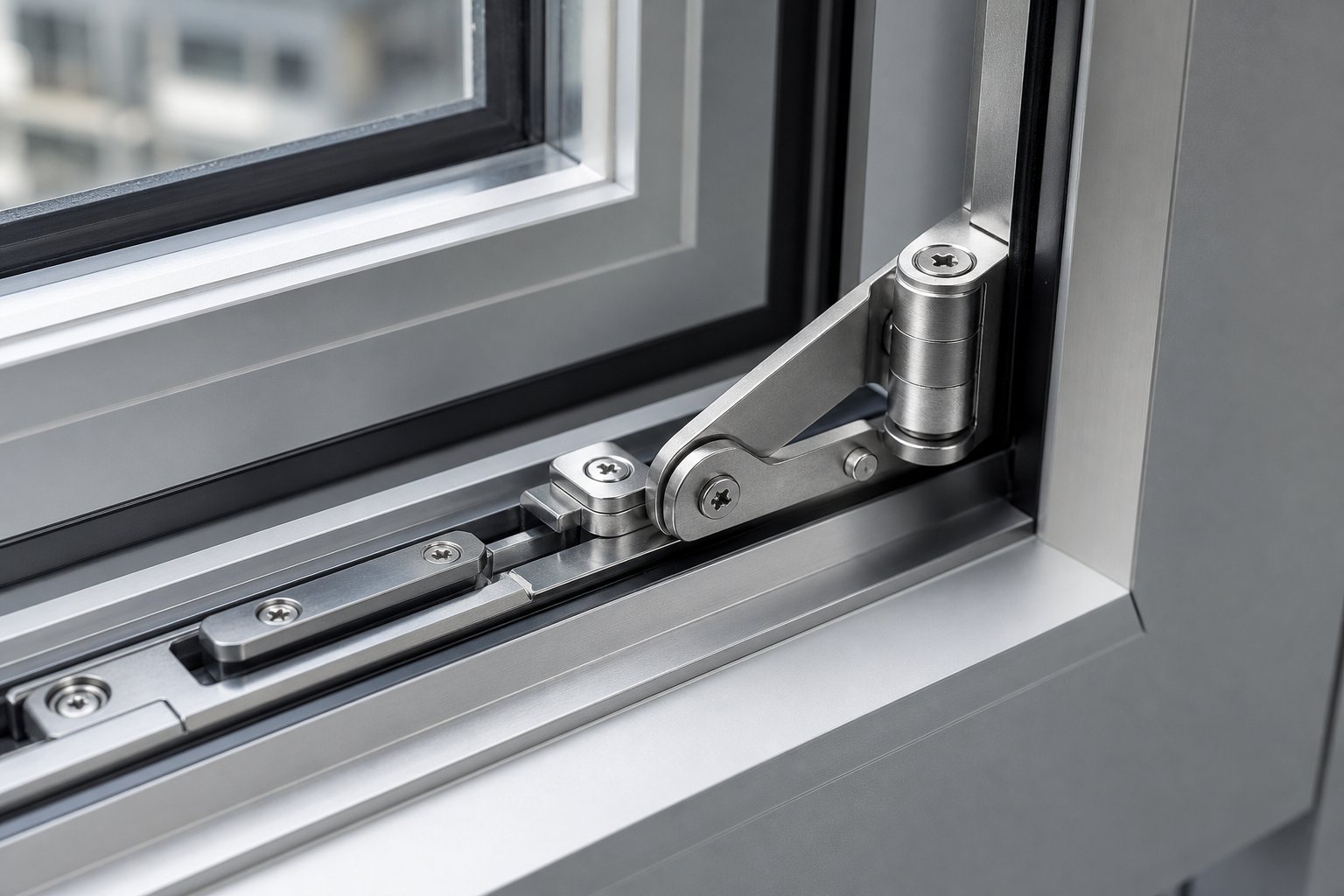
Spotless frames sitting in corroded hinges and cracked seals still leak, rattle, and waste energy. Each hardware component in an aluminium window system — hinges, rollers, tracks, locks, handles, stays, and weatherstripping — operates under different mechanical stresses, attracts different contaminants, and needs a specific type of lubrication at its own interval. A blanket “oil everything once a year” approach misses most of the detail that actually prevents failure.
Hinges, Rollers, and Track Maintenance
Hinges on awning and casement windows bear the sash’s full weight every time you open and close them. Dust and grit work into the pivot points, increasing friction and wearing out the mechanism. To lubricate aluminium window hinges correctly, start by wiping the hinge knuckles and pivot points clean with a soft cloth dampened in mild soapy water. Dry them completely, then apply a silicone-based spray lubricant sparingly to the moving joint. Work the hinge through its full range of motion several times to distribute the lubricant evenly. Repeat every six months, or quarterly in coastal and dusty environments.
Friction stays deserve special caution. Over-lubricating can reduce the tension that holds the sash in its open position, causing it to drop or swing freely. If restrictor stays are fitted, release them regularly and open the window fully to prevent the mechanism from seizing. A light wipe with a dry cloth is usually sufficient — add silicone spray only if they feel genuinely stiff, not as a preventive routine.
Rollers on sliding windows and doors rely on clean tracks to function. The best lubricant for aluminium window tracks is a dry silicone spray rather than a wet lubricant or grease. Wet products attract and hold sand, grit, and hair, which grinds into roller bearings and either stops them turning or wears them out prematurely. Clear the track first — vacuum loose debris, scrub with a soft brush and soapy water, rinse, and dry — then apply a light mist of dry silicone. Test by sliding the sash back and forth to confirm smooth operation.
Locking Mechanisms and Handle Care
Lock sets accumulate dust and salt particles inside the cylinder over time. If a key feels stiff or a lock won’t engage smoothly, clean the exterior with mild soapy water and dry it off, then spray a small amount of lubricant directly into the keyway. Insert and remove the key several times to spread the lubricant through the pins. Avoid petroleum-based sprays like WD-40 for this task — they leave a residue that attracts more grit and gums up the cylinder long-term. Graphite-based or dry lubricants suit lock mechanisms better.
Handles and latches need less frequent attention. Wipe them clean during your regular frame wash and check for looseness. A handle that wobbles usually means a screw has worked loose from repeated use — tighten it before the movement damages the spindle or creates an air gap around the handle plate. When latches become stiff, a light spray lubricant worked into the mechanism while you open and close it a few times generally restores smooth function.
Inspecting and Maintaining Seals and Weatherstripping
Rubber gaskets and weatherstripping form the airtight barrier between a closed sash and the frame. They compress every time the window shuts and slowly lose their ability to spring back — a process called compression set. UV exposure accelerates hardening and cracking, particularly on north and west-facing windows that cop direct Australian sun year-round.
A proper aluminium window weatherstrip inspection guide starts with visual and tactile checks. Run your finger along the entire gasket perimeter with the window open. Feel for sections that have gone hard, flat, or tacky. Close the window and check for daylight gaps or uneven contact. On a windy day, hold a lit incense stick near the closed frame edge — smoke deflection reveals draft points the eye can’t detect.
To maintain rubber seals between replacements, wipe them clean with a damp cloth (no solvents — petroleum-based products degrade rubber) and apply a silicone-based rubber conditioner annually. This restores some flexibility and prevents surface cracking from UV exposure. Never use products like Armor All or tyre shine, which create a slippery film that prevents proper compression when the window closes.
Knowing when to stop conditioning and start replacing is critical. Watch for these aluminium window seal replacement signs:
- Visible cracking, splitting, or chunks missing from the gasket
- Loss of elasticity — the seal doesn’t spring back when pressed with a fingertip
- Obvious gaps between the seal and frame when the window is fully closed
- Draughts felt around the frame edge despite the latch being engaged
- Water ingress at the frame perimeter during rain, particularly wind-driven rain
- The gasket has pulled away from its groove or no longer sits flush
Most quality rubber gaskets last 10 to 20 years depending on orientation and climate, with sun-exposed faces typically needing replacement sooner. Push-fit gaskets on many aluminium window profiles can be pulled from their channel and pressed back in as a straightforward replacement — no adhesive required. If you’re unsure of the gasket profile, a local glazier can identify and source the correct section quickly.
Neglected hardware creates a cascade effect that reaches well beyond squeaky hinges. A stiff roller forces you to push harder on the sash, which stresses the lock and deforms the frame’s alignment over time. Misalignment means the seal no longer compresses evenly against the frame. Uneven compression creates gaps. Gaps let in air and moisture. Moisture accelerates corrosion at the very joints already under mechanical stress. Each neglected component hands more work to the next one down the chain — and eventually, you’re dealing with energy loss, water damage, and a repair bill that dwarfs the cost of a $15 can of silicone spray and twenty minutes of attention each quarter.
Maintenance, Energy Efficiency, and Knowing When to Get Help
That cascade from neglected hardware to misalignment to seal gaps doesn’t just let in noise and water. It bleeds conditioned air straight out of your home. Do aluminium windows lose energy efficiency over time? Not because of the aluminium itself — but because every degraded component around the glass reduces the system’s ability to maintain an airtight envelope. The frames stay structurally sound for decades, yet the performance of the whole assembly depends on seals, hardware, and alignment working in concert.
How Maintenance Failures Impact Energy Efficiency
A double-glazed aluminium window with intact seals traps an insulating layer of air or argon gas between the panes. The moment those seals degrade, that gas layer escapes and ambient air replaces it, reducing the unit’s performance to roughly single-glazing levels. That’s a potential 30 per cent increase in heat transfer through a single window — multiplied across every affected opening in the house.
How window seal failure affects energy bills is straightforward maths. A partially degraded seal can add up to 15 per cent to heating and cooling costs for that opening. Full failure pushes that figure to 30 per cent. In an Australian climate where air conditioning dominates summer energy costs, even small gaps around frames force your HVAC system to compensate constantly.
Aluminium window draft repair and maintenance starts with identifying where the loss is happening. Run your hand slowly around the frame edge on a cold morning or windy day. Any cool airflow across your skin means the seal or weatherstrip at that point has lost compression. Condensation appearing between the glass panes — a foggy or milky haze that won’t wipe away — signals the internal glazing seal has failed entirely, and no amount of external maintenance will restore it.
Difficulty closing a window fully is another red flag. If the sash doesn’t sit flush in the frame, the lock can’t pull it tight against the seals, and the resulting gap acts as a permanent vent. Corroded or worn rollers, sagging hinges, and bent stays all cause this kind of misalignment — problems that routine hardware maintenance would have prevented.
Signs You Need Professional Window Assessment
Most aluminium window maintenance sits comfortably within DIY territory. Cleaning, lubricating, conditioning seals, and tightening hardware are all tasks a homeowner can manage with basic tools and twenty minutes of attention. But certain issues signal that you’ve crossed from preventive care into repair territory where professional skills and equipment matter.
Knowing when to call a professional for window maintenance protects you from making problems worse. These warning signs warrant expert assessment:
- Pitting corrosion that extends beyond surface marks into visible craters or structural thinning of the frame profile
- Persistent water leaks that continue after you’ve replaced seals and cleared drainage channels
- Structural frame distortion — bowing, warping, or corners pulling apart — that prevents the sash from closing evenly
- Failed insulated glass units showing internal condensation (the sealed unit itself needs replacing, not just the frame seal)
- Galvanic corrosion at joints where dissimilar metals meet, particularly if the affected area is load-bearing
- Locks or latches that no longer engage despite adjustment, indicating frame misalignment beyond simple hardware fixes
Professional installers carry specialised tools — suction cups, shims, precision levels — and understand how to correct alignment without stressing adjacent components. They also spot hidden damage like frame rot in surrounding timber reveals or compromised flashing that a surface inspection misses. Attempting structural corrections without this expertise risks voiding warranties or creating new leak paths.
Quality matters at the system level too. Windows engineered with durable hardware, well-designed drainage, and precision-fit gaskets require less corrective intervention over their lifespan. MEICHEN’s aluminium window systems are built with these performance considerations in mind — their range of window types and custom options addresses common maintenance pain points through hardware selection, thermal break design, and seal specification tailored to Australian residential and commercial conditions. When the initial engineering accounts for long-term serviceability, maintenance stays in the simple, routine category rather than escalating into professional repair.
Whether you’re managing a single-storey home or a multi-unit development, the principle holds: catch energy-related symptoms early, handle what you can, and bring in expertise before small failures compound into expensive ones. That proactive mindset pairs naturally with a structured maintenance schedule — one that tells you exactly what to check, when, and how to document it for warranty protection.
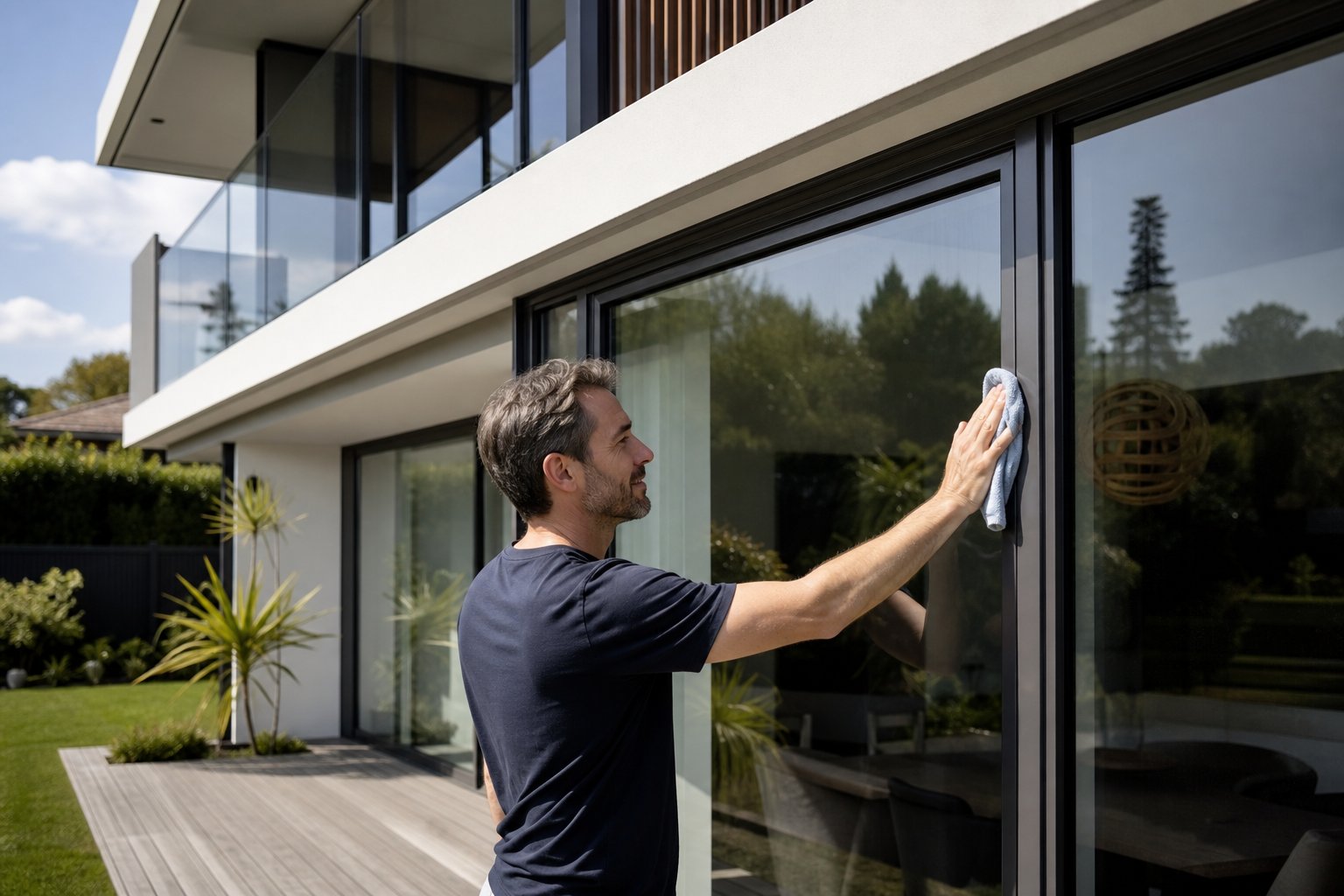
Your Complete Seasonal Maintenance Calendar for Aluminium Windows
Knowing what to do is only half the equation. Knowing when to do it — and proving you did — turns good intentions into a system that protects both window performance and warranty coverage. A structured aluminium window maintenance schedule by season removes guesswork and ensures nothing falls through the cracks between one clean and the next.
The calendar below layers tasks by frequency: quick monthly checks, quarterly cleaning, biannual deep maintenance, and a full annual aluminium window inspection checklist. Adjust intervals shorter based on the climate guidance covered earlier — coastal and high-pollution environments compress every timeline.
Monthly and Quarterly Quick Maintenance Tasks
Monthly tasks take five minutes per window. They’re designed to catch problems early, not to constitute a full service.
- Monthly — Visual scan and operation check. Open and close each window. Listen for grinding or stiffness. Glance at seals for obvious damage. Wipe coastal salt deposits with a damp cloth if you’re near the ocean.
- Monthly — Clear tracks and drainage holes. Run a finger along sliding tracks and check weep holes at the base of the frame. Remove any debris blocking water escape routes.
- Quarterly — Full frame wash. Follow the step-by-step cleaning process outlined earlier: pre-rinse, wash with pH-neutral detergent, rinse, dry. Clean glass with standard window cleaner.
- Quarterly — Lubricate moving parts. Apply silicone spray to hinges, rollers, and lock cylinders. Work each mechanism through its full range to distribute lubricant evenly.
- Quarterly — Hardware tightness check. Test handles for wobble and tighten any loose screws. Confirm locks engage smoothly and latches seat fully.
For properties in sheltered suburban locations, this seasonal window maintenance calendar for homeowners covers 90 per cent of what’s needed. Coastal or industrial-zone properties should treat the quarterly tasks as bi-monthly instead.
Biannual Deep Maintenance Checklist
Twice a year — ideally in early autumn and late spring — set aside 30 to 45 minutes per window for a thorough service. This is where you catch degradation before it cascades into costly repairs.
- Full seal and gasket inspection. Check every rubber seal for cracking, hardening, compression set, and gaps when the window is closed. Apply silicone-based conditioner to flexible seals.
- Deep clean tracks and hardware recesses. Remove built-up grime from corners, drainage channels, and around locking mechanisms using a soft brush and soapy water.
- Inspect for corrosion signs. Look for pitting, white powdery deposits, discolouration at joints, and chalking on powder-coated surfaces. Address early oxidation with a non-abrasive restorative cleaner.
- Test weatherproofing. On a breezy day, check for drafts around closed sashes using the incense-stick method. Note any areas of concern for follow-up.
- Check alignment. Confirm sashes close evenly against the frame without forcing. Uneven gaps indicate roller, hinge, or stay issues that need attention before they worsen.
| Task | Frequency | Time Required | Tools Needed |
|---|---|---|---|
| Visual scan and operation check | Monthly | 5 minutes per window | None |
| Track and weep hole clearing | Monthly | 5 minutes per window | Soft brush or vacuum with crevice attachment |
| Full frame and glass wash | Quarterly | 15–20 minutes per window | Bucket, pH-neutral detergent, microfibre cloths, hose |
| Hardware lubrication | Quarterly | 5–10 minutes per window | Silicone spray, dry cloth |
| Seal inspection and conditioning | Biannually | 10–15 minutes per window | Silicone-based rubber conditioner, soft cloth |
| Corrosion and alignment check | Biannually | 10 minutes per window | Torch, incense stick (for draft detection) |
| Comprehensive professional inspection | Annually | 1–2 hours (full property) | Professional service (recommended for multi-storey or complex installations) |
An annual professional service rounds out the calendar. A qualified technician adjusts alignment, replaces worn gaskets, re-lubricates all hardware, and provides a written condition report. For multi-storey homes or commercial properties with dozens of openings, this professional layer picks up issues that self-inspection from inside simply can’t reach.
Documenting Maintenance for Warranty Protection
Here’s where most homeowners leave money on the table. Aluminium window warranty maintenance requirements almost universally include a clause requiring “regular maintenance in accordance with manufacturer guidelines.” If something fails and you lodge a claim, the manufacturer can ask for evidence. No records means no leverage — and potentially no coverage.
Knowing how to document window maintenance for warranty purposes doesn’t require complex systems. Keep a simple log — digital or paper — that records:
- Date of each maintenance session
- Tasks performed (cleaning, lubrication, seal conditioning, etc.)
- Products used (brand and type — confirms pH-safe, manufacturer-approved choices)
- Any issues identified and actions taken
- Photos of frame condition, particularly at joints, seals, and any areas of concern
- Receipts for professional services or replacement parts
Many manufacturers now require proof of maintenance to process warranty claims, and having a dated photo log with matching service notes creates an evidence trail that’s difficult to dispute. A phone album labelled “Window Maintenance” with timestamped photos after each quarterly clean is effortless and effective.
Store your original warranty documents, purchase receipts, and installation records alongside this maintenance log. If you ever sell the property, these records demonstrate care history to buyers and may support transferable warranty claims — adding tangible value at sale time.
Properly maintained aluminium windows serve Australian homes for 30 to 45 years. That lifespan hinges on the small, consistent efforts mapped out in this calendar rather than sporadic bursts of attention after damage appears. For homeowners, builders, and project teams planning new installations or replacements, choosing window systems engineered for long-term serviceability makes that ongoing maintenance simpler from day one. MEICHEN’s aluminium window range is designed with Australian conditions at the centre — their specification options, custom configurations, and project-ready integration factor maintenance accessibility into the product from the outset, giving you a system that rewards consistent care with decades of reliable performance.
Aluminium Window Maintenance FAQs
1. How often should you clean aluminium window frames?
Cleaning frequency depends on your environment. Properties in sheltered suburban areas typically need a full clean every three to six months. Coastal homes within one kilometre of the ocean should clean monthly or fortnightly for directly exposed windows. Urban properties near busy roads or industrial zones benefit from cleaning every two to three months. Monthly track clearing and visual checks are recommended regardless of location to catch early signs of corrosion or seal degradation.
2. What is the best cleaner for aluminium window frames?
A pH-neutral liquid detergent (pH 6 to 8) mixed with warm water is the safest and most effective option for all aluminium finish types. Standard dish soap without bleach or ammonia additives works well. For powder-coated frames, avoid solvents, caustic cleaners, and anything strongly acidic or alkaline. Anodised frames tolerate mild solvents like kerosene for stubborn marks, but never strong acids. Automotive wash soaps formulated for clear coats also perform reliably on aluminium window frames without risking warranty issues.
3. How long do aluminium windows last with proper maintenance?
Well-maintained aluminium windows typically last between 30 and 45 years in Australian conditions. Without regular care, that lifespan can compress to around 15 years of declining performance before full replacement becomes necessary. Factors like finish type, climate exposure, and hardware quality all influence longevity. Consistent low-effort maintenance — quarterly cleaning, biannual seal inspection, and regular hardware lubrication — protects this investment far more effectively than sporadic intensive repairs after damage appears.
4. How do you remove oxidation from aluminium window frames?
Start with a standard wash to clear surface dirt, then apply a non-abrasive restorative cleaner — automotive finish renovators designed for clear coats work well on powder-coated aluminium. Use a clean microfibre cloth with light circular motions over the oxidised area. Always test in an inconspicuous spot first to confirm compatibility with your specific finish. Buff with a separate dry cloth, rinse thoroughly, and dry. Avoid abrasive pads or cream cleansers, which scratch the finish and accelerate further deterioration rather than resolving it.
5. Do aluminium windows need different maintenance in coastal areas?
Yes, coastal properties face significantly higher maintenance demands due to chloride exposure from salt spray. Frames within 500 metres of the ocean can show visible pitting corrosion within two to five years without regular rinsing. Beachfront homes benefit from a weekly fresh-water rinse to flush salt deposits before they settle. Hardware inspection should increase to quarterly since steel fixings corrode rapidly in salt air, creating galvanic damage to surrounding aluminium. Applying protective wax biannually adds an extra barrier against chloride penetration.
More Window & Door Guides