What Aluminium Window Installation Really Costs
Searching for an aluminium window installation cost online returns a dizzying spread of numbers. One supplier quotes $600 per opening; another says $1,800. The gap makes sense once you realise that “installation cost” is not a single line item — it is the combined price of the window unit, labour, consumables, preparation, and finishing work required to deliver a fully weatherproofed, compliant result.
A supply-only price tells you what the aluminium frame and glazing unit costs before anyone touches your wall. The fully installed price layers on everything else: measuring, removing old windows, fitting, sealing, flashing, trimming, and cleanup. Any windows installation cost estimate that ignores these layers will leave your budget exposed.
What Does Installation Cost Actually Include
A proper aluminium window installation covers far more than bolting a frame into a hole. The installed price typically accounts for precise site measurement, removal and disposal of existing windows, structural preparation of the opening, fitting the new unit with appropriate fixings, applying sealants and flashing for waterproofing, installing interior and exterior trims, and final adjustment of hardware. Each task carries its own material and labour component, which is why a window installation cost calculator that only considers unit price will underestimate your real spend.
Why Aluminium Window Costs Vary So Much
Several variables create the wide price range homeowners encounter when researching. Window size and type, site access, building age, wall construction (brick veneer, weatherboard, rendered block), the number of openings, glazing specification, and your location within Australia all influence the final figure. A standard sliding window in a single-storey brick veneer home in suburban Melbourne costs considerably less to install than a custom-sized awning window on the second storey of a heritage weatherboard in inner Sydney.
The window unit itself often represents only 40–60% of the total installed cost, with labour, flashings, sealants, removal, and finishing work making up the rest.
This article breaks down every one of those cost drivers — from material specs and labour models through to hidden surprises behind the frame — so you can build a realistic budget before the first quote lands in your inbox.
Full Cost Breakdown for Aluminium Window Projects
Every dollar in an aluminium window project lands in one of six buckets. Understanding how much sits in each — and what pushes that share up or down — gives you the clarity to compare quotes on equal terms and spot where a price looks too good to be true.
| Category | Typical Share of Total Cost | Key Variables |
|---|---|---|
| Window unit (frame + glazing) | 40–55% | Frame profile, glazing type, hardware, colour/finish, size |
| Labour and installation | 25–35% | Access difficulty, storey height, number of openings, wall type |
| Consumables and supplies | 5–8% | Sealants, fixings, flashings, packers, foam, trims |
| Removal and disposal | 5–10% | Old frame material, hazardous materials, skip bin requirements |
| Permits and compliance | 2–5% | Council requirements, NCC compliance, certification type |
| Structural or remedial work | 0–15% | Lintel upgrades, frame repairs, opening resizing |
Material and Unit Costs Explained
The aluminium window price you see on a supplier’s list is shaped by more than frame dimensions. Four technical factors do most of the heavy lifting on unit cost:
- Frame profile and thermal performance — A standard aluminium frame is the entry point. Thermally broken profiles, which insert a polyamide strip between the inner and outer aluminium sections to reduce heat transfer, carry a 20–40% premium but dramatically improve the window’s U-value. In climate zones where NatHERS compliance demands high-performing glazing, thermally broken frames are increasingly the default rather than a luxury add-on.
- Glazing specification — Single glazing sits at the bottom of the price scale but fails to meet NCC energy requirements for most Australian climate zones. Double glazing with a low-E coating and argon gas fill is the current mainstream standard, while triple glazing pushes performance further at a higher cost. A window’s U-value — the rate of heat loss measured in W/m2K — drops significantly with each upgrade: a single-pane aluminium window can sit around U-5.8, whereas a double-glazed low-E unit with argon fill reaches approximately U-1.6, and triple glazing pushes below U-1.2.
- Hardware quality — Hinges, locks, stays, and handles range from basic zinc-alloy fittings to marine-grade stainless steel. Coastal properties in salt-spray zones often require upgraded hardware to maintain warranty coverage and long-term function.
- Colour and finish — Standard powder-coat colours (white, black, monument, surfmist) are typically included in base aluminium windows prices. Custom colours, Dulux or Interpon specialist finishes, anodised options, or woodgrain sublimation prints add $30–$80+ per window depending on the batch size and profile length.
Together, these variables mean two windows of identical external dimensions can differ by hundreds of dollars in supply-only cost before anyone picks up a drill.
Labour and Installation Charges
The window install labour cost covers a sequence of skilled tasks: final site measurement verification, careful removal of the existing frame without damaging surrounding finishes, preparation of the rough opening, fitting the new unit plumb and square, mechanical fixing into the structure, application of sealant and flashing tape, installation of interior and exterior architraves or cover moulds, hardware adjustment, and site cleanup.
In Australia, qualified window installers typically charge between $70 and $120 per hour per tradesperson, though pricing models vary:
- Per-window pricing — Common for straightforward replacements in accessible locations. Expect $150–$400 per standard opening depending on size and complexity.
- Per-hour pricing — Used when site conditions are unpredictable or access is difficult (upper-storey work, scaffolding required, tight internal spaces).
- Per-project pricing — Typical for whole-house installations or new builds where the installer quotes the full scope as a lump sum, often delivering a lower per-unit rate thanks to mobilisation efficiencies.
A useful benchmark: labour generally accounts for 30–40% of the total installed price on a standard residential project. That ratio climbs when access is restricted, wall construction is complex, or the home is multi-storey. Anyone running a window installation labour cost calculator should factor in these site-specific realities rather than relying on a flat per-unit figure.
Permits, Inspections, and Compliance Fees
Whether you need council approval for window replacement depends on your state, local government area, and the scope of the work. In many Australian jurisdictions, a like-for-like replacement in the same opening does not require a development application. However, changing the size or position of an opening, installing windows in a bushfire-prone area (BAL-rated land), or working on heritage-listed properties typically triggers permit requirements.
Costs vary by council but generally fall in these ranges:
- Complying development certificate (CDC) or exempt development confirmation — $0–$300
- Development application (DA) for altered openings — $200–$1,000+
- Building certification and final inspection — $300–$800
- BAL assessment or bushfire compliance report — $200–$600
Confirm your local requirements early. A phone call to your council’s planning department — or a check on their online portal — prevents budget surprises after work has already started. Windows must also comply with AS 2047 (windows and external glazed doors) and AS 1288 (glass in buildings), and your installer or certifier will verify these standards are met.
With each cost category mapped out, the next question becomes how these figures shift depending on the style of window you choose — because a fixed-pane picture window and a gas-strut awning window of the same dimensions land in very different price brackets once installation complexity enters the equation.
Installation Cost Differences by Window Type
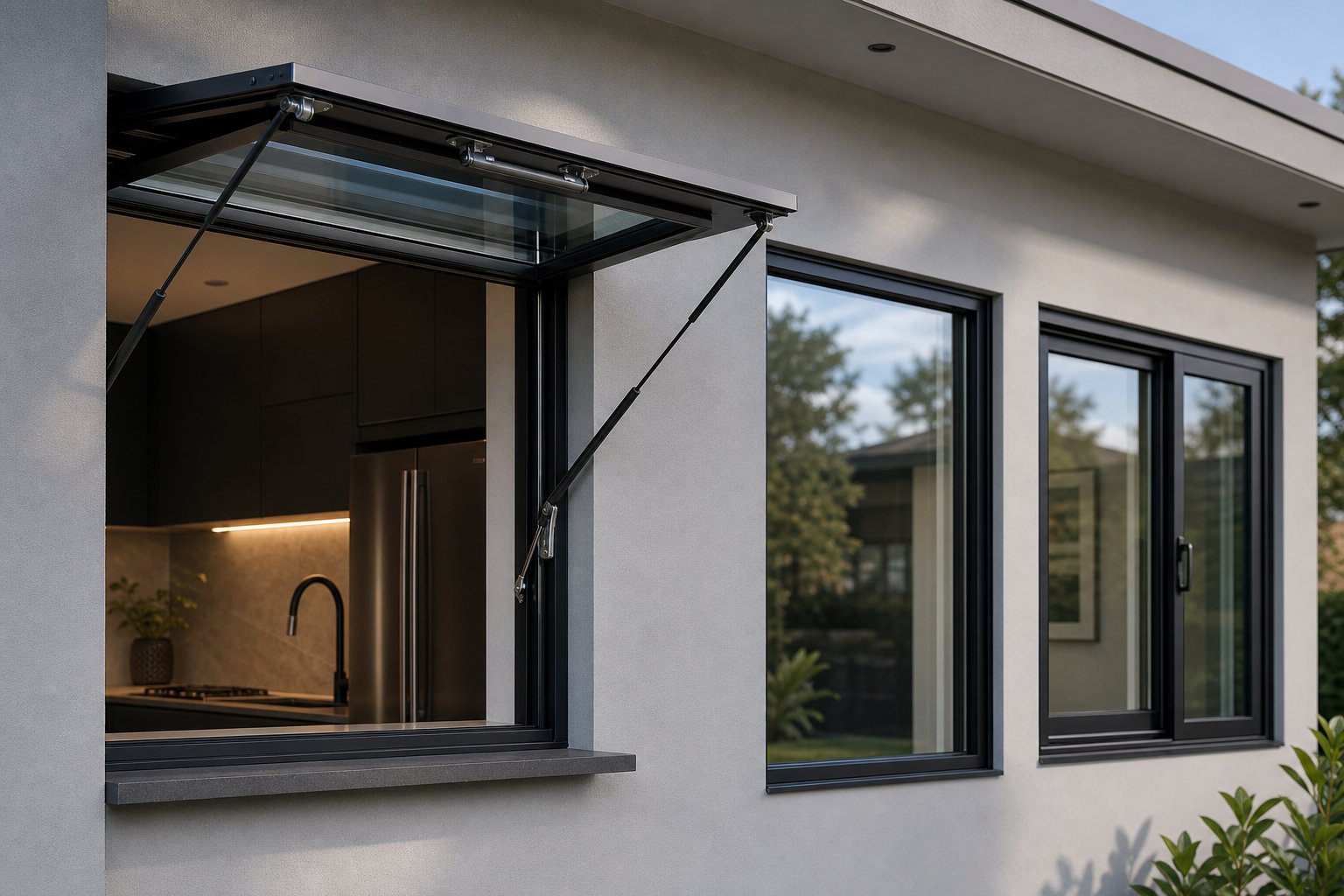
An aluminium windows price list might show a modest gap between window styles in supply-only terms, but the installed price tells a different story. A casement window requires precise hinge alignment and multi-point seal testing. A gas strut awning window demands mechanism calibration and structural reinforcement of the head. A fixed picture window, by contrast, slots into its opening with comparatively little fuss. The type of window you choose directly shapes how long the installer spends on site — and labour time is where costs diverge most sharply between styles.
Casement and Awning Window Installation
Casement windows hinge on one side and swing outward, while awning windows hinge at the top and push out from the bottom. Both styles share a common installation challenge: the hinges, friction stays, and multi-point locking hardware must be aligned with tight tolerances so the sash closes flush against the weather seals on all four sides.
Getting this right takes time. The installer needs to:
- Set the frame perfectly plumb and square — even a 2 mm deviation across the opening can prevent the sash from seating properly against the compression seal.
- Fit and adjust friction stays or hinges so the sash opens to the correct angle without binding or dropping.
- Align multi-point locking mechanisms, testing each lock point for smooth engagement.
- Verify the weather seal creates continuous contact when closed, which is critical for meeting Australian wind and water performance requirements under AS 2047.
This precision work adds 15–30 minutes per window compared to a simpler fixed or sliding unit, and that time compounds across a full-house project. For awning windows with a winder or chain mechanism rather than a basic friction stay, add further adjustment time to ensure smooth operation at full extension.
Sliding and Double-Hung Window Costs
Sliding windows and double-hung windows sit at the more straightforward end of aluminium windows installation. Sliding sashes run along a horizontal track within the frame, while double-hung windows use vertical tracks with a spring-balance system to hold the sash at any height.
Installation is relatively faster because:
- Track systems are pre-assembled within the frame, reducing on-site hardware fitting.
- No outward-opening mechanism means less sensitivity to precise frame squareness — minor imperfections are absorbed by the track tolerances.
- Weatherproofing relies on pile seals and interlocking meeting stiles rather than compression seals, so the adjustment window is wider before performance suffers.
For standard residential openings, a competent installer can fit a sliding window in roughly 60–90 minutes per unit (excluding removal of old frames). Double-hung windows take slightly longer due to the spring balance calibration — each sash needs its balances tensioned so it stays put at any position without creeping. Still, both types sit below casement and awning styles in per-unit labour time, making them a practical choice when the aluminium window price needs to stay lean across multiple openings.
Specialty Windows and Premium Installations
Step into bay windows, bow windows, corner windows, gas strut awning systems, or oversized picture windows, and the installation dynamic shifts considerably. These are not just bigger units — they introduce structural demands, custom fabrication, and extended fit-out time that push costs well beyond a standard opening.
Bay and bow windows project outward from the building’s wall plane. They require structural support underneath (cantilevered steel or a concrete pier for ground-floor bays), a weatherproof roof or flashing system above, and careful joining of multiple frame sections at precise angles. According to window specialists, bay windows often need planning approval due to the structural alterations involved, while bow windows — with their curved multi-panel configuration — can cost 1.5 to 2.5 times more than a bay window of similar size due to custom fabrication of each panel at specific angles.
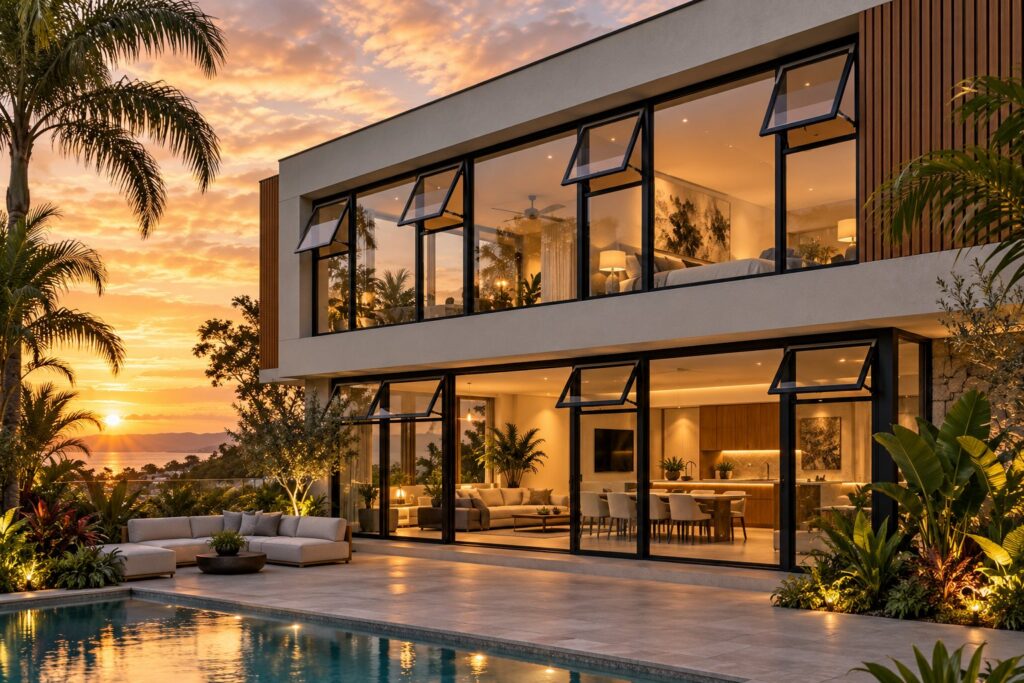
Gas strut awning windows are increasingly popular in Australian homes for indoor-outdoor living areas, serveries, and alfresco kitchens. The gas strut window cost sits higher than a standard friction-stay awning window of the same dimensions because the installer must mount gas struts with the rod facing downward for correct lubrication, calibrate strut tension to match the sash weight, reinforce the head of the frame to handle the upward-opening load, and test the mechanism repeatedly to confirm smooth, balanced operation. Larger gas strut windows — common in entertainer-style homes — may also require a structural lintel upgrade to carry the additional weight and leveraged forces.
Corner windows join two glazed sections at a 90-degree angle without a structural post, creating a frameless corner effect. They demand precision engineering of the structural support above (usually a concealed steel), specialist sealing at the glass-to-glass joint, and extended installation time for alignment.
Fixed picture windows are the simplest to install — no moving parts, no hardware adjustment. However, oversized picture windows (anything beyond approximately 2400 mm x 1200 mm) introduce handling difficulty, potential crane or suction-cup lifting requirements, and heavier glazing units that may need upgraded fixings or lintels.
| Type | Relative Installation Complexity | Key Cost Drivers |
|---|---|---|
| Fixed / picture window | Low | Size and weight of glass unit; potential crane access for oversized panes |
| Sliding window | Low–Moderate | Track alignment; number of panels; screen door addition |
| Double-hung window | Moderate | Spring balance calibration; sash weight matching |
| Casement window | Moderate–High | Hinge alignment; multi-point lock adjustment; compression seal verification |
| Awning window (friction stay) | Moderate–High | Stay adjustment; winder mechanism fitting; seal testing |
| Gas strut awning window | High | Strut mounting and calibration; head reinforcement; weight balancing |
| Bay / bow window | High–Very High | Structural support; multi-frame joining; roof/flashing; possible council approval |
| Corner window | Very High | Concealed structural steel; glass-to-glass sealing; precision alignment |
The pattern is clear: every moving part, structural modification, or non-standard joint adds labour hours and specialist materials. A homeowner replacing six standard sliding windows will land in a very different cost bracket than someone fitting two gas strut servery windows and a corner glazing system — even if the total glass area is similar. Factoring in window type early lets you forecast where your project sits on the complexity scale, and whether the scope calls for a straightforward replacement or a more involved build that may also differ depending on whether you are fitting into new construction or retrofitting an existing home.
New Construction vs Replacement Installation Costs
Two homes can order the exact same aluminium window — identical size, identical glazing spec, identical colour — yet pay vastly different amounts to have it installed. The gap almost always comes down to one distinction: is the window going into a brand-new opening with exposed framing, or is it replacing an existing unit in a finished wall? This single variable reshapes the labour scope, the materials required, and the coordination involved, making it one of the largest cost drivers in any aluminium window installation.
New Construction Window Installation
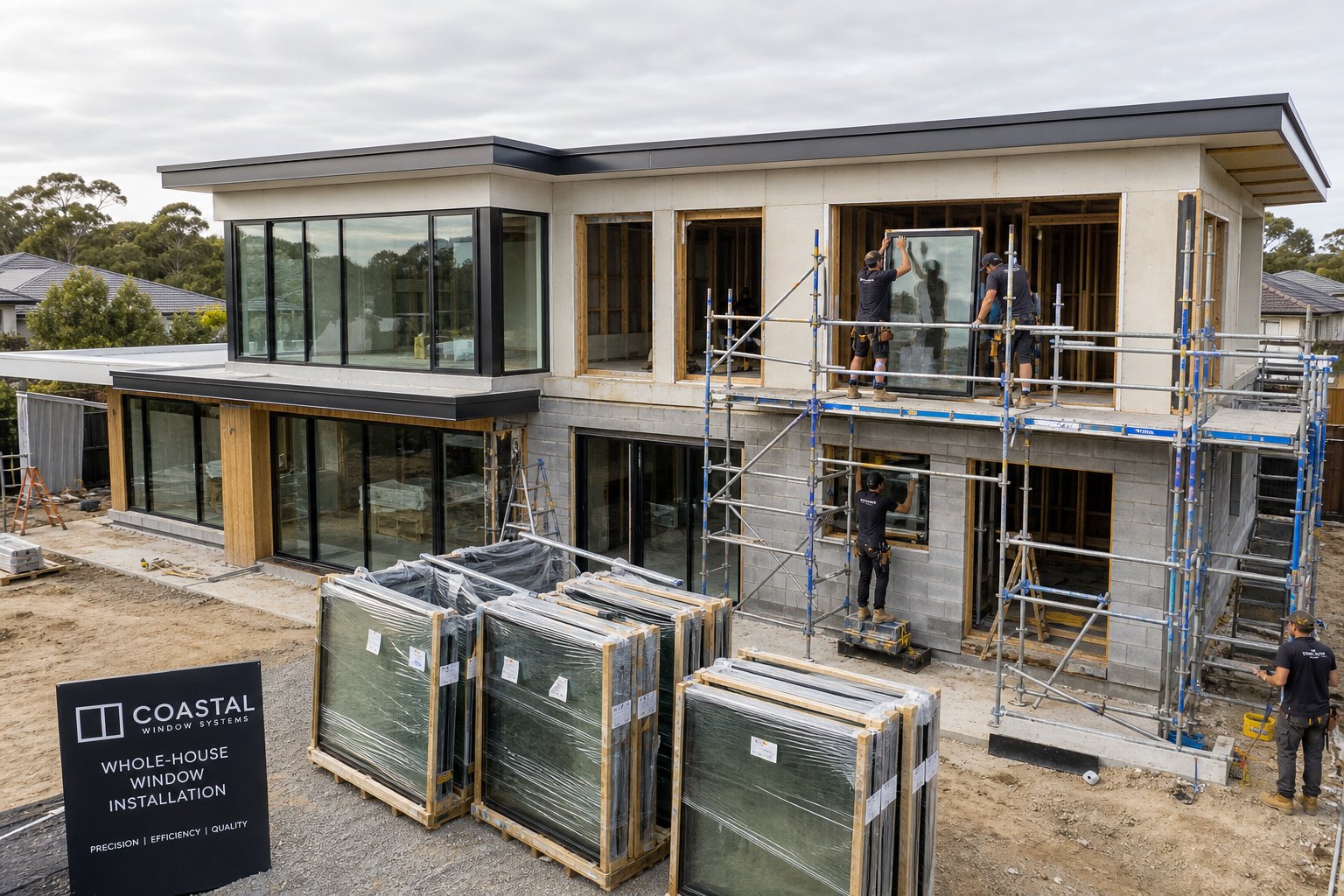
Installing aluminium windows into a new build or an extension with exposed stud framing is, unit for unit, the faster scenario. The rough opening is already sized to suit the window schedule, there is no old frame to remove, no existing finishes to protect, and no disposal costs. Fixings go directly into timber or steel studs through the window’s nailing flange or mounting lugs, and flashings integrate with the building wrap before cladding is applied.
Because the installer works on bare framing with clear access, productivity is higher — a crew on a new residential build can often fit eight to twelve standard openings in a day. That efficiency, combined with the ability to order all windows as a single batch, enables bulk project pricing that brings down the per-unit cost. Installers quoting a whole-house new build will commonly offer a lower per-opening rate than they would for a one-off replacement job, simply because mobilisation, set-up, and travel are amortised across many units.
The trade-off is coordination. Windows in new construction must arrive on site at precisely the right point in the build sequence — after framing and wrap are complete but before internal lining and external cladding close everything in. Delays in other trades push window installation back, and poor scheduling can leave openings exposed to weather or force temporary protection measures that add cost.
Retrofit and Replacement Installation
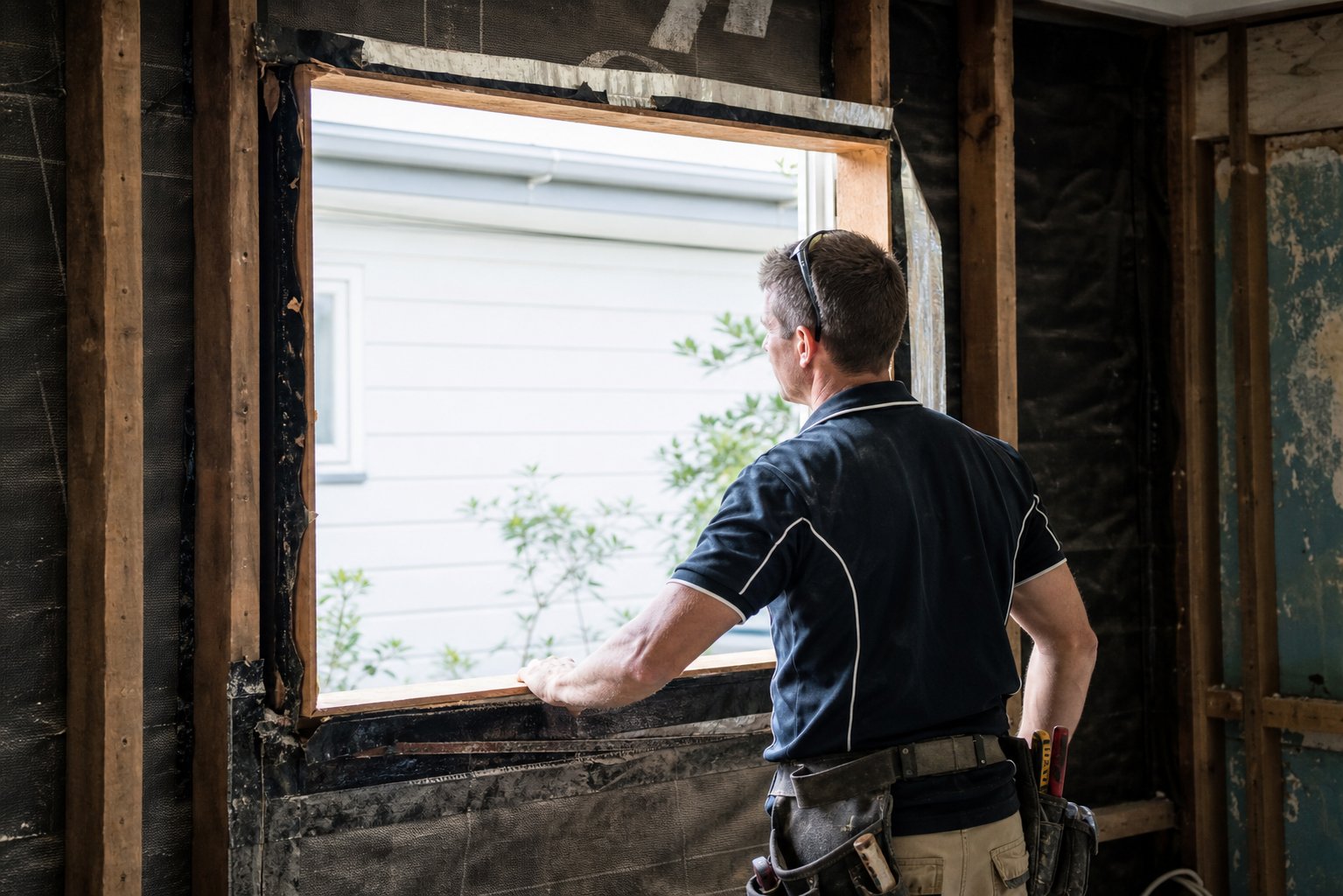
Replacing windows in an existing home is a fundamentally different exercise. The installer must carefully remove the old frame without damaging surrounding plaster, render, brick, or weatherboard. Once the frame is out, conditions behind it are revealed — and they are not always friendly. Rotted timber reveals, corroded steel lintels, non-square openings that have settled over decades, and inadequate flashing from the original build are all common discoveries that add unplanned labour and materials.
After removal, the opening needs preparation: cleaning, squaring with packers, repairing any damaged substrate, and applying new flashing before the replacement window is fitted. Interior and exterior trims then require reinstating — often with new architraves, cover moulds, or plaster patching that did not exist as a line item in the new-build scenario. This finishing work alone can add 30–60 minutes per opening.
The cost picture changes dramatically depending on whether the replacement window fits the existing opening or whether the opening itself is being altered. A like-for-like swap into the same sized opening is the most economical retrofit path — the structure remains untouched, and the work stays within a predictable labour window. Changing the opening size, however, introduces structural work: cutting into brickwork or framing, installing or upgrading lintels, re-routing services, patching external cladding, and potentially lodging a development application with your local council. What starts as a homewyse window replacement estimate of a few hundred dollars per opening can quickly double or triple once structural modifications enter the scope.
Standard Sizes vs Custom Dimensions
Standard aluminium window sizes — those manufactured in common incremental dimensions that fit typical Australian residential openings — benefit from production efficiencies. They are held in stock or batched quickly, priced at base rates, and designed to drop into standard rough openings without structural changes. For most single-storey brick veneer or weatherboard homes built from the 1970s onward, standard sizes align well with existing openings.
Custom dimensions carry a premium at multiple levels. The window itself costs more because it requires individual fabrication rather than batch production. Lead times extend by two to six weeks depending on the manufacturer’s schedule. And if the custom size does not match the existing opening, structural modifications to the wall are needed to accommodate it — adding trades, materials, and potentially council involvement.
Custom-sized windows can cost 25–75% more than standard equivalents in supply-only terms, and the installation premium compounds on top of that figure when the opening must be altered to suit.
Custom sizing becomes necessary in several common scenarios:
- Heritage renovations where original openings do not match any current standard dimension and council requirements mandate retaining the original proportions
- Non-standard openings in older homes — particularly pre-war weatherboard, fibro, or Queenslander-style houses where nothing was built to today’s modular sizing
- Architectural design requirements where the window schedule specifies bespoke dimensions for aesthetic or performance reasons (floor-to-ceiling glazing, ribbon windows, oversized highlight panels)
- Additions or alterations where new openings are sized to align with existing features such as rooflines, eave heights, or adjacent joinery
If your project involves more than one or two custom units, discuss the full scope with your supplier early. Consolidating custom orders into a single manufacturing run reduces per-unit fabrication charges and avoids multiple delivery fees — a practical saving that also shortens the overall project timeline.
Whether the installation is new construction or retrofit, standard or custom, the quoted price only tells the full story if it accounts for what might go wrong once work begins. And that is where hidden costs — the ones that never appear on a supplier’s price list — separate a realistic budget from a budget blowout.
Hidden Costs and Common Budget Overruns
The quoted price for aluminium window installation assumes a clean, cooperative site. Walls that are plumb. Framing that is sound. Openings that match the dimensions on the order form. Reality often disagrees — particularly in older Australian homes where decades of moisture, pest activity, and shifting foundations have been quietly doing their work behind the cladding.
These hidden costs are not rare edge cases. Experienced installers will tell you that roughly one in three replacement projects uncovers at least one condition that adds unplanned cost to the job. Knowing what those conditions look like — and budgeting a contingency for them — is the difference between a controlled project and a stressful one.
Structural Surprises Behind the Frame
Old window frames act as a kind of lid. They conceal whatever has been happening inside the wall cavity for 20, 40, or 60 years. Pull that lid off, and three problems show up more than any others:
- Rotted or termite-damaged framing — Timber reveals, studs, and bottom plates around window openings are prime targets for moisture ingress and subterranean termites. A soft, punky reveal cannot hold fixings for a new aluminium frame. The damaged timber needs cutting out and replacing with treated framing before installation can proceed — adding $200–$600 per opening depending on the extent of the damage.
- Non-square openings — Houses settle. Brick veneer walls shift on their footings. Weatherboard homes twist as stumps deteriorate. The result is openings that are no longer plumb, level, or square. Minor deviations (under 5 mm across the opening) can be absorbed with packers and shims. Larger discrepancies require the opening to be rebuilt — re-lining with new timber, or in masonry, cutting and re-coursing brickwork. This remedial work easily adds half a day of labour per opening.
- Inadequate lintels — The structural beam spanning the top of a window opening must support the wall load above it. Older homes sometimes have undersized timber lintels, corroded steel angles, or lintels that have sagged under load. Heavier aluminium window units — particularly large double-glazed awning windows or gas strut systems — can exceed what the existing lintel was designed to carry. Lintel replacement or upgrading typically costs $500–$1,500 per opening in Australia, depending on the material (steel, concrete, or engineered timber), span, and access difficulty.
None of these issues are visible until the old window comes out. A reputable installer will include an allowance or a provisional sum for unexpected structural findings in their quote, precisely because these discoveries are so common in Australian housing stock.
Hazardous Material Considerations
Two hazardous materials routinely lurk around window openings in older Australian homes, and both trigger legal requirements that add significant cost if encountered.
Lead paint is present in most homes built before 1970, when Australia first restricted lead content in residential paint. Homes built between 1970 and 1997 may still contain some lead-based coatings, particularly on exterior timber joinery and window frames. Disturbing lead paint during removal — sanding, scraping, or demolishing painted timber — releases toxic dust that poses serious health risks. Licensed removal or encapsulation is required, and the cost for lead-safe work around window openings typically runs $400–$1,200 per opening depending on the extent of contamination and the method used. A professional lead inspection before work begins costs $300–$600 and can save thousands in unplanned delays.
Asbestos-containing materials (ACMs) are extremely common in Australian homes built before the mid-1980s. Fibro sheeting around window reveals, eaves above window heads, and older putty compounds can all contain asbestos. Any material suspected of containing asbestos must be tested before disturbance, and removal must be carried out by a licensed asbestos removalist in accordance with state workplace health and safety regulations. Depending on the quantity, removal costs range from $50–$150 per square metre for bonded (non-friable) asbestos to substantially more for friable materials requiring full containment. A two- or three-bedroom fibro home with asbestos window surrounds can add $2,000–$5,000 to a whole-house window replacement project solely in hazardous material handling.
Waterproofing and Flashing Done Right
Proper flashing and waterproofing are non-negotiable elements of any window installation — yet they are among the first items stripped out of low-cost quotes. The consequences of skipping or cheapening this work do not appear for months or years, by which time moisture has penetrated the wall cavity, rotted framing, and potentially created mould issues that cost far more to remediate than the flashing would have cost to install correctly in the first place.
A compliant flashing system around a window opening involves multiple layers working together: a sill pan (sloped to drain water outward), jamb and head flashings integrated with the wall’s water-resistive barrier, self-adhering flexible membranes at corners and transitions, and exterior sealant at the frame-to-cladding junction. Each layer addresses a different moisture pathway — bulk water, wind-driven rain, and capillary action — and the sequencing of installation matters as much as the materials themselves.
Beyond the weatherproofing layer, several finishing tasks contribute to the fully installed cost:
- Capping or wrapping exterior trim — Aluminium capping over exposed timber reveals and external architraves protects against moisture and eliminates future repainting. The capping windows cost depends on profile complexity and linear metreage, but expect $30–$80 per linear metre for supply and installation of formed aluminium wrap. Understanding how to wrap windows with aluminium trim involves precise measurement, brake-forming of sheet aluminium to match existing profiles, and sealing all joints against water entry.
- Interior plaster or plasterboard patching — Removing old windows almost always damages the surrounding internal lining. Patching, sanding, and finishing plaster around each opening adds $80–$200 per window to the labour cost to install window trim and make good internally.
- Repainting — Patched plaster needs painting to match the existing wall. If the surrounding paint has aged and discoloured, a clean patch stands out — sometimes forcing a full wall or full room repaint to achieve an acceptable finish.
- Temporary weatherproofing — When installation spans multiple days (common for whole-house projects or when structural work is required), open window cavities need protection from rain overnight. Temporary boarding, tarps, or plastic sheeting adds a small but real cost that installers must factor into scheduling and materials.
An aluminium window wrap cost adds to the initial budget, but it eliminates the ongoing cycle of scraping, priming, and repainting timber trims every five to seven years — a genuine long-term saving in maintenance time and cost.
With all these potential extras in mind, how do you tell whether a quote has accounted for them — or whether you are looking at a number that will balloon once work starts? These red flags suggest a quote may be missing critical cost items:
- No line item or provisional allowance for structural findings behind existing frames
- No mention of flashing or waterproofing method — just “installation” as a single lump sum
- No allowance for removal and disposal of existing windows, or disposal listed as “by owner”
- No reference to hazardous materials assessment for homes built before 1990
- No specification of sealant type, flashing products, or waterproofing membrane
- No mention of interior make-good (patching, trimming, painting) after installation
- No indication of what happens if the opening requires remedial work — is there a variation process, or is the price truly fixed regardless of site conditions?
- Price dramatically lower than other quotes for identical scope — the gap usually lives in items that have been excluded, not efficiencies that have been found
A thorough quote addresses these items upfront, either as fixed line items or as clearly defined provisional sums that convert to actual costs only if the work proves necessary. This transparency protects both parties and prevents the adversarial dynamic that erupts when surprise invoices arrive mid-project.
Hidden costs are, by nature, unpredictable in their specifics — but they are entirely predictable in their existence. The question is not whether your project will encounter any; it is whether your budget and your chosen installer are prepared for them when they appear. That preparation starts with understanding how aluminium stacks up against other frame materials over the life of a building, because the cheapest installation today is not always the cheapest decision over twenty or thirty years.
Aluminium vs Other Materials Over the Long Term
Focusing solely on installation day pricing ignores the most important financial question: what does each frame material cost you over the actual life of the building? A window that lasts 45 years without meaningful maintenance carries a very different total cost than one priced 30% less upfront but needing full replacement after two decades. When you zoom out from the initial aluminium window installation cost to the 25- or 30-year ownership horizon, the ranking of cheapest to most expensive often inverts.
This lifecycle perspective matters especially in Australia, where intense UV radiation, coastal salt exposure, extreme heat cycles, and bushfire considerations all accelerate material degradation at rates that can exceed those seen in milder climates overseas.
Aluminium vs Vinyl Total Cost of Ownership
uPVC (commonly called vinyl) windows dominate the budget end of the Australian market. Their initial installed cost sits roughly 25–40% below aluminium for a comparable standard opening. On a 10-window project, that saving might amount to $3,000–$6,000 — a meaningful difference for a tight renovation budget.
The gap narrows and eventually reverses once you account for lifespan and replacement cycles. Manufacturer lifecycle data from projects across multiple climate zones shows quality uPVC frames lasting 20–30 years before seal failure, discolouration, or warping forces replacement. Aluminium frames, by contrast, routinely deliver 40–50 years of service with nothing more than occasional cleaning and hardware lubrication.
In practical terms, a homeowner who installs uPVC at age 35 will likely face a full replacement in their mid-50s or early 60s — at prices inflated by two decades of construction cost growth. The aluminium owner replaces nothing. Over a 40-year ownership period, that single avoided replacement cycle can save $15,000–$25,000 on a typical three-bedroom home, even after accounting for aluminium’s higher day-one outlay.
Australian conditions accelerate the timeline further in specific environments:
- Coastal properties — Salt air combined with UV exposure degrades uPVC significantly faster. Surface chalking appears within three to five years, and structural brittleness can set in by year 12–15. Aluminium with a quality powder coat (meeting AAMA 2605 or equivalent durability standards) remains unaffected for 30–40 years in the same conditions.
- High-UV inland regions — Homes in Queensland, the NT, or western NSW experience relentless UV bombardment. Dark-coloured uPVC frames absorb heat and distort; lighter colours yellow and chalk. Aluminium’s powder-coat finish resists UV degradation without colour shift.
- Dark frame colours — The current architectural trend toward black, charcoal, and monument-coloured frames creates a specific problem for uPVC. Dark vinyl absorbs solar heat and can warp at surface temperatures above 60–65°C — easily reached on a north- or west-facing elevation in an Australian summer. Aluminium remains dimensionally stable well beyond 100°C.
Maintenance costs across both materials are low in absolute terms — neither requires painting or sealing. The difference is that when uPVC eventually fails, repair is rarely an option. Welded PVC frames cannot be patched like timber or resurfaced like aluminium; the entire unit must be replaced. Aluminium, if its powder coat is damaged by impact, can be touched up at minimal cost without replacing the frame.
Aluminium vs Timber and Composite Frames
Timber windows occupy a different position in the comparison. Their initial installed cost typically exceeds aluminium by 30–60%, placing them at the premium end of the residential market. High-quality hardwood frames — meranti, cedar, or spotted gum — can last 60 years or more when properly maintained. That lifespan rivals or exceeds aluminium’s.
The catch sits in the word “maintained.” Timber demands repainting or re-oiling every five to seven years without exception. Skip a cycle in the Australian sun, and moisture finds its way into end-grain joints, starting a rot process that is expensive to arrest once established. Over 25 years, those maintenance cycles add up:
- Five to six repaint cycles at $80–$150 per window (preparation, priming, two coats) = $400–$900 per window in maintenance alone
- Professional painter engagement for a full house of 12–15 windows = $2,500–$5,000 per cycle
- Total 25-year maintenance cost for a typical home = $12,000–$25,000
Aluminium’s maintenance over the same period? Occasional washing, hardware lubrication once or twice a year, and possibly a weatherstrip replacement at the 15–20 year mark. Total 25-year cost: negligible — perhaps $500–$1,500 across all openings.
Timber also carries climate-specific risks in Australia. Termite susceptibility (even treated timber is not immune indefinitely), bushfire vulnerability (timber frames do not meet higher BAL ratings without significant protection), and moisture damage in tropical or subtropical regions all introduce costs that aluminium simply does not attract.
Composite frames — combining materials like aluminium exterior cladding over a timber or uPVC core — sit in the middle ground. They offer reduced maintenance compared to bare timber and better thermal performance than standard aluminium, but at a cost premium that often approaches or exceeds thermally broken aluminium. In the Australian market, composite systems are less widely available than in Europe or North America, which limits supply competition and keeps pricing elevated. For most Australian projects, thermally broken aluminium delivers the same low-maintenance, long-life outcome without the supply constraints.
The cheapest installed option is rarely the cheapest over the building’s lifetime. A frame material that costs 30% less on installation day but needs replacing 20 years earlier is not a saving — it is a deferred expense with interest.
| Material | Initial Installed Cost Range | Maintenance Cost Over 25 Years (Typical Home) | Expected Lifespan | Best Suited For |
|---|---|---|---|---|
| Aluminium (thermally broken) | Moderate–High | $500–$1,500 (cleaning, hardware, weatherstrips) | 40–50 years | Coastal homes, modern architecture, long-term ownership, dark colour schemes, bushfire zones |
| uPVC / Vinyl | Low–Moderate | $300–$800 (cleaning only — but full replacement likely within period) | 20–30 years | Budget-constrained inland projects, short-term ownership, light-coloured frames |
| Timber (hardwood) | High | $12,000–$25,000 (repainting cycles, minor repairs) | 30–60+ years (if maintained) | Heritage properties, conservation areas, eco-conscious builds |
| Composite (aluminium-clad timber) | High | $2,000–$5,000 (reduced exterior maintenance, interior timber care) | 35–50 years | Cold-climate builds, Passivhaus-adjacent performance, architectural feature windows |
The cost of aluminium windows sits in the moderate-to-high bracket at installation — above uPVC, comparable to or slightly below composite, and below bespoke timber. But when you spread that figure across a 40-year service life with near-zero maintenance, the annual cost of ownership drops below every alternative except the most basic uPVC in the mildest inland conditions.
For anyone weighing the cost of aluminium windows vs vinyl on a like-for-like basis, the decision framework is straightforward: if you plan to own the property for more than 15 years, live in a coastal or high-UV area, want dark-coloured frames, or prefer not to face a full window replacement mid-ownership, aluminium’s higher upfront cost pays for itself well before the frame reaches end of life. If the budget is genuinely fixed, the ownership timeline is short, and the property is sheltered from extreme UV and salt, uPVC remains a rational choice — just not the cheapest one over time.
Understanding where each material sits on the lifecycle cost curve is one thing. Translating that knowledge into an actual purchasing decision requires being able to read, compare, and question the installation quotes sitting on your kitchen bench — and that is a skill most homeowners have never been taught.
How to Read and Compare Installation Quotes
A quote is not just a price — it is a document that reveals how well the supplier or installer understands your project. Two quotes for the same set of aluminium windows can differ by thousands of dollars, and the reason is rarely that one company is ripping you off. More often, the gap reflects differences in scope, specification, or allowances for site conditions. Your job is to decode what each quote actually covers so you can compare like with like.
Essential Line Items in a Proper Quote
A comprehensive aluminium window quote should itemise every cost component separately, not bundle everything into a single lump sum that leaves you guessing. Look for these elements broken out as distinct line items:
- Window units with full specifications — Frame profile (standard or thermally broken), glazing type (double-glazed low-E with argon fill, for example), hardware grade, colour/finish, and size of each unit. If the quote just says “aluminium window” without specifying the system, you cannot compare it meaningfully against another.
- Labour — Installation charges shown separately from material costs, ideally with some indication of the pricing model (per opening, per project, or hourly).
- Flashings, sealants, and membranes — The waterproofing system should be named, not assumed. Look for references to specific products or at minimum a description of the flashing method.
- Removal and disposal — Existing window pull-out, skip bin or waste disposal fees, and any allowance for hazardous materials in pre-1990 homes.
- Make-good and finishing — Interior patching, external trim or capping, repainting allowances, and any temporary weatherproofing if the project spans multiple days.
- Warranty terms — Product warranty period, workmanship warranty, and what each covers. A 10-year product warranty means nothing if the installation carries only 12 months of labour guarantee.
- Timeline and payment schedule — Estimated start date, duration, deposit amount, and progress payment milestones tied to completed work stages.
If a quote presents a window price per square metre without any of the surrounding detail, you are looking at a supply-only figure that tells you almost nothing about your total installed cost.
Red Flags in Low-Ball Estimates
A quote that undercuts others by 30–40% is not a bargain waiting to be claimed — it is usually a scope gap waiting to become a variation invoice. Industry professionals consistently flag several warning signs that indicate a quote may be missing critical work:
- No brand, model, or system name specified for the window units
- Glass specification absent — no mention of glazing type, U-value, or gas fill
- Removal and disposal not listed, or marked as “by owner”
- No reference to flashing method or waterproofing products
- Installation described as a single line item with no breakdown of what it includes
- No provisional allowance for unexpected structural findings
- No warranty terms stated, or only manufacturer warranty mentioned with no workmanship coverage
- High-pressure urgency — “this price is only valid today” or discount contingent on immediate signing
- No mention of compliance with AS 2047 or energy performance standards
Any of these on their own might be an oversight. Three or more in the same quote, and you are almost certainly looking at a price that will grow once work begins and the excluded items become unavoidable realities on site.
Questions to Ask Before Signing
Getting three to five detailed quotes allows meaningful comparison — but only if each quote covers the same scope of work. Before accepting any estimate, run through this checklist with the quoting company:
- Are you licensed for window installation in this state, and can you provide your licence number?
- Do you hold current public liability and workers’ compensation insurance, and will you provide certificates of currency?
- What is the payment schedule, and is any progress payment tied to work completion rather than calendar dates?
- What happens if structural damage or hazardous materials are discovered during removal — is there a defined variation process with pricing agreed before additional work proceeds?
- Who performs the installation — your own employed team, or subcontractors?
- What is the workmanship warranty period, and does it cover return visits for adjustment, seal failure, or hardware issues?
- Are the quoted windows compliant with current NCC energy requirements for my climate zone?
- Does the quote include all council or certification fees if a development application or complying development certificate is required?
- What is the expected lead time from order confirmation to installation start?
- Is there a defects liability period after completion, and what is the process for reporting issues?
A contractor who answers these questions clearly — without evasion or irritation — is signalling competence and accountability. Vague or incomplete responses at the quoting stage reliably predict vague or incomplete work on site.
The quoting process becomes significantly smoother when you work with a project-capable supplier who handles more than just the sale of window units. A partner that supports the full journey — from architectural drawings and window schedules through system recommendations, material calculation, manufacturing coordination, and delivery planning — reduces the chance of misquoted or misunderstood projects. Rather than juggling separate suppliers, fabricators, and installers who each quote their piece in isolation, a single coordinated process means your quote reflects the real scope from day one. MEICHEN’s services page illustrates what this looks like in practice for builders, developers, architects, and procurement teams seeking a supplier that can explain real quote drivers rather than offering unsupported fixed-price claims.
With a clear understanding of what separates a trustworthy quote from a risky one, the next consideration is practical: how do you bring the total cost down without undermining the quality that makes the investment worthwhile?
Smart Ways to Reduce Aluminium Window Installation Costs
Knowing where your money goes is half the equation. The other half is knowing where it does not need to go — or at least where timing, planning, and scope decisions can shift the numbers in your favour without stripping out the quality that protects your investment over decades. Affordable aluminium windows do exist; you just need to pursue the savings in the right places.
Timing Your Project for Better Pricing
Window installers and fabricators experience predictable demand cycles. Spring and summer are peak renovation seasons across most of Australia — homeowners want work done before Christmas entertaining, or they are riding the energy of warmer weather. This surge means installers are booked weeks ahead, have less incentive to sharpen pricing, and may charge premium rates for tight scheduling.
Late autumn and winter tell a different story. Demand drops, crews have gaps in their calendars, and many fabricators run promotions to keep production lines busy through the quieter months. Industry data consistently shows that off-season scheduling can yield better rates and faster availability — contractors offer discounts to keep crews working, and lead times shorten because manufacturing queues are shorter.
In practical terms, a project booked for June or July in Melbourne, Sydney, or Adelaide often benefits from:
- Shorter lead times from fabrication to delivery (two to four weeks vs six to eight during peak)
- Greater installer flexibility on start dates and scheduling around your preferences
- Willingness to negotiate on labour rates or waive smaller line items like disposal fees
- Manufacturer or supplier promotions on specific frame profiles or colour ranges
The trade-off is weather. Winter installation means working around rain days, and sealants cure more slowly in cold, humid conditions. A professional installer manages this without issue — they simply allow extra curing time and avoid applying sealants in wet conditions — but it can extend project duration by a day or two on larger jobs. For most homeowners, that minor scheduling extension is a worthwhile exchange for meaningful cost savings.
Scope and Bulk Pricing Advantages
Replacing a single window is expensive per unit. The installer still needs to travel to site, set up, manage waste removal, and clean up — all fixed costs that get divided across just one opening. Replace ten or fifteen windows in the same visit, and those fixed costs spread thin, dropping the per-unit aluminium windows cost considerably.
Whole-house replacement projects unlock several layers of efficiency that single-window jobs cannot access:
- Mobilisation amortisation — Travel, setup, scaffolding hire, and skip bin costs are one-time charges regardless of whether you replace two windows or twenty. Spreading them across a full project can reduce per-opening overheads by 40–60%.
- Bulk material purchasing — Ordering all windows in a single production run means the fabricator processes them as one batch. Aluminium extrusion, powder coating, and glass cutting all benefit from volume — fewer colour changes on the coating line, fewer glass-cutting setups, less packaging and freight handling. These savings flow through to the quoted price.
- Streamlined scheduling — An installer committed to your site for three or four consecutive days works more efficiently than one returning for separate half-day visits across multiple weeks. There is no repeated setup, no re-familiarising with the site, and no wasted travel time between jobs.
- Consistent finishing — Doing all windows at once means internal make-good and painting happens as a single pass rather than piecemeal patching that never quite matches.
The pricing difference is substantial. A single replacement window in a standard opening might cost $900–$1,500 fully installed. The same window as part of a 12-unit whole-house project could drop to $700–$1,100 per opening — a saving of 15–25% per unit that compounds across the full scope. If budget constraints rule out a complete replacement in one go, consider a phased approach that groups windows by elevation or floor level, maintaining some bulk advantage within each stage.
Where to Save and Where Not to Cut Corners
Not every dollar shaved from a quote represents a genuine saving. Some reductions simply transfer cost from today’s invoice to next year’s repair bill — or worse, to a catastrophic failure that damages the building fabric. The key is distinguishing between legitimate efficiencies and false economies.
These strategies reduce cost without compromising the installation:
- Choose standard aluminium window sizes where possible — they avoid custom fabrication premiums and slot into existing openings without structural modification
- Select simpler window types for openings where operational complexity is not needed — a fixed pane or sliding window costs less to install than a casement or gas strut awning of identical size
- Schedule during off-peak months — late autumn through winter delivers better pricing and faster turnaround
- Consolidate your project into a single scope rather than spacing replacements across years
- Use standard powder-coat colours (monument, surfmist, black, white) rather than custom colour matches that add $40–$80 per window
- Handle your own internal repainting if you are capable — the make-good labour cost is real, but simple patch-and-paint work does not require a licensed tradesperson
- Get multiple quotes with identical specifications — comparing apples to apples across three to five installers reveals the competitive market rate for your exact scope
These areas, on the other hand, reliably cost more when you cut upfront — the long-term penalty far exceeds the short-term saving:
- Waterproofing and flashing — Cheap or skipped flashing leads to moisture ingress, framing rot, and mould remediation bills that dwarf the $100–$200 per opening a proper system costs
- Hardware quality — Budget hinges and locks fail within three to five years. Replacement involves removing the sash, sourcing compatible parts (often discontinued), and refitting — a service call that costs more than the hardware upgrade would have at installation
- Glazing specification — Downgrading from double-glazed low-E to basic clear glass saves a modest amount per window but permanently locks in higher energy costs and reduced acoustic comfort for the life of the frame
- Structural support — Skipping lintel upgrades or ignoring inadequate framing creates a ticking clock. Settling, cracking, and operational failure appear within years, requiring the window to be removed and reinstalled after remedial structural work
- Experienced installers — An inexperienced or unlicensed installer might quote 20–30% less, but common installation mistakes such as poor sealing, misaligned frames, blocked drainage, and inadequate fixing create problems that cost two to three times the original saving to correct
- Thermal performance — Opting for a standard aluminium frame over a thermally broken profile saves $50–$120 per window but may fail to meet NCC energy requirements for your climate zone, potentially blocking final certification or forcing costly remediation
The pattern is consistent: savings on items that are invisible once the window is installed — waterproofing, structural support, thermal breaks, glass specification — always carry a deferred cost that exceeds the upfront saving. Savings on items that are visible and flexible — colour choices, window type selection, timing, project consolidation — deliver genuine value without hidden consequences.
A disciplined approach to these decisions means you can land on a genuinely competitive aluminium window installation cost without gambling on the elements that protect your home for decades. The question then becomes how to pull these threads together into a coherent project plan that moves from research to reality with confidence and a clear budget.
Planning Your Aluminium Window Project With Confidence
Research only delivers value when it translates into action. You now understand where every dollar goes in an aluminium window installation — from the unit itself through labour, flashings, removal, compliance, and the structural unknowns that sit behind existing frames. That knowledge is your negotiating advantage. It turns you from a passive recipient of quotes into someone who can question scope gaps, challenge missing line items, and make informed trade-offs between cost and quality.
Building Your Project Budget
Pull your budget together across the six core categories covered in this article: window units (40–55% of total), labour (25–35%), consumables and supplies (5–8%), removal and disposal (5–10%), permits and compliance (2–5%), and potential structural or remedial work (0–15%). Assign realistic figures to each based on your specific situation — window types selected, building age, wall construction, access conditions, and location within Australia.
Then add a contingency of 10–15% on top of the total. This is not pessimism; it is practical budgeting. Hidden framing damage, non-square openings, and hazardous materials appear on roughly one in three replacement projects. A contingency fund means these discoveries become manageable line items rather than project-stopping emergencies. If nothing surfaces, the unspent contingency goes back in your pocket. If something does, you handle it without stress or compromise.
Understanding the true cost of aluminium windows — and the variables that shift that cost — puts you in a fundamentally stronger position than a buyer who only compares bottom-line figures without knowing what sits behind them.
Starting the Quoting Process
Move from budget to action with these practical steps:
- Measure each opening accurately (width and height, inside the reveal)
- Determine the window type needed for each location — fixed, sliding, casement, awning, or specialty
- Note your glazing requirements based on orientation, climate zone, and energy rating targets
- Check your local council’s requirements for permits or development applications
- Document site conditions — storey height, access constraints, wall construction type, building age
- Approach three to five suppliers and installers with a consistent, clearly defined scope so every quote covers identical ground
The clearer your brief, the more accurate your aluminium windows price will be from the outset — and the fewer variations you will face once work begins.
Working with a supplier who supports the full process — from drawings and window schedules through system recommendations, material calculation, manufacturing coordination, and delivery planning — substantially reduces the risk of misquoted or misunderstood projects. Rather than piecing together separate supply and installation quotes that may not align, a project-capable partner ensures every element is accounted for before production starts. For builders, developers, architects, and procurement teams, MEICHEN’s services page demonstrates what this coordinated approach looks like in practice — a resource for understanding real quote drivers rather than relying on unsupported fixed-price claims that unravel on site.
Informed buyers do not just get better prices — they get better projects. When you understand every cost driver, you stop choosing the cheapest quote and start choosing the most complete one.
Frequently Asked Questions About Aluminium Window Installation Cost
1. How much does it cost to install aluminium windows in Australia?
The fully installed cost of aluminium windows in Australia varies widely based on window type, glazing specification, site access, and building context. For a standard sliding or awning window in a single-storey brick veneer home, expect $700 to $1,500 per opening fully installed. Whole-house projects with multiple openings typically achieve lower per-unit rates due to bulk pricing and mobilisation efficiencies. The window unit itself represents roughly 40-60% of the total, with labour, flashings, removal, and finishing work making up the balance. Custom sizes, thermally broken profiles, multi-storey access, or structural modifications can push costs significantly higher.
2. What percentage of aluminium window installation cost is labour?
Labour typically accounts for 25-35% of the total installed cost on a standard residential aluminium window project. This covers site measurement verification, removal of existing frames, opening preparation, fitting the new unit plumb and square, mechanical fixing, sealing, flashing, trim installation, hardware adjustment, and cleanup. The labour share increases when access is difficult (upper storeys, scaffolding required), wall construction is complex, or specialty window types like gas strut awning or corner windows demand extended fitting and calibration time. Installers charge between $70 and $120 per hour per tradesperson, though per-window or per-project pricing models are common for straightforward replacements.
3. Are aluminium windows cheaper than timber or vinyl in the long run?
Over a 25-30 year ownership period, aluminium windows typically deliver the lowest total cost of ownership despite a higher upfront price than vinyl (uPVC). Aluminium frames last 40-50 years with minimal maintenance — occasional cleaning and hardware lubrication — while vinyl frames may need full replacement after 20-30 years due to seal failure, warping, or UV degradation. Timber frames can match aluminium’s lifespan but require repainting every 5-7 years, adding $12,000-$25,000 in maintenance costs for a typical home over 25 years. In coastal or high-UV Australian conditions, aluminium’s durability advantage is even more pronounced, making it the most cost-effective choice for long-term property owners.
4. What hidden costs should I budget for when replacing aluminium windows?
The most common hidden costs in aluminium window replacement include rotted or termite-damaged framing behind existing windows ($200-$600 per opening to repair), non-square openings requiring shimming or rebuilding, inadequate lintels needing upgrading ($500-$1,500 per opening), lead paint removal in pre-1970s homes ($400-$1,200 per opening), and asbestos-containing materials in homes built before the mid-1980s. Additional costs include interior plaster patching, external capping or trim wrapping, repainting, and temporary weatherproofing for multi-day projects. A 10-15% contingency on your total budget covers these discoveries without creating project-stopping emergencies. Working with a project-capable supplier like MEICHEN who coordinates drawings, material calculations, and manufacturing can help identify scope issues before work begins.
5. Is it cheaper to install aluminium windows in new construction or as a replacement?
New construction installation is consistently cheaper per unit than replacement work. Installing into exposed framing avoids removal and disposal costs, eliminates the risk of discovering hidden damage, and allows faster productivity — a crew can fit 8-12 standard openings per day versus 4-6 in replacement scenarios. Bulk ordering for a full house further reduces per-unit pricing. Replacement installation adds removal labour, potential structural remediation, interior and exterior make-good work, and finishing that can increase per-opening costs by 30-50% compared to new construction. Changing opening sizes during replacement is the most expensive scenario, as it introduces structural modifications, possible council approval, and extended trade coordination.
More Window & Door Guides