What Makes an Aluminium Window Frame Supplier Different from a Retailer
Not every business selling aluminium windows operates the same way. A retailer stocks standard products and sells them off the shelf. A fabricator assembles aluminium frames from pre-manufactured components supplied under licence by a system provider. A full-service aluminium window frame supplier does something fundamentally different: they control the process from material sourcing and system selection through to engineering support, fabrication, and delivery logistics.
What an Aluminium Window Frame Supplier Actually Does
A capable supplier goes well beyond moving aluminium window supplies from warehouse to site. Their scope typically includes recommending the right profile system for your application, coordinating engineering and shop drawings, calculating material requirements, managing manufacturing quality control, and handling project-specific logistics. Where a retailer hands you a product and walks away, a full-service supplier partners with you across the entire project lifecycle. This distinction matters most on multi-residential and commercial builds, where compliance documentation, tight tolerances, and coordinated delivery schedules can make or break a programme.
Fabricators sit somewhere in between. They assemble windows to match their interpretation of plans, but because they rely on third-party system providers for profiles and components, a disconnect can emerge between what the architect specifies and what actually gets built. A full supply chain supplier eliminates that gap by maintaining control at every stage.
Why Supplier Choice Impacts Project Outcomes
The aluminium window supplier you choose determines not just product quality but project timelines, compliance outcomes, and long-term performance of every opening in the building.
Builders, developers, and architects across Australia often discover this too late. The cheapest quote from a basic aluminium window frame stockist rarely accounts for engineering coordination, rework risk, or delivery reliability. Understanding what separates these business models is the first step toward making a supplier decision that actually protects your project.
The real question becomes: how do aluminium frames compare against the alternatives, and when does the material itself justify the investment?
How Aluminium Frames Compare to Alternative Window Materials
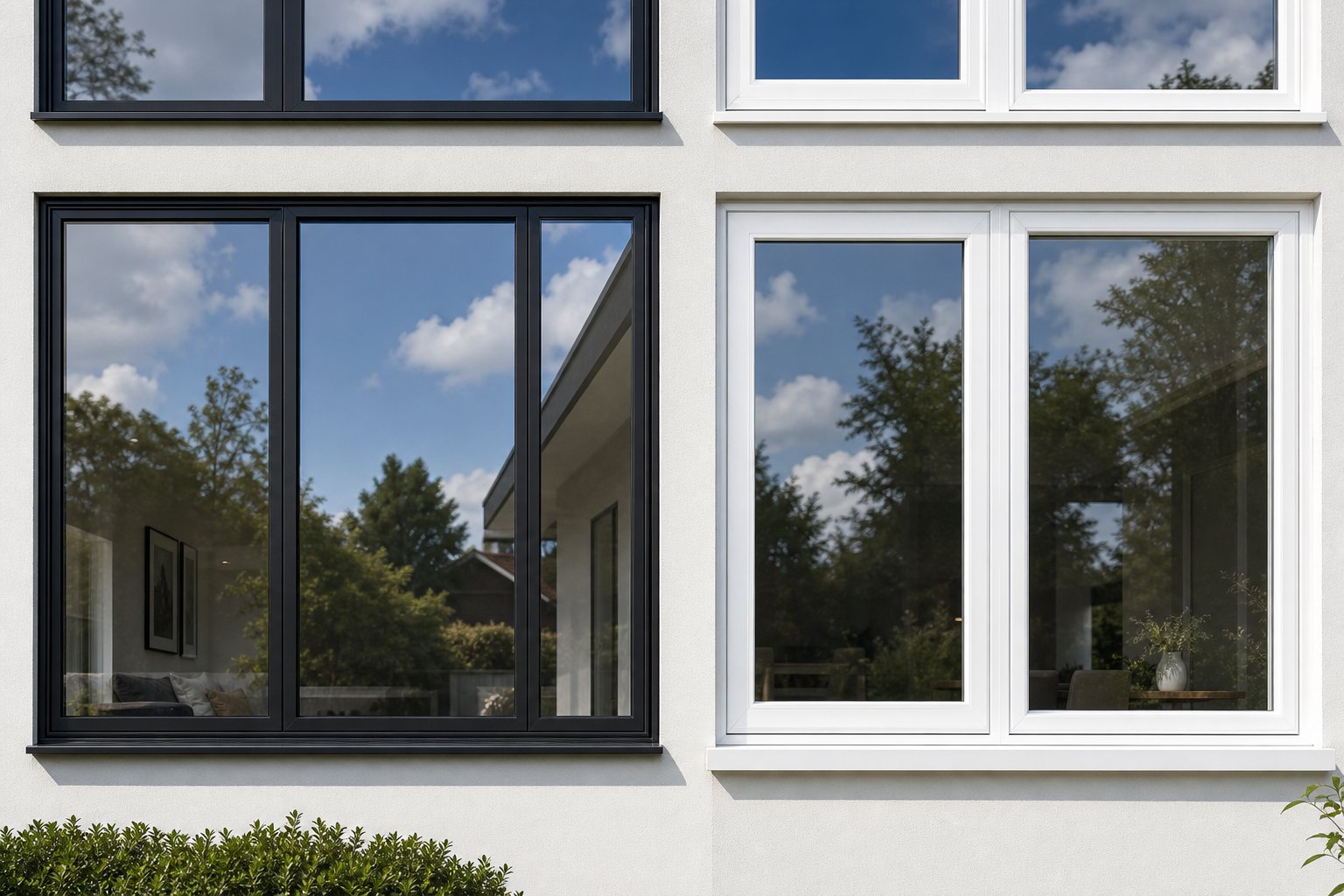
Aluminium is not the right material for every project. Saying otherwise would be dishonest. But understanding where aluminium window frames genuinely outperform alternatives, and where they fall short, helps you brief your supplier with clarity rather than guesswork.
Aluminium vs uPVC and Timber Frames
uPVC dominates the budget residential market for good reason. It insulates well without thermal breaks, resists moisture, and costs less per opening. For a straightforward single-storey renovation where sightlines and structural demands are modest, uPVC delivers solid value. The trade-off is bulk. uPVC frames run noticeably wider than aluminium, reducing glass area and limiting how contemporary the finished facade looks.
Timber brings natural warmth and excellent thermal performance. Heritage overlays and character homes often demand it. The catch is maintenance: repainting every three to five years in Australian coastal or high-UV conditions, plus ongoing vigilance against rot and termite damage. Aluminum clad wood windows attempt to solve this by wrapping a timber interior with an aluminium exterior shell, giving you the indoor aesthetic of wood with weather protection outside. They work well in premium residential builds but add cost and complexity that not every project warrants.
When Steel or Fiberglass Makes More Sense
Steel frames suit heritage restorations where original profiles were metal, and they offer unmatched structural strength for oversized fixed panels. However, steel is heavy, expensive to fabricate, and prone to corrosion without careful finishing. Fiberglass sits at the premium end: dimensionally stable, thermally efficient, and durable. Its limitation in Australia is availability. Fewer local fabricators work with it, which can stretch lead times and limit after-sales support.
Strength-to-Weight and Design Flexibility Advantages
Where aluminium windows genuinely shine is the combination of structural strength and slim profiles. A metal window frame in aluminium can support large spans of glass with sightlines as narrow as 45 mm, something uPVC physically cannot achieve at the same scale. This makes thin frame windows possible across expansive openings, floor-to-ceiling glazing, and corner configurations that define modern Australian architecture. Add virtually unlimited powder-coat colour options, full recyclability at end of life, and a lifespan exceeding 40 years with minimal maintenance, and the cost-to-lifespan ratio becomes compelling for mid-range and premium projects alike.
| Criteria | Aluminium | uPVC | Timber | Fiberglass | Steel |
|---|---|---|---|---|---|
| Durability | 40-55 years | 20-35 years | 50+ years (maintained) | 40+ years | 50+ years (maintained) |
| Thermal Efficiency | Good (with thermal break) | Very good | Excellent | Excellent | Poor (without thermal break) |
| Maintenance | Very low | Very low | High | Low | Moderate to high |
| Recyclability | 100% recyclable | Limited | Biodegradable | Difficult | 100% recyclable |
| Sightline Width | 45-65 mm | 80-120 mm | 60-90 mm | 55-75 mm | 40-55 mm |
| Colour Options | Virtually unlimited | Limited range | Any paint/stain | Paintable, limited stock | Any paint finish |
| Typical Application | Commercial, modern residential | Budget residential | Heritage, premium residential | Premium residential | Heritage, industrial |
Metal windows in aluminium strike the strongest balance for Australian conditions: coastal corrosion resistance, bushfire compliance options, and the structural capacity to handle large openings without excessive frame bulk. For budget-conscious residential work or heritage restoration, uPVC and timber respectively remain valid choices. The material decision should flow from project requirements, not marketing preference, and a good supplier will tell you that upfront.
Material choice, though, only tells half the story. The window type you select within that material, whether casement, sliding, or tilt-turn, shapes both performance and which fabricators can actually deliver what you need.
Types of Aluminium Windows and Which Applications They Suit
A supplier’s product range tells you more about their capability than their marketing ever will. Some fabricators handle three or four standard configurations. Others manufacture the full spectrum. Knowing what exists, and which types your project actually needs, puts you in a stronger position before you even pick up the phone.
Casement, Awning, and Tilt-Turn Options
Aluminum casement windows remain the workhorse of Australian residential and commercial builds. Hinged on one side and swinging outward, they seal tightly against weather, offer full ventilation when open, and meet egress requirements for bedrooms. Their multi-point locking systems also deliver strong security performance, which matters for ground-floor applications.
Awning windows hinge at the top and push outward from the bottom, letting you ventilate during rain without water entering the room. They suit bathrooms, laundries, and high-wall placements where reach is limited. Paired above or below fixed panels, they add airflow to otherwise sealed glazing runs.
Tilt-turn windows bring European engineering to Australian projects. A single handle switches between an inward tilt for controlled ventilation and a full inward swing for cleaning or maximum airflow. High-rise residential towers favour them because both glass faces can be cleaned from inside, eliminating the need for external access equipment. Not every fabricator offers tilt-turn hardware, so this configuration narrows your supplier shortlist quickly.
Sliding and Double Hung Configurations
Sliding aluminium windows glide horizontally along tracks, requiring zero swing clearance. This makes an aluminum sliding window ideal for balconies, tight corridors, and openings adjacent to walkways or outdoor furniture. Multi-track systems with three or four panels can open up to 75% of the total span, creating generous indoor-outdoor connections suited to Australian living.
Aluminum double hung windows operate vertically, with both upper and lower sashes sliding independently. They suit heritage overlay zones where council requirements mandate traditional proportions. Single hung aluminium windows, where only the bottom sash moves, offer a simpler mechanism at a lower price point and work well in bedrooms and living areas of single-storey homes.
Matching Window Type to Building Application
Different building contexts demand different configurations, and not every supplier fabricates all of them. Here is a practical breakdown:
- Casement — residential homes, schools, hospitals. Excellent ventilation and weather sealing.
- Awning — wet areas, coastal homes, high-wall placements. Ventilates during rain.
- Tilt-turn — high-rise apartments, commercial towers. Dual-mode operation, easy internal cleaning.
- Sliding — balconies, living areas, space-constrained openings. No swing radius needed.
- Double hung — heritage zones, traditional facades. Vertical operation suits period proportions.
- Single hung — budget residential, bedrooms. Simpler mechanism, lower cost.
- Fixed — stairwells, feature walls, commercial lobbies. Maximum light, no moving parts.
- Louvre — bathrooms, plant rooms, tropical climates. Adjustable slats control airflow precisely.
Bushfire-prone areas (BAL-rated zones) restrict certain operable types and require specific sealing and screening. Cyclone regions across northern Queensland and the NT demand windows tested to higher wind-load ratings, which limits supplier options further. Coastal sites need enhanced corrosion-resistant finishes regardless of window type.
The practical takeaway: check a supplier’s full product range against your project’s actual configuration needs before requesting a quote. A fabricator who only handles aluminium sliding windows and fixed panels cannot deliver a mixed schedule that includes tilt-turn or louvre units. That mismatch surfaces late and costs time. Knowing the scope of what you need, and confirming a supplier can manufacture all of it, separates a smooth procurement process from one that stalls mid-programme.
Product range, however, is only one dimension of supplier capability. Whether your project sits in the residential or commercial category reshapes what you should expect from your supplier in terms of documentation, engineering support, and order scale.
Residential vs Commercial Aluminium Window Frame Suppliers
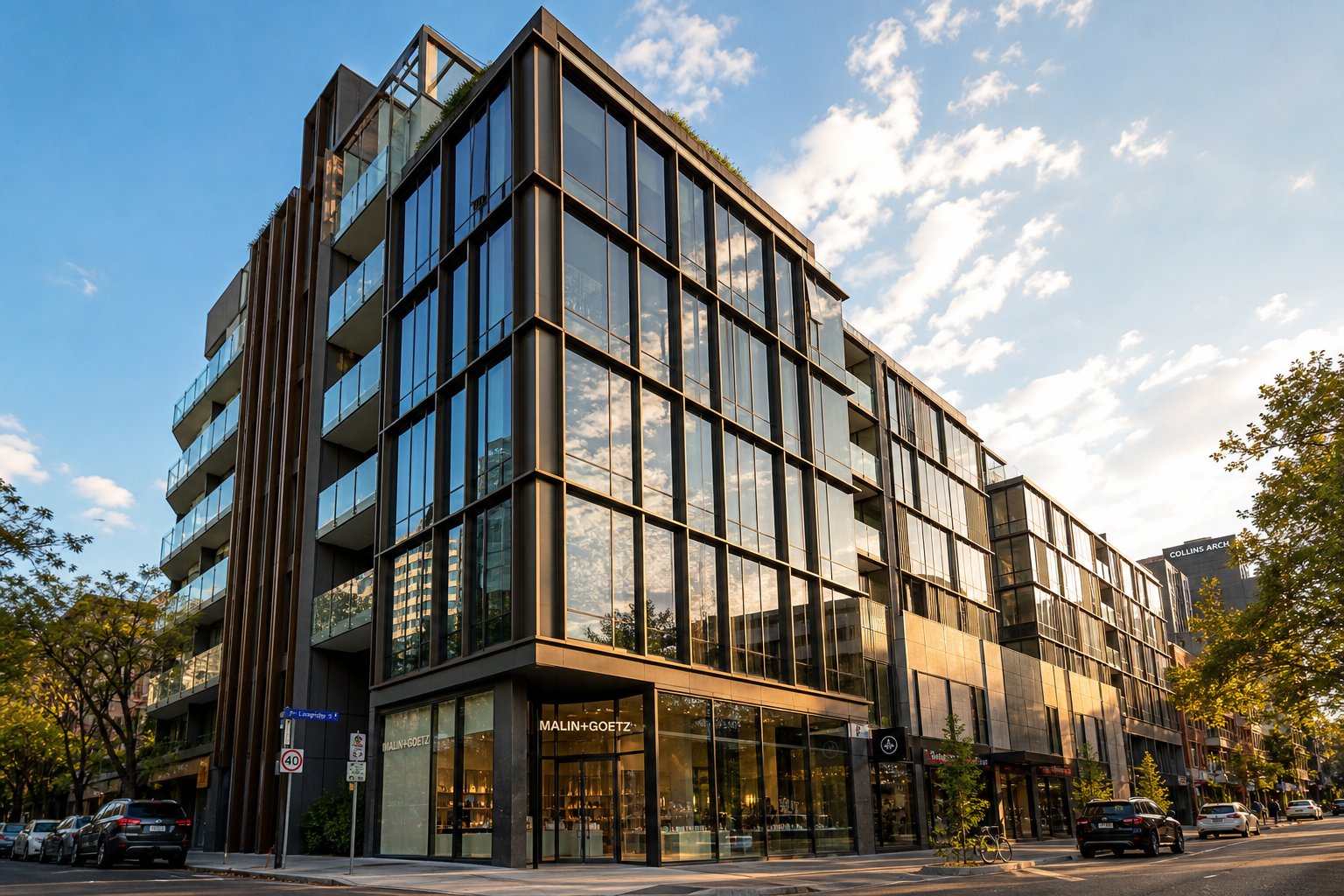
A supplier quoting on a four-bedroom home in suburban Melbourne operates in a fundamentally different world from one tendering for a 12-storey mixed-use tower in Parramatta. The products may look similar on paper, but the documentation, engineering depth, batch scale, and coordination demands diverge sharply. Choosing a supplier built for one context and expecting them to perform in the other is where projects come unstuck.
Commercial Supplier Requirements and Certifications
Commercial windows carry heavier compliance burdens. A supplier providing windows for commercial buildings must deliver engineering certification, structural adequacy reports, and full compliance documentation aligned with the National Construction Code and AS 2047. Commercial aluminium windows often integrate with curtain wall or storefront windows systems, meaning the supplier needs to coordinate interfaces, provide shop drawings, and work within tighter fabrication tolerances than residential work demands.
Batch quantities are larger, and consistency across hundreds of identical openings becomes critical. Commercial window frames in aluminium must meet acoustic ratings, fire-separation requirements where applicable, and higher wind-load classifications for upper storeys. Suppliers serving this market typically maintain in-house engineering teams, hold ISO quality management certification, and can produce compliance schedules that satisfy building certifiers without back-and-forth delays.
Residential Supplier Expectations and Flexibility
Residential projects shift the emphasis. Homeowners and builders care most about aesthetics, energy ratings through WERS, colour matching, and the ability to handle smaller custom runs without punitive minimum order quantities. A residential aluminium windows supplier needs to be responsive on one-off configurations, flexible on scheduling around renovation timelines, and willing to work with smaller scopes that a commercial-focused operation might deprioritise.
Lead times tend to be shorter for residential work, but customisation depth per opening is often greater. Every window might differ in size, type, or hardware specification across a single home, whereas a commercial project repeats the same unit dozens of times.
Full-Spectrum Suppliers Who Handle Both
Some suppliers bridge both markets. They maintain the engineering capability and compliance infrastructure for commercial metal window frames while retaining the flexibility and service responsiveness that residential clients expect. These full-spectrum operations are less common but valuable for builders working across project types, or for larger residential developments that carry quasi-commercial documentation requirements.
| Characteristic | Residential Supplier | Commercial Supplier |
|---|---|---|
| Minimum Order Size | Single opening or small batch | Typically 20+ units or project-based |
| Engineering Support | Basic sizing and specification | Full structural engineering and shop drawings |
| Compliance Documentation | Standard test reports, WERS certificates | Project-specific compliance schedules, NCC reports, acoustic and fire data |
| Lead Times | 2-6 weeks typical | 6-16 weeks depending on scope |
| Customisation Depth | High per-unit variation, smaller scale | Standardised units at volume, tight tolerances |
The distinction matters because asking a residential-focused fabricator to produce a commercial window schedule with full engineering coordination is like asking a house painter to deliver a high-rise facade programme. They might attempt it, but the systems, staffing, and quality infrastructure simply are not there. Conversely, a large commercial supplier may treat a six-window renovation as too small to prioritise, leaving you waiting weeks for responses that a residential-focused partner would turn around in days.
Identifying which category your project falls into, and confirming your supplier genuinely operates in that space, saves frustration on both sides. But category alone does not guarantee quality. The next challenge is knowing how to vet a supplier’s actual capability once you have them on the shortlist.
How to Evaluate and Vet an Aluminium Window Frame Supplier
A polished website and a competitive quote tell you almost nothing about whether a supplier can actually deliver. Vetting aluminium window manufacturers properly requires a structured approach that goes beyond price comparison and into the operational detail most buyers skip until something goes wrong.
The cheapest quote often costs more in rework, delays, and compliance failures than a slightly higher price from a supplier with proven systems and genuine manufacturing depth.
This principle holds across residential and commercial work alike. Here is a practical framework for evaluating any aluminum window manufacturer before you commit.
Certifications and Quality Standards to Look For
Certifications are your first filter. In Australia, any aluminium window frame supplier worth considering should demonstrate compliance with AS 2047 for structural and weather performance, and AS 1288 for glazing safety. Beyond these baseline requirements, look for ISO 9001 quality management certification, which indicates the manufacturer maintains documented processes rather than relying on ad hoc production methods. For projects with international system specifications, AAMA certification verifies durability, water resistance, and structural integrity against North American benchmarks.
Red flags appear when aluminum window suppliers make broad compliance claims without producing current test reports or project-specific documentation. A credible supplier will show you the actual certificates, not just reference them in conversation. Ask for test reports relevant to your specific window type and size range, because a certificate covering casement windows does not automatically extend to large-format sliding systems.
Finish Options and Their Durability Impact
Surface treatment is where long-term performance lives or dies, particularly in Australian conditions with intense UV exposure and coastal salt air. The two primary options are powder coating and anodising, and each suits different contexts.
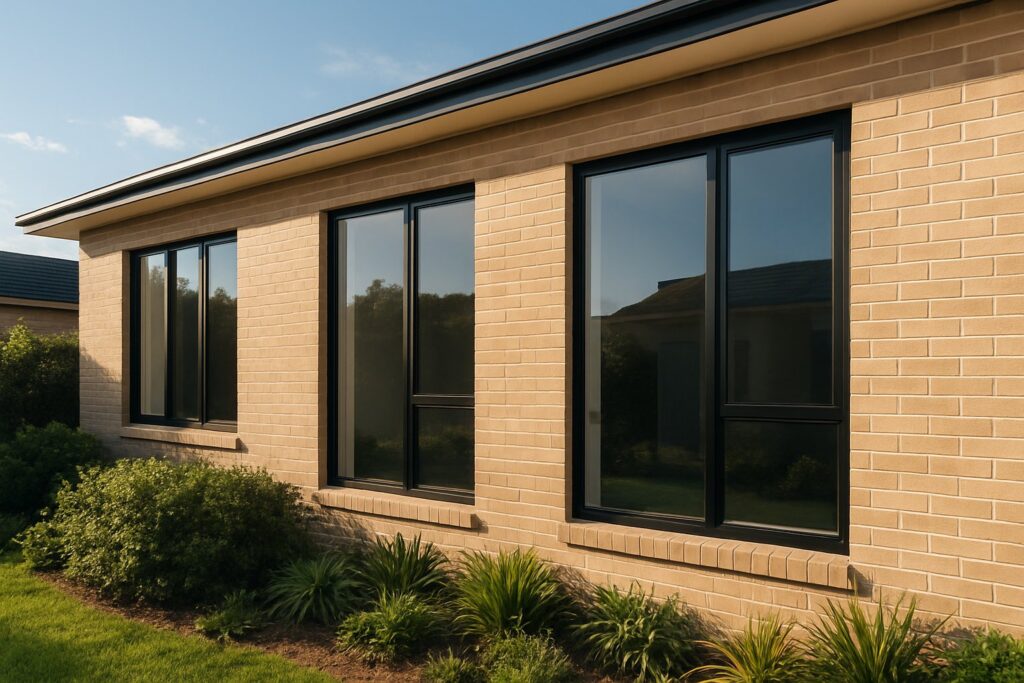
Powder coating delivers a durable, uniform finish across virtually unlimited colours. Black aluminium windows remain the dominant choice for contemporary Australian homes, while bronze aluminum windows suit warmer palettes and heritage-adjacent designs. Quality powder coating should meet Qualicoat or equivalent standards, with a minimum film thickness of 60 microns for exterior applications. Ask your supplier what powder brand and process they use. Cheaper operations cut corners here, and the result shows within five years as chalking, fading, or peeling in harsh environments.
Anodising creates an oxide layer that becomes part of the aluminium itself, offering superior scratch resistance and corrosion protection compared to powder coating. The trade-off is a limited colour palette, typically natural silver, bronze, and black tones with a matte metallic finish. Anodised frames cannot be easily touched up if damaged, whereas powder-coated surfaces can be spot-repaired. For coastal projects or high-traffic commercial applications, anodising often justifies its premium. Some system providers like Kawneer offer proprietary finishes that combine fluoropolymer coatings with specific colour technologies, providing extended warranty coverage in aggressive environments.
Capacity, Lead Times, and Supply Chain Reliability
Manufacturing capacity determines whether your supplier can hold delivery dates under pressure. Commercial aluminum window manufacturers serving multi-storey projects need production lines capable of handling large batch runs without quality drift. Residential-focused operations need flexibility to process varied configurations quickly. Either way, ask about current production loading and how they manage peak periods.
Lead time reliability matters more than lead time length. A supplier quoting six weeks who consistently delivers in six weeks is far more valuable than one quoting four weeks who regularly blows out to eight. Request references from recent projects and ask those contacts specifically about delivery performance, not just product quality.
Verify claims through three channels: factory visits where practical, sample requests to physically assess finish quality and hardware operation, and reference projects you can inspect or whose project managers you can contact. Aluminium window manufacturers who resist any of these requests are telling you something important about their confidence in their own output.
- Confirm certifications — request current AS 2047 test reports, ISO 9001 certificate, and any system-specific compliance documentation relevant to your project.
- Assess finish quality — request physical samples in your specified colour and check for coating consistency, corner joint tightness, and hardware smoothness.
- Verify manufacturing capacity — ask about current production loading, typical batch sizes, and how they manage schedule conflicts between projects.
- Check lead time track record — contact two or three recent project references and ask specifically about on-time delivery performance.
- Review warranty terms — look for minimum 10-year frame warranty, 5-year hardware warranty, and clear documentation of what voids coverage.
- Evaluate engineering support — confirm whether they provide in-house shop drawings, structural calculations, and system selection guidance or outsource these functions.
- Confirm minimum order requirements — ensure their MOQ aligns with your project scale, whether that is three openings or three hundred.
- Inspect after-sales capability — ask how they handle warranty claims, replacement parts, and defect resolution once product is on site.
This checklist works whether you are vetting local aluminium window manufacturers or evaluating aluminum window suppliers offshore. The principles remain constant: documented quality systems, verifiable track record, transparent communication, and the operational depth to back up promises with consistent execution.
Knowing what to look for on paper is one thing. Understanding what happens inside the factory, from raw billet to finished frame, gives you the ability to assess quality firsthand when those samples arrive.
Understanding Aluminium Frame Manufacturing and Quality Markers
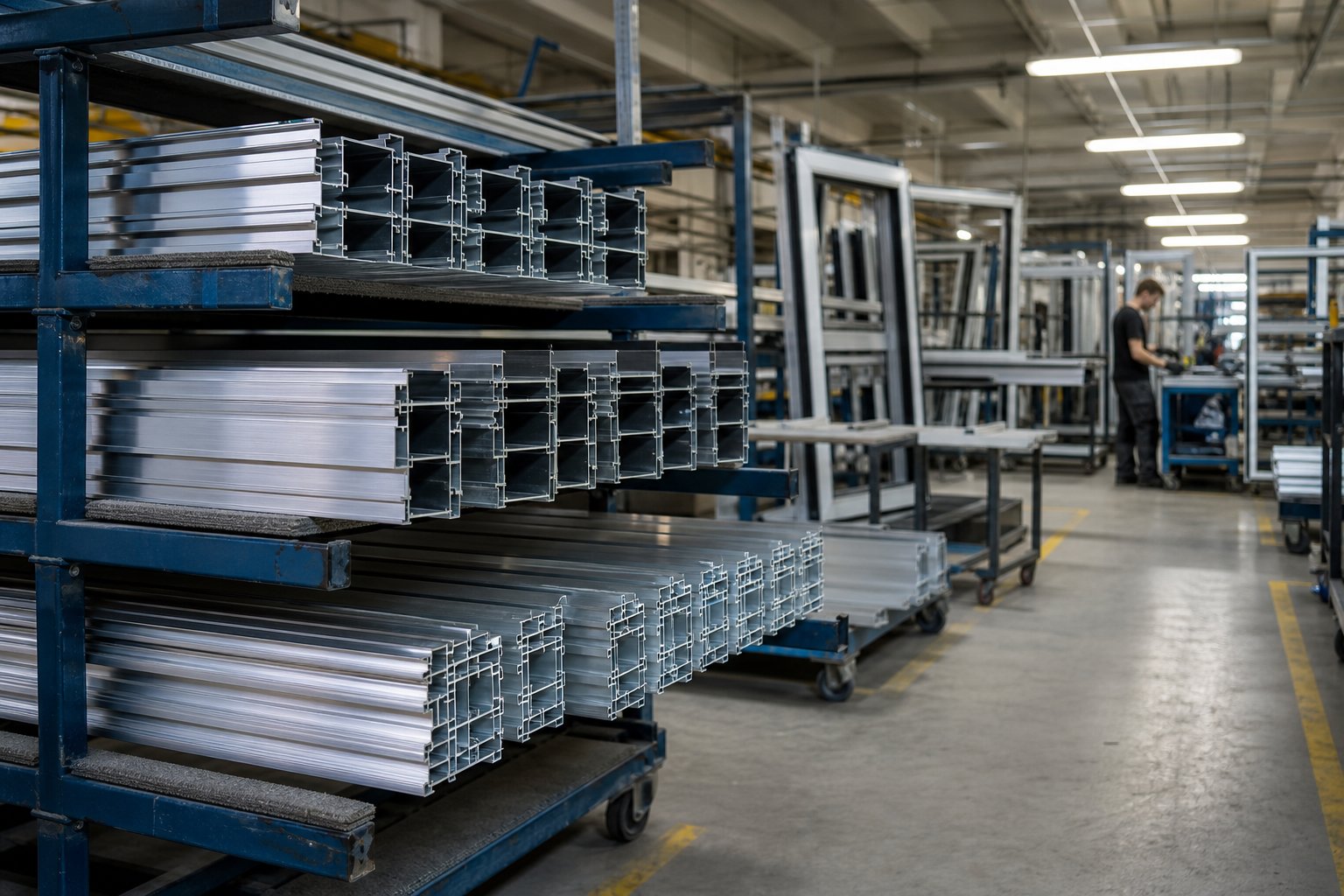
Every aluminium window starts as a raw metal billet and passes through a sequence of processes that either build quality in or let defects slip through. Most buyers never see this chain. They receive a finished sample or a glossy brochure and assume the product behind it is sound. Knowing what actually happens during aluminium window framing, and what separates careful manufacturing from corner-cutting, gives you a practical edge when assessing any supplier’s output.
From Aluminium Billet to Finished Frame
The process begins with alloy selection. Reputable manufacturers use 6000-series aluminium alloys, typically 6063 or 6061, chosen for their extrudability, corrosion resistance, and structural strength. Billet quality matters because impurities in the raw material create inconsistencies in the finished profile that no surface treatment can hide.
During extrusion, billets are heated to between 375°C and 500°C, then forced through a precision die that shapes the aluminium into the profile cross-section: frames, sashes, mullions, and transoms. Tight extrusion tolerances, often within ±0.1 mm on CNC-cut components, determine whether aluminum window extrusions fit together cleanly during assembly or require forcing and shimming on site.
Once profiles are cut to length, corner joining defines the frame’s structural integrity. Three methods dominate: crimping (mechanical pressing of corners using internal brackets), welding (fusing aluminium at joints for maximum rigidity), and mechanical fastening with screws or structural adhesive. Crimped corners are standard for most residential aluminum window components. Welded corners offer superior strength for large-format openings but cost more to produce. The method your supplier uses affects both durability and how the finished frame handles thermal movement over decades of Australian temperature cycling.
Thermal Break Technology and Why It Matters
Aluminium conducts heat readily, which is why thermal break aluminum windows exist. A thermal break is an insulating barrier inserted between the interior and exterior faces of the frame, preventing the metal from acting as a direct heat bridge.
Two primary methods achieve this. Polyurethane pour-and-debridge systems dispense liquid polyurethane into a cavity between aluminium profiles, cure it in place, then mechanically remove the connecting bridge to eliminate metal-to-metal contact. This approach offers the lowest thermal conductivity and simplifies inventory because the material fills any cavity shape without requiring pre-formed parts.
Polyamide strut systems use pre-extruded glass fibre-reinforced nylon strips that are mechanically crimped into knurled grooves in the aluminium. Each cavity width requires a specific strut dimension, demanding tighter profile tolerances during extrusion. Both technologies are proven, but the thermal conductivity hierarchy runs: polyurethane foam (lowest), solid polyurethane, then glass-filled polyamide. For Australian climate zones where NatHERS compliance drives glazing performance, the thermal break method directly influences whether a windows aluminum frame assembly meets energy targets without oversized glass upgrades.
Quality Indicators You Can See and Test
Surface treatment happens after fabrication. Powder coating applies electrostatically charged pigment cured at 180-220°C, delivering broad colour choice and UV resistance. Anodising creates an integral oxide layer with superior scratch hardness but limited colour range. Sublimation printing transfers timber-look or textured patterns onto powder-coated surfaces, offering aesthetic variety for an aluminium glazed window that needs to blend with traditional facades.
When samples arrive, you do not need laboratory equipment to spot quality issues. Here is what to check on any aluminum glass frame sample your supplier provides:
- Finish consistency — run your hand across the surface. Quality powder coating feels uniformly smooth with no orange peel texture, grit, or thin spots at corners.
- Corner joint tightness — inspect where profiles meet. Gaps, lippage, or visible sealant filling joints indicate poor cutting tolerances or rushed assembly.
- Hardware operation — open and close handles, locks, and hinges repeatedly. Movement should be smooth and consistent with no binding, grinding, or excessive play.
- Drainage slots — check the bottom rail for clear, properly positioned drainage holes. Blocked or missing slots cause water pooling inside the frame, leading to seal degradation and internal corrosion over time.
- Gasket seating — glazing gaskets should sit evenly in their channels without bunching, stretching, or lifting at corners. Poor gasket fit compromises both weather sealing and acoustic performance.
- Thermal break visibility — on a cross-section sample, confirm the thermal break is continuous and properly bonded. Any visible gaps between the break material and the aluminium indicate a manufacturing defect.
These checks take minutes but reveal more about a supplier’s actual manufacturing discipline than any certification document. An aluminum frame glass assembly that passes all six points comes from a factory with genuine quality control checkpoints at each production stage, not just a final inspection before dispatch.
Seeing quality in a sample is valuable. Knowing the right questions to ask before you even reach the sample stage is what separates informed procurement from hopeful guesswork.
Essential Questions to Ask Before Choosing Your Supplier
Samples and certifications confirm what a supplier has done. Questions reveal what they can do for your specific project. The difference matters because every build carries unique constraints, whether that is a mixed schedule of aluminium windows and doors across multiple storeys, a tight programme with no room for delivery slippage, or custom configurations that push beyond standard catalogue offerings.
A structured conversation early in the quoting process exposes capability gaps before they become costly surprises on site. Here are the questions that separate serious vetting from surface-level enquiry.
Questions About Technical Capability and Engineering Support
- What system do you recommend for my application, and why? — A capable supplier does not just take your specification and quote it. They assess your project conditions (wind loads, acoustic requirements, energy targets, opening sizes) and recommend the aluminium window design best suited to perform. If they cannot articulate why one system suits over another, their technical depth is limited.
- Can you provide engineering coordination and shop drawings? — Projects involving custom aluminum windows or complex interfaces with structure need shop drawings that confirm dimensions, fixing details, and clearances before fabrication begins. Suppliers who outsource this entirely add communication layers and delay risk.
- How do you handle material calculation and waste management? — Accurate material take-offs reduce cost and prevent mid-production shortfalls. Ask whether they calculate from your drawings in-house or rely on you to provide cut lists. The answer reveals how much project ownership they take on.
Questions About Manufacturing and Quality Control
- What quality control checkpoints exist during manufacturing? — Look for suppliers who inspect at multiple stages: post-extrusion, post-machining, post-assembly, and pre-dispatch. A single final inspection catches problems too late to fix efficiently, particularly on large orders of aluminium doors and windows where batch consistency matters.
- Do you support project-based supply or only standard catalogue items? — Some fabricators only produce fixed sizes from a price list. Others configure every unit to project-specific dimensions, hardware selections, and glazing specifications. If your schedule includes an aluminum door with window sidelight combinations or non-standard mullion positions, confirm they handle bespoke work routinely.
- What is your defect rate, and how do you handle non-conformances? — Every factory produces occasional rejects. What matters is whether they track defect rates formally and have a documented process for quarantining, reworking, or replacing non-conforming units before they ship.
Questions About Logistics and Project Coordination
- What are your current lead times, and how do you protect delivery dates? — Ask for realistic timelines based on current production loading, not best-case scenarios. A supplier quoting aluminum doors and windows with a four-week lead time while running at full capacity is making a promise their factory cannot keep.
- Can you stage deliveries to match my construction programme? — Multi-storey or phased projects need windows delivered floor-by-floor or zone-by-zone, not as a single bulk drop that overwhelms site storage. Suppliers with genuine logistics capability plan dispatch sequences around your programme, not their production convenience.
- What warranty and after-sales support do you provide? — Confirm warranty duration for frames, hardware, glazing seals, and surface finish separately. Then ask the harder question: how do they handle a warranty claim twelve months after installation? Response speed and parts availability matter more than the warranty document itself.
These nine questions work across residential renovations and large commercial programmes alike. The depth and specificity of the answers you receive will tell you more about a supplier’s genuine capability than any brochure or website ever could.
For a practical example of how a full-service supplier communicates its project lifecycle capabilities transparently, MEICHEN’s Services and Solutions page outlines each stage from system recommendation through engineering coordination, manufacturing, quality control, and delivery. It is a useful benchmark for what to expect when evaluating aluminium doors windows suppliers who claim end-to-end project support.
Asking the right questions gets you a capable partner on paper. The real test comes in how that relationship unfolds across the full procurement cycle, from initial quote through to product landing on site.
Working With Your Supplier From Quote to Delivery
Good questions open the door. What follows is a relationship that unfolds across weeks or months, with distinct stages where things either run smoothly or quietly fall apart. Whether you are sourcing aluminium windows for sale on a new multi-residential development or managing an aluminium window replacement programme across an existing building, the procurement lifecycle follows a predictable sequence. Knowing each stage helps you stay ahead of problems rather than reacting to them.
From Research and Quoting to Order Placement
The lifecycle begins well before any purchase order is signed. Here is the full sequence from first contact to product on site:
- Identify potential suppliers — shortlist based on product range, geographic reach, and project type alignment. Searching for aluminium windows near you narrows options to suppliers with local logistics capability and site support.
- Request and compare quotes — provide detailed schedules including opening sizes, window types, hardware, glazing specifications, and finish colours. Vague enquiries produce vague pricing that falls apart during contract negotiation.
- Evaluate physical samples — assess finish quality, hardware operation, corner joints, and thermal break integrity using the quality markers covered earlier. Samples cost little relative to the risk they eliminate.
- Finalise specifications and place the order — confirm every detail in writing: profile system, glass make-up, colour codes, hardware selections, delivery staging requirements, and warranty terms. Verbal agreements do not survive disputes.
- Track manufacturing progress — request updates at key production milestones. Quality suppliers provide photo documentation at profile cutting, assembly, powder coating, and final inspection stages.
- Coordinate delivery logistics — confirm dispatch dates, transport method, site access requirements, and unloading responsibilities. Staged deliveries matched to your construction programme prevent site storage chaos.
- Inspect on arrival — check every delivery against the packing list. Photograph any damage before signing off. Document discrepancies within 48 hours to preserve warranty and replacement claims.
- Manage warranty and after-sales — log serial numbers, retain installation photos showing flashing and fixing details, and confirm the process for replacement parts or defect resolution post-handover.
Manufacturing Tracking and Delivery Coordination
The gap between order placement and site delivery is where many supplier relationships strain. Production timelines for replacement windows in aluminium typically run four to eight weeks depending on scope and customisation depth. During this window, proactive communication matters more than optimistic promises. Suppliers with genuine project coordination capability will flag delays early, offer alternatives, and adjust dispatch sequencing without you chasing them weekly.
For a practical illustration of what a drawings-to-delivery supplier relationship looks like in practice, MEICHEN’s Services and Solutions page maps each stage from system recommendation through engineering coordination, material calculation, manufacturing, quality control, and logistics. It provides a useful benchmark for the level of end-to-end project support you should expect from any serious aluminium window frame supplier.
Geographic Sourcing and Lead Time Considerations
Where your supplier manufactures affects both cost and programme risk. Domestic Australian fabricators offer shorter lead times, easier communication, and simpler logistics for aluminium replacement windows. International suppliers, particularly from China and Southeast Asia, can deliver significant cost savings on large-volume orders but introduce shipping transit times of three to five weeks, customs clearance variables, and import duties of around 5% plus GST.
For timeline-critical projects where you cannot absorb a six-week shipping delay on top of production time, local manufacturing provides a buffer that offshore sourcing simply cannot match. Conversely, large-scale developments with long programmes and predictable schedules can plan around international lead times and capture the cost advantage. The decision is not binary. Some builders use domestic suppliers for urgent or complex configurations while sourcing standard high-volume units offshore to replace aluminium windows at scale across repetitive floor plates.
Whichever path you choose, the lifecycle stages remain the same. The supplier who manages them transparently, communicates proactively, and delivers consistently is the one worth building a long-term relationship with, regardless of where their factory sits on the map.
Frequently Asked Questions About Aluminium Window Frame Suppliers
1. What is the difference between an aluminium window frame supplier and a retailer?
A retailer stocks standard products and sells them off the shelf with minimal project support. A full-service aluminium window frame supplier controls the entire process from material sourcing and system selection through engineering coordination, fabrication, quality control, and delivery logistics. They partner with builders and developers across the project lifecycle, providing compliance documentation, shop drawings, and staged deliveries that retailers simply cannot offer. This distinction matters most on commercial and multi-residential builds where programme coordination and certification requirements are critical.
2. How do I evaluate the quality of an aluminium window frame supplier?
Start by confirming certifications including AS 2047 compliance, AS 1288 glazing safety, and ISO 9001 quality management. Request physical samples and inspect them for finish consistency, tight corner joints, smooth hardware operation, proper drainage slots, and continuous thermal breaks. Verify manufacturing capacity by asking about current production loading and lead time track record. Contact recent project references to ask specifically about on-time delivery performance. A structured vetting process covering certifications, samples, capacity, references, and warranty terms reveals far more than a competitive quote alone.
3. What types of aluminium windows should I expect a capable supplier to offer?
A well-equipped supplier should fabricate casement, awning, tilt-turn, sliding, double hung, single hung, fixed, and louvre windows. Each type suits different applications: casement for general residential and commercial use, sliding for space-constrained openings, tilt-turn for high-rise towers, and double hung for heritage overlay zones. Not all fabricators handle every configuration, so confirming a supplier’s full product range against your project schedule before requesting a quote prevents costly mismatches mid-programme.
4. Should I choose a local or international aluminium window frame supplier?
The decision depends on your project timeline and volume. Domestic Australian fabricators offer shorter lead times of four to eight weeks, easier communication, and simpler logistics. International suppliers can deliver cost savings on large-volume orders but add three to five weeks of shipping transit plus customs clearance variables and import duties of around 5% plus GST. For timeline-critical projects, local manufacturing provides a buffer that offshore sourcing cannot match. Some builders use a hybrid approach: domestic suppliers for urgent or complex configurations and offshore sourcing for standard high-volume units.
5. What certifications should an Australian aluminium window frame supplier hold?
At minimum, look for compliance with AS 2047 for structural and weather performance and AS 1288 for glazing safety. ISO 9001 quality management certification indicates the manufacturer maintains documented processes rather than ad hoc production methods. For commercial projects, suppliers should produce project-specific compliance schedules, NCC reports, acoustic data, and structural adequacy reports. Ask for current test reports relevant to your specific window type and size range, as a certificate covering one configuration does not automatically extend to others.
More Window & Door Guides