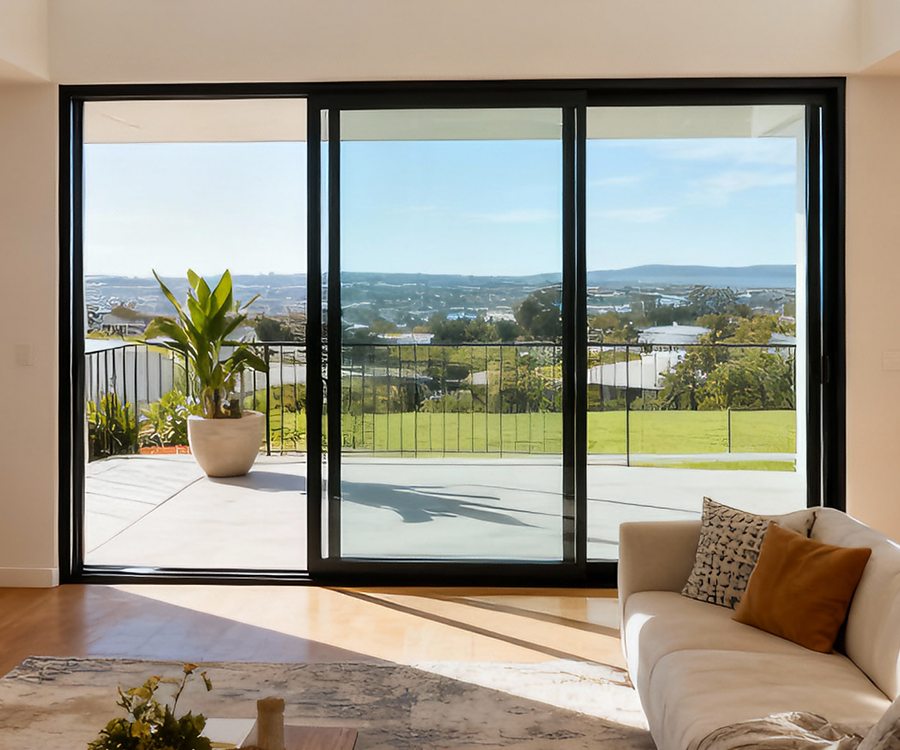
The Natural Colour of Aluminium and Why It Changes
Strip away every coating, every finish, every layer of paint, and what colour is aluminium really? In its pure, untreated form, the metal presents as a silvery white to light grey with a soft metallic sheen. A thin oxide layer forms almost instantly on the surface when exposed to air, giving it a slightly duller, cooler tone than polished steel. That natural oxide film actually protects the metal from corrosion, which is one reason aluminium became such a popular framing material in the first place.
What Aluminium Looks Like in Its Natural State
The colour of aluminium in its raw state sits somewhere between bright silver and muted grey, depending on the surface texture and lighting conditions. A polished piece reflects light almost like a mirror, while a mill-finish extrusion looks more like flat pewter. Alloy composition plays a role too. The 6063 alloy commonly used for window profiles carries a slightly warmer silver tone compared to other grades.
Despite this natural corrosion resistance, raw aluminium is rarely left unfinished on residential or commercial windows. The oxide layer, while protective, is thin and uneven. It collects dirt, develops a chalky appearance over time, and offers no design flexibility whatsoever. In coastal areas across Australia, where salt air accelerates surface degradation, an unfinished frame would look tired within a few years.
The aluminium you see on a finished window bears almost no resemblance to the raw metal. Applied finishes transform a plain silvery extrusion into virtually any colour, texture, or aesthetic you can specify.
Why Colour Selection Matters for Your Windows
This is where aluminium window colours become a genuine design decision rather than an afterthought. Modern finishing technologies, primarily powder coating and anodising, open up hundreds of colour options. A single frame profile can become anthracite grey, matt black, warm bronze, or even a convincing timber lookalike.
Colour choice shapes how your home reads from the street. It influences whether windows recede into the facade or stand out as a feature. For Australian homeowners navigating everything from rendered brick veneer in Melbourne’s suburbs to weatherboard Queenslanders in Brisbane, the right frame colour ties the whole exterior together. It also affects resale value. Estate agents consistently note that cohesive, well-chosen exterior finishes attract stronger buyer interest than mismatched or dated colour schemes.
Getting this decision right means understanding not just which colours are available, but how they are applied, how they perform under harsh Australian UV, and which ones hold up decade after decade without fading or chalking. That distinction between a colour that lasts and one that doesn’t starts with the finish technology behind it.
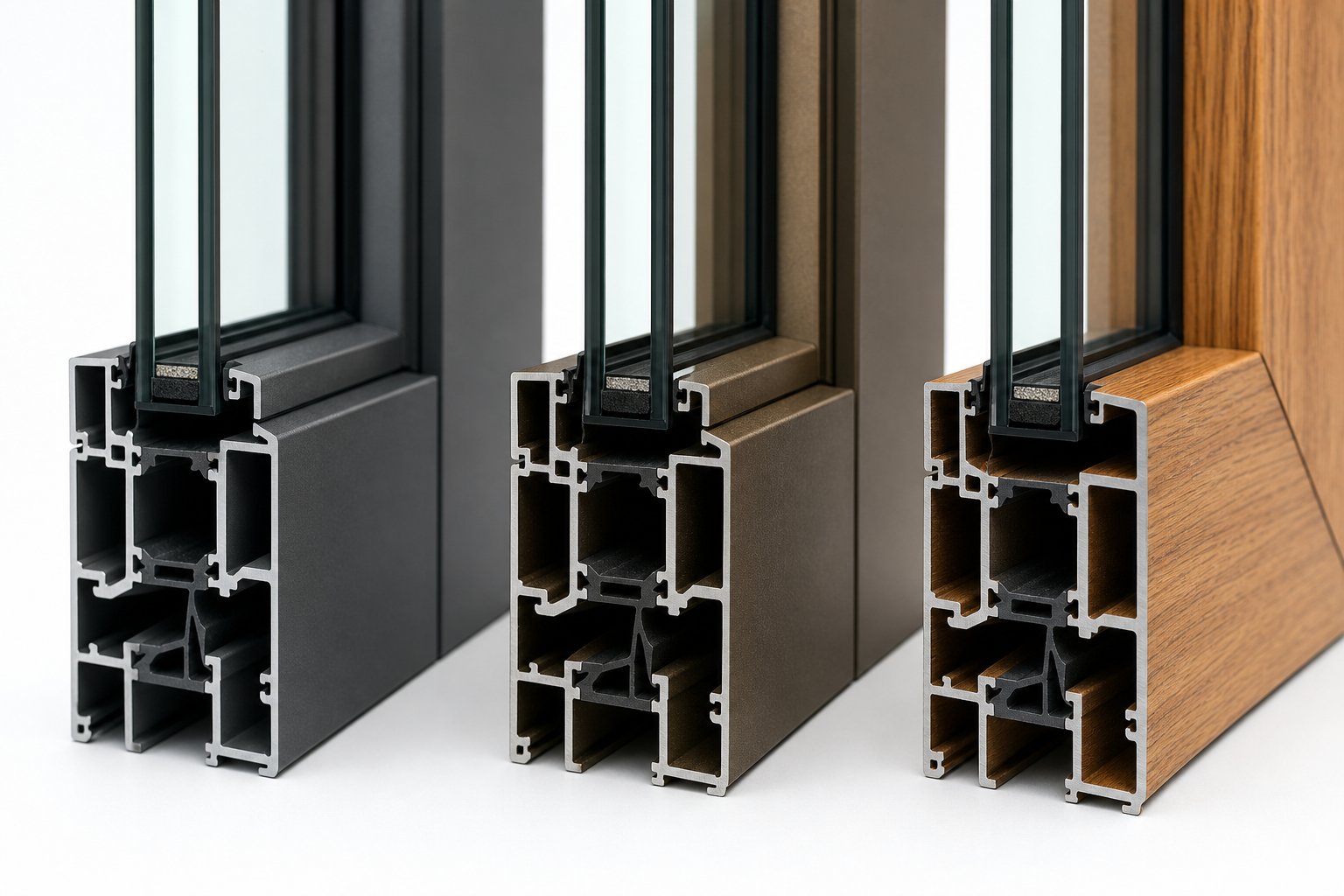
Three Ways Aluminium Windows Get Their Colour
The finish technology applied to an aluminium frame determines far more than just its colour. It dictates how that colour holds up against UV exposure, salt air, and daily wear. It shapes the texture you feel when you run your hand across the frame. And it sets the boundaries for how many aluminium colours you can actually choose from. Three distinct methods dominate the Australian market, each with a different process, aesthetic outcome, and performance profile.
Powder Coating Process and Colour Range
Powder coating is the workhorse of the aluminium window industry and the method behind the vast majority of coloured frames installed across Australian homes. The process works by electrostatically spraying a dry powder, typically a polyester resin, onto the aluminium profile. The charged particles cling evenly to the metal surface, and the frame then passes through a curing oven at around 180 to 200 degrees Celsius. Heat fuses the powder into a continuous, hard film that bonds mechanically and chemically to the aluminium beneath.
What makes powder coating so dominant is sheer versatility. Suppliers typically offer standard palettes of 15 to 25 colours at base pricing, but the technology supports virtually any shade from the RAL colour system, meaning hundreds of options become available as custom orders. Matt, satin, gloss, and textured finishes are all achievable. The coating thickness usually sits between 60 and 100 microns, creating a durable barrier against moisture, UV radiation, and general abrasion.
From a maintenance perspective, powder-coated frames are straightforward. A wash with mild soapy water a few times a year keeps them looking fresh. If a frame does get scratched or chipped, touch-up paint matched to the original colour can restore the finish without replacing the entire profile. This repairability is a significant practical advantage, particularly for homes in high-traffic areas or properties with young families.
Cost-wise, powder coating sits at the most accessible end of the spectrum. Standard colours add minimal cost to the base frame price, while custom RAL selections carry a surcharge and slightly longer lead times. For most residential projects, powder coating delivers the best balance of colour freedom, durability, and value.
Anodised Finishes and Their Unique Metallic Look
Anodising takes a fundamentally different approach. Rather than applying a coating on top of the aluminium, the process transforms the metal’s own surface into a protective oxide layer. The aluminium profile is submerged in an acidic electrolyte bath and an electrical current passes through it. This controlled oxidation builds up a dense, hard layer that becomes an integral part of the metal itself, typically 15 to 25 microns thick for architectural applications.
The result is a finish with a distinctive metallic depth that powder coating cannot replicate. Light interacts with the anodised surface differently because the oxide layer is semi-transparent, allowing the underlying metal grain to show through. Anodized aluminium window frames carry a refined, industrial elegance that suits contemporary architecture particularly well. Colour pigments can be introduced during the anodising process, though the palette remains limited to metallic tones: natural silver, champagne, bronze, dark bronze, and black are the most common options.
Durability is where anodised finishes genuinely excel. The oxide layer is harder and more scratch-resistant than powder coating, and because it is part of the metal rather than sitting on top of it, it will not peel, flake, or blister. Anodised aluminium also performs exceptionally well in coastal environments where salt exposure would challenge other finishes over time.
The trade-offs are real, though. Anodized aluminum frame windows cost more upfront than their powder-coated equivalents. The limited colour range means you are choosing from perhaps five to eight tones rather than hundreds. And if the surface does sustain damage, repairs are difficult. You cannot simply touch up an anodised finish the way you can with powder coating. In some cases, the entire frame section needs replacing.
Woodgrain Lamination for a Timber Aesthetic
For homeowners who love the warmth of timber but want none of the maintenance headaches, woodgrain lamination offers a compelling middle ground. This process, sometimes called sublimation transfer, starts with a powder-coated base layer in a colour matched to the chosen timber species. A printed film carrying a photographic-quality woodgrain pattern is then vacuum-sealed around the aluminium profile. Heat transfers the pattern deep into the powder coat layer, creating a finish that looks and even feels remarkably like real wood.
The sublimation process produces finishes that are UV-stable, scratch-resistant, and architecturally precise. Popular timber replications include oak, walnut, cedar, and various Australian hardwood tones. The grain pattern wraps around the full profile, so even edges and returns maintain the timber illusion.
Woodgrain finishes work particularly well on heritage renovations where council requirements or personal preference call for a timber appearance, but the homeowner wants the longevity and low maintenance of aluminium. They are also popular for dual-colour applications, where the interior face carries a warm timber look to complement indoor joinery while the exterior presents a solid colour to the street.
Maintenance mirrors standard powder coating since the woodgrain pattern sits within that same cured resin layer. Costs run higher than a standard single-colour powder coat due to the additional lamination step, but remain below full anodising. Durability is excellent, with quality woodgrain finishes lasting 20 years or more without significant fading or peeling when properly maintained.
| Criteria | Powder Coating | Anodising | Woodgrain Lamination |
|---|---|---|---|
| Process | Electrostatic spray + oven curing | Electrochemical oxidation in acid bath | Powder coat base + heat-transfer film |
| Colour Range Available | Virtually unlimited (RAL system) | Limited to 5-8 metallic tones | 15-30 timber species replications |
| Durability (years) | 15-25+ | 25-40+ | 20-30+ |
| Maintenance Level | Low (soap and water wash) | Very low (occasional wipe) | Low (soap and water wash) |
| Relative Cost | $ (most affordable) | $$$ (premium) | $$ (moderate) |
| Best Suited For | Most residential and commercial projects needing colour variety | Contemporary builds, coastal homes, premium architectural projects | Heritage renovations, timber-look facades, dual-colour applications |
Each of these three methods produces a genuinely different aesthetic outcome from the same base material. The choice shapes not only how your windows look on day one, but how they age over the following decades. And within each method, particularly powder coating, the specific colour you select introduces its own set of considerations around popularity, coordination, and long-term visual appeal.
Most Popular Aluminium Window Colour Choices
Colour technology opens up hundreds of options, but in practice, a handful of shades account for the overwhelming majority of aluminium windows installed across Australian homes and commercial buildings. Understanding which colours dominate and why helps you make a choice that feels right today and still works in fifteen years.
Why Grey Dominates Modern Window Design
Grey has become the default aluminium grey colour for contemporary Australian architecture, and it is not hard to see why. The shade sits in a neutral zone that complements almost every facade material, from light rendered walls to dark brick, natural stone, and timber cladding. It creates clean architectural lines around glazing without the starkness of black or the visual weight of darker tones.
Within the grey family, several specific tones lead the market. Anthracite grey (RAL 7016) remains the single most specified alu grey for residential windows across Australia. Its deep, charcoal-leaning tone reads as modern and intentional without demanding attention. Monument grey, a slightly warmer mid-tone popular with Australian manufacturers, works particularly well against the sandy renders and muted brick tones common in Sydney and Melbourne suburbs. Basalt grey sits between the two, offering a cooler, more industrial character suited to warehouse conversions and contemporary multi-storey builds.
Grey’s dominance also comes down to risk. It is a colour that rarely clashes, seldom dates, and pairs easily with bold front door colours or feature cladding. For renovators updating older homes, swapping dated white or cream frames for anthracite grey delivers an instant contemporary lift without requiring changes to the broader exterior palette.
Bronze, Black, and White as Timeless Alternatives
Beyond grey, three colours have proven their staying power across decades of architectural trends.
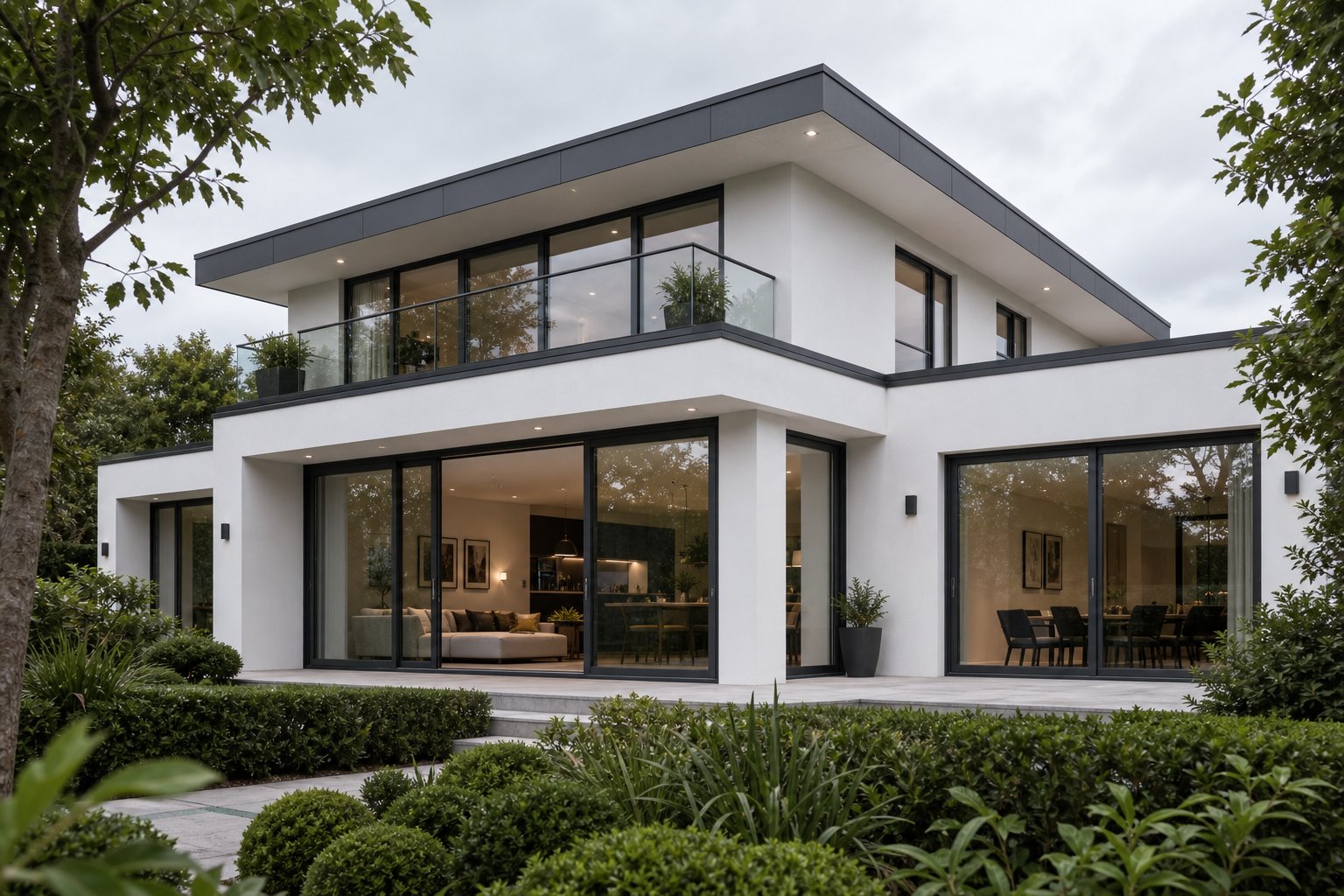
Matt black delivers a minimalist, high-end aesthetic that makes glazing the hero. Dark frames visually recede, creating an almost frameless appearance from a distance and letting large glass panels dominate the facade. It works exceptionally well on modern extensions, double-storey homes with expansive sliding doors, and properties where clean geometry defines the design language. The trade-off is practical: black frames show dust, water spots, and fingerprints more readily than mid-tones.
Bronze aluminum windows occupy a different space entirely. Whether achieved through anodising or a carefully matched powder coat, bronze brings warmth and metallic depth that neither grey nor black can offer. It bridges the gap between contemporary minimalism and heritage character, reading as sophisticated against natural stone, aged brick, or timber cladding. The growing specification of anodic bronze on premium residential projects reflects a shift toward finishes that feel bespoke without being loud.
White remains a staple for traditional homes, Queenslanders, and coastal properties where a fresh, airy look is the goal. It makes window openings appear larger and brighter, and it coordinates effortlessly with light-coloured exteriors. In commercial applications, white frames still dominate retail and office fitouts where neutrality and maximum light transmission are priorities.
Trending vs Timeless Colour Choices
Not every popular colour has the same shelf life. Some shades are genuinely timeless; others ride a wave of fashion that may leave your home looking dated within a decade. The distinction matters because aluminium windows are a long-term investment, typically lasting 30 to 40 years.
- Anthracite and monument grey: Proven over 15+ years of sustained popularity. Suit modern, industrial, and transitional architecture. Extremely low risk of dating.
- Matt black: A modern classic with strong staying power. Best paired with contemporary or minimalist facades. Unlikely to feel outdated if the surrounding architecture supports it.
- Bronze and dark bronze: Heritage-luxury crossover with enduring appeal. Complement stone, brick, and timber. Growing in specification rather than declining.
- White and off-white: Perennial choices for traditional, coastal, and Hamptons-style homes. Never truly in or out of fashion.
- Sage and soft greens: A rising trend driven by biophilic design. Suit rural properties and garden-facing extensions. Attractive now, but longevity is unproven compared to neutrals.
- Bold blues and deep navy: Statement colours that can look striking on the right property but carry higher risk of feeling trend-locked within five to ten years.
The safest approach is to treat your window colour as a permanent backdrop rather than a fashion statement. If you are drawn to a trending shade, consider whether it will still feel intentional against your facade materials once the trend cycle moves on. Colours grounded in natural material tones, stone, metal, timber, tend to age far more gracefully than those borrowed from interior design palettes.
Of course, choosing the right colour is only half the equation. The same shade of grey or black looks and performs quite differently depending on whether it is applied as a matt, gloss, satin, or textured finish, and that distinction deserves its own consideration.
Understanding Finish Types Beyond Colour
Two homeowners can specify the exact same dark grey aluminium for their window frames and end up with results that look noticeably different. The reason has nothing to do with the colour itself. It comes down to finish type, the surface texture applied during the powder coating process that changes how light interacts with the frame. Colour tells you the hue. Finish determines how that hue actually reads on your home.
Matt vs Gloss and How Each Affects Appearance
Matt finish aluminium windows account for the majority of residential installations across Australia, and for good reason. A matt surface scatters incoming light in multiple directions rather than reflecting it back at a single angle. The practical effect is a soft, even appearance that hides minor surface imperfections, reduces glare in direct sunlight, and shows fewer fingerprints or water spots. For grey aluminium frames on sun-drenched north-facing facades, matt finishes avoid the harsh reflections that can make a window wall uncomfortable to look at during certain times of day.
Matt surfaces are also more scratch-resistant and easier to maintain than their glossier counterparts, which is partly why most powder coat manufacturers have consolidated their standard ranges around matt options.
Gloss finishes flip the equation. A high-gloss powder coat reflects light specularly, creating a sleek, lacquered look that reads as premium and contemporary. The visual trade-off is significant: glossy surfaces make colours appear darker and more saturated than the same pigment in a matt variant. An anthracite grey in gloss looks almost charcoal-black in certain lighting, while the same RAL code in matt appears noticeably lighter and softer.
That intensity comes at a cost. Gloss frames show every fingerprint, dust particle, and water mark. They also reveal surface imperfections in the aluminium profile that matt would conceal. Scratches are more visible, and cleaning needs to happen more frequently to maintain that polished appearance. For high-traffic areas like sliding door frames or windows near entryways, gloss demands more attention.
Satin and Textured Finishes Explained
Satin sits between matt and gloss, offering a gentle sheen without full reflectivity. It gives frames a slightly more refined, modern edge than flat matt while avoiding the maintenance burden of high gloss. Satin finishes work well on contemporary homes where the owner wants a touch of lustre without the fingerprint visibility that comes with a full gloss surface. That said, satin is less forgiving than matt when it comes to scuffs and marks, which is why it remains a less common specification for everyday residential projects.
Textured finishes take a different approach entirely. Rather than varying the reflectivity of a smooth surface, textured powder coats introduce a stippled or lightly roughened profile to the frame. This tactile quality serves a dual purpose: it adds visual interest up close, and it significantly improves durability. The raised surface pattern disperses impact energy across a wider area, making textured frames more resistant to scuffing and surface damage. They are particularly well suited to entrance doors and ground-floor windows where frames cop more physical contact from hands, bags, and everyday bumps.
Textured finishes also hide marks better than any other option. A scratch that would be immediately visible on a gloss or satin frame disappears into the stippled surface pattern. For families with young children or homes in high-wind areas where debris contact is common, textured finishes offer peace of mind without sacrificing aesthetics.
| Finish Type | Visual Effect | Fingerprint Visibility | Scratch Resistance | Recommended Applications |
|---|---|---|---|---|
| Matt | Soft, even tone with no reflective sheen; colours appear lighter and less saturated | Low | High | All-round residential and commercial use; sun-exposed facades; most popular choice |
| Gloss | Sleek, lacquered look; colours appear darker and more chromatic | High | Low to Medium | Feature windows, contemporary statement facades, sheltered or low-contact areas |
| Satin | Gentle lustre between matt and gloss; subtle depth without full reflection | Medium | Medium | Modern residential projects seeking a refined edge without high maintenance |
| Textured | Stippled surface with tactile interest; conceals imperfections effectively | Very Low | Very High | Entrance doors, ground-floor windows, high-traffic areas, family homes |
The key takeaway is that specifying a colour without specifying a finish leaves half the decision unmade. A dark grey aluminium frame in matt reads as understated and architectural. The same colour in gloss becomes a bold, high-contrast feature. Knowing which finish suits your lifestyle, your facade orientation, and your tolerance for upkeep narrows the field considerably before you even begin choosing between standard palettes and custom RAL codes.
Standard Colour Ranges vs Custom RAL Selections
Every aluminium window supplier draws a line between their standard palette and everything else. On one side, you have a curated set of colours available at base pricing with standard lead times. On the other, the full RAL colour system opens up hundreds of additional options, but at a premium. Knowing where that line falls, and what crossing it actually costs, helps you budget accurately and avoid surprises during your build or renovation.
What Standard Colour Ranges Typically Include
Most Australian aluminium window manufacturers offer a standard palette of 10 to 25 colours that ship without surcharges or extended wait times. These are the shades kept in stock at the powder coating facility, ready to apply as soon as your frames come off the extrusion line. The exact selection varies between suppliers, but you will almost always find anthracite grey, matt black, white, off-white, monument grey, and a handful of mid-tone neutrals in the mix.
Standard ranges exist because they represent the colours ordered most frequently. Powder coaters buy these pigments in bulk, which keeps costs down and turnaround fast. For the majority of residential projects, a standard palette covers the brief perfectly. If you are building a contemporary home and want dark grey frames, or renovating a Queenslander and need crisp white, you will likely find what you need without stepping outside the base offering.
The limitation shows up when your design calls for something specific. A particular shade of sage green to match heritage trim, a warm taupe that coordinates with a specific render colour, or a deep navy for a coastal property. These sit outside most standard ranges, and that is where the RAL system becomes relevant.
Custom RAL Colours and What to Expect
The RAL colour system originated in Germany as a standardised way to communicate colour without relying on physical samples. Each shade carries a unique numeric code, eliminating the ambiguity that comes with descriptive names. “Dark grey” could mean a dozen different things depending on who you ask. RAL 7016 means exactly one thing, everywhere in the world. The system now comprises over 2,500 colours, though the RAL Classic palette of around 215 shades is what most window manufacturers work from.
Specifying by RAL code is the professional standard across the fenestration industry. It ensures the powder coater, the fabricator, and the homeowner are all referencing the identical aluminium colour. No interpretation, no guesswork. If you have seen a colour you love on another building, identifying its RAL number lets you replicate it precisely on your own project.
Among the most popular RAL colours for windows, a few codes appear repeatedly on specification sheets across Australia. RAL 7016 (Anthracite Grey) dominates contemporary builds. RAL 9005 (Jet Black) delivers the bold minimalist look. RAL 7038 (Agate Grey) offers a lighter, versatile neutral with a subtle green undertone. RAL 7012 (Basalt Grey) provides a cooler alternative to anthracite for those wanting depth without full darkness. And RAL 9010 (Pure White) remains the go-to for traditional and coastal homes.
Ordering a custom RAL colour outside your supplier’s standard range typically adds 10 to 20 percent to the frame cost and extends lead times by one to three weeks. The surcharge covers the powder coater’s setup time, smaller batch quantities, and sometimes minimum order requirements. Some suppliers waive the surcharge above a certain order volume, so larger projects with multiple windows in the same custom shade may negotiate better pricing.
- Identify your desired colour using a physical RAL colour chart or fan deck, not a screen image. Colours on monitors are unreliable due to screen calibration differences.
- Record the full RAL code (e.g., RAL 7016) along with your preferred finish type (matt, satin, gloss, or textured).
- Confirm with your supplier that the specific RAL code is available for powder coating on aluminium window profiles. A small number of RAL shades have pigment limitations that affect adhesion or UV stability.
- Request a physical powder-coated sample panel from the supplier. Evaluate it against your facade materials in natural daylight, not under showroom lighting.
- Confirm the cost surcharge, minimum order quantity (if any), and revised lead time before signing off on your order.
- Specify the RAL code in writing on your purchase order or contract to create a clear record that eliminates disputes later.
Exploring Colour Options With Your Supplier
The gap between browsing colours online and committing to a final specification is where most mistakes happen. Digital colour swatches are useful for narrowing the field, but they should never be your final reference. Screen rendering varies wildly between devices, and a colour that looks perfect on your laptop may read completely differently on the actual frame.
A good supplier will walk you through their standard range with physical samples, explain which custom RAL options they have coated before (and can therefore turn around faster), and help you understand how your chosen shade will interact with your specific finish type. Suppliers offering both standard palettes and full custom RAL capability give you the flexibility to start with proven options and step into bespoke territory only if the design demands it. For Australian homeowners, builders, and architects exploring what is available, MEICHEN’s aluminium windows page provides a practical starting point for reviewing colour options and custom configurations suited to local residential and commercial projects.
Whether you stay within a standard palette or venture into custom RAL territory, the colour you select only tells part of the story. How that colour interacts with the rest of your exterior, particularly when the interior and exterior faces of the frame carry different finishes, introduces another layer of decision-making that can elevate or undermine the whole facade.
Dual-Colour Windows and Exterior Coordination
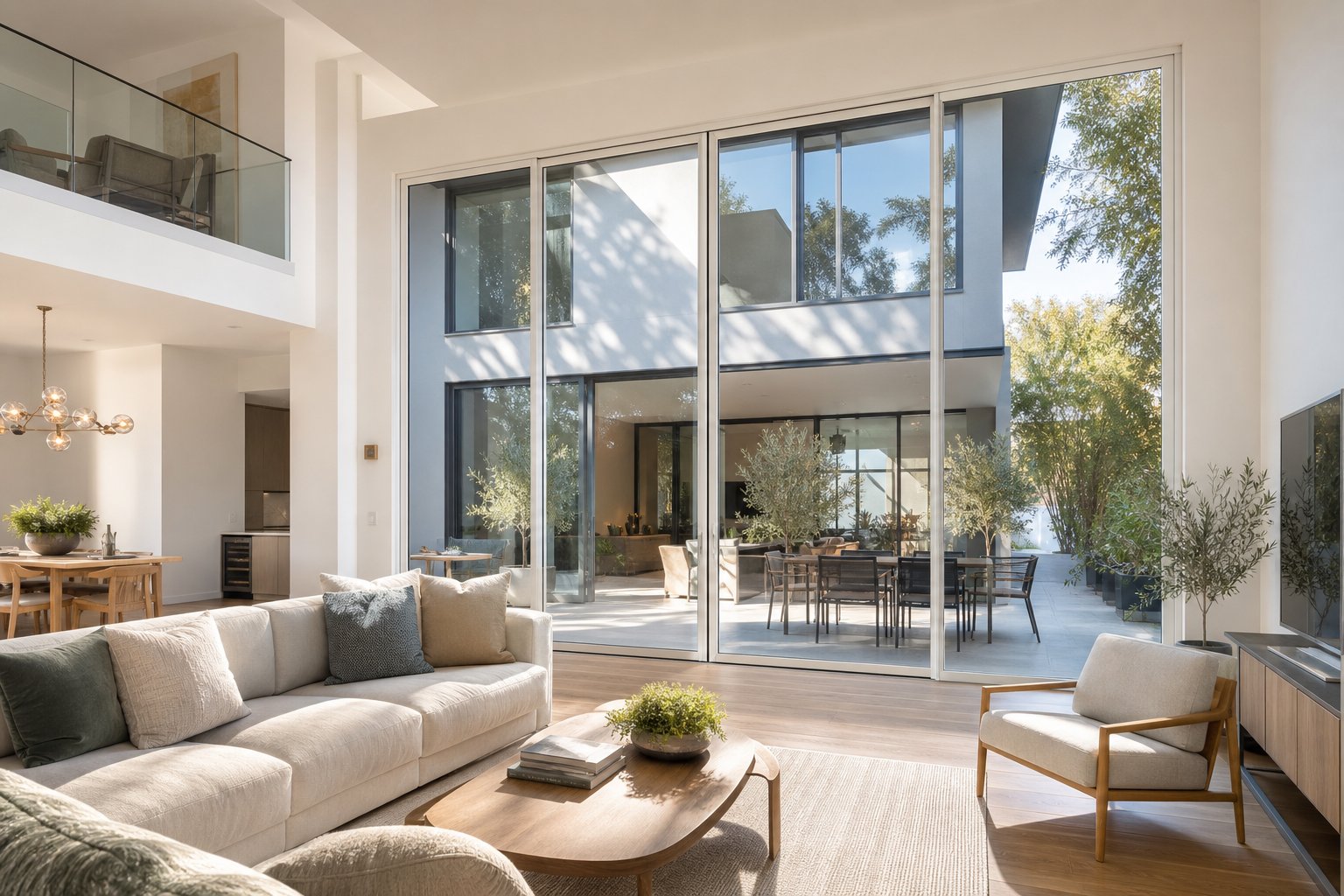
A single aluminium frame window actually has two faces. One looks outward to the street, the neighbours, and whatever facade materials surround it. The other faces inward, sitting alongside your interior joinery, wall colours, and furnishings. These two environments rarely call for the same colour, which is exactly why dual-colour aluminium windows exist.
How Dual-Colour Aluminium Frames Work
The concept is straightforward: the exterior face of the frame receives one powder-coated finish while the interior face receives a different one. During fabrication, each surface is masked and coated separately, resulting in a single profile that presents two distinct window colours depending on which side you are viewing. The join between the two finishes sits within the frame’s rebate, hidden from sight once glazing is installed.
Homeowners choose dual-colour for a few practical reasons. The most common is maintaining a consistent street-facing appearance, perhaps anthracite grey to match neighbouring properties or comply with estate guidelines, while enjoying a warmer interior tone that coordinates with timber flooring, cabinetry, or wall paint. A dark exterior frame that creates bold architectural lines from the curb might feel oppressive inside a light-filled living room. Switching the interior face to white, off-white, or a woodgrain laminate solves that tension without compromise.
Dual-colour also makes sense on heritage renovations where council requirements dictate a specific exterior appearance but the homeowner wants a modern interior palette. And for open-plan living areas with large sliding doors, a lighter interior frame colour helps the joinery blend with ceilings and walls rather than cutting dark lines across the space.
Cost-wise, dual-colour adds a surcharge over single-colour frames because the fabricator runs two separate coating passes. Expect an increase of roughly 15 to 25 percent on the frame component, depending on the supplier and the specific colour combination. Lead times may extend by a week or two as well. Despite the premium, it remains one of the most cost-effective ways to achieve a cohesive look on both sides of the glass.
Coordinating Window Colour With Your Exterior Palette
Choosing aluminum window colors in isolation is one of the most common mistakes homeowners make. A colour that looks perfect on a sample chip can clash badly once installed against your actual brickwork, render, roofing, and landscaping. The frame does not exist in a vacuum. It sits within a broader exterior palette, and every element in that palette either supports or fights against it.
A useful framework borrowed from exterior design is the 60/30/10 rule: your dominant material (brick, render, or cladding) accounts for roughly 60 percent of the visual field, secondary elements like window frames, fascia, and gutters make up 30 percent, and accent features such as the front door or shutters provide the final 10 percent. Your window colour sits firmly in that secondary category, meaning it should complement the dominant material rather than compete with it.
Here is how that plays out with common Australian facade types:
- Light rendered walls (white, cream, or pale grey): Dark frames in anthracite grey or matt black create sharp, modern contrast. Bronze adds warmth without the starkness of black. White frames blend seamlessly for a softer, coastal feel.
- Red or brown brick veneer: Dark bronze or charcoal frames complement warm brick tones without clashing. Avoid cool-toned greys that can fight the brick’s warmth. White remains a safe traditional pairing.
- Dark brick or charcoal render: Lighter frame colours like monument grey or natural anodised silver prevent the facade from reading as a single heavy mass. Matt black works if you want a tonal, monochromatic look.
- Timber cladding or weatherboard: Woodgrain laminate frames create continuity. Alternatively, matt black or dark grey provides a deliberate contrast that highlights the timber’s natural texture.
- Mixed materials (stone base with rendered upper storey): A single frame colour across both materials unifies the facade. Anthracite grey or dark bronze typically bridges the gap between warm stone and cooler render.
Beyond walls, consider your roofing material and colour. A Colorbond roof in Monument or Basalt pairs naturally with frames in the same tone or one shade lighter. Fascia and gutters often match the window frames, so choosing a colour that works across all three elements simplifies the whole exterior scheme. Your front door, meanwhile, is your accent piece. It should contrast with or complement the window frames rather than match them exactly, giving the entry a focal point.
Popular dual-colour combinations that work across a range of Australian architectural styles include:
- Exterior anthracite grey / Interior white: The most specified combination nationally. Suits contemporary builds, modern renovations, and rendered facades. Clean contrast between street presence and interior lightness.
- Exterior matt black / Interior light woodgrain (oak or ash): Ideal for open-plan living areas with timber flooring. The warm interior face ties the frames to the floor and cabinetry while the exterior maintains a bold, minimal look.
- Exterior monument grey / Interior off-white: A softer alternative to the anthracite/white pairing. Works well on brick veneer homes in suburban settings where full black or dark charcoal feels too heavy.
- Exterior dark bronze / Interior white or cream: Suits heritage-adjacent builds, sandstone facades, and properties with natural stone features. The bronze reads as refined and warm from the street without imposing on interior colour schemes.
- Exterior white / Interior white: Still common on coastal homes, Queenslanders, and Hamptons-style builds where a consistent light palette is the goal inside and out.
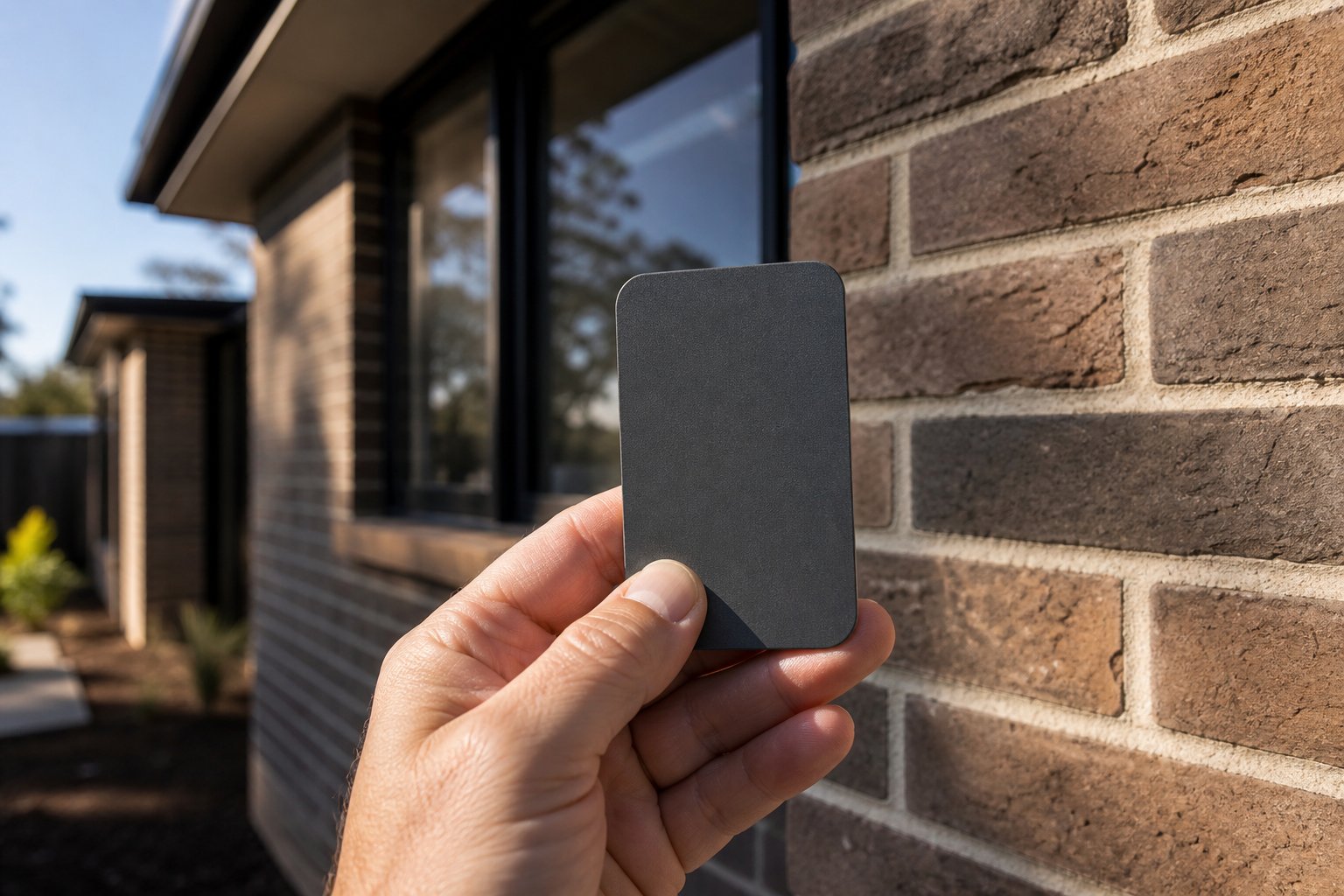
The single most important step in getting this right is evaluating physical colour samples against your actual building materials in natural daylight. Hold the sample chip directly against your brickwork, render panel, or cladding at different times of day. Morning light, midday sun, and overcast conditions all shift how colours relate to each other. A combination that looks harmonious at noon may feel disconnected under the warm tones of late afternoon. If your home is still under construction, request offcuts of your chosen brick, render sample boards, or Colorbond swatches and assess them together with your frame colour samples in the same sitting.
Avoid relying on digital renders or screen-based colour tools for final decisions. They are helpful for shortlisting, but the physics of light on a physical surface cannot be replicated on a backlit display. Your supplier should provide coated aluminium sample pieces, not just printed colour cards, so you can see the actual finish texture and reflectivity alongside your other materials.
Getting the exterior coordination right protects your investment visually. But colour longevity depends on more than just good taste. How well that carefully chosen shade holds up over ten, twenty, or thirty years of Australian sun exposure is a separate question entirely, and one where not all colours perform equally.
Colour Durability, Fading Resistance, and Maintenance
A perfectly chosen colour means nothing if it looks washed out within a decade. Australia’s UV intensity ranks among the harshest in the world, and your aluminium window frame sits exposed to that radiation every single day. Understanding how powder-coated finishes age, which colours hold up best, and what maintenance actually extends their life separates a frame that still looks sharp at twenty years from one that starts chalking at seven.
How Long Powder-Coated Colours Last
A quality powder-coated finish on aluminium typically lasts 15 to 25 years in exterior exposure before showing meaningful signs of degradation. Some coatings push well beyond that. Indoor-facing surfaces, or frames sheltered by deep eaves and verandahs, can maintain their original appearance for 30 years or more because they receive a fraction of the UV load.
The type of powder coating matters enormously. Standard polyester coatings, which cover the majority of residential aluminium windows in Australia, deliver solid performance in the 15 to 20 year range under normal conditions. Super-durable polyester formulations, which meet Qualicoat Class 2 or AAMA 2605 specifications, push that envelope further by incorporating UV stabilisers and more resilient resin chemistry. Fluorocarbon (PVDF) coatings sit at the top of the durability hierarchy, resisting colour change and gloss loss for 20 to 30 years even in severe exposure, though they come at a significant cost premium and offer a narrower colour palette.
Powder coat aluminium window durability also depends on film thickness. The industry standard sits between 60 and 100 microns. Coatings applied at the lower end of that range, particularly on edges and corners where coverage thins naturally, degrade faster because less material stands between the UV radiation and the aluminium substrate. Reputable fabricators measure film thickness during quality control to ensure consistent protection across the full profile.
Most Australian manufacturers offer warranties of 7 to 15 years on powder-coated finishes, covering excessive chalking and colour change beyond defined thresholds. These warranties typically require that the coating was applied by a certified applicator and that the homeowner has followed recommended maintenance schedules. Keep your warranty documentation and maintenance records, because they form the basis of any claim if premature failure occurs.
Which Colours Fade Faster and Why
Here is the uncomfortable truth: not all aluminium window colours age at the same rate, even when the same coating technology is applied. The pigments that create each colour have different levels of UV stability, and that difference becomes visible over time.
Darker and more saturated colours fade faster and show it more obviously. A deep charcoal or jet black frame absorbs significantly more solar radiation than a light grey or white one. That absorbed energy accelerates the breakdown of resin binders at the coating surface, a process called chalking. As the binder degrades, pigment particles are released from the surface as a powdery residue. On dark colours, even a small loss of pigment concentration produces a noticeable shift toward a faded, washed-out appearance.
Certain colour families are particularly vulnerable regardless of darkness:
- Bright reds and oranges: These rely on organic pigments that are inherently less UV-stable than inorganic alternatives. Fading can become visible within 5 to 8 years in full sun exposure.
- Vivid blues: Similar organic pigment dependency. Deep navy holds up better than bright or cobalt blues, but still fades faster than neutral tones.
- Dark greens: Mixed performance depending on pigment formulation. Some hold well; others shift noticeably toward a yellowed or faded tone.
- Blacks and dark charcoals: Fade more visibly than mid-tones because any lightening is immediately apparent against the original depth. The colour shift often reads as a dull, greyish wash.
- Whites and light greys: The most fade-resistant choices. Rather than lightening, whites may yellow slightly over extended periods, but the change is far less conspicuous than fading on dark shades.
Orientation amplifies these differences dramatically. A west-facing window in Perth or a north-facing facade in Brisbane receives vastly more cumulative UV than a south-facing frame on the same building. The same black frame might look pristine on the shaded southern elevation while its sun-hammered northern counterpart shows visible chalking years earlier. If you are set on a darker colour, consider whether your most visible elevations are also your most exposed. Architectural shading from eaves, pergolas, or upper-storey overhangs reduces UV load and extends colour life on those critical faces.
Climate zone matters too. Coastal properties deal with salt air that compounds UV damage by attacking the coating surface chemically while the sun degrades it physically. Homes in tropical Queensland face both extreme UV and high humidity, which can reduce effective coating life by up to 30 percent compared to temperate southern climates if maintenance is neglected.
Cleaning and Maintenance by Finish Type
Regular cleaning is the single most effective thing you can do to extend the life of any powder-coated finish. It removes salt deposits, atmospheric pollutants, and the chalked surface layer before they can accelerate further degradation. The difference between a maintained frame and a neglected one over a 20-year period is stark.
A well-maintained powder-coated aluminium window frame will comfortably outlast its warranty period. Industry experience shows that consistent cleaning and early attention to minor damage can extend finish life to 25 or even 30 years on standard polyester coatings, well beyond the typical 10 to 15 year warranty coverage.
Cleaning requirements vary by environment. As a baseline:
- Rural and suburban inland areas: Clean frames every 6 to 12 months.
- Urban areas with higher pollution: Clean every 4 to 6 months.
- Coastal properties (within 5 km of the ocean): Clean every 2 to 3 months. Salt deposits left sitting on the surface accelerate corrosion and finish breakdown significantly.
- Industrial or high-traffic areas: Clean every 3 months to remove chemical residues and particulate buildup.
The cleaning method itself is simple but specific. Use warm water with a mild pH-neutral detergent, a soft cloth or non-abrasive sponge, and rinse thoroughly with clean water afterward. Dry with a soft towel to prevent water spotting, particularly on darker colours where mineral deposits show more readily.
What to avoid is equally important:
- Never use abrasive pads, steel wool, or scouring powders. These scratch through the coating surface and create entry points for moisture.
- Never use solvent-based cleaners, turpentine, bleach, or ammonia-based products. These attack the powder coat resin and can cause localised discolouration or softening.
- Never use high-pressure washers at close range. The force can drive water past seals and damage the coating at edges and joints.
- Avoid leaving cleaning solution to dry on the surface. Always rinse completely.
For anodised frames, maintenance is even simpler. The hard oxide surface resists staining and requires only an occasional wipe with a damp cloth. Avoid alkaline cleaners, which can etch the anodised layer. Woodgrain laminated finishes follow the same care routine as standard powder coating since the decorative layer sits within the cured resin.
Beyond cleaning, a twice-yearly inspection catches problems early. Check for chips, scratches, or areas where the coating looks thin or worn. Small chips can be addressed with manufacturer-matched touch-up paint before moisture reaches the aluminium beneath. Clear drainage holes at the base of frames to prevent water pooling against the finish. And lubricate hardware and moving parts to prevent metal-on-metal wear that can damage adjacent coated surfaces.
The combination of choosing a UV-stable colour, specifying the right coating grade for your exposure conditions, and maintaining the finish consistently gives you the best chance of a frame that still looks intentional decades after installation. That knowledge puts you in a strong position to make your final colour specification with confidence, avoiding the common pitfalls that trip up homeowners between the showroom and the building site.
How to Choose and Specify Your Window Colour
Knowing which colours last and which fade is valuable information, but it only helps if you translate that knowledge into a confident final specification. The gap between admiring a colour on someone else’s home and committing to it on your own is where most regrettable decisions happen. A structured approach eliminates guesswork and protects you from the mistakes that send homeowners back to their supplier asking for a do-over that is not possible once frames are fabricated.
Common Colour Mistakes and How to Avoid Them
The most frequent error is choosing aluminium window frame colors based on how they appear on a screen. Monitor calibration, ambient room lighting, and display technology all distort colour. A shade that reads as warm charcoal on your laptop might arrive as a cool, almost blue-grey on the actual frame. Digital tools are fine for shortlisting, but they should never serve as your final reference point.
Scale distortion is the second trap. A 50 mm colour swatch looks nothing like that same shade spread across a full wall of contemporary aluminium windows. Colours appear lighter and more saturated at larger scales. That deep anthracite chip you loved in the showroom can feel overwhelming when it covers every frame on a double-storey facade. Conversely, a subtle mid-grey that seemed bland on a small sample often reads as perfectly balanced once installed across multiple openings.
Lighting conditions catch people out too. A colour evaluated under fluorescent showroom tubes will look different under morning sun, overcast skies, and the warm golden light of late afternoon. If you only ever see your sample indoors, you are making a decision with incomplete information. And ignoring the surrounding materials, choosing a frame colour without holding it against your actual brick, render, or cladding, leads to combinations that clash once everything comes together on site.
Evaluating Physical Samples in Real Conditions
Request actual powder-coated aluminium sample pieces from your supplier rather than printed colour cards. A printed swatch cannot replicate the texture, sheen, or light interaction of a cured powder coat surface. Hold the sample directly against your facade materials at different times of day. Morning, midday, and overcast conditions each reveal different relationships between the frame colour and its surroundings.
If your home is still under construction, gather offcuts of your chosen brick, a render sample board, and your Colorbond roofing swatch. Assess them together with the frame sample outdoors. Pay attention to undertones. What looks like a neutral grey in isolation might carry a blue or green cast that fights warm-toned brickwork. Viewing multiple samples side by side also helps you distinguish between colours that seem identical on screen but differ noticeably in person.
For properties in heritage overlay zones or conservation areas across Australia, colour choice may not be entirely yours to make. Many councils restrict exterior finishes on homes within heritage precincts, requiring colours that are sympathetic to the streetscape character. Planning permission considerations can dictate that window frames match or complement existing period details. Check with your local council early in the process. A development application (DA) may be required if your proposed colour departs from what is considered appropriate for the area. Discovering this after fabrication is an expensive lesson.
Your Colour Specification Checklist
Moving from research to a locked-in order requires a clear sequence. Follow these steps to ensure nothing falls through the cracks between inspiration and installation:
- Define your architectural style and identify whether you need a colour that blends with the facade or contrasts against it. Review your roofing, brickwork, render, and landscaping as a complete palette.
- Shortlist two to four colours using digital tools or supplier websites. Note the RAL codes or manufacturer colour names for each option.
- Request physical powder-coated sample panels from your supplier for each shortlisted colour, specifying your preferred finish type (matt, satin, gloss, or textured).
- Evaluate samples outdoors against your actual building materials at three different times of day. Eliminate any options that clash under specific lighting conditions.
- Confirm whether your property sits within a heritage overlay or has covenant restrictions that limit exterior colour choices. Lodge a DA if required before finalising your order.
- Decide whether you need a dual-colour specification (different interior and exterior finishes) and confirm both colours with your supplier.
- Verify the coating grade suits your exposure conditions. North-facing and coastal facades benefit from super-durable polyester or PVDF coatings for extended colour retention.
- Lock in your final specification in writing, including the RAL code, finish type, and coating grade. Confirm pricing, lead time, and warranty terms before production begins.
For Australian homeowners, builders, and architects ready to move from research into specification, MEICHEN’s aluminium windows page offers a practical starting point to explore available colour options, custom configurations, and glazing choices as part of your project planning. Having a clear supplier resource simplifies the transition from deciding what is the color of aluminum you want to actually ordering it.
Colour specification is not a decision you need to rush. Take the time to test, compare, and confirm in real-world conditions. The frames you choose will define your home’s appearance for decades, and a methodical approach ensures the colour you commit to is one you will still appreciate long after the scaffolding comes down.
Frequently Asked Questions About Aluminium Window Colours
1. What is the most popular colour for aluminium windows in Australia?
Anthracite grey (RAL 7016) is the most specified aluminium window colour across Australian residential projects. Its deep charcoal tone complements a wide range of facade materials, from light rendered walls to dark brick, without demanding attention. Monument grey and matt black follow closely behind, particularly on contemporary builds and modern renovations where clean architectural lines are a priority.
2. Do darker aluminium window colours fade faster than lighter ones?
Yes, darker and more saturated colours show fading sooner because they absorb more solar radiation, which accelerates the breakdown of the powder coat’s resin binders. This process, called chalking, is more visible on blacks and deep charcoals than on whites or light greys. Bright reds, vivid blues, and some greens are also more susceptible due to their reliance on less UV-stable organic pigments. Choosing a super-durable polyester or PVDF coating helps offset this vulnerability on sun-exposed facades.
3. What is the difference between powder coating and anodising on aluminium windows?
Powder coating applies a cured resin layer on top of the aluminium, offering virtually unlimited colour choices and easy touch-up repairs. Anodising transforms the metal’s own surface into a hard oxide layer that becomes part of the aluminium itself, producing a distinctive metallic depth in a limited palette of silvers, bronzes, and blacks. Anodised finishes are harder and more scratch-resistant, last longer in coastal environments, but cost more and cannot be easily repaired if damaged.
4. Can I have different colours on the inside and outside of my aluminium window frames?
Dual-colour aluminium windows allow a different powder-coated finish on each face of the frame. The exterior might carry anthracite grey to suit the streetscape while the interior presents white or a warm woodgrain to complement indoor decor. This option typically adds 15 to 25 percent to the frame cost and may extend lead times slightly. It is one of the most effective ways to achieve a cohesive look on both sides of the glass without compromise. Suppliers like MEICHEN (meichenwindows.com.au/aluminium-windows/) offer custom dual-colour configurations for Australian residential and commercial projects.
5. How often should I clean powder-coated aluminium window frames?
Cleaning frequency depends on your location. Inland suburban homes need cleaning every 6 to 12 months, urban properties every 4 to 6 months, and coastal homes within 5 km of the ocean every 2 to 3 months. Use warm water with a mild pH-neutral detergent and a soft cloth, then rinse thoroughly. Avoid abrasive pads, solvent-based cleaners, and high-pressure washers, as these damage the coating. Consistent maintenance can extend finish life well beyond the standard 10 to 15 year warranty period.
More Window & Door Guides