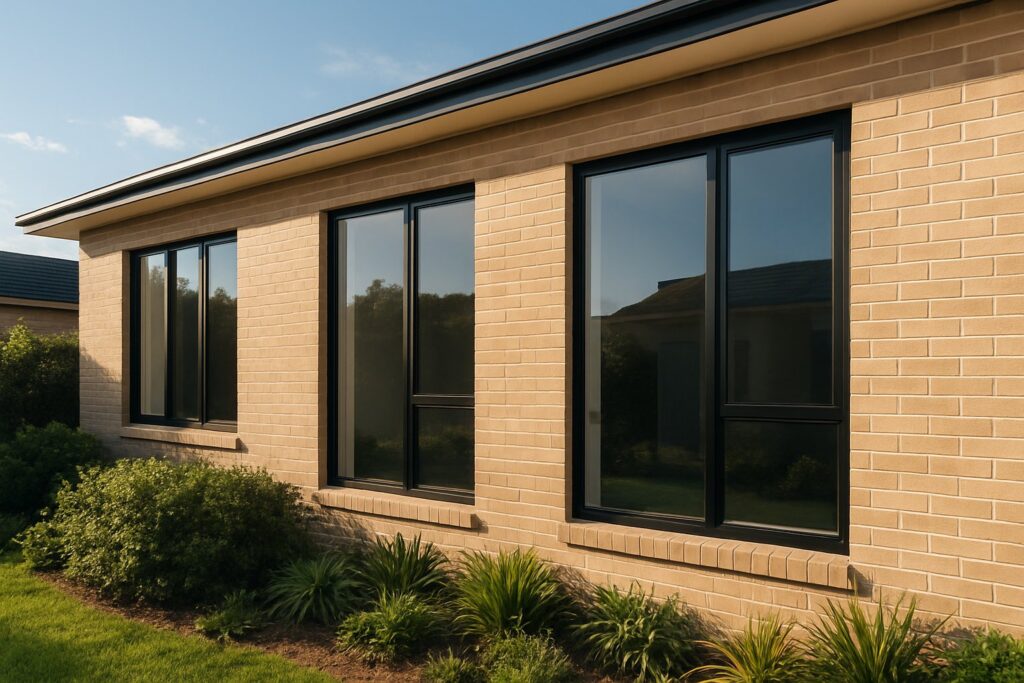
What Are Aluminium Sliding Sash Windows
Aluminium sliding sash windows are vertically operated window systems built from extruded aluminium frames, where one or more glazed panels (sashes) slide up and down within the frame using a concealed spring-balance or weight-balance mechanism. They combine the heritage proportions of traditional timber sash designs with the strength, slim sightlines, and low-maintenance performance of architectural-grade aluminium.
That definition covers the basics, but there is more going on beneath the surface than most buyers realise. Getting the detail right before you commit saves money, time, and a fair bit of frustration down the track.
What Defines a Sliding Sash Window
A sliding sash window operates on a vertical plane. The sash — the glazed panel itself — travels up or down within a fixed outer frame, counterbalanced by a mechanism hidden inside the jambs. This is fundamentally different from casement windows, which swing outward on a hinge, and tilt-and-turn styles, which pivot inward on dual axes. Because the sash slides rather than swings, it sits flush within the frame and never projects into outdoor or indoor space. That flush profile is what gives sash windows their clean, symmetrical appearance.
The vertical sliding sash window mechanism relies on a counterbalance system — either tensioned springs or traditional weights — to offset the mass of the glass so the sash glides smoothly with minimal effort. Without that counterbalance, you would be lifting the full weight of a double-glazed unit every time you opened the window.
Why Aluminium Is Replacing Timber in Sash Designs
Sash windows have been part of the architectural landscape for over 400 years, first appearing in England in the late 1600s before spreading across the Commonwealth. Timber was the only viable material for centuries. It performed well enough in temperate climates, but demanded regular painting, sealing, and eventual replacement as rot set in.
Aluminium changes that equation. Its strength-to-weight ratio allows slimmer frame profiles with larger glass areas, while powder-coated finishes resist UV, salt air, and coastal corrosion without the cyclical maintenance timber demands. For Australian conditions — harsh sun, coastal exposure, and bushfire-prone zones — aluminium offers a modern alternative to timber sash windows that holds up where timber struggles.
Who Benefits Most From This Window Style
Homeowners restoring character properties, architects specifying for heritage overlays, and builders working on multi-storey residential projects all stand to gain. The style suits anyone who values the classic proportions of a sash window but needs contemporary thermal performance, security ratings, and compliance with the National Construction Code.
This guide covers the full picture — mechanisms, materials, glazing, security, planning rules, customisation, supplier evaluation, and the common problems nobody mentions until it is too late. Each section is built to help you make a confident, informed decision rather than an expensive guess.
How Sliding Sash Mechanisms Work
The mechanism hiding inside the frame jambs determines how your window feels every single day you use it. Get this choice wrong and you are stuck with a sash that creeps down on its own, jams halfway, or needs replacing decades before the frame itself wears out. Two systems dominate the market for aluminium sliding sash windows: spring-balance and weight-balance. Each has a distinct engineering logic, a different maintenance profile, and a different fit depending on your property type.
Spring-Balance Systems and How They Work
A spring-balance system uses pre-tensioned steel coils or spiral rods housed inside slim tubes within the window jambs. The spring tension is calibrated during manufacture to offset the exact mass of the sash, so the glazed panel stays put at any height without drifting. When you push the sash up, the spring releases stored energy to assist the lift. When you pull it down, the spring absorbs force to prevent slamming.
Because the entire mechanism fits inside a narrow channel, spring balances allow slimmer frame profiles — a real advantage for aluminium sections where maximising glass area is the goal. There are no bulky side boxes or concealed cavities required, which keeps the overall window depth compact. Most modern aluminium sash windows sold in Australia use this system as standard, and quality units are tested for 5,000 to 15,000 operation cycles before any performance loss.
The trade-off? Springs fatigue over time. Depending on quality and usage frequency, expect a service life of roughly 10 to 20 years before the tension weakens and the balance needs replacing. Replacement is straightforward — a competent installer can swap the spring unit without disturbing the frame or glazing — but it is a maintenance event that weight-balance systems simply do not require.
Weight-Balance Mechanisms for Period Authenticity
The sash window counterweight system explained in simple terms: cast iron or lead weights sit inside a boxed cavity on each side of the frame, connected to the sash by cords running over pulleys at the top of the jamb. As the sash rises, the weights descend. As the sash drops, the weights rise. Perfect mechanical equilibrium — no springs, no tension loss, no fatigue.
This is the original technology, used in Georgian, Victorian, and Edwardian properties for centuries, and it remains the gold standard for heritage authenticity. Weight-balance systems can last 100 years or more with nothing beyond occasional cord replacement. They operate silently, support heavier double-glazed sashes without strain, and satisfy conservation officers who insist on traditional detailing.
The downside is bulk. Accommodating counterweights demands a deeper frame profile — the boxed cavity adds width to the jambs that a spring-balance system avoids entirely. For new-build aluminium installations where slim sightlines matter, this extra depth can be a design compromise. Some specialist manufacturers offer aluminium sash frames engineered for weight-balance operation, but these are niche products typically specified for heritage restoration rather than standard residential projects.
Choosing the Right Mechanism for Your Property
The best balance mechanism for sash windows depends on what you are trying to achieve. A contemporary home in a Sydney suburb with no heritage overlay has no reason to carry the extra frame depth of a weight system — spring balances deliver smooth operation in a compact profile. A Federation-era terrace in a conservation area, where council expects period-appropriate detailing, may require the weight-and-pulley approach to secure approval.
| Factor | Spring-Balance | Weight-Balance |
|---|---|---|
| Typical lifespan | 10–20 years before spring replacement | 100+ years (cord replacement only) |
| Maintenance | Spring unit swap when tension fades | Cord renewal every 20–30 years |
| Frame depth required | Slim — no side cavities needed | Deeper — boxed cavity for weights |
| Smoothness of operation | Consistent when new; can stiffen with age | Effortless and consistent long-term |
| Noise | May develop creaking over time | Silent |
| Heritage suitability | Modern builds, no heritage constraints | Conservation areas, listed properties |
| Cost positioning | Lower upfront, periodic replacement cost | Higher upfront, minimal ongoing cost |
| Weight capacity | Limited — may struggle with heavy triple glazing | High — supports heavy glazed sashes easily |
If your project sits somewhere in between — say a character home without formal heritage listing — spring-balance aluminium sash windows give you the aesthetic without the structural complexity. Just confirm with your supplier that the spring rating matches the actual sash weight, including the glazing. An under-rated spring leads to sash drop; an over-rated one makes the window resist closing. Precise load calibration at the specification stage prevents both problems.
The mechanism you select also influences how the window performs thermally and acoustically — factors that hinge heavily on the glazing package sitting inside that sash.
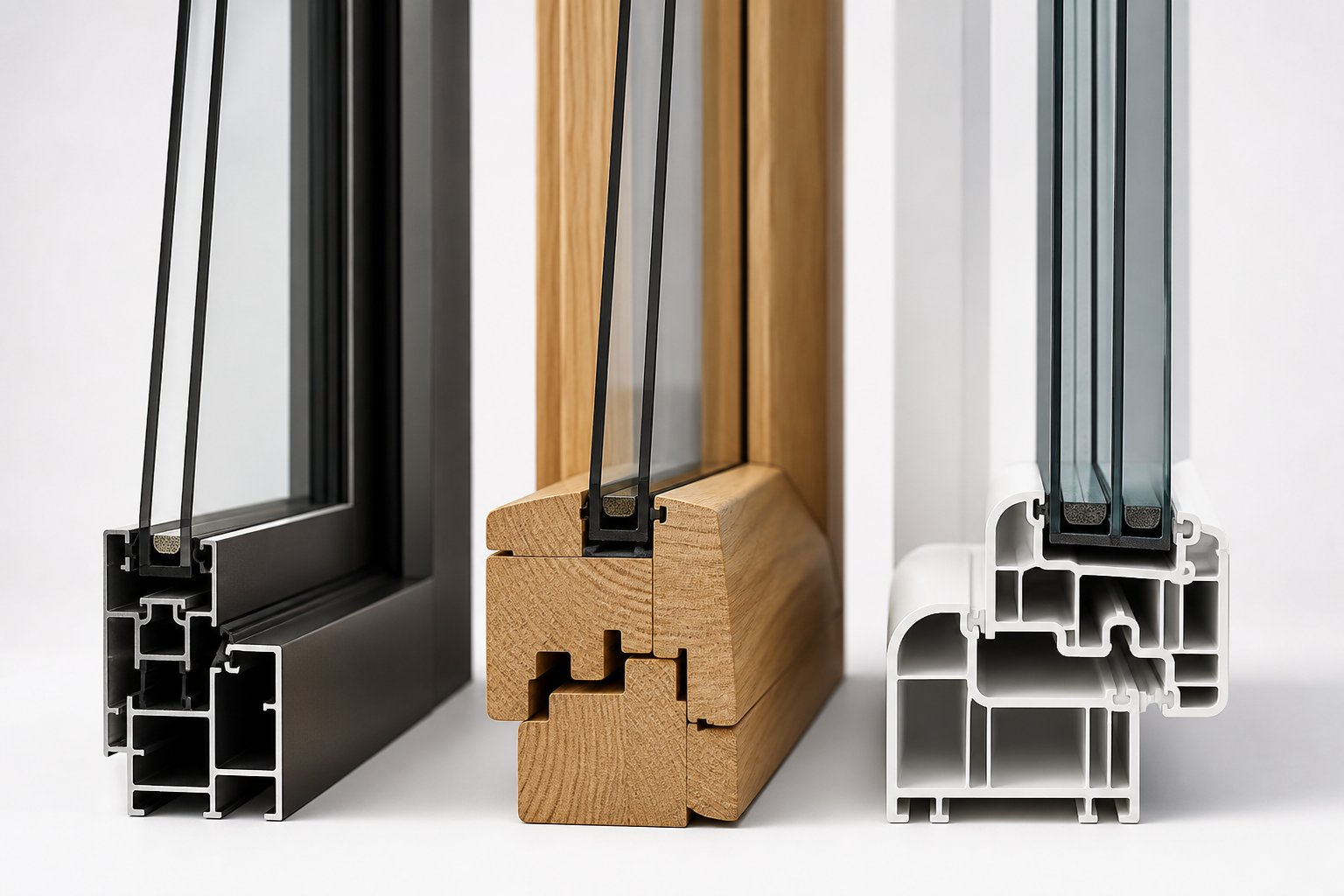
Aluminium vs Timber vs uPVC Sash Windows Compared
Mechanism and glazing matter, but neither performs in isolation — the frame material holding everything together shapes durability, thermal behaviour, maintenance burden, and long-term cost. Choosing the best material for sliding sash windows is where most buyers either overspend or underspecify, because the trade-offs are rarely laid out side by side in plain language.
Aluminium vs Timber Sash Windows
Timber has heritage on its side. It is a natural insulator, it carves beautifully for period detailing, and conservation officers tend to approve it without argument. But timber demands ongoing attention — repainting every three to five years, regular sealing against moisture ingress, and vigilant inspection for rot, especially in coastal or subtropical Australian climates where humidity accelerates decay.
Aluminium flips that equation. Its strength-to-weight ratio allows frame profiles 40–60% slimmer than equivalent timber sections, which means more glass area and more natural light for the same opening size. Powder-coated finishes resist UV degradation, salt spray, and general weathering without cyclical repainting. Lifespan expectations sit comfortably at 40 to 60 years with minimal intervention, compared to 25 to 40 years for well-maintained timber.
The one area where timber historically outperformed aluminium was thermal conductivity. Aluminium conducts heat roughly 1,000 times faster than timber. However, modern thermally broken aluminium frames — where a polyamide or polyurethane barrier separates the inner and outer frame sections — close that gap significantly. A quality thermally broken aluminium sash window can achieve U-values competitive with timber, while eliminating the condensation risk that untreated aluminium frames once carried.
Aluminium vs uPVC Sash Windows
uPVC (unplasticised polyvinyl chloride) occupies the budget end of the market. It insulates well thanks to multi-chambered profiles, resists moisture, and costs less upfront than either timber or aluminium. For a straightforward replacement on a tight budget, it does the job.
Where uPVC falls short is structural rigidity and aesthetics. Because the material lacks inherent strength, uPVC sash frames need bulkier profiles to support double-glazed units — resulting in thicker sightlines that look noticeably different from traditional sash proportions. Over time, uPVC can discolour under intense Australian UV exposure, and unlike aluminium, it cannot be refinished. Once it yellows or chalks, replacement is the only fix.
Aluminium vs uPVC sliding sash windows also diverge on environmental credentials. Aluminium is infinitely recyclable without loss of quality, while uPVC recycling remains limited in practice despite being technically possible. For projects targeting sustainability benchmarks or Green Star ratings, aluminium carries a clearer end-of-life story.
When Alu-Clad Hybrid Frames Make Sense
Alu-clad hybrid sash window frames pair an aluminium exterior shell with a timber interior lining. The idea is simple: aluminium handles weather exposure on the outside while timber provides warmth and a traditional finish on the inside. Some manufacturers offer this configuration specifically for heritage compliance, where council requires a timber appearance internally but the homeowner wants external durability without maintenance.
Full aluminium outperforms alu-clad in situations where low maintenance is the priority across both faces of the window, or where the property has no heritage constraints demanding a timber interior. Alu-clad hybrids still require periodic treatment of the internal timber — oiling, sealing, or repainting — which partially negates the maintenance advantage of choosing aluminium in the first place.
A fully aluminium frame also avoids the long-term risk of differential movement between dissimilar materials. Temperature cycling can cause timber and aluminium to expand at different rates, potentially loosening joints over decades. For modern Australian builds — particularly in climate zones with wide diurnal temperature swings — a single-material frame eliminates that variable entirely.
| Factor | Aluminium (Thermally Broken) | Timber | uPVC | Alu-Clad Hybrid |
|---|---|---|---|---|
| Strength-to-weight ratio | Excellent — slim profiles possible | Moderate — thicker sections needed | Low — bulky profiles required | Good — aluminium provides external strength |
| Thermal performance | High (with thermal break) | Naturally high | High (multi-chamber) | High (combined insulation) |
| Aesthetic versatility | 200+ RAL colours, consistent finish | Natural grain, paintable | Limited colours, can yellow | Timber interior, aluminium exterior |
| Lifespan | 40–60+ years | 25–40 years (maintained) | 20–30 years | 30–50 years |
| Maintenance | Occasional wipe-down | Repaint every 3–5 years, seal, inspect | Minimal but no refinishing option | External: minimal. Internal timber: periodic |
| Environmental credentials | Fully recyclable, no quality loss | Renewable if sustainably sourced | Limited recycling in practice | Partially recyclable |
| Sightline width | Slimmest available | Moderate | Widest | Moderate to slim |
| Approximate cost tier (supply only) | $$–$$$ | $$$ | $–$$ | $$$–$$$$ |
| Best suited for | Modern builds, coastal, bushfire zones | Heritage restorations, conservation areas | Budget replacements, low-risk locations | Heritage projects needing external durability |
Cost positioning varies by supplier and specification, but as a general guide for the Australian market, expect aluminium sliding sash windows to sit 20–30% above uPVC and roughly on par with quality timber for standard sizes. Alu-clad commands a premium of around 30% over full aluminium due to the additional material and fabrication complexity. The aluminium sash window lifespan and cost equation tends to favour aluminium over the long run — lower cumulative maintenance spend and a longer replacement cycle offset the higher initial outlay.
Material choice sets the performance ceiling, but what fills the frame — the glazing — determines whether that ceiling is actually reached.
Glazing Options and Thermal Performance
A well-engineered aluminium frame means nothing if the glass inside it bleeds heat. Glazing accounts for the largest surface area of any window, and its configuration — single, double, or triple — dictates how much thermal energy passes through your walls every hour of every day. Understanding what sits between those panes, and how to read the numbers suppliers quote, separates informed buyers from those who discover their mistake on the first cold morning.
Single, Double, and Triple Glazing Explained
Single glazing is a single pane of glass with no insulating cavity. It offers almost no resistance to heat transfer and is essentially obsolete for new residential installations in Australia. You will still find it in older homes — particularly pre-war character properties — but it fails to meet current National Construction Code (NCC) Section J energy efficiency requirements for replacement windows.
Double glazing sandwiches two panes of glass around a sealed air gap, typically 12–20 mm wide. That cavity — usually filled with argon gas rather than plain air — dramatically slows conductive and convective heat loss. A low-emissivity (Low-E) coating on one pane reflects radiant heat back into the room while still admitting natural light. This is the standard configuration for double glazed aluminium sash windows, and it handles the bulk of Australian residential projects comfortably.
Triple glazing for sliding sash windows adds a third pane and a second sealed cavity, pushing thermal and acoustic performance further again. The additional glass and gas layer reduces heat transfer to levels approaching passive-house territory. The trade-off is weight — triple-glazed sashes are heavier, which demands a more robust balance mechanism and slightly deeper frame sections. For homes in alpine regions, extreme southern latitudes, or high-noise corridors near airports and highways, the extra mass is justified. For a typical suburban build in Sydney or Brisbane, double glazing with quality Low-E coatings usually delivers the performance sweet spot without the added cost or weight penalty.
Understanding U-Values and Energy Ratings
A U-value measures how much heat passes through a complete window system — glass, gas fill, coatings, spacers, and frame combined — expressed in watts per square metre per degree Kelvin (W/m²K). Lower numbers mean less heat escaping. That is the only thing you need to remember when comparing supplier claims.
Typical U-value ranges for aluminium sash configurations in practice:
- Single glazed timber sash (original, unimproved): approximately 4.8–5.4 W/m²K
- Double glazed aluminium sash with Low-E and argon fill: approximately 1.2–1.6 W/m²K
- Slimline heritage double glazing (14–18 mm cavity): approximately 1.4–1.9 W/m²K
- Triple glazed aluminium sash: approximately 0.8–1.2 W/m²K
In Australia, the Window Energy Rating Scheme (WERS) provides an independent framework for assessing window performance. WERS rates windows on a star system — up to 10 stars — accounting for heating, cooling, and overall energy balance rather than a single U-value figure alone. This matters because Australian climates often demand windows that manage solar heat gain in summer as much as heat retention in winter. A window with an excellent U-value but poor solar control can still drive up cooling bills in Perth or Darwin.
When evaluating energy efficient aluminium sash window ratings, look beyond the headline number. Confirm whether the quoted U-value covers the whole window (frame plus glass) or just the centre-of-glass figure, which always looks better on paper. Whole-window U-values are what NCC Section J compliance is assessed against, and they are what affect your actual energy bills.
Key thermal performance factors to verify with any supplier before committing:
- Whole-window U-value (not centre-of-glass only)
- Solar Heat Gain Coefficient (SHGC) — critical for Australian cooling loads
- WERS star rating for your specific climate zone
- Type of gas fill (argon standard, krypton for slimline heritage units)
- Low-E coating position and type (hard coat vs soft coat)
- Warm-edge spacer bars rather than aluminium spacers, which create thermal bridges
- Whether the frame includes a polyamide thermal break
- Compliance with AS 2047 (windows and external glazed doors) and AS 1288 (glass selection and installation)
Secondary Glazing for Heritage Properties
Not every heritage sash window needs ripping out. Secondary glazing for heritage sash windows offers a less invasive path — a fully independent glazed panel installed on the room side of the existing window, leaving the original sash untouched and unaltered.
Research from Historic England has shown that secondary glazing with a Low-E hard coating can reduce conducted heat loss through a window by over 60%. When the secondary unit incorporates double-glazed panels or insulating frames, performance improves further still — in some cases matching or exceeding the thermal performance of full replacement double glazing.
For Australian homeowners in heritage overlay zones — particularly in inner Melbourne, Sydney’s inner west, or Brisbane’s Queenslander belt — secondary glazing sidesteps the council approval headaches that full window replacement triggers. The original windows remain in place, satisfying heritage requirements, while the internal secondary panel handles thermal and acoustic heavy lifting. Slim aluminium-framed secondary systems can fit within the depth of existing staff beads, preserving shutter operation and internal joinery.
Secondary glazing also delivers superior acoustic insulation compared to standard double glazing. The larger air gap between the primary window and the secondary panel — typically 100 mm or more — decouples vibration between the two glass surfaces, achieving noise reductions of up to 45 dBA. For properties on busy roads or flight paths, this acoustic benefit alone can justify the investment.
The catch? Secondary glazing requires careful ventilation management to prevent condensation forming between the primary and secondary panes. Leaving the original window slightly ventilated while sealing the secondary unit tightly is the standard approach, but each installation needs assessment based on the building’s existing airflow patterns and humidity levels.
Thermal performance sets the comfort baseline, but a window is also a potential entry point — and that is where most buyers stop asking questions too early.
Security Features and Locking Mechanisms
A window that keeps heat in but lets intruders through is not a window worth installing. Security is the area where aluminium sliding sash windows hold a genuine structural advantage over timber and uPVC — yet most suppliers gloss over the detail, leaving buyers to assume all locking systems are equal. They are not.
Multi-Point Locking and Shoot-Bolt Systems
Traditional sash windows relied on a single cam lock or crescent latch at the meeting rail — one point of resistance between you and anyone trying to force the sash open. Modern multi-point locking sash windows replace that single latch with multiple engagement points distributed around the frame perimeter. When the handle turns, locking cams or hooks engage simultaneously at the top, bottom, and sides of the sash, clamping it tightly against the frame at every critical stress point.
This matters because forced entry typically exploits flex. An intruder applies leverage at one corner, bowing the frame until the single lock disengages. Multi-point systems eliminate that vulnerability — locking in several places reduces frame flexing and distributes resistance across the full perimeter rather than concentrating it at one spot.
Shoot-bolt mechanisms add another layer. When the handle engages, reinforced steel bolts extend vertically into the head and sill of the frame, anchoring the sash at its most pry-vulnerable edges. These thick bolts resist physical attack even when significant force is applied with a crowbar or flat-blade tool. Many quality aluminium sash systems combine shoot-bolts with multi-point cams as standard — not as an upgrade — giving ground-floor and accessible windows the protection they need without additional hardware cost.
Security Ratings and What They Mean
Certifications tell you whether a window has actually been tested under simulated break-in conditions or whether the manufacturer is simply claiming it is “secure.” In Australia, windows must comply with AS 2047 for structural performance, but this standard does not specifically address burglar resistance in the way dedicated security testing does.
The most widely recognised forced-entry resistance standard is PAS 24, which tests a complete window assembly — frame, locking hardware, hinges, and glazing — against a simulated opportunistic burglar attack using tools that are easy to conceal. Products certified to PAS 24 have withstood systematic manipulation, levering, and impact testing under controlled laboratory conditions. While PAS 24 originates from the UK, it is referenced internationally and accepted by many Australian specifiers as evidence of genuine burglar resistance, particularly for projects requiring enhanced security beyond baseline NCC compliance.
For higher-risk applications — commercial premises, ground-floor apartments in high-density areas, or homes backing onto laneways — look for products tested to standards like LPS 1175 or STS 202, which introduce power-tool attack scenarios and assign graded security ratings based on delay time. These are less common in residential sash windows but worth knowing about if your risk profile demands more than standard protection.
How Frame Material Affects Break-In Resistance
Aluminium’s inherent strength gives it a security edge that neither timber nor uPVC can match at equivalent profile dimensions. Despite its slim appearance, aluminium is one of the most burglar-resistant frame materials available because it resists bending, twisting, and levering forces that would deform or split alternative materials.
Timber, while strong when new, degrades over time. Rot weakens the frame at fixing points, and aged timber can split under concentrated force from a pry bar. uPVC is rigid enough under normal conditions, but its plastic composition means it can be cut or melted with relatively simple tools — a vulnerability aluminium does not share. The slimmer profile of aluminium also means less exposed material for an intruder to grip or lever against.
Internal beading is another security detail that often goes unmentioned. In a properly specified aluminium sash window, the glazing is secured from the inside of the property using internal beads — meaning the glass cannot be removed from the exterior without first gaining access to the room. Windows with external beading allow an intruder to pop the beads out from outside, silently remove the glass, and climb through an open frame without breaking anything. Always confirm that your specification uses internal beading as standard.
Before signing off on any aluminium sash window order, verify that the following security features are included in the specification:
- Multi-point locking with a minimum of three engagement points per sash
- Shoot-bolt mechanisms extending into the head and sill
- Internal glazing beads (glass fitted from inside only)
- Reinforced keep plates at all locking points
- Anti-lift devices preventing the sash from being levered out of its track
- Key-lockable handles rather than simple turn latches
- Certification to PAS 24 or equivalent forced-entry resistance testing
- Laminated glass option for ground-floor or high-risk openings
Security hardware protects what is inside your home. But for many Australian homeowners, the bigger battle happens before installation even begins — navigating planning permission and conservation area rules that dictate what you are allowed to install in the first place.
Planning Permission and Conservation Area Rules
Most homeowners assume they can swap old windows for new ones without involving council. In many cases that is true — but get it wrong in a heritage-sensitive area and you face enforcement notices, mandatory removal of non-compliant windows, and the cost of doing the job twice. This is the chapter nobody writes because it is not glamorous, yet it trips up more renovation budgets than any glazing specification ever will.
When Planning Permission Is Required
For standard residential properties outside heritage controls, replacing windows with units of similar appearance generally falls under exempt development in most Australian states. You do not need a development application (DA) if the new windows match the existing style, proportions, and materials — or at least do not significantly alter the building’s external appearance.
That exemption disappears the moment your property sits within a heritage conservation area, carries a heritage listing on the state or local register, or falls under a specific heritage overlay in your council’s Local Environmental Plan (LEP) or planning scheme. In these situations, even a like-for-like replacement can require formal council approval, and switching from timber to aluminium almost certainly will.
The trigger is not the window itself — it is the change to external appearance. If your existing windows are timber sash and you propose aluminium replacements, council treats that as a material change regardless of how closely the new frames replicate the original proportions. Some councils also require approval when altering glazing configurations, adding glazing bars, or changing colour finishes on street-facing elevations.
Conservation Areas and Listed Building Constraints
Heritage conservation areas — found across inner Sydney, Melbourne’s Victorian-era suburbs, Brisbane’s character precincts, Adelaide’s historic zones, and many regional towns — protect the collective streetscape character rather than individual buildings. Your property might not be heritage-listed on its own, but if it sits within a heritage conservation area, external alterations visible from the public domain typically require a DA or heritage approval.
Heritage-listed properties face stricter scrutiny again. State heritage registers (managed by bodies like Heritage NSW, Heritage Victoria, or the Queensland Heritage Council) protect buildings of individual significance. Replacing windows on a heritage-listed property usually requires both council consent and a separate heritage impact statement demonstrating that the proposed work will not diminish the building’s significance.
Many councils also apply specific heritage overlay provisions — the Australian equivalent of what UK planning law calls Article 4 directions — that remove standard exemptions for properties within defined precincts. Under these overlays, even minor external changes like repainting in a different colour or replacing hardware can require written approval. Article 4 direction window replacement rules in the UK context operate on the same principle: removing permitted development rights to ensure every visible alteration is assessed for its impact on the area’s character.
The practical effect for Australian homeowners? If your property falls under any heritage control — conservation area, individual listing, or heritage overlay — assume you need council approval before ordering replacement windows. Proceeding without it risks enforcement action and financial loss.
Designing Aluminium Sash Windows for Heritage Approval
Here is where aluminium gets interesting for heritage projects. While conservation officers in some jurisdictions default to requiring timber, a growing number of Australian councils accept aluminium sash windows in heritage overlay zones when the design demonstrates genuine period fidelity. The key is proving that the replacement respects the building’s architectural language — not just its general shape, but its specific proportions, detailing, and visual weight.
Slim sightlines are the first hurdle. Original timber sash windows featured relatively slender frame profiles, and chunky modern frames immediately signal a non-original installation. Aluminium’s strength-to-weight ratio actually works in your favour here — thermally broken aluminium can achieve sightlines of 45–55 mm that closely replicate the visual proportions of original Victorian or Federation-era timber frames. This is slimmer than uPVC can manage and comparable to quality timber joinery.
Glazing bar profiles require equal attention. Heritage officers scrutinise the width, depth, and moulding profile of glazing bars because these details define a window’s period character. Original Georgian and Victorian bars were typically 12–18 mm wide with ovolo or chamfered profiles — not the flat, wide bars found on budget modern windows. Aluminium sash manufacturers serving the heritage market can replicate these profiles precisely, and some offer true divided lights (individual panes separated by structural bars) rather than applied bars stuck onto a single pane.
Sash horns — the small projecting details at the bottom corners of the upper sash — appeared in the Victorian era when larger glass panes required additional structural support. Their presence or absence signals a window’s period. If your property dates from the 1860s onward, heritage officers will likely expect sash horns on any replacement. If it is Georgian or early colonial, horns would be historically inaccurate and should be omitted.
Colour finish matters too. Heritage approvals often specify traditional colour palettes — whites, creams, deep greens, or specific heritage colours documented in the conservation area’s character statement. Powder-coated aluminium can be finished in any RAL colour, making it straightforward to match heritage requirements. Some councils require colour samples for approval before manufacture begins.
The following process helps homeowners navigate heritage window replacement without costly missteps:
- Check your property’s planning status — search your council’s online mapping tool for heritage overlays, conservation area boundaries, and individual heritage listings.
- Download and read the heritage conservation area’s character statement or Development Control Plan (DCP) provisions — these documents spell out what council expects for window replacements in your specific precinct.
- Photograph your existing windows in detail — capture glazing bar patterns, sash horn details, hardware, frame proportions, and any visible deterioration that supports the case for replacement.
- Request a pre-DA meeting with your council’s heritage advisor — most councils offer this service for a modest fee, and the feedback you receive shapes a stronger formal application.
- Prepare detailed technical drawings showing the proposed aluminium sash profiles, glazing bar dimensions, colour finish, and hardware — vague descriptions or supplier brochures are insufficient for heritage assessment.
- Submit your DA with supporting documentation including a heritage impact statement, existing condition photographs, and manufacturer specifications demonstrating period-appropriate detailing.
- Allow for conditions of consent — council may require material samples, colour swatches, or inspection at installation stage before signing off on compliance.
Rushing this process — or skipping it entirely — is the single most expensive mistake homeowners make with aluminium sash windows in conservation areas. A rejected DA costs time and resubmission fees. Installing without approval costs far more: removal, reinstatement, and potential fines that dwarf the price of the windows themselves.
Getting heritage approval sorted clears the regulatory path, but it also narrows your specification in useful ways. You know exactly what colour, profile, and detailing council expects — which feeds directly into the customisation decisions that shape your final order.
Customisation Options and Long-Term Maintenance
Heritage approval dictates what your windows must look like from the street. But even without conservation constraints, the range of finishes, hardware, and track configurations available for aluminium sliding sash windows is broader than most buyers realise — and the choices you make here affect both daily function and decades-long durability.
Colour Finishes and Powder Coating Durability
Powder coating is the industry-standard finish for architectural aluminium. The process applies a dry pigmented powder electrostatically to the frame surface, then cures it under heat to form a hard, uniform layer that bonds directly to the metal. Unlike wet paint, powder-coated aluminium resists chipping, peeling, and flaking — common failure modes that plague painted timber sash windows within a few years of exposure to Australian UV and coastal salt air.
The RAL colour system gives you access to over 200 standardised shades, from heritage whites and deep Brunswick greens through to bold contemporary tones. Aluminium sash window RAL colour options mean you can colour-match virtually any period palette a council heritage statement specifies, or go in the opposite direction with modern finishes that suit new-build projects.
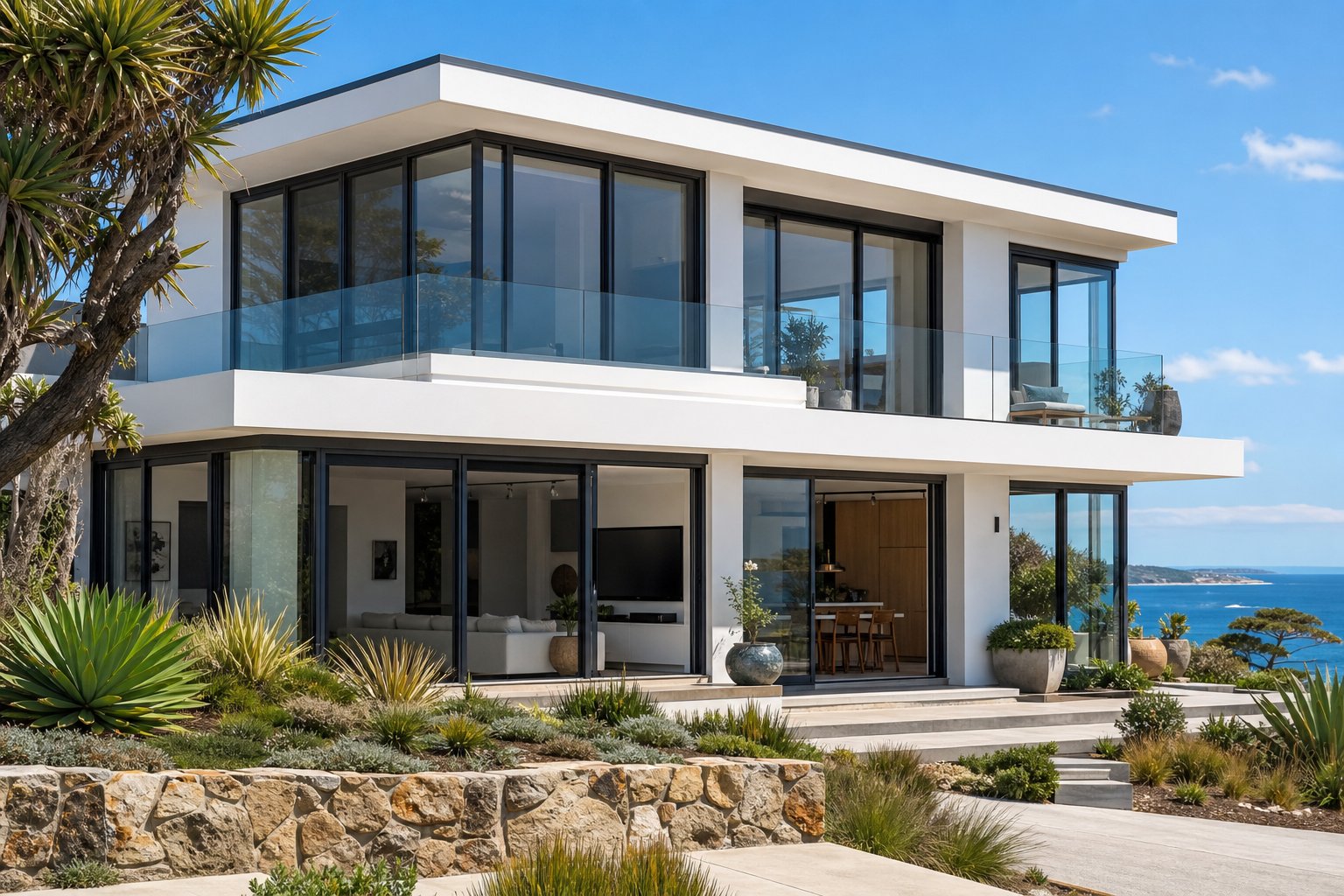
Anthracite grey sash window finishes — RAL 7016 — have become the dominant choice for contemporary Australian homes, particularly double-storey designs with expansive glazing. Matt black (RAL 9005) runs a close second. Both deliver the contrast against light render or cladding that architects favour for clean, modern facades. Dual-colour options are also available from most fabricators: a heritage-appropriate cream on the exterior face with a darker interior tone to match internal joinery, for example.
Quality matters enormously here. A premium powder coat applied to properly pre-treated aluminium will hold its colour and integrity for 25 to 30 years in harsh conditions. Inferior coatings — often identifiable by a thinner film build or lack of documented pre-treatment — can fade, chalk, or blister within five to ten years, particularly on north-facing elevations copping full sun. Ask your supplier about film thickness (60–80 microns is standard for architectural applications) and whether the coating meets Qualicoat or equivalent durability certification.
Track Configurations and Hardware Choices
Traditional sash windows operate on a single vertical track per sash — one track for the upper sash, one for the lower. This is the standard configuration for heritage-style aluminium sash windows and suits most residential applications where ventilation control and period proportions are the priority.
Sliding window systems designed for wider openings or project-based supply often use multi-track configurations — two-track, three-track, or even four-track setups that allow multiple panels to slide past each other horizontally. These are distinct from vertical sash operation but share the same aluminium framing technology and hardware logic. Builders and developers working on multi-unit residential projects frequently specify multi-track sliding systems for living areas and balconies, reserving vertical sash configurations for bedrooms and street-facing elevations where heritage proportions matter. For those evaluating multi-track sliding options, MEICHEN’s MA100 sliding window system offers a two-track configuration designed specifically for Australian project supply, with options for screens, locks, and city-specific compliance.
Hardware selection covers handles, locks, stays, and restrictors. Period-style monkey-tail handles and teardrop fasteners suit heritage projects, while contemporary squared-off lever handles complement modern anthracite or black frames. Tilt latches and child-safety restrictors are functional additions worth specifying for upper-storey windows — they allow ventilation while limiting the opening to a safe gap.
Glazing bar configurations round out the visual customisation. Georgian six-over-six patterns, Victorian two-over-two layouts, and Edwardian marginal bars each signal a different architectural era. As discussed in the heritage chapter, true divided lights offer the most authentic appearance, but applied bars with internal spacer bars provide a cost-effective alternative that reads convincingly from street level.
Maintenance Schedules and Lifespan Expectations
This is where aluminium earns its keep over the long haul. Timber sash windows demand repainting every three to five years, regular putty renewal, and constant vigilance against rot. Aluminium asks for almost nothing by comparison — a reality that compounds into significant savings over a 30-year ownership period.
How long do aluminium sash windows last? Industry data suggests 40 to 50 years for properly maintained aluminium windows, with the frame itself often outlasting the glazing seals and balance mechanisms inside it. Warranty periods from reputable manufacturers typically range from 10 to 25 years on frames and powder coating, with separate coverage for hardware and glazing units. Always read the warranty fine print — some exclude coastal locations or require documented maintenance to remain valid.
An aluminium sash window maintenance schedule is refreshingly short. Follow this annual checklist to keep your windows operating smoothly and protect your warranty coverage:
- Wash frames and sashes with warm water and a mild, non-abrasive detergent — avoid solvent-based cleaners that can damage powder coating
- Clean drainage slots at the sill to prevent water pooling inside the frame
- Lubricate the balance mechanism (spring channel or pulley system) with a silicone-based spray — never use oil-based lubricants that attract grit
- Check weatherseals for compression, cracking, or displacement and replace any that no longer form a tight seal
- Inspect locking hardware — test multi-point locks for smooth engagement and tighten any loose handle screws
- Examine the powder-coated finish for chips or scratches, particularly on coastal properties — touch up minor damage with manufacturer-supplied paint pens before corrosion starts
- Test sash operation — both sashes should glide smoothly without sticking, dropping, or requiring excessive force
- Clear any debris from tracks and ensure nothing obstructs the sash travel path
Spending 20 minutes per window once a year is genuinely all it takes. Compare that to the weekend-consuming cycle of sanding, priming, and repainting timber frames, and the low-maintenance claim stops being marketing language and starts being measurable time saved.
Powder coated aluminium window durability, combined with minimal upkeep requirements, makes the total cost of ownership significantly lower than timber despite a comparable or slightly higher purchase price. The frame will not rot, warp, or need structural repair. The finish will not flake or require stripping. The only components with a finite service life are the balance springs (10–20 years), weatherseals (8–12 years), and glazing unit seals (15–25 years) — all of which are replaceable without disturbing the frame itself.
Customisation locks in the look and function you want. Maintenance keeps it performing. But neither matters if you choose the wrong supplier or specify the wrong configuration for your project — a decision that deserves its own framework.
How to Choose the Right Aluminium Sash Window Supplier
Knowing what you want and getting what you pay for are two different things. The Australian window market includes everything from vertically integrated manufacturers to small fabricators reselling imported profiles, and the quality gap between them is invisible until something fails. A structured approach to evaluating suppliers — asking the right questions, understanding supply models, and matching configurations to your actual project needs — protects your investment far more effectively than trusting a glossy brochure or the lowest quote in your inbox.
Essential Questions to Ask Any Supplier
Most buyers focus on price and lead time. Those matter, but they tell you nothing about whether the product will perform in ten years or whether the warranty will actually be honoured. The questions to ask window supplier before buying should probe deeper — into materials, testing, installation accountability, and after-sales support.
Before committing to any aluminium sash window order, work through this checklist:
- What aluminium profile system do you use, and is it thermally broken with a polyamide or polyurethane barrier? Ask for the specific thermal break width — 20 mm or greater is standard for quality residential systems.
- What is the whole-window U-value for the configuration you are quoting — not centre-of-glass, but the complete assembly including frame? Request the WERS rating for your climate zone if available.
- Is the window tested and certified to PAS 24 or equivalent forced-entry resistance standards? Ask for the test certificate, not just a claim on the website.
- What powder coating system is used, and does it meet Qualicoat or equivalent durability certification? Confirm film thickness and pre-treatment process — especially critical for coastal properties exposed to salt air.
- Who installs the windows — your own trained team or subcontracted labour? If subcontracted, who carries liability for installation defects?
- What specific warranty terms apply to the frame, powder coating, hardware, glazing seals, and balance mechanism separately? Are coastal locations excluded or subject to reduced coverage?
- What is the realistic lead time from order confirmation to delivery, and what factors could extend it? Custom colours and non-standard sizes typically add two to four weeks.
- Can you provide AS 2047 compliance documentation and evidence of testing to AS 1288 for the glazing configuration specified?
- Do you offer a site measure service, and is the measurer accountable for dimensional accuracy — or does the homeowner carry the risk of incorrect measurements?
- Can you supply references or completed project examples in my area, ideally including heritage overlay approvals if relevant to my situation?
A confident supplier welcomes these questions. Evasive or vague responses — particularly around testing certifications and warranty exclusions — signal corners being cut somewhere in the supply chain. How to choose aluminium sash window supplier comes down to transparency: the best operators document everything and stand behind it in writing.
Retail vs Project-Based Supply Models
The way you buy matters almost as much as what you buy. Two distinct supply models serve the Australian market, and each suits a different buyer profile.
Retail supply targets individual homeowners replacing a handful of windows. You deal with a showroom or sales representative, receive a fixed quote for supply and install, and the company manages the entire process from measure to completion. This model works well for single-dwelling renovations where you want one point of contact and minimal project management on your end. The trade-off is cost — retail margins and installation labour are bundled into the price, and customisation options may be limited to what the retailer stocks or can source from their preferred fabricator.
Project-based aluminium window supply for developers operates differently. Builders, architects, and developers managing multi-unit residential projects — townhouse developments, apartment blocks, or staged estate builds — typically deal directly with manufacturers or specialist trade suppliers. Pricing is volume-based, configurations are specified per opening schedule, and supply is coordinated against construction timelines rather than individual homeowner availability. This model delivers lower per-unit costs, greater configuration flexibility, and direct access to technical support during the specification phase.
The distinction matters because a supplier geared for retail may lack the capacity, pricing structure, or technical depth to service a 40-unit apartment project efficiently. Conversely, a project-focused manufacturer may not offer the hand-holding and single-window flexibility that a homeowner replacing three sashes in a Federation cottage needs. Match the supply model to your project scale before engaging in detailed quoting.
Evaluating Window Configurations for Your Project
Configuration is where generic product pages stop being useful and project-specific thinking takes over. Sliding window track configuration options, screen integration, locking systems, and panel arrangements all need to align with how each opening will actually be used.
For vertical sash windows, the primary configuration decisions are straightforward: single-hung (only the bottom sash moves) versus double-hung (both sashes slide), glazing bar pattern, and balance mechanism type. These choices flow directly from the heritage, thermal, and security requirements covered in earlier chapters.
For horizontal sliding windows — common in living areas, balconies, and wide openings where vertical sash proportions are not required — track count becomes the critical variable. A two-track system accommodates two panels sliding past each other, offering roughly 50% clear opening. Three-track systems allow three panels with greater opening flexibility, and four-track configurations suit expansive openings where maximum ventilation and access matter. Each additional track adds frame depth and cost, so specifying more tracks than the space demands wastes budget without functional benefit.
Screen options deserve attention early in the specification process rather than as an afterthought. Retractable flyscreens, fixed mesh panels, and security screens each require dedicated track space or mounting provisions that must be designed into the frame from the outset. Retrofitting screens to a system not designed for them compromises both aesthetics and seal performance.
Locking systems should be evaluated against the opening’s risk profile. Ground-floor windows facing laneways or rear boundaries warrant multi-point locks with shoot-bolts and key-lockable handles as standard. Upper-storey windows in low-risk positions may only need basic latching with child-safety restrictors. Specifying maximum security hardware on every opening inflates cost without proportional benefit — target your security spend where the vulnerability actually exists.
For builders and developers evaluating sliding window systems at scale, manufacturers like MEICHEN offer project-oriented configurations — their MA100 two-track sliding window, for instance, is designed specifically for Australian residential and commercial supply with integrated screen, lock, and city-specific compliance options built into the specification process. This kind of purpose-built project system simplifies procurement compared to assembling components from multiple retail sources.
Ultimately, the right configuration is the one that solves your specific brief without over-engineering openings that do not need it. Specify each window on its own merits — orientation, floor level, room function, ventilation requirement, and security exposure — rather than applying a blanket specification across an entire project. That targeted approach keeps costs rational while ensuring every opening performs exactly as intended.
Getting the supplier and configuration right eliminates most future headaches. But some problems still surface after installation — and knowing what causes them, and how to prevent them, saves you from joining the ranks of buyers who only discover the traps after the scaffolding comes down.
Common Aluminium Sash Window Issues and Solutions
Even a well-specified aluminium sash window can develop problems if the installation cuts corners, the product skimps on thermal engineering, or the owner neglects basic upkeep. The difference between a window that performs flawlessly for decades and one that frustrates you within a few winters usually comes down to a handful of preventable issues — none of which are inherent flaws in the material itself.
Condensation and Thermal Bridging Issues
Aluminium sash window condensation problems are the single most common complaint — and the most misunderstood. Condensation is not a defect in the window. It is a physics problem: warm, moist indoor air meets a surface cold enough to drop below the dew point, and water vapour turns to liquid. The question is whether your window’s design keeps internal surfaces warm enough to prevent that threshold being crossed.
Thermal bridging in aluminium window frames occurs when the metal conducts cold from the exterior face straight through to the interior, creating a cold strip where moisture collects. Older aluminium windows without a thermal break are notorious for this — the inner frame can approach outdoor temperature on a cold morning, turning into a condensation magnet regardless of how well the glass performs. Modern thermally broken systems solve this by inserting a polyamide or polyurethane barrier between the inner and outer aluminium sections, keeping the interior surface significantly warmer and well above dew point in normal conditions.
If you are experiencing condensation on recently installed aluminium sash windows, the cause is almost always one of three things: the frame lacks an adequate thermal break (cheap imports often use minimal or no insulating barrier), indoor humidity is too high (common in tightly sealed homes without mechanical ventilation), or the glazing specification is underperforming for your climate zone. Addressing the root cause matters more than wiping the glass every morning.
Operational Problems and How to Prevent Them
Stiff sashes, rattling frames, and fading finishes — these are the issues that erode daily satisfaction with a window long before anything structurally fails.
How to fix stiff sliding sash windows starts with diagnosis. Operational stiffness typically develops when debris accumulates in the tracks, weatherseals compress unevenly, or the balance mechanism loses calibration. A regular maintenance routine — clearing tracks, lubricating channels with silicone spray, and checking that spring tension still matches sash weight — prevents most stiffness before it starts. If the sash has already seized, remove it from the frame, clean the track channels thoroughly, inspect the balance springs for fatigue, and reassemble with fresh lubrication. Forcing a stiff sash only damages the weatherseals and accelerates wear on the balance mechanism.
Rattling in high-wind areas signals poor compression between the sash and frame. Quality hardware with adjustable keeps allows the locking points to draw the sash tighter against the weatherseals, eliminating play. Budget systems with fixed keeps offer no adjustment — once the seals compress over time, the rattle begins and the only fix is seal replacement or hardware upgrade. Coastal and exposed hilltop properties should specify heavy-duty weatherseals and adjustable multi-point locks from the outset rather than treating them as optional extras.
Colour fading and chalking on powder-coated frames is almost always a pre-treatment failure rather than a pigment issue. As Qualicoat UK notes, powder coat failures typically trace back to inadequate surface preparation before coating — contaminants left on the aluminium allow oxidisation to form beneath the finish, eventually causing peeling, blistering, or filigree corrosion. Specifying a Qualicoat-certified applicator (or equivalent Australian standard) and confirming proper pre-treatment eliminates this risk. For north-facing elevations copping intense UV year-round, a Class 2 powder with enhanced UV resistance extends colour stability beyond 25 years.
| Problem | Common Cause | Prevention / Solution |
|---|---|---|
| Internal condensation on frame | Absent or inadequate thermal break allowing cold bridging | Specify thermally broken profiles with minimum 20 mm polyamide barrier; improve ventilation |
| Condensation between panes | Failed glazing unit seal (end of seal life) | Replace the sealed glazing unit — frame can remain in place |
| Sash stiff or difficult to slide | Debris in tracks, dry balance mechanism, compressed seals | Clean tracks, lubricate with silicone spray, check spring tension annually |
| Sash drops or will not stay open | Spring-balance fatigue or incorrect spring rating | Replace balance spring with correct weight-rated unit |
| Rattling in wind | Worn weatherseals or non-adjustable locking keeps | Replace seals; upgrade to adjustable multi-point keeps that draw sash tighter |
| Powder coating peeling or blistering | Poor pre-treatment before coating; corrosion forming beneath finish | Specify Qualicoat-certified coating; touch up chips immediately on coastal properties |
| Colour fading or chalking | Standard Class 1 powder degrading under extreme UV | Specify Class 2 powder for high-exposure elevations; maintain regular cleaning schedule |
| Draughts around closed sash | Misaligned sash, damaged weatherseals, or settling of frame | Realign sash within frame; replace perished seals; check fixing points for movement |
Making a Confident Final Decision
Every problem in that table traces back to one of two origins: specification shortcuts at the buying stage, or neglected maintenance after installation. Neither is inevitable. Aluminium sliding sash windows, when specified with proper thermal breaks, quality powder coating, correctly rated balance mechanisms, and robust locking hardware, deliver a combination of heritage aesthetics, modern thermal performance, and genuine low maintenance that no other frame material matches across all three criteria simultaneously.
The buyers who end up frustrated are those who chose on price alone, skipped the questions that reveal product quality, or assumed “fit and forget” meant zero upkeep forever. Twenty minutes of annual maintenance and a specification process that prioritises tested performance over the cheapest quote — that is the entire formula for getting decades of trouble-free service from these windows. The traps exist, but they are all avoidable once you know where they sit.
Frequently Asked Questions About Aluminium Sliding Sash Windows
1. How long do aluminium sliding sash windows last compared to timber?
Aluminium sliding sash windows typically last 40 to 60 years with minimal maintenance, while well-maintained timber sash windows average 25 to 40 years. The aluminium frame itself often outlasts internal components like balance springs (10-20 years) and glazing seals (15-25 years), both of which can be replaced without disturbing the frame. Over a 30-year ownership period, aluminium’s lower cumulative maintenance costs and longer replacement cycle generally offset its slightly higher upfront price compared to timber.
2. Do I need planning permission to replace sash windows with aluminium in Australia?
For standard residential properties outside heritage controls, replacing windows with similar-looking units generally qualifies as exempt development. However, if your property sits within a heritage conservation area, carries a heritage listing, or falls under a heritage overlay in your council’s Local Environmental Plan, you will almost certainly need a development application. Switching from timber to aluminium is treated as a material change regardless of how closely the new frames replicate original proportions. Always check your council’s online mapping tool for heritage overlays before ordering replacement windows.
3. What causes condensation on aluminium sash windows and how do you fix it?
Condensation on aluminium sash windows is caused by warm indoor air meeting a frame surface cold enough to drop below the dew point. The root cause is usually one of three things: the frame lacks an adequate thermal break (common in cheap imports), indoor humidity is too high due to insufficient ventilation, or the glazing specification underperforms for your climate zone. Modern thermally broken aluminium frames with a minimum 20 mm polyamide barrier keep interior surfaces warm enough to prevent condensation under normal conditions. Improving mechanical ventilation also helps in tightly sealed homes.
4. What is the difference between spring-balance and weight-balance sash window mechanisms?
Spring-balance systems use pre-tensioned steel coils concealed within slim frame jambs, allowing slimmer profiles and maximising glass area. They suit modern builds but require spring replacement every 10 to 20 years. Weight-balance systems use cast iron or lead counterweights in boxed cavities connected by cords over pulleys — the original technology used in Georgian and Victorian properties. They last over 100 years with only occasional cord renewal but require deeper frame profiles. Spring-balance suits contemporary homes without heritage constraints, while weight-balance is preferred for conservation area projects requiring period authenticity.
5. Are aluminium sash windows secure enough for ground-floor installations?
Modern aluminium sash windows can achieve high security ratings suitable for ground-floor use when properly specified. Key features to confirm include multi-point locking with at least three engagement points per sash, shoot-bolt mechanisms extending into the head and sill, internal glazing beads preventing external glass removal, anti-lift devices, and key-lockable handles. Aluminium’s inherent strength resists bending and levering forces better than timber or uPVC at equivalent profile dimensions. For verified protection, look for windows certified to PAS 24 forced-entry resistance testing rather than relying on unsubstantiated security claims.
More Window & Door Guides