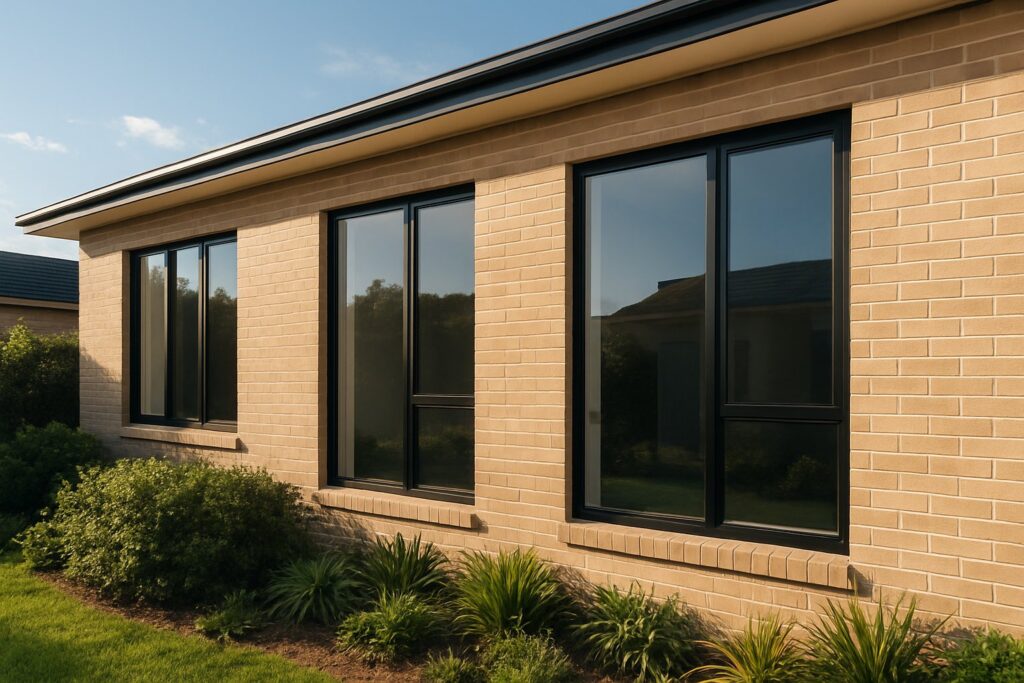
What Makes Aluminium Sliding Windows a Smart Fit for Adelaide Homes
Aluminium sliding windows are a window style where two or more glass panels glide horizontally along a fixed track within the frame. They open wide without swinging inward or outward, making them one of the most practical choices for aluminium sliding windows Adelaide homes rely on across everything from new-build estates in Mawson Lakes to renovated bluestone cottages in Norwood. Their slim profiles suit clean, contemporary facades just as easily as they complement character frontages where chunky timber frames once dominated.
How Aluminium Sliding Windows Work
The mechanism itself is straightforward. Each sash sits on a pair of nylon or stainless-steel rollers that travel along a recessed aluminium track at the base of the frame. A corresponding guide channel at the head keeps the panel aligned, while interlocking stiles create a weather-tight seal where the two sashes meet in the centre. The result is smooth, fingertip operation with minimal friction.
Panel configurations vary to match the opening size. A standard 2-panel setup works well for bedrooms and kitchens, with one fixed pane and one sliding pane. Wider openings — think living rooms or alfresco transitions — can use 3-panel or 4-panel configurations where multiple sashes slide independently, offering greater control over ventilation and access.
Compared to timber frames, aluminium extrusions achieve the same structural strength with a much slimmer profile, meaning more glass and less frame in your line of sight. Timber requires regular sanding, painting, and sealing to resist Adelaide’s harsh UV and seasonal moisture. uPVC offers strong insulation but lacks the structural rigidity needed for larger spans, and its colour options remain limited. Aluminium sits in a productive middle ground: inherently corrosion-resistant, available in virtually any powdercoat colour, and strong enough to support expansive glass panels without bulky framing.
Why Adelaide Properties Favour Sliding Windows
Adelaide’s residential landscape has shifted toward tighter lot sizes, open-plan living, and indoor-outdoor entertaining. Sliding windows fit that brief naturally. Because the sashes stay within the wall plane, they never project into walkways, garden paths, or narrow side passages — a real advantage on compact allotments where every centimetre counts.
For living areas that open onto a deck or courtyard, a wide sliding window creates an uninterrupted visual connection to the outdoors while letting cross-breezes flow through on warm evenings. That seamless transition is something Adelaide homeowners value, given how much of the year is spent entertaining outside.
Maintenance is minimal compared to hinged alternatives. There are no arms, stays, or crank mechanisms to corrode or seize. A periodic clean of the tracks, a drop of silicone lubricant on the rollers, and the window operates as smoothly as the day it was installed.
The core benefits of sliding windows for Adelaide properties break down like this:
- Space saving — panels glide within the frame, requiring zero external or internal clearance.
- Ventilation control — open the sash a fraction for a gentle breeze or slide it fully for maximum airflow.
- Durability — aluminium frames resist warping, swelling, and termite damage common in South Australian conditions.
- Low maintenance — no repainting, no complex hardware servicing, and powdercoated finishes hold up under intense UV.
- Design versatility — available in multi-panel configurations, a wide colour palette, and frame profiles that suit both modern builds and heritage renovations.
Those practical strengths only tell part of the story. How well any window performs also depends on how it handles Adelaide’s specific climate pressures — the searing summer heat, salt-laden coastal air, and bushfire risk in the Hills.
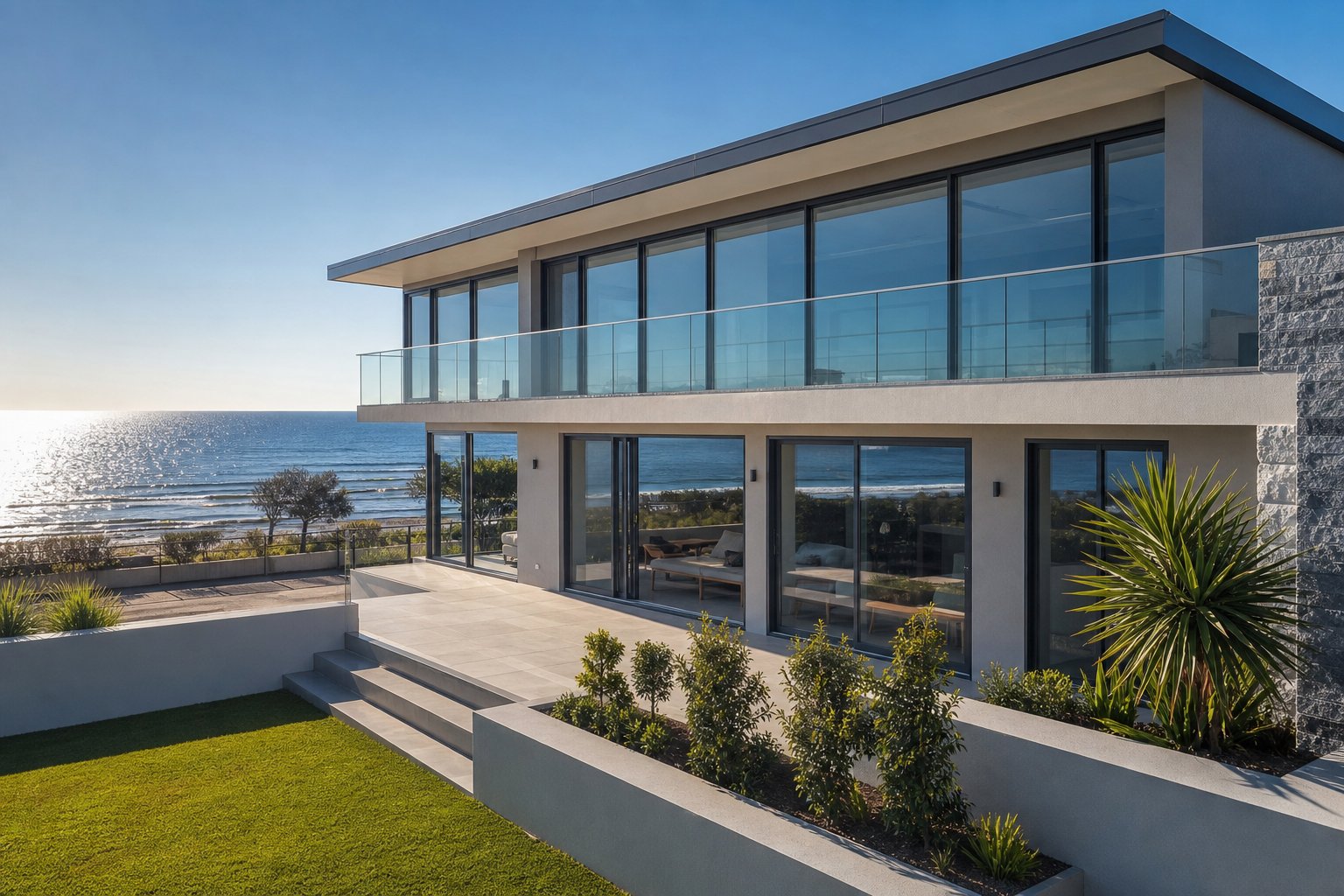
How Adelaide’s Climate Shapes Your Window Specification
Adelaide dishes out a punishing mix of climate extremes across the metro area. Hot, dry summers regularly push past 40°C in suburbs like Salisbury and Elizabeth, while western beachside strips — Henley Beach, Grange, Semaphore — receive a constant dusting of salt-laden air carried on afternoon sea breezes. Head into the Hills face zone around Crafers, Stirling, or Norton Summit, and bushfire risk enters the equation. Each of these conditions places different demands on your window frames and glazing, and getting the specification wrong means paying twice: once for the windows, and again when they underperform or deteriorate prematurely.
Summer Heat and Thermal Performance
Aluminium conducts heat readily — roughly 205 W/m·K, far higher than timber or uPVC. In a standard aluminium frame without any insulating intervention, that conductivity turns the frame into a thermal bridge, channelling heat from the scorching exterior straight into your living space. On a 42°C January afternoon, the temperature difference between indoor comfort and the outside surface can exceed 20 degrees, and untreated aluminium happily transfers that energy inward.
Thermal break technology solves this problem. A polyamide strip (typically PA66 reinforced with glass fibre) is inserted between the interior and exterior aluminium sections, severing the conductive path. This barrier can reduce frame U-values by 30–60%, depending on the depth of the thermal break and the overall system design. For Adelaide’s climate, thermal break aluminium windows in a hot climate perform measurably better than non-broken frames, particularly on elevations that cop prolonged sun exposure.
Orientation matters as much as frame construction. West-facing windows receive the harshest afternoon heat during summer when the sun sits low in the sky, driving solar gain deep into the room. North-facing glass gets strong winter sun (useful for passive heating) but also significant summer exposure when paired with inadequate shading. East-facing openings handle morning warmth well. The upshot: a blanket approach to glazing rarely works in Adelaide. Your window specification should respond to each elevation individually, prioritising thermal performance where exposure is greatest.
Coastal Corrosion and Powdercoat Durability
Properties within a few kilometres of Adelaide’s coastline face an invisible but relentless threat. Fine salt crystals carried on prevailing westerlies settle on window frames, attract moisture, and initiate corrosion — even on aluminium, which is naturally more resistant than steel. The closer you are to the waterline, the more aggressive the attack.
Australian standards and industry guidelines typically define two key proximity zones for salt spray resistant window frames in Adelaide:
- Within 1 km of breaking surf — considered a severe marine environment. Frames require marine-grade powdercoating that meets extended salt spray testing (typically 1,000+ hours under AS 3715 standards), stainless steel or nylon hardware, and more frequent maintenance washing.
- 1–10 km from the coast — moderate marine exposure. Standard architectural-grade powdercoating generally holds up well here, though regular rinsing with fresh water extends the finish life considerably.
Powdercoating itself is a baked-on finish far tougher than wet-applied paint, but not all powdercoats are equal. For aluminium windows in Adelaide coastal areas, look for coatings tested to at least 240 hours of salt spray testing as a minimum — and significantly more if the property sits within direct salt-air exposure. Cheap, thin coatings begin pitting and flaking within 12–18 months in exposed locations, while properly specified marine-grade finishes last well over a decade with basic upkeep.
Hardware deserves equal attention. Rollers, locks, and track inserts in sliding windows are moving parts that trap salt and grit. Specifying 316-grade stainless steel or engineered nylon components prevents the seized tracks and frozen locks that plague underspecified coastal installations.
Bushfire Area Compliance
Much of the Adelaide Hills falls within designated bushfire-prone areas, where properties receive a Bushfire Attack Level (BAL) rating under AS 3959. These ratings range from BAL-Low (minimal risk, no specific construction requirements) through BAL-12.5, BAL-19, BAL-29, and BAL-40, up to BAL-FZ (Flame Zone), where direct flame contact is expected.
Aluminium is inherently non-combustible, which gives it an immediate advantage over timber frames in bushfire zones. It won’t ignite, melt at typical bushfire temperatures the way vinyl can, or warp under radiant heat as readily as uPVC. That makes aluminium the go-to frame material for bushfire rated windows in the Adelaide Hills — but the frame alone doesn’t determine compliance. Glazing, seals, and screens must all work as a system:
- BAL-12.5 to BAL-19 — tighter seals to prevent ember entry, metal mesh screens, and toughened safety glass.
- BAL-29 to BAL-40 — thicker toughened or laminated glazing, ember-resistant sealing systems, and hardware that maintains integrity under sustained radiant heat.
- BAL-FZ — specialist systems only; consult a bushfire engineer during the design phase.
If your Adelaide Hills property has a BAL rating, confirm it early in the project. BAL rated aluminium sliding windows need to be specified as a complete system — frame, glass, seals, and screens — not assembled from generic parts after the fact.
| Climate Challenge | Impact on Windows | Recommended Specification Response |
|---|---|---|
| Extreme summer heat (40°C+) | Heat conducted through frame into interior; increased cooling load | Thermally broken aluminium frames; double glazing on west and north elevations; external shading |
| Coastal salt air (within 1 km) | Accelerated corrosion of frames and hardware; pitting of finishes | Marine-grade powdercoating (1,000+ hr salt spray); 316 stainless steel hardware; quarterly fresh-water rinse |
| Moderate salt exposure (1–10 km) | Gradual finish degradation; hardware stiffening over time | Architectural-grade powdercoating; nylon or coated hardware; regular maintenance |
| Bushfire risk (Adelaide Hills BAL zones) | Radiant heat can shatter glass; embers enter through gaps | Non-combustible aluminium frames; BAL-rated glazing and seals; metal ember screens to AS 3959 |
| High UV exposure year-round | Seal degradation; colour fading on lower-quality finishes | UV-stabilised weather seals; quality powdercoating with proven fade resistance |
Climate performance is one side of the efficiency equation. The other is how the glass itself manages solar energy — a question of ratings, coatings, and glazing configurations that can dramatically shift your heating and cooling bills.
Energy Efficiency Ratings and Glazing Choices That Matter in Adelaide
Specifying the right frame material and climate response gets you partway there. But the glass itself accounts for around 80% of a window’s total area, and it’s where the real energy battle is won or lost. Almost 90% of a home’s heat gain and up to 40% of heating energy loss happens through windows. In Adelaide’s warm temperate climate — classified as Zone 5 under the National Construction Code — choosing the right glazing configuration can trim hundreds of dollars off annual heating and cooling bills without changing how the window looks or operates.
The challenge is that Adelaide’s climate pulls in two directions. Summers demand protection from intense solar radiation, while mild winters benefit from passive solar warmth streaming through north-facing glass. A one-size-fits-all glazing approach leaves money on the table in at least one season. The solution lies in understanding how window energy performance is actually measured, and then matching the right glass to each room’s orientation and use.
Understanding WERS Ratings and U-Values
The Window Energy Rating Scheme (WERS) is Australia’s system for rating whole-of-window energy performance. Managed by the Australian Glass and Window Association (AGWA), it assigns separate star ratings for heating and cooling on a 0-to-10 scale — the more stars, the better the window performs in that mode. These ratings aren’t abstract lab numbers. They’re generated using NatHERS-accredited software that models how the window will affect energy consumption in a real house, in a specific climate zone.
For Adelaide (Zone 5, warm temperate), the WERS cooling rating tends to carry more weight in decision-making because summer energy costs typically outpace winter heating bills. But dismissing the heating rating entirely would be a mistake — those clear, cold July mornings still demand thermal retention.
Two technical metrics sit behind the star ratings and drive the real performance outcomes:
- U-value (thermal transmittance) — measures how quickly heat passes through the entire window assembly, expressed in W/m²K. A lower U-value means less heat transfer and better insulation. A basic single-glazed aluminium window might have a U-value around 6.0 W/m²K. Add double glazing with a thermal break and that drops to roughly 3.0–4.0 W/m²K. High-performance systems with argon gas fill and low-E coatings push below 2.0 W/m²K.
- SHGC (solar heat gain coefficient) — measures the fraction of solar radiation that passes through the glass as heat, on a scale from 0 to 1. An SHGC of 0.7 means 70% of solar energy gets through. Lower SHGC blocks more heat — ideal for west-facing windows in summer. Higher SHGC lets more warmth in — useful for north-facing glass where you want passive winter heating.
The interplay between these two numbers defines your window’s climate behaviour. In Adelaide, the ideal balance for most homes is a moderately low U-value (for year-round insulation) paired with an SHGC that varies by orientation. West and north elevations benefit from lower SHGC to reject summer heat, while north-facing living areas might retain a moderate SHGC to capture free winter warmth — provided adequate eaves or shading blocks the high summer sun.
WERS ratings for sliding windows in Adelaide provide a straightforward comparison tool when evaluating products. Two windows might look identical, but their star ratings can differ significantly based on frame construction, glazing type, and seal quality. Always ask for the WERS certificate — it’s the only apples-to-apples comparison available.
Single Glazed vs Double Glazed for Adelaide
This is the decision most Adelaide homeowners wrestle with during a renovation or new build. Single glazing costs less upfront. Double glazing performs better. The real question is where the investment pays for itself and where it doesn’t.
Double-glazed windows can reduce heat loss by up to 30% compared to single-pane equivalents. They consist of two panes of glass separated by a sealed air gap — typically 12 mm to 16 mm wide — that acts as a thermal barrier. Filling that gap with argon gas instead of air improves insulation further, since argon is denser and conducts heat less readily.
For Adelaide’s climate, the decision map looks like this:
- West-facing living areas and bedrooms — double glazing is almost always worth it. These openings cop the fiercest afternoon heat during summer, and the temperature differential drives enormous energy transfer through single-pane glass. Double glazed aluminium windows deliver measurable Adelaide energy savings here, often paying back their cost premium within a few years through reduced air-conditioning load.
- North-facing living areas — strong candidate for double glazing, particularly if eave depth is limited and summer solar exposure is high. Double glazing with a balanced SHGC can still admit useful winter warmth while blocking enough summer heat to prevent overheating.
- East-facing rooms — moderate benefit. Morning sun is less intense than afternoon heat, but bedrooms that overheat before 9 am in January will notice a genuine comfort improvement with double glazing.
- South-facing bedrooms and bathrooms — the cost premium may not justify the return. South elevations receive minimal direct sun, so the thermal stress is lower. Single glazing with good weather seals and curtains often provides adequate comfort here, freeing budget for higher-priority elevations.
A practical approach for many Adelaide renovations: prioritise double glazing on the hottest elevations first. If budget allows, extend it to the full house for consistent acoustic and thermal performance. If not, a mixed specification — double glazing west and north, single glazing south — delivers the best return on investment.
Specialty Glass Options Explained
Beyond the single-versus-double question, the type of glass itself opens a range of performance possibilities. Low-E glass for Adelaide’s climate zone 5 conditions is the most common upgrade, but it’s far from the only option worth considering.
Low-E (low-emissivity) coatings are microscopically thin metallic oxide layers applied to one surface of the glass. They work by reflecting long-wave infrared radiation — essentially bouncing radiant heat back toward its source. In summer, a low-E coating on the outer pane reflects solar heat away from the interior. In winter, it reflects interior warmth back into the room. The result is a lower U-value without reducing visible light transmission significantly. Low-E coatings typically add a modest premium over standard clear glass but can reduce energy loss by 30% to 50%.
Tinted glass absorbs a portion of solar radiation before it passes through, reducing glare and heat gain simultaneously. Grey and bronze tints are common in Adelaide residential projects, particularly for west-facing windows where late-afternoon glare makes rooms uncomfortable. The trade-off is reduced visible light — acceptable in entertainment rooms, less so in home offices or kitchens that depend on natural daylight.
Laminated glass bonds two glass panes together with a tough interlayer (usually polyvinyl butyral, or PVB). It serves dual purposes: safety (the glass holds together when broken rather than shattering into shards) and acoustics (the PVB interlayer dampens sound transmission noticeably). Homes near busy roads like Anzac Highway or Port Road, or beneath Adelaide Airport flight paths, gain real comfort improvement from laminated glazing.
Obscure glass diffuses light while blocking line-of-sight, making it the standard choice for bathrooms, ensuites, and side-passage windows facing neighbouring properties. It comes in varying degrees of opacity and can be combined with any of the above coatings or lamination processes.
| Glass Type | Best Use Case | Relative Cost |
|---|---|---|
| Clear single glazing | Budget-conscious south-facing rooms with low solar exposure | $ |
| Clear double glazing (air fill) | General-purpose upgrade for improved thermal and acoustic performance | $$ |
| Double glazing with argon fill | High-performance applications on exposed elevations | $$–$$$ |
| Low-E coated double glazing | West and north-facing living areas; maximum energy savings in Adelaide’s climate | $$$ |
| Tinted glass (grey or bronze) | Glare reduction on west-facing windows; entertainment rooms | $$ |
| Laminated glass | Acoustic control near busy roads; safety glazing near doors and wet areas | $$–$$$ |
| Obscure glass | Bathrooms, ensuites, and privacy-sensitive windows | $–$$ |
Many of these options can be combined. A west-facing living room window might use double glazing with argon fill, a low-E coating, and a light grey tint — stacking the benefits to manage both heat and glare. Your glazier or window supplier can model the combined SHGC and U-value to confirm the specification meets your comfort and energy targets.
Glazing performance is only one variable in the overall window decision, though. The type of window you choose — sliding, awning, casement, or double-hung — determines how that glass sits in your wall and how it interacts with airflow, weather, and available space.
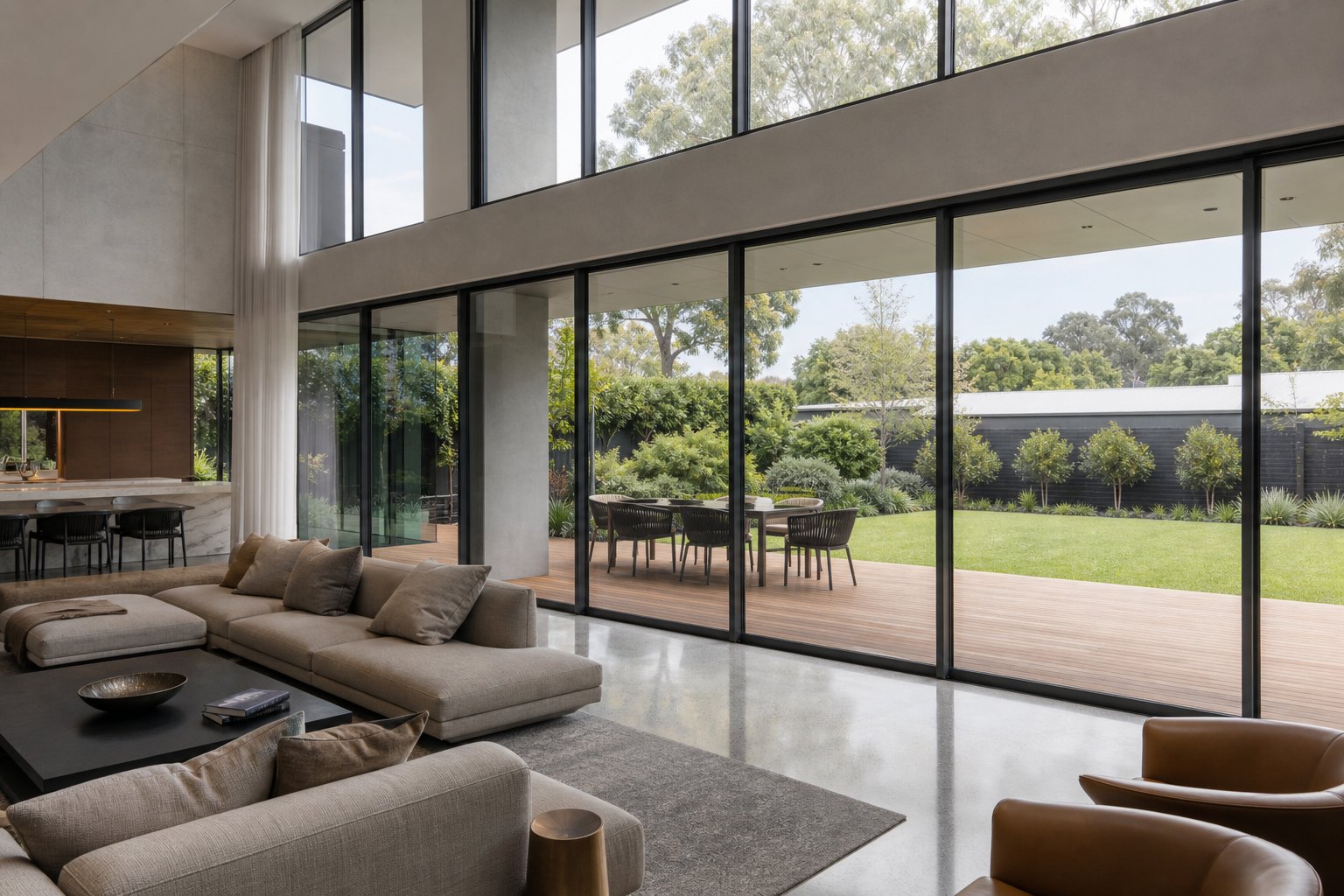
Sliding Windows Compared to Awning, Casement, and Double-Hung Options
Every aluminium window type handles airflow, weather, and space differently. Sliding windows aren’t always the right answer — but for many Adelaide applications, they strike the best balance between opening size, practicality, and unobstructed views. Here’s how they measure up against the three most common alternatives.
Sliding vs Awning Windows
Awning windows hinge at the top and push outward from the bottom, creating a canopy-like opening that sheds rain while still admitting fresh air. That makes them excellent for bathrooms, laundries, and high-mounted openings where you want ventilation during a storm without water entry. The trade-off is projection. An open awning window extends into external space — a problem on narrow side passages, above decks, or anywhere pedestrian clearance matters.
When comparing sliding vs awning windows in Adelaide, the deciding factors are usually location and opening size. Awning windows suit smaller, vertically proportioned openings where weather sealing during rain is the priority. Sliding windows suit wider openings where you want the sash to stay within the wall plane and never obstruct outdoor foot traffic or landscaping. For a kitchen splashback window above the sink, awning works well. For a 2.4 m wide living room opening facing the back garden, sliding wins hands down.
Sliding vs Casement and Double-Hung
Casement windows swing outward on side hinges, opening up to 90 degrees. That full-aperture opening delivers maximum ventilation — the entire sash area becomes an airflow path. They also seal tightly when closed, offering strong weather and acoustic performance. The downside mirrors the awning issue: the sash projects outward, acting as a sail in high wind and blocking paths or decks when open. They’re also typically more expensive due to complex multi-point locking hardware. An aluminium sliding vs casement windows comparison usually comes down to clearance. If you have open space outside the window, casement ventilates better. If the window faces a walkway, balcony railing, or neighbouring fence line, sliding avoids the clash entirely.
Double-hung windows move vertically — both upper and lower sashes slide within the frame, allowing flexible airflow control by opening the top, bottom, or both. They suit heritage aesthetics beautifully, which is why they remain popular for character homes across Unley, Prospect, and Goodwood. For renovations where streetscape consistency matters, sliding vs double-hung windows comes down to facade character. Double-hung proportions feel right on Victorian and Federation frontages. Sliding profiles feel right on mid-century and contemporary elevations. Performance-wise, double-hung windows deliver smaller maximum openings than sliders of the same overall frame width, since both sashes share a single vertical track and the opening area is limited to roughly half the frame height at any time.
When Sliding Windows Are the Best Choice
Sliding windows earn their place as the best window type for wide openings in Adelaide by maximising the glass-to-frame ratio. Their slim aluminium stiles mean more view, more light, and less visual interruption across a wide span. They excel in these scenarios:
- Living areas with openings wider than 1.5 m, where casement sashes would be too heavy and awkward to operate
- Windows facing paths, decks, or narrow side boundaries where outward projection is impractical
- Rooms prioritising an unobstructed connection to outdoor views — alfresco areas, open-plan family rooms, ground-floor rooms facing a garden
- Situations where simple, low-maintenance operation matters — no cranks, no stays, no arms to service
That said, don’t force a slider where another type fits better. A small bathroom opening above head height? Awning handles rain and privacy more gracefully. A heritage cottage frontage in Colonel Light Gardens? Double-hung preserves the streetscape character. A narrow study window where maximum airflow matters more than span? Casement opens fully and catches side breezes more effectively.
| Criteria | Sliding | Awning | Casement | Double-Hung |
|---|---|---|---|---|
| Ventilation area | Up to 50% of frame width (single slider) or more with multi-track | Moderate — limited by opening angle | Up to 100% of sash area | Up to 50% of frame height per sash |
| Weather sealing when open | Moderate — no rain protection when open | Excellent — sash sheds rain away from opening | Poor — sash catches wind and rain | Moderate — no rain protection when open |
| External clearance required | None — sash stays within frame | Yes — sash projects outward | Yes — sash swings outward up to 90° | None — sash moves within frame |
| Maximum practical opening width | Very wide (3 m+ with multi-panel) | Moderate (typically under 1.5 m) | Moderate (single sash up to ~900 mm wide) | Narrow to moderate (typically under 1.2 m wide) |
| Best room application | Living rooms, bedrooms, kitchens, alfresco transitions | Bathrooms, laundries, high-level openings | Studies, front-facing bedrooms, feature windows | Heritage facades, traditional bedrooms, streetside elevations |
Choosing the right window type sets the functional baseline. The next decision — selecting the right product tier and track configuration — determines how well that window performs over the long haul and whether it matches the demands of your specific project.
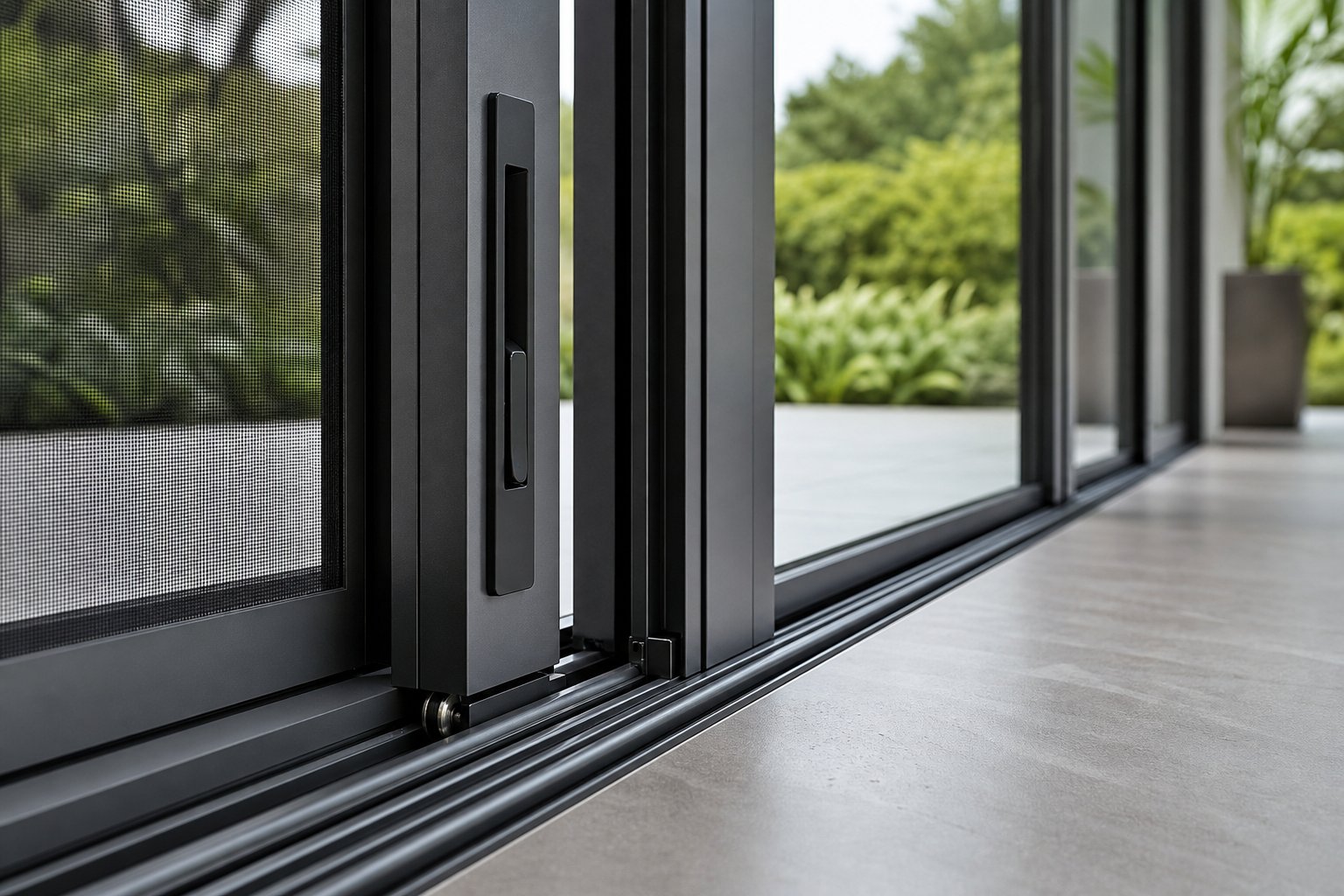
Understanding Product Tiers and Track Configurations
Not all aluminium sliding windows are built to the same standard. The market spans everything from basic builder-grade units designed to meet minimum compliance through to premium systems engineered for large openings, superior acoustics, and decades of trouble-free operation. Understanding what separates these tiers helps you spend wisely — putting budget where it delivers real comfort gains and saving where specifications exceed your actual needs.
What Separates Entry-Level from Premium Sliding Windows
The differences between product tiers show up in five areas that directly affect performance and longevity:
Frame depth and profile thickness. Entry-level frames typically use shallower profiles — around 52 mm to 65 mm deep — which limits glazing thickness and weather seal space. Premium systems step up to 100 mm or deeper profiles that accommodate double glazing, thermal breaks, and multiple seal chambers without compromising structural rigidity. The deeper frame also handles larger panel weights, which matters for wide residential openings.
Track systems. This is where aluminium sliding window specifications for residential projects diverge most visibly. A 2-track system holds two panels — one fixed, one sliding — and suits standard openings up to about 2.4 m wide. It’s the workhorse configuration for bedrooms, kitchens, and moderate-width living areas. A 3-track system accommodates three panels, allowing two to slide simultaneously and opening roughly two-thirds of the total width rather than half. That extra airflow and access makes 3-track configurations the better choice for wide living rooms, large balcony openings, and spaces where cross-ventilation is a priority. The trade-off: 3-track frames are deeper front-to-back and cost more per unit.
When choosing between 2-track vs 3-track sliding windows, the decision usually hinges on opening width and ventilation requirements. For spans under 2.4 m, a quality 2-track system delivers everything most rooms need. Beyond 2.4 m — particularly for open-plan living areas or alfresco transitions — 3-track opens up more practical ventilation and a wider pass-through.
Weather seals. Budget windows often use single-fin seals that compress over time, allowing drafts and dust ingress — a real nuisance during Adelaide’s dry, windy summers. Mid-range and premium systems incorporate multi-chamber compression seals and brush seals at the interlock point, dramatically reducing air infiltration.
Hardware quality. Rollers, locks, and handles take daily wear. Entry-level systems use smaller nylon rollers and basic snib locks. Premium systems fit tandem stainless-steel rollers rated for heavier panels, keyed security locks, and ergonomic flush-mount handles that sit flat within the frame.
Maximum panel sizes. Cheaper systems cap panel heights at around 1.5 m and widths at 1.2 m before the frame flexes or rollers strain. Premium-grade tracks and rollers handle panels exceeding 2.1 m high and 1.5 m wide, which allows floor-to-near-ceiling glazing without needing a mullion break.
Features Worth Paying More For
Not every premium feature matters equally in Adelaide conditions. Some deliver daily comfort; others solve problems you might never encounter. Ranked by value-for-money for typical Adelaide residential projects:
- Quality roller systems (tandem or heavy-duty) — smooth operation day after day, less chance of derailing under wind load, and longer service life before replacement. Worth it on every window.
- Multi-chamber weather seals — keep out dust, drafts, and insects. Essential for west-facing openings exposed to afternoon winds and for anyone near main roads where road grit enters through gaps.
- Integrated flyscreens on a dedicated track — far tidier and more durable than clip-on aftermarket screens. They slide independently without interfering with the glass panel operation.
- Keyed security locks — provide lockable ventilation positions so you can leave a window partially open for airflow while maintaining security. Particularly useful for ground-floor bedrooms.
- Flush-mount handles — prevent curtains and blinds from catching, allow furniture to sit closer to the wall, and look cleaner on visible elevations.
- Acoustic interlocks and seals — justified if the property faces a busy road, train line, or flight path, but unnecessary for quiet suburban streets.
Evaluating Sliding Window Systems for Your Project
Matching a product system to your project starts with listing your non-negotiable requirements: opening widths, glazing type, BAL rating if applicable, colour, and flyscreen integration. From there, compare systems against those requirements rather than simply choosing the cheapest or most expensive option.
For builders and developers specifying multiple windows across a project — a townhouse development in Lightsview or a duplex pair in Findon, for instance — consistency and supply reliability matter as much as per-unit spec. Project-based supply systems like the MEICHEN MA100 2-track sliding window are designed with this workflow in mind, offering a standardised aluminium sliding system that handles typical residential openings while streamlining ordering across multiple units. For Adelaide builders sourcing the best sliding window system for volume projects, this kind of purpose-built product simplifies procurement without forcing compromises on frame depth or hardware quality.
Regardless of which system you evaluate, confirm these essentials before committing: AS 2047 compliance testing, warranty coverage (frame and hardware separately), available powdercoat colours without custom-order surcharges, and realistic lead times for your project schedule. A premium aluminium sliding window with all the right features still fails the project if it arrives three weeks late.
Product tier and track configuration set the quality baseline. The next practical question is what the whole package actually costs — and what drives that number up or down for a typical Adelaide window project.
Indicative Pricing and What Drives Cost in Adelaide
Aluminium sliding windows cost in Adelaide varies widely — and for good reason. Two quotes for seemingly identical openings can land hundreds of dollars apart because the final number is shaped by a stack of variables, most of which aren’t visible on the surface. Rather than quoting specific dollar figures that become outdated quickly, understanding what affects aluminium window pricing puts you in a stronger position to evaluate any quote that lands on your kitchen bench.
What Drives the Cost of Aluminium Sliding Windows
Every aluminium sliding window is a combination of individual choices, and each one shifts the price independently. The major cost drivers break down as follows:
Window size (height x width). Larger panels require more aluminium extrusion, more glass, and heavier-duty rollers to support the increased weight. A compact 600 x 600 mm ensuite window sits in a completely different price bracket than a 2.4 m wide living room opening. Scaling isn’t linear either — doubling the glass area more than doubles the cost because structural demands increase disproportionately.
Number of panels and tracks. As covered in the previous section, a 2-panel configuration costs less than a 3-panel or 4-panel setup. Each additional panel introduces extra track hardware, interlocking seals, and rollers that compound the total rather than scaling neatly.
Glass type. Glazing can account for 25% to 40% of the total window cost, making it one of the biggest pricing levers. Single glazing is the cheapest option. Double glazing with an air gap steps up noticeably. Add argon gas fill, low-E coatings, or laminated glass, and the cost climbs again — though each upgrade delivers measurable performance gains in Adelaide’s climate.
Powdercoat colour. Standard colours — white, black, monument grey, surfmist — are produced in volume and priced accordingly. Custom colours or dual-colour finishes (a different shade on the interior versus exterior) typically add 10–20% because they require dedicated batch processing.
Hardware upgrades. Stepping from basic nylon rollers and snib locks to heavy-duty tandem rollers, keyed cylinders, or multi-point locking adds a modest but meaningful premium per unit.
Flyscreen inclusion. Integrated flyscreens on a dedicated track add material and slightly increase the frame depth. They’re worth budgeting for upfront rather than retrofitting later at greater expense.
Budget Planning for an Adelaide Window Project
How you buy matters almost as much as what you buy. Project-based supply — ordering all windows at once for a renovation or new build — typically delivers better per-unit pricing than replacing windows individually over time. Manufacturers achieve production efficiency when they can batch-cut, powder-coat, and glaze multiple units in a single run, and those savings flow through to the buyer.
Installation costs also shift depending on your project type. In a new build, windows are fitted during construction when the frame is open and accessible — no removal, no patching, no frame modification. For a retrofit, the installer must remove the old unit, assess and repair the reveal if needed, fit the new frame, flash, seal, and finish the surrounds. That additional labour and materials can add 50–100% on top of the supply-only price for each opening, depending on complexity.
The single best thing you can do when budgeting for a window replacement in an Adelaide renovation is request itemised quotes that clearly separate supply from installation. A lump-sum figure makes comparison nearly impossible. When every line item is visible, you can see exactly where your money goes and identify where two quotes genuinely differ in scope rather than just price.
When comparing quotes from different suppliers, make sure each one answers these questions:
- Supply only vs supply and install — is the quote for the window unit alone, or does it include fitting, flashing, and finishing?
- Standard vs custom sizes — are you being quoted on a stock module or a custom-manufactured unit? Custom sizing typically adds 10–25% but avoids the shimming and packing issues that come with ill-fitting stock windows.
- Lead time — how many weeks from order to delivery? Stock sizes may ship in days; custom units often take 10–20 working days.
- Warranty terms — what’s covered (frame, hardware, glazing seals) and for how long? A 10-year frame warranty with 5-year hardware coverage is not equivalent to a blanket 2-year warranty, even if the sticker price is lower.
- Colour options included in the quoted price — confirm whether the quoted colour is standard or whether a custom powdercoat surcharge applies.
- Glazing specification — single or double glazed, any coatings, and the whole-window U-value (Uw), not just the glass value (Ug).
Getting clear answers to these points turns a confusing spread of numbers into a genuine apples-to-apples comparison. With budget expectations grounded, the next step is planning the physical installation — measurements, compliance requirements, and the practical differences between a straightforward replacement and a new opening.
Installation Planning and SA Building Compliance
A well-specified window is only as good as the opening it fits into. Misjudge the measurement by 15 mm, overlook a safety glazing requirement, or skip the development approval process on a heritage property, and the project stalls — costing time, money, and patience. This section walks through the aluminium window installation Adelaide requirements you need to tick off before a single frame goes into the wall.
Measuring and Specifying Your Openings
The structural opening — sometimes called the rough opening — is the gap in the wall framing where the window sits. It’s always slightly larger than the window frame itself. That difference is deliberate. A standard clearance of approximately 10 mm on each side (top, bottom, left, right) allows room for shimming the frame level and plumb, accommodating minor construction tolerances, and sealing the perimeter with flexible flashing and foam.
If you’re measuring for a sliding window replacement in an existing Adelaide home, the process differs from new construction. In a renovation, the structural opening already exists — your job is to record its actual dimensions accurately, not assume they match what’s written on the original plans. Walls settle. Reveals shift. Older brick veneer and stone homes across Adelaide are particularly prone to minor racking over decades.
How to measure correctly:
- Width — take three horizontal measurements: near the top of the opening, at the midpoint, and near the bottom. Record the smallest figure. That’s your limiting dimension.
- Height — take three vertical measurements: left side, centre, and right side. Again, use the smallest.
- Diagonal check — measure corner to corner in both directions. If the diagonals differ by more than 5 mm, the opening is out of square and may need packing or reframing before the new window can be installed plumb.
For standard residential projects where each opening is a known, uncomplicated rectangle, a confident DIYer with a tape measure and a spirit level can gather these numbers. But engage a professional measurer when the reveals are damaged, when you’re converting a smaller opening into a wider one (which involves structural lintels), or when a heritage facade demands exact replication of existing proportions. Most window suppliers offer a measure-and-quote service specifically because an accurate measurement eliminates costly remakes.
SA Building Code and NCC Requirements
Every new or replacement window in South Australia must comply with the National Construction Code (NCC) — the national framework that sets minimum performance standards for buildings. Several NCC provisions directly affect how aluminium sliding windows are specified and installed in Adelaide homes.
Ventilation. Habitable rooms require a minimum openable window area equal to 5% of the room’s floor area. For a typical 16 m² bedroom, that’s at least 0.8 m² of openable glazing. Sliding windows only count the operable portion — the sash that actually moves — so a 2-panel slider where one panel is fixed contributes roughly half its total area toward the ventilation requirement. Confirm the openable area meets the threshold before finalising sizes, especially in compact rooms.
Safety glazing. NCC window compliance in South Australia mandates Grade A safety glass (toughened or laminated) in several specific locations:
- All glazing in doors and panels within 300 mm of a doorway edge
- Glazed panels where the lowest visible sight line is less than 500 mm above the finished floor level
- All glazing in bathrooms, ensuites, and spa rooms where the lowest sight line is below 2.0 m above the floor or shower base
- Full-height panels that could be mistaken for unobstructed openings
For aluminium sliding windows, the safety glazing rule most commonly triggers on living room and bedroom windows that extend close to floor level. If your sliding window sill height sits below 500 mm from the floor, the glass must be toughened or laminated — standard annealed glass is not permitted regardless of thickness.
Fall prevention. Windows in upper-storey rooms accessible to children require openings that limit the gap to 125 mm maximum, or must incorporate window locks that restrict the sash travel. Sliding windows can achieve this with keyed restrictors that limit how far the panel slides open until the lock is overridden — a simple, effective solution that satisfies NCC requirements without compromising the window’s full-opening capability when needed.
Development approval for heritage properties. In South Australia, altering the external appearance of a property within a Heritage Area or one individually heritage-listed may require Development Approval assessed against Heritage South Australia’s Heritage Standards. This applies when the window change is visible from a public road and alters the building’s character — for example, swapping traditional double-hung sashes for modern horizontal sliders on a Unley villa frontage. Rear and side replacements that don’t affect streetscape character are generally less constrained, but always check with your local council planning office before ordering. The approval process takes time, and proceeding without it risks an enforcement notice requiring you to undo the work.
Choosing Between Replacement and New Installation
Not every window project starts from a blank wall. Most Adelaide renovations involve pulling out an existing window and fitting a new one into the same (or modified) opening. The question is whether your current windows have genuinely reached end of life, or whether a seal replacement or hardware refresh could extend their service.
Common window replacement signs in Adelaide homes that indicate the unit is beyond economical repair:
- Visible frame corrosion — pitting, flaking powdercoat, or white oxidation patches spreading beyond minor surface marks
- Failed seals — persistent drafts even when the window is locked closed, visible daylight around the frame perimeter, or condensation between double-glazed panes indicating a broken seal
- Rattling in wind — the sash vibrates or bangs during moderate gusts, signalling worn rollers, collapsed seals, or a warped track that no longer holds the panel firmly
- Difficulty operating — the sash jams, jumps off its track, or requires excessive force to slide, usually caused by corroded rollers or a frame that has shifted out of alignment
- Single glazing on sun-exposed elevations — technically functional, but thermally inadequate for Adelaide summers and costing more in air-conditioning than a replacement would recoup
If two or more of those symptoms are present, replacement rather than repair almost always delivers better long-term value. A patched 30-year-old frame with new rollers still leaks air, still conducts heat, and still looks tired.
The replacement process from start to finish follows a logical sequence. Each step builds on the one before it, and skipping any stage creates problems downstream.
- Professional measurement — the installer measures the existing structural opening (or marks out a new one), checks for plumb and level, and records glazing requirements based on location within the home.
- Window manufacture — the new unit is fabricated to the measured dimensions, with appropriate clearances, specified glazing, colour, and hardware.
- Old window removal — the existing sashes, frame, and fixings are carefully stripped out. In older Adelaide homes with rendered reveals or limestone surrounds, this step needs patience to avoid damaging the surrounding finish.
- Reveal assessment and repair — once the old frame is out, the installer inspects the reveal for rot (in timber sub-frames), cracking, moisture damage, or unevenness. Any degraded material is cut back and packed, patched, or replaced before the new frame goes in.
- New frame installation — the aluminium frame is positioned in the opening, shimmed plumb and level, and mechanically fixed to the structure. Fixings penetrate into solid masonry, timber studs, or steel lintels depending on the construction type.
- Sealing and flashing — the perimeter gap between frame and reveal is sealed with flexible foam backer rod and an exterior-grade silicone or polyurethane sealant to prevent air and water ingress. In exposed locations, additional head flashing directs water over the frame rather than behind it.
- Glazing and sash fitting — glass panels and operable sashes are installed into the frame, rollers adjusted for smooth travel, and locks tested for engagement.
- Flyscreen installation — the integrated flyscreen panel is fitted to its dedicated track and checked for smooth operation independent of the glass sash.
- Final inspection and handover — the installer checks operation of every moving part, confirms locking positions, verifies that seals compress evenly, and cleans the glass. A final walkthrough with the homeowner covers operation, maintenance access, and warranty documentation.
For new builds, steps 3 and 4 don’t apply — the window goes straight into a clean, purpose-built opening during the construction phase, simplifying the process and reducing labour costs. That difference partly explains why supply-and-install pricing for renovations exceeds new-build pricing, even when the window unit itself is identical.
With the frame in the wall and the sashes gliding smoothly, the project isn’t quite finished. Long-term performance depends on what happens next — the routine maintenance that keeps aluminium windows operating well through Adelaide’s demanding seasons.
Maintenance and Longevity in Adelaide Conditions
Aluminium frames are famously low-maintenance — but low doesn’t mean zero. Adelaide’s dry, dusty summers coat every horizontal surface in fine grit, while coastal suburbs accumulate invisible salt deposits between rain events. Left unchecked, that grit works its way into tracks and rollers, turning smooth operation into a daily frustration. A small investment of time each season keeps your windows sliding freely for decades rather than deteriorating into a replacement job years ahead of schedule.
Routine Maintenance for Adelaide Conditions
The single most effective habit for aluminium sliding window maintenance in Adelaide is also the simplest: regular cleaning. Frames respond well to a wipe-down with warm water and a mild household detergent — nothing harsher. Abrasive cleaners, solvents, and cream-based products damage the powdercoat finish and strip protective layers that keep the aluminium sealed against moisture.
Tracks deserve separate attention. Understanding how to clean aluminium window tracks properly prevents the most common cause of stiff or jamming panels. Dirt accumulation in tracks is one of the primary reasons sliding window components fail prematurely. Vacuum loose debris first — a crevice nozzle works well here — then wipe the channel with a damp cloth to lift compacted grit. After dry summers, Adelaide tracks collect a fine layer of powdery dust mixed with small stones that act like sandpaper against rollers every time you open the window. Clear this out before it grinds into the mechanism.
Once tracks are clean, apply a thin film of silicone-based lubricant to the track surface and directly onto the rollers. Avoid oil-based or petroleum-based greases — they attract more dust and create a sticky paste that makes the problem worse. A light silicone spray every six months keeps things moving freely without residue buildup.
For properties in Henley Beach, Glenelg, Semaphore, or anywhere within a few kilometres of the coast, add a fresh-water rinse to the routine. Salt crystals that settle on frames between rain events attract moisture and accelerate the breakdown of protective coatings, leading to pitting and corrosion. A garden hose or bucket of fresh water across the frames and tracks once a month — more frequently in summer when onshore breezes are constant — prevents salt from gaining a foothold.
When to Replace Seals and Hardware
Weather seals and moving parts don’t last forever, regardless of how well you maintain them. Knowing when to replace window seals and rollers saves you from living with drafts, dust ingress, and grinding noises longer than necessary.
Weather seals. The rubber or TPE (thermoplastic elastomer) seals that line the frame perimeter and interlock point degrade under sustained UV exposure. On north and west-facing windows that bake in direct Adelaide sun for hours daily, seals can harden, crack, or lose compression within 8 to 12 years. South-facing or shaded windows might stretch that to 15 years or beyond. The telltale signs: you feel a draft with the window locked shut, road noise seems louder than it used to be, or fine dust appears on the sill after windy days despite the window being closed. Replacing seals is a relatively inexpensive repair that restores the window’s weather and acoustic performance without replacing the entire unit.
Rollers. Most rollers are designed to last between 10 and 20 years, depending on usage frequency and environmental conditions. Homes near the coast or in dusty areas often experience accelerated wear. The warning signs are hard to miss: the panel feels heavier to push, moves unevenly, scrapes or grinds audibly, or sits visibly lower on one side creating an uneven gap at the head. If the sash has jumped off its track entirely, the rollers have almost certainly collapsed or lost their bearings. Replacement rollers need to match the original specification — size, wheel diameter, and housing style vary between window systems — so engaging a technician who can identify the correct part avoids trial-and-error purchases.
Lock mechanisms. Locks wear more subtly. A latch that no longer clicks positively into the keeper, or a keyed cylinder that feels sloppy, indicates internal wear. Beyond the operational inconvenience, a worn lock compromises security. Most sliding window locks can be replaced independently without disturbing the frame or sash.
How Powdercoating Performs Over Time in South Australia
Quality powdercoating is remarkably resilient. Unlike wet-applied paint that can peel and blister, a properly cured powdercoat bonds electrostatically to the aluminium substrate and forms a hard, continuous skin. It resists UV fading, chalking, and moisture penetration — the three main enemies of exterior metal finishes in South Australia’s climate.
That said, powdercoat window frame longevity in South Australia depends heavily on two factors: the quality of the original coating process and the maintenance it receives afterwards. Intense UV radiation causes coatings to fade, chalk, or lose adhesion over time, and Australia’s sun is among the harshest globally. Coastal and industrial areas compound the problem — salt deposits and airborne pollutants create micro-environments on the frame surface that accelerate localised breakdown even when the broader finish looks fine.
The good news: regular cleaning dramatically extends finish life. Simply washing the frames removes corrosive contaminants before they penetrate the coating surface. Properties maintained on a quarterly wash cycle routinely see their powdercoat hold colour and gloss for 15 to 20 years or longer. Neglected frames in the same street might show visible chalking within 7 to 10 years — not because the coating was inferior, but because accumulated grime and salt were never cleared.
If your frames are already showing chalking (a powdery residue when you wipe a finger across the surface) but no pitting or flaking, a specialist restoration using cutting compound and a protective wax can recover the appearance. Once pitting begins, the damage is irreversible without stripping and recoating — an expensive process that’s avoidable with basic upkeep.
Quarterly Maintenance Checklist for Adelaide Homeowners
1. Wipe frames with warm soapy water and a soft cloth — rinse thoroughly.
2. Vacuum tracks with a crevice nozzle, then wipe clean with a damp cloth.
3. Apply silicone lubricant to tracks and rollers — avoid oil-based products.
4. Check weather seals for cracking, hardening, or gaps — replace if no longer compressing evenly.
5. Test locks for positive engagement — tighten screws or replace worn latches.
6. Coastal properties: rinse all frames and hardware with fresh water to clear salt deposits.
7. Inspect powdercoat for chalking or discolouration — address early before pitting develops.
Fifteen minutes per quarter is a small price for windows that perform and look their best across their full service life. And when it does come time for new windows — whether through age, damage, or a desire to upgrade — the supplier you choose determines how smoothly that transition unfolds.
Choosing a Supplier for Your Adelaide Sliding Window Project
A window is only as reliable as the company standing behind it. The frame material, glazing, and hardware all matter — but so does the supplier’s ability to deliver consistent quality, honour warranty claims, and support your project timeline without unexpected delays. Knowing how to choose a window supplier in Adelaide means looking beyond the quoted price and asking harder questions about compliance, manufacturing origin, and long-term accountability.
What to Look for in a Window Supplier
Start with the non-negotiables. Every aluminium sliding window sold for installation in an Australian building must comply with AS 2047 — the national standard governing structural performance, water penetration resistance, air infiltration, and operating force. AS2047 compliant sliding windows in Australia carry a performance label on the frame and are backed by a certificate of compliance, typically verified through NATA-accredited testing. If a supplier cannot produce this documentation on request, walk away regardless of price.
Beyond compliance, evaluate these criteria when shortlisting an aluminium window supplier for Adelaide builders and homeowners:
- Warranty structure — look for separate coverage on frames (often 7–10 years), hardware (3–7 years), and glazing seals. A single blanket warranty that covers everything for two years is a red flag.
- Lead times — standard sizes should ship within days to two weeks. Custom units typically take 10–20 working days. If a supplier quotes 8+ weeks without explanation, production capacity or stock management may be an issue.
- Powdercoat range — confirm how many colours are included at standard pricing. Suppliers with in-house or local coating facilities tend to offer wider palettes without custom surcharges.
- Trade vs direct supply — some manufacturers supply only through glaziers and builders; others sell direct to homeowners. Neither model is inherently better, but understanding the channel affects how you communicate specifications and resolve issues.
- Sample availability — a credible supplier should be able to provide a corner sample showing frame depth, seal configuration, and finish quality before you commit to a full order.
Local Manufacturing vs Imported Windows
This question comes up frequently for Adelaide projects, especially when budget pressure tempts buyers toward cheaper offshore options. Both paths can deliver functional products, but they carry different risk profiles.
Locally manufactured or Australian-based supply offers tangible advantages for residential and commercial projects. Warranty claims are resolved domestically — no navigating international logistics to get a replacement part. If a panel arrives damaged or a measurement needs correcting, turnaround is measured in days rather than months. Compliance is also more straightforward: Australian manufacturers build to AS 2047 as a baseline rather than retrofitting certification after production.
Imported windows can work for large-scale developments where the cost saving per unit justifies the complexity. But for typical Adelaide residential projects — a renovation of 8 to 15 windows, or a small builder running townhouse developments — the risks of shipping delays, customs hold-ups, and limited local after-sales support often erode the initial price advantage. If you do consider an overseas supplier, verify their AS 2047 certification independently and confirm who handles warranty service within Australia.
Getting Started with Your Adelaide Sliding Window Project
With the knowledge gathered across this guide — climate factors, glazing choices, product tiers, pricing drivers, and compliance requirements — you’re equipped to approach suppliers with clear expectations rather than relying solely on their recommendations. Practical next steps look like this:
- Gather your measurements — record structural opening sizes for every window position, noting orientation and floor level for glazing specification purposes.
- Define your glazing requirements by elevation — west and north-facing openings likely warrant double glazing with low-E; south-facing rooms may suit single glazing to manage budget.
- Determine your BAL rating (if applicable) — properties in the Adelaide Hills need this confirmed before any supplier can quote accurately.
- Request at least three itemised quotes — separate supply from installation, specify the glazing and colour, and compare equivalent specifications rather than bottom-line figures.
- Evaluate product samples in person — check frame depth, seal compression, roller smoothness, and powdercoat finish quality before committing.
- Confirm AS 2047 compliance documentation — ask for the performance label details and certificate of compliance upfront.
- Check references or completed projects — a supplier with a track record on Adelaide builds (similar climate, similar construction types) carries less risk than one entering the market cold.
For builders and developers running multi-unit projects where project supply of aluminium windows across Adelaide sites matters, evaluate suppliers specifically set up for volume ordering. Systems like the MEICHEN MA100 sliding window are built for this workflow — a standardised 2-track aluminium system designed to service builders and developers sourcing consistent units across an entire development. That kind of project-oriented supply model simplifies procurement, maintains specification consistency from unit to unit, and reduces the coordination overhead that comes with piecemeal ordering.
Whichever supplier you shortlist, the evaluation process stays the same: compliance first, then warranty depth, then lead time reliability, and finally price. A window that arrives on time, fits correctly, and performs for 20+ years is always cheaper than one that costs less upfront but creates problems you’re still solving a year after installation.
Frequently Asked Questions About Aluminium Sliding Windows in Adelaide
1. Are aluminium sliding windows suitable for Adelaide’s coastal suburbs?
Yes, but the specification must match the exposure level. Properties within 1 km of breaking surf need marine-grade powdercoating tested to 1,000+ hours of salt spray resistance, along with 316-grade stainless steel or engineered nylon hardware. Homes 1 to 10 km from the coast can typically use architectural-grade powdercoating with regular fresh-water rinsing to prevent salt buildup. Without proper specification, coastal aluminium frames can show pitting and hardware failure within 12 to 18 months. Quarterly maintenance washing is essential regardless of coating quality in salt-air zones like Henley Beach, Grange, and Semaphore.
2. How much do aluminium sliding windows cost in Adelaide?
Pricing varies significantly based on window size, number of panels, glass type, powdercoat colour, and hardware selection. Glazing alone can account for 25% to 40% of the total cost, with double glazing and low-E coatings adding meaningful premiums over single-pane options. Custom colours typically add 10 to 20% over standard shades. Project-based supply where multiple windows are ordered together generally delivers better per-unit pricing than individual replacements. For accurate comparison, request itemised quotes separating supply from installation, and confirm whether the price covers standard or custom sizing, flyscreen inclusion, and warranty terms.
3. Should I choose double glazing or single glazing for my Adelaide home?
The decision depends on window orientation and room usage. West-facing living areas and bedrooms benefit most from double glazing because they cop intense afternoon summer heat, often recouping the cost premium within a few years through reduced cooling bills. North-facing rooms are strong candidates too, especially with limited eave shading. South-facing bathrooms and bedrooms receive minimal direct sun, so single glazing with good seals often provides adequate comfort there. A practical approach for renovations on a budget is to prioritise double glazing on the hottest elevations first and use single glazing on lower-exposure sides.
4. What is the difference between 2-track and 3-track aluminium sliding windows?
A 2-track system holds two panels — one fixed and one sliding — and handles standard residential openings up to about 2.4 m wide. It suits bedrooms, kitchens, and moderate living areas. A 3-track system accommodates three panels, allowing two to slide independently and opening roughly two-thirds of the total width rather than half. This provides greater airflow and wider pass-through access, making it ideal for open-plan living rooms, large balcony openings, and alfresco transitions beyond 2.4 m wide. The trade-off is that 3-track frames are deeper front-to-back and carry a higher cost per unit.
5. Do I need council approval to replace windows on my Adelaide home?
For most standard residential window replacements where the opening size and external appearance remain unchanged, Development Approval is not required. However, properties within a Heritage Area or individually heritage-listed in South Australia may need approval if the change is visible from a public road and alters the building’s character — for example, swapping traditional double-hung sashes for modern sliders on a heritage villa frontage. Rear and side replacements that do not affect streetscape character are generally less constrained. Always check with your local council planning office before ordering, as proceeding without approval can result in enforcement notices requiring the work to be reversed.
More Window & Door Guides