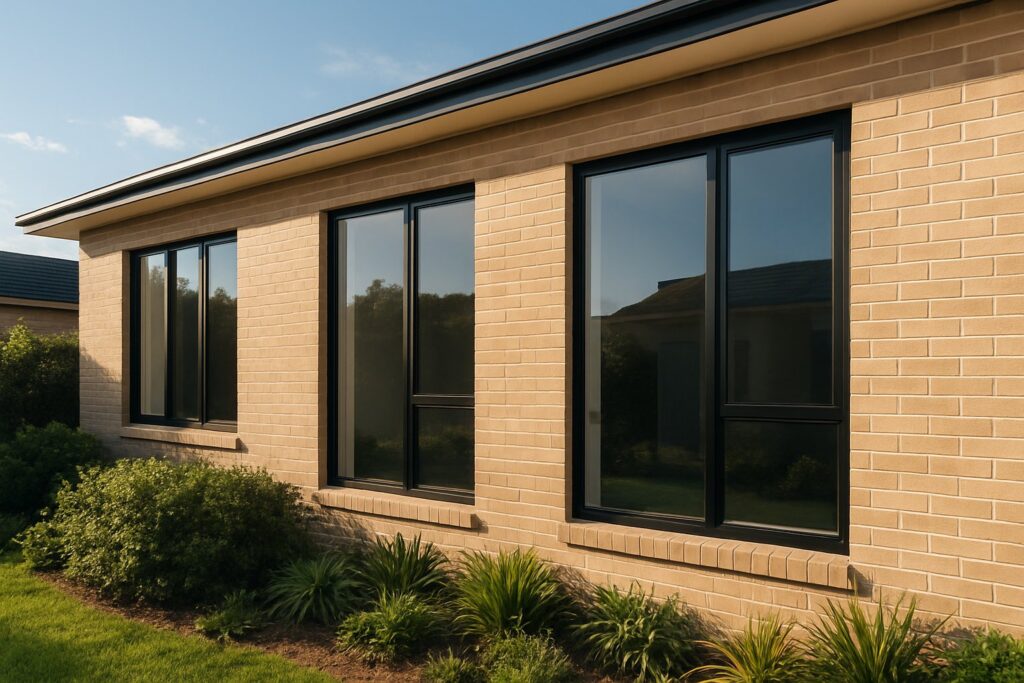
Why Aluminium Double Glazed Windows Dominate Sydney Projects
Walk through any new housing estate in western Sydney or along a coastal renovation strip from Cronulla to Manly, and one material keeps showing up in window after window: aluminium. Paired with double glazing, it has quietly become the default specification for residential and commercial builds across the greater Sydney basin. There are good reasons for that dominance, and a few persistent myths worth clearing up before you commit to a quote.
What Are Aluminium Double Glazed Windows
Aluminium double glazed windows combine a lightweight yet rigid aluminium frame with an insulated glass unit (IGU) made from two panes of glass separated by a sealed air or gas-filled gap. The frame provides structural strength, corrosion resistance, and slim sightlines that maximise the glass area. The sealed unit handles the thermal and acoustic heavy lifting, slowing heat transfer and dampening external noise.
A common objection surfaces early in most conversations: are aluminium frames good for double glazing if the metal itself conducts heat so readily? Raw aluminium does transfer thermal energy roughly 1,000 times faster than timber. Left unaddressed, that conductivity would undermine the insulating benefit of the glass unit. Modern engineering solves this through thermal break technology, where a polyamide barrier is inserted inside the aluminium profile to physically interrupt the heat path between the exterior and interior sections of the frame. Combined with Low-E coatings and argon gas fills in the glazing cavity, today’s aluminium systems deliver performance that rivals or exceeds alternative frame materials while retaining the design flexibility and durability Sydney projects demand.
Why Sydney Properties Benefit From Double Glazing
Sydney sits across multiple NatHERS climate zones. The NSW Planning Portal identifies distinct zones for western Sydney, the CBD, and eastern coastal suburbs, each with different thermal performance requirements for achieving a 7-star NatHERS rating under the higher BASIX standards. In several of these zones, high-performance aluminium double glazed units with U-values at or below 2.5 and controlled SHGC ratings are now specified as the pathway to compliance.
Sydney’s climate diversity demands more from windows than almost any other Australian city. A home in Penrith faces summer extremes above 45 degrees Celsius, while a property in Bronte battles salt-laden coastal winds year-round. One specification does not fit all, and the best window frames for Sydney climate conditions must be selected suburb by suburb, not off a generic brochure.
The double glazing benefits for Sydney homes extend beyond energy ratings. Reduced reliance on air conditioning during those brutal western Sydney heatwaves, less condensation on frames during humid coastal winters, and measurable noise reduction for properties near flight paths or arterial roads all factor into the decision. Aluminium frames amplify these gains by supporting larger glass panels without the bulk of timber or the UV degradation issues that affect uPVC over time in Australia’s harsh sunlight.
This guide walks through the full picture: how the technology works inside the frame, what Australian Standards and BASIX requirements apply, how to choose the right specification for your specific Sydney suburb, and what a quality installation process should look like from first quote to final sign-off.
How Double Glazing Technology Works Inside Aluminium Frames
Knowing that aluminium double glazed windows perform well is one thing. Understanding how does double glazing work in aluminium frames gives you the ability to evaluate products, compare quotes, and spot corners being cut. The technology is straightforward once you break it down into its individual layers.
Anatomy of a Double Glazed Unit in Aluminium Frames
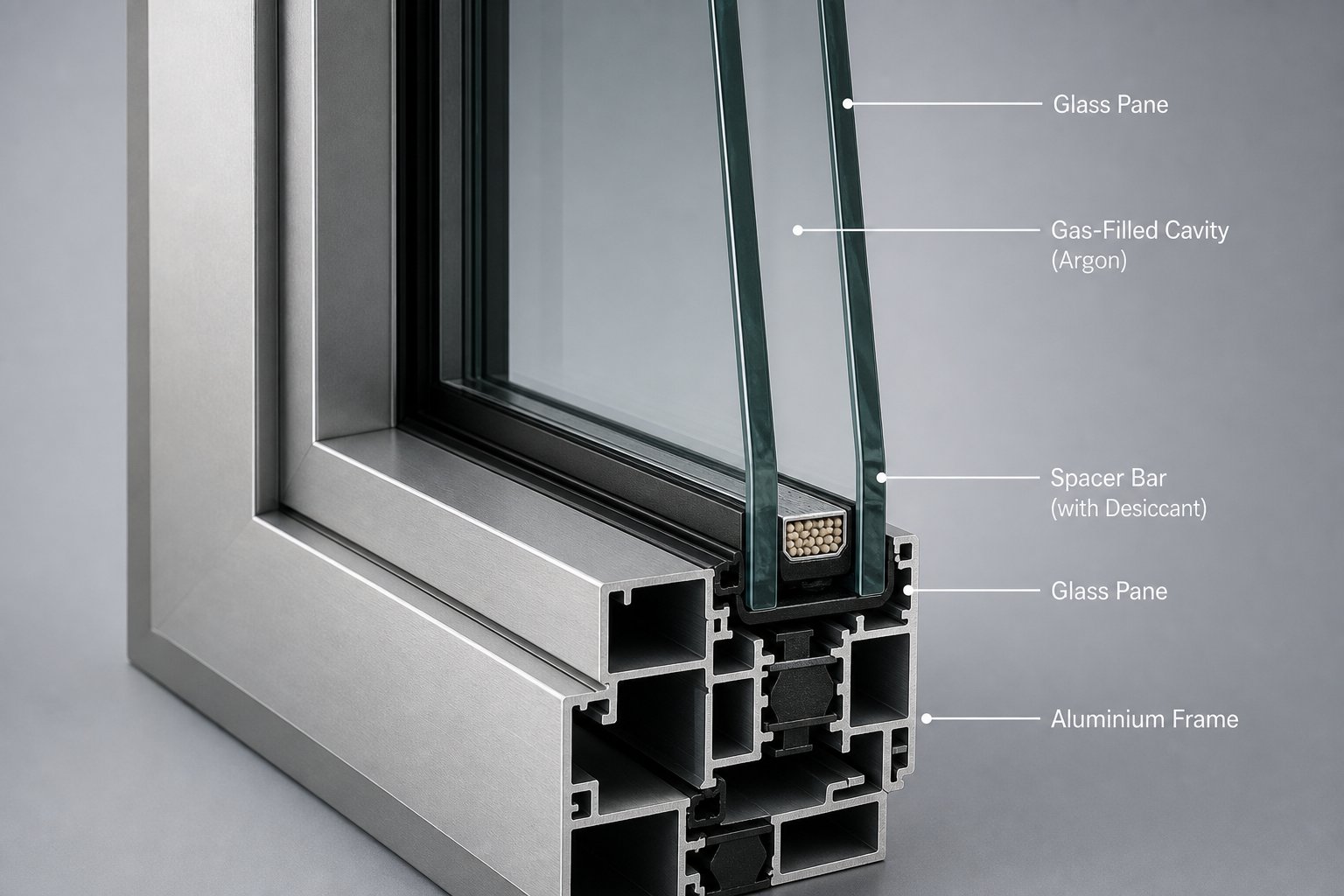
The insulated glass unit (IGU) is the sealed panel that sits inside your aluminium frame. It looks simple from the outside, but several precision-engineered components work together to create a thermal and acoustic barrier. Each element addresses a specific type of heat transfer: conduction, convection, or radiation.
- Two glass panes — the inner and outer lites form the structural faces of the unit. Typical residential thicknesses range from 4mm to 6mm, with thicker glass improving acoustic performance and impact resistance.
- Spacer bar — a perimeter frame (usually 12mm to 16mm wide) that holds the two panes apart at a precise, uniform distance. It also houses desiccant material that absorbs residual moisture trapped during manufacturing, preventing internal fogging.
- Gas fill — the sealed cavity between the panes is filled with an inert gas (most commonly argon) rather than plain air. The denser gas molecules reduce convection currents and conduct less heat across the gap.
- Primary seal (PIB) — a polyisobutylene layer applied directly against the spacer bar that blocks moisture infiltration and prevents gas escape. Its flexibility accommodates thermal expansion without cracking.
- Secondary seal — an outer layer of silicone or polysulphide that bonds the entire assembly together structurally and provides weather resistance at the IGU perimeter.
- Low-E coating — a microscopically thin metallic layer applied to one of the interior glass surfaces that reflects radiant heat while allowing visible light through.
When this assembly is housed inside an aluminium frame, the frame’s job is to support the IGU’s weight, resist wind loads, and seal against weather. Because aluminium conducts heat roughly 1,000 times faster than the gas cavity insulates it, the frame itself must incorporate a thermal break to avoid short-circuiting the glazing’s performance. Without that interruption, heat simply travels around the glass unit through the metal.
Glass Types and Their Impact on Performance
The glass you choose changes how the unit behaves in Sydney’s conditions. Standard clear float glass lets most solar energy pass through, which can be desirable for south-facing windows that benefit from passive heating in winter but problematic on west-facing walls copping afternoon sun in Parramatta or Blacktown.
Low-E glass for aluminium windows in Sydney is the most common performance upgrade. Softcoat Low-E uses ultra-thin silver layers deposited in a vacuum process, reflecting up to 95% of long-wave radiant heat back toward its source. Positioned on surface 2 (the cavity-facing side of the outer pane), it reduces solar heat gain. Positioned on surface 3 (the cavity-facing side of the inner pane), it retains interior warmth more effectively. Your orientation and energy priorities determine the best placement.
Tinted glass adds another layer of solar control by absorbing a portion of incoming energy before it reaches the interior. Grey and green tints are popular for western Sydney projects where solar load is extreme. Laminated glass, which bonds two sheets with a PVB interlayer, delivers superior acoustic insulation and holds together on impact, making it a strong choice for homes near flight paths or in areas requiring safety glazing under AS 1288.
How Gas Fills and Spacer Bars Improve Insulation
The double glazed unit air gap thickness directly affects thermal performance. Cavities narrower than 12mm don’t provide enough space for the gas to suppress convection effectively. Gaps wider than 16mm can actually allow convection currents to re-establish, reducing insulation. The sweet spot for most residential aluminium windows sits at 12mm to 16mm, with 12mm being the most common in standard profiles and 16mm specified for higher-performance applications.
Argon gas filled double glazed windows deliver roughly 30% lower thermal conductivity across the cavity compared to air-filled units. In practical terms, that translates to a centre-of-glass U-value improvement of around 0.2 to 0.3 W/m²K. Krypton offers even better insulation but costs significantly more and is typically reserved for narrow-cavity or triple-glazed configurations where space is limited.
Spacer bar types for double glazing have evolved considerably. Traditional aluminium spacers are cheap and structurally sound, but they create a thermal bridge around the entire perimeter of the glass unit. That cold edge can account for 20 to 30 percent of total window heat loss and promotes condensation in humid conditions. Warm-edge spacers, made from stainless steel, composite materials, or thermally broken aluminium, reduce edge heat loss and improve the overall U-value by 0.1 to 0.2 W/m²K. For Sydney’s coastal suburbs where humidity drives condensation risk, warm-edge spacers are worth specifying even if they add marginally to the quote.
Gas retention matters over the long term. Properly sealed IGUs lose less than 1% of their argon fill per year, maintaining effective insulation for 20 years or more. Third-party testing confirms that larger units actually retain gas better than smaller ones due to the ratio of perimeter seal length to cavity volume. Quality manufacturing and continuous, gap-free sealant application are the critical factors here, not the gas itself.
All of these components function as a system. Specify argon fill but pair it with a cheap aluminium spacer, and you lose much of the benefit at the glass edge. Choose premium Low-E coatings but install them in a non-thermally-broken aluminium frame, and heat bypasses the glass entirely through the metal. The next consideration is understanding exactly how thermal breaks work within the frame itself, and what the energy performance numbers actually mean when you’re comparing products.
Thermally Broken Frames and Energy Performance Metrics Explained
Aluminium conducts heat roughly 1,000 times faster than timber. That single fact drives the most important engineering decision in any aluminium double glazed window: whether the frame includes a thermal break or not. The difference between standard and thermally broken aluminium windows in Sydney is not a minor upgrade. It fundamentally changes how the entire window system performs, how long it resists condensation, and whether it can meet current NCC energy targets.
Standard vs Thermally Broken Aluminium Frames
A standard aluminium frame is a single continuous extrusion. Heat travels freely from the exterior face to the interior face with almost no resistance. Pair that frame with a high-performance double glazed unit and you create an odd situation: the glass insulates well, but the frame around it acts as a thermal highway, bleeding energy around the perimeter.
A thermally broken frame solves this by splitting the aluminium profile into two separate sections, one facing outside and one facing inside, connected by a structural insulating strip. That strip is typically made from glass-reinforced polyamide (nylon), a material with thermal conductivity 500 to 1,000 times lower than aluminium. The polyamide barrier physically interrupts the heat path while maintaining the frame’s structural integrity through mechanical crimping.
Thermal break widths in quality systems range from around 15mm to 35mm. Wider breaks create a longer insulation zone and deliver lower frame U-values. For Sydney’s climate, breaks in the 20mm to 24mm range strike a practical balance between performance and profile depth for most residential applications.
Understanding U-Values and SHGC Ratings
Comparing window products without understanding the numbers is like comparing cars without knowing what the fuel consumption figure means. Two metrics matter most for thermally broken aluminium windows in Sydney.
U-value measures how quickly heat passes through the complete window assembly (frame plus glass), expressed in W/m²K. Lower is better. A non-thermally-broken aluminium frame typically delivers a frame U-value between 5.8 and 7.0 W/m²K. Add a thermal break and that drops to 2.5 to 3.5 W/m²K for standard systems, or as low as 1.5 W/m²K for premium multi-chamber designs. For the whole window (frame plus IGU combined), U-values for double glazed windows in Australia generally fall between 1.8 and 3.5 W/m²K depending on glass type, gas fill, and frame construction. Under current BASIX requirements, many Sydney projects need whole-window U-values below 3.0 to achieve compliance.
SHGC (Solar Heat Gain Coefficient) measures how much solar energy passes through the window, expressed as a number between 0 and 1. A window with an SHGC rating of 0.4 transmits 40% of the sun’s heat energy. The ideal SHGC rating for Sydney windows depends on orientation. West-facing windows in Penrith benefit from a low SHGC (around 0.25 to 0.40) to block afternoon heat. South-facing windows can tolerate a higher SHGC to capture passive winter warmth without overheating risk.
The WERS star rating for aluminium windows simplifies these technical values into a consumer-friendly format. The Window Energy Rating Scheme assigns separate heating and cooling star ratings (up to 10 stars each) based on the combined effect of U-value, SHGC, and air infiltration. More stars means better energy performance for that specific function. When comparing quotes, ask for the WERS certificate rather than relying on verbal claims. It provides an apples-to-apples comparison across different products and manufacturers.
How Thermal Breaks Prevent Condensation
Condensation on aluminium window frames is one of the most visible signs that a frame lacks adequate thermal separation. It forms when warm, humid indoor air contacts a surface cold enough to drop below the dew point. In Sydney’s coastal and harbour suburbs, where relative humidity regularly reaches 70 to 80 percent during winter mornings, standard aluminium frames become cold enough to trigger condensation almost daily. That moisture promotes mould growth around seals, damages surrounding paintwork, and degrades timber reveals over time.
Thermally broken frames keep the interior aluminium section significantly warmer because the polyamide barrier prevents the exterior cold from conducting inward. The interior surface temperature stays above the dew point, and condensation simply does not form under normal indoor humidity levels. For Sydney homes near the coast or in low-lying areas prone to morning fog, this is not a cosmetic benefit. It is a durability issue that affects the longevity of surrounding building materials.
| Characteristic | Standard Aluminium | Thermally Broken Aluminium |
|---|---|---|
| Frame thermal conductivity | High (no insulation barrier) | Significantly reduced (polyamide break) |
| Typical frame U-value | 5.8 – 7.0 W/m²K | 2.5 – 3.5 W/m²K |
| Condensation resistance | Poor in humid conditions | Excellent; interior stays above dew point |
| Relative cost | Lower upfront | 15–30% premium over standard |
| Best application | Internal partitions, low-humidity spaces | All external windows, especially coastal and humid Sydney suburbs |
| NCC Section J compliance | Difficult without compensating glass upgrades | Achievable with standard double glazed IGU |
The cost gap between standard and thermally broken frames has narrowed considerably as demand has grown and more Australian suppliers offer the technology as a standard product line. For any external window in a Sydney project aiming for current energy compliance, thermally broken aluminium is no longer a premium option. It is the baseline expectation.
Performance numbers only tell part of the story, though. How a window performs also depends on where it sits geographically. A home in Cronulla faces entirely different environmental stresses than one in Kellyville or the Blue Mountains fringe, and the specification should reflect those differences.
Choosing the Right Specification for Your Sydney Suburb
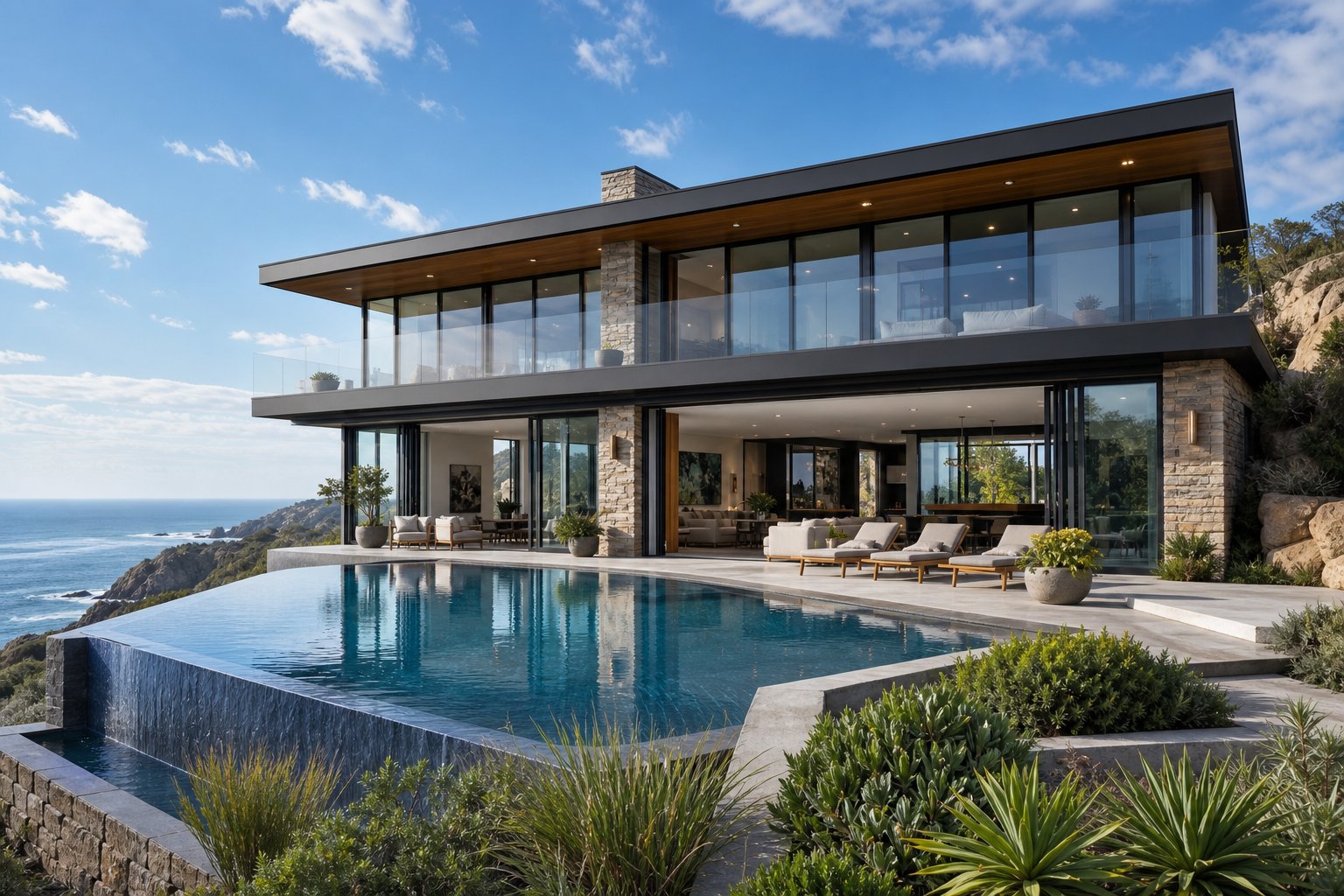
Sydney stretches from salt-battered headlands to heat-soaked plains, from apartment canyons buzzing with traffic to semi-rural blocks backed against national park. A single window specification cannot serve all of these conditions equally. The performance metrics discussed above only deliver real-world value when they are matched to the specific environmental pressures acting on your property. Getting this wrong is one of the most expensive mistakes homeowners make, and one of the details installers rarely volunteer unless you ask the right questions.
Coastal Sydney and Salt Air Resistance
Properties within roughly 5 kilometres of the shoreline sit inside what the industry classifies as a marine environment. From Manly and Dee Why through to Cronulla, Maroubra, and the harbour-facing suburbs of Mosman and Vaucluse, salt-laden air attacks exposed metal surfaces relentlessly. Standard powder-coated aluminium can begin showing signs of corrosion within a few years if the coating is not specified for these conditions.
Marine grade aluminium window frames require a polyester powder coating with a minimum thickness of 60 microns, compared to the 40 to 50 microns typical of standard finishes. That extra layer provides a more resilient barrier against salt spray, alkaline moisture, and the constant UV bombardment that degrades thinner coatings over time. Some manufacturers also recommend pre-anodisation beneath the powder coat for properties directly exposed to high winds and harsh salt water, which protects the underlying aluminium if the paint layer is ever scratched or chipped.
Double glazed windows for coastal Sydney homes also face higher wind load requirements. Exposed headland properties and upper-storey apartments near the coast must meet elevated wind classifications under AS 2047, often N3 or higher. This affects frame section depth, glass thickness, and hardware ratings. Specifying a window that passes testing for a sheltered inland site but gets installed on a Coogee clifftop is a compliance failure waiting to happen.
Hardware matters too. Hinges, locks, and handles should be marine-grade stainless steel or similarly corrosion-resistant alloys. Standard zinc-plated hardware can seize or corrode within a couple of years in direct coastal exposure, leading to premature maintenance costs that erode the long-term value of the window investment.
Western Sydney Heat and Solar Control
Penrith, Blacktown, Liverpool, and the rapidly growing corridors around Marsden Park and Oran Park face a different enemy: extreme radiant heat. Summer temperatures regularly exceed 40 degrees Celsius, and the urban heat island effect pushes surface temperatures even higher in dense new estates with minimal tree canopy.
The best windows for western Sydney heat prioritise a low SHGC above almost everything else. West-facing and north-west-facing openings cop the worst of the afternoon sun, and without solar control glass, interior temperatures spike regardless of how well the frame is insulated. Specifying an SHGC below 0.35 on these exposures, using a combination of tinted outer panes and high-performance Low-E coatings, can reduce cooling loads by 25 to 40 percent compared to clear glass double glazing.
Grey and green body-tinted glass absorbs solar energy within the outer pane before it reaches the cavity, while selective Low-E coatings reflect near-infrared radiation without significantly reducing visible light transmission. The combination delivers a bright interior without the furnace effect that plagues so many new western Sydney homes built with builder-grade clear glazing.
Frame colour plays a role here as well. Darker powder coat colours absorb more radiant heat, raising the frame temperature and increasing thermal stress on seals and hardware. Lighter colours or specialised solar-reflective coatings reduce frame surface temperatures by 20 to 30 degrees Celsius in direct sun. For west-facing elevations in western Sydney, this is not just an aesthetic choice. It affects seal longevity and long-term air tightness.
Inner-City Noise Reduction With Double Glazing
Apartments and terraces in Surry Hills, Newtown, Pyrmont, Ultimo, and along major arterial corridors face constant noise from traffic, construction, nightlife, and public transport. For these properties, acoustic performance often matters more than thermal insulation as the primary driver for upgrading to double glazing.
Noise reduction windows for inner city Sydney are rated using the Rw (weighted sound reduction index) system, which is the Australian standard for measuring how many decibels a building element reduces across a range of frequencies. Standard single glazing typically achieves an Rw of around 25 to 28. A well-specified aluminium double glazed unit can reach Rw 32 to 38 or higher, depending on glass configuration.
The key to acoustic performance in double glazing is asymmetry. Using panes of different thicknesses, for example a 6mm outer pane paired with a 4mm inner pane, prevents both sheets from resonating at the same frequency. Adding a laminated pane with a PVB interlayer further dampens vibration, particularly effective against low-frequency traffic rumble that standard glass struggles to block.
Cavity width also influences acoustic results, though the relationship is not linear. A 12mm cavity provides meaningful improvement over single glazing, but widening to 16mm or even 20mm delivers diminishing returns for noise unless paired with appropriate glass mass. Frame sealing quality matters enormously here. Sound takes the path of least resistance, and even small gaps around sashes or between the frame and wall opening can undermine an otherwise strong acoustic specification. Compression seals and multi-point locking systems that pull sashes tight against weatherstrips are essential for inner-city installations.
Bushfire-Prone Areas and BAL Ratings
Sydney’s urban fringe pushes into bushland across a wide arc, from the northern suburbs bordering Ku-ring-gai Chase National Park through to the Blue Mountains fringe and the Royal National Park boundary in the south. Properties in these areas are assigned a Bushfire Attack Level (BAL) under AS 3959, which dictates the construction requirements for every building element, including windows.
BAL ratings range from BAL-LOW (minimal risk) through BAL-12.5, BAL-19, BAL-29, and BAL-40, up to BAL-FZ (Flame Zone) where direct flame contact is possible. Each level imposes progressively stricter requirements on glazing type, frame construction, and ember protection.
Aluminium is widely recognised as one of the strongest materials for bushfire rated windows because it is non-combustible, maintains structural integrity under extreme heat, and allows precision manufacturing with tight tolerances that resist ember penetration. Compared to timber or uPVC systems, bushfire rated aluminium windows in Sydney offer superior performance at BAL-29, BAL-40, and BAL-FZ levels where other materials simply cannot comply.
At higher BAL ratings, windows must incorporate toughened or laminated safety glass capable of withstanding radiant heat, ember-resistant stainless steel mesh screens with fine apertures, and reinforced frame profiles with minimal gaps. All components are tested as a complete system under AS 1530.8.1 and AS 1530.8.2. Selecting a window that has been independently tested and certified for your specific BAL level is not optional. Incorrect product selection can result in council approval refusal, insurance complications, or reduced protection during a fire event.
Before specifying windows for any bushfire-prone Sydney property, confirm the site’s BAL rating through your local council or a bushfire consultant. Request compliance certificates and test reports from the supplier, and verify that the complete window system, not just individual components, has been tested to the required level.
| Suburb Type | Key Challenges | Recommended Glass Type | Recommended Frame Finish |
|---|---|---|---|
| Coastal (Manly, Cronulla, Coogee) | Salt spray corrosion, high wind loads, UV degradation | Low-E double glazed with laminated outer pane for impact resistance | Marine-grade powder coat (60+ microns), pre-anodised substrate, stainless steel hardware |
| Western Sydney (Penrith, Blacktown, Marsden Park) | Extreme heat, high solar radiation, urban heat island effect | Solar control Low-E with grey or green tinted outer pane, SHGC below 0.35 | Light-coloured or solar-reflective powder coat to reduce frame heat absorption |
| Inner City (Surry Hills, Newtown, Pyrmont) | Traffic and urban noise, limited ventilation options, heritage overlays | Asymmetric glass (6mm/4mm), laminated inner or outer pane for acoustic damping, Rw 34+ | Standard powder coat (any colour); focus on seal quality and multi-point locking |
| Bushfire-Prone (Blue Mountains fringe, Ku-ring-gai, Sutherland Shire edges) | Ember attack, radiant heat, direct flame contact at higher BAL levels | Toughened or laminated safety glass rated to site BAL level, ember-guard mesh screens | Standard or marine-grade powder coat with non-combustible aluminium profiles tested to AS 3959 |
Colour and finish selection ties all four scenarios together. Sydney’s intense UV exposure fades cheaper coatings within five to seven years, while quality polyester powder coats backed by a manufacturer’s warranty of 15 years or more retain their appearance far longer. Anodised finishes offer an alternative with excellent scratch resistance and a distinctive metallic appearance, though the colour range is more limited than powder coating. For any property within a marine zone, the finish specification is not cosmetic. It is the primary defence against premature frame degradation.
Matching the right glass, frame, and finish to your suburb’s specific conditions is the foundation of a sound investment. But even a perfectly specified window is only as good as the regulatory framework it complies with, and Sydney’s compliance landscape involves several overlapping standards that directly affect what you can and cannot install.
Australian Standards and Building Compliance for Window Selection
Specifications and performance metrics only matter if the product actually meets the regulatory requirements that apply to your project. Sydney’s compliance landscape for aluminium double glazed windows involves several overlapping standards, each governing a different aspect of performance. Installers rarely walk you through this framework in detail, partly because it is complex and partly because not every product on the market genuinely satisfies all of them. Understanding what each standard requires, and what documentation proves compliance, puts you in a far stronger position when evaluating quotes and holding suppliers accountable.
AS2047 and AS1288 Standards for Sydney Windows
Two Australian Standards form the backbone of window compliance across every residential and commercial project in Sydney.
AS 2047 covers windows and external glazed doors. It sets the performance benchmarks that every product must meet before it can legally be installed in an external opening. The standard addresses four core areas that directly affect how your aluminium double glazed windows perform once they are in the wall:
- Structural performance (wind loads) — windows must withstand the design wind pressure for their specific location and height above ground. Sydney’s wind classifications range from N1 in sheltered suburban settings to N3 or higher on exposed coastal sites and upper storeys. A product rated for N2 cannot be installed where N3 is required, regardless of how good the glazing is.
- Water penetration resistance — tested in Pascals, this rating confirms how much wind-driven rain pressure the window can resist without leaking. Sydney’s storm events regularly generate pressures that exceed the minimum thresholds, so specifying above the bare minimum is sensible for any exposed elevation.
- Air infiltration — sets limits on how much air passes through a closed window. Excessive air leakage undermines both thermal and acoustic performance, effectively negating the benefits of double glazing. AS 2047 testing quantifies this so you can compare products objectively.
- Operating force — ensures windows open and close without excessive effort, which matters for accessibility and long-term usability as hardware wears.
AS 1288 governs glass selection and installation. Where AS 2047 focuses on the complete window assembly, AS 1288 determines which glass types are safe and appropriate for specific applications. It dictates where safety glazing (toughened or laminated) is mandatory, such as near floor level, adjacent to doors, in wet areas, and in overhead applications. For double glazed units, it also governs how glass thickness and type are selected based on wind load, panel size, and support conditions. Any AS2047 compliant aluminium windows in Sydney must also satisfy AS 1288 for the glazing within them.
Compliance with both standards is verified through testing at NATA-accredited laboratories. Products that pass receive a performance label affixed to the frame, showing the tested wind and water ratings. A separate certificate of compliance, often issued through the Australian Glass and Window Association (AGWA), confirms the product meets the standard across all tested criteria.
NCC Section J and BASIX Energy Requirements
Beyond structural and safety performance, energy efficiency adds another compliance layer that directly shapes which aluminium double glazed windows you can specify for a Sydney project.
The National Construction Code (NCC) Section J sets the overarching energy efficiency framework for Australian buildings. Its objective is to reduce energy consumption, cut greenhouse gas emissions, and improve occupant comfort through better building envelopes and services. For windows, this translates into maximum allowable U-values and SHGC targets that feed into the building’s overall energy model.
In NSW, residential buildings (Class 1 and Class 2) must also satisfy BASIX, the Building Sustainability Index. BASIX is a web-based planning tool that assesses a proposed home’s thermal comfort and energy performance against sustainability benchmarks. Window selection is one of the most influential variables in a BASIX assessment because glazing typically represents the weakest thermal link in the building envelope. The U-value, SHGC, and air infiltration characteristics of your specified windows feed directly into the BASIX model, and poor-performing products can push the entire assessment below the pass threshold.
The practical implication for BASIX requirements for windows in NSW is straightforward: if your windows do not achieve adequate thermal performance, you either need to upgrade the glazing specification or compensate elsewhere in the building design with additional insulation, reduced window area, or more expensive mechanical systems. Double glazed aluminium windows with thermally broken frames and appropriate Low-E coatings are typically the most efficient path to BASIX compliance without sacrificing natural light or architectural intent.
NCC Section J window compliance also addresses condensation management. The 2022 update strengthened provisions around moisture risk from thermally poor frames and glazing configurations. Standard aluminium frames without thermal breaks are now explicitly problematic under these provisions because their low interior surface temperatures promote condensation in heated or cooled spaces. Thermally broken frames with appropriate IGU specifications satisfy these requirements without additional intervention.
Why Compliance Documentation Protects Your Investment
Compliance is not just a box-ticking exercise for council approval. The documentation trail behind your windows affects three areas that matter long after installation day.
Building approvals and inspections. Certifiers can request performance labels, certificates of compliance, and WERS data at any stage of the approval process. Missing or inadequate documentation can halt a project, trigger re-inspection fees, or require product replacement. For double glazed window certification in Australia, the paperwork needs to be specific to the product configuration actually installed, not a generic brochure claim.
Insurance coverage. Home and building insurance policies typically require that construction complies with applicable codes and standards. If a window fails during a storm and the product was never tested to the required wind classification, the insurer may deny the claim. Non-compliant installations also create liability exposure for builders and installers, which is why reputable operators insist on documented compliance before they will fit a product.
Resale value and due diligence. Buyers and their building inspectors increasingly check compliance documentation during property transactions. Non-compliant windows can become a negotiation point that reduces sale price, or worse, a condition that must be rectified before settlement. Retaining your performance labels, certificates, and WERS ratings protects the investment you have made and provides evidence of quality to future owners.
Manufacturers who take compliance seriously make this documentation accessible rather than burying it behind sales conversations. MEICHEN, for example, publishes its compliance certifications openly on a dedicated page, allowing builders, architects, and homeowners to verify standards alignment before specifying products. That level of transparency is a useful benchmark when evaluating any supplier. If a manufacturer cannot or will not provide clear compliance documentation on request, treat that reluctance as a warning sign rather than an oversight.
The standards framework protects you, but only if the products you purchase genuinely meet it. Knowing what to look for in documentation is one piece of the puzzle. The other is understanding how different frame materials compare under these same conditions, and whether aluminium remains the strongest choice when weighed against the alternatives available in Sydney.
Frame Material Comparison for Sydney Climate Conditions
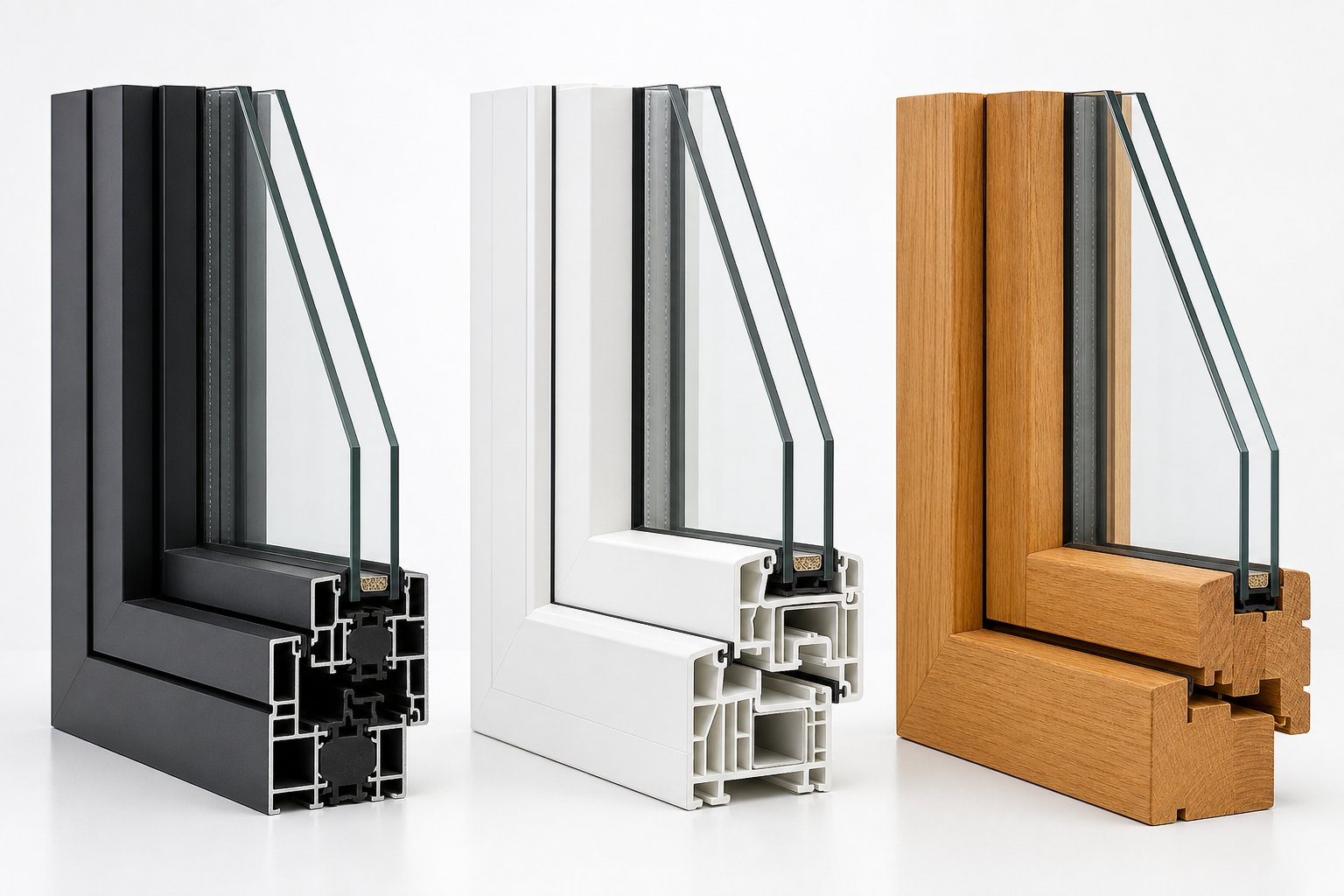
Aluminium is not the only frame material that supports double glazing. uPVC, timber, and composite systems all compete for the same openings in Sydney homes, and each brings genuine strengths depending on the property’s location, design intent, and maintenance appetite. Dismissing alternatives outright would be dishonest. So would ignoring the specific ways Sydney’s climate punishes certain materials faster than others.
Aluminium vs uPVC vs Timber vs Composite Frames
When comparing aluminium vs uPVC windows in Sydney, the conversation usually starts with thermal performance and ends with longevity. uPVC frames are inherently better insulators because the multi-chambered plastic profiles conduct far less heat than metal. That thermal advantage is real. But uPVC degrades under intense UV exposure, and Sydney delivers some of the harshest ultraviolet conditions in any Australian capital. Over 15 to 20 years, uPVC frames on north and west-facing elevations can become brittle, discolour, and lose structural rigidity in ways that aluminium simply does not.
Timber vs aluminium double glazed windows is a different trade-off entirely. Timber offers natural insulation, beautiful aesthetics, and heritage compatibility that no metal frame can replicate. It performs well thermally without needing a thermal break. The catch is maintenance. In Sydney’s humid coastal suburbs, timber demands repainting or re-staining every five to eight years to prevent moisture ingress, swelling, and eventual rot. On a double-storey home with difficult access, that ongoing cost erodes the initial savings quickly.
Composite frames, typically aluminium-clad timber, attempt to deliver the best of both worlds: timber warmth on the interior with an aluminium weather shell on the exterior. They reduce maintenance compared to full timber and improve thermal performance compared to standard aluminium. The trade-off is cost and complexity. Composite systems carry a significant price premium and rely on the junction between materials remaining sealed over decades of thermal cycling.
For the best window frame material for salt air, thermally broken aluminium with marine-grade powder coating consistently outperforms the field. It resists corrosion, tolerates UV without degradation, requires almost no maintenance beyond occasional cleaning, and supports the slimmest sightlines for maximum glass area. uPVC handles salt reasonably well but lacks the structural strength for large openings. Timber struggles in direct coastal exposure without intensive upkeep.
| Criteria | Thermally Broken Aluminium | uPVC | Timber | Composite (Aluminium-Clad Timber) |
|---|---|---|---|---|
| Salt air resistance | Excellent (marine-grade coating) | Good (non-corrosive) | Poor without intensive maintenance | Good (aluminium exterior) |
| UV stability | Excellent | Moderate; degrades over 15–20 years | Good if coated; coating degrades | Good (aluminium exterior shields timber) |
| Maintenance | Very low; occasional wash | Low; occasional cleaning | High; repaint every 5–8 years | Moderate; exterior low, interior periodic |
| Thermal performance (frame) | Good (U-value 2.5–3.5 W/m²K) | Very good (U-value 1.5–2.5 W/m²K) | Very good (natural insulator) | Very good (timber core) |
| Design flexibility | High; slim profiles, large spans | Limited; bulkier profiles | Moderate; limited span widths | Moderate to high |
| Colour options | Virtually unlimited (powder coat) | Limited range; woodgrain wraps available | Any paint colour; natural stains | Aluminium exterior: unlimited. Timber interior: stain or paint |
| Lifespan | 30–45 years | 20–30 years | 30–60 years (with maintenance) | 30–50 years |
| Relative cost | Mid to high | Low to mid | High | Highest |
| Best suited for | Most Sydney applications; coastal, modern, large openings | Budget-conscious inland projects; sheltered elevations | Heritage homes; conservation areas | Architect-designed homes wanting timber interior aesthetic |
No single material wins every category. Thermally broken aluminium dominates Sydney projects because it delivers the strongest all-round balance across the criteria that matter most here: durability under UV and salt, minimal maintenance, design versatility, and compliance with current energy standards. But if your priority is raw thermal performance on a budget and your home sits in a sheltered inland suburb, uPVC deserves serious consideration. If heritage character is non-negotiable, timber remains the appropriate choice provided you accept the maintenance commitment.
Retrofit Double Glazing vs Full Window Replacement
Before committing to new frames entirely, many Sydney homeowners ask whether they can retrofit double glazing into their existing windows instead. It is a fair question, and the answer depends on what you are starting with.
Retrofit double glazing keeps the original frame in place and replaces the single pane with an insulated glass unit, or adds a secondary panel (such as a Magnetite-style acrylic or glass sheet) to the interior face of the existing window. The appeal is obvious: lower cost per opening, less disruption, and preservation of the original frame appearance. For well-maintained timber frames in character homes where heritage overlays restrict external changes, retrofit can be a sensible path.
The limitations are equally clear. Retrofit double glazing Sydney cost savings come with performance trade-offs. Old aluminium frames without thermal breaks still conduct heat freely around the perimeter of the new glass, undermining much of the insulation benefit. Existing seals, drainage paths, and hardware remain unchanged, so draughts and water management issues persist. The IGU thickness is constrained by whatever the original frame rebate can accommodate, often limiting you to narrower cavities that deliver less insulation than purpose-built systems.
Magnetite-style secondary glazing takes a different approach. Rather than replacing the glass, it adds a separate acrylic or glass panel inside the existing frame, creating a still-air gap. This can meaningfully reduce noise and improve thermal comfort without touching the original window. It works well for apartment dwellers who cannot modify external facades, or for heritage-listed properties where the original joinery must remain intact. The downsides are reduced operability (you often lose easy access to the original window for cleaning or ventilation), condensation risk in the cavity between panels, and a visual compromise that some homeowners find unacceptable.
Window replacement vs retrofit double glazing comes down to frame condition and long-term goals. If your existing frames are non-thermally-broken aluminium showing corrosion, or uPVC that has become brittle and discoloured, retrofitting glass into a deteriorating frame is like fitting new tyres to a car with a cracked axle. You gain something, but the underlying problem remains. Full replacement with modern thermally broken aluminium double glazed windows resets the clock on performance, sealing, hardware, and compliance in one step.
Many homeowners stage the work practically: full replacement on the worst-performing or most exposed elevations first, with retrofit or secondary glazing on less critical openings where frames remain sound. That hybrid approach spreads cost while delivering the biggest comfort gains where they matter most.
Whichever path you choose, the installation process itself introduces variables that affect long-term performance. How the window is sealed into the opening, how flashing integrates with the wall system, and what warranty structures back the work all determine whether your investment delivers on its promise for decades or disappoints within a few years.
Installation Process and Window Configuration Options
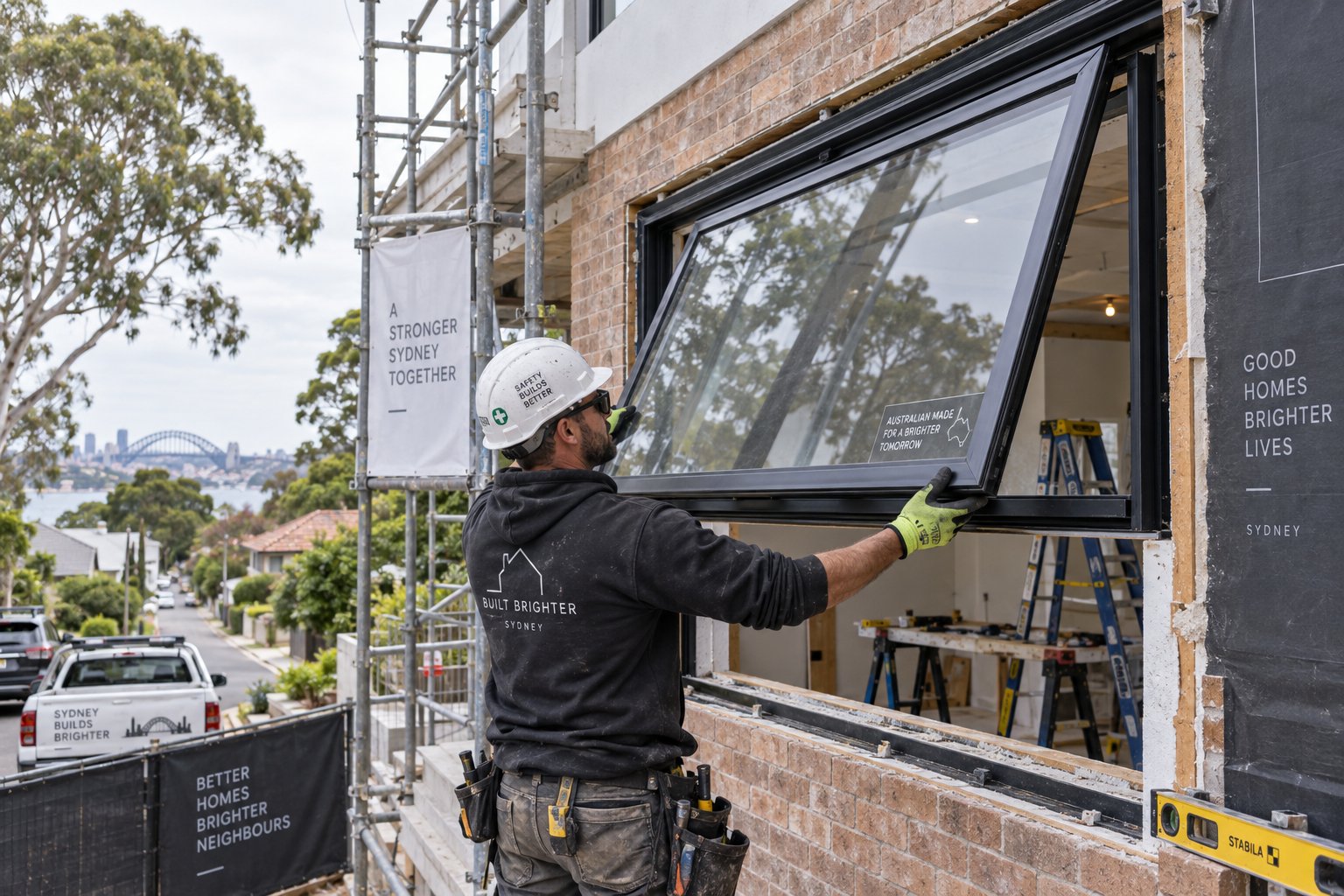
A perfectly specified aluminium double glazed window still underperforms if it is poorly installed. The seal between frame and wall, the flashing integration, and the precision of the fit all determine whether the product delivers its rated U-value and weather resistance or falls short within the first winter storm. Knowing what the aluminium window installation process in Sydney should look like helps you distinguish competent installers from those cutting corners you will only discover months later.
What to Expect During Window Installation
The process differs depending on whether you are fitting windows into a new build or replacing existing units in an occupied home. New construction is simpler because the openings are purpose-built to match the window dimensions, with flashings and membranes integrated during the framing stage. Replacement work is more complex. Existing reveals, cladding, and internal trims must be managed without damaging surrounding finishes, and the new frame dimensions rarely match the old ones exactly.
For replacement projects, a typical aluminium double glazed window installation follows this sequence:
- Preparation — remove curtains, blinds, and furniture from the immediate area around each window. The installer will need clear access to the full opening and surrounding wall.
- Existing window removal — the old frame is carefully extracted from the opening. Installers typically work room by room, starting at the top of the house and moving down, so that security and weather protection are maintained on lower levels while upper windows are being replaced.
- Opening inspection and preparation — once the old frame is out, the installer checks the structural lintel, sub-sill, and reveals for damage, rot, or misalignment. Any issues are addressed before the new frame goes in. Flashing tape or membrane is applied to the sill and jambs to create a drainage path that directs any future moisture outward rather than into the wall cavity.
- Frame installation — the new aluminium frame is positioned in the opening, checked for level and plumb, then fixed securely to the structure using appropriate fasteners for the wall type (masonry anchors for brick, screws for timber framing). Shims maintain precise alignment so that sashes operate smoothly and seals compress evenly.
- Sealing and weatherproofing — expanding foam or backer rod fills the gap between frame and wall, followed by an external weather seal (typically silicone or polyurethane sealant) that prevents water ingress while allowing the joint to flex with thermal movement.
- Glazing unit installation — the sealed IGU is placed into the frame and secured with glazing beads. The installer checks that drainage slots in the frame are clear so any condensation or wind-driven moisture that reaches the rebate can escape.
- Hardware fitting and adjustment — locks, handles, and restrictors are installed and adjusted so that sashes close firmly against weatherstrips with even compression around the full perimeter.
- Final inspection and handover — the installer checks operation, locking, and seal integrity, then demonstrates how to operate and maintain the window. Old frames are removed from site and recycled where possible.
How long does window replacement take? For a standard-sized opening in a straightforward brick veneer or weatherboard wall, expect 45 minutes to 90 minutes per window once the crew is set up. A full house of 10 to 15 windows typically takes two to three days. Larger or more complex openings, bi-fold doors, or situations requiring structural modification extend the timeline.
The most common concern homeowners raise is weather exposure during the swap. Reputable installers manage this by completing each opening individually before moving to the next. Your home is never left with an unprotected gap overnight. If unexpected weather rolls in mid-installation, a temporary board or membrane seals the opening until work resumes. Ask your installer directly how they handle this scenario before signing a contract.
Sliding, Awning, and Casement Configuration Options
Aluminium double glazed windows come in several configurations, each suited to different functional requirements and architectural styles across Sydney homes.
Sliding windows are the most popular choice for double glazed sliding windows in Sydney, particularly in bedrooms and living areas. One or more sashes glide horizontally on tracks, providing ventilation without protruding into outdoor spaces or interior rooms. They suit tight sites where an outward-opening sash would obstruct a pathway or balcony. The trade-off is that only half the opening area can be ventilated at any time, and the sliding seal is inherently less airtight than a compression seal on a hinged window.
Awning windows hinge at the top and open outward from the bottom. They excel in Sydney’s climate because they allow ventilation during light rain without water entering the room. Stacked awning configurations are common in modern Sydney homes, offering a clean horizontal aesthetic while maintaining weather protection. Their compression seal delivers strong air tightness and acoustic performance.
Casement windows hinge at the side and swing outward, providing maximum ventilation area since the entire sash opens. They seal tightly when closed, making them a strong performer for both thermal and acoustic applications. Casements work well on upper storeys and in rooms where full airflow is a priority, though they require clearance outside the opening.
Fixed windows do not open at all. They deliver the best thermal and acoustic performance of any configuration because there are no moving parts, no seals to compress, and no hardware to wear. Fixed panels are ideal for picture windows, highlight glazing, and any opening where ventilation is not required. They also cost less per square metre than operable windows because the frame profile is simpler.
Most Sydney projects combine configurations. A typical living room might pair a large fixed panel with flanking awning or casement sashes, maximising the view while providing controlled ventilation where needed.
Warranty Structures and What They Should Cover
A double glazed window system involves multiple components manufactured by different parties, and each can fail independently. A single blanket warranty that does not distinguish between frame, glass unit, hardware, and installation workmanship is a red flag. Quality suppliers and installers break their guarantees into distinct categories so you know exactly what is covered and for how long.
- Frame warranty — covers the aluminium extrusion and powder coat finish against manufacturing defects, corrosion, and structural failure. Expect 10 to 25 years depending on the manufacturer and finish type. Marine-grade coatings in coastal areas should carry a specific corrosion warranty.
- IGU seal warranty — covers the sealed double glazed unit against internal fogging caused by seal failure. This is critical because a failed seal means moisture enters the cavity, the argon escapes, and insulation performance drops permanently. Reputable manufacturers warrant the IGU seal for 10 to 15 years minimum.
- Hardware warranty — covers locks, handles, hinges, and rollers against mechanical failure. Hardware typically carries a shorter warranty of 5 to 10 years because these are moving parts subject to wear. Check whether the warranty covers replacement parts only or includes labour for fitting.
- Installation warranty — covers the workmanship of the installer: correct fixing, sealing, flashing, and alignment. This is separate from the product warranty and typically runs 5 to 10 years. It protects you if water leaks develop due to poor sealing or if sashes bind because the frame was installed out of square.
Beyond the duration, check the conditions that void coverage. Harsh chemical cleaners, unapproved modifications, and failure to maintain drainage slots are common exclusions. Ask how warranty claims are lodged, what the typical response time is, and whether the supplier has a local service team that can attend your Sydney property rather than requiring you to ship components interstate.
A double glazed window warranty in Australia should also sit alongside your consumer guarantee rights under Australian Consumer Law. These guarantees apply regardless of what the written warranty says, ensuring products are fit for purpose and of acceptable quality for a reasonable period. If a sealed unit fogs after three years on a product warranted for ten, both the written warranty and your statutory rights support a claim.
Solid warranty documentation, combined with compliance certificates and performance labels, forms the paper trail that protects your investment over its full lifespan. But paperwork only has value if the supplier behind it is credible and reachable. The final piece of the puzzle is knowing how to evaluate suppliers, verify their claims, and compare quotes in a way that reveals genuine quality differences rather than just price variation.
How to Evaluate Suppliers and Verify Window Quality
Price is the easiest number to compare on a quote. It is also the least useful on its own. Two suppliers can quote the same dollar figure for what appears to be the same window, yet deliver vastly different products in terms of tested performance, frame grade, glass specification, and long-term durability. Knowing how to choose an aluminium window supplier in Sydney means looking past the headline price and asking questions that reveal whether the product behind the number actually matches your project’s requirements.
Questions to Ask Your Window Supplier
A confident supplier welcomes technical questions. Evasiveness or vague answers should raise immediate concern. Before committing to any quote for aluminium double glazed windows, work through these questions and pay attention to how readily the answers come.
Do your products test to AS 2047? This is non-negotiable. Every external window installed in Sydney must comply with this standard. Ask for the specific wind classification and water penetration rating of the product being quoted. A supplier who cannot name these figures off the top of their head likely does not have tested products in their range.
Can you provide WERS ratings for this configuration? WERS rated aluminium windows in Australia carry independently verified energy performance data covering U-value, SHGC, and air infiltration. The rating applies to the complete window system, not just the glass. If a supplier quotes centre-of-glass figures instead of whole-window data, they may be overstating performance. Ask for the WERS certificate specific to the frame profile and glass combination being offered.
Which aluminium system do you fabricate from? Reputable fabricators in Sydney typically use extrusion systems from established Australian suppliers like Capral, AWS, or Alspec. These companies invest heavily in testing, tooling, and quality control. Their profiles carry documented performance data and come with material traceability. If a supplier uses imported extrusions from unknown sources, the burden of proving compliance falls entirely on the fabricator, and that proof may not exist.
Is this product suitable for my suburb’s specific conditions? A supplier who asks where your property is located before quoting is already thinking about compliance. One who quotes a generic product without asking about coastal exposure, BAL rating, noise requirements, or wind classification is selling from a catalogue rather than specifying for your site.
Is this a residential or semi-commercial grade product? The distinction matters more than most buyers realise. Semi-commercial or commercial-grade aluminium systems use heavier wall thickness extrusions, larger glazing rebates that accommodate thicker IGUs, and hardware rated for higher cycle counts. For ground-floor sliding doors, large awning windows, or any opening exceeding standard residential dimensions, residential-grade products may not carry adequate structural or hardware ratings. Ask directly which product tier is being quoted and why.
Verifying Product Quality and Certification Claims
Verbal assurances are not documentation. What to ask a double glazing supplier goes beyond conversation. You need to see evidence.
Request the performance label details for the specific product. This label, affixed to compliant windows, shows the tested wind and water ratings in Pascals. If the supplier cannot tell you what ratings their product carries, the product may never have been independently tested.
Ask for a certificate of compliance issued by the manufacturer or through an accredited body such as the Australian Glass and Window Association (AGWA). AGWA members submit products to NATA-accredited laboratory testing and maintain ongoing compliance obligations. Membership alone does not guarantee quality, but it does indicate a baseline commitment to independent verification.
For energy claims, request the WERS certificate or a simulation report showing whole-window U-value and SHGC for the exact configuration quoted. Glass-only figures always look better than whole-window numbers because they exclude the thermal impact of the frame. A supplier presenting glass-only data as if it represents the complete product is either uninformed or deliberately misleading.
Suppliers who take transparency seriously publish their compliance documentation where anyone can access it. MEICHEN, for instance, maintains a dedicated certifications page detailing the standards and testing behind its aluminium window and door systems for Australian projects. That kind of openness sets a useful benchmark. If a supplier you are evaluating cannot match that level of accessible documentation, ask why.
How to Compare Quotes Meaningfully
Comparing double glazed window quotes in Sydney requires stripping each quote back to its components so you are measuring like against like. A lower price often reflects a lower specification rather than better value. Use this checklist to evaluate what each quote actually includes:
- Frame system and grade — identify the extrusion brand, series name, and whether it is thermally broken. Confirm wall thickness and whether the profile is residential or semi-commercial grade.
- Glass specification — check pane thicknesses, Low-E coating type and position, gas fill (argon or air), spacer bar type (aluminium or warm-edge), and total IGU thickness. A quote that simply says “double glazed” without these details is incomplete.
- Hardware brand and rating — confirm the lock, handle, and hinge specifications. Generic unbranded hardware is cheaper but wears faster and may lack replacement availability in five years.
- Finish and warranty — verify powder coat brand, thickness, and colour warranty duration. Marine-grade finishes for coastal properties should be explicitly stated.
- Compliance documentation included — confirm that performance labels, certificates of compliance, and WERS data will be provided at delivery. If a supplier charges extra for this paperwork or says it is not available, reconsider.
- Installation scope — check whether the quote covers removal of existing windows, disposal, flashing, internal and external trims, and clean-up. Some quotes cover supply only, leaving installation as a separate and sometimes surprising cost.
- Warranty breakdown — ensure the quote separates frame, IGU seal, hardware, and installation warranties with clear durations and conditions for each.
A quote that addresses every item on this list gives you a genuine basis for comparison. One that bundles everything into a single line item and a lump-sum price is hiding detail you need to make an informed decision.
Price variation between quotes for genuinely equivalent specifications typically falls within 10 to 20 percent. Larger gaps almost always indicate a specification difference rather than a margin difference. The cheapest quote is rarely the best value when you factor in the 30-year lifespan these windows should deliver. Spending an extra hour verifying claims and comparing specifications saves thousands in premature replacements, failed seals, and compliance headaches down the track.
Frequently Asked Questions About Aluminium Double Glazed Windows in Sydney
1. Are aluminium frames good for double glazing in Sydney’s climate?
Aluminium frames are well suited to double glazing in Sydney when they incorporate thermal break technology. A polyamide barrier inserted between the interior and exterior aluminium sections interrupts heat transfer, solving the conductivity issue that raw aluminium presents. Combined with Low-E coatings and argon gas fills, thermally broken aluminium systems deliver strong thermal and acoustic performance while offering superior durability against Sydney’s UV exposure, salt air, and humidity compared to alternative frame materials like uPVC or timber.
2. How much do aluminium double glazed windows cost in Sydney?
Pricing varies significantly based on frame grade, glass specification, window configuration, and suburb-specific requirements. Thermally broken aluminium double glazed windows carry a 15 to 30 percent premium over standard aluminium frames. Coastal properties requiring marine-grade powder coating and stainless steel hardware add further cost. When comparing quotes, focus on the full specification rather than headline price alone. Ensure quotes detail the extrusion system, glass makeup, hardware brand, compliance documentation, and warranty breakdown to make meaningful comparisons.
3. What is the difference between standard and thermally broken aluminium windows?
Standard aluminium frames are single continuous extrusions where heat travels freely between exterior and interior surfaces, resulting in frame U-values of 5.8 to 7.0 W/m2K. Thermally broken frames split the profile into two sections connected by an insulating polyamide strip, reducing frame U-values to 2.5 to 3.5 W/m2K. This difference affects condensation resistance, energy compliance under NCC Section J and BASIX, and overall comfort. For external windows in Sydney, thermally broken aluminium is now considered the baseline expectation rather than a premium upgrade.
4. Do aluminium double glazed windows reduce noise in Sydney apartments?
Double glazed aluminium windows significantly reduce external noise when correctly specified. Standard single glazing achieves an Rw rating of around 25 to 28, while well-configured double glazed units can reach Rw 32 to 38 or higher. The key to acoustic performance is asymmetric glass thickness, such as pairing a 6mm outer pane with a 4mm inner pane, and incorporating laminated glass with a PVB interlayer. Frame seal quality and multi-point locking systems that compress sashes firmly against weatherstrips are equally critical for inner-city Sydney properties near traffic or flight paths.
5. What Australian standards must aluminium double glazed windows meet in Sydney?
External aluminium windows in Sydney must comply with AS 2047 for structural performance, water penetration resistance, and air infiltration, plus AS 1288 for glass selection and safety glazing requirements. Energy performance must satisfy NCC Section J provisions and NSW BASIX targets for thermal comfort. Bushfire-prone properties also require compliance with AS 3959. Verified compliance is confirmed through NATA-accredited laboratory testing, performance labels on frames, and certificates issued through bodies like the Australian Glass and Window Association. Suppliers such as MEICHEN publish compliance certifications openly at meichenwindows.com.au/compliance, setting a transparency benchmark buyers should expect from any manufacturer.
More Window & Door Guides