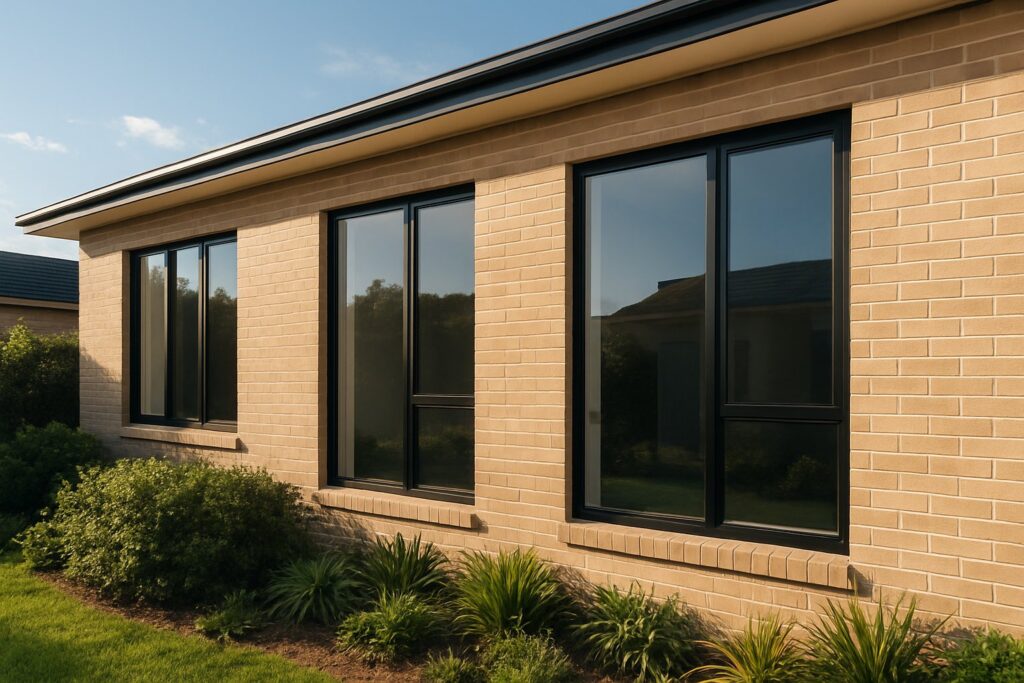
Understanding Aluminium Doors and Windows Pricing
An aluminium doors and windows price list is more than a column of dollar figures. It represents the full cost picture across frame profiles, glazing, hardware, finishes, and installation labour. The problem? Most online resources split this information, covering windows in one place and doors in another, forcing you to piece together a budget from scattered sources.
This guide brings both product categories under one roof. Whether you are a homeowner planning a renovation, a builder pricing a new build, or an architect specifying for a commercial project, the pricing data here applies to the Australian market and reflects real-world cost structures rather than outdated or overseas figures.
Keep in mind that every price range in this article is indicative. Your final cost depends on your region, chosen specifications, project scale, and supplier. Think of these numbers as a realistic framework for budgeting, not a binding quote.
What This Price List Covers
This article delivers pricing across all major aluminium window types (casement, sliding, awning, fixed, louvre, and tilt-and-turn) and door types (sliding, bi-fold, French, pivot, hinged entry, and stacking). Beyond supply-only costs, it breaks down installation labour, ancillary expenses, specification upgrades, and the volume discounts available when ordering aluminium doors and windows together from a single supplier.
Why Aluminium Pricing Varies So Widely
A basic fixed-panel window and a thermally broken bi-fold door system sit at opposite ends of the cost spectrum, yet both fall under the same product category. The variables that create this spread include:
- Size and configuration of the opening
- Glazing type (single, double, triple, Low-E coatings)
- Thermal performance requirements (standard vs thermally broken profiles)
- Frame finish (standard powder coat, custom colour, anodised, wood-grain)
- Hardware grade (residential vs commercial, imported vs domestic)
- Compliance needs (BAL ratings, cyclone ratings, AS 2047 certification)
Each of these factors can shift the per-unit cost by hundreds of dollars. Stacking several premium choices together can double or triple the baseline price.
The single biggest pricing mistake homeowners make is comparing product cost alone. The difference between a supply-only price and a fully installed cost, including labour, flashing, removal of old frames, and waste disposal, can add 30 to 50 per cent on top of the sticker price.
That gap between product cost and installed cost is exactly where hidden expenses live, and it is where the following sections dig deepest.
Aluminium Window Prices by Type and Size
Pricing varies dramatically depending on which style of window you choose. A simple fixed pane costs a fraction of what a tilt-and-turn unit demands, largely because of hardware complexity and the engineering required for operable sashes. The table below presents realistic Australian aluminium windows prices across six common types, broken into budget, mid-range, and premium tiers.
These figures assume standard powder-coated frames, double glazing, and supply-only pricing in AUD. Installation, removal of existing frames, and site-specific costs are additional.
Standard Aluminium Window Prices by Type
| Window Type | Standard Size Range | Budget (AUD) | Mid-Range (AUD) | Premium (AUD) |
|---|---|---|---|---|
| Fixed Window | 600mm x 600mm to 1200mm x 1200mm | $350 – $550 | $550 – $900 | $900 – $1,500 |
| Sliding Window | 900mm x 600mm to 1800mm x 1200mm | $450 – $700 | $700 – $1,200 | $1,200 – $1,800 |
| Casement Window | 600mm x 900mm to 1200mm x 1500mm | $500 – $800 | $800 – $1,400 | $1,400 – $2,200 |
| Awning Window | 600mm x 600mm to 1500mm x 1200mm | $500 – $750 | $750 – $1,300 | $1,300 – $2,000 |
| Louvre Window | 600mm x 900mm to 900mm x 1500mm | $600 – $900 | $900 – $1,500 | $1,500 – $2,200 |
| Tilt-and-Turn Window | 600mm x 900mm to 1200mm x 1500mm | $700 – $1,000 | $1,000 – $1,700 | $1,700 – $2,500 |
Budget pricing typically reflects non-thermally-broken frames with standard hardware. Mid-range units introduce thermally broken profiles, upgraded seals, and better locking mechanisms. Premium pricing covers high-performance systems with superior thermal breaks, Low-E glass, and architectural-grade hardware suited to AS 2047 compliance at higher design wind pressures.
The cost of aluminium windows climbs noticeably once you move from fixed panes to operable styles. Casement and tilt-and-turn windows require multi-point locking systems, friction hinges, and compression seals that fixed or sliding units simply do not need. Louvre windows carry a premium because each blade operates independently, multiplying the hardware count.
Custom Aluminium Window Pricing Factors
Standard sizes exist because manufacturers optimise their cutting, fabrication, and glass procurement around common dimensions. The moment you step outside those parameters, costs rise.
Ordering custom aluminium windows typically adds 15 to 35 per cent on top of the equivalent standard-size aluminium window price. Several factors drive this uplift:
- Non-standard glass sizes require individual cutting rather than batch processing
- Profile lengths may generate more offcut waste
- Fabrication jigs need adjustment for unusual dimensions
- Quality assurance checks take longer on one-off units
Minimum order considerations also matter. Some fabricators apply a minimum charge per production run, meaning a single custom window can cost disproportionately more than ordering five of the same unit. If your project includes multiple openings, grouping custom sizes into a single order from one supplier often reduces the per-unit premium.
Oversized windows, anything exceeding roughly 2400mm in either dimension, push costs further because they require heavier-duty profiles to meet structural and wind-load requirements. Curved or arched frames sit at the top of the custom pricing scale, sometimes doubling the cost of a rectangular unit of similar area.
When requesting quotes, always confirm whether the stated price covers a standard or custom size. A surprisingly low aluminium window price in an advertisement almost always refers to the smallest standard unit in the range, not the size your project actually needs.
The window type and size establish your baseline cost. What shifts that baseline into entirely different territory is the specification you choose, from glazing and thermal performance through to frame finish and hardware grade.
Aluminium Door Prices From Sliding to Bi-Fold
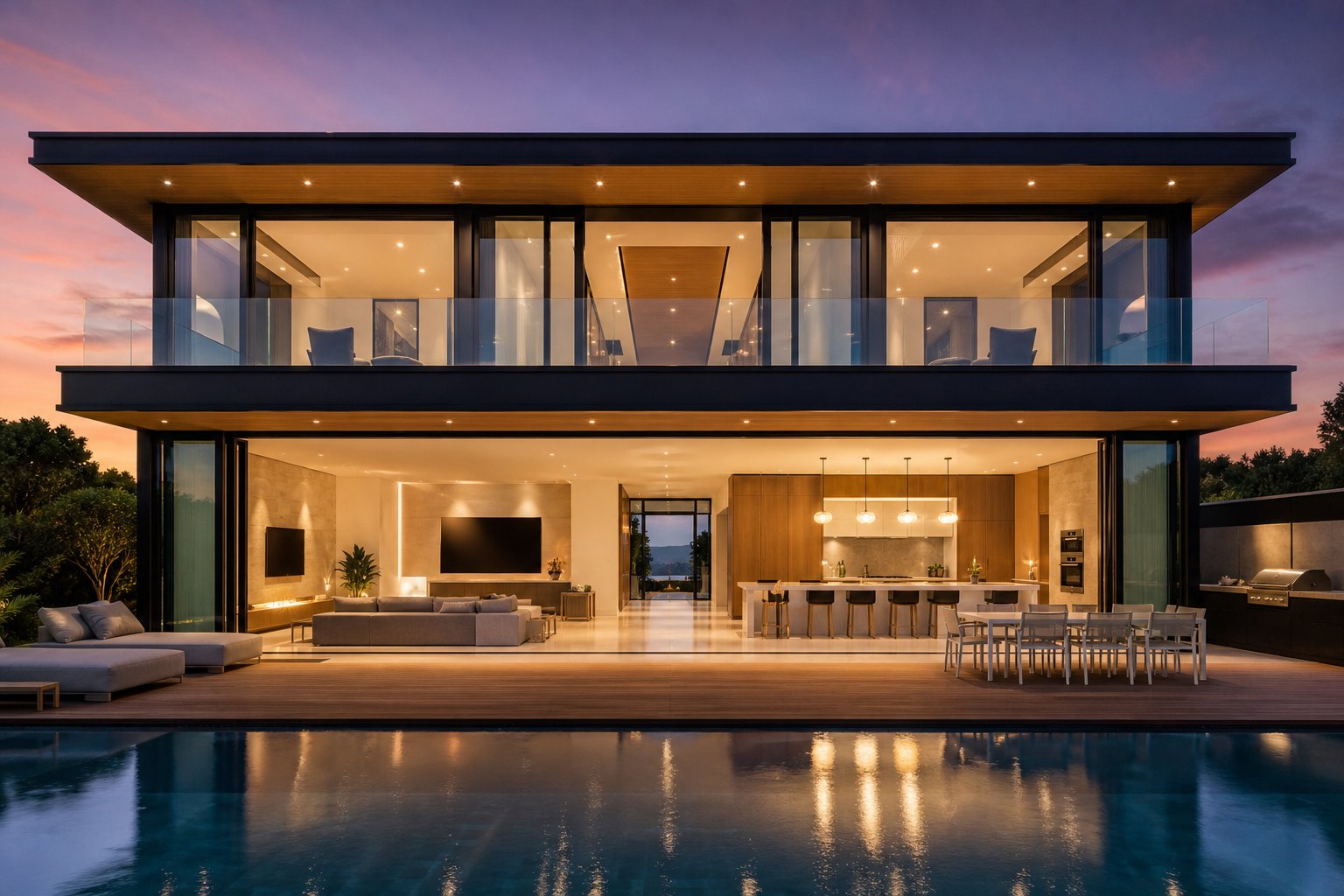
Doors tend to carry higher price tags than windows of comparable area. The reason is straightforward: they bear more mechanical stress, require heavier hardware, and must meet stricter security and weatherproofing standards. Yet finding a single resource that prices every aluminium door type side by side has been nearly impossible, until now.
The table below covers six popular styles with Australian pricing in AUD. Supply-only figures reflect the product delivered to site. Supplied-and-installed figures include standard labour, basic flashing, and hardware fitting, but exclude removal of existing doors, structural modifications, or scaffolding.
Aluminium Door Prices by Style
| Door Type | Standard Configuration | Price Range – Supply Only (AUD) | Price Range – Supplied & Installed (AUD) |
|---|---|---|---|
| Sliding Door (2 panel) | 2100mm x 2000mm, double glazed | $2,800 – $6,500 | $3,800 – $8,500 |
| Bi-Fold Door (4 panel) | 2100mm x 3200mm, double glazed | $5,500 – $12,000 | $7,000 – $15,000 |
| French Door (double) | 2100mm x 1500mm, double glazed | $2,800 – $5,500 | $3,800 – $7,000 |
| Pivot Door | 2400mm x 1200mm, single panel | $4,500 – $15,000 | $6,000 – $18,000 |
| Hinged Entry Door | 2100mm x 900mm, solid or glazed panel | $1,800 – $4,500 | $2,500 – $6,000 |
| Stacking Door (3–5 panel) | 2100mm x 4000mm+, double glazed | $6,500 – $16,000 | $8,500 – $19,000 |
Sliding and bi-fold doors dominate demand in the Australian market, particularly for rear openings connecting living areas to outdoor entertaining spaces. Aluminium stacking doors, which slide and park panels behind a fixed section of wall, sit at the premium end because they require multiple tracks, heavier-duty rollers, and precise alignment across wider spans.
Pivot doors carry the widest price range of any aluminium door type. A standard 2400mm pivot with clear glass might land around $5,000 supply only, while an oversized 3000mm architectural pivot with custom hardware and obscure glazing can exceed $15,000 before installation. The engineering required to support a large, heavy panel rotating on a single pivot point drives much of that cost, as Aprowin’s door pricing breakdown confirms.
Entry Doors vs Interior Doors Pricing
Not every aluminium door carries the same engineering burden. Exterior-grade doors must handle weather exposure, forced-entry resistance, and thermal transfer, which means thermally broken profiles, multi-point locking systems, compression seals, and weather bars become standard inclusions. These features add $800 to $2,000 on top of what an equivalent interior aluminium door would cost.
Interior aluminium doors, by contrast, use simpler profiles and lighter hardware. They do not need thermal breaks or weatherproofing, and their locking requirements are minimal. A hinged interior aluminium door with a glass panel typically falls between $1,200 and $2,800 supply only, making it a cost-effective way to introduce the same slim-profile aesthetic throughout a home without the premium that exterior compliance demands.
An aluminium door with window sidelights or a transom above adds further cost. Each additional glazed panel requires its own frame section, seals, and sometimes independent hardware, pushing the total 20 to 40 per cent above a standalone door unit.
Glass Panel Options and Their Cost Impact
Glass accounts for the largest single material cost in most aluminium frame glass door configurations. Three variables determine how much it adds to your bottom line:
- Glass area percentage: A full-height glass panel costs more than a half-glazed door with a solid lower section. Bi-fold and sliding doors are almost entirely glass, which is why their pricing sits well above hinged entry doors with smaller glazed areas.
- Glass type: Standard 5mm clear float is the cheapest option. Stepping up to toughened safety glass, laminated glass, Low-E coated double glazing, or acoustic-rated units each adds a layer of cost. Premium glazing specifications such as triple glazing or solar control coatings can add $600 to $1,500 per door depending on panel size.
- Panel configuration: More panels mean more glass units, more seals, and more hardware. A 6-panel bi-fold costs significantly more than a 3-panel version not just because of extra aluminium, but because each folding leaf requires its own sealed glazing unit, hinges, and alignment mechanisms.
Custom aluminium doors with non-standard glass shapes, curved panels, or integrated blinds sit at the top of the pricing scale. If your project calls for anything beyond rectangular clear or tinted glass, request an itemised quote that separates the glazing cost from the frame and hardware so you can see exactly where the money goes.
These per-unit prices give you a solid starting point. But the final figure on your invoice depends heavily on the specifications hiding behind each line item, from thermal break technology and glazing performance through to the colour of the powder coat on your frames.
How Specifications Change Your Final Price
Two aluminium windows can look identical from across the room yet carry price tags $1,000 apart. The difference lives in the specifications, the engineering decisions buried inside the frame, the glass, and the surface coating. Understanding these choices is what separates informed buyers from those who get sticker shock at quoting stage.
Specifications create distinct pricing tiers. Budget systems use simpler engineering and standard materials. Premium systems layer thermal performance, acoustic control, and architectural finishes into every component. The sections below break down exactly where each dollar goes.
Thermal Break vs Non-Thermal Break Profiles
Aluminium conducts heat roughly 1,000 times more efficiently than timber. Without intervention, a solid aluminium frame becomes a highway for heat transfer, pulling warmth out of your home in winter and pushing it in during summer. A thermal break solves this by inserting a strip of low-conductivity material, typically polyamide or polyurethane, between the interior and exterior sections of the frame.
The result is two separate aluminium halves connected by an insulating bridge. This disruption of the thermal path reduces heat loss through the frame by up to 60 per cent compared to a standard continuous profile.
In pricing terms, thermally broken frames typically cost 25 to 40 per cent more than their non-thermally-broken equivalents. For a standard casement window, that translates to an additional $200 to $500 per unit. On a whole-house order of 15 to 20 windows, the thermal break upgrade alone can add $4,000 to $8,000 to the project total.
Is it worth it? For most Australian climates, yes. The National Construction Code increasingly favours lower U-values, and WERS ratings reward thermally broken systems with higher star ratings. In cooler regions like Melbourne, Hobart, and the ACT, thermally broken profiles are effectively a necessity to meet NatHERS energy targets. In tropical zones, they reduce solar heat gain through the frame, easing air-conditioning loads.
Non-thermally-broken profiles still have a place in budget-conscious projects, carports, sheds, or internal partitions where thermal performance is irrelevant. But for any external opening in a habitable room, the long-term energy savings and comfort gains typically justify the upfront premium.
Glazing Options and Price Impact
Glass fills most of the opening, so its specification has an outsized effect on both performance and cost. Three main variables come into play: the number of panes, the coatings applied, and the gas filling the cavity.
Single glazing is the cheapest option but offers minimal insulation and fails to meet current NCC requirements for most habitable rooms. It remains common only in non-habitable spaces or where heritage constraints prevent upgrades. Expect to pay $80 to $150 per square metre for standard single-glazed units.
Double glazing is the current Australian standard for residential construction. Two panes separated by a sealed air or gas-filled cavity deliver a significant step up in thermal and acoustic performance. Double-glazed units typically add $150 to $350 per square metre over single glazing, depending on glass thickness and cavity width.
Triple glazing adds a third pane and a second gas-filled cavity. It delivers 40 to 50 per cent better insulation than double glazing and is becoming more common in high-performance Australian homes, particularly in alpine regions and passive house projects. The cost premium over double glazing sits around 20 per cent for the glazing unit itself, though the heavier weight may also require upgraded frame profiles.
Beyond pane count, two coatings and fills shift pricing further:
- Low-E coatings: A microscopically thin metallic layer applied to one or more glass surfaces reflects radiant heat while allowing visible light through. Low-E glass adds $30 to $80 per square metre but can improve the window’s U-value by 30 to 40 per cent. In Australia’s climate, it reduces both winter heat loss and summer solar heat gain.
- Argon gas fill: Replacing the air in the sealed cavity with argon (a denser, less conductive inert gas) improves thermal performance by roughly 15 per cent over standard air. The cost addition is modest, typically $20 to $50 per sealed unit. Higher-performance alternatives like krypton or xenon exist but are rarely cost-effective for residential projects.
Combining these upgrades compounds the benefit. A thermally broken aluminium frame with double-glazed Low-E argon-filled glass delivers a dramatically different U-value than a non-thermally-broken frame with single clear glass, and the price difference between those two configurations can be $600 to $1,200 per window.
Finish Types and Their Cost Tiers
The surface finish on your aluminium frames affects aesthetics, durability, and maintenance requirements. It also creates a meaningful cost differential, particularly on larger orders where the per-unit difference multiplies across dozens of openings.
Standard powder coating in common colours (black, white, grey, bronze) is the baseline finish included in most quoted prices. The powder is electrostatically applied and oven-cured, creating a hard, UV-resistant surface that handles Australian conditions well. Standard colours cost nothing extra because manufacturers batch them in high volumes.
Custom-colour powder coating allows you to match a specific RAL or Dulux colour. The premium comes from smaller batch runs, additional setup time, and sometimes minimum order quantities. Expect to add $50 to $150 per frame for a custom colour, or 5 to 10 per cent on a whole-project basis.
Anodising creates a harder, more scratch-resistant surface by converting the outer layer of aluminium into aluminium oxide through an electrochemical process. Anodised finishes resist salt-air corrosion better than standard powder coat, making them popular in coastal areas. The cost premium over standard powder coating runs 15 to 25 per cent, and colour options are more limited (typically silver, bronze, black, and champagne tones).
Wood-grain finishes use a sublimation transfer process to apply a realistic timber-look pattern onto the aluminium surface. This gives you the slim-profile strength of aluminium with the visual warmth of timber, a popular choice for heritage overlays or Hamptons-style homes. Wood-grain finishes carry the highest premium, adding 25 to 40 per cent over standard powder coating. They are sometimes marketed as window cladding alternatives for homeowners who want the look of timber without the maintenance burden.
For projects where the interior face needs a different aesthetic to the exterior, dual-colour finishes are available. The outside might be charcoal to match the facade while the inside is white to blend with internal trim. Dual-colour adds roughly 10 to 20 per cent over a single-colour finish.
Aluminium clad windows, where an aluminium exterior shell protects a timber or composite interior frame, represent another approach to combining materials. The aluminium clad wood windows price typically exceeds a full-aluminium equivalent by 40 to 70 per cent because you are paying for two frame materials, bonding technology, and more complex fabrication. These hybrid systems suit projects demanding the interior warmth of timber with the exterior durability of aluminium, though they are less common in the Australian market than in North America and Europe.
To put these specification upgrades in perspective, here they are ranked from lowest to highest cost impact on a typical window or door unit:
- Argon gas fill (adds $20–$50 per unit)
- Low-E coating (adds $30–$80 per m² of glass)
- Custom powder coat colour (adds $50–$150 per frame)
- Dual-colour finish (adds 10–20% over single colour)
- Anodised finish (adds 15–25% over standard powder coat)
- Thermally broken profiles (adds 25–40% over non-thermally-broken)
- Wood-grain sublimation finish (adds 25–40% over standard powder coat)
- Triple glazing upgrade (adds ~20% over double glazing)
- Aluminium clad timber construction (adds 40–70% over full aluminium)
The critical takeaway: always request itemised quotes that show exactly which specifications are included at each price point. A quote that simply states “aluminium sliding window — $1,200” tells you almost nothing. You need to see the thermal break status, glazing makeup, gas fill, coating type, and hardware grade broken out as separate line items. Without that transparency, comparing quotes from different suppliers is like comparing apples to engine blocks.
Specifications determine what you are actually buying. The next layer of hidden cost sits in everything that surrounds the product itself, from the components inside the frame to the labour and materials required to get it properly installed in your wall.
Full Cost Breakdown for Aluminium Door and Window Installation
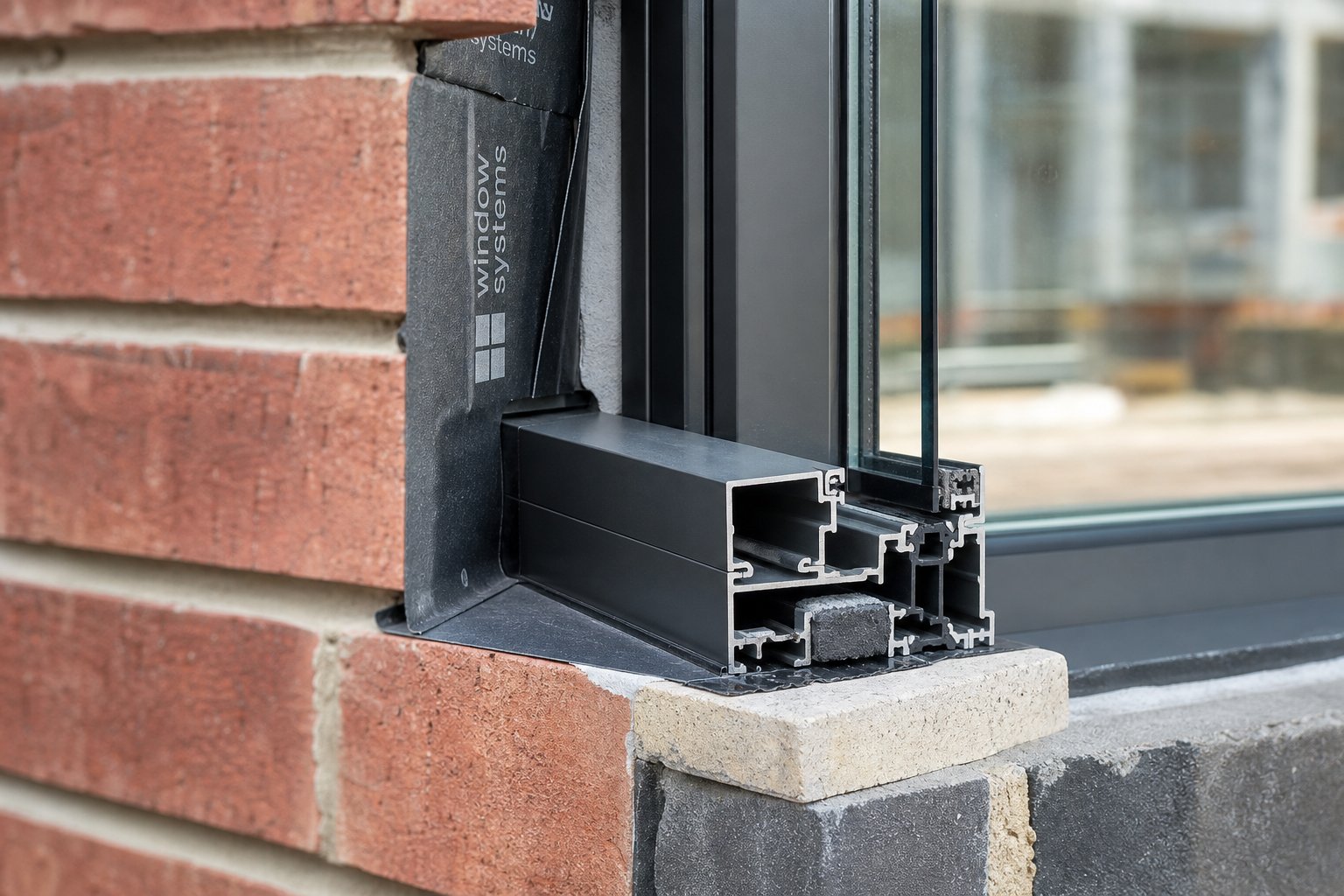
Every quoted price is a sum of parts. The trouble is, most suppliers present a single lump figure without showing what sits behind it. That makes it nearly impossible to compare quotes fairly or identify where you might be overpaying. Breaking the total cost into its individual components gives you genuine leverage at the negotiation table and helps you spot gaps before they become surprise invoices.
The total cost of any aluminium door and window project splits into two broad categories: supply costs (the product itself) and installation costs (everything required to fit it properly into your building). Both deserve equal scrutiny.
Supply Cost Components
When a fabricator builds an aluminium door or window, the raw materials and processing fall into five distinct cost buckets. Their relative weight shifts depending on the product type, a large sliding door with expansive glass panels allocates more to glazing, while a small casement window with premium hardware tilts the balance toward fittings. The table below shows typical percentage ranges for the Australian market.
| Component | % of Supply Cost | What It Covers |
|---|---|---|
| Frame / Profile | 30 – 45% | Extruded aluminium sections, thermal break strips (if applicable), corner joints, reinforcing |
| Glass | 20 – 35% | Glazing units (single, double, or triple), Low-E coatings, lamination, toughening, spacer bars |
| Hardware | 10 – 15% | Handles, multi-point locks, hinges, friction stays, rollers, track systems |
| Finish / Coating | 5 – 10% | Powder coating, anodising, or wood-grain sublimation; colour matching and curing |
| Seals & Gaskets | 3 – 5% | Compression seals, brush seals, weather strips, glazing gaskets, drainage flaps |
The aluminium door frame and profile consistently represent the largest slice. Profile cost is driven by alloy grade (6063-T5 is standard), wall thickness (1.6 mm is typical for residential; 2.0 mm+ for commercial), and whether a thermal break is included. Industry cost analysis confirms that each 0.2 mm increase in profile thickness raises the frame component by 8 to 12 per cent, while adding a thermal break pushes it up a further 20 to 35 per cent.
Glass takes second place but can overtake the frame in products with large glazed areas. A full-height aluminum door glass panel on a bi-fold or sliding door means glass accounts for closer to 35 per cent of supply cost, whereas a half-glazed hinged entry door might sit nearer 20 per cent. Upgrading from standard clear toughened glass to double-glazed Low-E argon-filled units can increase the glass component by 40 to 60 per cent on its own.
Hardware looks modest at 10 to 15 per cent, but skimping here creates the most common post-installation failures. Cheap rollers seize within two to three years, budget locks lose alignment, and lightweight hinges sag under repeated use. Replacement labour often exceeds the original hardware cost, making this a false economy.
Seals and gaskets sit at the bottom of the cost stack yet punch well above their weight in performance terms. They are responsible for air tightness, water resistance, and acoustic isolation. A $15 gasket failing on a $6,000 door can cause thousands in water damage, so their quality matters far more than their price suggests.
Installation and Ancillary Costs
Supply cost is only part of the story. Getting an aluminum door window unit from the factory into your wall involves labour, ancillary materials, and site-specific variables that can add 30 to 50 per cent on top of the product price. Here is where budgets blow out for unprepared buyers.
Installation labour in Australia typically runs $150 to $350 per opening for standard residential windows and $300 to $700 per opening for doors, depending on size, complexity, and location. Multi-storey installations, difficult access, or remote sites push rates higher. Commercial projects with union labour and site induction requirements sit at the upper end.
Beyond labour, several ancillary costs round out the installed price:
- Flashing and weatherproofing: Metal or flexible flashings integrated into the wall system to prevent water ingress ($50–$150 per opening)
- Reveals and internal trim: Timber or aluminium reveals to finish the internal face of the opening ($80–$200 per opening)
- Sealant and foam: Expanding foam for gap filling plus silicone or polyurethane sealant for weather sealing ($20–$60 per opening)
- Scaffolding: Required for upper-storey installations or difficult access ($500–$2,000 per setup, often shared across multiple openings)
- Removal of existing frames: Pulling out old timber or aluminium frames, making good the reveals ($100–$350 per opening)
- Waste disposal: Skip bin or tip fees for old frames, glass, and packaging ($150–$400 per project)
The challenge is that quoted prices vary enormously in what they include. Some suppliers quote supply and install as a genuinely all-inclusive figure. Others quote supply and install but exclude half the ancillary items, leaving you to discover the extras mid-project.
Typically included in a supply-and-install quote:
- Product delivery to site
- Installation labour for fitting the frame into a prepared opening
- Basic perimeter sealant
- Hardware fitting and adjustment
- Final operation check and handover
Commonly excluded (and charged as extras):
- Removal and disposal of existing frames
- Scaffolding or elevated work platform hire
- Structural modifications to openings (lintels, trimming, packing)
- Internal plastering or rendering to reveals after installation
- Flyscreens and security screens
- External cladding or weatherboard reinstatement
- Council or building certifier inspection fees
Reading quotes critically means checking every line against these two lists. Ask the supplier directly: does your price include removal of existing frames? Does it cover making good the internal reveals? Is scaffolding included or quoted separately? A quote that appears $500 cheaper than a competitor may actually cost $1,000 more once the exclusions are accounted for.
For renovation projects especially, the ancillary costs often rival the product cost itself. A $3,000 aluminium door and frame package can easily become a $5,000 installed reality once removal, structural packing, new reveals, flashing, and painting are factored in. New builds fare better because openings are purpose-built to receive the frames, eliminating removal and remediation work entirely.
This distinction between new construction and renovation pricing is not just a footnote. It fundamentally reshapes the economics of your project, particularly when volume and project type enter the equation.
Project Type and Volume Effects on Pricing
A single aluminium window in isolation carries one price. That same window ordered as part of a 40-unit new build carries a very different one. Project context, whether you are replacing one tired sliding door or specifying exterior aluminium doors across a multi-storey development, reshapes the economics at every level. The type of project you are running and the quantity you are ordering create pricing leverage that no specification change can match.
New Construction vs Replacement Pricing
New builds enjoy a structural cost advantage. Openings are framed to exact dimensions during construction, so aluminium frames drop straight in without modification. There is no demolition, no remediation of damaged reveals, and no surprises hidden behind old timber architraves. Builders can standardise sizes across the project, allowing fabricators to batch-produce identical units at lower per-unit cost.
Replacement projects flip that equation. Removing existing frames often reveals rot, incorrect packing, or non-standard dimensions that require structural adjustment before new aluminium can be fitted. Industry data shows that replacement installation labour can run 50 to 100 per cent higher than new-construction installation for equivalent products. Add the cost of removal, waste disposal, making good internal plaster, and reinstating external cladding, and a renovation project typically pays 25 to 40 per cent more per opening than a comparable new build.
Aluminium clad replacement windows, where new aluminium frames retrofit into existing timber openings, offer a middle path for renovators who want modern performance without full frame removal. They reduce remediation work but carry a material premium for the hybrid construction.
Residential vs Commercial Grade Systems
Commercial aluminium exterior doors and window systems occupy a different pricing tier entirely. The gap is not about brand markup; it reflects genuine engineering differences demanded by building codes, occupancy loads, and larger spans.
Commercial-grade profiles use thicker wall sections (2.0 mm to 3.0 mm versus 1.6 mm residential standard), heavier-duty hardware rated for higher cycle counts, and must comply with stricter NCC requirements for fire ratings, accessibility, and acoustic separation. Glazing in commercial applications often requires safety-rated laminated glass, sometimes with fire-resistance ratings that residential projects never encounter.
The pricing premium for commercial over residential systems typically runs 40 to 80 per cent for comparable opening sizes. A 2100 mm x 2000 mm commercial sliding door system might cost $5,500 to $10,000 supply only, compared to $2,800 to $6,500 for its residential equivalent. Aluminium door manufacturers producing commercial-grade systems also factor in project-specific engineering, structural calculations, and compliance documentation that residential fabricators rarely provide.
For mid-rise residential developments (three storeys and above), commercial-grade systems are often mandatory regardless of the building’s residential use, pushing costs closer to commercial pricing even for apartment projects.
Volume Discounts and Bulk Ordering
Quantity is the single most effective lever for reducing per-unit cost. Aluminium door suppliers and window fabricators structure their pricing around production efficiency, and larger orders spread setup costs, delivery logistics, and quality assurance across more units. Typical discount tiers in the Australian market follow this pattern:
- Single unit (1–2 openings): Full retail pricing applies. Setup and delivery costs are absorbed by fewer units, making this the most expensive per-opening scenario.
- Room or zone order (3–8 openings): Discounts of 5 to 10 per cent become available as fabrication runs gain efficiency and delivery consolidates into a single drop.
- Whole-house order (10–25 openings): Expect 10 to 20 per cent below single-unit pricing. At this volume, suppliers compete more aggressively and may include extras like flyscreens or upgraded hardware at no additional charge.
- Multi-dwelling or developer scale (25–100+ openings): Discounts of 20 to 35 per cent are common. Exterior aluminium doors manufacturers and window fabricators at this tier offer project-specific pricing, dedicated account management, and staged delivery schedules aligned to construction programmes.
One often-overlooked strategy: ordering windows and doors together from a single supplier almost always yields better pricing than splitting across multiple vendors. A combined order increases total volume, simplifies logistics, and gives the supplier confidence in a larger commitment. It also ensures consistent profiles, finishes, and hardware across your entire project, eliminating the visual mismatches that plague multi-supplier builds.
Volume and project type set the commercial framework for your order. But pricing also shifts depending on where in the world you are buying, because labour markets, import structures, and regulatory environments vary dramatically between regions.
Regional Pricing Differences Around the World
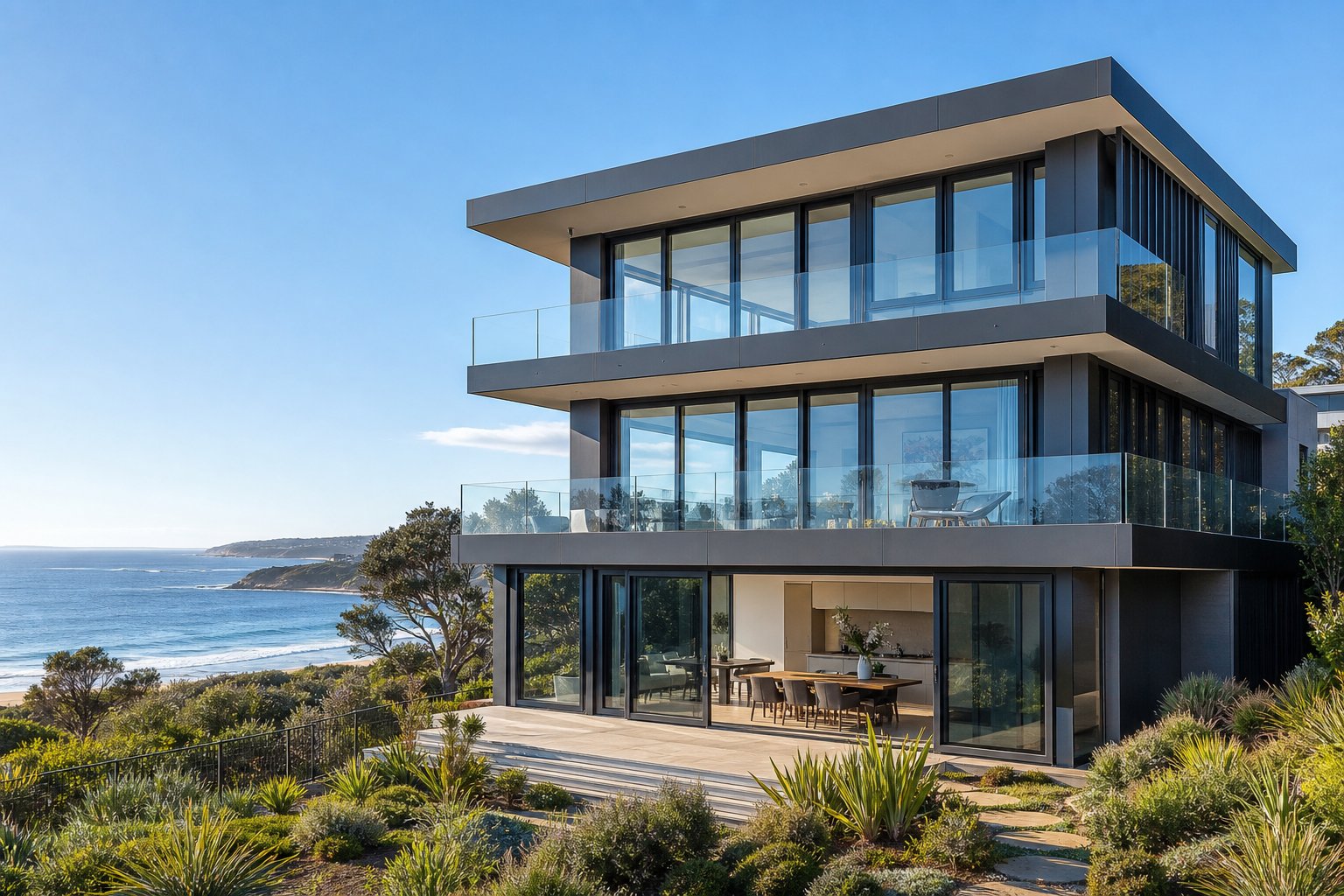
Aluminium window and door pricing is not a global constant. A thermally broken sliding door that costs $5,000 installed in Melbourne might carry a very different price tag in Houston, London, or Dubai. If you are comparing international quotes, importing product, or simply curious about whether Australian pricing is competitive, understanding what drives these regional gaps matters.
The differences are not random. They trace back to five structural factors: local labour costs, import duties and freight, whether the country has domestic aluminium fabrication capacity, the stringency of energy codes, and climate-driven specification requirements that force certain upgrades as standard.
Regional Price Variations Explained
The table below positions four major markets on a relative pricing scale. Rather than fabricating exact figures that shift with exchange rates and market conditions, it shows where each region typically sits across budget, mid-range, and premium tiers for a standard double-glazed thermally broken aluminium window, expressed in approximate AUD equivalents.
| Market | Budget Tier (AUD/m²) | Mid-Range Tier (AUD/m²) | Premium Tier (AUD/m²) | Installation Cost Relative to Product |
|---|---|---|---|---|
| Australia | $450 – $700 | $700 – $1,200 | $1,200 – $2,000+ | +30 to 50% |
| North America | $500 – $800 | $800 – $1,400 | $1,400 – $2,500+ | +40 to 60% |
| Europe (Western) | $550 – $900 | $900 – $1,500 | $1,500 – $2,800+ | +35 to 55% |
| Middle East | $350 – $600 | $600 – $1,000 | $1,000 – $1,800+ | +20 to 35% |
Middle Eastern markets benefit from lower labour costs and proximity to large-scale aluminium extrusion facilities, keeping both product and installation pricing below other regions. North American and European markets sit at the higher end, driven by stringent energy codes that mandate premium specifications as baseline and by installation labour rates that reflect those economies.
Australia lands in the middle on product cost but carries relatively high installation labour. Aluminium window installation in North American cities like Houston or Toronto often exceeds Australian rates once union labour, licensing requirements, and permit fees are factored in, though product supply can be cheaper due to scale. Global pricing data confirms that installation costs in North America run $230 to $770 per square metre, compared to $150 to $500 in the Australian market.
What Drives Price Differences Between Markets
Australia: Pricing for aluminium windows and doors in Melbourne, Sydney, and other capital cities reflects a mature local manufacturing base. Australian fabricators produce to AS 2047 (performance testing and certification) and AS 1288 (glazing standards), and products in bushfire-prone areas must meet BAL ratings that add fire-resistant glazing and ember-guard screens. Coastal properties require enhanced corrosion-resistant finishes. These compliance layers add cost but deliver products engineered specifically for Australian conditions. The WERS rating system also pushes specification upward, as builders target higher star ratings to satisfy NatHERS energy assessments.
North America: American aluminium doors and window systems must comply with a patchwork of state-level energy codes, NFRC performance ratings, and hurricane or tornado resistance in vulnerable zones. Import logistics add cost for products sourced from overseas manufacturers, and installation labour in major cities commands premium rates. The market also favours aluminium-clad timber systems over full-aluminium construction, which shifts the typical price point upward.
Europe: Western European markets, particularly Germany, Scandinavia, and the UK, enforce some of the world’s strictest U-value requirements. Triple glazing is standard rather than optional in many regions, and thermally broken profiles are a regulatory minimum rather than an upgrade. These mandated specifications push baseline pricing higher, but the mature manufacturing ecosystem and competitive supplier landscape keep premiums in check relative to the performance delivered.
Middle East: Lower labour costs, proximity to aluminium smelting and extrusion facilities (particularly in the UAE and Bahrain), and less stringent thermal requirements for much of the product range keep pricing below other developed markets. However, premium projects in the Gulf states increasingly specify high-performance glazing to combat extreme solar heat gain, narrowing the gap at the top end.
If you are sourcing internationally or comparing an import quote against a local Australian fabricator, keep these points in mind:
- Always request quotes in AUD or confirm the exchange rate date used for conversion
- Imported products must still meet Australian Standards (AS 2047, AS 1288) to be legally installed — certification and testing add cost that offshore quotes may not include
- Freight, insurance, and import duties on finished aluminium products can add 15 to 25 per cent to the landed cost
- Warranty enforcement becomes complicated with overseas suppliers, particularly for glass seal failures or hardware defects
- Local fabricators factor compliance documentation, BAL assessments, and WERS ratings into their pricing — services that imported product rarely includes
For most Australian residential and commercial projects, locally fabricated aluminium windows and doors deliver better value once compliance, warranty, lead times, and after-sales support are weighed against the apparent savings of an offshore purchase. The price list looks different when you account for everything required to legally and safely install the product in an Australian building.
Regional context shapes what you pay. But regardless of where you sit geographically, the fundamental question remains: does aluminium actually deliver the best return compared to timber, uPVC, or steel over the life of your building?
Is Aluminium the Most Cost-Effective Choice for Metal Frame Windows and Doors?
Sticker price tells one story. The invoice you pay over 20, 40, or 60 years tells a completely different one. Aluminium often looks more expensive than uPVC at the point of purchase, and cheaper than timber. But those initial numbers obscure the real question: which material costs the least to own across its full lifespan?
The answer depends on your project context, your climate, and how much you value low maintenance. A lifecycle cost analysis, factoring in upfront spend, ongoing upkeep, replacement cycles, and energy performance, reshapes the comparison dramatically.
Aluminium vs Alternative Materials Price Comparison
The table below compares four common frame materials across the metrics that actually determine total cost of ownership. Figures reflect typical Australian market conditions for a standard 1200mm x 1000mm window.
| Criteria | Aluminium (Thermally Broken) | Timber (Hardwood) | uPVC | Steel |
|---|---|---|---|---|
| Upfront Cost (per unit, supply only) | $800 – $1,400 | $1,200 – $2,500 | $500 – $900 | $1,500 – $3,000 |
| Maintenance Cost Over 20 Years | $0 – $100 (occasional cleaning) | $800 – $2,000 (painting/sealing every 5–7 years) | $0 – $100 (occasional cleaning) | $400 – $1,200 (rust treatment, repainting) |
| Expected Lifespan | 45 – 60+ years | 30 – 60+ years (if maintained) | 20 – 30 years | 40 – 70+ years |
| Energy Efficiency (with double glazing) | Good to Excellent | Excellent (natural insulator) | Very Good | Moderate (without thermal break) |
| Aesthetic Versatility | High (slim profiles, any RAL colour, wood-grain options) | High (natural warmth, paintable) | Moderate (limited colours, bulkier profiles) | High (ultra-slim sightlines) |
| Coastal Suitability | Excellent (corrosion resistant) | Poor to Moderate (salt damage) | Good (no corrosion) | Poor (rust prone without marine-grade treatment) |
Data from WindowCost’s lifecycle analysis confirms that over a 60-year period, aluminium frequently delivers the lowest total cost of any frame material. uPVC requires full replacement at least once (sometimes twice) within that timeframe, while timber demands consistent repainting and sealing to avoid rot. Aluminium needs neither.
Steel offers comparable longevity but carries higher upfront cost, greater maintenance demands, and inferior thermal performance unless expensive thermal break systems are specified. For most residential applications, steel makes sense only where ultra-slim sightlines are the overriding design priority.
Wood clad aluminium windows attempt to bridge the gap between materials, pairing a timber interior for warmth with an aluminium exterior for weather resistance. Aluminium clad wood systems reduce the maintenance burden compared to full timber, though they cost 40 to 70 per cent more than equivalent all-aluminium units. They suit projects where interior timber aesthetics are non-negotiable but exterior durability cannot be compromised.
When Aluminium Delivers the Best Long-Term Value
Aluminium does not win every scenario. But it dominates in conditions that punish other materials over time:
- Coastal environments: Salt air corrodes steel and degrades timber rapidly. Aluminium’s natural oxide layer and powder-coated finish resist salt-spray corrosion without ongoing treatment, making it the default choice within 1 km of the coastline.
- Large-span openings: Bi-fold, stacking, and multi-panel sliding doors demand structural strength in slim profiles. Aluminium achieves spans that uPVC physically cannot support without bulky reinforcement, and at lower cost than steel.
- Commercial and multi-residential projects: High cycle counts, minimal maintenance budgets, and long design lives favour aluminium. A commercial building with 200 openings cannot afford the painting schedule that timber demands or the replacement cycle that uPVC imposes.
- Minimal-maintenance priorities: Homeowners who want a fit-and-forget solution get exactly that with aluminium. No painting, no sealing, no warping, no discolouration over decades of UV exposure.
Conversely, uPVC may offer better value for small residential windows in mild, inland climates where thermal performance requirements are modest and the 20 to 30-year lifespan aligns with a planned renovation cycle. Choosing vinyl windows alongside aluminium doors is a common compromise, using uPVC for secondary bedrooms and bathrooms while reserving aluminium for feature openings and high-traffic areas where durability and aesthetics matter most.
Timber remains the strongest choice for heritage restorations where council requirements mandate traditional materials, or for homeowners who genuinely enjoy the maintenance ritual and value natural material character above all else.
The cheapest upfront option rarely delivers the lowest total cost of ownership. A $500 uPVC window replaced twice over 50 years costs $1,500 in product alone, before accounting for two rounds of installation labour. A $1,200 aluminium window installed once and never touched again costs $1,200 total. The maths only works one way.
Material choice sets your long-term cost trajectory. But translating that choice into an actual project requires moving from research into the quoting process, where preparation and supplier evaluation determine whether you capture the value aluminium promises or lose it to poor procurement.
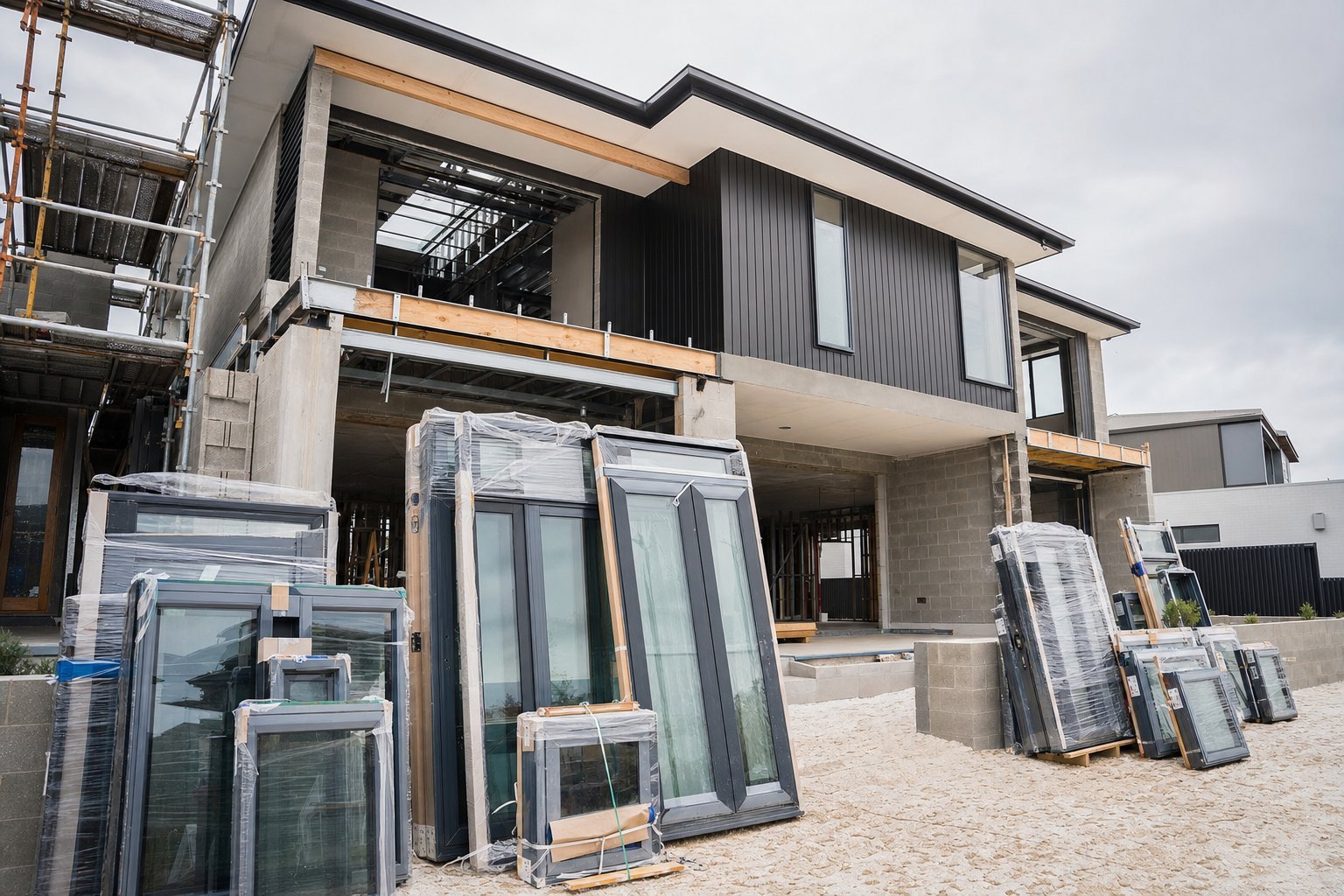
How to Get Accurate Quotes for Your Aluminium Windows and Doors
Price lists give you a framework. Quotes give you a commitment. The gap between the two is where projects either stay on budget or spiral into costly surprises. Moving from general research to project-specific pricing requires preparation on your end and careful evaluation of the suppliers you approach.
Roughly 41 per cent of new homeowners spend more than planned on repairs and maintenance, according to Alumaster Group’s quoting guide. Much of that overspend traces back to incomplete quotes, unclear scope, and assumptions that were never confirmed in writing. The fix is straightforward: prepare thoroughly, request itemised pricing, and evaluate suppliers on substance rather than headline numbers.
Preparing for Accurate Quotes
Suppliers can only price what they can see. Vague requests produce vague numbers. The more detail you provide upfront, the tighter and more comparable your returned quotes will be. Before contacting any aluminium window door supplier, gather the following:
- Architectural drawings or site measurements: Provide dimensioned plans showing each opening. If drawings are not available, measure width, height, and depth from inside edge to inside edge using a steel tape measure. Measure twice, from both inside and outside the jambs, to catch any irregularities.
- Specification requirements: Note your thermal performance targets (thermally broken or standard), glazing preferences (double or triple, Low-E, tinted), finish type (standard powder coat colour, custom RAL, anodised), and hardware grade. If you need compliance with specific standards such as BAL ratings or cyclone classifications, state this explicitly.
- Quantity schedule: List every opening by type, size, and location. Group windows and doors separately but submit them together so the supplier can price the full scope and offer volume-based pricing.
- Project timeline: Indicate when you need product delivered and installed. Lead times for aluminium windows and doors typically run 4 to 10 weeks depending on complexity and supplier capacity. Rush orders attract premiums.
- Access details: Flag any site constraints such as upper-storey installations requiring scaffolding, narrow access preventing standard delivery vehicles, or occupied premises requiring staged work. These factors affect installation pricing and should be disclosed upfront rather than discovered mid-project.
Submitting this information as a structured document rather than a phone conversation ensures every supplier quotes against the same brief. That consistency is what makes fair comparison possible.
Evaluating Suppliers and Their Pricing
The lowest quote is not automatically the best value. As Fenbro’s quote comparison guide highlights, seemingly similar offers can differ by 20 to 30 per cent once you examine what is actually included. A cheaper price often reflects simpler glazing, basic hardware, reduced installation scope, or missing elements that will appear as extras later.
When assessing whether a supplier offers genuine value, look beyond the bottom line at these four pillars:
Product range breadth: A supplier offering a complete ecosystem of aluminium windows doors, curtain wall systems, louvres, and balustrades can deliver consistency across your entire project. Sourcing everything from one fabricator means matched profiles, identical finishes, coordinated lead times, and stronger volume pricing. Splitting orders across multiple vendors introduces visual mismatches, logistical complexity, and weaker negotiating leverage.
For Australian projects, MEICHEN’s aluminium window, door, and facade systems range illustrates what a comprehensive single-source supplier looks like in practice, covering windows, doors, curtain walls, louvres, and balustrades under one product ecosystem. That breadth matters when you want consistent specifications and consolidated pricing across a whole build.
Certification and compliance: Any supplier quoting on aluminium windows for sale in Australia must demonstrate AS 2047 compliance and provide test evidence for the specific configurations quoted. Products installed in bushfire zones need BAL-rated documentation. Coastal installations require evidence of enhanced corrosion resistance. If a supplier cannot produce these certifications on request, their pricing is irrelevant because the product cannot be legally installed.
Warranty terms: Check what is covered (product, hardware, finish, installation), for how long, and what the claims process involves. A 10-year warranty from a supplier with no local presence is worth less than a 7-year warranty backed by a fabricator with service teams in your state. High quality aluminium doors and windows should carry minimum warranties of 7 to 10 years on frames and finishes, with hardware warranties of at least 5 years.
Project support capabilities: Does the supplier offer site measurement services, engineering calculations for wind loads, coordination with your builder’s programme, and staged delivery? These services reduce your project risk and often justify a modest price premium over a supply-only operation that leaves coordination entirely to you.
When comparing quotes side by side, create a simple table listing each supplier’s price alongside what is included and excluded. Check that you are comparing like-for-like: same glazing specification, same thermal break status, same hardware grade, same installation scope. A quote missing any of these details needs clarification before it enters your comparison.
Request that every quote itemises the aluminum window and door components separately, showing frame cost, glass cost, hardware, finish, and installation as distinct line items. This transparency lets you see exactly where price differences originate and negotiate specific components rather than haggling over a lump sum that neither party fully understands.
The right supplier does more than deliver product at a competitive price. They reduce your risk, simplify your procurement, and stand behind their work long after installation day. That combination of alum windows and doors expertise, transparent pricing, and genuine project support is what turns a price list into a successful build.
Frequently Asked Questions About Aluminium Doors and Windows Pricing
1. How much do aluminium windows cost in Australia?
Aluminium window prices in Australia range from $350 to $2,500 per unit (supply only) depending on the type and specification. Fixed windows sit at the budget end starting around $350, while tilt-and-turn windows reach $2,500 at the premium tier. These figures assume standard powder-coated frames with double glazing. Adding thermally broken profiles increases costs by 25 to 40 per cent, and custom sizes add a further 15 to 35 per cent over standard dimensions. Installation typically adds 30 to 50 per cent on top of supply-only pricing.
2. What is the price difference between aluminium sliding doors and bi-fold doors?
A standard two-panel aluminium sliding door (2100mm x 2000mm, double glazed) costs $2,800 to $6,500 supply only, while a four-panel bi-fold door (2100mm x 3200mm) ranges from $5,500 to $12,000 supply only. Bi-fold doors cost more due to additional panels, complex hinge mechanisms, and precise alignment requirements for each folding leaf. When installed, sliding doors run $3,800 to $8,500 and bi-folds reach $7,000 to $15,000. Stacking doors sit even higher at $6,500 to $16,000 supply only due to multiple tracks and heavier-duty roller systems.
3. Why do aluminium door and window quotes vary so much between suppliers?
Quote variation stems from differences in what is included rather than just product quality. Some suppliers quote supply and install as genuinely all-inclusive, while others exclude removal of existing frames, scaffolding, structural modifications, internal plastering, and flyscreens. Specification differences also drive gaps — thermal break status, glazing type, hardware grade, and finish all shift pricing significantly. To compare fairly, request itemised quotes showing frame cost, glass cost, hardware, finish, and installation as separate line items, and confirm exactly what ancillary work is included or excluded.
4. Is aluminium cheaper than timber or uPVC for windows and doors?
Aluminium sits between uPVC and timber on upfront cost. A standard aluminium window costs $800 to $1,400 supply only, compared to $500 to $900 for uPVC and $1,200 to $2,500 for hardwood timber. However, lifecycle cost analysis favours aluminium over 40 to 60 years because it requires virtually no maintenance and lasts 45 to 60+ years. uPVC needs full replacement every 20 to 30 years, and timber demands repainting every 5 to 7 years at $800 to $2,000 over 20 years. For coastal, commercial, or low-maintenance projects, aluminium typically delivers the lowest total cost of ownership.
5. How much does it cost to install aluminium windows and doors in a full house?
A whole-house aluminium window and door package for a typical Australian home (15 to 20 windows plus 3 to 5 doors) ranges from $25,000 to $80,000 fully installed, depending on specifications and project type. New builds benefit from standardised openings and volume discounts of 10 to 20 per cent, while renovations cost 25 to 40 per cent more per opening due to removal, remediation, and non-standard sizes. Ordering all windows and doors from a single supplier like MEICHEN, which offers a complete product ecosystem including windows, doors, curtain walls, and louvres, often yields better consolidated pricing than splitting across multiple vendors.
More Window & Door Guides