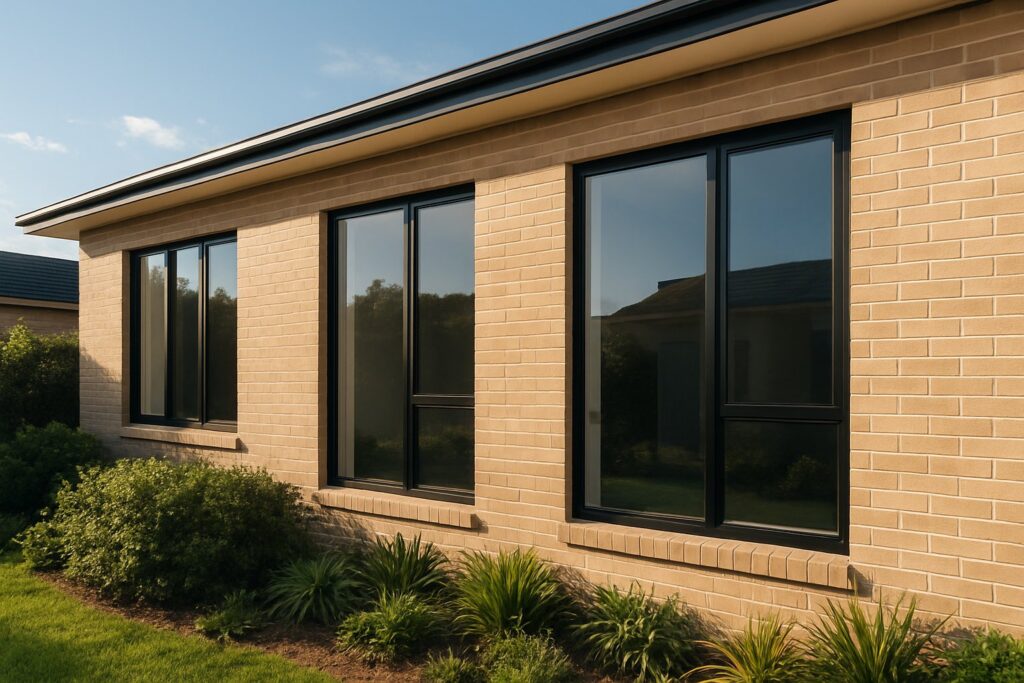
What Are Aluminium Casement Windows and How Do They Work
Ever looked at a window and wondered why it opens the way it does? The answer usually comes down to one thing: the hinge mechanism. And when you’re talking about aluminium casement windows, that mechanism is what sets them apart from every other window style on the market.
An aluminium casement window is a window with a lightweight aluminium frame and a hinged sash — either side-hung or top-hung — that swings outward or inward on friction-stay hinges, providing full opening ventilation, easy cleaning access, and a tight weather seal when closed.
Aluminium is the preferred frame material for casement designs for a practical reason: its strength-to-weight ratio. Aluminium profiles can be made significantly slimmer than uPVC or timber while maintaining structural integrity. That means narrower frames, more glass, and better views. As Home Build Doors notes, aluminium allows slimmer profiles without sacrificing rigidity — which is why slim sightlines are far more common in aluminium than in PVC systems. Casement windows aluminium are among the most widely used window types in both residential and commercial construction worldwide, and understanding the aluminium casement window details behind their design helps you make a smarter choice.
How the Hinged-Sash Mechanism Works
Imagine a door, but smaller and mounted in your wall. That’s essentially how a casement window aluminium operates. The anatomy is straightforward:
- The frame is the fixed outer structure secured into the wall opening, providing stability and weather resistance.
- The sash is the movable panel that holds the glass. Unlike sliding windows, the sash swings open rather than gliding along a track.
- Friction-stay hinges connect the sash to the frame and allow it to pivot outward or inward. These hinges hold the sash at any angle you choose, so you can fine-tune ventilation.
- A handle — often an espagnolette or cockspur type — locks and unlocks the sash, engaging the locking mechanism for a secure close.
- Weather seals run around the perimeter of the sash, compressing against the frame when shut to block drafts, rain, and dust.
When you turn the handle and push, the sash pivots on those friction stays, opening the full window aperture. This gives you unobstructed airflow — something no sliding or double-hung window can match. It also makes exterior glass cleaning far easier, especially on upper floors. Each type aluminium casement window, whether side-hung or top-hung, follows this same core principle.
Casement vs Other Window Operation Types
Not every window opens the same way, and the differences matter more than you might think. Here’s how the casement stacks up against other common operation types:
| Window Type | Opening Method | Ventilation Level | Best Use Case |
|---|---|---|---|
| Casement | Hinged sash swings outward or inward | Excellent — full opening | Bedrooms, living rooms, kitchens |
| Awning | Top-hinged, tilts outward from the bottom | Moderate — partial opening | Bathrooms, basements, rain-prone areas |
| Sliding | Sash glides horizontally along a track | Moderate — up to 50% opening | Balconies, tight spaces, wide openings |
| Fixed | Does not open | None | Feature windows, light-only applications |
| Double-Hung | Two sashes slide vertically | Moderate — top and bottom airflow | Traditional and heritage homes |
| Tilt-and-Turn | Tilts inward at top or swings inward fully | High — dual-mode ventilation | Apartments, multi-storey buildings |
You’ll notice the aluminium casement window consistently leads on ventilation. That full-aperture opening, combined with the strong perimeter seal casement designs are known for, creates a window that performs well in both airflow and weather tightness. It’s a balance most other types struggle to match — and it’s a big part of why this style remains the go-to for so many projects.
Of course, knowing how a window operates is only half the picture. The frame material surrounding that mechanism plays an equally critical role in how the window performs over its lifetime.
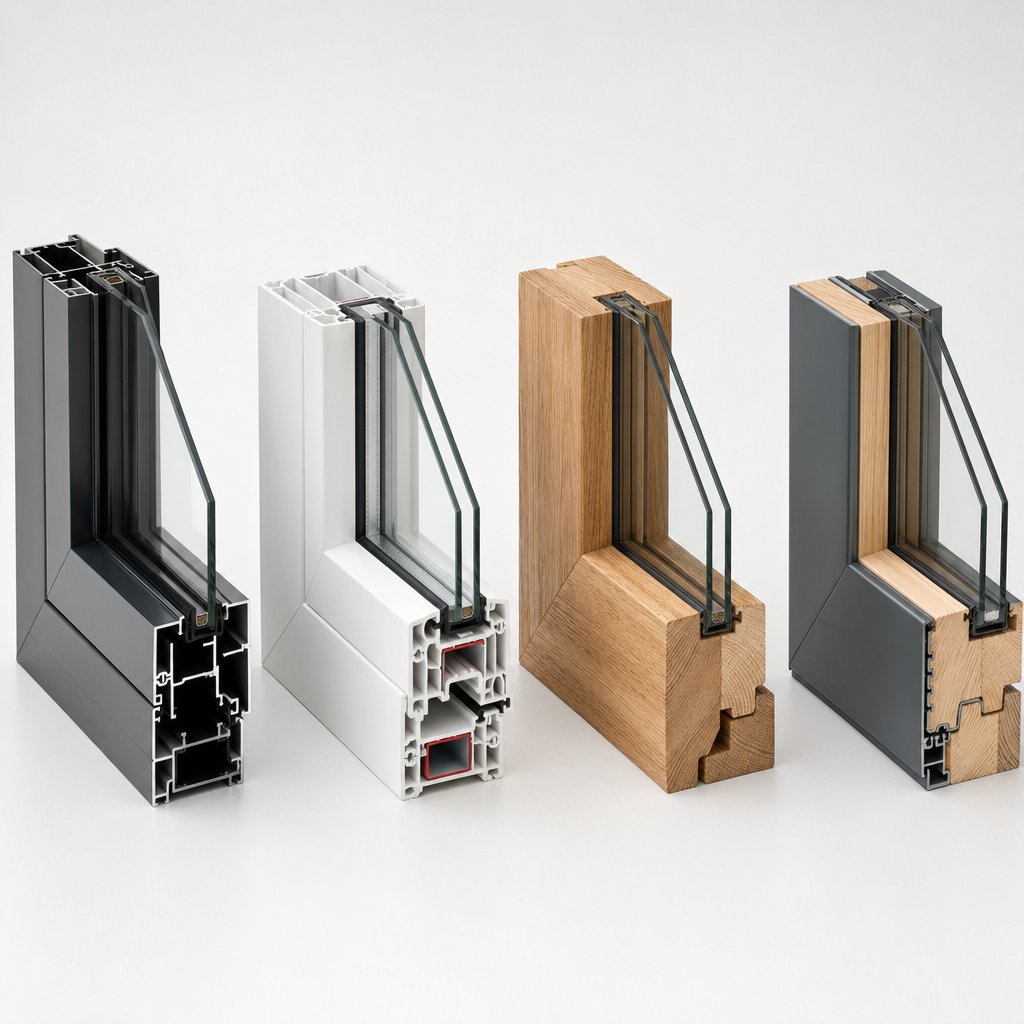
Aluminium vs uPVC vs Timber vs Composite Frame Materials
The frame material you choose doesn’t just affect how your window looks on day one — it shapes how it performs, what it costs you, and how long it lasts over the next several decades. When evaluating aluminium casement window materials against the alternatives, the differences are more significant than most suppliers let on.
Here’s a side-by-side breakdown across the criteria that actually matter:
| Criteria | Aluminium (Thermally Broken) | uPVC | Timber | Composite (Alu-Clad Timber) |
|---|---|---|---|---|
| Durability and Lifespan | 40-50+ years | 20-35 years | 30-60 years (species dependent) | 40-60+ years |
| Thermal Performance (U-value) | ~1.6 W/m²K (premium systems ~1.4) | 1.2-1.4 W/m²K | 1.2-1.4 W/m²K | 0.7-1.1 W/m²K (with triple glazing) |
| Maintenance | Minimal — occasional cleaning | Minimal — occasional cleaning | High — repainting every 4-7 years | Minimal exterior; periodic interior timber care |
| Aesthetic Flexibility | Near-unlimited RAL colours, dual-colour, anodised finishes | Limited but improving; woodgrain laminates available | Natural beauty; paintable and stainable | Timber interior warmth with aluminium exterior finishes |
| Upfront Cost | Mid-to-high | Lowest | Mid-to-high | Highest |
| Long-Term Value | Excellent — low annual cost over lifespan | Moderate — replacement likely within 25-35 years | Good if maintained; costly if neglected | Excellent — low lifecycle cost despite premium entry price |
| Frame Width (Sightlines) | 35mm+ (slimmest available) | 70mm+ (widest) | 55mm+ | 55-65mm |
| Environmental Impact | High embodied energy; 95% recyclable at end of life | Lower embodied energy; recyclable up to 10 times | Lowest embodied energy; biodegradable; renewable if sustainably sourced | Moderate embodied energy; combines recyclable aluminium with renewable timber |
A few things jump out immediately. Aluminium without a thermal break underperforms thermally — that’s a fact, not a sales pitch from the uPVC camp. Raw aluminium is a conductor, and older or budget aluminium casement window profiles can produce U-values well above 2.0 W/m²K. But modern thermally broken systems close that gap significantly, with premium profiles approaching the 1.4 W/m²K range that uPVC and timber achieve naturally. The thermal break — a polyamide barrier engineered into the profile — changes the equation entirely.
Where aluminium pulls ahead is in structural strength, design freedom, and longevity. Slimmer frames mean more glass. More glass means more natural light. And a 40-50+ year lifespan with virtually no maintenance makes the cost-per-year calculation surprisingly competitive.
Aluminium vs uPVC Frame Performance
This is the comparison most homeowners wrestle with, and it’s worth being honest about both sides. An aluminium frame casement window outperforms uPVC in three key areas: strength, longevity, and design flexibility. Those 35mm sightlines versus 70mm+ on uPVC translate to roughly 20% more visible glass area in the same opening — a difference you can genuinely feel in a room’s natural light levels.
Casement aluminium windows also won’t warp, crack, or become brittle over time. uPVC frames, while durable, tend to degrade after two to three decades, especially under sustained UV exposure. Discolouration and seal failure become real issues in the later years of a uPVC window’s life.
On the flip side, uPVC holds a clear advantage in base-level thermal insulation. Its multi-chambered profiles trap air effectively, delivering strong U-values without needing any thermal break technology. And the upfront cost is lower — sometimes significantly so. For budget-sensitive projects where thermal performance is the priority and aesthetics are secondary, uPVC remains a compelling option. The gap narrows, though, when you factor in replacement costs. A uPVC window that needs replacing at year 25 can end up costing more over a 40-year period than an aluminium system that’s still going strong.
Aluminium vs Timber and Composite Frames
Timber occupies a different space entirely. When you’re comparing aluminium & timber casement windows, you’re really weighing two philosophies: engineered precision versus natural craftsmanship. Timber is a natural insulator — it achieves excellent U-values without any additional technology, and it brings a warmth and tactile quality that aluminium simply can’t replicate. For listed buildings, conservation areas, and period properties, timber is often not just preferred but required by planning regulations.
The trade-off? Maintenance. Timber frames need repainting every four to seven years to prevent moisture ingress, UV damage, and eventual rot. Over a 40-year span, that’s six to ten maintenance cycles — a significant investment of time and money. Aluminium, by contrast, asks almost nothing of you beyond an occasional wipe-down. Its powder-coated finish resists fading and corrosion for decades, even in harsh coastal environments where salt air accelerates timber degradation.
Then there’s the premium hybrid: composite or aluminium-clad timber. These systems pair a timber interior — giving you that natural warmth and visual richness — with an aluminium exterior shell that handles the weather. Thermal performance is outstanding, often achieving U-values as low as 0.7-1.1 W/m²K with triple glazing. The catch is cost. Composite systems sit at the top of the price range, and they require deeper technical coordination during installation. For homeowners who refuse to compromise on either aesthetics or performance, though, they represent the pinnacle of what’s available.
Numbers and comparisons only tell part of the story. What really matters is how these material differences translate into everyday advantages — and the genuine drawbacks that most suppliers would rather you didn’t ask about.
Real Advantages and Disadvantages of Aluminium Casement Windows
Most supplier pages read like highlight reels — all upside, no caveats. That’s not how real decision-making works. If you’re going to invest in aluminium casement windows, you deserve the full picture: what they genuinely excel at and where they fall short. Here’s an honest look at both sides.
Advantages
- Exceptional durability and corrosion resistance — Aluminium forms a natural oxide layer that protects against rust and weathering. With a quality powder-coated finish, aluminium casement windows durability can stretch well beyond 40 years, even in coastal or high-humidity environments.
- Slim profiles that maximise natural light — Because aluminium is structurally stronger than uPVC, the aluminium casement window frame can be engineered much thinner. More frame strength in less material means more glass area and brighter rooms.
- Extensive colour and finish options — Powder coating opens up the full RAL colour spectrum, including dual-colour configurations. Anodised and woodgrain-effect finishes add even more flexibility.
- Full recyclability — Aluminium is recyclable indefinitely without losing quality. At end of life, the frames retain genuine scrap value rather than heading to landfill.
- Low maintenance — No repainting, no staining, no sealing. A periodic wipe with soapy water and occasional hinge lubrication is all that’s needed to keep them performing.
- Superior structural strength for larger openings — Aluminium handles bigger spans without flexing or sagging, making it the go-to for oversized casement configurations.
- Compatibility with double or triple glazing — Modern aluminium casement systems accommodate advanced glazing stacks, including Low-E coated and gas-filled units, for strong thermal and acoustic performance.
Disadvantages
- Higher upfront cost compared to uPVC — You’ll pay more at the point of purchase. Aluminium casement windows typically cost more than vinyl equivalents, though the gap narrows when you factor in lifespan.
- Thermal bridging in non-thermally-broken profiles — Without a polyamide thermal break, aluminium conducts heat rapidly. Budget or older profiles can produce poor U-values and feel cold to the touch in winter.
- Condensation risk in cold climates — When warm indoor air meets a cold aluminium casement window frame, moisture can form on the interior surface. This is manageable with proper specification but worth knowing about upfront.
- Industrial aesthetic may not suit every property — The clean, modern lines that make aluminium popular in contemporary builds can feel out of place on period cottages or heritage-listed homes where traditional timber detailing is expected.
So when you weigh the advantages and disadvantages of aluminium casement windows side by side, the positives are substantial — but they come with conditions. The key is specification. A well-specified aluminium casement window avoids most of the drawbacks entirely.
Why Builders and Architects Prefer Aluminium Casement Designs
Talk to professionals who specify windows for a living, and you’ll hear a consistent theme: aluminium gives them room to design. The advantages of aluminium casement windows aren’t just theoretical — they solve real project challenges.
Structural versatility is a big one. Aluminium’s strength means architects can push for larger window openings, floor-to-ceiling glazing, and multi-panel configurations without worrying about frame deflection. That same strength makes it easier to meet modern building codes, which increasingly demand higher wind-load ratings and impact resistance.
Design freedom matters too. When a builder needs anthracite grey on the exterior and white on the interior — or a specific RAL colour to match cladding — aluminium delivers without compromise. Try getting that level of customisation from a uPVC system, and you’ll quickly hit limitations. For commercial projects, the aluminium casement window advantages compound further: consistent quality across large orders, faster installation due to lighter weight, and a professional finish that holds up under heavy daily use.
Honest Drawbacks You Should Know About
Here’s the context that changes how you read those disadvantages. Thermal bridging? It’s only a real concern with older or entry-level profiles that skip the thermal break. Modern thermally broken systems — which are now the industry standard for reputable manufacturers — eliminate this issue. The polyamide strip within the profile interrupts heat transfer so effectively that aluminium can rival uPVC on thermal performance.
Condensation follows the same logic. It’s a symptom of inadequate thermal specification, not an inherent flaw of the material. Specify thermally broken profiles with double or triple glazing, maintain reasonable indoor humidity levels, and condensation becomes a non-issue. As a practical step, keeping indoor relative humidity between 30-50% and ensuring good airflow around the glass significantly reduces moisture buildup.
The cost premium? It pays back. When you spread the price of an aluminium window over a 40-50 year lifespan with near-zero maintenance, the annual cost often undercuts a uPVC window that needs replacing at year 25. Think of it less as a higher price and more as a longer investment horizon.
And the aesthetic concern is increasingly moot. Flush casement profiles, woodgrain laminates, and heritage-style hardware options mean aluminium can now blend into traditional streetscapes far more convincingly than it could a decade ago — which opens up a whole world of design possibilities worth exploring.
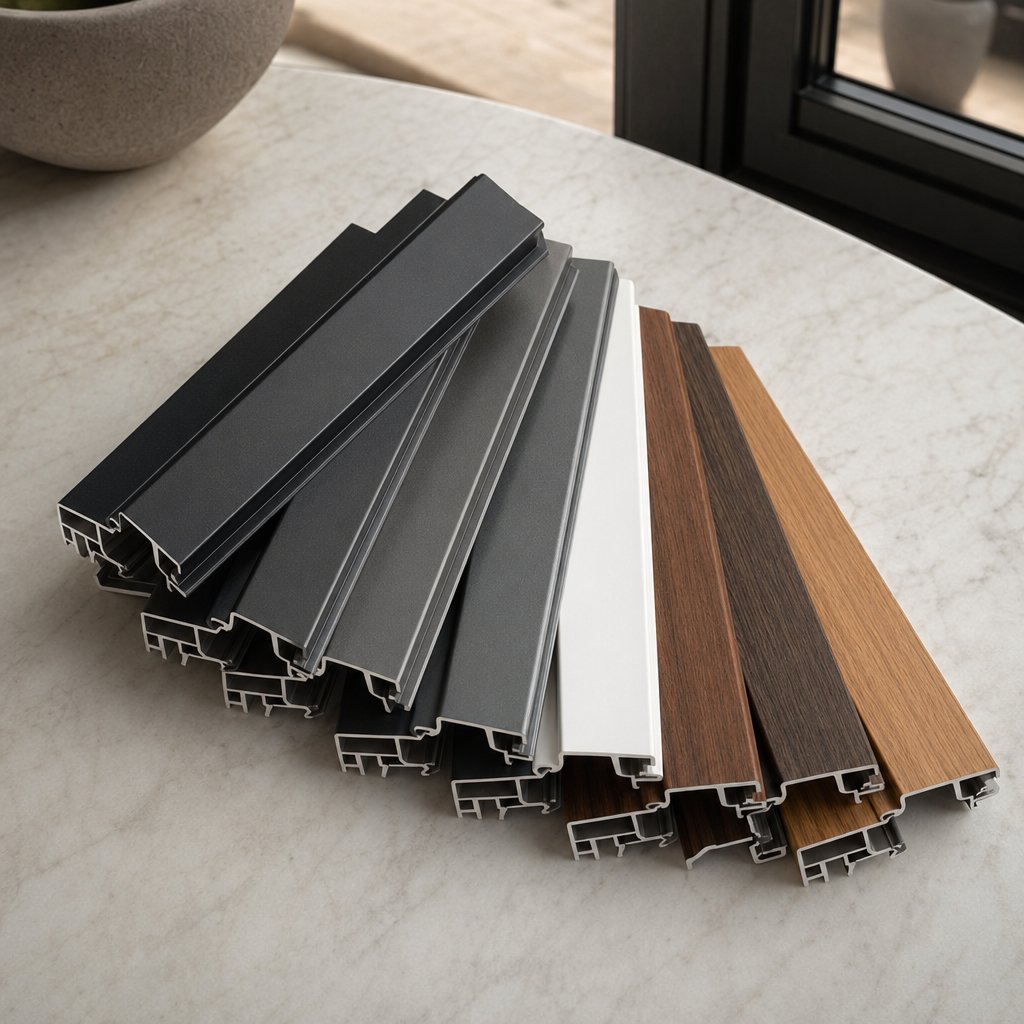
Design Options From Colours and Finishes to Frame Profiles
Aluminium casement windows design goes far deeper than picking a size and calling it done. The real power of aluminium as a frame material lies in how much you can customise it — from the colour on the outside to the handle in your hand. And yet, most suppliers gloss over these options with a few stock photos and a colour chart. Here’s what’s actually available.
Colour and Finish Options for Every Aesthetic
Two main finishing techniques define how your aluminium frames will look and age: powder coating and anodising. They’re often mentioned interchangeably, but they work differently and produce distinct results.
Powder coating applies a dry pigment electrostatically to the aluminium surface, which is then cured under heat to form a tough, uniform layer. It opens up the entire RAL colour range — over 450 colour options — and can be applied in matt, satin, gloss, or textured finishes. The result is long-term protection against UV, moisture, and scratching without ever needing paint or varnish.
Anodising, by contrast, creates a controlled oxide layer on the aluminium itself rather than adding a coating on top. This preserves the natural metallic texture of the material, producing a subtler, more industrial look. It’s exceptionally durable and well-suited to contemporary or commercial projects where that raw aluminium aesthetic is the goal.
The most popular finish categories for aluminium casement window design include:
- Matt black — the dominant trend in modern residential builds, especially for black aluminium casement windows paired with large glass panels
- Anthracite grey (RAL 7016) — a versatile, slightly softer alternative to black that works across contemporary and transitional styles
- White aluminium casement windows — still the most widely specified colour for traditional homes and renovation projects
- Woodgrain-effect laminates — textured films that replicate the look of oak, walnut, or rosewood over the aluminium substrate
- Dual-colour configurations — different colours on the interior and exterior faces, so you can match a white interior to a dark grey facade without compromise
That dual-colour capability is a genuine differentiator. Imagine anthracite grey facing the street while the interior side matches your white walls — something uPVC systems struggle to offer with the same precision. For coastal or urban environments, some manufacturers even recommend pre-anodising before powder coating for an extra layer of long-term protection.
Flush Casement vs Standard Casement Profiles
This is a distinction that trips up a lot of homeowners, and it matters more than you’d think — especially if your property sits in a conservation area or you’re aiming for a specific architectural look.
With a standard casement profile, the sash sits slightly proud of the outer frame when closed. You can see and feel the step between the sash and the frame. It’s the more traditional configuration, and it works well for contemporary builds where that defined edge adds visual depth to the facade.
Aluminium flush casement windows take the opposite approach. The sash sits level with the frame, creating a smooth, flat surface when the window is closed. The result is a cleaner, more streamlined appearance — and it’s this sleek, heritage-friendly look that makes flush casement aluminium windows increasingly popular for period properties and planning-sensitive projects. Because the sash doesn’t protrude, the profile mimics the appearance of traditional timber casements, which can be the difference between planning approval and rejection in heritage zones.
In terms of performance, both styles deliver comparable thermal efficiency and weather resistance when properly specified. Flush casements can offer a marginally tighter seal due to their flat profile geometry, but the practical difference is small. The real choice comes down to aesthetics and context: flush for heritage or minimalist projects, standard for builds where a more pronounced frame detail is desirable.
Glazing options layer on further customisation. You can specify single, double, or triple glazing depending on thermal and acoustic requirements. Decorative glazing bars — Georgian, cottage, or astragal styles — add character without sacrificing modern performance. And for bathrooms or ground-floor privacy, obscure or frosted glass integrates seamlessly into either profile type.
Hardware is the final piece of the aluminium casement windows design puzzle. Handle styles range from inline (flush with the sash) to cranked (angled for easier reach) to key-locking variants for added security. Hinge options include friction stays for controlled opening angles and butt hinges for a more traditional look. Opening direction — left-hung, right-hung, or top-hung — is specified based on room layout, furniture placement, and ventilation needs.
Slimline Frames and Maximum Glass Area
One of the strongest arguments for aluminium casement windows slimline profiles is simple: more glass, less frame. Modern engineering has pushed frame widths down to as little as 35mm on some systems, which is roughly half the width of a typical uPVC profile. That difference translates directly into a larger visible glass area — and noticeably more natural light entering the room.
How do they achieve this without sacrificing strength? Aluminium’s inherent rigidity allows manufacturers to reduce profile dimensions while still meeting wind-load, water-resistance, and structural integrity requirements. The frame does less visual work and more structural work per millimetre than any other material on the market.
For homeowners chasing that floor-to-ceiling glazed look or architects designing open-plan living spaces, slimline aluminium casement profiles deliver the aesthetic without engineering compromises. Pair them with a flush casement configuration and a dark powder-coated finish, and you get a window that almost disappears into the wall — letting the view do the talking.
All of these design choices shape how your windows look and feel. But appearance is only one layer of the specification. How those same windows perform thermally — keeping heat in during winter and out during summer — depends on what’s happening inside the profile and behind the glass.
Energy Efficiency and Thermal Performance Explained
Here’s the uncomfortable truth about aluminium: on its own, it’s a terrible insulator. Aluminium conducts heat roughly 1,000 times faster than uPVC. So how do modern aluminium casement window systems end up meeting — and sometimes exceeding — the same energy codes as their plastic and timber counterparts? The answer lives inside the profile itself.
How Thermal Breaks Transform Aluminium Performance
Picture an aluminium casement window section cut in half. Instead of a single continuous piece of metal connecting the outside face to the inside face, you’ll see a strip of polyamide (PA66 nylon) sandwiched between two separate aluminium extrusions. That strip is the thermal break, and it changes everything.
The concept is straightforward: by physically separating the interior and exterior aluminium with a low-conductivity material, you “break” the path that heat would normally travel through the frame. Cold air stays outside. Warm air stays inside. The aluminium casement window weather seals around the sash perimeter then complete the envelope, preventing drafts and moisture ingress at the edges.
Without this technology, aluminium frames act like a radiator in reverse — pulling warmth out of your home in winter and channelling heat in during summer. With it, thermally broken aluminium casement windows can help reduce energy bills by up to 30%, which is why building professionals now consider non-thermally-broken profiles essentially obsolete for residential use. Modern aluminium smart casement windows with PA66 thermal breaks comfortably meet current building energy codes across most jurisdictions, and premium systems push performance even further.
For aluminium casement windows Australia specifications, this matters enormously. From the humid coasts of Queensland to the frosty highlands of Victoria, the climate demands that every component in the window assembly pulls its weight thermally. Australian Window Association (AWA) accreditation and WERS energy ratings exist specifically to verify that a product’s thermal claims hold up under independent testing — so always ask your supplier for those reports.
Glazing Specifications That Matter for Comfort and Savings
The frame is only half the thermal equation. Glass typically makes up 70-80% of a window’s surface area, so the glazing stack you specify has an outsized impact on overall performance. Think of it this way: you can have the best thermally broken profile on the market, but pair it with basic single glazing and you’ve undermined the entire system.
Here are the key glazing components and what each one does:
- Double or triple glazing — Two or three panes of glass separated by insulating cavities. Triple glazing adds another air gap and another barrier to heat transfer, delivering lower U-values but at increased cost and weight.
- Low-E coatings — Microscopically thin metallic layers applied to glass surfaces that reflect infrared heat back toward its source. In winter, Low-E keeps radiant heat inside your home. In summer, it helps reject solar heat gain. As Vitro Architectural Glass notes, adding a Low-E coating is one of the most effective single steps for improving a window’s U-value.
- Argon or krypton gas fills — Noble gases injected into the cavity between panes. They’re denser than air and conduct heat more slowly, improving insulation without adding weight. Argon is the standard; krypton performs better but costs more.
- Warm-edge spacer bars — The strips that hold the glass panes apart at the edges. Traditional aluminium spacers create a thermal bridge at the glass perimeter. Warm-edge alternatives use composite or foam materials to reduce heat loss at this critical junction.
When these elements work together inside a well-engineered aluminium casement window system, the results are genuinely competitive. A thermally broken aluminium frame paired with Low-E double glazing and argon fill can achieve U-values in the range that satisfies most residential energy codes. Step up to triple glazing with warm-edge spacers, and you’re approaching passive-house territory.
Climate zone matters here too. A temperate coastal property might perform well with standard double glazing and a mid-range thermal break. A hot inland region benefits more from solar-control Low-E coatings that prioritise rejecting heat gain. And cold highland zones demand the full specification — triple glazing, krypton fills, and the highest-grade thermal break available — to keep heating costs under control. There’s no single “best” specification; the right one depends entirely on where you live and what your local building standards require. Always verify compliance requirements for your specific jurisdiction before finalising your glazing choices.
Getting the thermal specification right protects your comfort and your energy bills. But there’s another kind of protection most window buyers overlook entirely — and it has nothing to do with temperature.
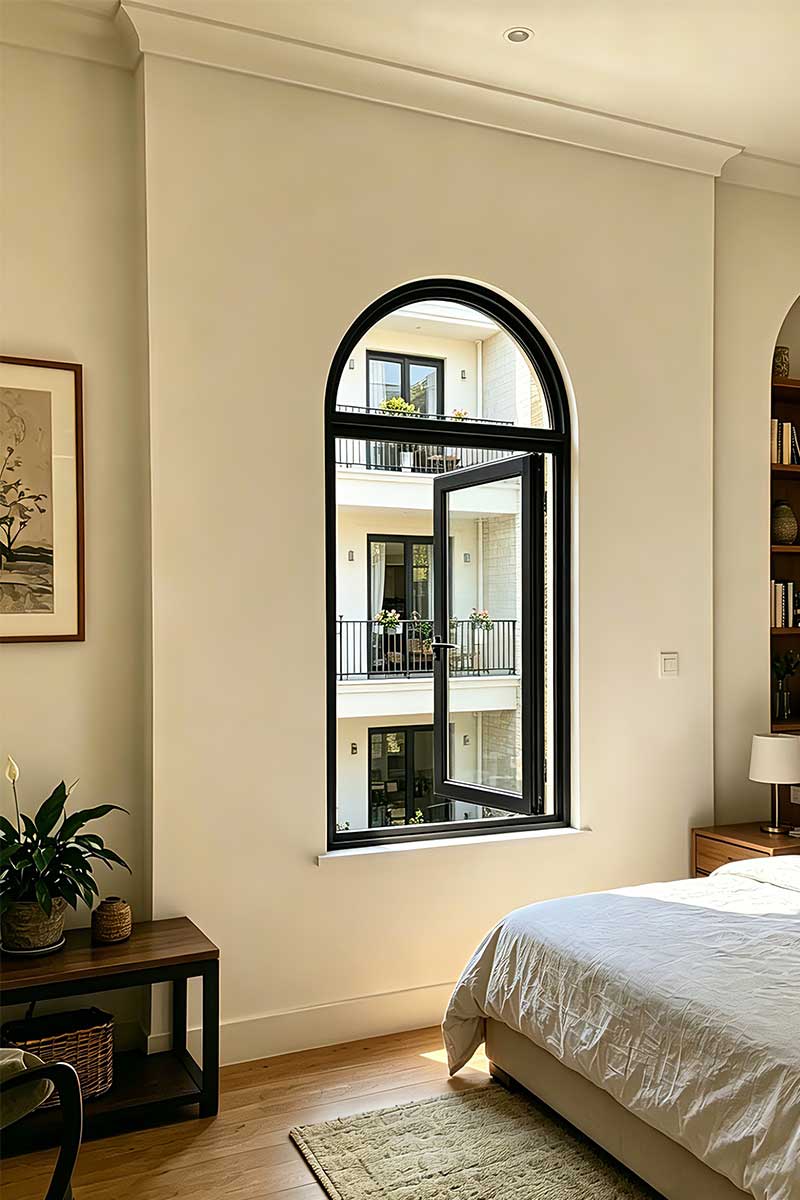
Security Features and Locking Systems Worth Knowing
Security is the topic almost every aluminium window supplier skips over. You’ll find pages of content about colours, U-values, and sightlines — but almost nothing about what actually stops someone from forcing your window open. That’s a significant gap, because the security hardware inside your casement window matters just as much as the thermal break or the powder coat finish.
Aluminium casement windows have a natural structural advantage here. The frame material itself is significantly harder to deform, pry, or break compared to uPVC, which can flex under sustained force. But frame strength alone isn’t a security system. What turns an aluminium casement window into a genuinely secure barrier is the combination of locking hardware, glazing specification, and how the glass is held in place.
Multi-Point Locking and Reinforced Hardware
If your window uses a single-point lock — one latch engaging at one spot — it’s vulnerable. A single point of resistance means a single point of failure. Modern aluminium casement windows solve this with multi-point locking systems that engage at three to five positions along the sash perimeter simultaneously.
Here’s how it works: when you turn the aluminium casement window handle, a central gearbox drives locking cams or bolts upward and downward along the sash edge. These engage with corresponding keeps (metal strike plates) recessed into the frame. The force of any attempted prying is distributed across multiple points rather than concentrated at one, making the window far more resistant to crowbar or lever attacks.
The difference is dramatic. Where a single-point lock concentrates all resistance at one location, a multi-point system spreads that load so evenly that the frame and sash act almost as a single sealed unit. As an added benefit, this distributed pressure also improves the weather seal — the sash compresses more uniformly against the gaskets, boosting both airtightness and water resistance.
Beyond the locking mechanism itself, the supporting hardware plays a critical role. Quality aluminium casement window hinges — typically heavy-duty friction stays rated for the sash weight — resist attempts to lever the sash away from the frame. An aluminium casement window stopper or restrictor limits how far the sash can open, which serves double duty: it prevents children from opening the window dangerously wide, and it blocks an intruder from reaching in to disengage the lock from outside.
Key security hardware components to look for include:
- Multi-point espagnolette locking mechanism — the central gearbox and rod system that drives multiple lock points from a single handle turn
- Key-locking handles — require a key to operate, preventing the window from being opened even if glass is broken and an arm reaches through
- Child-safety restrictors — limit opening width to approximately 100mm until deliberately overridden by an adult
- Reinforced friction-stay hinges — heavy-gauge stainless steel stays that resist forced separation of sash from frame
- Internal beading — glazing secured from the inside of the property so it cannot be removed externally
- Anti-jemmy aluminium casement window fastener points — additional mushroom-cam locks that hook behind the frame, resisting pry-bar attacks
When specifying hardware, look for systems tested to recognised security standards. In the UK, PAS 24 certification tests the entire window assembly — frame, sash, locks, hinges, and glazing — as a complete system against simulated forced-entry attacks. European EN 1627-1630 standards rate burglar resistance from RC1 through RC6, with RC2 and RC3 considered appropriate for most residential and commercial applications. Secured by Design accreditation, backed by police and insurance bodies, adds another layer of verified credibility.
Glass and Glazing Security Options
The strongest lock in the world won’t help if someone can simply smash through the glass and reach inside. This is where glazing specification becomes a security decision, not just a thermal one.
Two types of strengthened glass are commonly available, and they behave very differently under attack:
Toughened glass (also called tempered glass) is heat-treated to be four to five times stronger than standard float glass. It resists impact well, and when it does break, it shatters into small, relatively harmless granules rather than dangerous shards. That makes it excellent safety glazing — protecting people from injury. But here’s the catch: once toughened glass breaks, it disintegrates completely. There’s no barrier left. An intruder can clear the opening in seconds.
Laminated glass takes a fundamentally different approach. Two or more glass panes are bonded together with a PVB (polyvinyl butyral) or EVA interlayer. When struck, the outer pane may crack, but the fragments stay bonded to that interlayer. The glass doesn’t fall away. To get through, an attacker must keep striking the same spot repeatedly, gradually breaking through layer after layer — a noisy, time-consuming process that most burglars simply won’t risk.
For genuine security, laminated glass is the only sensible choice. Combine it with a multi-point locking system, reinforced casement window aluminium rivets and fixings, internal beading that prevents glass removal from outside, and the inherent rigidity of the aluminium frame itself, and you have a window system that presents a serious obstacle to forced entry. Many insurers recognise this too — certified security glazing rated to BS EN 356 standards can qualify for premium discounts on home insurance policies.
The smartest approach for most homes? Specify toughened glass on the interior pane for safety compliance and laminated glass on the exterior pane for security — giving you both protection profiles in a single double-glazed unit.
Security hardware and glazing choices do influence what you’ll pay for your windows. And cost is the next area where a little transparency goes a long way.
Cost Factors and Long-Term Value of Aluminium Casement Windows
Ask a supplier for a straight answer on aluminium casement windows price and you’ll usually get one of two responses: a vague “it depends” or a quote so loaded with options you can’t tell what’s driving the number. The reality is that pricing varies significantly — but the factors behind that variation are entirely predictable once you know what to look for.
What Drives the Price of Aluminium Casement Windows
Every aluminium casement window price is shaped by a handful of specification decisions. Some have a modest impact; others can double the cost of a single unit. Here’s how each factor moves the needle:
| Factor | Impact on Price | Notes |
|---|---|---|
| Window Size and Configuration | High | Larger sashes and multi-panel configurations (e.g., side-by-side casements with a fixed centre pane) require more material, heavier hardware, and more complex fabrication. Oversized units may also need structural upgrades to the wall opening. |
| Glazing Type | High | Double glazing is the baseline. Triple glazing adds 15-30% to the glazing cost. Laminated or acoustic glass adds further. Specifying Low-E coatings and argon fills is relatively modest in cost but meaningful for performance. |
| Thermal Break Quality | Moderate to High | Entry-level thermal breaks are thinner and less effective. Premium PA66 polyamide breaks with wider cavities deliver better U-values but cost more. This is not the place to cut corners — it directly affects energy performance and comfort. |
| Powder Coat Finish | Low to Moderate | Standard colours (white, black, anthracite grey) are typically included in base pricing. Premium RAL colours, textured finishes, and dual-colour options (different interior/exterior) carry surcharges. Researching aluminium grey casement window cost versus a custom RAL match will show a noticeable difference. |
| Hardware Grade | Moderate | Basic friction stays and handles are affordable. Upgrading to stainless steel hinges, multi-point locking systems, key-locking handles, and child restrictors adds cost but significantly improves security and longevity. |
| Installation Complexity | Moderate to High | Straightforward new-build installations cost less than retrofit projects requiring removal of old frames, making good damaged reveals, or working at height. Access difficulty and structural modifications push labour costs up. |
| Brand and Manufacturer Tier | Moderate | Established manufacturers with certified systems, independent testing, and comprehensive warranties command a premium over unbranded or imported alternatives. You’re paying for verified performance, not just a label. |
Compared to uPVC, aluminium casement windows cost more upfront — typically 70% to 200% more depending on specification level. Against timber, the picture is more nuanced. Softwood timber casements can undercut aluminium on initial price, but premium hardwood species like oak or accoya often match or exceed it — and that’s before you factor in the ongoing cost of repainting and treating timber every few years.
When gathering aluminium casement window quotes, resist the temptation to compare on headline price alone. A quote that looks cheaper may be using a thinner thermal break, lower-grade hardware, or a basic single-colour finish. Always compare like-for-like specifications. If a supplier can’t provide a detailed aluminium casement window pricelist broken down by component, that’s a red flag worth paying attention to.
Long-Term Value Compared to Other Materials
Here’s where the cost conversation shifts — and where aluminium starts to look like the smarter financial decision despite the higher entry point.
An aluminium casement window can last 45 to 50 years. A uPVC equivalent typically needs replacing after 20 to 30 years. Run the maths over a 50-year period and you’re looking at one set of aluminium windows versus potentially two sets of uPVC — including the cost of removal, disposal, and reinstallation the second time around. The upfront premium often evaporates entirely when you spread it across the actual service life.
Maintenance costs reinforce this. Aluminium asks almost nothing of you over its lifetime: no repainting, no re-staining, no seal replacement beyond occasional gasket checks. Timber, by contrast, demands repainting every four to seven years — a recurring expense that compounds significantly over decades. Even uPVC, while low-maintenance, can develop seal failures and discolouration in its later years that erode both performance and kerb appeal.
Energy savings add another layer. A properly specified thermally broken aluminium system with quality glazing reduces heating and cooling loads year after year. Those savings are modest individually but meaningful when compounded over a 40-50 year window lifespan. And there’s the property value angle: aluminium windows are increasingly seen as a premium feature by buyers and valuers, particularly in contemporary and architect-designed homes where slim sightlines and clean lines are expected.
For Australian homeowners, builders, and developers looking to benchmark what’s available across different project budgets, MEICHEN’s aluminium windows collection offers a useful starting point — Australian-standard-compliant systems with transparent product information across multiple configurations, so you can compare specifications before committing to a supplier.
The bottom line on aluminium casement windows price? Pay attention to what you’re paying for, not just what you’re paying. A well-specified aluminium casement window is an asset that performs and holds its value for decades — but only if you maintain it properly, which turns out to be far simpler than most people expect.
Maintenance Tips and the Sustainability Case for Aluminium
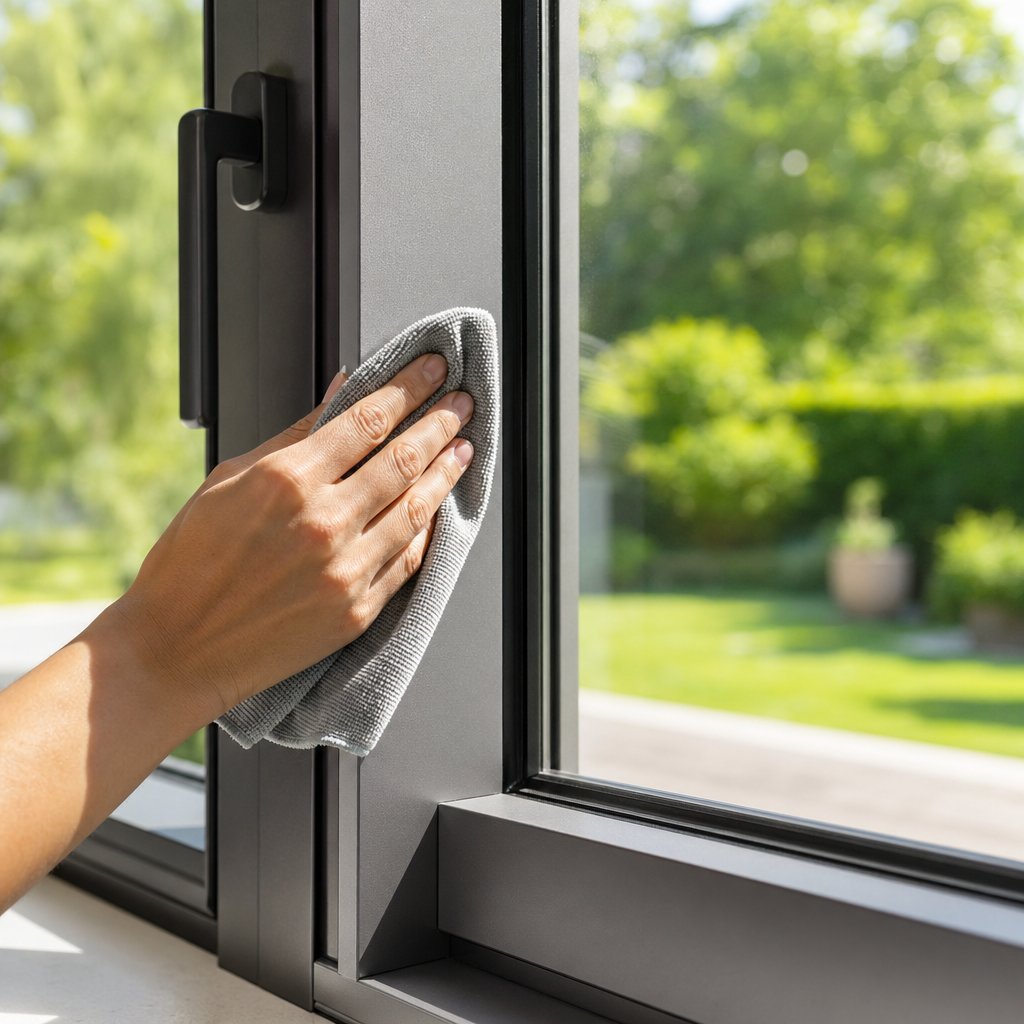
“Simpler than most people expect” might actually be underselling it. Aluminium casement windows are among the lowest-maintenance window types you can install in a home or commercial building. The powder-coated finish resists fading, chalking, and corrosion for decades. The frame won’t warp, rot, or swell. And the routine care? It amounts to little more than a periodic wipe-down and some hinge lubrication.
That’s a stark contrast to timber, which demands repainting cycles every few years, or even uPVC, which can yellow and become brittle under prolonged UV exposure. With aluminium, the finish you see on day one of your aluminium casement window installation is essentially the finish you’ll still see twenty years later — assuming you give it a basic level of attention.
Lifespan backs this up. Modern aluminium frames routinely last 30 to 45 years, with many exceeding 40 when properly maintained. Manufacturers typically warrant frames for 20 to 25 years and powder coating for 10 to 25 years, but real-world performance consistently outlasts those warranty periods by a wide margin. The frame itself is rarely what fails first.
What does wear over time? Hardware. Friction stays and handles see the most mechanical stress, and after years of daily use, they may stiffen, loosen, or lose their holding tension. The good news is that these components are replaceable without touching the frame or glass — a straightforward swap that any qualified installer can handle. Weather seals are the other item to watch. Rubber and silicone gaskets gradually lose elasticity, especially in climates with extreme temperature swings. Inspecting them annually and replacing them when they crack or shrink keeps the window’s airtightness and water resistance intact.
Coastal properties deserve a specific mention. Salt deposits accelerate surface degradation on almost any material, and while aluminium handles salt air far better than timber or steel, it’s not immune. An aluminium casement window manufacturer will typically recommend monthly cleaning of all aluminium surfaces in coastal environments to prevent salt buildup from pitting the powder coat over time.
Simple Maintenance Routines That Extend Window Life
You don’t need a professional for this. A seasonal checklist — done twice a year, or quarterly if you’re near the coast — covers everything your aluminium casement window installations need to stay in top condition:
- Clean frames and glass with a soft cloth and mild soapy water. Avoid abrasive pads, harsh chemicals, and high-pressure washers — they can damage the powder coat and strip protective coatings from hardware.
- Inspect and lubricate hinges and locking mechanisms. A light application of silicone spray on friction stays, lock gearboxes, and handle spindles keeps everything operating smoothly and prevents corrosion in moving parts.
- Check weather seals around the full sash perimeter. Look for cracking, shrinkage, or sections that have pulled away from the frame. Replace any seals that no longer compress firmly when the window is closed.
- Clear drainage slots at the bottom of the frame. These small channels allow condensation and rainwater to escape. Blocked drainage traps moisture inside the frame, which can accelerate seal degradation and, in extreme cases, affect the glazing unit.
- Inspect the powder coat finish for chips, scratches, or early signs of oxidation. Small areas of damage can be touched up with manufacturer-matched paint pens. Catching damage early prevents it from spreading.
That’s genuinely it. Five steps, twice a year, using household supplies. Compare that to the aluminium casement window making and maintenance demands of timber — sanding, priming, repainting, checking for rot — and the difference in ongoing effort is enormous.
Sustainability and Recyclability of Aluminium Frames
Longevity is itself an environmental argument. A window that lasts 40-plus years consumes fewer resources over its lifetime than one that needs replacing at 25. But aluminium’s sustainability credentials go further than just durability.
Aluminium is 100% recyclable without any loss of quality. Unlike uPVC, which degrades slightly with each recycling cycle and can only be reprocessed a limited number of times, aluminium can be melted down and reformed into new profiles indefinitely. The metal you recycle retains the same strength, corrosion resistance, and workability as virgin material. End-of-life aluminium window frames have genuine scrap value — they don’t end up in landfill, they go back into the supply chain.
The energy savings from recycling are striking too. Reprocessing recycled aluminium requires only about 5% of the energy needed to produce primary aluminium from bauxite ore. That’s a 95% reduction in energy consumption per tonne of material — one of the most dramatic recycling efficiencies of any construction material.
Here’s the honest counterpoint: primary aluminium production is energy-intensive. The smelting process that converts alumina into raw aluminium demands significant electricity, and the embodied energy of a new aluminium frame is higher than that of uPVC or timber. That’s a legitimate environmental cost, and it shouldn’t be glossed over.
What offsets it is the full lifecycle picture. A frame that lasts four decades, requires almost no maintenance resources during its service life, and then gets recycled into new material at a fraction of the original energy cost presents a compelling environmental case when viewed end to end. For homeowners and specifiers weighing sustainability alongside performance, aluminium’s circular lifecycle — from aluminium casement window manufacturer to decades of service to full material recovery — is difficult to match.
Maintenance is minimal, the environmental story holds up under scrutiny, and the frames themselves outlast most alternatives. The remaining question is more personal: which specific type of aluminium casement window actually fits your property, your climate, and your project goals?
Choosing the Right Aluminium Casement Window for Your Project
Your property type, your climate, and your project scope should drive every specification decision — not a supplier’s stock inventory. A coastal renovation in Brisbane demands a completely different window from a heritage cottage in Oxfordshire or a new-build apartment tower in Melbourne. Yet most aluminium casement window suppliers present their range as if one profile fits every scenario. It doesn’t.
The smartest starting point is matching the window specification to the building it’s going into. Here’s how that breaks down across the most common project types:
Matching Window Specification to Property Type
| Property Type | Recommended Profile Style | Key Specification Priority | Notes |
|---|---|---|---|
| New Build | Slimline standard casement | Energy rating compliance, aesthetic cohesion with facade design | Full design freedom — specify from the start to optimise opening sizes, sightlines, and colour schemes without retrofit constraints. |
| Renovation / Replacement | Standard or flush casement (match existing) | Accurate sizing to existing openings, structural compatibility | Measure carefully. Older openings may not be square, and lintel capacity should be verified before specifying heavier triple-glazed units. |
| Heritage / Period Property | Flush casement | Planning compliance, traditional proportions, heritage-sympathetic hardware | Aluminium flush casement windows Oxfordshire conservation officers and similar heritage bodies increasingly accept when profiles replicate traditional timber sightlines and detailing. |
| Contemporary Home | Slimline standard casement | Maximum glass area, bold colour choices, minimal frame visibility | Pair slimline profiles with dark powder coats and large pane sizes for the clean, architectural look that defines modern residential design. |
| Coastal Property | Standard or flush casement with marine-grade finish | Corrosion resistance, enhanced powder coat durability | Aluminium excels in salt-air environments where timber rots faster and metal fixtures corrode. Specify marine-grade hardware and commit to regular salt removal cleaning. |
| Commercial Building | Heavy-duty standard casement | Wind-load rating, fire compliance, acoustic performance | Aluminium’s strength handles larger spans required in commercial facades. Verify compliance with commercial building codes and fire-rated glazing requirements where applicable. |
Notice how the profile style and priority shift with every scenario. A homeowner searching for aluminium casement windows Brisbane will prioritise solar heat rejection and cyclone-rated hardware, while someone specifying aluminium casement windows Melbourne might focus more on thermal insulation for cooler winters and acoustic performance for urban noise. Aluminium casement windows UK projects, meanwhile, often revolve around planning compliance and rain-driven weather resistance — particularly in conservation zones where flush profiles are essential for approval.
The common thread? Every successful project starts with understanding the building’s demands before choosing the product — not the other way around.
What to Look for When Choosing a Supplier
Specification only matters if the aluminium casement window supplier delivering your windows can actually execute it properly. Not all aluminium casement window manufacturers are equal, and the differences between a reliable supplier and a mediocre one often don’t show up until years after installation. Here’s what to evaluate before you commit:
- Standards compliance — Verify that the supplier’s systems are tested and certified to relevant national standards. In Australia, look for Australian Window Association (AWA) accreditation and WERS energy ratings. In the UK, check for BS 6375 weather performance testing and PAS 24 security certification. If a supplier can’t produce independent test reports, move on.
- Thermal break specification — Ask specifically what thermal break technology the profiles use. PA66 polyamide is the industry benchmark. Cheaper PVC or polyurethane alternatives exist but deliver inferior long-term performance. Don’t accept vague claims of “thermally broken” without seeing the profile cross-section data.
- Warranty terms — Scrutinise what’s actually covered. A strong warranty covers the frame, powder coat finish, hardware, and sealed glazing units separately, with clear durations for each. A single blanket warranty that doesn’t distinguish between components often hides exclusions in the fine print.
- Colour and finish range — Confirm the full range of available finishes, including dual-colour options, and ask about lead times for non-standard RAL colours. A supplier with in-house or closely partnered powder coating facilities typically offers faster turnaround and better quality control.
- Lead times and installation support — Understand the timeline from order to delivery, and clarify whether the supplier provides installation or works with approved installer networks. A product is only as good as its installation — poor fitting undermines even the best-engineered window system.
- Project range and flexibility — The best suppliers serve a spectrum of project types, from single residential replacements to multi-unit developments. That breadth signals manufacturing capability and product depth.
For Australian homeowners, renovators, builders, and developers, MEICHEN’s aluminium windows collection is worth exploring as part of your supplier evaluation. Their range covers multiple aluminium window configurations built to Australian standards, with energy-efficient, thermally broken systems suited to everything from single-home renovations to larger development projects. It’s a practical benchmark for comparing specifications, understanding what’s available at different price points, and seeing how a supplier presents product information transparently — which, as the criteria above suggest, tells you a lot about how they’ll handle your project.
Ultimately, the right aluminium casement window for your project is the one specified for your building, your climate, and your priorities — then delivered and installed by a supplier who can back up their claims with certified performance data and genuine after-sales support. Get those two things right, and you’ll have windows that perform, look sharp, and hold their value for decades to come.
Frequently Asked Questions About Aluminium Casement Windows
1. How long do aluminium casement windows last compared to uPVC?
Aluminium casement windows typically last 40 to 50 years or more with minimal upkeep, while uPVC windows generally need replacing after 20 to 35 years. Over a 50-year period, you may need to purchase and install uPVC windows twice, which often makes aluminium the more cost-effective choice long term despite its higher upfront price. The powder-coated finish on aluminium resists fading and corrosion for decades, and the frame itself won’t warp, crack, or become brittle under UV exposure the way uPVC can. For Australian-standard-compliant options across various budgets, suppliers like MEICHEN (meichenwindows.com.au/aluminium-windows/) offer thermally broken aluminium systems designed for extended service life.
2. Are aluminium casement windows energy efficient?
Yes, when specified with thermally broken profiles and quality glazing. Raw aluminium is a strong heat conductor, but modern profiles incorporate a polyamide (PA66) thermal break that separates the interior and exterior aluminium sections, dramatically reducing heat transfer. Paired with Low-E coated double or triple glazing, argon or krypton gas fills, and warm-edge spacer bars, thermally broken aluminium casement windows can meet or exceed current residential building energy codes. Studies suggest they can reduce energy bills by up to 30%. The key is specifying the right thermal break width and glazing stack for your climate zone — a thin budget thermal break won’t deliver the same results as a premium system.
3. What is the difference between flush casement and standard casement aluminium windows?
The distinction lies in how the sash sits relative to the outer frame when closed. In a standard casement profile, the sash protrudes slightly from the frame, creating a visible step that adds depth to the facade — well suited to contemporary builds. In a flush casement profile, the sash sits level with the frame, producing a smooth, flat surface that mimics the appearance of traditional timber casements. Flush casement aluminium windows are increasingly popular for heritage properties and conservation areas because their clean lines can satisfy planning requirements that would otherwise mandate timber. Both styles deliver comparable thermal and weather performance when properly specified.
4. How secure are aluminium casement windows against break-ins?
Aluminium casement windows offer strong security when fitted with the right hardware. The aluminium frame itself is significantly harder to deform or pry open than uPVC. Modern systems use multi-point locking mechanisms that engage at three to five positions along the sash perimeter simultaneously, distributing force and resisting crowbar attacks far more effectively than single-point locks. Adding laminated glass on the exterior pane prevents intruders from clearing the opening even if the glass cracks, and internal beading means glazing cannot be removed from outside. For verified security, look for windows tested to standards like PAS 24 (UK) or EN 1627-1630 (Europe), and consider key-locking handles for an additional layer of protection.
5. What maintenance do aluminium casement windows need?
Very little. A twice-yearly routine covers everything: clean frames and glass with mild soapy water and a soft cloth, lubricate hinges and locking mechanisms with silicone spray, inspect weather seals for cracking or shrinkage, clear the drainage slots at the base of the frame, and check the powder coat for chips or scratches. Coastal properties should clean more frequently — monthly is recommended — to remove salt deposits that can pit the finish over time. Hardware components like friction stays and handles may need replacing after many years of daily use, but the frame and finish themselves require no repainting, staining, or sealing throughout their 40-plus year lifespan.
More Window & Door Guides