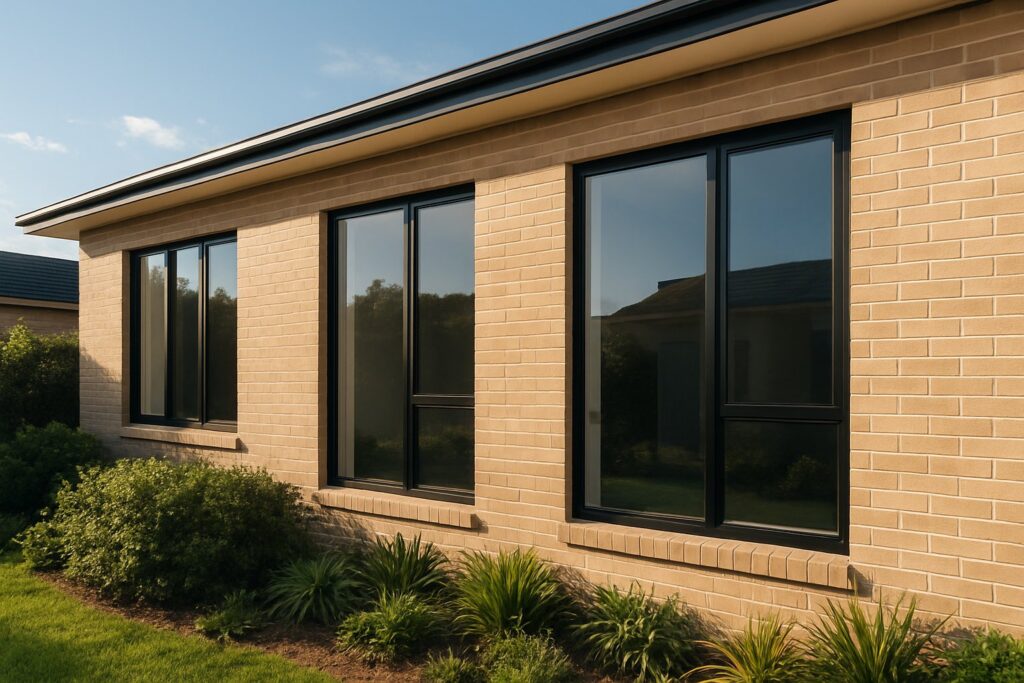
What Are Aluminium and Timber Composite Windows
Spending thousands on new windows without understanding what you’re actually buying is a recipe for regret. So let’s get the fundamentals straight before you request a single quote.
Definition and Core Concept
Aluminium and timber composite windows use a structural timber core protected by an external aluminium cladding, joined via an insulating thermal break. This construction combines the weather resistance and longevity of aluminium with the natural insulation and interior warmth of timber. The result is a composite window frame engineered to deliver the strengths of both materials while cancelling out their individual weaknesses.
Think of it as a layered system rather than a single material doing all the work. The aluminium shell faces the elements. The timber core handles thermal performance and gives you a natural interior finish. A thermal break sits between them, preventing energy from transferring through the frame.
Why Two Materials Outperform One
Timber on its own demands regular exterior painting and is vulnerable to moisture, UV damage, and rot — particularly in Australia’s harsh coastal and high-UV environments. Aluminium on its own conducts heat rapidly and feels cold to the touch in winter, creating condensation risks on interior surfaces. Neither material alone ticks every box.
The wood and aluminum composite approach eliminates each weakness by assigning each material to the role it performs best. The core benefits break down like this:
- Exterior durability without painting — the aluminium shell resists corrosion, UV fading, and moisture, removing the cycle of sanding and recoating that timber windows demand.
- Superior thermal insulation — the timber core provides natural insulating properties far better than aluminium or hollow uPVC profiles, helping your home stay comfortable year-round.
- Natural interior finish options — inside, you get real timber that can be oiled, stained, or painted to match your joinery, offering warmth and character that no synthetic frame replicates.
How Composite Differs from Clad Windows
Terminology in this space gets muddled quickly, and the confusion can cost you money if you end up specifying the wrong product. Three distinct constructions exist under similar-sounding names:
Aluminium-clad timber (often called aluclad windows) features a full structural timber frame with a thin aluminium skin bonded or clipped to the exterior face. The timber does the structural work; the aluminium is purely protective.
Timber-clad aluminium flips the arrangement — a structural aluminium frame carries a decorative timber veneer on the interior. The aluminium handles the load; the timber is cosmetic.
True composite construction integrates both materials structurally, with the aluminium timber profiles working together as a unified system separated by a dedicated thermal break. Both materials contribute to the frame’s rigidity, weather performance, and insulation.
Understanding which construction you’re being quoted on matters enormously, because thermal performance, maintenance requirements, and longevity differ between these three approaches. The distinction also affects how the frame handles moisture movement and thermal expansion over decades of Australian summers and winters.
That thermal break sitting between the two materials is where the real engineering happens — and it’s the single component that determines whether your composite windows actually perform as promised.
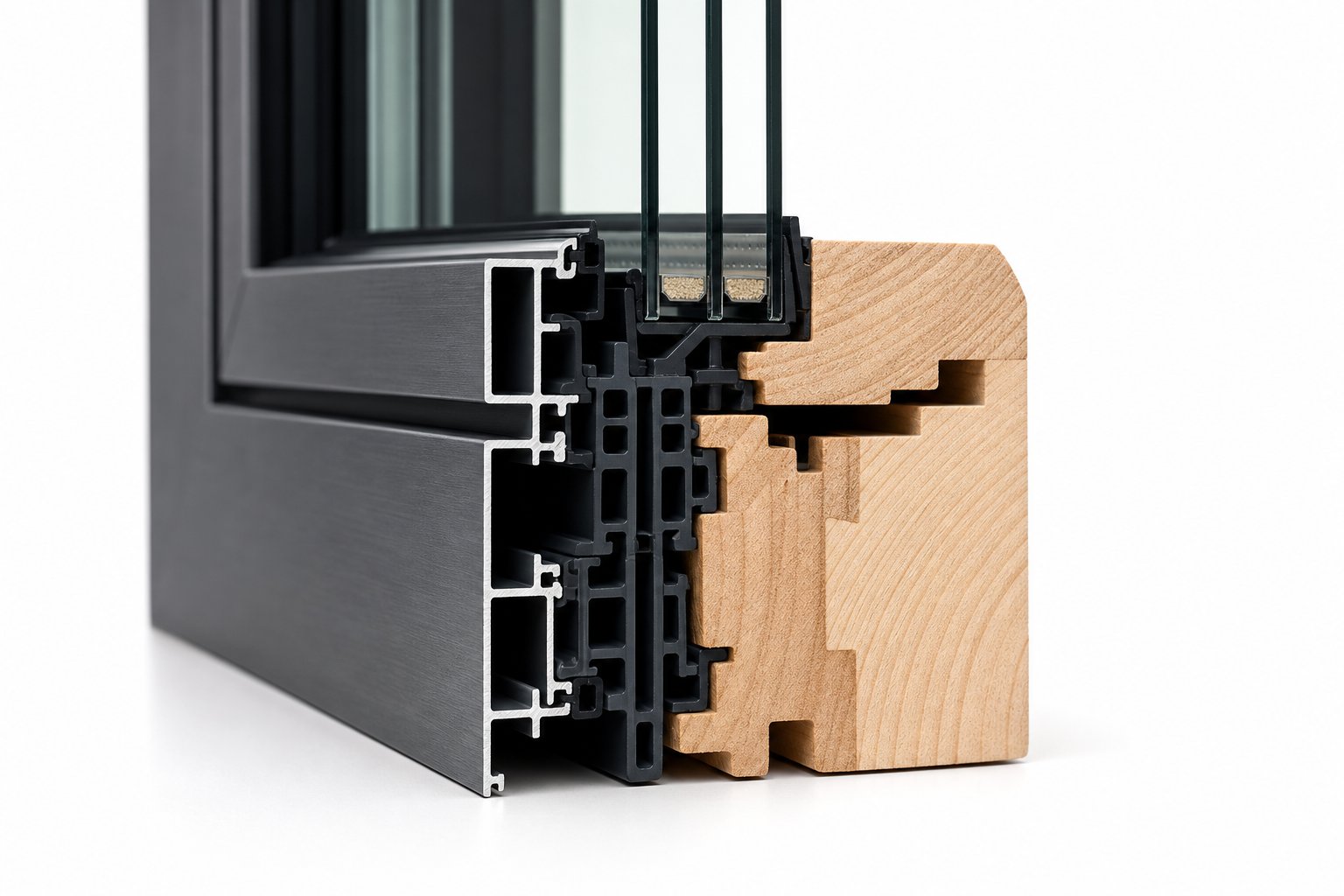
How Composite Window Construction Works
The performance gap between a well-engineered composite window and a poorly assembled one comes down to what’s hidden inside the frame. From the street, they can look identical. Internally, the layering and connection methods tell a completely different story.
Anatomy of a Composite Window Frame
Aluminium clad timber frame construction follows a specific sequence of layers, each with a distinct job. Working from the outside in, here’s what you’re paying for:
Aluminium exterior profile — a powder-coated or anodised aluminium extrusion, typically 1.5 mm to 2 mm thick, shaped to shed water and resist wind pressure. This is your first line of defence against rain, salt spray, and UV exposure.
Thermal break strip — a polyamide (nylon-based) or injected polyurethane foam barrier positioned between the aluminium and timber. This strip is the critical insulating layer that separates the two materials thermally.
Structural timber core — the main body of the frame, providing rigidity, screw-holding capacity for hardware, and the bulk of the window’s insulating mass. Timber insulates around 800 times better than aluminium, which is why it forms the structural heart of the system.
Interior timber finish — the visible face you see from inside your home. This can be left as natural grain, oiled, stained, or painted to match existing joinery.
Each layer contributes something the others cannot. Remove any one element and the system’s overall performance drops significantly — either thermally, structurally, or in terms of longevity.
How the Thermal Break Prevents Cold Bridging
Cold bridging occurs when a conductive material (like aluminium) creates a direct path for heat energy to travel through the frame. In winter, heat escapes outward along that path. The interior surface of the frame drops below the dew point temperature of the room air, and condensation forms — sometimes dripping onto sills and causing paint damage or mould growth.
The composite window thermal break interrupts this pathway entirely. Made from reinforced polyamide or structural foam with low thermal conductivity, the strip sits between the aluminium exterior and the timber core, preventing conductive thermal energy from passing between them. The interior timber surface stays closer to room temperature regardless of conditions outside.
This mechanism also prevents interstitial condensation — moisture forming within the frame assembly itself. By keeping the dew point outside the timber zone, the thermal break protects the wood from hidden moisture damage that could cause rot over decades. For Australian homes dealing with everything from frosty Canberra mornings to humid Brisbane summers, this internal moisture management is just as important as the energy savings.
The thermal break is the most critical component in any composite window. It determines both the energy performance (U-value) and the condensation resistance of the entire frame assembly. A poorly specified or undersized thermal break undermines every other material choice in the system.
Structural Integration Methods
How the aluminium cladding connects to the timber core varies between manufacturers, and the method chosen affects long-term durability, serviceability, and thermal performance.
Mechanical clip systems use aluminium or stainless steel clips that snap or screw the outer profile onto the timber frame. These allow for differential thermal expansion — aluminium expands and contracts at a different rate to timber — without stressing either material. They also make it possible to remove and replace the aluminium cladding independently if damage occurs.
Bonded (adhesive) systems use structural adhesives to fix the aluminium directly to the timber via the thermal break. This creates a rigid, sealed unit with excellent weather resistance, but makes future separation for repair more difficult.
Snap-fit profiles combine elements of both approaches, using interlocking aluminium extrusions that click into channels formed in the thermal break or timber. They offer a clean aesthetic with no visible fixings and reasonable serviceability.
For wood windows with aluminum cladding to perform reliably over 40 to 50 years in Australian conditions, the connection method must accommodate thermal movement without breaking seals or allowing water ingress. Coastal properties in particular need systems that won’t corrode at fixing points — stainless steel clips or marine-grade adhesives are worth specifying in these environments.
The integration method also determines how well the frame handles the pressure differences created by strong winds. In cyclone-prone regions of northern Queensland or the NT, mechanical connections rated to AS 2047 wind load requirements provide measurable confidence that the cladding stays put when it matters most.
With the construction understood, the next question most homeowners ask is whether all this engineering actually translates into measurable thermal and acoustic gains — and how those numbers compare to simpler, cheaper window types.
Thermal and Acoustic Performance Compared
Numbers cut through marketing claims faster than anything else. When you’re comparing aluminium and timber composite windows against other frame types, the metrics that matter most are U-values (thermal performance), Rw ratings (acoustic insulation), and condensation resistance. Here’s how they stack up.
U-Value Comparison Across Window Types
The whole-window U-value (Uw) measures how much heat passes through the entire window assembly — frame, glazing, spacer bars, and seals combined. Lower numbers mean less heat transfer and better insulation. In Australia, the National Construction Code (NCC) and the Window Energy Rating Scheme (WERS) set performance benchmarks that vary by climate zone, but the principle is universal: the lower your Uw, the less energy your home wastes.
High-performance composite units with triple glazing achieve whole-window Uw values as low as 0.64 W/m²K — a figure that comfortably exceeds even the most demanding NCC requirements for any Australian climate zone. To put that in perspective, here’s how different frame types typically compare:
| Window Type | Typical Uw (W/m²K) | Performance Rating |
|---|---|---|
| Aluminium-clad timber composite (triple glazed) | 0.64 – 0.80 | Excellent |
| Aluminium-clad timber composite (double glazed) | 1.2 – 1.5 | Very Good |
| Pure timber (double glazed) | 1.4 – 1.6 | Good |
| uPVC (double glazed) | 1.4 – 1.8 | Good |
| Pure aluminium with thermal break (double glazed) | 1.8 – 2.2 | Moderate |
| Pure aluminium without thermal break | 3.0 – 5.0 | Poor |
The composite window U-value comparison tells a clear story. Triple-glazed aluminium clad timber delivers roughly 40–45% better thermal performance than equivalent double-glazed units, and dramatically outperforms standard aluminium frames. For homes in cooler regions like Canberra, Hobart, or the Victorian highlands — where heating loads dominate energy bills — that gap translates directly into lower running costs and improved NatHERS star ratings.
Even in warmer climate zones, a lower Uw reduces unwanted heat gain during summer when paired with appropriate solar heat gain coefficient (SHGC) glazing selections. The aluminium timber window thermal performance advantage works in both directions.
Acoustic and Sound Insulation Performance
Thermal performance gets most of the attention, but composite window sound insulation is where these frames quietly outperform the competition — particularly against hollow uPVC profiles.
Sound insulation is measured using the weighted sound reduction index (Rw), expressed in decibels. Every 10 dB increase roughly halves the perceived loudness of external noise. Here’s why composite construction has an acoustic edge:
- Mass and density — timber is significantly denser than hollow uPVC chambers, and the combination of timber plus aluminium creates a heavier frame assembly that resists sound vibration more effectively.
- Damping properties — timber naturally absorbs vibrational energy rather than transmitting it, unlike aluminium or rigid plastic which can resonate at certain frequencies.
- Sealed construction — the tight integration between aluminium cladding, thermal break, and timber core leaves fewer air paths for sound to travel through.
A well-specified composite window with acoustic glazing (laminated glass with a PVB interlayer) typically achieves Rw ratings of 35–45 dB, depending on glazing thickness and configuration. Standard double-glazed uPVC units generally sit around 28–32 dB. That difference is noticeable — particularly for properties near busy roads, flight paths, rail corridors, or in dense urban areas like inner Sydney or Melbourne.
For homeowners in these environments, clad aluminum windows with acoustic glazing can reduce perceived traffic noise by more than half compared to basic double glazing. It’s one of those benefits you don’t fully appreciate until you close the window and the room goes quiet.
Condensation Resistance and Moisture Management
Condensation on window frames isn’t just unsightly — it damages paint, encourages mould growth, and signals that the frame surface is too cold relative to indoor humidity levels. Pure aluminium frames are notorious for this problem because metal conducts heat so efficiently that interior surfaces drop below the dew point temperature on cold mornings.
Composite windows address this through the same thermal break mechanism discussed earlier. By preventing cold bridging between the aluminium exterior and the timber interior, the break keeps the indoor frame surface significantly warmer than it would be on an all-aluminium frame. The timber itself — being a natural insulator — stays close to room temperature even when outside conditions are near freezing.
The practical result: interior surfaces remain above the dew point, and surface condensation simply doesn’t form under normal living conditions. This matters most in rooms with higher humidity levels — bathrooms, kitchens, and laundries — where pure aluminium frames often drip with moisture on winter mornings.
For Australian homes in climate zones 6, 7, and 8 (alpine and cold temperate regions), condensation resistance is a genuine comfort and maintenance consideration, not just a technical footnote. Even in milder coastal areas, overnight temperature drops combined with high humidity can trigger condensation on poorly insulated frames.
Performance numbers only tell part of the story, though. The visual and tactile qualities of composite windows — the timber species you choose, the aluminium colour you specify — shape how these frames actually look and feel in your home day to day.
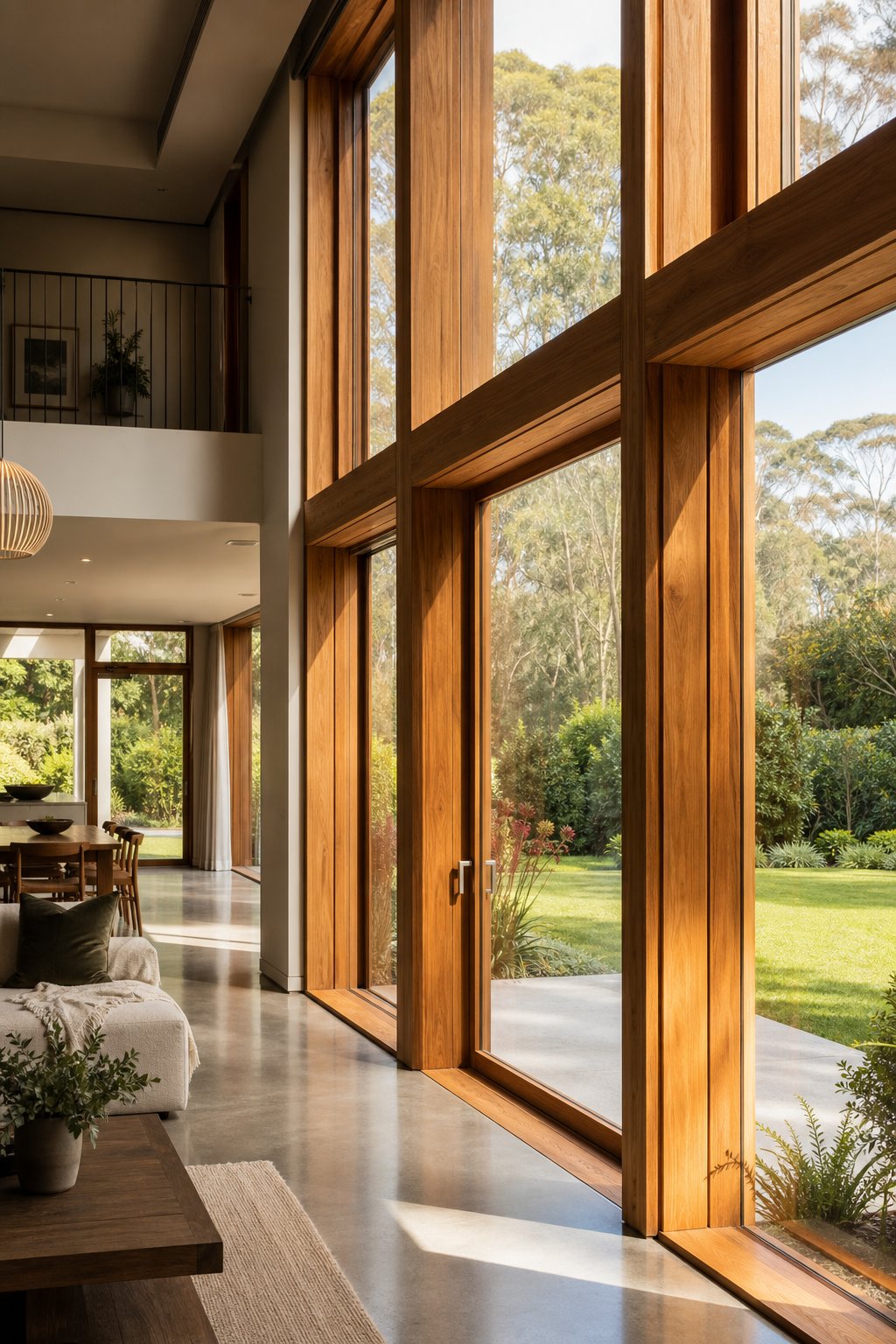
Timber Species and Aluminium Finish Options
A composite window’s performance specs might convince your head, but it’s the material choices — the grain you run your hand across, the colour that greets you from the street — that win over the rest of you. These frames offer a level of aesthetic customisation that neither pure aluminium nor uPVC can match, and the decisions you make here affect durability and maintenance just as much as appearance.
Timber Species Options and Their Impact
The timber core isn’t a one-size-fits-all component. Manufacturers offer several species, each bringing different characteristics to the finished window. Your choice shapes how the interior looks, how often you’ll need to re-treat it, and how long the frame lasts before structural concerns arise.
Four species dominate the aluclad windows market:
Pine (Scandinavian redwood) — the most common and affordable option. It machines well, accepts stains and paints evenly, and provides good structural stability. Pine is classified as durability class 3–4, meaning it relies on the aluminium cladding and proper sealing for long-term protection. For most composite applications where the timber is fully shielded from weather, pine performs reliably for decades.
European oak — prized for its rich grain and natural durability (class 2). Oak composite window frames deliver a premium interior aesthetic with deep, characterful figuring that improves with age. The trade-off is cost — oak adds significantly to the price — and weight, which can affect hardware selection for larger openings.
Larch — a softwood that punches above its weight in hardness and decay resistance (class 3). Larch has a warm, honey-toned grain and is one of the toughest softwoods available. It’s a solid middle-ground choice between pine’s affordability and oak’s prestige.
Accoya (acetylated wood) — engineered from sustainably sourced radiata pine treated with acetic acid under high pressure. This process reaches the core of the timber, delivering class 1 durability with a 50-year anti-rot guarantee. Accoya is dimensionally stable, meaning it resists swelling and shrinking through seasonal humidity changes — a genuine advantage in Australian climates that swing between dry summers and wet winters.
| Timber Species | Durability Class | Grain Appearance | Relative Cost | Maintenance Level |
|---|---|---|---|---|
| Pine (Scandinavian redwood) | Class 3–4 | Fine, even grain; light colour | $ | Moderate — re-treat every 5–8 years |
| European Oak | Class 2 | Bold, characterful figuring | $$$$ | Low — naturally resilient |
| Larch | Class 3 | Warm honey tones; tight grain | $$ | Low to moderate |
| Accoya | Class 1 | Fine, uniform; light colour | $$$ | Very low — exceptional stability |
For most Australian homeowners, the choice comes down to budget versus longevity. Pine keeps costs manageable and performs well when properly maintained. Accoya costs more upfront but is forgiving of neglect — a practical advantage if you’d rather not think about window maintenance for years at a stretch.
Aluminium Exterior Colour and Finish Choices
The exterior aluminium shell is where composite window colour options really open up. Unlike timber, which limits you to paint or stain shades, aluminium accepts industrial finishing processes that deliver colour permanence measured in decades rather than years.
Three main finish types are available for aluminium clad timber window finishes:
Powder coating (RAL colours) — the most popular choice. A dry powder is electrostatically applied to the aluminium profile and cured at high temperature, creating a tough, uniform finish. The RAL colour system offers hundreds of standard shades — from classic whites and greys through bold blues, greens, and blacks — plus custom colour matching for heritage or architectural requirements. Matt, satin, gloss, and textured finishes are all achievable.
Anodised finishes — rather than adding a coating on top, anodising creates a controlled oxide layer within the aluminium surface itself. The result is a metallic, natural-looking finish that preserves the aluminium’s original texture. Anodised profiles suit contemporary architectural styles where a raw, industrial aesthetic is desired. They also offer excellent corrosion resistance for coastal properties exposed to salt-laden air.
Textured and woodgrain coatings — sublimation printing technology can transfer realistic timber-look patterns onto aluminium surfaces. This allows the exterior to mimic timber grain while delivering aluminium’s zero-maintenance performance — useful for heritage streetscapes where council requirements dictate a timber appearance.
One of the most practical features of aluminium finishing is dual-colour specification. You can select one colour for the exterior face (perhaps a heritage green or charcoal to suit the streetscape) and a completely different colour for the interior-facing aluminium elements (a warm white or cream to complement your interior palette). This bicolour approach means your windows work aesthetically from both sides without compromise.
For Australian projects, suppliers like MEICHEN offer extensive aluminium colour ranges and custom configurations, giving homeowners, builders, and architects access to the full spectrum of powder-coated and anodised options suited to local conditions. Coastal properties in particular benefit from specifying marine-grade powder coating with pre-anodisation — a combination that provides the most complete long-term protection against salt spray and UV degradation.
Interior Timber Treatments
Inside your home, the timber face of a composite window becomes part of your interior design scheme. The treatment you choose determines both the visual effect and the maintenance cycle.
Natural oil finishes — penetrating oils (typically linseed or tung-based) soak into the timber grain, enhancing its natural colour and texture without forming a surface film. Oiled timber feels warm and tactile, ages gracefully, and is easy to spot-repair — just sand lightly and re-oil the affected area. This finish suits Scandinavian-inspired interiors and homes where natural materials are a design priority.
Stain finishes — semi-transparent stains add colour while allowing the timber grain to show through. They’re ideal for matching composite windows to existing timber joinery — skirting boards, architraves, or built-in cabinetry — without hiding the wood’s natural character. Stains are available in tones ranging from pale ash through to deep walnut.
Paint finishes — opaque paint provides the most uniform appearance and the widest colour choice. Factory-applied paint finishes (applied in controlled conditions before installation) deliver a more consistent, durable result than site-applied coatings. Dual-colour options extend here too — you might paint the interior timber white to match your walls while leaving the exterior aluminium in anthracite grey.
Whichever treatment you select, look for manufacturers offering factory-finished options. A finish applied in a controlled workshop environment — with proper preparation, priming, and curing — outperforms site-applied coatings in adhesion, consistency, and longevity.
One final consideration worth raising: timber sourcing credentials. Reputable composite window manufacturers use timber certified under FSC (Forest Stewardship Council) or PEFC (Programme for the Endorsement of Forest Certification) chain-of-custody schemes. These certifications verify that the timber comes from responsibly managed forests — a meaningful environmental credibility signal for homeowners who want performance without ecological compromise. If a supplier can’t provide FSC or PEFC documentation, ask why.
With species, colour, and finish decisions shaping the look and feel of your windows, the next practical question is what all these choices actually cost — and how to compare pricing fairly across different window types.
Understanding Composite Window Costs
Pricing for aluminium and timber composite windows isn’t a single number you can look up in a catalogue. It’s a stack of variables, each one shifting the final quote up or down depending on your specification. Understanding what drives cost — and what doesn’t — puts you in a stronger position when comparing quotes and deciding where to invest versus where to economise.
Cost Factors That Determine Composite Window Pricing
Not all specification choices carry equal weight on the bottom line. Some decisions add hundreds per opening; others shift the price by a fraction. Here are the primary cost drivers for aluminum wood clad windows, ranked from highest to lowest impact on your final quote:
- Glazing specification — the jump from double to triple glazing, plus coatings like Low-E and gas fills (argon or krypton), represents the single largest cost variable. Triple-glazed composite units can cost 30–50% more than equivalent double-glazed versions.
- Size and configuration — larger openings require more material, heavier glass, and beefier hardware. Non-standard dimensions or curved profiles attract custom manufacturing premiums of 20–50% above standard sizes.
- Timber species selection — as covered earlier, the gap between pine and oak or Accoya is substantial. Species choice alone can shift frame costs by 40–100%.
- Opening mechanism — fixed panes are cheapest. Casements sit mid-range. Tilt-and-turn, sliding, and bi-fold configurations require more complex hardware and engineering, pushing prices higher.
- Aluminium finish complexity — standard powder-coated colours (white, black, anthracite grey) cost less than custom RAL matching, dual-colour specifications, or anodised finishes.
- Hardware quality — hinges, locks, handles, and restrictors range from functional to architectural-grade. Premium hardware from European manufacturers adds cost but improves daily operation and longevity.
When requesting quotes, ensure each supplier is pricing against the same specification. A composite window cost comparison is meaningless if one quote includes triple glazing with Accoya frames and another prices double glazing in pine — yet both simply say “composite window” on the paperwork.
Relative Cost Positioning Against Other Window Types
Rather than quoting specific dollar figures that vary wildly by supplier, region, and project scope, the more useful framework is understanding where each window type sits relative to the others. The aluminum clad wood windows price point occupies the premium tier — above standard aluminium and uPVC, and comparable to or slightly above bespoke timber joinery.
| Window Type | Relative Cost Tier | Typical Lifespan | Ongoing Maintenance Cost |
|---|---|---|---|
| uPVC (double glazed) | Budget to Mid-Range | 20–30 years | Negligible |
| Pure aluminium (thermally broken) | Mid-Range to Premium | 45+ years | Negligible |
| Pure timber (hardwood) | Premium to Luxury | 30–60+ years | $30–$80/year (painting, sealing) |
| Aluminium-clad timber composite | Premium to Luxury | 40–60+ years | Low (interior re-oil every 5–8 years) |
In the Australian market, expect composite windows to sit roughly 30–60% above equivalent thermally broken aluminium units for supply only, with the gap narrowing once installation is factored in (composite and aluminium require similar fitting expertise). Compared to bespoke timber joinery from specialist manufacturers, composite pricing is often comparable — sometimes lower — because the aluminium cladding eliminates the need for the extensive exterior finishing that pure timber demands before leaving the factory.
Regional variation matters too. Projects in Sydney and Melbourne typically attract higher installation labour rates than regional areas, and coastal specifications (marine-grade coatings, stainless steel fixings) add a further premium regardless of location.
Long-Term Value and Total Cost of Ownership
Comparing window types on upfront price alone is like judging a car purchase by the sticker price without considering fuel, servicing, and how many years before it needs replacing. The aluminium timber window total cost of ownership tells a fundamentally different story from the day-one invoice.
Consider the maths over a 60-year period — roughly the lifespan of a well-maintained timber window. In that timeframe, uPVC windows need replacing two to three times (every 20–30 years), each cycle incurring full supply, installation, and disposal costs. Pure timber survives the distance but demands regular exterior repainting every five to seven years — a cumulative maintenance spend that adds up significantly over decades. Composite windows, by contrast, require neither full replacement cycles nor exterior repainting, because the aluminium shell handles weather protection indefinitely.
Energy savings compound the advantage further. A composite frame with triple glazing achieving a Uw of 0.64–0.80 W/m²K reduces heating and cooling loads measurably compared to standard aluminium or aged uPVC with failed seals. Over 40-plus years of energy bills, that thermal performance gap translates into thousands of dollars in reduced running costs — particularly in climate zones where heating or cooling dominates household energy consumption.
The practical takeaway: composite windows carry a higher initial investment, but their combination of extended lifespan, minimal maintenance, and superior energy performance delivers a lower cost per year of service than any alternative except perhaps pure aluminium — which sacrifices the interior timber aesthetic and acoustic advantages many homeowners value.
Budget frameworks help you decide what to spend. But the next decision is equally important: matching your window specification to your specific property type, location, and exposure conditions.
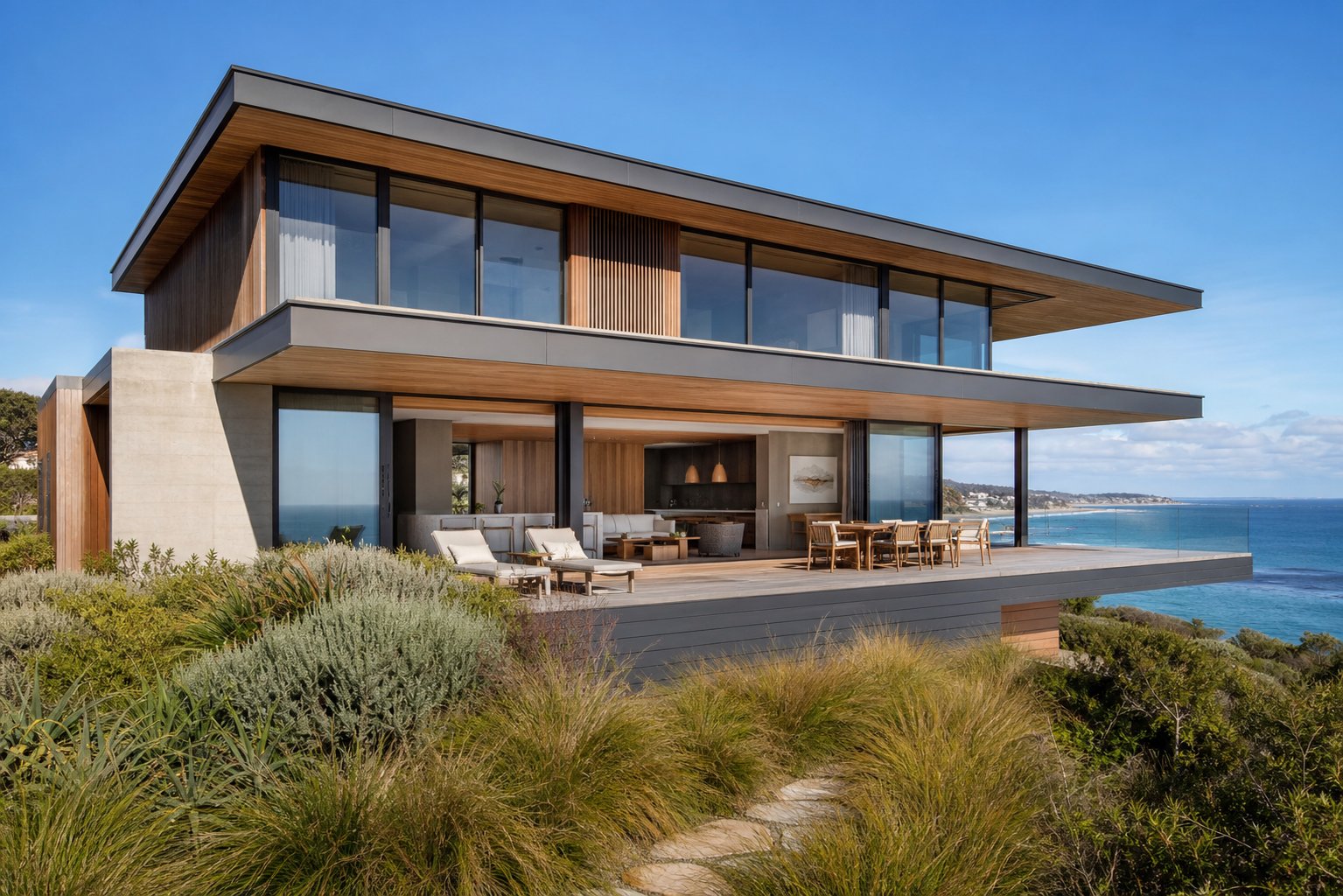
Choosing Composite Windows for Different Property Types
A window that performs brilliantly in a sheltered suburban street may fail within years on an exposed headland. Likewise, a sleek contemporary profile that suits a new build can look jarringly wrong on a Federation cottage. Specifying composite windows properly means matching the product to your property type, your location, and the regulatory environment you’re operating within.
Period Homes and Conservation Areas
Heritage overlays, conservation areas, and individually listed properties present a specific challenge: you need modern thermal performance without compromising the building’s historic character. This is where composite windows for conservation areas genuinely shine — and where they hold an advantage over both pure aluminium and uPVC alternatives.
Composite frames can replicate traditional timber profiles — slim sightlines, authentic glazing bar configurations, period-correct mouldings, and horn details on sash windows — because the interior and exterior faces are real materials, not synthetic approximations. The aluminium exterior can be powder-coated to match heritage colour schemes, while the timber interior maintains the authentic joinery appearance that conservation officers expect when assessing development applications.
In Australia, heritage requirements vary by state and council. Properties within Heritage Conservation Areas (HCAs) in NSW, Heritage Overlay zones in Victoria, or Character Residential zones in South Australia typically require council approval for window replacements on street-facing elevations. The key criteria are usually sympathetic appearance — matching the style, proportions, and materiality of the original windows. Composite construction satisfies these requirements because the visible faces are genuine aluminium and timber, not plastic imitating timber.
For individually heritage-listed properties, expect stricter scrutiny. Councils may require like-for-like materials, exact profile replication, and evidence that the replacement improves the building’s conservation. Slim-profile double glazing (with cavity widths as narrow as 8–12 mm) allows composite frames to accept heritage-appropriate glass units without the chunky sightlines that betray modern double glazing from the street.
New Builds and Extensions
At the opposite end of the spectrum, composite windows for new builds appeal to architects and builders for entirely different reasons. Contemporary residential design increasingly demands large glazed areas, minimal frame profiles, and floor-to-ceiling openings that blur the boundary between indoors and out. Wood aluminum clad windows deliver the structural rigidity needed for oversized openings — timber’s screw-holding strength supports heavy triple-glazed units — while the aluminium exterior provides the slim, clean lines that define modern facades.
From a compliance perspective, composite windows comfortably exceed NCC Section J energy efficiency requirements across all Australian climate zones. Their low Uw values contribute directly to higher NatHERS star ratings, which matters for new builds targeting 7-star or above. For projects pursuing Passivhaus certification or similar high-performance standards, triple-glazed composite frames are often the only window type that meets the stringent thermal envelope requirements without resorting to excessively thick profiles.
Architects also specify them for extensions to existing homes — particularly where a heritage front elevation transitions into a contemporary rear addition. The composite frame’s dual-character nature (traditional detailing on one side, minimal profiles on the other) makes it uniquely suited to bridging old and new within a single project.
Coastal, Urban, and Rural Environments
Your geographic exposure conditions should drive specification decisions just as much as aesthetics or budget. Aluminium timber windows coastal properties face a fundamentally different threat profile than identical windows installed 20 kilometres inland.
The aluminium exterior shell provides the first line of defence, but not all finishes are equal. For properties within 1 kilometre of the coastline, standard powder coating may not provide adequate long-term protection against salt-laden air. Marine-grade specifications — including Qualicoat Seaside-rated coatings, enhanced anodising of 25 microns or greater, and stainless steel fixings — are essential to prevent pitting, chalking, and premature coating failure. Salt spray testing to ISO 9227 (minimum 1,000 hours for severe marine exposure) provides a verifiable benchmark when comparing products.
Here’s what to prioritise based on your environment:
- Coastal properties — specify marine-grade powder coating (Qualicoat Seaside or equivalent), stainless steel hardware and fixings, enhanced drainage profiles to prevent salt accumulation, and commit to quarterly freshwater rinsing of frames. Verify the product meets water tightness Class 9A (EN 12208) and wind resistance Class C5 (EN 12210) for exposed sites.
- Urban properties — prioritise acoustic performance with laminated glazing (Rw 40 dB+), specify security-rated hardware compliant with AS 5039, and consider tilt-and-turn mechanisms that allow ventilation without fully opening to street noise. The mass of timber-and-aluminium frames provides inherent acoustic dampening that hollow uPVC profiles cannot match.
- Rural and bushland properties — focus on BAL (Bushfire Attack Level) compliance where required, select timber species with dimensional stability for wide temperature swings, and choose aluminium colours that integrate with the natural landscape. Composite frames in BAL-rated areas must meet AS 3959 requirements — aluminium’s non-combustible exterior helps, but the timber core requires specific protection detailing at higher BAL ratings.
To verify whether a product suits your exposure zone, ask the manufacturer for test certificates — not just marketing claims. Relevant standards include AS 2047 (windows and external glazed doors), water penetration resistance testing, and structural adequacy under wind load for your specific wind region. Products tested and certified to these Australian Standards provide documented assurance that the window will perform under the conditions your site actually experiences.
Knowing which product suits your property and location is one thing. Understanding the practical realities of getting composite windows manufactured, delivered, and installed — including realistic lead times and what certifications to verify — is the next piece of the puzzle.
Installation Process and What to Expect
Composite windows aren’t a weekend DIY project. Their weight, precision tolerances, and the need to maintain thermal break integrity during fitting mean the composite window installation process demands specialist handling from start to finish. Knowing what’s involved — and how long it takes — helps you plan your renovation without nasty surprises.
What to Expect During Installation
The journey from decision to finished windows follows a predictable sequence, though each stage takes longer than you might expect if your only reference point is off-the-shelf uPVC replacements.
Survey and measurement — a specialist surveyor visits your property to take precise measurements of each opening, assess structural conditions, check for rot or damage in existing frames, and confirm that the building can support the weight of composite units (which are significantly heavier than aluminium or uPVC equivalents).
Manufacturing — your windows are built to order. There’s no warehouse of pre-made alu clad windows waiting to ship. Each frame is manufactured to your exact dimensions, species, colour, and glazing specification.
Removal of existing windows — the installation crew carefully extracts old frames, inspects the rough opening for structural issues, and prepares the aperture. In older Australian homes — particularly weatherboard, brick veneer, or fibro construction — hidden damage behind frames is common and may require remediation before new units go in.
Fitting new frames — composite frames are positioned, shimmed to plumb and level, and mechanically fixed into the structural opening. The weight of timber-and-glass assemblies (often 40–60% heavier than equivalent aluminium-only units) means two installers minimum per opening, with larger configurations requiring lifting equipment.
Sealing and finishing — expanding foam insulation fills gaps between frame and structure, followed by internal and external sealant application. Correct sealing is critical for both weather tightness and thermal performance — a poorly sealed frame undermines the entire thermal break system.
Final commissioning — every opening mechanism is tested, drainage channels verified, locks and restrictors checked, and the homeowner walked through operation and care. Expect the installer to demonstrate tilt-and-turn functions, cleaning positions, and hardware adjustment points.
A typical installation takes 45 to 90 minutes per window, depending on size, floor level, and access. A full-house replacement of 10–15 openings generally runs two to three days on site — longer if structural remediation is needed or if upper-storey access requires scaffolding.
Typical Lead Times and Project Planning
This is where composite windows diverge most sharply from standard replacements. You won’t be waiting a week or two. Bespoke aluminium clad window lead times run significantly longer because every unit is manufactured to individual specification — and many premium composite systems sold in Australia are manufactured in Europe, adding international shipping and customs clearance to the timeline.
Realistic timeframes for the Australian market:
| Product Type | Typical Lead Time (Order to Site) |
|---|---|
| Standard composite windows (stock colours) | 10–14 weeks |
| Custom colour or dual-colour specification | 14–18 weeks |
| Non-standard sizes or configurations | 14–20 weeks |
| Composite sliding or bi-fold doors | 16–22 weeks |
| Full bespoke (heritage profiles, special glazing) | 20–26 weeks |
Several factors push lead times longer:
- Custom colours — anything outside a manufacturer’s standard palette adds production time for colour matching and batch coating.
- Non-standard sizes — oversized or unusually shaped openings require individual engineering and may need structural calculations.
- Hardware choices — premium European hardware brands (Roto, Siegenia, MACO) may have their own supply constraints.
- Order volumes — a full-house order of 20+ windows competes for factory capacity differently than a three-window bathroom renovation.
- Seasonal demand — European manufacturers often shut down for several weeks in August and over Christmas, which can add time if your order falls around these periods.
The practical implication: treat your window order as a structural milestone in your renovation programme, not a finishing detail. Place orders during the design phase — ideally before construction begins on extensions or major renovations. Walls can’t be closed, insulation can’t be completed, and interior finishes can’t proceed until windows are installed. A late order can stall an entire build for months.
Certifications and Quality Marks to Verify
Not every installer has the expertise to handle composite frames correctly. The precision required — maintaining thermal break alignment, managing heavier loads, achieving correct seal compression — means you need verified competence, not just a willing tradesperson with a ute. Here are the composite window installer certifications and product quality marks worth checking before you sign a contract:
- AS 2047 compliance — the Australian Standard for windows and external glazed doors. Products must be tested and certified to this standard, covering structural adequacy, water penetration resistance, and air infiltration. Ask for the test certificate specific to the product and configuration you’re ordering.
- AS 1288 compliance — the Australian Standard for glass selection and installation. Ensures the glazing specification meets safety requirements for your application, including human impact considerations and wind load ratings.
- WERS rating — the Window Energy Rating Scheme provides an independent, verified energy performance rating. A WERS certificate confirms the thermal claims on the product literature are backed by standardised testing, not just manufacturer assertions.
- AWA membership — the Australian Window Association represents manufacturers and installers committed to industry standards. AWA members agree to codes of practice covering product quality, installation standards, and consumer protection.
- State-based licensing — window installation requires appropriate trade licensing in most Australian states. In NSW, this means a contractor licence from NSW Fair Trading. In Victoria, a registered building practitioner. In Queensland, a QBCC licence. Verify your installer holds the correct licence class for glazing work in your state.
- BAL compliance certification — for properties in bushfire-prone areas, windows must meet AS 3959 requirements for the designated Bushfire Attack Level. The product needs specific BAL certification — not just a general claim of suitability.
- Manufacturer warranty backed by installer guarantee — look for both a product warranty (typically 10–20 years on frames, 5–10 years on hardware) and a separate installation workmanship guarantee. If the installer disappears, the product warranty should still be honoured directly by the manufacturer.
Request documentation upfront. A reputable supplier and installer will provide test certificates, licence numbers, and warranty terms without hesitation. If they can’t — or won’t — that tells you something important about how they’ll handle problems down the track.
Getting the installation right protects your investment on day one. But composite windows are a 40-to-60-year proposition, and what happens in the decades after installation — the maintenance you do or don’t perform — determines whether they actually deliver on that lifespan promise.
Long-Term Maintenance and Lifespan Planning
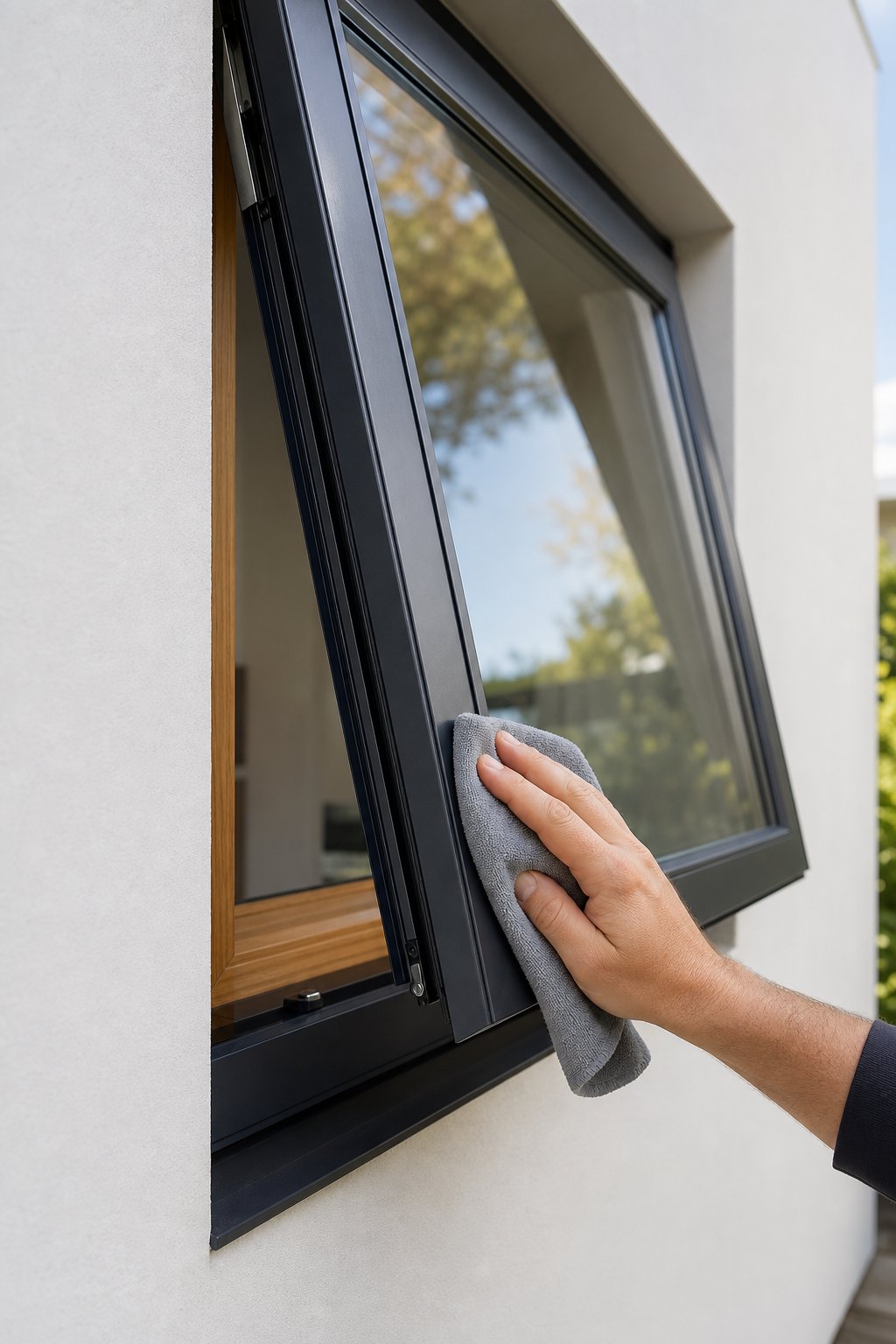
A 40-to-60-year composite window lifespan expectancy sounds impressive on paper. But that number isn’t automatic — it’s earned through a modest amount of attention at the right intervals. The good news: the aluminium clad window maintenance schedule is dramatically lighter than what pure timber demands. No exterior repainting. No sanding. No seasonal swelling battles. What remains is a short list of periodic checks that keep everything performing as designed.
Maintenance at 5, 10, 20, and 30+ Year Intervals
Rather than vague advice to “maintain regularly,” here’s a concrete timber aluminium window care guide mapped to realistic timeframes. Some tasks take minutes; others require a professional. Knowing which is which — and when — prevents small oversights from becoming expensive problems.
| Time Interval | Maintenance Tasks | Who Does It |
|---|---|---|
| Annually | Clear drainage channels of leaves and debris; lubricate hinges, locks, and moving hardware with silicone-based lubricant; wipe aluminium cladding with mild soapy water; visually inspect seals and gaskets for cracking | Homeowner |
| Every 5 years | Re-oil or re-stain interior timber surfaces; inspect weather seals for compression loss; check trickle vents for blockage; verify all locking points engage correctly | Homeowner |
| Every 10 years | Replace worn gaskets and weather seals; service or replace hardware (hinges, espagnolette locks) showing wear; inspect thermal break integrity at frame junctions | Professional |
| Every 20 years | Assess powder coating condition — re-coat aluminium if chalking or fading is evident on sun-exposed elevations; replace glazing units if seal failure has occurred; full hardware overhaul | Professional |
| 30+ years | Full condition assessment: evaluate timber core integrity, thermal break performance, and overall frame condition; decide between targeted refurbishment (new glazing, fresh coatings, hardware replacement) or full window replacement | Specialist surveyor |
The annual tasks are genuinely quick — fifteen minutes per window at most. Drainage channel clearing is the single most important habit to build, particularly in autumn when leaf litter accumulates. Blocked drainage is the root cause of most moisture-related failures in composite wood windows, and it’s entirely preventable with a quick visual check.
The five-year interior timber re-treatment is more about aesthetics than structural necessity. An oiled finish that’s looking dry or patchy isn’t failing — it just needs refreshing. A light sand and a fresh coat of penetrating oil restores the surface in under an hour per window. If you chose a factory-applied lacquer or paint finish, the interval stretches to eight or ten years before touch-up becomes worthwhile.
Common Failure Modes and Prevention
Honesty matters here. Composite windows aren’t immune to problems — they’re just resistant to the most common ones that plague other frame types. When issues do arise, they’re almost always traceable to one of four causes:
Seal failure between aluminium and timber — the junction where the aluminium cladding meets the thermal break or timber core relies on gaskets and sealants to prevent moisture ingress. Over time (typically 15–25 years), these seals can harden, shrink, or crack. If moisture penetrates behind the cladding and can’t drain away, it contacts the timber core and rot begins — invisibly, from the outside in.
Prevention: Annual visual inspection of external seal lines. Look for gaps, lifting edges, or sealant that’s gone brittle. Catch it early and a re-seal costs a fraction of a frame replacement. Well-designed systems with ventilated cavities and pressure-equalised drainage are far more forgiving than bonded constructions, because any moisture that does enter has an escape path.
Timber rot from blocked drainage — every composite frame includes concealed drainage channels that direct water away from the timber core. Leaves, dirt, insect nests, or paint overspray can block these channels. Water pools instead of draining, saturates the timber, and decay follows. This is the most common failure mode — and the most preventable.
Prevention: Clear drainage slots during your annual check. Use a thin brush or compressed air to dislodge debris. Never paint over drainage holes during interior redecorating.
Colour fading on sun-exposed elevations — north-facing and west-facing aluminium surfaces in Australia cop intense UV exposure year-round. Even quality powder coatings will gradually chalk or fade over 15–20 years on these elevations, while south-facing frames on the same house may look untouched.
Prevention: Specify coatings with a Qualicoat Class 2 or higher rating for UV resistance. Annual washing removes surface contaminants that accelerate degradation. Accept that some fading is normal over decades — it’s cosmetic, not structural, and re-coating is possible without replacing the frame.
Hardware wear and mechanical fatigue — hinges, locking mechanisms, and stay arms are the moving parts in an otherwise static system. Daily operation over 10–15 years causes gradual wear — stiff handles, locks that don’t engage fully, or hinges that allow the sash to drop slightly.
Prevention: Annual lubrication with silicone spray (not WD-40, which attracts dust). Adjust hinge tension and lock compression as needed — most quality hardware includes adjustment screws for exactly this purpose. Replace worn components individually rather than waiting for complete failure.
End-of-Life and Environmental Considerations
Eventually — at 40, 50, or 60 years — even well-maintained composite windows reach a point where refurbishment no longer makes economic sense. What happens then matters more than most homeowners realise, particularly as embodied carbon and waste reduction become mainstream concerns in Australian building practice.
The environmental story for composite frames at end-of-life is genuinely positive compared to alternatives:
- Aluminium cladding — fully recyclable with no loss of material quality. Aluminium can be recycled indefinitely, and recycling requires only 5% of the energy needed to produce primary aluminium. The cladding is easily separated from the timber core at demolition.
- Timber core — biodegradable, recyclable as biomass fuel, or reusable as reclaimed timber depending on condition. Untreated timber can be composted; treated timber is directed to licensed waste facilities. Either way, it doesn’t persist in landfill for centuries.
- Separation at end-of-life — because the aluminium and timber are joined mechanically (clips, screws, or snap-fit profiles) rather than chemically fused, the two materials can be separated for individual recycling streams. This is a significant advantage over uPVC windows, which are difficult to recycle due to mixed plastics, steel reinforcement, and chemical stabilisers bonded together.
The contrast with uPVC is worth noting directly. While uPVC recycling pathways exist in Australia, they remain limited in capacity and geographic reach. Much end-of-life uPVC still goes to landfill, where it persists indefinitely. Composite wood windows avoid this problem entirely — both constituent materials have established, economically viable recycling infrastructure.
Embodied carbon is the other consideration. Aluminium production is energy-intensive (though increasingly powered by renewables in Australian smelters), while timber acts as a carbon store — locking away CO2 absorbed during the tree’s growth for the window’s entire service life. The net embodied carbon of a composite frame sits lower than pure aluminium and significantly lower than uPVC when full lifecycle analysis is applied.
For homeowners who value environmental credentials, look for manufacturers holding FSC or PEFC chain-of-custody certification on their timber supply. These certifications verify that the wood comes from responsibly managed forests where harvested trees are replanted — closing the carbon loop and ensuring your window choice doesn’t contribute to deforestation.
Maintenance keeps your windows performing. Environmental responsibility ensures they don’t become a problem when their service life finally ends. But the most immediate question remaining is whether composite windows are actually the right choice for your specific project — or whether a different system better matches your priorities, budget, and timeline.
Deciding Whether Composite Windows Are Right for You
Every window type involves trade-offs. Composite construction minimises more of them than any single-material alternative — but it’s not universally the best answer for every project, budget, or timeline. The clearest path to a confident decision is asking yourself the right questions before you engage suppliers.
Decision Criteria for Your Project
Work through these six questions honestly. Your answers will tell you whether aluminum clad wood windows align with your situation — or whether a different system deserves your attention:
- What is your budget range? Composite windows sit in the premium-to-luxury tier. If your budget only stretches to mid-range, thermally broken aluminium delivers strong performance without the timber premium.
- What property type do you have? Heritage homes, architect-designed builds, and high-end renovations benefit most from the dual-material aesthetic. Standard project homes may not justify the investment.
- What exposure conditions apply? Coastal salt spray, extreme UV, bushfire zones, or heavy urban noise all favour composite construction — but each demands specific sub-specifications within the composite category.
- What aesthetic do you want? If natural timber interiors matter to you, composite is one of only two options (the other being pure timber, with its maintenance burden). If you’re indifferent to interior materiality, aluminium alone may suffice.
- How long do you plan to stay in the property? Composite windows reward long-term ownership. If you’re planning to sell within five years, the payback period on the premium investment may not complete before settlement.
- What maintenance commitment are you comfortable with? Composite requires less than timber but more than pure aluminium. If zero maintenance is your absolute priority, aluminium-only frames edge ahead.
When Composite Windows Are the Strongest Choice
Certain project scenarios make aluminium and timber composite windows the clear frontrunner. If two or more of these apply to your situation, composite construction likely delivers the best long-term value:
- Long-term ownership — you’re staying 15+ years and want to amortise the premium over decades of reduced maintenance and energy savings.
- Premium aesthetics required — your interior design demands real timber warmth, not a synthetic imitation, while your exterior needs a durable, low-maintenance finish.
- High-exposure location — coastal, alpine, or high-wind sites where the aluminium shell protects the timber core from conditions that would destroy unclad wood within years.
- Conservation area compliance — council heritage requirements demand authentic materials on visible elevations, ruling out uPVC and making pure aluminium aesthetically inappropriate.
- Thermal performance is the priority — you’re targeting high NatHERS ratings, Passivhaus certification, or simply want the lowest possible energy bills in a heating-dominated climate zone.
- Acoustic isolation needed — the mass and damping properties of wood clad aluminum windows outperform hollow-profile alternatives for noise reduction near roads, rail, or flight paths.
If none of these scenarios resonate — if your project is budget-driven, short-term, or purely functional — composite may be over-specifying for your needs. There’s no shame in that. The right window is the one that matches your actual priorities, not the one with the longest feature list.
Exploring Your Aluminium Window Options
For projects where the decision leans toward aluminium-dominant solutions — commercial fitouts, modern new builds prioritising minimal frames, or situations where zero exterior maintenance outweighs the desire for interior timber — dedicated aluminium window systems deliver excellent performance without the composite price premium.
This is particularly relevant for Australian builders, developers, and architects working on multi-unit residential, mixed-use commercial, or contemporary homes where sleek aluminium profiles and expansive glazing define the design language. Thermally broken aluminium frames have improved dramatically in recent years, and for many projects they represent the optimal balance of performance, aesthetics, and cost.
If your research points you toward aluminium rather than composite, suppliers like MEICHEN offer comprehensive aluminium window systems with custom configurations, extensive colour options, and glazing choices suited to Australian residential and commercial projects. Their project-based supply capabilities serve homeowners through to architects, with the flexibility to specify everything from standard casement windows to large-format sliding systems — all compliant with AS 2047 and tailored to local climate conditions.
Whether you land on aluminium clad windows with a timber core or a pure aluminium system, the thousands you spend should buy confidence — in the product’s performance, the supplier’s credentials, and the knowledge that your choice genuinely fits your project rather than someone else’s marketing narrative.
Frequently Asked Questions About Aluminium and Timber Composite Windows
1. How long do aluminium and timber composite windows last?
With proper maintenance, aluminium and timber composite windows typically last 40 to 60 years. The aluminium exterior shell protects the timber core from weather damage, eliminating the rot and decay that shortens the lifespan of unclad timber frames. Longevity depends on keeping drainage channels clear, lubricating hardware annually, and re-treating interior timber surfaces every five to eight years. At the 30-year mark, a professional assessment determines whether targeted refurbishment or full replacement makes better economic sense.
2. Are composite windows worth the extra cost over standard aluminium?
Composite windows justify their premium for homeowners planning to stay long-term, those needing superior thermal or acoustic performance, and projects requiring natural timber interiors. They deliver roughly 40-45% better thermal insulation than standard thermally broken aluminium when triple glazed, reduce perceived noise by more than half compared to basic double glazing, and provide a real timber interior finish. However, if zero maintenance and lower upfront cost are your priorities, thermally broken aluminium systems from suppliers like MEICHEN offer strong performance at a more accessible price point for Australian residential and commercial projects.
3. What maintenance do aluminium clad timber windows require?
Annual maintenance takes about fifteen minutes per window: clear drainage channels of debris, lubricate hinges and locks with silicone spray, and wipe aluminium surfaces with soapy water. Every five years, re-oil or re-stain the interior timber and inspect weather seals. At ten-year intervals, a professional should replace worn gaskets and service hardware. The aluminium exterior never needs repainting, which eliminates the most labour-intensive maintenance task associated with pure timber windows.
4. What U-value can composite windows achieve in Australia?
High-performance aluminium and timber composite windows with triple glazing achieve whole-window U-values (Uw) as low as 0.64 W/m2K, comfortably exceeding NCC requirements for all Australian climate zones. Double-glazed composite units typically range from 1.2 to 1.5 W/m2K. These figures compare favourably to pure thermally broken aluminium at 1.8 to 2.2 W/m2K and standard aluminium without thermal breaks at 3.0 to 5.0 W/m2K. Lower U-values translate directly into reduced heating and cooling costs and higher NatHERS star ratings.
5. Can composite windows be used in bushfire-prone areas of Australia?
Composite windows can meet Bushfire Attack Level (BAL) requirements under AS 3959, but specific certification is essential. The aluminium exterior provides a non-combustible outer layer, which helps at lower BAL ratings. At higher ratings (BAL-29, BAL-40, and BAL-FZ), the timber core requires additional protection detailing and the product needs explicit BAL certification for your designated level. Always request the specific BAL test certificate from the manufacturer rather than relying on general suitability claims.
More Window & Door Guides