What Exactly Is a Window Fabricator
When you order a new window, you probably picture a single company doing everything, from melting raw aluminium to fitting the finished product into your wall. In reality, three distinct specialists handle three very different jobs. The one most buyers never think about is the window fabricator, and that gap in understanding can cost you.
A window fabricator is the specialist who takes raw frame profiles, sealed glass units, hardware, and gaskets, then cuts, joins, glazes, and assembles them into a finished, ready-to-install window.
Window Fabricator Defined
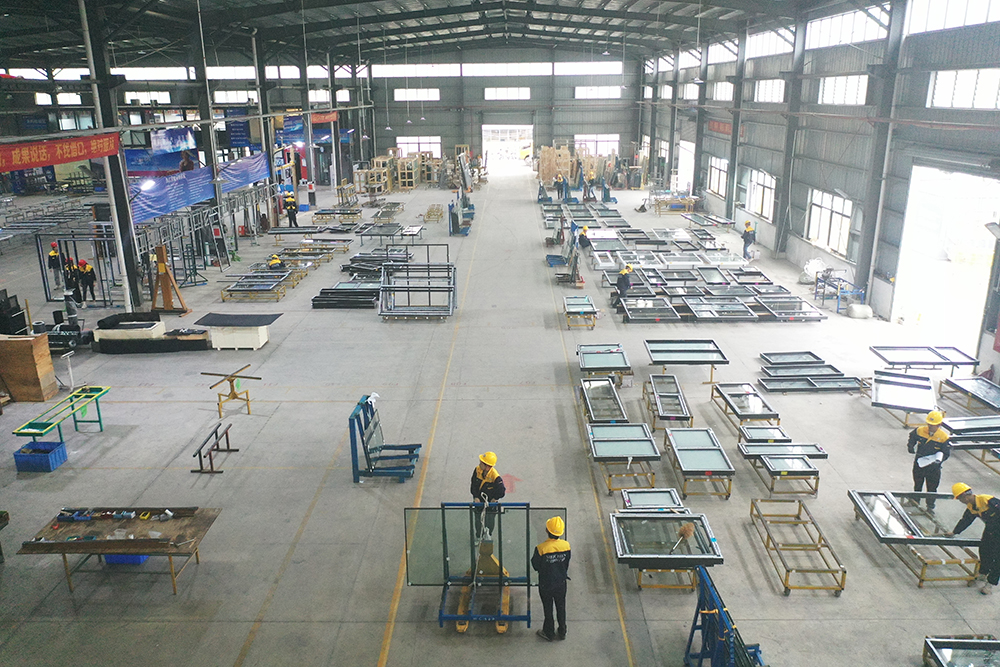
Imagine a precision assembly operation rather than a raw-materials plant. A fabricator receives extruded aluminium or uPVC profiles and cuts them to exact dimensions using CNC cutting centres or double-head mitre saws. Corners are then welded or mechanically joined, sealed glass units are seated into the frame, and hardware like hinges, locks, handles, and weatherstripping is fitted. Every assembled unit goes through quality checks, from visual inspections to air-tightness verification, before it ships. The fabrication stage is where individual components become a single, functioning product.
Fabricator vs Manufacturer vs Installer
Confusion between these three roles is common, yet each one occupies a distinct position in the supply chain. A raw-material manufacturer produces the base inputs: aluminium billets, PVC compound, or float glass. An installer works on-site, fitting the completed window into a building opening. The fabricator sits squarely in the middle, turning commodity materials into a precision-engineered, code-compliant assembly.
| Role | Primary Activity | Deliverable |
|---|---|---|
| Raw-Material Manufacturer | Produces base materials such as aluminium billets, PVC compound, or float glass | Bulk raw materials and extruded profiles |
| Window Fabricator | Cuts profiles, joins frames, inserts glazing, fits hardware, and runs quality control | Finished, tested window assemblies ready for installation |
| Installer | Fits completed window units into building openings on-site | A weathertight, operational window in the finished structure |
You’ll notice the fabricator is the critical middle link. Skip over this stage, or choose a weak one, and even the best raw materials and the most skilled installer can’t save the end result. Tolerances, seal integrity, and hardware function are all locked in during fabrication. That raises a bigger question: where exactly does this middle link fit within the broader window industry ecosystem, and why does its position matter so much to the final product you receive?
Where Fabricators Sit in the Window Industry Supply Chain
A finished window passes through many hands before it reaches your wall, and each link in that chain adds a specific kind of value. Most buyers only interact with the installer or the showroom, so the upstream steps remain invisible. Understanding the full journey from raw ore to installed product reveals why the fabrication stage carries so much weight.
From Raw Material to Finished Window
Picture the supply chain as a relay race with six legs:
- Raw-material suppliers (aluminium smelters, glass float plants, PVC compounders) produce the base inputs.
- Profile extruders force heated aluminium or PVC through precision dies to create the shaped frame sections, a process that determines the profile’s geometry, thermal-break chambers, and structural properties.
- Window fabricators receive those extruded profiles alongside glass units, hardware, and seals, then cut, join, glaze, and assemble everything into a finished window.
- Distributors or direct-sales channels move the completed units to market.
- Installers fit the windows into building openings on-site.
- The end consumer finally gets a weathertight, operational product.
Some fabricators vertically integrate multiple steps. A company might extrude its own profiles and fabricate the finished window under one roof, gaining tighter quality control and faster turnaround. Others specialise narrowly, focusing exclusively on assembly and leaving extrusion and distribution to separate businesses. Neither model is inherently better; what matters is how well each handoff is managed.
Why the Fabricator Is the Quality Gatekeeper
The fabrication stage is where design intent collides with physical reality. An extruder can produce a flawless profile, and an installer can follow every best-practice guideline, but if the fabricator cuts a frame 2mm short or seats a glass unit with an uneven seal, the entire product underperforms. Tolerances, seal integrity, and hardware function are all locked in at this step.
A weak link here cascades into real-world problems: air leaks that inflate energy bills, water penetration that damages interior finishes, and premature hardware failure that triggers warranty claims. That is why understanding what goes into, and comes out of, a fabrication facility matters so much.
Key inputs a fabricator receives:
- Extruded aluminium or uPVC frame profiles (with steel reinforcement where required)
- Insulated glass units (IGUs), often double- or triple-glazed
- Hardware kits: hinges, locks, handles, friction stays
- Gaskets, EPDM weatherstripping, and sealants
- Ancillary components such as trickle vents and drainage caps
Key outputs a fabricator delivers:
- Fully assembled, glazed window frames ready for installation
- Units tested for air infiltration, water penetration, and visual defects
- Documented compliance with relevant performance standards
This systems-level view makes one thing clear: the fabricator does not simply bolt parts together. They translate a set of raw components into a precision-engineered assembly that must perform under wind load, rain, UV exposure, and thousands of open-close cycles. The real question becomes how, exactly, that transformation happens on the production floor, from the first profile cut to the final quality-control stamp.
The Window Fabrication Process from First Cut to Final Inspection
That transformation from loose components to finished window follows a precise, repeatable sequence. Every fabrication facility runs variations of the same core workflow, and knowing what happens at each stage helps you spot the difference between a meticulous operation and a corner-cutting one.
- Profile measurement and cutting
- Reinforcement insertion (PVC profiles)
- Corner joining and frame assembly
- Glazing and sealing
- Hardware fitting
- Quality-control inspection and dispatch
Profile Cutting and Preparation
Everything starts with raw extruded profiles arriving at the shop floor. Aluminium or PVC lengths are loaded into double-head mitre saws or CNC cutting centres that measure and cut each piece to exact dimensions, typically at 45-degree angles for mitre joints. Modern processing centres handle cutting, drilling, milling, and marking in a single machining cycle, which eliminates manual handling between stations and keeps tolerances tight.
For PVC profiles, there is an extra step before assembly. Galvanised steel reinforcement bars are inserted into the hollow chambers of each cut section and screwed into place. This steel core gives PVC frames the structural rigidity they need to resist wind loads and support the weight of heavy insulated glass units. Aluminium profiles skip this step entirely because the material’s inherent strength-to-weight ratio provides adequate structural performance on its own.
Corner Joining and Frame Assembly
Corner joining is where the frame takes shape, and the method depends entirely on the material being fabricated.
PVC frames use heat-fusion welding. The mitre-cut ends of two profile sections are pressed against a heated plate until the plastic softens, then clamped together under pressure. The melted material fuses into a single, continuous joint. Four-head welding machines can weld all four corners of a rectangular frame simultaneously, producing a monolithic structure with no mechanical fasteners at the joints. After welding, CNC corner cleaning machines trim away the excess weld bead to leave a smooth, finished surface.
Aluminium frames take a different approach. Because aluminium cannot be heat-fused in the same way, fabricators use mechanical crimping or screw-port joining. Corner cleats, typically cast aluminium or pressed steel brackets, are inserted into the profile channels, and a crimping press deforms the aluminium around the cleat to lock the joint. Some systems use screw-port connections instead, where fasteners draw the profiles tight against internal corner blocks. Both methods produce strong, square joints suited to aluminium’s rigid characteristics.
Glazing, Sealing, and Hardware Fitting
With the frame assembled, the insulated glass unit (IGU) is seated into the rebate. Glazing beads, pre-cut strips that snap or press into channels around the glass perimeter, hold the unit in place. EPDM gaskets or wet-applied sealant create the weathertight barrier between glass and frame. This seal is critical: even a small gap invites moisture ingress and condensation between panes, which destroys the IGU’s insulating gas fill over time.
Hardware installation follows. Hinges, espagnolette locks, handles, friction stays, and trickle vents are all fitted according to the window type, whether casement, awning, sliding, or double-hung. Each component is positioned, drilled, and fastened with precision so the sash operates smoothly and the locking mechanism engages fully. In coastal regions where fabric hurricane protection for windows and impact-rated glazing systems are common requirements, fabricators may also install reinforced locking points and thicker glazing beads to meet additional wind-load and debris-impact standards.
The final stage is quality control. Completed units undergo a series of checks before they leave the facility. Air-infiltration testing, performed in line with protocols such as ASTM E283, measures how much air passes through the closed window under pressure. Water-penetration testing, following ASTM E547 or E331, simulates wind-driven rain to verify seal integrity. Visual inspections catch surface defects, hardware misalignment, and glazing bead gaps. Only units that pass every check receive a QC stamp and move to dispatch.
Worth noting: fabricators recycling aluminium profiles, both production offcuts and end-of-life frames, contribute meaningfully to the industry’s sustainability goals. Aluminium can be remelted and re-extruded repeatedly without losing structural properties, making closed-loop recycling a practical reality rather than a marketing claim.
Each of these stages demands specific tooling, trained operators, and material knowledge. And the material itself, whether aluminium, uPVC, timber, or a composite blend, fundamentally shapes which tools get used, how corners get joined, and what performance the finished window can deliver.
Frame Materials and How They Shape the Fabrication Process
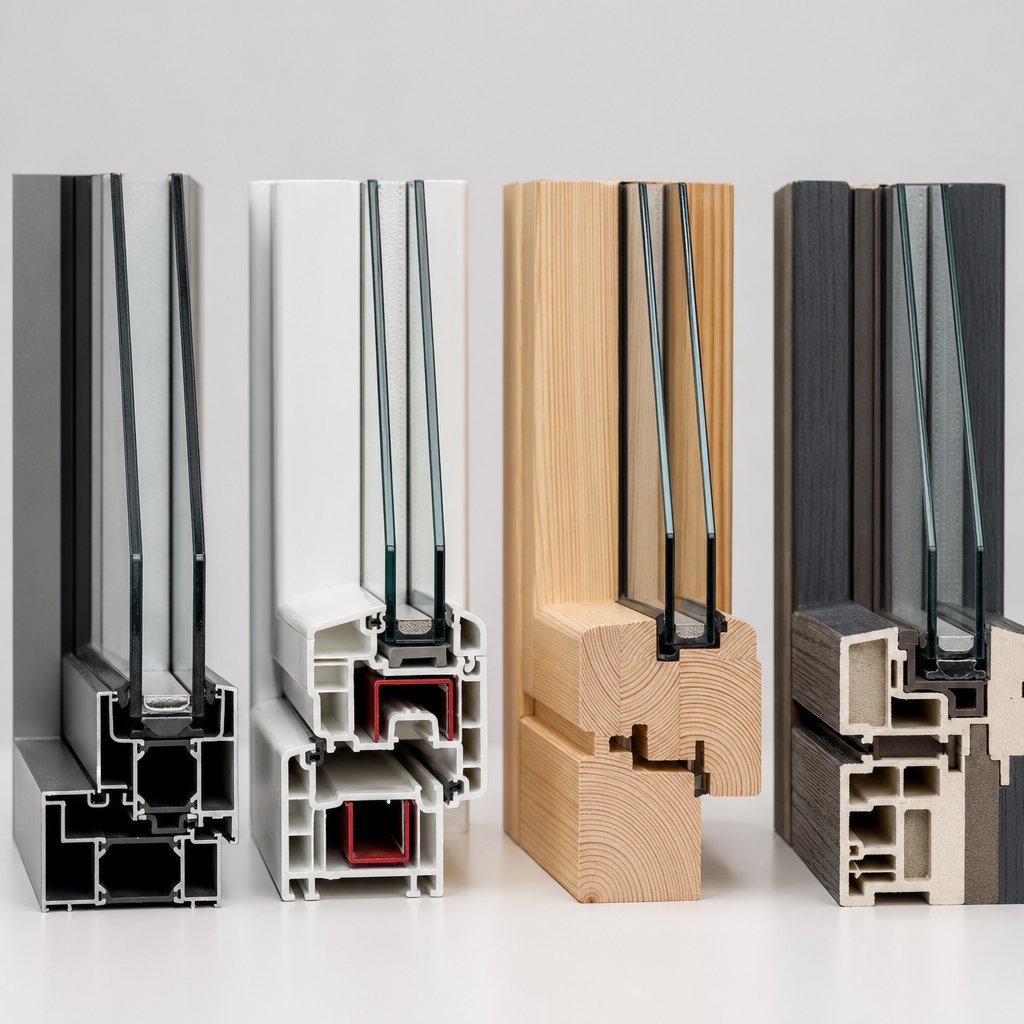
The material a fabricator works with dictates nearly everything on the production floor: which saws cut the profiles, how corners get joined, what finishing steps are needed, and how the completed window performs over its lifespan. Choosing a frame material is not just an aesthetic decision. It is a fabrication decision, and it ripples through every stage covered in the previous section.
Aluminium Fabrication Advantages
Aluminium dominates modern fabrication for good reason. Its strength-to-weight ratio allows fabricators to produce slimmer frames that span larger openings, a feature architects and homeowners increasingly demand for maximising natural light and clean sightlines. The material is naturally corrosion-resistant, holds powder-coated finishes for decades with minimal upkeep, and is 100% recyclable without any loss of structural properties.
The old knock against aluminium was thermal performance. That criticism no longer holds. Thermally broken aluminium profiles use a reinforced polyamide strip sandwiched between the inner and outer frame sections, effectively severing the thermal bridge. This technology has reduced aluminium frame U-factors from roughly 2.0 down to about 1.0 Btu/hr-sq ft-F, putting them on par with timber and uPVC for insulation. Pair that with double or triple glazing and Low-E coatings, and you get a window system that performs thermally while retaining aluminium’s structural and aesthetic edge.
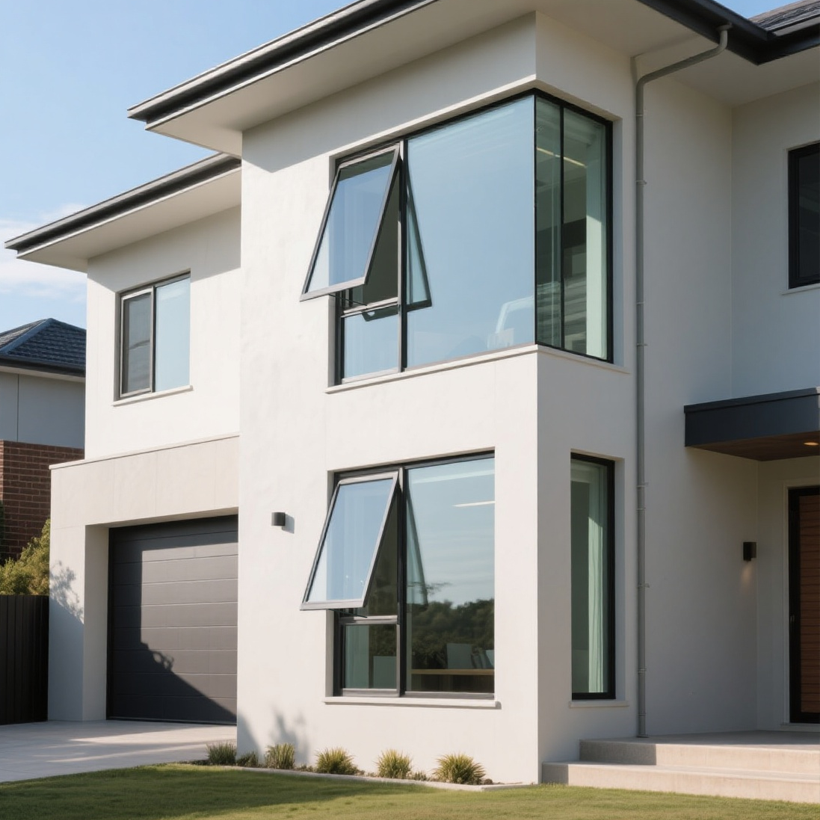
On the fabrication floor, aluminium profiles are mechanically crimped or screw-port joined rather than welded, which means faster cycle times and precise, repeatable corner assemblies. The material also accepts a wide range of finishes, from satin and matt to woodgrain imitations, giving fabricators flexibility without adding complex secondary processes. For a real-world example of what this looks like in finished form, MEICHEN’s aluminium windows collection showcases energy-efficient, Australian-standard-compliant systems across casement, awning, sliding, and fixed configurations, illustrating the design versatility that aluminium fabrication enables.
PVC, Timber, and Composite Alternatives
uPVC offers strong thermal insulation at a lower price point. Corners are heat-fusion welded into seamless joints, and the material needs little more than an occasional wipe-down. The trade-offs? Limited colour options, susceptibility to UV discolouration over time, and less structural strength, which restricts maximum frame spans and makes achieving slim sightlines difficult.
Timber brings traditional warmth and naturally high insulation values, but fabrication is labour-intensive. Each joint requires precise machining, and the finished product demands ongoing maintenance: treating, painting, sealing, and re-finishing to prevent warping, rot, and mould. Costs run higher both at production and across the window’s lifetime.
Composite and hybrid frames attempt to combine the best of both worlds, often pairing an aluminium exterior shell with a timber or PVC interior. These systems deliver strong thermal performance and weather resistance, though they add complexity to the fabrication workflow and typically carry a premium price tag.
| Material | Thermal Performance | Strength-to-Weight | Recyclability | Maintenance | Typical Application |
|---|---|---|---|---|---|
| Aluminium (thermally broken) | High (with polyamide break) | Excellent | 100% recyclable, endlessly | Very low | Residential, commercial, high-rise |
| uPVC | High | Moderate | Limited, not biodegradable | Very low | Residential, budget projects |
| Timber | High (natural insulator) | Low | Renewable if responsibly sourced | High (regular treatment required) | Heritage, traditional residential |
| Composite / Hybrid | Very high | Good | Varies by composition | Low to moderate | Premium residential, architectural |
Material choice does not end at the fabricator’s door. It also determines which performance standards the finished window must meet and which certifications a fabricator needs to hold, a topic that separates credible operations from unreliable ones.
Performance Standards and Certifications That Matter
A fabricator can use premium aluminium profiles, top-tier hardware, and the latest CNC equipment, yet still produce a window that leaks, rattles, or fails under load. The difference between a product that performs and one that disappoints often comes down to something less visible than materials or machinery: the certifications and testing protocols behind the finished unit. These frameworks exist precisely because you cannot judge a window’s long-term performance by looking at it on a showroom floor.
Key Industry Standards and Certifications
Several organisations set the benchmarks that credible fabricators build to. Each one validates a different aspect of window performance, and together they form a layered safety net for buyers.
In the United States, the American Architectural Manufacturers Association (AAMA) certifies fenestration products through a graded system. AAMA performance classes, R (Residential), LC (Light Commercial), CW (Commercial), and AW (Architectural), define escalating thresholds for air leakage, water resistance, structural load, and forced entry. A window rated CW must withstand significantly higher pressures than one rated R, which is why specifying the correct AAMA grade for your project type matters.
The National Fenestration Rating Council (NFRC) handles the energy side. Every NFRC label displays four key metrics: U-factor (how well the window insulates), Solar Heat Gain Coefficient (SHGC, how much solar heat it lets through), Visible Transmittance (VT, how much natural light passes), and Air Leakage. These numbers let you compare products on a level playing field rather than relying on marketing language.
ENERGY STAR builds on NFRC data by setting qualification thresholds that vary by climate zone. Windows must meet specific U-factor and SHGC requirements for the region where they will be installed. Replacing old single-pane windows with ENERGY STAR certified units can lower household heating and cooling costs by an average of up to 13 percent nationwide, making certification a practical financial consideration rather than just a label.
Underpinning all of this is ASTM International, which publishes the actual test methods fabricators and independent labs use to generate performance data. ASTM E331 measures water penetration under uniform static air pressure. ASTM E283 quantifies air leakage through a closed window. ASTM E330 tests structural performance by applying uniform pressure loads that simulate wind. Without these standardised test methods, every manufacturer’s claims would be unverifiable.
For Australian readers, the compliance landscape centres on two key standards. AS 2047:2014 covers the materials, testing, construction, installation, and glazing for external windows and glazed doors in buildings. It classifies window assemblies by a rating system for housing and by design wind pressures for all building classes. AS 1288:2021 governs glass selection and installation, addressing wind loading, human impact, and special applications like overhead glazing and balustrades. Both standards are referenced in the National Construction Code (NCC), making compliance mandatory rather than optional for any fabricator supplying the Australian market.
What Compliance Means for Homeowners and Builders
Sounds like a lot of acronyms? Here is why they matter in practice. A certified window has been independently tested and verified to resist specific wind loads, keep water out under simulated storm conditions, and insulate to a documented standard. A non-certified one is essentially a promise with no proof behind it.
When you are evaluating a fabricator, ask which of these certifications their products carry:
- AAMA certification — validates structural integrity, water resistance, air leakage limits, and forced-entry resistance across defined performance grades
- NFRC label — provides independently tested U-factor, SHGC, VT, and air leakage ratings for transparent energy-performance comparison
- ENERGY STAR qualification — confirms the window meets or exceeds climate-zone-specific energy efficiency thresholds set by the U.S. EPA
- ASTM test reports (E283, E330, E331) — document actual lab results for air infiltration, structural load, and water penetration
- AS 2047 compliance — required for all windows and external glazed doors supplied in Australia, covering performance classification, construction, and installation
- AS 1288 compliance — governs safe glass selection and installation for Australian buildings, including impact and wind-load considerations
In coastal and hurricane-prone regions, fabrication requirements go further. Impact-resistance standards, such as those defined under the Miami-Dade County protocols and the Florida Building Code, demand that windows withstand large and small missile impacts in addition to sustained cyclic wind pressure. Meeting these thresholds requires heavier glazing, reinforced frames, and additional locking points, all of which must be validated through accredited testing. Fabric shades for windows and other soft coverings offer no structural protection in these scenarios; only properly rated fenestration systems provide genuine storm resistance.
Energy-performance ratings deserve special attention because their impact compounds over time. A window with a lower U-factor keeps more conditioned air inside your home, directly reducing heating and cooling costs year after year. Fabric roman shades for windows or fabric vertical blinds for windows can supplement thermal comfort by adding an interior insulation layer, but they do not change the window’s inherent energy rating. The certified performance of the fabricated unit itself is what determines long-term savings and comfort.
Think of certifications as a fabricator’s proof of work. They cost time and money to obtain, which is exactly why less scrupulous operators skip them. A fabricator who holds current AAMA, NFRC, or AS 2047 credentials has invested in independent verification that their products do what they claim. That investment signals something broader about how the operation is run, from raw-material sourcing to final quality control, and it becomes especially relevant when you start comparing residential and commercial projects, where performance demands diverge sharply.
Residential vs Commercial Window Fabrication
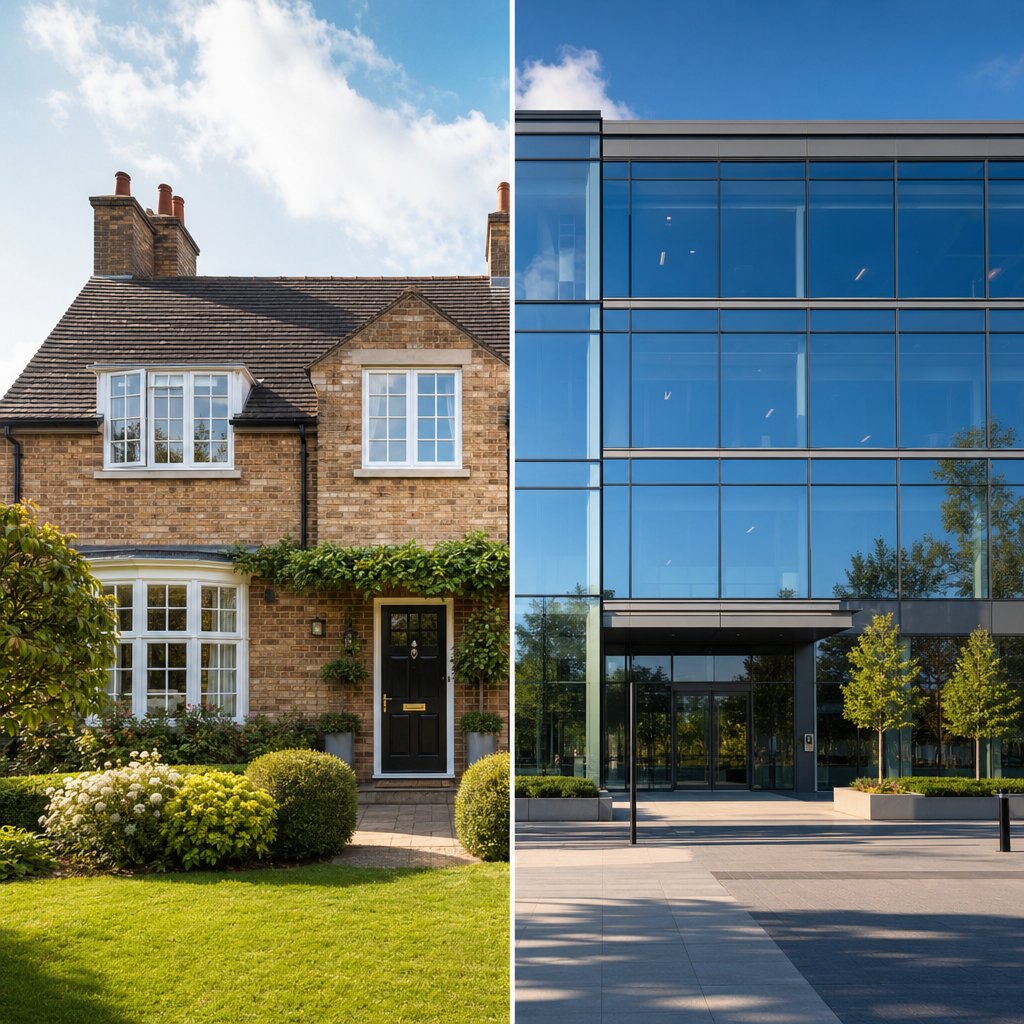
That divergence between residential and commercial performance demands is not just a matter of degree. It reshapes the entire fabrication workflow, from the materials on the cutting table to the testing protocols applied before dispatch. Yet most buyers, and even some builders, treat all window fabrication as a single category. It is not.
Residential Fabrication Priorities
When a fabricator builds windows for a home, the brief typically centres on five things: aesthetics, energy efficiency, noise reduction, ease of operation, and cost-effectiveness. Homeowners want a window that looks good, keeps energy bills low, blocks street noise, opens and closes smoothly, and does not blow the renovation budget.
Common residential window types include casement, awning, sliding, double-hung, and fixed-lite configurations. Production runs tend to be smaller and more varied. A single order might include six different sizes across three different styles, with a couple of non-standard dimensions thrown in for a bathroom or stairwell. That variety means the fabrication floor needs flexible tooling and operators comfortable switching between setups frequently.
Residential projects also lean toward uPVC or thermally broken aluminium frames, where thermal performance and low maintenance outweigh the need for extreme structural capacity. Additions like blackout fabric for windows or window blinds with fabric are decisions homeowners make after installation, but the fabricator still needs to account for hardware compatibility with common blind-mounting systems.
Commercial Fabrication at Scale
Commercial work is a different animal. Think curtain-wall systems, storefront framing, ribbon windows wrapping entire floor plates, and high-rise operable units that must perform dozens of storeys above ground. The structural, fire-rating, and acoustic requirements are significantly stricter than anything a residential project demands.
Production volumes jump considerably. A commercial fabricator might produce hundreds of identically specified units for a single tower, which favours automated production lines and unitised assembly methods over the flexible, small-batch approach residential work requires. Tolerances are tighter because curtain-wall panels interlock on-site with minimal room for adjustment. Project timelines are more compressed, often driven by construction schedules where a week’s delay on window delivery stalls an entire facade crew.
Materials shift too. Aluminium dominates commercial fabrication because its strength-to-weight ratio supports larger spans and slimmer profiles at height. Commercial glazing typically uses heavier tempered or laminated glass to meet impact and safety codes, and in hurricane-prone coastal zones, hurricane fabric for windows and similar soft barriers offer no substitute for properly rated impact-resistant glazing systems built into the fabricated unit itself.
| Dimension | Residential | Commercial |
|---|---|---|
| Typical Materials | uPVC, thermally broken aluminium, timber | Aluminium (often unitised), steel-aluminium hybrids |
| Production Volume | Small, varied batches with mixed sizes and styles | Large runs of standardised units |
| Performance Requirements | Energy efficiency, noise reduction, ease of operation | High structural load, fire rating, acoustic rating, impact resistance |
| Lead Time | Moderate; flexible scheduling | Compressed; tied to construction programme milestones |
| Customisation Level | High (non-standard sizes, mixed configurations common) | Lower per unit, but complex system-level engineering |
Whether your project falls on the residential or commercial side of this table, one question still applies to both: do you need every window custom-fabricated to a unique specification, or will standard production units deliver the same result at lower cost and faster turnaround?
Custom Fabrication vs Standard Production Runs
The answer depends on what your project actually demands, not on what feels more premium. Custom fabrication and standard production each solve different problems, and picking the wrong path wastes either money or performance.
When Custom Fabrication Is Worth It
Some projects simply cannot use off-the-shelf units. If your window openings are non-standard sizes, whether from foundation settling in an older home or an architect’s deliberate design choice, a custom-fabricated window is often the only way to get a proper seal and clean finish. Gaps left by an ill-fitting standard unit invite air leaks, water intrusion, and higher energy bills, problems that cost far more over time than the upfront premium for custom work.
Heritage and period-style restorations are another clear case. Listed buildings and conservation areas frequently require window profiles that replicate original glazing bar patterns, moulding details, and proportions. No standard catalogue carries a Victorian sash with the exact muntin spacing your conservation officer needs to approve. Specialty shapes, arched tops, circular porthole windows, trapezoidal transoms, fall into the same category. So do high-performance requirements for extreme climates, where a fabricator must engineer thicker glazing assemblies, reinforced locking points, or specific solar screen fabric for windows integration to meet local code.
The trade-off is straightforward: custom work means longer lead times, sometimes weeks or months, and higher per-unit costs that can start around $500 and climb well past $1,000 depending on complexity. But you get an exact-fit solution that standard options cannot replicate.
When Standard Options Make More Sense
For new-build projects with conventional openings, standard production runs deliver compelling advantages. Mass production drives per-unit costs down, often landing between $150 and $400 per window. Delivery is faster because the units are already in production or in stock. Performance data is well-established through repeated testing across thousands of identical units, so you know exactly what you are getting. And if a unit ever needs replacing years later, sourcing a match is simple because the size and specification are standard.
Many fabricators also offer a practical middle ground: semi-custom options. These use standard profile systems with modified dimensions or hardware configurations, giving you a closer fit than pure stock without the full cost and lead time of bespoke fabrication. It is a smart compromise when your openings are close to standard but not quite there, or when you want a specific handle style or screen fabric for windows that is not part of the base specification.
Not sure which route fits your project? Run through these decision criteria before requesting quotes:
- Opening dimensions — are they standard sizes, or do they deviate significantly?
- Performance specification — does your climate or building code demand ratings beyond what standard units achieve?
- Budget — can the project absorb the premium for custom work, or does value-engineering matter more?
- Timeline — is there enough lead time for custom fabrication, or does the construction schedule demand faster delivery?
- Aesthetic requirements — do you need specialty shapes, heritage profiles, or specific finishes that standard catalogues do not carry?
If most of your answers point toward standard, there is no reason to pay for custom. If even one or two criteria demand it, the investment usually pays for itself in fit, performance, and longevity. Knowing which path you need is half the battle. The other half is knowing how to evaluate the fabricator you choose to walk it with, a skill that separates informed buyers from ones who learn expensive lessons after installation.
How to Evaluate and Choose the Right Window Fabricator
Knowing what separates custom from standard, or residential from commercial, only gets you so far. The real leverage comes when you sit across from a prospective fabricator and know exactly what to ask, and exactly which answers should make you walk away. Most buyers skip this step entirely, relying on price alone or a builder’s default recommendation. That approach works until something goes wrong, and by then, the windows are already in the wall.
Essential Questions to Ask Before You Commit
Think of this as your pre-qualification checklist. Every credible fabricator will answer these without hesitation. If someone dodges or deflects, you have your answer before they even give one.
- What certifications do you hold? Look for AAMA certification, NFRC labelling, ENERGY STAR qualification, or AS 2047 compliance depending on your market. A fabricator who holds current, verifiable credentials has invested in independent proof that their products perform as claimed.
- Can you provide test reports for air, water, and structural performance? Certified test data from accredited laboratories, covering standards like ASTM E283, E331, and E330, is the only objective way to compare one fabricator’s product against another. Marketing brochures are not test reports.
- What materials and hardware brands do you use? You want specifics: the profile system, the glass supplier, the hardware manufacturer. Vague answers like “we use quality materials” tell you nothing. Reputable fabricators name their supply partners because those names carry weight.
- What is your standard lead time, and what affects it? Lead times of around 10 weeks are common depending on the firm’s size and current workload. Custom orders, specialty finishes, or non-standard glass configurations can push that further. Get a realistic timeline upfront so your construction schedule does not stall waiting on windows.
- Do you offer a warranty, and what exactly does it cover? A solid warranty should address both the product and the workmanship, covering defects in frames, glass, hardware, and weatherstripping. Ask about duration, exclusions, and whether coverage transfers if you sell the property. Verbal assurances are worthless; you need written terms.
- Can you supply references from recent projects similar to mine? A fabricator confident in their work will happily connect you with past clients. Ask those references about deadline adherence, communication quality, issue resolution, and whether they would use the same fabricator again.
- Do you have a physical production facility I can visit? Seeing the shop floor tells you more in 30 minutes than any sales presentation. You will notice the condition of the equipment, how materials are stored, whether quality-control stations are integrated into the workflow, and how organised the operation is overall.
These seven questions cover the fundamentals: capability, transparency, reliability, and accountability. A fabricator who scores well across all of them is one you can commit to with confidence. Budget blinds fabric window coverings and other interior finishing decisions can wait; the fabricator selection cannot, because it determines the structural and thermal performance you will live with for decades.
Red Flags That Signal a Substandard Fabricator
Knowing the right questions is only half the equation. You also need to recognise when the answers, or the lack of them, point to trouble. Over 30% of construction defect claims involve contractors who lack proper licensing and credentials, and the pattern holds for fabricators too. Here are the warning signs that should stop you from signing anything:
- No verifiable certifications — if a fabricator cannot produce current AAMA, NFRC, or AS 2047 documentation, their products have not been independently validated. Claims of compliance without paperwork are just claims.
- Reluctance to share test data — a fabricator who avoids providing lab reports for air leakage, water penetration, or structural load testing may not have any. That means you have no objective evidence the product will perform under real-world conditions.
- Vague or verbal-only warranty terms — industry surveys show over 60% of window installation complaints stem from poor workmanship or product issues within the first five years. Without a clear written warranty specifying coverage, duration, and claim procedures, you carry all the risk.
- No physical production facility — a legitimate fabricator operates from a workshop with cutting, joining, and glazing equipment. If the business is just a website and a phone number with no verifiable factory address, you may be dealing with a reseller or broker who has no control over quality.
- Inability to provide project references — reputable fabricators take pride in completed work and will connect you with recent clients. Reluctance here often signals a thin track record or unresolved disputes. Patterns in negative feedback, such as missed deadlines, surprise costs, or unfinished work, tend to reflect systemic issues rather than one-off mistakes.
- High-pressure sales tactics — “this price is only valid today” or “sign now to lock in availability” are tactics designed to prevent you from comparing options. A confident fabricator gives you time to evaluate because they know their product stands up to scrutiny.
- Poor communication and missed appointments — if a fabricator is hard to reach, slow to respond, or evasive during the quoting stage, imagine how they will handle a problem after your money is committed. Communication quality during the sales process is a reliable preview of what comes after.
One practical step ties all of this together: visit the fabricator’s facility. If distance makes that impractical, request a virtual tour or at minimum ask for photos and video of the production floor. You will quickly see whether the operation matches the promises. Industry bodies like the Australian Window Association (AWA) maintain member directories that let you verify whether a fabricator meets recognised competency standards and is subject to annual testing and inspections, adding another layer of due diligence beyond what the fabricator tells you directly.
Checking professional affiliations, such as AWA membership in Australia or AAMA certification in the US, reduces the risk of installing a product that fails under load or leaks during the first heavy rain. Members typically guarantee their workmanship and materials, and their products are verified through accredited testing laboratories.
Armed with the right questions and a clear sense of what to avoid, you are no longer relying on luck or a single recommendation. You are making a decision grounded in evidence, and that changes the outcome of every project, whether it is a single fabric window roman shades-adorned bedroom renovation or a full home build with dozens of openings to fill.
Putting It All Together for Your Next Window Project
Evidence-based decisions beat gut feelings every time, and you now have the framework to make them. Whether you are a homeowner replacing aging single-glazed units, a renovator restoring a period property, a builder specifying for a new development, or a developer scaling across multiple sites, the same core logic applies.
Matching Your Project Needs to the Right Fabricator
Start by locking down four variables before you pick up the phone or request a quote. First, material choice: aluminium for slim sightlines and low maintenance, uPVC for budget-conscious thermal performance, timber for heritage aesthetics, or composite for a premium hybrid. Second, certification requirements: AAMA and NFRC in the US, AS 2047 and AS 1288 in Australia, and ENERGY STAR where energy savings matter. Third, scope: residential fabrication favours flexibility and variety, while commercial work demands volume, tighter tolerances, and stricter structural ratings. Fourth, customisation level: standard production runs for conventional openings, semi-custom for minor adjustments, and full custom for specialty shapes or heritage restoration.
Define your performance requirements and budget first, then approach fabricators with a clear brief. A well-prepared inquiry gets you sharper pricing, realistic timelines, and fewer surprises during production. Interior finishing decisions, whether fabric roller window shades, a fabric window cornice, or fabric awnings for windows, come after the structural envelope is sorted. The fabricated window itself is the performance foundation everything else sits on top of.
Starting Your Search with Confidence
An informed buyer gets better outcomes across the board: fewer defects, tighter pricing, and windows that perform as specified for decades rather than years. You know what a window fabricator does, how the supply chain works, what each material brings to the table, which certifications to demand, and which red flags to walk away from. That knowledge is your leverage.
Define your material, certifications, scope, and customisation needs before requesting quotes, then verify every fabricator’s credentials, test data, warranty terms, and project references before you commit.
If aluminium is on your shortlist, MEICHEN’s aluminium windows collection is a practical place to start exploring. Their range covers casement, awning, sliding, and fixed configurations built to Australian standards, giving homeowners, renovators, builders, and developers a concrete reference point for what energy-efficient aluminium fabrication looks like across different project types. Use it as a benchmark when comparing options and evaluating what the market offers.
The process most buyers miss is the one that determines whether their windows perform or disappoint. You are no longer one of those buyers.
Window Fabricator FAQs
1. What does a window fabricator do?
A window fabricator is the specialist who transforms raw frame profiles, sealed glass units, hardware, and gaskets into finished, ready-to-install window assemblies. Their work includes cutting profiles to precise dimensions, joining or welding corners, inserting insulated glass units, fitting hardware such as hinges, locks, and handles, applying weatherstripping, and running quality-control checks before dispatch. They sit between raw-material manufacturers and on-site installers in the supply chain, acting as the critical middle link that turns commodity components into a precision-engineered, code-compliant product. Without a competent fabricator, even the best raw materials and most skilled installer cannot produce a window that performs properly under real-world conditions.
2. How long does window fabrication typically take?
Standard window fabrication lead times generally sit around ten weeks, though this varies depending on the fabricator’s size, current workload, and order complexity. Standard production runs using common sizes and configurations tend to ship faster because the units may already be in production or in stock. Custom orders involving specialty shapes, non-standard dimensions, heritage profiles, or specific finishes can push timelines further. Commercial projects with large volumes of identical units may also require extended scheduling. When requesting quotes, always ask for a realistic lead time upfront and factor it into your construction programme to avoid costly delays on-site.
3. What is the difference between a window fabricator and a window installer?
A window fabricator and an installer perform entirely different functions at separate stages of the supply chain. The fabricator works in a factory or workshop, cutting frame profiles, assembling corners, inserting glazing, fitting hardware, and testing the completed unit before it leaves the facility. The installer works on-site at the building, fitting that finished window assembly into the wall opening, sealing it against the structure, and ensuring it operates correctly in its final position. Choosing a strong fabricator ensures the product itself is well-made, while choosing a skilled installer ensures it is correctly fitted. Both matter, but fabrication quality is locked in before the window ever reaches the job site.
4. How do I verify that a window fabricator is properly certified?
Start by asking the fabricator directly which certifications they hold and requesting copies of current documentation. In the United States, look for AAMA certification covering structural integrity and weather resistance, NFRC labels providing independently tested energy ratings, and ENERGY STAR qualification confirming climate-zone-specific efficiency. In Australia, verify AS 2047 compliance for windows and external glazed doors, and AS 1288 compliance for glass selection and installation. You can cross-check credentials through industry body directories such as the Australian Window Association (AWA) member register, which confirms whether a fabricator meets recognised competency standards and undergoes annual testing. A fabricator who holds verifiable, current certifications has invested in independent proof that their products perform as claimed.
5. Is aluminium or uPVC better for window frames?
Neither material is universally better; the right choice depends on your project priorities. Aluminium offers a superior strength-to-weight ratio, allowing slimmer frames and larger spans, which suits modern architectural designs and commercial applications. It is fully recyclable, corrosion-resistant, and when thermally broken with polyamide strips, delivers insulation performance comparable to uPVC and timber. uPVC provides strong thermal insulation at a lower price point and requires minimal maintenance, making it popular for budget-conscious residential projects. However, it offers fewer colour options, can discolour under prolonged UV exposure, and lacks the structural capacity for very large openings. For readers exploring aluminium options that meet Australian standards, collections like MEICHEN’s aluminium windows range demonstrate the design versatility and energy efficiency that thermally broken aluminium fabrication delivers across casement, awning, sliding, and fixed configurations.
More Window & Door Guides