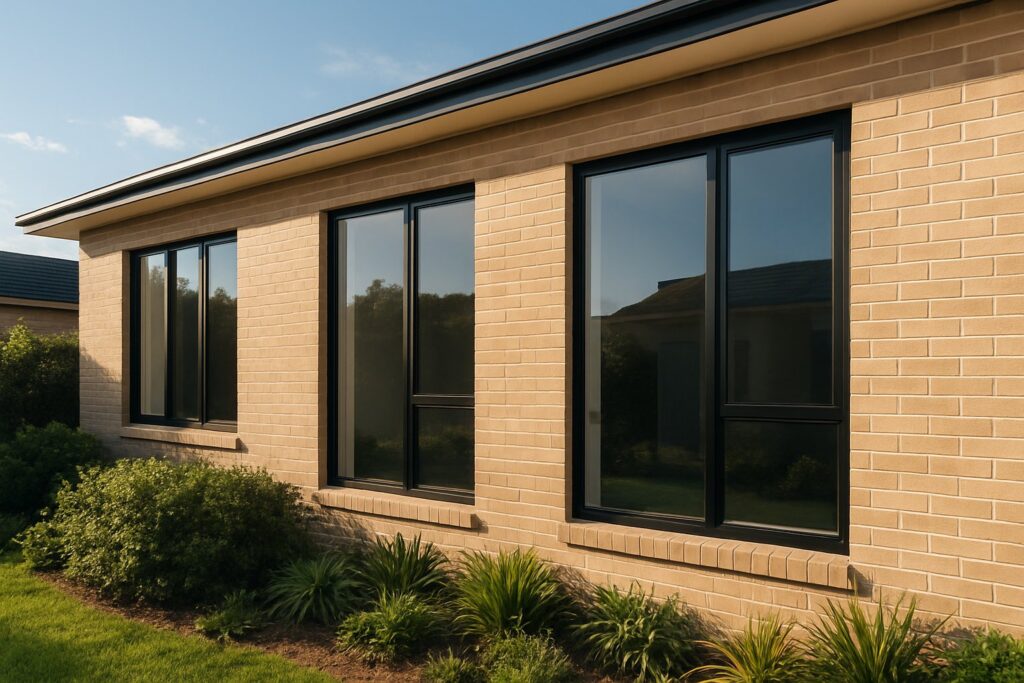
What a Window Frame Actually Does and Why the Material Matters
When you picture a window, you probably think about the glass first. That makes sense. Glass is what you look through, what lets light flood a room, and what separates you from the weather outside. But the structure holding that glass in place? That is doing far more heavy lifting than most people realize.
What Is a Window Frame
A window frame is the structural enclosure that surrounds and supports the entire window system, holding the window glass securely within the wall opening while providing insulation, weather sealing, and structural integrity to the assembly.
Think of the window frame as the skeleton of the window unit. It anchors the glass panes, houses the hardware that lets you open and close the sash, and creates the seal between your interior living space and the outside environment. Whether you are looking at a single hung window, a casement, or a large picture window, the frame is the component that ties everything together.
Here is a detail that catches most homeowners off guard: the frame accounts for roughly 20 to 30 percent of a window’s total surface area. That is not a small sliver of trim. It is a significant portion of the window assembly, and according to research from the Advanced Window Products energy study, frames in that range can be responsible for 20 to 30 percent of total window heat transfer. The material you choose for that frame ripples outward into nearly every aspect of how the window performs over its lifetime.
Why Frame Material Is a Critical Decision
Imagine two identical homes on the same street, built the same year, with the same insulated windows and similar window glass. One has high-performance frames with low thermal conductivity. The other has frames that conduct heat like a radiator. The difference in energy bills, comfort, and even condensation buildup can be dramatic, even though the glazing is the same.
Frame material directly influences five areas most homeowners care about:
- Thermal performance – Different materials conduct heat at vastly different rates. A vinyl window frame and an aluminium frame without a thermal break are worlds apart in how much heat they let escape.
- Structural integrity – Some materials handle large spans and heavy glass loads with ease. Others need reinforcement or limit how big the opening can be.
- Maintenance burden – A frame that needs repainting every few years costs more over its lifetime than one that never needs a brush.
- Noise insulation – This is the factor almost every guide overlooks. Frame material and construction affect how much exterior noise transfers into your home. Denser, multi-chambered frames dampen sound vibrations more effectively than thin, single-cavity profiles. If you live near a busy road or flight path, this matters as much as energy efficiency.
- Curb appeal – The frame is what people see from the street. Its profile, colour, and finish shape the entire look of your home’s exterior.
The U.S. Department of Energy notes that energy performance standards, including ENERGY STAR certifications, evaluate the entire window system, not just the glass. The frame’s contribution to the overall U-factor directly affects whether a window qualifies for efficiency ratings and potential rebates. So when you are evaluating windows and glazing options, skipping over the frame material is like buying a car based only on the paint colour.
What This Guide Covers
This guide walks through every major type of window frame material available for residential and commercial projects. You will find in-depth profiles of aluminium, vinyl and uPVC, wood, fiberglass, composite, steel, and clad hybrid frames, each with honest coverage of strengths, limitations, and the types of windows they suit best. Beyond individual profiles, you will get a side-by-side comparison table, climate-specific recommendations, and a practical decision framework to help you match the right frame to your budget, home style, and local conditions.
The goal is straightforward: give you enough clarity to make a confident choice, whether you are planning a full new build or replacing a few tired windows in a weekend renovation. Every frame material has trade-offs, and understanding those trade-offs before you commit is what separates a smart investment from an expensive regret.
So where does that evaluation start? With the material that dominates modern architecture and large-format openings: aluminium.
Aluminium Window Frames Built for Modern Performance
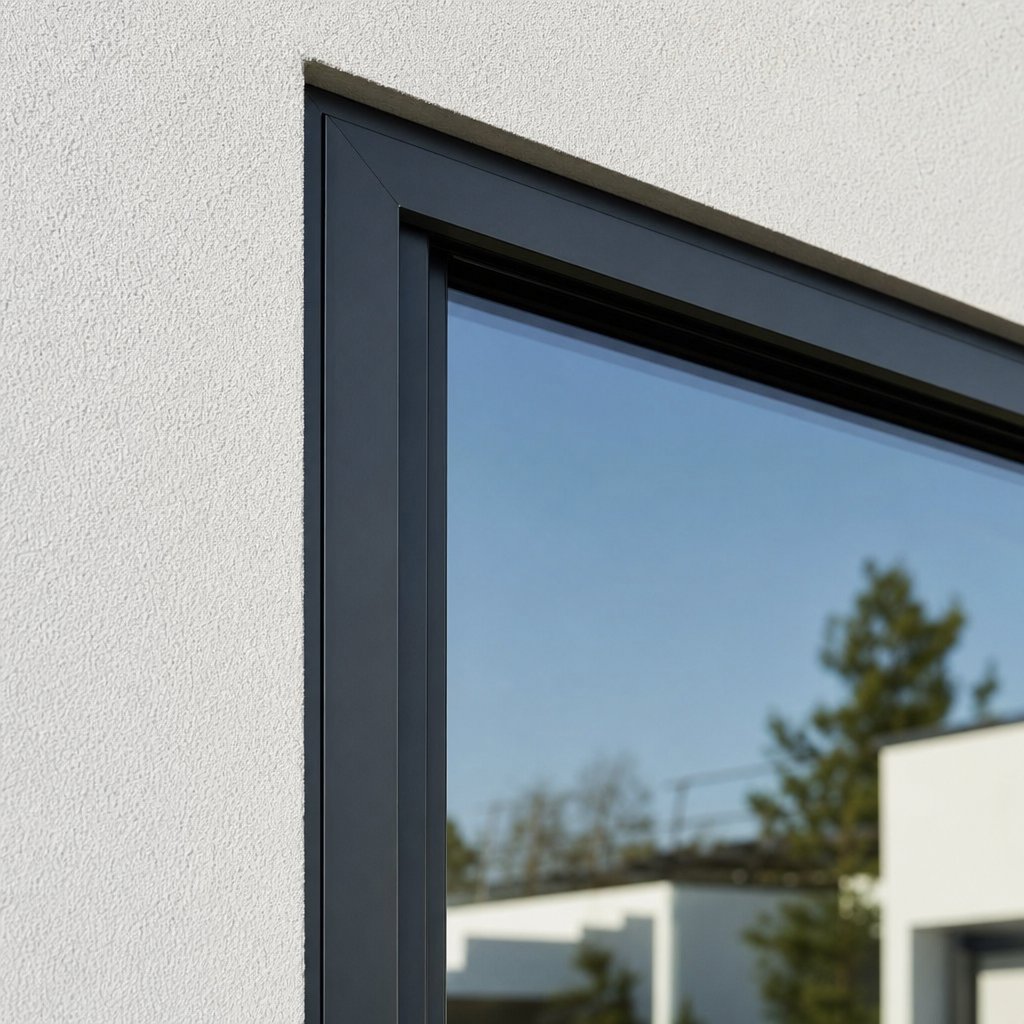
Aluminium has a reputation problem. Mention it in a conversation about types of windows for home projects, and someone will inevitably say, “Doesn’t it conduct too much heat?” That concern made sense decades ago. It does not tell the full story anymore. Modern aluminium window frames have evolved dramatically, and understanding what they actually offer, along with where they still fall short, is essential for making a smart choice among today’s window styles.
Strength and Design Flexibility of Aluminium
The defining advantage of aluminium is its strength-to-weight ratio. Pound for pound, aluminium is remarkably strong, which means frame profiles can be extruded into slim, narrow shapes without sacrificing structural integrity. In practical terms, that translates to thinner sightlines and more visible glass area in every window opening.
Why does that matter? Imagine a wall of floor-to-ceiling large windows overlooking a garden or coastline. Wood frame windows would need substantially thicker profiles to support the same glass load, eating into the view. Aluminium handles those spans with ease, which is why architects consistently reach for it in contemporary, minimalist, and commercial designs where maximizing natural light is a priority.
Beyond raw strength, aluminium is naturally resistant to rust, corrosion, and termite damage. It will not rot, warp, or swell when exposed to moisture, making it a reliable choice in humid, coastal, and tropical climates where organic materials struggle. The Metal Supermarkets sustainability overview highlights that aluminium alloys can be composed to be weatherproof and corrosion resistant while needing minimal maintenance over their service life.
Aluminium is also easily extruded into complex cross-sections. That flexibility allows manufacturers to integrate drainage channels, gasket grooves, and hardware pockets directly into the frame profile, rather than adding them as afterthoughts. The result is a cleaner, tighter assembly with fewer potential failure points.
Thermal Breaks and Energy Performance
Here is where the old criticism carries some truth. Aluminium is a highly conductive metal. Without any intervention, it readily transfers heat from one side of the frame to the other, raising the overall U-factor of the window unit. The Efficient Windows Collaborative notes that in cold climates, a simple aluminium frame can become cold enough to cause condensation or even frost on interior surfaces.
The solution? A thermal break. This is a strip of low-conductivity material, typically reinforced polyamide, inserted between the interior and exterior halves of the aluminium profile. It interrupts the heat path and dramatically improves insulation. Current thermal break technology has reduced aluminium frame U-factors from roughly 2.0 down to about 1.0 Btu/hr-sq ft-F, effectively cutting conductive heat loss in half.
When evaluating energy performance, look for ratings from the National Fenestration Rating Council (NFRC), which tests and certifies whole-window performance, not just the glass. ENERGY STAR certification builds on NFRC data by setting climate-zone-specific thresholds. A thermally broken aluminium frame paired with high-performance glazing can meet ENERGY STAR requirements in most climate zones, a fact that surprises homeowners who still associate aluminium with poor insulation.
For those exploring thermally broken, standards-compliant aluminium systems, MEICHEN’s aluminium windows collection offers a range of configurations designed for Australian-standard compliance across different project types, from single residential renovations to multi-unit developments. It is a useful starting point for comparing how various aluminium window profiles address thermal performance in real-world applications.
One nuance worth noting: in hot climates where solar heat gain through the glass dominates over conductive loss through the frame, the insulating value of the frame becomes less critical relative to the glazing system. Choosing the right varieties of glass, such as low-e coatings and tinted options, often matters more than the frame’s R-value in those environments.
Colour Options and Long-Term Finish Durability
Aluminium offers finish flexibility that few other frame materials can match. The two primary options are:
- Powder coating – A dry powder is electrostatically applied and then cured under heat, creating a thick, uniform, and highly durable finish. Powder-coated aluminium resists chipping, fading, and chalking for decades, and it is available in virtually any colour, from matte black and charcoal to bold reds and custom RAL shades.
- Anodising – An electrochemical process that thickens the natural oxide layer on the aluminium surface. Anodised finishes are extremely hard, scratch-resistant, and weather-resistant. They tend toward metallic and natural tones, silver, bronze, champagne, and black, giving a sleek, industrial aesthetic.
Both finishes require essentially zero ongoing maintenance. You will not need to repaint or restain aluminium frames the way you would with timber. A periodic wipe-down with soapy water is typically all that is needed to keep them looking sharp, even after 20 or 30 years of sun, rain, and salt exposure.
This durability is a major reason aluminium dominates among the windows types of commercial buildings, apartment complexes, and modern residential projects where long-term appearance matters but ongoing upkeep budgets are tight.
Sustainability and Lifespan
Aluminium is one of the most recyclable building materials on earth. Roughly 90 percent of aluminium used in construction is recycled, and the recycling process uses about 95 percent less energy than producing new aluminium from raw ore. Critically, recycled aluminium loses none of its structural quality, so it can be reprocessed and reused indefinitely without degradation.
In terms of lifespan, well-maintained aluminium frames routinely last 40 to 50 years or more. Combined with their low maintenance demands and recyclability at end of life, aluminium frames score well on a total lifecycle assessment, even if their upfront cost sits in the medium range compared to budget-friendly vinyl.
That cost comparison raises an important question. If aluminium delivers strength, slim profiles, and longevity but sits at a higher price point, what does the most affordable mainstream option, vinyl, actually bring to the table? The answer involves a very different manufacturing process and a very different set of trade-offs.
Vinyl and uPVC Window Frames Explained
Vinyl is the window frame material that outsells nearly everything else in the residential market, and it is not hard to see why. Low upfront cost, zero painting, and solid thermal performance make it the default recommendation from glaziers and builders working on budget-conscious projects. But “popular” and “right for your project” are not always the same thing. Understanding how vinyl frames are made, where they excel, and where they fall short will help you decide whether they deserve a spot in your home.
How Vinyl Frames Are Made and Why They Are Popular
When people say “vinyl windows,” they are almost always talking about uPVC, which stands for unplasticized polyvinyl chloride. Unlike flexible PVC used in garden hoses or shower curtains, uPVC is a rigid, chemically stable polymer engineered specifically for structural applications like window frames.
The manufacturing process is called extrusion. uPVC resin is blended with UV stabilizers, impact modifiers, and pigments, then heated to around 170 to 200 degrees Celsius and forced through a precision-engineered die. What comes out the other side is a continuous profile with a fixed cross-section, complete with multiple hollow internal chambers. Those chambers are not just empty space. They trap pockets of still air that act as thermal barriers, and they also provide structural rigidity without adding weight.
The extrusion process is continuous and highly efficient, which is a big reason vinyl window frames cost less than most alternatives. Manufacturers can produce thousands of meters of profile per day with tight dimensional tolerances and minimal material waste. Leftover uPVC is ground up, re-melted, and fed back into the process, keeping production costs down and reducing scrap.
That combination of low manufacturing cost, decent performance, and easy fabrication is what made vinyl the dominant residential frame material across North America, the UK, and Australia over the past three decades.
Advantages of Vinyl for Budget-Conscious Projects
So, are vinyl windows good? For many homeowners, the answer is a clear yes, especially when the priority is getting reliable glass windows installed without stretching the budget. Here is what vinyl does well:
- Low upfront cost – Vinyl frames typically sit at the lowest price point among mainstream window frames, making them accessible for whole-house replacements and first-time buyers.
- Zero-painting maintenance – The colour runs through the entire profile, not just the surface. You will never need to sand, prime, or repaint. A wipe-down with mild soap and water is all the upkeep required.
- Good thermal insulation – Multi-chamber hollow profiles give vinyl a natural insulating advantage over non-thermally-broken metal frames. The trapped air pockets reduce conductive heat transfer effectively.
- Moisture and rot resistance – uPVC does not absorb water, so it will not rot, swell, or attract termites. This makes it a practical choice in wet climates where wood struggles.
- Quiet operation – The inherent density and multi-chamber construction of vinyl profiles dampen sound transmission, contributing to noticeable noise reduction compared to thinner single-cavity frames.
Limitations and Common Misconceptions About Vinyl
Vinyl earns its popularity, but it is not without real trade-offs. Honest evaluation matters more than marketing claims, especially if you are comparing it against composite window frames or fiberglass alternatives.
- Limited colour flexibility – Unlike aluminium, which can be powder-coated in virtually any shade, vinyl colour options are more restricted. White and off-white dominate the market. Darker colours exist but require specialized heat-reflective formulations to prevent thermal expansion issues.
- Cannot be easily repainted – Standard exterior paints do not bond well to uPVC. If you want to change the colour down the road, your options are limited to specialized vinyl-safe coatings or full replacement.
- UV degradation risk – Lower-grade vinyl compounds can warp, yellow, or become chalky under prolonged UV exposure. Quality uPVC with UV-stable capstock and titanium dioxide inhibitors resists this, but cheap formulations remain vulnerable, particularly in dark colours facing direct sun.
- Structural limits on large openings – Vinyl is less rigid than aluminium or fiberglass. For oversized sashes or wide spans, frames need steel or composite internal reinforcement to prevent deflection and bowing. Without it, large units can bind, rack, or lose seal integrity over time.
- Recyclability concerns – The environmental picture is improving. Modern uPVC can be recycled up to ten times without significant quality loss, and each recycling cycle uses roughly 90 percent less energy than producing virgin PVC. Still, recycling infrastructure varies by region, and older vinyl formulations containing lead-based stabilizers complicate the process. Newer profiles use calcium-zinc stabilizers, which are safer and more recyclable.
One misconception worth addressing directly: vinyl does not have to look cheap. Early vinyl frames earned that reputation with bulky profiles and a plasticky sheen. Current manufacturing techniques produce slimmer sightlines and realistic woodgrain laminate finishes that are difficult to distinguish from painted timber at a normal viewing distance. Co-extruded acrylic capstock adds surface depth and UV resistance, keeping the finish looking fresh for years rather than fading after a few summers.
The key to colour and finish longevity with vinyl comes down to compound quality. Products with UV-stabilized capstock, proper wall thickness, and impact modifiers hold their appearance far longer than budget alternatives. If a manufacturer offers a colour-fade warranty, that is a strong signal they trust their formulation.
Vinyl covers the practical, cost-effective end of the spectrum well. But what about homeowners who want something warmer, something with character that connects to a home’s history? That is where wood enters the conversation, bringing a completely different set of strengths and a maintenance reality that catches many buyers off guard.
Wood Window Frames and Their Enduring Appeal
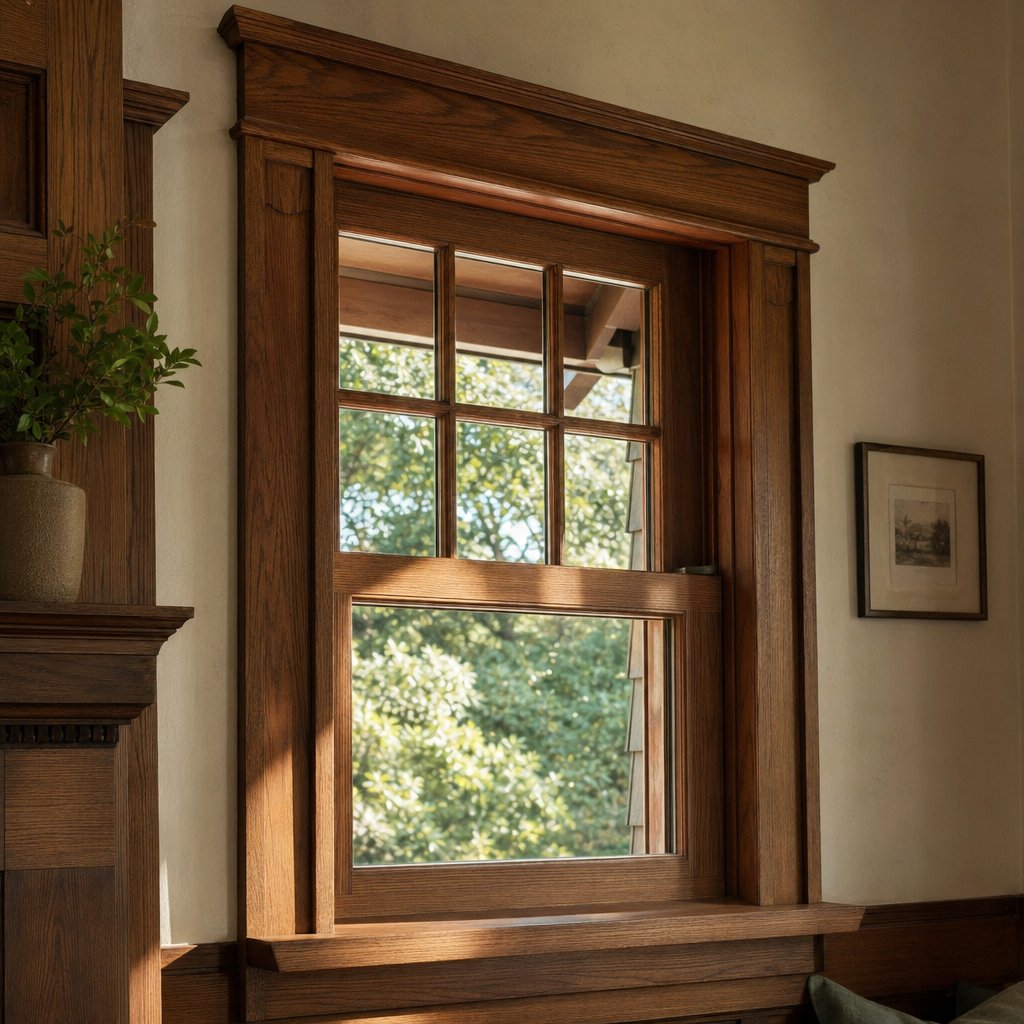
Wood is the original window frame material. Long before vinyl extrusions and aluminium profiles existed, timber was how builders learned how to frame a window, and for good reason. It is naturally warm to the touch, easy to shape with hand tools, and carries an aesthetic depth that synthetic materials still struggle to replicate. But choosing wood in a modern project is not just a style decision. It is a commitment, one that rewards you with beauty and insulation but demands real upkeep in return.
Natural Insulation and Aesthetic Appeal of Timber
Wood is one of the best natural insulators among common frame materials. Its cellular structure traps tiny pockets of air, slowing heat transfer far more effectively than bare metal. The exact thermal conductivity varies by species. Research from M-Sora shows that spruce has a thermal conductivity of just 0.11 W/mK, larch sits at 0.13, meranti at 0.15, and oak at 0.18 W/mK. Thermally modified spruce drops even further to 0.09 W/mK, making it one of the most insulating frame materials available without any added foam or thermal breaks.
What does that mean in practice? A well-built timber frame naturally resists condensation on interior surfaces, keeps rooms warmer in winter, and reduces the load on your heating system. When you pair a quality wood frame with modern glazing, what is window glazing doing for you becomes clear: the glass handles solar heat gain and radiant loss while the frame handles conductive transfer. Together, they create a high-performing assembly.
Then there is the look. No other frame material delivers the same richness of grain, the warmth of natural colour variation, or the tactile quality that timber brings to a room. Common species used in window frames include:
- Pine – Affordable, widely available, and easy to machine. Accepts paint and stain well but is softer and more vulnerable to dents.
- Cedar – Naturally resistant to moisture and decay. Lightweight with a distinctive warm tone, ideal for exterior-facing applications.
- Oak – Dense, extremely durable, and visually striking. Higher thermal conductivity than softwoods but excellent structural strength.
- Mahogany – Premium hardwood with outstanding dimensional stability and rot resistance. A top choice for high-end custom window types.
Maintenance Requirements and Long-Term Costs
Here is where the romance of wood meets reality. Timber frames require periodic maintenance that other materials simply do not. You will need to repaint or restain exterior surfaces every three to seven years, depending on climate and sun exposure. Skip that cycle, and moisture finds its way into the grain, leading to swelling, cracking, and eventually rot.
Termites are another serious concern. Unlike vinyl or aluminium, wood is a food source for these pests. Termite damage repair costs range from $1,000 to $10,000 depending on severity, and structural damage to beams and framing can push that figure even higher. Proper sealing, regular inspections, and chemical treatments help, but they add to the total cost of ownership.
When you factor in painting supplies, sealants, potential termite treatment, and the occasional repair of a rotted sill or jamb, wood frames carry a noticeably higher lifetime cost than their purchase price suggests. For homeowners asking what is the best material for window frames purely from a maintenance standpoint, wood is rarely the answer. But for those willing to invest the time, the payoff in character and performance is hard to match.
Pros
- Superior natural thermal insulation among all frame materials
- Unmatched aesthetic warmth and grain character
- Can be painted or stained in any colour and refreshed over time
- Renewable, biodegradable, and low embodied energy when responsibly sourced
- Excellent noise dampening due to natural density
Cons
- Requires repainting or restaining every 3 to 7 years
- Vulnerable to rot, mould, and moisture damage if seals fail
- Susceptible to termite infestation, especially in warm climates
- Higher total cost of ownership when maintenance is included
- Heavier than vinyl or aluminium, which can complicate how to frame for windows in retrofit situations
Best Architectural Styles for Wood Frames
Wood remains the preferred, and sometimes the only acceptable, frame material for specific architectural contexts. Heritage-listed properties and historic home restorations almost always require timber to maintain period accuracy. Planning boards and preservation commissions frequently mandate wood frames in conservation zones, making it a non-negotiable choice for those projects.
Beyond regulatory requirements, certain home styles simply look best with wood. Craftsman bungalows, Victorian-era homes, Colonial Revivals, and Tudor-style houses all rely on the visual weight and detail of timber frames to feel authentic. The ability to mill custom profiles, from ogee mouldings to deep casings, gives wood an edge in replicating historic details that flat vinyl or aluminium profiles cannot convincingly imitate.
Even in contemporary builds, wood finds a role. Scandinavian-inspired designs and Japanese-influenced architecture frequently feature timber frames as a deliberate contrast to minimalist interiors, bringing organic texture into otherwise clean-lined spaces. Among the many types of window screen frames available, wood-framed screens maintain visual consistency with timber windows in a way that mismatched aluminium screens cannot.
On the environmental side, wood is renewable and biodegradable, giving it a sustainability advantage at end of life. Restoring original wood windows preserves the embodied energy already invested in old-growth timber and historic hardware, reducing demand for new manufacturing. For new production, sourcing matters. FSC-certified lumber ensures the wood comes from responsibly managed forests, and paying the premium for that certification is a meaningful step toward reducing the ecological footprint of your project.
Wood delivers something no engineered material fully replicates: character that deepens with age. But its maintenance demands and vulnerability to the elements push many homeowners toward a middle ground, a frame material that offers wood-like durability and insulation without the upkeep. That middle ground is exactly where fiberglass and composite frames position themselves.
Fiberglass and Composite Window Frames Compared
Fiberglass and composite frames often get lumped together in a single sentence, as if they are interchangeable. They are not. Both sit in the premium tier of windows and window frames, and both deliver performance that vinyl and untreated aluminium struggle to match. But they are made from different materials, manufactured through different processes, and behave differently over time. Most guides gloss over these distinctions. That gap leaves homeowners comparing apples to oranges without realizing it.
What Fiberglass Frames Are and How They Perform
Fiberglass window frames are made through a process called pultrusion. Glass fibres are pulled through a heated resin bath, typically polyester or vinyl ester, and then through a shaping die that cures the material into a rigid, fixed-profile frame component. The result is essentially the same class of material used in boat hulls, bridge decking, and industrial piping: extremely strong, dimensionally stable, and resistant to the elements.
The standout property of fiberglass is its thermal expansion rate. Because fiberglass is made from silica-based glass fibres, it expands and contracts at nearly the same rate as the window glass itself. That matched movement keeps seals tight through thousands of freeze-thaw cycles, which is why fiberglass frames maintain their integrity in climates where temperatures swing from well below zero to over 100 degrees Fahrenheit. Vinyl, by comparison, has a thermal expansion coefficient roughly twice that of fiberglass, making it more prone to seal stress and warping over time.
In terms of lifespan, fiberglass frames routinely last 40 to 50 years or more, compared to 20 to 30 years for standard vinyl. They will not rot, corrode, swell, or become brittle in extreme cold. UV degradation, the slow chalking and discolouration that plagues lower-grade vinyl, is far less of a concern with fiberglass.
Another practical advantage: many fiberglass frames can be painted. If your home’s exterior colour scheme changes in ten years, you can repaint fiberglass frames to match, something standard vinyl simply does not allow. That flexibility in window design makes fiberglass appealing to homeowners who want long-term adaptability without replacing the entire unit.
Fiberglass also delivers strong thermal insulation. The pultruded profiles can be manufactured with hollow internal chambers, similar to vinyl, trapping still air that slows heat transfer. Combined with the material’s low conductivity, fiberglass frames contribute meaningfully to whole-window energy performance.
Composite Frames and How They Differ From Fiberglass
Here is where most guides drop the ball. They mention “composite” as a category and move on, leaving readers to assume it is just another name for fiberglass. It is not.
Composite window frames are made from blended materials, most commonly wood fibres combined with thermoplastic polymers. The most well-known example is Fibrex, a proprietary composite consisting of roughly 40 percent reclaimed wood fibres and 60 percent thermoplastic polymer. Other manufacturers use their own blends, which may incorporate recycled plastics, PVC compounds, or additional reinforcing fibres. The key distinction is that composites combine organic and synthetic elements into a single engineered material, while fiberglass relies entirely on inorganic glass fibres in a resin matrix.
Manufacturing also differs. Where fiberglass is pultruded, composites are typically extruded, similar to how vinyl profiles are made. The wood fibre content gives composites better insulating properties than aluminium and roughly comparable thermal performance to vinyl. The polymer component provides moisture resistance, dimensional stability, and freedom from the painting and staining cycle that pure wood demands.
Composites occupy an interesting middle ground. They borrow wood’s insulating qualities and warmth without its vulnerability to rot and insects. They borrow vinyl’s low-maintenance profile without its structural limitations on larger openings. And because some composites use reclaimed wood fibres from other manufacturing processes, they carry an environmental advantage over virgin-material alternatives.
That said, composites are not fiberglass. They are generally not as strong as pultruded fiberglass, and their thermal expansion rate, while lower than vinyl, is higher than fiberglass. Availability can also be a limiting factor. Certain composite formulations, like Fibrex, are exclusive to a single manufacturer, which restricts your options for different styles of windows and price competition.
Feature Comparison: Fiberglass vs Composite
When you are weighing these two materials side by side, the differences become clearer in a direct comparison:
- Core material – Fiberglass: glass fibres in resin. Composite: wood fibres blended with thermoplastic polymers or other mixed materials.
- Manufacturing – Fiberglass: pultrusion (fibres pulled through resin and a heated die). Composite: extrusion (blended material forced through a shaping die).
- Strength – Fiberglass is roughly twice the strength of standard vinyl and stronger than most composites. Composite strength varies by formulation.
- Thermal expansion – Fiberglass expands at nearly the same rate as glass, keeping seals intact. Composites expand less than vinyl but more than fiberglass.
- Paintability – Fiberglass can typically be field-painted. Most composites resist fading but are not designed to be repainted.
- Insulation – Both perform well. Composites with wood fibre content offer slightly better insulation than an aluminum window frame. Fiberglass with hollow chambers is comparable.
- Lifespan – Fiberglass: 40 to 50+ years. Composite: 20 to 30+ years depending on formulation and climate.
- Cost – Both are more expensive than vinyl. Fiberglass typically costs $700 to $1,400 per window installed. Composite pricing varies widely by brand, with premium composites sometimes exceeding fiberglass.
- Availability – Fiberglass is offered by multiple manufacturers. Some composite formulations are brand-exclusive, limiting supplier options.
When Fiberglass or Composite Is the Right Choice
Both materials make the most sense when you want performance that exceeds vinyl but without the maintenance burden of wood. If you are framing a window in a climate with extreme temperature swings, fiberglass is hard to beat. Its matched thermal expansion with glass means fewer seal failures, fewer drafts, and better long-term energy performance, a real advantage in regions where winters are harsh and summers are hot.
Composites shine when sustainability is a priority and you want a low-maintenance frame with some of wood’s natural insulating character. The use of reclaimed wood fibres in products like Fibrex appeals to environmentally conscious buyers, though it is worth noting that not all composites carry the same eco-credentials.
The shared limitation is cost. Both fiberglass and composite frames carry a meaningful premium over vinyl, and in markets where supplier options are thin, you may have less room to negotiate or compare. For homeowners on a tight budget replacing ten or fifteen windows at once, that price gap adds up quickly.
Still, when you calculate total cost of ownership over 30 or 40 years, factoring in the longer lifespan, lower maintenance, and better energy savings, fiberglass in particular often delivers a lower cost per year than vinyl. It is a classic case where spending more upfront saves more over time.
Fiberglass and composite frames cover the high-performance, low-maintenance segment well. But they are not the only options that most guides overlook. Two other frame categories, steel and clad hybrids, solve very specific problems that none of the materials covered so far can address on their own.
Steel and Clad Hybrid Frames Most Guides Overlook
Most conversations about types of window frames stop at aluminium, vinyl, wood, fiberglass, and composite. That covers the mainstream options well, but it leaves out two categories that solve problems none of those five can handle alone. Steel frames deliver the thinnest sightlines physically possible in a window. Clad hybrids eliminate the painful trade-off between wood’s beauty and weather-resistant durability. If either of those priorities matters to your project, you need to know what is available.
Steel Frames for Industrial and Heritage Projects
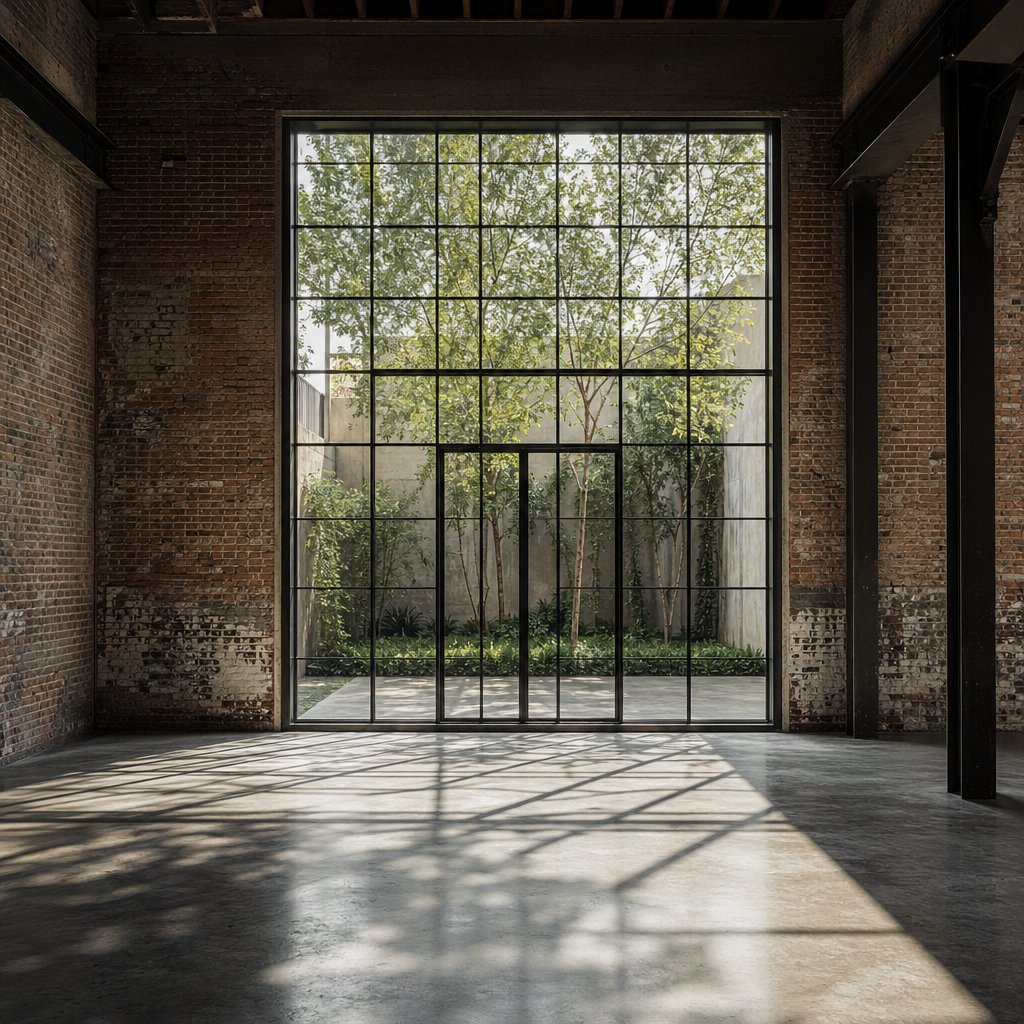
Steel is the strongest material used in window frame construction, and that strength translates directly into one visual advantage no other material can match: ultra-slim profiles. Because steel can support heavy glass window loads with very narrow frame sections, it maximizes the visible glass area in every opening. The result is that clean, grid-like aesthetic you see in converted warehouses, Art Deco apartment buildings, and industrial-chic restaurants. Those thin black lines framing each pane? Almost always steel.
Heritage restoration is where steel truly earns its place among different kinds of windows. Many listed buildings and conservation-zone properties were originally fitted with steel-framed windows, and planning authorities often require like-for-like replacements. Heritage steel window specialists note that conservation officers scrutinize every detail, from the exact profile dimensions to the glazing bar proportions, and steel is frequently the only material that can replicate the original appearance closely enough to satisfy those requirements.
Modern steel frames have also evolved beyond their single pane windows origins. Thermal break technology, similar to what is used in aluminium, now allows manufacturers to insert an insulating polyamide barrier between the interior and exterior faces of the steel profile. This dramatically improves energy performance without altering the slim visual proportions that make steel distinctive. When paired with double glazed windows, a thermally broken steel frame can meet current building energy codes, something that would have been impossible with the solid steel profiles of decades past.
The trade-offs are real, though. Steel frames sit at the premium end of the cost spectrum, often two to three times the price of aluminium for a comparable opening size. Steel is also heavier than aluminium, which can complicate installation and may require reinforced structural support in some wall assemblies. And without proper finishing, typically hot-dip galvanizing followed by powder coating, steel is vulnerable to corrosion. In coastal or high-humidity environments, ongoing inspection and touch-up of the protective finish is essential to prevent rust.
For most standard residential projects, steel is overkill. But for industrial conversions, heritage restorations, and high-end architectural statements where those razor-thin sightlines are non-negotiable, nothing else comes close.
Clad and Hybrid Frames That Combine the Best of Both
What if you could have the warmth of real wood on the inside of your home and the weather resistance of aluminium or vinyl on the outside? That is exactly what clad hybrid frames deliver.
The concept is straightforward. A solid wood core forms the interior-facing portion of the frame, giving you the natural grain, paintability, and insulating properties of timber. An exterior cladding, most commonly aluminium or vinyl, wraps the outside face to shield the wood from rain, UV exposure, and temperature extremes. A thermal break separates the two materials, preventing the exterior metal from conducting heat directly into the interior wood and ensuring the assembly performs as a unified insulating system.
The two most common configurations are:
- Aluminium-clad wood – The exterior aluminium shell is powder-coated for colour flexibility and corrosion resistance. This is the more popular and durable option, offering decades of weather protection with virtually no exterior maintenance. The aluminium can be finished in any colour, while the interior wood can be stained or painted to match your decor.
- Vinyl-clad wood – A co-extruded vinyl skin covers the exterior wood surfaces. It costs less than aluminium cladding and provides good moisture protection, though it offers fewer colour choices and is not as impact-resistant as metal.
Clad frames directly solve the biggest complaint about pure wood windows: the relentless maintenance cycle. You no longer need to repaint or restain the exterior every few years because the cladding handles weather exposure. The interior wood still benefits from occasional refinishing, but that is a far lighter commitment than maintaining all four sides of an exposed timber frame.
These hybrids are a natural fit for homeowners who want the interior character of wood in a Craftsman, Colonial, or Scandinavian-style home but live in climates where exposed timber takes a beating. They also appeal to buyers searching for the best energy efficient windows, since the wood core provides strong natural insulation and the thermal break prevents the cladding from undermining it.
Cost and Availability Considerations
Neither steel nor clad hybrid frames are budget options. Steel sits at the top of the price range, driven by material cost, specialized fabrication, and the skilled labor required for installation. Clad wood frames fall into the medium-high to high range, typically costing 20 to 40 percent more than equivalent all-wood units and significantly more than vinyl.
Availability varies by market. Steel window manufacturers tend to be specialized firms rather than mass-market producers, so lead times can be longer and local installer networks thinner. Clad hybrids are more widely available through major window brands, but the full range of cladding colours and wood species options may require custom ordering rather than off-the-shelf selection.
For buyers weighing these options, the decision often comes down to project context. Steel makes sense when architectural authenticity or ultra-minimal aesthetics demand it, and the budget supports a premium product. Clad hybrids make sense when you refuse to compromise between interior beauty and exterior durability, and you are willing to pay a moderate premium to avoid the maintenance treadmill of bare wood.
With all seven frame materials now on the table, the real challenge shifts from understanding each option individually to comparing them against each other. A side-by-side view across the criteria that actually drive decisions, lifespan, cost, energy performance, maintenance, and more, makes that comparison far easier to navigate.
Side-by-Side Comparison of Every Window Frame Material
Knowing each material’s strengths in isolation is useful. Knowing how they stack up against each other across the criteria that actually shape your decision? That is what turns research into action. The table below consolidates all seven types of window frame material into a single reference, covering the factors most homeowners weigh when choosing modern windows for a new build or renovation.
Complete Frame Material Comparison Table
| Frame Material | Typical Lifespan | Relative Cost | Energy Efficiency | Maintenance Level | Noise Insulation | Colour/Finish Flexibility | Recyclability | Best-Suited Climate Zones |
|---|---|---|---|---|---|---|---|---|
| Aluminium (thermally broken) | 40-50 years | Medium | Good (with thermal break) | Very Low | Moderate | Excellent (powder coat, anodise, any RAL colour) | Excellent (infinitely recyclable, ~95% energy savings) | Hot, coastal, mixed, arid |
| Vinyl / uPVC | 20-30 years | Low | Good | Very Low | Good | Limited (white/off-white dominant, woodgrain laminates available) | Moderate (recyclable up to 10 times, infrastructure varies) | Cold, mixed, coastal |
| Wood | 30-100+ years (maintenance dependent) | High | Excellent | High | Excellent | Excellent (paint or stain any colour) | Good (renewable, biodegradable, FSC sourcing preferred) | Cold, mixed, dry (with maintenance) |
| Fiberglass | 40-50+ years | High | Excellent | Very Low | Good | Good (paintable, factory colours available) | Low (difficult to recycle currently) | All climates, especially extreme temperature swings |
| Composite | 20-30+ years | Medium-High | Good to Very Good | Low | Good | Moderate (factory colours, not easily repainted) | Moderate (some use reclaimed wood fibre) | Mixed, cold, moderate |
| Steel | 40-70+ years | Premium | Moderate (good with thermal break) | Low-Moderate | Moderate | Good (powder coat, limited by slim profiles) | Good (highly recyclable) | Mixed, dry (avoid untreated in coastal) |
| Clad Hybrid (e.g., aluminium-clad wood) | 30-50 years | High to Premium | Very Good to Excellent | Low (exterior) / Moderate (interior wood) | Very Good | Excellent (exterior cladding + interior wood finishing) | Moderate (mixed materials complicate recycling) | Cold, mixed, coastal, humid |
No single frame material wins on every criterion. The best choice depends on your priorities, climate, budget, and architectural style. Use this table as a starting point, then weigh the two or three factors that matter most to your specific project.
Understanding Total Cost of Ownership
Purchase price is the number most people fixate on, but it tells less than half the story. Total cost of ownership factors in the initial price, installation labour, ongoing maintenance, energy savings over the frame’s lifespan, and eventual replacement or disposal cost. When you run those numbers, the rankings shift.
Vinyl looks like the clear winner at the register. But a standard vinyl frame lasting 20 to 25 years means you may need to replace it twice in the same period a fiberglass frame is still performing. Industry data shows that premium materials with 30 to 40 year lifespans often deliver better long-term value than budget options requiring replacement every 15 to 20 years, especially when you account for energy savings and reduced maintenance. Wood, despite its high upfront cost, can last a century with diligent care, but the cumulative expense of repainting, sealing, and termite prevention erodes that advantage for most homeowners.
Fiberglass and thermally broken aluminium tend to land in the sweet spot for total cost of ownership. Both carry moderate to high purchase prices, demand minimal upkeep, and deliver decades of reliable energy efficiency window performance. The insulated glass and low energy glass pairings available with these frames further reduce heating and cooling costs year after year, compounding savings that budget frames simply cannot match over time.
A practical way to compare? Divide the total projected cost, including purchase, installation, and estimated maintenance, by the expected lifespan in years. That cost-per-year figure often reveals that the “expensive” option is actually the cheapest one to own.
Resale Value and ROI Implications
Windows are one of the few home improvements that buyers notice immediately, both from the curb and during a walkthrough. The frame material you choose influences how much of that investment you recoup at sale.
The 2025 Cost vs. Value Report provides a useful benchmark. Vinyl window replacements recoup roughly 76 percent of their cost at resale nationally, while wood window replacements return about 70 percent. Vinyl’s higher recoup rate reflects its lower initial cost rather than a higher perceived value. Wood and clad hybrid frames, on the other hand, tend to add more perceived value in upscale neighbourhoods and heritage areas where buyers expect premium finishes and are willing to pay for them.
Among the different types of window materials, fiberglass and aluminium occupy a middle ground in resale perception. They signal quality and low maintenance to informed buyers, but they do not carry the same emotional premium as real timber in a Craftsman-style home. Steel frames, while niche, can significantly boost perceived value in architectural properties where the industrial aesthetic is part of the home’s identity.
The takeaway? Match the frame material to the neighbourhood and buyer profile you are likely selling to. Premium kinds of glass and high-performance frames add the most resale value when they align with what buyers in that market already expect and appreciate.
Comparing materials on paper is one thing. Applying those comparisons to your actual climate, your actual project type, and your actual home style is where the decision gets personal, and where most homeowners need the most guidance.
How to Match Your Frame Material to Climate and Project Type
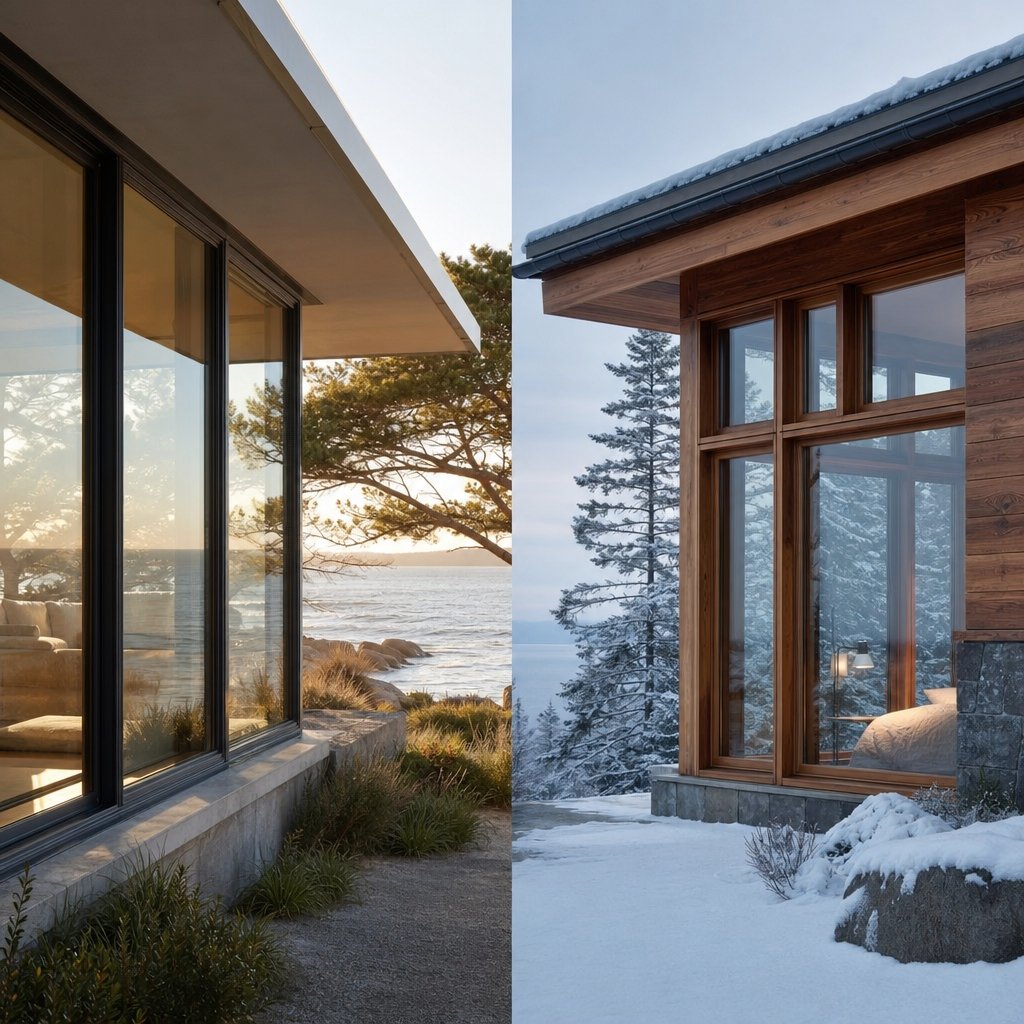
A comparison table tells you what each material can do. Your climate and project type tell you what each material should do in your specific situation. This is the step most homeowners skip, and it is the one that leads to the most expensive regrets. A frame that performs beautifully in a dry, temperate suburb can fail dramatically in a coastal salt zone or a region with brutal freeze-thaw cycles. The same logic applies to project context: the best frame for a ground-up new build is not always the best frame for a retrofit into an existing wall.
Best Frame Materials by Climate Zone
Climate is the single biggest external factor shaping how a window frame performs over its lifetime. Temperature extremes stress seals and joints. Humidity and salt attack vulnerable materials from the outside. UV radiation degrades finishes and polymers. Matching your frame material to your local conditions is not optional; it is the foundation of a smart window investment.
The U.S. Department of Energy emphasizes that improving the thermal resistance of the frame contributes directly to a window’s overall energy efficiency, particularly its U-factor. ENERGY STAR builds on this by setting climate-zone-specific performance thresholds that account for both heating and cooling demands. With that framework in mind, here is how each climate zone shapes your frame material shortlist:
- Cold climates (Northern U.S., Canada, Northern Europe) – Thermal performance is the priority. You need frames with low U-factors that minimize heat loss during long, harsh winters. Wood, fiberglass, and thermally broken aluminium are the strongest performers here. Wood’s natural cellular structure provides excellent insulation, while fiberglass frames with insulation-filled cavities deliver superior thermal performance compared to wood or uninsulated vinyl. Thermally broken aluminium also qualifies, especially when paired with double glazing glass window assemblies or triple-pane units featuring low e glass and argon gas fills. Vinyl performs adequately in moderate cold but can become brittle in extreme sub-zero conditions, and its higher thermal expansion rate stresses seals through repeated freeze-thaw cycling.
- Hot-humid climates (Gulf Coast, Southeast U.S., tropical regions) – Moisture resistance takes center stage. Frames need to shrug off constant humidity, heavy rain, and occasional storm surges without rotting, swelling, or corroding. Aluminium, vinyl, and fiberglass all excel here. Aluminium’s inherent resistance to moisture and termites makes it a natural fit, and its slim profiles maximize airflow when paired with operable window styles. Vinyl’s zero-absorption properties keep it stable in wet conditions. Wood, by contrast, demands aggressive sealing and frequent maintenance in humid environments, and even then, rot and mould remain persistent risks.
- Coastal and salt-air environments – Salt spray accelerates corrosion on unprotected metals and penetrates wood grain, causing premature decay. Avoid untreated steel and bare wood in these zones. Aluminium with marine-grade powder coating or anodised finishes handles salt exposure well, which is why it dominates coastal residential construction. Vinyl is equally salt-resistant and requires no protective finish at all. Fiberglass performs reliably in salt air, though it is less commonly specified in coastal markets simply due to availability. If you want wood’s interior warmth in a coastal home, a clad hybrid with an aluminium exterior shell is the practical compromise.
- Arid and desert climates (Southwest U.S., inland Australia) – Dimensional stability under extreme heat and UV exposure is what matters most. Daytime temperatures above 110 degrees Fahrenheit followed by cool desert nights create punishing expansion-contraction cycles. Fiberglass handles this better than any other frame material because its thermal expansion rate closely matches the window glass itself, keeping seals intact through daily temperature swings. Aluminium also performs well in arid heat, resisting UV degradation and maintaining structural integrity. Vinyl can soften and warp under sustained high temperatures, particularly in darker colours that absorb more solar radiation. Wood dries out and cracks in low-humidity desert air unless meticulously maintained.
One factor that cuts across every climate zone: glazing selection. Even the most energy-efficient windows lose their advantage if the glass is not matched to local conditions. In cold climates, low e glass windows with high solar heat gain coefficients let passive solar energy warm your home. In hot climates, spectrally selective low-e coatings block infrared heat while still admitting daylight. The frame and the glazing work as a system, and optimizing one while ignoring the other leaves performance on the table.
New Construction vs Replacement and Retrofit Projects
Your project type shapes which frame materials are practical, how much the installation costs, and how disruptive the process will be. The three main categories, new construction, full-frame replacement, and retrofit insert, each come with different constraints.
New construction gives you the most freedom. The wall framing is exposed, so any frame material can be installed with nail fins or flanges secured directly to the studs. This is where you can specify heavier materials like steel or clad hybrids without worrying about fitting into an existing opening. New construction windows also allow you to add insulation around the rough opening, eliminating hidden air leaks and maximizing the energy-efficient windows performance you are paying for. Lead times are longer and upfront costs are higher, but you are building a system from scratch with no compromises.
Full-frame replacement removes the entire existing window assembly, including the sash, casing, and frame, and installs a new unit into the wall opening. This approach makes sense when the existing frame is warped, rotted, or leaking. It is more invasive than a retrofit and typically costs 15 to 30 percent more, but it gives you a clean start. You can change frame materials entirely, switch from wood to thermally broken aluminium for example, and resize openings if needed. Most full-frame replacements take one to two days per window, depending on wall structure and the complexity of interior trim work.
Retrofit or insert installation keeps the existing frame in place and fits a new sash and glass unit inside it. This is the fastest and most affordable option, ideal when the existing frame is structurally sound and you simply want better glass, better seals, or improved energy performance. The trade-off? Your new window must fit within the existing frame dimensions, which slightly reduces the visible glass area. Retrofit installations also limit your material options. If the existing frame is wood, you are typically inserting a new wood or vinyl unit. Swapping to aluminium or fiberglass in a retrofit scenario often requires a full-frame replacement instead.
From a cost and timing perspective, retrofit installation generally finishes within a single day and costs the least. Full-frame replacement sits in the middle. New construction takes the longest due to framing adjustments, exterior work, and insulation, but it delivers the most energy-efficient windows outcome because every component is optimized from the studs out.
Matching Frame Material to Architectural Style
Climate and project type narrow your options. Architectural style refines them further. The wrong frame material can undermine a home’s visual identity just as easily as the wrong paint colour.
- Heritage and period homes – Wood remains the default for Victorian, Edwardian, Federation, and Craftsman-style properties. Planning authorities in conservation zones frequently mandate timber or timber-look frames. Where full wood maintenance is not feasible, aluminium-clad wood hybrids offer a compliant exterior appearance with reduced upkeep. Steel is essential for accurate restoration of Art Deco and early industrial-era buildings.
- Contemporary and minimalist builds – Thermally broken aluminium dominates here. Its slim profiles and clean lines complement flat roofs, open floor plans, and floor-to-ceiling glazing. Fiberglass is a strong alternative when you want the same low-maintenance performance with slightly better thermal numbers.
- Coastal and resort-style homes – Aluminium with marine-grade finishes or vinyl handles the environment. Louvre, awning, and casement styles in these materials maximize ventilation while resisting salt and humidity.
- Budget-conscious suburban renovations – Vinyl delivers the most energy-efficient windows upgrade per dollar spent. It suits ranch homes, split-levels, and standard suburban construction where the priority is performance improvement rather than architectural statement.
- High-end custom builds – Clad hybrids and fiberglass give architects the flexibility to specify different interior and exterior finishes, matching the most energy efficient windows performance targets with bespoke design intent.
Window frame thickness also plays a role in style matching. Slim aluminium and steel profiles suit modern aesthetics where you want maximum glass and minimal frame. Thicker wood and composite profiles feel more proportional on traditional facades where visual weight and shadow lines are part of the design language.
Climate, project type, and architectural style each eliminate certain options and elevate others. Layer all three filters together, and the list of frame materials that genuinely fit your situation usually narrows to two or three strong candidates. From there, the final decision comes down to budget, personal priorities, and a clear process for making the call, which is exactly where a structured decision framework helps most.
Choosing the Best Window Frame for Your Home
Seven materials. Dozens of variables. One decision. If you have made it this far, you understand the trade-offs each frame material brings to the table. The challenge now is not a lack of information but knowing how to filter it through your own priorities. A structured approach cuts through the noise and gets you to a confident shortlist faster than browsing product pages ever will.
Recommendations by Buyer Profile
Not every homeowner weighs the same factors equally. Your starting point shapes which materials deserve your attention and which ones you can safely set aside. Here is how the different types of windows and frame materials map to four common buyer profiles:
Budget-focused homeowners – You want the best performance per dollar, and you are replacing multiple windows at once. Vinyl is your primary candidate. It delivers solid thermal insulation, zero painting, and the lowest upfront cost across all kinds of windows. If your climate is moderate and your home style is suburban, vinyl handles the job without stretching your finances. Where budget allows a slight step up, composite frames offer better longevity without a dramatic price jump.
Design-driven renovators – Aesthetics and architectural authenticity guide your decisions. If you are restoring a heritage home or renovating a period property, wood frames are likely non-negotiable for planning compliance and visual integrity. For contemporary renovations where clean lines and slim profiles matter, thermally broken aluminium gives you the windows style that complements modern design. Clad hybrids split the difference beautifully when you want timber warmth inside and weather-tough cladding outside.
Performance-first builders – Energy ratings, lifespan, and low maintenance top your list. Fiberglass is the standout here, with its matched thermal expansion to glass, 40 to 50 year lifespan, and minimal upkeep. Thermally broken aluminium is a close second, especially for projects with large openings or commercial-grade requirements. Both materials pair well with insulated glazing and low e windows to create assemblies that meet or exceed the strictest energy codes.
Sustainability-conscious buyers – You evaluate environmental impact alongside performance. Wood from FSC-certified sources is renewable and biodegradable, giving it the lowest end-of-life footprint. Aluminium scores high on recyclability, with roughly 90 percent of construction aluminium being recycled using just 5 percent of the energy needed for virgin production. Composites made with reclaimed wood fibres offer a middle path. Insulating windows effectively also reduces your home’s operational carbon footprint year after year, so energy performance and sustainability go hand in hand.
A Simple Step-by-Step Decision Process
Regardless of which buyer profile fits you best, the selection process follows the same logical sequence. Working through these steps in order prevents you from falling in love with a material that does not suit your conditions, or dismissing one that actually fits perfectly.
- Identify your climate zone – Start here because climate eliminates options before anything else does. Coastal salt air rules out untreated steel and bare wood. Extreme cold demands low U-factor frames like fiberglass, wood, or thermally broken aluminium. Desert heat punishes vinyl in dark colours. Your local conditions are the first and most non-negotiable filter.
- Define your budget, including long-term maintenance – Set a realistic number that accounts for more than the purchase price. Factor in painting cycles for wood, potential replacement timelines for vinyl, and the energy savings that high-performance frames deliver over 20 to 40 years. The cheapest frame at the register is not always the cheapest frame to own.
- Match to your home’s architectural style – A sleek aluminium profile looks out of place on a Victorian cottage, and chunky wood frames fight the clean lines of a modern build. Let your home’s existing character guide the shortlist. Heritage properties may have regulatory requirements that narrow the field further.
- Evaluate energy performance requirements – Check whether your local building code mandates specific U-factor or Solar Heat Gain Coefficient thresholds. Review ENERGY STAR criteria for your climate zone. If you are chasing rebates or green building certifications, the frame’s contribution to whole-window performance matters as much as the glazing.
- Request samples and quotes from suppliers – Once you have narrowed to two or three materials, get physical samples in hand. See the profiles, feel the finishes, and compare sightline widths in person. Collect at least three quotes for each material to understand real-world pricing in your market, and ask every supplier about warranty coverage, lead times, and installation credentials.
Where to Start Your Window Frame Search
The best research happens when you combine online comparison with hands-on evaluation. A few practical next steps will move you from planning to action:
- Consult a local glazier or window specialist – A qualified professional can assess your existing openings, recommend installation methods, and flag any structural or code issues specific to your property. This conversation alone can save you from costly surprises mid-project.
- Check local building codes and heritage requirements – Before committing to any material, confirm what your council or planning authority permits. Conservation zones, bushfire-prone areas, and cyclone-rated regions all carry frame material restrictions that override personal preference.
- Explore supplier collections online – Homeowners and builders considering aluminium can browse MEICHEN’s aluminium windows collection as a starting point for energy-efficient, Australian-standard-compliant systems suited to residential renovations, new builds, and multi-unit developments. Comparing configurations online before requesting quotes helps you arrive at supplier meetings with sharper questions and clearer expectations.
- Request in-home or on-site consultations – Many window companies offer free assessments. Use these to get tailored recommendations based on your actual wall construction, opening sizes, and exposure conditions rather than generic advice.
Choosing a window frame material is not a decision you make once and forget. It shapes your home’s comfort, appearance, energy bills, and maintenance routine for decades. The homeowners who get it right are the ones who treat the frame as seriously as the glass, match the material to their real-world conditions, and invest the time upfront to compare options honestly. That small effort at the start pays back every single year the windows are in place.
Frequently Asked Questions About Window Frame Types
1. What is the most energy-efficient window frame material?
Fiberglass and wood consistently rank as the most energy-efficient frame materials. Fiberglass frames with insulation-filled cavities deliver superior thermal resistance, while wood’s natural cellular structure provides excellent insulation with conductivity as low as 0.09 W/mK for thermally modified spruce. Thermally broken aluminium also performs well, cutting conductive heat loss by roughly half compared to standard aluminium. The best choice depends on your climate zone — cold regions benefit most from fiberglass or wood, while hot climates should prioritize glazing performance over frame insulation.
2. How long do different types of window frames last?
Lifespan varies significantly by material. Steel frames last 40 to 70+ years, fiberglass and thermally broken aluminium last 40 to 50+ years, wood can last 30 to over 100 years with diligent maintenance, clad hybrids last 30 to 50 years, composites last 20 to 30+ years, and vinyl frames typically last 20 to 30 years. However, total cost of ownership matters more than raw lifespan — a frame requiring replacement twice in 50 years may cost more overall than a premium frame that lasts the entire period without intervention.
3. Are vinyl window frames better than aluminium?
Neither is universally better — they solve different problems. Vinyl costs less upfront, offers good thermal insulation from multi-chamber profiles, and requires zero painting. Aluminium provides superior structural strength for large openings, slim sightlines that maximize glass area, virtually unlimited colour options through powder coating, and a longer lifespan of 40 to 50 years versus 20 to 30 for vinyl. In coastal and hot climates, aluminium with a thermal break often outperforms vinyl, which can warp under extreme UV and heat. For budget-conscious suburban projects in moderate climates, vinyl remains a practical choice.
4. What window frame material is best for coastal homes?
Aluminium with marine-grade powder coating or anodised finishes is the top choice for coastal environments. It resists salt spray corrosion, will not rot or swell from moisture, and maintains structural integrity in humid conditions. Vinyl is a strong second option since uPVC does not absorb water or corrode. Fiberglass also handles salt air reliably. Avoid untreated steel and bare wood in coastal zones — salt accelerates corrosion on unprotected metals and penetrates wood grain, causing premature decay. If you want wood’s interior warmth, an aluminium-clad wood hybrid protects the timber from exterior salt exposure.
5. What is the difference between fiberglass and composite window frames?
Fiberglass frames are made from glass fibres pulled through resin via pultrusion, creating an extremely strong, dimensionally stable material that expands at nearly the same rate as window glass. Composite frames blend wood fibres with thermoplastic polymers through extrusion, similar to vinyl manufacturing. Fiberglass is roughly twice the strength of vinyl and stronger than most composites, lasts 40 to 50+ years versus 20 to 30+ for composites, and can typically be field-painted. Composites offer slightly better insulation from their wood fibre content and appeal to sustainability-focused buyers when made with reclaimed materials, but some formulations are brand-exclusive, limiting supplier options.
More Window & Door Guides