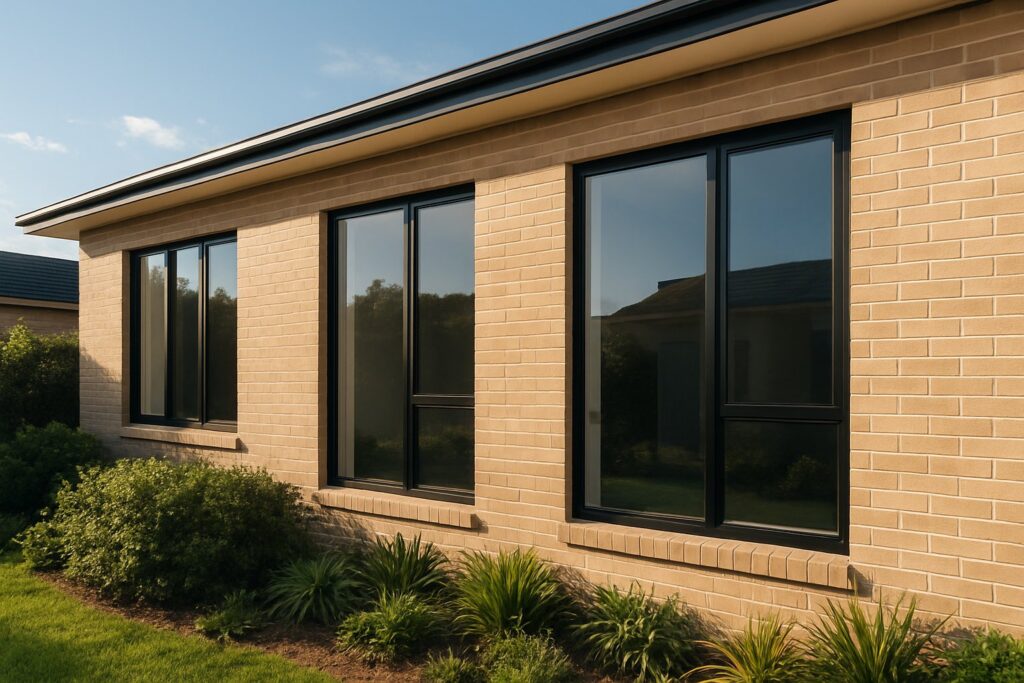
What Are Smart Windows and Why They Matter
You’ve probably heard the term tossed around in conversations about energy-efficient homes or futuristic office buildings. But what is a smart window, really? Strip away the buzzwords and you’re left with a surprisingly straightforward concept.
Defining Smart Windows in Simple Terms
Smart windows are glass panels that dynamically change their tint, opacity, or thermal performance in real time — responding to electrical signals, sunlight, or temperature shifts — giving occupants on-demand control over light, heat, and privacy without blinds, shades, or curtains.
That word “dynamically” is doing the heavy lifting here. Traditional tinted glass and low-E coatings are fixed. They offer the same level of light filtering and heat rejection whether it’s a blazing July afternoon or a dim January morning. Smart windows adapt. They shift from clear to dark and back again based on conditions or your preferences, which means the glass itself becomes an active part of how a building manages energy and comfort.
Why Smart Windows Are Gaining Traction
So what are smart windows doing in the spotlight right now? A few forces are converging at once. Rising energy costs have homeowners and building managers looking harder at anything that reduces HVAC and lighting loads. The smart home ecosystem — think thermostats, voice assistants, automated lighting — has matured to the point where dynamically controlled glass fits naturally into the stack. And building energy codes keep tightening, pushing architects and developers toward solutions that go beyond static glazing.
The global smart glass market sat at roughly $6.42 billion in 2025 and is projected to reach $10.42 billion by 2030, growing at a 10.2% CAGR. That trajectory reflects real demand, not just hype.
This guide walks through every major technology, compares them honestly, and lays out the trade-offs — so you can figure out whether smart glass actually makes sense for your project before anyone tries to sell you on it. No brand allegiances, no inflated claims. Just a clear-eyed look at what each option delivers and where it falls short.
How Each Smart Glass Window Technology Actually Works
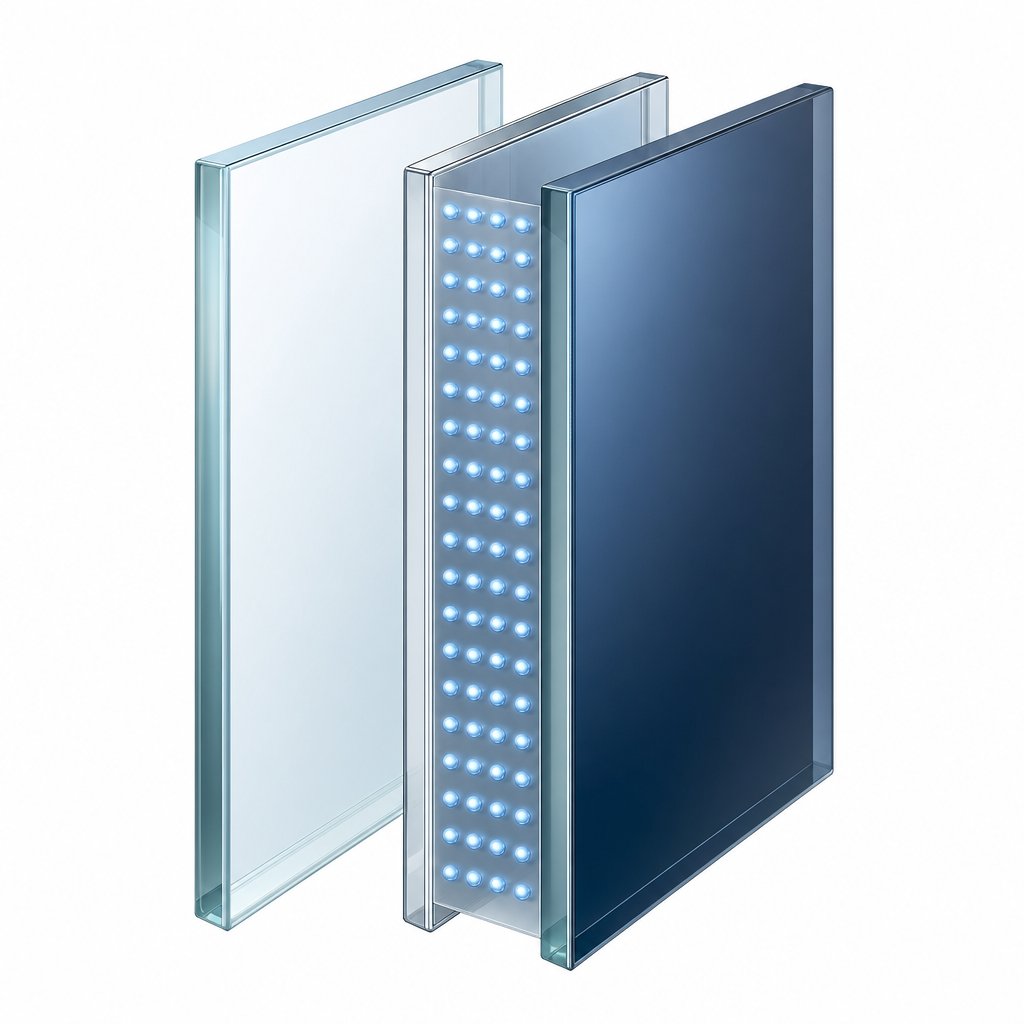
Knowing that smart windows adapt is one thing. Understanding how each type adapts — and why that matters for your project — is where the real decision-making starts. Six distinct technologies sit under the smart glass umbrella, and they differ in mechanism, speed, control, and ideal use case more than most buyers realize.
Electrochromic Glass
Imagine a sandwich of ultra-thin electrode layers with ions sitting between them. When you apply a small voltage, those ions migrate from one layer to another, and the glass gradually darkens. Reverse the voltage, and it clears back up. That gradual tinting — taking anywhere from seconds to several minutes depending on pane size — is the hallmark of electrochromic glass. It holds its tinted state without continuous power, which is a nice efficiency perk. The technology uses materials like tungsten oxide and is best suited for large commercial facades and residential skylights where solar control and glare reduction matter most. The trade-off? It’s among the more expensive smartglass windows options, and switching speed won’t impress anyone looking for instant results.
Thermochromic and Photochromic Glass
These two are the passive members of the family — no wiring, no switches, no electricity at all.
Thermochromic glass reacts to heat. As the glass surface temperature rises, the material shifts its tint automatically, reducing solar heat gain during the hottest parts of the day. It sounds elegant in theory, but real-world consistency has been a challenge. Performance varies across climates, and user control is nonexistent. As of 2025, active commercial production of thermochromic smart glass has largely been phased out due to these limitations.
Photochromic glass works similarly but responds to UV light intensity instead of heat — the same principle behind transition eyeglass lenses. It darkens under strong sunlight and clears in shade. While useful in automotive sunroofs, its unpredictability and lack of manual override have kept it on the margins of architectural applications.
SPD, PDLC, and Micro-Blind Technologies
This trio represents the electrically active side of smart glass windows, each solving a different problem.
SPD (Suspended Particle Devices) glass contains microscopic particles suspended in a thin film between glass layers. Without power, those particles scatter randomly, blocking light and giving the glass a dark, bluish appearance. Apply voltage and the particles snap into alignment, letting light pass through. The result is rapid, variable dimming — you can dial in exactly how much light you want. SPD is ideal for exterior-facing glass where dynamic sunlight control is critical, and it filters up to 99.9% of UV rays, which is a significant benefit for protecting interiors.
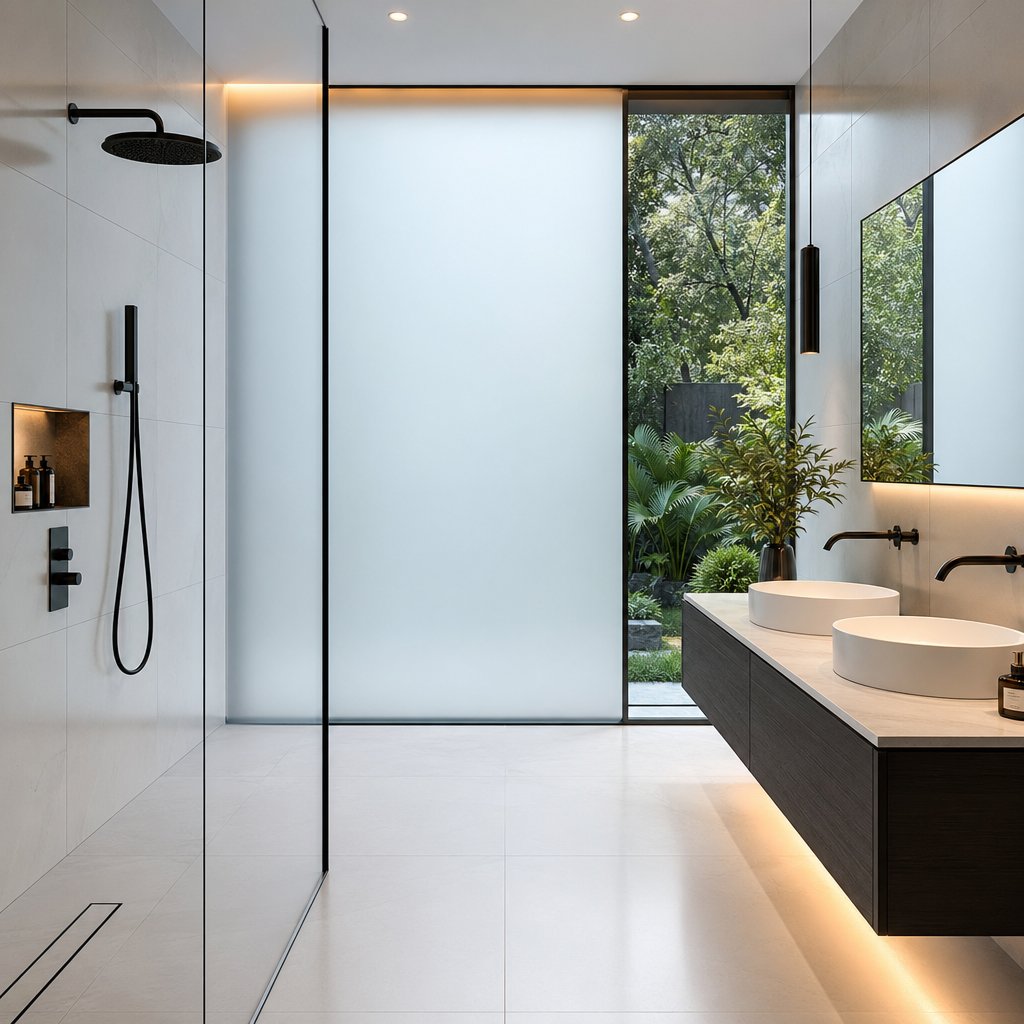
PDLC (Polymer Dispersed Liquid Crystal) takes a different approach. Liquid crystal droplets sit dispersed within a polymer matrix. Without power, those droplets scatter light, making the glass appear frosted or opaque. Apply voltage and the crystals align, turning the glass clear. The switching happens in milliseconds — essentially instant. But PDLC is binary: it’s either clear or frosted, with no in-between dimming levels. That makes it a privacy solution first and foremost, perfect for conference rooms, bathroom partitions, and interior glass walls. It dominates over 95% of the smart privacy glass market for good reason.
Micro-blind technology is the newest and least commercially mature of the group. It uses tiny mechanical louvers — think microscopic venetian blinds — embedded directly within the glass. An electric field curls or uncurls these micro-scale structures to block or admit light. The concept is promising because it’s purely mechanical at the micro level, potentially avoiding some degradation issues that affect chemical-based films. However, availability remains limited and real-world performance data is still catching up to the research.
| Technology | Activation Method | Speed | Transparency Range | Primary Use Case |
|---|---|---|---|---|
| Electrochromic | Low-voltage electrical signal | Seconds to minutes | Full clear to deep tint (variable) | Commercial facades, skylights |
| Micro-Blind | Electric field (mechanical) | Fast (sub-second) | Clear to opaque (variable) | Research stage; potential facade use |
| PDLC | Electrical voltage | Milliseconds | Frosted (off) to clear (on) | Interior privacy partitions |
| Photochromic | UV light (passive) | Gradual (minutes) | Clear to partial tint | Automotive glazing |
| SPD | Electrical voltage | Fast (seconds) | Dark blue (off) to clear (on), variable | Exterior windows, skylights |
| Thermochromic | Heat (passive) | Gradual (minutes) | Clear to moderate tint | Limited; largely phased out |
Each of these six technologies occupies its own lane. But there’s a simpler way to sort through them — one that cuts straight to the most practical question: do you want a system you control, or one that responds on its own?
Active vs Passive Smart Window Technologies
That question — control it yourself or let the environment decide — is really the first fork in the road. Every smart window technology falls into one of two camps: active or passive. Get clear on which category fits your priorities and you’ll immediately cut the field in half.
Active Technologies That Need Power
Electrochromic, SPD, PDLC, and micro-blind systems all require electrical input to function. That means wiring, controllers, and in most cases, integration with a building management system or a simple wall switch. The upside? You’re in charge. You can override tinting manually, schedule it around your daily routine, or hand control to an automation platform that adjusts based on occupancy, time of day, or HVAC demand. For any smart window application where precision and flexibility matter — think conference rooms that need instant privacy or facades that track solar angles throughout the day — active technologies are the only real option. The trade-off is added installation complexity and ongoing (though typically low) power consumption.
Passive Technologies That Respond Automatically
Thermochromic and photochromic glass sit on the opposite end. They react to heat or UV light without any electrical connection, user input, or control interface. Zero energy cost, zero wiring, zero maintenance of electronic components. Sounds appealing — until you realize there’s no manual override. You can’t tell thermochromic glass to stay clear on a hot day when you actually want the warmth, and you can’t force photochromic glass to darken on a cloudy afternoon when glare bounces off a neighboring building. Performance depends entirely on climate conditions, which limits predictability and customization. As noted by the Efficient Windows Collaborative, passive devices respond directly to a single environmental variable, while active devices can be controlled in response to any variable — including occupant preferences.
Choosing between these two categories comes down to a handful of practical factors:
- Control preference — Do you need on-demand adjustability, or is automatic response sufficient?
- Budget — Active systems carry higher upfront costs for hardware and installation; passive options are simpler and cheaper to deploy.
- Installation complexity — Active technologies require electrical infrastructure; passive glass installs like conventional glazing.
- Energy goals — Active systems integrate with whole-building energy management; passive systems save energy independently but can’t be optimized in real time.
Sorting yourself into one of these two lanes doesn’t just simplify the technology decision — it shapes everything downstream, from installation planning to long-term operating costs. And it raises the next logical question: how does either category actually stack up against the window treatments most buildings already have in place?
Smart Windows vs Traditional Window Treatments
Most homes and offices aren’t starting from zero. They already have blinds hanging in the bedroom, curtains framing the living room, or low-E coatings baked into the glass from the day the building went up. So the real question isn’t “is smart glass cool?” It’s whether transition windows for homes and commercial spaces actually justify replacing what’s already there.
Smart Windows vs Blinds, Shades, and Curtains
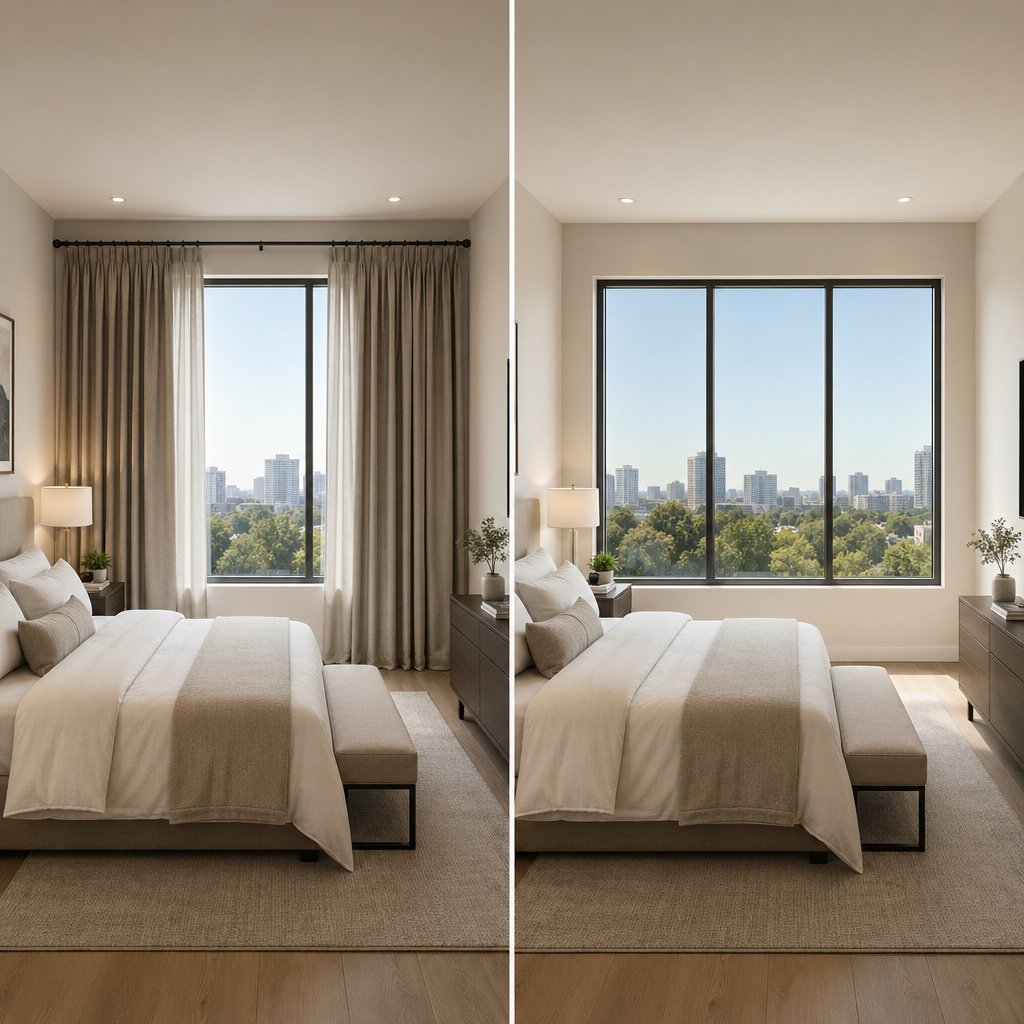
Blinds, shades, and curtains have been the default for centuries — and they work. But they come with a maintenance tax that adds up quietly. Fabric curtains collect dust and allergens, requiring regular washing. Blinds accumulate grime between slats. Shades can stain and fade under prolonged sun exposure. Smart windows for home use sidestep all of that. There are no fabric panels to launder, no slats to wipe, no cords to tangle. The glass itself handles light and privacy, so the hardware layer simply disappears.
Then there’s the automation gap. Traditional treatments are either manual — you walk over and pull a cord — or they require motorized add-ons that bolt onto an existing setup. Motorized blinds help, but they’re still a mechanical system layered on top of a mechanical product. Smart glass integrates tinting directly into the glazing, controlled through a wall switch, app, or building automation system. UV protection tells a similar story: blinds have gaps between slats that let radiation through, and curtains only protect when fully drawn. Active smart glass technologies like SPD filter UV continuously, even in a partially tinted state.
Aesthetically, the difference is hard to overstate. Curtains add visual warmth, sure — but they also eat floor space, block sightlines, and date a room faster than almost any other design element. Smart glass keeps the window clean, unobstructed, and modern.
Smart Windows vs Low-E Coatings and Static Tint
Low-E coatings and factory-applied tint are solid upgrades over bare glass. They reduce heat gain, cut glare, and improve insulation. But here’s the catch: they’re fixed. A low-E coating that rejects solar heat in summer does the exact same thing in winter, when you’d actually welcome that warmth. Static tint darkens the view year-round, even on overcast days when every lumen of natural light matters.
Smart glass adapts. It can darken during peak afternoon sun and clear up on a cloudy morning — hourly, seasonally, or on demand. That dynamic response is why electrochromic glass can reflect up to 88% of solar radiation when fully tinted, then let daylight flood in minutes later. Static glazing simply can’t match that flexibility, and the energy implications are real: buildings relying on fixed coatings still lean heavily on HVAC and artificial lighting to compensate for what the glass can’t adjust.
| Feature | Smart Windows | Motorized Blinds | Low-E Glass | Static Tint |
|---|---|---|---|---|
| Adaptability | Dynamic — adjusts in real time by tint level, schedule, or sensor input | Adjustable — opens/closes mechanically but no tint variation | Fixed — same performance year-round | Fixed — permanent darkening regardless of conditions |
| Maintenance | Minimal — sealed unit, no moving parts on most technologies | Moderate — motors, tracks, and fabric require periodic servicing | Minimal — no moving parts, standard glass cleaning | Minimal — standard glass cleaning |
| Aesthetic Cleanliness | High — no visible hardware, unobstructed glass | Moderate — hardware visible when deployed | High — looks like standard glass | Moderate — permanent color shift visible |
| Automation Potential | High — integrates with smart home and BMS platforms natively | Moderate — requires separate motor and controller system | None — static by nature | None — static by nature |
| Relative Cost | Higher upfront; lower long-term energy and maintenance costs | Moderate upfront; ongoing mechanical maintenance | Low upfront; no adaptability savings | Low upfront; no adaptability savings |
The table makes the trade-off clear: smarts windows cost more at the outset, but they’re the only option that actively works for you after installation. Everything else is either static or bolted-on. That said, “worth it” depends heavily on where you’re installing them — and a bathroom privacy upgrade plays by very different rules than a 40-story office facade.
Smart Windows for Homes and Commercial Spaces Compared
A bathroom that needs instant privacy and a 40-story curtain wall tracking the sun across a city skyline — both fall under the smart glass umbrella, but the priorities, budgets, and installation realities couldn’t be more different. Where you’re putting this technology shapes which type you choose, how much you spend, and what kind of return you can realistically expect.
Residential Use Cases and Considerations
When you picture smart windows for homes, think room by room rather than wall by wall. Residential projects typically involve a handful of panes — maybe a skylight, a bathroom window, and a set of bedroom panels — not an entire building envelope. That smaller scale actually works in your favor: the higher per-unit cost of smart glass becomes more manageable when you’re upgrading five windows instead of five hundred.
So where does it make the most practical difference? Consider these top residential applications:
- Bathroom windows and shower screens — PDLC glass switches from frosted to clear in milliseconds, giving you complete privacy without curtains or blinds. As one home design resource notes, a fabric-free bathroom environment also helps prevent mold, making smart glass a functional upgrade beyond just aesthetics.
- Skylights — Hard to reach and impossible to shade with traditional treatments. Electrochromic or SPD glass auto-tints at peak sun, cutting glare and heat gain without you lifting a finger. A properly installed skylight paired with smart glass film can meaningfully reduce energy bills through UV filtration and reactive tinting.
- Bedroom windows — Replacing blackout curtains with tintable glass eliminates bulky fabric panels while delivering the same room-darkening effect on demand.
- Living areas and home offices — Glare control for screens and monitors without sacrificing the view. Smart glass for home windows lets you dial in exactly the right light level throughout the day.
- Glass doors and entryways — Sliding patio doors, front entrances, and bi-fold walls all benefit from switchable privacy, especially in open-plan layouts where traditional treatments feel clumsy on operable glass.
- Room dividers in open floor plans — Smart glass residential windows can partition spaces visually without permanent walls, toggling between open and private as needed.
Homeowners tend to prioritize two things above all else: aesthetics and simplicity. They want clean lines, no visible hardware, and a control method that doesn’t require an engineering degree — a wall switch, a phone app, or a voice command through their existing smart home setup. Technologies with minimal wiring and seamless integration into standard window frames tend to win out in residential settings. That’s partly why PDLC dominates the home privacy market and electrochromic leads for skylights: both deliver a clear visual result without cluttering the space.
Commercial and Multi-Unit Applications
Scale changes everything. Commercial projects deal in hundreds or thousands of square feet of glass, and the decision-making shifts from personal preference to measurable performance, regulatory compliance, and return on investment. The applications look different too:
- Office facades and curtain walls — Electrochromic glass across an entire building skin can dynamically manage solar heat gain floor by floor, reducing HVAC load and improving occupant comfort. AI-optimized facade systems are already adjusting transparency based on solar angle, irradiance, and internal loads in tandem with building management systems.
- Conference rooms and meeting spaces — PDLC partitions switch from transparent to opaque instantly, replacing motorized blinds and giving architects the flexibility to design open, glass-walled rooms that still offer on-demand privacy.
- Hospitality — Hotel bathrooms, spa partitions, and lobby features use switchable glass as both a functional privacy tool and a design statement.
- Healthcare facilities — Patient rooms benefit from glare control and privacy switching without the infection risks associated with fabric curtains. Hospitals operate around the clock and consume roughly 10% of commercial energy, making any reduction in lighting and cooling load significant at scale.
- Educational and lab facilities — Smart glazing doubles as a teaching tool while managing daylight in lecture halls and research spaces. Intelligent facade designs with real-time sensors can yield up to 65% greater efficiency in solar energy capture and management.
Commercial projects also benefit from bulk pricing that residential buyers rarely access. When you’re specifying glass for an entire building, per-unit costs drop substantially, and the energy savings compound across every floor. Integration with building management systems — something that’s overkill for a three-bedroom house — becomes a genuine advantage at commercial scale, allowing the glass to coordinate with HVAC, lighting, and occupancy sensors as a unified system.
There’s a regulatory dimension too. Commercial buildings face increasingly strict energy codes, and the bar keeps rising. ASHRAE 90.1 — the primary standard affecting glass and glazing in buildings four stories or higher — has cut its Energy Use Intensity targets in half since inception. New requirements for U-values and solar heat gain coefficients are creating demand for glazing that goes beyond static performance. Smart glass gives architects a tool to meet those tightening mandates without shrinking window-to-wall ratios or sacrificing daylighting, which is increasingly valued for occupant well-being and productivity.
Whether you’re upgrading a single bathroom or specifying glass for an entire office tower, the technology options are the same — but the way you evaluate them shifts dramatically. And regardless of which side of that divide you fall on, the honest question remains: what are the real benefits and real limitations once the marketing language fades?
Honest Pros, Cons, and Durability Expectations for Smart Windows
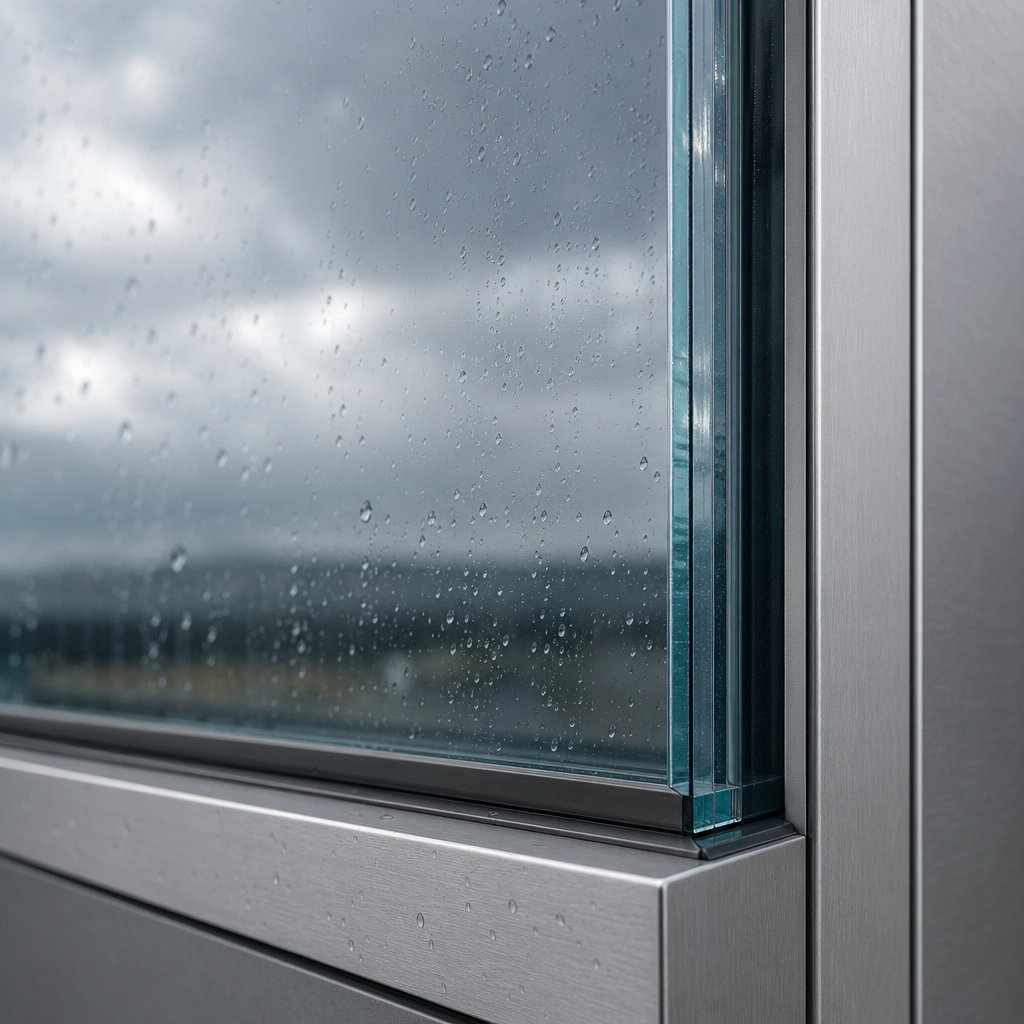
Marketing copy loves to paint smart windows as a silver bullet — less energy, more comfort, zero compromise. And some of those claims hold up. But anyone seriously asking “what is a smart window going to do for my building?” deserves the full picture, not just the highlight reel. Here’s what actually checks out, what doesn’t, and what the industry rarely talks about: how long these things last.
Real Benefits Beyond the Marketing
The advantages are genuine when you match the right technology to the right application. These aren’t theoretical — they’re backed by real-world performance and peer-reviewed research:
- Elimination of mechanical window treatments — No blinds, shades, or curtains means no dust-collecting fabric, no tangled cords, and no motorized hardware to maintain. The glass handles light and privacy on its own.
- Reduced HVAC load through dynamic solar control — This is the big one. Because the glass adapts to conditions rather than blocking heat at a fixed rate year-round, buildings can cut cooling and heating energy significantly. Simulation data from a 2025 study published in Advanced Science showed that electrochromic glass applied to building skylights achieved over 50% annual HVAC energy savings across more than 1,000 cities worldwide, with climate-specific operating modes.
- UV protection for furnishings and interiors — PDLC-based smart glass blocks over 95% of UV rays, far exceeding the roughly 55% blocked by standard float glass. That translates directly into less fading on furniture, flooring, and artwork.
- Enhanced privacy without sacrificing natural light — Even in its opaque or frosted state, smart glass still allows roughly two-thirds of natural daylight through, reducing dependence on artificial lighting while keeping interiors private.
- Improved safety and security — Most smart glass is laminated and tempered. The embedded film layer holds the glass together if it breaks, protecting occupants and making forced entry more difficult.
Limitations and Challenges to Consider
No technology is without trade-offs, and glossing over them doesn’t help anyone make a sound investment. Here’s what you should weigh carefully:
- High upfront cost — Smart glass typically runs $85 to $130 per square foot for purpose-built units, with specialized applications pushing even higher. Switchable film is more affordable at $25 to $45 per square foot, but it’s limited to interior use and privacy switching. Either way, you’re paying multiples of what conventional glazing costs.
- Limited installer availability — This technology isn’t mainstream yet. Finding a local glazier or electrician experienced with smart glass can be difficult in many regions. Most orders are fulfilled online and shipped directly, which means you’ll likely need to coordinate between a glass installer and an electrician who may be working with the product for the first time. A reputable smart window company will typically offer installation support or remote guidance, but plan for extra lead time.
- Technology maturity varies widely — Electrochromic glass has decades of commercial deployment behind it. PDLC dominates the privacy market with proven reliability. But micro-blind technology is still largely in the research stage, and thermochromic glass has been phased out of active production. Not every option on the spec sheet is equally battle-tested.
- Switching speed can slow in cold temperatures — Some electrochromic systems rely on ion migration that slows as temperatures drop. If you’re in a cold climate, ask specifically about cold-weather performance before committing.
- Climate-dependent performance — Not all smart glass technologies perform equally everywhere. A system optimized for solar heat rejection in Phoenix may underperform in a cloudy, temperate climate where maximizing daylight matters more than blocking it. The technology needs to match your local conditions, not just your aesthetic preferences.
- Electricity consumption — Active technologies require power to operate. The draw is modest — roughly 3 to 5 watts per square meter for PDLC glass — but it’s not zero, and it requires a wired electrical connection to each pane or zone.
Maintenance, Lifespan, and Durability
This is the section most smart window news articles and product pages skip entirely — and it’s arguably the most important for anyone treating this as a long-term investment rather than a novelty.
The good news: smart glass units are sealed assemblies, similar in construction to standard insulated glass units (IGUs). Day-to-day maintenance is minimal. You clean them the same way you’d clean any window — no special solvents, no delicate coatings to worry about on the exterior surface. There are no moving parts in most technologies (micro-blinds being the exception), which eliminates the mechanical wear that plagues motorized blinds and shades.
The more nuanced reality is that electronic components introduce failure points that conventional glass doesn’t have. Wiring connections, controllers, and the switchable film or coating layers themselves can degrade over time. How quickly depends on the technology and the quality of manufacturing.
For PDLC smart glass specifically, the data is encouraging. Industry durability testing indicates a functional lifespan exceeding 15 years under normal use, with the technology supporting millions of on/off switching cycles without meaningful performance loss. Standard manufacturer warranties typically cover 3 years, with extended options available depending on project scope. Electrochromic glass tells a similar durability story — the Advanced Science study referenced earlier demonstrated that after 1,000 coloration-bleaching cycles, the electrochromic device retained 92.5% of its initial transmittance modulation with no significant degradation.
The practical takeaway? Expect a lifespan comparable to high-quality double-glazed windows, with the understanding that the electronic layer is the component most likely to age first. When evaluating any smart window company, ask specifically about warranty terms, what’s covered (glass only vs. electronics), and whether replacement of the switchable layer is possible without replacing the entire unit.
Benefits and limitations only tell part of the story, though. The real multiplier — or the missed opportunity — comes from how these windows connect to the rest of your building’s systems.
Smart Home Integration and Energy Management
A smart window sitting on its own is useful. A smart window talking to the rest of your building is transformative. Yet most buyers — and most smart window company reviews — treat integration as an afterthought, a bullet point on a spec sheet rather than the feature that actually unlocks the technology’s full potential.
Integration Protocols and Platform Compatibility
Active smart window technologies connect to home automation ecosystems through a few common paths. The simplest is wired relay control — a low-voltage signal from a building management system or wall switch triggers tinting directly. It’s reliable and straightforward, but it doesn’t offer much flexibility beyond on/off or preset scenes.
Wi-Fi-enabled controllers add a layer of intelligence. They let you adjust tinting from a phone app, set schedules, or tie window behavior to triggers like sunrise, room temperature, or occupancy. From there, the glass can plug into broader platforms — Google Home, Apple HomeKit, and Amazon Alexa all support device control that can extend to smart glazing through compatible controllers or hubs.
The emergence of Matter — the industry-standard connectivity protocol — is worth paying attention to here. Matter enables cross-platform control, meaning a single smart device can be managed simultaneously across Google Home, HomeKit, and Alexa without manufacturer lock-in. It also routes commands locally over your home network rather than through the cloud, improving both speed and reliability. As smart window controllers adopt Matter compatibility, the integration story gets significantly simpler. That said, integration depth still varies by manufacturer and technology type, so when reading any smart window company review, check whether the product supports open protocols or locks you into a proprietary app.
Whole-Home Energy Management
The real payoff comes when your windows stop operating in isolation and start coordinating with everything else. Imagine this: your smart thermostat detects rising indoor temperatures on a summer afternoon. Instead of cranking the AC harder, it signals your electrochromic skylights to deepen their tint, cutting solar heat gain at the source. Your automated shading system responds to the same solar data, deploying exterior screens on south-facing glass while leaving north-facing windows clear for daylight. Meanwhile, your solar panels are generating peak output, and the system prioritizes powering the window tinting from that surplus rather than drawing from the grid.
This kind of coordinated response — windows communicating with HVAC, shading, and energy generation systems in real time — is where the energy savings compound beyond what any single device achieves alone. Sensors tracking solar exposure, interior temperature differentials, and occupancy patterns feed data into automation platforms that make continuous micro-adjustments throughout the day, all without you touching a switch.
Smart windows deliver the most energy value when they operate as part of an integrated system — coordinating with thermostats, solar panels, and automated shading — rather than functioning in isolation.
That integration mindset also shapes how you should approach the installation itself. Whether you’re retrofitting switchable film onto existing glass or specifying purpose-built units for a new build, the decisions you make about wiring, controllers, and frame systems determine how well your windows can participate in that connected ecosystem down the road.
Smart Glass Retrofit vs Replacement
Here’s where most buyers get stuck. You know which technology fits your goals, you understand how it integrates with your home or building systems — but should you apply switchable film to the glass you already have, or rip everything out and start fresh? The answer depends less on the smart glass itself and more on the condition of your existing windows, the scope of your project, and how much performance you’re willing to leave on the table.
Smart Film and Retrofit Options
If your current glass is structurally sound and you’re not ready for a full window replacement, switchable glass film for existing windows is the most accessible entry point. These are typically PDLC-based films — self-adhesive sheets applied directly to the interior surface of your glass. When unpowered, the film scatters light and turns the pane frosted. Apply voltage, and it clears. The switching is near-instant, and the visual effect is identical to purpose-built PDLC glass for most practical purposes.
The cost difference is significant. Self-adhesive smart film runs roughly a third of the price of laminated smart glass per square meter, and lead times are considerably shorter — around 10 working days compared to 30 for factory-laminated units. That makes retrofit film attractive for projects where budget is tight, disruption needs to stay minimal, or you’re upgrading a rental property where permanent modifications aren’t practical.
The trade-offs are real, though. Retrofit film is strictly an indoor product — it’s not rated for exterior-facing applications or high-moisture environments like showers and bathrooms. Gauzy’s implementation guide specifically warns against using smart film in wet areas, noting that while workarounds exist, they may void the warranty. The film is also more vulnerable to physical damage since it sits on the exposed glass surface rather than being sandwiched between panes. And functionally, you’re limited to privacy switching — frosted or clear — without the solar control, variable tinting, or heat rejection that electrochromic or SPD glass provides.
Smart window retrofit options make the most sense in a few specific scenarios: single-room upgrades like a home office or conference room, properties where you want to test the technology before committing to a larger investment, and situations where the existing window frames and glass are in good condition and don’t warrant full replacement. Think of it as a targeted upgrade rather than a whole-building solution.
Full Smart Window Replacement and New Construction
When you’re building from scratch or undertaking a major renovation, purpose-built smart glass units are the stronger play. Laminated smart glass — where the PDLC, SPD, or electrochromic layer is sealed between two panes during manufacturing — delivers superior optical clarity, better durability, and a longer functional lifespan compared to film overlays. The lamination process protects the switchable layer from moisture, physical contact, and environmental degradation, which is why it’s the required choice for bathrooms, shower enclosures, and any exterior-facing application.
Full replacement also opens the door to technologies that film simply can’t replicate. Electrochromic glass with variable tinting, SPD glass with rapid solar dimming — these require factory integration into the glazing unit. You can’t retrofit your way to that level of performance.
There’s another factor that gets overlooked in the smart glass retrofit vs replacement conversation: the frame. A high-performance switchable pane sitting inside a thermally inefficient frame is like putting a premium engine in a car with bald tires. Energy-efficient aluminium frames with thermal breaks complement smart glass by minimizing heat transfer at the edges — the exact spots where conventional frames leak energy. For readers planning new construction or renovation projects in Australia, MEICHEN’s aluminium windows offer Australian-standard-compliant systems designed with thermal performance in mind, providing a frame foundation that matches the ambitions of advanced glazing.
New builds have one more advantage: you can plan wiring, controller placement, and integration pathways into the building envelope from day one. Retrofitting smart glass into an existing structure often means chasing wires through finished walls or settling for surface-mounted conduit. Starting fresh eliminates those compromises and ensures the electrical infrastructure supports whatever automation you want to layer on later.
Not sure which path fits your situation? These decision factors can help you sort it out:
- Budget — Film retrofits cost roughly a third of laminated glass per square meter. If you’re testing the waters or working within tight constraints, retrofit is the lower-risk entry point.
- Project scope — Single-room privacy upgrade? Film works well. Whole-home renovation or new build? Purpose-built units deliver better performance and longevity.
- Desired technology type — If you need variable tinting or solar control (electrochromic, SPD), full replacement is the only option. PDLC privacy switching is available in both film and laminated formats.
- Environment — Wet areas, exterior-facing glass, and high-humidity spaces require laminated smart glass. Film is indoor-only.
- Frame condition — If your existing frames are drafty, corroded, or thermally poor, replacing the glass alone won’t solve the underlying efficiency problem. A full window replacement with high-performance frames makes more sense.
- Long-term performance goals — Film lifespan exceeds 10 years with professional installation, but laminated units are more durable and better protected. If you’re investing for the next 15 to 20 years, purpose-built glass is the safer bet.
Whether you go the retrofit route or commit to full replacement, the technology and frame system you choose are only as good as the process you follow to evaluate them. And that evaluation — matching the right solution to your specific project — is where most buyers either get it right or waste money learning the hard way.
How to Choose Smart Windows
You’ve seen the technologies, weighed the trade-offs, and figured out whether retrofit or replacement fits your situation. The final piece is pulling all of that into a decision process that actually works — one that keeps you from overspending on features you don’t need or underbuying for the problem you’re trying to solve.
Matching Technology to Your Project Needs
Start with the active vs passive filter. If you want on-demand control, scheduling, and integration with your building systems, you’re in the active camp — and that narrows the field to four technologies. If zero wiring and automatic response sound more appealing, passive options are simpler, though far more limited in flexibility and commercial availability.
From there, the best smart window technology for homes or commercial spaces depends on your primary goal:
- Large-scale energy savings — Electrochromic glass. Its variable tinting and ability to hold state without continuous power make it the go-to for facades, skylights, and any application where reducing HVAC load is the priority.
- Instant privacy — PDLC. Millisecond switching between clear and frosted, available in both laminated glass and retrofit film. Dominates bathrooms, conference rooms, and interior partitions.
- Rapid glare control with variable dimming — SPD. Lets you dial in precise light levels quickly, ideal for exterior-facing windows where solar conditions shift throughout the day.
- Passive simplicity — Thermochromic or photochromic, if you can find them. These require no power and no user input, but limited commercial availability and zero manual override make them niche choices at best.
Most residential buyers land on PDLC for privacy or electrochromic for skylights and sun-facing glass. Commercial projects tend toward electrochromic facades with PDLC for interior partitions. Knowing your primary goal eliminates most of the noise.
Evaluating Window Systems and Suppliers
Choosing the technology is half the equation. The other half is finding a supplier and system that deliver on the promise. This smart window buying guide boils the evaluation down to five steps:
- Define your primary goal — Is it energy reduction, privacy, glare control, or aesthetics? A single clear priority prevents scope creep and keeps the budget focused.
- Choose active or passive — This decision shapes everything downstream: wiring requirements, control options, installation complexity, and long-term operating costs.
- Shortlist compatible technologies — Match your goal and category to the specific technology. If you need variable tinting, SPD and electrochromic are your options. If you need privacy switching, PDLC is the proven choice.
- Evaluate frame and glazing system quality — The glass is only as good as the frame holding it. Thermally broken aluminium frames prevent energy loss at the edges, which matters enormously when you’re investing in high-performance glazing. For Australian projects, MEICHEN’s aluminium windows are one resource worth exploring — their systems are built to Australian standards with energy efficiency as a core design principle, giving advanced glazing a frame that matches its performance ambitions.
- Request supplier references and warranty details — Ask specifically what the warranty covers: glass only, electronics, or both? Is the switchable layer replaceable without swapping the entire unit? Can the supplier connect you with past clients in similar project types? Transparency here separates credible manufacturers from companies selling on spec sheets alone.
One more thing worth remembering: how to choose smart windows isn’t just a product decision — it’s a systems decision. The glass, the frame, the wiring, the controller, and the automation platform all need to work together. A supplier who understands that full picture, not just the switchable layer, is the one worth your time.
Smart Windows: Frequently Asked Questions
1. How much do smart windows cost compared to regular windows?
Purpose-built smart glass typically costs between $85 and $130 per square foot, which is several times more than conventional glazing. Switchable PDLC film applied to existing glass is a more budget-friendly option at roughly $25 to $45 per square foot, though it only provides privacy switching rather than full solar control. While the upfront investment is higher, smart windows can reduce long-term HVAC and maintenance costs — especially in commercial buildings where energy savings compound across large glass areas. Pairing smart glass with energy-efficient aluminium frames, such as those in MEICHEN’s Australian-standard-compliant aluminium windows collection, helps maximize the return by minimizing heat transfer at the frame edges.
2. How long do smart windows last and are they durable?
Most smart glass units are sealed assemblies similar to standard insulated glass units, so day-to-day maintenance is minimal. PDLC smart glass has a tested functional lifespan exceeding 15 years and supports millions of switching cycles without significant performance loss. Electrochromic glass has shown strong durability as well, retaining over 92% of its initial transmittance modulation after 1,000 coloration cycles in lab testing. The electronic components — wiring, controllers, and the switchable layer — are the parts most likely to age first, so it is important to ask suppliers whether the switchable layer can be replaced independently of the full window unit.
3. Can smart glass be installed on existing windows without full replacement?
Yes. Self-adhesive PDLC-based smart film can be applied to the interior surface of existing glass, switching it between frosted and clear states. This retrofit approach costs roughly a third of laminated smart glass and works well for single-room privacy upgrades, rental properties, or budget-conscious projects. However, retrofit film is limited to indoor use, cannot be used in wet areas like bathrooms, and only provides privacy switching — not variable tinting or solar heat control. For full performance including energy management and exterior applications, purpose-built laminated smart glass installed in high-quality thermally broken frames is the stronger long-term investment.
4. Do smart windows work with smart home systems like Alexa or Google Home?
Active smart window technologies can integrate with home automation platforms including Google Home, Apple HomeKit, and Amazon Alexa through Wi-Fi-enabled controllers or compatible hubs. The emerging Matter protocol is making cross-platform control simpler by allowing a single device to work across multiple ecosystems without manufacturer lock-in. Integration depth varies by manufacturer, so it is worth checking whether a product supports open protocols or requires a proprietary app. The greatest energy benefit comes when smart windows coordinate with thermostats, solar panels, and automated shading as part of a unified building management approach.
5. What is the difference between PDLC and electrochromic smart glass?
PDLC and electrochromic glass solve different problems. PDLC switches between frosted and clear in milliseconds, making it ideal for privacy applications like bathroom windows, conference rooms, and interior partitions. It accounts for over 95% of the smart privacy glass market. Electrochromic glass gradually shifts from clear to a deep tint by migrating ions between electrode layers when voltage is applied, and it holds its tinted state without continuous power. This makes electrochromic glass better suited for large facades and skylights where dynamic solar heat control and energy savings are the priority. Choosing between them comes down to whether your primary goal is privacy or energy management.
More Window & Door Guides