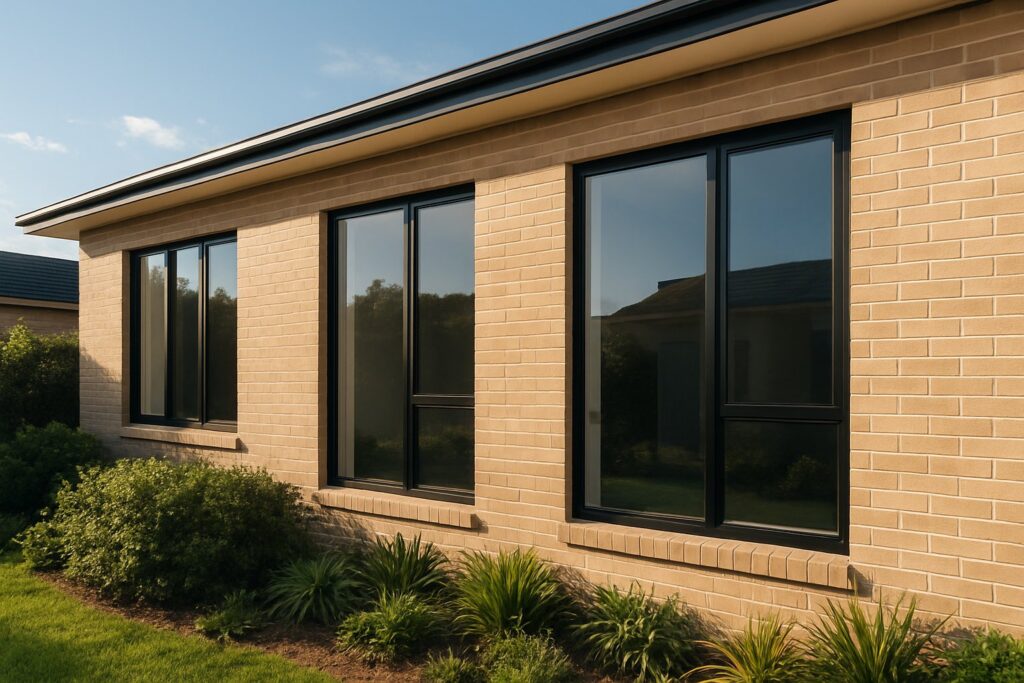
The Real Cost of Painting Aluminium Windows
Can you paint aluminium window frames? Absolutely. But the real question most homeowners ask is what it actually costs — and finding a straight answer online is surprisingly difficult. Most painting guides focus on timber or vinyl frames, leaving aluminium window owners piecing together estimates from irrelevant sources.
So here it is, upfront.
Painting aluminium windows in Australia typically costs between $150 and $600+ per window. The wide range depends on window size, current surface condition, accessibility, and whether you tackle it yourself or hire a professional painter.
For a full home with 10 to 15 aluminium windows, professional spray painting services generally fall between $2,500 and $7,500 AUD depending on scope and frame condition. That figure covers labour, materials, surface preparation, and masking — all the steps that separate a lasting finish from one that peels within months.
What Aluminium Window Painting Actually Costs
At the lower end, a small casement window with sound existing paint might cost $150 to $250 for a professional repaint. Larger sliding or bifold windows requiring extensive prep work push well past $500 per unit. DIY projects cut the outlay significantly — expect $30 to $80 per window in materials alone — though the time investment and risk of adhesion failure add their own hidden costs.
The window frame painting cost also shifts depending on whether you need frames only or the full window including sashes and mullions. More surface area means more masking, more product, and more labour hours.
Why Aluminium Window Costs Differ From Other Materials
Unlike painting wooden window frames, where a quick sand and a coat of acrylic does the job, aluminium demands a completely different preparation process. The metal forms an oxide layer almost immediately upon exposure to air, and this invisible barrier actively resists paint adhesion. Breaking through it requires chemical etching solutions, specialist self-etching or epoxy primers, and thorough degreasing — steps that add both time and material cost to every quote.
These extra preparation requirements are precisely why aluminium window painting costs more per frame than timber equivalents, even though the material itself is more durable. A painter familiar with painting wooden window frames can’t simply apply the same approach to aluminium and expect it to hold. The chemistry is fundamentally different, and cutting corners here guarantees early failure.
This guide breaks down every cost variable — from window size and paint type to DIY versus professional pricing — so you can budget accurately and avoid overpaying for your specific project.
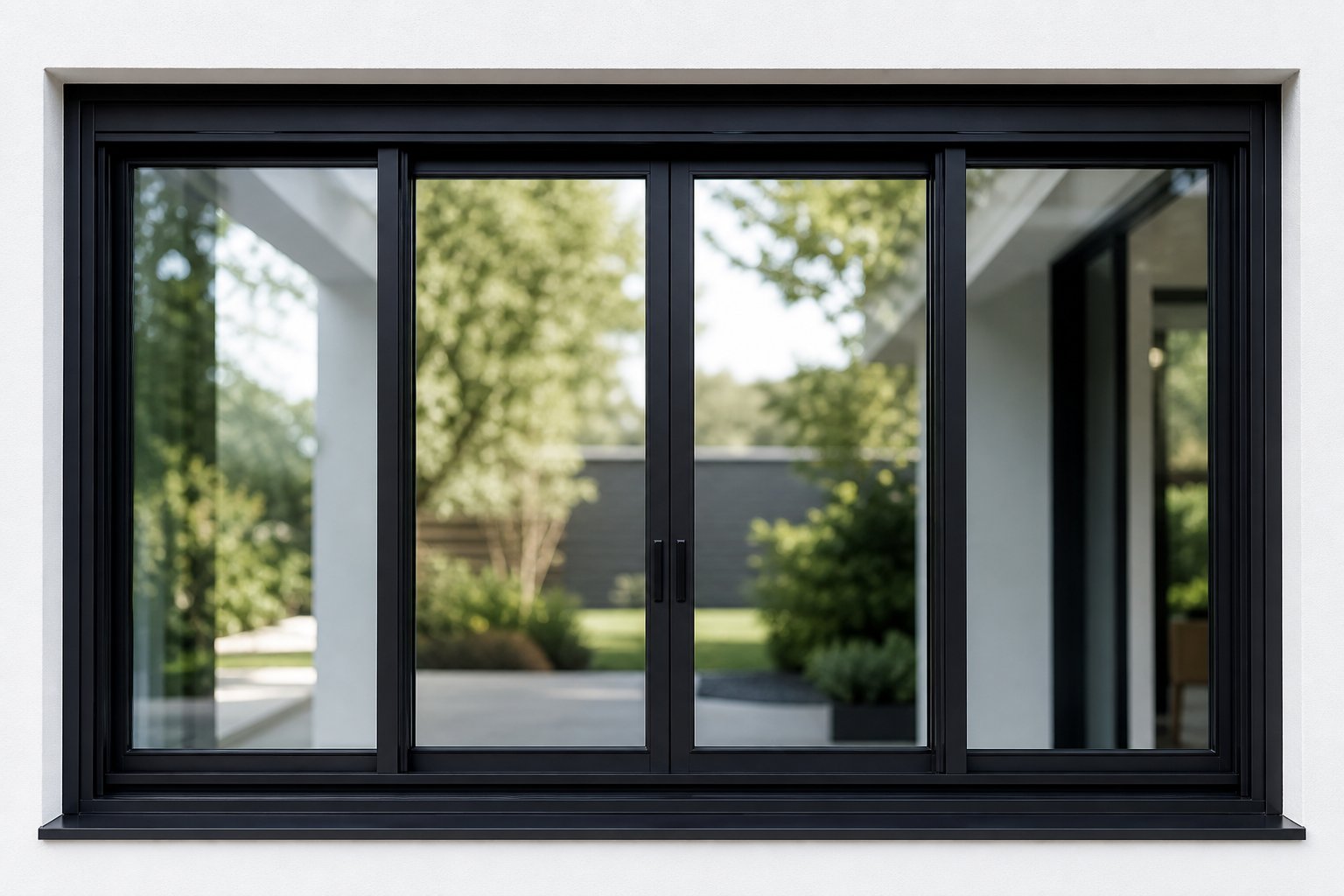
Cost Breakdown by Window Size and Scope
Not every aluminium window costs the same to paint. A compact casement in a bathroom is a completely different job from a three-metre bifold spanning a living area. Yet most online guides offer a single ballpark figure and leave you to guess where your windows sit within it. The reality is that window frame painting costs scale with two primary variables: the physical size of the window and the scope of work you actually need done.
Cost Ranges by Window Size
Smaller windows require less masking, less product, and less time — straightforward enough. But the jump in price between size categories isn’t always proportional. Large sliding and bifold windows demand careful detail work around tracks, interlocking stiles, and multiple sash panels, which pushes labour time well beyond what raw square metreage alone would suggest.
Here’s what Australian homeowners can generally expect to pay a professional to paint aluminium window frames, based on typical trade pricing norms:
| Window Type | Size Category | Frames Only (AUD) | Full Window — Frames + Sashes (AUD) |
|---|---|---|---|
| Small casement | Up to 600mm x 900mm | $150 – $250 | $200 – $350 |
| Standard double-hung | 900mm x 1200mm | $200 – $350 | $300 – $500 |
| Large sliding window | 1800mm x 1200mm+ | $300 – $450 | $400 – $600 |
| Bifold / stacker | 3000mm+ span | $400 – $600 | $550 – $800+ |
These figures assume ground-floor access and surfaces in fair condition. Multi-pane configurations — such as colonial-bar casements or double-hung windows with decorative glazing bars — typically add 15 to 25 percent to the window paint price because of the additional masking and cutting-in required around each individual pane.
Frames Only vs Full Window Painting
This distinction matters more than most people realise when budgeting. If you only need to paint window frames — the outer surround visible from the street — the scope is relatively contained. A painter masks the glass, preps and coats the frame profile, and moves on. It’s the most common request for exterior refreshes and kerb appeal upgrades.
Full window painting, however, includes the operable sashes, mullions, transoms, and any visible hardware surrounds. For double-hung windows, this means both the upper and lower sashes get removed or carefully masked and coated in place. For sliding windows, the moving panel and fixed panel both require attention. The additional labour to paint window frames alongside every sash component can increase the job cost by 40 to 60 percent compared to frames alone.
If your goal is to paint interior window frames as well — say, matching a new interior colour scheme — expect a further premium on top. Interior work involves protecting flooring, furnishings, and sills from overspray, plus the need for low-odour coatings suitable for enclosed spaces. Many painters quote interior and exterior window frame painting as separate line items, so clarify the scope upfront to avoid surprise add-ons when the invoice arrives.
What’s less obvious is how these per-window figures interact with the variables that push costs higher or pull them lower — things like scaffolding requirements, volume discounts, and strata colour-matching obligations.
Factors That Drive the Price Up or Down
The per-window figures above give you a baseline, but what you actually pay depends on a handful of site-specific variables that can shift a quote by hundreds of dollars in either direction. Some of these are within your control. Others — like where your windows sit on the building — are fixed realities that any honest painter will price accordingly.
Here are the key cost factors for painting window frames exterior, ranked roughly by their impact on the final invoice:
- Window accessibility: Ground-floor windows are straightforward. Upper-storey windows requiring ladders, elevated work platforms, or full scaffolding add substantial cost. Scaffolding hire for a two-storey house typically runs $4,000 to $8,000 AUD for setup, delivery, and a weekly rental period — a cost that gets distributed across however many windows need attention at height. Even a simple extension ladder setup adds risk premiums to a painter’s quote.
- Existing surface condition: Sound, lightly chalked aluminium needs only a degrease and light abrasion before priming. Heavily peeling, flaking, or oxidised surfaces demand extensive hand-scraping, sanding back to bare metal, and potentially multiple primer coats — doubling prep time.
- Colour change complexity: Going from a dark bronze to white (or vice versa) often requires an additional coat of topcoat or a tinted primer to achieve full coverage. Same-tone refreshes or similar-depth colour changes keep costs lower.
- Number of windows: Volume is one of the biggest levers homeowners underestimate. Professionals price setup, travel, and equipment mobilisation into every job, so painting outdoor window frames across an entire home costs considerably less per window than a one-off.
- Geographic location: Labour rates in Sydney and Melbourne run noticeably higher than regional centres. Coastal areas may also require marine-grade coatings for salt-air resistance, adding to material costs.
- Strata or body corporate colour requirements: Multi-unit dwellings often mandate specific colour palettes that restrict your paint choices and may require colour-matched products from particular manufacturers.
Accessibility and Preparation Factors
Can you paint window frames exterior on a second storey without scaffolding? Technically, yes — a painter on an extension ladder can reach most standard window heights. But workplace health and safety regulations in Australia mean many professional operators won’t quote ladder-only access above a single storey. The moment scaffolding enters the picture, the cost equation changes fundamentally.
Rather than viewing scaffolding as a standalone expense, think of it as a shared infrastructure cost. If you’re painting exterior windows and trim across an entire elevation, the scaffolding serves multiple windows simultaneously, bringing the effective per-window surcharge down considerably. A single second-storey window painted in isolation might absorb $500 or more in access costs, whereas ten windows on the same scaffold run might add only $80 to $120 each.
Preparation intensity is the other major variable. Aluminium that has been previously painted with an incompatible product — or where the old coating has delaminated — requires significantly more labour than a first-time paint or a well-maintained surface. Expect painters to add 30 to 50 percent to their base rate for heavy prep work, and rightly so: skipping this step guarantees premature failure regardless of how good the topcoat is.
Volume Discounts and Multi-Window Jobs
This is where savvy homeowners save real money. Professional painters build mobilisation costs, travel time, masking setup, and equipment cleaning into every quote. On a single-window job, those fixed overheads might represent 30 to 40 percent of the total price. Spread them across 10 or 15 windows, and the per-unit cost drops meaningfully.
Most painting contractors offer informal volume discounts for larger aluminium window projects. A job covering all windows on a home — particularly when they can work systematically around the building — often comes in 15 to 25 percent below the sum of individual per-window rates. Some operators formalise this with tiered pricing: a set rate for one to three windows, a reduced rate for four to eight, and a further discount beyond that.
The lesson is simple: if you’re already planning to repaint several windows, bundling the entire house into a single scope of work almost always delivers better value than staging the project across multiple visits.
Strata and Colour Matching Requirements
Owners in strata-titled properties face an additional layer of complexity. Body corporate by-laws frequently dictate exact exterior colour schemes, and any deviation — even a subtle tone shift — can result in a notice requiring you to redo the work at your own expense. This is the apartment and townhouse equivalent of HOA colour restrictions, and it applies to window frames just as strictly as it does to walls and doors.
What this means in practice: your painter may need to source a specific product line or have a colour custom-mixed to match the strata’s approved palette. Some body corporates require colour samples submitted for written approval before any work begins, adding lead time to the project. If the approved colour is a specialty tint or only available in particular formulations, material costs can increase by 10 to 20 percent compared to off-the-shelf options.
For homeowners weighing all of this up, the natural next question is whether tackling the job yourself shifts the equation enough to justify the time and risk involved — or whether the professional route still wins on value once you factor in material costs, tool purchases, and the real possibility of adhesion failure on improperly prepped aluminium.
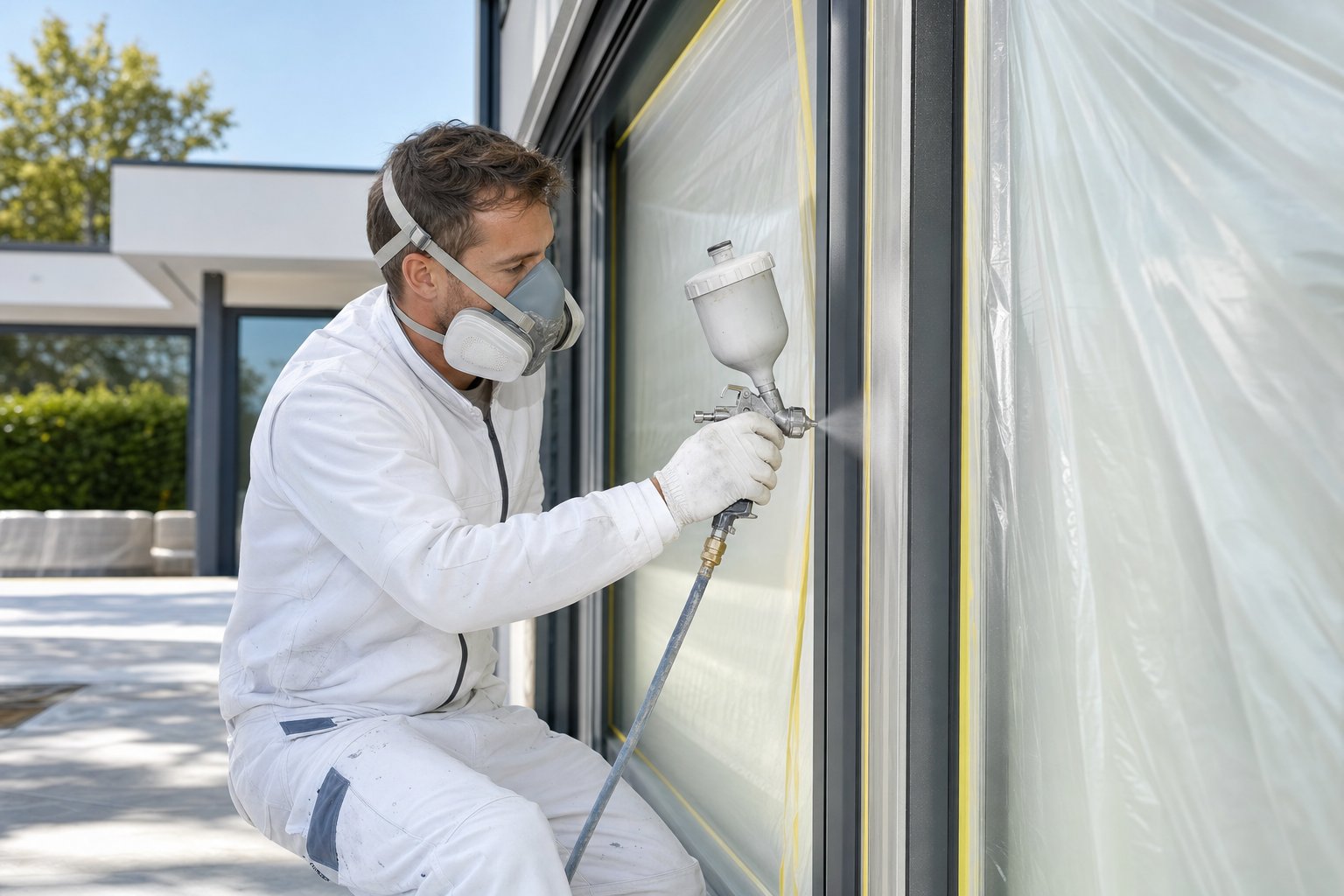
DIY vs Professional Painting Costs Compared
The dollar gap between doing it yourself and hiring a pro looks dramatic on paper. But raw material cost is only one piece of the puzzle. Aluminium is an unforgiving substrate — skip a single preparation step and the finish peels within months, turning your savings into a costly redo. So how do you paint window frames on aluminium successfully, and does the DIY route genuinely save money once you factor in time, tools, and risk?
DIY Materials and Cost Estimate
If you decide to paint window frames yourself, here’s the shopping list you’ll need for a proper aluminium-specific job:
- Degreaser or sugar soap: $10 – $20
- Sandpaper (180–220 grit) or sanding sponges: $10 – $15
- Self-etching or direct-to-metal primer (1 litre): $30 – $55
- Metal-rated acrylic enamel topcoat (1–2 litres): $40 – $80
- Quality painter’s tape: $15 – $25
- Plastic masking film and drop sheets: $10 – $20
- Mini foam rollers and angled cutting-in brush: $15 – $30
- Microfibre tack cloths: $5 – $10
Total material outlay for a single window typically lands between $50 and $100 AUD. Covering an entire home of 10 to 15 windows pushes materials to roughly $250 to $500, since primer and topcoat go further once you’re buying in larger tins.
Time is the hidden cost. Expect to spend 2 to 4 hours per window if you’re being thorough — cleaning, sanding, degreasing, priming, drying, and applying two topcoats with proper cure time between each. For 12 windows, that’s easily 30 to 50 hours of weekend labour spread across multiple days, since you can’t rush drying between coats.
Professional Painter Rates for Aluminium Windows
Professional spray-painting services in Australia generally charge $250 to $600 per window for aluminium frames, depending on size and condition. That rate covers labour, all materials, surface preparation, masking, and clean-up. Most operators work with commercial-grade spray equipment that delivers a smoother, more uniform finish than brush or roller application can achieve at home.
Wondering how much to charge for window painting if you’re on the quoting side? Trade rates in Australian metro areas typically factor in $50 to $80 per hour for skilled labour, plus materials at trade-account pricing (roughly 20 to 30 percent below retail). A competent crew can complete 4 to 6 standard windows per day, making multi-window jobs significantly more efficient per unit than DIY efforts.
When DIY Makes Sense and When It Doesn’t
The comparison comes down to more than dollars. Here’s how the two approaches stack up across the dimensions that actually matter:
| Factor | DIY | Professional |
|---|---|---|
| Cost per window | $50 – $100 (materials only) | $250 – $600 (all-inclusive) |
| Time per window | 2 – 4 hours (over multiple days) | 30 – 60 minutes (spray application) |
| Finish quality | Acceptable with care; brush marks possible | Smooth, factory-style spray finish |
| Durability | Variable — highly dependent on prep quality | 7 – 10 years with proper systems |
| Warranty | None — you absorb all risk | Typically 2 – 5 years workmanship guarantee |
| Equipment needed | Must purchase brushes, rollers, tape, etc. | Included — professional spray gear |
| Risk of failure | High if prep steps are missed | Low with experienced metal painters |
Can you paint window frames yourself and get a decent result? Yes — provided you respect every preparation step. The critical ones for aluminium are thorough degreasing and applying a self-etching primer designed specifically for non-ferrous metals. Skipping either step — or substituting a generic wood primer — almost guarantees adhesion failure. Paint that looks fine in week one starts lifting and flaking by month three, and you’re back to square one with the added hassle of stripping a failed coating before starting over.
For homeowners wondering how to paint window frames on aluminium and get it right the first time, the honest assessment is this: DIY makes financial sense if you have the patience for meticulous prep, you’re working on ground-floor windows with easy access, and you only have a few frames to tackle. The moment the project involves upper-storey access, more than five or six windows, or surfaces with existing coating failures, the professional route typically delivers better value per dollar spent — especially when you factor in the warranty coverage and the years of proven durability from a properly applied spray system.
Of course, the material choices behind both approaches play an equally important role in determining how long that finish actually lasts — and not all paints perform the same on aluminium surfaces.
Best Paint Types for Aluminium Windows and What They Cost
Grabbing the cheapest tin of exterior paint off the hardware store shelf might seem like a smart saving — until it starts peeling off your aluminium frames three months later. The paint for window frames made from aluminium needs to work with the metal’s chemistry, not against it. That means selecting products specifically formulated for non-ferrous surfaces, starting at the primer level and carrying through to the topcoat.
Choosing the right window frame paint system affects both what you spend upfront and how many years pass before you’re back on the ladder with a sander. Here’s what actually works on aluminium, what each option costs, and where the value lies.
Primers and Preparation Products for Aluminium
No topcoat performs well without the right foundation beneath it. Aluminium forms an oxide layer the moment it contacts air — a transparent barrier that actively resists paint adhesion. The primer’s job is to break through that barrier chemically or mechanically, creating a bond strong enough to last years rather than weeks.
- Self-etching primers: Contain phosphoric acid that dissolves the oxide layer while simultaneously depositing a bonding coating. Fast-drying (15 to 30 minutes between coats), widely available in aerosol cans or tins, and the go-to choice for most residential aluminium window work. Expect to pay $25 to $55 AUD per litre. One litre typically covers 8 to 12 standard window frames depending on profile complexity.
- Epoxy-based primers (two-part): The highest-performance option. A resin-and-hardener system that cures into an extremely hard, moisture-resistant layer with maximum adhesion ratings on aluminium. Ideal for coastal properties facing salt-air exposure. Costs $60 to $100+ per litre kit, requires precise mixing, and has a limited pot life once combined. Overkill for most inland residential projects but non-negotiable in harsh marine environments.
- Standard wood or multipurpose primers: These lack the chemical etching agents needed to bond with aluminium. Using them is the single most common reason DIY paint jobs fail. No matter how cheap the per-litre price, a standard primer on bare aluminium delivers zero long-term value.
Topcoat Options and Price Ranges
Once the primer is down and cured, the topcoat provides colour, UV protection, and the first line of defence against weather. The best paint for aluminum window frames needs to flex with thermal cycling — aluminium expands and contracts significantly with temperature swings — while resisting chalking and fading under Australia’s intense UV exposure.
- Direct-to-metal (DTM) acrylics: Combine primer and topcoat properties in a single formulation, reducing the painting process from two separate products to one. Strong adhesion, good corrosion protection, and lower VOC content. Priced around $50 to $90 AUD per litre. A practical choice for frames in fair condition, though heavily oxidised surfaces still benefit from a dedicated primer underneath.
- 100% acrylic latex (metal-formulated): The gold standard for exterior aluminium. Flexible enough to move with the metal through temperature changes, excellent UV resistance, and easy water-based clean-up. A quality exterior acrylic suited for metal runs $45 to $85 per litre. When paired with a proper self-etching primer, this system delivers the best balance of cost and longevity for most Australian homes.
- High-performance enamel: Dries to a harder shell than standard acrylic, offering superior scratch and chip resistance. Well-suited for window sashes that get handled regularly. Slightly less flexible in extreme temperature swings, so best for temperate climates. $50 to $95 per litre depending on brand and sheen level.
The paint for window applications on aluminium needs to be understood as a system, not a single product. A $45-per-litre acrylic over a quality self-etching primer will comfortably outlast a $90-per-litre premium topcoat applied directly to unprepared aluminium. The per-litre price is misleading without context — what matters is whether the entire coating system is chemically compatible with the substrate beneath it.
For homeowners chasing the best paint for aluminum window frames in terms of pure value, the sweet spot sits at a self-etching primer ($30 to $50) paired with a 100% exterior acrylic ($50 to $80). Total material cost per window lands between $15 and $30 for coatings alone, and the system should hold strong for 7 to 10 years with reasonable maintenance. Drop below that quality tier and you’re likely repainting in two to three years — effectively doubling or tripling your real cost.
Paint systems aren’t the only route to a fresh finish on aluminium, though. For frames in decent structural condition, powder coating offers an alternative that trades higher upfront cost for significantly longer intervals between maintenance.
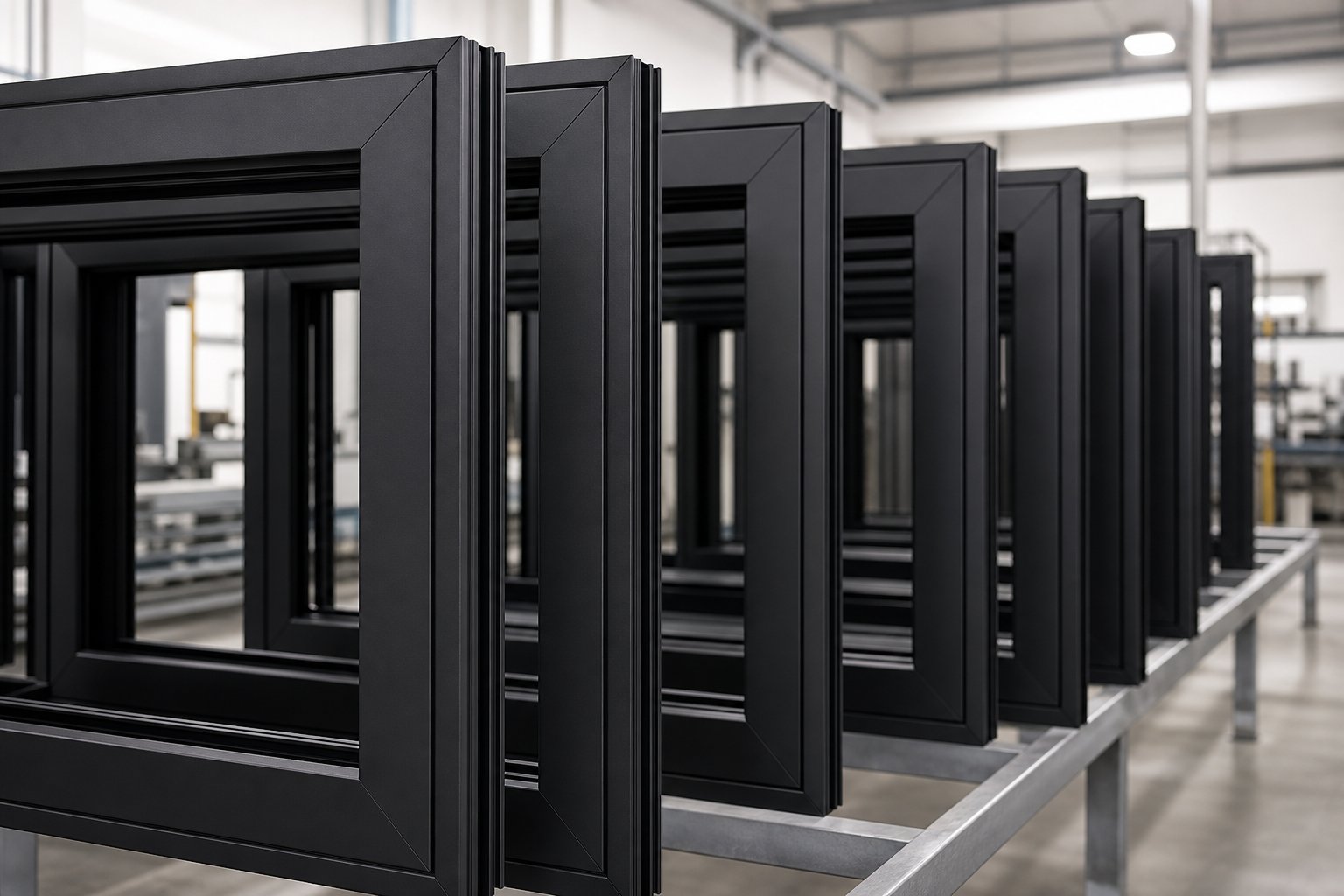
Powder Coating and Alternatives to Painting
Powder coating aluminium windows takes a fundamentally different approach to achieving a fresh finish. Instead of applying liquid paint on-site, the entire window frame is removed from the opening, transported to a specialist facility, stripped, coated with electrostatically charged powder, and cured in an oven at 160°C to 220°C. The result is a finish that bonds at a molecular level — far harder, more uniform, and more durable than any brush or spray application can deliver in the field.
For homeowners already weighing up whether repainting aluminium windows makes financial sense, powder coating deserves serious consideration — particularly when frames are structurally sound but cosmetically tired.
Powder Coating Process and Costs
The process itself involves several stages. First, the frames are carefully removed from the building — a job typically handled by glaziers rather than painters, since aluminium windows are sealed with gaskets and sometimes structural silicone. At the facility, the old coating is chemically stripped or blasted off, then the bare aluminium is pre-treated to ensure adhesion. The electrostatic powder application and oven curing create a finish thickness of 60 to 120 micrometres — significantly thicker than liquid paint.
In Australia, powder coating aluminium windows generally costs between $300 and $800 per window, depending on frame size, the number of panels, and the colour chosen. Standard colours from common RAL or Dulux powder ranges sit at the lower end. Custom colours, metallic finishes, or textured coatings push prices higher. On top of the per-window coating fee, factor in removal and reinstallation costs — typically $150 to $300 per window — plus temporary weatherproofing for the openings while frames are away at the coater.
The total outlay per window, all-in, usually falls between $450 and $1,100 AUD. That’s roughly double the cost of professional on-site spray painting. But here’s where the maths gets interesting: a quality powder coat finish typically lasts 15 to 20 years without significant degradation, compared to 5 to 10 years for painted finishes. Over a 20-year horizon, one powder coat may actually cost less than two or three repainting cycles.
The trade-off is disruption. Your windows will be out of the building for anywhere from 3 to 10 business days. That means temporary board-ups or plastic sheeting over openings, no security on those windows during the process, and weather dependency for scheduling. For a single bathroom casement, that’s manageable. For an entire home’s worth of windows done simultaneously, it requires careful staging.
Painting vs Powder Coating vs Replacement
When frames have deteriorated beyond cosmetic issues — thermal breaks cracked, seals failed, or profiles corroded through — neither paint nor powder coat addresses the real problem. Full window replacement enters the conversation as the third option, and while it carries the highest upfront cost, it also delivers improvements in thermal performance, security, and acoustic insulation that surface treatments simply cannot.
Here’s how the three options compare when you need to paint aluminium window frames or pursue alternatives:
| Factor | On-Site Painting | Powder Coating | Full Replacement |
|---|---|---|---|
| Cost per window (AUD) | $250 – $600 | $450 – $1,100 (incl. removal) | $800 – $2,500+ |
| Finish longevity | 5 – 10 years | 15 – 20 years | 20 – 30+ years (factory finish) |
| Disruption level | Low — windows stay in place | Moderate — frames removed for days | High — full removal and new install |
| Finish quality | Good (spray) to fair (brush/roller) | Excellent — factory-equivalent | Excellent — brand new factory finish |
| Thermal/performance upgrade | None | None | Yes — modern thermal breaks, seals, glazing |
| Best suited for | Sound frames needing a colour refresh | Structurally good frames needing long-term finish | Aged, damaged, or inefficient windows |
The decision point often comes down to window age and condition. Frames under 15 years old with no structural issues are strong candidates for repainting aluminium window frames — it’s the most cost-effective way to update their appearance. Frames aged 15 to 25 years in solid condition suit powder coating, where the higher upfront spend buys you a finish that could outlast the frames themselves. Beyond 25 years, or whenever seals have failed, condensation sits between panes, or profiles show visible corrosion pitting, replacement delivers the only genuine long-term solution.
None of these options is universally “best.” The right choice depends entirely on what condition your existing frames are in — and being honest about that assessment upfront saves you from spending money on a cosmetic fix when the underlying problem runs deeper.
When Painting Aluminium Windows Is Not Worth It
Honest assessment matters more than a fresh coat of paint. Can you paint aluminum windows that are corroded, warped, or failing at the seals? Technically, yes — a brush doesn’t discriminate. But spending $300 to $600 per window on a cosmetic fix that masks a structural or performance problem is money you’ll regret within a year or two. Sometimes the kindest thing a painter can tell you is that your frames aren’t worth repainting.
Signs Your Windows Are Beyond Painting
Repainting window frames only makes financial sense when the underlying frame is structurally sound and still performing its job — keeping weather out, holding glass securely, and operating smoothly. When any of those functions have degraded, paint becomes a bandage over a deeper wound.
Watch for these indicators that your aluminium windows have moved past the point where painting delivers value:
- Severe oxidation or pitting: White powdery corrosion on the surface is one thing — shallow chalking can be sanded and primed. But deep pitting that you can catch a fingernail in, or corrosion that has eaten through the profile wall, means the metal itself has lost structural integrity. Paint cannot restore lost material.
- Condensation between glass panes: Foggy or milky glass that won’t clear indicates a failed insulated glass unit seal. The inert gas between panes has escaped and moisture has entered. No amount of frame painting fixes a seal failure — the glazing unit needs replacement, and in older windows the cost of reglaze plus repaint often approaches full replacement.
- Thermal break damage: Modern thermally broken aluminium frames rely on a polyamide strip separating the inner and outer profiles. If that thermal break has cracked or degraded, you’ll feel cold bridging through the frame in winter. Painting over this problem adds colour while the window continues to bleed energy.
- Structural bowing or warping: Frames that have bowed outward, twisted, or no longer sit square in the opening won’t close properly regardless of how they look. This often happens in older aluminium windows exposed to decades of thermal cycling without adequate expansion allowance.
- Seized or inoperable hardware: If windows won’t open, won’t lock, or require excessive force to operate, the issue typically sits in corroded tracks, worn balances, or degraded pivot points — not in the paint finish.
- Windows over 25 to 30 years old with original single glazing: At this age, frames have often exceeded their practical service life. Even if the aluminium looks reasonable on the surface, gaskets have perished, seals have dried out, and energy performance sits far below current standards.
When Replacement Is the Smarter Investment
Can you paint a window frame that ticks one or more of the boxes above? You can. But the question isn’t whether it’s physically possible — it’s whether the money delivers any lasting return. A $400 paint job on a window with failed seals still leaves you with a window that fogs up, leaks air, and underperforms thermally. You’ve paid for kerb appeal on a unit that needs replacing anyway.
Replacement becomes the smarter investment when the cost of painting plus the imminent cost of addressing performance failures approaches or exceeds the price of a new window. In practical terms, if a window needs reglazing ($200 to $400), new hardware ($100 to $250), and repainting ($250 to $600), you’re already at $550 to $1,250 — territory where a new aluminium window with modern thermal breaks, fresh seals, and a factory-applied powder coat finish starts looking like better value for money.
This isn’t about upselling. It’s about directing your budget toward solutions that actually last. Money spent painting frames that are structurally compromised delivers a short-lived cosmetic improvement at best — and at worst, it delays a necessary replacement while the underlying damage worsens.
For windows that do pass the structural test and genuinely justify repainting, understanding how long that new finish will last — and what maintenance keeps it performing — determines whether you’re making a five-year investment or a ten-year one.
How Long Paint Lasts and Long-Term Value
A single repaint is never really a one-time cost. Whether you’re budgeting for a professional spray job or planning how to repaint aluminium windows yourself down the track, the real question is how many years that finish buys you before the cycle starts again. Understanding paint longevity turns an upfront expense into a predictable lifecycle investment — and it’s where preparation quality either pays dividends or costs you double.
Expected Lifespan of Paint on Aluminium Frames
Professionally applied coating systems on aluminium frames typically last 7 to 15 years in Australian conditions. That’s a broad range, and where your windows fall within it depends almost entirely on three factors: preparation quality, product selection, and environmental exposure.
Inland properties in temperate climates — Melbourne’s suburbs, Canberra, Adelaide’s inner ring — tend to see painted aluminum window frames hold up toward the upper end of that range. North- and west-facing frames cop the most UV punishment, so expect those to show fading or chalking sooner than south-facing counterparts on the same home. Coastal properties within a few hundred metres of the shoreline face salt-air degradation that can shorten paint life to 7 to 10 years even with quality products, while homes further back from the coast routinely push past a decade without issues.
The critical variable remains preparation. A self-etching primer chemically bonded to properly degreased aluminium creates adhesion that holds firm through years of thermal cycling. Skip or shortcut the prep, and painted window frames exterior may begin flaking in as little as 12 to 18 months — turning a supposed 10-year investment into an expensive mistake.
Maintenance Between Repaints
Paint doesn’t simply look perfect for years then suddenly fail overnight. Gradual chalking, minor dirt accumulation, and UV-driven colour shift happen progressively. Simple maintenance slows that process considerably and extends the interval before you need to repaint.
What keeps painted window frames looking sharp between cycles:
- Rinse with fresh water every two to three months, particularly in coastal or high-pollution areas. This removes salt deposits and airborne contaminants before they degrade the coating.
- Wash with mild detergent (dishwashing liquid and a soft cloth) twice a year. Avoid abrasive pads, solvents, or pressure washers aimed directly at frame edges.
- Inspect annually for early signs of adhesion loss — hairline cracks, micro-blistering, or chalking. Catching these early means a targeted touch-up rather than a full-system repaint.
Homes that follow this basic routine consistently report painted window frames exterior lasting two to three years longer than neglected equivalents on neighbouring properties.
Over a 20-year period, one quality repaint at $3,500 to $5,000 (whole house) followed by basic maintenance can deliver the same visual result as three budget paint jobs totalling $7,000 to $10,000 — proving that upfront quality and ongoing care are cheaper than repeated shortcuts.
Compared to the original factory powder coat finish — which generally lasts 15 to 20 years before significant degradation — a professional repaint delivers roughly half the lifespan at roughly half the cost. The maths ultimately favours whichever option you can maintain consistently. Homeowners willing to rinse frames regularly and address minor issues early will find that learning how to repaint aluminium windows properly every 8 to 10 years keeps their home looking sharp without the disruption or expense of powder coating or replacement.
That lifecycle understanding is what separates confident decision-making from guesswork — and it’s the same clarity you’ll want when gathering quotes and evaluating whether the numbers a painter puts in front of you actually reflect fair value for the work involved.
How to Get Accurate Quotes for Your Project
Knowing what a paint job should cost and actually receiving a quote that reflects fair value are two different things. Vague quote requests produce vague numbers — and vague numbers make it impossible to compare window frame painters on equal terms. The more specific information you hand a contractor upfront, the tighter and more reliable the estimate you get back.
What to Prepare Before Requesting Quotes
Before picking up the phone or filling out an online form, gather the details that genuinely influence pricing. Walking a painter through a well-prepared brief saves both parties time and eliminates the guesswork that inflates quotes with “just in case” buffers.
- Count your windows and note their types. Walk the property and record how many casements, sliding windows, double-hungs, and bifolds you have. Photograph each one — painters can estimate far more accurately from clear images than from verbal descriptions alone.
- Measure approximate frame sizes. You don’t need millimetre precision. Width and height to the nearest 100mm gives a contractor enough to categorise each window into a size band and price accordingly.
- Assess accessibility. Note which windows sit at ground level and which require ladder or scaffold access. Mention any obstacles — garden beds, paths too narrow for platforms, or second-storey windows above fragile roofing.
- Document current condition. Are frames chalking lightly, peeling heavily, or showing bare aluminium? Take close-up photos of the worst sections. Prep intensity drives a significant portion of labour cost, and honest documentation prevents surprise surcharges mid-job.
- Decide on scope. Clarify whether you want frames only, frames plus sashes, interior surfaces, or everything. This single decision can shift the total by 40 to 60 percent.
- Check colour requirements. If you’re in a strata complex, confirm the approved palette before requesting quotes. If you’re planning a colour change rather than a same-colour refresh, mention it — coverage requirements differ.
Providing this level of detail lets contractors quote the actual job rather than padding for unknowns. It also gives you a genuine basis for comparison when multiple quotes land on your kitchen bench.
Understanding Quote Drivers for Aluminium Windows
Not all quotes are created equal. A lowball figure that omits etching primer or skips the degreasing stage isn’t cheaper — it’s incomplete. When comparing proposals from window frame painters, look beyond the bottom-line dollar and check what’s included in the scope.
A thorough quote for aluminium window work should itemise:
- Surface preparation method (chemical degrease, abrasion, etching primer)
- Number of primer and topcoat coats
- Specific product brands and types
- Masking and protection of glass and surrounding surfaces
- Access equipment requirements and associated costs
- Timeline, including cure time between coats
- Workmanship warranty period
A quote missing several of these line items deserves a follow-up question, not your signature. The cheapest number on the page often reflects cut corners you’ll pay for within 12 months when adhesion fails and the whole job needs redoing.
Quotes also vary because some painters understand how to paint aluminium windows properly — with metal-specific systems — while others apply generic exterior paint and hope for the best. Asking what primer system they use on aluminium is a quick filter. If the answer isn’t a self-etching or epoxy product designed for non-ferrous metal, keep looking.
For homeowners weighing multiple windows across an ageing home, there’s a point where accumulating repaint costs approach the territory of new aluminium windows altogether. Understanding real quote drivers for replacement helps frame that paint-or-replace decision clearly. Suppliers like MEICHEN can support that process from system recommendations and material calculation through to delivery planning — giving you concrete numbers to compare against repainting rather than relying on guesswork about what new windows might cost.
Whether you ultimately decide to paint a window frame, powder coat, or replace entirely, the goal is identical: spending your budget where it delivers the longest return. Accurate quotes — built on honest information from both sides — are the foundation of that decision.
Frequently Asked Questions About Painting Aluminium Windows
1. Can you paint aluminium window frames yourself?
Yes, you can paint aluminium window frames yourself for roughly $50 to $100 per window in materials. The key requirement is using a self-etching primer designed for non-ferrous metals after thorough degreasing. Without proper preparation — particularly chemical etching and specialised primer — DIY paint on aluminium typically peels within a few months. The approach works best for ground-floor windows in fair condition where you have time for multiple coats with full drying between each stage.
2. How long does paint last on aluminium windows?
A professionally applied paint system on properly prepared aluminium frames lasts 7 to 15 years in Australian conditions. The lifespan depends on preparation quality, product selection, and environmental exposure. Coastal properties may see 7 to 10 years, while inland homes in temperate climates often push past a decade. Regular maintenance — rinsing frames every few months and washing with mild detergent twice yearly — extends paint life by two to three years compared to neglected surfaces.
3. Is it better to paint or powder coat aluminium windows?
Powder coating costs roughly double the price of on-site painting ($450 to $1,100 per window versus $250 to $600) but lasts 15 to 20 years compared to paint’s 5 to 10 years. Over a 20-year period, one powder coat application may cost less than two or three repainting cycles. However, powder coating requires removing frames from the building for several days, which creates disruption and temporary security concerns. Painting suits sound frames needing a quick colour refresh, while powder coating suits structurally good frames where you want a long-term factory-equivalent finish.
4. What type of paint should I use on aluminium window frames?
The most effective system pairs a self-etching primer ($25 to $55 per litre) with a 100% acrylic latex topcoat formulated for metal surfaces ($45 to $85 per litre). The primer contains phosphoric acid that chemically bonds to the aluminium oxide layer, while the acrylic topcoat flexes with thermal expansion and resists UV degradation. Direct-to-metal (DTM) acrylics offer a simpler single-product option for frames in fair condition. Standard wood primers and generic exterior paints lack the etching chemistry aluminium requires and will fail quickly regardless of topcoat quality.
5. How much does it cost to paint all windows on a house?
For a full home with 10 to 15 aluminium windows, professional spray painting generally costs between $2,500 and $7,500 AUD. Per-window rates drop with volume because fixed overheads like mobilisation, travel, and equipment setup get spread across more units. Most contractors offer 15 to 25 percent discounts for whole-house jobs compared to the sum of individual window rates. Factors that push toward the higher end include upper-storey access requiring scaffolding, heavy surface preparation, and colour changes needing extra coats.
More Window & Door Guides