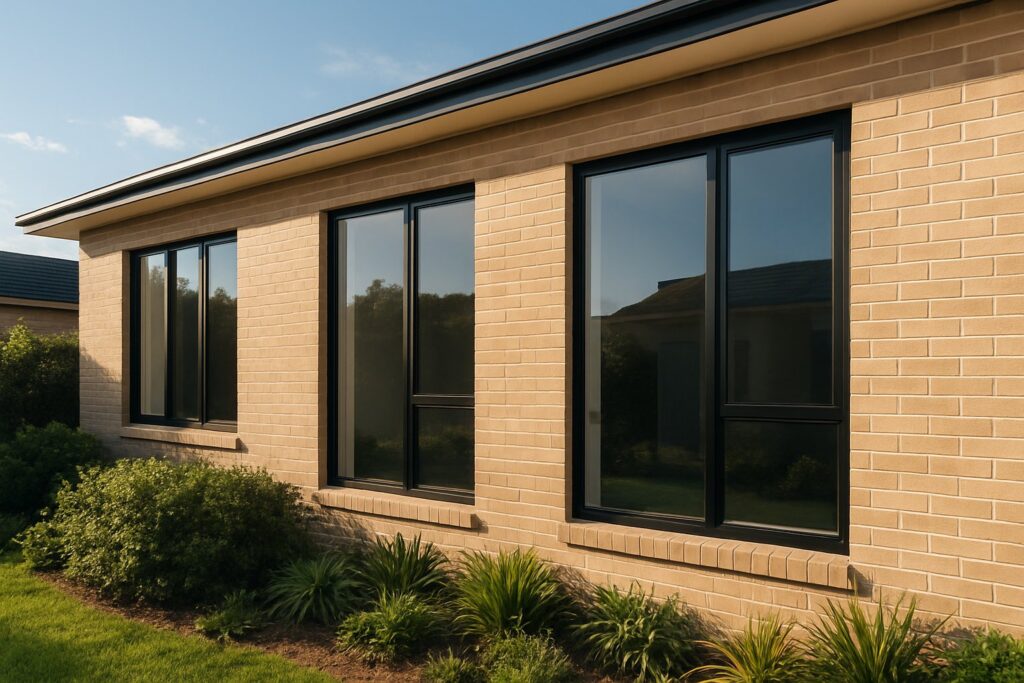
What Green Aluminium Windows Actually Means
Search for green aluminium windows and you will land in two very different conversations. One is about colour — choosing the right shade of green for your aluminium window frames. The other is about sustainability — why aluminium itself qualifies as a “green” building material. Both meanings matter, and this guide covers them in a single resource so you can make informed decisions on aesthetics and environmental impact at the same time.
What Are Green Aluminium Windows
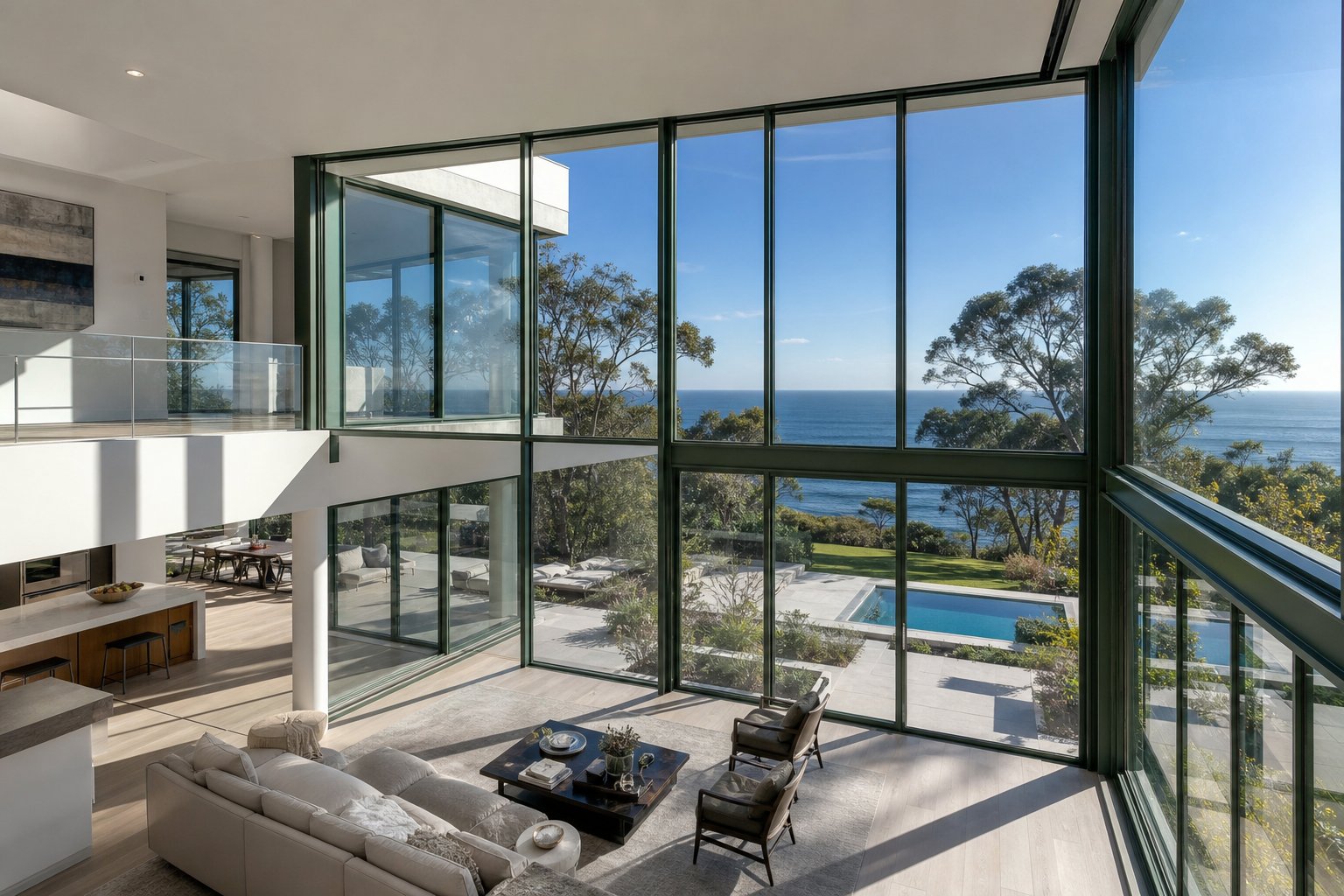
Green aluminium windows are powder-coated aluminium frames finished in a green colour, ranging from soft sage and pale olive through to deep moss, fir, and bottle green. The colour is applied as a durable powder-coat finish that bonds to the aluminium surface during a high-temperature curing process, producing a long-lasting result that resists fading, chipping, and weathering.
In practical terms, a house with green aluminium windows features frames that combine the structural strength and slim sightlines of aluminium with a colour palette drawn from nature. These green aluminium window frames suit everything from heritage-style cottages to sharp contemporary builds, depending on the shade you select.
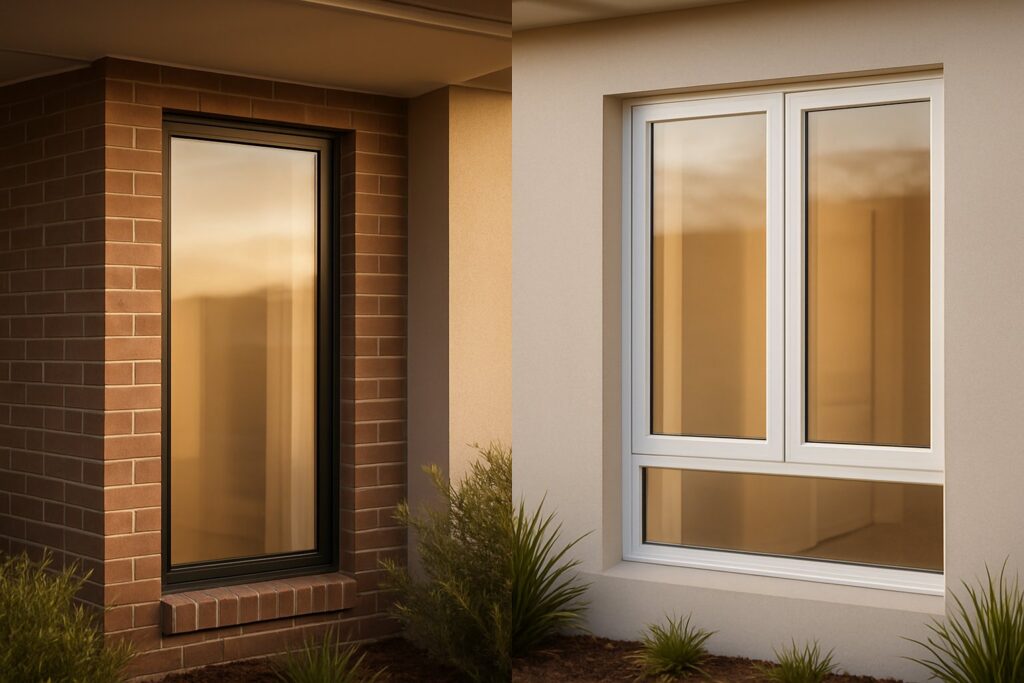
Two Meanings of Green in Window Design
Beyond the colour itself, aluminium carries genuine environmental credentials. It is infinitely recyclable without losing strength or quality, and recycled aluminium requires only a fraction of the energy used in primary production. That lifecycle advantage makes aluminium a legitimately “green” framing material — one that outlasts timber and uPVC alternatives while generating less waste over decades of use.
Throughout this guide, you will find detailed coverage of RAL colour options, powder-coating durability, window styles, architectural matching advice, sustainability data, technical specifications, maintenance, and pricing factors. Whether you are here to pick the perfect shade or to understand the eco case for aluminium, the answers sit ahead.
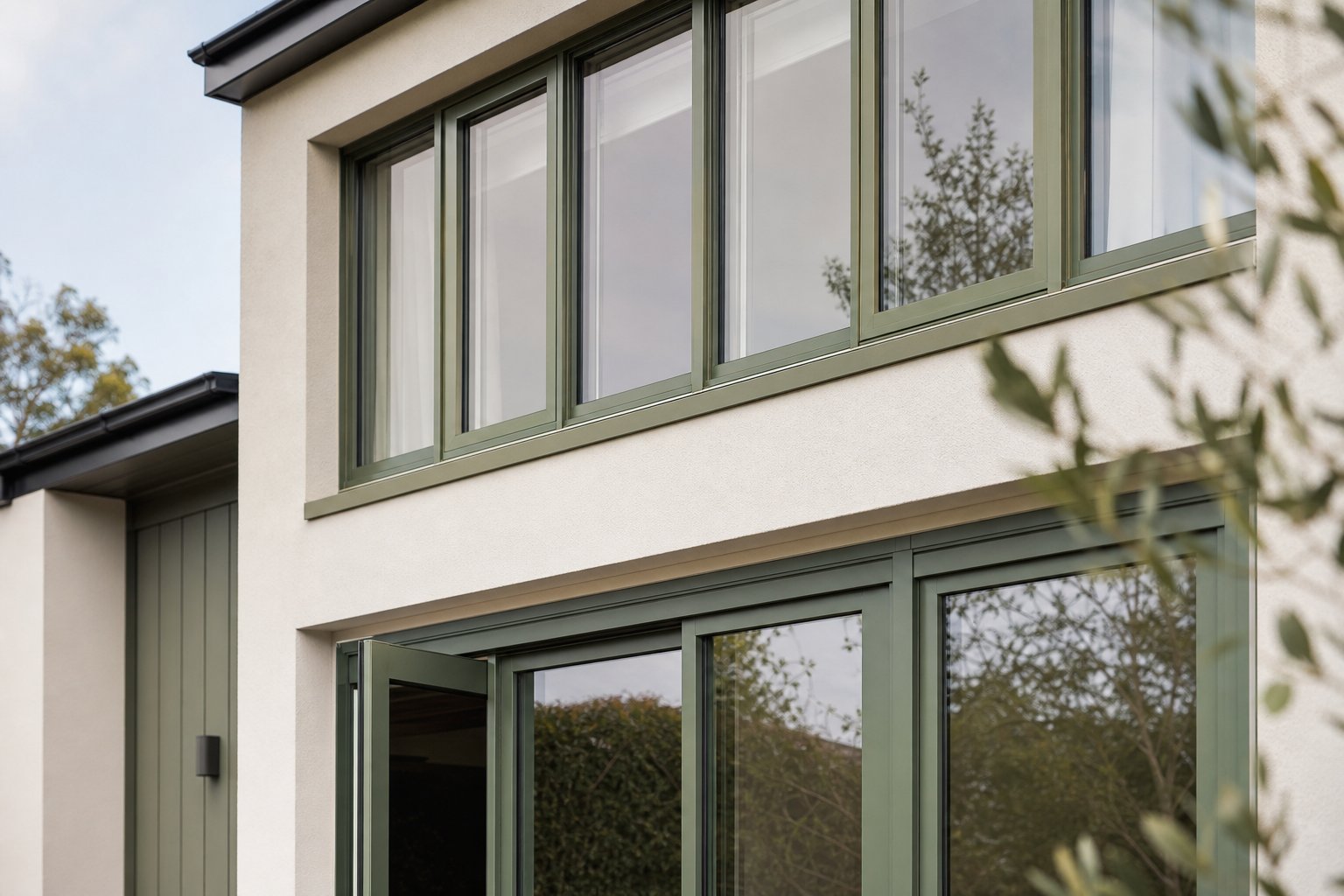
Every Green RAL Colour Option for Aluminium Windows
Picking a green for your aluminium frames is not as simple as saying “I want green.” The RAL colour system — an international standard used by powder-coating manufacturers worldwide — contains over 35 distinct green shades in the 6000 series alone. For residential and commercial window applications in Australia, a handful of those greens dominate the specification sheets. Knowing the differences before you commit saves you from living with a shade that looked great on a screen but clashes with your brickwork in real life.
Popular RAL Green Shades for Aluminium Frames
Each RAL green carries a different undertone, depth, and visual weight. Some lean cool and blue-based, others run warm with yellow or brown undertones. The table below covers the eight most commonly specified greens for aluminium window frames, along with where each shade tends to work best.
| RAL Code | Colour Name | Visual Description | Best-Suited Property Type |
|---|---|---|---|
| RAL 6005 | Moss Green | Deep, balanced green with a subtle blue undertone. Reads as a rich, natural green in daylight. | Heritage homes, period restorations, sandstone facades |
| RAL 6021 | Pale Green | Soft, muted sage-green with grey undertones. Light and calming in direct sun. | Coastal homes, contemporary builds, rendered exteriors |
| RAL 6009 | Fir Green | Very dark green with a cool blue base. Approaches black in low light, reveals depth in daylight. | Rural estates, country homes, premium architectural projects |
| RAL 6014 | Yellow Olive | Warm, earthy green-brown with a distinctly olive character. Muted and understated. | Bushland settings, weatherboard homes, earthy palettes |
| RAL 6028 | Pine Green | Dark green with a warmer yellow-green undertone. Organic and connected to evergreen foliage. | Timber-clad homes, rural properties, garden-facing elevations |
| RAL 6007 | Bottle Green | Extremely dark, almost black-green. Sophisticated and weighty in appearance. | Federation-style homes, formal facades, entrance features |
| RAL 6003 | Olive Green | Warm, brownish-green with military heritage associations. Earthy and utilitarian. | Industrial conversions, modern farmhouses, mixed-material facades |
| RAL 6012 | Black Green | The darkest green in common specification. Reads almost charcoal with a green cast. | Contemporary architecture, dark-framed minimalist designs |
How Green Shades Look in Practice
A colour swatch on a website or even a small sample chip will not tell you the full story. Fir green window trim aluminium, for example, can look nearly black on a south-facing wall that sits in shade most of the day, yet reveal its true deep-green character on a sunlit northern elevation. Pale green aluminium windows shift from a crisp sage in morning light to a warmer, almost khaki tone under the golden hues of late afternoon.
Several factors influence how any green shade actually reads once installed on your home:
- Orientation — North-facing walls in Australia receive the most direct sunlight, which brings out a colour’s true undertone. South-facing walls sit in cooler, indirect light that can make greens appear darker or more muted.
- Surrounding materials — Red brick warms up cool-toned greens, while white render makes them appear more vivid. Natural stone and timber cladding tend to soften the contrast.
- Lighting conditions — Overcast skies flatten colour depth, while bright sun intensifies saturation. Coastal light, with its higher reflectivity, can wash out lighter greens.
- Frame size and profile — A slimline frame shows less colour area than a chunky profile, so darker greens on slim frames can read almost as a neutral accent rather than a bold statement.
- Gloss level — Satin and matte finishes absorb light and appear softer, while gloss finishes reflect surroundings and can shift the perceived colour depending on what is nearby.
The takeaway: always request a full-size coated sample and hold it against your actual facade materials in natural daylight before signing off. Green is particularly susceptible to metamerism — meaning its undertone can shift noticeably between daylight, fluorescent, and LED illumination.
Chartwell Green and Heritage Colour Options
Chartwell Green sits outside the standard RAL numbering system, yet it remains one of the most requested heritage greens for window frames. Originally associated with English country estates and period cottages, this soft, slightly grey-green has a muted warmth that pairs naturally with sandstone, aged brick, and cream-rendered walls. It is lighter and greyer than RAL 6005, with less blue in its base — think of it as a gentler, more weathered green that avoids looking too “new” against older building materials.
Australian homeowners restoring Federation, Edwardian, or early-twentieth-century homes often gravitate toward Chartwell green window trim aluminium because it echoes the painted timber joinery of that era without the maintenance burden. Most quality aluminium window suppliers offer Chartwell Green as a named colour option alongside the standard RAL range, though it may be classified as a non-standard or heritage finish depending on the manufacturer.
Other heritage greens worth considering include RAL 6011 Reseda Green (a dusty mid-green) and RAL 6020 Chrome Green (a dark, slightly warm green popular in European conservation work). If your property sits within a heritage overlay zone or is subject to council design guidelines, check whether specific colour codes are mandated before you fall in love with a shade that may not be approved.
With the shade locked in, the real question becomes how long that colour will last — and that comes down entirely to the powder-coating process and the certification behind it.
The Powder Coating Process Behind Durable Green Finishes
A beautiful shade of green means nothing if it fades to a washed-out ghost within a few years. The reason powder-coated aluminium frames hold their colour so reliably — while painted timber demands recoating every few seasons — comes down to how the finish is applied and cured at a molecular level.
How Powder Coating Creates Lasting Green Finishes
Powder coating is not paint. There is no liquid, no solvent, and no brush. Instead, a dry polyester powder is bonded to the aluminium surface through electrostatic charge and then fused into a continuous “skin” under intense heat. The result is a finish far harder and more chemically resistant than anything a traditional wet paint can achieve.
Here is how the process works for aluminium window frames:
- Surface preparation — The raw aluminium extrusion is cleaned, degreased, and chemically pre-treated to remove oxides and contaminants. This stage typically involves an alkaline wash followed by a conversion coating (such as a chrome-free zirconium sealer) that promotes adhesion and corrosion resistance.
- Electrostatic application — The green powder is sprayed onto the frame using an electrostatic gun. The gun imparts a positive charge to the powder particles, which are then attracted to the grounded aluminium surface. This electrostatic bond holds the powder evenly in place before curing, ensuring consistent coverage across complex profile shapes.
- Oven curing — The coated frame enters a curing oven at approximately 180-200°C for 10-25 minutes. Heat melts the powder particles, causing them to flow together and cross-link into a dense, uniform film. Once cooled, the finish is fully hardened — resistant to chipping, scratching, and chemical attack.
Because the powder wraps around edges and into recesses during the electrostatic stage, coverage is more uniform than brush or spray painting. And since no solvents evaporate during curing, the process produces minimal volatile organic compounds — a genuine environmental advantage over liquid coatings.
A high-quality powder-coated finish on aluminium window frames can last between 15 and 25 years or longer before showing noticeable colour change, depending on the coating grade and environmental exposure. Some premium coatings backed by manufacturer warranties extend to 25 years for colour retention and gloss.
Qualicoat Classes and What They Mean for Homeowners
Qualicoat is an international quality label that certifies powder-coated and liquid-coated aluminium for architectural use. It sets strict benchmarks for coating thickness, adhesion, hardness, and — critically — resistance to UV degradation and weathering. When you see a Qualicoat certification on your window specification, it means the coating has passed rigorous accelerated weathering tests, including simulated Florida-climate exposure (high UV, humidity, and heat).
Three classes matter most for residential projects:
| Qualicoat Class | Weathering Resistance | Best Application |
|---|---|---|
| Class 1 | Standard durability — suitable for moderate climates with average UV exposure. | Inland suburban homes, shaded elevations, temperate regions of southern Australia. |
| Class 2 | Superior durability — enhanced UV resistance and gloss retention over extended periods. | North-facing facades, high-UV regions, homes in QLD, WA, and northern NSW where sun exposure is intense. |
| Seaside Class | Maximum corrosion resistance — designed for salt-laden coastal atmospheres. | Properties within 1 km of the coastline, exposed beachfront homes, tropical coastal areas. |
Class 2 powders offer measurably better gloss retention and colour stability than Class 1, making them the smarter specification for dark green aluminium windows on sun-drenched elevations. Darker shades absorb more UV energy than lighter ones, so a deep fir green or bottle green frame benefits significantly from the upgraded coating chemistry.
Colour Durability in Different Environments
Australia’s climate puts coatings to the test. Intense UV in northern regions, salt spray along thousands of kilometres of coastline, and wide temperature swings inland all accelerate finish degradation if the coating grade is not matched to the conditions.
Heritage green aluminium windows on a shaded verandah in Melbourne’s inner suburbs face a very different challenge than the same heritage green windows aluminium installed on an exposed beachfront in Noosa. The Melbourne installation may perform beautifully with a Class 1 finish for decades. The Noosa home needs Seaside Class at minimum to prevent salt-driven corrosion undermining the coating from beneath.
Compared to painted timber — which typically requires sanding and repainting every 5-7 years in Australian conditions — powder-coated aluminium is essentially a fit-and-forget proposition. Heritage green shades on timber joinery fade, peel, and chalk noticeably within a few seasons of coastal or high-UV exposure. The same shade on a properly specified aluminium frame retains its depth and richness with nothing more than an occasional wash.
For homeowners weighing up dark green aluminium windows in exposed locations, the practical advice is straightforward: specify Class 2 or Seaside Class coating, confirm the supplier holds Qualicoat certification, and request the warranty documentation in writing. That combination delivers colour stability measured in decades rather than years — and it means the shade you agonised over during selection is the shade you will still be enjoying long after the scaffolding comes down.
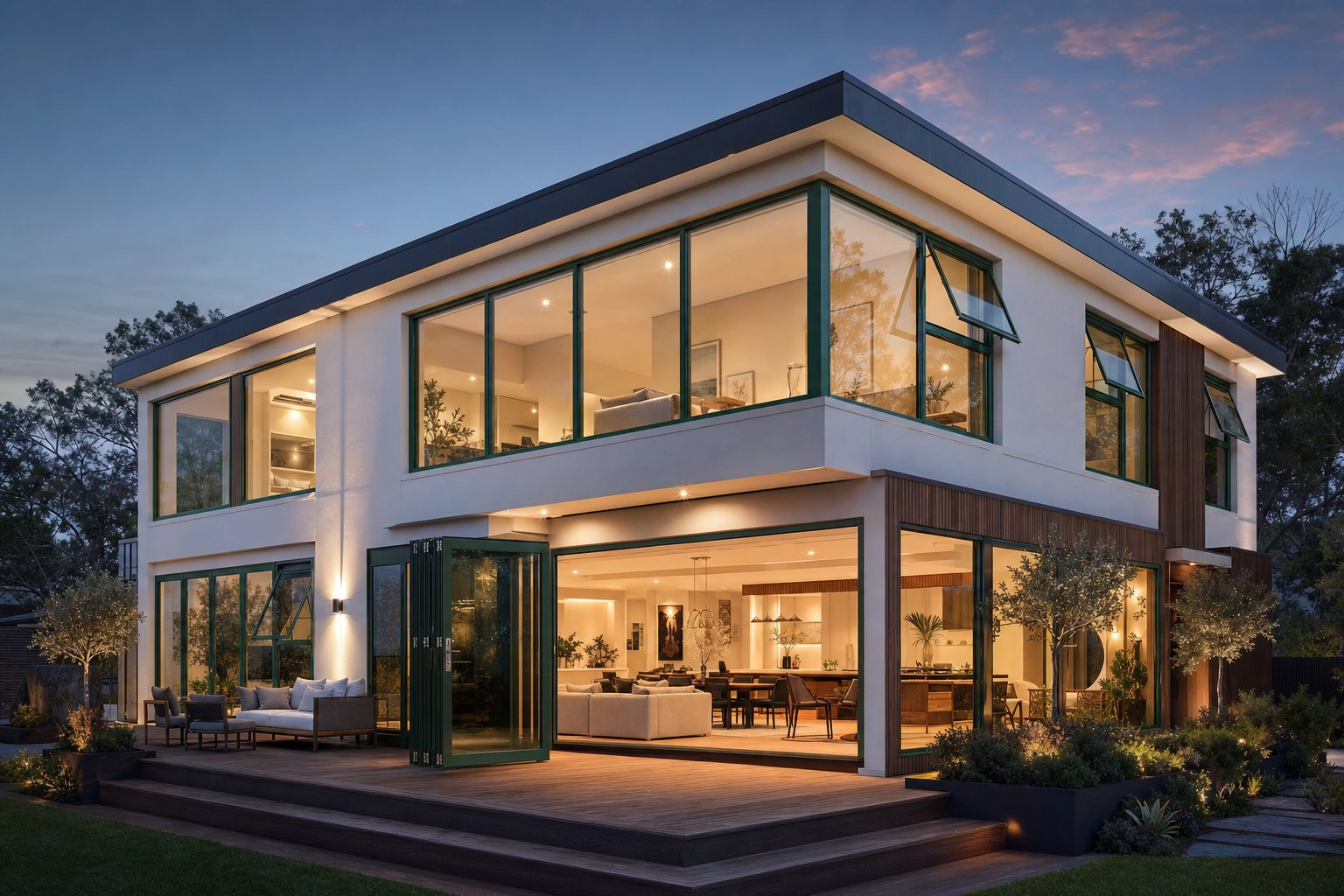
Window Styles Available in Green Aluminium Frames
Colour is only half the decision. The opening mechanism you choose determines how your green aluminium windows perform day to day — how much air they let in, how easy they are to clean, and how they interact with furniture, curtains, and foot traffic. Aluminium’s inherent strength means it can be formed into virtually every window style on the market, each one available in the full spectrum of green RAL finishes discussed earlier.
Window Opening Styles in Green Aluminium
Each style suits different rooms, different wall configurations, and different ventilation demands. Here is how the main options work in practice:
Casement windows are hinged at one side (side-hung) or at the top (top-hung/awning). Side-hung casements swing outward like a small door, offering maximum unobstructed airflow and easy cleaning from inside. Top-hung awning casements hinge at the top and push out at the bottom, allowing ventilation even during light rain — a practical choice for bathrooms, laundries, and kitchens where moisture needs a constant escape route. In Australia, awning windows remain one of the most popular residential configurations, and a deep moss or fir green frame on an awning window creates a strong visual anchor on rendered facades.
Tilt-and-turn windows offer dual functionality from a single handle. Tilt the sash inward at the top for secure background ventilation, or turn the handle further to swing the entire sash inward like a casement for rapid air exchange and easy cleaning. This European-originated style works well in bedrooms and upper-storey rooms where you want ventilation without fully opening the window — particularly useful for families with young children.
Sliding windows feature panels that glide horizontally along tracks within the frame. Because nothing protrudes when open, they suit areas with limited external clearance — think windows facing walkways, balconies, or narrow side passages. Their clean horizontal lines pair naturally with contemporary green shades like RAL 6021 Pale Green or RAL 6012 Black Green.
Double-hung (sliding sash) windows operate vertically, with two panels that slide up and down within the frame. They suit heritage-style homes and Federation restorations where the traditional sash proportions matter. A Chartwell Green or RAL 6005 Moss Green finish on a double-hung aluminium frame delivers period character without the swelling, sticking, and repainting that timber sash windows demand in Australian humidity.
Fixed pane windows do not open at all. They exist purely for light and views — floor-to-ceiling glass walls, highlight windows above doors, or feature glazing in stairwells. Because there is no operating hardware, fixed frames can be made even slimmer, maximising the glass-to-frame ratio and letting the green finish read as a fine accent line rather than a dominant element.
Bi-fold windows consist of multiple panels that fold and stack to one side, creating a wide opening — ideal for servery-style kitchen pass-throughs or connecting indoor living areas to outdoor entertaining zones. Green bi-fold frames in olive or sage tones blend seamlessly with garden views when open and frame them beautifully when closed.
Louvre windows use horizontal glass blades that tilt open simultaneously via a handle mechanism. They deliver exceptional ventilation control and are common in Queensland and tropical northern Australia where airflow is a priority year-round. A green aluminium louvre frame adds a subtle design accent to what is otherwise a highly functional, utilitarian window type.
| Window Style | Best Room Application | Ventilation Level | Suitability for Green Frames |
|---|---|---|---|
| Casement (side-hung) | Living rooms, bedrooms | High — full opening | Excellent — frame visible when closed, showcases colour |
| Awning (top-hung) | Bathrooms, kitchens, laundries | Moderate — rain-safe ventilation | Excellent — multiple units create a rhythmic green pattern |
| Tilt-and-turn | Bedrooms, upper storeys, children’s rooms | Adjustable — tilt for low, turn for high | Good — larger frame area displays colour well |
| Sliding | Hallways, rooms facing walkways, balconies | Moderate — up to 50% opening | Good — horizontal lines suit modern green tones |
| Double-hung (sash) | Heritage homes, front-facing elevations | Moderate — top and bottom ventilation | Excellent — heritage greens complement period proportions |
| Fixed pane | Stairwells, feature walls, highlight glazing | None | Subtle — slim frame reads as a fine green accent |
| Bi-fold | Kitchen serveries, indoor-outdoor transitions | Very high — full opening when stacked | Good — green frames connect interior to garden |
| Louvre | Tropical homes, wet areas, breezeways | Very high — adjustable blade angle | Moderate — smaller frame area, colour less dominant |
Slimline Profiles and Maximum Glass Area
Aluminium’s strength-to-weight ratio is the reason slimline profiles exist at all. Where timber and uPVC need bulky frames to achieve structural integrity, aluminium can hold the same glass loads with sightlines as narrow as 35-45 mm. That difference is not trivial — it translates directly into more glass area, more natural light, and less visual interruption across your facade.
Slimline aluminium windows appeal to homeowners chasing a contemporary, light-filled interior without sacrificing thermal or acoustic performance. Modern thermally broken slim profiles incorporate polyamide insulation strips within the narrow frame, so you are not trading energy efficiency for aesthetics. The result is a window that looks delicate but performs like a heavyweight.
From a colour perspective, slimline frames change how green reads on a building. A deep bottle green on a chunky 70 mm frame makes a bold, unmistakable statement. The same bottle green on a 38 mm slimline profile becomes a refined, almost jewellery-like detail — present but not overpowering. If you are drawn to darker greens but worry about them dominating your facade, slimline profiles offer a way to have the colour without the visual weight.
For period homes where steel-framed windows were original, slimline aluminium provides a faithful visual match at a fraction of the cost and maintenance. The narrow sightlines replicate the proportions of 1920s and 1930s steel windows, and a heritage green finish completes the illusion while delivering modern thermal performance and weather sealing.
Dual-Colour and Aluminium-Clad Options
One shade of green does not have to rule your entire home. Dual-colour aluminium windows allow you to specify one colour on the exterior face — your chosen green — and a completely different colour on the interior face. White, light grey, or a timber-effect finish on the inside lets you coordinate with your interior decor without compromising the external colour scheme you have carefully matched to your facade materials.
This works because the powder-coating process can be applied independently to the interior and exterior surfaces of the aluminium profile before assembly. The two colours meet at the frame’s edge, hidden within the reveal, so there is no visible transition line from either side. You get a cohesive green exterior that ties your home into its landscape, and a neutral or warm interior that complements your wall colours, cabinetry, and furnishings.
Dual-colour configurations are particularly popular for open-plan living areas where large windows and doors dominate the interior wall space. A dark fir green exterior that looks striking from the street could feel oppressive inside a light-filled living room — but pair it with a white or pale grey interior face and the window virtually disappears into the wall from inside while still making its statement from the kerb.
Green aluminium clad windows take a different approach entirely. Here, an aluminium exterior shell protects an inner timber frame. You get the warmth and natural grain of timber on the inside — visible, touchable, and paintable to any interior colour — while the exterior aluminium cladding in your chosen green handles the weather, UV, and maintenance burden. This hybrid construction suits homeowners who love the feel of timber interiors but refuse to accept the external maintenance cycle that exposed timber demands in Australian conditions.
Suppliers like MEICHEN offer dual-colour and custom RAL finishes across their full range of aluminium window types — from casement and awning through to sliding and fixed configurations — giving Australian homeowners and builders the flexibility to specify green exteriors with contrasting interiors on any window style in a single project. Their range covers both residential and commercial applications, making it straightforward to maintain colour consistency across an entire build regardless of how many different opening types you need.
Whether you opt for a single green finish, a dual-colour split, or a full aluminium-clad timber system, the style and colour decisions you make here need to work with your property’s architecture — not against it. And that relationship between shade, frame style, and building character is where many homeowners get it wrong.
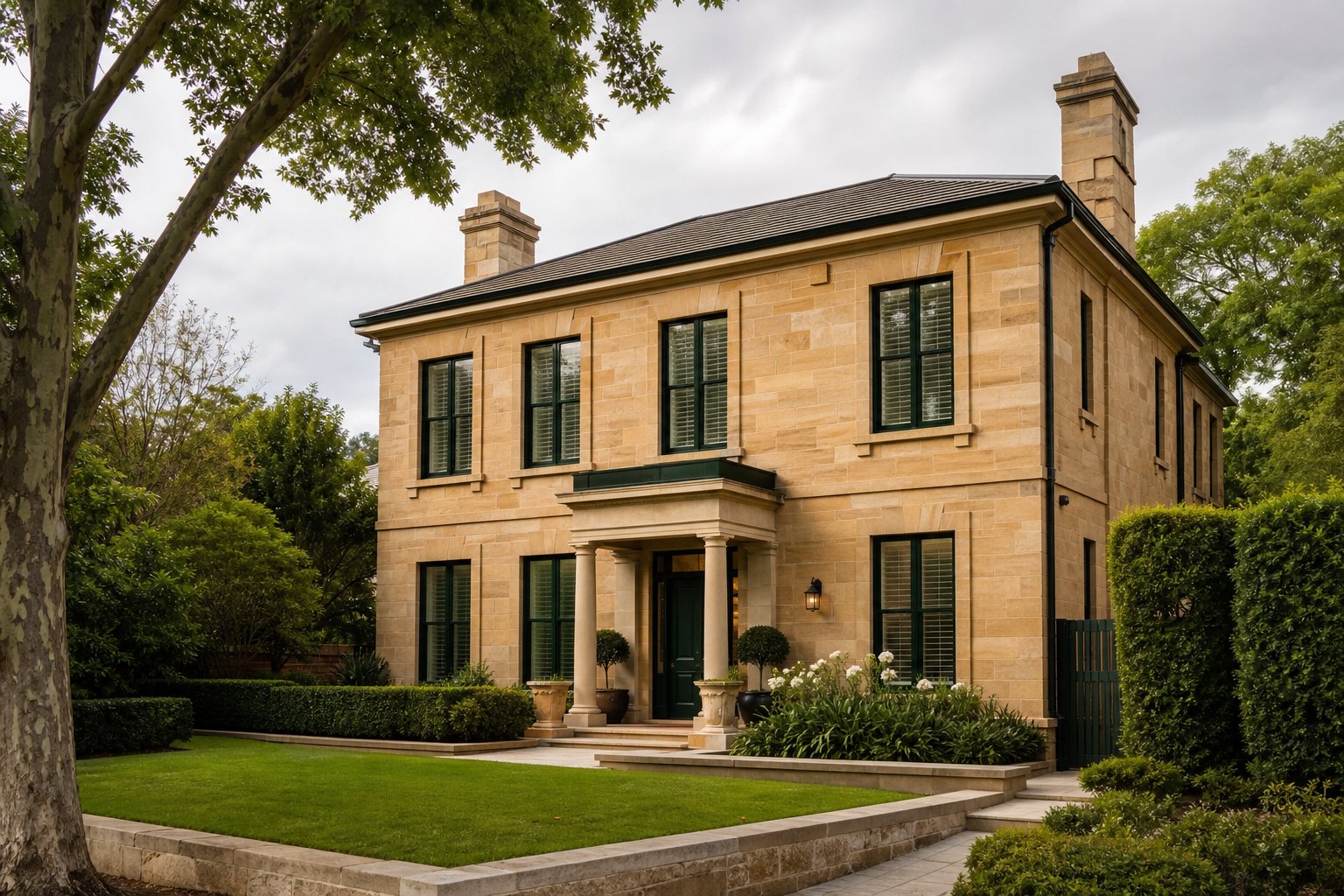
Matching Green Window Shades to Your Architectural Style
Getting the shade wrong is where regret lives. A bottle green that looks regal on a sandstone Federation home can look heavy and out of place on a lightweight weatherboard beach house. The relationship between your chosen green, your building’s era, and the materials surrounding those frames is what separates a window upgrade that lifts the whole property from one that quietly nags at you every time you pull into the driveway.
Matching Green Shades to Property Types
Different architectural styles carry different visual DNA — proportions, material palettes, and historical colour conventions that certain greens complement naturally. Here is a practical pairing guide based on what actually works on Australian homes:
- Federation and Edwardian homes — Chartwell Green or RAL 6005 Moss Green. These heritage greens echo the painted timber joinery original to the era without looking too modern or too dark. They sit comfortably alongside decorative fretwork, bullnose verandahs, and tessellated tile paths.
- Rural homesteads and country cottages — RAL 6009 Fir Green or RAL 6007 Bottle Green. Deep, dark greens ground these properties in their landscape. They read as serious and established, complementing corrugated iron roofing and wide rural vistas without competing for attention.
- Contemporary and modern builds — Sage green aluminium windows in RAL 6021 Pale Green, or olive green aluminium windows in RAL 6003 or RAL 6014. These muted, earthy tones work with the flat planes, clean lines, and neutral render palettes of modern architecture. They add warmth and personality without disrupting minimalist intent.
- Coastal homes — RAL 6021 Pale Green or RAL 6028 Pine Green. Lighter greens reflect the softer, sun-bleached palette of coastal environments. They pair naturally with white or off-white cladding, pale timber decking, and the blue-grey tones of ocean views.
- Queenslanders and elevated timber homes — RAL 6005 Moss Green or Chartwell Green. The traditional colour palette of these homes already includes greens, creams, and deep reds. A mid-depth green on aluminium frames honours that heritage while eliminating the constant repainting cycle that timber demands in subtropical humidity.
- Warehouse conversions and industrial-style homes — RAL 6012 Black Green or RAL 6003 Olive Green. The near-black depth of these shades complements exposed brick, steel beams, and concrete floors without softening the industrial edge.
Coordinating with Exterior Materials and Colours
Your window frames do not exist in isolation — they sit within a composition of wall materials, roofing, fascias, and landscaping. The wrong combination creates visual tension. The right one makes the green feel inevitable, as though it was always meant to be there.
The table below maps common Australian exterior materials against the green RAL codes that pair most harmoniously with each:
| Exterior Material | Best Green RAL Pairings | Why It Works |
|---|---|---|
| Red brick (traditional) | RAL 6005 Moss Green, RAL 6009 Fir Green | Cool-toned greens balance the warmth of red brick without clashing. The contrast is strong but natural — think ivy on a brick wall. |
| Cream or yellow brick | RAL 6021 Pale Green, Chartwell Green | Softer greens complement the warm, muted tones of cream brick. Dark greens can overpower the subtlety of lighter masonry. |
| White render | RAL 6005 Moss Green, RAL 6007 Bottle Green, RAL 6012 Black Green | White provides a clean canvas that lets deeper greens pop. The high contrast creates a crisp, deliberate look. |
| Natural sandstone | Chartwell Green, RAL 6021 Pale Green, RAL 6028 Pine Green | Sandstone’s golden warmth pairs with greens that carry yellow or grey undertones. Avoid blue-based greens that fight the stone’s warmth. |
| Timber cladding (natural or stained) | RAL 6003 Olive Green, RAL 6014 Yellow Olive, RAL 6028 Pine Green | Earthy, warm greens echo the organic character of timber. The combination feels cohesive and grounded in nature. |
| Dark grey or charcoal render | RAL 6021 Pale Green, RAL 6005 Moss Green | Lighter greens provide relief against dark walls. Too-dark greens disappear into the facade and lose their impact. |
| Colorbond roofing (Woodland Grey, Monument) | RAL 6005 Moss Green, RAL 6009 Fir Green, RAL 6012 Black Green | Dark roofing anchors the top of the building; matching-depth greens on frames create a unified dark-accent palette. |
| Colorbond roofing (Surfmist, Shale Grey) | RAL 6021 Pale Green, Chartwell Green | Light roofing suits lighter greens for a cohesive, airy palette that avoids jarring contrast between roof and frames. |
One detail often overlooked: the aluminium green glass window option. Tinted green glass paired with green frames creates a tonal, monochromatic effect that reads as deeply considered rather than accidental. It works particularly well on fixed panes and feature glazing where the glass colour is visible from outside. Standard clear glass, by contrast, lets the green frame stand alone as the colour element — a cleaner, more conventional approach that suits most residential applications.
Planning Permission and Conservation Area Considerations
In most Australian residential situations, replacing windows does not require council approval — provided you are not altering the size of the opening or the structural support around it. Colour choice on standard residential properties is generally unrestricted.
Heritage-listed properties and homes within heritage overlay zones are a different story. Local councils impose specific controls on external changes to buildings identified as having heritage significance. These controls often extend to window frame materials, profiles, and colours. A heritage overlay does not necessarily mean your application will be refused — it means you need to submit one, and the council will assess whether your proposed changes are sympathetic to the building’s character.
Key points for Australian homeowners considering green aluminium frames on heritage or character properties:
- Check your local council’s heritage overlay maps before committing to any window specification. These are typically available through your council’s online planning portal or the relevant state heritage register.
- Heritage controls vary by state and council. In Victoria, the Heritage Overlay (HO) provisions sit within the local planning scheme. In NSW, heritage items are listed in Local Environmental Plans (LEPs). Queensland uses the Queensland Heritage Register and local heritage overlays.
- Colour is often negotiable even when material is not. Many councils will approve aluminium frames in heritage colours (Chartwell Green, Moss Green, or other period-appropriate shades) where the profile and proportions replicate the original timber joinery. The colour demonstrates intent to respect the building’s character.
- Slimline aluminium profiles help heritage applications. Because they replicate the narrow sightlines of original timber or steel frames, slim profiles are more likely to receive approval than chunky modern sections that alter the building’s visual proportions.
- Pre-application advice saves time and money. Most councils offer informal heritage advice before you lodge a formal development application (DA). Use this to confirm whether your proposed green shade and frame style will be supported before you order.
For properties outside heritage overlays, the decision is entirely yours. No council approval is needed to powder-coat your aluminium frames in any shade of green — or any other colour, for that matter. The only constraint is your own judgement and the architectural logic of matching shade to style, material to material, and era to era.
Colour and style choices anchor the visual identity of your windows. But beneath that surface sits a deeper question about environmental responsibility — and aluminium has a compelling story to tell on that front too.
The Sustainability Case for Aluminium Window Frames
Green aluminium windows carry a double meaning — and the environmental half of that equation deserves serious attention. Beyond the colour on the frame, aluminium itself is one of the most genuinely sustainable building materials available. Its lifecycle credentials outperform timber and uPVC on almost every long-term metric, from energy embodied in recycling through to end-of-life recovery.
Aluminium Recyclability and Lifecycle Benefits
Recycling aluminium uses just 5% of the energy required to produce primary aluminium from raw materials — a 95% energy saving that also translates to a 95% reduction in greenhouse gas emissions compared to primary production.
That statistic alone makes aluminium a standout. But the story goes further. Aluminium is infinitely recyclable without any degradation in quality or structural integrity. Unlike plastics that degrade with each recycling pass, aluminium retains all of its original properties no matter how many times it goes through the loop. Roughly 75% of all aluminium ever produced remains in active use today — circulating through the economy rather than sitting in landfill.
For window frames specifically, this means the aluminium in your green-finished frames can be fully recovered and reprocessed into new architectural products at the end of their service life — which itself stretches to 40-60 years or more. Compare that to uPVC frames, which degrade over time, become brittle, and are difficult to recycle into equivalent-quality products. Or timber, which may last well if maintained but ultimately rots, and the embodied energy of decades of repainting and sealing adds up considerably.
The environmental advantages of aluminium over alternative frame materials stack up across the full lifecycle:
- Infinite recyclability — no loss of quality regardless of how many times the material is reprocessed.
- 95% energy saving when recycled versus primary production.
- Longest functional lifespan — 40-60+ years without structural degradation, versus 20-30 years for uPVC and variable for timber depending on maintenance.
- No toxic off-gassing — unlike uPVC, aluminium does not release chlorine compounds during manufacture or at end of life.
- Zero maintenance coatings — no repainting means no paint tins, no solvent waste, and no VOC emissions over the building’s life.
- High scrap value — aluminium retains economic value at end of life, creating a genuine incentive for recovery rather than disposal.
Low-carbon aluminium initiatives are also reshaping the manufacturing sector. Producers are increasingly using renewable energy sources — hydroelectric power in particular — to smelt primary aluminium, dramatically reducing the carbon footprint of new material. For Australian projects, sourcing frames made with certified low-carbon aluminium adds another layer of environmental credibility. Green aluminium windows in USA and European markets are already driving demand for these low-carbon supply chains, and Australian manufacturers are following the same trajectory.
Green Guide Ratings for Aluminium Windows
The BRE Green Guide to Specification rates building materials from A+ (least environmental impact) down to E (greatest impact) based on a full life cycle assessment covering 13 categories — from mineral extraction and manufacturing through to ecotoxicity and end-of-life waste management.
Aluminium windows have historically carried middling ratings in this system, but updated environmental profiles have shifted the picture significantly. Powder-coated aluminium windows now achieve A+ and A ratings for commercial applications and A to B ratings for domestic windows, depending on profile weight. Lighter-weight profiles (0.88-1.08 kg/m for domestic, 0.9-1.25 kg/m for commercial) score highest — a direct reward for aluminium’s ability to deliver structural performance with less material than competing frame types.
The aluminium windows green guide rating improvement reflects updated lifecycle data that properly accounts for aluminium’s recyclability and longevity. Earlier assessments undervalued end-of-life recovery, which penalised aluminium unfairly against materials with lower upfront embodied energy but shorter service lives and poorer recyclability. The corrected green guide rating aluminium windows now receive acknowledges the full circular-economy benefit of the material.
For Australian specifiers, these ratings provide a useful benchmark when assessing materials for Green Star or similar sustainability certification projects, even though the BRE system originates in the UK. The underlying lifecycle methodology translates directly — aluminium’s environmental profile does not change at the border.
Thermal Performance and Energy Compliance
Sustainability is not only about what a frame is made of — it is also about how much energy leaks through it over decades of use. Modern aluminium window systems achieve the thermal performance required by Section J of the National Construction Code (NCC) and score well under the WERS (Window Energy Rating Scheme) through one critical engineering detail: the thermal break.
Aluminium conducts heat readily. Without intervention, a solid aluminium frame would transfer heat between inside and outside far too efficiently, undermining your insulation and driving up energy bills. Thermal break technology solves this by splitting the frame into two separate aluminium sections — interior and exterior — connected by insulating strips of PA66 (polyamide 6.6 reinforced with glass fibre). These strips create a physical barrier to heat transfer within the 6063-T5 aluminium alloy profile, dramatically reducing the frame’s U-value.
A thermally broken aluminium frame typically achieves frame U-values between 2.0 and 3.5 W/m²K depending on the profile system and break width. Combined with quality double glazing (or triple glazing for extreme climates), whole-window U-values comfortably meet NatHERS modelling requirements for energy-efficient homes across all Australian climate zones — from tropical Darwin to cold-climate Hobart.
This thermal performance means choosing green aluminium windows is not a compromise between aesthetics and energy efficiency. The frames perform as well as — or better than — uPVC alternatives in equivalent configurations, while lasting significantly longer and being fully recoverable at end of life. That combination of operational efficiency and material circularity is what makes aluminium a genuinely green choice in the fullest sense of the word.
Strong sustainability credentials and solid thermal numbers tell you what aluminium can do as a material. Translating those capabilities into a specification that suits your specific project means understanding the technical language behind the product sheets — alloy grades, performance standards, and glazing options that determine real-world comfort.
Technical Specifications Explained in Plain Language
Product data sheets for aluminium windows and doors read like a foreign language if you have not spent years in the industry. Alloy grades, thermal transmittance values, polyamide designations, and coded performance standards all appear on quotes and specification documents — yet most homeowners have no idea what any of it means for their daily comfort or long-term energy bills. Here is what actually matters, stripped of jargon.
Understanding Aluminium Alloy Grades and Thermal Breaks
Almost every quality aluminium window frame on the Australian market is extruded from 6063-T5 aluminium alloy. That code tells you three things. The “6063” identifies the alloy composition — a blend of aluminium with small amounts of magnesium and silicon that gives the metal excellent corrosion resistance and the ability to be extruded into complex profile shapes with fine surface finishes. The “T5” refers to the tempering process — the metal is cooled from extrusion temperature and then artificially aged to achieve a specific hardness and strength. In practical terms, 6063-T5 delivers the ideal balance: strong enough to support large glass panes with slim sightlines, resistant enough to shrug off decades of coastal salt air, and workable enough to be formed into the intricate profile geometries that modern window systems demand.
Strength and corrosion resistance mean nothing for your comfort, though, if heat passes straight through the frame. That is where PA66 thermal break strips come in. PA66 stands for Polyamide 6.6 — a high-performance engineering plastic reinforced with 25% glass fibre (designated PA66 GF25). These strips sit between the interior and exterior aluminium sections of the frame, physically splitting the profile into two halves connected only by the non-conductive polyamide.
Why does this matter? Aluminium conducts heat roughly 1,000 times more efficiently than polyamide. Without the thermal break, your frame acts as a highway for heat — pulling warmth out of your living room in winter and channelling summer heat inside. The PA66 strip blocks that transfer, keeping the interior face of the frame close to room temperature regardless of what is happening outside. The result is lower energy bills, reduced condensation risk, and no more cold spots near your windows on winter mornings.
One detail worth noting: the width of the thermal break strip directly affects insulation performance. Standard residential profiles use strips around 20-24 mm wide. High-performance systems push that to 34 mm or more, achieving frame U-values low enough to satisfy even the most demanding NatHERS energy modelling scenarios.
Performance Standards That Matter for Your Project
Regardless of whether your frames are finished in moss green, charcoal, or white, the same performance standards apply. Colour is cosmetic — structural and weather performance is governed by testing and certification that sits beneath the surface.
In Australia, the primary standard for windows is AS 2047 (Windows and External Glazed Doors in Buildings). This standard classifies windows by their resistance to wind pressure, water penetration, and air infiltration. Every window installed in an Australian home must comply with AS 2047 for the relevant wind classification of the site — from N1 (low-rise sheltered suburban) through to N6 (severe cyclone regions in northern Queensland and the NT). Your window supplier should provide test evidence confirming compliance for your specific location and exposure.
AS 1288 (Glass in Buildings) governs the selection and installation of glazing. It dictates minimum glass thicknesses, safety glass requirements for doors and low-level panels, and specific provisions for areas prone to human impact. If your green aluminium windows include floor-to-ceiling fixed panes or panels beside doorways, AS 1288 determines whether you need toughened, laminated, or grade-A safety glass in those positions.
For projects referencing international benchmarks — particularly architecturally designed homes or commercial builds — BS 6375 (the British Standard for window weather performance) and PAS 24 (enhanced security testing) occasionally appear on specification documents. These standards classify windows for air permeability, water tightness, wind resistance, and forced-entry resistance through rigorous laboratory testing. While not mandatory in Australia, products tested to these standards often exceed AS 2047 requirements — useful context if you are comparing imported European systems against locally manufactured options.
Security performance deserves a specific mention. AS 2047 includes provisions for operating force and locking, but dedicated security testing (equivalent to PAS 24) is increasingly requested for ground-floor windows in urban areas. Multi-point locking hardware, laminated glass, and reinforced keeps all contribute to a window’s resistance to forced entry — and none of these features are affected by your choice of green finish.
Glazing Options for Green Aluminium Frames
The frame holds the glass, but the glass does most of the thermal and acoustic work. A green aluminium frame with poor glazing is like an insulated wall with a hole in it — the frame performs, but the overall window does not. Choosing the right glazing configuration is where real-world comfort and energy savings are won or lost.
| Glazing Type | U-Value Range (Whole Glass) | Noise Reduction | Cost Level |
|---|---|---|---|
| Double glazing (standard clear, air-filled) | 2.7 – 3.0 W/m²K | Moderate (25-30 dB reduction) | Base cost |
| Double glazing (Low-E coating, argon-filled) | 1.0 – 1.4 W/m²K | Moderate (25-32 dB reduction) | 10-20% above base |
| Double glazing (acoustic laminated, argon-filled) | 1.2 – 1.6 W/m²K | High (35-40 dB reduction) | 25-35% above base |
| Triple glazing (Low-E, argon-filled) | 0.6 – 0.8 W/m²K | Excellent (38-45 dB reduction) | 40-60% above base |
| Tinted or green-tinted glass (double, Low-E) | 1.0 – 1.4 W/m²K | Moderate (25-32 dB reduction) | 15-25% above base |
Low-E coatings are microscopically thin metallic layers applied to one or more glass surfaces within the sealed unit. They reflect long-wave infrared radiation — essentially bouncing heat back toward its source. In winter, indoor heat reflects back into the room. In summer, solar heat reflects back outside. The coating is invisible to the eye but transforms the glass from a passive barrier into an active thermal manager.
Argon gas filling replaces the air between glass panes with argon — a denser, less conductive noble gas that slows heat transfer through the cavity. It is colourless, odourless, and non-toxic. The improvement over air is modest in isolation (roughly 15-20% better insulation) but compounds meaningfully when combined with Low-E coatings and warm-edge spacer bars.
Triple glazing adds a third pane and a second gas-filled cavity, pushing U-values below 0.8 W/m²K in premium configurations. The trade-off is weight — triple-glazed units are significantly heavier, requiring reinforced hardware and sometimes limiting maximum panel sizes. In most Australian climate zones, high-performance double glazing with Low-E and argon delivers sufficient thermal performance. Triple glazing makes sense for alpine regions, extreme cold-climate builds, or homes targeting Passive House certification where every fraction of a U-value point counts.
Tinted and green-tinted glass options add a subtle colour wash to the glazing itself. A green tint paired with green frames creates a cohesive, tonal aesthetic — particularly effective on fixed feature windows and large sliding panels where the glass area dominates. Beyond aesthetics, tinted glass reduces solar heat gain and glare, which benefits west-facing windows that cop intense afternoon sun. The tint does reduce visible light transmission slightly, so it suits living areas and bedrooms better than workspaces where maximum daylight is critical.
Specification priorities shift depending on whether you are fitting out a home or a commercial building. Residential and commercial projects weight these factors differently:
- Residential priorities: Thermal comfort first (Low-E double glazing with argon as the baseline), then acoustic performance (laminated glass if you are near a busy road, flight path, or railway), then solar control (tinted or selective glass on west and north-facing elevations), and finally security (laminated inner pane on ground-floor accessible windows).
- Commercial priorities: Solar heat gain control first (selective coatings and tinted glass to reduce cooling loads across large facade areas), then acoustic separation (laminated configurations for office environments near traffic), then thermal performance (compliance with Section J of the NCC), and finally safety glass provisions (AS 1288 requirements for public-access areas and panels at risk of human impact).
- Mixed-use and multi-residential priorities: Acoustic separation between dwellings takes top priority (often requiring minimum Rw ratings specified in the NCC), followed by thermal compliance, fire-rated glazing where required by proximity to boundaries, and then solar control for common areas and north-facing apartments.
For slimline aluminium windows — whether in Green Point on the NSW Central Coast or a suburban street in Melbourne — the glazing specification matters even more because the narrower frame contributes less insulation area. The glass must compensate, making Low-E argon-filled double glazing the minimum sensible specification for any thermally broken slimline profile, regardless of colour.
Specifications determine how your windows perform. But performance only endures if the frames are properly looked after — and that is where powder-coated aluminium delivers its most practical everyday advantage over every other framing material.
How to Maintain Green Aluminium Windows for Decades
Powder-coated aluminium asks almost nothing of you in return for decades of service. No sanding, no repainting, no worrying about rot after every wet season. But “low maintenance” is not the same as “no maintenance.” A small amount of regular care keeps your green frames looking as sharp as the day they were installed — and prevents minor issues from becoming expensive problems down the track.
Unlike timber windows that demand sanding and repainting every 5-7 years in Australian conditions, powder-coated green aluminium frames require nothing more than periodic washing to maintain their colour and finish for 25 years or longer. That difference adds up to thousands of dollars and dozens of weekends saved over the life of your home.
Cleaning Powder-Coated Green Aluminium Frames
The cleaning process is deliberately simple. You do not need specialist products or professional equipment — just mild household supplies and a few minutes of attention.
- Rinse the frames with clean water from a garden hose to remove loose dust, cobwebs, and surface grit. This prevents scratching during the wash stage.
- Prepare a mild soapy solution — a small squirt of dishwashing liquid in a bucket of warm water is all you need. Avoid anything stronger.
- Wash the frames using a soft cloth, sponge, or microfibre towel. Work from top to bottom, paying attention to corners and rebates where grime accumulates.
- Rinse thoroughly with clean water to remove all soap residue. Leftover detergent can leave streaks or attract dirt faster.
- Dry with a clean cloth if you want a streak-free finish, or allow to air-dry in shaded conditions.
How often you repeat this depends on your environment. For most suburban homes across southern Australia, every 3 to 6 months is sufficient. Coastal properties within a few kilometres of the ocean should clean every 2-3 months — salt deposits are corrosive and the longer they sit on the surface, the more damage they can do to fittings and seals. Homes on busy roads or near construction sites may also benefit from more frequent washing to prevent embedded grit from dulling the finish.
What to avoid is just as important as what to use. Steer clear of abrasive pads, steel wool, or scrubbing brushes — they scratch the powder coating and expose the aluminium beneath. Harsh chemical cleaners, solvents, turpentine, and bleach can strip or discolour the finish. And while a pressure washer seems like a quick solution, using one at close range can force water past seals and into the frame cavity, or damage the coating surface. If you do use a hose with a pressure nozzle, keep it at least 300 mm from the frame and use a wide fan pattern rather than a concentrated jet.
Hardware and Seal Maintenance
Handles, hinges, locks, and stays do the mechanical work every time you open or close a window. They deserve a quick check alongside your regular cleaning routine.
Inspect all moving hardware for smooth operation. If a handle feels stiff or a hinge resists, a light application of silicone-based lubricant (not oil-based, which attracts dust) restores free movement. Tighten any screws that have loosened over time — vibration from wind and daily use gradually works fasteners free, particularly on casement and awning windows that bear the weight of the sash on their hinges.
Rubber gaskets and weather seals around the glass and frame perimeter keep water, air, and dust out. Wipe them clean with a damp cloth during your regular wash to remove grit that can degrade the rubber over time. Check for any sections that have compressed, cracked, or pulled away from their channel. Replacement seals are inexpensive and straightforward to fit — catching a failed seal early prevents water ingress that could damage internal linings or cause mould.
Drainage channels sit at the base of your window frames, with small weep holes that allow any water entering the track to escape outside. These holes block easily with dust, leaves, or insect debris. Clear them with a cotton bud, pipe cleaner, or soft brush during each clean. Blocked drainage is one of the most common causes of water pooling inside frames — a problem that is entirely preventable with 30 seconds of attention.
For minor cosmetic damage — a small chip from an impact or a scratch from a wayward garden tool — manufacturer-matched touch-up paint pens offer a quick repair. These pens contain the same polyester resin used in the original powder coat, colour-matched to your specific RAL shade. Clean the damaged area, apply the touch-up, and allow it to cure. The repair will not be invisible under close inspection, but it seals the exposed aluminium against corrosion and prevents the chip from spreading.
Seasonal Inspection Checklist
A twice-yearly walkthrough — once before summer and once before winter — catches developing issues before they escalate. Run through this checklist at each inspection:
- Open and close every window to confirm smooth, resistance-free operation.
- Check all locking points engage fully and hold securely.
- Inspect powder-coated surfaces for chips, scratches, or any white powdery deposits (early signs of corrosion on fittings).
- Examine rubber seals and gaskets for cracking, compression, or displacement.
- Clear all drainage weep holes and ensure water flows freely to the exterior.
- Clean tracks and sills of accumulated debris — leaves, sand, insect matter.
- Lubricate hinges, stays, and locking mechanisms with silicone spray.
- Check glass seals for any signs of moisture between panes (indicates a failed sealed unit).
- Inspect external sealant where the frame meets the wall for gaps or deterioration.
Compared to timber — which demands annual sanding, priming, and repainting plus constant vigilance for rot, swelling, and termite damage — this checklist is trivially light. And unlike uPVC, which can yellow or become brittle under prolonged Australian UV exposure, powder-coated aluminium holds its colour and structural integrity without degradation. The maintenance gap between aluminium and its alternatives only widens with time, making those green frames an increasingly smart investment with every passing year.
Minimal upkeep keeps your frames performing. The next practical question most homeowners face is what the whole package actually costs — and which factors in the specification process drive the price up or keep it reasonable.
Choosing the Right Green Aluminium Windows for Your Project
You have settled on a shade, picked a window style, and confirmed your frames will meet the relevant performance standards. The final stretch is translating all of that into an order — and this is where pricing, lead times, and supplier communication either go smoothly or unravel into frustrating surprises. Understanding what drives the cost of green aluminium windows helps you read quotes critically and avoid paying more than you should.
Factors That Influence Green Aluminium Window Pricing
No two window projects cost the same, even when the colour is identical. Six core variables interact to determine what lands on your quote:
| Factor | Impact on Price | Notes |
|---|---|---|
| Frame size and dimensions | High — the single biggest cost driver | Larger openings require more aluminium extrusion, heavier glass, and upgraded hardware. A 2400 x 1800 mm unit can cost 2.5-4x more than a 900 x 1200 mm window. |
| Opening mechanism | Moderate to high | Tilt-and-turn hardware costs 40-60% more than standard casement hardware. Sliding windows use more extrusion material but simpler locks. Bi-fold systems carry the highest hardware burden. |
| Glazing specification | High — typically 30-40% of total window cost | Moving from standard double glazing to Low-E argon-filled adds 10-20%. Triple glazing adds 40-60%. Acoustic laminated glass adds 25-35%. |
| RAL colour choice | Low to moderate | Standard greens (RAL 6005, 6009, 6021) often carry no surcharge. Custom RAL matches or heritage shades like Chartwell Green may add 10-15% for the powder-coating run. |
| Hardware grade | Moderate | Basic hardware suits most residential applications. Premium-grade handles, multi-point locks, and concealed hinges add cost but improve security, longevity, and aesthetics. |
| Installation complexity | Moderate to high | Retrofit into existing openings costs more than new-build installation. Upper-storey access, scaffold requirements, and structural modifications all add labour time. |
Volume matters too. A single replacement window carries a higher per-unit cost than a full-house order of 15 or 20 windows, because setup, delivery, and installation mobilisation costs are spread across more units. If you are planning a staged renovation, ordering all windows at once — even if installation happens in phases — often secures better pricing than placing separate orders months apart.
Standard vs Custom Green Colour Costs
Most Australian aluminium window manufacturers hold a range of popular RAL colours as standard stock powders. These typically include the high-demand shades — RAL 6005 Moss Green, RAL 6009 Fir Green, and RAL 6021 Pale Green among them — and selecting one of these standard greens usually adds nothing to the base frame price.
Step outside that standard palette and you enter custom-match territory. A less common RAL code, a heritage shade like Chartwell Green, or a colour-matched finish to a specific Colorbond or Dulux reference requires the powder coater to source or mix a dedicated batch. That batch has a minimum run quantity, and the setup cost gets distributed across your order. On a large project with many frames, the per-window surcharge is negligible. On a small order of two or three windows, it can add 10-15% to the coating cost.
Dual-colour configurations — green exterior with a different interior finish — effectively double the coating process. Each face is coated separately, adding both material and labour. Expect a premium of 15-25% over a single-colour frame, though the exact figure varies by supplier and profile system.
The practical takeaway: if budget is tight, choose from your supplier’s standard green range. If a specific shade is non-negotiable for your design intent, factor the custom colour surcharge into your budget from the start rather than discovering it as a line-item surprise on the final quote.
What to Ask Your Window Supplier
A quote is only as reliable as the information behind it. Vague specifications produce vague pricing — and vague pricing produces cost blowouts when the real details emerge later. Custom aluminium windows are not off-the-shelf products, so the more clearly you define your requirements upfront, the more accurate and comparable your quotes will be.
Before committing to any supplier, ask these questions:
- Is my chosen green RAL code a standard stock colour, or will it incur a custom-match surcharge?
- What Qualicoat class is the powder coating certified to — and is a Class 2 or Seaside upgrade available for my location?
- Does the quoted price include supply only, or supply and installation?
- What is the current lead time from order confirmation to delivery — and what could extend it?
- Are thermally broken profiles included in the base quote, or is that an upgrade?
- What glazing specification is quoted — and what would it cost to upgrade to Low-E argon-filled or acoustic laminated?
- Is the hardware included in the quote, and what brand and grade is specified?
- What warranty covers the powder-coated finish, and what are the exclusion conditions?
- Can you provide a full-size coated sample in my chosen green before I commit?
- Does the quote include flashings, reveals, internal trims, and sealant — or are these additional?
On lead times specifically, expect custom aluminium windows to take 4-8 weeks from order confirmation to delivery for standard configurations. Non-standard colours, unusual sizes, or complex dual-colour finishes can push that toward 8-12 weeks. Aluminium window installation itself typically takes one to two days for a standard residential project, though multi-storey homes or large-scale replacements may require longer.
When comparing quotes from different suppliers, ensure you are comparing like for like. A lower headline price often omits items that a more detailed quote includes — installation, flashings, internal reveals, or even the thermal break itself. Line-item transparency is what separates a trustworthy quote from a number designed to win the job and recover margin through variations later.
For Australian homeowners and builders ready to move from research into specification, suppliers like MEICHEN offer a practical starting point — their range covers the full spread of window types discussed throughout this guide, with custom RAL colour options including greens, dual-colour configurations, and project consultation that helps translate your design intent into a detailed, comparable specification. Whether you are fitting out a new build or upgrading an existing home, getting a properly scoped quote from a supplier who offers the full range of styles and finishes in one place simplifies the process considerably.
Frequently Asked Questions About Green Aluminium Windows
1. What RAL colour is best for green aluminium window frames?
The best RAL green depends on your property type and surrounding materials. RAL 6005 Moss Green suits heritage and sandstone homes, RAL 6009 Fir Green works well on rural estates and country properties, RAL 6021 Pale Green complements coastal and contemporary builds, and RAL 6007 Bottle Green adds sophistication to Federation-style facades. Always request a full-size coated sample and view it against your actual facade in natural daylight before committing, as green shades are particularly susceptible to metamerism and can shift appearance between different lighting conditions.
2. How long does the green powder-coated finish last on aluminium windows?
A high-quality powder-coated green finish on aluminium window frames typically lasts 15 to 25 years or longer before showing noticeable colour change. Longevity depends on the Qualicoat certification class: Class 1 suits moderate inland climates, Class 2 provides superior UV resistance for sun-drenched north-facing elevations, and Seaside Class offers maximum corrosion protection for homes within one kilometre of the coastline. Darker greens like fir or bottle green absorb more UV energy, so specifying Class 2 powder coating is recommended for these shades in high-exposure Australian locations.
3. Are green aluminium windows more expensive than standard colours?
Popular green RAL codes such as RAL 6005, RAL 6009, and RAL 6021 are typically held as standard stock powders by Australian manufacturers and carry no colour surcharge. Less common greens, heritage shades like Chartwell Green, or custom colour matches may add 10 to 15 percent to the coating cost due to minimum batch requirements. Dual-colour configurations with green on the exterior and a different interior finish add approximately 15 to 25 percent over single-colour frames because each face is coated separately.
4. Do green aluminium windows need planning permission in Australia?
For most standard residential properties in Australia, replacing windows does not require council approval provided you are not altering the opening size or structural supports, and colour choice is generally unrestricted. However, heritage-listed properties and homes within heritage overlay zones are subject to specific council controls covering frame materials, profiles, and colours. Check your local council’s heritage overlay maps before ordering, and consider requesting pre-application heritage advice to confirm whether your proposed green shade and frame style will be supported before lodging a formal development application.
5. How do you maintain green aluminium window frames?
Maintaining powder-coated green aluminium frames requires only periodic washing with mild soapy water and a soft cloth every three to six months for suburban homes, or every two to three months for coastal properties exposed to salt air. Avoid abrasive pads, harsh chemicals, solvents, and close-range pressure washing. Additionally, lubricate hinges and locks with silicone spray twice yearly, clear drainage weep holes of debris, and inspect rubber seals for cracking or displacement. Unlike timber frames that demand sanding and repainting every five to seven years, aluminium frames need no recoating throughout their entire service life.
More Window & Door Guides