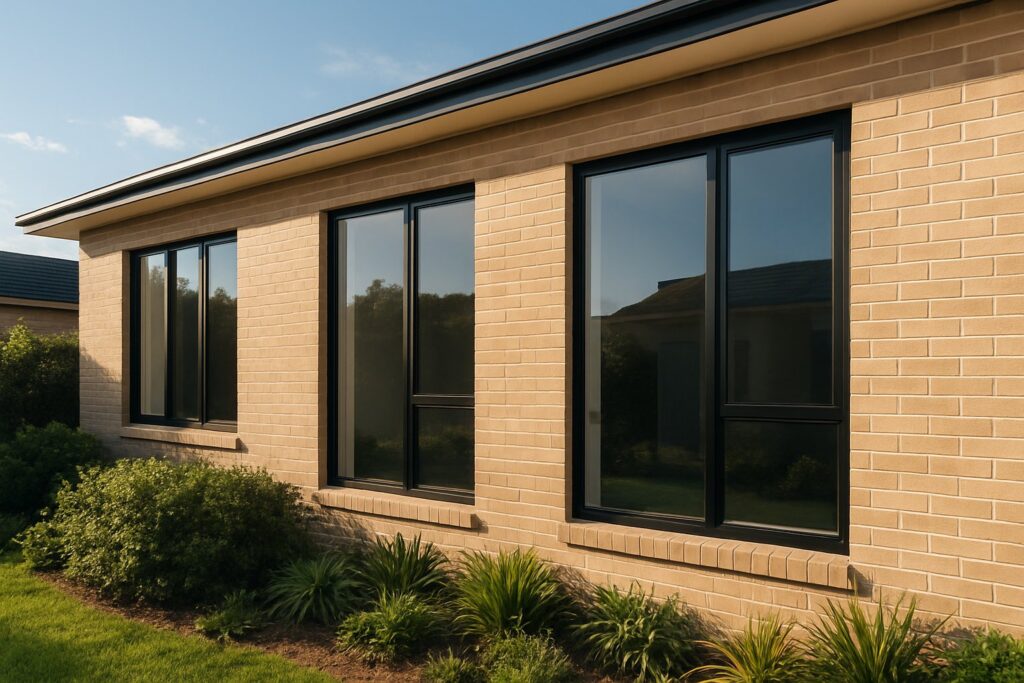
What Are Frosted Aluminium Windows and Why They Matter
Frosted aluminium windows are window units that combine treated, translucent glass — produced through acid-etching, sandblasting, or applied film — with aluminium frames to deliver consistent privacy while still transmitting diffused natural light into a room.
Privacy and daylight rarely coexist peacefully. Curtains block both views and sunlight. Blinds collect dust and need constant adjustment. Frosted aluminium windows solve the tension by scattering incoming light across the glass surface, filling rooms with a soft glow while obscuring the view from outside. The aluminium frame is what makes this pairing particularly effective.
What Makes Frosted Aluminium Windows Different
Aluminium’s inherent strength allows manufacturers to produce slimline profiles — often as narrow as 45 mm — that hold large panes of frosted glass securely without bulky framing. Thinner sightlines mean more glass area, which translates directly into more diffused light entering the space. Compared to general aluminium windows fitted with standard clear glass, the frosted variant trades outward views for round-the-clock privacy without any drop in structural performance.
The material itself matters in humid environments. Unlike timber frames that can swell, warp, or develop mould in wet areas, aluminium is naturally corrosion-resistant and requires little more than an occasional wipe-down. uPVC handles moisture reasonably well, but its thicker profiles reduce the available glass area and can discolour under prolonged UV exposure — a real consideration in the Australian climate. Windows in aluminium frames maintain their finish and slim proportions for decades, often lasting 30 to 45 years with minimal upkeep.
Who Benefits from Frosted Aluminium Windows
This is not a single-use product. Homeowners renovating bathrooms and ensuites gain permanent privacy that withstands steam and splashing without degrading. Architects specifying glazing for medical clinics or ground-floor commercial spaces use frosted aluminium window units to meet privacy requirements while maintaining natural light flow through narrow corridors. Landlords find them practical too — a fixed frosted pane satisfies tenancy regulations around bathroom privacy and eliminates the need to replace damaged blinds between tenants.
This guide walks through each decision point — from frosting techniques and privacy grades to frame finishes and long-term costs — so you can specify the right aluminium window configuration with confidence, regardless of whether you are building new or upgrading an existing home.
Frosting Techniques Explained for Aluminium Window Glass
Not all frosted glass is created the same way, and the method used to achieve that milky, light-scattering finish has a direct impact on how the aluminium glass performs over time. Three primary techniques dominate the market: acid-etching, sandblasting, and adhesive film. Each produces a visually similar result at first glance, yet they differ significantly in durability, cost, and suitability for sealed aluminium glazed window units.
Acid-Etched Glass for a Permanent Satin Finish
Acid-etching involves applying a hydrofluoric acid solution to the glass surface under controlled conditions. The chemical reaction dissolves a microscopic layer, leaving behind a smooth, satin-like finish that feels almost silky to the touch. Because the frosting is part of the glass itself rather than sitting on top, it cannot peel, bubble, or wear away through cleaning.
This permanence makes acid-etched glass the preferred choice for high-end residential builds and any aluminium window with glass that will be sealed into a double-glazed unit. The smooth surface resists fingerprints more effectively than rougher finishes and cleans easily with standard glass cleaner. The trade-off is cost — acid cannot be recycled during manufacturing, and the process requires precise chemical handling, which pushes the price above other methods.
Sandblasted Glass for Textured Privacy
Sandblasting takes a physical approach. Fine abrasive particles — typically garnet sand — are propelled at high pressure against the glass, roughening the surface to create opacity. The resulting texture is grainier than acid-etching, with a slightly coarser feel that scatters light in a subtly different pattern.
Where sandblasting really shines is flexibility. Fabricators can mask portions of the glass and blast selectively, producing custom patterns, borders, or decorative motifs directly into the surface. This makes it popular for feature windows and aluminium double glazed windows where the frosted design is part of the architectural statement. Because the abrasive media is recyclable, sandblasting tends to be more budget-friendly than acid-etching. However, the rougher surface can trap dust and water spots more readily, requiring slightly more attention during cleaning. Glass thinner than 2 mm is generally unsuitable for sandblasting due to the pressure involved, though this is rarely an issue for residential window panes.
Adhesive Frosted Film as a Reversible Option
For homeowners who want privacy without committing to a permanent treatment, adhesive frosted film offers an accessible entry point. A thin vinyl layer is applied directly to the interior face of existing glass, creating an instant translucent effect. Installation is straightforward — measure, cut, and smooth out air bubbles — and removal leaves no lasting mark on the glass.
The catch? Film is a surface coating, not a structural change. In humid environments like bathrooms, adhesive edges can lift and peel within a few years, especially on double-glazed aluminium windows where condensation occasionally forms around seals. Lifespan typically ranges from three to seven years depending on exposure. Film also cannot be applied between the panes of a sealed unit, so it sits on the room-facing surface where it is vulnerable to scratches and cleaning damage.
Comparing Frosting Methods at a Glance
| Technique | Durability | Cost Level | Best Application | Compatibility with Double Glazing |
|---|---|---|---|---|
| Acid-Etching | Permanent (life of the glass) | High | High-end residential builds, sealed IGUs | Excellent — frosting sealed within the unit |
| Sandblasting | Permanent (life of the glass) | Medium | Decorative patterns, feature windows | Excellent — frosting sealed within the unit |
| Adhesive Film | 3–7 years before replacement | Low | Rentals, temporary privacy, DIY retrofits | Applied to interior face only; cannot be sealed between panes |
The frosting method you choose shapes everything from day-to-day cleaning effort to how the glass interacts with aluminium double glazing configurations. Permanent techniques suit new builds and long-term renovations where the privacy requirement will not change. Film works as a stopgap or for rental properties where flexibility matters more than longevity. Regardless of technique, the level of opacity — how heavily the glass is frosted — determines exactly how much privacy and light you actually get, which is a separate decision entirely.
Privacy Levels and Light Diffusion in Frosted Glass
Frosted glass is not an on-off switch. It sits on a spectrum — from a barely-there haze that softens outlines to a dense, fully obscured finish that blocks all visual detail. Choosing where your glass lands on that spectrum shapes both how much privacy you get and how much natural light fills the room.
Understanding Frost Grades from Translucent to Full Obscure
The industry typically grades obscurity on a scale of 1 to 5, with each step representing a measurable reduction in visibility through the pane:
- Grade 1 (Light Frost) — Subtle diffusion. Colours and general shapes remain visible. Best for decorative panels where privacy is secondary to aesthetics.
- Grade 2 (Mild Frost) — Outlines become soft and indistinct. Suitable for hallways or internal doors where partial screening is enough.
- Grade 3 (Medium Frost) — Movement is detectable, but faces and details are unrecognisable. Popular for home offices and street-facing living spaces.
- Grade 4 (Heavy Frost) — Only vague shadows pass through. Strong privacy during the day, though silhouettes may still appear at night with interior lights on.
- Grade 5 (Full Obscure) — Complete visual block in both directions. The standard choice for bathrooms, ensuites, and ground-floor rooms overlooking footpaths.
A lighter frost transmits more lumens and creates a brighter room, but it trades away evening privacy — when the lights go on inside, the balance shifts and passers-by can detect movement through lower-grade glass. Heavier frost eliminates that vulnerability at the cost of reduced daylight. Matching the grade to the room’s function avoids both extremes.
How Frosted Glass Affects Light and UV Transmission
Frosting scatters visible light as it passes through, which reduces glare and creates an even, ambient glow inside. What it does not do is filter ultraviolet radiation. UV wavelengths — the energy responsible for fading furniture, timber floors, and artwork — pass through frosted glass just as readily as through clear panes. Blocking UV requires a separate intervention: either a low-emissivity (low-E) coating applied to the glass surface, or the insulating air gap found in double pane aluminium windows and sealed insulating glass units. A low-E coating reflects long-wave infrared energy back toward its source while still allowing visible light through, effectively pairing privacy with sun protection when combined with frosted glass.
Thermal Performance of Frosted Double-Glazed Units
Privacy is one benefit; energy efficiency is another. Pairing frosted glass with aluminium double glazing creates a sealed unit where the air or argon gap between panes reduces heat transfer in both directions. In winter, warmth stays inside rather than radiating through a single pane. In summer, solar heat gain is lowered before it reaches the living space — without heavy curtains that trap hot air against the glass and radiate it back into the room.
Double glazed aluminium windows with frosted glass deliver U-values comparable to their clear-glass counterparts, typically between 2.5 and 3.0 W/m²K for standard units. For homes in cooler southern climates or those chasing higher NatHERS star ratings, aluminium triple glazed windows push that figure below 1.5 W/m²K. Triple-glazed configurations add a third sealed cavity and a second low-E coating, boosting thermal resistance further while the frosted outer pane still scatters light evenly into the room.
The practical upshot: you gain privacy, diffused daylight, UV protection, and improved thermal performance in a single window unit — no layering of blinds, films, and tinted coatings required. What matters next is choosing the right window style to pair with that frosted glass, so ventilation and airflow work alongside the privacy you have specified.
Best Rooms and Applications for Frosted Aluminium Windows
Knowing how privacy grades and thermal performance work is useful, but the real question is practical: where in a building do frosted aluminium windows earn their keep? Some rooms benefit far more than others, and the reasoning goes beyond simple privacy.
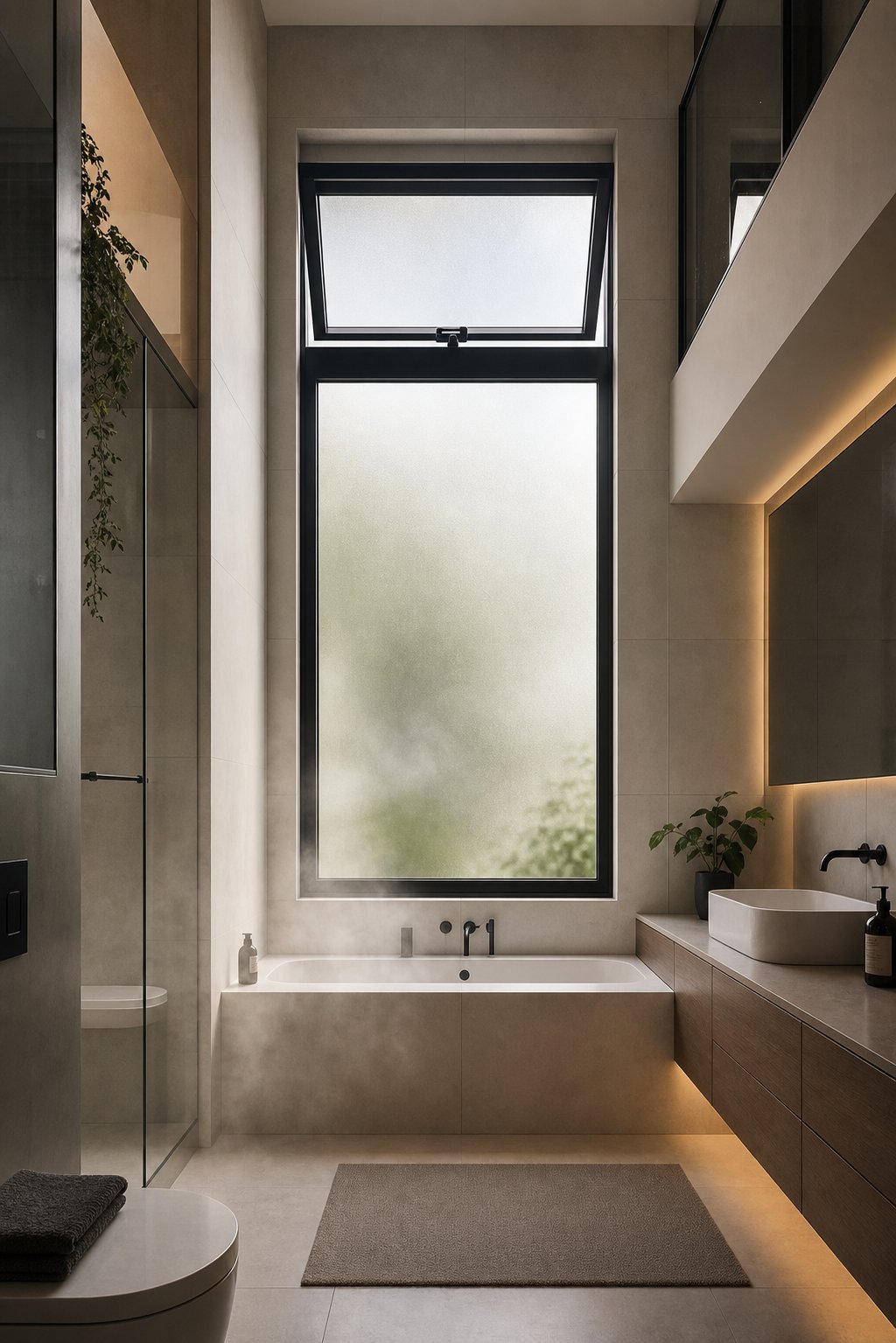
- Bathrooms and ensuites — the single most common application. Steam, splashing, and daily humidity make this environment punishing for timber and even uPVC over time. Aluminium resists corrosion without repainting or resealing, while full-obscure frosted glass delivers permanent privacy without any need for blinds or moisture-trapping curtains.
- Street-facing bedrooms — a medium-frost pane lets soft morning light through while keeping the room invisible to pedestrians and neighbours. No more waking in darkness because blackout curtains were the only privacy option.
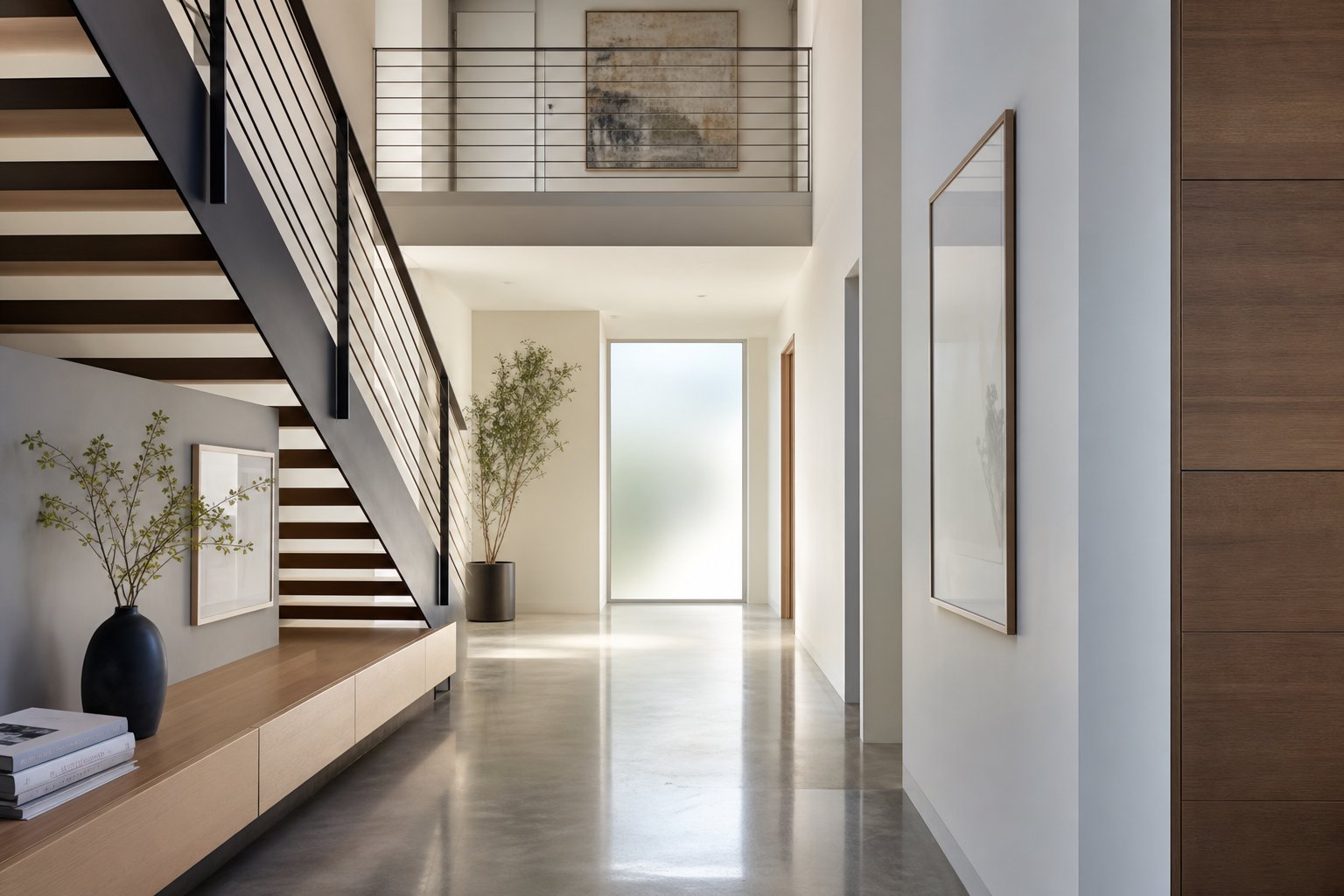
- Stairwells and hallways — these transitional spaces rarely need a view, but they desperately need light. A frosted fixed panel floods a landing with diffused daylight and eliminates the visual clutter of passing traffic, bins, or neighbouring walls.
- Home offices — frosted glass scatters direct sunlight, cutting screen glare without dimming the room. It also provides a clean, neutral backdrop for video calls rather than an open view of the street.
- Front door sidelights and transoms — an aluminium door window panel with frosted glass welcomes natural light into the entry while concealing the interior from delivery drivers, door-to-door sellers, and anyone standing on the porch.
- Commercial and medical settings — ground-floor consultation rooms, meeting spaces, and therapy offices all require visual screening without feeling enclosed. Frosted aluminium windows and doors satisfy these requirements while meeting durability demands of high-traffic commercial fit-outs.
Bathrooms and Wet Areas
Bathrooms top the list because the performance gap between aluminium and other frame materials is widest here. Daily steam cycles cause timber to swell and contract, eventually cracking paint and warping joints. uPVC handles moisture reasonably well, but its thicker profiles reduce glass area in compact openings — a real drawback in small ensuites where every lumen counts. Residential aluminium windows maintain their slim proportions and finish indefinitely in these conditions, and a grade-5 frosted pane means the window never needs a curtain or blind that would trap moisture against the wall.
Street-Facing Bedrooms and Living Spaces
In Australian suburban builds, bedrooms often sit within a few metres of the footpath or a neighbour’s fence line. Frosted aluminium solves the resulting privacy problem without sacrificing the morning light that makes waking up natural and pleasant. A grade-3 or grade-4 frost blocks facial recognition while still allowing enough brightness to light the room during the day. At night, interior silhouettes remain indistinct — something lighter grades cannot guarantee. For homes that pair an aluminium door with window sidelights on street-facing elevations, the same frost grade ties the facade together visually while keeping living spaces screened from view.
Commercial and Professional Settings
Medical practices, legal offices, and ground-floor meeting rooms share a common challenge: they need natural light for occupant wellbeing, but patient and client confidentiality demands visual privacy. Frosted aluminium framing handles the heavy-duty cleaning regimes of commercial premises far better than timber alternatives, and its slim sightlines give the building a professional, contemporary appearance. In healthcare settings specifically, privacy glazing supports patient comfort and regulatory compliance simultaneously — the frosted panel does the work of a curtain partition without creating infection-control concerns around fabric in clinical environments.
Each of these applications benefits from a specific window opening style. A bathroom might call for an awning or casement that vents steam while staying obscured, whereas a stairwell suits a fixed panel with no moving parts. Matching the frosted glass to the right operating mechanism is what turns a good specification into a complete privacy-and-ventilation solution.
Window Styles That Pair Best with Frosted Glass
Privacy without airflow creates a stuffy, uncomfortable room — and airflow without privacy defeats the purpose of frosted glass entirely. The operating style of your aluminium window determines how well you can balance both at the same time. Some configurations let you ventilate while keeping the frosted panel firmly in place. Others sacrifice partial coverage the moment they open. Choosing the right mechanism for each room is just as important as selecting the frost grade itself.
Double Hung Windows for Ventilation with Lower-Panel Privacy
A double hung aluminium window features two vertically sliding sashes within a single frame. The top sash drops down for ventilation while the bottom sash — the one at eye level — stays closed. Fit the lower sash with frosted glass and you get fresh air entering from above without exposing the room to anyone walking past at ground level.
This arrangement works particularly well in street-facing bedrooms and living rooms where the privacy concern exists at standing or sitting height. Warm air naturally rises and escapes through the upper opening, creating a passive ventilation loop that keeps the space comfortable without mechanical assistance. Many modern aluminium double hung windows also tilt inward for cleaning access, which means you never need to reach outside to maintain the frosted pane. For bathrooms positioned on an upper storey, a frosted double hung window allows steam to escape from the top while the obscured lower panel screens the space from neighbouring two-storey homes.
Casement and Tilt-and-Turn Options
Casement windows are hinged on one side and swing outward, opening the full aperture to incoming breezes. When closed, the frosted glass provides uninterrupted privacy across the entire pane. The moment you crank it open, however, the angled glass creates a partial gap — privacy drops slightly at extreme viewing angles, though the frosted surface still prevents clear sightlines for anyone not standing directly alongside the frame.
Tilt-and-turn windows offer a more nuanced solution. In tilt mode, the sash hinges inward from the top edge, creating a narrow opening at the top of the frame. Airflow enters without exposing any clear line of sight into the room, and the frosted glass remains almost entirely in its closed position. Turn mode swings the full sash inward like a door — useful for cleaning or emergency egress but not intended for privacy ventilation. For bathrooms and ground-floor rooms where the window faces a footpath or shared courtyard, tilt mode delivers the best of both worlds: consistent airflow with the frosted panel doing its job uninterrupted.
Combining Fixed Frosted Panels with Operable Windows
Not every pane in a window configuration needs to open. An aluminium fixed window — a sealed, non-operable panel — maximises the frosted glass area because it requires no hardware, tracks, or hinge mechanisms that eat into the glazed surface. The trade-off is zero ventilation from that panel.
The practical solution is a multi-light configuration: a large frosted fixed panel flanked by narrower operable sashes. The fixed centre provides the bulk of privacy coverage and light diffusion, while the side panels — which can be casement, awning, or sliding — handle airflow. Some homeowners opt for clear glass in the operable sections if they sit high enough to avoid privacy concerns, combining an unobstructed view at the top with full obscurity at eye level. This approach is common in living rooms and front-facing facades where you want architectural interest alongside functional screening.
Sliding windows deserve a mention as well. They operate on a horizontal track, with one panel gliding behind the other. When partially open, roughly half the frosted surface remains in place — enough for moderate privacy but less effective than a tilt-and-turn or double hung arrangement where the frosted pane itself stays stationary.
Comparing Window Styles for Privacy and Ventilation
| Opening Style | Ventilation Level | Privacy When Open | Privacy When Closed | Best Room Fit |
|---|---|---|---|---|
| Double Hung | Moderate (top sash only) | High — lower frosted panel stays shut | Full | Bedrooms, street-facing living areas |
| Casement | High — full aperture opens | Moderate — angled glass partially screens | Full | Kitchens, upper-storey bathrooms |
| Tilt-and-Turn | Moderate (tilt) / High (turn) | High in tilt mode | Full | Ground-floor bathrooms, offices |
| Sliding | Moderate — half panel open | Moderate — exposed gap at open side | Full | Hallways, laundries, compact spaces |
| Fixed | None | Full (no opening) | Full | Stairwells, transoms, paired with operable companions |
The right pairing depends on whether airflow or privacy takes priority in each specific room. In most cases, a combination of frosted fixed panels and a well-placed operable sash delivers both — without asking homeowners to compromise on either. What ties the whole assembly together visually is the frame itself: its colour, profile thickness, and finish determine whether the frosted glass reads as a design feature or an afterthought.
Frame Colours and Finishes That Complement Frosted Glass
A frosted pane is only half the visual equation. The aluminium frame surrounding it sets the tone — whether bold and contemporary or quiet and minimal. Colour, finish texture, and profile width all influence how the frosted glass reads within a facade or interior wall, and getting this combination right turns a functional privacy window into a genuine design element.
Popular Frame Colours for Frosted Glass Windows
Powder coating gives aluminium frame windows an almost unlimited palette, but certain colours have become go-to choices for frosted glazing because of how they interact with the diffused, milky surface of the glass:
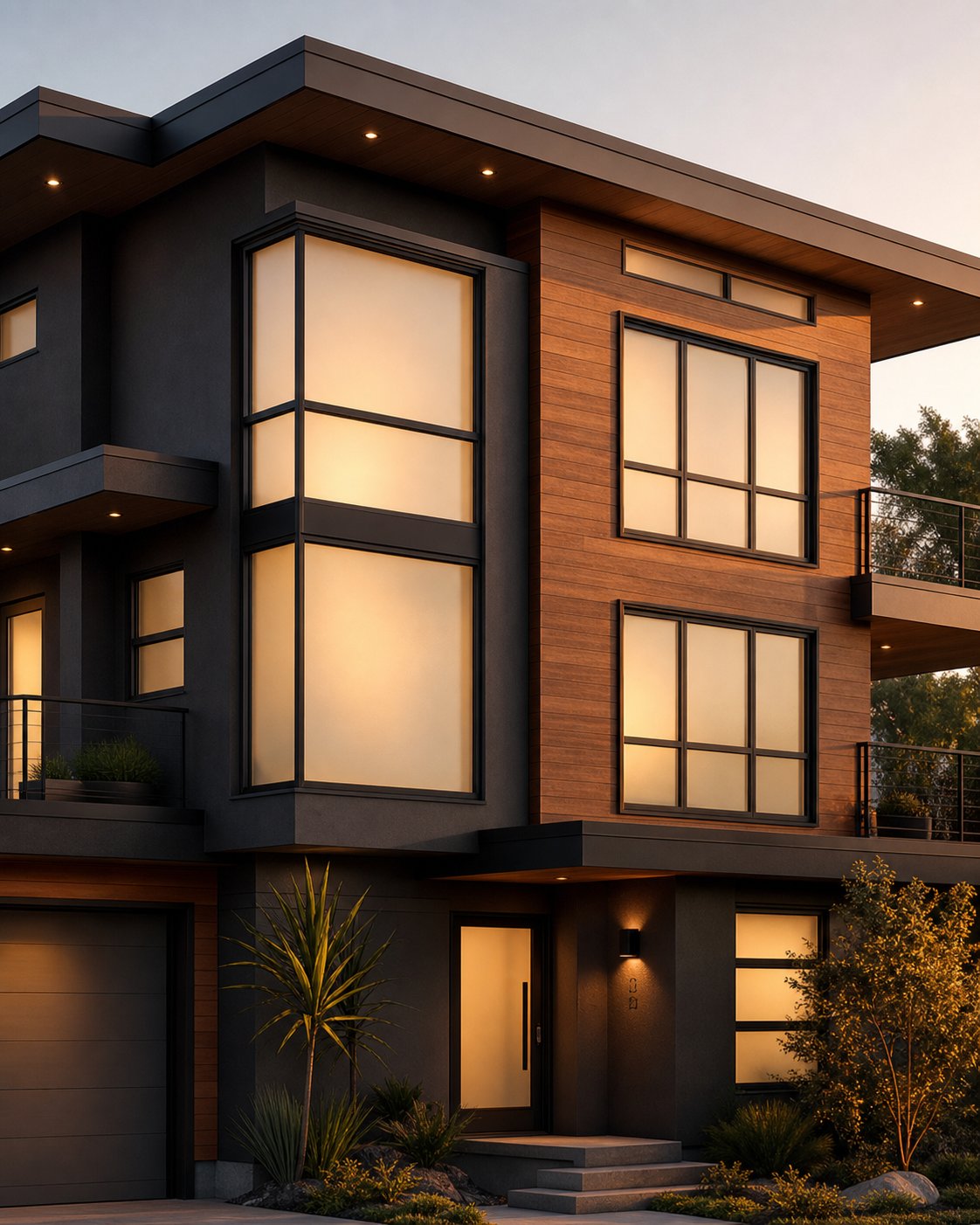
- Matte black — Creates a strong visual border that frames the frosted panel like a piece of art. The high contrast between dark aluminium and pale, glowing glass suits contemporary builds, industrial loft conversions, and monochromatic interior schemes. Black aluminium windows with frosted panes are especially popular in street-facing bathrooms where the window doubles as a facade feature.
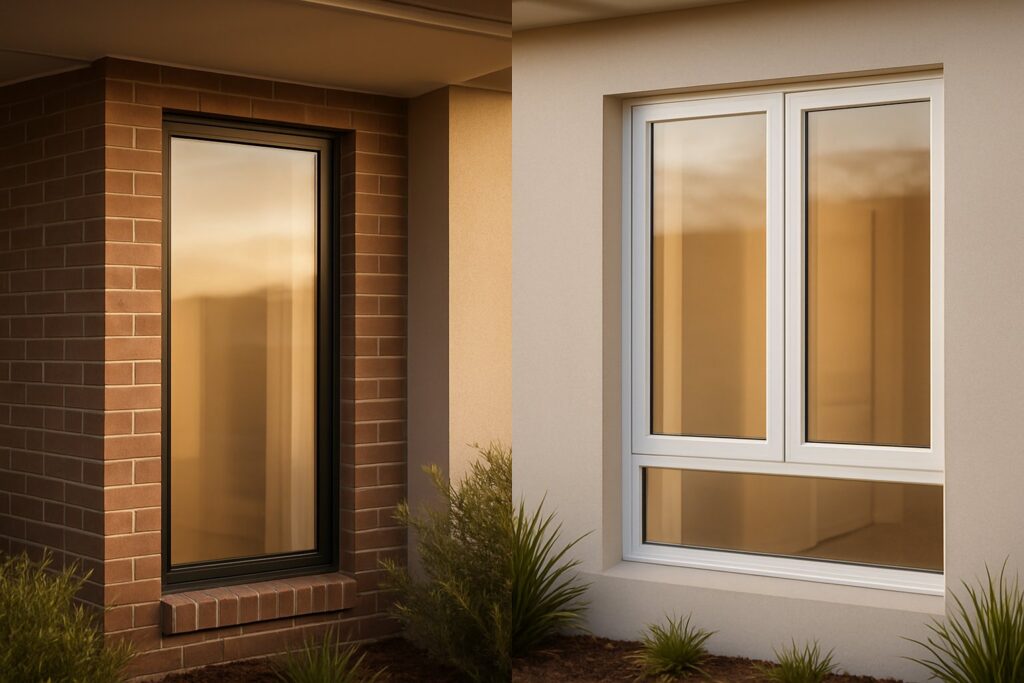
- Bronze and charcoal — Warmer than black, these tones complement mid-century aesthetics, timber cladding, and brick veneer homes common across Australian suburbs. A bronze aluminum window paired with a medium-frost grade delivers a softer, less stark contrast that blends with earthy exterior palettes. Charcoal sits between black and bronze, offering depth without heaviness.
- White — The classic choice for a clean, minimal look. White frames visually recede, making the window appear larger and allowing the frosted glass to dominate. This suits Hamptons-style homes, coastal builds, and compact rooms where you want light to feel expansive rather than contained.
- Natural anodised aluminium — The raw, silvery metallic finish works well in industrial and warehouse-conversion settings. Anodising creates a durable oxide layer (typically 15 to 25 microns thick) that resists corrosion and abrasion while preserving the honest material character of the metal. It pairs naturally with heavier frost grades where both frame and glass share a muted, understated quality.
Powder coating itself is what makes this range possible. An electrostatically applied dry powder is cured at high temperature to form a tough, UV-resistant film — typically 60 to 80 microns thick — that resists chipping, fading, and salt-air corrosion. For Australian coastal homes, a coating certified to higher durability standards provides long-term colour retention without repainting, which is something anodising also achieves through its integral oxide layer rather than an applied film.
How Slim Profiles Maximise Frosted Glass Area
The ratio of glass to frame determines how much diffused light actually enters the room. Aluminium’s mechanical strength allows manufacturers to produce profiles as narrow as 45 mm while still supporting large, heavy double-glazed panels. Compare that to uPVC frames, which often require 70 mm or more of visible profile to achieve equivalent structural ratings. Those extra millimetres of frame translate directly into less frosted glass area — and less light.
Slimmer aluminum framed windows give the frosted pane room to do its job. Light scatters across a broader uninterrupted surface, producing a more even ambient glow inside and a cleaner appearance from the street. For multi-light configurations discussed earlier — a fixed frosted centre with operable side panels — slim profiles also reduce the visual weight of mullions and transoms, maintaining the sense of a single luminous plane rather than a grid of small frosted rectangles.
Matching Frost Levels to Frame Finishes
Dark frames and light frost create the sharpest contrast. The pale, satin glass appears to glow against a matte black or charcoal border, drawing the eye and making the window a focal point. This combination suits feature walls and statement facades where you want the privacy glazing to feel intentional and architectural.
Light frames and heavy frost produce the opposite effect — the boundary between frame and glass softens, and the window blends quietly into the wall. White or light grey aluminium framed windows with a grade-4 or grade-5 obscure pane almost disappear into pale-rendered walls, which is ideal for bathrooms and secondary rooms where the window should function without demanding attention.
Suppliers like MEICHEN offer extensive powder-coat colour ranges alongside custom aluminium profiles, giving homeowners and architects the flexibility to match specific frost levels with bespoke frame finishes — whether that means a slim-profile bronze aluminum windows configuration for a heritage renovation or a bold matte-black frame paired with a light satin pane for a new contemporary build. Exploring their aluminium windows page is a practical starting point for seeing how frame customisation and window type options come together.
Colour and profile choices shape the visual identity of your frosted aluminium windows, but aesthetics alone do not determine whether a window can be legally installed. Building codes, safety glass requirements, and performance certifications all govern what is permissible — and what a homeowner or builder must verify before signing off on a purchase.
Building Standards and Certifications for Frosted Aluminium Windows
A beautifully finished frame and the perfect frost grade mean nothing if the window cannot be legally installed. Australian building regulations set strict requirements for how aluminium doors windows systems perform under wind, rain, and human impact — and frosted glass introduces additional considerations around safety glazing and visibility that clear panes do not. Understanding these standards before you order saves costly replacements and failed inspections down the track.
Australian Standards for Windows and Glazing
Two primary Australian Standards govern every external aluminium window and door installation in the country:
- AS 2047 (Windows and External Glazed Doors in Buildings) — The mandatory performance certification for all external windows and glazed doors. It tests the complete assembled system — frame, glass, seals, and hardware together — for wind pressure resistance, water penetration, air infiltration, and operating force. Without AS 2047 compliance, no window system can legally be installed in a residential or commercial project in Australia. This applies equally whether the glass is clear or frosted.
- AS 1288 (Glass in Buildings — Selection and Installation) — Governs how glass is selected, sized, and fitted based on wind load, height, and exposure. It specifies minimum thickness, edge support requirements, and the type of glass — toughened, laminated, or annealed — appropriate for each location. AS 1288 is particularly relevant to frosted installations because frosting processes (especially sandblasting) can affect the structural characteristics of thin glass.
A third standard, AS 4284 (Testing of Building Facades), applies to curtain wall and facade systems in high-rise and commercial buildings. It evaluates entire wall assemblies — not just individual window units — under simulated dynamic wind and rain conditions. For most residential frosted aluminium window installations, AS 2047 and AS 1288 are the relevant benchmarks. Together, they ensure the window performs structurally and that the glass is safe for its intended position.
Fire Egress and Safety Glass Requirements
Certain rooms in a home must have a window capable of serving as an emergency exit. Under the National Construction Code (NCC), bedrooms in single-storey dwellings without a compliant smoke alarm and exit path may require an openable window with a minimum clear opening large enough for a person to escape through. This can restrict both the window style and glass thickness you specify — a heavy frosted fixed panel, for instance, cannot serve as an egress point regardless of its privacy performance.
Safety glass rules are where frosted aluminium windows and door installations face the most scrutiny. The NCC Housing Provisions (Part 8.4) require Grade A safety glazing — either toughened or laminated — in any area with high potential for human impact. For frosted glass specifically, this means:
- Bathrooms, ensuites, and spa rooms — All glazing where the lowest sight line is less than 2.0 metres above the finished floor must be Grade A safety glass. Frosted panes in bathroom aluminium windows and door assemblies are no exception.
- Low-level panels — Any glazed panel on the perimeter of a room where the lowest sight line sits below 500 mm from floor level requires either Grade A safety glazing or monolithic annealed glass of at least 5 mm nominal thickness (limited to 1.2 m² maximum area).
- Door sidelights — Frosted panels within 300 mm of a door opening must use Grade A safety glass in accordance with AS 1288 maximum area tables.
- Full-height panels — Frosted glass that could be mistaken for an unobstructed opening needs Grade A safety glazing unless identified by permanent motifs, etching, or opaque patterning — something frosted finishes can inherently satisfy if the opacity is sufficient.
Frosted glass actually helps address one NCC requirement: visibility marking. The code mandates that large clear panels be marked to prevent people from walking into them. Frosted or patterned glass is inherently visible, which can eliminate the need for additional opaque bands or decals in certain configurations.
Certifications Buyers Should Verify Before Purchase
Beyond the core AS 2047 and AS 1288 compliance, several additional certifications affect whether a frosted aluminium window is fit for purpose in your specific location and application:
- WERS (Window Energy Rating Scheme) — Rates the thermal performance of the complete window system on a star scale, covering heating and cooling. Frosted double-glazed units should carry a WERS rating if energy efficiency claims are made.
- NatHERS compliance contribution — For new builds targeting minimum energy star ratings, the window’s U-value, solar heat gain coefficient (SHGC), and air infiltration rate all feed into the NatHERS assessment. Confirm these figures are available from the supplier.
- Acoustic rating (Rw) — Measured in weighted sound reduction index. Relevant for homes near busy roads, flight paths, or railway corridors. Double-glazed frosted units with asymmetric glass thicknesses perform better acoustically than matched-thickness panes.
- Water penetration resistance — Tested as part of AS 2047 certification, with rated pressure levels. Coastal and exposed sites require higher ratings than sheltered suburban locations.
- BAL (Bushfire Attack Level) rating — For properties in designated bushfire-prone areas, aluminum alloy doors and windows must meet specific BAL ratings (from BAL-LOW through BAL-FZL). Higher ratings mandate particular glazing types, frame materials, and seal configurations to resist radiant heat and ember attack. Aluminium frames inherently perform well here because they do not combust, but the complete system — including seals and glazing — must be tested as a unit.
- Cyclone compliance — In northern Queensland, the Northern Territory, and parts of Western Australia, windows must resist extreme wind pressures and impact from wind-borne debris. The relevant testing falls under AS 2047 but at significantly higher pressure ratings than standard suburban installations require.
Heritage overlay zones in cities like Melbourne, Sydney, and Adelaide add another layer. Council planning departments may restrict window styles, frame colours, or glass types on street-facing elevations to preserve neighbourhood character. A frosted pane might be acceptable where curtains were historically used, but a modern slim-profile aluminium frame could require a development application (DA) if it replaces original timber in a heritage-listed property. Always check with your local council before committing to a specification in these areas.
Verifying these certifications upfront protects you from failed inspections and ensures the frosted aluminium windows you install will perform safely for their full service life. That service life — and the total cost of ownership across it — is what separates a smart long-term investment from a short-sighted purchase based on upfront price alone.
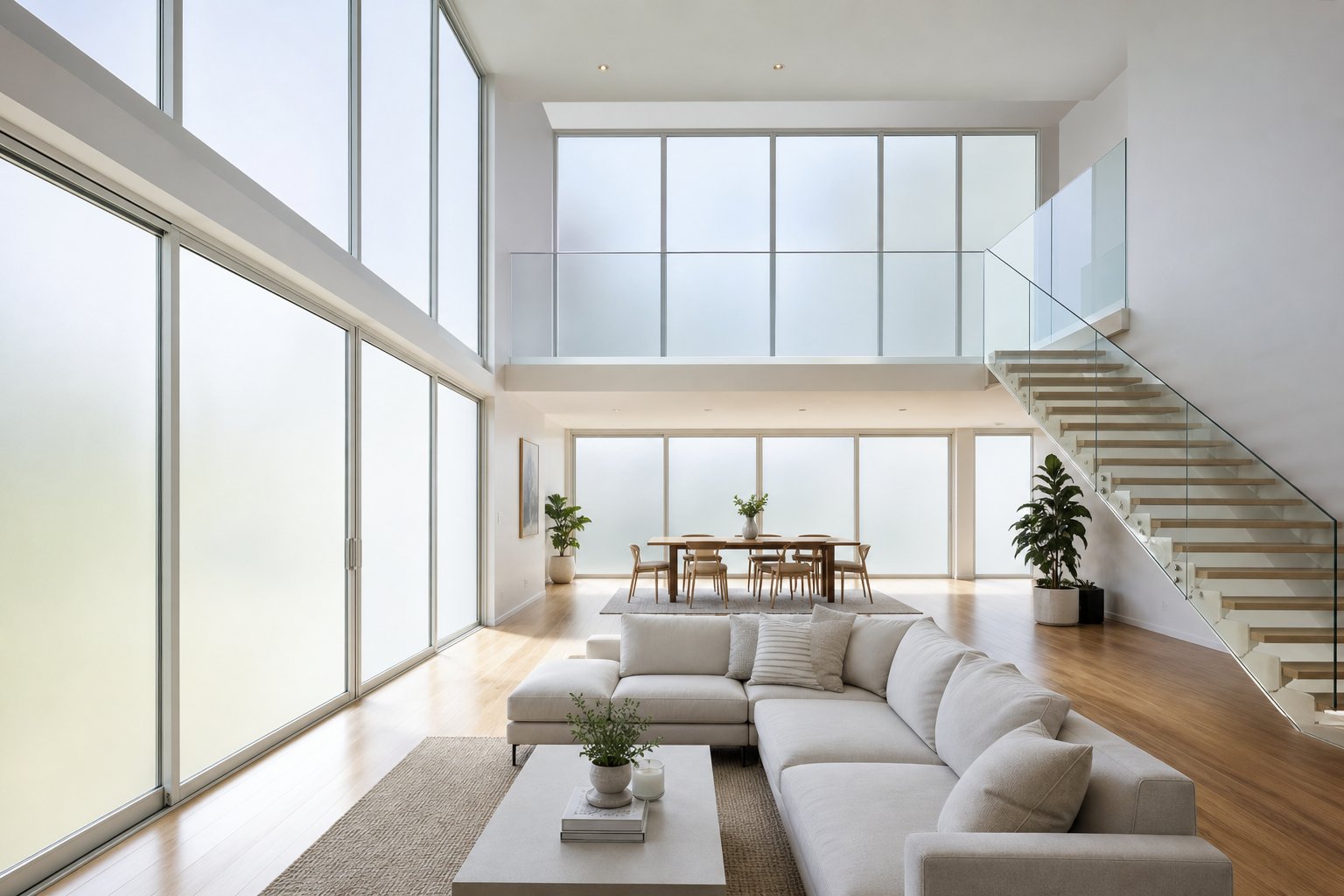
Long-Term Value Compared to Blinds and Curtains
Sticker price is the number most people fixate on. A set of roller blinds runs a fraction of what a new frosted aluminium window costs — so on paper, the blinds win. But windows are not a five-year purchase. They sit in a wall for decades, and everything else you might hang in front of them will cycle through multiple replacements within that same timeframe. The real cost of aluminium windows becomes clear only when you zoom out to the full ownership period.
Upfront Cost Versus Lifetime Savings
A standard frosted double-glazed aluminium window in Australia typically falls between $600 and $1,200 AUD per opening (supply and install, standard size), depending on frost grade, glass thickness, and frame profile. That aluminium windows price sits well above a $150–$400 set of quality roller blinds or $200–$500 worth of custom curtains for the same opening. Privacy film is cheaper still — often under $80 per window as a DIY retrofit.
Stretch the timeline to 30 years, though, and the equation inverts. Curtain fabric degrades from UV exposure and dust accumulation, requiring replacement every 5 to 8 years. Roller blinds suffer mechanism failure, chain breakage, and slat warping — particularly in humid rooms — with a practical lifespan of 5 to 10 years. Privacy film peels in 3 to 7 years. A frosted aluminium window, by contrast, lasts 35 to 50 years without any structural decline. No warping, no rotting, no repainting.
| Privacy Solution | Upfront Cost (per opening) | Lifespan | Maintenance Frequency | Privacy Consistency | Light Transmission |
|---|---|---|---|---|---|
| Frosted Aluminium Windows | $600–$1,200 AUD | 35–50 years | Monthly glass wipe | 24/7 — no adjustment needed | High (diffused) |
| Curtains | $200–$500 AUD | 5–8 years | Washing every 3–6 months; professional cleaning annually | Only when fully drawn | None when closed; full when open |
| Roller Blinds | $150–$400 AUD | 5–10 years | Dusting weekly; mechanism service as needed | Only when fully lowered | Minimal when closed; full when raised |
| Privacy Film | $40–$80 AUD | 3–7 years | Gentle cleaning; edge re-adhesion | Constant while intact | Moderate (diffused) |
Over 30 years, a single opening fitted with roller blinds could consume $600 to $1,600 in replacements alone — not counting the hours spent shopping, measuring, and installing each new set. The cost of aluminium windows absorbs itself within the first 12 to 15 years simply by eliminating those recurring expenses.
Maintenance and Cleaning Compared to Blinds and Curtains
Frosted glass does show fingerprints and water spots differently than clear panes — the textured surface catches marks that a smooth pane would let slide off. But the cleaning routine is no more demanding than wiping with mild soap and water or standard glass cleaner, rubbing in circular motions. No special products, no dismounting from brackets, no trips to the dry cleaner. Once a month is enough for most rooms; weekly for shower-adjacent panels where hard water builds up faster.
Compare that to curtains collecting dust, pet hair, and cooking odours between washes, or blind slats trapping grime in every crevice. In a bathroom — the single most popular location for frosted glass — fabric curtains develop mould within months, while aluminium window replacement becomes unnecessary for decades because the frame material does not react to humidity or steam.
Choosing a Supplier for Long-Term Value
Buying on upfront aluminium window price alone invites trouble. The cheapest aluminium windows for sale may lack proper thermal breaks, carry minimal warranty coverage, or use lower-grade powder coating that chalks in coastal air within a few years. Long-term value comes from specifying a system tested to AS 2047 with quality frosted glass sealed into a proper insulating unit — then verifying the supplier stands behind it.
For homeowners and project teams ready to move from research into product selection, MEICHEN’s aluminium windows page provides a practical next step — covering available window systems, performance specifications, and custom glazing options suited to Australian residential and commercial applications. Reviewing their range gives you a clear picture of what aluminium window replacement or new-build integration looks like when quality, customisation, and certified performance converge in one supplier.
Frequently Asked Questions About Frosted Aluminium Windows
1. What is the difference between acid-etched and sandblasted frosted glass for aluminium windows?
Acid-etched glass uses a chemical process to create a smooth, permanent satin finish that resists fingerprints and cleans easily — ideal for sealed double-glazed units. Sandblasted glass uses abrasive particles to produce a grainier texture that allows selective patterning and decorative motifs. Both are permanent treatments sealed within the glass itself, but acid-etching costs more due to chemical handling requirements, while sandblasting offers greater design flexibility at a lower price point. For Australian bathrooms and wet areas, acid-etching is generally preferred because its smoother surface repels water spots more effectively.
2. Do frosted aluminium windows block UV rays?
Frosted glass alone does not block ultraviolet radiation. The frosting process scatters visible light to create privacy, but UV wavelengths pass through just as readily as they do through clear glass. To protect furniture, timber floors, and artwork from UV fading, you need either a low-emissivity (low-E) coating applied to the glass surface or a sealed double-glazed unit with an insulating air gap. Pairing frosted glass with low-E coatings in an aluminium double-glazed configuration provides both privacy and UV protection in a single window system.
3. How much do frosted aluminium windows cost in Australia?
A standard frosted double-glazed aluminium window in Australia typically costs between $600 and $1,200 AUD per opening (supply and install, standard size), depending on frost grade, glass thickness, and frame profile. While this exceeds the upfront cost of roller blinds ($150–$400) or curtains ($200–$500), frosted aluminium windows last 35 to 50 years without replacement. Over a 30-year period, the recurring cost of replacing blinds or curtains multiple times often exceeds the one-time investment in frosted glazing. Suppliers like MEICHEN offer various aluminium window systems with custom glazing options to suit different budgets.
4. What privacy grade of frosted glass should I choose for a bathroom?
Grade 5 (full obscure) is the standard recommendation for bathrooms and ensuites. This level blocks all visual detail in both directions, maintaining complete privacy around the clock — even at night when interior lights are on. Lower grades (3 or 4) allow some shadow or silhouette detection, which may be acceptable for upper-storey bathrooms but creates a vulnerability at ground level. In Australian homes where bathroom windows often face neighbouring properties or footpaths at close range, grade 5 paired with a corrosion-resistant aluminium frame provides a permanent, maintenance-free privacy solution.
5. Can frosted aluminium windows meet Australian building standards and bushfire ratings?
Yes, frosted aluminium windows can fully comply with Australian building regulations. They must meet AS 2047 (window performance testing) and AS 1288 (glass selection and installation) like any external window. In bathrooms and low-level installations, the frosted glass must be Grade A safety glass (toughened or laminated) under NCC Housing Provisions Part 8.4. For bushfire-prone areas, aluminium frames perform well because they do not combust, but the complete system — including seals, glazing type, and hardware — must achieve the required BAL rating. Always verify AS 2047 certification, WERS energy rating, and any applicable BAL or cyclone compliance before purchasing.
More Window & Door Guides