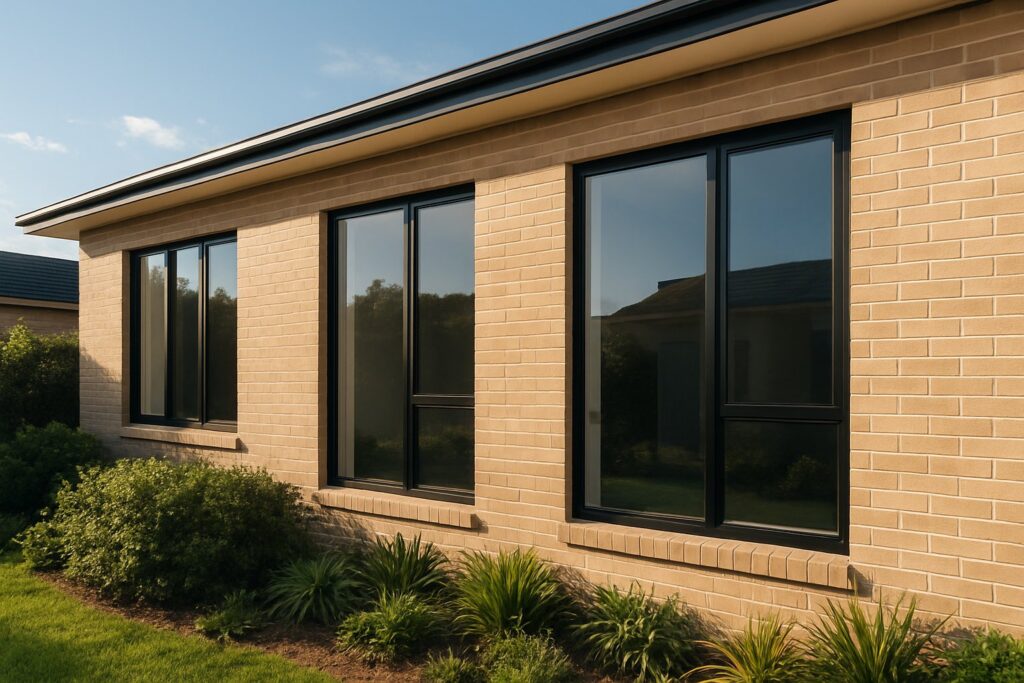
Understanding Aluminium Windows and Why They Spark Debate
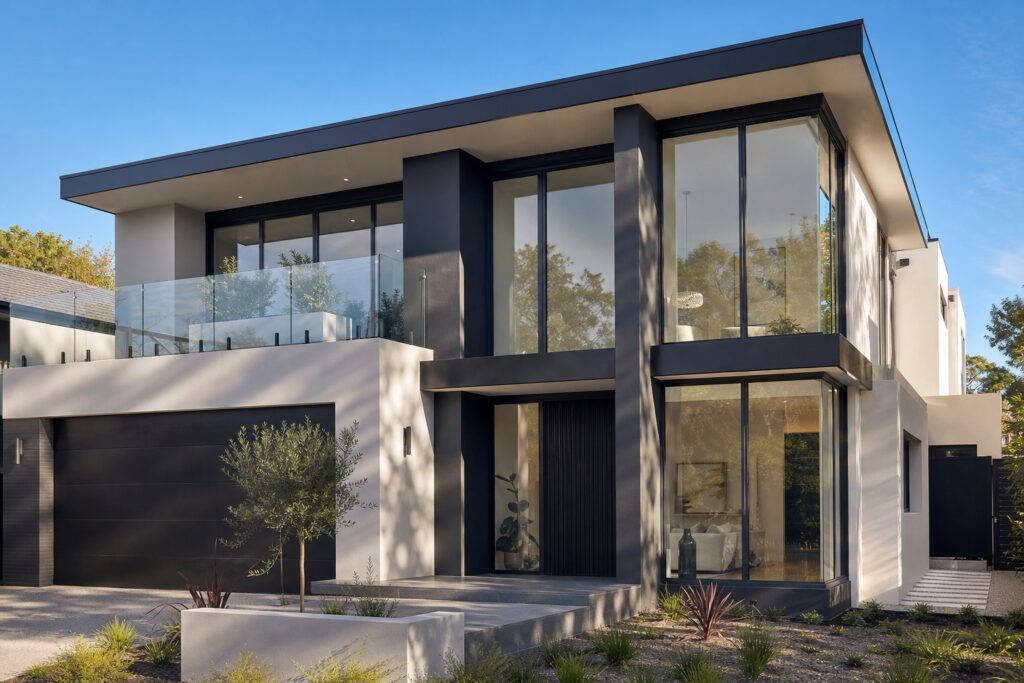
Aluminium windows have long been the default choice for commercial buildings across Australia. Office towers, shopping centres, schools — look closely at almost any large-scale project and you will find aluminium framing the glass. The reason is straightforward: no other material combines structural strength, corrosion resistance, and design flexibility quite the same way.
What has shifted in recent years is the residential story. Homeowners and builders are increasingly choosing aluminium window systems for houses, apartments, and renovations. Yet the material still carries baggage from decades past, when early frames conducted heat freely and left condensation streaming down interior surfaces on cold mornings. That reputation was earned — but it belongs to an older generation of products. Modern thermally broken aluminium frames bear little resemblance to those basic extrusions from the 1970s and 80s.
This guide weighs the aluminium windows pros and cons honestly, giving you a practical framework rather than a surface-level list.
What Makes Aluminium Windows Different
At its core, an aluminium window frame is lightweight yet remarkably strong. The strength-to-weight ratio of aluminium allows manufacturers to create slimmer profiles than uPVC or timber, meaning more glass and less frame in every opening. That translates directly to more natural light and wider views. Alu windows can also span larger openings without bowing, sagging, or warping over time — a property that makes them essential for bi-fold doors and floor-to-ceiling glazing.
Durability is built into the material itself. Aluminium resists rust, rot, and UV degradation, and a quality powder-coated finish eliminates any need for repainting across decades of service.
Why the Debate Still Exists
So are aluminum windows good for Australian homes? The honest answer depends on specification, climate, and budget. Outdated perceptions linger because plenty of older homes still have uninsulated aluminium frames that perform poorly. People remember those frames and assume the material itself is the problem, rather than the absence of thermal break technology.
This article treats the question as it stands today — with current engineering, current pricing, and current performance data.
Aluminium is the most recycled building material in the world. According to industry data, around 75% of all aluminium ever produced is still in use today — endlessly recyclable without any loss in quality.
That sustainability credential shapes the broader conversation. But before drawing conclusions, the material deserves a closer look at what it actually delivers in practice — starting with the advantages that matter most to Australian projects.
The Real Advantages of Aluminium Window Frames
The advantages of aluminium windows go well beyond a simple bullet-point list. Each benefit connects to a tangible outcome — lower bills, less weekend maintenance, or a brighter living space. Here is what the material actually delivers when specified correctly for Australian conditions.
Strength and Slim Frame Design
Aluminium’s defining trait is its strength-to-weight ratio. Because the metal is structurally dense, manufacturers can engineer aluminium window frames with profiles as narrow as 45–55 mm while still supporting heavy double- or triple-glazed units. Compare that to uPVC, which typically requires 70–80 mm profiles reinforced with internal steel to achieve similar structural integrity.
The practical result? A higher glass-to-frame ratio in every opening. Less frame means more uninterrupted glass, which floods rooms with natural light and gives you cleaner views of the garden, streetscape, or coastline outside. For anyone designing large openings — think bi-fold doors spanning 5 or 6 metres, or floor-to-ceiling fixed panels — an aluminium window frame is often the only realistic choice. The material holds its shape under the weight of oversized panes without bowing, sagging, or warping over time.
- Slimmer sightlines compared to uPVC and timber — more glass, less frame
- Supports larger and heavier glazed units without structural compromise
- Maintains dimensional stability regardless of temperature swings
- Enables expansive configurations like bi-fold, sliding, and corner-opening systems
Longevity and Low Maintenance
Durable aluminium windows earn their reputation through decades of real-world performance. The material does not rust, rot, swell, crack, or degrade under UV exposure. A quality powder-coated finish — baked onto the surface during manufacturing — resists fading, peeling, and blistering for 30 years or more. You will never need to sand, prime, or repaint an aluminium frame the way you would with timber.
For high-quality aluminium systems, expected lifespans sit comfortably in the 40–60 year range with nothing more than an occasional wipe-down using warm soapy water. That makes them particularly well-suited to hard-to-reach upper-storey windows or coastal properties where salt air accelerates the deterioration of organic materials.
- No repainting, staining, or oiling required — ever
- Resistant to rust, rot, warping, and insect damage
- Powder-coated finish withstands harsh Australian UV without fading
- Typical lifespan of 40–60 years with minimal upkeep
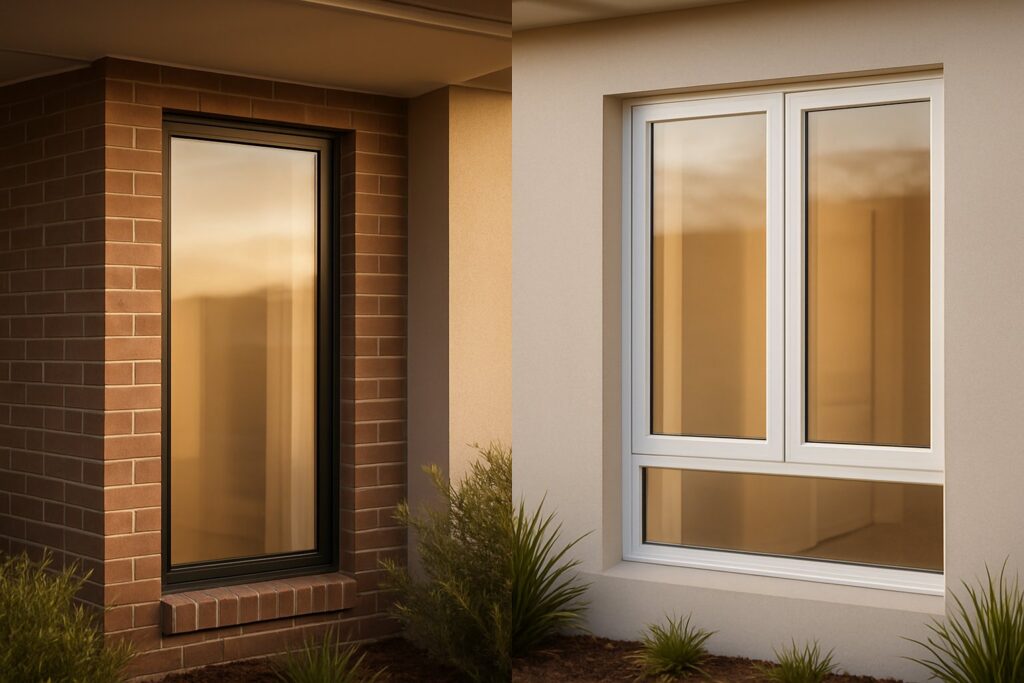
Colour versatility is another aluminium advantage worth noting. Powder coating opens up the full RAL colour range — hundreds of shades from bold charcoal to a classic white aluminium window finish — plus textured, matte, and woodgrain-effect options. You can even specify dual-colour frames with one shade facing the street and another complementing your interior palette.
Recyclability and Sustainability
For environmentally conscious builds, few materials match aluminium’s circular credentials. The metal is 100% recyclable without any degradation in quality — meaning frames removed at end of life can be melted down and reformed into new profiles with identical structural properties. Recycling aluminium also requires only around 5% of the energy used in primary production, making it a genuinely low-impact material over its full lifecycle.
- Infinitely recyclable with zero loss of strength or quality
- Recycling uses just 5% of original production energy
- Long service life delays replacement cycles, reducing resource consumption
- Supports green building certifications and sustainability targets
Taken together, these aluminium advantages — structural performance, near-zero maintenance, design flexibility, and genuine sustainability — explain why the material keeps gaining ground in residential projects across Australia. The benefits of aluminium windows are clearest when you think in decades rather than months.
Still, raw material strength only tells half the story. The feature that truly transformed aluminium’s energy credentials is a hidden engineering detail built into the frame itself — one that most homeowners have never seen explained properly.
Thermal Break Technology That Changes Everything
Aluminium conducts heat around 1,000 times more effectively than polyamide plastic. That property makes it brilliant for cookware but problematic for window frames, where the goal is to keep interior warmth inside and exterior cold outside. For decades, this conductivity was aluminium’s greatest weakness. Thermal break technology eliminated it.
How Thermal Breaks Work
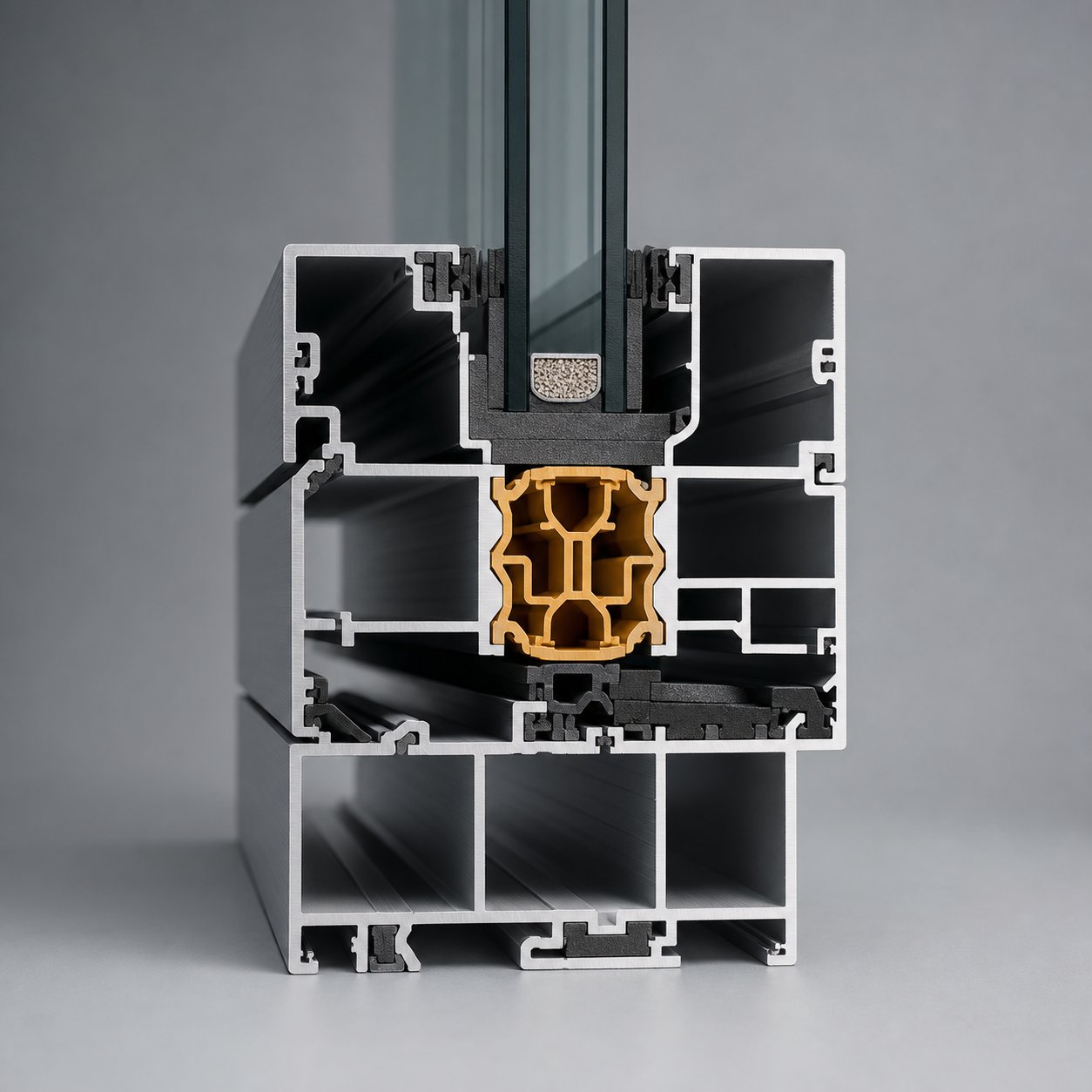
A thermal break is a continuous strip of insulating material — typically glass-fibre-reinforced polyamide — mechanically crimped between the interior and exterior sections of an aluminium windows profile. Picture the frame split into two halves: one facing the weather outside, the other facing your living room. The polyamide barrier physically separates them, creating a non-conductive bridge that interrupts the path heat would otherwise travel through solid metal.
In premium aluminium window profiles, this concept goes further. Multi-chamber designs incorporate several insulating cavities within the frame, extending the thermal pathway and trapping pockets of still air. Some systems add foam inserts or use wider polyamide strips — ranging from around 15 mm in standard profiles up to 35 mm in high-performance systems — to push insulation values even higher. The aluminium window frame material itself remains strong and rigid on both sides, but the energy flowing between those sides drops dramatically.
Crucially, none of this compromises structural integrity. Specialised crimping techniques bond the polyamide to each aluminium section while accommodating different thermal expansion rates, so the frame remains dimensionally stable across Australian temperature swings.
Impact on Energy Performance and Condensation
The numbers tell the story clearly. A standard aluminium frame without a thermal break typically produces U-values around 5.8–7.0 W/m²K — meaning heat passes through it rapidly. Add a quality thermal break and that figure drops to roughly 2.5–3.5 W/m²K. Premium thermally broken systems push below 1.5 W/m²K, with the best achieving around 1.1 W/m²K — competitive with, and in some cases outperforming, equivalent uPVC frames.
Energy efficient aluminium windows also solve the condensation problem that plagued older installations. Condensation forms on aluminium when the interior frame surface drops below dew point — the temperature at which moisture in warm indoor air turns to liquid. Without a thermal break, cold from outside conducts straight through the metal, chilling the inner surface enough to trigger water droplets on frosty mornings. A thermally broken aluminium window profile keeps the inner section significantly warmer because it is physically disconnected from the cold outer section. The result is a frame that stays above dew point even during winter, dramatically reducing moisture build-up, mould risk, and the frustration of wiping down wet sills.
For Australian homes pursuing NatHERS ratings or WERS-compliant glazing, thermally broken aluminium now sits comfortably within the performance envelope that was once exclusive to uPVC. The efficiency gap has closed — but not every limitation has disappeared entirely.
Genuine Disadvantages and Limitations to Consider
A fair assessment of the pros and cons of aluminum frame systems means confronting the weak points head-on. Some disadvantages of aluminium are inherent to the material; others are really problems of specification or budget cutting. Knowing the difference helps you avoid costly surprises.
Higher Upfront Cost Compared to uPVC
Aluminium frames carry a price premium over uPVC — typically in the range of 20–40% more for a comparable window size and configuration. The gap stems from higher raw material costs and more complex manufacturing processes, particularly for thermally broken systems. That said, the margin has narrowed in recent years as production volumes have grown and uPVC pricing has risen alongside petroleum-based material costs.
The lifecycle picture looks different. Because aluminium lasts 40–60 years without repainting, seal degradation, or structural failure, the per-year cost often works out lower than uPVC systems that may need replacement after 20–25 years. Still, the upfront outlay matters when budgets are tight.
- Expect to pay 20–40% more than equivalent uPVC windows at the point of purchase
- Thermally broken systems cost more again than basic aluminium frames
- Lifecycle cost favours aluminium over 30+ year ownership periods
Condensation Risk Without Thermal Breaks
Budget aluminium windows sold without thermal breaks remain a real problem — particularly in cooler climates like Melbourne, Hobart, and highland regions. As covered earlier, metal conducts heat rapidly. Without that insulating polyamide barrier, the interior frame surface chills below dew point on cold mornings, producing condensation that can lead to mould growth, water damage to sills, and an uncomfortable living environment.
This is not a flaw in the material itself; it is a flaw in specification. But it persists in the market because cheaper products omit thermal breaks to hit lower price points. If you are comparing windows pros cons across brands, always confirm whether a thermal break is included — especially for bedrooms, bathrooms, and south-facing openings.
Potential for Galvanic Corrosion
Aluminium naturally forms a protective oxide layer that resists corrosion impressively well. The vulnerability arises when dissimilar metals come into direct contact in the presence of moisture — a process called galvanic corrosion. In coastal environments classified C4 or C5 under AS/NZS 2312, this risk intensifies. Steel fixings touching aluminium frames, or copper flashings draining onto aluminium surfaces, can accelerate localised degradation over time.
- Use 316-grade stainless steel fixings as a minimum in coastal areas
- Isolate dissimilar metals with neoprene washers or insulating bushes
- Specify marine-grade powder coating (80+ microns) for properties within 1–3 km of the coastline
Proper installation practice eliminates this issue entirely, but it requires awareness from both the specifier and the installer. It is not a reason to avoid aluminium near the coast — it is a reason to specify correctly.
What About Noise?
One common misconception deserves a brief correction. Aluminium is sometimes accused of being worse for sound insulation than uPVC. In practice, acoustic performance depends almost entirely on glazing thickness, air gaps between panes, and seal quality — not on frame material. A well-sealed aluminium window with laminated acoustic glass will outperform a poorly sealed uPVC unit every time. Frame material is one of the least significant variables in the noise equation.
These disadvantages aluminium frames carry are genuine, but none of them are deal-breakers when addressed through proper specification. The real question for most homeowners is how aluminium stacks up against the alternatives across every metric — not just cost or thermal performance in isolation.
Aluminium vs uPVC vs Timber vs Composite Compared
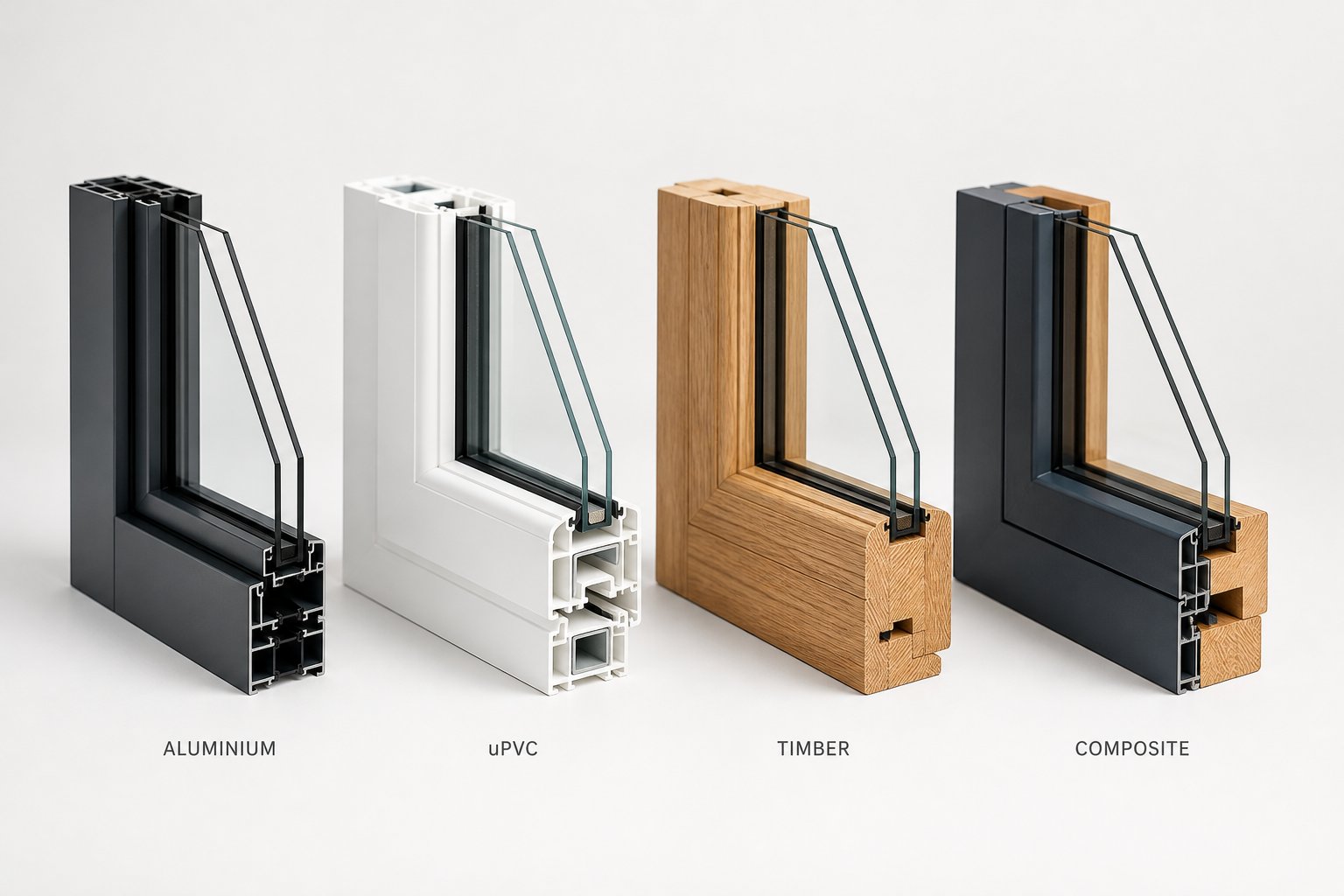
Knowing where aluminium falls short in isolation only gets you so far. The more useful question is how it performs relative to the other frame materials available in Australia. Each option occupies a different position across cost, durability, thermal performance, and aesthetics — and the right choice depends on which of those factors matters most to your project.
Aluminium vs uPVC vs Timber vs Composite
The table below compares all four mainstream frame materials across the metrics that influence most purchasing decisions. Rather than fabricated dollar figures, cost is expressed in relative brackets to reflect the Australian market without misleading precision.
| Metric | Aluminium | uPVC | Timber | Composite (Aluminium-Clad Timber) |
|---|---|---|---|---|
| Durability | Excellent — resists rust, rot, UV, and insect damage | Good — immune to rot and insects but can discolour or become brittle over time | Good to excellent with maintenance — vulnerable to rot, termites, and moisture without treatment | Excellent — aluminium exterior protects timber core from weathering |
| Thermal Performance | Good to excellent (thermally broken systems achieve U-values below 1.5 W/m²K) | Very good — multi-chamber profiles provide strong insulation inherently | Very good — natural insulator with low conductivity | Excellent — combines timber’s insulating properties with aluminium’s weather resistance |
| Maintenance Requirements | Very low — occasional soap-and-water clean | Very low — wipe-down cleaning, no repainting | High — requires repainting or oiling every 3–5 years, termite checks, and moisture management | Low to moderate — aluminium exterior needs little care; timber interior may need periodic oiling |
| Aesthetic Flexibility | Extensive — full RAL colour range, dual-colour options, woodgrain finishes, slim contemporary profiles | Moderate — improving colour range, but profiles are bulkier and less refined in appearance | Unlimited — natural grain, any paint or stain colour, carvable detail for heritage work | High — timber warmth inside, sleek aluminium finish outside; wide colour options on both faces |
| Recyclability | 100% recyclable infinitely without quality loss | Recyclable up to approximately 7 times | Biodegradable and renewable when sustainably sourced | Partially recyclable — aluminium component is fully recyclable; timber is biodegradable |
| Frame Thickness (Typical Sightlines) | Slim — 45–65 mm | Bulky — 70–85 mm | Medium to thick — 55–80 mm depending on species and style | Medium — 60–75 mm |
| Lifespan | 40–60+ years | 20–30 years | 50+ years with diligent maintenance | 40–50+ years |
| Indicative Cost Bracket | Medium to high | Low to medium | Medium to high | High to premium |
A few things stand out. Aluminium and composite systems share the longest low-maintenance lifespans, while timber can match their longevity only if the homeowner commits to regular upkeep. uPVC wins on upfront affordability but trails in lifespan and aesthetic refinement. And when it comes to spanning large openings with minimal visual obstruction, aluminium remains the clear frontrunner.
It is also worth noting that the comparison between aluminum vs fiberglass windows comes up frequently. In the Australian market, fiberglass (or fibreglass-reinforced composite) frames remain a niche product — far less available than in North America. Where fiberglass windows vs aluminum frames are compared internationally, fibreglass offers good insulation and dimensional stability but lacks the proven local supply chain, warranty support, and fabricator network that aluminium enjoys across Australia.
When Each Material Makes Sense
Every frame material has a sweet spot. Choosing well means matching the material to your project rather than chasing a single “best” option.
- Aluminium suits modern new builds, contemporary renovations, large openings like bi-fold and sliding configurations, coastal properties, and anyone who values decades of maintenance-free service. It is the go-to for architects specifying slim sightlines and expansive glazing.
- uPVC suits budget-conscious residential projects where upfront cost is the primary constraint. It performs well thermally, requires little maintenance, and handles standard window sizes capably — though it struggles with the structural demands of very large or heavy openings.
- Timber suits heritage properties, character homes, and Queenslander renovations where council may require sympathetic materials. It delivers warmth and authenticity that no synthetic material quite replicates.
- Composite (aluminium-clad timber) offers a hybrid solution — the natural timber look and insulating warmth on the interior with a protective aluminium shell facing the elements. It carries a premium price tag but makes sense for homeowners who refuse to compromise on either aesthetics or durability.
So why is wood preferred over aluminum in window construction for certain projects? The answer almost always comes down to heritage aesthetics and perceived warmth. Timber has a tactile quality and visual depth that resonates with period architecture — Federation homes, Edwardian terraces, and rural homesteads where aluminium’s clean lines can feel out of place. Heritage overlays and council regulations sometimes mandate timber-look frames. Aluminum clad wood windows pros and cons reflect this tension: you gain weather protection on the outside while preserving timber character inside, but at a price point above either material on its own.
From a purely practical standpoint, aluminium’s advantages in longevity, maintenance, and spanning ability are difficult to argue against. The choice between materials is rarely about one being objectively superior — it is about which trade-offs align with your priorities, your property style, and the environment your windows will face day after day.
Climate Suitability Guide for Aluminium Framed Windows
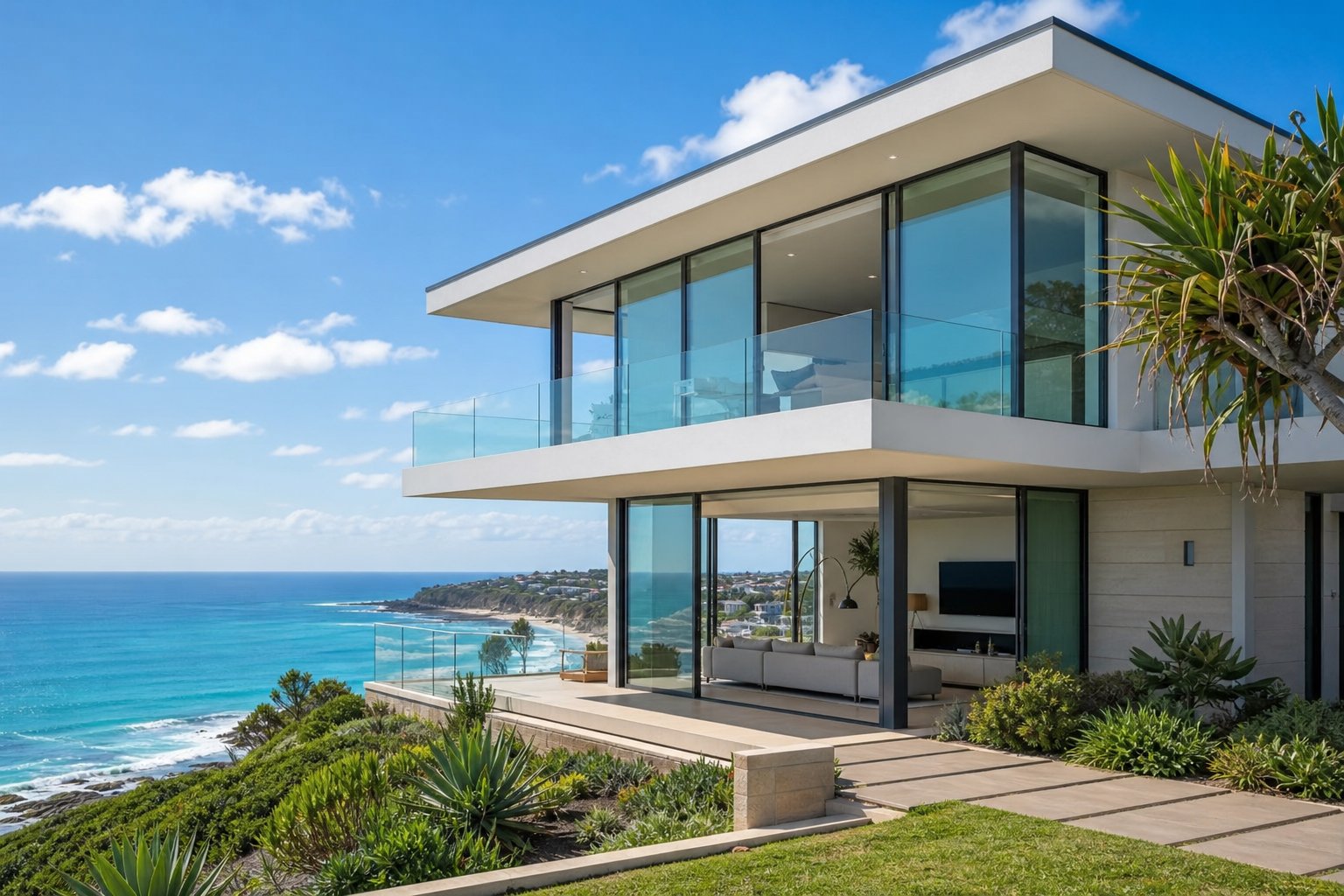
The environment your windows face day after day does more to determine long-term performance than almost any other variable. A frame material that thrives in tropical Darwin may struggle in alpine Thredbo — and vice versa. Aluminium window framing responds differently to salt air, extreme heat, biting cold, and persistent humidity. Here is how it performs in each Australian climate zone and what specifications to prioritise.
Coastal and Marine Environments
Salt-laden air is relentless. It eats through painted steel in a few seasons and accelerates timber rot dramatically. Aluminium handles this environment well because the metal naturally forms a thin, stable oxide layer the moment it contacts air. That oxide acts as a self-healing shield — even if scratched, a new protective layer regenerates almost immediately.
For properties within 1 km of breaking surf, or up to 5 km from the coast in exposed locations, aluminium’s corrosion resistance gives it a clear edge over timber and steel alternatives. The key is pairing the material with marine-grade powder coating — a minimum thickness of 60–80 microns — that adds an extra barrier against chloride attack. Hardware selection matters too: 316-grade stainless steel fixings and brass or nylon rollers resist salt far better than standard zinc-plated fittings.
Routine maintenance in coastal areas is simple. A freshwater rinse every few months removes salt deposits before they accumulate, and checking weep holes twice a year prevents blockages from sand and debris.
Hot and Arid Climates
In regions like inland Queensland, central NSW, and Western Australia’s Pilbara, temperatures regularly push past 40°C while UV radiation sits among the highest on earth. Two properties make an aluminium frame window a strong performer here: dimensional stability and UV resistance.
Unlike uPVC, which can soften, warp, or discolour under prolonged intense heat, aluminium holds its shape regardless of temperature. Powder-coated finishes resist fading and chalking from UV exposure far longer than painted timber or vinyl surfaces. In arid climates where thermal mass drives large day-to-night temperature swings, windows with aluminum frame construction maintain consistent seal compression — meaning no gaps open up as the frame expands and contracts.
Specification tip: prioritise lighter exterior frame colours or reflective finishes to reduce solar heat absorption into the profile itself, and pair with low-E glazing to manage solar heat gain.
Cold Climates and Humid Tropics
Cold regions — think the Victorian highlands, Canberra winters, or Tasmania — demand one non-negotiable specification: a quality thermal break. Without it, an aluminium frame window becomes a thermal bridge that haemorrhages warmth and drips with condensation on frosty mornings. Thermally broken profiles with a minimum 20 mm polyamide strip, combined with double glazing and argon gas fill, bring performance in line with what these climates require under the NCC energy provisions.
Humid tropical environments — Far North Queensland, the Top End — present the opposite challenge. Persistent moisture, monsoonal rain, and high temperatures create perfect conditions for timber rot and mould growth. Aluminium framed windows are virtually immune to these biological threats. They will not swell, warp, or harbour mould regardless of how saturated the air becomes, making them a practical choice for the tropics without the intensive maintenance timber demands.
Climate Suitability at a Glance
- Coastal and marine (C3–C5 corrosion zones): Strong choice — specify marine-grade powder coating, stainless steel fixings, and regular freshwater rinsing
- Hot and arid inland: Strong choice — aluminium’s UV stability and dimensional tolerance outperform uPVC; use lighter-coloured finishes and low-E glazing
- Cold and alpine: Conditional choice — excellent only with thermally broken profiles (20 mm+ barrier); avoid non-thermally broken systems entirely
- Humid tropical: Strong choice — rot and mould immunity make aluminium the lowest-maintenance option; ensure adequate drainage design for heavy rainfall
- Temperate (most capital cities): Strong choice — thermally broken aluminium meets NCC requirements comfortably with standard specifications
Climate narrows the field, but it does not dictate a single answer. What it does is define the specifications you cannot compromise on — thermal breaks in the cold, marine coatings on the coast, and proper drainage in the tropics. With the right specs locked in, the next consideration is which window style and configuration best suits your openings.
Window Styles and Configurations Available in Aluminium
Aluminium’s structural strength does more than resist corrosion and hold up in harsh climates. It unlocks a range of window configurations that bulkier frame materials simply cannot achieve at the same scale. Because narrow profiles carry heavy glazing loads without flex or distortion, an aluminium frame window can be fabricated in virtually every opening style — each with slim sightlines that maximise the glass area visible from inside.
Available Styles and Configurations
The list of achievable configurations in aluminium framed windows is broader than most homeowners realise. Each style suits a different function, room type, or architectural intent.
- Casement: Hinged on one side and opening outward (or inward). Ideal for bedrooms and living areas where full ventilation and a tight weather seal are priorities.
- Awning: Top-hinged and opening outward at the bottom. Allows airflow even during light rain — well suited to bathrooms, laundries, and high-wall positions.
- Sliding: Panels glide horizontally along tracks. A space-efficient choice for apartments, balconies, and rooms where a projecting sash would obstruct walkways.
- Bi-fold: Multiple panels fold back in a concertina stack, opening an entire wall to the outdoors. Aluminium’s slim profiles are critical here — less frame between each panel means the aluminium window with glass area approaches near-seamless transparency when closed.
- Tilt-and-turn: Dual-function hardware lets the sash tilt inward at the top for secure ventilation or swing fully open like a casement for cleaning access. Popular in multi-storey homes and apartments where safety matters.
- Fixed: Non-operable panels used purely for light and views. Their simplicity allows the thinnest possible profiles, making them the go-to for feature glazing, stairwells, and picture windows.
- Louvre: Adjustable horizontal blades control airflow and privacy without opening the entire window. Excellent for tropical regions, wet areas, and utility spaces where controlled ventilation matters more than wide views.
- Pivot: The sash rotates on a central horizontal or vertical axis, creating a dramatic aesthetic and easy cleaning for large panes at height.
Many projects combine several styles within a single elevation — fixed panels flanked by operable casements, or a bi-fold run capped with an awning highlight above. Aluminium frame windows handle these combinations cleanly because mullion and transom profiles stay slender enough to avoid visual clutter, even in complex multi-panel arrangements.
Commercial vs Residential Applications
There is a reason aluminium dominates commercial construction across Australia. Office towers, schools, hospitals, and retail centres demand frames that meet strict fire ratings, span wide curtain-wall openings, resist decades of heavy use, and maintain structural integrity at scale. No other material ticks all of those boxes simultaneously at an economical price point for large projects.
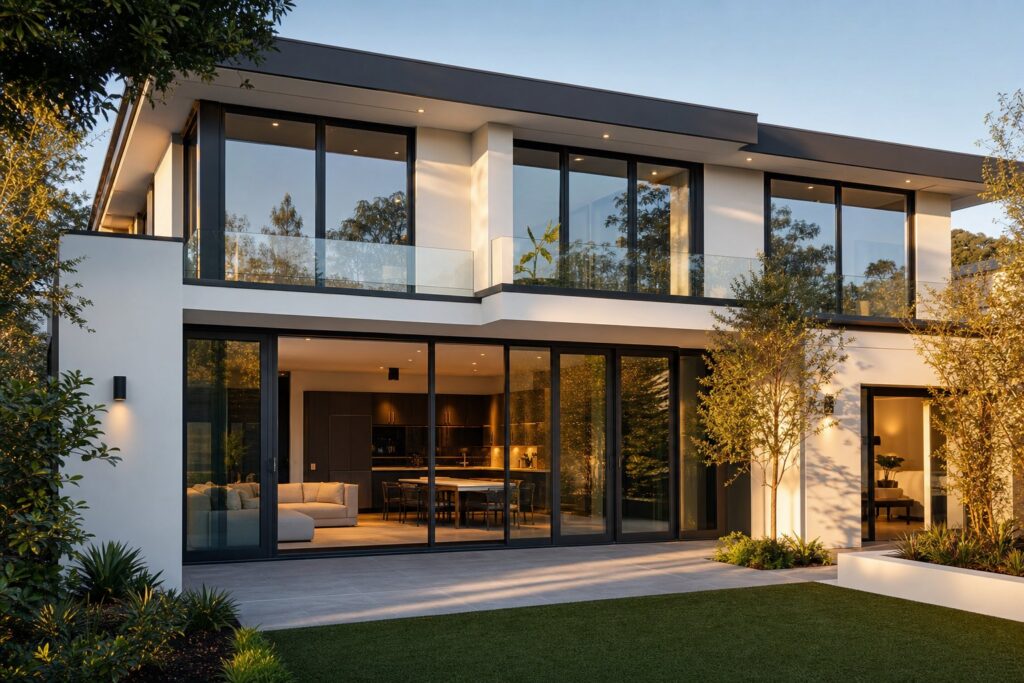
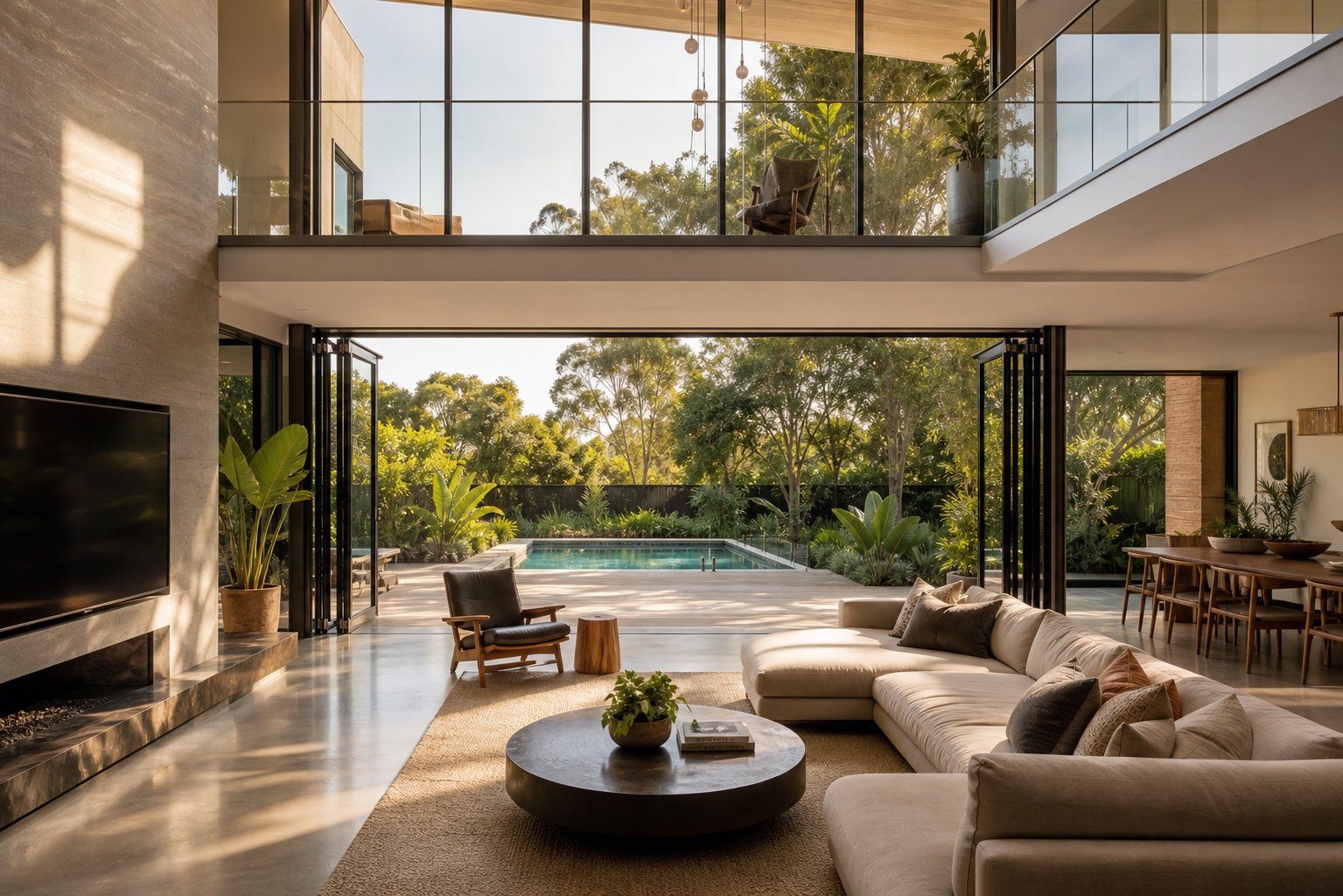
Those same properties translate directly to residential benefits. The homeowner designing a 4-metre bi-fold opening onto a deck, or specifying floor-to-ceiling aluminium glass windows for a double-storey living room, is drawing on exactly the commercial-grade spanning ability that high-rises rely on — just applied at a smaller scale. Sliding door systems that stretch 6 metres wide, corner-opening bi-folds that erase the boundary between kitchen and courtyard, and expansive fixed-panel facades that frame bushland views all become achievable because the aluminium frame carries the load without thickening the profile.
For bi-fold and sliding configurations especially, maximum glass area is the entire point. Every millimetre added to the frame subtracts from the view. Aluminium’s ability to keep sightlines below 50 mm in many systems — compared to 70–85 mm in uPVC — means these high-impact configurations look and perform the way they are designed to. The frame virtually disappears, leaving glass, light, and landscape.
Versatility in style and configuration is a compelling advantage, but it only matters if the investment makes financial sense over the full life of your home. That brings us to the real cost equation — and how to evaluate what you are actually paying for when you choose aluminium.
Making the Right Choice for Your Residential Aluminium Windows
Choosing a window material is ultimately a financial decision wrapped in an aesthetic one. You can admire slim profiles and clean sightlines all day, but the question that lands hardest is whether the money makes sense — not just on installation day, but across the decades that follow. For aluminum house windows specifically, the answer depends on how you frame the cost equation.
Budget and Lifecycle Value
The upfront premium for aluminium over uPVC is real. Depending on the size, configuration, and thermal specification, expect to pay roughly 20–40% more per window at the point of purchase. On a full-house project with 15–20 openings, that gap can add several thousand dollars to the initial quote. It is understandable why budget-conscious homeowners hesitate.
But sticker price tells only part of the story. Lifecycle cost analysis from manufacturers tracking project performance over decades shows that aluminium can work out significantly cheaper over a 40–50 year ownership period. The maths is straightforward:
- No repainting costs: Timber frames need sanding and recoating every 3–5 years. Over 40 years, that adds up to thousands in labour and materials — or weekend hours you never get back.
- No mid-life replacement: uPVC systems typically last 20–30 years before seal degradation, discolouration, or brittleness forces a full replacement cycle. Aluminium frames routinely serve 40–60 years without structural decline.
- Minimal maintenance spend: An occasional wash with soapy water and a yearly check on hardware and seals is the extent of ongoing care. Annual maintenance costs sit around $100–$150 for a typical home — well below timber and marginally less than uPVC over time.
- Avoided replacement labour: Pulling out and reinstalling windows mid-ownership means scaffolding, plastering, repainting reveals, and potential damage to internal linings. That disruption carries costs that never appear in initial quotes.
How long do aluminum windows last in practice? Quality thermally broken systems with proper powder coating consistently reach 40–60 years in Australian conditions. In temperate and coastal climates alike, the failure mode is usually hardware wear — easily serviced — rather than frame deterioration. Break-even against a cheaper alternative typically occurs somewhere between year 15 and year 20, depending on the initial price gap and how aggressively maintenance costs compound on other materials.
Resale value reinforces the case. Contemporary aluminium windows are strongly associated with modern, premium aesthetics — the kind that attract buyers willing to pay more. Estate agents and property valuers consistently note that homes with quality aluminium joinery, particularly in visible street-facing elevations, command stronger sale prices than equivalent properties with ageing uPVC or deteriorated timber frames. The windows signal that the home has been built or renovated to a higher standard, and that the next owner inherits decades of maintenance-free life rather than an impending replacement bill.
For anyone planning to own their home longer than a decade, or building a property intended to last a generation, affordable aluminium windows are not the cheapest option on paper — but they are frequently the most economical one in total.
Warranty and Compliance Considerations
A long-lifespan product is only as good as the guarantee behind it and the standards it was tested against. When evaluating any aluminium windows company, two documents matter more than glossy brochures: the warranty terms and the compliance evidence.
Warranties on aluminium window frames in Australia vary widely. Some manufacturers offer 7–10 years on frames and hardware; others extend to 20 years or more on the frame profile and powder-coated finish. What to look for:
- Frame structural warranty: Should cover warping, cracking, and corrosion under normal use for a minimum of 10 years — though quality manufacturers offer longer.
- Powder coating warranty: Look for guarantees against peeling, blistering, and excessive fading. Premium finishes carry 15–25 year coverage.
- Hardware warranty: Handles, hinges, and locking mechanisms typically carry shorter terms (5–10 years) and are often warranted separately.
- Sealed unit warranty: The insulated glass unit (IGU) should be warranted against seal failure and fogging for at least 10 years.
- Transferability: If you sell the property, does the warranty transfer to the new owner? This affects resale value directly.
Compliance runs deeper than warranty length. In Australia, all external windows and glazed doors must comply with AS 2047 — the standard governing structural performance, water penetration resistance, air infiltration, and operating force. This is not optional; it is referenced in the National Construction Code and enforced through building certification. Non-compliant windows risk council rejection, insurance complications, and poor real-world performance.
Beyond AS 2047, look for evidence of testing against AS 1288 (glass selection and installation), WERS energy ratings, and — for bushfire-prone areas — compliance with BAL (Bushfire Attack Level) construction requirements. In cyclone-rated regions of northern Australia, additional structural testing under AS/NZS 1170.2 wind loading provisions is essential.
The challenge for homeowners, builders, and specifiers is verifying these claims independently. Marketing copy can assert compliance without backing it up. Reputable manufacturers publish their testing data, certification documentation, and performance ratings transparently. MEICHEN, for example, maintains a dedicated Compliance and Certifications page where architects, builders, and specifiers can review documented testing results against Australian standards for thermal performance, structural adequacy, and weather resistance — the kind of transparency that simplifies specification decisions and provides confidence before committing to a supplier.
When comparing aluminium window suppliers, prioritise verified performance data over marketing language. Any manufacturer can claim their aluminum house windows meet Australian standards — but documented test reports, NATA-accredited lab results, and published compliance certificates are what separate genuine quality from optimistic brochure copy.
This principle applies regardless of which brand you ultimately choose. Request the certificate of compliance, check for an AS 2047 performance label on delivered products, and confirm that the installer understands how to maintain compliance through correct anchoring, flashing, and sealing during installation. A premium frame installed incorrectly can fail just as readily as a budget product — compliance is a system-level outcome, not just a manufacturing one.
With budget clarity and compliance confidence locked in, the remaining question is simpler: does aluminium suit your specific project, or would another material serve you better? That depends on what you are building, where it sits, and how long you expect it to last.
The Verdict on Aluminium Pros and Cons for Your Next Project
After weighing every angle — thermal performance, cost, durability, climate suitability, and configuration flexibility — the aluminium windows pros and cons picture comes into sharp focus. This is not a material that suits every single project. But for the majority of modern Australian builds and renovations, the pros of aluminum framing stack heavily in its favour once you specify correctly.
Who Should Choose Aluminium Windows
Aluminium is the strongest choice when your project aligns with one or more of these scenarios:
- Modern new builds: Contemporary architecture thrives on slim sightlines, expansive glass, and clean geometry. Aluminium delivers all three without compromise, and its aesthetic longevity means the home still looks current in 20 years rather than dated.
- Large-opening designs: Bi-fold doors, sliding systems spanning 5–6 metres, floor-to-ceiling fixed panels, and corner-opening configurations all demand a frame material that carries serious glazing weight without thickening the profile. Aluminium is the only practical option at this scale.
- Coastal properties: From the Gold Coast to the Great Ocean Road, salt-air resistance and low maintenance make aluminium the standout performer. Pair it with marine-grade powder coating and stainless steel fixings, and the frame will outlast the mortgage.
- Longevity-focused owners: If you plan to stay in the home for decades — or you are building something intended to serve the next generation — the 40–60 year lifespan with near-zero upkeep makes aluminium the lowest total-cost option despite the higher purchase price.
- Low-maintenance priorities: Holiday homes, investment properties, upper-storey windows, and anyone who simply refuses to spend weekends sanding and painting will benefit from a material that asks nothing more than an occasional wash.
The pros of aluminum framing are clearest when you think in terms of whole-of-life value rather than day-one cost. Strength, recyclability, colour freedom, and maintenance-free decades add up to a compelling total package for the right project.
Who Might Consider Alternatives
Honesty matters here. Aluminium is not the ideal answer in every situation.
- Heritage renovations: If your home sits under a heritage overlay or within a character-protection zone, council may require timber or timber-look frames to maintain streetscape consistency. Aluminium-clad timber is sometimes an acceptable middle ground, but pure aluminium profiles can conflict with period aesthetics on Federation, Victorian, or Queenslander homes.
- Extremely tight budgets: When every dollar counts and the priority is getting functional, energy-rated windows installed today, uPVC delivers solid thermal performance at a lower upfront cost. The trade-off is a shorter lifespan and bulkier profiles — but for some projects, that compromise is the right one.
- Cold-climate projects without budget for thermal breaks: A non-thermally broken aluminium frame in Canberra, Hobart, or the Victorian highlands will produce condensation and poor insulation. If the project budget cannot stretch to thermally broken systems, uPVC or timber will insulate better at a lower price point. Never install basic aluminium in a cold climate just to save money — the long-term comfort and mould issues cost far more than the initial saving.
These are not failures of the material. They are mismatches between specification and context. Aluminium excels when specified appropriately — and falls short only when corners are cut or the application demands something it was never designed to provide.
Your Next Steps
If you have landed on aluminium as the right fit, the work shifts from material selection to supplier evaluation. Not all aluminium window systems are equal, and the difference between a well-engineered product and a budget imitation often only becomes visible years after installation. Protect yourself by following a clear process:
- Define your performance requirements first. Identify the climate zone, wind region, bushfire attack level (if applicable), and energy rating targets for your build. These determine the minimum specifications your windows must meet under the NCC.
- Request documented compliance evidence. Ask every supplier for AS 2047 test reports, WERS ratings, and any additional certifications relevant to your project. Manufacturers like MEICHEN publish this data on their Compliance and Certifications page — that level of transparency should be your baseline expectation, not a bonus.
- Compare lifecycle cost, not just sticker price. Factor in maintenance, expected lifespan, warranty coverage, and potential replacement cycles. The cheapest quote rarely delivers the lowest 30-year cost.
- Verify installer credentials. A premium frame installed poorly will leak, rattle, and fail prematurely. Confirm your installer understands flashing details, structural anchoring requirements, and how to maintain the system’s tested performance through correct installation practice.
- Check warranty transferability. If there is any chance you will sell the property within the warranty period, ensure coverage transfers to the next owner — it directly influences resale value.
The aluminium pros and cons balance tilts firmly positive for most contemporary Australian projects. The material is stronger, slimmer, longer-lasting, and more sustainable than it has ever been — and thermally broken systems have closed the energy gap that once made it a compromised choice. Spend the time getting your specification right, verify compliance before you commit, and you will have windows that perform quietly and reliably for decades without asking anything in return.
Frequently Asked Questions About Aluminium Windows
1. Are aluminium windows energy efficient?
Modern thermally broken aluminium windows achieve U-values as low as 1.1 W/m²K, placing them on par with uPVC in energy performance. The key is the polyamide thermal break strip that separates interior and exterior profiles, preventing heat transfer through the frame. Without a thermal break, aluminium conducts heat rapidly and performs poorly. Always confirm that any aluminium window you specify includes a quality thermal break, particularly in cooler Australian climates like Melbourne, Canberra, or Tasmania, where energy loss through frames significantly impacts heating bills and NatHERS ratings.
2. How long do aluminium windows last compared to uPVC?
Quality thermally broken aluminium windows with powder-coated finishes routinely last 40 to 60 years in Australian conditions, requiring nothing beyond occasional cleaning. uPVC windows typically last 20 to 30 years before seal degradation, discolouration, or brittleness necessitates replacement. While aluminium costs more upfront, the absence of mid-life replacement, repainting, and intensive maintenance often makes it more economical over a 30-plus year ownership period. Hardware wear is usually the first component to need attention, and it is easily serviced without replacing the frame.
3. Do aluminium windows cause condensation problems?
Condensation on aluminium frames occurs when the interior surface drops below dew point because metal conducts cold from outside directly through the profile. This was a legitimate issue with older non-thermally broken frames. Modern systems solve it with a polyamide barrier that keeps the inner profile significantly warmer, preventing moisture from forming even on cold mornings. If you are purchasing aluminium windows in Australia today, insist on thermally broken profiles — particularly for bedrooms, bathrooms, and south-facing openings where condensation risk is highest.
4. Are aluminium windows suitable for coastal homes in Australia?
Aluminium is one of the strongest frame material choices for coastal properties. The metal naturally forms a self-healing oxide layer that resists salt-air corrosion, and when paired with marine-grade powder coating at 60 to 80 microns thickness, it withstands even severe C4 and C5 corrosion zones close to breaking surf. Specify 316-grade stainless steel fixings and brass or nylon rollers to prevent galvanic corrosion from dissimilar metals. A freshwater rinse every few months removes salt deposits before they accumulate. Manufacturers like MEICHEN document their compliance with Australian standards for weather resistance on their certifications page, which helps specifiers verify coastal suitability.
5. Why are aluminium windows more expensive than uPVC?
Aluminium frames cost roughly 20 to 40 percent more than equivalent uPVC windows due to higher raw material costs and more complex manufacturing, especially for thermally broken systems. However, the price gap has narrowed as production volumes have increased. The lifecycle cost equation often favours aluminium because you avoid repainting expenses, mid-life replacement after 20 to 25 years, and the associated labour costs of removing and reinstalling windows. Break-even against cheaper alternatives typically occurs between year 15 and year 20, making aluminium the more economical choice for long-term homeowners.
More Window & Door Guides