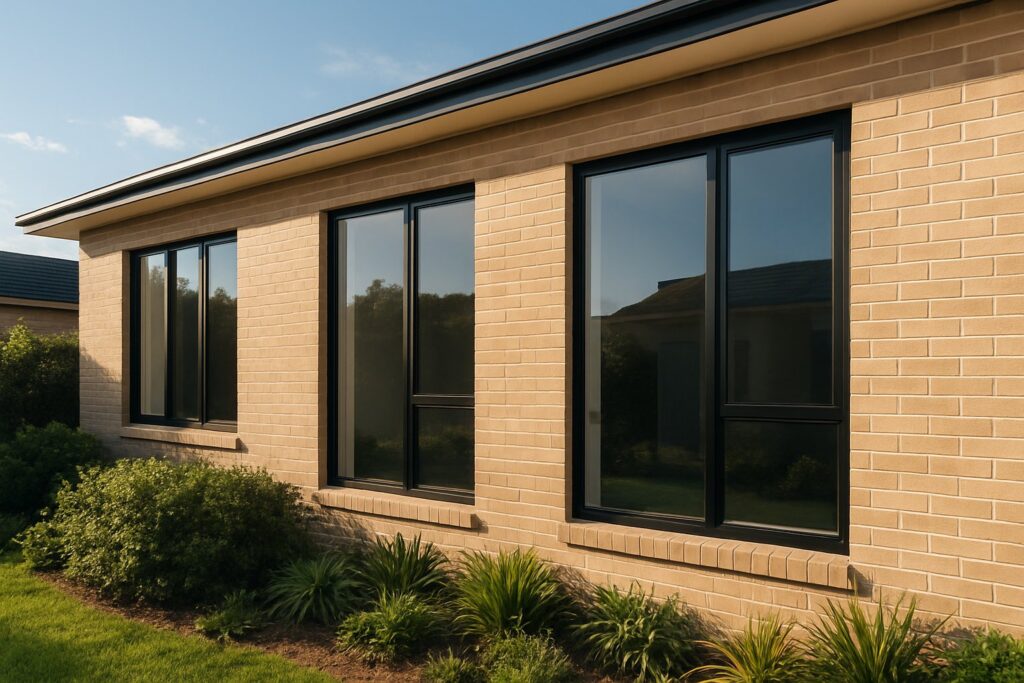
What Are Black Aluminium Double Glazed Windows
Three elements converge in a single product that has quietly reshaped how Australian architects and builders approach fenestration: a black powder-coated or anodised finish, an aluminium frame engineered with thermal breaks, and a sealed double glazed unit. Each component serves a purpose on its own, but together they form a window with frame characteristics that no single element can deliver independently.
Black aluminium double glazed windows are thermally broken aluminium-framed windows featuring a sealed insulating glass unit (two panes separated by a gas-filled cavity) and a factory-applied black finish, combining structural strength, energy performance, and bold contemporary aesthetics in one system.
What Makes This Window Configuration Unique
Standard aluminium windows have been part of Australian construction for decades, but many older installations relied on single pane aluminum windows with no thermal break. Those frames conducted heat freely between indoors and out, earning aluminium a reputation for poor insulation. Double glazing changes the equation entirely. The sealed air or argon gap between two glass panes dramatically reduces heat transfer, while a thermally broken aluminium frame prevents the metal itself from acting as a thermal bridge.
Add a black finish to that engineering, and the product shifts from purely functional to architecturally intentional. Black aluminium windows create sharp visual contrast against lighter cladding, brickwork, or rendered walls. They frame views the way a gallery border frames artwork, drawing the eye through the glass rather than to the frame itself. This is why windows with frame profiles in black have moved from niche specification to mainstream demand across residential and commercial projects alike.
Why the Black Finish Aluminium and Double Glazing Combination Matters
The value proposition sits at the intersection of three performance areas. Aluminium delivers a strength-to-weight ratio that allows slimmer sightlines and larger spans than timber or uPVC alternatives. Double glazing provides measurable thermal and acoustic insulation suited to Australian climate zones, from tropical Queensland to cold-climate Victoria. And the black finish offers a design-neutral aesthetic that works across modern builds, heritage renovations, and industrial-style conversions without dating the facade.
Demand from specifiers continues to grow because this combination solves multiple project requirements simultaneously. Builders get structural reliability. Homeowners get lower energy bills and street appeal. Architects get the slim, dark profiles that define contemporary Australian residential design. That convergence of benefits is precisely what separates black aluminium windows from a standard aluminium or single-glazed alternative, and it explains why this configuration has become a distinct product category rather than a simple colour option.
The Role of Thermal Breaks in Aluminium Frame Performance
A sealed double glazed unit can only insulate as well as the frame holding it in place. If the aluminium window frame itself conducts heat freely between inside and out, even the best glass package loses a significant portion of its thermal advantage at the frame junction. This is the engineering problem that thermal breaks were designed to solve, and it is the single most important detail separating a high-performance aluminium frame window from a budget one that merely looks the same.
How Thermal Breaks Prevent Heat Transfer
Aluminium conducts heat roughly 1,000 times faster than timber. Without intervention, a metal window frame acts like a radiator fin, channelling warmth straight out of your home in winter and drawing heat inward during summer. A thermal break interrupts that pathway by inserting a non-conductive barrier, typically a rigid polyamide strip, between the inner and outer aluminium profiles. The result is two separate sections of window frame metal joined structurally but isolated thermally.
Most modern aluminium window frames use reinforced polyamide strips mechanically bonded into the extrusion during manufacturing. The width of this strip matters: wider thermal breaks deliver better insulation. Higher-quality systems pair wider breaks with optimised profile geometry to achieve low U-values while maintaining the slim sightlines that make aluminium attractive in the first place. Without this barrier, condensation forms on the internal face of the frame wherever warm indoor air meets cold metal, leading to mould risk and damage to surrounding finishes.
Why Double Glazing Alone Is Not Enough Without Frame Engineering
It is a common misconception that specifying double glazing automatically guarantees strong thermal performance. The glass unit itself can reduce heat loss dramatically, with field testing indicating that appropriately configured double glazed units can decrease U-values by up to 45% compared to single-pane alternatives. Combine that with Low-E coatings and a thermally broken frame, and the improvement can reach 55%. But pair that same glass with a non-thermally broken aluminium frame, and the frame becomes the weak link, bleeding energy at every edge.
For buyers evaluating aluminium window frames in the Australian market, the following thermal performance indicators are worth understanding before comparing quotes:
- U-value (whole window) — measures total heat transfer through the complete unit, including frame and glass. Lower numbers indicate better insulation.
- Frame conductivity — how readily the metal window frames transfer heat independent of the glazing. Thermally broken profiles dramatically reduce this figure.
- Spacer bar type — the component separating the two glass panes at their edges. Warm-edge spacers reduce heat loss at the glass perimeter compared to standard aluminium spacers.
- Gas fill — the cavity between panes is typically filled with argon or, in premium units, xenon. Both are denser than air and slow convective heat transfer within the sealed unit.
- Thermal break width — wider polyamide breaks improve insulation. Ask suppliers for the specific break dimension in millimetres.
Understanding these indicators helps you read a specification sheet with confidence. A supplier quoting a low glass-only U-value while staying silent on the frame performance may be masking a product that underperforms once installed. The frame and glass work as a system, and in thermally broken aluminium, modern manufacturing has turned what was historically a weakness of metal window frames into a genuine strength, delivering slim profiles, structural durability, and insulation performance that rivals timber without the maintenance burden.
Black Finish Options and Long-Term Durability
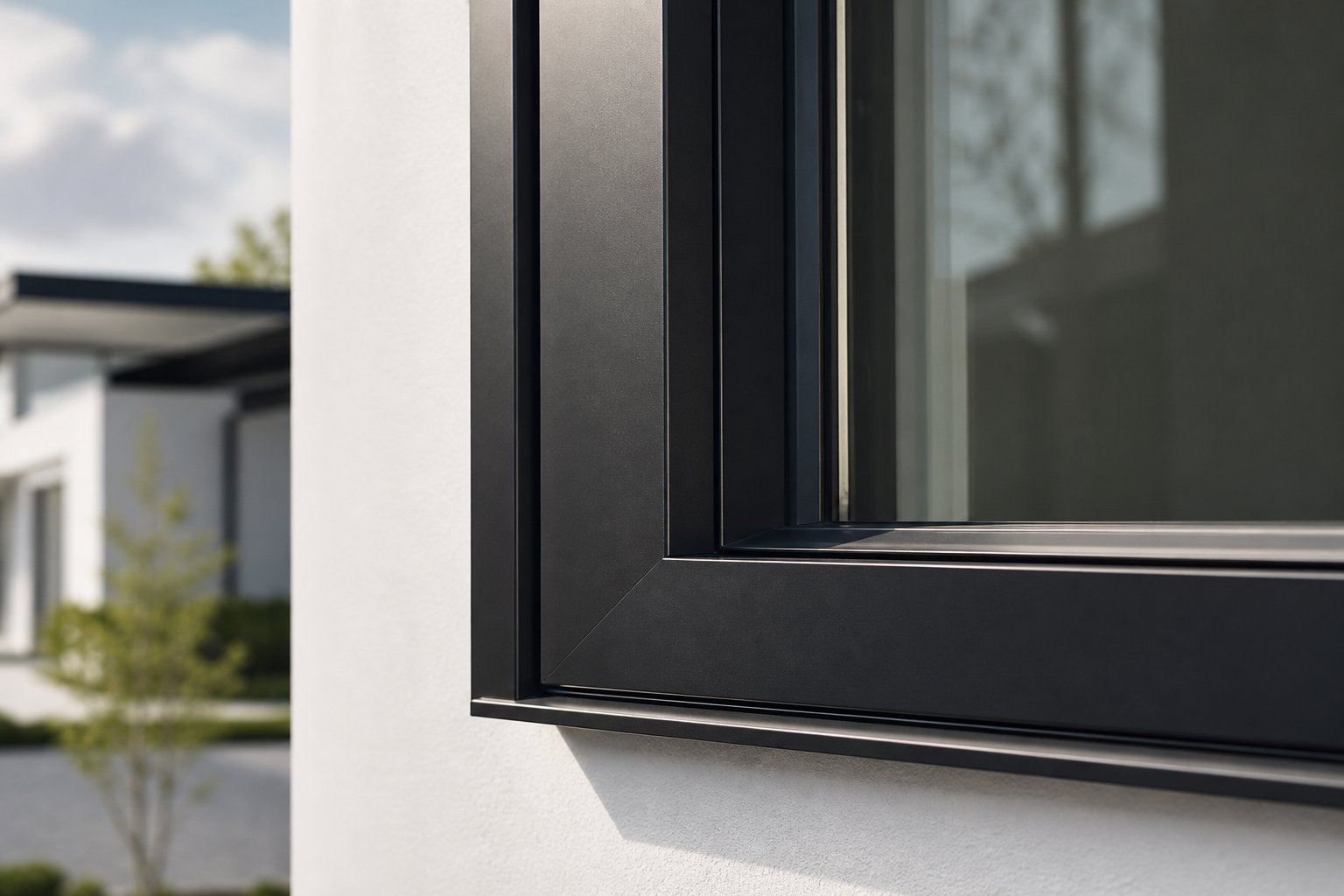
Frame engineering determines thermal performance, but the finish determines how your black aluminium window looks on day one and a decade later. Two primary methods exist for achieving that black exterior: powder coating and anodising. They produce visually similar results from the street, yet they differ significantly in how they protect the aluminium, how they age, and how they respond to Australia’s harsh UV and coastal conditions.
Powder Coating Versus Anodising for Black Finishes
Powder coating is an applied finish. Finely ground pigment and resin particles are electrostatically sprayed onto the aluminium frame, then baked at high temperature to form a continuous, hard film. The result is a thick protective layer, typically 60 to 150 microns, that sits on top of the metal. This process allows virtually unlimited colour choices, including textured, matte, satin, and gloss options in any RAL code you specify.
Anodising takes a fundamentally different approach. Rather than applying a coating over the surface, it transforms the aluminium itself through a controlled electrochemical process. The outer layer of the metal converts into aluminium oxide, an extremely hard, corrosion-resistant material that becomes part of the frame rather than sitting on top of it. Colour is introduced by immersing the porous anodised surface in dye before sealing. Anodized aluminum windows tend toward a metallic, matte appearance that reveals the natural grain of the metal beneath.
For aluminium black windows, the choice between these two methods shapes everything from maintenance expectations to coastal suitability. Anodised finishes offer superior scratch resistance and corrosion protection because the oxide layer cannot chip or peel away from the substrate. Powder coating, meanwhile, delivers greater colour flexibility and lower upfront cost, with the added advantage that scratches or chips can be touched up on site rather than requiring factory repair.
| Factor | Powder Coating | Anodising |
|---|---|---|
| Durability | High; thick film resists impact well but can chip under sharp force | Very high; oxide layer is part of the metal and cannot peel |
| Texture and finish options | Extensive: matte, satin, gloss, textured, metallic | Limited: matte metallic finish only |
| Colour range | Virtually unlimited RAL colours | Restricted to natural tones (black, bronze, silver, gold) |
| Cost | Lower upfront; economical to refinish | Higher upfront; re-anodising requires factory processing |
| Maintenance | Periodic wash; touch-up paint for chips | Soap and water only; no touch-up needed |
| Coastal suitability | Good when intact; vulnerable if film is breached | Excellent; oxide layer self-heals to a degree through natural oxidation |
| UV resistance | Good with quality UV stabilisers; may chalk over time | Inherently UV stable; oxide layer unaffected by radiation |
| Repairability | Can be stripped and re-coated on site or in workshop | Difficult to repair locally; may require full replacement of affected section |
Homeowners near the coast, particularly in salt-air zones across Queensland, Western Australia, or the NSW coastline, often find anodized aluminum frame windows worth the premium. Inland projects where salt exposure is minimal can achieve excellent longevity with quality powder coating at a lower price point. Bronze aluminum windows and other earth-tone anodised finishes share the same durability advantages as black, making anodising a strong choice whenever a metallic aesthetic suits the design intent.
Maintaining the Appearance of Black Aluminium Over Time
A persistent concern among buyers is that a black aluminum frame will fade or chalk within a few years, leaving the facade looking tired. Modern coating technology has largely eliminated this risk for quality products. Premium powder coatings formulated with UV-resistant resins and TGIC-free chemistry maintain colour stability for 20 years or more in Australian conditions when applied to the correct film thickness and properly pre-treated. Anodised black finishes are inherently UV stable because aluminium oxide does not degrade under ultraviolet radiation the way organic resins can.
RAL colour codes matter here. RAL 9005 (jet black) delivers a deep, true black that suits bold contemporary facades, while RAL 7021 (black grey) offers a softer, slightly charcoal tone that reads as black in most light but avoids the intensity of pure jet. Specifiers working on heritage-adjacent projects or buildings with warm-toned cladding often prefer RAL 7021 for its subtlety. Either code, applied through a quality powder coating process with appropriate pre-treatment, resists fading under Australia’s extreme UV index far better than the budget finishes that gave aluminium black windows an undeserved reputation for colour loss in decades past.
The practical takeaway: an aluminum frame black finish, whether powder coated or anodised, will hold its appearance for the long term provided the product comes from a manufacturer using marine-grade pre-treatment, appropriate film thickness, and proven coating chemistry. Ask your supplier which coating system they use and what warranty they offer against colour change. That answer reveals more about product quality than any brochure photograph.
Available Window Styles and Their Best Applications
A durable black finish only matters if the window behind it suits the building it sits in. The same aluminium frame engineering and double glazed unit can be configured into a wide range of opening styles, each designed for different ventilation needs, spatial constraints, and architectural intentions. Knowing which style fits which situation prevents costly mismatches between product and application.
Casement Sliding and Fixed Window Styles
Casement windows remain the workhorse of Australian residential projects. Hinged on one side and opening outward, they press tightly against the frame when closed, forming a reliable compression seal that maximises the thermal benefit of double glazing. Their full-opening sash captures breezes effectively in kitchens, bathrooms, and living areas where directed airflow matters.
Aluminium sliding windows suit spaces where exterior clearance is limited, such as along walkways, patios, or narrow side passages common in urban lots. The horizontal track mechanism keeps the sash within the wall plane, making an alum sliding window practical for bedrooms and hallways where a projecting casement would obstruct foot traffic. Aluminium’s natural strength supports wider spans with fewer mullions, so sliding aluminium windows deliver more glass area and less visual interruption than equivalent uPVC sliders.
Fixed windows exist purely for light and views. With no moving parts, they offer the best thermal and acoustic seal of any configuration and allow the slimmest possible sightlines. Architects frequently pair fixed panels with operable casement or awning units to balance light, ventilation, and uninterrupted views across a facade.
Awning windows, hinged at the top and opening outward from the bottom, let air circulate even during rain. They work well above kitchen benches, in bathrooms, or stacked above fixed panes in commercial facades where continuous ventilation is needed without weather exposure.
Bi-fold windows fold in concertina fashion to create wide, unobstructed openings that blur the line between indoors and out. Aluminium’s strength-to-weight ratio makes it the preferred frame material for bi-fold systems spanning large openings without sagging or binding over time.
Tilt-and-turn windows offer dual functionality: tilting inward from the top for secure ventilation, or swinging inward from the side for full access and easy cleaning. They suit multi-storey homes and high-rise apartments where external cleaning access is impractical. Aluminum double hung windows, featuring two vertically sliding sashes, bring a more traditional proportion to facades. Aluminium sash windows in a black finish bridge heritage aesthetics with modern performance, making them a strong choice for period home renovations where council approval requires sympathetic design. An aluminum single hung window operates similarly but with only the lower sash moving, offering a simpler mechanism at a lower price point. Single hung aluminium windows are common in bedrooms and secondary elevations where full dual-sash flexibility is unnecessary.
Matching Window Style to Building Application
Choosing the right style depends on the building type, room function, and design intent. The following ranking reflects typical popularity across Australian projects and the applications each style serves best:
- Casement — most versatile; suits residential bedrooms, living areas, and commercial offices where maximum ventilation and tight sealing are priorities.
- Fixed — ideal for feature walls, stairwells, and any location where uninterrupted views and maximum light take precedence over ventilation.
- Sliding — preferred for space-constrained areas, hallways, and rooms opening onto walkways or balconies. Aluminium sliding windows handle wide spans cleanly.
- Awning — best for wet areas, kitchens, and high-level ventilation strips on commercial facades where weather protection during airflow is essential.
- Bi-fold — entertainment zones, alfresco transitions, and servery windows connecting kitchens to outdoor areas.
- Tilt-and-turn — multi-storey residences, apartments, and high-rise commercial projects where internal cleaning access and secure ventilation matter.
- Double hung / single hung — heritage renovations, Queenslanders, and federation-style homes where vertical proportions and traditional sash lines are architecturally appropriate.
Black frames with slim sightlines amplify the benefit of every style listed above. Because aluminium profiles can be extruded thinner than timber or uPVC while maintaining structural integrity, the glass-to-frame ratio increases noticeably. More glass means more natural light reaching deeper into rooms, reducing reliance on artificial lighting during the day. For custom and oversized configurations, aluminium’s design flexibility allows non-standard dimensions, curved heads, and multi-panel arrangements that other frame materials simply cannot achieve at the same scale without visible reinforcement.
That flexibility extends beyond geometry. The same black aluminium double glazed system can appear across an entire project in multiple styles, maintaining a unified facade aesthetic while each window performs the specific function its room demands. The result is visual cohesion without functional compromise, a balance that becomes especially important when the building’s architectural context calls for a deliberate design statement.
Architectural Contexts Where Black Aluminium Frame Windows Excel
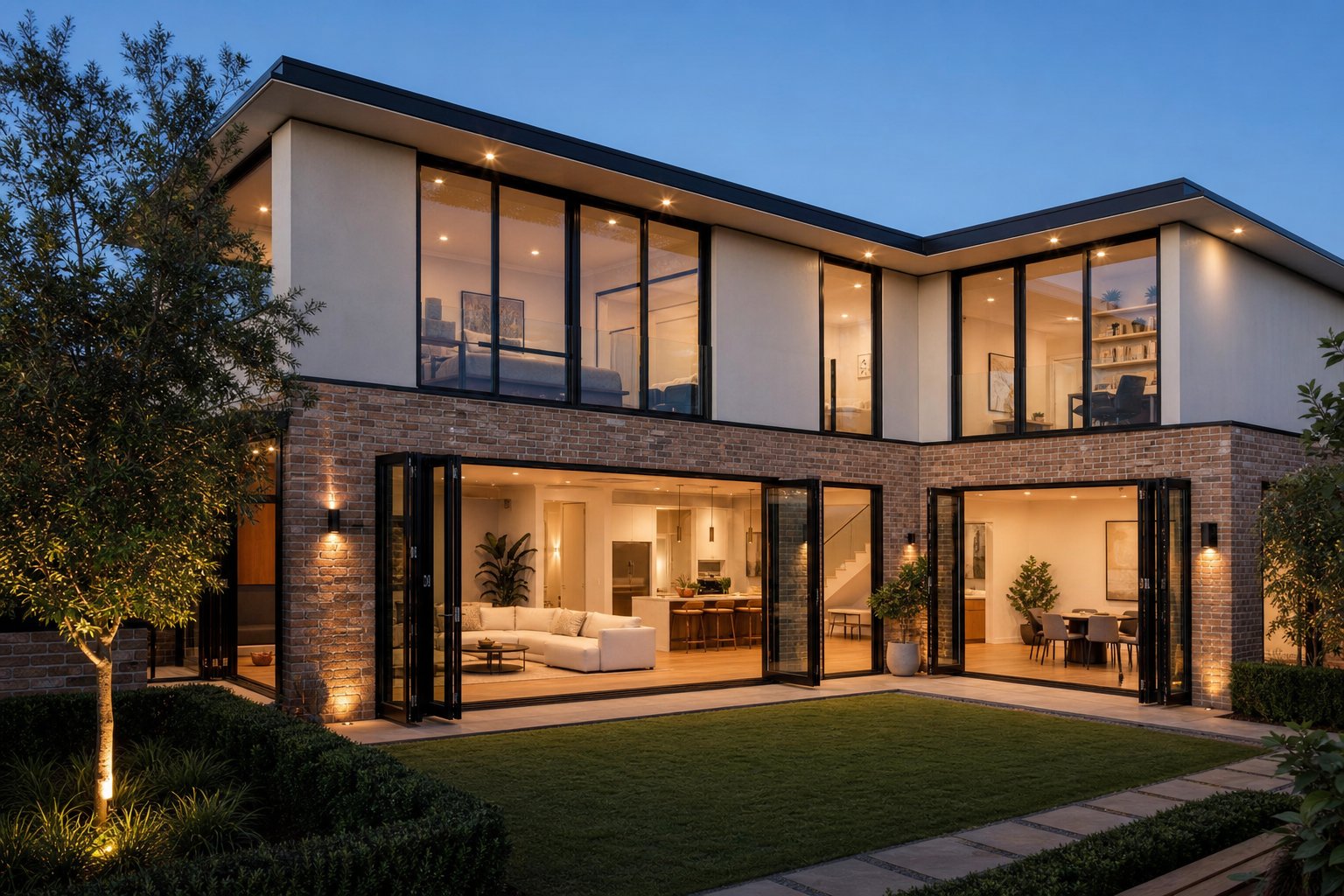
A window style matched to the right room solves a functional problem. But the colour and material of the frame solve a design problem, one that shapes how an entire building reads from the street and feels from within. Black aluminium double glazed windows have earned their place across such a broad range of architectural contexts precisely because black operates as a visual anchor rather than a competing element. It defines edges, organises facades, and recedes when you look through it from inside.
Modern Residential and Commercial Design Contexts
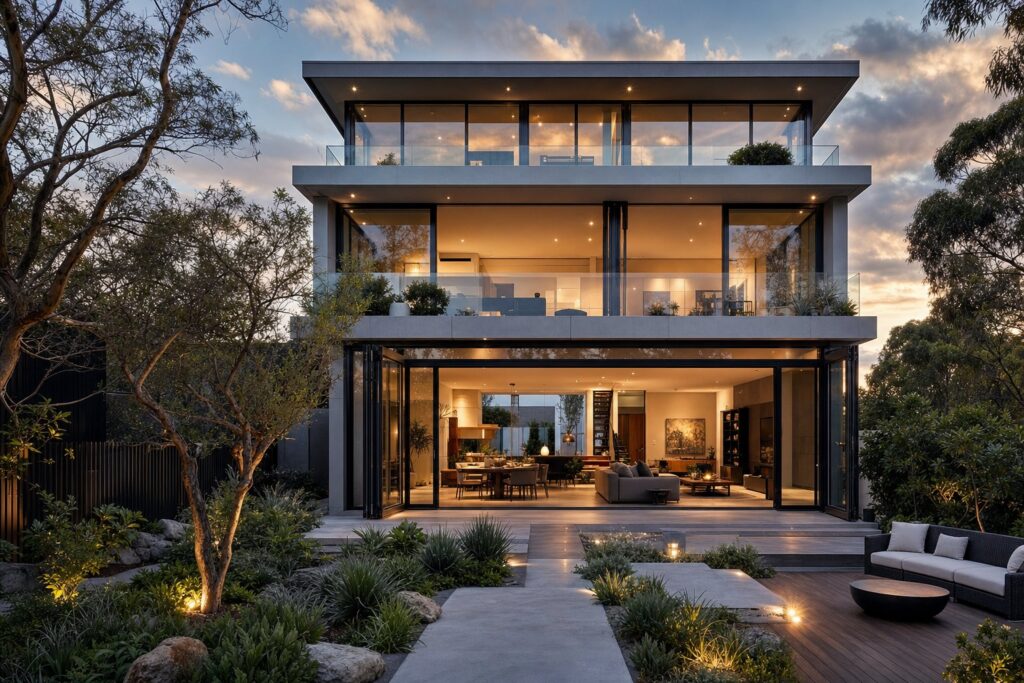
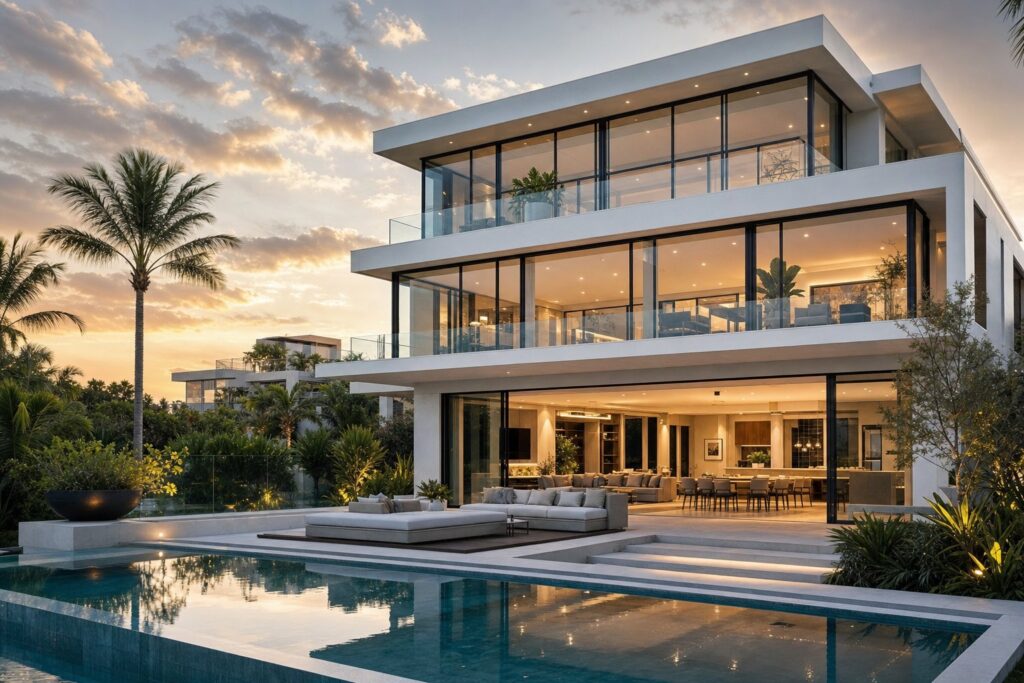
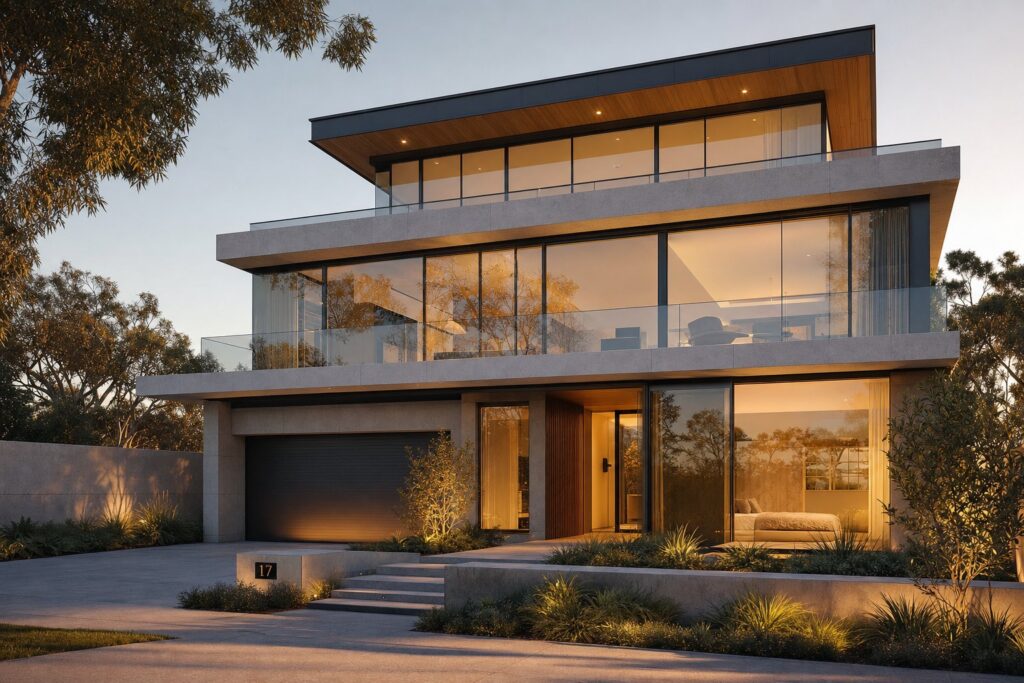
In contemporary Australian homes, particularly the flat-roofed, open-plan designs dominating new estates from Melbourne’s outer suburbs to Perth’s coastal corridors, black metal frame windows reinforce the clean geometry that defines the style. The dark profiles create crisp lines against white or pale grey render, turning each window opening into a deliberate compositional element rather than a hole punched in a wall. Architect Dominic Bagnato describes black as a “forgiving colour” that works adjacent to virtually any other material or tone, much like a classic black suit that pairs with everything.
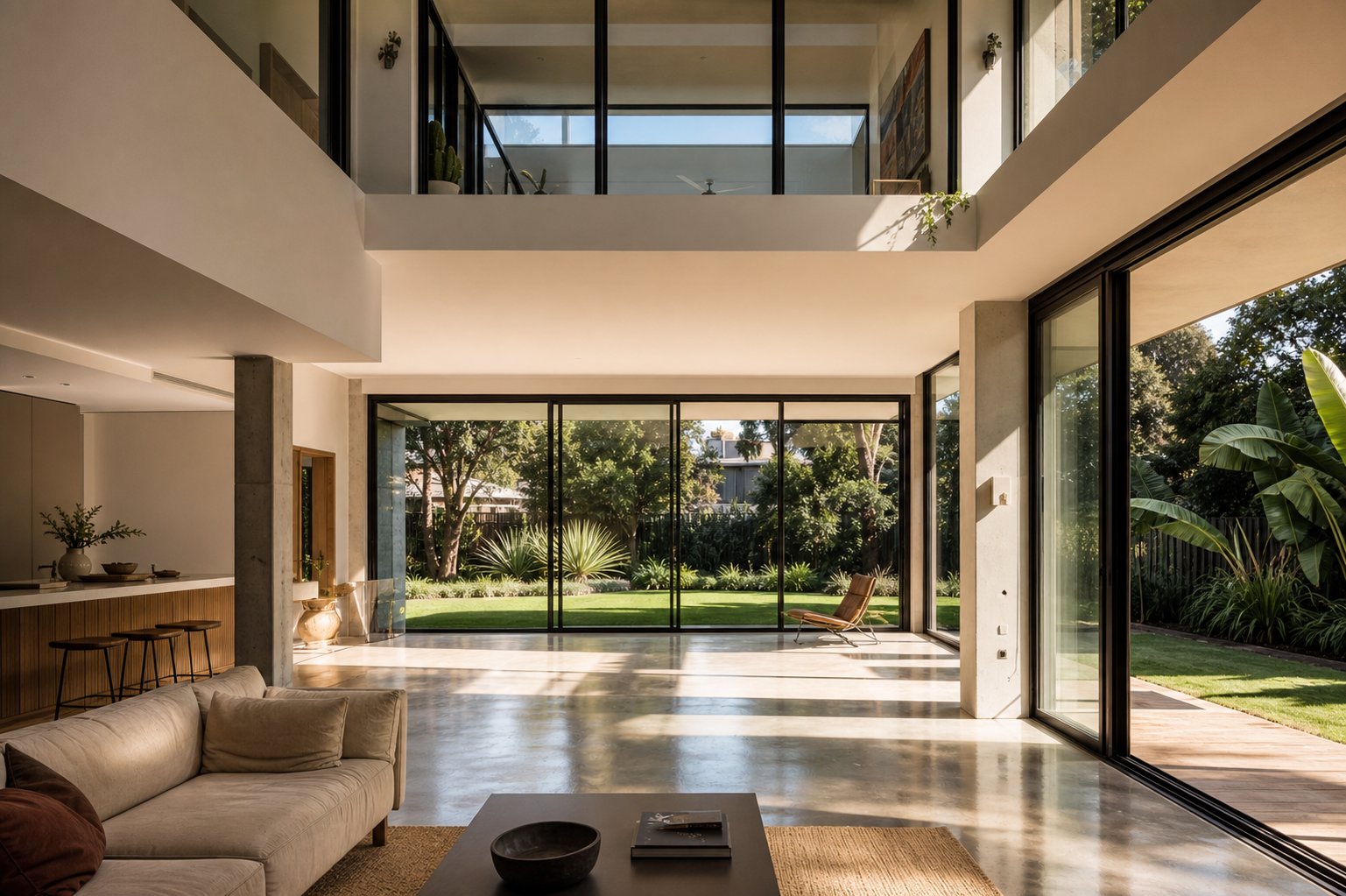
Minimalist homes benefit most from thin frame windows in black because the narrow aluminium profiles almost disappear visually, leaving expansive glass as the dominant surface. The dark frame draws the eye inward rather than to the frame itself, making rooms feel larger and more connected to the landscape beyond. From the inside, black frames recede against the brightness of the view, a subtle optical effect that lighter-coloured frames cannot replicate.
Commercial buildings use the same principle at scale. Office facades, retail shopfronts, and hospitality fitouts across Sydney, Brisbane, and Adelaide rely on black aluminium framed windows to create rhythm and proportion across large elevations. The uniform dark lines unify multi-storey glazing systems without the visual weight that thicker uPVC or timber profiles would introduce.
Industrial-style conversions, whether genuine warehouse refurbishments or new builds borrowing that aesthetic, lean heavily on black metal windows exterior to echo the look of original steel-framed glazing. The slim aluminium profiles mimic heritage steel at a fraction of the cost and maintenance burden, while delivering the thermal performance that original single-glazed steel never could. Exposed brick, polished concrete, and raw timber pair naturally with the bold, dark lines of metal framed windows in these settings.
Complementing Different Building Materials and Styles
What makes black such a reliable frame colour across Australian architecture is its behaviour as a neutral. Unlike grey, which carries cool or warm undertones depending on the light, or bronze, which shifts with surrounding materials, black reads consistently. It anchors the facade without competing for attention, letting the building’s primary materials speak.
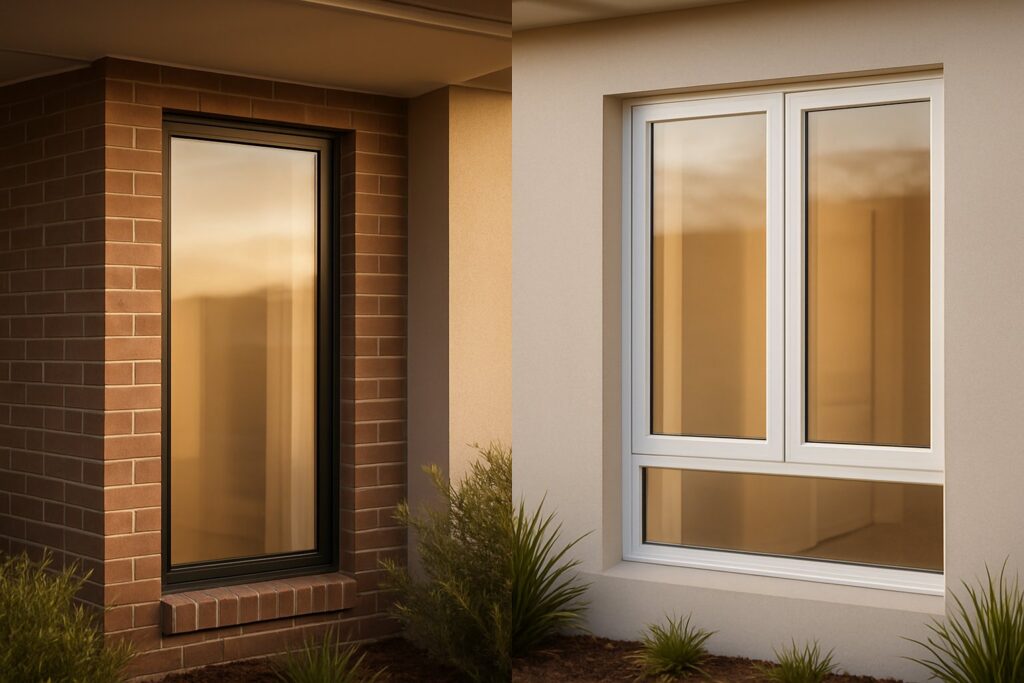
Against red or brown brick, common across Victorian-era terraces in Melbourne and federation homes in Sydney, black frame windows create sharp definition that highlights the texture and warmth of the masonry. The contrast feels intentional rather than jarring, bridging the gap between heritage character and contemporary performance. Against white or off-white render, the effect shifts to graphic boldness, a pairing that architects and designers consistently favour for its clean sophistication.
Timber cladding, whether natural hardwood, charred accoya, or composite weatherboard, gains visual structure from black aluminium frames. The dark lines prevent warm timber tones from blending into an undifferentiated mass, giving each window a clear presence on the elevation. Stone facades, from sandstone in the Hunter Valley to bluestone in regional Victoria, benefit similarly. The neutral black neither clashes with the stone’s natural colour variation nor fades into it.
Heritage property upgrades present a particular opportunity. Council requirements often demand sympathetic proportions and sightlines, but they rarely mandate a specific frame colour. Black aluminium in traditional sash or casement configurations satisfies heritage guidelines while delivering double glazed thermal performance that original timber or steel frames never offered. The result is a building that reads as period-appropriate from the street yet performs to modern energy standards.
Interior design schemes gain the same flexibility. Black framed windows work as a unifying thread through open-plan living spaces, tying together rooms with different wall colours, flooring, and furniture palettes. They complement Scandinavian-inspired interiors as readily as moody, dark-toned schemes or coastal whites. This adaptability across both exterior materials and interior aesthetics is why specifiers keep returning to the same specification, and why the trend toward black aluminium shows no sign of retreating into niche territory.
That visual versatility, however, only holds value if the product behind it meets the performance standards your project demands. Appearance gets a building noticed; compliance and quality keep it performing for decades.
Sustainability and Environmental Considerations
Performance standards and visual appeal drive most purchasing decisions, but a growing number of Australian specifiers, builders, and homeowners are asking a harder question: what does this aluminium window cost the planet? The answer is more nuanced than most marketing material suggests, and it works in aluminium’s favour once you look beyond the initial manufacturing stage.
Aluminium Recyclability and Lifecycle Assessment
Aluminium carries a high embodied energy at first production. Smelting bauxite ore into usable metal is energy-intensive, and no amount of greenwashing changes that fact. What does change the equation is what happens afterward. Unlike uPVC, which degrades with each recycling pass, aluminium can be recycled indefinitely without losing its structural or aesthetic properties. A window frame manufactured today can be melted down and reformed into a new aluminium window decades from now, retaining the same strength, corrosion resistance, and finish quality as virgin material.
Life cycle analysis research commissioned by AluEco found that aluminium facade elements have a service life of at least 75 years, with a minimum of 95% of the material recoverable through recycling. That recovery rate means the high initial energy investment is effectively amortised across multiple product lives. The atoms in your current frame may already have served another building, and they will likely serve another after yours.
This circularity gives aluminium frame windows a distinct lifecycle advantage. Timber stores carbon during its growth phase, which is a genuine benefit, but it demands periodic maintenance coatings, eventual replacement, and careful end-of-life management to avoid landfill. uPVC frames typically last 25 to 35 years before degradation forces replacement, and recycling infrastructure for PVC remains limited in Australia. An aluminium window outlasts both alternatives by a significant margin while remaining fully recyclable at end of life, no matter how many decades pass.
For projects where sustainability credentials matter, whether for Green Star ratings, NatHERS compliance, or simply responsible specification, the lifecycle picture favours materials that endure longest and waste least. Aluminium sits firmly in that category. Even an aluminum clad window, combining a timber interior with an external aluminium shell, leverages this recyclability advantage on the weather-exposed face where durability matters most.
Energy Savings from Double Glazed Performance
Embodied energy tells only half the story. A window’s operational impact, the energy it saves or wastes every day it sits in a wall, accumulates over decades and often dwarfs the manufacturing footprint. This is where double glazing transforms the sustainability case for metal frame windows.
A sealed double glazed unit with Low-E coatings and argon gas fill reduces heat transfer through the glass by a substantial margin compared to single-pane alternatives. In Australian climates, that translates directly to lower heating loads in Melbourne winters and reduced cooling demand during Brisbane summers. The building works less hard to maintain comfortable temperatures, which means less energy consumed and fewer emissions generated year after year.
Paired with a thermally broken aluminium frame, the entire window system minimises thermal bridging at every point. The operational energy savings compound over the product’s lifespan, and given that quality alu windows routinely serve 40 to 60 years or more without replacement, the cumulative reduction in energy use far outweighs the embodied carbon of manufacture.
Buyers and specifiers evaluating sustainability should consider the following factors when comparing window systems:
- Material lifespan — longer service life means fewer replacement cycles, less manufacturing demand, and less construction waste sent to landfill.
- Recyclability at end of life — aluminium’s infinite recyclability without quality loss contrasts sharply with uPVC’s limited recycling potential.
- Maintenance burden — products requiring regular repainting, re-sealing, or chemical treatment carry ongoing environmental costs that accumulate over decades.
- Operational energy performance — the thermal efficiency of the complete window system (frame plus glazing) determines how much heating and cooling energy the building consumes daily.
- Embodied carbon context — high initial embodied energy matters less when the product lasts three times longer than alternatives and is fully recoverable at end of life.
- Source material certification — look for suppliers using low-carbon alloys or recycled content aluminium, which significantly reduces the embodied energy of new frames.
Choosing durable, long-lasting window systems is one of the simplest ways to reduce a building’s total environmental footprint. Every replacement cycle avoided means less raw material extracted, less energy consumed in manufacturing, and less waste generated. Black aluminium double glazed windows, specified with quality thermally broken frames and high-performance glass, deliver that durability while actively reducing operational energy use for the life of the building.
Sustainability credentials matter, but they only hold weight when backed by documented performance data. The next consideration is how to verify that the product you are being quoted actually delivers on its thermal, acoustic, and durability claims.
Cost Factors and Budgeting for Your Project
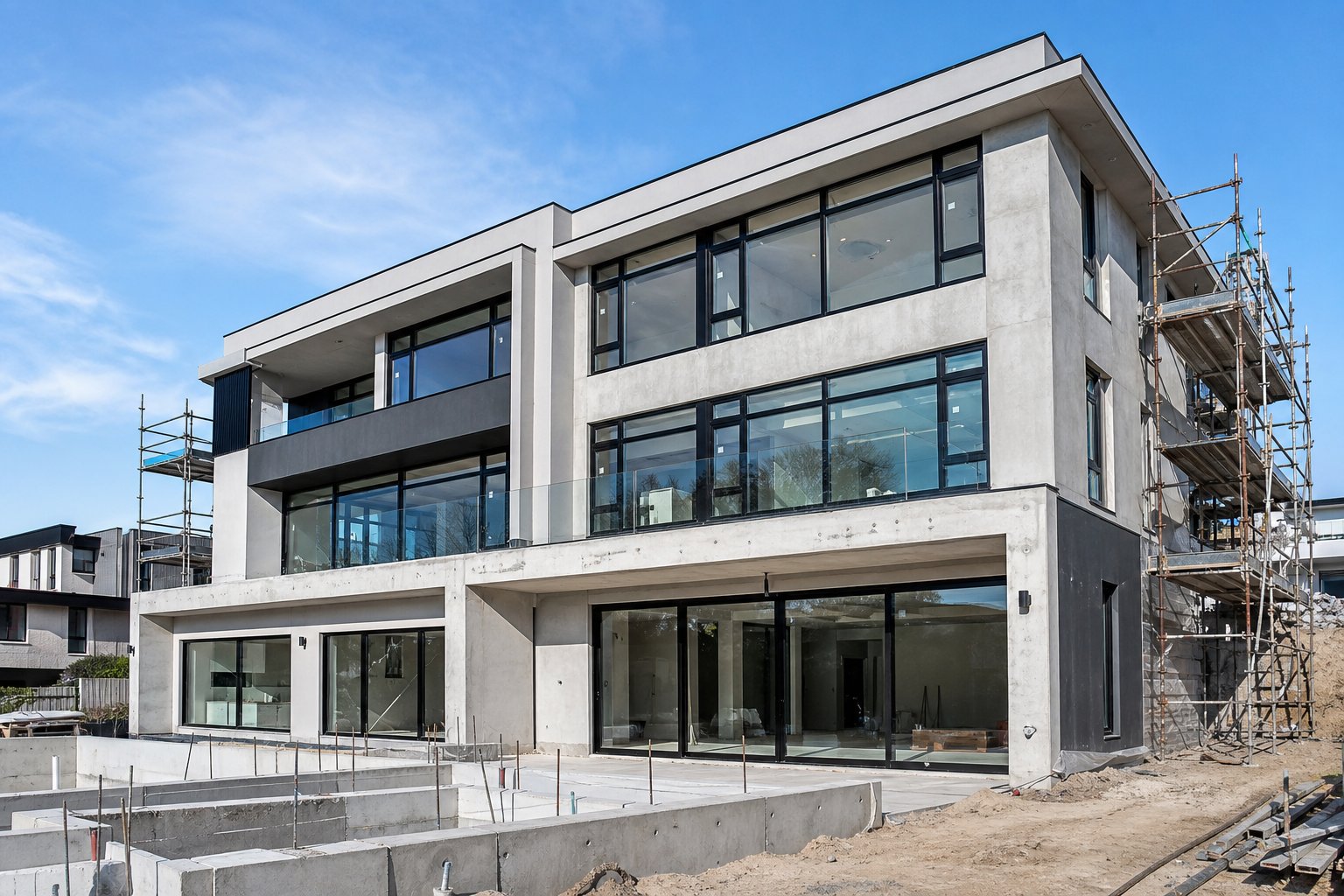
Documented performance is what separates a genuine specification from a marketing claim. But even verified, high-performing products come with a price range wide enough to confuse anyone comparing quotes. Two black aluminium double glazed windows can look identical in a brochure yet differ by 50% or more in cost, and the reasons are rarely obvious from a photograph alone.
Key Factors That Drive Window Pricing
Price variation in aluminium window systems is not random. It reflects measurable differences in materials, engineering, and project-specific requirements. Understanding which factors carry the most weight helps you read a quote critically rather than simply choosing the cheapest number on the page.
| Cost Factor | Impact on Final Price | What It Affects |
|---|---|---|
| Glass specification (Low-E, argon, laminated, acoustic) | High | Thermal performance, safety, noise reduction |
| Frame profile system (thermal break width, alloy grade) | High | Insulation, structural capacity, sightline width |
| Window size and custom dimensions | High | Material volume, engineering complexity, transport |
| Opening mechanism (fixed, casement, bi-fold, tilt-and-turn) | Medium–High | Hardware requirements, seal complexity, fabrication |
| Hardware quality (hinges, locks, rollers, handles) | Medium | Longevity, security rating, smoothness of operation |
| Surface finish (standard powder coat vs premium or anodised) | Medium | Durability, colour stability, coastal suitability |
| Installation complexity (height, access, wall type, retrofit vs new) | Medium | Labour hours, scaffolding, remedial work |
| Compliance testing and certification | Low–Medium | Documented performance assurance, warranty backing |
| Quantity and project scale | Low–Medium | Per-unit pricing, logistics efficiency |
Glass specification and frame engineering sit at the top because they define the product’s actual performance. A basic double glazed unit with clear float glass costs substantially less than one with Low-E coatings, argon gas fill, and laminated inner panes, yet both technically qualify as “double glazed.” Similarly, a narrow thermal break in a thinner alloy profile costs less to manufacture than a wide-break system in a premium-grade extrusion, but the thermal and structural performance gap between them is significant.
Opening mechanism matters more than many buyers expect. A fixed panel requires no hardware, no hinges, and no complex sealing, making it the most affordable configuration per square metre. Bi-fold and tilt-and-turn systems sit at the opposite end, demanding precision-engineered hardware, multi-point locking, and more intricate fabrication. Custom aluminium windows with non-standard dimensions or unusual configurations add further cost because they fall outside standard tooling and require individual engineering attention.
Project scale influences per-unit pricing in a straightforward way. A single aluminium window replacement for a bathroom costs more per opening than a full-house order of twenty units because setup, delivery, and installation mobilisation costs are spread across fewer windows. Builders and developers ordering at volume typically negotiate better rates, and manufacturers can optimise cutting and fabrication schedules for larger, standardised runs.
Understanding Value Beyond the Initial Price Tag
The quote on your desk represents supply cost at a single point in time. It does not capture what that window will cost you over the next 30 or 40 years. This is where total cost of ownership reshapes the conversation.
Budget products, whether old aluminum windows being replaced or cheap new units installed to save upfront, often carry hidden long-term costs. Thinner thermal breaks bleed energy every day, inflating heating and cooling bills season after season. Lower-grade hardware wears faster, leading to seal failures, draughts, and earlier mechanism replacement. Inferior coatings fade or chalk within a decade, requiring refinishing or full replacement windows aluminium buyers did not budget for.
A premium thermally broken system with quality glass, durable hardware, and a properly applied finish costs more on day one. But it holds its thermal performance, operates smoothly, and maintains its appearance for decades without intervention. Over a 40-year service life, the cumulative energy savings, avoided maintenance, and eliminated replacement cycle often make the higher-specification product the cheaper option in real terms.
When budgeting for aluminium replacement windows on an existing home, factor in the condition of surrounding structures. Replacing old aluminium windows that lack thermal breaks with modern thermally broken double glazed units may require modifications to reveals, flashings, or internal linings, particularly in older brick veneer or weatherboard homes where original openings were sized for different frame depths. These ancillary costs are legitimate project expenses, not hidden extras, and a transparent supplier will flag them during the quoting stage rather than after installation begins.
Set your budget around the performance outcome you need rather than the lowest available price. Ask what each quote includes, what it excludes, and what warranty backs the product. The answers will tell you whether you are comparing like with like, or whether a cheaper quote simply reflects a cheaper product dressed in the same black finish.
Assessing Quality and Compliance Standards
Price tells you what a product costs. Compliance documentation tells you what it actually does. Two quotes for black aluminium double glazed windows can sit within dollars of each other yet represent vastly different levels of tested, verified performance. The difference lives in the certifications, the hardware, the seals, and the warranty terms that most buyers never think to interrogate.
Certifications and Compliance Standards to Look For
In Australia, AS 2047 is the governing standard for windows and external glazed doors. It sets mandatory requirements for structural performance under wind load, water penetration resistance, air infiltration limits, and operating force. Any aluminium window installed in a building subject to the National Construction Code must comply. This is not optional, and it is not a premium upgrade. It is the legal baseline.
Beyond AS 2047, AS 1288 governs glazing selection and installation, specifying where safety glass is required and how it must perform under impact. For residential aluminum windows in bushfire-prone areas, BAL (Bushfire Attack Level) ratings add another compliance layer that dictates frame materials, glass types, and seal specifications based on the assessed threat level.
Energy performance sits under the WERS (Window Energy Rating Scheme) framework, which rates whole-window thermal performance using stars, much like appliance energy labels. NatHERS modelling for new homes and major renovations relies on accurate window performance data, so specifiers need verified U-values and Solar Heat Gain Coefficients rather than vague marketing claims.
For commercial aluminium windows on multi-storey projects, additional structural engineering certification may be required depending on building height, wind region, and facade exposure. Acoustic performance testing becomes critical for buildings near roads, flight paths, or rail corridors, where the aluminum frame glass assembly must achieve specific sound reduction ratings documented through laboratory testing.
The practical question is: how do you verify any of this? Look for a performance label on the frame or head of the window showing wind and water ratings in Pascals. Request the certificate of compliance from the manufacturer, ideally issued through an accredited body such as the Australian Glass and Window Association (AGWA). If the supplier cannot produce these documents, treat that silence as a red flag regardless of how attractive the price appears.
Hardware Seals and Warranty as Quality Signals
Certifications confirm the system performs under test conditions. Hardware and seals determine whether it keeps performing five, ten, or twenty years into service.
Three seal types work together in a quality aluminum glass frame assembly. Compression seals sit between the sash and frame, compressed when the window closes to block air and water. Weather seals, typically fin-style or bubble gaskets, provide a secondary barrier against wind-driven rain. Glazing seals hold the glass unit within the frame, preventing moisture ingress at the glass-to-frame junction where condensation risk is highest.
Cheap seals harden, crack, and lose elasticity within a few years, particularly under Australian UV exposure. Quality EPDM or silicone-based gaskets maintain flexibility across temperature extremes and resist UV degradation for decades. You cannot assess seal quality from a photograph, but you can ask the supplier what material their seals are made from and what replacement interval they recommend. If the answer is vague, the product likely uses generic components rather than engineered sealing systems.
Hardware, including hinges, multi-point locks, rollers, and handles, reveals manufacturing confidence through its brand and origin. Reputable aluminium window manufacturers specify named hardware from established European or Australian suppliers and publish the brand in their technical documentation. Budget products often use unbranded or generic hardware that wears faster, binds sooner, and lacks readily available replacement parts when something eventually fails.
Warranty terms function as a manufacturer’s bet on their own product. A 10-year structural warranty backed by documented compliance testing signals genuine confidence. A 2-year warranty with exclusions for coastal environments, colour change, and hardware wear signals a product built to a price rather than a standard. Read the warranty document itself, not just the headline number. Exclusions, claim processes, and conditions reveal what the aluminium window manufacturer actually stands behind.
Before committing to any supplier, verify the following quality checkpoints:
- AS 2047 compliance certificate — issued by an accredited testing body, not self-declared by the supplier.
- WERS or verified U-value data — whole-window thermal performance, not glass-only figures that ignore frame conductivity.
- Water penetration test results — rated in Pascals, matched to your site’s wind region and building height.
- Acoustic performance rating — laboratory-tested Rw value if noise reduction matters for your location.
- Hardware brand and warranty — named components with documented service life expectations.
- Seal material specification — EPDM or silicone gaskets with stated UV and temperature resistance.
- Finish warranty — minimum 10 years against peeling, chalking, or colour shift for powder coating; longer for anodised.
- Condensation resistance data — particularly important for thermally broken frames where internal surface temperatures determine mould risk.
- BAL compliance documentation — mandatory if your site falls within a designated bushfire-prone area.
Manufacturers who publish their compliance testing transparently give specifiers the confidence to commit. MEICHEN’s published certifications for thermal performance, weather resistance, and acoustic ratings illustrate what this transparency looks like in practice: documented, accessible data that architects and builders can reference directly during specification rather than chasing paperwork through a sales team. For commercial aluminium windows and large-scale residential projects alike, that kind of performance-led documentation streamlines the approval process and reduces risk for everyone involved.
Quality assessment is not about finding the most expensive product. It is about confirming that the product you are paying for has been tested, certified, and warranted to perform as claimed in Australian conditions. The documentation either exists or it does not, and that binary distinction matters far more than any subjective impression formed during a showroom visit.
How to Specify and Choose the Right Aluminium Window Supplier
Documentation proves a product performs. But documentation alone does not guarantee a smooth project. The supplier behind the product shapes everything from lead time accuracy to after-sales responsiveness, and choosing poorly here can undermine even the best-specified window system. Whether you are a homeowner searching for aluminium window suppliers in your area or a builder managing a multi-unit development, the selection process follows the same logic: ask the right questions, read the specification sheet critically, and evaluate the quote as a complete picture rather than a single dollar figure.
Questions to Ask Your Window Supplier
Most buyers focus on price and colour during the quoting stage. Professionals focus on what sits behind those surface details. The following questions, asked before you commit, separate capable suppliers from those who simply list aluminium windows for sale without the technical depth to back them up:
- What AS 2047 wind and water ratings does this specific window configuration achieve, and can you provide the test certificate?
- What is the whole-window U-value (not glass-only) for the frame profile and glazing combination you are quoting?
- Which thermal break system do you use, and what is the polyamide strip width in millimetres?
- What hardware brand is specified, and what is its independently rated cycle life?
- What powder coating or anodising system is applied, and what warranty covers colour stability and adhesion?
- What is the realistic lead time from order confirmation to delivery, and what causes common delays?
- Do you supply custom aluminium windows to non-standard dimensions, and how does that affect pricing and lead time?
- What after-sales support do you provide if a seal fails, hardware wears, or a unit develops condensation between panes?
- Can you supply a complete specification sheet showing frame depth, glass build-up, seal materials, and acoustic rating?
- Who is responsible for warranty claims: your company directly, or a third-party fabricator?
A supplier who answers these confidently and provides written documentation is demonstrating accountability. One who deflects, generalises, or promises to “get back to you” on basic technical details may lack the manufacturing control or product knowledge your project requires. For builders and specifiers managing Australian project requirements, aluminium window supplies sourced from transparent manufacturers reduce risk at every stage from specification through to handover.
Making the Final Decision for Your Project
Reading a specification sheet becomes straightforward once you know what matters. Look for the whole-window U-value rather than glass-centre figures, which flatter the product by ignoring frame losses. Confirm the water penetration rating in Pascals matches your site’s wind region. Check that the glass build-up listed (pane thickness, gas fill, coatings) aligns with what was discussed verbally. Discrepancies between a conversation and a written spec are not oversights; they are the quote telling you something the salesperson did not.
When comparing quotes, align specifications before comparing prices. A lower quote often reflects thinner thermal breaks, generic hardware, basic glass, or excluded installation costs rather than genuine value. The best aluminium windows for your project are not necessarily the most expensive, but they are the ones whose documented performance matches your thermal, acoustic, and durability requirements without hidden compromises.
Consider whether black aluminium double glazed windows suit your specific situation versus alternatives. uPVC costs less upfront but offers shorter service life, limited colour stability in dark tones, and bulkier profiles that reduce glass area. Timber delivers warmth and heritage character but demands ongoing maintenance that aluminium eliminates entirely. For most Australian projects prioritising longevity, slim sightlines, thermal performance, and low maintenance, thermally broken aluminium in a black finish remains the strongest all-round specification.
Lead times vary significantly across the industry. Standard configurations from established aluminium window suppliers typically ship within four to eight weeks. Custom sizes, non-standard finishes, or project-scale orders may extend to ten or twelve weeks depending on manufacturing capacity. Factor this into your construction programme early, particularly for new builds where window installation gates other trades like internal lining and painting.
Installation quality matters as much as product quality. Confirm whether your supplier offers supply-and-install or supply-only, and if the latter, ensure your installer has experience with the specific frame system being supplied. Incorrect installation voids warranties, compromises weather seals, and can damage thermally broken profiles if forced into openings that are out of square.
After-sales support reveals a supplier’s long-term commitment. Ask what happens if a sealed unit fails five years in, or if hardware needs replacement parts a decade after installation. Suppliers with local stock, documented spare-parts programs, and clear warranty claim processes protect your investment far better than those offering the lowest price today but no pathway for support tomorrow.
One practical tip that consistently separates professional-grade suppliers from the rest: look for those who publish detailed compliance documentation openly. Suppliers like MEICHEN, who make their certifications for thermal performance, weather resistance, and acoustic ratings publicly accessible, demonstrate the kind of accountability that simplifies specification for architects, builders, and consultants managing complex Australian projects. When the data is already published, you spend less time chasing paperwork and more time confirming it meets your requirements.
Frequently Asked Questions About Black Aluminium Double Glazed Windows
1. Do black aluminium window frames fade in Australian sun?
Quality black aluminium frames resist fading effectively under Australian UV conditions. Premium powder coatings formulated with UV-resistant resins maintain colour stability for 20 years or more when applied at correct film thickness with proper pre-treatment. Anodised black finishes are inherently UV stable because aluminium oxide does not degrade under ultraviolet radiation. The key is sourcing from manufacturers who use marine-grade pre-treatment and proven coating chemistry. Ask your supplier which coating system they use and what warranty they offer against colour change, as this reveals more about longevity than any product photograph.
2. Are thermally broken aluminium windows worth the extra cost over standard aluminium?
Thermally broken aluminium windows deliver measurably better insulation than non-thermally broken alternatives. Aluminium conducts heat roughly 1,000 times faster than timber, so without a thermal break the frame acts as a radiator fin, channelling warmth out in winter and drawing heat in during summer. The polyamide barrier between inner and outer frame sections prevents this thermal bridging, reducing condensation risk and improving whole-window U-values significantly. Over a 30 to 40 year service life, the energy savings from reduced heating and cooling loads typically offset the higher upfront cost, making thermally broken frames the more economical choice long-term.
3. What is the difference between powder coating and anodising for black aluminium windows?
Powder coating applies a pigmented resin film (60 to 150 microns thick) onto the aluminium surface, offering extensive colour and texture options at a lower cost. Anodising transforms the outer aluminium layer into aluminium oxide through an electrochemical process, creating an extremely hard, corrosion-resistant surface that is part of the metal itself. Anodised finishes offer superior scratch resistance and self-healing corrosion protection, making them ideal for coastal environments. Powder coating is easier to repair on site and provides more finish variety. Both methods deliver long-term durability when properly applied, but coastal properties often benefit from anodising’s inherent salt-air resistance.
4. What Australian standards should black aluminium double glazed windows comply with?
At minimum, aluminium windows installed in Australian buildings must comply with AS 2047 for structural performance, water penetration resistance, and air infiltration. AS 1288 governs glazing selection and safety glass requirements. WERS provides whole-window energy ratings, while NatHERS modelling requires verified thermal performance data. Properties in bushfire-prone areas need BAL-rated windows meeting additional material and seal specifications. Manufacturers like MEICHEN who publish their compliance certifications for thermal performance, weather resistance, and acoustic ratings at meichenwindows.com.au/compliance give specifiers verifiable data to reference during project specification rather than relying on unsubstantiated claims.
5. How much do black aluminium double glazed windows cost in Australia?
Pricing varies significantly based on glass specification, thermal break width, opening mechanism, window size, hardware quality, and finish type. Fixed panels cost least per square metre due to minimal hardware, while bi-fold and tilt-and-turn configurations sit at the premium end. Project scale also affects per-unit pricing, with larger orders achieving better rates through manufacturing efficiencies. Rather than focusing solely on upfront cost, consider total cost of ownership: cheaper windows with thinner thermal breaks and inferior hardware often cost more over time through higher energy bills, earlier seal failures, and replacement cycles. Request whole-window U-values and compliance certificates to ensure you are comparing equivalent performance levels across quotes.
More Window & Door Guides