Understanding Double Glazed Aluminium Windows
What Are Double Glazed Aluminium Windows
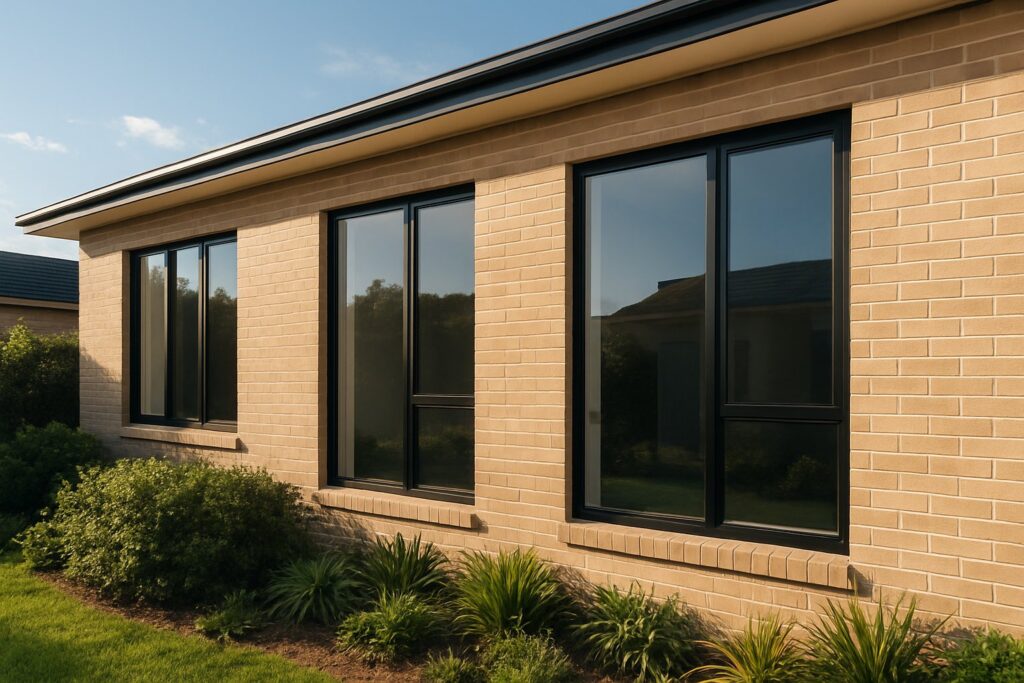
Strip a double glazed aluminium window back to basics and you find two panes of glass separated by a sealed cavity, all held together by an aluminium frame. That cavity — typically filled with argon gas or dehydrated air — acts as an insulating barrier that slows heat transfer and dampens sound. The glass itself can be toughened, laminated, or coated with low-emissivity films depending on performance goals, while the aluminium frame delivers the structural strength and slim sightlines that suit modern Sydney architecture.
So what are double glazed aluminium windows doing differently from the single-pane setups still found in many older homes? They turn the weakest thermal link in a building envelope — the glass — into an active layer of climate control. For double glazed windows in Sydney homes, that distinction matters more than most cities, given the combination of fierce summer sun and mild but energy-hungry winters.
Why Sydney Properties Are Switching to Double Glazing
Several pressures are converging at once. Electricity costs are projected to rise by as much as 24 per cent between late 2025 and mid-2026, turning inefficient glazing into an expensive liability. Road noise, aircraft flight paths, and tighter NCC energy requirements are adding urgency. Comfort expectations have shifted too — homeowners no longer accept rooms that overheat by midday or feel draughty at night.
The benefits of double glazing in aluminium frames go beyond energy bills. Reduced condensation, better acoustic privacy, and improved property value are driving a market-wide shift from single glazing across Sydney’s residential and commercial sectors.
This guide covers the full picture — technology, climate suitability, window styles, frame materials, compliance standards, cost factors, and installation — so you can make informed decisions whether you are building new, renovating, or specifying for a client. No sales pitch, just the information you need to why switch to double glazed windows in Sydney with confidence.
How Double Glazing Technology Works in Aluminium Frames
Knowing what sits inside a double glazed unit helps you understand why some windows outperform others by a wide margin. Each layer and component targets a specific weakness in the building envelope — heat leaking through glass, sound vibrating through frames, or moisture creeping past seals. Here is how it all fits together.
Components of a Double Glazed Unit
An insulated glass unit (IGU) is more than two sheets of glass glued into a frame. It is a sealed system where every element plays a defined role in thermal and acoustic performance. Remove or downgrade any single part and the whole assembly suffers.
- Glass panes — Most residential units use 4 mm to 6 mm float glass. Thicker panes improve acoustic insulation and strength. Options include toughened glass (up to five times stronger, shatters into small granules), laminated glass (holds together on impact, excellent for noise), and combinations of both for maximum safety and sound control.
- Low-E coatings — Microscopically thin metallic oxide layers applied to one or more glass surfaces. Low-E glass in aluminium windows reflects radiant heat back toward its source, reducing energy loss by 30 to 50 per cent compared to uncoated glass. Softcoat variants using silver layers deliver the highest performance and sit protected inside the sealed cavity.
- Spacer bars — These perimeter strips hold the two panes at a precise distance apart and house desiccant that absorbs residual moisture. Traditional aluminium spacers are cheap but conduct heat readily, creating a cold “halo” at the glass edge. Warm edge spacer bars in double glazing use stainless steel or composite materials that cut edge heat loss by 5 to 10 per cent and dramatically reduce condensation risk.
- Gas fill — The sealed cavity is filled with a gas denser than air to slow convective heat transfer. Argon gas filled double glazed units are the standard choice, offering roughly 30 per cent lower thermal conductivity than air at a reasonable cost. Krypton performs even better in narrow cavities but costs significantly more, so it is typically reserved for premium specifications.
- Dual seal system — A primary polyisobutylene (PIB) seal blocks moisture and gas escape, while a secondary silicone or polyurethane seal provides structural bonding and weather protection. Together they keep the unit performing for 20 years or more.
Why Thermal Breaks Matter for Aluminium Frames
Here is the catch with aluminium: it conducts heat roughly 1,000 times more readily than uPVC. Without intervention, an aluminium frame becomes a thermal highway, transferring summer heat inward and winter warmth outward — completely undermining the insulating glass you just paid for.
Thermal break aluminium window technology solves this by splitting the frame profile into two separate sections — one facing the interior, one facing the exterior — connected only by strips of reinforced polyamide. These non-conductive polyamide inserts interrupt the metal-to-metal path, drastically reducing conductive heat flow through the frame itself. The result is an aluminium window that retains its slim sightlines and structural strength while delivering thermal performance far closer to what the IGU is capable of.
Thermal breaks also reduce interior condensation. By keeping the inside face of the frame warmer, they prevent surface temperatures from dropping below dew point on cool mornings — a common complaint with older, non-broken aluminium windows in Sydney’s humid climate.
How Heat and Sound Are Blocked
Understanding how does double glazing work in aluminium frames comes down to three heat transfer mechanisms, each addressed by a different part of the system:
- Conduction — Heat travels through solid materials. The gas-filled cavity replaces a direct glass-to-glass path with a low-conductivity gap, while thermal breaks interrupt conduction through the frame.
- Convection — Warm air rises and cool air falls, creating circulation that carries heat across a gap. Heavier argon or krypton molecules move more sluggishly than air, suppressing convection currents inside the cavity.
- Radiation — Heat radiates as infrared energy from warm surfaces to cool ones. Low-E coatings reflect this infrared radiation back, preventing it from crossing the cavity.
Acoustic performance follows a related logic. Sound energy is dampened each time it passes through a material boundary — glass to gas, gas to glass, glass to frame. Using asymmetric glass thicknesses (for example, 6 mm outer and 4 mm inner) disrupts the resonant frequency that a uniform pair would share, broadening the range of noise frequencies absorbed. Laminated glass adds another boundary layer via its PVB interlayer, making it particularly effective near busy roads or flight paths.
All of these components work as a system. Premium glass paired with a standard aluminium spacer and no thermal break will underperform a well-specified unit where every element pulls its weight. That system-level thinking becomes especially important when you start matching window specifications to Sydney’s varied climate challenges — intense western sun, coastal humidity, and noise corridors that demand different glass and frame combinations depending on orientation and location.
Sydney Climate Challenges and How Double Glazing Responds
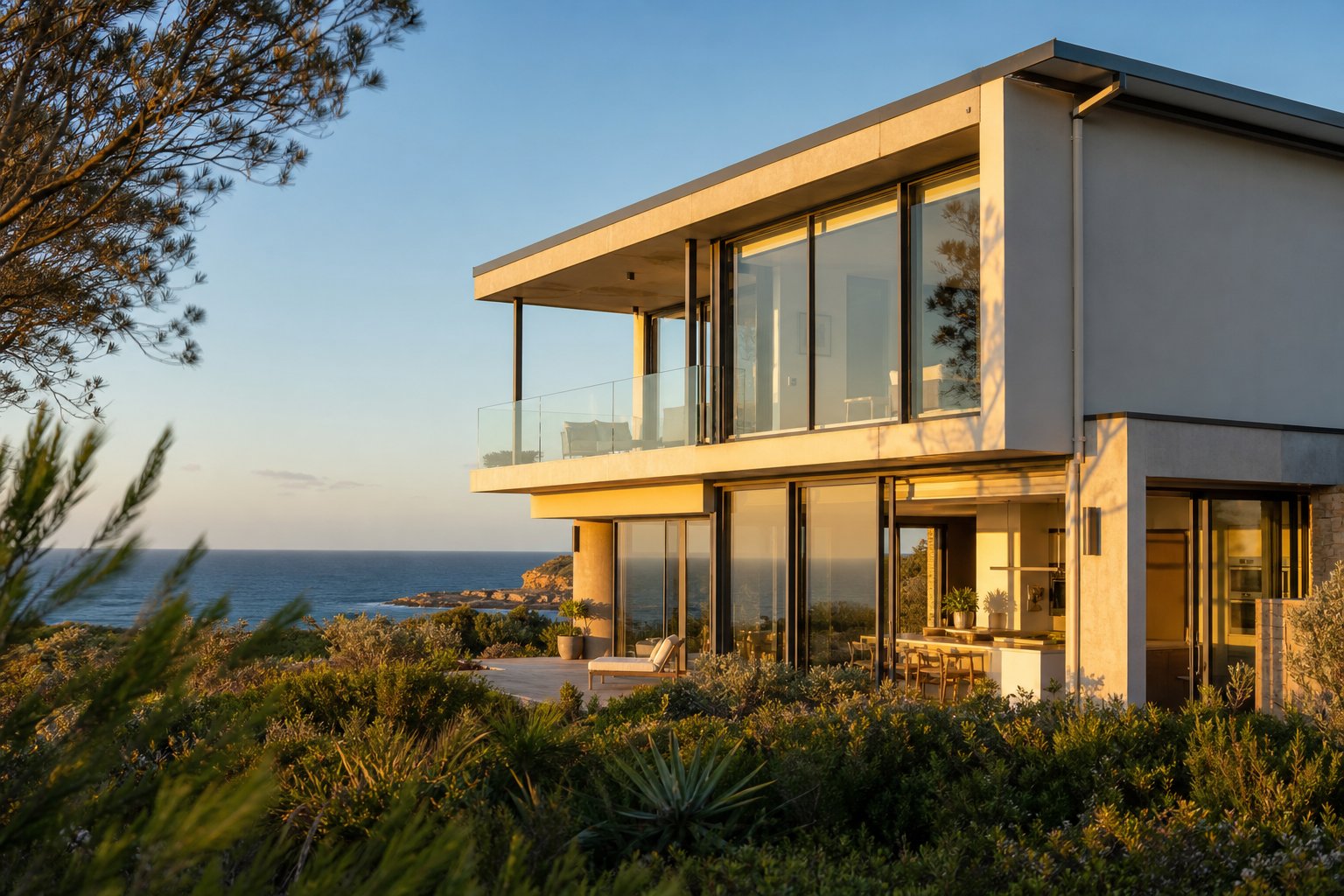
Sydney does not hand you a single climate problem — it hands you several at once, and they shift depending on which direction your windows face and how close you sit to the coast or a flight path. A west-facing living room in Penrith deals with a completely different thermal load than a beachfront bedroom in Coogee battling salt corrosion and southerly wind noise. Effective glazing specification starts with understanding what your specific location throws at the building envelope.
Western Sun and Solar Heat Gain in Sydney
Anyone who has sat in a west-facing room at 4 pm in January knows the problem. Low-angle afternoon sun pours through glass at precisely the time outdoor temperatures peak, turning living spaces into ovens and forcing air conditioning to work overtime. This is where Solar Heat Gain Coefficient (SHGC) becomes the critical number.
SHGC measures the fraction of solar energy that passes through glazing — a value of 0.30 means 30 per cent of the sun’s heat gets inside. For solar heat gain windows in western suburbs Sydney, specifying a low SHGC on west and north-facing openings is essential. Low-E coatings tuned for solar control can push SHGC below 0.30 while still allowing useful visible light through, keeping rooms bright without the furnace effect.
Orientation changes the equation entirely. The NSW BASIX thermal comfort guidelines recommend reducing window area on west, east, and northwest facades to limit cooling loads, while north-facing glass can use a higher SHGC to capture beneficial winter warmth. South-facing windows lose heat but gain almost no solar energy, so a lower U-value matters more than SHGC on that elevation. Double glazed aluminium windows allow you to specify different glass coatings per orientation — low solar gain on the west, neutral or clear on the south — rather than applying a one-size-fits-all approach that compromises comfort somewhere.
Sydney’s humid subtropical summers add another layer. High humidity reduces the effectiveness of evaporative cooling and makes condensation more likely on poorly insulated frames. Thermally broken aluminium keeps interior frame surfaces above dew point, preventing the moisture buildup that feeds mould in bathrooms and bedrooms during sticky January nights.
Mild winters still demand heating — particularly in elevated western suburbs where overnight temperatures regularly drop below 5°C. A low U-value across the entire glazing system (glass and frame combined) reduces heat escaping outward, meaning your heating runs less and rooms stay warmer longer after sunset.
Coastal Salt Spray and Frame Durability
Sydney’s geography puts a huge number of homes within salt spray range. The Eastern Suburbs, Northern Beaches, Sutherland Shire coastline, and harbour-facing properties all cop varying degrees of airborne chloride that attacks unprotected metals relentlessly.
Australian Standard AS/NZS 2312 classifies atmospheric corrosion environments from C1 (very low) through to C5 (very high). According to corrosion classification guidance for NSW coastal projects, properties within 1 to 3 km of surf coast or open tidal water typically fall into C4 (high), while beachfront locations within 500 metres sit in C5 (very high). Two homes in the same suburb can carry different classifications depending on elevation, aspect, and proximity to breaking waves.
For double glazed windows in Sydney coastal homes, marine grade aluminium windows designed to resist salt spray are not optional — they are the baseline. Marine-grade alloys (5052 and 5083 series) contain higher magnesium content that resists chloride attack far better than standard 6063 architectural aluminium. Pair that with chrome-free immersion pre-treatment and powder coat thickness of 80 microns or greater, and the frame can handle decades of salt exposure without blistering or white oxidation at cut edges.
Fixings matter too. Stainless steel 316 grade fasteners should be standard in C4 and C5 zones — the cheaper 304 grade lacks adequate chloride resistance and will corrode at connection points, potentially compromising the entire window installation from behind.
Noise Reduction Near Roads and Flight Paths
Sydney’s noise map reads like a web of overlapping corridors. Aircraft approach paths cross the Inner West, parts of the Eastern Suburbs, and Sutherland. Heavy rail lines cut through the lower North Shore and western corridors. Major arterial roads generate constant low-frequency rumble that standard single glazing barely touches.
Noise reduction windows near Sydney flight paths need to address a specific acoustic challenge: aircraft engines produce a high proportion of low-frequency sound that travels further and penetrates lightweight building elements more easily than typical traffic noise. As acoustic glazing research explains, low-frequency sound waves are longer, bend around obstacles, and pass through uniform glass panes with less resistance.
The solution lies in asymmetry and damping rather than brute thickness. Using different glass thicknesses on the inner and outer panes — say 6 mm outside and 4 mm inside — disrupts the resonant frequency that a matched pair would share, broadening the range of noise frequencies the system absorbs. Laminated acoustic glass adds a PVB interlayer that converts vibration energy into negligible heat rather than passing it straight through. Combined with an argon-filled cavity sized to disrupt low-frequency transmission, these configurations deliver meaningful reductions in perceived noise during flyovers and train pass-bys.
Sealing quality is equally critical. Even a small air gap around an operable sash can undermine an expensive acoustic glass specification. Awning and casement styles with compression seals outperform sliding windows acoustically, which is worth considering when selecting window types for bedrooms facing a noise source.
For properties in bushfire-prone fringe areas — parts of the Hills District, Blue Mountains fringes, and northern Sydney bushland — bushfire rated double glazed windows in Sydney must meet BAL (Bushfire Attack Level) requirements under AS 3959. This typically means toughened glass as a minimum, with specific frame and seal configurations rated to withstand radiant heat and ember attack at the designated BAL level for the site.
Each of these climate pressures points toward the same conclusion: generic window specifications fail Sydney homes. The right glass coating, frame finish, seal type, and acoustic configuration depend entirely on orientation, proximity to coast or noise source, and bushfire exposure. That level of customisation is exactly where window style selection becomes the next critical decision — because how a window opens and seals directly affects how well it delivers on these performance demands.
Window Styles That Work Best With Double Glazing
Choosing the right glass and frame specification only gets you halfway. The style of window — how it opens, how it seals, and how much of the opening it exposes — determines whether that specification actually delivers in daily life. A perfectly rated IGU in a poorly sealed sliding frame will underperform a modest unit in a tightly compressed awning sash. For Sydney homes juggling heat, noise, and ventilation demands that shift room by room, matching window style to purpose is where comfort gains become tangible.
Awning Casement and Fixed Window Performance
These three styles share a common trait: when closed, the sash compresses against the frame with rubber or silicone gaskets, creating a near-airtight seal. That compression mechanism is what separates them from sliding alternatives in thermal and acoustic terms.
Awning windows hinge at the top and push outward from the bottom. The design lets you ventilate during rain without water entering — a practical advantage for bathrooms, kitchens, and laundries where moisture needs an exit path year-round. Double glazed aluminium awning windows in Sydney are among the most popular choices for exactly this reason. Their compression seal delivers strong weather performance, and because the sash presses firmly into the frame when locked, they rate highly for both thermal insulation and noise reduction. They also sit high on security — an outward-opening sash at height is difficult to lever from outside.
Casement windows hinge at the side and swing outward, offering maximum airflow when fully open. Both sashes on a double casement can open independently, catching cross-breezes effectively in living rooms and bedrooms. Like awning styles, casements use compression seals that perform well acoustically. The trade-off is external clearance — they need room to swing, which can conflict with narrow pathways or balconies.
Fixed windows do not open at all, and that is precisely their advantage. With no moving parts, no sash gaps, and no hardware penetrations, fixed panels deliver the best thermal and acoustic performance of any window style. They suit feature walls, stairwells, and high-level glazing where ventilation is handled elsewhere. For the best window style for noise reduction on a facade facing a busy road or flight path, fixed panels paired with asymmetric laminated glass are hard to beat. Their limitation is obvious — zero ventilation — so they work best combined with operable windows in the same room.
Sliding and Bifold Options for Living Spaces
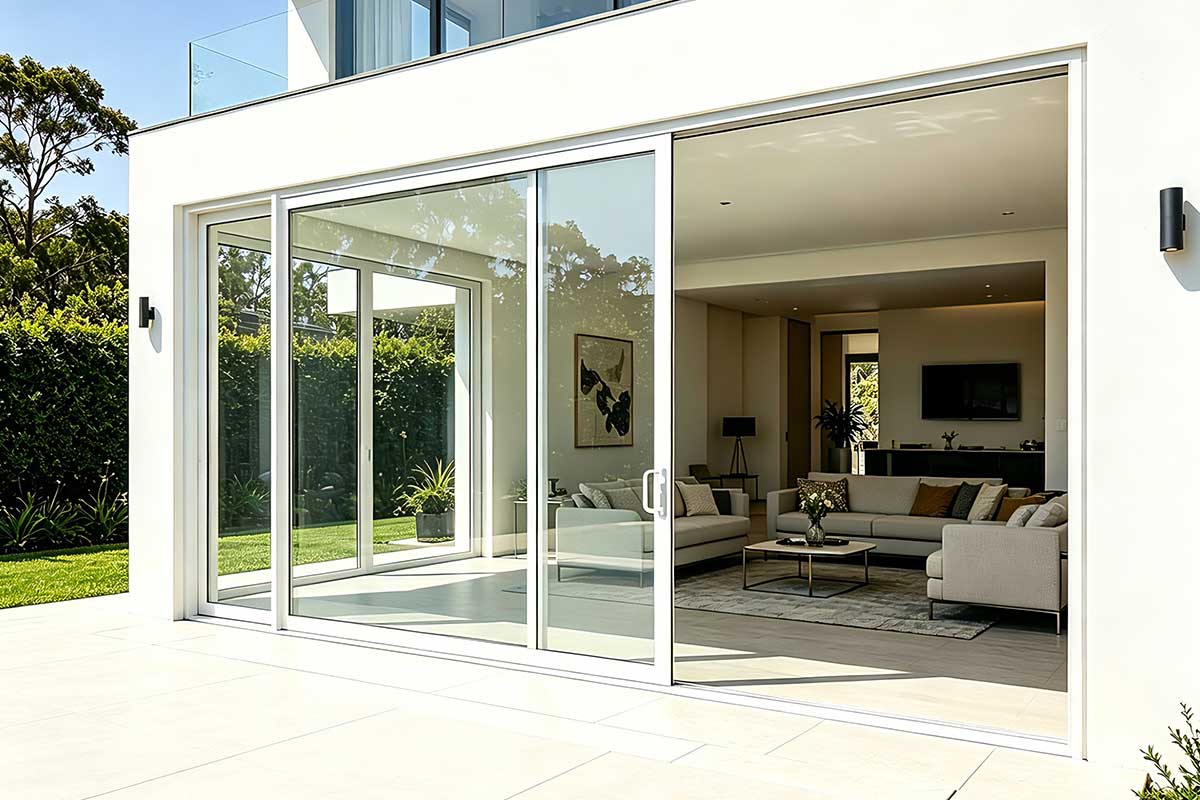
Living areas and entertaining zones demand wide openings. Sliding windows and bifold double glazed aluminium doors in Sydney deliver that scale, but their sealing mechanisms differ from compression-style windows, and the performance implications are worth understanding.
Sliding windows run horizontally along tracks, making them space-efficient — nothing protrudes inside or outside when open. They suit bedrooms, home offices, and living rooms where furniture placement near the window matters. Sliding double glazed windows for living rooms provide generous ventilation across half the opening width and are easy to operate. The downside is air tightness: sash-to-frame contact relies on brush or fin seals rather than compression gaskets, which allows slightly more air infiltration. In acoustic terms, this means sliding windows typically rate a few decibels below awning or casement equivalents. For rooms facing a quiet garden, that difference is negligible. For a bedroom on a main road, it matters.
Bifold windows and doors fold multiple panels back against each other, creating an almost fully open wall between indoor and outdoor spaces. When closed, quality bifold systems use compression seals at each panel junction and at the head and sill. Thermal performance when shut can be strong, though the number of frame members means slightly more aluminium in the sightline — and more potential seal points to maintain over time. Bifold configurations excel at merging living areas with decks and courtyards, flooding interiors with natural light and ventilation. Installation complexity and cost sit higher than standard sliding or awning options, and proper alignment during installation is critical to long-term seal integrity.
Louvre windows deserve a mention for wet areas and tropical-influenced designs. Multiple glass blades pivot simultaneously, offering fine ventilation control. Double glazed louvres exist but are heavier and more expensive than single-pane versions. Their air tightness when closed is generally lower than any other style, making them a poor choice where thermal or acoustic performance is the priority — but useful in covered outdoor rooms or secondary ventilation openings.
| Window Style | Thermal Performance | Ventilation | Weather Sealing | Best Room Application |
|---|---|---|---|---|
| Fixed | Excellent — no air gaps | None | Excellent | Feature walls, stairwells, high-level glazing |
| Awning | Very good — compression seal | Good — ventilates in rain | Very good | Bathrooms, kitchens, laundries |
| Casement | Very good — compression seal | Excellent — full sash opening | Very good | Living rooms, bedrooms, dining areas |
| Sliding | Good — fin/brush seals | Good — half opening width | Good | Bedrooms, offices, living rooms |
| Bifold | Good to very good (when closed) | Excellent — near-full opening | Good (multiple seal points) | Living/entertaining areas, patios |
| Louvre | Fair — blade gaps when closed | Excellent — adjustable airflow | Fair | Covered outdoor rooms, wet areas |
Retrofit Double Glazing vs Full Frame Replacement
Not every Sydney home needs brand-new windows from scratch. Some frames are structurally sound and aesthetically important — particularly in character homes with detailed timber joinery or heritage-listed facades. The question is whether upgrading the glass alone delivers enough improvement, or whether the frame itself is holding performance back.
Retrofit double glazing keeps the existing frame in place and replaces the single pane with an insulated glass unit. The glass changes; the frame stays. This approach works best when frames are in good structural condition, the glazing rebate is deep enough to accept an IGU, and the primary goal is improving thermal comfort or reducing condensation. It is also the path of least disruption — less dust, less patching of plaster or render, and typically a lower upfront cost per opening.
The limits are real, though. As APS Double Glazing’s retrofit analysis explains, older aluminium frames without thermal breaks still conduct heat readily even with new glass installed. Existing seals, hardware, and drainage paths remain unchanged, so draughts and rattling may persist. If the frame is corroded, warped, or too shallow to accept a standard IGU, retrofit becomes impractical or uneconomical.
Full frame replacement removes everything — glass, frame, hardware — and installs a purpose-built double glazed system designed so that IGU, seals, thermal breaks, and hardware all work as an integrated unit. You reset the window’s age and performance entirely, and you gain the flexibility to change styles (say, swapping an old sliding window for an awning), adjust opening sizes, or upgrade to configurations that meet current NCC and BASIX requirements.
For retrofit double glazing in older Sydney homes, the decision often comes down to frame condition and long-term plans. A few guiding questions help clarify the path:
- Are frames visibly corroded, soft, cracked, or difficult to operate? Full replacement is likely the better investment.
- Do you see daylight around closed sashes, or do windows rattle in wind? The frame’s sealing ability is compromised — new glass alone will not fix that.
- Is the home undergoing broader renovation where walls, cladding, or interiors are already being opened up? Full replacement integrates naturally into that scope and avoids retrofitting into frames you may replace later anyway.
- Are heritage or strata restrictions in play? Retrofit or sympathetically designed replacements may be the only permitted option on street-facing elevations.
Many homeowners mix both approaches — full replacement on the worst-performing or most exposed elevations, retrofit where frames remain sound and appearance matters. Staging the work across multiple budgets is common and practical, provided you plan for consistent frame colours and styles as you progress.
Whichever path you choose, the frame material itself shapes the ceiling of what is achievable. Standard aluminium, thermally broken aluminium, uPVC, and timber each bring different strengths and weaknesses to Sydney’s demanding conditions — and understanding those trade-offs is the next step in narrowing down the right specification for your project.
Aluminium vs Other Frame Materials for Sydney Homes
Four frame materials dominate the double glazed window market in Sydney, and each brings a distinct set of trade-offs. Two homes can install identical insulated glass units yet feel noticeably different — simply because one uses thermally broken aluminium and the other uses a standard aluminium frame with no thermal interruption. The frame accounts for a significant portion of whole-window heat transfer, particularly in designs with heavy framing or multiple sliding panels. Choosing the right material is not about picking a winner in the abstract — it is about matching strengths to Sydney’s specific combination of salt air, UV intensity, humidity, and temperature swings.
Thermally Broken Aluminium as the Performance Standard
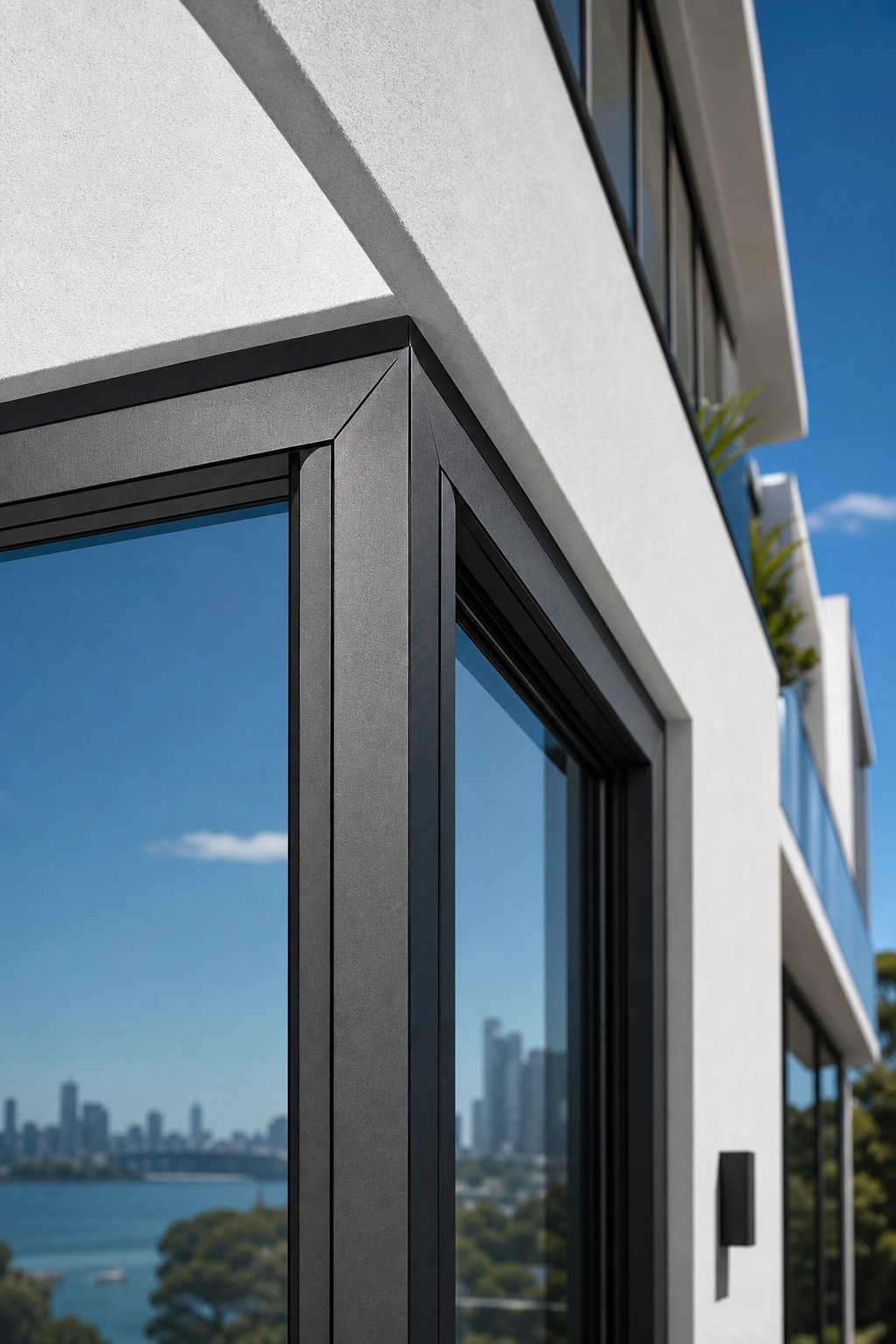
Standard aluminium conducts heat at roughly 160 to 200 W/m·K — hundreds of times more readily than uPVC or timber. Without modification, that conductivity turns the frame into a thermal bridge that undermines even premium glass. Thermally broken aluminium solves this by inserting reinforced polyamide strips between the interior and exterior frame sections, cutting conductive heat flow dramatically.
The performance difference is substantial. Non-thermally broken aluminium frames typically produce whole-window U-values (Uw) around 3.0 W/m²K or higher, even with decent double glazing installed. Thermally broken equivalents bring that figure down to approximately 2.0 to 2.7 W/m²K — closing the gap with uPVC and timber while retaining aluminium’s structural advantages. For thermally broken aluminium window U-value performance in real-world Sydney conditions, that improvement translates to warmer interior frame surfaces in winter, less condensation on cool mornings, and reduced heat gain through the frame on hot afternoons.
Beyond thermal numbers, thermally broken aluminium keeps what makes aluminium attractive in the first place: slim sightlines that maximise glass area, high strength-to-weight ratios that allow larger spans without bulky profiles, and dimensional stability that resists warping under Sydney’s temperature extremes. It is the reason most architect-specified residential projects and commercial facades now default to thermally broken systems rather than standard aluminium or alternative materials.
How Each Frame Material Handles Sydney Conditions
Sydney asks a lot of window frames. Salt-laden air corrodes unprotected metals within months. UV radiation degrades organic coatings and plastics over years. Humidity promotes mould on surfaces that drop below dew point. And temperature cycling between cool winter mornings and 40-degree summer afternoons stresses seals and joints repeatedly. Here is how each material responds.
Standard aluminium (non-thermally broken) — Structurally excellent. Powder-coated finishes resist UV and salt well when specified to appropriate thickness (60 to 80 microns minimum in coastal zones). Frames last decades with minimal maintenance beyond occasional washing. The fatal weakness is thermal performance: frame U-values commonly sit between 5.5 and 7.0 W/m²K, meaning the frame bleeds heat regardless of what glass you install. Condensation on interior frame surfaces is common in air-conditioned homes during humid months. For budget-conscious projects where thermal performance is secondary — garages, sheds, or well-shaded openings — standard aluminium still has a role. For living spaces, it is increasingly difficult to justify.
Thermally broken aluminium — Retains all the durability and aesthetic advantages of standard aluminium while addressing the thermal weakness. Salt resistance depends on the same powder coat and alloy specifications as standard frames, so coastal suitability is identical when correctly specified. The polyamide thermal break itself is unaffected by moisture, UV, or salt. Maintenance is minimal — periodic washing with fresh water in coastal areas, occasional hardware lubrication. The trade-off is cost: thermally broken systems carry a premium over standard aluminium, though the gap has narrowed as demand has grown and manufacturing volumes have increased.
uPVC — Multi-chambered profiles deliver inherently low thermal conductivity without needing a thermal break. Frame U-values typically range from 1.5 to 2.5 W/m²K, and whole-window values often land between 1.8 and 2.4 W/m²K with standard double glazing. uPVC does not corrode, does not need painting, and handles humidity without degradation. However, it has limitations in Sydney conditions. Extreme heat can cause expansion issues in dark-coloured profiles, which is why most uPVC systems are limited to lighter colours or require foil wrapping for darker finishes. Profiles are bulkier than aluminium, reducing glass area in the same opening size. UV stability has improved significantly in modern formulations, but long-term colour retention in full northern sun exposure remains a consideration compared to powder-coated aluminium.
Timber — Natural thermal conductivity sits around 0.10 to 0.15 W/m·K, making timber an excellent insulator. Frame U-values of 1.4 to 2.2 W/m²K are typical, rivalling uPVC. The aesthetic warmth of timber suits heritage homes and character renovations where the frame is a design feature. The problem in Sydney is maintenance. Humid summers, salt air in coastal suburbs, and intense UV on exposed facades demand regular repainting or re-staining — typically every three to five years on weather-facing elevations. Neglect leads to swelling, cracking, and eventual rot. For aluminium vs timber window frames durability over a 30-year lifespan, timber demands significantly more time and money in upkeep, particularly on upper storeys where access is difficult and expensive.
| Frame Material | Thermal Performance (Uw) | Durability | Maintenance | Aesthetics | Indicative Cost | Sydney Suitability |
|---|---|---|---|---|---|---|
| Thermally broken aluminium | 2.0–2.7 W/m²K | Excellent — corrosion-resistant with correct finish | Low — wash and lubricate | Slim profiles, wide colour range, modern lines | Mid to high | Strong all-round performer for coastal, urban, and bushfire zones |
| Standard aluminium | 3.0+ W/m²K | Excellent structurally | Low | Slim profiles, wide colour range | Low to mid | Limited by poor thermal performance; suits non-habitable or shaded openings |
| uPVC | 1.8–2.4 W/m²K | Very good — no corrosion | Very low — no painting | Bulkier profiles, limited dark colours | Mid | Good for most areas; colour and profile limitations in some architectural contexts |
| Timber | 1.8–2.5 W/m²K | Good if maintained | High — repaint every 3–5 years | Warm, natural, suits heritage | Mid to high | Demanding in coastal and humid areas; best where protected by eaves or verandas |
When comparing thermally broken aluminium windows vs uPVC in Sydney, the thermal numbers are close — often within 0.3 to 0.5 W/m²K of each other when both are paired with quality double glazing. The deciding factors tend to be aesthetic preference, profile slimness, colour flexibility, and how the frame handles large spans. Aluminium wins on sightline width and structural capacity for oversized openings; uPVC wins on raw insulation value per dollar in standard residential sizes.
For the best frame material for coastal Sydney homes, thermally broken aluminium with marine-grade powder coating edges ahead because it combines corrosion resistance, thermal performance, and the ability to handle large-format openings common in coastal architecture. uPVC is a strong contender where slimline aesthetics are less critical and budgets are tighter.
Whichever material you lean toward, verifying performance claims matters. Manufacturers should provide certified U-value and SHGC data for the specific window configuration — not just the glass or the frame in isolation, but the whole system tested together. The NSW BASIX framework recognises distinct performance categories for aluminium, thermally broken aluminium, and timber/uPVC/fibreglass frames, each with different default U-values depending on operating type and glazing system. Specifiers and builders working on Sydney projects can cross-reference manufacturer compliance documentation — such as MEICHEN’s compliance and certifications page — to confirm that thermally broken aluminium systems meet the Australian standards required for their specific application, rather than relying on generic marketing claims about frame performance.
Material selection sets the thermal and durability ceiling for your windows. But understanding how that ceiling translates into measurable energy ratings — and whether it satisfies the compliance thresholds your project actually needs to hit — requires a closer look at the rating systems and regulatory standards that govern glazing performance in NSW.
Energy Ratings and Compliance Standards Explained
Performance numbers on a spec sheet mean nothing if you cannot interpret them — and they mean even less if they do not satisfy the regulatory thresholds your project must hit. Sydney’s glazing market uses a handful of key metrics to quantify how well a window manages heat and solar energy. Understanding these ratings gives you a common language for comparing products, and it reveals why certain glass-and-frame combinations pass compliance while others fall short.
Understanding U-Values SHGC and WERS Ratings
Three metrics do most of the heavy lifting when you are evaluating double glazed aluminium windows. Each measures something different, and a strong result in one does not guarantee a strong result in another. Here is what each tells you in practical terms:
- U-value (Uw) — Measures the rate of heat transfer through the entire window system (glass plus frame), expressed in W/m²K. Think of it as an insulation score: the lower the number, the less heat escapes in winter and enters in summer. A standard single-glazed aluminium window might sit around 5.5 to 6.5 W/m²K. A well-specified double glazed unit with thermally broken aluminium frames typically achieves 2.0 to 2.7 W/m²K — cutting heat transfer by more than half. For double glazed window U-value ratings explained simply: anything below 3.0 W/m²K represents solid performance for Sydney’s climate zone.
- Solar Heat Gain Coefficient (SHGC) — Measures the fraction of solar radiation that passes through the glazing, on a scale from 0 to 1. A value of 0.25 means only 25 per cent of the sun’s heat energy enters the room. Lower SHGC suits west and north-facing windows where you want to block summer heat. Higher SHGC (0.45 to 0.60) can benefit south-facing glass where passive solar warmth is welcome in winter. The right number depends entirely on orientation — there is no single “good” SHGC for every window in a home.
- WERS star ratings — The Window Energy Rating Scheme translates raw U-value and SHGC data into a consumer-friendly star system, rated from 0 to 10 stars separately for heating and cooling performance. A WERS rating for double glazed aluminium windows of 5 stars or above for cooling indicates strong performance in Sydney’s predominantly cooling-driven climate. The scheme is accredited by the Australian Fenestration Rating Council and feeds directly into NatHERS energy modelling software used by assessors across NSW.
- Visible Transmittance (Tvw) — Indicates how much natural light passes through. A higher value means brighter interiors. This metric does not directly affect compliance thresholds, but it influences liveability — heavily tinted glass that achieves a low SHGC at the expense of natural light can make rooms feel dark and cave-like.
- Air Infiltration — Rates how much air leaks through the window when closed. Lower values mean fewer draughts and better control over indoor conditions. Window style affects this significantly — compression-sealed awning and casement windows outperform sliding styles here.
The critical point for specifiers: these metrics interact. A window with an excellent U-value but high SHGC on a west-facing wall will still overheat the room. Matching the right combination of values to each orientation and climate zone is what separates a compliant, comfortable home from one that passes on paper but fails in practice.
NCC and BASIX Compliance in NSW
Two regulatory frameworks govern glazing performance for Sydney building projects, and they overlap in ways that can confuse even experienced builders.
The National Construction Code (NCC) Section J sets energy efficiency requirements for all building classes across Australia. For NCC Section J window requirements in Sydney, the code mandates that the building envelope — including glazing — contributes to reducing energy consumption, peak demand, and greenhouse gas emissions. Windows are modelled individually by orientation, size, frame type, and glass specification. The code does not prescribe a single product; it sets performance outcomes that the design must achieve.
For residential projects in NSW, BASIX (Building Sustainability Index) acts as the primary compliance pathway. Every new home and major renovation above the $50,000 threshold must obtain a BASIX certificate before development approval is granted. Since October 2023, BASIX thermal comfort targets align with a 7-star NatHERS equivalent — roughly 25 per cent more stringent than the previous 6-star benchmark. Windows are among the most scrutinised elements in the assessment because they represent the weakest thermal point in most wall assemblies.
For BASIX compliance windows in Sydney NSW, double glazed aluminium systems with thermally broken frames have become the practical baseline for most designs. Single glazing in standard aluminium frames can still technically pass, but only with heavy compensating measures elsewhere — reduced window area, extensive external shading, or additional wall insulation — that most clients and architects find unacceptable. In practice, specifying double glazing with appropriate Low-E coatings and thermally broken frames from the outset gives energy assessors the flexibility to achieve compliance without compromising the design intent.
Different glass and frame combinations produce different modelled outcomes depending on orientation and climate zone. A north-facing window might use clear double glazing with moderate SHGC to capture winter warmth, while the same home’s west-facing openings need solar control Low-E glass with SHGC below 0.30. NatHERS software models each window individually, so a blanket specification across all elevations often either over-spends on unnecessary coatings or under-performs where it matters most.
Architects, builders, and specifiers working on Sydney projects should verify that their chosen window systems carry documented performance data — tested U-values, SHGC figures, and WERS ratings for the specific configuration being installed, not just generic frame or glass data in isolation. Manufacturers who publish this information transparently, such as through dedicated compliance and certification documentation, make it straightforward to confirm that aluminium window systems meet NCC and BASIX requirements before the energy assessment is finalised — avoiding costly specification changes late in the approval process.
What Influences Cost and How to Budget
Compliance ratings and energy performance set the technical bar — but at some point, every homeowner or builder asks the same question: how much do double glazed aluminium windows cost in Sydney? The honest answer is that quotes vary enormously, and the variation is not random. It reflects real differences in specification, complexity, and what is (or is not) included in the price. Understanding those variables puts you in a far stronger position to compare quotes fairly and avoid surprises mid-project.
What Drives the Price of Double Glazed Aluminium Windows
No two window projects carry the same price tag because no two projects share identical specifications, access conditions, or site constraints. The factors affecting double glazing price in Sydney stack on top of each other — change one variable and the total shifts noticeably. Here they are, ranked roughly from most to least impactful on your final invoice:
- Window size and total glass area — Larger openings require more material, heavier IGUs, and often structural support upgrades. A 2 m² fixed panel costs substantially more than a 600 x 900 mm awning window, and the relationship is not linear — oversized units may need thicker glass or specialised handling equipment.
- Frame type and thermal break inclusion — Standard aluminium frames sit at the lower end. Thermally broken aluminium carries a premium that reflects the more complex extrusion and assembly process. The gap has narrowed as production volumes grow, but it remains a meaningful line item.
- Glass specification — Clear float glass is the baseline. Adding Low-E coatings typically adds 15 to 20 per cent to glass cost. Acoustic laminated glass adds 25 to 35 per cent. Toughened safety glass adds 15 to 25 per cent. Combine multiple treatments — say, toughened Low-E with laminated inner pane — and the glass alone can represent a large share of the unit cost.
- Number of operable sashes vs fixed panels — Every opening sash adds hardware, seals, hinges, and manufacturing complexity. A wall of fixed glass with one operable awning panel costs less per square metre than the same wall with every panel opening.
- Custom vs standard sizing — Non-standard dimensions can add 20 to 40 per cent over stock sizes. Where possible, designing around common module widths reduces cost without compromising aesthetics.
- Installation complexity — Ground-floor access on a new build is straightforward. Retrofit into an existing brick veneer wall on a second storey with scaffold requirements, removal of old frames, structural make-good, and flashing integration is a different job entirely. Difficult access in multi-storey buildings pushes labour costs higher.
- Hardware and locking quality — Budget hardware works initially but wears faster, particularly in salt-air environments. Commercial-grade stainless steel hardware adds cost upfront and saves replacement expense later.
Budgeting and Getting Accurate Quotes
Knowing what to look for in a double glazed window quote separates informed buyers from those who get caught by hidden extras after signing. A few principles help:
Get at least three quotes on identical specifications. Prices can vary 15 to 30 per cent between companies for the same product. But comparison only works if each quote describes the same glass type, frame system, hardware grade, and scope of work. Vague line items like “double glazed windows — supply and install” tell you almost nothing.
Check what is included beyond the windows themselves. A comprehensive quote should itemise removal and disposal of existing windows, structural make-good (patching render, replacing damaged reveals), external flashing and weatherproofing, internal trim or architrave reinstatement, and site clean-up. The cheapest quote often omits several of these items, leaving you to pay separately — or discover the gaps mid-installation when you have no leverage.
Ask about warranty structure. Distinguish between the manufacturer’s product warranty (covering the IGU seal, frame finish, and hardware) and the installer’s workmanship warranty (covering fitting, flashing, and sealing). Both matter. A quality sealed unit should carry a minimum 10-year seal warranty; frames with appropriate powder coat should be warranted for 15 years or more in coastal zones.
Clarify lead times and payment staging. Manufacturing lead times for custom aluminium windows in Sydney typically run four to eight weeks depending on complexity and demand. Payment structures that tie progress payments to milestones (deposit, manufacture complete, installation complete) protect both parties.
Long-Term Value Beyond the Purchase Price
Upfront cost is only half the equation. Long term savings from double glazed windows accumulate quietly over years through multiple channels that single glazing simply cannot match.
Energy bill reduction is the most measurable benefit. Simulations aligned to the AGWA 7.0 Star Cost Upgrade Analysis found that upgrading to high-performance double glazing in a typical Sydney single-storey home saves approximately $598 annually — roughly 11 per cent of total energy costs. Over a 30-year window lifespan, that compounds to nearly $18,000 in energy savings alone. Double-storey homes showed annual savings around $800, with lifetime figures approaching $24,000.
Comfort value is harder to quantify but equally real. Rooms that stay cooler in summer and warmer in winter without constant HVAC cycling are simply more pleasant to live in. Reduced condensation protects interior finishes and discourages mould — saving on repainting and health-related costs over time.
Property value responds too. Energy-efficient homes with quality glazing consistently attract buyer interest in a market increasingly aware of running costs. While exact uplift varies, the combination of lower bills, better comfort, and modern aesthetics positions a home favourably at resale.
Maintenance savings compound over decades as well. Thermally broken aluminium frames need little beyond periodic washing — a stark contrast to timber frames demanding repainting every three to five years at several hundred dollars per window each cycle. Over 30 years, that maintenance differential alone can exceed the original price premium of aluminium.
Budgeting for double glazed aluminium windows is ultimately a question of time horizon. The upfront figure matters, but the total cost of ownership — energy, maintenance, comfort, and longevity — tells the fuller story. What determines whether that investment delivers as promised, however, comes down to how well the windows are actually installed and maintained once they arrive on site.
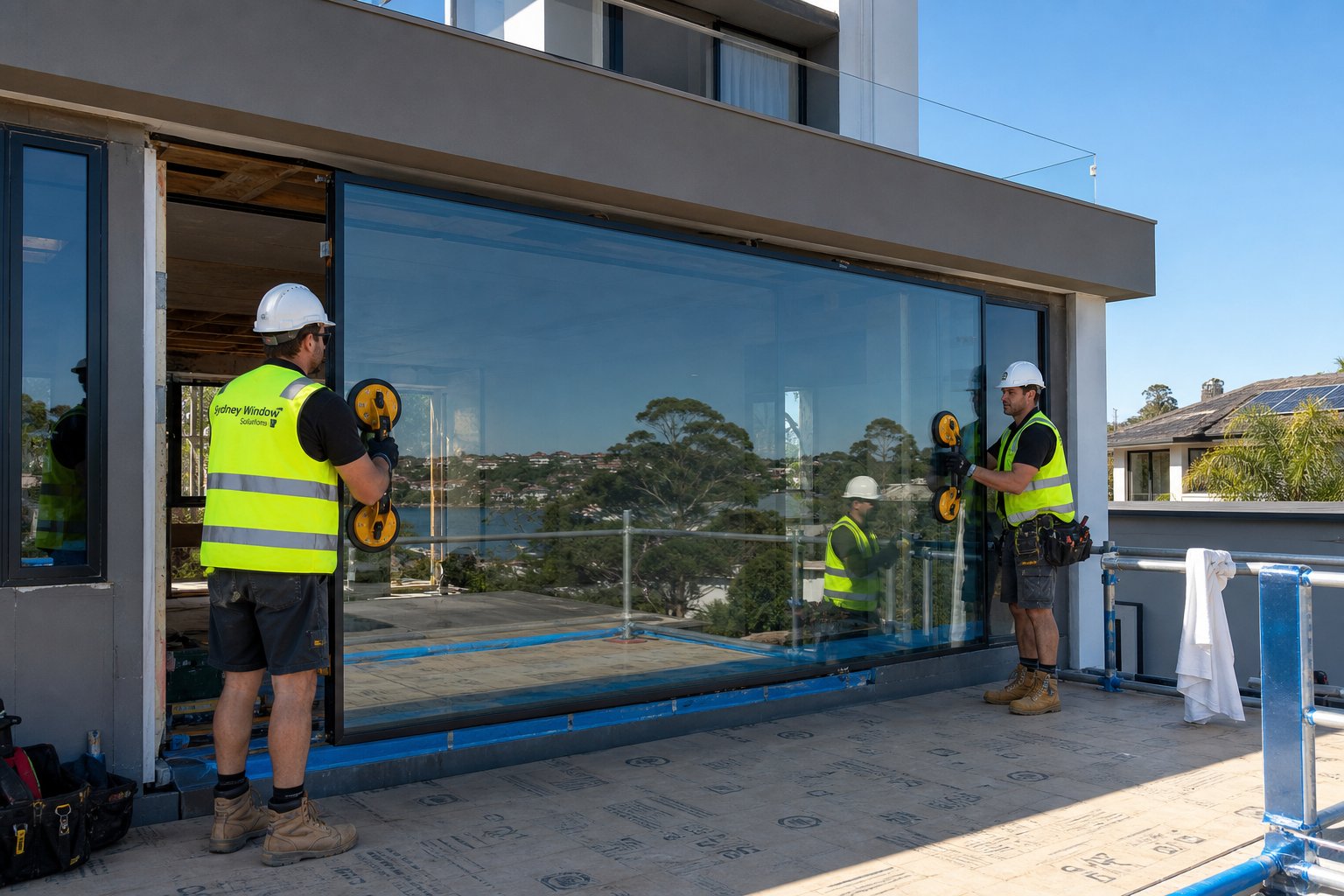
Installation Process and Choosing a Qualified Installer
A perfectly specified window sitting in a warehouse does nothing for your energy bills or comfort. The gap between product quality and real-world performance is bridged entirely by installation — how the frame is positioned, how flashing directs water, how seals close out air, and whether the whole assembly meets the compliance standards your project requires. A rushed or under-qualified install can turn a premium double glazed system into an expensive source of draughts, leaks, and warranty disputes. Knowing what the process looks like — and what separates a competent installer from a risky one — protects your investment from day one.
The Installation Process Step by Step
The double glazed window installation process in Sydney follows a predictable sequence whether you are replacing a single bathroom window or fitting out an entire new build. Timelines vary with project scale and access complexity, but the stages remain consistent.
- Initial consultation and site measure — A qualified installer visits the property to measure each opening precisely, assess structural conditions (lintel type, wall construction, reveal depth), and discuss specifications. This is where orientation-specific glass choices, frame colours, hardware preferences, and ventilation requirements get locked in. Expect this visit to take 30 to 90 minutes depending on the number of openings.
- Specification and quotation — Based on site measurements, the installer prepares a detailed quote covering frame type, glass specification per window, hardware, flashing method, removal scope, and make-good work. Review this carefully against the budgeting principles covered earlier — vague line items deserve clarification before you sign.
- Manufacturing — Custom aluminium windows in Sydney typically require four to eight weeks of production lead time. Larger or more complex orders — oversized bifolds, non-standard configurations, or specialist glass treatments — may extend this. Your installer should provide a confirmed production timeline and keep you updated on progress.
- Home preparation — Before the crew arrives, clear furniture and valuables away from window areas on both sides. Remove curtains, blinds, and wall hangings near openings. Cover floors and remaining furniture with drop sheets to protect against dust and debris. Disable window-linked security alarms. Outside, move pot plants, outdoor furniture, and anything obstructing access to the work zone.
- Removal of existing windows — The old frame and glass are carefully extracted to avoid damaging surrounding wall structure. Old sealant, foam, and debris are cleaned from the opening. The installer checks that the reveal is level, square, and structurally sound before proceeding.
- Flashing and waterproofing — Waterproof flashing tape is applied around the perimeter of the opening before the new frame goes in. This is the primary barrier against water ingress into the wall cavity and is a mandatory requirement under the National Construction Code. Skip or botch this step and you risk concealed moisture damage that may not show for years.
- Frame installation and levelling — The new double glazed unit is positioned in the opening, shimmed to level and plumb, then secured with appropriate fixings. Correct fixing type matters — masonry anchors for brick, timber screws for stud walls, and stainless steel fasteners in coastal zones.
- Sealing — Internal and external gaps between frame and wall are sealed to prevent air and water movement. This secondary weather barrier works alongside flashing to deliver the thermal and acoustic performance the glazing system is designed for. Poor sealing is one of the leading causes of draughts, condensation, and premature window failure.
- Hardware fitting and operation check — Handles, locks, stays, and restrictors are installed and adjusted. Every operable sash is tested for smooth operation, correct compression against seals, and secure locking.
- Clean-up and walkthrough — All debris, off-cuts, packaging, and old windows are removed from the property. The installer demonstrates how each window operates and explains any maintenance requirements. Compliance documentation — including performance labels where required under AS 2047 — should be handed over at this stage.
For a typical room with two to three windows, expect the on-site work to take most of a day. A full-home replacement across 10 to 15 openings usually spans two to four days depending on access and complexity. Retrofit installations into existing frames tend to be faster per opening since no structural make-good is needed.
Noise and dust are unavoidable during removal, particularly in brick veneer or rendered walls. If you work from home, plan to use a different room. Keep children and pets away from the work zone for safety and to let the crew move freely.
How to Evaluate and Choose an Installer
Knowing how to choose a window installer in Sydney comes down to verifiable credentials rather than slick marketing. The glazing industry in NSW has clear licensing requirements, and cutting corners here exposes you to legal liability, voided insurance, and substandard work that costs more to fix than it saved upfront.
Start with the non-negotiables:
- NSW contractor licence — Any glazing work valued above $5,000 (labour and materials including GST) legally requires the installer to hold a contractor licence issued by NSW Fair Trading. Unlicensed work carries fines of up to $22,000 for individuals and $110,000 for companies. More importantly, work done without a licence is not covered by the statutory Home Building Compensation Fund — meaning you have no safety net if the installer disappears or goes bankrupt mid-project. Verify licence status online before engaging anyone.
- Public liability and workers compensation insurance — Ask for current certificates of currency. If an uninsured worker is injured on your property, you may be liable. If property damage occurs during installation, you need a clear path to resolution.
- Specific experience with double glazed aluminium systems — Installing thermally broken aluminium with sealed IGUs is a different skill set from fitting single-pane windows or basic glass replacement. Ask how many double glazed aluminium projects the installer has completed, whether they are trained or accredited by the frame manufacturer, and whether they can show recent examples of similar work.
- Warranty clarity — Distinguish between the product warranty (manufacturer covers IGU seal integrity, frame finish, hardware) and the workmanship warranty (installer covers fitting, flashing, sealing). Both should be provided in writing. A quality IGU seal should carry a minimum 10-year warranty. Installer workmanship warranties of five to seven years are reasonable; anything less than five years is a red flag.
- Compliance documentation — Professional installers handle performance labelling, provide compliance certificates where required, and ensure the installation meets AS 2047 and NCC requirements. If an installer cannot explain how they address compliance, they likely do not.
- References and completed project examples — Ask for two or three recent client contacts, ideally for projects similar in scope to yours. Drive past completed work if possible — external finish quality, flashing detail, and frame alignment are visible from the street.
Red flags to watch for: reluctance to provide a licence number, quotes that seem dramatically cheaper than competitors without clear explanation, pressure to pay large deposits before manufacturing begins, and vague timelines with no written schedule.
Maintenance and Longevity in Sydney Conditions
How long do double glazed windows last? With quality materials and proper installation, high-quality double glazed units typically last 20 to 35 years before the sealed unit needs attention. Aluminium frames themselves can last 30 to 40 years or more — often outliving the glass seals by a comfortable margin. The frame rarely fails; it is the IGU seal that determines when replacement becomes necessary.
Several factors influence where your windows land within that range:
- Seal quality and gas retention — The dual seal system (PIB primary seal plus structural silicone or polyurethane secondary seal) keeps moisture out and insulating gas in. Over decades, small amounts of gas gradually escape — a natural process that accelerates if seals are stressed by poor installation, excessive thermal cycling, or physical damage.
- UV and heat exposure — West-facing windows cop the most intense solar radiation and temperature swings, which stress seals more than shaded or south-facing units. Expect west-facing IGUs to age slightly faster than those on protected elevations.
- Coastal salt exposure — Salt does not attack the glass or gas fill, but it can degrade hardware, fixings, and frame finishes if maintenance is neglected. In C4 and C5 corrosion zones, regular washing is essential to prevent salt buildup from attacking powder coat at cut edges and screw points.
Recognising double glazed window seal failure signs early lets you address problems before they worsen:
- Condensation between the panes — The clearest indicator. Moisture trapped inside the cavity means the seal has failed and the insulating gas has escaped. The unit’s thermal performance is compromised, and the fogging will not clear on its own. Replacement of the IGU (not necessarily the entire frame) is the fix.
- Visible haze or milky film on inner glass surfaces — Mineral deposits left by evaporating moisture inside the cavity. This follows seal failure and indicates the unit has been compromised for some time.
- Draughts around closed sashes — May indicate seal or gasket degradation rather than IGU failure. Compression seals on awning and casement windows can harden over time and lose their ability to close gaps. Gasket replacement is usually straightforward and far cheaper than full window replacement.
- Difficulty operating windows — Stiff or binding sashes can signal frame distortion, hardware wear, or buildup of salt and grime in tracks. Early attention prevents damage to seals caused by forcing sashes past obstructions.
For aluminium window maintenance in coastal Sydney, the routine is simple but non-negotiable. Wash frames and tracks with fresh water and mild detergent every three months — more frequently for beachfront properties within 500 metres of surf. Avoid abrasive cleaners or solvents that damage powder coat. Lubricate hardware (hinges, locks, rollers) with a light silicone-based spray annually. Inspect weatherseals and drainage slots for blockages, particularly after storms that deposit sand and debris in tracks.
Inland properties need less frequent attention — a six-monthly wash and annual hardware check is typically sufficient. The key principle is preventing buildup rather than reacting to damage. Salt, grime, and organic matter left sitting on aluminium surfaces for months will eventually compromise the finish, while the same surfaces washed regularly remain intact for decades.
Treated well, double glazed aluminium windows represent one of the lowest-maintenance, longest-lasting upgrades you can make to a Sydney home. The frame outlasts most other building components, the glass performs for two decades or more, and the only recurring cost is a bucket of soapy water and 20 minutes with a cloth. Compared to the ongoing repainting timber demands or the energy bills single glazing generates, that is a trade-off most homeowners are happy to make.
Frequently Asked Questions About Double Glazed Aluminium Windows in Sydney
1. How much can I save on energy bills with double glazed aluminium windows in Sydney?
A typical single-storey Sydney home upgrading to high-performance double glazing can save approximately $598 per year on energy costs, which equates to roughly 11 per cent of total energy expenditure. Over a 30-year window lifespan, cumulative savings approach $18,000. Double-storey homes see annual savings closer to $800, with lifetime figures near $24,000. These figures assume thermally broken aluminium frames paired with appropriate Low-E coatings matched to each window orientation.
2. Do double glazed aluminium windows meet BASIX requirements in NSW?
Double glazed aluminium windows with thermally broken frames have become the practical baseline for meeting current BASIX thermal comfort targets in NSW, which now align with a 7-star NatHERS equivalent. While single glazing in standard aluminium can technically pass with heavy compensating measures elsewhere, most designs achieve compliance more efficiently by specifying double glazing with Low-E coatings from the outset. Manufacturers who document their compliance credentials — such as those publishing certified U-value and SHGC data for specific configurations — make it straightforward for energy assessors to verify performance before finalising approvals.
3. What is the difference between thermally broken and standard aluminium window frames?
Standard aluminium conducts heat roughly 1,000 times more readily than uPVC, creating a thermal bridge that undermines insulating glass. Thermally broken aluminium solves this by splitting the frame into interior and exterior sections connected only by reinforced polyamide strips. This interrupts conductive heat flow, reducing whole-window U-values from around 3.0 W/m²K or higher down to approximately 2.0 to 2.7 W/m²K. The result is warmer interior frame surfaces in winter, less condensation, and reduced heat gain in summer — while retaining aluminium’s slim sightlines and structural strength.
4. How long do double glazed aluminium windows last in Sydney’s coastal climate?
High-quality double glazed units typically last 20 to 35 years before the sealed unit needs attention, while aluminium frames themselves can last 30 to 40 years or more. In coastal zones classified C4 or C5 for corrosion, longevity depends on correct specification: marine-grade alloys, powder coat thickness of 80 microns or greater, and stainless steel 316 grade fasteners. Regular maintenance — washing frames with fresh water every three months for beachfront properties — prevents salt buildup from compromising the finish and extends service life significantly.
5. Should I retrofit double glazing or replace the entire window frame?
The decision depends on frame condition, budget, and performance goals. Retrofit works well when existing frames are structurally sound and the glazing rebate is deep enough to accept an insulated glass unit — it costs less and causes minimal disruption. However, older aluminium frames without thermal breaks still conduct heat readily even with new glass, and existing seals and drainage remain unchanged. Full frame replacement resets performance entirely with an integrated system of IGU, thermal breaks, seals, and hardware. If frames show visible corrosion, daylight around closed sashes, or difficulty operating, replacement delivers better long-term value.
More Window & Door Guides