What Drives Double Glazed Aluminium Window Prices
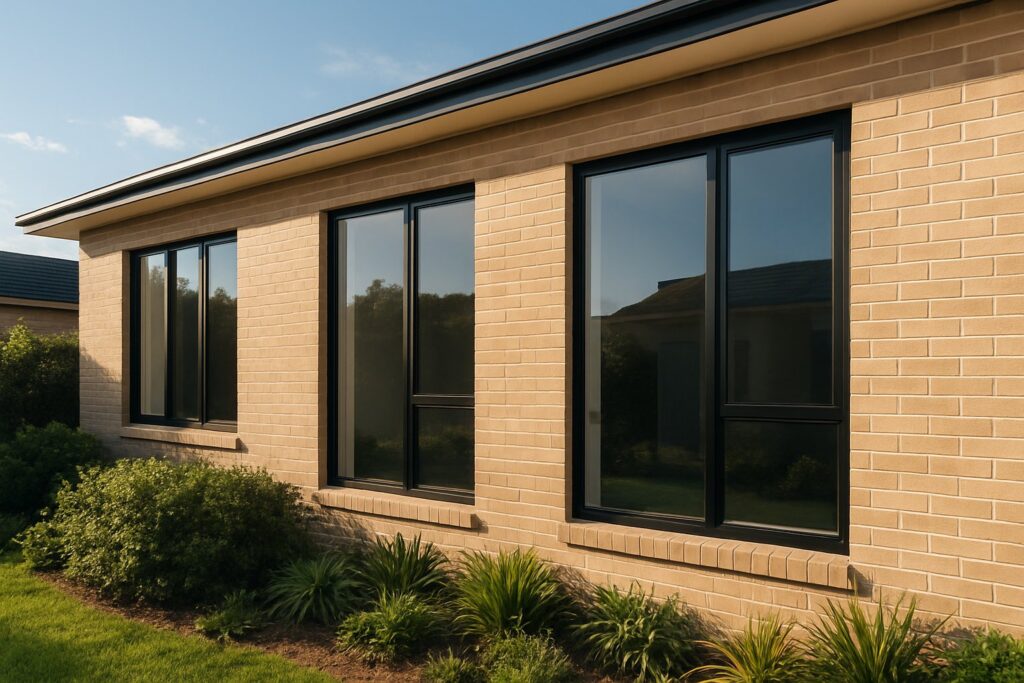
Search for double glazed aluminium windows prices and you will find a sea of broad ranges that tell you very little. That is because this product category sits in a fundamentally different space from standard uPVC or timber windows. Aluminium frames paired with sealed insulated glass units deliver structural strength, slimmer sightlines, and design flexibility that other materials simply cannot match at scale. The trade-off is a pricing structure shaped by more variables than most homeowners expect.
What Makes Double Glazed Aluminium Windows a Distinct Category
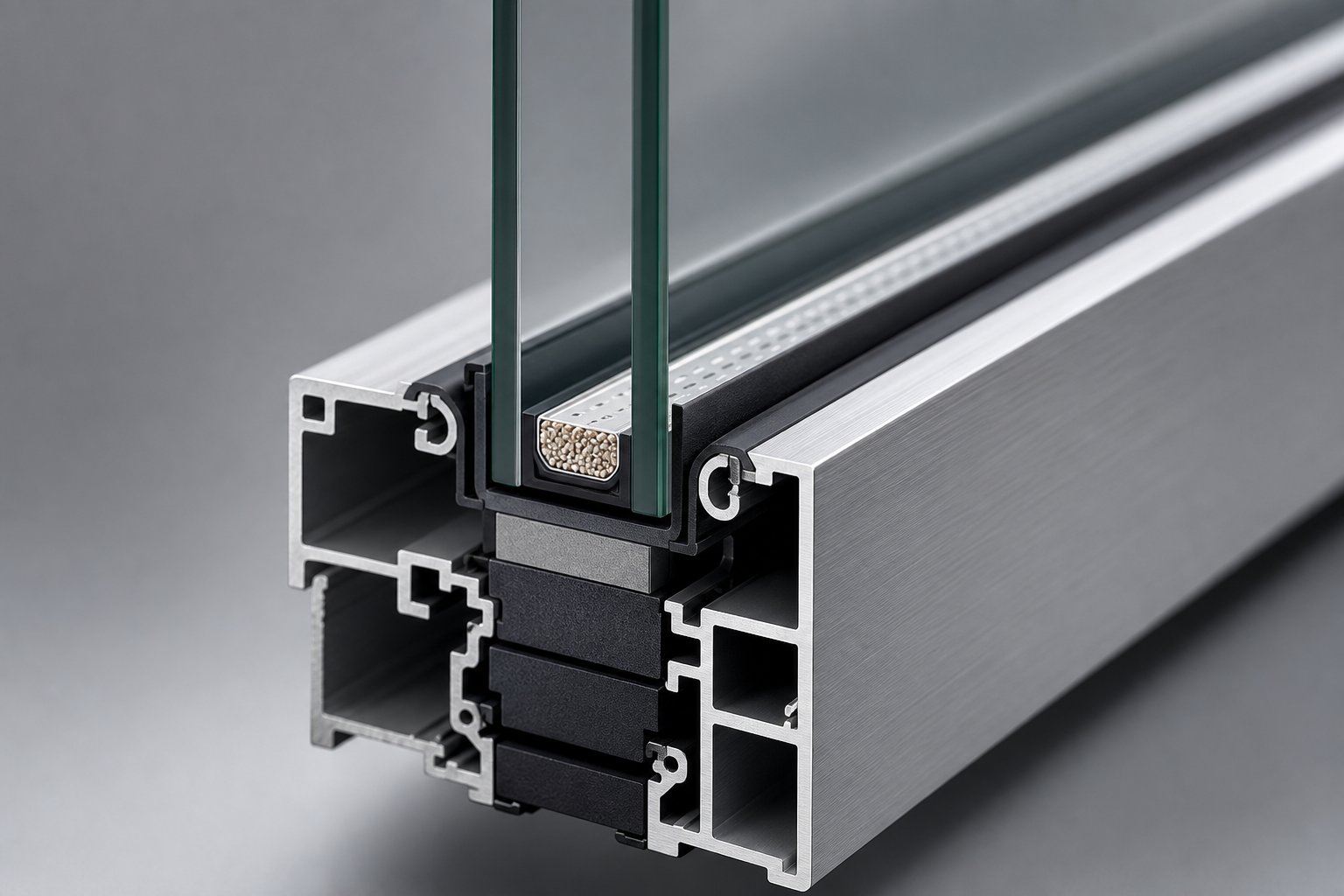
At its core, a double glazed aluminium window consists of extruded aluminium frame profiles housing an insulated glass unit, or IGU. That IGU is two panes of glass separated by a spacer bar, sealed hermetically around the edge, with the cavity filled by air or an inert gas like argon. The aluminium frame itself is typically thermally broken, meaning polyamide strips interrupt the metal between interior and exterior faces to reduce heat conduction.
This combination creates a window that can span larger openings, support heavier glass configurations, and resist coastal corrosion far better than alternatives. Aluminium double glazed windows handle the demands of Australian conditions, from tropical humidity in northern Queensland to salt-laden coastal air along the eastern seaboard, without the ongoing maintenance burden of timber.
Why Pricing Is More Variable Than Other Window Types
Unlike uPVC, where most manufacturers work from a handful of similar profile systems, aluminium double glazing draws from dozens of profile platforms with different thermal break depths, sightline widths, and structural ratings. Two windows that look almost identical from the street can differ dramatically in specification and cost.
The same window opening can cost vastly different amounts depending on the profile system selected, the thermal break grade specified, and the glass configuration chosen. A standard casement and a high-performance casement of the same size may sit 40 to 60 percent apart in price.
This variability is precisely why generic double glazing cost figures often mislead. The real price drivers live in the details: frame engineering, glass specification, and hardware grade. Each of these layers compounds on the next, making double-glazed aluminium windows a product where informed specification matters far more than shopping on headline price alone.
Realistic Price Ranges for Double Glazed Aluminium Windows
Knowing that specification drives cost is useful, but at some point you need actual numbers to build a budget. The figures below reflect current Australian supply-only and installed pricing for double glazed aluminium windows across common residential configurations. Treat them as a planning baseline rather than a fixed quote — your final double glazed windows cost will depend on the specific choices covered in later sections.
Typical Per-Window Costs for Standard Sizes
Pricing data from international aluminium window manufacturers and Australian fabricators shows that double pane windows cost varies significantly by opening style. A fixed-lite window with no operable hardware sits at the lower end, while multi-panel bi-fold systems command a premium due to complex tracking, hinges, and reinforced profiles.
The table below shows indicative supply-only prices in AUD for standard residential sizes with a thermally broken aluminium frame and double glazed IGU (argon-filled, Low-E coated):
| Window Type | Typical Size | Economy Tier | Mid-Range Tier | Premium Tier |
|---|---|---|---|---|
| Fixed lite | 1200 x 1200 mm | $450 – $650 | $650 – $900 | $900 – $1,300 |
| Casement | 600 x 1200 mm | $550 – $800 | $800 – $1,200 | $1,200 – $1,700 |
| Awning | 1200 x 600 mm | $500 – $750 | $750 – $1,100 | $1,100 – $1,500 |
| Sliding (2-panel) | 1800 x 2100 mm | $700 – $1,000 | $1,000 – $1,500 | $1,500 – $2,200 |
| Bi-fold (per panel) | 900 x 2100 mm | $800 – $1,100 | $1,100 – $1,600 | $1,600 – $2,400 |
Economy tiers typically use standard thermal break profiles with basic hardware. Premium tiers incorporate slim sightline frames, high-grade European hardware, and enhanced glass specifications — pushing double pane window prices well above the entry point for what looks like the same opening.
How Size and Opening Style Shift the Price
A fixed window is essentially frame and glass — no hinges, locks, or friction stays to engineer. The moment a panel becomes operable, cost climbs. Larger operable panels amplify this effect because heavier glass demands beefier hinges, multi-point locking mechanisms, and sometimes reinforced aluminium sections to prevent deflection under wind load.
Consider a 2400 x 2100 mm sliding door versus a 1200 x 1200 mm casement. The sliding unit requires heavy-duty rollers rated for repeated cycling, a structural head and sill track, and often an interlock meeting stile — all adding cost that goes well beyond the extra aluminium and glass area. This is why the cost of double pane windows scales non-linearly with size. A panel twice as large rarely costs merely twice as much.
Supply-Only vs Fully Installed Price Differences
Every figure in the table above is supply-only. Installation adds a substantial layer. In the Australian market, fitting dual pane windows typically adds 30 to 50 percent on top of material cost, depending on site access, storey height, and whether scaffolding is required.
For a mid-range casement quoted at $1,000 supply-only, expect a fully installed cost between $1,300 and $1,500. That margin covers labour, sealants, flashing, internal and external trims, and waste removal. Multi-storey homes, difficult access, or heritage overlays push installation closer to the 50 percent mark. When you cost double pane windows for a whole-house project, building the installation allowance into your budget from day one avoids unpleasant surprises at quoting stage.
These per-window numbers give you a workable starting point, but the gap between economy and premium tiers raises an obvious question: what exactly are you getting for the extra spend? The answer lives largely inside the glass unit itself.
How Glass Unit Specifications Affect Your Final Cost
The insulated glass unit accounts for the largest single share of material cost in any double glazed aluminium window. Two panes of glass, a cavity, a gas fill, coatings, and a spacer bar — each element has multiple grades, and every upgrade compounds on the next. Understanding what you are paying for inside the glass helps you spend where performance gains are real and hold back where they are marginal.
Gas Fills and Cavity Width Options
Standard window double glazing uses a sealed cavity between the two panes filled with an inert gas to slow heat transfer. The two common options are argon and krypton, and they differ sharply in both performance and price.
Argon is the industry standard for residential double glazed glass. It is roughly six times denser than air, inexpensive, and performs best in a cavity width of around 12 to 16 mm. Most mid-range aluminium IGUs in Australia use argon in a 12 mm or 16 mm gap — a configuration that delivers a strong thermal improvement over air-filled units at minimal cost, often adding only a few dollars per square metre to the insulated glass cost.
Krypton is approximately twelve times denser than air and performs optimally in narrower cavities of 6 to 10 mm. It delivers measurably better thermal resistance than argon but at a significant premium. Krypton makes most sense in triple glazed units where thinner gaps are necessary to keep overall frame depth manageable. For standard double glazing, argon remains the clear value choice.
Cavity width matters beyond the gas itself. A 20 mm cavity requires a deeper frame profile to house the thicker IGU, which means more aluminium, a heavier extrusion, and typically a higher-tier profile system. This compounds the price increase — you are not just paying for the wider gap, you are paying for the frame engineering to accommodate it.
Low-E Coatings and Their Price Impact
Low-emissivity coatings are microscopically thin metallic oxide layers applied to one or more glass surfaces inside the IGU. They control radiant heat transfer, reflecting long-wave infrared energy back toward its source. In winter, that means keeping warmth inside. In an Australian summer, the right coating rejects solar heat before it enters the room.
A single Low-E coating on surface three (the inner face of the outer pane) is standard in most residential specifications. Upgrading to a double Low-E configuration — coatings on both surface two and surface three — improves overall U-value further but adds roughly 10 to 15 percent to the glass cost. Windows manufactured with Low-E coatings typically cost about 10 to 15 percent more than regular windows while reducing energy loss by 30 to 50 percent, making them one of the highest-return upgrades available.
Within Low-E coatings, there is a distinction between soft-coat (sputtered) and hard-coat (pyrolytic) options. Soft-coat delivers superior performance and is applied in a vacuum chamber, making it more expensive but significantly better at controlling solar heat gain. Hard-coat is applied during glass manufacturing and is more durable to handle, but offers less thermal selectivity. Most quality aluminium IGUs use soft-coat Low-E because it pairs well with the premium positioning of the frame. Low e window prices reflect this — specifying a high-performance soft-coat with solar control adds noticeably to your per-window spend, though the energy savings in climate zones with harsh summers often justify it within a few years.
Spacer Bar Technology and Edge Performance
Spacer bars hold the two glass panes apart at the correct distance and seal the gas cavity. Traditional aluminium spacers are inexpensive but create a thermal bridge at the glass edge — essentially a channel for heat to escape right where the glass meets the frame. This cold spot promotes condensation and undermines the U-value of the entire unit.
Warm-edge spacer bars, made from composite materials or thermally broken aluminium, address this problem directly. According to Edgetech, warm-edge spacers demonstrate thermal conductivity rates up to 950 times lower than traditional aluminium spacers. The practical result is more consistent temperatures across the glass surface, far less edge condensation, and a measurable improvement in whole-window U-value.
For the low e windows cost premium you have already committed to, pairing it with a cheap aluminium spacer undermines the investment. A warm-edge spacer adds a modest amount per unit — typically $15 to $40 AUD per window depending on size — but protects seal longevity and ensures the IGU performs as designed across its full lifespan. In Australia’s coastal and high-humidity zones, this upgrade is particularly worthwhile for preventing moisture-related seal degradation.
When specifying double glazed glass for aluminium frames, think of upgrades in this order of cost impact:
- Gas fill type — argon (standard, minimal cost) vs krypton (premium, niche applications)
- Low-E coating grade — single standard vs double or solar-control soft-coat
- Spacer bar material — standard aluminium vs warm-edge composite
- Glass thickness — 4 mm standard vs 5 mm or 6 mm for acoustic or structural needs
- Acoustic interlayer options — laminated inner pane for noise reduction in high-traffic areas
Each step up the list adds incrementally to insulated glass cost, but the first three deliver the most tangible performance gains per dollar spent. Glass thickness and acoustic interlayers serve specific project needs rather than universal improvement — worth specifying when conditions demand them, but not default upgrades for every opening.
Glass specification determines what the IGU can achieve thermally. But even the best-performing glass unit is limited by the frame holding it in place — specifically, by how well that frame prevents heat from conducting straight through the aluminium around it.
Thermal Break Technology and Aluminium Pricing Tiers
Aluminium conducts heat roughly 700 times faster than the polyamide strips used to interrupt it. That single fact explains why thermal break depth is the biggest frame-related price driver in double insulated windows cost. The deeper and more complex the break, the more engineering goes into the extrusion — and the more you pay per opening.
What Thermal Breaks Are and Why They Matter for Price
A thermal break is a strip of reinforced polyamide (PA66) inserted between the interior and exterior aluminium sections of a window frame. It severs the conductive pathway that would otherwise turn your frame into a heat highway. PA66 has a thermal conductivity of just 0.3 W/(m·K), compared to 200–235 W/(m·K) for the 6063-series aluminium used in most window extrusions. Without this interruption, even the best double glazed IGU loses performance at the frame edges.
Manufacturing complexity scales directly with break depth. A deeper polyamide strip requires wider extrusion dies, more precise rolling and crimping tolerances, and additional quality control steps. The profile itself uses more material — both aluminium and polyamide — and demands tighter dimensional accuracy to maintain structural integrity across the break zone. All of this feeds into insulated windows cost at the fabrication level before hardware, glass, or finishing enter the picture.
Performance Tiers and Corresponding U-Values
Thermal break profiles available in the Australian market fall into three broad tiers. Each step up delivers measurably better energy efficiency of double glazed windows while adding a corresponding price premium:
| Tier | Thermal Break Depth | Typical Whole-Window U-Value (with standard double glazing) | Approximate Price Premium vs Standard |
|---|---|---|---|
| Standard | ~20 mm | 2.2 – 2.5 W/m²K | Baseline |
| Enhanced | ~34 mm | 1.6 – 2.0 W/m²K | +20% to +35% |
| High-Performance | ~50 mm+ | 1.2 – 1.5 W/m²K | +40% to +65% |
These U-values represent the complete window assembly — frame, glass, spacer, and gas fill combined. A standard-tier frame paired with premium glass will not reach the same whole-window performance as a high-performance frame with the same glass, because the frame itself becomes the weak link. This is why the average cost of double glazing varies so widely between quotes that appear to specify similar glass: the thermal break tier hiding inside the frame profile is doing most of the heavy lifting on price.
When Premium Thermal Breaks Are Worth the Investment
Australia’s National Construction Code (NCC) Section J sets minimum energy performance requirements that vary by climate zone. In temperate zones like Melbourne (Zone 6) and Canberra (Zone 7), standard 20 mm thermal breaks paired with quality double glazing typically satisfy NCC compliance for residential builds. Move into colder alpine regions, or target higher NatHERS star ratings (7 stars and above), and enhanced or high-performance breaks become necessary rather than optional.
Beyond compliance, the decision comes down to project priorities. A south-facing living room with floor-to-ceiling glazing in a Melbourne winter will benefit noticeably from enhanced thermal breaks — reduced cold-edge effects, less condensation, and lower heating loads. A small bathroom window on a sheltered north wall may not justify the uplift. The energy efficient windows price premium pays for itself fastest on large openings, exposed orientations, and homes targeting high energy ratings through WERS or NatHERS pathways.
For most Australian residential projects in temperate climates, the enhanced tier (~34 mm) represents the sweet spot — delivering meaningful performance gains without the full cost jump of high-performance profiles. The top tier earns its place on passive house projects, commercial facades with strict energy budgets, or homes in climate zones where heating demand is sustained across several months.
Thermal break depth dictates what a frame can achieve thermally, but it is only one dimension of aluminium profile design. The visible width of the frame — its sightline — introduces another layer of cost variation that has nothing to do with energy performance and everything to do with architectural intent.
Frame Design Factors That Influence Your Bottom Line
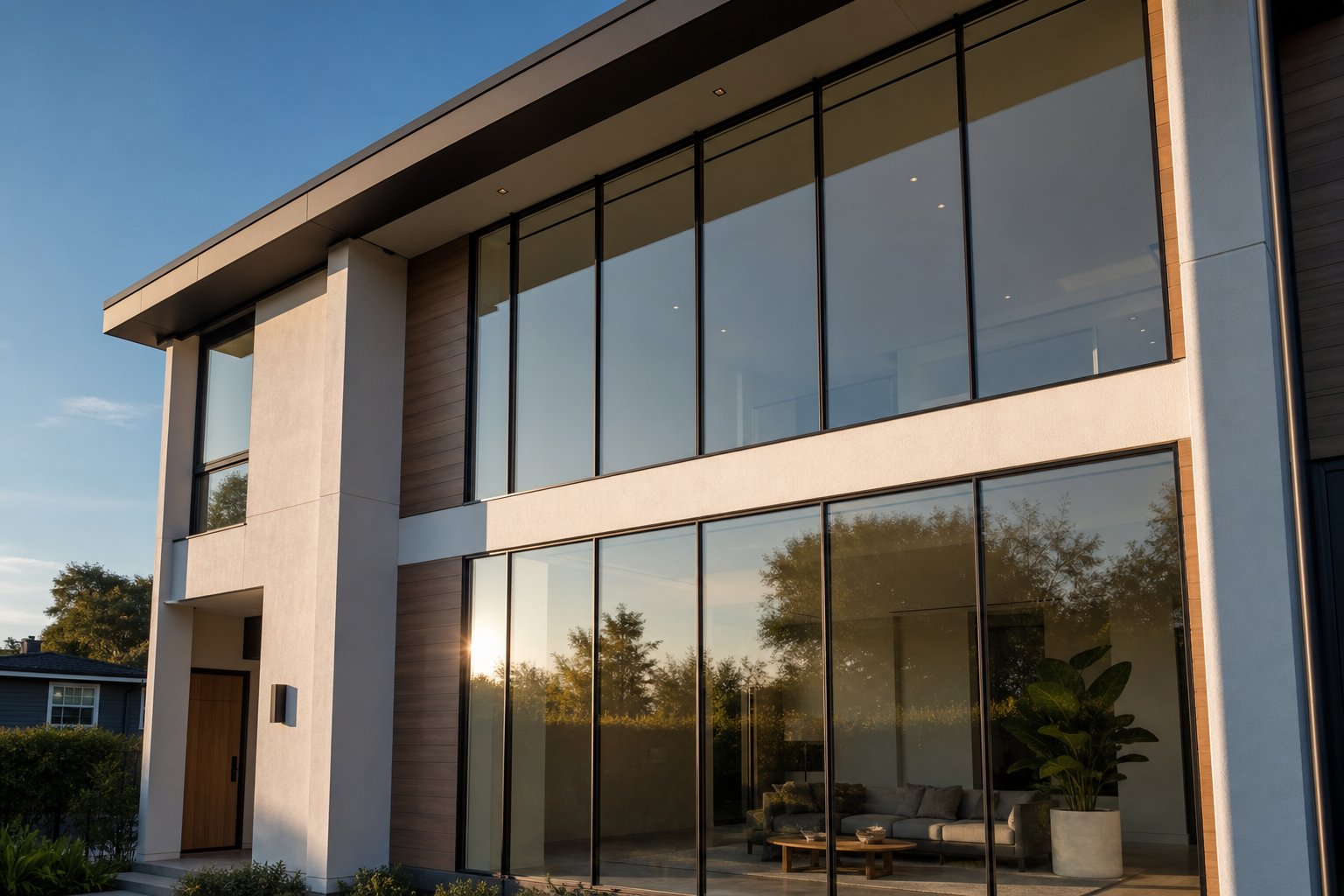
Sightline width is often the first thing architects and designers specify when choosing aluminium double glazed windows — and it is one of the most misunderstood cost drivers. Two frames with identical thermal performance and glass specifications can sit 25 to 40 percent apart in price purely because of how much aluminium you can see from inside the room.
Sightline Width and Its Premium
The sightline is the visible face width of the frame and sash when you look at a closed window from indoors. Standard aluminium profiles typically show around 65 mm of frame face. Slim profiles reduce this to approximately 45 mm. Ultra-slim systems push it below 35 mm, presenting an almost frameless appearance where glass dominates the view.
Achieving narrower sightlines demands tighter manufacturing tolerances, higher-grade aluminium alloys, and more complex extrusion geometries. The frame must maintain structural integrity and weather performance while using less visible material — which means the engineering effort per millimetre of frame removed increases exponentially. A slim-profile aluminium window with glass of the same size and thermal rating as a standard-profile unit typically adds 15 to 25 percent to the frame cost. Ultra-slim systems can push that premium to 30 percent or higher, depending on the profile platform.
For homeowners weighing this decision, the visual payoff is significant on large openings where standard frames would otherwise dominate the elevation. On smaller windows — say a bathroom awning or laundry casement — the sightline difference is less noticeable and harder to justify financially.
Frame Depth and Structural Implications
Frame depth is the dimension running from the interior face of the wall to the exterior. Deeper frames accommodate thicker IGUs (for wider gas cavities or triple glazing), larger thermal break zones, and heavier hardware mechanisms. They also use more aluminium per linear metre and may require different installation detailing — deeper reveals, wider architraves, or adjusted flashing configurations.
A standard residential frame depth of 50 to 60 mm suits most double pane aluminium windows in typical wall thicknesses. Stepping up to 70 or 80 mm deep profiles unlocks better thermal break accommodation and allows for thicker glass assemblies, but the material cost increase is compounded by the flow-on effects: heavier sashes, upgraded hinges to handle the weight, and potentially wider sub-sill and head flashings. For renovation projects where existing reveals are shallow, a deeper frame may require structural packing or reveal modification — costs that sit outside the window itself but are triggered by the frame choice.
Mullion and Transom Design Choices
Mullions (vertical dividers) and transoms (horizontal dividers) break a large opening into individual glass panels. The cost impact depends on whether these elements are structural or decorative, and whether they are visible at all.
Structural mullions carry wind load and dead weight from the glass above. They are typically wider — 80 to 120 mm face width — and made from heavier extrusions or steel-reinforced aluminium sections. Non-structural mullions serve primarily as visual dividers or as meeting points between operable sashes, allowing slimmer dimensions of 50 to 65 mm.
At the premium end, bonded glass assemblies eliminate visible mullions entirely by structurally adhering glass directly to the aluminium frame using specialist adhesives. This creates uninterrupted glass expanses with the slimmest possible sightlines — sometimes as narrow as 15 to 20 mm at the interlock. The trade-off is higher manufacturing cost, specialist installation requirements, and more complex servicing if a glass panel ever needs replacement. Aluminium double glazing specified with bonded assembly methods can add 30 to 50 percent over conventional beaded glazing for the same opening size.
Frame design elements arranged from least to most cost impact:
- Standard hardware (friction stays, basic handles) — baseline inclusion
- Flush casement upgrades — sash sits flush with the outer frame for a cleaner line
- Concealed hinges — hardware hidden from view when the window is closed
- Slim mullions — reduced face-width dividers requiring precision engineering
- Structural glazing and bonded assemblies — maximum glass, minimum visible frame
Beyond these core elements, two configurations push aluminium double glazed windows into distinctly premium territory. Tilt-and-turn mechanisms add dual-action hardware that allows the sash to tilt inward at the top for ventilation or swing fully open like a door for cleaning and emergency egress. The tilt and turn windows price premium reflects the more complex multi-point locking gear, heavier-duty hinges rated for inward swing loads, and deeper frame profiles needed to house the mechanism — typically adding 20 to 35 percent over a standard outward-opening casement of the same size.
Curved glass windows represent the upper extreme. Bending aluminium extrusions to follow a radius and pairing them with curved IGUs requires custom tooling, specialist glass bending, and meticulous sealing. Curved glass windows cost anywhere from double to four times the price of an equivalent flat-panel unit, making them a statement feature rather than a standard specification. They appear most often in architectural homes and commercial lobbies where the design intent justifies the investment.
These frame design decisions shape the character of a project as much as they shape the budget. But they also raise a broader question for anyone comparing quotes: is double glazing itself the right specification level for their aluminium frames, or does the project warrant stepping up — or down — in glass configuration?
Single vs Double vs Triple Glazed Aluminium Side by Side
Choosing a glazing level is not simply a matter of “more panes equals better.” Each configuration carries a distinct weight, thermal profile, acoustic rating, and price point that either aligns with your project or overshoots it. The table below puts all three options in aluminium frames side by side so you can see exactly where the money goes — and where it stops delivering proportional returns.
Single vs Double vs Triple Glazed Aluminium Compared
| Specification | Single Glazed | Double Glazed | Triple Glazed |
|---|---|---|---|
| Typical U-Value (whole window) | 5.0 – 5.8 W/m²K | 1.4 – 2.2 W/m²K | 0.7 – 1.2 W/m²K |
| Weight per m² (glass only) | ~10 kg | ~20 kg | ~30 kg |
| Indicative Price per m² (AUD, supply only) | $250 – $400 | $550 – $1,000 | $850 – $1,500 |
| Acoustic Rating (Rw) | ~25 dB | 30 – 35 dB | 38 – 42 dB |
| Common Use Cases | Non-habitable spaces, sheds, screen enclosures | Residential, commercial, most NCC-compliant builds | Passive house, high-noise zones, extreme cold climates |
The jump from single to double glazing delivers the largest thermal improvement per dollar — cutting U-values by more than 60 percent. Moving from double to triple narrows the gain while adding significant weight and cost. Triple glazed windows cost roughly 10 to 30 percent more than their double glazed equivalents in the same frame system, with the premium varying by supplier and profile depth required to house the thicker IGU.
When Triple Glazing Justifies the Extra Cost
The cost of triple glazed windows makes financial sense in specific scenarios rather than as a blanket upgrade. Consider it when:
- Your project targets 8+ star NatHERS ratings where every fraction of U-value counts
- Large south-facing openings in Victoria, Tasmania, or the ACT face sustained winter heat loss
- Road noise or airport flight paths demand acoustic performance above 38 dB Rw
- The building is designed to Passive House standard, where triple glazing is typically a prerequisite
For a typical Australian home in climate zones 5 to 7, the triple glazing cost premium extends the payback period well beyond double glazing unless energy prices rise substantially or the home has unusually large glazed areas on exposed orientations. The extra weight also requires heavier-duty hardware and sometimes reinforced frame profiles — compounding the triple glazed windows price beyond the glass uplift alone.
Secondary Glazing as a Budget Alternative
If full window replacement is not in the budget, secondary glazing offers a middle path. It involves adding an internal glazed panel — typically a slim aluminium or uPVC frame with a single pane — behind your existing windows. The air gap between the existing glass and the secondary panel provides insulation without disturbing the primary frame.
Secondary glazing prices in Australia typically sit at roughly half the cost of full double glazed replacement per opening, making it attractive for staged renovations or heritage-listed homes where original frames must remain. Its thermal improvement is more modest — about half the effectiveness of proper double glazing — but it excels at noise reduction because the wide cavity between separate panes disrupts sound transmission effectively. How much does secondary glazing cost for a standard window? Expect $200 to $450 AUD per opening for a quality permanent system, depending on size and operator type.
The limitations are real, though. Secondary glazing adds visual bulk internally, creates additional surfaces to clean, and does nothing to address the structural or weather-sealing performance of an ageing primary frame. It works best as an interim solution while planning a full upgrade, or as a permanent addition where council regulations prevent external changes.
Double glazing hits the optimal cost-performance balance for most residential and commercial applications in Australia’s temperate and subtropical climates. It delivers the bulk of available thermal and acoustic improvement at a price point that offers realistic payback within the expected ownership period.
For most projects, double glazed aluminium represents the specification sweet spot. But choosing the right glazing level is only half the equation — how that window reaches your site, and whether it is a new-build install or a renovation retrofit, introduces another layer of cost variation that changes the total project spend considerably.
New Build vs Renovation
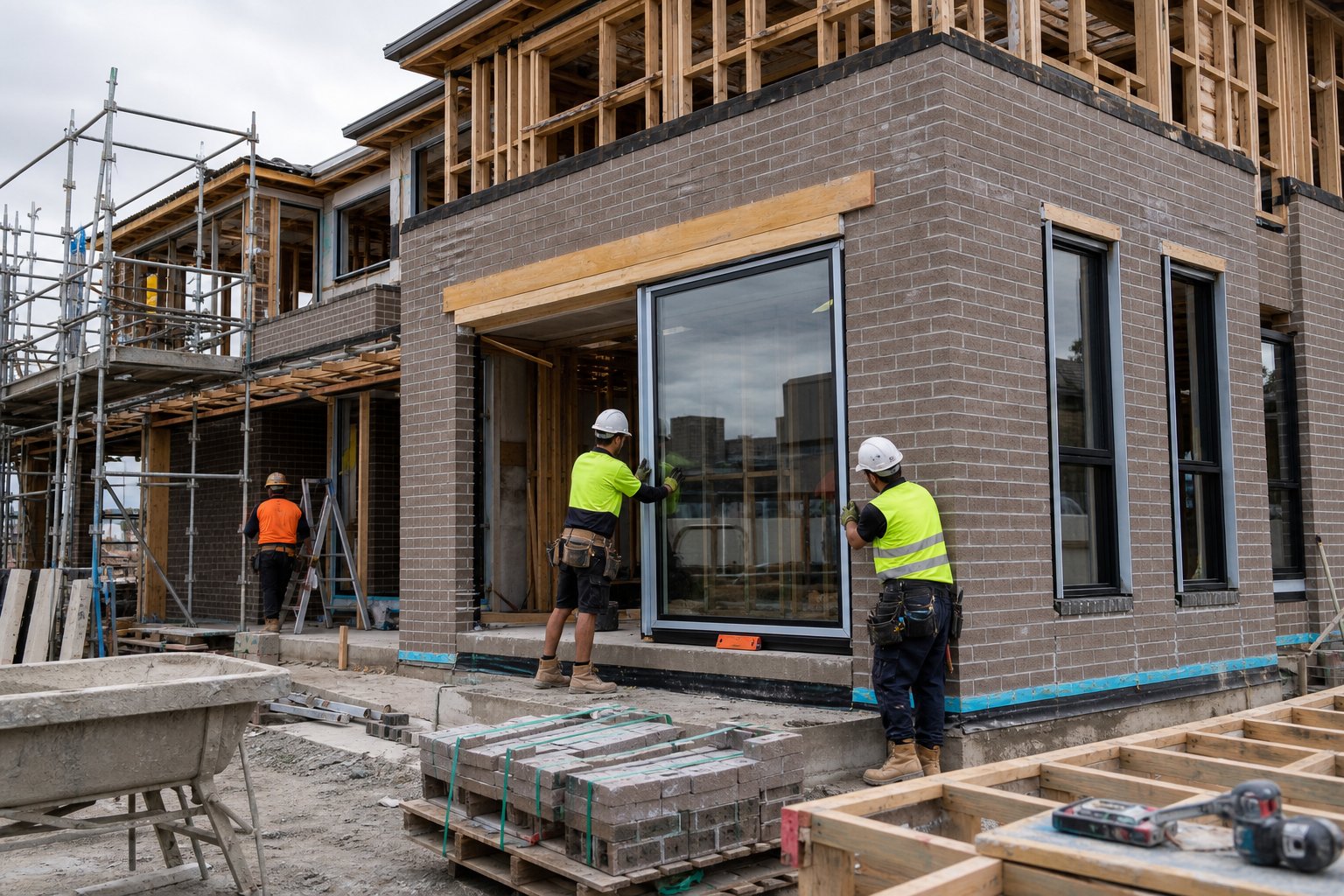
A double glazed aluminium window that costs $1,000 supply-only might land at $1,350 installed in a new build — and $1,700 or more in a renovation. Same window, same glass, same frame. The difference sits entirely in what happens on site before, during, and after that frame goes into the wall. Understanding how much does it cost to install double pane windows in each context helps you budget realistically rather than reacting to quote shock later.
New Build Installation Costs and Advantages
In new construction, windows are specified during the design phase. The architect or building designer nominates frame sizes, opening types, and performance requirements while the house exists only on paper. This means openings get built to match the selected windows — not the other way around.
The practical cost benefits of this approach stack up quickly:
Openings are framed to exact dimensions during the structural phase, eliminating any need for packing, shimming, or cutting back reveals. Standard sizes can be selected from the fabricator’s range rather than requiring custom manufacture. Installation is coordinated with other trades — the window installer arrives after framing is complete but before internal lining and external cladding close up the reveals, giving clean access from both sides. Flashings, weather barriers, and sill membranes are integrated in sequence rather than retrofitted around existing finishes.
This coordination means the cost to install double pane windows in a new build typically sits at the lower end of that 30 to 50 percent installation margin referenced earlier. For a project with 15 to 20 standard openings, trades can work efficiently, scaffolding serves multiple purposes across the build program, and there is no demolition or disposal cost involved. Builders ordering through trade accounts also benefit from volume pricing that reduces the per-window material cost — sometimes by 10 to 20 percent compared to retail.
Renovation and Retrofit Pricing Complexity
Renovation flips every one of those advantages. Existing openings rarely match the dimensions of modern aluminium profile systems. Old timber or steel frames sit at different depths than contemporary thermally broken aluminium, meaning reveals need modification. And the surrounding finishes — plaster internally, render or cladding externally — must be carefully removed, then made good after the new frames go in.
The retrofit double glazing cost premium exists because renovation introduces a chain of additional tasks that simply do not appear in new construction. Each one adds labour, materials, and time:
- Removal and disposal of existing window frames, including cutting sealants and prying out fixing brackets embedded in masonry or timber studs
- Structural adjustments — widening or narrowing openings, adding steel lintels where larger windows are specified, or building up sills to accommodate different frame depths
- Custom sizing when existing openings fall outside standard fabrication dimensions, triggering bespoke manufacturing lead times and markups of 20 to 50 percent over standard
- Scaffolding or elevated work platform hire for upper-storey access, particularly on double-storey brick veneer or rendered homes
- Making good internal finishes — patching and repainting plaster reveals, replacing architraves, touching up skirting where frames have been disturbed
- Making good external finishes — repointing brickwork, patching render, reinstating weatherboards, and resealing cladding junctions
Reference data from the US market shows that new construction window installation can cost 50 to 100 percent more in labour than a simple like-for-like retrofit — but that comparison assumes the existing frame is sound and requires no structural work. In the Australian context, where many homes being renovated have original single-glazed timber or non-thermally-broken aluminium frames from the 1970s through 1990s, the reality is messier. Frame depths differ, reveals need rebuilding, and non-standard sizes are the norm rather than the exception.
How much to double glaze a window in a renovation ultimately depends on how much site preparation stands between the existing opening and a cleanly installed new frame. A straightforward size-for-size replacement in a brick veneer home with accessible ground-floor openings might add only 40 percent to material cost. A heritage Queenslander with non-standard timber openings, asbestos-containing eaves, and upper-storey access challenges can push installation costs to equal or exceed the window cost itself.
The Trade vs Retail Pricing Gap
Beyond the physical installation differences, the commercial pathway you use to purchase windows affects your project cost substantially. Double-pane windows cost differently depending on whether you buy through a builder or contractor (trade channel) versus purchasing directly as a homeowner (retail channel).
The supply chain for aluminium windows in Australia typically runs: profile system manufacturer, then fabricator (who extrudes or assembles the frames and glazes them), then either a builder/installer or direct-to-consumer retailer. Each step adds margin. Trade pricing — what a builder pays the fabricator — reflects volume commitments, ongoing relationships, and the understanding that the builder handles site coordination, warranty callbacks, and client management. Retail pricing must cover showroom overheads, sales staff, smaller order quantities, and the supplier taking on more project management responsibility.
The gap between trade and retail can be 15 to 30 percent on the same product. A homeowner receiving a retail quote for a full house of double glazed aluminium windows is not necessarily being overcharged — they are paying for the convenience layer, design assistance, and single-point accountability that a retail supplier provides. A builder sourcing the same windows at trade pricing passes some of that saving through to the client but bundles it within a broader construction contract where margins are applied differently.
For renovation projects where a homeowner manages the window purchase directly and engages a separate installer, the savings from trade-adjacent pricing (available through some fabricators who sell to owner-builders) can be meaningful on larger orders. The trade-off is accepting responsibility for measurements, lead time coordination, delivery logistics, and any issues with sizing or specification errors — tasks a builder would absorb within their project management scope.
Whether you are building new or renovating, and whether you buy trade or retail, the cost picture is always a snapshot of one moment. The longer-term question — what these windows cost you over their full lifespan versus cheaper alternatives — requires looking beyond the installation invoice entirely.
Long-Term Value and Total Cost of Ownership
Upfront price is a poor predictor of what windows actually cost you. A cheaper product that needs replacing in 20 years, or one that demands ongoing maintenance to stay functional, quietly erodes the savings that justified it at purchase. The real question is not how much does double glazing cost today — it is what the total spend looks like across the life of the building.
Lifespan and Maintenance Savings Over Time
Aluminium frames with quality powder coating have a proven service life of 45 years or more, with many manufacturers warranting 40 to 60 years before structural degradation becomes a concern. That lifespan arrives with almost no maintenance — an occasional wash with soapy water is all the finish demands. No repainting, no re-sealing, no hardware lubrication schedules beyond basic care.
Compare that to timber frames, which require repainting or re-staining every 5 to 8 years to prevent moisture ingress and rot. Over a 30-year period, that represents four to six maintenance cycles — each costing labour and materials. Neglect a single cycle and the frame begins deteriorating, potentially requiring full replacement well short of its theoretical lifespan.
Double glazed uPVC windows present a different problem. Their upfront cost is lower, and maintenance demands are minimal in the short term. But uPVC has a hard ceiling on longevity. Frames begin discolouring, seals perish, and profiles can warp after 20 to 30 years. Once degradation sets in, repair is rarely viable — the entire unit needs replacing. Over a 60-year ownership horizon, you may face two full rounds of uPVC replacement versus zero for aluminium. The double glazed cost that looked higher at year one often looks considerably lower by year 30.
On a whole-life basis, aluminium frequently emerges as the least expensive option despite the higher initial outlay. The “cheap” reputation of uPVC is a function of first-purchase thinking — not lifecycle accounting.
Energy Bill Impact of Double Glazed Aluminium
Improved U-values translate directly to reduced heating and cooling loads. A thermally broken aluminium frame with quality double glazing (U-value around 1.6 to 2.0 W/m²K) dramatically outperforms the single-glazed or non-thermally-broken aluminium windows it typically replaces in Australian renovations, where existing glazing often sits above 5.0 W/m²K.
The payback period for your double glazing windows cost depends on variables specific to your project: how many windows you are replacing, the climate zone you live in, your current energy tariffs, and what the existing glazing performance is. A home in Melbourne replacing 15 original single-glazed aluminium windows with modern thermally broken double glazed units will see a faster energy payback than a Brisbane home replacing 5 relatively recent non-thermally-broken frames.
Rather than relying on generic percentage claims, energy efficiency payback calculations should factor in your actual heating and cooling bills, the U-value improvement per opening, and the glazed area as a proportion of total building envelope. A home energy assessment — available through many Australian state government schemes — gives you the baseline data needed to calculate realistic savings. Tools like the WERS rating system also provide comparative performance data that helps quantify the benefit of your specific upgrade path.
The honest answer is that windows alone rarely deliver rapid payback in mild Australian climates. Their value compounds with other envelope improvements — insulation, draught sealing, shading — and becomes most pronounced in homes with large glazed areas or in colder southern climates where heating loads dominate energy bills.
When Double Glazed Aluminium Is Not the Right Choice
No product is universally superior. There are legitimate scenarios where the cost of double glazing in aluminium frames is not the best use of a project budget:
- Budget-constrained renovations where windows are not architecturally prominent — a laundry, garage, or rear utility area may not justify the aluminium premium over double glazed uPVC windows that deliver similar thermal performance in a less visible location
- Projects where NCC compliance can be met with less expensive alternatives and the homeowner has no particular design preference for slim sightlines or colour flexibility
- Short-term ownership scenarios where the lifecycle cost advantage of aluminium will not be realised by the current owner
- Heritage restorations where timber is the appropriate material for aesthetic and regulatory reasons, regardless of maintenance burden
Double glazed uPVC windows remain a solid choice for homeowners who prioritise lowest upfront spend and plan to own the property for fewer than 20 years. The thermal performance of modern uPVC systems is competitive — sometimes marginally better than equivalent aluminium at the same price point due to the lower conductivity of the frame material itself. Where aluminium wins is on longevity, sightline slimness, colour permanence, and structural capacity for larger openings.
The right window choice depends on project priorities — budget horizon, design ambition, environmental exposure, and ownership timeline — not on absolute product superiority. A well-specified uPVC window in the right application outperforms a poorly specified aluminium one every time.
Understanding total cost of ownership clarifies whether aluminium is genuinely the right investment for your project. Once that decision is made, the final challenge is practical: getting quotes that are accurate, comparable, and based on genuine specification rather than vague allowances.
How to Get Accurate Double Glazing Quotes You Can Trust
Asking “how much is double glazing” without defining your specification is like asking what a car costs without naming the make, model, or trim level. The answer depends entirely on the information you bring to the conversation. After eight sections covering profile systems, glass specifications, thermal breaks, and installation context, you now understand why double glazing prices vary so widely between suppliers. The final step is translating that knowledge into quotes you can actually compare.
What Information You Need Before Requesting Quotes
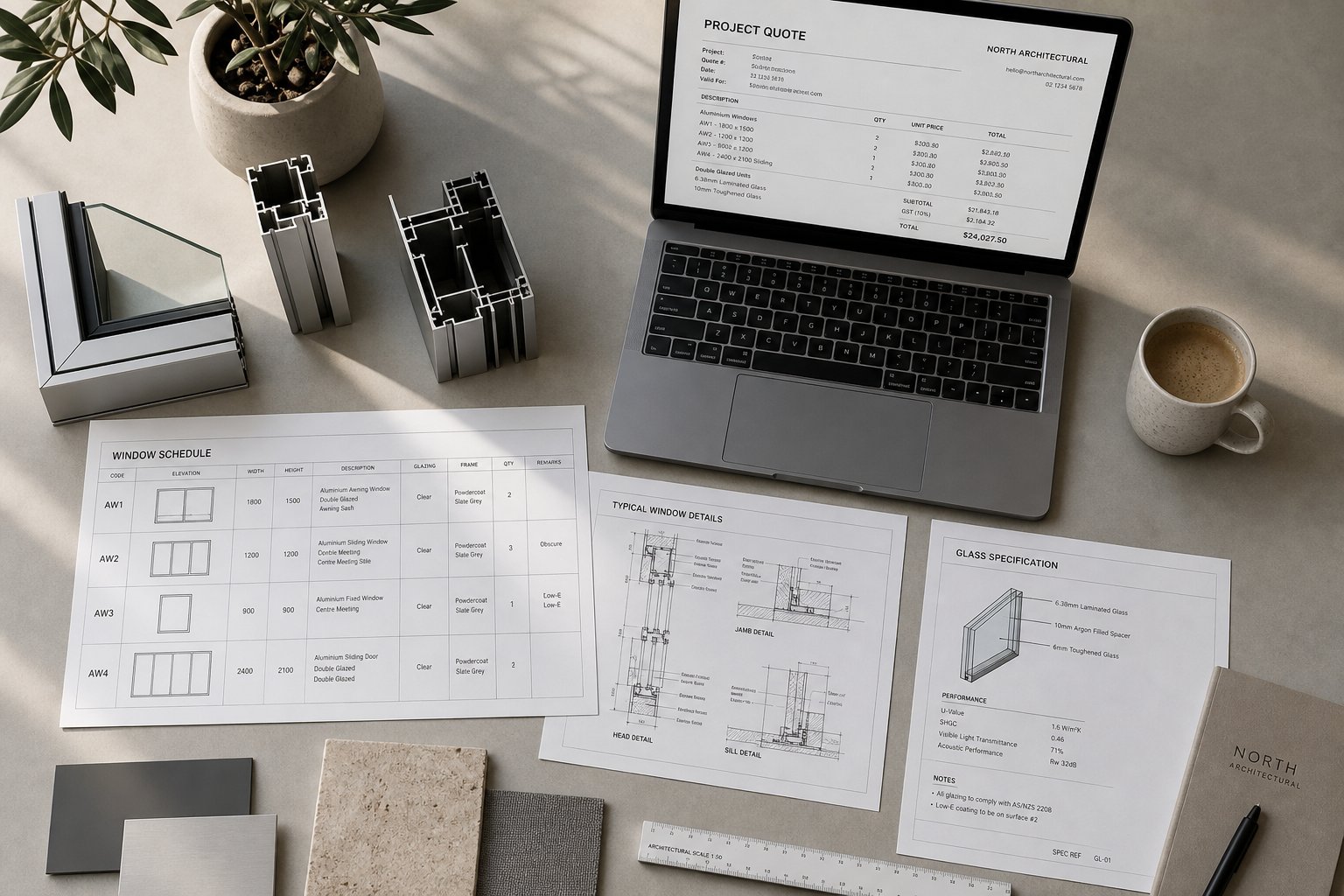
Suppliers cannot give you meaningful pricing without detailed project information. Vague requests produce vague numbers — or worse, lowball estimates that inflate once real specifications are applied. Before reaching out for a double glazing quote, prepare the following:
- A window schedule listing every opening with dimensions (width x height in mm), location in the building, and opening type (fixed, casement, awning, sliding, bi-fold)
- Your preferred profile system or minimum performance tier — standard, enhanced, or high-performance thermal break
- Glass specification requirements: gas fill type, Low-E coating grade, spacer bar preference, and any acoustic or safety glass needs
- Finish colour and texture — standard powder coat colours versus custom RAL or metallic finishes, which affect lead time and cost
- Hardware grade — basic domestic, mid-range, or premium European hardware brands
- Installation scope — supply-only, supply and install, or supply with builder coordination
The more complete your brief, the tighter and more comparable your returned quotes will be. A properly prepared schedule also signals to suppliers that you are a serious buyer, which often unlocks more attentive service and sharper pricing.
Understanding What Makes Quotes Vary
Even with identical project information, double glazing quotes from different suppliers will not match exactly. That is normal. Legitimate price variation comes from the profile system each fabricator works with, the thermal break grade available within that system, glass sourcing relationships, powder coat batch economics, hardware brand partnerships, and the level of project support included in the price.
What should concern you is variation that cannot be explained. If one quote for the cost of double glazed windows sits 40 percent below the others with no obvious specification difference, something is missing — reduced thermal break depth, cheaper glass, basic hardware substituted without disclosure, or installation scope that excludes making good. As Cherwell Windows notes, two quotes describing “double glazed aluminium windows” can mean vastly different things unless every component is spelled out line by line.
Ask each supplier to confirm the exact frame system, glazing specification, hardware brand, and what their installation allowance covers. When every quote answers the same questions, comparing double glazed windows price becomes a matter of evaluating value rather than guessing what has been excluded.
Working with a Project-Capable Supplier
The question most homeowners and builders really want answered is not how much are double glazed windows per unit — it is what will my complete project actually cost, delivered and coordinated. That answer requires a supplier who engages with your project holistically rather than quoting on isolated line items.
A project-capable supplier supports you from initial drawings and window schedules through to system recommendations, material calculations, manufacturing coordination, quality control, and delivery logistics. They help you understand what drives your double glazing cost per m2, identify where specification choices add genuine value versus unnecessary expense, and coordinate timing so windows arrive when your build program needs them — not weeks early collecting dust or weeks late holding up trades.
This is where working with a partner like MEICHEN shifts the quoting experience. Rather than producing a fixed-price number disconnected from your actual project variables, their services span drawing support, profile system recommendations, fabrication, quality assurance, and delivery planning — giving builders, developers, and architects visibility into the real quote drivers rather than an opaque bottom-line figure. For anyone trying to understand what genuinely determines their double glazing prices on a multi-opening project, that level of transparency makes specification decisions clearer and final costs more predictable.
Whether you are pricing a single replacement casement or a full house of aluminium double glazing, the principle holds: accurate quotes come from detailed briefs, transparent suppliers, and an understanding of where every dollar in the specification actually goes. Armed with that knowledge, you are no longer comparing numbers in the dark — you are making informed decisions about performance, aesthetics, and value that will serve the building for decades.
Frequently Asked Questions About Double Glazed Aluminium Window Prices
1. How much do double glazed aluminium windows cost per window in Australia?
Supply-only prices for double glazed aluminium windows in Australia range from approximately $450 for a basic fixed lite to over $2,400 for a premium bi-fold panel. A mid-range casement window in a standard size typically sits between $800 and $1,200 supply-only. Fully installed costs add 30 to 50 percent on top, depending on storey height, site access, and whether scaffolding is needed. The wide range reflects differences in thermal break grade, glass specification, hardware quality, and profile system rather than arbitrary markup.
2. Are aluminium double glazed windows more expensive than uPVC?
Yes, aluminium double glazed windows carry a higher upfront cost than equivalent uPVC units — typically 20 to 40 percent more for comparable thermal performance. However, aluminium frames last 40 to 60 years with virtually no maintenance, while uPVC frames may need full replacement after 20 to 30 years due to discolouration and seal degradation. Over a 30-year ownership period, the total cost of ownership for aluminium is often lower when you factor in zero repainting, longer seal life, and no frame replacement cycle. Aluminium also offers slimmer sightlines and greater structural capacity for larger openings.
3. What is the biggest factor that affects double glazed aluminium window pricing?
The thermal break depth within the aluminium frame profile is the single largest frame-related cost driver. Standard 20 mm thermal breaks form the baseline price, while enhanced 34 mm breaks add 20 to 35 percent and high-performance 50 mm+ breaks add 40 to 65 percent. Beyond the frame, glass specification choices — including Low-E coating grade, gas fill type, and spacer bar material — layer additional cost. Two windows that appear identical from the outside can differ by 40 to 60 percent in price based purely on these internal specification differences.
4. Is it cheaper to install double glazed aluminium windows in a new build or renovation?
New builds are significantly cheaper per window for installation. Openings are framed to exact dimensions during construction, standard sizes can be used, and trade coordination reduces labour time. Installation in new builds typically sits at the lower end of the 30 to 50 percent margin above material cost. Renovations introduce removal of existing frames, structural modifications, custom sizing for non-standard openings, scaffolding, and making good both internal and external finishes — all of which can push installation costs to equal or exceed the window cost itself in complex projects.
5. How do I get accurate and comparable quotes for double glazed aluminium windows?
Prepare a detailed window schedule before requesting quotes. This should include every opening with exact dimensions, opening type, your preferred thermal break tier, glass specification requirements, finish colour, hardware grade, and whether you need supply-only or fully installed pricing. Ask each supplier to confirm the exact frame system, glazing spec, hardware brand, and what their installation allowance covers. Working with a project-capable supplier like MEICHEN (https://meichenwindows.com.au/services/) who supports the full process from drawings through to delivery planning gives you visibility into real cost drivers rather than opaque bottom-line figures.
More Window & Door Guides