So Are Aluminium Doors Actually Worth It
The Short Answer for Homeowners and Builders
If you’re weighing up whether an aluminium door belongs on your home, here’s the honest verdict:
Yes, aluminium doors are good. They’re strong, long-lasting, low-maintenance, and recyclable. But whether they’re the right choice for your project depends on your budget, your climate, and what you’re actually using them for.
That might sound like a hedge, but it’s the truth. An exterior aluminum door on a coastal Queensland home faces completely different demands than an alum door on a sheltered Melbourne laundry. The material itself is excellent — corrosion-resistant, structurally rigid, and capable of lasting 40 to 60 years with minimal upkeep. The real question isn’t whether aluminium is good. It’s whether it’s good for what you need.
A thermally broken aluminium front door will outperform uPVC on security and lifespan. A non-thermal-break aluminium door makes perfect sense for an internal partition or a covered utility entrance where insulation isn’t critical. And in some cases — heritage restorations, ultra-tight budgets, or spaces where a warm timber feel matters more than durability — other materials genuinely win.
What This Guide Covers
This guide goes beyond the usual sales pitch. We’ll walk through how aluminium doors are manufactured and why that process affects price, break down the real pros and cons with no glossing over the downsides, compare aluminium head-to-head against uPVC, timber, composite, and fibreglass, and explain thermal break technology in plain language. We’ll also cover security ratings, climate performance across Australian conditions, maintenance routines that actually matter, and the specific scenarios where aluminium is not the smartest spend. By the end, you’ll know exactly which type of aluminium door suits your project — or whether a different material makes more sense altogether.
How Aluminium Doors Are Made and Why It Matters
Most buyers never think about what happens before a door aluminium frame arrives on site. That’s fair enough — you’re choosing a door, not running a factory. But understanding the manufacturing process explains two things that matter at the quote stage: why aluminium costs more than uPVC, and why it lasts so much longer.
From Raw Material to Finished Door
Every aluminium exterior door starts life as a cylindrical billet — a solid log of aluminium alloy cast from refined alumina. The journey from raw material to a finished frame ready for glazing involves several precision stages, each adding strength, weather resistance, or aesthetic value.
- Billet heating (450-500°C): The aluminium billet is heated until it becomes malleable enough to shape without melting. This temperature range keeps the metal workable while preserving its structural integrity.
- Extrusion through a steel die: A hydraulic press forces the heated billet through a custom-shaped die at enormous pressure. This is where the profile gets its precise cross-section — the channels, chambers, and grooves that define how the door performs. Complex multi-chamber profiles create the strength-to-weight ratio that lets aluminium frames stay slim while supporting large glass panels.
- Cooling and stretching: The extruded profile is cooled (either air-quenched or water-quenched depending on the alloy) and then mechanically stretched to ensure straightness and relieve internal stresses.
- Cutting to length: Profiles are cut to the required dimensions for the specific door configuration.
- Thermal break insertion: For external doors, a polyamide strip is inserted between the inner and outer aluminium profiles. This creates a thermal barrier that prevents heat transfer through the frame — critical for energy performance in climate-controlled buildings.
- Surface treatment: The profiles undergo powder coating or anodising to add colour, UV resistance, and an extra layer of corrosion protection.
- Assembly and glazing: The finished profiles are joined using mechanical crimping or welding, hardware is fitted, and double or triple glazed units are sealed into the frame.
That multi-stage process is why an aluminium door with window panels costs more than a uPVC equivalent. uPVC profiles are simply melted and extruded in a single pass with no thermal break engineering, no powder coating, and far less precision in the die tooling. The aluminium process demands tighter tolerances and more post-extrusion work — but it produces a frame that’s roughly three times stronger than uPVC at a fraction of the bulk.
Powder Coating and Colour Options Explained
Powder coating isn’t paint. It’s a dry finishing process where electrostatically charged powder particles are sprayed onto the aluminium surface, then cured in an oven at around 200°C. The heat fuses the powder into a continuous, hard-wearing film that bonds chemically to the metal. The result is a finish far more durable than liquid paint — resistant to chipping, scratching, and peeling in ways that wet-applied coatings simply can’t match.
For Australian conditions, this matters. Intense UV exposure, salt air along the coast, and wide temperature swings all test exterior finishes relentlessly. Modern powder-coated aluminium profiles typically resist fading for 25 years or more under normal conditions, with higher-grade “super durable” coatings rated for extreme sun and humidity environments — particularly relevant for properties in northern Queensland or coastal NSW.
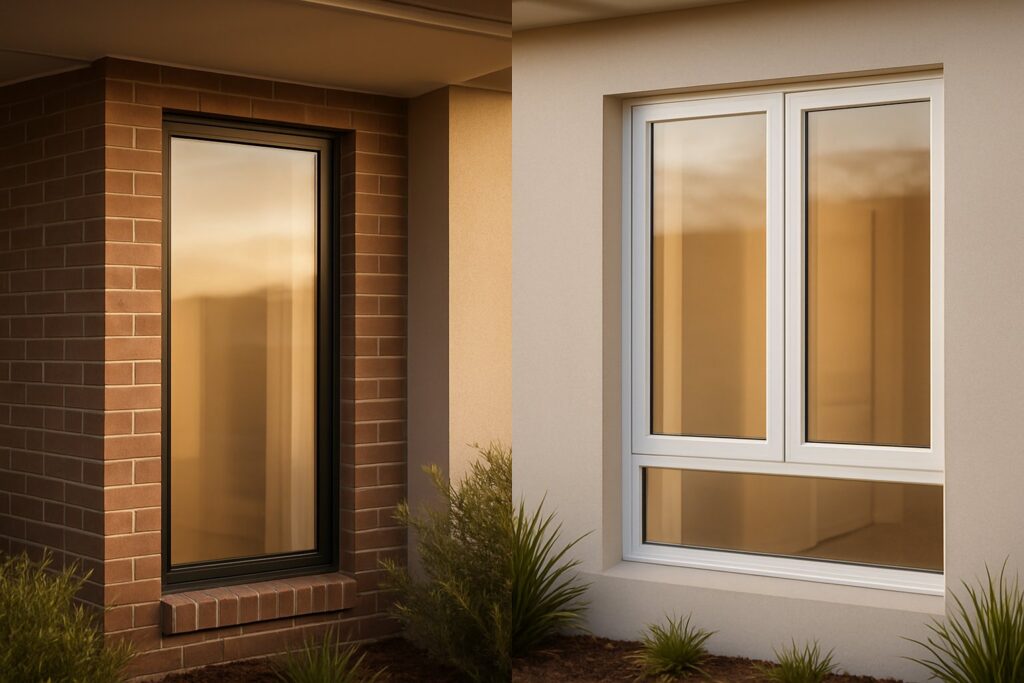
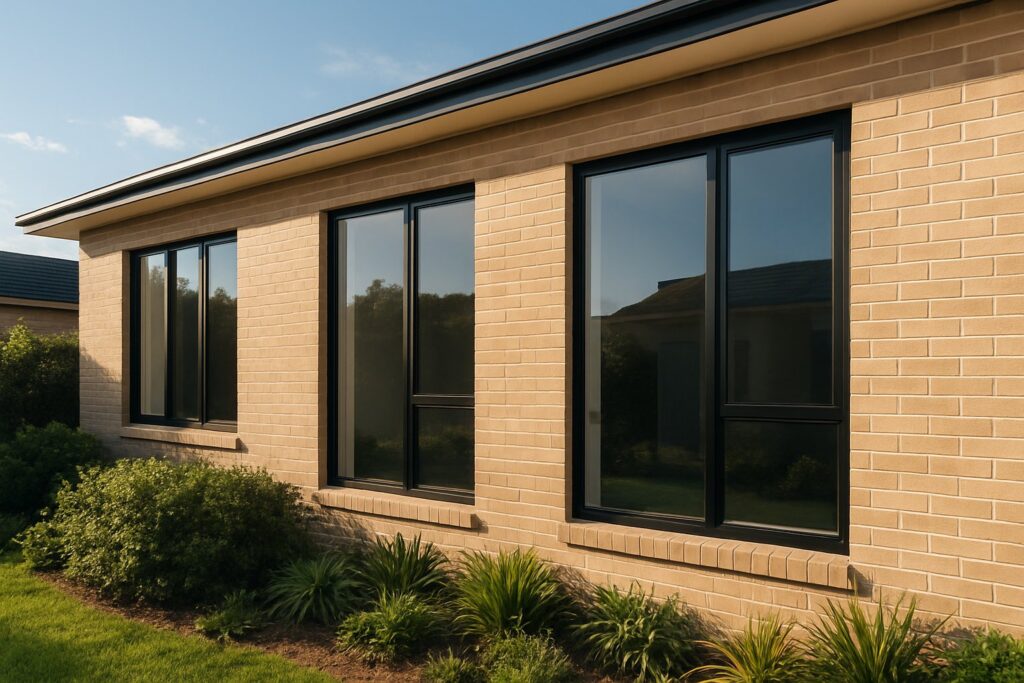
Colour choice is virtually unlimited. Standard ranges cover everything from matt black and charcoal to white, cream, and metallic silvers. Custom colours can be matched to any RAL code, and textured finishes like woodgrain effects are available for homeowners who want the look of timber without the maintenance. Unlike uPVC, which yellows and becomes brittle with UV exposure over time, a quality powder-coated aluminium finish holds its colour and gloss decade after decade.
Can the finish be renewed? Yes. If a door sustains localised damage — a deep scratch from moving furniture, for instance — the affected area can be touched up with colour-matched repair products. For a full refinish after many decades of service, the door can be stripped and re-coated, effectively resetting the clock on its appearance without replacing the frame itself. That’s a level of longevity uPVC can’t offer, since aged plastic profiles degrade structurally and can’t simply be resurfaced.
This combination of engineered strength and lasting aesthetics is what separates aluminium from cheaper alternatives. But raw manufacturing quality only tells part of the story — the real test is how these properties translate into everyday advantages and trade-offs once the door is installed.
The Real Pros and Cons of Aluminium Doors
Knowing how a door is built is useful. Knowing how it actually performs over years of daily use is what drives a smart buying decision. The aluminium pros and cons picture is more nuanced than most manufacturer websites let on — so here’s the full breakdown, advantages and genuine drawbacks included.
Key Advantages That Set Aluminium Apart
- Strength-to-weight ratio and slim sightlines: Aluminium is roughly three times stronger than uPVC at equivalent thickness. That structural rigidity means frame profiles can be kept exceptionally narrow — often as slim as 45 mm — maximising the glass area and letting more natural light flood through. For bifold or sliding configurations spanning wide openings, no other material achieves the same combination of strength and slenderness.
- Longevity (40-60 years): High-quality aluminium frames can last 40 to 50 years with minimal maintenance, and many industry sources extend that range to 60 years in favourable conditions. That’s nearly double the typical lifespan of uPVC.
- Infinite recyclability: Aluminium can be recycled endlessly without any loss in quality or strength. At end of life, the frame material retains full value — it doesn’t degrade into lower-grade product the way some plastics do. The initial energy cost of producing aluminium is high, but this is offset by decades of service and complete material recovery at the end.
- Corrosion resistance: Aluminium naturally forms a thin oxide layer that protects against rust and corrosion. Combined with powder coating, this makes it particularly well-suited to Australian coastal environments where salt air degrades other materials rapidly.
- Design versatility: From matt black minimalist frames to woodgrain-textured finishes, aluminium accommodates virtually any architectural style. Colour options are unlimited via RAL matching, and dual-colour configurations (different colours inside and out) are standard.
- Low maintenance: No painting, no sealing, no sanding. An occasional wipe-down with mild detergent and periodic hardware lubrication is the entire maintenance routine for the life of the door.
Genuine Disadvantages to Consider
The pros and cons of aluminium aren’t one-sided. These are the real disadvantages of aluminium that deserve honest consideration before committing:
- Higher upfront cost: Aluminium doors typically cost 30-50% more than equivalent uPVC options at the point of purchase. The long-term value proposition is strong, but the initial outlay is genuinely higher — and that matters when budgets are tight.
- Thermal bridging without thermal breaks: Aluminium conducts heat roughly 1,000 times more efficiently than uPVC. Without a polyamide thermal break separating the inner and outer profiles, the frame becomes a direct pathway for heat transfer. Older or budget aluminium doors without thermal breaks can undermine the energy performance of an otherwise well-insulated home.
- Condensation risk in older designs: Cold metal surfaces attract moisture. Non-thermally-broken aluminium frames — still common in older Australian homes — can develop condensation on the interior face during cold mornings. Modern thermally broken systems have largely eliminated this issue, but it remains a valid concern if you’re looking at entry-level or legacy products.
- Cold to the touch: Metal feels cold in winter. It’s a tactile perception rather than a performance flaw, but for homeowners who value the warmth of timber under their hand, aluminium will always feel different. Thermal breaks reduce this effect significantly without eliminating it entirely.
Debunking the Industrial Look Myth
A common objection — particularly from homeowners renovating older brick veneer or weatherboard properties — is that aluminium doors look too commercial or industrial. That perception is rooted in the chunky, silver-anodised frames of the 1980s and 90s. It’s outdated.
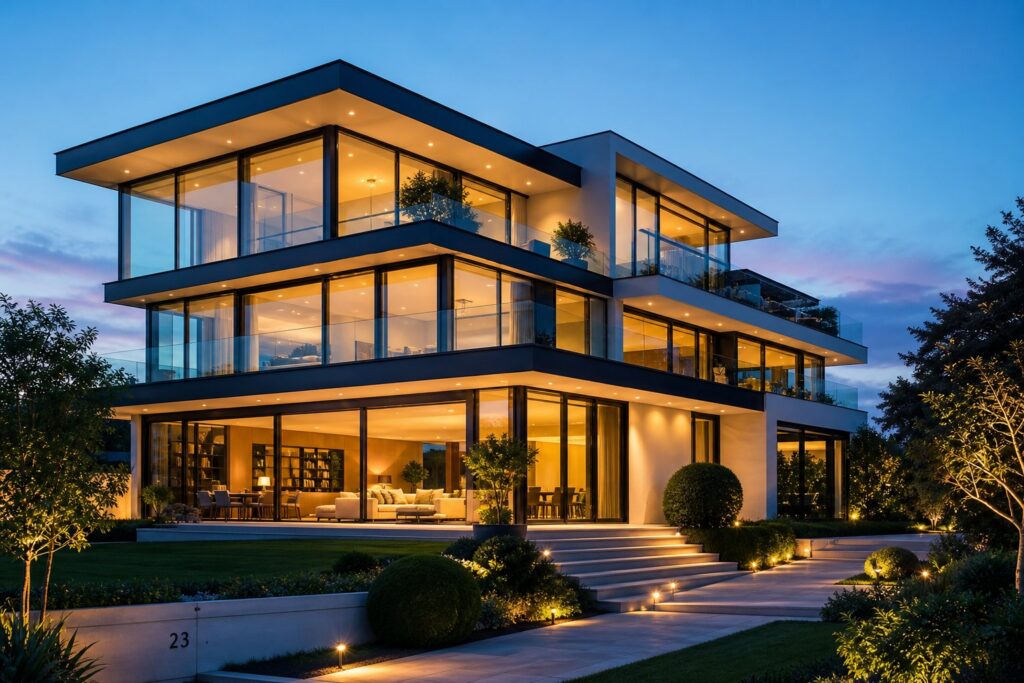
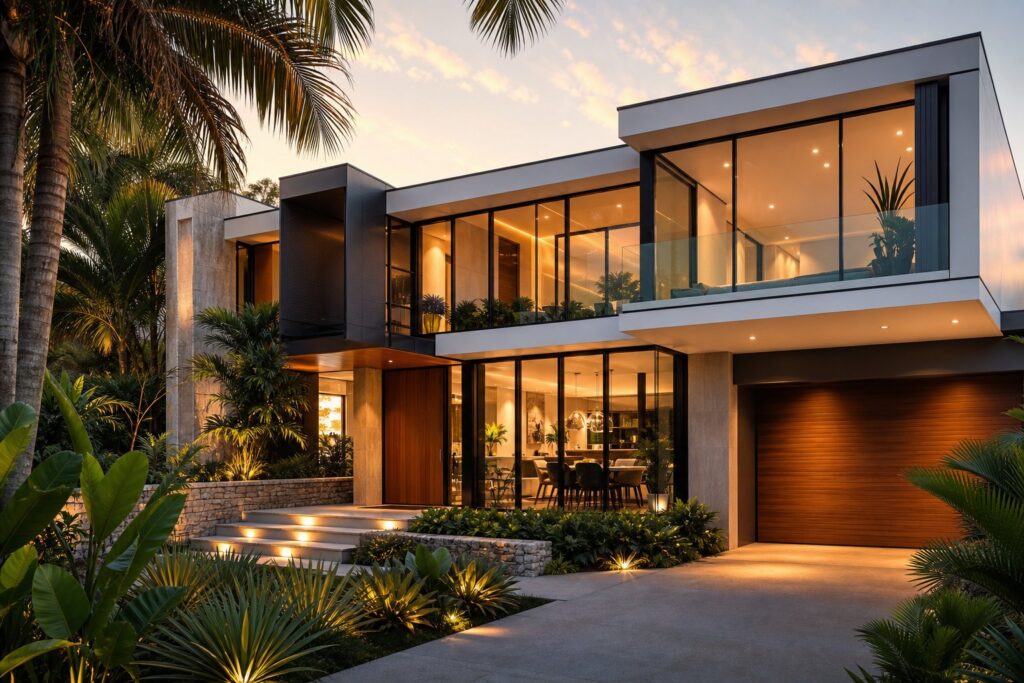
Modern aluminium door profiles have evolved dramatically. Ultra-slim sightlines of 30-45 mm create a refined, architectural appearance that suits everything from contemporary new builds to sensitively renovated Federation homes. Textured powder coatings replicate timber grain convincingly enough to satisfy heritage streetscape requirements in many council areas, while concealed hardware and flush thresholds deliver a clean, residential aesthetic that’s a world away from the old shopfront look.
The material hasn’t changed — but the design language around it has. If your mental image of an aluminium door is a clunky silver frame from a 1990s office building, it’s worth visiting a showroom to see what current slim-profile systems actually look like in a residential setting.
These strengths and trade-offs don’t exist in isolation, though. The real clarity comes from placing aluminium side by side with every competing material — uPVC, timber, composite, and fibreglass — across the criteria that actually matter at decision time.
Aluminium Compared to Every Other Door Material
Listing the pros and cons of aluminium in isolation only gets you so far. The decision most Australian homeowners actually face is a relative one: how does aluminium stack up against the other materials sitting in the same quote? Here’s that comparison in one place — covering uPVC, timber, composite, and fibreglass alongside aluminium across the criteria that drive real purchasing decisions.
Aluminium vs uPVC vs Timber vs Composite vs Fibreglass
Each material has a genuine sweet spot. The table below compares them honestly across seven performance areas so you can see where the advantages of aluminium hold up — and where another option might serve you better.
| Criteria | Aluminium | uPVC | Timber | Composite | Fibreglass |
|---|---|---|---|---|---|
| Typical Lifespan | 40–60 years | 20–30 years | 30–60 years (with maintenance) | 30–40 years | 30–50 years |
| Maintenance | Very low — occasional wipe-down and hardware lubrication | Very low — wipe with soapy water | High — regular painting, sealing, and inspection for rot or pest damage | Low — periodic cleaning, no painting | Low — cleaning only, no painting or sealing |
| Thermal Performance | Good with thermal break (U-values around 1.5–2.0 W/m²K for double-glazed systems); poor without thermal break | Good inherently (multi-chamber profiles insulate well; U-values around 1.4–1.8 W/m²K) | Naturally insulating (R-value 3–4 for solid timber); U-values around 1.4–1.8 W/m²K | Good (timber or foam core with protective skin; U-values around 1.4–1.6 W/m²K) | Excellent (very low conductivity; U-values around 1.2–1.6 W/m²K with insulated core) |
| Strength and Security | Excellent — high rigidity supports multi-point locking and resists forced entry | Moderate — adequate for standard residential security but flexes under force | Good when solid hardwood; softwood doors are weaker | Good — solid core resists impact well | Good — strong and impact-resistant, though less rigid than aluminium |
| Design Flexibility | Excellent — slim profiles, unlimited RAL colours, dual-colour options, large span capability | Limited — bulkier profiles, narrower colour range, woodgrain laminates available but less convincing long-term | Excellent — can be shaped, carved, and finished in any colour; unmatched tactile warmth | Moderate — range of finishes and colours, but limited profile shapes | Good — can mimic woodgrain convincingly; paintable; moderate profile slimness |
| Cost Bracket (Supply and Install, Standard Exterior Door, AUD) | $1,500–$4,500+ | $800–$2,000 | $2,000–$5,500+ | $1,800–$4,000 | $2,000–$4,500 |
| Environmental Impact | High initial energy to produce; offset by 40–60 year lifespan and infinite recyclability with no quality loss | Lower production energy; recyclable but degrades with each cycle; shorter lifespan means more frequent replacement | Low embodied energy if FSC-certified; biodegradable; chemical treatments reduce eco-credentials | Mixed — combines materials (timber, GRP, foam) making end-of-life recycling difficult | Moderate production energy; very long-lasting; difficult to recycle at end of life |
Which Material Wins on Lifespan
If longevity is your primary driver, aluminium and well-maintained hardwood timber sit at the top. Both can reach 60 years of service. The critical difference is how they get there. Timber demands ongoing investment — sanding, repainting, sealing, and vigilant inspection for moisture ingress and termite activity. Aluminium asks for almost nothing beyond a clean and the occasional drop of lubricant on hinges and locks.
uPVC falls short here. While it’s the most affordable option upfront and genuinely low-maintenance, its plastic profiles degrade under prolonged UV exposure, becoming brittle and discoloured after two to three decades — a real consideration under Australian sun. Composite and fibreglass both offer respectable 30-50 year lifespans without heavy maintenance, making them solid middle-ground choices.
On thermal performance, fibreglass edges ahead thanks to its inherently low conductivity and capacity for insulated cores. uPVC and timber also perform well without needing additional engineering. Aluminium only matches these materials when fitted with a proper thermal break — without one, it’s the weakest performer in the group. That’s not a flaw of the material itself; it’s a specification choice. Choosing a thermally broken aluminium system puts it on par with the field.
The cost of aluminium doors sits in the mid-range when you factor in lifespan. Yes, the upfront price is higher than uPVC. But spread over 40-60 years of service with near-zero maintenance costs, the per-year cost often works out lower than timber (which demands regular upkeep spending) and comparable to composite. uPVC wins on initial outlay every time — no argument there. If budget is the binding constraint, uPVC delivers adequate performance at the lowest entry point.
Where aluminium genuinely has no peer is structural capability. Its rigidity allows for the slimmest frame profiles and the widest unsupported spans — essential for modern bifold, sliding, and large-format glazed doors. If your design calls for expansive glass and minimal framing, aluminium is the only material that delivers without compromise.
Thermal performance, though, deserves a deeper look — particularly the condensation question that catches many Australian homeowners off guard when temperatures drop overnight.
Thermal Performance and the Condensation Question
Cold mornings reveal something about external aluminium doors that warm afternoons hide. You wake up, walk past the back door, and notice moisture beading along the inside of the frame. It looks like a fault — but it’s actually physics. And the fix is already engineered into every quality aluminium exterior door built for Australian conditions today.
Why Condensation Happens on Aluminium Frames
Aluminium conducts heat roughly 1,000 times more efficiently than uPVC. That’s what makes it structurally superior — but it’s also what creates the condensation problem. When outdoor temperatures drop overnight, a continuous aluminium frame carries that cold directly through to the interior surface. The inside face of the frame chills well below room temperature.
Warm indoor air holds moisture. When that moist air contacts the cold frame surface and the temperature drops below the dew point, water vapour condenses into visible droplets. It’s the same principle as a cold glass of water sweating on a summer day — just happening on your door frame instead.
The issue compounds with high indoor humidity from cooking, showering, or drying clothes inside, combined with inadequate ventilation. Older aluminium frames without insulating barriers are particularly vulnerable because the entire profile acts as a single thermal conductor from outside to inside.
How Thermal Break Technology Solves the Problem
A thermal break is an insulating barrier built into the aluminium profile that separates the exterior section from the interior section. Rather than one continuous piece of metal bridging outside to inside, the frame becomes two distinct aluminium components joined by a rigid polyamide strip with very low thermal conductivity.
This polyamide barrier interrupts the direct path for heat transfer. Cold still reaches the outer aluminium profile, but it can’t travel freely through to the inner profile. The interior face of the frame stays much closer to room temperature — warm enough that indoor air doesn’t condense against it.
The impact on energy performance is measurable. Thermally broken aluminium frames achieve U-values around 1.5-2.0 W/m²K in double-glazed configurations, putting them on par with uPVC and timber systems. Without the break, that same frame might deliver U-values of 5.0 W/m²K or worse — essentially bleeding energy through every linear metre of framing.
Wider thermal breaks improve insulation further. Higher-quality systems use reinforced polyamide strips of greater width to push U-values lower, which matters for meeting NCC energy efficiency requirements in cooler Australian climate zones.
Choosing Between Thermal Break and Non-Thermal Break
Not every aluminium door needs a thermal break. The deciding factor is whether the door separates two different temperature environments.
If one side of the door faces outdoor weather and the other sits inside a climate-controlled space, a thermal break is essential — not optional. For interior doors or sheltered applications where both sides share the same temperature conditions, a non-thermal-break frame performs identically at lower cost.
An exterior aluminium door on your front entry, patio, or any opening exposed to weather needs thermally broken construction. The temperature differential between a heated interior and a cold winter morning — or a cooled interior and a 40°C summer day — creates exactly the conditions where continuous metal frames fail on comfort and efficiency.
Conversely, an internal aluminium door separating a hallway from a living area, or a laundry door under a covered verandah, faces minimal temperature difference across the frame. A non-thermal-break system works perfectly here, delivering aluminium’s strength and slim aesthetics without the added cost of thermal engineering.
Suppliers like MEICHEN offer both thermal break and non-thermal break aluminium door systems specifically so buyers can match the product to their project requirements and climate zone. That flexibility matters — paying for thermal break construction on an internal partition wastes money, while skipping it on an exposed exterior door undermines the entire building envelope.
Thermal performance is one piece of the decision. But a door that insulates well still needs to keep intruders out — and the installation process itself brings practical questions most buyers don’t think to ask until the tradies are already on site.
Security Features and What Installation Involves
Aluminium’s rigidity isn’t just about holding large glass panels in slim frames. That same structural strength is what makes it one of the most secure door materials available for residential and commercial applications. An aluminum front door built from extruded aluminium profiles resists bending, prying, and impact far better than uPVC — which flexes under sustained force — giving intruders significantly less to work with.
Security Ratings and Multi-Point Locking Systems
The material itself provides the foundation, but the locking hardware is where security becomes measurable. Quality aluminium doors use multi-point locking systems that engage bolts at three, five, or more positions along the frame simultaneously. Unlike a single deadbolt — which concentrates all resistance at one point above the handle — multi-point locks distribute force across the full height of the door. Even if one locking point were compromised, the remaining bolts maintain the seal.
This matters in practical terms. A kick directed at a single-point lock puts all stress on one strike plate and the surrounding frame material. With a multi-point system, that same force disperses across multiple anchors, making the door exponentially harder to breach. The aluminium frame’s rigidity amplifies this advantage because the material doesn’t flex or deform the way plastic does under repeated impact.
When specifying an outside aluminum door or commercial aluminum glass entry doors, look for these security features:
- Multi-point locking (minimum 3-point): Bolts engaging at top, middle, and bottom of the frame as a baseline. Five-point systems add further resistance for high-risk applications.
- AS 5039 compliance: The Australian Standard for security screen doors and grilles — relevant if your aluminium door incorporates a security screen.
- Laminated or toughened glass: Tempered glass resists impact; laminated glass holds together even when shattered, preventing reach-through access.
- Anti-lift tracks (sliding doors): Prevents panels from being lifted off their tracks from outside.
- Keyed cylinder quality: Look for restricted key profiles that can’t be copied at a standard locksmith without authorisation.
- Reinforced strike plates: Longer screws anchoring into structural timber or steel rather than just the door frame lining.
What to Expect During Installation
A professional aluminium door installation follows a predictable sequence, though the timeline varies with complexity. A standard hinged entry door typically takes half a day. Larger configurations — bifolds spanning 4-5 metres, or multi-panel sliding systems — may require a full day or slightly more.
The process begins with a site assessment where installers take precise measurements of the existing opening, check wall thickness, and confirm structural adequacy. They’ll verify that the lintel above the opening can support the load — particularly important for wider openings where the header carries significant weight from the structure above. If the lintel is undersized or damaged, remedial work is needed before the door goes in.
On installation day, expect the old door and frame to be removed first, exposing the rough opening. Installers check that the sill is level and the jambs are plumb, correcting any irregularities with packing or minor structural repairs. The new aluminium frame is then shimmed into position, checked repeatedly for level and square, and fastened securely to the surrounding structure. Panels are hung, hardware fitted, and weatherseals applied to create an airtight, watertight perimeter.
Disruption is moderate. There will be noise during removal, some dust, and a period where the opening is fully exposed to outside air. Most installers lay drop sheets and clean up debris as they go, but clearing furniture and valuables from the immediate area beforehand saves time and protects your belongings.
Warranties: What’s Covered and What Voids Them
A quality aluminium door should come with a structured warranty covering different components for different durations. Typical manufacturer warranties break down along these lines:
| Component | Typical Warranty Period | What’s Covered |
|---|---|---|
| Aluminium frame | 10–15 years | Structural defects, warping, significant corrosion under normal conditions |
| Powder coat finish | 10–15 years | Peeling, cracking, or excessive fading not caused by physical damage |
| Glass seal (IGU) | 5–10 years | Seal failure causing fogging or persistent condensation between panes |
| Hardware (locks, hinges, handles) | 2–5 years | Mechanical failure or defects in normal operation |
Actions that commonly void warranties include installation by non-certified tradespeople, modifications using non-original parts, failure to perform basic maintenance (allowing salt or debris to corrode hardware), and damage from misuse or neglect. Natural disasters and normal wear on consumable components like weather seals are also typically excluded.
The key takeaway: always confirm that your installer is approved by the door manufacturer, and keep your proof of purchase and warranty documentation. A warranty is only as useful as your ability to claim on it — and improper installation is the single most common reason claims get rejected.
Security and correct installation protect your home from intruders and weather alike. But aluminium’s real long-term resilience depends on how it handles the specific environmental stresses of your location — salt air, UV bombardment, humidity, and temperature extremes that vary dramatically across Australian climate zones.
Climate Durability and Real Maintenance Requirements
Australia throws just about every environmental challenge at external building materials — blistering UV along the northern coastline, salt-laden winds from Sydney to Perth, high humidity in tropical Queensland, and frosty mornings through the southern highlands. Aluminium external doors handle all of it, and the reason comes down to chemistry rather than marketing.
Performance in Coastal and Harsh Environments
When aluminium is exposed to air, it instantly forms a thin, self-healing oxide layer across its surface. This natural oxide film acts as a barrier against corrosion, preventing salt and moisture from attacking the underlying metal. Unlike steel, which rusts progressively once its coating is breached, aluminium’s oxide layer regenerates — even if scratched, the exposed metal re-oxidises within hours.
Powder coating adds a second line of defence on top of that natural protection. The cured finish seals the surface against salt spray, airborne pollutants, and UV radiation that would degrade lesser coatings. In coastal zones — think the Gold Coast, Wollongong, or Fremantle — this dual protection system is why aluminium back doors and entry doors outlast timber and uPVC equivalents by decades without showing signs of pitting, flaking, or structural weakening.
Intense UV exposure is another Australian reality. Doors aluminum frames face in north-facing orientations cop relentless sun year-round. High-quality powder coatings rated to AAMA 2604 or 2605 specifications resist fading, chalking, and gloss loss even under prolonged ultraviolet bombardment — holding their colour and finish integrity for 25 years or more in normal conditions.
High humidity and tropical rainfall don’t trouble aluminium either. The material won’t swell, warp, or rot the way timber does in persistently damp environments. For properties in Far North Queensland or the Northern Territory, where wet seasons bring months of sustained moisture, aluminium remains dimensionally stable throughout.
The Actual Maintenance Routine You Need
“Low maintenance” gets thrown around loosely. Here’s what it actually means in practice — a simple seasonal routine that takes minutes, not hours, and keeps your aluminium doors performing at their best for decades.
- Every 3-4 months (monthly in coastal areas): Wash all aluminium frame surfaces with warm water and a mild detergent like dishwashing liquid. Use a soft cloth or sponge — never abrasive pads, steel wool, or scouring powders, which scratch through the powder coating and expose raw metal.
- Rinse thoroughly: After washing, rinse with clean fresh water to remove all soap residue. Detergent left to dry can leave streaks and, over time, attract grime buildup.
- Clear tracks and drainage slots: Vacuum or brush out dirt, leaves, and debris from sliding door tracks and weep holes. Blocked drainage channels trap water against seals and accelerate wear.
- Lubricate hardware annually: Apply a light silicone-based lubricant to hinges, locks, and any moving mechanisms once a year. Spread it evenly with a small brush and wipe away excess. Avoid petroleum-based oils that attract dust and gum up over time.
- Inspect seals and weatherstripping: Check rubber seals and gaskets for cracking, compression, or gaps each year. Coastal winds and UV gradually degrade these components — catching wear early prevents water ingress and draughts.
What to avoid is equally important. Never use alkaline or acidic cleaners, solvents, or products designed for other metals (brass polish, silver cleaner). These attack the powder-coated finish and can cause irreversible discolouration. If you’re doing renovation work nearby — rendering, painting, or tiling — cover your aluminium frames with protective tape to prevent cement splatter or paint overspray bonding to the surface.
That’s genuinely the full extent of it. No repainting every few years, no sanding back weathered surfaces, no treating for rot or termites. For Australian coastal properties in particular, aluminium’s combination of natural corrosion resistance and powder-coated durability makes it the standout performer in salt-air environments where timber demands constant attention and uPVC yellows prematurely under harsh sun.
Still, durability in tough conditions doesn’t automatically mean aluminium is the right call for every doorway in your home. There are specific situations where the material’s strengths simply don’t align with what the project actually needs — and spending more on aluminium in those cases wastes money better directed elsewhere.
When Aluminium Doors Are Not the Right Choice
Weighing the pros and cons aluminium presents doesn’t always land in aluminium’s favour. There are genuine scenarios where spending more on aluminium delivers no meaningful benefit — or where another material is simply a better architectural and practical fit. Recognising those situations saves money and produces a better result.
Situations Where Other Materials Win
Aluminium is versatile, but it’s not universal. Here are the cases where it’s honestly not the smartest pick:
- Heritage and conservation properties: If your home sits in a heritage overlay zone or requires council approval for external changes, timber is often the only material that satisfies planning requirements. Conservation officers assess whether replacements match original character — moulding profiles, proportions, and material authenticity all matter. An aluminium frame, even with a woodgrain powder coat, rarely passes scrutiny on a Federation or Victorian principal elevation where the original door was solid timber.
- Tight budgets where “adequate” is enough: If you’re renovating a rental property, fitting out a granny flat on a lean budget, or replacing a damaged door quickly, uPVC delivers perfectly acceptable performance at 40-50% less than aluminium. It won’t last as long or look as refined, but for applications where the door just needs to function reliably for 15-20 years without costing a fortune, uPVC is the rational choice.
- Internal doors with no thermal demand: An aluminium bathroom door or hallway door separating two climate-controlled rooms gains nothing from aluminium’s corrosion resistance, thermal break engineering, or weather durability. A hollow-core timber door weighs less, costs a fraction of the price, and does the job identically. Paying aluminium prices for an internal partition is over-engineering with no payoff.
- Barn-style or rustic aesthetic goals: If you’re after a statement piece — a chunky sliding barn door for a bedroom or study — the entire appeal is warmth, grain, and tactile character. An aluminum barn door exists as a product category, but it fights against the design intent. Reclaimed timber or solid hardwood delivers the visual and textural warmth that defines the style. Aluminium’s sleek precision works against you here.
- Spaces where touch and warmth matter most: Some homeowners simply prefer the feel of natural materials under their hand. A timber front door has a warmth and weight that aluminium — even thermally broken aluminium — can’t replicate. If that sensory experience matters more to you than longevity or maintenance savings, timber is the honest answer.
Budget Constraints and Practical Alternatives
Budget isn’t a weakness — it’s a constraint that shapes smart decisions. If your renovation involves multiple door openings and the total aluminium quote stretches beyond what’s comfortable, a blended approach often makes more sense. Use aluminium where it earns its premium: exposed exterior entries, wide-span bifolds, and coastal-facing openings where durability and corrosion resistance genuinely matter. Then use uPVC or hollow-core timber for internal doors, sheltered side entries, or secondary openings where the environmental demands are minimal.
This isn’t a compromise — it’s allocation. Putting the right material in the right location means every dollar works harder, and no door is over-specified or under-specified for its actual role in the building.
For the openings where aluminium does make sense, the next question becomes more specific: which type of aluminium door — sliding, hinged, bifold, or pivot — fits which application best, and what separates a quality supplier from a mediocre one?
Choosing the Right Aluminium Door for Your Project
Every doorway in a building serves a different purpose — and the pros of aluminium shift depending on which opening you’re filling. A front entry demands security and kerb appeal. A patio opening prioritises unobstructed views and smooth daily operation. A laundry just needs something tough and affordable that won’t rot in a damp environment. Matching the right aluminium door type to the right application is where good decisions happen.
Best Door Type for Every Application
Aluminium doors come in several distinct configurations, each engineered for specific use cases. The table below maps door types to their strongest applications so you can narrow your options quickly.
| Door Type | Best Applications | Key Strengths | Considerations |
|---|---|---|---|
| Hinged (single or double) | Front entries, side entries, internal feature doors | Maximum security with multi-point locking; strong kerb appeal; widest range of panel designs | Requires swing clearance; thermal break essential for external use |
| Sliding | Patios, living areas opening to decks, balconies, compact spaces | No swing clearance needed; smooth operation; excellent for wide openings without folding panels | One panel typically remains fixed; anti-lift tracks important for security |
| Bi-fold | Entertaining areas, kitchen-to-outdoor transitions, wide openings requiring full retraction | Opens almost the entire aperture; creates seamless indoor-outdoor flow; dramatic visual impact | Panels stack to one or both sides; requires quality rollers and hinges for long-term smooth folding |
| Aluminium French door | Traditional homes, bedrooms opening to balconies, garden access with symmetrical aesthetic | Classic double-opening appearance; good ventilation when both leaves open; suits heritage-adjacent designs | Both panels swing; needs clearance on one side; less weathertight than sliding in exposed positions |
| Pivot | Grand entries, architectural statements, commercial foyers | Dramatic visual presence; supports oversized and heavy panels; smooth rotation on central axis | Requires specialist hardware; higher cost; not suited to standard residential openings |
For utility spaces, the choice simplifies considerably. An aluminium laundry door — typically a basic hinged or sliding configuration without thermal break construction — delivers decades of corrosion-free service in damp, humid conditions where timber swells and MDF disintegrates. It’s one of the most cost-effective uses of aluminium because you get the material’s durability without paying for thermal engineering or premium glazing.
Front entries sit at the opposite end of the specification scale. Here you want thermally broken construction, multi-point locking, quality glazing if the design includes panels, and a powder-coated finish that makes a strong first impression. Bifold and sliding systems for entertaining areas should prioritise ultra-slim sightlines and high-quality rollers rated for tens of thousands of opening cycles — because a bifold that sticks or judders after a few years defeats the entire purpose of the investment.
Commercial entries add another layer. High-traffic hardware, heavy-duty closers, and panic exit compliance become non-negotiable. Aluminium’s strength handles the constant use that would fatigue uPVC within years, and its slim profiles allow for the fully glazed shopfront aesthetic that commercial tenants expect.
What to Look for in a Quality Aluminium Door Supplier
The door type only performs as well as the system behind it. Choosing a supplier matters as much as choosing a configuration. Here’s what separates a reliable supplier from one that leaves you with warranty headaches:
- Full product range: A supplier offering sliding, hinged, bi-fold, French, pivot, and commercial glazed systems under one roof can match the right product to each opening in your project — rather than forcing a limited catalogue onto varied requirements.
- Both thermal break and non-thermal break options: This signals a supplier who understands that different applications have different thermal demands, rather than one pushing a single system for every scenario.
- Customisation depth: Look for flexibility in sizing, colour, glazing specification, and hardware selection. Cookie-cutter sizing limits design possibilities.
- Compliance documentation: The supplier should readily provide evidence of compliance with AS 2047 (windows and external glazed doors) and relevant NCC energy provisions for your climate zone.
- Installer network or direct installation: Warranty validity often depends on certified installation. A supplier with an established installer network or in-house fitting teams reduces the risk of warranty disputes down the track.
MEICHEN is a practical example of this approach for Australian projects. Their aluminium door range covers the full spectrum — sliding, hinged, bi-fold, commercial glazed, thermal break, non-thermal break, and ultra-slim systems — across both residential and commercial applications. For homeowners comparing configurations or builders specifying across multiple openings in a single project, having that breadth from one supplier simplifies procurement and ensures consistency in quality, finish, and warranty terms. Their range is worth exploring if you’re weighing up specific configurations for durability, energy performance, customisation, or low-maintenance long-term value.
Ultimately, the question this article opened with — are aluminium doors any good — has a layered answer. The material is exceptional. The engineering is proven. The longevity is unmatched by most alternatives. But “good” only translates to “right” when the door type, thermal specification, and supplier quality align with what your specific project actually demands. Get those three elements matched correctly, and an aluminium door will outlast the mortgage you took out to build around it.
Frequently Asked Questions About Aluminium Doors
1. How long do aluminium doors last compared to uPVC and timber?
Quality aluminium doors typically last 40 to 60 years with minimal maintenance, roughly double the 20-30 year lifespan of uPVC. Timber can match aluminium at 30-60 years, but only with regular painting, sealing, and inspection for rot or termite damage. Aluminium achieves its longevity through inherent corrosion resistance and durable powder-coated finishes that hold up under Australian UV and coastal conditions without ongoing intervention.
2. Do aluminium doors cause condensation problems?
Condensation occurs on aluminium frames when the metal conducts cold from outside to the interior surface, causing warm indoor moisture to form droplets. Modern thermally broken aluminium doors solve this by inserting a polyamide barrier between the inner and outer profiles, preventing direct heat transfer. Non-thermal-break frames can still cause condensation in cold weather, which is why thermal break construction is essential for any external door separating a climate-controlled interior from outdoor conditions. Suppliers like MEICHEN offer both thermal break and non-thermal break systems so buyers can specify correctly for each application.
3. Are aluminium doors more secure than uPVC doors?
Aluminium is significantly more rigid than uPVC, meaning it resists bending and prying attempts far better under sustained force. This structural strength supports robust multi-point locking systems that engage bolts at three to five or more positions along the frame simultaneously. uPVC frames flex under impact, concentrating stress around lock points, while aluminium distributes force evenly across the entire profile. For maximum security, look for aluminium doors with multi-point locking, laminated glass, anti-lift tracks on sliding panels, and restricted key cylinders.
4. What maintenance do aluminium doors need in coastal areas?
In coastal environments, wash aluminium frames monthly with warm water and mild dishwashing liquid using a soft cloth — never abrasive pads or scouring powders. Rinse thoroughly with fresh water to remove salt residue. Clear sliding tracks and weep holes of debris quarterly, lubricate hinges and locks with silicone-based lubricant annually, and inspect rubber seals for cracking each year. Avoid alkaline or acidic cleaners and petroleum-based oils. This routine takes minutes and keeps the door performing for decades in salt-air conditions.
5. When should I choose uPVC or timber instead of aluminium doors?
uPVC is the smarter choice when budget is the binding constraint — it costs 40-50% less than aluminium and delivers adequate performance for 15-20 years. Timber wins for heritage properties where council conservation requirements demand authentic material character, and for homeowners who prioritise the tactile warmth of natural wood over longevity. Internal doors separating climate-controlled rooms gain nothing from aluminium’s weather resistance, making lightweight hollow-core timber the more practical and economical option for hallways, bedrooms, and bathrooms.
More Window & Door Guides