What Powder Coated Aluminium Windows Actually Cost
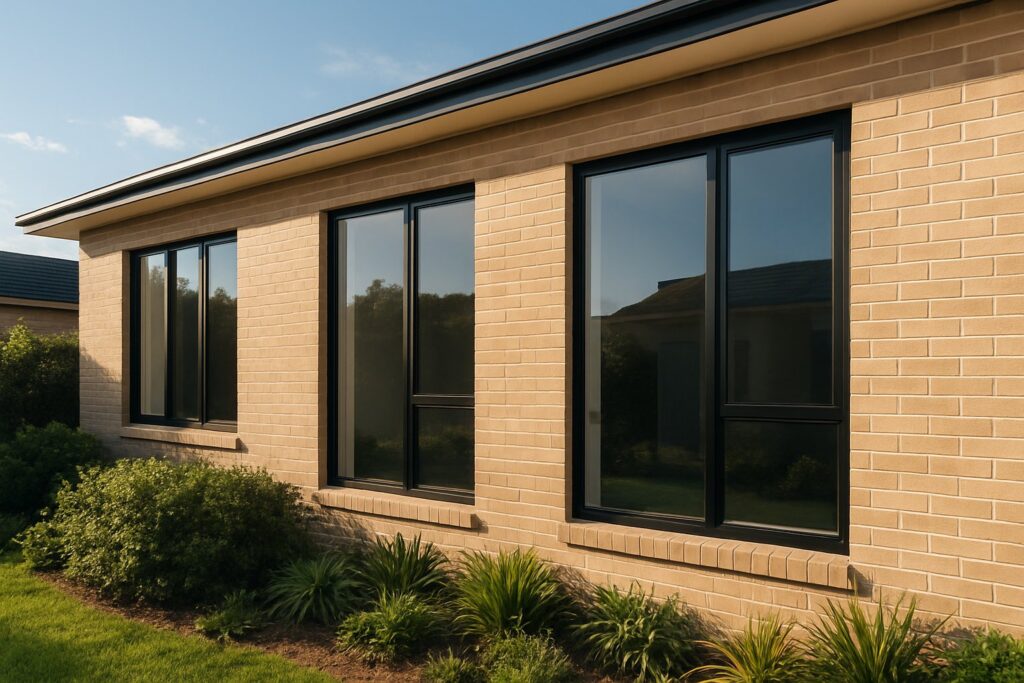
Most quotes for aluminium windows already include a powder coated finish, yet few buyers understand what that finish contributes to the final number on the page. Powder coating is a dry finishing process where electrostatically charged particles of pigment and resin are sprayed onto raw aluminium extrusions, then cured in an oven at around 200°C. The result is a hard, uniform shell that bonds to the metal at a molecular level, delivering scratch resistance and weatherproofing that liquid paint simply cannot match.
That distinction matters when you are comparing aluminium windows prices across suppliers. The cost of powder coated aluminium windows is never a single line item sitting in isolation. It is a value-add layer built into the overall frame price, influenced by colour selection, coating specification, profile complexity, and order volume.
Powder coating is a finish applied on top of the base aluminium frame. It is not priced as a standalone product. Every factor that changes the coating process — colour, number of layers, surface area — shifts the final per-window cost.
What Are Powder Coated Aluminium Windows
Raw aluminium extrusions fresh from the press have a dull, silvery mill-finish surface. Left untreated, this surface oxidises and looks inconsistent over time. Anodising offers one path to protection — an electrochemical process that thickens the natural oxide layer — but it limits you to metallic tones and a narrow aesthetic range. Powder coating opens the full RAL colour spectrum, from crisp whites and deep anthracites through to woodgrain effects and custom metallics. It also delivers over 20 years of fade and corrosion resistance in typical Australian conditions, making it the dominant finish specified for residential and commercial aluminium window projects across the country.
Typical Price Ranges for Residential and Commercial Projects
Supply-only aluminium window pricing in Australia generally spans from around $400 to $2,500 or more per unit (AUD), depending on window type, size, glazing, and performance specification. A standard powder coated casement for a residential project sits toward the lower end, while large-format sliding doors, thermally broken commercial systems, or custom configurations push well above. Installation adds further cost, typically $150 to $350 per opening depending on access, storey height, and whether the project is new build or retrofit.
These broad brackets cover the complete window — frame, glazing, hardware, and finish combined. The powder coating component itself is baked into the frame cost, but the choices you make around colour, coating layers, and finish type can shift your per-unit price by 10 to 25 percent in either direction. The factors driving those shifts deserve closer attention.
Key Factors That Drive Powder Coating Prices
Several variables sit between a raw aluminium extrusion and a finished, coated window frame — and each one nudges the aluminium window price up or down. Some are obvious; others hide inside the production process where most buyers never look. Understanding these powder coated aluminium window cost factors gives you the leverage to read quotes critically and make decisions that genuinely save money.
Frame Size and Profile Complexity
A powder coating line charges based on surface area and handling difficulty, not simply per window. A slim casement frame with a simple rectangular section uses less powder per unit and moves through the line quickly. A multi-track sliding door — with wider stiles, deeper interlock channels, and multiple moving sashes — presents far more surface area to coat and requires more careful manipulation on the hanging rack to ensure full coverage in recessed corners.
Heavier, thicker profiles compound the effect. Commercial-grade aluminium sections with wall thicknesses of 2.0 mm or more absorb heat differently during curing, sometimes requiring longer oven dwell times. Intricate profile geometries also create what coaters call Faraday cage zones — deep recesses where electrostatic charge struggles to deposit powder evenly. These areas demand manual touch-up passes, adding labour time and powder consumption. The result is a measurably higher per-metre coating cost for complex aluminium window frame pricing compared to straightforward residential sections.
Batch Size and Production Scheduling
Order volume is one of the strongest levers affecting your final price. When a coater runs a standard colour like RAL 7016 anthracite grey, they process multiple clients’ frames in a single continuous run. Fixed setup costs — gun calibration, rack preparation, oven warm-up — spread across hundreds of frames.
Request a non-standard colour in small quantities, and the economics flip. The coater must purge the entire line, flush hoppers of residual powder, and dedicate a separate run to your batch alone. Production data from coating facilities shows that smaller orders below 300 kg of powder usage suffer measurably lower coverage efficiency due to frequent colour changes and system waste. That inefficiency flows directly into per-unit cost — sometimes adding 20 to 40 percent over equivalent frames ordered in a high-volume standard colour run.
Surface Preparation Requirements
Before any powder touches the aluminium, the raw extrusion must be chemically prepared. The standard pre-treatment sequence for architectural-grade work in Australia includes alkaline degreasing, acid etching, rinsing, and a chromate-free conversion coating that promotes adhesion. Each step consumes chemicals, water, time, and energy. Frames arriving with oil residue, handling marks, or inconsistent surface quality require additional preparation passes, further affecting the aluminium windows price list on your quote.
The key cost drivers worth remembering:
- Total surface area of the profile (larger and more complex = more powder per frame)
- Profile geometry and Faraday cage zones requiring manual touch-up
- Batch size and whether your colour runs as part of a shared or dedicated line
- Number of colour changes required across your order
- Condition of raw extrusions and pre-treatment steps needed
- Substrate wall thickness influencing oven dwell time
Each of these factors interacts with the next. A large residential order in a standard colour on clean extrusions represents the lowest-cost scenario. A small batch of complex commercial frames in a bespoke colour on profiles requiring extra preparation sits at the opposite end. The gap between those two scenarios explains why identical-looking quotes from different suppliers can vary by thousands of dollars — and why the colour you choose deserves its own conversation.
Powder Coating vs Alternative Finishes Compared
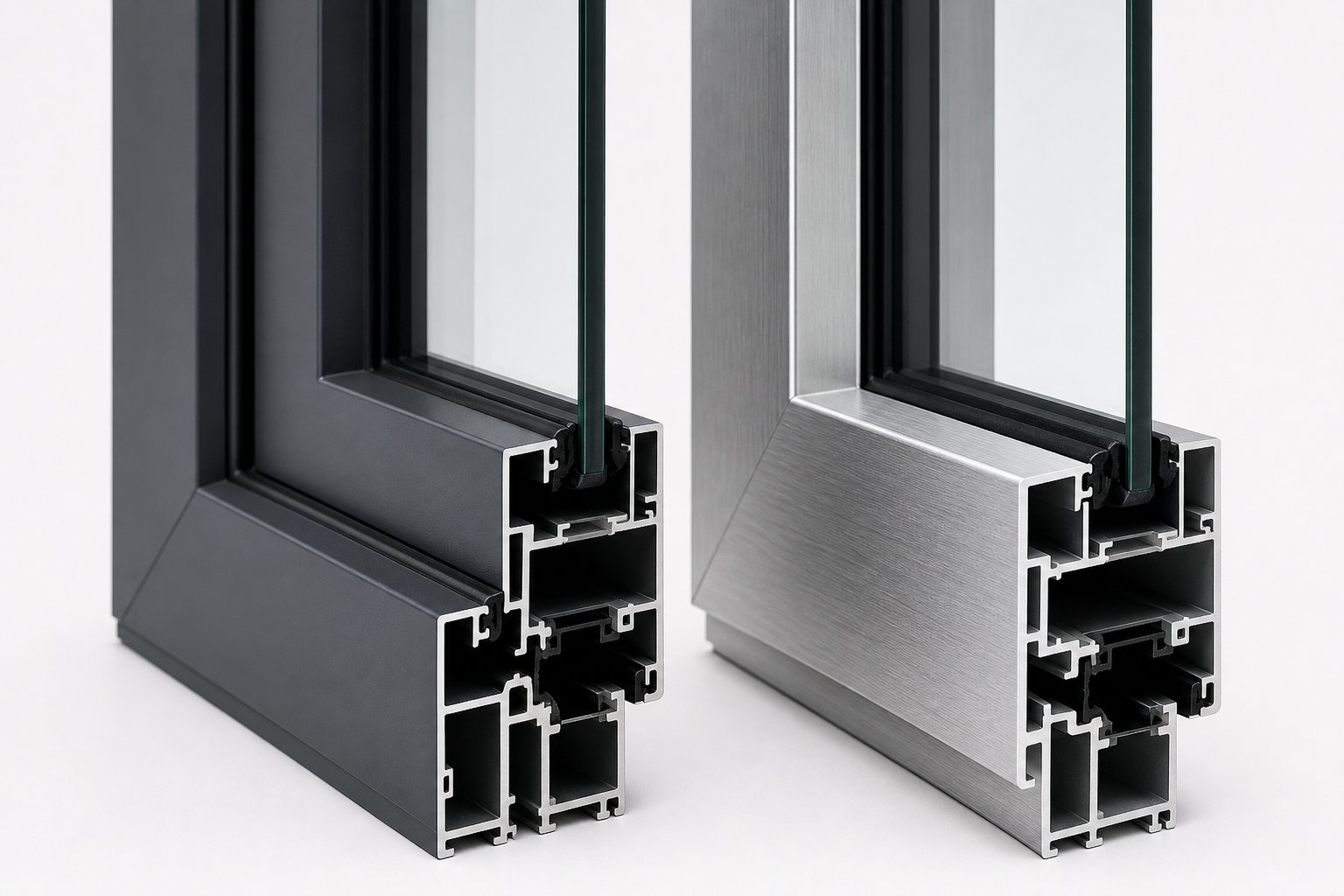
Before locking in a powder coated specification, it is worth asking whether powder coating is actually the right finish for your project. Aluminium window finish options fall into four main categories — mill finish (uncoated), anodising, powder coating, and PVDF liquid coating — and each occupies a different position on the cost-performance spectrum. Choosing the wrong one either wastes money on overkill protection or leaves frames vulnerable in demanding environments.
Powder Coating vs Anodising
Anodising is an electrochemical process that thickens aluminium’s natural oxide layer into a hard, corrosion-resistant surface integrated directly into the metal substrate. It produces a distinctive metallic sheen in silver, bronze, champagne, or black tones — but that is roughly where colour flexibility ends. Powder coating, by contrast, opens access to the entire RAL spectrum plus metallic, textured, and woodgrain effects.
On corrosion resistance, both perform well in typical Australian conditions. Anodising edges ahead in marine and high-humidity environments because the oxide layer cannot chip or peel — it is the metal itself. Powder coating, however, can chip on impact, exposing raw aluminium beneath. Cost positioning sits close together for standard specifications: anodising tends to carry a slight premium over single-coat powder coating due to the multi-stage chemical process, though this narrows on larger production runs. For projects needing specific colour matching or brand consistency, powder coating wins on flexibility at a lower overall aluminium windows cost.
Powder Coating vs PVDF and Wet-Paint Systems
PVDF (polyvinylidene fluoride) is a multi-layer liquid fluoropolymer coating system engineered for extreme longevity. Where powder coating typically delivers solid performance for 15 to 20 years before noticeable chalking or fade, premium PVDF systems hold colour for 25 years or more, even in harsh coastal and high-UV conditions. That performance comes at a price — PVDF runs 30 to 50 percent more expensive per square metre than equivalent powder coating and requires longer lead times due to its multi-step application.
Standard wet-paint systems (acrylic or polyester liquid coatings) sit below powder coating in both cost and durability. They suit touch-up work or very short-term applications but lack the film hardness and adhesion to justify specification on new aluminium window frames. For most residential and mid-rise commercial projects across Australia, powder coating occupies the value sweet spot — durable enough for decades of service, flexible enough for virtually any colour, and priced well below PVDF.
PVDF becomes the rational choice for high-rise facades, buildings within 500 metres of the coastline, or projects where recoating access would be prohibitively expensive. In those scenarios, the higher upfront aluminium window cost pays back through eliminated maintenance cycles.
| Finish Type | Durability | Colour Range | Typical Warranty | Relative Cost | Best Application |
|---|---|---|---|---|---|
| Mill Finish (uncoated) | Low — oxidises quickly | None (raw silver) | Nil | Lowest | Concealed frames, temporary installations |
| Anodising | High — integrated oxide layer | Limited metallic tones | 10–20 years | Mid to mid-high | Marine environments, modern architectural facades |
| Powder Coating | High — cured polymer shell | Full RAL spectrum plus effects | 10–15 years (standard), up to 25 years (premium) | Mid | Residential, commercial, most Australian conditions |
| PVDF (Kynar) | Very high — fluoropolymer chemistry | Standard colour charts, custom at premium | 20–25+ years | High (30–50% above powder) | High-rise, coastal within 500 m, industrial exposure |
The table clarifies where each finish earns its place. Powder coating covers the broadest range of Australian projects — from suburban homes through to multi-storey commercial buildings — at a cost that balances upfront spend with long-term performance. The real question is not whether powder coating is good enough, but which coating system within it matches your environment. That question hinges on how many layers go onto the frame.
How RAL Colour Choice Affects Your Window Price
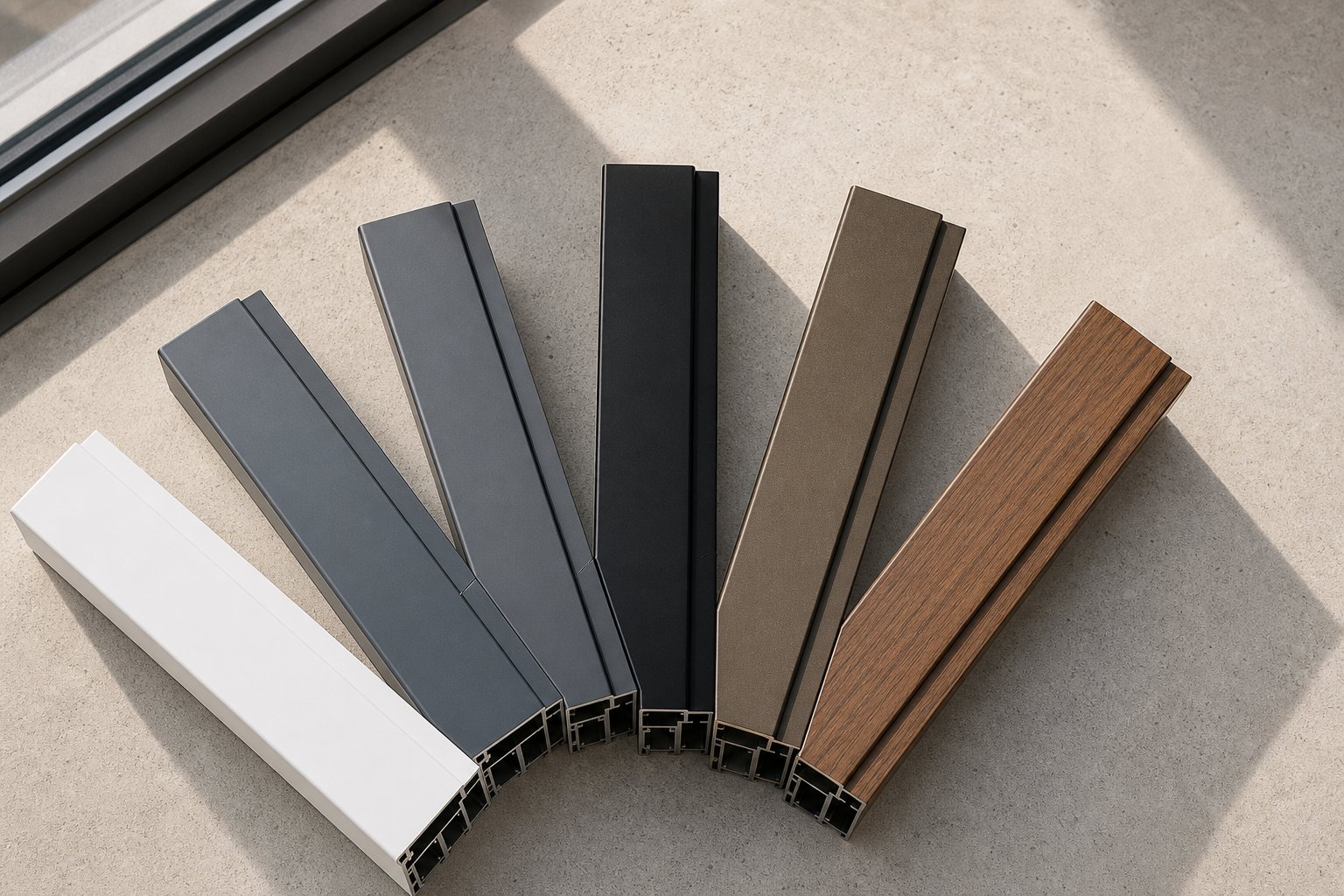
That full RAL spectrum is one of powder coating’s strongest selling points — but not every colour on the chart costs the same to apply. Your colour selection is quietly one of the most influential variables in custom colour aluminium window pricing, and it is the one most buyers overlook entirely when comparing quotes.
The reason is supply chain economics. Powder coaters do not mix colour on demand like a hardware-store paint machine. Each RAL shade is a pre-manufactured powder purchased in bulk from chemical suppliers. Colours that move in high volume sit on shelves ready to run. Everything else requires a dedicated order, minimum purchase quantities, and sometimes weeks of lead time before it even reaches the coating line.
Standard vs Custom RAL Colours
Most Australian aluminium window fabricators and their coating partners stock a core palette of high-demand colours. These run without surcharge because the powder is always available, batch sizes stay large, and no line purging is needed between jobs of the same shade.
Common standard colours that typically carry no premium:
- RAL 9016 Traffic White
- RAL 9010 Pure White
- RAL 7016 Anthracite Grey
- RAL 9005 Jet Black
- RAL 7021 Black Grey
- RAL 7035 Light Grey
- RAL 8022 Black Brown (popular for heritage projects)
Step outside that range and costs shift noticeably. A non-standard RAL colour requires the coater to order powder specifically for your job. Industry pricing data shows custom-matched powder costing two to three times more per kilogram than standard stocked shades. That raw material premium flows directly into your aluminium windows price per unit — and it compounds if your order quantity is small, since powder manufacturers enforce minimum order quantities that the coater must purchase regardless of how many frames you need coated.
Lead time is the hidden cost on top. A stocked colour ships within days. A custom RAL order can add two to four weeks to your programme before coating even begins, potentially delaying glazing, hardware fitting, and site delivery.
Special-Effect and Dual-Colour Finishes
Beyond standard solid colours, powder coated aluminium colour options extend into metallic, textured, matte, and woodgrain territory. These specialist finishes use different powder chemistries and sometimes require multiple application passes, driving the cost well above a single-coat solid colour.
Special-effect categories and their relative cost impact:
- Metallic finishes — contain bonded aluminium or mica flakes; typically 30 to 50 percent above standard solid colours due to specialised powder formulation
- Textured and wrinkle finishes — require specific application parameters and thicker film builds; expect 40 to 60 percent above standard pricing
- Matte and satin finishes — the powder itself costs moderately more, and quality control is tighter because surface imperfections show more readily; roughly 15 to 25 percent above gloss equivalents
- Woodgrain sublimation effects — a two-stage process where a base powder coat is applied first, then a printed film is heat-transferred onto the surface; effectively doubles the process time and adds material cost, often resulting in 80 to 120 percent above a standard solid finish
Then there is the increasingly popular dual-colour option, where the exterior face receives one colour (say anthracite grey to match the facade) while the interior face gets another (white to blend with internal trim). This approach effectively requires two separate coating passes — the frame is masked, coated, cured, re-masked on the opposite faces, then coated and cured again. It doubles handling time, powder consumption, and oven cycles. Expect dual-colour RAL colour aluminium windows cost to sit 50 to 100 percent above a single-colour equivalent, depending on the coater’s process efficiency.
For budget-conscious projects, sticking with a stocked standard colour in a gloss or satin finish delivers the lowest aluminium windows price without sacrificing durability. Where design intent demands something bespoke, the premium is real but quantifiable — and knowing it exists before you request quotes prevents sticker shock when numbers come back. That same logic of cost layering continues into the coating system itself, where the number of powder layers applied to each frame determines both the protection level and the warranty your project can achieve.
Single-Coat, Dual-Coat, and Tri-Coat Coating Systems
The number of powder layers on your aluminium frame is not an aesthetic choice — it is an engineering specification that dictates how long the finish lasts, what environments it can withstand, and what aluminium window coating warranty the supplier will stand behind. Each additional layer adds material, oven time, and handling cost. Whether that extra spend is justified depends entirely on where the windows are going.
Single-Coat Systems for Residential Projects
A single-coat system applies one layer of polyester powder directly onto the pre-treated aluminium surface, then cures it in an oven. This is the standard powder coating specification for aluminium windows in most Australian homes — suburban estates, townhouses, single and double-storey builds in low-corrosion inland environments. The film thickness typically sits between 60 and 120 microns, delivering solid UV resistance and colour retention for everyday exposure.
Standard polyester powders within this category — such as those in the Interpon D1036 collection — carry a baseline durability rating suitable for residential fenestration. They resist chalking and fading under normal conditions, and for a home in Melbourne’s suburbs or Adelaide’s inner ring, a single-coat system is entirely appropriate. It carries the lowest coating cost per frame because the process involves one application pass, one cure cycle, and no additional material layers.
Where single-coat systems reach their limits is prolonged exposure to salt-laden air, intense UV, or industrial pollutants. In those conditions, the polymer degrades faster than the warranty period allows, and the finish begins to chalk or lose adhesion.
Dual-Coat and Tri-Coat Systems for Demanding Environments
A dual-coat system adds a second layer — either a dedicated primer beneath the topcoat or a clear protective coat applied over it. The primer route improves adhesion and corrosion resistance at the substrate level, while a clearcoat adds an additional UV-resistant barrier on the exposed surface. Either way, the frame passes through the oven twice, consuming more energy and rack time.
Super Durable polyester powders fall into this tier. These formulations use advanced resin chemistry to resist UV degradation far longer than standard polyester, achieving three to five-year Florida exposure standards — the accelerated weathering benchmark the industry uses to predict real-world performance over decades. Dual coat powder coated windows using Super Durable chemistry are increasingly common across both residential and commercial projects in Australia, particularly where homeowners or architects want a longer design life without stepping up to full PVDF specification.
Tri-coat systems take the approach further: a corrosion-inhibiting primer, a pigmented basecoat, and a clearcoat topcoat. This three-layer build delivers the highest film thickness (often exceeding 150 microns total) and maximum protection. Hyper Durable powders — rated to 10-year Florida standards and carrying Qualicoat Class 3 certification — sit at this level. They are specified for towers, beachfront apartments within the salt zone, buildings in tropical Queensland, and projects in industrial areas with high atmospheric corrosivity. The cost of aluminium windows with tri-coat specification reflects the triple handling, triple curing, and premium powder chemistry involved.
How Warranty Terms Correlate With Coating Specification
Warranty length is not a marketing number pulled from thin air. It maps directly to the coating system’s tested durability and the rigour of its application process. A supplier offering a 25-year finish guarantee is not simply being generous — they are committing to a specification that requires certified application, controlled film thickness, documented pre-treatment, and ongoing maintenance compliance from the building owner.
Higher warranty tiers also demand that the coater holds recognised accreditation. Qualicoat-licensed applicators undergo routine independent inspection to verify that pre-treatment, application, and curing processes meet the published specification. That oversight infrastructure adds cost at the coater level, which passes through to your project price. Cheaper, uncertified coaters can undercut on price precisely because they skip this accountability — but they cannot offer the same warranty backing.
Maintenance obligations also tighten as warranty terms extend. A 10-year guarantee might require annual wash-downs. A 25-year Seaside-class warranty for coastal installations typically mandates cleaning every three months to prevent salt and pollutant build-up from degrading the finish prematurely.
| Coating System | Layers | Typical Powder Grade | Application Context | Indicative Warranty | Relative Cost Tier |
|---|---|---|---|---|---|
| Single-coat | 1 (topcoat only) | Standard Polyester | Residential inland, low-corrosion suburban environments | 10 years | Base cost |
| Dual-coat | 2 (primer + topcoat or topcoat + clearcoat) | Super Durable Polyester | Residential premium, commercial, moderate coastal exposure | 15 years | 20–40% above single-coat |
| Tri-coat | 3 (primer + basecoat + clearcoat) | Hyper Durable / Qualicoat Class 3 | High-rise, beachfront, tropical, industrial zones | 25 years | 50–80% above single-coat |
The pattern is straightforward: each step up in specification roughly doubles the protection while adding a proportional cost increment. For most homes in temperate Australian cities, single-coat standard polyester does the job reliably. For coastal builds within a few hundred metres of the waterline, or commercial projects where recoating access would be expensive and disruptive, the upfront premium on a dual or tri-coat system pays for itself many times over across the building’s life.
Specification is only half the equation, though. Who actually applies the coating — and how that supply chain is structured between your fabricator and the coating facility — introduces another layer of cost and lead-time variability that rarely appears as a visible line on a quote.
Supply Chain and New Build vs Retrofit Costs
Your quote might list a single price per window, but behind that number sits a production chain where aluminium extrusions travel between facilities, accumulating transport costs, handling charges, and scheduling delays at each stop. The aluminium window supply chain cost embedded in your quote depends heavily on how your fabricator sources its powder coating — and that structural decision often explains why two suppliers quoting identical specifications land on very different numbers.
In-House Fabricator Coating vs Third-Party Coaters
Some fabricators of aluminium windows and doors operate their own powder coating lines within the same facility where profiles are cut, machined, and assembled. Others subcontract the coating step to specialist third-party coaters, transporting raw frames offsite and receiving them back finished days or weeks later.
In-house coating eliminates the logistics gap entirely. Frames move from fabrication to pre-treatment to coating without leaving the building, cutting transport costs and shaving days off the production timeline. As finishing industry consultants note, fabricators who bring powder coating in-house gain control over scheduling and reduce quality risks associated with loading, trucking, and unloading delicate profiles. The trade-off is capital investment — a commercial-grade coating line with pre-treatment, booth, and curing oven requires significant outlay that smaller fabricators cannot always justify.
Third-party coaters, by contrast, offer access to wider colour ranges, specialist finishes, and high-volume capacity without the fabricator carrying that infrastructure cost. The hidden expense lands on your quote in the form of return freight between the fabrication shop and the coating facility (often $15 to $40 per frame depending on distance and batch size), scheduling buffers where your job waits in the coater’s queue, and an additional handling cycle that introduces minor damage risk. For bespoke or low-volume orders, third-party coating may still be the more cost-effective path. For large project runs in standard colours, in-house coating typically delivers both a lower new build aluminium window cost and tighter lead times.
New Build vs Retrofit Cost Differences
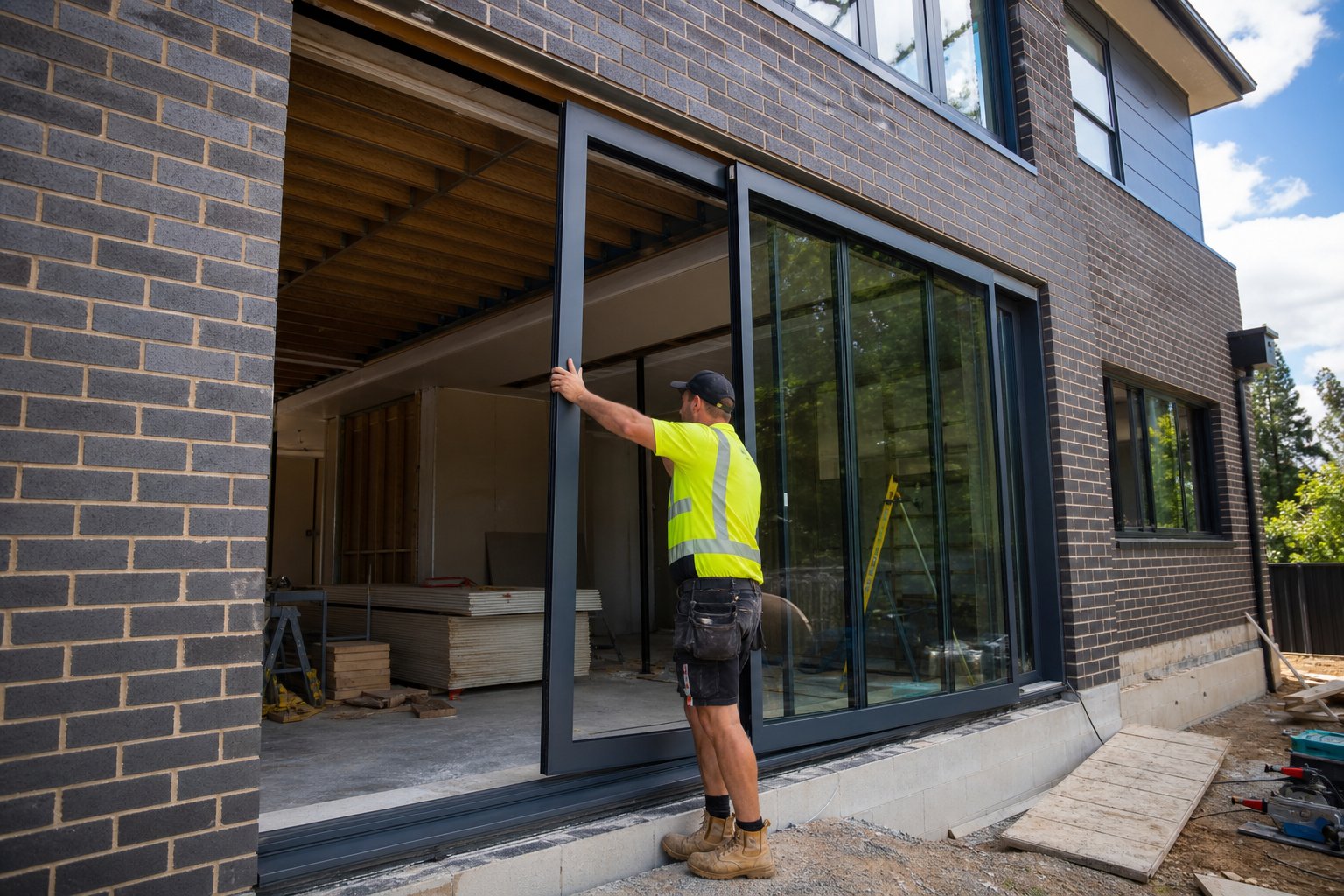
A new build project is relatively straightforward from a supply perspective — windows arrive on site, openings are framed and ready, and installation proceeds without demolition or remediation. Retrofit projects carry a heavier cost burden that has nothing to do with the windows themselves.
Replacing existing frames in an occupied home or older commercial building introduces a chain of additional work that inflates the retrofit aluminium windows price well beyond the equivalent supply-and-install figure for new construction:
- Removal and disposal of old aluminium or timber frames, including safe handling of any lead paint on pre-1980s joinery
- Making good internal and external reveals — patching render, repairing brickwork, or replacing damaged plasterboard disturbed during extraction
- Structural assessment and possible lintel reinforcement where existing openings are being widened or where deteriorated lintels are discovered
- Flashing and waterproofing remediation to meet current NCC requirements, since original installations often predate modern weatherproofing standards
- Temporary weatherproofing during the changeover period, particularly on multi-day installations where openings remain exposed overnight
- Compliance upgrades — replacement windows must meet current AS 2047 and energy performance standards, not the standards in place when the house was originally built, which can require thermally broken frames and upgraded glazing beyond what the homeowner initially anticipated
- Access scaffolding for upper-storey openings, heritage facades, or sites with restricted ground-level clearance
On a typical double-storey brick veneer home in Sydney or Melbourne, these retrofit-specific items can add $200 to $600 per opening on top of the window supply and standard installation cost. Across a full-house replacement of 12 to 15 windows, that overhead compounds quickly.
For builders and homeowners weighing up their budget, the distinction is critical: a quote for powder coated aluminium windows on a new build is not comparable to one for a retrofit project unless both account for the site conditions and remediation scope. Knowing what information to provide — and what to ask for — when requesting quotes is what separates a meaningful estimate from a number that falls apart the moment work begins.
How to Get an Accurate Powder Coated Window Supplier Quote
A vague enquiry produces a vague estimate. Send a supplier an email that says “I need some aluminium windows, how much?” and you will receive a number so broad it is functionally useless. The gap between a rough aluminium window cost estimate and a reliable, buildable quote comes down to what you provide upfront. Suppliers cannot price what they cannot see — and for powder coated aluminium windows, the variables are numerous enough that missing even one detail forces the quoting team to assume, pad, or exclude.
What Information Suppliers Need to Quote Accurately
Whether you are a homeowner replacing windows in a weatherboard cottage or a procurement manager tendering a 200-unit apartment complex, the core information a supplier needs follows the same logic. Industry quoting processes consistently require these details before a meaningful price can be generated:
- Dimensions — width and height in millimetres for every opening, measured at the structural reveal
- Opening type — awning, casement, sliding, bi-fold, fixed, louvre, or combination configurations
- Glazing specification — single, double, or triple glazed; toughened or laminated; Low-E coatings; any acoustic or bushfire rating requirements
- Colour and finish — RAL number, single or dual colour, standard or special effect
- Coating specification — single-coat, dual-coat, or tri-coat system; any Qualicoat or warranty-grade requirements
- Hardware — lock type, hinge style, handle finish, restrictors, key-alike groupings
- Performance requirements — NCC energy compliance zone, WERS ratings, water resistance class, wind load region
- Project type — new build or retrofit, residential or commercial, ground floor or multi-storey access
- Quantities and programme — total number of units and when you need them on site
For homeowners, this translates to preparing a room-by-room list with approximate sizes, preferred opening styles, and your colour preference. Sketch each window if you can — even a rough drawing communicates more than a phone description. For trade professionals, architectural drawings and a formal door and window schedule are the standard communication tool — an itemised list that tags every opening with its dimensions, type, glazing, and hardware specification.
Here is a practical sequence for requesting quotes that minimises back-and-forth:
- Measure all openings (or have your builder or architect confirm structural sizes from drawings)
- Decide on opening types for each window based on ventilation needs, egress requirements, and aesthetic preference
- Select your colour — confirm whether it is a standard stocked RAL or a custom shade, and whether you want single or dual colour
- Specify glazing and performance requirements based on your NCC climate zone and any BAL, acoustic, or cyclone ratings that apply
- Confirm project type and timeline so the supplier can assess production scheduling and logistics
- Submit your complete schedule to at least two or three suppliers simultaneously so you can compare responses on a like-for-like basis
Project-capable suppliers like MEICHEN can work directly from architectural drawings and window schedules to provide comprehensive quotes covering system recommendations, material calculation, and manufacturing coordination — turning your documentation into an accurate, fully scoped proposal rather than a ballpark figure.
Understanding Quote Variations Between Suppliers
You have sent identical information to three companies and received three different numbers. That is normal — but the lowest price is not automatically the best value. As quote comparison analysis consistently shows, price differences of 20 to 30 percent between seemingly similar offers usually stem from specification differences hiding beneath the headline number.
When running an aluminium window quote comparison, check these details before comparing bottom-line prices:
- Is the glazing specification identical — same glass makeup, same spacer type, same U-value?
- Is the coating system the same grade, or has one supplier quoted standard polyester while another quotes Super Durable?
- Does the quote include hardware, or is that listed as a provisional sum?
- Are delivery, GST, and any installation allowances included or excluded?
- What warranty terms accompany the finish — and do they require specific maintenance compliance?
A quote that appears cheaper may simply be quoting a thinner specification — fewer locking points, standard rather than thermally broken frames, or a single-coat finish where your environment really demands dual-coat. Conversely, a higher quote might include items the cheaper one leaves for variation claims later. The only fair comparison is one where every line item matches. If something is unclear, ask the supplier to clarify before you rank them on price alone.
Thorough quoting is not just about getting a number — it is the first test of how a supplier communicates, how well they understand your project, and whether they will deliver what you expect once production begins.
Planning Your Powder Coated Window Investment
A well-planned powder coated aluminium window investment pays dividends for decades — maintenance-free performance, consistent aesthetics, and property value that holds. A poorly planned one produces budget blowouts, programme delays, and finishes that underperform their environment. The difference sits almost entirely in the decisions made before a single frame enters production.
Cost Levers You Can Control
Across everything covered in this article, a handful of variables stand out as genuinely controllable levers for managing aluminium windows prices without compromising the finished result:
- Colour selection — choosing a stocked standard RAL colour (anthracite grey, traffic white, jet black) avoids custom powder ordering, minimum quantity surcharges, and extended lead times. If your design demands a non-standard shade, confirm availability early and factor the premium into your budget from the start.
- Coating system specification — match the system to your environment, not to fear. A suburban home in Canberra does not need tri-coat Hyper Durable chemistry. Single-coat standard polyester handles that environment comfortably at base cost. Reserve dual and tri-coat specifications for coastal, tropical, or high-rise projects where the exposure genuinely demands it.
- Batch sizing and timing — consolidate your order rather than drip-feeding windows across multiple production runs. A single batch in one colour minimises line changeover costs and qualifies for volume efficiencies that fractured orders miss entirely.
- Supplier model — understand whether your fabricator coats in-house or subcontracts. Neither is inherently better, but each carries different cost structures. In-house suits standard colours at volume; third-party coaters suit specialist finishes or small bespoke runs.
- Specification completeness — providing full dimensions, opening types, glazing requirements, and coating specifications upfront eliminates the padding suppliers add when information is incomplete. A thorough brief produces a tighter price.
For homeowners, this means doing the preparation work before picking up the phone — measuring openings, choosing your colour from a stocked range, and knowing whether your site has coastal or bushfire exposure that demands a higher specification. For builders and developers managing aluminium window project planning cost across multiple dwellings, it means locking colour and specification decisions at design stage, not leaving them as late variations that fragment production and inflate per-unit pricing.
Working With a Project-Capable Supplier
The hidden costs in most window projects do not come from the product itself — they come from coordination gaps. A colour specified by the architect that the fabricator cannot source locally. A glazing requirement discovered at compliance check that forces a frame redesign. A delivery schedule that does not align with the builder’s programme, leaving windows sitting on site unprotected or holding up lock-up.
These problems multiply when different parties handle quoting, fabrication, coating, logistics, and delivery as disconnected tasks. Each handoff introduces a potential miscommunication that becomes a cost event downstream. For builders, developers, architects, and procurement teams managing aluminium windows prices across multiple openings or multi-dwelling projects, this fragmentation is where budgets quietly unravel.
Working with a supplier who handles the full project workflow — from interpreting drawings and recommending systems through to material calculation, manufacturing coordination, quality control, and delivery planning — eliminates those gaps. MEICHEN’s services approach operates on this model, supporting the process end-to-end so that specification decisions made at design stage carry through production without translation errors or scope gaps emerging at inconvenient moments. That continuity reduces hidden costs from rework, reordering, and programme delays that eat margin on projects where windows were supposed to be straightforward.
Powder coating is a long-term investment. The upfront cost of powder coated aluminium windows correlates directly with decades of maintenance-free performance — frames that hold their colour, resist corrosion, and never need repainting. Spending less now on a specification that underperforms your environment costs more in recoating or replacement within 10 years than the premium would have cost on day one.
Whether you are pricing a single-storey home renovation or tendering a 50-unit development, the principles hold. Define your environment, match the specification to it honestly, consolidate your order for efficiency, and choose a supplier whose process depth matches the complexity of your project. The cost of powder coated aluminium windows is not a fixed number — it is the output of every decision covered in this article, and the ones you control determine whether your quote reflects genuine value or avoidable waste.
Frequently Asked Questions About Powder Coated Aluminium Window Costs
1. How much does powder coating add to the cost of aluminium windows?
Powder coating is not a separate add-on in most quotes — it is built into the frame price as the standard finish. However, the choices you make around colour, coating system, and finish type can shift your per-unit window cost by 10 to 25 percent. Selecting a stocked standard RAL colour in a single-coat system represents the lowest cost scenario, while custom colours, dual-colour options, or tri-coat specifications for coastal environments push the coating component significantly higher. For accurate pricing tailored to your project, suppliers like MEICHEN can assess your specifications and provide a fully scoped quote based on your drawings and window schedule.
2. Is powder coating better than anodising for aluminium windows?
Neither finish is universally better — the right choice depends on your project requirements. Powder coating offers access to the full RAL colour spectrum including metallics and woodgrain effects, suits most Australian residential and commercial environments, and typically costs less than anodising for standard specifications. Anodising integrates a protective oxide layer directly into the metal, making it impossible to chip or peel, which gives it an edge in severe marine environments. However, anodising limits you to metallic tones only. For most homes and commercial buildings across Australia, powder coating delivers the best balance of colour flexibility, durability, and value.
3. How long does powder coating last on aluminium window frames?
Longevity depends on the coating system specified and the environment. A single-coat standard polyester finish in a low-corrosion suburban setting typically delivers 10 to 15 years of reliable performance before noticeable chalking or fade. Super Durable dual-coat systems extend that to around 15 to 20 years and suit moderate coastal exposure. Tri-coat Hyper Durable systems with Qualicoat Class 3 certification can achieve 25-plus years, even in aggressive coastal or tropical conditions. Maintenance obligations also affect lifespan — most extended warranties require regular wash-downs to prevent salt and pollutant build-up from degrading the finish prematurely.
4. Why do quotes for the same powder coated aluminium windows vary so much between suppliers?
Price differences of 20 to 30 percent between seemingly similar quotes usually stem from hidden specification differences. One supplier may quote standard polyester while another quotes Super Durable chemistry. Glazing makeup, hardware inclusions, delivery charges, and whether the quote covers supply-only or supply-and-install all create variation. Additionally, fabricators with in-house coating lines carry different cost structures than those subcontracting to third-party coaters. The only fair comparison is one where every line item matches — always verify coating grade, glazing spec, hardware, and inclusions before ranking quotes on price alone.
5. Does choosing a custom RAL colour cost more for aluminium windows?
Yes, and the premium can be substantial. Standard stocked colours like RAL 7016 Anthracite Grey or RAL 9016 Traffic White run without surcharge because powder is always on hand and batch sizes remain large. Non-standard RAL colours require the coater to order powder specifically for your job, with custom-matched powder costing two to three times more per kilogram than stocked shades. There is also a lead-time penalty — custom colours can add two to four weeks before coating begins. For budget-conscious projects, selecting from your supplier’s stocked colour range is one of the simplest ways to keep costs down without sacrificing finish quality.
More Window & Door Guides