What New Aluminium Windows Actually Cost
Search for the cost of new aluminium windows and you will find dozens of pages quoting a single dollar figure as though every project is identical. It is not that simple. In Australia, a single aluminium window can range from around $600 to well over $2,000 AUD supply and install, depending on whether you are fitting a small fixed pane or a large thermally broken casement with premium glazing and a custom powder coat finish. For a full-house replacement across 10 to 15 openings, total project spend can stretch from $10,000 to $30,000 or more.
That spread is not a cop-out. It reflects real variables that shift every quote: window style, frame profile thickness, glazing specification, whether sizes are standard or custom, your chosen colour finish, and the complexity of installation on site.
Why Aluminium Window Pricing Varies So Widely
Most people assume the frame drives the price. In reality, the aluminium frame itself accounts for a smaller share than you might expect.
The frame is often only 40 to 50 percent of the total installed cost. Glazing, hardware, finishing, and labour make up the rest, and each of those components carries its own range of options and price tiers.
This is why two quotes for apparently similar aluminium windows can differ by hundreds of dollars per opening. One may include thermally broken frames with Low-E double glazing and quality European hardware, while another uses a non-broken profile with standard glass. Both are aluminium windows, but the performance gap and the price gap are significant. Aluminium windows prices also shift with regional labour rates, site access difficulty, and project scale.
What This Guide Covers
This guide breaks down each cost driver individually so you can build an accurate budget rather than relying on a misleading average. We cover pricing by window style and type, the real cost of aluminium windows with thermal breaks versus standard frames, glazing upgrades, custom sizing and colour options, installation labour, and how to compare quotes properly. Every section targets the specific variables that determine what you will actually pay, not what a generic calculator suggests.
Price Ranges by Window Style and Type
The style of window you choose sets the baseline for your aluminium window price before glazing, finish, or installation enter the equation. A fixed pane with no moving parts sits at one end of the cost spectrum, while large bi-fold or multi-panel sliding systems occupy the other. Everything else falls between those two extremes, and the gap is driven primarily by hardware complexity, frame engineering, and the sheer amount of aluminium required for the span.
Casement and Awning Window Pricing
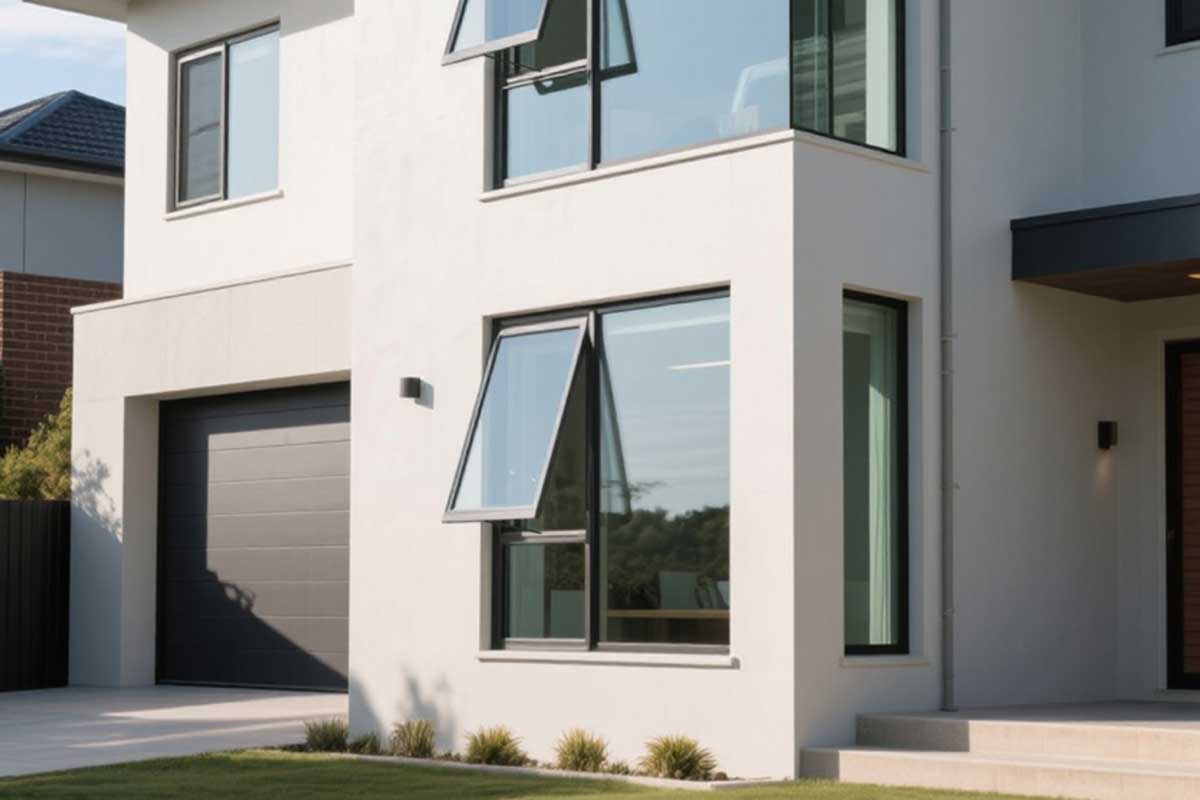
Casement windows hinge on the side and swing outward, requiring multi-point locking systems, quality friction hinges, and robust sealing. In Australia, expect to pay roughly $250 to $1,200 AUD per unit supply only, depending on size and whether the frame is thermally broken. An aluminium awning window, hinged at the top and opening outward from the bottom, falls into a similar band, typically starting around $200 for a compact bathroom unit and climbing toward $1,000 for a large kitchen opening. Awning styles remain popular across Australian homes because they allow ventilation even during rain, which adds practical value relative to their cost.
Sliding and Double-Hung Window Pricing
Sliding windows use a simpler mechanical action, one panel gliding horizontally past a fixed panel, which keeps their price competitive. Standard aluminium sliding windows generally range from $250 to $1,200 AUD per unit. Double-hung aluminium windows, where both upper and lower sashes move vertically, tend to sit slightly higher due to the additional balance hardware and sealing required for two operable panels. Heritage renovations sometimes call for aluminium sash windows to replicate traditional proportions with the durability benefits of a modern metal frame. Double hung aluminium storm windows also appear in older homes being upgraded for weather protection, though these are more common in exposed coastal or high-wind areas.
Fixed and Specialty Window Pricing
Fixed pane windows are the most affordable aluminium option because they involve no moving parts, no hardware, and no complex sealing. A standard size fixed window can start from $200 AUD. Specialty configurations, arched tops, trapezoids, or oversized feature panels, push costs considerably higher. Custom shapes may reach $3,000 to $5,000 depending on engineering complexity and glazing requirements.
The table below positions each style relative to the others, giving you a practical reference when comparing quotes.
| Window Style | Typical Size Range | Relative Cost Tier | Key Cost Drivers |
|---|---|---|---|
| Fixed Pane | 600 mm x 600 mm to 1800 mm x 1200 mm | Budget | Glass area only; no hardware or sealing |
| Awning | 600 mm x 600 mm to 1500 mm x 1200 mm | Budget to Mid-Range | Top-hung hinges, weather sealing, winder hardware |
| Casement | 600 mm x 900 mm to 1200 mm x 1800 mm | Mid-Range | Multi-point locks, friction stays, wider frame profiles |
| Sliding | 900 mm x 900 mm to 2400 mm x 1500 mm | Mid-Range | Rollers, track engineering, interlocking meeting stiles |
| Double-Hung | 600 mm x 1200 mm to 1200 mm x 1800 mm | Mid-Range to Premium | Balance systems, dual operable sashes, enhanced sealing |
| Tilt-and-Turn | 600 mm x 900 mm to 1200 mm x 1500 mm | Premium | Complex European hardware, dual-action mechanism |
| Bi-Fold / Large Sliding | 2400 mm x 2100 mm to 6000 mm+ x 2400 mm | Premium | Heavy-duty tracks, structural frames, multiple panels |
One pattern stands out across every style: operable windows always cost more than fixed equivalents of the same dimensions. Moving parts demand precision engineering, quality hardware, and more sophisticated weatherproofing. Larger spans compound that effect because heavier glass loads require thicker aluminium profiles and reinforced tracks to maintain smooth operation over decades of use. Choosing standard aluminium window sizes rather than custom dimensions helps keep costs within the lower end of each tier, since fabricators can use existing tooling and stock profiles rather than bespoke setups.
Of course, the style only sets the starting point. The frame construction itself, particularly whether it includes a thermal break, introduces another layer of cost variation that can shift a mid-range window into premium territory.
Factors That Drive Aluminium Window Prices Up or Down
Two homeowners order the same casement window from the same supplier and receive quotes hundreds of dollars apart. How? The window style sets a baseline, but a handful of project-specific variables push the final figure up or pull it down. Understanding these factors gives you genuine control over your budget rather than leaving you at the mercy of whatever number lands in your inbox.
Here are the major cost drivers ranked by their typical impact on your total spend:
- Frame construction – thermally broken vs non-thermally broken aluminium window frames
- Frame profile thickness and sight lines – slim profiles cost more than standard due to engineering precision
- Project scale – single replacement vs whole-house packages with volume pricing
- Geographic location and local labour rates – capital city vs regional, climate zone requirements
- Property access and floor level – ground floor vs upper storeys, scaffolding, restricted site entry
Thermally Broken vs Non-Thermally Broken Frames
This single specification creates the largest price split between otherwise identical aluminium window frames. A thermally broken frame uses a polyamide strip inserted between the interior and exterior sections of the extruded aluminium window frame, interrupting the metal’s natural tendency to conduct heat. Without that barrier, the window frame metal transfers outdoor temperatures directly inside, forcing your heating or cooling system to work harder.
The cost premium for thermally broken construction typically falls between 20 and 35 percent over a non-broken equivalent. That is a meaningful jump on a per-unit basis, but the trade-off is measurable. Thermally broken frames can reduce heat transfer through the frame by up to 60 percent, which translates into lower energy bills across Australian summers and winters alike. For homes in climate zones requiring compliance with NatHERS ratings or stringent NCC Section J provisions, a thermal break often is not optional; it is the minimum standard.
Non-thermally broken frames still have a place. They suit enclosed areas like garages, sheds, or internal partitions where thermal performance is less critical and upfront cost matters most. For any habitable room in a new build or major renovation, though, the broken profile delivers better comfort, lower running costs, and stronger resale positioning.
Project Scale and Volume Discounts
Replacing a single window means your supplier absorbs setup, delivery, and coordination costs across just one unit. Order ten or fifteen windows and those fixed overheads get distributed, bringing the per-unit price down. Full-house aluminium window framing packages commonly attract discounts of 10 to 20 percent compared to ordering windows individually, because fabricators can batch-cut profiles, optimise material yields, and schedule production more efficiently.
Installers benefit from scale too. Mobilising a crew, erecting scaffolding, and transporting tools costs roughly the same whether they fit two windows or twelve. Bundling the work into a single visit reduces labour charges per opening and minimises disruption to your household.
Access Difficulty and Site Conditions
A ground-floor installation on a single-storey home with clear driveway access is the simplest scenario and carries the lowest labour component. Move up to a double-storey property and the picture changes. Upper-floor openings typically require scaffolding or elevated work platforms, adding $100 to $250 AUD per window depending on height and duration of hire. Three-storey townhouses or properties with narrow side access can push that figure higher still.
Restricted sites, think inner-city terraces with no rear lane access or steep-block homes in suburbs like those across Sydney’s Northern Beaches or Brisbane’s western hills, force installers to hand-carry frames and glass rather than using mechanical aids. That additional time and physical effort flows directly into the labour quote. Heritage overlays, bushfire zones requiring BAL-rated assemblies, or coastal locations demanding enhanced corrosion resistance on the metal window frame also layer compliance costs onto the base price.
Regional labour rates compound these differences. A straightforward install in regional Victoria will generally cost less per hour than the same job in inner Sydney or Perth, simply because trade rates and overheads vary between markets.
Each of these factors stacks. A thermally broken, slim-profile aluminium window installed on the second storey of a coastal property with limited access will naturally cost more than a standard-profile, non-broken unit fitted at ground level in a new estate home with wide open site access. Recognising where the cost sits, and where you can flex, puts you in a stronger position when the next variable enters the equation: how aluminium stacks up against vinyl and timber alternatives on total lifecycle spend.
Aluminium Compared to Vinyl and Timber Windows
Upfront price tags tell only a fraction of the story. A cheaper window that needs replacing in 20 years is not actually cheaper, it just spreads the pain differently. Comparing the cost of aluminium windows vs vinyl and timber requires looking at the full picture: initial outlay, maintenance burden, design flexibility, and what each material costs you over the life of your home.
Aluminium vs Vinyl Window Costs
Vinyl (uPVC) windows enter the market at a lower price point, typically $500 to $1,200 AUD per standard opening supply and install, compared with $800 to $2,500 for thermally broken aluminium. That gap looks decisive on a spreadsheet. In practice, it narrows fast. Vinyl frames are bulkier, limiting glass area and restricting sightlines. They cannot span large openings without internal steel reinforcement, which adds hidden cost and weight. Dark-coloured vinyl absorbs heat and risks warping in Australian summers, particularly in northern climates where surface temperatures regularly exceed 40°C.
For anyone searching for cheap aluminium windows as a way to match vinyl pricing, the reality is that cutting corners on frame quality or thermal performance creates long-term costs that outweigh any upfront saving. Affordable aluminium windows do exist within the mid-range tier, particularly when ordered as part of a whole-house package with volume pricing, but they still carry a justified premium over vinyl because the material delivers more structural capability per millimetre of frame width.
Aluminium vs Timber Window Costs
Timber sits at the opposite end. Expect $1,200 to $3,500 AUD or more per window for quality hardwood, with bespoke heritage profiles pushing well beyond that. The natural beauty and insulation properties of wood are genuine advantages, but maintenance is relentless. Timber frames need repainting or resealing every five to seven years; neglect that cycle and rot sets in, turning a premium investment into a liability. In humid subtropical climates across Queensland and northern NSW, timber degradation accelerates further without diligent upkeep.
Aluminium clad windows offer a middle path for those wanting timber’s interior warmth with aluminium’s exterior durability. These hybrid systems use a protective aluminium shell on the weather-facing side, eliminating the painting cycle while retaining a natural wood finish inside. They sit in the premium price bracket alongside high-end metal framed windows but remove the ongoing maintenance tax that pure timber demands.
Total Cost of Ownership Over Time
The table below compares the three materials across the metrics that actually determine value over a 30-year ownership period, the timeframe most relevant to Australian homeowners planning a renovation or new build.
| Criteria | Aluminium (Thermally Broken) | Vinyl (uPVC) | Timber (Hardwood) |
|---|---|---|---|
| Upfront Cost (per window, supply and install) | $800 – $2,500 AUD | $500 – $1,200 AUD | $1,200 – $3,500+ AUD |
| Expected Lifespan | 40 – 55 years | 20 – 30 years | 30 – 60 years (with maintenance) |
| Maintenance Requirements | Minimal; occasional wash and hardware check | Minimal; no repainting, but no repair if frames warp or discolour | High; repaint or reseal every 5 – 7 years |
| Design Flexibility | Unlimited RAL colours, slim profiles (45 – 65 mm), large spans possible | Limited palette (6 – 10 colours), thicker frames (80 – 100 mm), restricted spans | Any paint or stain colour, moderate profiles, limited spans without reinforcement |
| Thermal Performance | Strong with thermal break (U-values 1.5 – 2.5 W/m²K frame) | Good inherently (U-values 1.3 – 2.0 W/m²K frame) | Good naturally (U-values 1.2 – 1.8 W/m²K frame) |
| Coastal Suitability | Excellent; powder coat resists salt corrosion 30+ years | Poor; chalking and brittleness within 10 – 15 years | Poor to moderate; salt accelerates timber decay |
Data drawn from manufacturer lifecycle analysis and independent materials research suggests that over a 30 to 50-year horizon, the cost of metal windows in aluminium actually undercuts vinyl because vinyl requires full replacement at least once within that period. Vinyl cannot be repaired when seals fail or frames discolour; the entire unit gets pulled out and replaced. Aluminium avoids that second capital outlay entirely.
For Australian coastal properties, from the Sunshine Coast to the Mornington Peninsula, the comparison is even more lopsided. Salt air degrades vinyl 50 to 70 percent faster, shrinking its usable life to as little as 10 to 15 years. Metal frame windows in aluminium with quality powder coating remain structurally and aesthetically sound for three decades or more in the same environment.
Resale value reinforces the pattern. Buyers in the modern Australian market increasingly associate slim-profile aluminium with quality construction, particularly on contemporary builds and renovated period homes. The perceived value of durable, low-maintenance metal framed windows often translates directly into higher appraisal figures and faster sale times. Timber still commands respect in heritage contexts, but carries buyer hesitation around future upkeep costs. Vinyl rarely adds perceived value beyond basic functionality.
Material choice sets the frame, literally and financially. But the glass sitting inside that frame introduces its own set of cost decisions, and for most projects the glazing specification has as much influence on total spend as the frame material itself.
How Glazing Specification Affects Your Total Cost
The glass in an aluminium frame often represents 30 to 50 percent of a window’s total supply cost, yet it receives far less attention than the frame material during early budgeting. Upgrading from a basic sealed unit to a high-performance glazing package can add $150 to $400 AUD per window, a jump that compounds quickly across a full house. The good news: those dollars buy tangible returns in energy performance, comfort, and compliance with NCC Section J requirements.
Double vs Triple Glazing Cost Impact
Standard double glazing remains the default specification for most Australian residential projects. Two panes separated by a gas-filled cavity deliver solid thermal and acoustic insulation at a reasonable price. Triple glazing adds a third pane and a second cavity, pushing the U-value down to as low as 0.8 W/m²K compared with 1.2 to 1.6 W/m²K for standard double glazing. That extra pane typically costs 20 to 30 percent more than its double-glazed equivalent, and adds weight that requires the aluminium glass frame to be engineered accordingly.
For most Australian climates, high-performance double glazing with Low-E coatings strikes the right balance between cost and thermal gain. Triple glazing makes stronger financial sense in alpine regions, consistently cold southern zones, or homes where extreme noise reduction justifies the premium. Aluminium framed windows handle either specification well because the frame’s structural rigidity supports heavier glass loads without the flexing issues that lighter materials face.
Low-E Coatings and Gas Fills
Between the glass panes, a series of upgrades layer additional performance at incremental cost. Here they are ranked from least to most expensive:
- Standard air-filled cavity — baseline; no added cost
- Low-E coating (single surface) — a microscopically thin metallic layer that reflects radiant heat back into the room during winter and blocks solar heat gain in summer; adds $30 to $60 AUD per window
- Argon gas fill — denser than air, reducing convective heat transfer within the cavity; adds $20 to $50 on top of Low-E
- Krypton gas fill — even denser than argon, suited to slimmer cavities in heritage-profile aluminium glass units; premium option adding $80 to $150 per window
- Triple glazing with Low-E and argon — the full package; adds 20 to 30 percent over standard double glazing
- Acoustic laminated glazing — a laminated interlayer between panes that dampens sound transmission by up to 75 percent; adds $100 to $300 per window depending on glass thickness
Each step up improves the window’s WERS (Window Energy Rating Scheme) star rating, which directly feeds into your home’s NatHERS score. For new builds and major renovations, hitting the minimum 7-star NatHERS target often requires at least Low-E double glazing with argon fill as the baseline in aluminium framed windows.
When Premium Glazing Pays for Itself
Energy-efficient glazing reduces heating and cooling loads by 15 to 30 percent in well-sealed homes, translating to meaningful annual savings on electricity and gas bills. Properties near busy roads, flight paths, or rail corridors gain a second payback through acoustic glazing: reduced noise pollution that improves sleep quality and daily comfort, a benefit difficult to put a dollar figure on but immediately felt.
The payback period depends on your climate zone, energy costs, and how many windows you upgrade. In cooler parts of Victoria, Tasmania, or the ACT, triple glazing with full Low-E and gas fill can recover its premium within 8 to 12 years through lower heating bills alone. In temperate Sydney or coastal Queensland, high-spec double glazing typically delivers the best return per dollar spent.
Glazing is where performance lives inside the aluminium frame. But the frame itself can also be tailored beyond standard dimensions and finishes, and those customisation choices introduce their own cost dynamics.
Custom Sizing and Finish Options That Affect Price
Standard white aluminium windows in stock dimensions represent the lowest price point for a reason: fabricators cut them from common profile lengths using existing tooling, apply a single-colour finish in bulk batches, and ship without bespoke engineering. Step outside those parameters and costs rise, sometimes modestly, sometimes substantially, depending on how far the specification departs from the norm.
Standard vs Custom Sizing and the Cost Difference
Most aluminium window manufacturers produce a range of standard sizes that align with common Australian brick module dimensions, typically in 50 mm increments. Ordering within these increments keeps your quote in the lower band because the fabricator can batch your frames with other orders, minimise material waste, and skip additional engineering calculations.
Custom aluminium windows, anything outside standard increments, oversized, unusually shaped, or designed to fit heritage openings, require individual attention. Each non-standard unit needs precise site measurements, dedicated shop drawings, and one-off cutting schedules. Based on industry pricing data, custom and architectural-shape aluminium windows can attract a premium of 60 to 150 percent over standard equivalents, depending on complexity. A straightforward oversized rectangle might add 15 to 25 percent, while an arched or trapezoidal frame pushes far higher due to the curved extrusion or specialist welding involved.
Accurate measurements are non-negotiable. Custom metal windows fabricated to incorrect dimensions cannot be adjusted on site the way timber can be planed down. An error of even 5 mm can mean a complete re-make at the homeowner’s expense, which is why reputable aluminium window suppliers insist on conducting their own site measure rather than relying solely on builder-supplied dimensions.
Powder Coating Finishes and Colour Options
Colour is where aluminium joinery truly separates itself from vinyl. Where uPVC limits you to a handful of laminate wraps, aluminium accepts virtually any RAL colour through powder coating, a factory-applied electrostatic finish that bonds permanently to the metal surface. The cost impact depends on which tier of finish you select.
Here are finish types ranked from most affordable to most expensive:
- Standard white or off-white powder coat — included in base pricing; batched with high-volume production runs
- Standard colour range (matt black, charcoal, bronze, surfmist) — adds $0 to $50 AUD per window; these colours run frequently enough that fabricators batch them regularly
- Custom RAL colour (single colour, matt or satin) — adds 10 to 15 percent to the frame cost; requires a dedicated coating run
- Gloss or high-gloss finish — adds 12 to 18 percent; requires additional preparation for a flawless reflective surface
- Textured finishes (e.g., Interpon Textura or similar) — adds 15 to 20 percent; specialist powders with limited availability
- Dual-colour (different colour inside and out) — adds 20 to 30 percent; the frame must be masked and coated twice in separate passes
The aluminium window frame colours most commonly specified across Australian residential projects remain matt black, monument (dark charcoal), and surfmist (warm off-white). These sit within the standard palette of most aluminium window frame kits and attract no meaningful surcharge. Dual-colour options have grown in popularity for homes where the owner wants a bold exterior statement, perhaps a deep navy or forest green, while retaining a neutral white or light grey internally to complement interior finishes.
Working With a Fabrication Partner on Custom Projects
Custom projects multiply the coordination required between designer, builder, and fabricator. Drawings need to be accurate, schedules need to lock in well before installation dates, and material calculations must account for waste on non-standard cuts. Errors at any stage compound into delays and cost blowouts.
This is where working with a project-capable fabrication partner pays dividends. Rather than piecing together measurements, system selections, and logistics independently, a partner like MEICHEN can support the entire process from initial drawings and window schedules through to system recommendations, material calculation, manufacturing coordination, quality control, and delivery planning. That end-to-end approach reduces the risk of costly re-makes, ensures aluminium joinery arrives on site ready to install, and helps control the budget by catching specification clashes before they reach the factory floor.
For builders and architects managing multiple openings with mixed specifications, having a single point of coordination across custom sizing, finish selection, and hardware specification simplifies procurement and tightens timelines. Volume efficiencies still apply: grouping all custom aluminium windows into one order allows the fabricator to optimise cutting schedules and batch colour runs, pulling per-unit costs back toward more manageable territory.
Custom work carries a justified premium, but it does not need to carry surprises. The difference between a smooth custom project and a costly one often comes down to how early the fabrication partner gets involved and how thoroughly the specification is locked down before production begins. That level of front-end precision also matters when you move to the next major cost component: installation labour and the hidden expenses that rarely appear in a headline quote.
Installation Labour and Hidden Project Costs
A detailed window schedule and a locked-in supply quote can still leave you blindsided if the installation side of the budget is undercooked. Labour and associated site costs regularly account for 30 to 50 percent of the total project spend, yet many homeowners fixate on the product price alone. That gap between expectation and reality is where budget blowouts live.
Labour Cost as a Percentage of Total Project Spend
For a straightforward aluminium window installation at ground level with good access, labour typically falls in the range of $250 to $500 AUD per opening. That covers removal of the existing window, fitting the new frame, sealing, and basic external flashing. Scale that across 12 to 15 openings and you are looking at $3,000 to $7,500 in labour alone, before any complications arise. On complex projects involving upper-storey access, structural modifications, or difficult site conditions, the window install labour cost can push toward $700 to $1,000 per opening, tipping that 30 to 50 percent ratio toward the upper end.
Any windows installation cost estimate that quotes labour as a flat rate without referencing site-specific variables deserves scrutiny. The real figure depends on what the crew encounters once they start pulling old frames out of the wall.
Retrofit vs New-Build Installation Costs
The scope of work differs dramatically between these two scenarios, and the price reflects it.
A retrofit installation (sometimes called a pocket or insert replacement) slots the new aluminium frame into the existing structural opening. The crew removes the old sashes and hardware but leaves the surrounding wall structure, external cladding, and internal linings largely undisturbed. This is the fastest and least expensive path, typically adding $250 to $500 AUD per window in labour.
A full-frame or new-construction installation strips everything back to the studs or masonry. The old frame, sill, and trims come out entirely, and the new window is fixed directly to the structural opening with full perimeter flashing and sealing. Expect labour costs of $400 to $750 per opening for this approach, plus additional time and materials for making good both internally and externally.
The installation process and its cost layers break down as follows:
- Site protection and preparation — covering floors, moving furniture away from openings, setting up dust barriers. Minimal cost on its own but essential for preventing damage claims.
- Removal of existing windows — pulling out old frames, disposing of glass and hardware. Disposal fees of $30 to $80 AUD per window may apply, particularly if older frames contain lead paint requiring regulated handling.
- Structural assessment and modification — checking lintels, trimming studs, or installing new steel lintels if the opening size is changing. Enlarging or reshaping an opening can add $800 to $2,500 AUD per opening due to structural engineering requirements and potential council involvement.
- New frame installation — fitting, levelling, shimming, and mechanically fixing the aluminium frame into the opening. Sealing with expanding foam and external flashing tape.
- External capping and flashing — aluminium capping or render patching to weatherproof the junction between frame and wall. Capping windows cost varies by material and complexity, typically $50 to $150 per opening.
- Internal making good — plastering reveals, sanding, priming, and painting the internal window surround. Fitting architraves or shadow-line trims. The labour cost to install window trim and finish internal reveals adds $80 to $250 per opening, and many installation quotes exclude this entirely.
- Hardware fitting and commissioning — installing handles, locks, restrictors, and fly screens; adjusting hinges for smooth operation; final clean of glass.
Hidden Costs to Budget For
The line items most commonly missing from headline quotes are the ones that surface mid-project and cannot be skipped. Making good is the primary offender. Once old frames come out, the internal reveals and external cladding rarely sit flush with the new aluminium profile. Plaster patching, repainting, and new trims are almost always required in retrofit scenarios, yet installers frequently exclude finishing work from their quotes, leaving you to arrange a plasterer and painter separately.
Scaffolding is another line item that catches people off guard. Any aluminium window installation above ground-floor level on a double-storey home will likely need scaffolding or an elevated work platform, adding $100 to $250 AUD per window depending on hire duration and height. For homes with limited side access or setback constraints, scaffold erection itself becomes a logistical exercise that inflates the daily rate.
A sensible rule of thumb: add a 10 percent contingency to your total project budget. Unexpected issues like rotted timber reveals behind old aluminium frames, cracked lintels, water damage to wall wraps, or non-compliant existing flashings all require rectification before new windows can be sealed in permanently.
Using a window installation cost calculator can provide a rough starting estimate, but no online tool accounts for the condition of what sits behind your existing frames. The only reliable path to an accurate number is a physical site inspection by the installer, ideally before you sign anything. That brings us to the critical question of what a professional quote should actually contain, and how to spot the ones that are hiding costs rather than disclosing them.
How to Get and Compare Accurate Window Quotes
A quote is only useful if you understand what it contains. Two documents quoting aluminium windows and doors for the same project can differ by 20 to 30 percent, not because one company is gouging you, but because the scope, specification, and inclusions sitting behind each number are completely different. Comparing bottom-line figures without checking the detail is like comparing a sedan to a ute based on paint colour alone.
What a Complete Window Quote Should Include
Whether you are sourcing aluminium windows near me for a single replacement or pricing a full commercial aluminium windows package across a multi-storey development, every professional quote should itemise the following:
- Window system and profile — the specific aluminium system name, profile depth, and whether the frame is thermally broken or non-broken
- Dimensions and configuration — exact sizes in millimetres for each opening, plus opening type (casement, sliding, fixed, awning)
- Glazing specification — double or triple glazed, Low-E coating, gas fill type, and the U-value of the complete window (Uw), not just the glass (Ug)
- Hardware and security — handle type, locking mechanism, number of locking points, restrictors, and fly screens
- Colour and finish — powder coat colour reference, finish type (matt, satin, gloss), and whether dual-colour is specified
- Removal and disposal — whether old window removal and waste disposal are included or charged separately
- Installation scope — method (retrofit or full-frame), sealing, flashing, and precisely what making good is covered (plastering, painting, capping, trims)
- Warranty terms — separate product and workmanship warranty periods, plus what each actually covers
- Lead time and delivery — production timeframe, delivery logistics, and any staging requirements
If three or more of these items are missing or vaguely described, the quote is not ready for comparison. Ask for clarification before placing it alongside other offers.
Red Flags When Comparing Quotes
The cheapest quote rarely stays cheapest once the project begins. Industry analysis shows that low headline prices most often result from simpler glazing, basic hardware, reduced installation scope, or missing line items that will surface as extras later. Watch for these warning signs:
- No system or brand name specified, just a generic description like “aluminium windows”
- Uw values missing entirely, making thermal performance impossible to compare
- Installation described in one vague line with no breakdown of what is and is not included
- No mention of disposal, making good, or scaffolding, costs that will appear mid-project as variations
- Pressure tactics such as “price valid today only” or verbal discounts not reflected in writing
- Unusually long lead times without explanation, often a sign of subcontracting or offshore fabrication with limited quality control
A fair comparison demands like-for-like specifications across every quote. If one supplier quotes thermally broken aluminium doors and windows with Low-E argon-filled glazing and another quotes a non-broken frame with standard glass, the price difference reflects product quality, not value for money. Searching for aluminium windows for sale purely on price, without matching the specification, guarantees an apples-to-oranges comparison.
Getting Project Support From Your Supplier
For builders, architects, and developers managing multiple openings across complex projects, the quoting process itself can become a bottleneck. Inaccurate schedules lead to wrong-sized fabrications, mismatched specifications create site delays, and unclear material calculations blow out budgets. The solution is working with aluminium window suppliers who function as genuine project partners rather than order-takers.
A capable supplier provides more than a price list. They review your drawings, recommend appropriate systems for each opening, calculate material requirements accurately, and coordinate manufacturing timelines against your construction programme. MEICHEN, for example, supports projects from initial window schedules and system recommendations through to quality control, logistics, and delivery planning, giving procurement teams a single coordination point that reduces the risk of budget surprises and site delays.
This approach pays off most on projects involving mixed specifications, custom sizing, or tight programme deadlines, exactly the scenarios where incomplete quotes and poor coordination cause the largest cost overruns. Getting your supplier involved early, ideally at design stage, means specifications are locked down before production begins, lead times are realistic, and the quote you receive reflects the actual scope of work rather than an optimistic estimate that unravels on site.
Frequently Asked Questions About Aluminium Window Costs
1. How much do new aluminium windows cost in Australia?
In Australia, a single aluminium window typically costs between $600 and $2,500 AUD supply and install, depending on style, size, glazing specification, and whether the frame is thermally broken. A full-house replacement across 10 to 15 openings generally ranges from $10,000 to $30,000 AUD. The frame itself only accounts for 40 to 50 percent of the total installed cost, with glazing, hardware, powder coating, and labour making up the remainder. Volume discounts of 10 to 20 percent are common on whole-house packages, and working with a project-capable supplier like MEICHEN can help tighten budgets through accurate material calculation and coordinated manufacturing schedules.
2. Are aluminium windows more expensive than vinyl or timber?
Aluminium windows have a higher upfront cost than vinyl (uPVC), typically $800 to $2,500 AUD per opening compared with $500 to $1,200 for vinyl. However, aluminium lasts 40 to 55 years with minimal maintenance, while vinyl needs full replacement after 20 to 30 years. Over a 30-year period, aluminium often costs less overall because it avoids that second capital outlay. Timber windows cost $1,200 to $3,500 or more per unit and demand repainting every five to seven years, adding significant ongoing expense. For coastal Australian properties, aluminium with quality powder coating outlasts both alternatives by a considerable margin.
3. How much does it cost to install aluminium windows?
Installation labour typically adds 30 to 50 percent on top of the window supply cost. For a straightforward ground-floor installation with good site access, expect $250 to $500 AUD per opening. Retrofit installations (fitting into existing openings) sit at the lower end, while full-frame installations that strip back to the studs cost $400 to $750 per window. Upper-storey work requiring scaffolding adds $100 to $250 per window. Budget separately for making good (plastering, painting, and trim work at $80 to $250 per opening), disposal of old frames ($30 to $80 per window), and any structural modifications if opening sizes are changing.
4. Is it worth paying extra for thermally broken aluminium windows?
Thermally broken frames cost 20 to 35 percent more than non-broken equivalents, but they reduce heat transfer through the frame by up to 60 percent. This translates into measurable savings on heating and cooling bills, particularly in climate zones requiring NatHERS compliance. For any habitable room in a new build or major renovation, thermally broken frames deliver better comfort, lower energy costs over time, and stronger resale value. Non-broken frames remain suitable for non-habitable spaces like garages or sheds where thermal performance is less critical and upfront budget is the primary concern.
5. How much more do custom aluminium windows cost compared to standard sizes?
Custom aluminium windows attract a premium of 15 to 150 percent over standard-size equivalents, depending on complexity. A straightforward oversized rectangle might add 15 to 25 percent, while arched or trapezoidal shapes push far higher due to curved extrusions or specialist welding. Standard sizes follow common Australian brick module dimensions in 50 mm increments, allowing fabricators to batch production and minimise waste. For custom projects, engaging a fabrication partner early in the design phase helps control costs through accurate measurements, optimised cutting schedules, and coordinated manufacturing, reducing the risk of expensive re-makes from incorrect specifications.
More Window & Door Guides