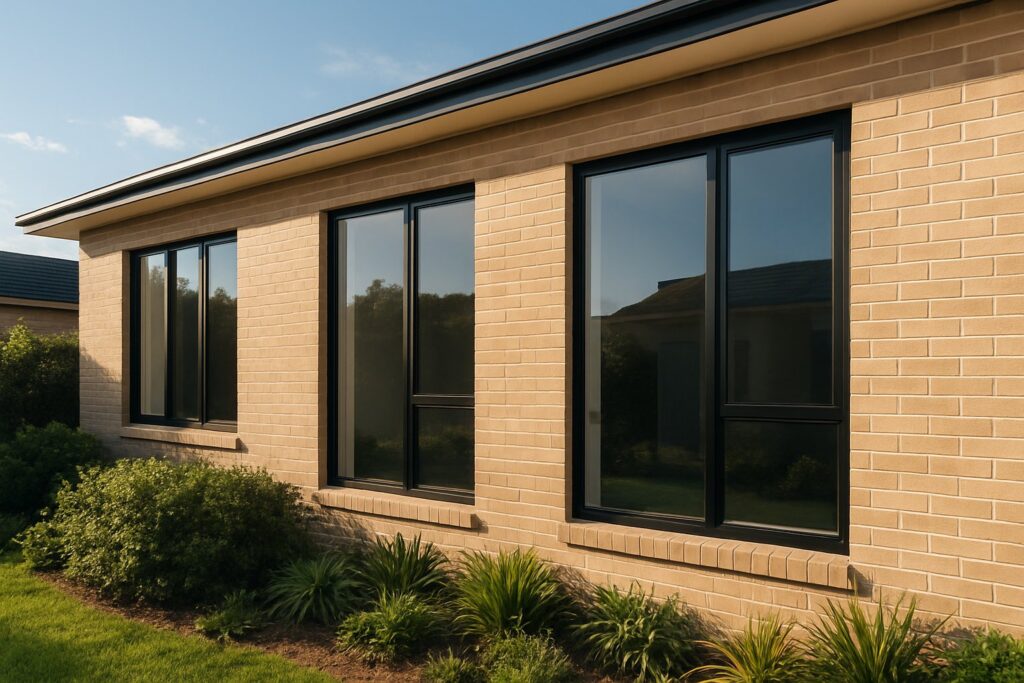
What Are Clear Anodised Aluminium Windows
Picking a window frame finish sounds like a minor detail until you realise it determines how your home looks and performs for decades. Clear anodised aluminium windows sit at the intersection of durability and honest aesthetics, yet most homeowners never hear about them until an architect or builder raises the option. This guide breaks down exactly what they are, how they compare to alternatives, where they excel, and whether they justify the investment for Australian projects.
What Clear Anodised Aluminium Windows Actually Are
Clear anodised aluminium windows are window frames made from aluminium alloy that have undergone an electrochemical surface treatment, producing a transparent protective oxide layer that preserves the natural metallic appearance of the metal while dramatically improving durability. The result is a frame with a subtle silver-grey tone, a refined satin sheen, and a surface hardness far exceeding raw aluminium or standard painted finishes.
Unlike a decorative film or spray-on layer, the anodised finish is grown directly from the aluminium substrate itself. Oxygen ions bond with aluminium atoms at the surface during an electrolytic process, converting the outermost metal into a dense, crystalline aluminium oxide structure. This oxide is completely transparent, so the frame retains its authentic metallic character rather than taking on an applied colour.
Why Clear Anodised Finish Stands Apart
Paint and powder coating sit on top of a metal surface. They can chip, peel, or delaminate over time because they rely on adhesion rather than integration. Clear anodising works differently. The protective layer is not applied to the aluminium — it becomes part of the aluminium. That distinction matters enormously for longevity.
The anodised layer is not a coating applied to aluminium — it IS aluminium oxide grown from the base metal itself.
This integral bond means the finish cannot flake or separate from the frame. It also means the clear anodised surface is inherently UV-stable because aluminium oxide is an inorganic ceramic, not an organic compound prone to breakdown under sunlight.
Coloured anodised finishes — bronze, black, or gold — use the same electrochemical process but introduce dye into the porous oxide structure before sealing. Clear anodised aluminium skips that step entirely, leaving the oxide transparent and the frame looking like refined, natural metal.
Growing demand in contemporary Australian residential and commercial architecture reflects a broader shift toward materials that look honest. Architects and homeowners increasingly want frames that complement exposed concrete, timber cladding, and dark brickwork without competing for attention. Clear anodised aluminium delivers that restrained, industrial-modern aesthetic while quietly outperforming most alternative finishes beneath the surface.
The real question is how that performance holds up across different climates, budgets, and building styles — and that starts with understanding exactly what happens during the anodising process.
How the Clear Anodising Process Works
Knowing that the anodised layer grows from the metal itself raises an obvious follow-up: how does that actually happen? The science behind clear anodising aluminium is surprisingly elegant, and understanding it helps explain why the finish performs the way it does — and why not all anodised frames are created equal.
The Electrochemical Process Behind Clear Anodising
At its core, clear anodizing is a controlled oxidation reaction driven by electricity. The aluminium window extrusion is submerged in an electrolyte bath — typically a sulfuric acid solution at 15-20% concentration — and connected to the positive terminal of a direct current power supply. Lead or stainless steel cathodes sit in the same bath, completing the electrical circuit.
When current flows, oxygen ions released at the aluminium surface react with the metal atoms, building a structured aluminium oxide layer one molecule at a time. The process grows both inward and outward simultaneously — roughly half the final coating thickness represents converted base metal, while the other half extends above the original surface. This dual-direction growth is what makes the bond so permanent. The oxide does not sit on the aluminium; it is the aluminium, transformed at the atomic level.
The resulting oxide structure is porous and columnar, almost like a honeycomb viewed under magnification. In coloured anodising, dye fills those pores before sealing. For a clear anodize finish, no dye is introduced. The pores are simply sealed — typically through immersion in near-boiling water — which hydrates the oxide and swells it shut, locking in corrosion resistance and surface hardness without adding any colour.
The entire sequence follows a precise order:
- Cleaning — Alkaline degreasers strip oils, dirt, and contaminants from the aluminium extrusion surface.
- Etching — An acid bath creates a uniform micro-texture that promotes consistent oxide growth.
- Anodising — The extrusion is immersed in the sulfuric acid electrolyte and current is applied for 20 to 60 minutes, depending on the target thickness.
- Dyeing (skipped for clear) — This step is omitted entirely, preserving the natural metallic transparency of the oxide.
- Sealing — Hot water or a chemical sealing solution closes the porous structure, completing the protective barrier.
Each step matters. Inadequate cleaning causes blotchy results. Poor temperature control during the bath — which should sit between 18-22°C — produces soft, powdery coatings that lack durability. Reputable window manufacturers control these variables tightly because the finish quality is only as good as the weakest link in the chain.
How Alloy Grade Affects Anodising Quality
Not every aluminium alloy responds to anodising the same way. The composition of the base metal directly influences how uniform, clear, and attractive the final finish appears — a detail that separates quality window frames from disappointing ones.
Architectural aluminium windows in Australia predominantly use 6063 alloy, and for good reason. The 6000 series produces excellent, uniform coatings with consistent colour and good corrosion resistance. Alloy 6063 in particular delivers a clean, aesthetically pleasing clear finish with a smooth satin sheen that architects specify repeatedly for visible frame applications.
Problems arise with alloys containing higher levels of copper or silicon. The 2000 series (high copper) tends to produce grayish, non-uniform coatings. Cast alloys with elevated silicon content create dark, mottled surfaces that look nothing like the refined metallic tone expected from a clear anodised finish. These alloys have their place in structural or mechanical applications, but they are poor candidates for visible window frames where appearance matters.
This is why reputable window manufacturers select their extrusion alloys specifically for anodising compatibility. When you order clear anodised aluminium windows from a quality supplier, the alloy choice has already been made with the finish in mind — ensuring every frame in your project matches consistently.
Thickness Standards and What They Mean
The protective performance of any anodised finish correlates directly with coating thickness. Thicker layers provide greater corrosion resistance and surface hardness, but also cost more and require longer processing times.
For architectural applications — including window frames exposed to weather — industry standards typically call for 15 to 25 microns of anodic coating. To put that in perspective, a human hair is roughly 70 microns thick, so the entire protective layer is thinner than half a hair. Yet that slim barrier delivers remarkable durability because aluminium oxide is an extremely hard ceramic material, rating around 300-450 HV on the Vickers hardness scale.
Australian projects in moderate suburban environments generally perform well with coatings around 15-20 microns. Coastal properties facing salt-laden air, or buildings in industrial zones with chemical pollutants, benefit from the upper end of the range — 20 to 25 microns — to extend service life under harsher conditions. Specifying the right thickness for your environment is one of those quiet decisions that pays dividends over decades without ever drawing attention to itself.
The thickness also affects how the finish handles damage. A deeper oxide layer means minor surface scratches are less likely to penetrate through to raw aluminium. And because the oxide is transparent throughout its depth, shallow scratches on a clear anodised surface are far less conspicuous than they would be on a painted frame, where any breach exposes a contrasting substrate colour.
With the process and material science covered, the practical question becomes: how does this finish actually stack up against the alternatives sitting in a window supplier’s showroom?
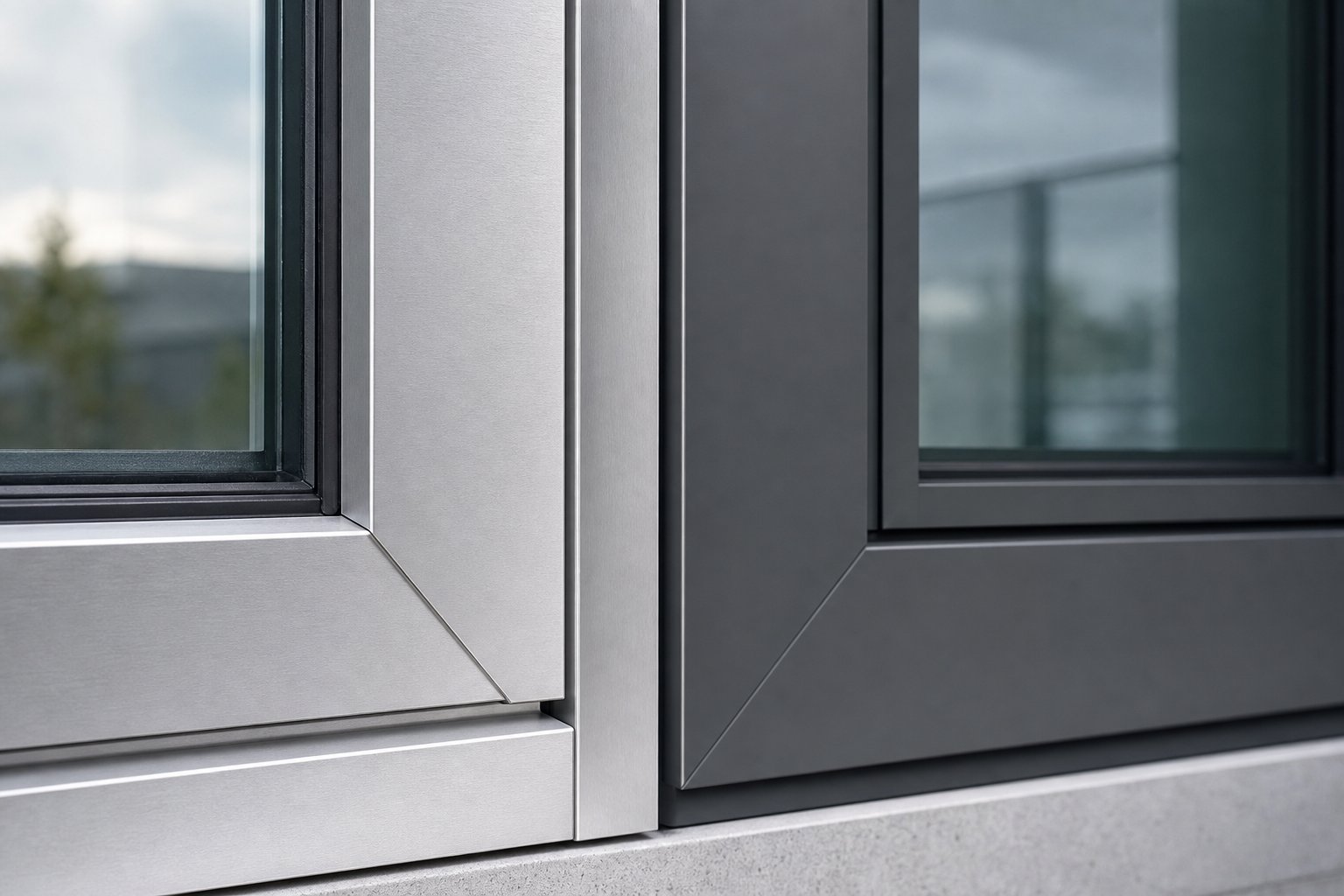
Clear Anodised vs Other Aluminium Finish Options
Every aluminium window frame leaves the factory with some kind of surface treatment — or none at all. The finish you choose shapes how the frame looks on day one, how it ages over twenty years, and what happens when life inevitably scratches it. Here is how a clear anodized aluminum finish compares against the most common alternatives Australian homeowners and specifiers encounter.
Clear Anodised vs Powder Coated Aluminium Frames
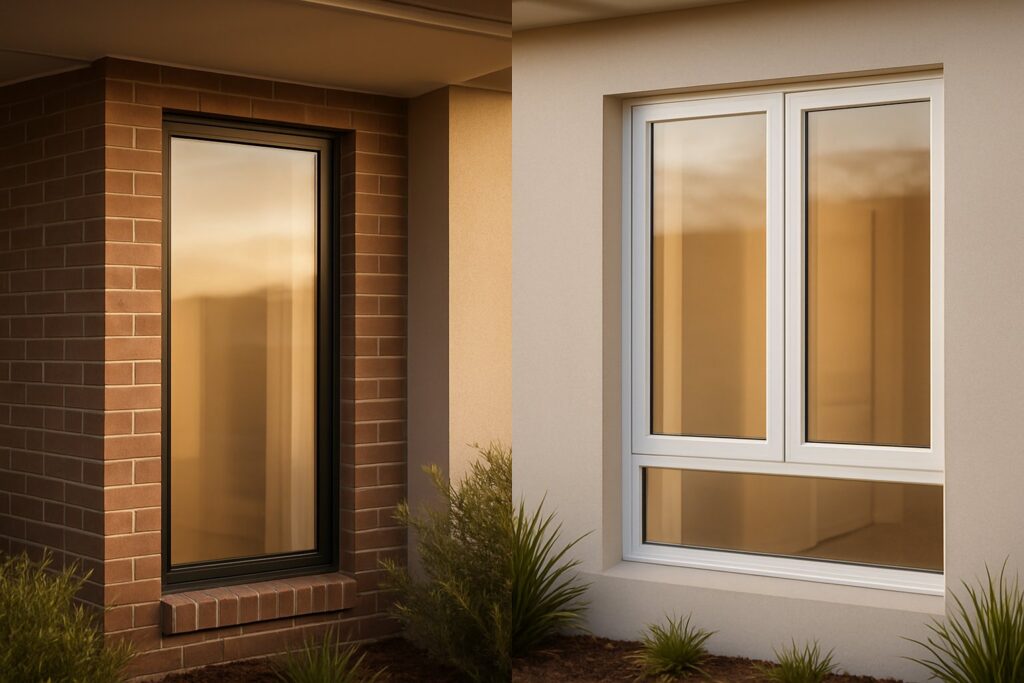
Powder coating dominates the Australian window market because it offers virtually unlimited colour choice. A fine polymer powder is electrostatically sprayed onto the aluminium and baked in an oven, forming a tough, opaque skin. It looks great initially and can match any exterior palette you have in mind.
The trade-off sits in how each finish handles wear. Powder coating is an applied layer — it bonds to the aluminium but remains a separate material. A sharp impact or deep scratch chips through to expose the bare metal underneath, creating a visible contrast that is difficult to ignore. Touch-up paint can address small chips, making field repairs relatively straightforward compared to anodised alternatives.
Clear anodised aluminium behaves differently under stress. Because the oxide layer is integral to the metal, a scratch does not reveal a contrasting substrate — it simply exposes more aluminium beneath a transparent layer. Minor abrasions blend in rather than standing out. However, if damage is severe enough to penetrate the full oxide depth, the frame cannot be touched up on site. Repair means stripping and re-anodising, which is impractical once a window is installed.
UV stability also separates the two. Organic powder coatings can chalk or subtly fade over many years of Australian sun exposure. The inorganic aluminium oxide in a clear anodized finish is inherently UV-stable — it does not degrade under ultraviolet radiation because there is no organic chemistry to break down.
Clear Anodised vs Dark and Bronze Anodised Options
The process behind dark or bronze anodised frames is identical to clear anodising up to one critical step. After the porous oxide layer forms, a dye — typically an electrolytic tin or nickel salt for architectural bronze tones — is deposited into the pore structure before sealing. The oxide itself is the same; only the colour infill differs.
In practice, darker anodised finishes tend to show fingerprints and dust more readily than clear. They also carry a slightly higher risk of colour inconsistency across large projects, since achieving uniform dye penetration across multiple batches requires tight process control. Clear anodising sidesteps this issue entirely — with no dye involved, batch-to-batch variation is minimal and limited to subtle differences in the base alloy’s natural tone.
Fade resistance is comparable between clear and coloured anodised finishes because the oxide structure protecting the dye is equally UV-stable. The dye itself sits deep within sealed pores rather than on an exposed surface, so colour shift over decades is negligible in either case. Architecturally, dark anodised suits projects wanting a stronger frame presence, while clear anodised recedes, letting glazing and surrounding materials take the lead.
Clear Anodised vs Raw Aluminium
Raw mill-finish aluminium — the state in which extrusions leave the press — already has a thin natural oxide layer. So why bother anodising at all?
The natural oxide on untreated aluminium is only a few nanometres thick. It forms unevenly, producing a dull, chalky appearance with visible die lines, spots, and surface inconsistencies that worsen over time. In coastal or humid environments, raw aluminium develops patchy discolouration and can show early signs of pitting corrosion. It lacks abrasion resistance and is unsuitable for marine applications where salt exposure accelerates degradation.
Clear anodising transforms that same metal into a controlled, uniform finish with a protective layer thousands of times thicker than the natural oxide. The surface becomes harder, more corrosion-resistant, and aesthetically consistent across every frame in a project. The cost difference between raw and anodised is modest relative to the total window price, yet the performance gap is enormous.
Finish Comparison at a Glance
| Criteria | Clear Anodised | Powder Coated | Dark/Bronze Anodised | Satin Anodised | Raw Aluminium |
|---|---|---|---|---|---|
| Appearance | Natural silver-grey metallic with satin sheen | Opaque, any colour or texture | Bronze, black, or charcoal metallic | Muted matte metallic, softer sheen than clear | Uneven silver with visible marks and die lines |
| UV Stability | Excellent — inorganic oxide, no chalking or fading | Good initially; may chalk or fade over extended exposure | Excellent — dye sealed within UV-stable oxide | Excellent — same oxide chemistry as clear | Poor — uneven oxidation accelerates under UV |
| Scratch Resistance | High — hard ceramic oxide layer | Moderate — polymer skin can chip on impact | High — identical oxide hardness to clear | High — same anodic structure | Low — soft base metal with minimal protection |
| Repairability | Difficult — cannot be touched up in place | Easy — touch-up paint or localised recoating | Difficult — same limitation as clear | Difficult — requires strip and re-anodise | Can be painted, but paint adhesion is poor without prep |
| Colour Options | One — natural aluminium tone only | Virtually unlimited | Limited metallic palette (bronze, black, gold, grey) | One — softer variant of natural tone | None — uncontrolled natural appearance |
| Typical Lifespan | Very long — often exceeds the building’s service life | Long with maintenance; may need recoating after 15-20 years in harsh conditions | Very long — equivalent to clear anodised | Very long — equivalent to clear anodised | Short in exposed applications; degrades noticeably within years |
The right choice depends on priorities. If colour flexibility matters most, powder coating wins outright. If long-term appearance retention with zero recoating and a natural metallic aesthetic are the goals, a clear anodized aluminum finish is hard to beat. And if budget is extremely tight for a concealed or temporary application, raw aluminium might suffice — but it is rarely appropriate for visible window frames expected to last.
Of course, the finish is only one half of the equation. The frame material itself matters just as much — which raises the question of how aluminium stacks up against timber, uPVC, and composite alternatives for the structural role behind that finish.
Clear Anodised Aluminium vs Other Frame Materials
Selecting a surface finish only matters once you have committed to aluminium as the base material. That decision deserves its own scrutiny. Timber, uPVC, and composite frames each bring genuine strengths to the table, and the honest answer is that no single material suits every Australian project. The goal here is to lay out the trade-offs clearly so you can determine whether anodized aluminium window frames earn their place on your build — or whether a different material serves you better.
Aluminium vs Timber Window Frames
Timber has an emotional pull that aluminium simply cannot replicate. The warmth of natural grain, the heritage character on a Queenslander or Federation home, the tactile quality of painted hardwood — these are real advantages that matter to many homeowners. On period properties where the architecture was designed around timber proportions, nothing else looks quite right.
The practical reality, however, is less romantic. Timber frames demand refinishing every five to seven years — sanding, priming, and repainting or re-staining — to prevent moisture ingress, rot, and eventual structural failure. In Australia’s harsh UV environment and variable humidity, south-facing and coastal exposures can shorten that cycle further. Skip a maintenance round and deterioration accelerates noticeably, particularly at bottom corners where water pools.
Clear anodised aluminium eliminates that maintenance burden entirely. The frame never needs repainting, re-staining, or refinishing. It does not swell in humidity, shrink in dry heat, or attract termites — a genuine concern in many Australian regions. Dimensional stability is inherent to the metal; aluminium frames hold their shape and operation across temperature extremes without the seasonal adjustment timber sometimes requires.
Lifespan tells a similar story. Quality engineered timber can last 30 years or more with diligent upkeep, but neglected timber fails well before that. Anodized aluminum frame windows routinely outlast the buildings they are installed in, with the frame itself remaining structurally sound for 40 to 60 years. The cumulative cost of timber maintenance over that period — professional refinishing at several hundred dollars per window every few years — often exceeds the upfront price premium of aluminium.
Where timber wins outright is on heritage properties, listed buildings, and conservation contexts where council requirements or aesthetic integrity demand natural materials. If your project falls into that category, timber is not just preferable — it may be mandatory.
Aluminium vs uPVC Frames
uPVC (unplasticised polyvinyl chloride) dominates the budget end of the Australian window market, and for straightforward reasons. It is affordable, thermally efficient out of the box, and requires almost no maintenance beyond occasional cleaning. For standard residential openings on homes built from the 1960s onward, uPVC delivers solid performance at the lowest mainstream cost.
The limitations emerge when you push beyond standard applications. uPVC profiles are 30 to 50 per cent wider than aluminium equivalents, which means more frame and less glass in every opening. On large picture windows, bi-fold doors, or full-height glazed walls, that difference becomes visually obvious — chunky frames eating into your view and natural light.
Structural strength is the other dividing line. Aluminium’s superior strength-to-weight ratio allows it to span wider openings with slimmer profiles, making it the natural choice for the expansive glazing that defines contemporary Australian architecture. uPVC relies on internal steel reinforcement for rigidity and still cannot match aluminium’s spanning capability at equivalent sightlines. If your design calls for floor-to-ceiling glass or wide sliding panels, aluminium handles the engineering where uPVC cannot.
Thermal performance — historically aluminium’s weak point — has been largely resolved through thermal break technology. Modern thermally broken aluminium achieves whole-window U-values of 1.3 to 1.6 W/m²K, comparable to quality uPVC systems. The thermal break separates the interior and exterior faces of the frame with a polyamide insulator, preventing heat from conducting directly across the metal. Any aluminium quote worth considering in Australia should specify thermally broken construction as standard.
Colour stability over time also favours aluminium. South-facing uPVC can yellow slightly after 20 to 25 years of UV exposure, and foiled finishes may fade if the manufacturing quality is mediocre. A clear anodised aluminium surface, being inorganic oxide, is inherently immune to UV degradation — it looks essentially the same at year 25 as it did at installation.
Recyclability rounds out the comparison. Aluminium is one of the most recycled construction materials globally, with established infrastructure and high recovery rates. uPVC recycling exists but is less developed, and the material degrades slightly with each recycling cycle. For projects where environmental credentials matter, aluminium holds a clear edge.
Aluminium vs Composite Frames
Composite windows attempt to deliver the best of both worlds — typically a timber or engineered core for interior warmth and insulation, wrapped in an aluminium or fibreglass outer skin for weather resistance. The concept is sound: you get the natural feel of timber inside your home and the durability of metal facing the elements.
In practice, composite frames occupy a premium price bracket that often exceeds even clear anodised aluminium. They suit projects where the interior aesthetic demands visible timber grain — a design choice that pure aluminium cannot replicate. The trade-off is added complexity in manufacturing, a thicker overall profile than pure aluminium, and fewer suppliers offering the product in the Australian market compared to standard aluminium systems.
For most contemporary Australian homes where a clean, minimal interior aesthetic is the goal, the composite premium is difficult to justify over a well-specified thermally broken aluminium frame. But on projects blending modern performance with traditional interior character — a renovated weatherboard home, for instance — composite frames can bridge that gap effectively.
Key Decision Factors
Choosing between these materials comes down to a handful of project-specific priorities:
- Structural requirements — Large spans and slim sightlines favour aluminium; standard openings suit any material.
- Span width — Floor-to-ceiling glazing, wide bi-folds, and expansive sliding doors demand aluminium’s strength-to-weight ratio.
- Maintenance tolerance — Zero appetite for ongoing upkeep points to aluminium or uPVC; willingness to refinish opens the door to timber.
- Aesthetic preference — Heritage character suits timber; contemporary minimalism suits aluminium; budget practicality suits uPVC.
- Budget — uPVC wins on upfront cost; aluminium often wins on lifecycle cost; timber carries the highest total ownership expense.
- Environmental priorities — Aluminium’s infinite recyclability and long lifespan give it strong sustainability credentials.
Clear anodised aluminium window frames excel where slim sightlines, structural strength for large spans, and genuine low maintenance are non-negotiable priorities. They suit the contemporary Australian home that values honest materials, expansive glazing, and a finish that quietly performs for decades without asking anything in return.
Material choice and finish selection answer the “what” — but the “where” matters just as much. Australian conditions vary enormously from tropical coastlines to arid inland zones, and how a clear anodised surface responds to each environment determines whether it is the right specification for your specific site.
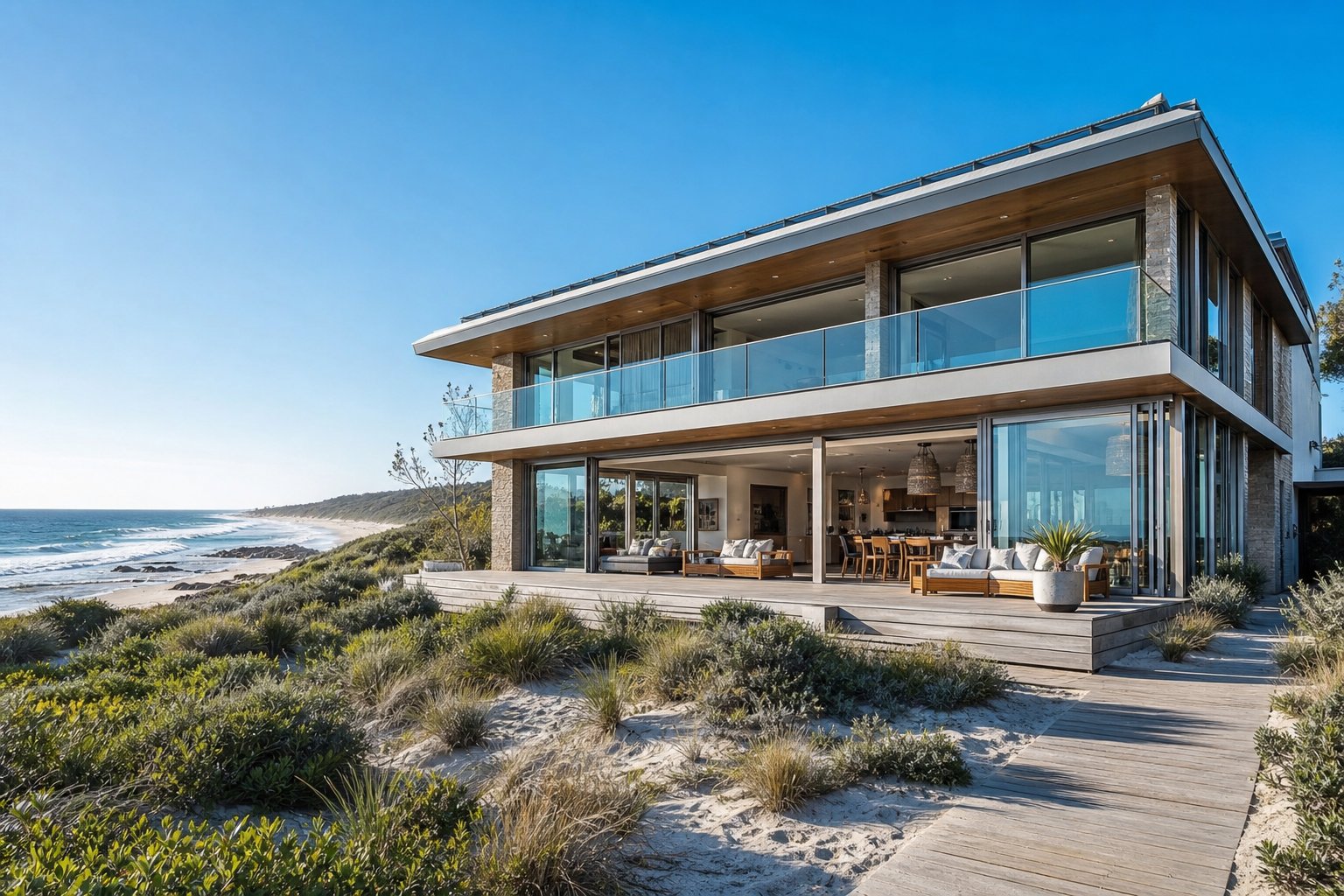
Where Clear Anodised Aluminium Windows Perform Best
Australia’s climate does not play favourites. A beachfront home in Noosa cops relentless salt spray. A warehouse conversion in Port Kembla sits in an industrial haze. A homestead west of Alice Springs bakes under UV levels that destroy organic materials in a handful of years. The finish you choose for your window frames needs to handle whatever your specific site throws at it — and the clear anodic finish responds to each of these challenges differently.
Coastal and Marine Environments
Salt-laden air is one of the most aggressive forces acting on building materials along the Australian coastline. From the Gold Coast to the Great Ocean Road, properties within a few kilometres of the shore face constant chloride deposition that corrodes unprotected metals, degrades organic coatings, and shortens the service life of almost everything exposed to it.
Clear anodised aluminium handles this environment remarkably well. The dense aluminium oxide layer acts as a physical barrier between atmospheric chlorides and the reactive base metal beneath. Long-term atmospheric corrosion studies confirm that anodised aluminium is far less affected by chloride salinity than bare aluminium, with properly sealed coatings resisting pitting corrosion for decades in marine atmospheres where unprotected metal would fail within years.
Thickness matters here more than anywhere else. For properties directly facing the ocean — within 200 metres of breaking surf, or exposed to prevailing onshore winds — specifying the upper end of the architectural range at 20 to 25 microns provides the additional barrier depth needed for severe marine exposure. Research into anodic coating performance shows that coatings above 25 microns can resist pitting for over ten years even in aggressive industrial-marine atmospheres, while thinner coatings may develop localised corrosion sooner under equivalent conditions.
Properties further from the coast — say 1 to 5 kilometres inland — still receive airborne salt but at lower concentrations. Standard 15 to 20 micron coatings perform well in these moderate coastal zones, particularly when frames receive occasional rain washing that clears deposited salt from the surface. The key takeaway for coastal Australian projects: clear anodised aluminium is not just acceptable in marine environments — it is one of the strongest performers available, provided the coating thickness matches the severity of exposure.
High-UV and Harsh Climate Zones
Australia records some of the highest UV indices on the planet. In summer, much of the country regularly hits UV index 11 or above — extreme by global standards. This relentless ultraviolet bombardment degrades organic materials at an accelerated rate. Powder coatings can chalk. Timber stains bleach out. Plastic components become brittle. Organic sealants crack and shrink.
A clear anodized surface is fundamentally immune to this mechanism of degradation. The protective layer is aluminium oxide — an inorganic ceramic compound with no carbon-based molecular bonds for UV radiation to break apart. There is no organic chemistry present to degrade, no pigment to bleach, no polymer chain to fracture.
Clear anodised aluminium does not chalk, peel, or flake under UV exposure because the protective layer is inorganic oxide, not an organic coating.
This UV stability is not a marketing claim that fades with fine print — it is a fundamental property of the material’s chemistry. Anodised aluminium projects over 35 years old continue to function well and retain their appearance, a track record that organic coatings struggle to match without maintenance or recoating cycles.
Extreme heat poses no structural concern either. Aluminium oxide remains stable well beyond any temperature a building facade will ever experience in Australian conditions. In tropical northern Queensland, where high humidity combines with intense solar radiation, the sealed oxide layer prevents moisture from reaching the base metal while shrugging off UV damage simultaneously. Cold climates — alpine regions of Victoria and NSW — present no issue either, since the oxide layer does not become brittle at low temperatures the way some polymer coatings can.
For projects in inland Australia where temperature swings between day and night can exceed 30 degrees Celsius, the dimensional stability of aluminium and the integral nature of the anodised layer mean no cracking, no delamination, and no thermal cycling fatigue at the finish level. The frame expands and contracts with temperature, and the oxide moves with it because it is part of the same metal structure.
Industrial and High-Pollution Areas
Industrial zones present a more nuanced picture. Anodised aluminium resists most common atmospheric pollutants — vehicle exhaust, general particulate matter, and moderate levels of sulphur dioxide — without significant degradation. In standard urban and light-industrial environments, the clear anodised finish performs excellently with minimal maintenance.
The vulnerability lies at the extremes of the pH scale. Aluminium oxide remains passive and protective in environments between roughly pH 4 and pH 8.5. Highly acidic conditions — such as those created by concentrated sulphur dioxide combining with moisture near heavy chemical plants — can slowly attack the oxide layer over time. Similarly, alkaline deposits from cement dust, calcium-based industrial waste, or fresh concrete splatter during construction can dissolve the anodic coating if left in prolonged contact.
A ten-year field study on anodised aluminium in industrial environments found that particulate deposits — especially those creating acidic or alkaline surface conditions when wetted — contributed to coating degradation beyond what standard atmospheric pollution alone would cause. The study confirmed that regular cleaning to remove accumulated deposits significantly extends coating life, and that rain-washed surfaces performed markedly better than sheltered ones where pollutants accumulated undisturbed.
The practical guidance for Australian projects near industrial areas — refineries along the Kwinana strip in WA, smelters in the Hunter Valley, or manufacturing precincts in Melbourne’s west — is straightforward: specify the thicker end of the coating range (20-25 microns), and commit to a cleaning schedule. Washing frames with mild detergent and water every three to six months prevents pollutant buildup from reaching concentrations that could compromise the oxide. This is still dramatically less maintenance than repainting timber or monitoring powder coat degradation, but it is not zero effort in genuinely harsh industrial settings.
For the vast majority of Australian residential projects — suburban, coastal, or regional — the clear anodised finish handles environmental exposure without any special intervention beyond occasional cleaning. It is in the extreme outliers — directly adjacent to heavy chemical processing or exposed to persistent alkaline dust — where extra attention to maintenance becomes worthwhile insurance.
Environmental performance tells you whether the finish will last. But durability alone does not sell a home or win a design award. The next consideration is equally important for many homeowners and architects: how does a clear anodised frame actually look in context, and which architectural styles does it complement?
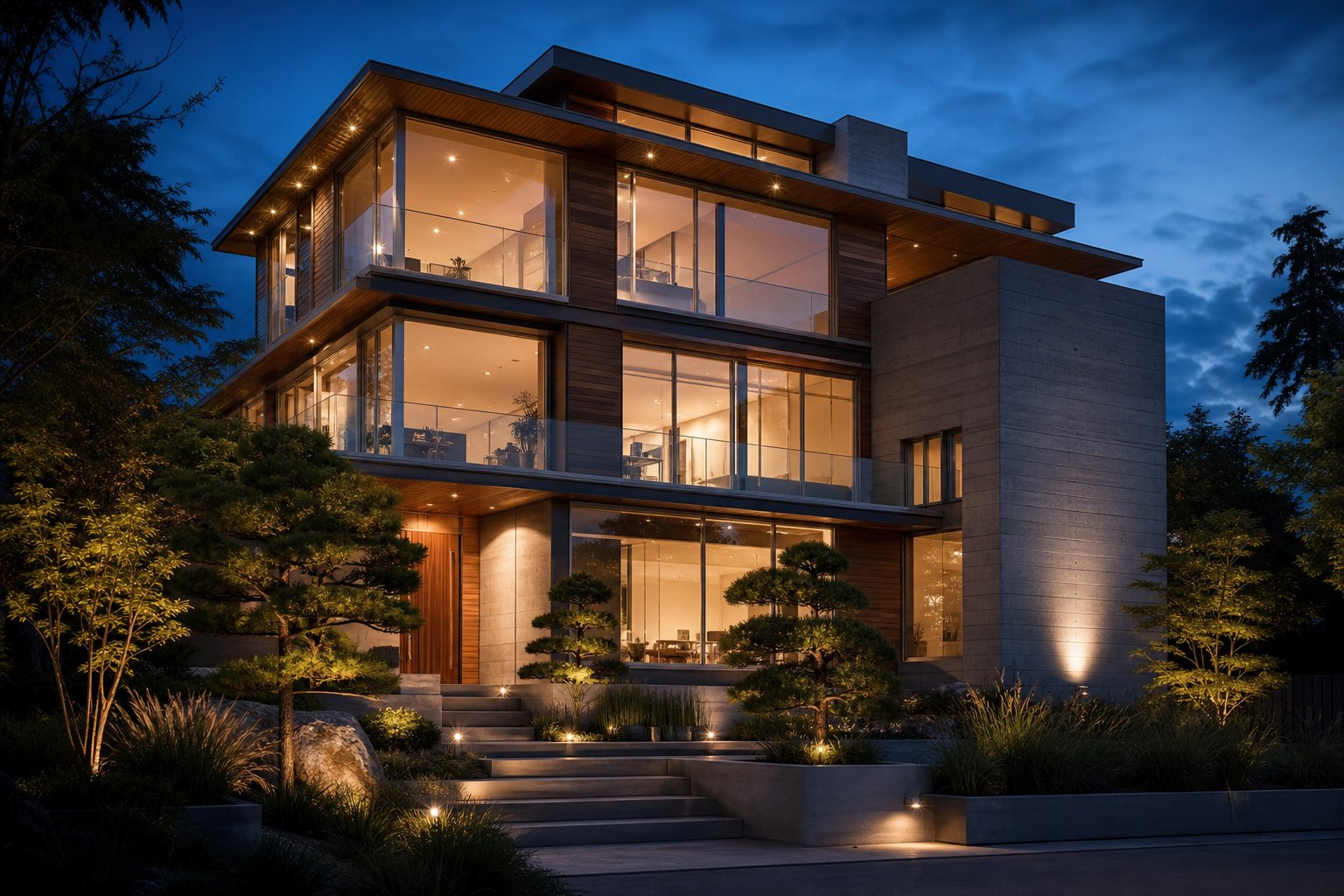
Design and Architectural Applications
A finish can survive decades of salt spray and UV bombardment, but if it clashes with the building it sits on, none of that durability matters to the person living inside. The clear anodized aluminum color — that distinctive silver-grey with a soft satin sheen — occupies a specific aesthetic territory. It reads as honest, restrained, and quietly industrial. Whether that works for your project depends entirely on the architectural language surrounding it.
Architectural Styles That Suit Clear Anodised Frames
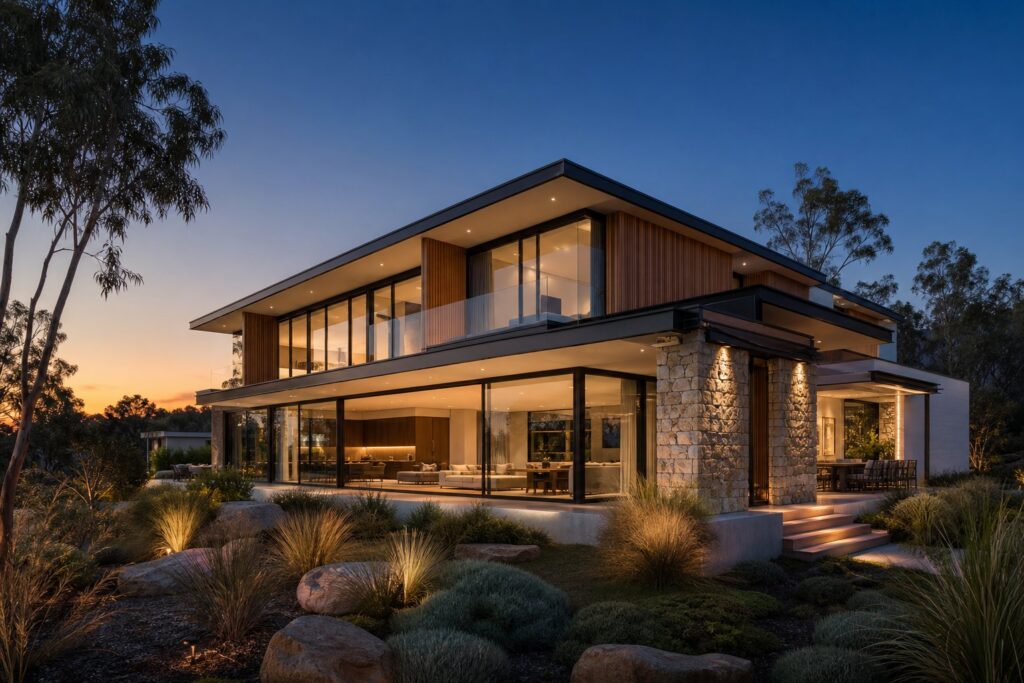
Clear anodised aluminium finds its natural home in architectural styles that celebrate raw materials and clean geometry. Mid-century modern homes — with their flat rooflines, open plans, and emphasis on indoor-outdoor connection — pair effortlessly with the metallic neutrality of a clear anodized color. The frames recede visually, letting expansive glazing and structural honesty do the talking.
Industrial-style conversions and warehouse apartments are another obvious match. The robust, modern character of aluminium suits environments defined by exposed steel, polished concrete, and raw timber — materials that share the same unadorned authenticity. Minimalist homes benefit equally: slim aluminium profiles with a clear anodised finish deliver the visual lightness and essential simplicity that minimalism demands, without introducing colour that competes with carefully curated interiors.
Brutalist-inspired and contemporary designs — increasingly popular in Australian urban infill projects — use concrete, off-form surfaces, and metal cladding as primary exterior materials. Clear anodised frames integrate seamlessly here because the natural metallic tone functions as a neutral that neither dominates nor disappears. It complements without competing.
Coordinating with Building Materials and Colours
The silver-grey tone of clear anodised aluminium carries a subtle warmth that distinguishes it from painted silver or the cooler blue-grey of raw steel. This warmth comes from the base alloy itself — 6063 aluminium has a slightly golden undertone that the transparent oxide preserves rather than masks. The result is a finish that sits comfortably alongside a wide range of exterior materials:
- Exposed concrete — off-form or polished
- Natural timber cladding — hardwood, cedar, or spotted gum
- Dark brick — charcoal, manganese, or deep brown tones
- White render — crisp contrast against the metallic frame
- Zinc cladding — tonal harmony with another naturally oxidising metal
- Natural stone — sandstone, bluestone, or granite
Anodized aluminum cladding on facades often shares the same finish chemistry as the window frames, creating a unified metallic language across the building envelope. This coordination is one reason architects specify clear anodised across multiple elements — frames, spandrel panels, louvres, and fascias — to achieve visual cohesion without monotony.
Over decades, the finish develops a very slight mellowing — not degradation, but a gentle softening of the initial brightness. Many architects consider this patina desirable. It gives the building a sense of settled permanence rather than the “just installed” sharpness that some finishes retain artificially.
Interior Design Considerations
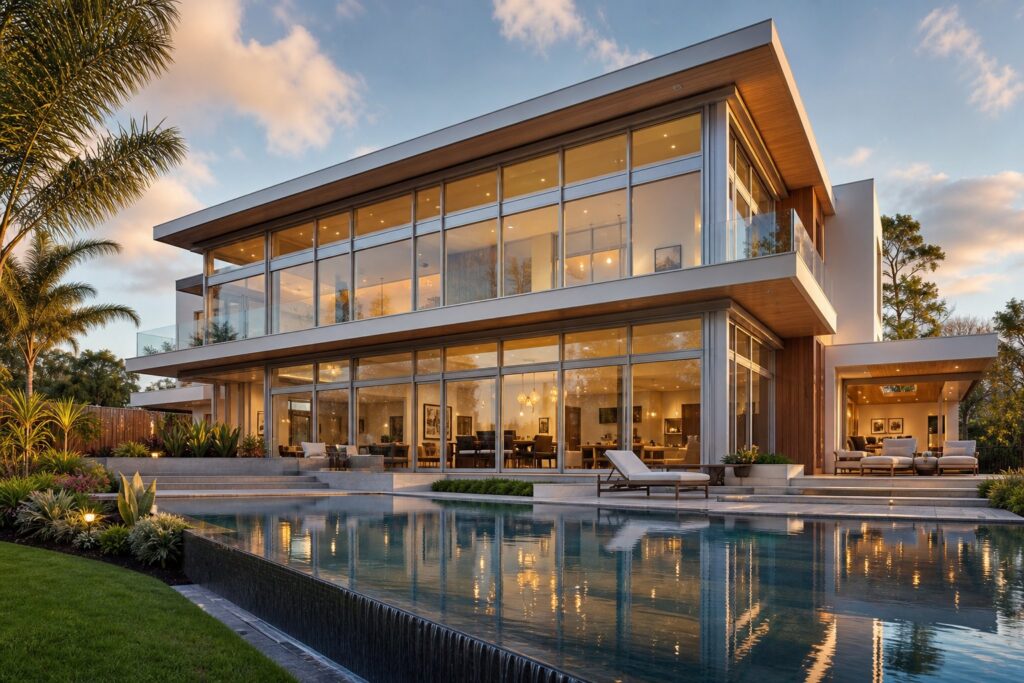
From inside the home, clear anodised frames read as slim, neutral borders around your view. The thin aluminium profiles maximise the glazed area, letting more natural light flood the room and creating a stronger visual connection between interior and exterior spaces. The frame almost disappears — particularly on fixed and picture windows where sightlines are at their slimmest.
The neutral metallic tone works with virtually any interior colour scheme. Cool grey walls, warm timber floors, white cabinetry, dark feature walls — the clear anodised frame does not fight any of them. It functions like a picture frame: present enough to define the edge, restrained enough to let the content (your view, your light, your garden) take centre stage.
For open-plan living areas where multiple windows and sliding doors face the same elevation, the consistency of clear anodised finish across every frame creates a calm, unified interior backdrop. There is no colour matching to worry about between different window sizes or styles — every frame shares the same natural aluminium tone because the finish is the metal itself, not an applied layer subject to batch variation.
Design intent only becomes reality when you can actually get the finish on the window style your project needs. That raises a practical question: which operating configurations — casement, sliding, bi-fold, fixed — are available in clear anodised, and does the finish limit your options in any way?
Window Styles Available in Clear Anodised Finish
The short answer is that clear anodising does not limit your window style options at all. Because the finish is applied to the raw aluminium extrusion before the frame is fabricated into a window, virtually any configuration that can be built from aluminium can be produced in clear anodised. The process treats the metal itself — not the assembled product — so geometry, hardware, and operating mechanism have no bearing on finish availability.
That said, understanding which styles suit which applications helps you get the most from both the finish and the frame. A beautiful clear aluminium frame loses its appeal if the window does not function well in the room it serves.
Residential Window Styles in Clear Anodised Finish
Australian homes typically draw from six core window styles, all of which are readily available in clear anodised aluminium:
- Casement — Hinged at the side and opening outward via a crank or friction stay. Offers excellent ventilation because the entire sash swings open, and the compression seal when closed delivers strong weather resistance. Ideal for living areas, bedrooms, and any room where you want to direct airflow inside.
- Awning — Hinged at the top, opening outward from the bottom. The outward swing acts as a small canopy, allowing ventilation even during light rain. A natural fit for bathrooms, laundries, and above kitchen benchtops where moisture is present but airflow is still needed.
- Sliding — One or more sashes glide horizontally along a track. Space-efficient because nothing protrudes inward or outward, making them practical for rooms facing walkways, balconies, or tight outdoor areas. Aluminium’s strength supports wider panels with slimmer frames, maximising glass area.
- Fixed — Non-operable panels designed purely for light and views. With no mechanical parts, fixed windows offer the slimmest possible sightlines in clear anodised aluminium — letting the frame almost vanish and the glazing dominate. Perfect for feature walls, stairwells, and highlight windows above doors.
- Bi-fold — Multiple panels fold back like an accordion to create wide, unobstructed openings that merge indoor and outdoor living. Aluminium’s structural strength is essential here, supporting large spans without excessive frame bulk. Clear anodised bi-folds suit entertainment areas, pool zones, and open-plan kitchens facing a deck or garden.
- Louvre — Horizontal glass blades rotate open for controlled ventilation while maintaining privacy and weather protection. Common in tropical Queensland homes and increasingly popular in contemporary designs across the country for bathrooms and breezeways.
Each of these styles benefits from the slim profile that aluminium enables. The clear anodised finish adds no measurable thickness to the frame — unlike powder coating, which deposits a 60 to 120 micron layer on top of the metal — so sightlines remain as narrow as the extrusion design allows.
Suppliers like MEICHEN offer clear anodised finish across their full aluminium window range, including casement, awning, sliding, and fixed configurations with custom sizing and glazing options tailored to specific project requirements. This breadth means you can specify a single consistent finish across every window in your home regardless of operating style — a significant advantage for architectural cohesion.
Commercial and Storefront Applications
Beyond residential projects, clear anodised aluminium serves commercial buildings where the finish’s durability and low maintenance translate directly into reduced operational costs. The clear anodized aluminum storefront is a common sight in retail precincts, office lobbies, and mixed-use developments where architects want a refined metallic aesthetic without the colour limitations of a single powder coat choice.
Commercial applications typically involve larger-format systems:
- Storefront glazing — Flush-glazed aluminium framing systems designed for ground-level retail and commercial frontages. These single-span structures anchor at head and sill, with frame heights commonly reaching 3 to 4 metres depending on the system profile depth. Clear anodised finish gives shopfronts a clean, contemporary presence that ages gracefully in high-traffic streetscapes.
- Curtain wall systems — For multi-storey commercial facades, curtain wall framing spans multiple floors and is anchored to the building structure at each level. These systems accommodate large insulated glass units, metal panels, and operable vents within a unified aluminium framework. Clear anodised curtain wall delivers a consistent metallic tone across entire building elevations without the batch-variation risk that coloured finishes sometimes introduce on large projects.
- Highlight and clerestory windows — Fixed or awning-style windows positioned high on walls to introduce daylight deep into commercial floor plates. The slim clear aluminium profiles maximise light transmission while the anodised finish handles the elevated UV exposure these positions receive.
In commercial contexts, the anodised finish also offers a practical advantage during construction. Unlike powder-coated frames that show every scratch from site handling, minor abrasions on clear anodised surfaces are far less conspicuous — reducing the need for costly touch-ups or frame replacements before handover.
Choosing the Right Style for Each Application
Matching window style to room function is where good design meets daily livability. The finish stays constant — clear anodised across the board — but the operating style should respond to how each space is actually used.
Wet areas like bathrooms and laundries benefit from awning windows. The top-hinged design allows ventilation during rain without water entering the room, and the outward opening keeps the interior clear for fittings and cabinetry. In kitchens, an awning window above the benchtop provides airflow for cooking steam without interfering with splashbacks or tap fittings below.
Living areas and bedrooms suit casement or sliding styles depending on the exterior context. Casement windows capture breezes effectively and seal tightly when closed, making them a strong performer in both ventilation and weather resistance. Sliding windows work better where external clearance is limited — beside a pathway, above a deck, or facing a neighbour’s boundary where a protruding sash would be impractical.
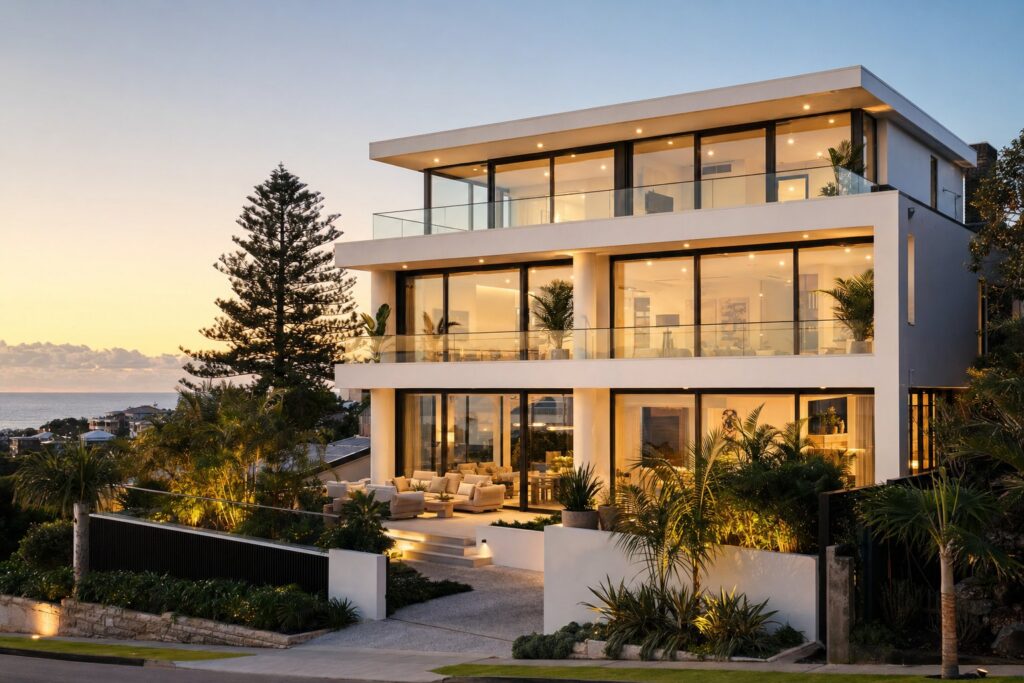
Balcony and outdoor access points call for sliding doors or bi-fold systems. The clear anodised finish is particularly effective here because these large openings dominate the facade visually — the neutral metallic tone lets the glass and the view beyond remain the focal point rather than the frame itself.
Fixed windows serve wherever light and views matter more than ventilation. Feature glazing in stairwells, full-height panels flanking an entry door, or picture windows framing a garden — these applications showcase the slimmest sightlines aluminium can achieve, and the clear anodised finish ensures those slim frames look refined rather than raw.
For projects requiring multiple styles across different rooms, working with a supplier who offers the full range in clear anodised ensures consistency. MEICHEN’s aluminium window systems cover residential and commercial configurations with project-based consultation, allowing homeowners, builders, and architects to coordinate style, sizing, glazing, and hardware across every opening while maintaining a unified clear anodised appearance throughout.
With style and finish sorted, the conversation inevitably turns to money. Clear anodised aluminium sits at a specific price point relative to alternatives — and the real cost picture only becomes clear when you factor in what happens over 20, 30, or 40 years of ownership.
Cost, Maintenance, and Long-Term Value
Upfront price tags tell a fraction of the story. A window frame that costs less today but demands repainting every decade, or one that chips and needs professional touch-ups after a few years of coastal exposure, quietly erodes whatever you saved at purchase. Clear anodised aluminium windows occupy a specific position in the market — and whether that position represents good value depends entirely on how far into the future you are willing to look.
Cost Positioning Relative to Alternatives
In the Australian market, clear anodised aluminium windows typically sit above standard powder-coated aluminium and below premium hardwood timber in price. The anodising process adds cost compared to a basic powder coat finish — the electrochemical treatment, tighter alloy selection, and quality control required for a consistent clear result all contribute to a modest premium.
That premium narrows considerably when you compare against higher-end powder coat specifications. Marine-grade powder coatings designed for severe coastal exposure, or premium metallic finishes that attempt to replicate the look of anodised metal, often approach similar price territory without delivering the same longevity or scratch behaviour.
Against timber, the equation inverts. Hardwood window frames carry a higher upfront cost and then layer ongoing maintenance expenses on top — professional refinishing every five to seven years at several hundred dollars per window adds up relentlessly over a building’s life. Clear anodised aluminium asks for nothing beyond occasional washing. The investment justifies itself not through what you spend today, but through what you never spend again.
Among anodized finishes broadly — clear, satin anodized, bronze, and black — the pricing differences are relatively minor. A satin anodized finish uses the same process with a slightly different pre-treatment etch to soften the sheen, while coloured options add a dyeing step before sealing. The cost variation between these is typically less significant than the difference between anodising and powder coating as a category.
Maintenance Requirements and Cleaning
Routine care for clear anodised aluminium frames is almost absurdly simple. Periodic washing with mild detergent and clean water — applied with a soft cloth or sponge — removes accumulated dust, salt deposits, and atmospheric grime. No specialised products are needed. No repainting, re-staining, or re-coating. Ever.
How often you clean depends on your environment. Industry guidance recommends inspecting and cleaning anodised surfaces at least once per year in standard suburban settings, and monthly in coastal climates or areas exposed to extreme weather. Properties near industrial zones or heavy traffic corridors benefit from quarterly washing to prevent pollutant buildup from creating localised acidic or alkaline conditions on the surface.
A few precautions keep the finish in top condition:
- Avoid aggressive alkaline or acid-based cleaners — they can attack the oxide layer.
- Do not clean frames when they are hot from direct sun, as chemical reactions accelerate on heated surfaces.
- Skip abrasive pads or scouring powders that could scratch the oxide.
- Rinse thoroughly after washing to remove all soap residue.
Sheltered areas under eaves or deep overhangs tend to accumulate more grime than rain-washed surfaces, simply because natural rainfall never clears the deposits. Pay extra attention to these protected zones during your cleaning routine — they are where problems develop first if neglected.
Repair and Re-Anodising Considerations
Here is where honesty matters. Anodising cannot be touched up in place the way paint can. If a clear anodised frame suffers severe mechanical damage — a deep gouge from construction equipment, for instance, or significant abrasion that penetrates the full oxide depth — the affected section cannot simply be spot-repaired with a brush or spray can. The oxide layer is part of the metal itself, so localised recoating is not possible the way it is with powder-coated or painted frames.
In theory, a damaged frame can be stripped and re-anodised. In practice, this requires removing the window from the building, disassembling it, chemically stripping the existing oxide, and running the extrusion through the full anodising process again. For an installed window, that is rarely practical or cost-effective. Replacement of the affected frame section — if the system allows it — is usually the more realistic path for severe damage.
The saving grace is that severe damage to anodised frames is genuinely uncommon in normal service. The oxide layer is extremely hard — harder than most materials that come into contact with a window frame during daily life. And when minor scratches do occur, they are far less visible than equivalent damage on a painted surface. Because the oxide is transparent through its entire depth, a shallow scratch does not expose a contrasting colour underneath. It simply reveals more of the same aluminium tone, blending into the surrounding finish rather than announcing itself as a bright line of exposed substrate.
This is the fundamental difference in how anodised and painted surfaces age. A powder-coated frame accumulates visible chips and scratches over the years — each one a small cosmetic failure that eventually triggers a recoating decision. A clear anodised frame accumulates the same minor contact marks but absorbs them invisibly into its overall appearance. After twenty years, the anodised frame still reads as a unified metallic surface. The powder-coated frame may look tired.
The true cost advantage of clear anodised aluminium emerges over time — zero repainting costs across a lifespan that can exceed the building itself.
For homeowners weighing the satin anodized finish against clear, the maintenance and repair story is identical — both share the same oxide chemistry and the same limitations. The choice between them is purely aesthetic: a softer, more muted sheen versus the slightly brighter reflectivity of a standard clear finish. Neither demands more care than the other, and neither is more repairable.
Lifecycle cost is where clear anodised aluminium makes its strongest case. A frame that never needs refinishing, never fades, never chips visibly, and outlasts the structure it is installed in represents a one-time investment with no recurring costs beyond soap and water. For a 30-year ownership period — typical for many Australian homeowners — the total cost of ownership often undercuts alternatives that appeared cheaper on the original quote.
Cost and durability answer the practical questions. But increasingly, Australian homeowners and specifiers are asking a different kind of question: what happens to these materials at end of life, and how do you specify them correctly from the start to avoid problems down the track?
Sustainability and Specifying Your Project
End-of-life questions used to be an afterthought in building material selection. Not anymore. With growing awareness of embodied carbon, circular economy principles, and the sheer volume of construction waste heading to landfill, the environmental credentials of every material choice face scrutiny — from councils, from green building rating tools, and from homeowners who simply want to build responsibly. Clear anodised aluminium windows hold up well under that scrutiny, and for reasons that go beyond marketing claims.
Sustainability and Recyclability
Aluminium is one of the few building materials that can be recycled infinitely without any loss of structural quality. When an aluminium window frame reaches the end of its service life — which, as discussed, may be longer than the building itself — the metal can be remelted and reformed into new extrusions with identical performance characteristics to virgin material. No downcycling. No degradation. The same atoms can become window frames again, or aircraft components, or beverage cans, cycling through the economy indefinitely.
The energy equation makes this even more compelling. Producing primary aluminium from bauxite ore is energy-intensive — it is one of the material’s genuine environmental drawbacks at first production. But recycling aluminium requires only about 5% of the energy needed to produce primary aluminium, making recycled aluminium one of the most energy-efficient material recovery processes available. Every tonne of aluminium recycled avoids roughly 9 tonnes of CO2 emissions compared to primary production.
A common concern is whether the anodic oxide layer complicates recycling. It does not. During remelting, the aluminium oxide simply becomes part of the normal oxide flux — the same material that forms naturally on molten aluminium during processing. The Aluminum Anodizers Council confirms that anodising does not hinder aluminium’s recyclability, describing it as a “naturally green” surface treatment. No toxic residues, no contamination of the recycling stream, no special handling required.
Compare this to alternatives. Powder-coated aluminium can also be recycled, but the organic coating must be burned off during remelting — adding a processing step and releasing combustion byproducts. Timber frames are theoretically biodegradable but often end up in landfill due to paint, preservative treatments, and hardware contamination. uPVC recycling infrastructure exists in Australia but remains less developed than aluminium recovery, and the material degrades slightly with each cycle.
For projects pursuing Green Star ratings, NatHERS compliance, or simply aiming to minimise environmental impact, aluminium clear of any organic coating represents the cleanest possible end-of-life pathway. The frame you install today can become useful material again in 50 or 60 years without any loss of value — a genuine closed-loop outcome rather than a marketing aspiration.
What to Specify When Ordering
Sustainability credentials matter at end of life, but getting the specification right matters at the start. Ordering clear anodised aluminium windows involves more decisions than simply ticking a finish box on a quote form. The details you lock in at specification stage determine whether the finished product performs as expected — or disappoints in ways that are expensive to fix after installation.
Key specification points to address with your supplier:
- Alloy grade — Confirm the extrusion uses 6063 aluminium alloy (or equivalent architectural-grade alloy suited to anodising). As noted earlier, alloys with elevated copper or silicon produce inconsistent, discoloured results. A quality supplier will use 6063 as standard for anodised frames, but it is worth confirming explicitly — particularly on commercial projects where multiple extrusion sources may be involved.
- Anodic coating thickness — Specify the micron range appropriate for your environment. Standard suburban applications: 15-20 microns. Coastal or industrial exposure: 20-25 microns. This should align with Architectural Class I standards (minimum 18 microns) for any exterior application expected to withstand continuous outdoor exposure.
- Finish class and consistency — For projects with multiple windows, request that all frames are anodised from a single alloy lot where possible. Sourcing all metal from a single extruder and one lot of material reduces the subtle colour variation that can occur between different alloy batches — even within the same grade specification.
- Window style and configuration — Casement, awning, sliding, fixed, bi-fold, or louvre. Confirm that your chosen supplier offers clear anodised across the full range of styles your project requires, so every opening matches.
- Glazing type — Single, double, or laminated glass. Low-E coatings, tinted options, or acoustic-rated configurations. The glazing choice affects thermal performance, acoustic insulation, and compliance with NCC energy efficiency requirements — particularly relevant under the 2022 NCC updates that tightened residential energy standards.
- Hardware finish coordination — Handles, locks, hinges, and stays should complement the clear anodised frame. Brushed stainless steel, satin chrome, or natural aluminium hardware tones typically coordinate best. Black or bronze hardware creates deliberate contrast — a valid design choice, but one that should be intentional rather than accidental.
Consistency across a project is the detail that separates a professional result from a patchwork one. When you have eight or twelve windows across a home — different sizes, different styles, different elevations — they all need to read as the same finish under the same light. This requires a supplier with genuine control over their anodising process and alloy sourcing, not one assembling frames from multiple uncoordinated sources.
Australian suppliers like MEICHEN offer project-based consultation where homeowners, builders, and architects can specify clear anodised finish alongside their preferred glazing, hardware, and configuration options — coordinating every detail across the full scope of a project rather than ordering windows piecemeal. For readers ready to move from research to action, that kind of integrated approach ensures the finish quality, style range, and sizing precision discussed throughout this guide translate into a cohesive real-world result.
Getting the specification right is not complicated, but it does require asking the right questions early. Confirm alloy grade, coating thickness, batch consistency, and hardware coordination before signing off on a quote — and work with a supplier who understands why those details matter for an anodised finish specifically, not just for aluminium windows in general.
Frequently Asked Questions About Clear Anodised Aluminium Windows
1. What is the difference between clear anodised and powder coated aluminium windows?
Clear anodising grows a transparent aluminium oxide layer from the metal itself, making it integral to the frame rather than an applied coating. Powder coating sprays a polymer layer on top of the aluminium and bakes it on. The practical differences are significant: clear anodised finishes cannot chip or peel because they are part of the metal, and they are inherently UV-stable since the oxide is inorganic. However, they cannot be touched up on site if severely damaged. Powder coating offers unlimited colour choice and easy field repair with touch-up paint, but may chalk or fade under prolonged Australian sun exposure and can chip on impact to reveal the bare metal beneath.
2. How long do clear anodised aluminium windows last?
Clear anodised aluminium windows routinely outlast the buildings they are installed in, with frame service lives of 40 to 60 years being common. The aluminium oxide layer is an inorganic ceramic that does not degrade under UV radiation, does not chalk or fade, and provides excellent corrosion resistance. Projects over 35 years old with anodised aluminium continue to function well and retain their appearance. The key to maximising lifespan is specifying the correct coating thickness for your environment — 15 to 20 microns for standard suburban settings, and 20 to 25 microns for coastal or industrial exposure zones.
3. Can you repair scratches on clear anodised aluminium window frames?
Minor scratches on clear anodised frames are far less visible than on painted surfaces because the oxide layer is transparent through its full depth — a scratch simply reveals more aluminium of the same tone rather than exposing a contrasting substrate. However, severe damage that penetrates the entire oxide layer cannot be touched up in place. Full repair requires stripping and re-anodising the extrusion, which is impractical for installed windows. In normal residential use, the extreme hardness of the anodic layer (300-450 HV on the Vickers scale) means deep damage is uncommon. The finish ages gracefully, absorbing minor wear invisibly over decades.
4. Are clear anodised aluminium windows suitable for coastal properties in Australia?
Clear anodised aluminium performs exceptionally well in coastal and marine environments. The dense oxide barrier prevents atmospheric chlorides from reaching the reactive base metal, resisting pitting corrosion for decades where unprotected aluminium would fail within years. For properties directly facing the ocean or within 200 metres of breaking surf, specifying 20 to 25 microns of anodic coating thickness provides the additional protection needed for severe salt-spray exposure. Properties 1 to 5 kilometres inland perform well with standard 15 to 20 micron coatings, particularly when frames receive occasional rain washing that clears deposited salt naturally.
5. What maintenance do clear anodised aluminium windows require?
Maintenance is minimal — periodic washing with mild detergent and clean water using a soft cloth is all that is needed. No repainting, re-staining, or re-coating is ever required. Cleaning frequency depends on your environment: once or twice yearly for standard suburban locations, quarterly for properties near industrial zones, and monthly for homes in coastal climates with heavy salt exposure. Avoid alkaline or acid-based cleaners, abrasive pads, and cleaning frames when hot from direct sun. Pay extra attention to sheltered areas under eaves where natural rainfall does not clear accumulated grime. Australian suppliers like MEICHEN can advise on care schedules suited to your specific project location.
More Window & Door Guides