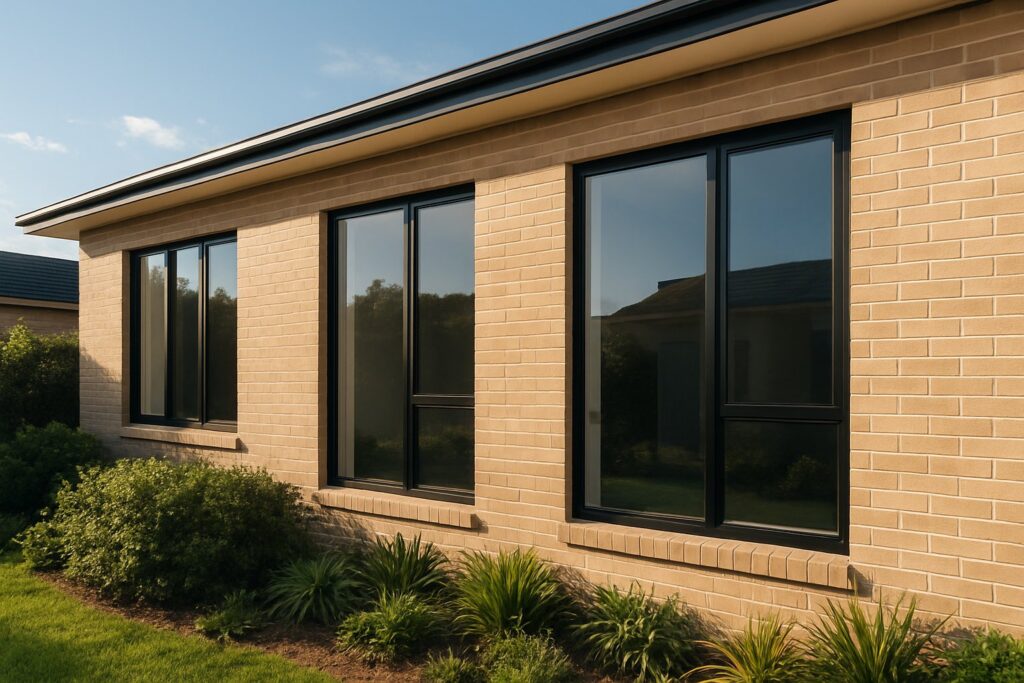
What Are Blue Aluminium Windows and Why Are They Popular
Blue aluminium windows are aluminium-framed windows finished in a blue powder-coated or anodized colour. They combine the structural strength and slim sightlines of aluminium with a bold, lasting colour statement suited to residential and commercial projects alike.
Colour changes everything about how a window sits on a facade. Where standard white uPVC frames fade into the background, a blue aluminium frame becomes a deliberate design choice — one that signals confidence, personality, and attention to detail. The growing demand for these windows reflects a broader shift in Australian building culture: homeowners and specifiers no longer accept that windows must be neutral. They want frames that contribute to the architectural story rather than disappear from it.
This article walks through the full decision journey. You will learn why aluminium accepts colour so well, which shade of blue suits different architectural styles, what thermal performance to expect from modern systems, how they compare to alternatives, and how to specify them with confidence from supplier through to installation.
What Makes Blue Aluminium Windows Different
Aluminium is uniquely receptive to colour. Its surface bonds molecularly with powder-coated pigment during heat curing, producing a finish that resists UV fade, scratching, and salt-air corrosion for decades. That process opens up over 200 RAL colour options — a range uPVC simply cannot match. Standard uPVC relies on foil wraps laminated to the profile surface, which limits the palette to roughly 30 finishes and carries a higher risk of peeling or discolouration over time.
The material itself enables slimmer frame profiles because of its inherent structural density. Less frame means more glass, which is why aluminium windows deliver those clean, contemporary sightlines architects favour for modern Australian homes. Pair that slim profile with a striking blue finish and the result is a window that maximises both light and kerb appeal without compromising strength. For projects that extend into matching aluminium windows and doors across an entire elevation, the consistency of a powder-coated blue is difficult to replicate in any other framing material.
Who Chooses Blue Aluminium Windows
The audience for windows in aluminium finished in blue is broader than you might expect. Four distinct groups drive demand:
- Homeowners upgrading for kerb appeal — Replacing tired frames with a bold blue creates an instant facade refresh, especially on rendered or light-coloured brick homes common across Sydney, Melbourne, and coastal Queensland.
- Architects specifying on contemporary builds — A blue aluminium window becomes a design feature in its own right, offering a colour accent against white render, timber cladding, or dark metal roofing on new double-storey and triple-storey residences.
- Developers adding premium finishes to multi-unit projects — Coloured aluminium frames differentiate a development from the sea of standard white or grey, attracting buyers willing to pay more for a curated aesthetic.
- Renovation specialists matching heritage palettes — Period-appropriate blues (think soft pastels or deep navy tones) complement Federation, Art Deco, and coastal weatherboard properties while delivering modern thermal performance behind a heritage-sympathetic appearance.
Each group values something slightly different — street presence, design intent, market positioning, or heritage sensitivity — yet all of them land on the same material because aluminium delivers colour fidelity, longevity, and structural performance in a single package. The real question is not whether blue aluminium windows suit your project. It is which shade of blue will get the best result — and what happens if you pick the wrong one.
How Blue Colour Is Applied to Aluminium Window Frames
A blue aluminium window frame is not painted. That distinction matters more than most buyers realise. Wet paint sits on a surface — it can chip, peel, and degrade within a few years under Australian UV exposure. Powder coating, by contrast, bonds at a molecular level with the aluminium substrate, creating a finish that functions as part of the frame rather than a layer applied to it. This is the dominant method used by aluminium window manufacturers worldwide, and it is the reason coloured aluminium window frames hold their appearance for decades in conditions that would destroy conventional paint.
There is an alternative process — anodising — which converts the aluminium surface itself into a hard oxide layer that can accept dye. Anodising excels at producing metallic silvers, bronzes, and blacks, but it struggles with bold, saturated colours like vivid blues. The dye range is limited, and achieving a consistent deep blue across large production runs is unreliable. For that reason, virtually every blue aluminium frame you encounter on an Australian home or commercial building has been powder coated rather than anodised.
The Powder Coating Process Step by Step
Understanding how the finish is applied helps you assess quality when comparing suppliers. A properly powder-coated aluminum window frame goes through a controlled sequence, and shortcuts at any stage compromise the result. Here is the process from raw extrusion to finished frame:
- Surface preparation and pre-treatment — The raw aluminium extrusion is cleaned to remove oils, debris, and the thin natural oxide layer that forms on exposure to air. A multi-stage chemical pre-treatment follows, typically involving alkaline cleaning, rinsing, and the application of a conversion coating (often a chrome-free zirconium sealer) that promotes adhesion and enhances corrosion resistance. This stage is invisible in the finished product, yet it determines how well the colour stays bonded over the life of the frame.
- Masking — Any areas that must remain uncoated — drainage slots, hardware fixing points, thermal break channels — are protected with high-temperature masking tape rated to survive the curing oven.
- Electrostatic powder application — Dry pigment powder (typically a polyester resin formulated for exterior durability) is fed through electrostatic spray guns. The gun imparts a positive electrical charge to each particle as it leaves the nozzle, while the aluminium extrusion is grounded. The charged particles are attracted to the metal surface and cling uniformly, wrapping around edges and into recesses with even coverage.
- Heat curing — The coated extrusion enters a curing oven at approximately 180–200°C for 10–20 minutes. Heat melts the powder particles, causing them to flow together and cross-link into a continuous, molecularly bonded film. This chemical reaction is what transforms loose powder into an incredibly tough skin.
- Cooling and inspection — After curing, the frame cools naturally or in a controlled environment. Once at ambient temperature, each piece undergoes visual and instrument-based quality checks — verifying film thickness, colour consistency against the RAL standard, surface smoothness, and adhesion strength.
The entire sequence — from pre-treatment through to final inspection — typically takes a few hours per batch. It produces a finish with uniform colour coverage, high UV resistance suited to Australia’s intense solar exposure, and scratch resistance that outperforms wet-applied alternatives by a wide margin. For metal window frames destined for coastal or high-UV environments, the polyester powder formulation is specifically engineered to resist chalking and fading over extended outdoor service.
Quality Markers and Certifications to Look For
Not all powder coating is equal. A backyard spray job and a certified architectural coating look identical on day one — the difference shows up three, five, or ten years later when an inferior finish begins to chalk, fade, or flake away from the aluminium window framing beneath it.
The international benchmark for architectural-grade powder coating on aluminium is Qualicoat certification. This quality label, maintained by an international association, sets stringent requirements across the entire coating chain — from pre-treatment chemistry through to the final film properties. A Qualicoat-certified finish has passed testing for:
- Adhesion — Cross-hatch and pull-off tests confirm the coating will not delaminate from the aluminium substrate under stress or thermal cycling.
- Salt-spray resistance — Coated samples are exposed to aggressive salt-fog environments for extended periods to simulate decades of coastal exposure in a compressed timeframe.
- Colour fastness and UV resistance — Accelerated weathering tests verify that colour shift remains within tight tolerances after the equivalent of years of direct sunlight.
- Film thickness and hardness — Ensuring the coating meets minimum micron thickness and pencil-hardness standards that correlate with long-term durability.
Reputable aluminium window manufacturers test their coatings to a minimum 25-year service life before visible degradation. Some premium polyester powder systems carry warranties extending beyond that figure. When comparing quotes for aluminum window frames, ask whether the coating carries Qualicoat certification or an equivalent architectural-grade standard — it is the clearest indicator that your blue finish will still look sharp two decades from now, not just the day the windows are installed.
Coating quality also affects colour matching across a project. If you are ordering frames in batches — common on larger builds or staged renovations — a certified coater with documented quality processes ensures each delivery matches the last, eliminating the shade variation that plagues less rigorous operations.
Choosing the Right Shade of Blue for Your Project
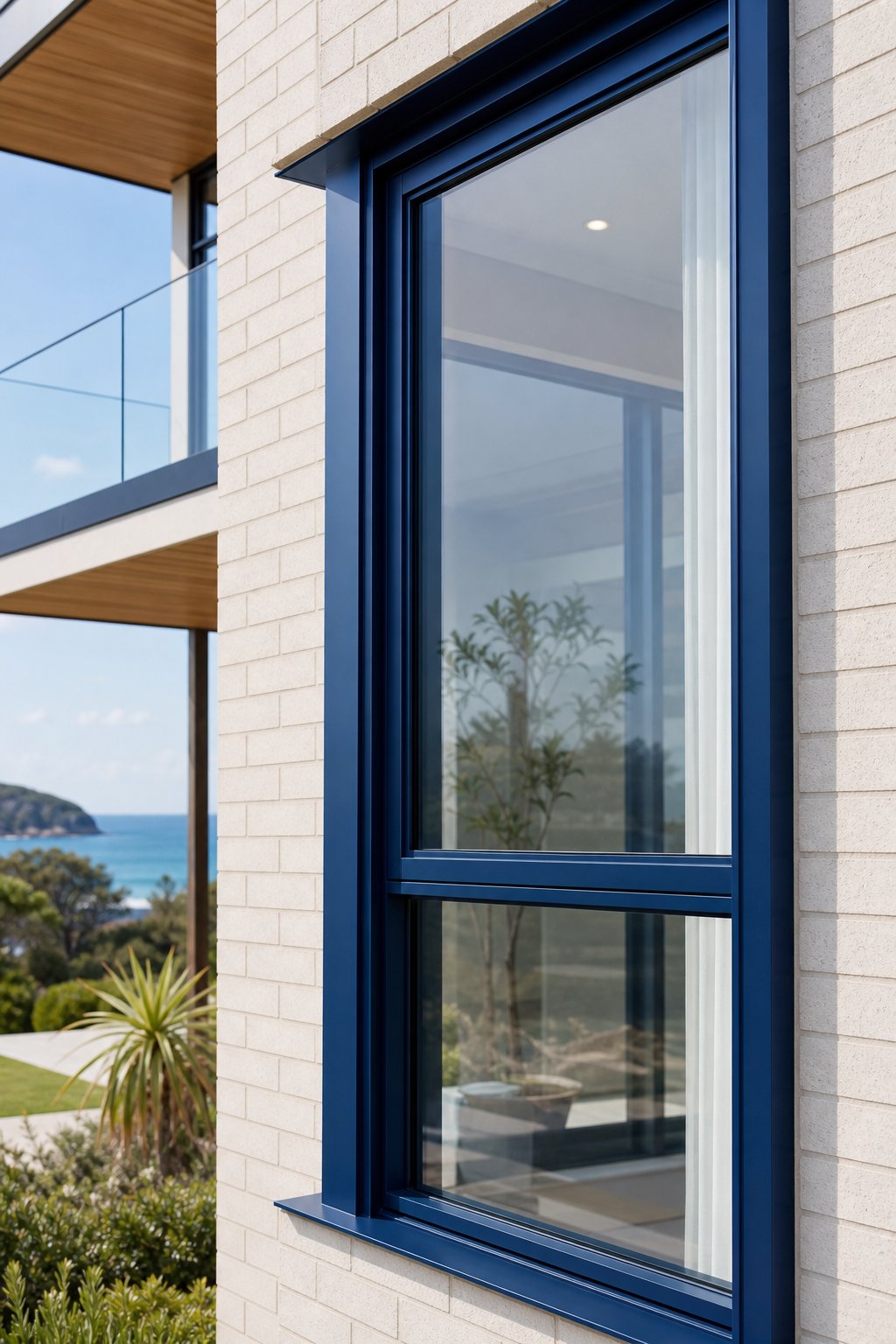
Here is where most people get it wrong. They pick a blue that looks perfect on a screen, order confidently, and then watch it clash with their brickwork the moment the frames go in. Blue is not a single colour — it spans a spectrum from near-black midnight tones to soft coastal pastels, and each shade behaves differently against different materials, in different light, and at different orientations. The RAL colour system exists precisely to remove guesswork from this decision.
RAL Classic is the standardised colour matching system used across the architectural coatings industry. It catalogues 25 distinct blue hues in its Blue Hues category alone, each identified by a permanent numeric code. When you specify a RAL number, every manufacturer on the planet knows exactly which shade you mean — no ambiguity, no batch variation, no “close enough.” For aluminium window frame colors, RAL codes are the universal language between you, your supplier, and the powder coater.
Four blues dominate the Australian residential and commercial market. Each carries a distinct personality and pairs with different architectural styles. Choose the wrong one and the frame will fight the facade rather than complete it.
Popular Blue RAL Codes and Their Architectural Fit
| RAL Code | Colour Name | Tone Description | Best Suited Architecture |
|---|---|---|---|
| RAL 5010 | Gentian Blue | Deep, classic navy-adjacent blue with strong saturation | Traditional homes, coastal properties, Federation-style renovations, weatherboard cottages |
| RAL 5015 | Sky Blue | Bright, optimistic mid-blue with clean energy | Modern new builds, rendered facades, double-storey contemporary homes, commercial shopfronts |
| RAL 5024 | Pastel Blue | Soft, muted blue-grey with understated warmth | Heritage renovations, Scandi-inspired interiors, light-toned brick homes, Art Deco restorations |
| RAL 5011 | Steel Blue | Near-black blue with brooding depth — reads almost charcoal in low light | Dramatic contemporary facades, warehouse conversions, dark-palette builds, industrial-chic projects |
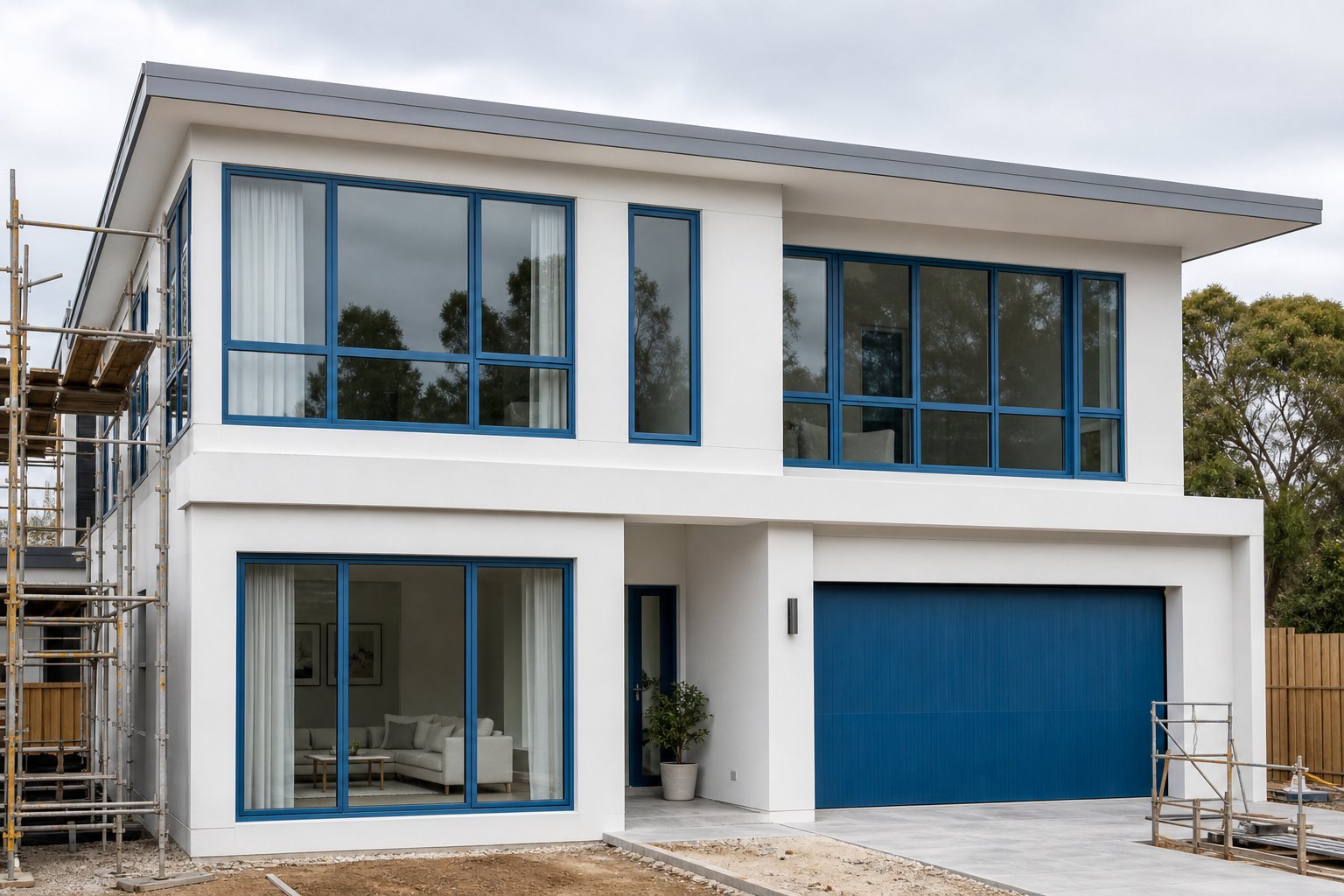
RAL 5010 Gentian Blue is arguably the most versatile of the group. Its depth gives it a navy character that reads as classic rather than trendy — think coastal Queensland weatherboards or Melbourne heritage terraces where a dark blue window anchors the facade without overwhelming period detailing. RAL 5015 Sky Blue sits at the opposite end of the mood scale: bright, confident, and unapologetically modern, it pairs beautifully with white render and flat metal rooflines on new double-storey builds.
For those after subtlety, RAL 5024 Pastel Blue delivers a softer touch. It works where a bold blue would feel out of place — heritage conservation areas, Scandi-minimalist interiors, or homes with pale sandstone or cream brickwork. And then there is RAL 5011 Steel Blue, a shade so dark it borders on black aluminum windows territory. In overcast southern light it can read almost as charcoal; in direct sunlight it reveals its true blue undertone. This makes it a compelling alternative to standard anthracite grey for homeowners who want drama without going fully monochrome.
These four are starting points, not limits. The full RAL Classic blue palette includes Ocean Blue (RAL 5020), Capri Blue (RAL 5019), and Sapphire Blue (RAL 5003), among others. Similarly, buyers exploring bronze aluminum windows or other metallic finishes will find those options sit alongside blues in the broader RAL and custom-finish catalogues — but for a true blue statement, the four codes above cover the vast majority of Australian projects.
How Lighting and Surroundings Affect Shade Perception
A blue window does not exist in isolation. It sits within a context of brickwork, render, landscaping, and — critically — light. The same RAL code can look dramatically different depending on where and how the frame is oriented.
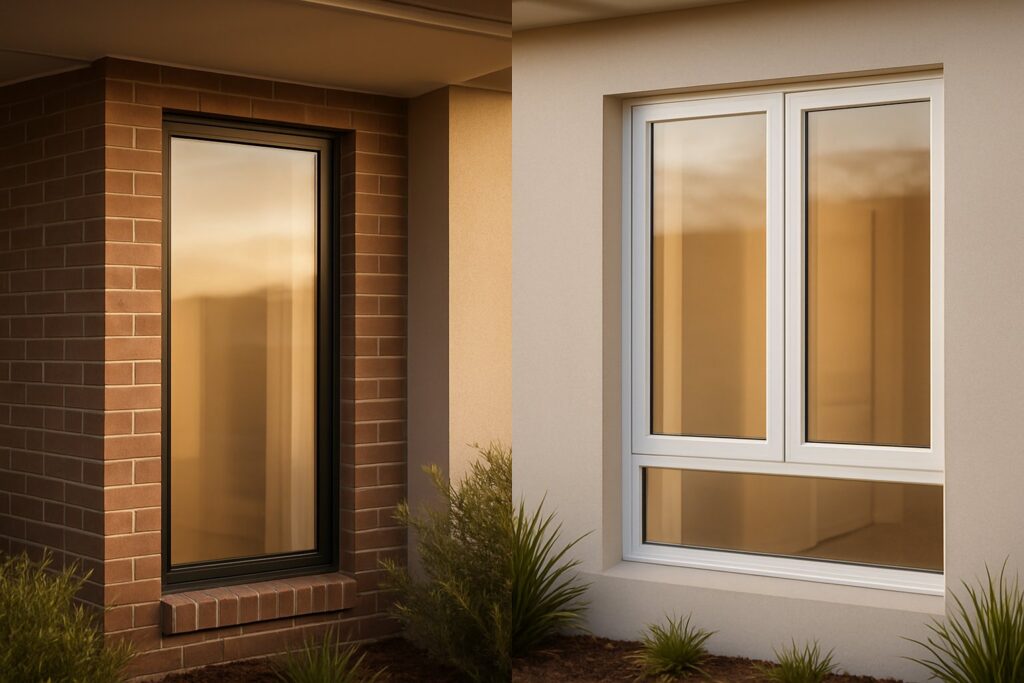
North-facing facades in Australia receive the strongest, most consistent sunlight. Under that intense direct light, blues appear more saturated and vivid. A RAL 5015 Sky Blue on a north-facing elevation will punch harder than the same colour on a south-facing wall, where softer, diffused light mutes intensity and can push the tone towards grey. East-facing frames catch warm morning sun that briefly warms up a blue, while west-facing windows cop the amber glow of late afternoon — capable of shifting how a deep navy reads entirely.
Surroundings matter just as much. Reflected light from landscaping, paving, and adjacent surfaces bounces colour back onto your frames. A lush green garden throws a subtle green cast; red brick reflects warmth; light-coloured rendered walls amplify brightness and make mid-tone blues appear lighter than expected. Even a large concrete driveway can reflect enough light to wash out a softer shade like RAL 5024 Pastel Blue.
This is exactly why viewing digital swatches on a monitor is unreliable. Screens vary in calibration, and they cannot replicate how your specific combination of brick tone, roof colour, and vegetation interacts with a given blue. The practical solution is straightforward: request large powder-coat sample swatches from your supplier — ideally on actual aluminium panels, not paper cards — and hold them against your facade in natural daylight at different times of day. Morning, midday, and late afternoon will give you three readings that reveal how the shade performs through a full light cycle.
If possible, view samples in both overcast and sunny conditions. A shade that looks refined under cloud cover may feel electric in direct sun, or vice versa. This ten-minute exercise at the installation site is the single most effective way to avoid regret — and it costs nothing beyond a phone call to your supplier.
Colour confidence also comes down to contrast ratios. A deep blue window against a pale facade creates high contrast that draws the eye immediately to the frames. A pastel blue against similar-toned render produces a more harmonious, blended effect. Neither is better — but one might suit your street presence goals far more than the other. Decide whether you want your blue windows to shout or whisper, then match the shade accordingly.
Dual-Colour Frame Options for Interior and Exterior
Picking the perfect blue for your facade solves only half the equation. That bold RAL 5010 Gentian Blue might look stunning from the street, but do you really want navy-toned frames staring back at you from inside your living room? Most homeowners do not — and they should not have to compromise. Dual-colour aluminium windows let you run two entirely separate finishes on the same frame: one facing the world, one facing your sofa.
This configuration is one of the most common specifications for blue aluminium windows in Australia. The exterior gets the statement colour — the deep navy, the bright sky blue, the moody steel blue — while the interior face stays neutral. White, traffic white (RAL 9016), or anthracite grey (RAL 7016) on the inside keeps rooms feeling bright and adaptable regardless of how bold you go on the outside.
Why Dual-Colour Frames Are a Popular Choice
The reasons are both practical and aesthetic, and they overlap in ways that make dual-finish framing a genuinely smart specification rather than a luxury add-on.
Interior design freedom. A neutral internal frame colour coordinates with virtually any paint scheme, furniture palette, or future renovation. You can repaint walls, change curtains, and restyle a room without worrying that your window frames clash. A bold blue inside would lock you into a specific colour story — fine for a statement bathroom, less ideal for a main bedroom you might restyle three times over twenty years.
Resale neutrality. If you are renovating or developing a property that may be sold or rented, keeping interior frames in white or grey removes a potential objection for future buyers. Dual-colour frames let you invest in kerb appeal externally while maintaining broad market appeal internally — a consideration heritage and renovation specialists regularly cite as a driver of the growing dual-colour trend.
Planning and heritage compliance. In conservation areas or heritage overlay zones across Australian councils, planning requirements may restrict external colour to match an approved palette. Dual-colour framing satisfies that restriction outwardly while giving you complete internal design freedom — the planning authority gets compliance, and you get personalisation behind closed doors.
Heritage character respect. For Federation terraces, Art Deco flats, and coastal weatherboard homes, a period-appropriate blue on the exterior honours original character. The internal face can remain a clean white that suits modern interiors, bridging the gap between heritage authenticity outside and contemporary living inside.
This concept also applies beyond aluminium. Aluminum clad wood windows, for instance, use an external aluminium skin over a timber core — offering weather protection outside with natural timber warmth inside. Dual-colour powder-coated aluminium achieves a similar inside-outside distinction entirely within a single aluminium system, without the ongoing maintenance timber demands.
How Dual-Colour Affects Cost and Lead Time
There is a manufacturing reality behind dual-finish frames that buyers should understand early. The polyamide thermal break technology that insulates modern aluminium windows is also what makes dual-colour coating possible. The frame is not a single extrusion — it consists of a separate inner aluminium profile, a separate outer aluminium profile, and a polyamide thermal break connecting them. Each profile is powder coated independently in its respective colour before the three components are rolled together into the finished section.
That two-stage process means:
- Two separate coating passes through the powder line — one batch in blue, one batch in white or grey
- Assembly happens only after both inner and outer profiles have been coated and cured
- Quality control must verify colour accuracy on both faces before rolling
- Errors cannot be easily corrected — once rolled onto the thermal break, a dual-colour section cannot be stripped and recoated without destroying the profile
In practice, this typically adds a modest cost premium of around 10–20% over a single-colour finish, depending on the supplier and system. Lead times extend slightly as well — generally one to two additional weeks for the extra coating pass and assembly sequencing. Neither increase is dramatic, but both matter for project scheduling. Raise the dual-colour question with your supplier at the quoting stage, not after fabrication timelines have been locked in.
One practical tip: if your project requires staged deliveries or you anticipate needing replacement sections later, order a small surplus of dual-colour profiles upfront. Unlike single-colour extrusions that can be recoated if a mistake occurs, dual-colour sections are committed once assembled. Spare stock protects you against fabrication errors, transport damage, or site mishaps without triggering a fresh manufacturing run weeks down the line.
Here are the most popular internal/external pairings Australian homeowners specify for blue aluminium frames:
- RAL 5010 Gentian Blue (exterior) / RAL 9016 Traffic White (interior) — The classic pairing. Navy presence outside, bright neutrality inside.
- RAL 5015 Sky Blue (exterior) / RAL 9010 Pure White (interior) — A vibrant, modern combination for rendered contemporary homes.
- RAL 5011 Steel Blue (exterior) / RAL 7016 Anthracite Grey (interior) — Dark outside and in, suited to moody, industrial-toned interiors.
- RAL 5024 Pastel Blue (exterior) / RAL 9001 Cream (interior) — Soft and heritage-sympathetic on both faces.
- RAL 5010 Gentian Blue (exterior) / RAL 7035 Light Grey (interior) — A slightly warmer internal tone that complements timber flooring and neutral stone benchtops.
White aluminum windows remain the most requested internal finish by a wide margin, but anthracite grey is gaining ground — particularly in homes where darker internal joinery, charcoal kitchen cabinetry, or concrete floors set the tonal direction. Your interior colour choice should echo the materials already surrounding your window openings rather than introducing a standalone accent that fights the room.
Dual-colour specification is where the aluminum clad approach to framing truly shines: the exterior face weathers salt air, UV, and rain in a tough, colourfast powder coat while the internal face sits protected in a climate-controlled environment. Both sides get the right finish for their respective conditions, and the overall window performs as a cohesive thermal unit thanks to the polyamide break holding everything together.
Thermal Performance and Energy Efficiency Explained
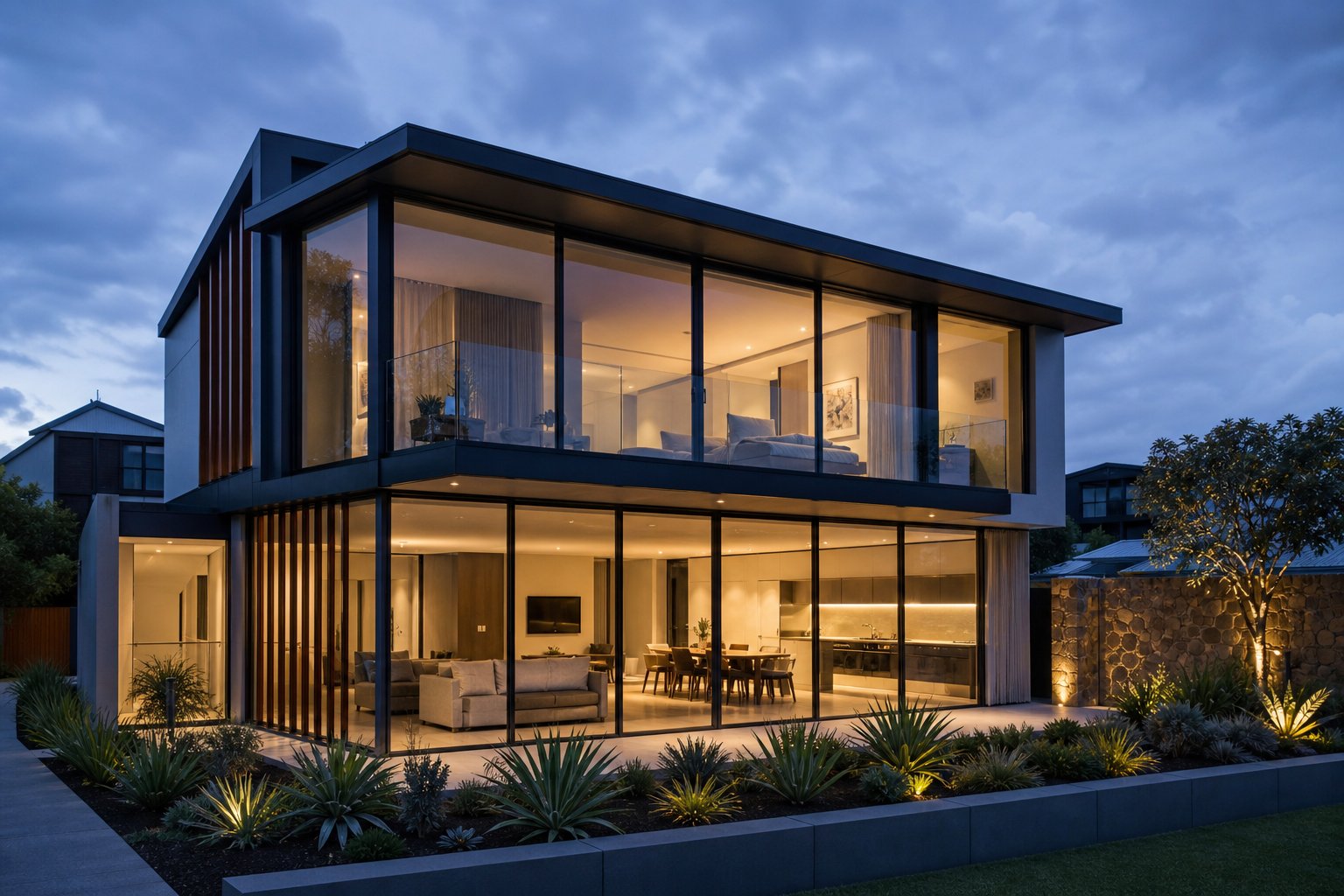
That polyamide thermal break mentioned in the dual-colour discussion does far more than enable two-tone finishes. It solves the biggest technical objection aluminium has faced for decades: heat conductivity. Raw aluminium conducts heat roughly 1,000 times faster than uPVC — a fact that gave early single pane aluminum windows their reputation for cold frames, condensation, and energy waste. But that reputation belongs to the 1980s, not to modern thermally broken systems. The difference between then and now is a strip of engineered polyamide sitting between your interior comfort and the outside elements.
Understanding Thermal Breaks in Aluminium Frames
A thermal break is a continuous bar of glass-reinforced polyamide (PA66) mechanically crimped between two separate aluminium profiles — one facing indoors, one facing out. That bar interrupts the conductive path that would otherwise let heat race straight through the metal. Think of it as a dam in a river: the aluminium on each side still conducts efficiently within its own section, but the polyamide strip between them has thermal conductivity hundreds of times lower than the metal it separates.
Width matters. A wider thermal break creates a longer insulation zone and a lower frame U-value (Uf). Here is how break width translates to measurable performance:
| Thermal Break Width | Approximate Frame Uf | Typical Application |
|---|---|---|
| No break (legacy frames) | 3.5–7.0 W/m²K | Non-compliant; outdated systems only |
| 20 mm polyamide | 2.0–2.8 W/m²K | Entry-level compliance; warm climate zones |
| 28–32 mm polyamide | 1.4–2.0 W/m²K | Standard specification for most Australian projects |
| 40 mm+ polyamide | 0.9–1.4 W/m²K | Enhanced performance; cooler climate zones and premium builds |
For context, a quality multi-chamber uPVC frame typically achieves Uf values around 1.0–1.8 W/m²K. A thermally broken aluminium frame with a 28–32 mm break lands squarely within that same range — delivering equivalent insulation performance in a slimmer, stronger profile. Premium systems with 40 mm breaks push below 1.4 W/m²K, matching or exceeding what timber frames offer without any of the ongoing paint maintenance timber demands.
Aluminium casement windows and aluminum double hung windows both benefit from thermal break construction. The break geometry is engineered into the profile design regardless of how the sash operates — whether it hinges outward, slides vertically, or tilts inward for cleaning. What matters is that the break is continuous around the full perimeter of the frame and sash, leaving no uninterrupted metal bridge for heat to exploit.
Energy Ratings and What They Mean for Running Costs
A window is not just a frame. The glazing unit — the sealed double or triple glass panel sitting inside that frame — typically accounts for 60–75% of the whole window’s thermal performance. This is a critical point that buyers often overlook when fixating on frame material alone.
The metric that captures everything — frame, glass, spacer, and edge losses combined — is the whole-window U-value (Uw), measured in W/m²K. Lower numbers mean less heat transfer. A well-specified thermally broken aluminium window with Low-E double glazing and argon gas fill routinely achieves whole-window Uw values between 1.4 and 1.6 W/m²K. Step up to triple glazing and that figure drops below 1.0 W/m²K — territory that satisfies even the most demanding specifications.
In Australia, the Window Energy Rating Scheme (WERS) provides star ratings for heating and cooling performance across the country’s eight climate zones. Those WERS ratings feed directly into NatHERS modelling, which determines whether a home meets the current NCC requirement of a minimum 7-star energy rating. For homeowners in cooler zones like Melbourne (Zone 6), Canberra (Zone 5), or Tasmania (Zone 7), a lower U-value directly reduces winter heating bills. In warmer zones like Brisbane or Perth, the Solar Heat Gain Coefficient (SHGC) — how much solar energy passes through the glass — becomes equally or more important than the U-value itself.
Here is how the key glazing choices stack up against each other:
- Aluminum double pane windows with Low-E argon fill — Ug (glass centre U-value) around 1.0–1.1 W/m²K. The standard specification for Australian residential projects. Balances cost, weight, and performance effectively.
- Triple-glazed units with Low-E and argon — Ug around 0.6–0.7 W/m²K. Justified in alpine zones (Zone 8), high-performance builds targeting NatHERS 8+ stars, or passive-house-adjacent designs.
- Solar control Low-E coatings — SHGC as low as 0.20–0.25. Essential for west-facing glazing in hot climate zones (Darwin, Cairns, inland WA) where controlling heat gain matters more than retaining warmth.
- Warm-edge spacers — Replace the traditional aluminium spacer bar between glass panes with a low-conductivity composite. Reduces edge-zone heat loss by 30–40% and lowers condensation risk.
The practical takeaway: your glazing specification has more influence on energy bills than the frame material. A thermally broken aluminium frame paired with good glass will outperform a uPVC frame holding budget glazing — every time. Frame and glass work as a system, not independently.
Single hung aluminium windows and aluminium casement windows operating within modern thermally broken systems meet or exceed current NCC energy requirements when paired with appropriate glazing for their climate zone. The idea that aluminium windows are inherently cold is a holdover from an era of unbroken metal frames and single glazing. It no longer reflects reality. Today’s systems achieve the same thermal benchmarks as competing materials while delivering the slim sightlines, structural strength, and colour durability that define the material’s advantage — including the bold blue finishes that brought you to this article in the first place.
Performance, though, is only part of the buying decision. How do blue aluminium frames actually compare against uPVC, timber, and composite alternatives across the full range of factors — lifespan, maintenance, aesthetics, and cost? That comparison reveals where aluminium genuinely leads and where other materials still hold ground.
Blue Aluminium vs uPVC, Timber, and Composite Alternatives
Aluminium is not the only material you can get in blue. uPVC profiles accept coloured foil wraps. Timber accepts paint in any shade you choose. Composite systems combine elements of both. So the decision is not simply “which material comes in blue” — it is which material delivers the best combination of colour durability, frame performance, maintenance reality, and long-term cost for your specific project. The differences are larger than most buyers expect.
Blue Aluminium vs Blue uPVC Frames
uPVC is available in blue, but the colour technology is fundamentally different. Where aluminium receives a molecularly bonded powder coat, uPVC relies on a thin decorative foil laminated to the profile surface. That foil can look convincing initially, yet it carries inherent limitations that compound over time — particularly under Australia’s intense UV conditions.
Colour fidelity is the first gap. Foil-wrapped uPVC offers roughly 30 finish options compared to the 200+ RAL shades available on powder-coated aluminium. If you have a specific RAL blue in mind, uPVC may not be able to match it. Fade resistance is the second concern. Foil wraps exposed to strong UV can discolour, bubble, or peel at the edges after 10–15 years — well before the frame itself fails structurally. A powder-coated aluminum frame windows finish, by contrast, is tested to remain colour-stable for 25 years or more under Qualicoat certification standards.
Aesthetically, uPVC profiles are bulkier. The material lacks aluminium’s structural density, so frames need more mass to achieve the same rigidity. That translates to wider sightlines — typically 70–80 mm for uPVC versus 45–55 mm for aluminium — meaning more frame and less glass in every opening. For homeowners replacing old aluminum windows with modern thermally broken systems, the upgrade to slimmer sightlines is immediately visible. Swapping those same old frames for uPVC would actually introduce thicker profiles than the originals.
On cost, uPVC is the more affordable entry point. In Australia, supply-and-install pricing for a standard uPVC casement window sits around $800–$1,500 AUD, while an equivalent aluminium unit typically runs $1,200–$2,500 AUD depending on system, size, and glazing specification. That upfront gap narrows considerably over the full ownership cycle: whole-of-life cost analysis often favours aluminium because it does not require replacement after 20–25 years when uPVC seals and profiles begin failing.
Blue Aluminium vs Painted Timber Frames
Timber has character that no metal frame windows or synthetic profile can fully replicate. The grain, warmth, and heritage authenticity of painted hardwood make it the natural choice for period homes where matching original joinery matters. A deep blue painted timber window on a Federation terrace has an undeniable beauty — and for heritage purists, that beauty justifies the ongoing commitment timber demands.
That commitment is real. Timber frames need repainting or resealing every 5–7 years, regardless of colour. In coastal or high-humidity areas — coastal Queensland, the Northern Rivers, Tasmania’s west coast — moisture penetration accelerates rot if maintenance lapses even briefly. The reference data is clear: timber longevity ranges from 30 to 60+ years, but only with consistent upkeep. Neglect the painting cycle and that lifespan can halve to just 15–20 years.
Cost reflects both the material and the labour it demands. Premium hardwood windows typically cost $2,000–$4,500+ AUD per unit supplied and installed — the highest upfront investment of any frame type. Add the cumulative cost of five or six repaint cycles over a 40-year ownership period (at $20–$50 per window per cycle, plus the disruption) and the whole-life cost climbs further.
Where aluminium genuinely wins against timber is colour permanence. A powder-coated blue aluminium frame will look the same in year 20 as it did on installation day — no fading, no flaking, no recoating. Timber’s blue paint will weather, chalk, and require renewal within a decade, regardless of how meticulously it was originally applied. For buyers who want blue frames without the maintenance treadmill, aluminium is the more practical path.
Blue Aluminium vs Composite Frames
Composite windows bridge the gap between metal and timber. The most common configuration is an aluminium-timber composite: a hardwood or engineered timber core wrapped externally with an aluminium cladding — essentially metal clad windows that use timber for interior warmth and aluminium for exterior protection. These systems deliver the natural timber feel inside the home while the outer aluminium skin handles weather, UV, and colour retention without repainting.
For blue exterior finishes, composite frames perform similarly to full aluminium in terms of colour durability — the external face is still powder-coated aluminium, so it benefits from the same Qualicoat-grade coating technology. The practical difference lies in the internal experience (real timber grain rather than powder-coated metal) and the cost. Composite systems sit at the premium end of the market — often 30–50% above full aluminium pricing — because they combine two materials, two manufacturing processes, and more complex assembly.
Composite also introduces a maintenance nuance that pure aluminum framed windows avoid: the internal timber still needs periodic oiling or lacquering to maintain its finish. It is far less demanding than external timber maintenance, since the wood is shielded from weather. But it is not zero-maintenance either.
For most Australian residential projects where the priority is a bold blue exterior with low maintenance and a lifespan measured in decades rather than repaint cycles, full aluminium with a dual-colour finish (blue outside, neutral inside) delivers the closest practical outcome to composite — at a lower price point and with simpler long-term care. Composite earns its premium when the tangible feel of real timber on the interior face is a non-negotiable design requirement.
The following table consolidates the comparison across the factors that matter most when choosing between aluminum vinyl windows alternatives, painted timber, composite, and aluminium for a blue-finished installation:
| Factor | Aluminium (Powder Coated) | uPVC (Foil Wrapped) | Timber (Painted) | Composite (Alu-Timber) |
|---|---|---|---|---|
| Expected Lifespan | 40–60 years | 20–30 years | 30–60+ years (maintenance dependent) | 40–60 years |
| Maintenance Required | Occasional wash only | Occasional wash; foil may degrade | Repaint every 5–7 years; seal inspection | External: wash only; Internal timber: periodic oiling |
| Sightline Width | 45–55 mm (slim) | 70–80 mm (bulky) | 55–70 mm (moderate) | 55–65 mm (moderate) |
| Relative Cost (Supply + Install) | Mid–high ($$) | Low–mid ($) | High–premium ($$$) | Premium ($$$$) |
| Colour Durability in Blue | 25+ years fade-free (Qualicoat certified) | 10–15 years before fading or peeling risk | 5–7 years before repaint needed | 25+ years on external alu face |
| Colour Range | 200+ RAL options | ~30 foil finishes | Unlimited (custom paint) | 200+ RAL on exterior; timber species inside |
No single material wins every category. uPVC wins on upfront cost. Timber wins on heritage character. Composite wins on interior tactile quality. But for the specific brief of a lasting blue exterior finish with minimal upkeep, slim profiles, and strong structural performance over a 40-year-plus horizon, aluminium occupies a practical sweet spot that the alternatives struggle to match across the board.
Where these frames sit on a building, though, matters as much as what they are made from. Certain architectural styles and settings draw out the best in blue aluminium — while others demand a careful approach to ensure the colour elevates the design rather than undermining it.
Architectural Styles That Suit Blue Aluminium Windows
A blue frame does not suit every building equally. On the right facade it becomes the defining detail — the element that lifts a whole elevation from competent to compelling. On the wrong one it can feel forced, disconnected from the materials and proportions around it. The difference comes down to context: the building’s era, its cladding palette, its setting, and the scale of glazing involved. Some architectural styles practically call out for coloured aluminium; others require a more considered hand.
Modern Residential Builds and Extensions
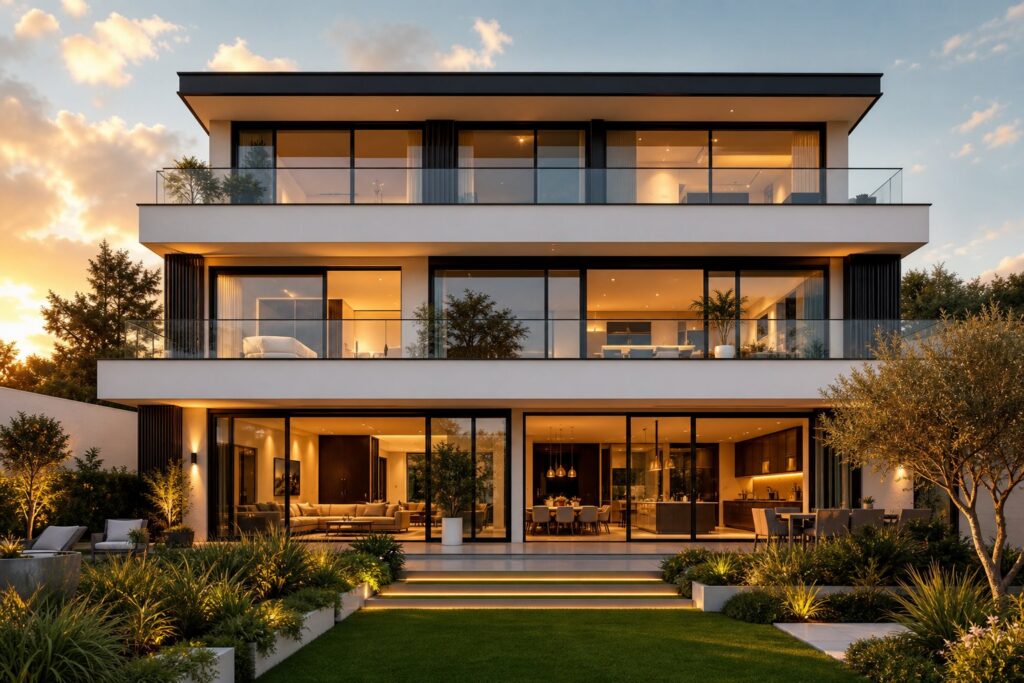
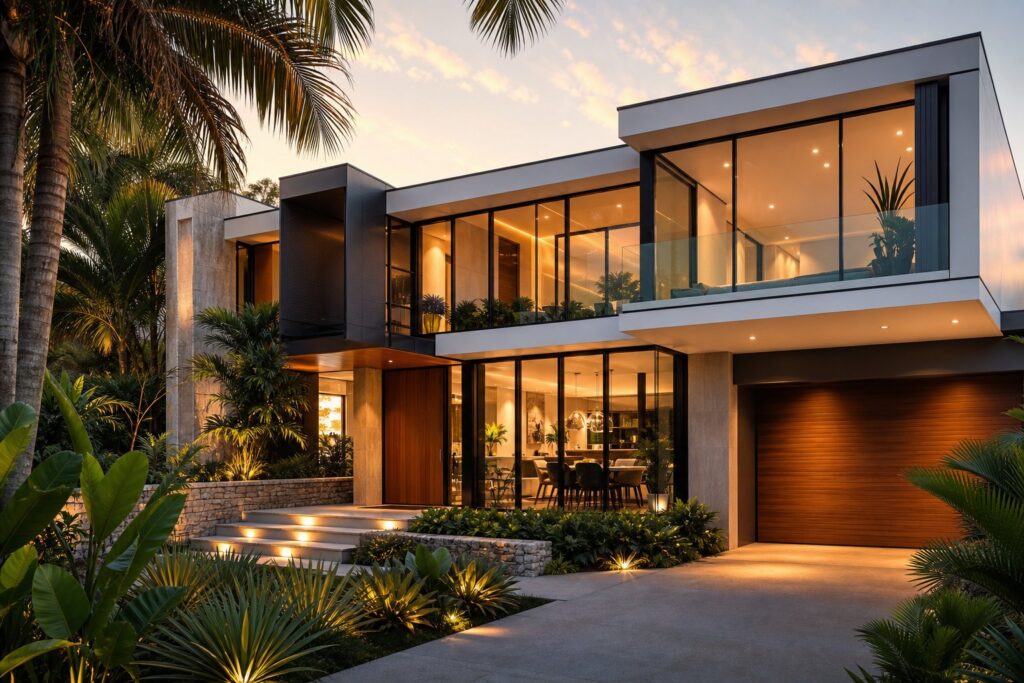
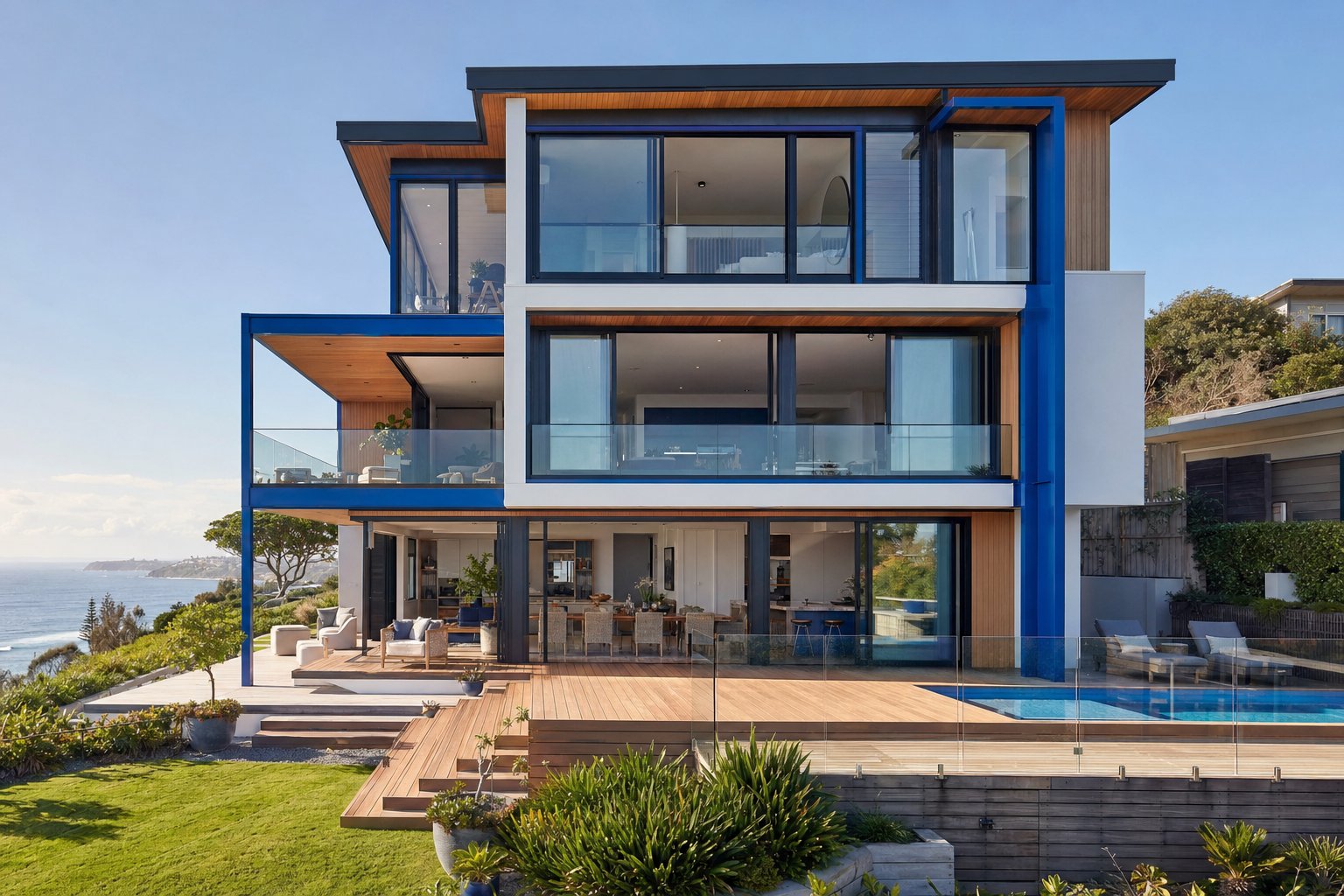
Contemporary new builds offer the most natural home for blue aluminium frames. Clean white render, pale grey brickwork, timber cladding, and flat metal rooflines all provide a neutral canvas that lets a coloured frame read as an intentional design accent rather than a decorative afterthought. On a double-storey or triple-storey residence with large glazing openings, slimline aluminium windows in a saturated blue — RAL 5010 or 5015 — create visual rhythm across the facade without overwhelming the architecture.
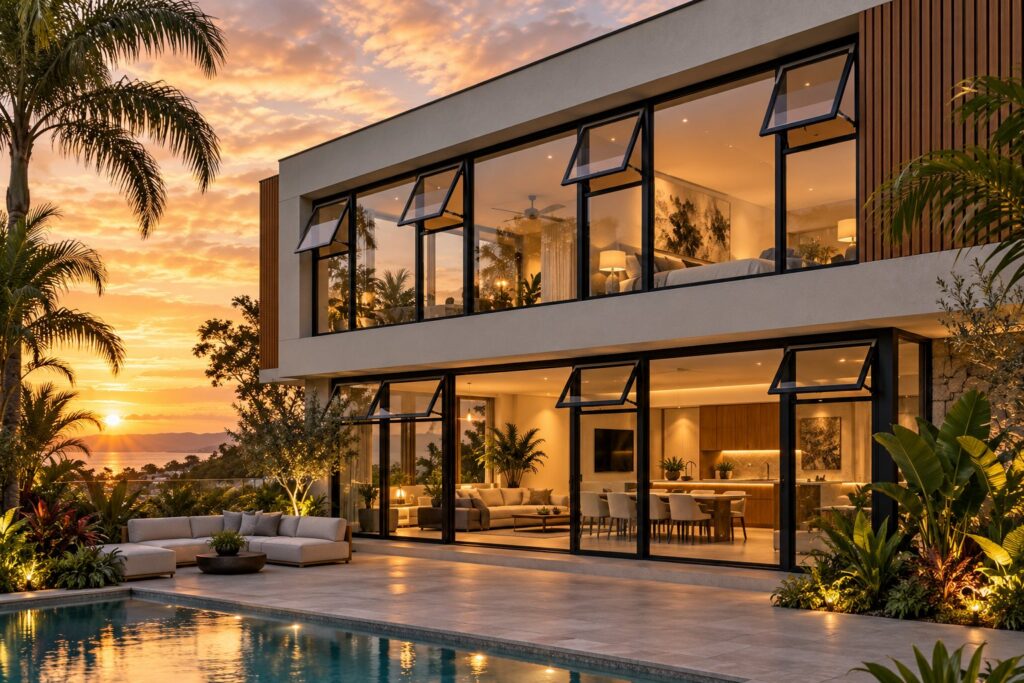
The slim profiles inherent to aluminium maximise the glass-to-frame ratio. Floor-to-ceiling fixed panels flanking an aluminum sliding window in a living area, for example, dissolve the boundary between indoor and outdoor space while the blue frame traces a crisp coloured outline around each opening. Extensions benefit similarly: a rear addition with a wall of aluminium sliding windows finished in a matching blue ties new construction to the existing home through colour repetition, even when the architectural language shifts from traditional to modern at the junction.
Developers targeting the premium market find that blue frames photograph exceptionally well — a practical consideration when marketing materials drive off-the-plan sales. That vivid colour pops in renders, drone shots, and listing photography in ways that standard grey or black simply cannot replicate.
Coastal and Heritage Properties
Blue windows and ocean settings share an obvious colour affinity, but the relationship goes deeper than aesthetics. Aluminium’s natural corrosion resistance gives it a genuine material advantage in marine environments. Salt-laden air accelerates degradation in timber and steel — standard powder-coated aluminium windows with Qualicoat Seaside certification are specifically tested against salt-spray exposure exceeding 1,000 hours, simulating decades of coastal service. Timber frames in the same environment would demand repainting every few years; aluminium needs only a periodic fresh-water rinse to remove salt residue.
On coastal weatherboards and beach houses across Queensland’s Sunshine Coast, the NSW South Coast, and Victoria’s Mornington Peninsula, a deep blue frame echoes the tones of sea and sky while resisting the very conditions those settings impose. Properties within 500 metres of the shoreline face the harshest exposure — yet that is precisely where a marine-grade aluminium frame in a coastal blue feels most at home.
Heritage properties benefit differently. Federation terraces, Art Deco apartment blocks, and interwar bungalows often featured coloured joinery in their original palettes — soft blues, deep navies, and muted pastels were period-appropriate choices that modern powder coating reproduces with perfect consistency. Strong geometric aluminium frames in a pastel blue (RAL 5024) complement the curved facades and decorative mouldings of an Art Deco building without fighting the era’s design language. The slender profiles mirror the proportions of original steel windows these homes often contained, making aluminium a sympathetic replacement material for heritage contexts where bulky uPVC would never gain council approval.
Commercial and Mixed-Use Projects
Scale changes the equation. Commercial aluminium windows need to span larger openings, integrate with curtain-wall systems, and accommodate the structural demands of multi-storey facades. Aluminium handles all of this natively — it is the dominant framing material in commercial construction precisely because it delivers strength at minimal profile depth across wide spans.
For retail shopfronts, a blue aluminium frame carries brand identity into the building fabric itself. A cafe, boutique, or co-working space with a consistent blue frame colour across its street-facing glazing creates immediate brand recognition without signage. Industrial and warehouse conversions benefit from a different angle: a pop of blue aluminium framing references the heritage ironwork these buildings originally contained, linking contemporary intervention to industrial history through colour.
Suppliers like MEICHEN offer commercial aluminium window systems across multiple types — sliding, casement, awning, and fixed — with custom powder-coat colour options that scale from a single residential renovation to a multi-unit commercial development. That breadth of range matters when a project requires consistency across different window configurations: the same RAL blue applied by the same certified coater ensures colour uniformity whether the opening holds an aluminium sliding window on a ground-floor shopfront or a fixed-light panel four storeys above.
The architectural fit is clear across each of these contexts. But before committing to any coloured frame specification, there is a regulatory layer that can halt a project if overlooked — planning permissions and building regulations that govern what you can and cannot do with external colour on Australian homes and commercial buildings.
Planning Permission and Building Regulations for Coloured Frames
Picking the perfect shade means nothing if your local council rejects it. Regulatory requirements around external colour changes catch homeowners off guard more often than you would expect — particularly when replacing old aluminium window frames with a bold new blue finish. The rules vary by state, council area, and heritage classification, so confirming your obligations early prevents costly surprises after frames have already been manufactured.
When You Need Council Approval for Blue Frames
In most Australian residential areas, aluminium replacement windows that do not alter the building’s footprint or openings qualify as exempt development — meaning no development application (DA) is required. However, changing frame colour from the original can shift a straightforward aluminium window replacement into a category that triggers council scrutiny, depending on where you live and what overlays apply to your property.
Scenarios that typically do not require council approval:
- Replacing existing windows with the same opening size in a standard residential zone with no heritage overlay
- Changing frame material (e.g. timber to aluminium) without altering the external appearance substantially
- Installing replacement aluminium windows in the same colour as the original frames
- New builds following an already-approved DA and colour schedule
Scenarios that typically do require council approval or heritage consent:
- Properties within a heritage conservation area or heritage overlay zone — any change to external colour, material, or window configuration generally requires consent
- Heritage-listed properties (state or local register) — alterations including colour changes and material substitution require formal approval, and certain materials like uPVC are often prohibited outright
- Properties subject to a restrictive covenant or body corporate rules that govern external appearance
- Replacing aluminium sash windows or other period-style joinery with a different operating type or a colour outside the approved heritage palette
- Adding new openings or enlarging existing ones — this moves beyond exempt development regardless of heritage status
Heritage overlays are the most common stumbling block for coloured frames. Councils in areas like inner Melbourne, Sydney’s inner west, and older suburbs of Adelaide maintain detailed schedules specifying acceptable external colours. A deep navy or sky blue may sit comfortably within that palette — or it may fall outside it entirely. The only reliable way to know is to check your council’s heritage guidelines or request a pre-lodgement meeting before committing to a colour specification.
Building Regulations and Compliance
Regardless of colour, every residential aluminium window replacement in Australia must comply with the National Construction Code (NCC) and the relevant Australian Standards — primarily AS 2047 for windows and external glazed doors. These standards govern structural adequacy, weather resistance, and energy performance. Colour has no bearing on compliance; a blue frame must meet exactly the same performance thresholds as a grey or white one.
Energy performance is demonstrated through WERS (Window Energy Rating Scheme) ratings or direct U-value and SHGC calculations that feed into the home’s NatHERS assessment. For residential aluminium windows, the glazing and thermal break specification — not the powder-coat colour — determines whether the window satisfies NCC Section J energy efficiency requirements.
Compliance documentation typically works through one of two pathways. A licensed building certifier (private or council-appointed) inspects the installation and issues a compliance certificate confirming the work meets NCC requirements. Alternatively, some states accept manufacturer compliance declarations where the window system has been independently tested and certified against AS 2047 — a standard practice among established aluminium window manufacturers.
One final note worth flagging: if you are upgrading from single-glazed aluminium sash windows or older non-thermally-broken frames to modern double-glazed systems, the thermal improvement alone may affect your home’s energy rating positively — but the installation still needs to be certified regardless. Do not assume that a clear performance upgrade exempts you from the documentation process.
The simplest path through all of this? Contact your local council’s planning department early, confirm whether your property has any heritage overlays or restrictive controls, and ask your window supplier to provide documentation showing AS 2047 compliance and NCC-compliant energy performance data. Sorting these details at the quoting stage — not after manufacture — keeps your project on track and your blue frames firmly within the rules.
What to Look for in a Blue Aluminium Window Supplier
You have settled on a shade, confirmed your council requirements, and decided on a frame configuration. The remaining variable — and arguably the one that determines whether the finished product lives up to everything discussed above — is who actually manufactures and supplies your windows. Not all aluminium window suppliers deliver the same quality of coating, thermal performance, or project support. The gap between the best aluminum windows on the market and a mediocre product often comes down to the manufacturer behind them rather than the material itself.
Five criteria separate a reliable aluminium windows manufacturer from one likely to cause problems down the line: coating certification, thermal break specification, product range breadth, dual-colour capability, and end-to-end project support. Evaluating each before you sign a quote protects your investment and ensures the blue frames arriving on site match what you specified on paper.
Coating certification. A Qualicoat-certified powder coat is the baseline. As covered earlier, this guarantees adhesion, UV resistance, salt-spray durability, and colour fastness tested to architectural standards. Any aluminium window manufacturers unable to confirm their coating certification should raise immediate concern — particularly for coloured finishes exposed to Australian UV and coastal conditions where inferior coatings fail visibly within a few years.
Thermal break technology. Ask about break width and polyamide grade. A 28–32 mm thermal break is standard for most Australian climate zones; premium systems offer 40 mm+. The supplier should be able to provide tested frame U-values (Uf) for their specific profiles, not just generic claims about thermal performance.
Product range. A project rarely needs only one window type. You might require casement windows in bedrooms, awning windows in bathrooms, fixed panels in living areas, and sliding doors connecting to outdoor spaces. A supplier offering the full range — casement, sliding, awning, fixed, and bi-fold — under a single system ensures your RAL blue matches perfectly across every opening without colour variation between different product lines.
Dual-colour availability. If you want blue outside and a neutral tone inside, confirm the supplier handles dual-finish coating in-house or through a certified partner. Not every aluminum window manufacturer offers this as standard, and discovering the limitation after quoting wastes time.
Project support. The best aluminium window suppliers do more than take an order. They assist with specification, provide large colour samples for on-site evaluation, supply technical documentation for certifiers, coordinate delivery staging for phased builds, and stand behind a written warranty covering both frame and finish. This level of support matters most on custom aluminum windows projects where non-standard sizes, specific RAL colours, or staged deliveries introduce complexity that a basic supplier cannot manage reliably.
Key Questions to Ask Your Window Supplier
Walk into the quoting conversation with a clear checklist. These questions separate a professional operation from one that will leave you chasing answers mid-project:
- What RAL colours are available as standard, and can you match a specific custom RAL code if my chosen blue is not in your standard range?
- Is dual-colour (different internal and external finish) available on all window types, and what premium does it add?
- What is the thermal break width in your aluminium profiles, and can you provide tested Uf values?
- Does the powder-coat finish carry Qualicoat certification or an equivalent architectural-grade standard?
- What warranty covers the powder-coat finish specifically — separate from the frame warranty — and for how many years?
- Can you supply large powder-coat samples on aluminium panels for on-site colour evaluation before I commit?
- What is your current manufacturing lead time, and how does dual-colour or a non-standard RAL code affect it?
- Do you provide AS 2047 compliance documentation and WERS energy ratings for your window systems?
- Can you coordinate staged deliveries if my build or renovation runs in phases?
- Who handles installation — your own team or an approved installer network — and what warranty covers the installation workmanship?
A confident aluminium window manufacturer will answer every one of these without hesitation. Vague responses, verbal-only warranty promises, or an inability to provide tested performance data are red flags worth heeding — regardless of how competitive the quoted price appears.
Moving From Research to Specification
Reading about blue aluminium windows is useful. Holding a powder-coated sample against your brickwork in afternoon light is decisive. The bridge between research and commitment is a short series of practical steps that cost nothing but eliminate the risk of regret:
- Request physical colour samples — not paper swatches but actual aluminium panels coated in your shortlisted RAL blues. View them on site at different times of day and in both sun and overcast conditions.
- Ask for U-value documentation — the supplier should provide whole-window Uw calculations for the specific frame profile and glazing combination you are considering. This feeds directly into your NatHERS assessment and confirms NCC compliance.
- Confirm regulatory compliance early — ensure the supplier can provide AS 2047 test certificates and that the proposed specification satisfies any heritage or planning conditions on your property.
- Get the warranty in writing — coating warranty, frame warranty, hardware warranty, and installation warranty should all be documented separately with clear terms, not bundled into a vague verbal assurance.
- Discuss timeline and staging — custom colours and dual-finish configurations add lead time. Map the manufacturing and delivery schedule against your build program before locking in dates with your builder or installer.
For Australian homeowners, builders, and project teams ready to move from research into product selection, suppliers like MEICHEN offer aluminium windows for sale across the full range of types — sliding, casement, awning, and fixed — with custom powder-coat colours and dual-finish options suited to both residential upgrades and commercial developments. Their product range and custom colour capability make them a practical starting point for exploring how a specific blue specification translates into a real, project-ready window system.
The difference between a window you love for decades and one you quietly wish you had done differently almost always traces back to this stage — the questions you asked, the samples you held against your wall, and the documentation you confirmed before manufacture began. Blue aluminium windows reward careful specification with decades of maintenance-free colour that never fades, never peels, and never needs repainting. Get the shade right, get the supplier right, and the frames will do the rest.
Frequently Asked Questions About Blue Aluminium Windows
1. What RAL colour is best for blue aluminium window frames?
The best RAL blue depends on your architecture and setting. RAL 5010 Gentian Blue suits traditional and coastal homes with its deep navy tone. RAL 5015 Sky Blue works well on modern rendered facades. RAL 5024 Pastel Blue complements heritage renovations and softer palettes. RAL 5011 Steel Blue delivers a dramatic near-black blue for contemporary builds. Always request physical powder-coat samples and view them against your facade in natural light at different times of day before committing, as orientation and surrounding materials significantly alter how a shade reads in situ.
2. How long does the blue colour last on aluminium windows?
A Qualicoat-certified powder-coated finish on aluminium windows is tested to remain colour-stable for a minimum of 25 years, with some premium polyester systems warranted beyond that figure. The finish bonds molecularly with the aluminium during heat curing, making it far more durable than foil-wrapped uPVC (which may fade or peel after 10-15 years) or painted timber (which requires recoating every 5-7 years). In Australian conditions with high UV and coastal salt exposure, certified architectural-grade powder coating maintains its appearance with nothing more than an occasional wash.
3. Can you have different colours inside and outside on aluminium windows?
Yes, dual-colour aluminium windows are a common specification in Australia. The frame consists of separate inner and outer aluminium profiles joined by a polyamide thermal break, allowing each face to be powder coated independently. A typical configuration is a bold blue exterior for street presence with white or anthracite grey inside to suit interior decor. Dual-colour adds roughly 10-20% to the frame cost and one to two weeks to manufacturing lead time. Suppliers like MEICHEN offer dual-finish options across their full window range including casement, sliding, and awning types.
4. Do you need planning permission for blue aluminium windows in Australia?
In most standard residential zones without heritage overlays, replacing windows in the same opening size qualifies as exempt development regardless of colour change. However, properties within heritage conservation areas, heritage-listed buildings, or those subject to restrictive covenants typically require council consent for any external colour change. Body corporate rules in apartments and townhouses may also restrict frame colours. Contact your local council’s planning department early to confirm whether your property has overlays or controls that affect your colour choice before ordering.
5. Are blue aluminium windows more expensive than standard colours?
Standard RAL colours including popular blues like RAL 5010, 5015, and 5011 are typically available at the same price as any other standard powder-coat colour — there is no premium for choosing blue over grey or black within a manufacturer’s standard palette. Costs increase if you request a custom or non-standard RAL code, a dual-colour finish (blue outside, different colour inside), or a specialist coating such as Qualicoat Seaside certification for marine environments. Overall, aluminium windows sit in the mid-to-high price bracket at approximately $1,200-$2,500 AUD per unit supplied and installed, compared to $800-$1,500 for uPVC.
More Window & Door Guides