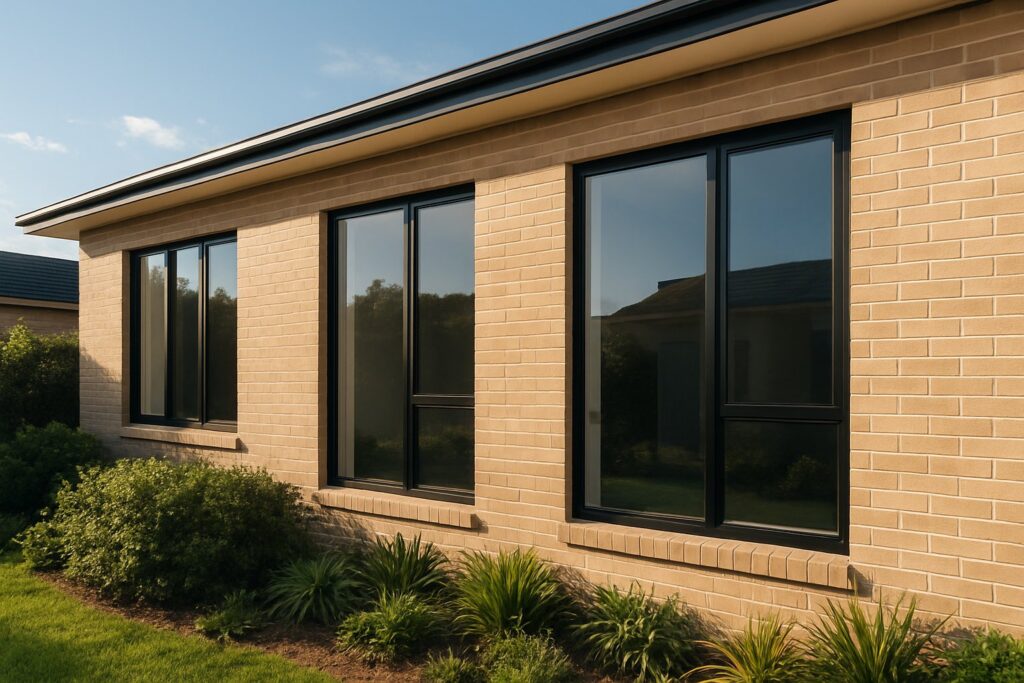
What Makes Black Aluminium Windows and Doors Stand Out
Black aluminium windows and doors are powder-coated aluminium framing systems finished in black or near-black tones, available in configurations ranging from casement and awning to sliding, bi-fold, and fixed-lite. The aluminium extrusion is shaped into slim structural profiles, then coated with a durable black finish that bonds permanently to the metal surface. This combination delivers the narrow sightlines and strength that timber and vinyl simply cannot match at equivalent spans.
What Are Black Aluminium Windows and Doors
At their core, black aluminium windows rely on the material’s high strength-to-weight ratio. Aluminium profiles can be extruded into complex shapes, allowing manufacturers to produce everything from a single casement aluminium door to expansive multi-panel bi-fold systems — all while keeping frame widths remarkably thin. The powder-coated black finish serves a dual purpose: it protects the underlying metal from corrosion and UV degradation while delivering the bold aesthetic that has made these products a staple in residential and commercial projects across Australia.
Unlike painted timber that peels or vinyl that yellows, the finish on quality aluminium doors and windows is baked on at high temperatures, creating a surface that resists chipping, fading, and chalking for decades with minimal upkeep.
Why Black Frames Have Become a Design Standard
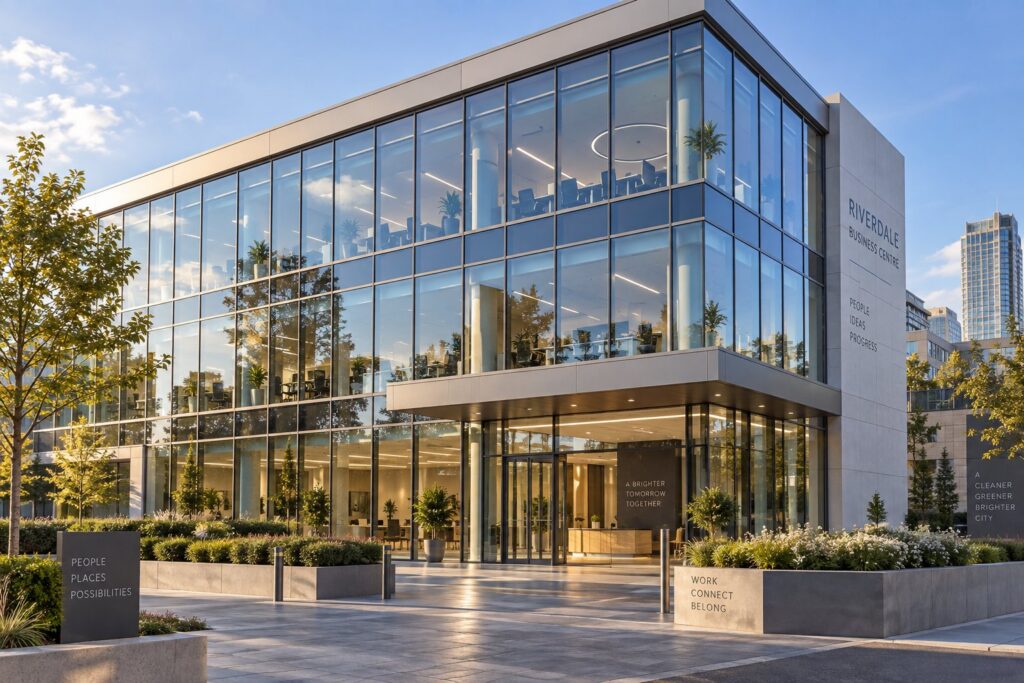
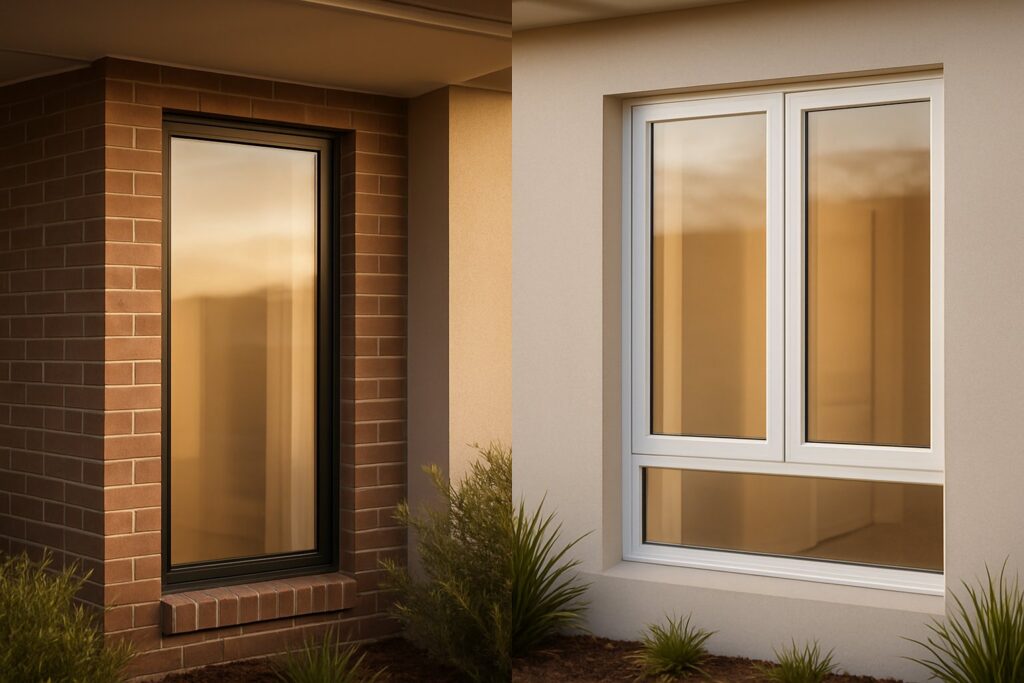
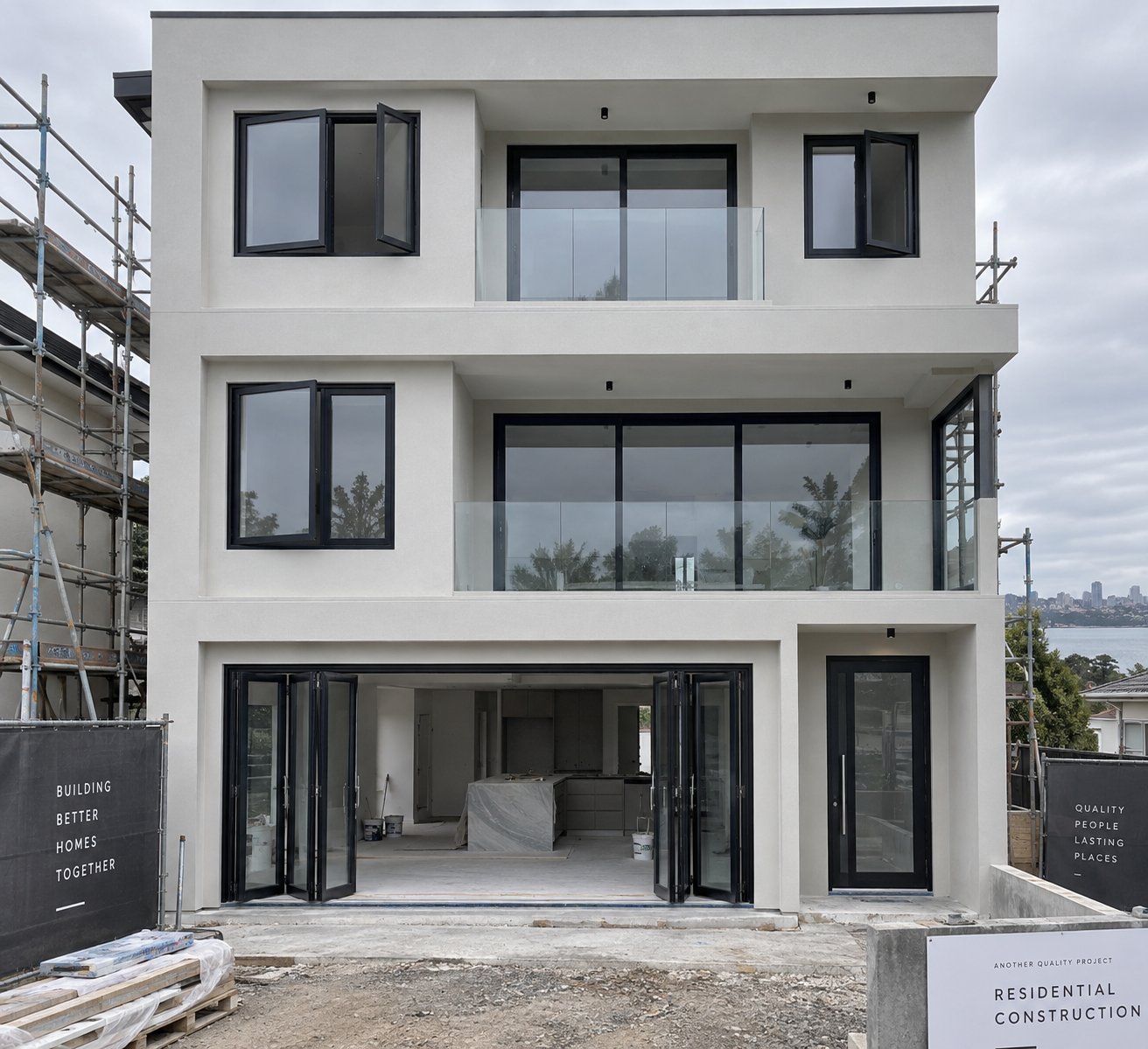
Black frames create immediate visual contrast against lighter cladding — rendered walls, pale brick, weatherboard — making window openings feel larger and more deliberate. They define clean geometric lines on a facade without adding decorative bulk, which is exactly why architects keep specifying them for everything from coastal new builds to heritage renovations.
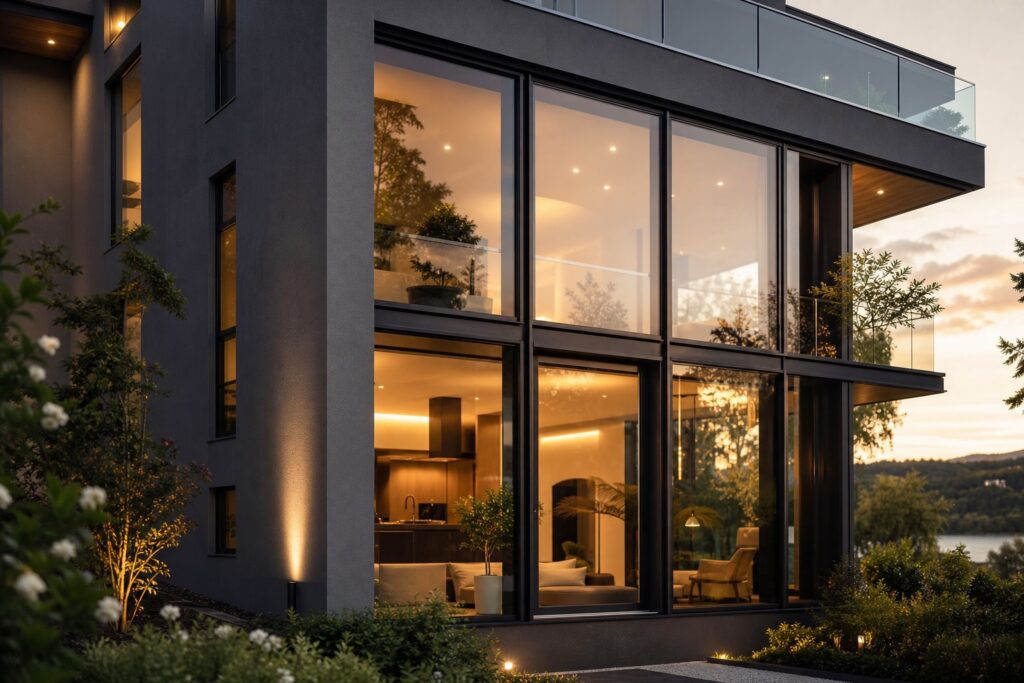
Black aluminium frames have a rare visual quality: they recede into the background while simultaneously framing the view beyond the glass, turning every window into a living picture.
A common misconception is that black aluminium doors and aluminum doors in dark finishes only belong on ultra-modern box homes. In reality, black frames reference traditional ironwork and painted steel windows found on federation and Victorian-era buildings. Paired with divided-lite glazing bars, they suit farmhouse aesthetics just as comfortably as they complement flat-roof contemporary designs. That versatility — spanning architectural eras without looking out of place — is a large part of why the trend has moved well beyond a passing phase into a genuine design standard.
Choosing the right shade of black, however, matters more than most buyers realise. The difference between a jet black and an anthracite grey finish can shift the entire character of a facade — a detail that becomes critical once you start comparing specific colour codes and coating types.
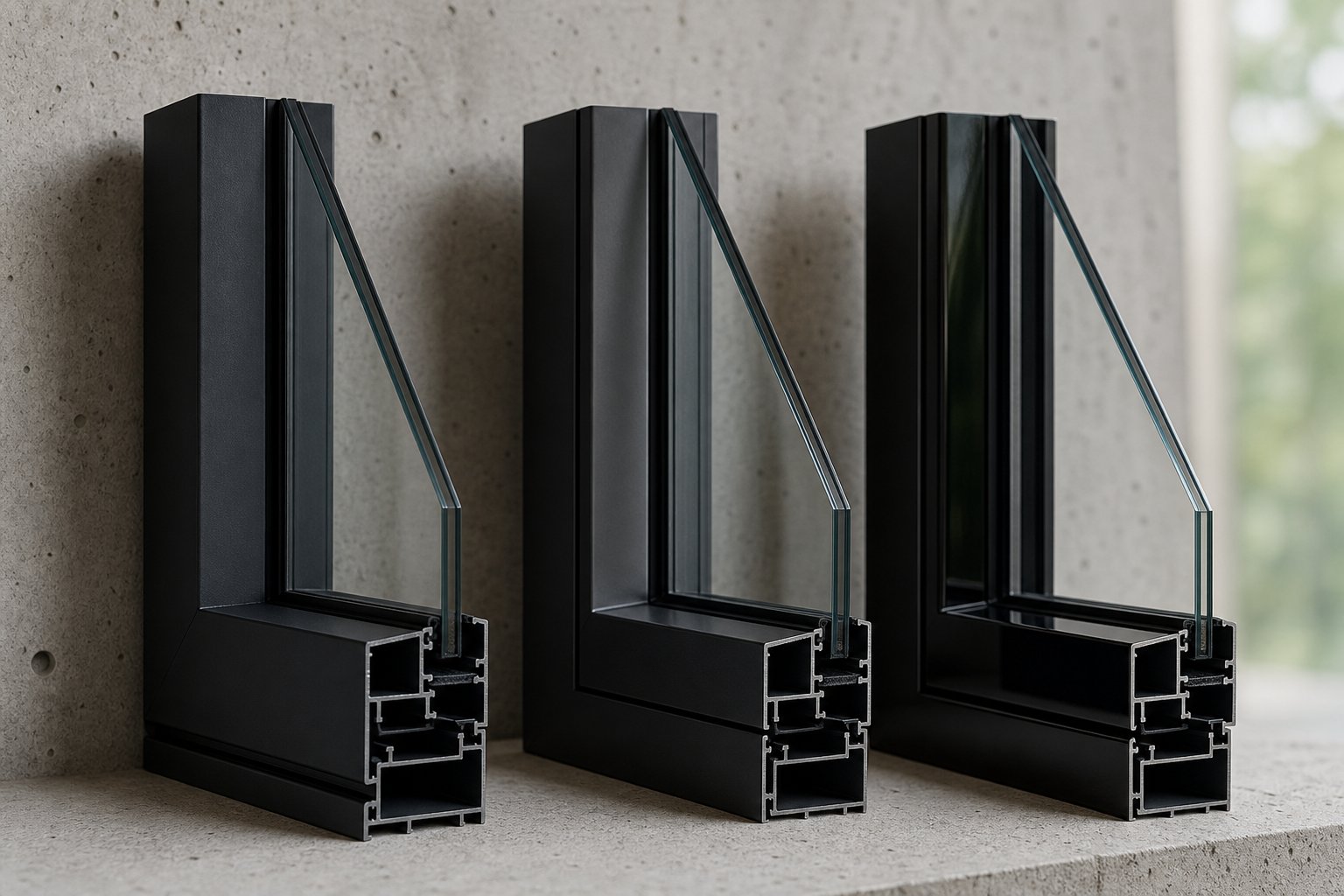
Understanding Black Finish Variations and What They Mean
Specifying “black” on a window schedule sounds straightforward — until you realise the term covers at least five distinct finishes that look noticeably different once installed. The gap between jet black and anthracite grey is wide enough to clash with cladding, misalign with joinery, or simply disappoint when the morning light hits the facade. Getting this detail right at the quoting stage saves the cost and frustration of recoating or replacing frames later.
Standard Black vs Anthracite Grey vs Matt Black
RAL 9005 (jet black) is the deepest, truest black in the RAL colour system. It delivers maximum contrast against light walls and reads as unmistakably black in all lighting conditions. The trade-off is visibility — dust, water spots, and fingerprints show more readily on a pure black aluminum frame than on softer tones.
RAL 7016 (anthracite grey) is frequently marketed as black, yet it sits closer to a deep charcoal. In overcast conditions it can appear almost black, but direct sunlight reveals its grey undertone. Many Australian homeowners choose anthracite because it softens the facade slightly while still providing strong contrast — and it hides surface dust better than jet black.
Matt black eliminates surface sheen entirely, producing a flat, non-reflective appearance that suits industrial and minimalist designs. Satin black sits between matt and gloss, offering a subtle depth that camouflages light scratches more effectively than a fully flat finish. Both are available in RAL 9005 pigment — the difference is gloss level, not colour.
Lighting changes everything. A satin finish on aluminium black windows can shift from soft charcoal in shade to a warm, almost metallic tone in afternoon sun, while matt stays consistently flat regardless of angle. Requesting a physical sample panel and viewing it on-site at different times of day is the single best way to avoid regret.
Powder Coating vs Anodized Black Finishes
Most black aluminium window frames in Australia use powder coating — an electrostatically charged dry powder baked onto the aluminium at around 200°C, forming a tough, uniform film typically 60 to 80 microns thick. The result is excellent colour consistency across large orders and a broad choice of gloss levels.
Anodized aluminum windows take a fundamentally different approach. Rather than adding a layer on top, anodising is an electrochemical process that converts the aluminium surface itself into a hard oxide layer. Black anodised finishes tend to appear slightly translucent and metallic rather than opaque, giving the frame a distinctive depth that powder coating cannot replicate. Because the finish is part of the metal rather than sitting on it, anodised surfaces offer superior scratch resistance and will not peel or flake.
However, anodising has limitations for window applications. Colour matching across batches is harder to guarantee, the range of black tones is narrower, and the process is generally more expensive. For most residential and commercial projects, high-quality powder coating in a reputable grade (such as Dulux or Interpon architectural series) delivers the best balance of aesthetics, durability, and cost. Anodised black suits feature elements or high-traffic commercial entries where scratch resistance is the priority.
| Finish Type | Appearance | Durability | Scratch Resistance | UV Stability | Typical Applications |
|---|---|---|---|---|---|
| Powder Coat — Gloss Black (RAL 9005) | Deep, reflective black | High (15–20 yr warranty) | Moderate | Excellent with architectural-grade powder | Residential and commercial facades |
| Powder Coat — Matt Black | Flat, non-reflective | High | Moderate — shows scuffs less than gloss | Excellent | Industrial, minimalist, and interior-facing frames |
| Powder Coat — Satin Black | Subtle low sheen, hides imperfections | High | Good — light scratches less visible | Excellent | Versatile residential use |
| Powder Coat — Anthracite Grey (RAL 7016) | Deep charcoal, softer than true black | High | Moderate | Excellent | Homes wanting contrast without stark black |
| Anodized Black | Metallic, translucent depth | Very high | Excellent — oxide layer is extremely hard | Outstanding — will not chalk or fade | High-traffic commercial entries, feature windows |
Choosing between these options is not purely cosmetic. A black aluminum window destined for a coastal Queensland project faces different UV and salt-spray demands than one installed in a temperate Melbourne suburb. The finish you select directly influences how the frame weathers over time — which brings thermal performance and climate resilience into the conversation.
Energy Efficiency and Thermal Break Technology Explained
Black surfaces absorb more solar radiation than lighter colours — that much is basic physics. On a 38°C summer day in western Sydney, a black aluminium frame facing north can reach surface temperatures well above the surrounding air. Does that mean black frames overheat your home? Not if the frame is engineered correctly. The critical engineering solution is a thermal break, and understanding how it works separates a comfortable, efficient aluminium window and door system from one that bleeds energy year-round.
How Thermal Breaks Work in Black Aluminium Frames
Aluminium conducts heat roughly 1,000 times more efficiently than the polyamide strips used to interrupt that conductivity. Without intervention, a solid aluminium profile acts like a highway for thermal energy — heat races from the sun-baked exterior face straight through to your interior living space in summer, and warmth escapes outward in winter.
A thermally broken profile solves this by splitting the frame into two separate aluminium sections — one facing outside, one facing inside — connected only by a continuous strip of glass-reinforced polyamide (nylon). This strip, typically 14.8 mm to 35 mm wide depending on system grade, creates a physical insulation zone within the frame itself. The polyamide is mechanically crimped to both aluminium halves, maintaining full structural integrity while slashing heat transfer through the profile.
For black frames specifically, thermal breaks are non-negotiable rather than optional. Because a dark-finished exterior absorbs significantly more radiant heat than a white or silver frame, the outer aluminium section runs hotter for longer periods. Without a thermal break, that elevated surface temperature transfers directly to the indoor face of the frame, creating uncomfortable hot spots near glazed openings and forcing air conditioning systems to work harder. Premium thermally broken systems — those with wider polyamide strips and multi-chamber designs — reduce frame U-values from around 5.8 W/m²K (non-broken aluminium) down to 1.5 W/m²K or better, a reduction that translates to measurably lower cooling costs in Australian summers.
This same principle applies to black impact windows designed for cyclone-prone regions in northern Queensland and the NT. Even when frames are engineered to withstand extreme wind pressures, the thermal break still needs to perform its insulating role — structural strength and energy efficiency are separate problems solved by separate engineering layers within the same profile.
Reading Energy Ratings and Performance Specs
Shopping for an aluminum door with window sidelights or a full wall of sliding panels means encountering a string of technical ratings. These numbers look intimidating on a spec sheet, but each one answers a simple question about how the product handles heat, air, and force.
- U-value (W/m²K) — Measures how quickly heat passes through the entire window assembly (frame plus glass). Lower is better. For Australian climates, look for whole-window U-values at or below 2.0 W/m²K in thermally broken aluminium systems. Non-broken frames typically sit above 5.0 W/m²K.
- SHGC (Solar Heat Gain Coefficient) — Rates how much solar energy passes through the glazing into your home, on a scale from 0 to 1. A lower SHGC blocks more heat. Black frames slightly increase the effective SHGC of the overall assembly because the frame itself absorbs and re-radiates warmth — another reason thermal breaks matter more with dark finishes.
- Air infiltration rate — Measures how much air leaks through the closed window, expressed in litres per second per metre of operable joint. Tighter seals mean less unwanted drafts and dust. Quality aluminium window door systems achieve air infiltration rates well below the maximums set by AS 2047.
- Design Pressure (DP) rating — Indicates the wind load the window can withstand without failure. Critical for coastal and cyclone-rated areas. Higher DP numbers mean greater structural resistance. Black impact windows in cyclone zones require DP ratings matched to the specific wind region under the National Construction Code.
- WERS star rating — The Window Energy Rating Scheme assigns heating and cooling star ratings (up to 10 stars) based on combined U-value, SHGC, and air leakage performance. It simplifies comparison shopping for homeowners who prefer a single score over raw numbers.
When evaluating any aluminum door and window combination, request the whole-window rating rather than centre-of-glass figures alone. The frame contributes a significant portion of total heat transfer — especially in smaller openings where the frame-to-glass ratio is higher. A thermally broken black aluminium frame paired with quality double glazing and low-E coating delivers a complete system where each component reinforces the others: the thermal break handles conductive loss through the frame, the low-E coating reflects radiant heat, and the sealed air gap between panes slows convective transfer through the glass.
Getting the thermal performance right protects your comfort and your energy bills. But performance specs only tell part of the story — how black aluminium stacks up against vinyl, timber, and composite frames across durability, maintenance, and total cost of ownership is where the real value comparison begins.
Black Aluminium vs Other Frame Materials
Thermal performance matters, but it is only one variable in a decision that also involves structural strength, maintenance burden, visual refinement, and what you will actually spend over 30 or 40 years of ownership. Black aluminium commands a higher price tag at the point of purchase than vinyl or basic timber — no point pretending otherwise. The question worth asking is whether that upfront premium buys enough long-term value to justify itself. A side-by-side comparison across every major frame material makes the answer concrete.
Black Aluminium vs Vinyl and Fiberglass Frames
Vinyl frames are the budget entry point for metal frame windows and doors alternatives. They insulate reasonably well without thermal breaks because PVC is a poor heat conductor by nature. For straightforward residential openings at standard sizes, vinyl does the job affordably. But the compromises become obvious once you push beyond basic requirements.
Sightline width is the most visible difference. Vinyl needs thicker frame sections — typically 90 mm to 140 mm — to achieve structural adequacy, whereas aluminium profiles span the same openings at 50 mm to 65 mm. That extra bulk eats into glass area and makes facades look heavier. For anyone choosing black frames specifically for their ability to define clean lines and maximise views, vinyl defeats the purpose before installation day arrives.
Colour stability is another weak point. Painted or laminated vinyl in dark tones absorbs heat that accelerates warping and delamination under Australian UV exposure. Industry data shows vinyl windows in high-UV climates develop chalking and colour fade within 20 to 30 years, while quality powder-coated aluminium maintains appearance well beyond that timeframe. Recyclability widens the gap further — aluminium is infinitely recyclable without quality loss, while vinyl has limited end-of-life recycling pathways.
Fiberglass sits between the two. It offers better dimensional stability than vinyl and can achieve slimmer profiles, but it remains more expensive than vinyl without matching aluminium’s structural capacity for large-span openings. Fiberglass also lacks the established supply chain depth in Australia that aluminium alloy doors and windows enjoy, making sourcing and colour matching harder for multi-opening projects.
Black Aluminium vs Timber and Composite Frames
Timber has genuine strengths — natural insulation, rich visual warmth, and the ability to be shaped into heritage-appropriate profiles. For period homes where council heritage overlays mandate traditional materials, timber may be the only compliant option. Outside those constraints, the maintenance equation tilts heavily toward aluminium.
Timber frames require repainting or restaining every three to five years, regular inspection for rot and termite damage, and careful sealing against moisture ingress. In coastal or tropical Australian climates, untreated timber can deteriorate within a decade. Black-painted timber also fades and peels faster than powder-coated aluminium because organic paint films break down under UV far more readily than factory-baked powder coatings.
Composite frames — typically a blend of timber fibres and polymer resins — attempt to bridge the gap. They resist rot better than solid timber and need less maintenance, but they cannot match aluminium’s slim profiles or structural span capacity. Composites also lack the proven 40-to-50-year track record that aluminum doors and windows have established across commercial and residential projects in Australia.
Where aluminium truly separates itself is in project cohesion. Specialist aluminium manufacturers like MEICHEN offer thermally broken systems across their full product range — windows, doors, facades, and louvres — giving specifiers a single source for cohesive black aluminium windows & doors solutions rather than mixing suppliers and materials. That consistency in profile geometry, colour batch, and performance ratings across every opening on a project is something no combination of vinyl windows aluminum doors or timber-and-aluminium mixing can replicate cleanly.
| Frame Material | Sightline Width | Lifespan | Maintenance Frequency | Recyclability | Colour Stability (Black) | Relative Cost Range (AUD, supply and install) |
|---|---|---|---|---|---|---|
| Aluminium (thermally broken) | 50–65 mm | 40–50+ years | Wash 1–2 times per year | 100% recyclable, infinite cycles | Excellent — powder coat warrantied 15–20 years | $800–$1,800 per m² |
| Vinyl (uPVC) | 90–140 mm | 20–30 years | Wash 1–2 times per year | Limited recycling pathways | Poor — dark laminates fade and warp under UV | $500–$1,000 per m² |
| Fiberglass | 70–100 mm | 30–40 years | Wash 1–2 times per year; occasional touch-up | Difficult to recycle | Good — but limited Australian supply in black | $900–$1,600 per m² |
| Timber | 70–120 mm | 30–60 years (with maintenance) | Repaint every 3–5 years; inspect annually | Biodegradable; renewable if sustainably sourced | Poor — paint peels and fades within 3–5 years | $1,000–$2,200 per m² |
| Composite | 75–110 mm | 25–35 years | Wash annually; occasional seal check | Limited — mixed materials hard to separate | Moderate — better than timber, less proven than aluminium | $900–$1,700 per m² |
The table makes the total cost of ownership argument visible. Aluminium’s upfront spend sits in the mid-to-upper range, yet its combination of minimal maintenance, superior lifespan, and full recyclability means the per-year cost of ownership often undercuts timber and composite over a 30-year horizon. For builders and architects specifying aluminium windows & doors across an entire project, the ability to source every component — from casement windows to facade panels and louvres — within a single thermally broken aluminium system eliminates the coordination headaches and colour-matching risks that come with mixing frame materials.
Material choice sets the structural and aesthetic foundation. But even the best aluminium frame only performs as intended when it is installed correctly — and that process involves structural, regulatory, and logistical considerations that deserve their own attention.
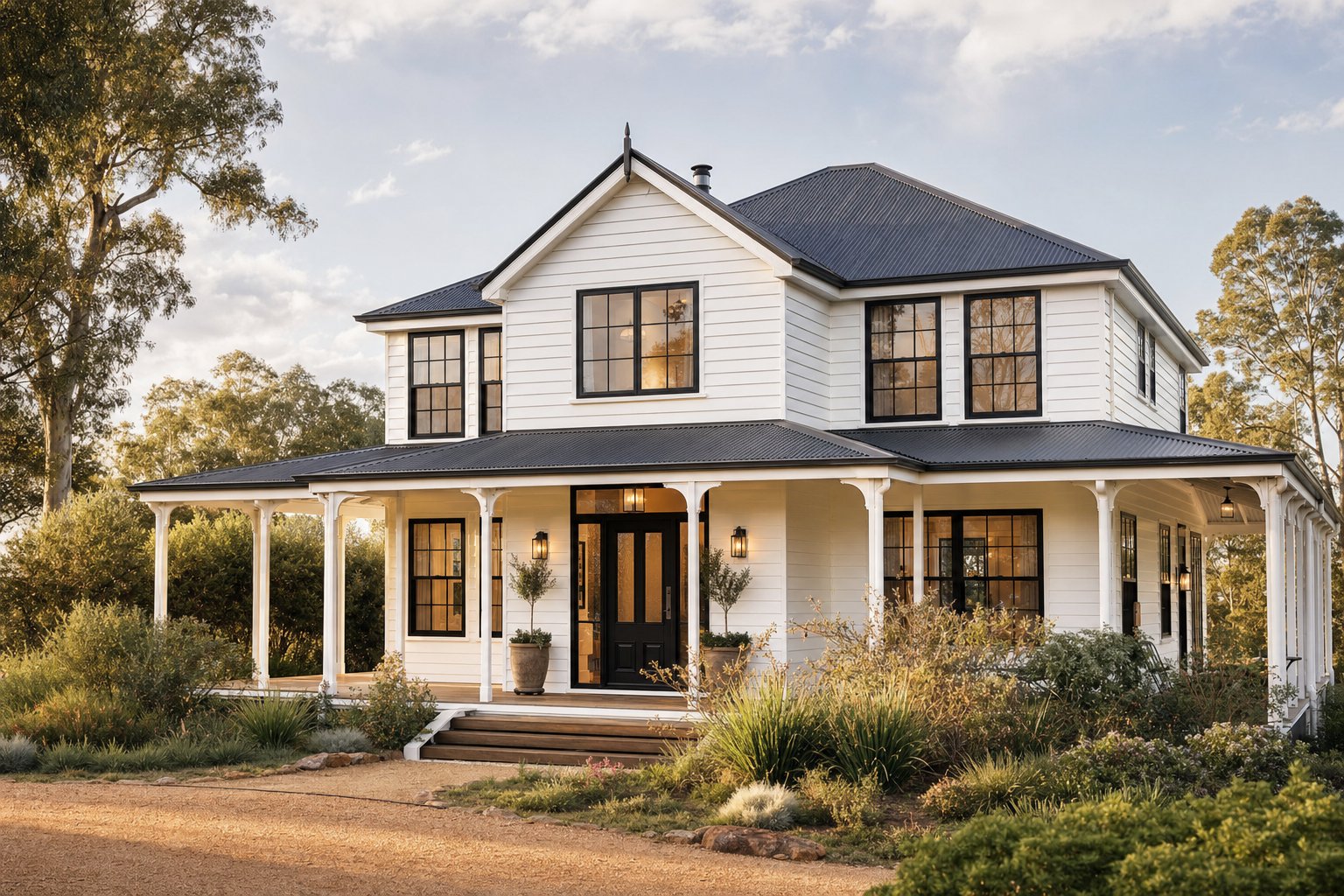
Matching Black Aluminium to Every Architectural Style
One persistent myth follows black aluminium frames around: they only belong on flat-roofed, glass-box contemporary homes. Walk through any established suburb in Melbourne, Sydney, or Brisbane and the evidence says otherwise. Black metal frame windows appear on renovated weatherboard cottages, rendered federation homes, mid-century brick veneers, and brand-new farmhouse builds — each time looking like they were always part of the design. The key is matching the right frame configuration and glazing pattern to the architectural language of the building.
Modern and Industrial Architecture
This is the pairing most people picture first, and for good reason. Modern architecture prizes clean geometry, minimal ornamentation, and honest material expression. Black aluminum frame windows reinforce every one of those principles. Slim aluminium profiles create precise, uninterrupted lines across a facade, while the dark finish reads as a deliberate graphic element — almost like a drawn border separating planes of glass from rendered or concrete walls.
Industrial-style homes and converted warehouse apartments take the relationship further. Grid-pattern fixed windows with black aluminium mullions reference the steel-framed factory glazing of the early twentieth century, but with dramatically better thermal and acoustic performance. Paired with exposed concrete, raw steel beams, and polished floors, black metal windows exterior applications deliver that utilitarian honesty without sacrificing comfort or energy efficiency.
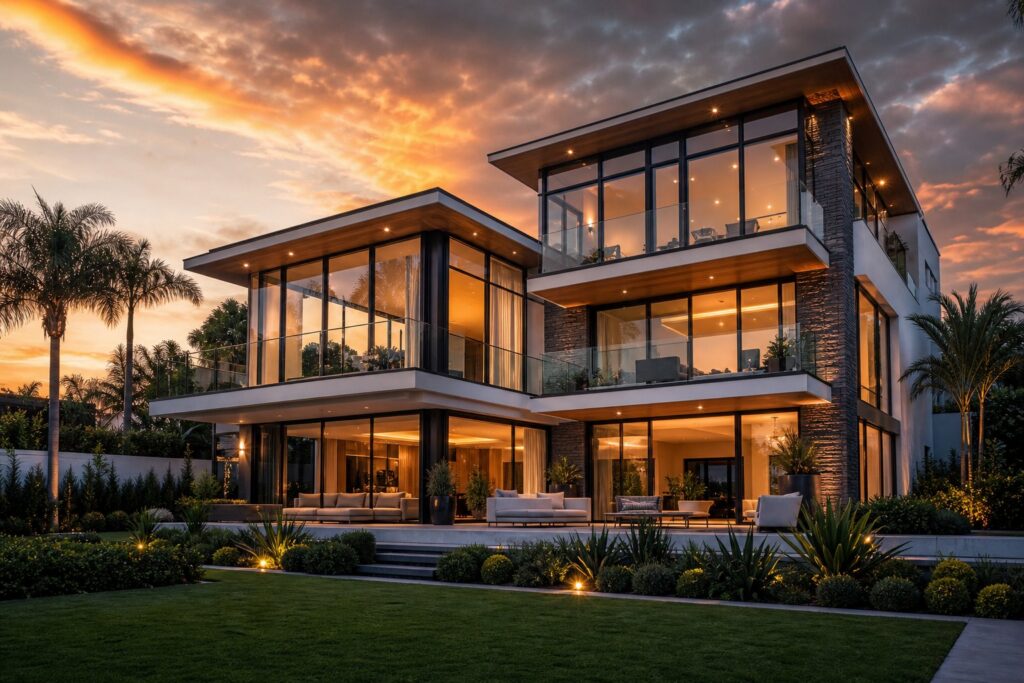
For modern projects, consider large fixed-lite panels flanked by narrow operable casements — this maximises glass area while keeping ventilation options discreet. Floor-to-ceiling sliding or stacking doors in black aluminium dissolve the boundary between living spaces and outdoor entertaining areas, a configuration that suits the open-plan layouts typical of contemporary Australian homes.
Farmhouse, Traditional, and Heritage Homes
Black frames on a farmhouse might sound contradictory until you remember that traditional Australian homesteads often featured dark-painted timber windows and wrought-iron detailing. Black aluminium references that same visual language — the contrast of dark openings against pale weatherboard, rendered brick, or stone — while eliminating the maintenance burden that drove many heritage homeowners to replace their original joinery in the first place.
The trick is proportion. Heritage homes rely on specific window proportions — taller than they are wide, with divided lites that break the glass into smaller panes. Slim aluminium profiles can replicate those proportions faithfully, and glazing bars (either applied or structural) recreate the multi-pane look of colonial and federation windows without the rot-prone timber muntins. A black aluminium front door with sidelights and a traditional panel design can anchor a heritage facade while delivering modern security, weatherproofing, and thermal performance behind the scenes.
For traditional homes, casement and awning windows in black aluminium suit the vertical emphasis of federation and Victorian architecture. The dark frames provide a grounding contrast against lighter exterior colour schemes — cream render, white weatherboard, pale sandstone — that makes the building’s proportions feel more defined and deliberate.
Mid-Century and Transitional Styles
Mid-century Australian homes — the brick veneer and timber-clad designs of the 1950s through 1970s — were built around the idea of connecting interior living spaces to gardens and courtyards. Large glazed openings, low rooflines, and horizontal emphasis defined the era. Black aluminium frames strengthen that indoor-outdoor connection by visually receding at the perimeter, letting the garden view dominate rather than the frame itself.
Sliding doors and large fixed-lite windows are natural fits here. The horizontal proportions of mid-century design align perfectly with wide sliding panels, and the slim profiles of aluminium keep the framing minimal — exactly what the original architects intended, just executed with modern thermal and acoustic performance.
Transitional homes — those that blend traditional forms with contemporary detailing — benefit from black frames as a unifying element. A pitched-roof home with classic proportions gains a modern edge when its openings are framed in black aluminium, bridging the gap between old and new without committing fully to either camp. An aluminium front door in matt black paired with traditional sidelights is a common transitional move that signals contemporary taste while respecting the building’s heritage bones.
- Modern/Industrial — pairs with large fixed-lite panels, grid-pattern windows, floor-to-ceiling sliding doors, and stacking systems
- Farmhouse/Traditional — pairs with casement and awning windows, divided-lite glazing bars, and panelled entry doors with sidelights
- Heritage/Federation — pairs with double-hung proportions replicated in aluminium, narrow casements, and highlight windows
- Mid-Century — pairs with wide sliding doors, fixed-lite picture windows, corner windows, and louvre combinations
- Transitional — pairs with a mix of casement, awning, and sliding configurations that reference traditional proportions with minimal frame profiles
- Coastal Contemporary — pairs with bi-fold doors, stacking sliders, and aluminum front doors with full-height glass panels for unobstructed water views
Style compatibility is rarely the limiting factor — configuration, proportion, and glazing pattern do the heavy lifting. The real constraints tend to be structural and regulatory, particularly when retrofitting black aluminium into existing openings or creating new ones in load-bearing walls.
Installation Planning and Building Regulation Considerations
A beautiful black aluminium frame sitting in a warehouse does nothing for your project. Getting it from factory to fitted — plumb, sealed, and compliant — involves a sequence of structural checks, regulatory approvals, and site logistics that catch unprepared homeowners off guard. Skipping any step risks costly rework or, worse, a council order to remove non-compliant work.
Structural and Weight Considerations
Aluminium frames sit in a middle ground for weight. They are lighter than equivalent timber sections — roughly 40% lighter for comparable structural capacity — but heavier than vinyl. For standard casement or awning windows, this difference rarely matters. The structural conversation changes with larger openings: bi-fold systems spanning three or four metres, wide sliding doors, or full-height fixed panels that turn an entire wall into glass.
These configurations concentrate significant dead load and wind load at the head of the opening. A steel or engineered timber lintel sized for the span is essential, and the supporting structure — whether brick veneer, timber frame, or steel — needs to transfer that load cleanly to the footings. Bi-fold and sliding door tracks also demand level thresholds with minimal deflection; even a few millimetres of sag across a wide sill causes panels to bind or leak. For solid aluminium exterior doors in commercial applications, heavier-gauge profiles and reinforced corner joints add weight that the surrounding structure must accommodate from the design stage, not as an afterthought.
Exterior aluminium doors in cyclone-rated regions face additional engineering requirements. Aluminium impact doors designed for northern Queensland or the NT must meet specific Design Pressure ratings under the National Construction Code, and the structural opening needs to resist the same forces — meaning heavier lintels, closer stud spacing, and engineered tie-down connections.
Planning Permits and Building Regulations
Not every window replacement triggers a permit, but many do. In Australia, the key triggers include creating a new opening in an external wall, enlarging an existing opening, altering a load-bearing element, or working on a property within a Heritage Overlay. Even changing the colour of exterior joinery can require a planning permit if heritage controls specify external paint or material restrictions — a detail that catches owners off guard when switching from white timber to black aluminium.
Body corporate and owners corporation rules add another layer for apartments and townhouses. Many strata schemes restrict changes to external appearance, meaning a switch to black frames on a unit facade may need committee approval regardless of council requirements.
Energy compliance is increasingly non-negotiable. NCC Section J (for commercial) and NatHERS requirements (for residential) set minimum thermal performance thresholds that your chosen window system must meet. For commercial aluminium exterior doors and window assemblies, demonstrating compliance typically requires WERS data or a certificate from an accredited energy assessor confirming the system meets the required star rating or U-value for the relevant climate zone.
The typical installation planning sequence runs as follows:
- Site measure — Accurate dimensions of each opening, checking for square, plumb, and any structural irregularities that affect manufacturing sizes.
- Engineering check — Confirm lintel adequacy, structural support for large spans, and wind-load requirements for the specific site and climate zone.
- Permit application — Lodge development applications or building permits with council where required; obtain body corporate approval if applicable.
- Manufacture — Custom fabrication of frames to final dimensions, including powder coating, glazing, and hardware fitting at the factory.
- Installation — Professional fitting including packing, fixing, sealing, flashing, and integration with the building envelope.
- Certification — Final inspection, compliance documentation, and warranty registration to close out the project.
Professional installation is not optional for aluminium outside door and window systems. Unlike lightweight vinyl units that a competent DIYer might manage, aluminium frames require precise shimming, specific fixing methods into various substrates, and correct perimeter sealing to maintain both weathertightness and warranty coverage. Most manufacturers void their product warranty if installation is not performed by a qualified installer — a risk that makes the labour cost a non-negotiable part of the budget rather than a line item to cut.
Getting the installation right protects your investment for decades. But even a perfectly installed frame needs ongoing care — and black finishes, for all their durability, have specific maintenance needs that vary dramatically depending on where in Australia your home sits.
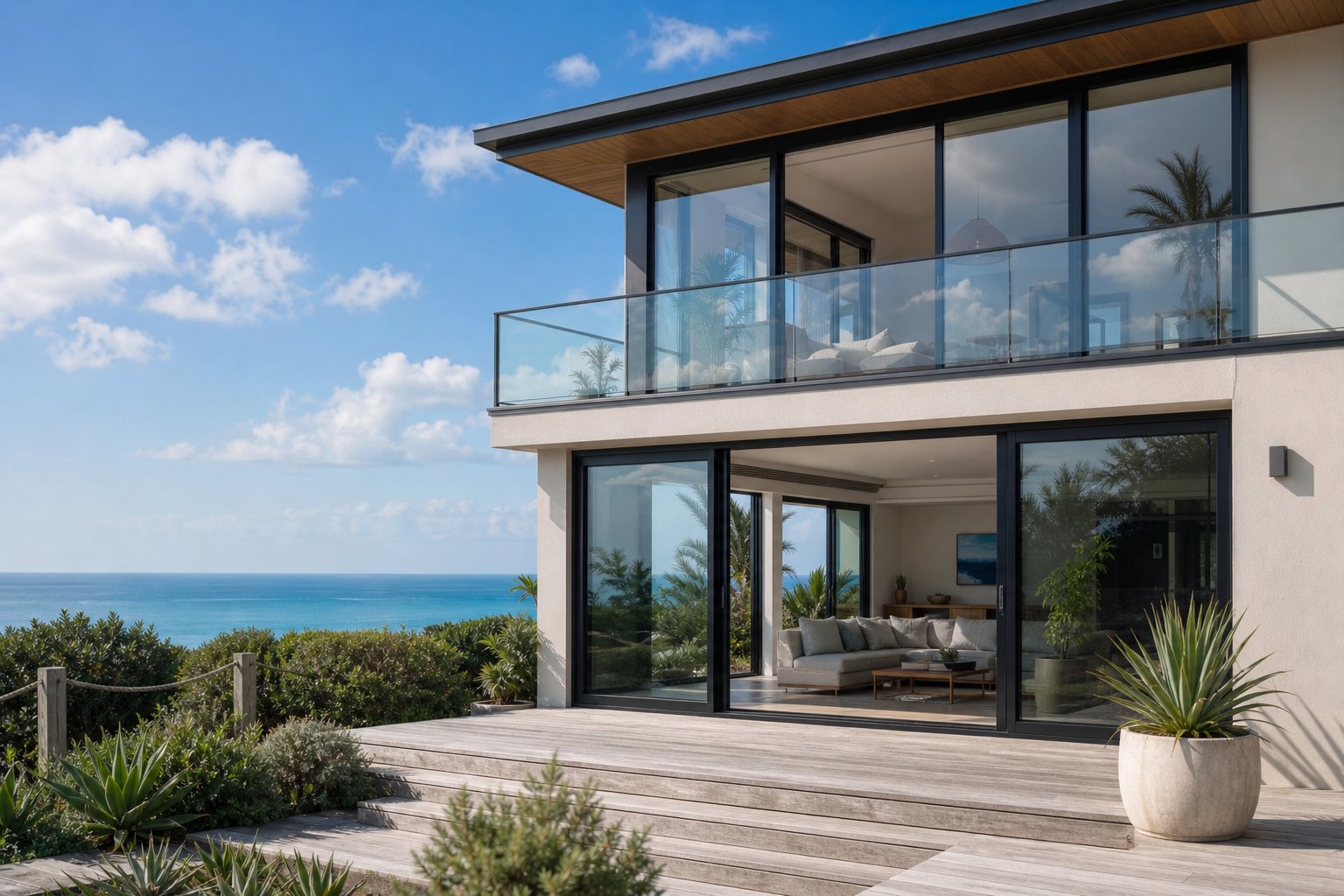
Maintenance and Long-Term Care for Black Aluminium Finishes
Black aluminium frames are genuinely low maintenance — but low maintenance is not the same as no maintenance. Dark finishes reveal dust, water spots, and salt residue more readily than lighter colours, and neglecting routine cleaning allows atmospheric pollutants to etch into the powder coating surface over time. The good news is that a simple care routine keeps every aluminium door frame looking factory-fresh for decades, regardless of climate zone.
Cleaning and Routine Care for Black Finishes
The cleaning method itself is almost disappointingly simple. A bucket of warm water with a small squirt of pH-neutral dishwashing liquid and a soft microfibre cloth is all you need. Wipe down the aluminium door and frame surfaces, rinse thoroughly with clean water, and dry with a separate soft cloth to prevent water spotting — particularly important on gloss and satin black finishes where mineral deposits catch the light.
What you avoid matters as much as what you use. Steel wool, abrasive pads, and scrubbing brushes will scratch the powder coating and dull the finish permanently. Harsh solvents — turpentine, bleach, heavy-duty spray cleaners — can strip or discolour the coating. Industry guidance also warns against pressure washing too close to the frame, as high-pressure water can force moisture past seals and damage the finish surface.
While cleaning, clear the drainage holes at the base of each frame with a cotton bud or soft brush. These small weep slots allow water to escape the track; if blocked by grit or debris, water backs up and sits against seals and fixings, accelerating corrosion in the hardware rather than the aluminium itself. Check hinges, locks, and sliding tracks at the same time — a light application of silicone-based lubricant keeps moving parts operating smoothly without attracting dust the way oil-based products do.
For minor scratches on powder-coated aluminum framed doors or window frames, touch-up pens matched to the original RAL colour provide a quick repair. Deeper damage that exposes bare aluminium should be addressed by a professional recoater to prevent oxidation spreading beneath the surrounding finish.
Long-Term Durability Across Different Climates
Powder coating durability is not a single number — it depends heavily on the coating grade and the environment it faces. Architectural-grade powder coatings use inorganic mixed-metal oxide pigments and robust resin systems that resist UV degradation far longer than standard industrial powders. Premium compositions from reputable suppliers carry warranties of 15 to 20 years for colour and gloss retention, with real-world performance often extending well beyond 30 years when maintenance schedules are followed.
UV radiation is the primary enemy of any organic coating. It brings the binder to the surface, creating a chalky white haze — a phenomenon that shows dramatically on black finishes. Chalking does not mean the coating has failed; it means cleaning has been neglected long enough for UV-degraded material to accumulate visibly. Regular washing removes this layer before it becomes entrenched. Rich, dark colours like jet black are more susceptible to visible chalking than lighter tones, which is why consistent cleaning matters more — not less — for black frames.
Salt spray in coastal zones accelerates corrosion of fixings and can pit the coating if left sitting on the surface. Homes within 500 metres of the shoreline face the harshest conditions, and anodized aluminum frame windows or frames with marine-grade powder specifications offer additional resilience in these locations. Tropical humidity combined with high UV creates a double challenge: moisture promotes biological growth on frame surfaces while intense sunlight attacks the coating chemistry simultaneously.
| Climate Type | Cleaning Frequency | Common Issues | Preventive Measures |
|---|---|---|---|
| Coastal (within 500 m of shoreline) | Every 2–3 months | Salt deposit corrosion on fixings; pitting of coating; white powdery residue | Specify marine-grade powder or QUALICOAT Seaside class; rinse frames after storms; inspect fixings for early corrosion |
| Tropical (QLD, NT) | Every 2–3 months | Mould and algae growth; accelerated UV chalking; humidity-driven seal degradation | Use architectural-grade UV-stable powder; clean biological growth promptly; check seals and drainage annually |
| Urban (Sydney, Melbourne, Brisbane CBD) | Every 6 months | Atmospheric pollutant deposits; acid rain etching; construction dust during nearby works | Annual wash minimum; wipe glass-cleaning residue off frames; repair any coating chips promptly |
| Temperate inland (most suburban Australia) | Every 6–12 months | Dust accumulation; minor UV fading over 15+ years; spider web staining | Standard annual wash; inspect hardware lubrication; touch up scratches before oxidation starts |
Warranty expectations should guide your specification. Standard architectural powder coatings typically carry 10 to 15-year warranties against chalking, fading, and peeling. Premium and hyper-durable grades — those tested to retain colour and gloss for a decade or more under accelerated Florida-equivalent UV exposure — push warranties to 20 years and beyond. For a black aluminium door frame on a prestige project, specifying the higher-grade coating adds a modest cost at manufacture but eliminates the prospect of recoating within the building’s first few decades of life.
Recoating is possible if a frame eventually reaches the end of its coating life, though it requires stripping, re-pretreating, and re-powder-coating the profiles — a process best handled off-site by a licensed applicator. In practice, well-maintained architectural-grade finishes on aluminum framed doors and windows rarely need recoating within a 30-year window, making the ongoing care investment remarkably small relative to the product’s lifespan.
Keeping the finish in top condition is one half of long-term satisfaction. The other half — choosing hardware and glazing that complement black frames both visually and functionally — determines whether the complete assembly looks and performs as a cohesive unit or a collection of mismatched parts.
Hardware and Glazing Options That Complement Black Frames
A perfectly maintained black aluminium frame still falls flat if the handles look cheap, the hinges clash, or the glass choice mutes the very contrast that made black frames appealing in the first place. Hardware and glazing are the finishing details that elevate an aluminium frame glass door or window from competent to cohesive — yet they rarely get the attention they deserve during specification.
Choosing Hardware Finishes That Work With Black Frames
Hardware finish sets the visual tone for how people interact with your windows and doors up close. Four options dominate the market, each creating a distinct relationship with the black frame surrounding it.
Matte black delivers a seamless, monochromatic look. Handles, hinges, and locks disappear into the frame, creating an unbroken dark line that suits minimalist and industrial interiors. The trade-off is subtlety — there is no visual punctuation to draw the eye, which can feel flat on a large glass door aluminum sliding system where a point of contrast might add interest. Powder-coated matte black hardware hides fingerprints well and resists showing minor scratches, making it practical for high-touch areas.
Brushed nickel introduces a soft, silvery contrast without competing with the frame. It reads as contemporary and restrained — a good fit for transitional homes where warmth is not the goal but pure monochrome feels too stark. Nickel-plated hardware performs well in most environments, though coastal locations benefit from 316 stainless steel over standard nickel plating, which can pit under prolonged salt-air exposure.
Brass — whether brushed, satin, or aged — adds warmth and a sense of craftsmanship. Against black frames, brass hardware creates a deliberate accent that references traditional ironmongery without looking dated. It pairs naturally with farmhouse, heritage, and mid-century styles where warmer material palettes already dominate. Solid brass resists corrosion better than brass-plated alternatives, and its living finish develops character over time rather than degrading.
Stainless steel offers the most industrial complement. Its cool, utilitarian tone reinforces the structural honesty of aluminium framing and suits commercial projects, coastal homes, and contemporary builds where durability outranks decorative warmth. For aluminum doors with glass panels in exposed coastal positions, 316-grade stainless is the only sensible choice — it withstands salt spray, pool chemicals, and aggressive cleaning without pitting or discolouration.
- Matte black — best for modern, industrial, and minimalist homes; all environments; hides wear well
- Brushed nickel — best for transitional and contemporary interiors; mild to urban environments; avoid direct coastal exposure unless 316 grade
- Brass (satin or aged) — best for farmhouse, heritage, mid-century, and boutique residential; inland and urban environments; develops patina in coastal zones
- Stainless steel (304 or 316) — best for coastal, commercial, and industrial applications; highest corrosion resistance; clinical aesthetic suits healthcare and hospitality
Whichever finish you choose, consistency matters. Specify the same hardware finish across every opening — windows, aluminum glass doors, entry doors, and bi-folds — so the building reads as a unified design rather than a patchwork of afterthoughts.
Glazing Options to Pair With Black Aluminium
Glass selection interacts with black frames both aesthetically and thermally. The right pairing amplifies the drama of dark framing; the wrong one undermines it.
Clear double glazing with low-E coating is the default starting point for most Australian projects. It maximises visible light transmission, preserves the high-contrast look of black frames against transparent glass, and delivers strong thermal performance when paired with a thermally broken profile. The aluminum door glass appears almost invisible, letting the black frame do the visual work of defining the opening.
Tinted glass — grey, bronze, or green — reduces glare and solar heat gain, which benefits west-facing openings in hot climates. However, tinted glass also darkens the view and reduces the contrast between frame and glazing. On a black-framed window, heavy tinting can make the entire assembly read as a dark void rather than a crisp frame around a clear view. If solar control is the goal, a neutral low-E coating or selective-tint low-E achieves similar heat rejection without visibly darkening the glass.
Laminated glass adds acoustic insulation and security without changing the visual character of the opening. For aluminum doors with glass panels at ground level — particularly entry doors and sliding systems — laminated inner panes provide shatter resistance that standard float glass cannot match. The interlayer is virtually invisible, so the aesthetic relationship between black frame and clear glass remains intact.
Obscure and patterned glass suits bathrooms, sidelights, and privacy screens where light transmission matters but visibility does not. Against black frames, frosted or reeded glass creates a striking textural contrast — the precision of the dark aluminium profile against the soft diffusion of the glass surface.
One practical note: glass spacer colour matters more than most people realise. A black spacer bar between the panes creates a seamless visual line where glass meets frame, while a silver or white spacer introduces a visible ring that breaks the monochromatic effect. Most quality aluminium window systems offer black spacers as an option — specify them if a clean, uninterrupted look is the priority.
Hardware and glazing lock in the visual and functional identity of each opening. The remaining challenge is pulling all these decisions — finish, thermal performance, frame material, configuration, hardware, and glass — into a single cohesive specification that ensures consistency across your entire project.
Specifying and Sourcing Black Aluminium Systems for Your Project
Finish, thermal performance, configuration, hardware, glazing — every decision covered so far converges into a single document: the specification. Get this right and your project receives consistent, high quality aluminum doors and windows across every opening. Get it wrong and you end up with mismatched profiles, colour variation between batches, and performance gaps that only reveal themselves after installation. The specification stage is where research becomes commitment, and where your choice of manufacturer determines whether that commitment pays off or costs you twice.
What to Look for in an Aluminium Window and Door Manufacturer
Not all aluminium door manufacturers are equal, even when their brochures look similar. The differences sit in engineering depth, coating quality, testing rigour, and range — details that separate a supplier who can deliver a cohesive project from one who leaves you patching gaps with incompatible products.
Start with thermal break quality. Ask whether the system uses polyamide strips or cheaper PVC insulators, and request the strip width — wider strips (24 mm and above) generally deliver better U-values. A manufacturer confident in their thermal performance will provide whole-window U-value data tested to AS 2047, not just centre-of-glass figures that flatter the numbers.
Powder coating grade matters just as much as the aluminium itself. Reputable aluminium door suppliers specify architectural-grade powders tested to AAMA 2604 or 2605 equivalents, with warranties of 15 to 20 years against fading, chalking, and peeling. Ask for the coating brand and warranty documentation — if a manufacturer cannot name their powder supplier or provide written warranty terms, treat that as a red flag.
Testing certifications confirm that marketing claims hold up under pressure. In Australia, look for compliance with AS 2047 (windows and external glazed doors), AS 1288 (glazing), and relevant NCC energy provisions. For custom aluminum windows and doors in cyclone regions, confirm the system carries Design Pressure ratings matched to the specific wind region. Manufacturers who invest in independent testing — rather than relying solely on engineering calculations — demonstrate a level of accountability that protects your project long after the invoice is paid.
Finally, evaluate range. A project rarely needs just one window type. You might require casement windows upstairs, a bi-fold system opening to the deck, fixed-lite panels in the stairwell, an entry door at the front, and louvres in the laundry. If your manufacturer only covers two of those five, you are forced to source the rest elsewhere — introducing colour-matching risk, different profile geometries, and multiple warranty relationships. The strongest aluminium door manufacturers offer a complete ecosystem: windows, doors, facade systems, louvres, and balustrades within a single thermally broken platform.
Creating a Cohesive Black Aluminium Specification
Consistency across an entire building does not happen by accident. It requires specifying from a single system where every component shares the same profile geometry, identical powder coating batch, matched hardware, and unified performance ratings. When you source alum windows and doors from one manufacturer’s system, the black on your kitchen bi-fold matches the black on your bedroom casement and the black on your front entry — because they were coated in the same run, using the same powder, at the same film thickness.
Colour batch consistency is particularly critical for black finishes. Even minor variations in gloss level or pigment density between batches become visible when frames sit side by side on the same facade. Specify that all frames for the project must be coated in a single batch, or request a maximum Delta E colour variance (typically below 1.0 for architectural work) to contractually protect against visible mismatch.
For builders, developers, and architects working on Australian projects, specialist manufacturers like MEICHEN offer exactly this kind of single-source capability — aluminium windows, doors, facade systems, louvres, and balustrades within one cohesive product ecosystem. Sourcing custom aluminum doors alongside matching facade panels and entry systems from the same supplier eliminates the coordination headaches, colour discrepancies, and finger-pointing between trades that plague multi-supplier projects. Their products page provides a useful starting point for exploring complete system options across an entire building envelope.
Use the following specification checklist to ensure nothing falls through the cracks:
- Thermal performance requirements — Define target U-values and SHGC for each orientation and climate zone; confirm compliance with NCC Section J or NatHERS star rating targets.
- Finish grade and colour — Specify RAL number, gloss level, powder coating grade (architectural or hyper-durable), warranty period, and maximum acceptable batch variance.
- Hardware selection — Lock in handle finish, hinge type, locking mechanism, and any accessibility requirements across all openings for visual and functional consistency.
- Glazing specification — Define glass makeup (double or triple glazed), low-E coating position, gas fill, spacer colour, lamination requirements, and acoustic ratings where needed.
- Compliance standards — List applicable standards: AS 2047, AS 1288, NCC energy provisions, BAL rating if in a bushfire zone, and wind classification for cyclone regions.
- Supplier capability — Confirm the manufacturer can supply every product type required for the project from a single system, with matched profiles, single-batch coating, and unified warranty coverage.
Treating aluminium door supplies as a coordinated system rather than a collection of individual purchases is the difference between a project that looks intentional and one that looks assembled from whatever was available. The specification document is your insurance policy — it locks in every detail before manufacturing begins, giving you contractual recourse if the delivered product does not match what was agreed. For custom aluminum windows sized to non-standard openings or unusual configurations, this documentation becomes even more critical, as bespoke items cannot simply be returned and reordered without significant cost and programme delay.
Black aluminium windows and doors reward careful specification with decades of consistent performance and visual impact. Choose the right finish, pair it with the right thermal engineering, source it from a manufacturer whose system covers your entire project, and the result is a building envelope that looks as sharp in year twenty as it did on handover day.
Frequently Asked Questions About Black Aluminium Windows and Doors
1. What is the difference between RAL 9005 black and RAL 7016 anthracite grey for aluminium windows?
RAL 9005 is a true jet black that delivers maximum contrast against light-coloured walls and reads as unmistakably black in all lighting. RAL 7016 anthracite grey sits closer to a deep charcoal — it can appear almost black on overcast days but reveals a softer grey undertone in direct sunlight. Many Australian homeowners prefer anthracite because it hides surface dust better and softens the facade slightly, while still providing strong visual definition. The best way to decide is to request a physical sample panel from your manufacturer and view it on-site at different times of day, as lighting dramatically shifts how each tone appears against your cladding.
2. Do black aluminium frames make a house hotter in summer?
Black surfaces absorb more solar radiation than lighter colours, so the exterior face of a black aluminium frame does run hotter. However, this does not translate to interior heat gain when the frame uses thermally broken construction. A polyamide thermal break — typically 14.8 mm to 35 mm wide — separates the outer and inner aluminium sections, blocking heat transfer through the profile. Premium thermally broken systems reduce frame U-values from around 5.8 W/m²K down to 1.5 W/m²K or better, meaning the colour of the frame has minimal impact on indoor comfort when the engineering is correct. Always specify thermally broken profiles for black aluminium in Australian climates.
3. How do you maintain black aluminium window frames in coastal areas?
Coastal homes within 500 metres of the shoreline should clean black aluminium frames every two to three months using warm water with pH-neutral dishwashing liquid and a soft microfibre cloth. Rinse thoroughly and dry to prevent salt deposit buildup, which can pit the powder coating and corrode hardware fixings over time. Avoid abrasive pads, pressure washers at close range, and harsh chemical cleaners. Specify marine-grade powder coating (QUALICOAT Seaside class) at the ordering stage for maximum durability, and inspect hardware and drainage weep holes during each clean. With this routine, architectural-grade finishes on coastal projects last well beyond their 15-to-20-year warranty period.
4. Are black aluminium windows suitable for heritage and traditional homes?
Black aluminium frames suit heritage and traditional homes remarkably well. They reference the dark-painted timber windows and wrought-iron detailing found on federation, Victorian, and colonial-era Australian buildings. Slim aluminium profiles can replicate traditional window proportions — taller than wide, with divided-lite glazing bars — while eliminating the rot, termite risk, and constant repainting that timber demands. A black aluminium front door with sidelights can anchor a heritage facade with modern security and thermal performance behind the scenes. Where council heritage overlays apply, check whether material or colour restrictions exist before specifying.
5. Why should I source all black aluminium windows and doors from a single manufacturer?
Sourcing from a single system ensures every frame on your project shares identical profile geometry, the same powder coating batch, matched hardware, and unified performance ratings. This eliminates visible colour variation between openings — even minor differences in gloss or pigment density become obvious when black frames sit side by side on the same facade. Specialist manufacturers like MEICHEN offer a complete ecosystem covering aluminium windows, doors, facade systems, louvres, and balustrades, allowing builders and architects to specify cohesive black aluminium solutions from one supplier. This approach also simplifies warranty management and removes coordination risk between multiple trades and suppliers.
More Window & Door Guides