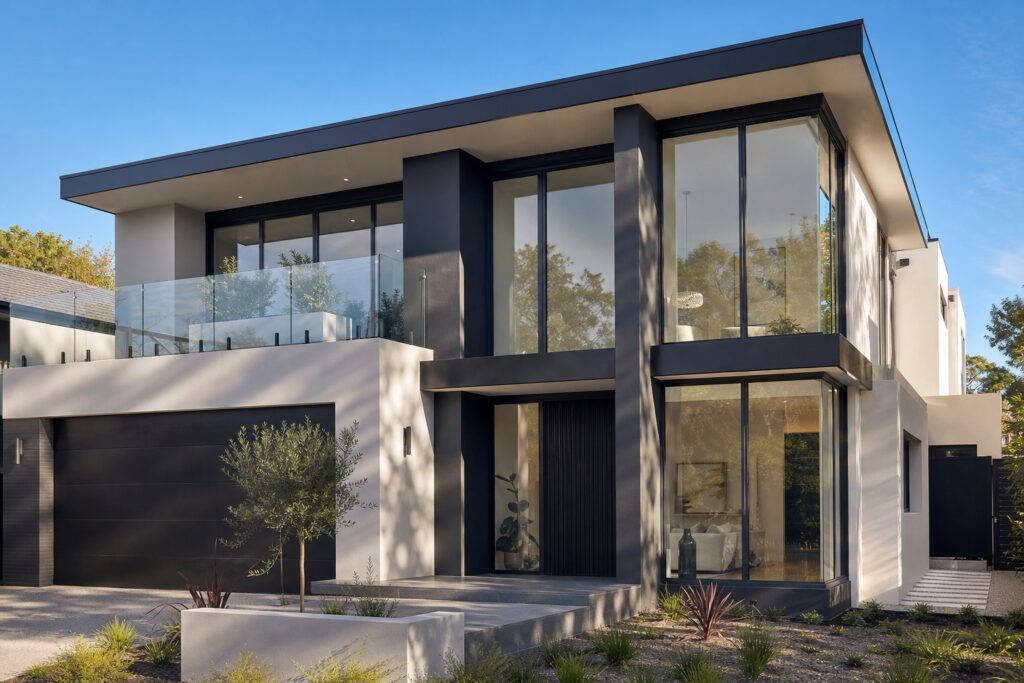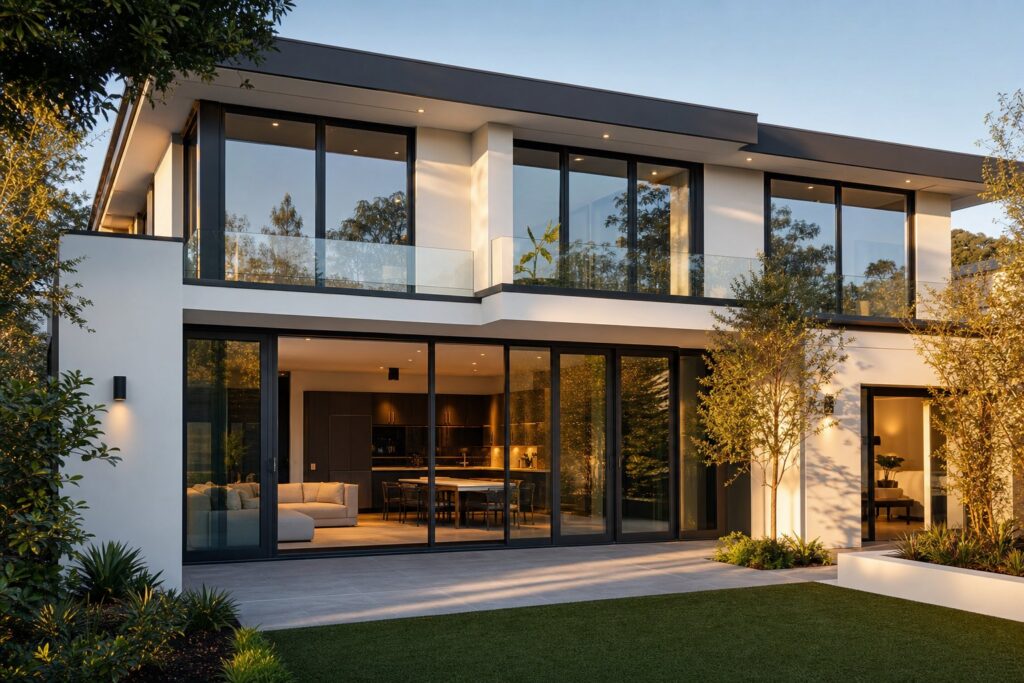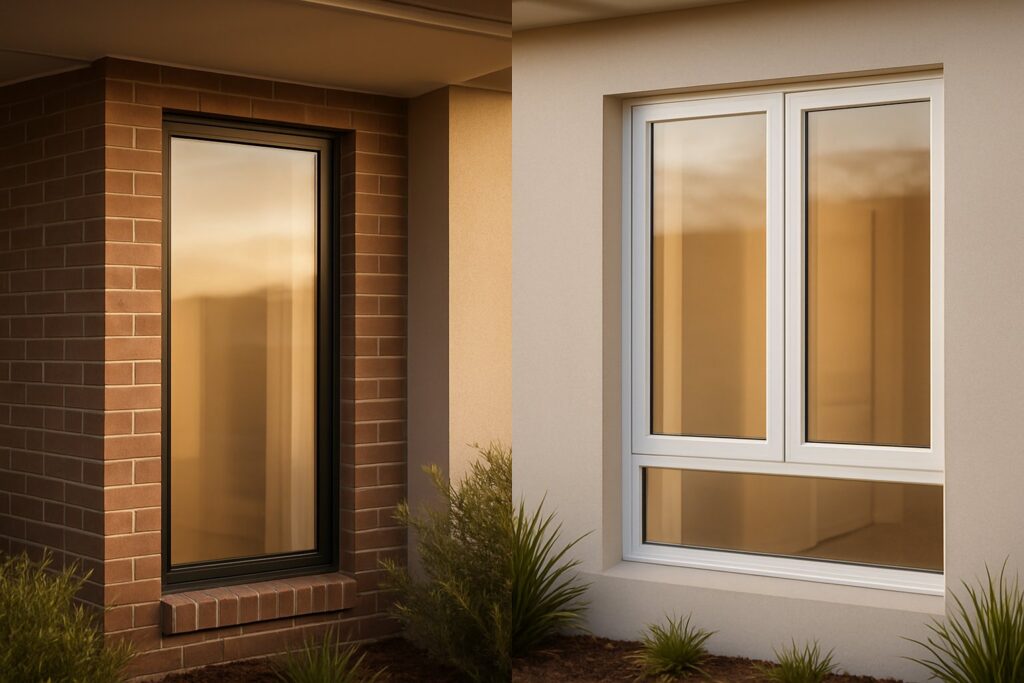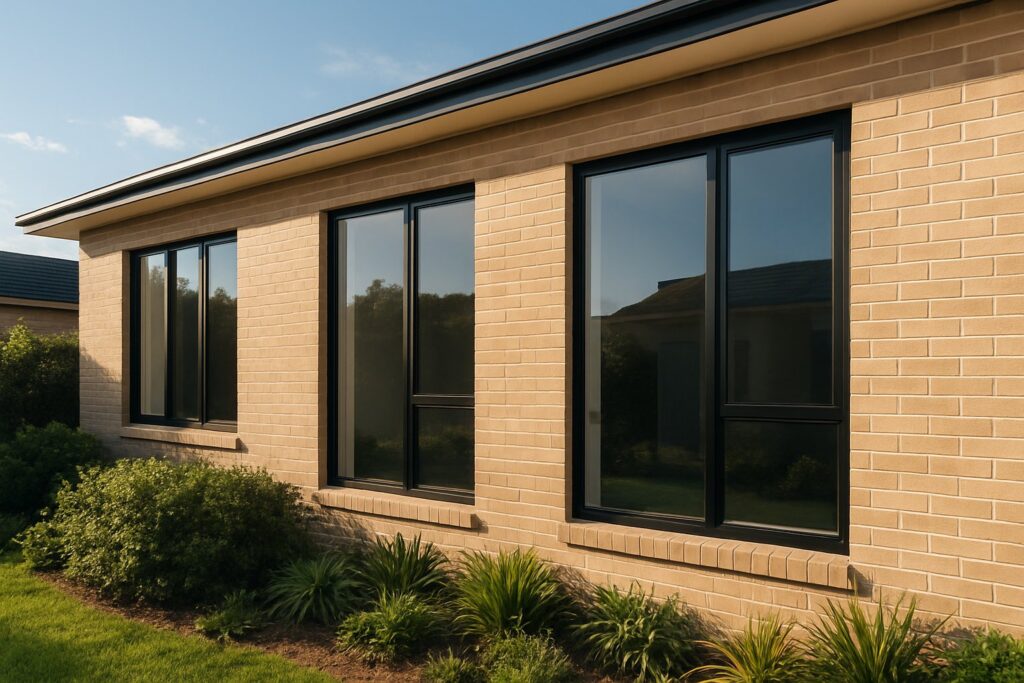
Why Aluminium Windows Dominate Queensland Construction
From the salt-heavy coastline of the Gold Coast to cyclone-prone Townsville, aluminium frames account for the vast majority of window installations across Queensland. The reason is straightforward: no other framing material handles the state’s combination of relentless humidity, intense UV exposure, and severe wind events with as little ongoing maintenance.
Aluminium windows represent the dominant framing choice in Queensland residential and commercial construction, driven by a market experiencing 6-8% annual growth in the high-performance segment across Australia.
Why Queensland Homeowners Prefer Aluminium Frames
Unlike timber, aluminium won’t warp, rot, or attract termites in humid subtropical air. It resists salt spray corrosion when properly powder coated, and it holds its structural integrity through the temperature swings that stress other materials over time. Whether specified as aluminium sliding windows for a Queenslander renovation or custom aluminium windows in a new coastal build, the frames maintain a secure fit year-round without expanding or contracting. That reliability matters when your home faces 40-degree summers and tropical downpours within the same week.
What This Guide Covers for Builders and Homeowners
This guide takes a climate-first approach. Rather than listing generic product features, it walks through how Queensland’s distinct environmental pressures, from cyclone wind zones to bushfire attack levels, shape every window decision you need to make. Whether you’re sourcing windows Brisbane QLD builders trust for a multi-unit development or choosing a single awning window for a bathroom renovation, you’ll find guidance grounded in local conditions. We cover window types, compliance codes, thermal performance, material comparisons, maintenance, and supplier selection, all through a Queensland-specific lens.
The starting point for any good window decision here is understanding exactly what the climate demands of your frames and glass.
How Queensland’s Climate Shapes Your Window Choices
Queensland spans four distinct NCC climate zones, each placing different stresses on the materials that separate your living space from the outdoors. A window that performs well in Toowoomba may fail prematurely in Cairns. Understanding these zones helps you specify the right aluminium sliding windows material, glass type, and coating for your location.
Subtropical Heat and Humidity in South East Queensland
Climate zone 2 covers the coastal belt from south of Mackay through to the Gold Coast hinterland. Average January maximums sit around 30.4°C in Brisbane, but the real challenge is humidity. Warm, moisture-laden air persists for months, creating conditions that cause timber frames to swell, stick, and eventually rot from the inside out. Aluminium is inherently non-porous, so it cannot absorb moisture. Frames stay dimensionally stable whether it’s a dry winter morning or a steamy February afternoon. That stability keeps seals intact, hardware operating smoothly, and draught gaps from opening up over time.
Tropical Cyclone and Salt Air Challenges Up North
North of Mackay, climate zone 1 brings average summer highs above 31°C, intense wet-season rainfall, and the ever-present threat of cyclone-force winds. Sliding windows aluminum frames specified for this region must handle not just the heat, but wind loads that can exceed 250 km/h in severe events. Aluminium’s strength-to-weight ratio makes it possible to engineer slender profiles that still meet cyclone ratings without bulky, view-blocking sections.
Coastal salt air adds another layer. Salt spray corrosion occurs when airborne salt particles settle on frame surfaces and react with moisture, gradually pitting unprotected metals. In plain terms, it eats into materials the way rust eats into untreated steel. Properly powder-coated aluminium resists this process far more effectively than raw timber or standard steel.
UV Intensity and Its Effect on Window Frames
Australia records some of the highest UV radiation levels globally, and Queensland sits squarely in the most exposed band. UV degradation is simply the breakdown of material at a molecular level from prolonged sun exposure. It causes vinyl to become brittle, timber to grey and crack, and painted surfaces to chalk and peel. Aluminium itself does not degrade under UV. When paired with quality powder coating or anodised finishes, window frames across Australia maintain their colour and surface integrity for decades rather than years.
- Humidity and moisture: Aluminium cannot absorb water, preventing swelling, warping, and mould growth that plague timber in subtropical and tropical zones.
- Cyclone-force winds: High strength-to-weight ratio allows engineers to design frames meeting wind zone ratings up to C4 without excessive bulk.
- Salt spray corrosion: Powder-coated or anodised aluminium surfaces resist salt attack along Queensland’s entire coastline, from Coolangatta to Thursday Island.
- UV radiation: Aluminium does not break down under ultraviolet light, maintaining structural and cosmetic integrity year-round.
- Extreme temperature swings: Minimal thermal expansion keeps seals tight and operation smooth through Queensland’s wide daily and seasonal temperature range.
Each of these pressures narrows the field of suitable framing materials considerably. Timber demands constant maintenance, vinyl softens and warps under prolonged heat, and steel corrodes aggressively in coastal salt air. Aluminium handles all five challenges simultaneously, which is why it remains the default specification across residential and commercial window projects in Australia.
The climate dictates not just the frame material, though. It also determines which window styles deliver the right balance of ventilation, weather sealing, and structural performance for each part of the state.
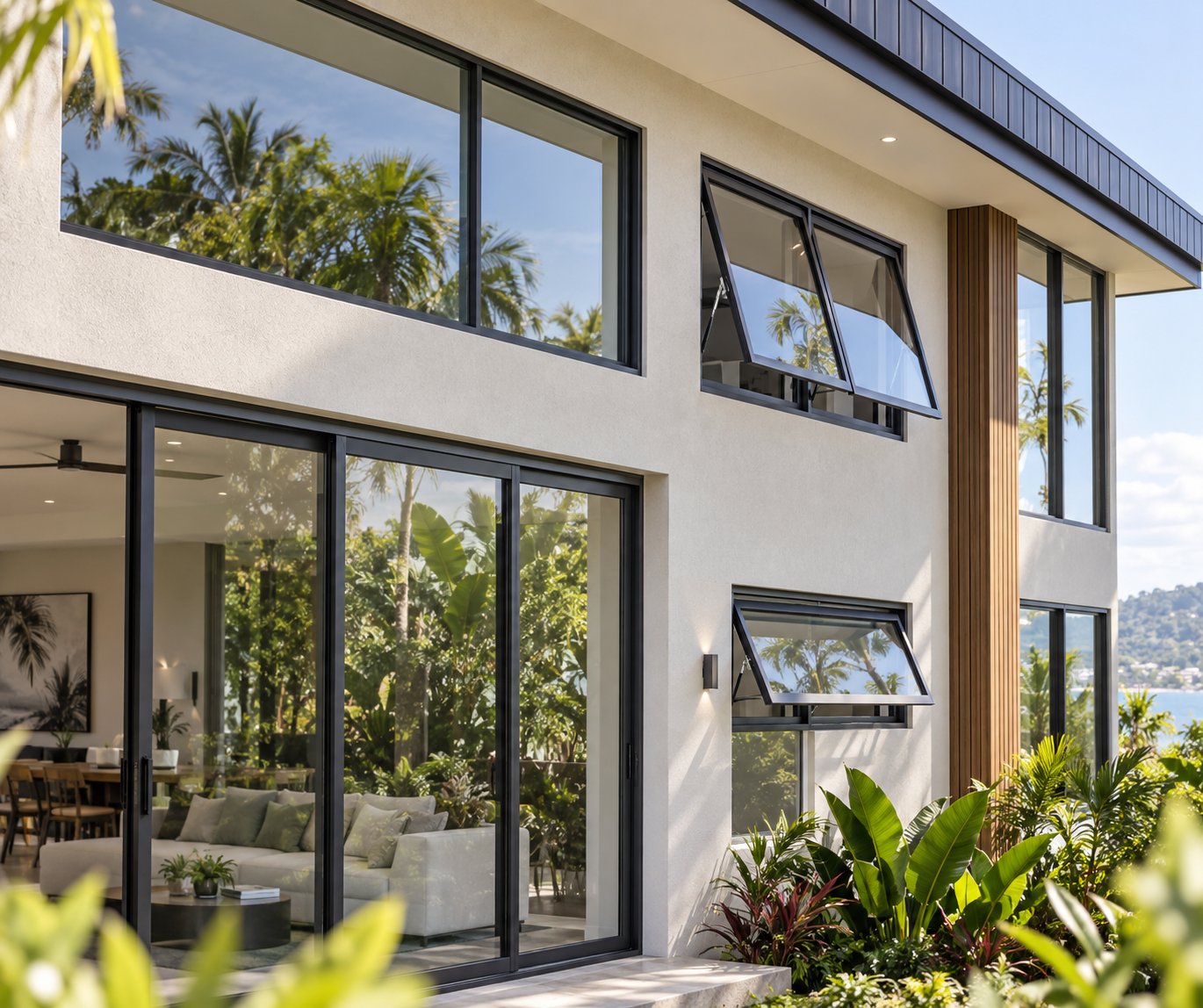
Aluminium Window Types Suited to Queensland Homes
Choosing a frame material is only half the equation. The style of window you select determines how much airflow reaches your rooms, how well rain stays outside during a storm, and whether the frame can withstand the wind pressures your site is rated for. Queensland’s range of aluminium window types covers everything from simple fixed panels to fully adjustable louvre systems, each tailored to different orientations, rooms, and regional conditions.
Sliding and Awning Windows for Airflow and Weather Protection
Sliding aluminium windows are the workhorse of Queensland homes. One or more sashes glide horizontally along a track, so they never protrude into outdoor walkways or encroach on interior furniture layouts. That space-saving operation makes the aluminium sliding window a natural fit for bedrooms, kitchens, and living areas where you want fresh air without sacrificing floor space or clear sightlines to the garden.
For rooms that need ventilation even during rain, awning windows are hard to beat. Hinged at the top and swinging outward from the bottom, they deflect water away from the opening while still letting air circulate. Bathrooms, laundries, and kitchens across South East Queensland rely on awning windows to manage humidity without inviting weather inside. They seal tightly when closed, giving them strong performance in higher wind zones as well.
A sliding window with transom combines both concepts in a single frame. The lower sliding sash handles day-to-day ventilation, while a fixed or operable transom panel above adds height, light, and architectural proportion. This configuration is particularly versatile for Queensland living areas that face north or east, where you want generous daylight overhead and easy airflow control at arm level.
Casement and Louvre Windows for Cross-Ventilation
Casement windows open outward on a side hinge, much like a door, catching prevailing breezes and directing them into the room. Because the entire sash opens to a full 90 degrees in most designs, casement windows deliver maximum airflow relative to their frame size. They suit bedrooms and living spaces oriented toward the prevailing summer breezes, particularly in elevated Queenslander-style homes designed around cross-ventilation.
Louvre windows take airflow control further. Horizontal glass or aluminium blades angle open independently, letting you fine-tune ventilation from a gentle trickle to full exposure. In tropical North Queensland, louvres remain a staple for bathrooms, sunrooms, and covered outdoor entertaining areas. Their adjustable nature also provides privacy when partially angled, a practical benefit for ground-floor rooms facing footpaths or neighbouring properties.
Fixed and Pop-Out Windows for Light and Statement Design
Fixed aluminium windows don’t open at all. Their purpose is simple: deliver uninterrupted views and maximum natural light. They work well in stairwells, above kitchen cabinetry, or as large feature panels in living rooms where ventilation is handled by adjacent operable windows. Because there’s no moving hardware, fixed windows offer the tightest weather seal possible.
Pop out windows for house designs seeking a contemporary edge use a gas-strut mechanism to push the sash outward to a near-horizontal position. They’re ideal for servery openings between kitchens and alfresco areas, creating an indoor-outdoor connection that suits Queensland’s lifestyle. When closed, they sit flush with the frame for a clean, modern aesthetic.
| Window Type | Ventilation Level | Weather Sealing | Best Suited Region | Ideal Room Placement |
|---|---|---|---|---|
| Sliding | Moderate | Good | All Queensland zones | Living areas, bedrooms, kitchens |
| Awning | Moderate | Excellent (rain protection) | All zones, especially coastal | Bathrooms, kitchens, laundries |
| Sliding with Transom | Moderate + added light | Good to excellent | South East QLD, coastal builds | Living rooms, open-plan areas |
| Casement | High (full opening) | Very good when closed | Subtropical and elevated sites | Bedrooms, living areas |
| Louvre | High (adjustable) | Lower (blade gaps) | Tropical North Queensland | Bathrooms, sunrooms, entertaining |
| Double-Hung | Moderate (top and bottom) | Good | Heritage areas, all zones | Bedrooms, living rooms |
| Fixed | None | Excellent | All zones | Stairwells, feature walls, highlights |
| Pop-Out (Gas Strut) | High when open | Excellent when closed | Coastal and suburban | Servery openings, alfresco transitions |
Selecting the right combination often means mixing styles across a single elevation. A north-facing wall might pair fixed highlight panels with operable casement windows below, while the west side uses awning windows to limit afternoon heat gain while still allowing some airflow. The key is matching each window type to the specific wind exposure, orientation, and room function at your site.
Style selection alone doesn’t guarantee compliance, though. In many parts of Queensland, your chosen window must also carry the correct wind-zone and cyclone rating before it can be installed.
Cyclone Ratings and Building Code Requirements
Every aluminium window installed in Queensland must be engineered for the specific wind pressures its location will face. This isn’t optional or aspirational. It’s a legal requirement enforced through building certification, and the rating your site carries directly shapes which products can be specified, how they’re fixed to the structure, and what glazing they need to hold.
Understanding Wind Zones N1 Through C4 in Queensland
Wind classifications in Australia are determined by a combination of regional wind speed, terrain category, topography, and shielding from surrounding structures or vegetation. The system splits into two broad families: non-cyclonic (N) and cyclonic (C).
- N1 and N2 (Non-cyclonic, lower exposure): These cover sheltered suburban sites in South East Queensland. Most established Brisbane suburbs, Toowoomba, and inland areas fall here. Standard aluminium window systems generally satisfy these ratings without specialised engineering.
- N3 (Non-cyclonic, higher exposure): Applies to exposed coastal sites, ridgelines, and elevated blocks where wind accelerates. Parts of the Gold Coast, bayside suburbs, and hilltop properties often land in this category. Frames need upgraded fixings and tested pressure ratings.
- C1 and C2 (Cyclonic, moderate): The entry point for cyclone-rated construction. Covers coastal areas from around Bundaberg northward, including parts of the Whitsundays and Central Queensland coast. Windows must resist both positive pressure (wind pushing inward) and negative pressure (suction pulling outward) under cyclonic loading.
- C3 and C4 (Cyclonic, severe): These apply to the most exposed sites in North Queensland, including Townsville, Cairns, and the far northern coastline. Wind gusts in C4 zones can exceed 250 km/h. Every sliding aluminum window, awning, or casement installed here needs to be tested and certified for these extreme loads.
Your site’s specific classification depends on more than just geography. A sheltered block in an established Townsville suburb might rate lower than an exposed headland site further south. Terrain, surrounding buildings, and topographic features all influence the final determination. A wind engineer or the certifying building designer confirms the classification during the design phase.
Cyclone-Rated Aluminium Windows for North Queensland
In cyclonic zones, windows aren’t just openings in a wall. They’re structural elements that form part of the building’s continuous load path, the chain of connections running from roof sheeting down through the frame and into the slab. If a window fails under pressure, it compromises the entire envelope. Internal pressure spikes, and the roof becomes far more vulnerable to uplift.
Cyclone-rated aluminium windows address this through several design features. Heavier-gauge aluminium profiles, typically using an aluminium sliding window with hollow sections for added rigidity, provide the structural depth needed to span openings without flexing under extreme load. Reinforced corner joins, upgraded hardware, and tested anchorage systems ensure the frame stays connected to the wall structure when pressures fluctuate rapidly.
The NCC 2025 Specification 4 defines cyclonic areas as those located in wind regions B2, C, and D under AS/NZS 1170.2. Products installed in these regions must demonstrate they can withstand cyclic pressure loading, simulating the repeated push-pull forces a cyclone generates over hours rather than a single gust. This testing protocol subjects components to thousands of pressure cycles at varying intensities before applying a single peak load, then repeating the cycle in reverse.
For homeowners and builders, the practical takeaway is simple: standard off-the-shelf windows cannot be used in cyclonic zones. Every product needs documented compliance, and custom aluminum window frames engineered for specific opening sizes and site conditions are often the only way to achieve certification for larger spans.
BAL Ratings and Bushfire Compliance for Aluminium Frames
Bushfire risk overlaps with wind exposure across many Queensland sites. Acreage blocks west of Brisbane, properties backing onto national parks, and coastal bush-adjacent land on places like Bribie Island often carry both a wind classification and a Bushfire Attack Level (BAL) rating.
The BAL system classifies bushfire risk on a scale from BAL-LOW through to BAL-FZ (Flame Zone), based on vegetation type, distance from the building, and slope. Each level dictates progressively stricter construction requirements under Australian Standard AS 3959.
- BAL-LOW: No specific bushfire construction requirements for windows. Standard aluminium frames and glazing are acceptable.
- BAL-12.5: Ember attack is the primary threat. Windows need tighter seals to prevent burning debris from entering, and metal mesh screens with apertures no larger than 2 mm are recommended.
- BAL-19: Increased radiant heat plus ember attack. Aluminium frames perform well here due to their non-combustible nature, and toughened glass becomes a requirement.
- BAL-29: Significant radiant heat. Specialised glazing systems, including increased glass thickness and heat-resistant sealing, are mandatory. Aluminium’s high melting point (over 600°C) gives it a clear advantage over vinyl, which softens at temperatures well below bushfire exposure levels.
- BAL-40: Near-direct flame exposure. Only robust aluminium or steel frames paired with tested bushfire-rated glazing systems meet requirements at this level.
- BAL-FZ (Flame Zone): Direct flame contact is expected. Specialist systems with full fire testing and certification are required.
Most Queensland homeowners building on bush-adjacent suburban blocks or acreage encounter BAL-12.5 or BAL-19. At these levels, aluminium frames comply readily because the material is non-combustible and won’t contribute fuel to a fire event. Combined with toughened glass and properly sealed gaps, aluminium windows provide a reliable barrier against ember entry and radiant heat without needing exotic materials or excessive cost premiums.
The National Construction Code (NCC) and Queensland Development Code (QDC) work together to enforce these requirements at the approval stage. The NCC sets baseline structural and safety performance standards nationally, while the QDC adds Queensland-specific provisions, including requirements for cyclone construction in designated regions. Your building certifier confirms compliance with both before issuing permits.
Where bushfire and cyclone requirements overlap, aluminium frames offer a practical advantage: a single material system can satisfy both sets of demands. A properly specified cyclone-rated aluminium window with toughened glass and ember-proof seals meets structural, fire, and weather performance criteria simultaneously, simplifying specification and reducing the need for separate product systems on complex sites.
Getting the compliance right at specification stage matters more than most homeowners realise. But compliance alone doesn’t address comfort. In Queensland’s heat, the thermal performance of your chosen frame profile determines how hard your air conditioning works and how comfortable your rooms feel year-round.
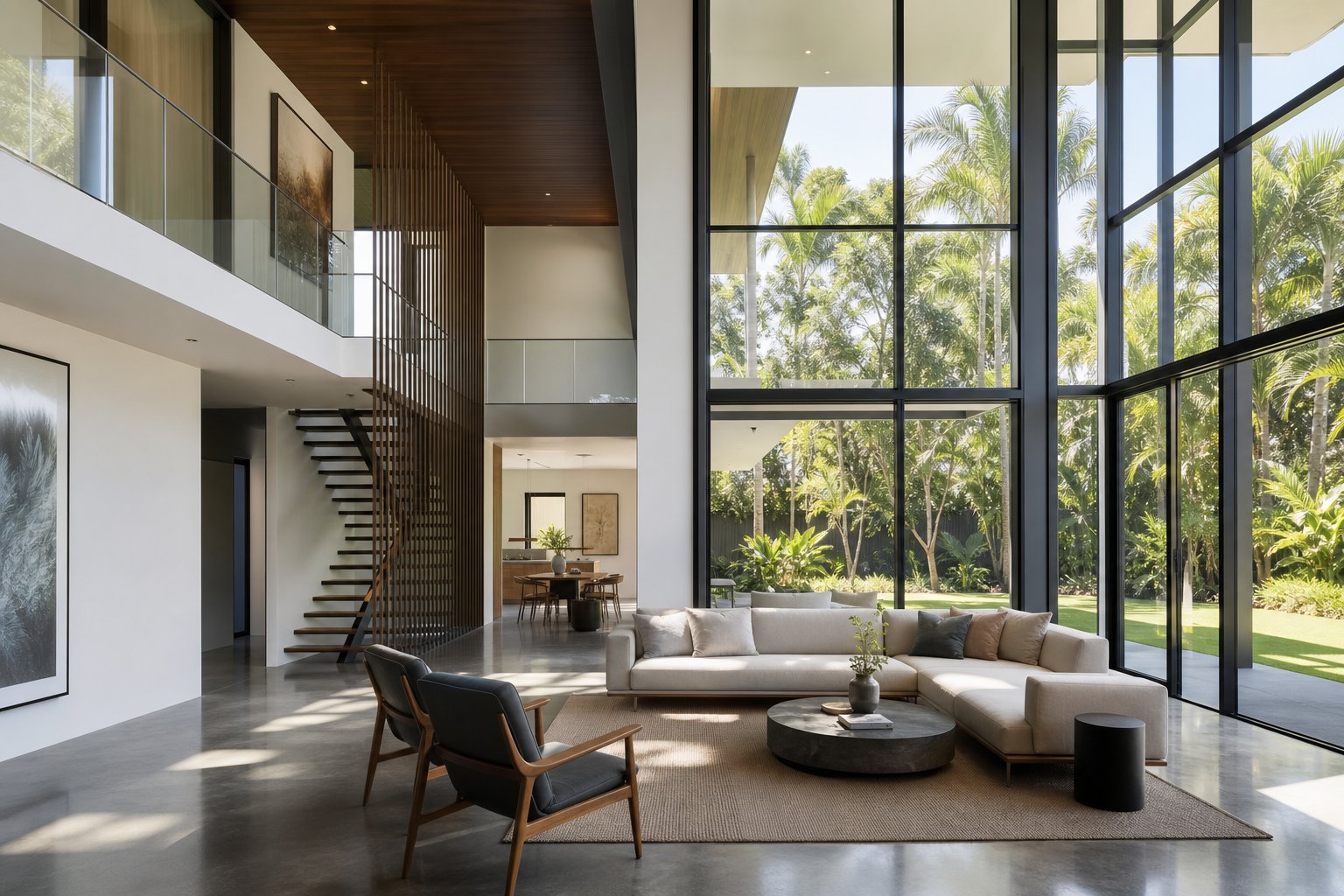
Energy Efficiency and Thermal Performance in Hot Climates
Aluminium is strong, corrosion-resistant, and structurally stable, but it has one inherent weakness: it conducts heat roughly 1,000 times more readily than timber. In a state where air conditioning can account for a significant portion of household electricity costs, that conductivity matters. A frame that channels outdoor heat directly into your living room forces the cooling system to work harder, and you feel the difference at the thermostat and on your power bill.
The good news is that modern aluminium window systems have addressed this limitation. The technology exists to keep the structural advantages of aluminium while dramatically reducing heat transfer through the frame. Understanding how it works, and when it’s worth specifying, helps you make smarter decisions about energy efficient windows for your Queensland project.
Standard vs Thermally Broken Aluminium Profiles
A standard aluminium window frame is a continuous metal extrusion. Heat flows freely from the exterior face to the interior face because nothing interrupts the conductive path. On a 38-degree Brisbane afternoon, that exterior surface absorbs solar radiation and ambient heat, then conducts it inward. The result is warm frame surfaces inside the room, radiant heat near window openings, and extra load on your air conditioning.
Thermally broken aluminium windows use a different construction method. The profile is split into two separate aluminium sections, one facing inside and one facing outside, joined by an insulating polyamide (nylon) bridge. This bridge is a poor conductor of heat, so it interrupts the thermal pathway between the hot outer face and the cooler inner face.
A thermally broken aluminium profile can reduce frame heat transfer by up to 60% compared with a standard profile. The aluminium retains its full structural strength and slim sightlines, but the insulating bridge transforms its thermal behaviour from highly conductive to competitive with timber and some uPVC systems.
In practical terms, the interior surface of a thermally broken frame stays closer to room temperature. You won’t feel that wave of radiating warmth when sitting near a west-facing window on a hot afternoon. Your cooling system cycles less frequently, and condensation risk drops on the rare cool mornings when indoor air meets a cold frame surface.
U-Values and Solar Heat Gain Explained Simply
Two numbers define how energy efficient windows in Queensland perform: U-value and SHGC. Both appear on Window Energy Rating Scheme (WERS) labels and in NatHERS energy assessment reports, so understanding them helps you read specifications with confidence.
U-value measures how easily heat passes through the entire window system, frame and glass combined. It does not account for direct sunlight, only conductive and convective heat flow. A lower U-value means less heat transfer. In Australia, U-values typically range between 2.0 and 10.0 W/m²K. A standard single-glazed aluminium window might sit around 6.0-7.0 W/m²K, while a thermally broken frame with double glazing can achieve values below 3.0 W/m²K.
SHGC (Solar Heat Gain Coefficient) measures how freely the sun’s radiant energy passes through the glass and enters the room. It’s expressed as a number between 0 and 1. A window with an SHGC of 0.7 lets 70% of solar heat through, while one rated 0.3 blocks most of it. In Queensland, where cooling loads dominate, you generally want a lower SHGC on west and north-facing windows to reduce heat gain, while south-facing windows can tolerate a higher value without causing comfort issues.
The type of glass you pair with the frame significantly affects both numbers. Swapping from clear single glazing to a low-E double-glazed unit changes the SHGC and U-value dramatically, often more than the frame upgrade alone. This is why specifying energy efficient windows for a Queensland build means considering frame and glass as a combined system, not separate decisions.
Glazing Options That Reduce Heat Without Blocking Light
Queensland homeowners often worry that reducing solar heat gain means darkening rooms. That was true of older tinted glass, but modern glazing technology separates heat from visible light more effectively.
- Low-E (low emissivity) glass: A microscopically thin metallic coating reflects infrared heat while transmitting most visible light. When used on the inner pane of a double-glazed unit, it keeps radiant heat outside in summer. Natural daylight barely changes.
- Double glazing: Two panes of glass separated by an air or gas-filled cavity. The trapped layer acts as insulation, reducing both conductive heat transfer and external noise. Combined with a thermally broken aluminium frame, double glazing creates a complete thermal barrier.
- Argon-filled cavities: Replacing air with argon gas in the double-glazed cavity improves insulation further, as argon conducts heat less readily than air. It’s an invisible upgrade that improves U-values without any visual change.
- Tinted or spectrally selective glass: These options reduce SHGC while maintaining reasonable visible light transmission. Spectrally selective coatings target the infrared wavelengths responsible for heat gain, letting daylight through while rejecting solar energy.
For aluminum windows sliding across large openings in a Queensland living area, pairing a thermally broken frame with low-E double glazing and a selective tint on the outer pane strikes a practical balance. You get generous daylight, reduced glare, and measurably lower cooling costs without resorting to external shutters or heavy window treatments.
So when should you invest in the upgraded system? For new builds across Queensland, NatHERS energy assessments increasingly push specifications toward thermally broken profiles with performance glazing to meet the minimum 7-star energy rating. If your project has large expanses of west or north-facing glass, thermally broken aluminium windows become less of a luxury and more of a compliance necessity. For smaller windows on shaded elevations, standard aluminium with quality double glazing may still achieve the required values at a lower cost. The decision comes down to orientation, glass area, and how your energy assessor models the home’s overall thermal envelope.
Thermal performance is one piece of the broader material decision, though. Aluminium isn’t the only option on the table, and comparing it honestly against timber, uPVC, and composite alternatives in Queensland-specific conditions reveals where each material earns its place.
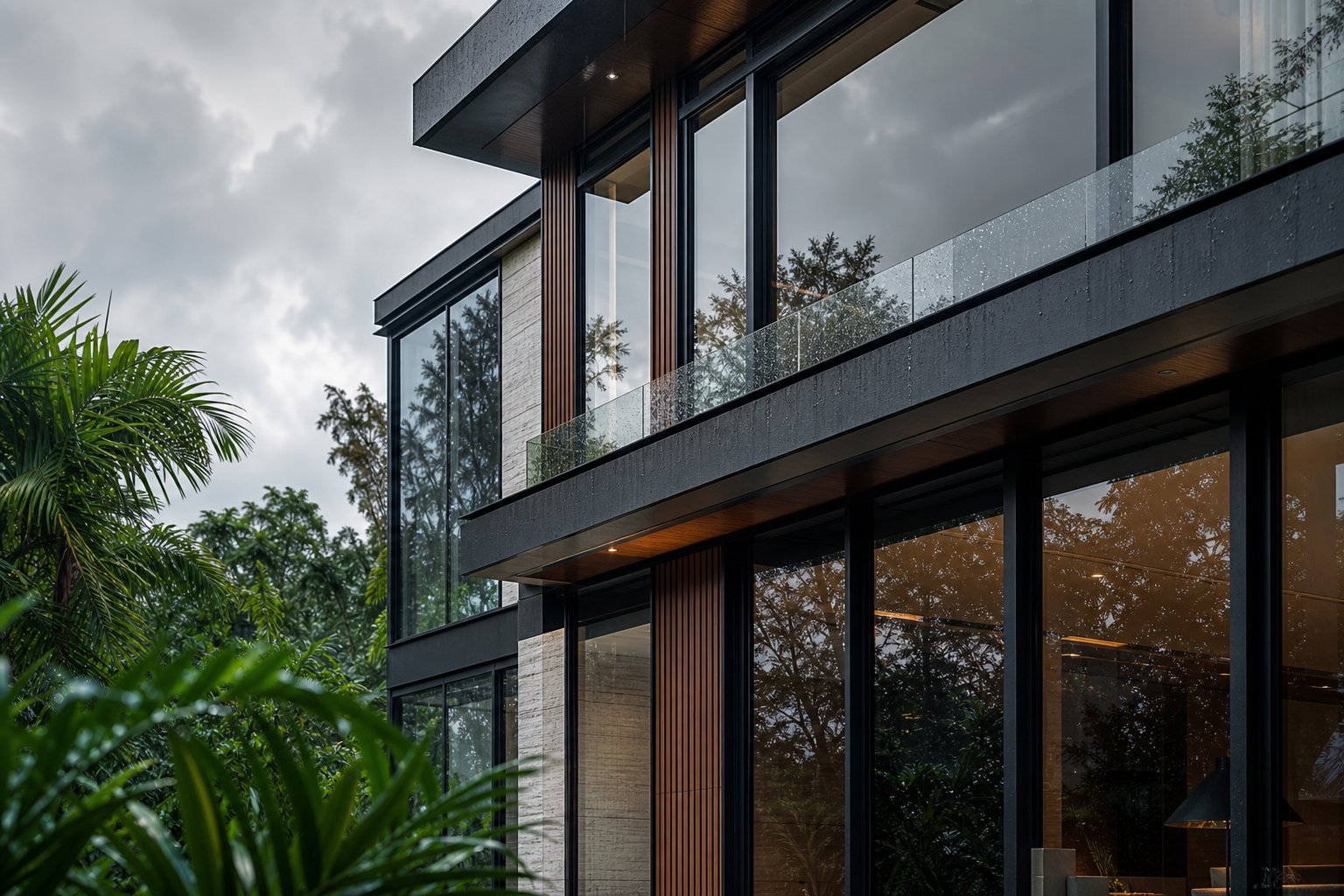
Aluminium vs Other Frame Materials for Queensland
Every framing material brings trade-offs. Aluminium dominates the Queensland market for well-documented reasons, but it’s not flawless, and alternatives have improved significantly. A fair comparison requires testing each material against the same set of Queensland-specific pressures rather than relying on generic claims that ignore local conditions.
The table below evaluates aluminium window frames Australia-wide alongside timber, uPVC, and composite options across the criteria that matter most in this climate.
| Criteria | Aluminium | Timber | uPVC | Composite / Hybrid |
|---|---|---|---|---|
| Durability in humidity | Excellent. Non-porous, cannot absorb moisture or swell. | Poor to moderate. Swells, warps, and promotes mould without regular sealing. | Good. Non-porous, but can soften or distort under prolonged heat. | Good to excellent. Engineered to resist moisture, though quality varies by manufacturer. |
| Resistance to salt air | Very good with quality powder coating or anodising. Requires marine-grade finish within 500 m of coastline. | Poor. Salt accelerates timber degradation and breaks down protective coatings faster. | Excellent. Plastic is immune to salt corrosion. | Good. Outer skin typically resists salt, but check manufacturer warranties for coastal exposure. |
| Cyclone suitability | Excellent. High strength-to-weight ratio allows certified C1-C4 systems with slim profiles. | Limited. Difficult to achieve high cyclone ratings without excessively bulky sections. | Poor. Lacks structural rigidity for cyclone-rated openings, especially in larger sizes. | Moderate. Some composite systems achieve cyclone ratings, but options are narrower. |
| Thermal performance | Standard profile: poor. Thermally broken profile: good to very good. | Naturally good. Timber is a poor conductor, offering inherent insulation. | Good. Multi-chambered profiles provide reasonable insulation. | Good to very good. Often combines timber interior with aluminium exterior. |
| Maintenance | Low. Occasional wash, periodic hardware check. | High. Requires painting or oiling every 3-5 years, plus ongoing inspection for rot and termites. | Low. Wipe clean, no painting needed. | Low to moderate. Depends on material combination. |
| Expected lifespan | 30-40+ years | 20-30 years (with diligent maintenance) | 20-30 years | 25-35 years |
| Indicative cost range (supply only, standard window) | $400 – $900 AUD | $600 – $1,200 AUD | $350 – $750 AUD | $800 – $1,500 AUD |
Aluminium vs Timber in Humid Queensland Conditions
The aluminium vs timber windows Queensland debate often comes down to aesthetics versus practicality. Timber has genuine warmth and suits heritage Queenslander restorations where council heritage overlays mandate a specific look. Its natural insulating properties also mean it doesn’t need a thermal break to manage heat transfer effectively.
The problems emerge in the Queensland environment. Humidity swells timber fibres, causing sashes to stick, seals to compress unevenly, and paint to blister. Termites remain an active threat across much of the state, and coastal salt air strips protective finishes faster than inland conditions. Maintaining timber frames properly in South East Queensland means committing to repainting or re-oiling every three to five years. Skip that schedule, and decay sets in quickly. For homeowners who value a low-maintenance solution, aluminium offers decades of stable operation without that recurring time and cost commitment.
How uPVC and Composite Frames Compare
uPVC frames have gained visibility in the Australian market as a budget-friendly alternative with decent thermal performance. The material won’t corrode in salt air, doesn’t need painting, and provides reasonable insulation through its multi-chambered profile structure. For homeowners looking at cheap aluminium windows alternatives, uPVC can seem attractive on paper.
The limitations become clear in Queensland’s heat. uPVC softens at sustained temperatures above 70°C, and dark-coloured frames on west-facing elevations can approach those surface temperatures on extreme summer days. The material also lacks the structural rigidity to span large openings or meet cyclone ratings in larger sizes. You won’t find uPVC systems certified to C3 or C4 for standard residential window dimensions. Colour options are more limited than aluminium, and frames tend to be bulkier, reducing visible glass area.
Composite and hybrid frames, typically combining a timber interior with an aluminium exterior cladding, offer an interesting middle ground. You get timber’s natural insulation and interior aesthetic with aluminium’s weather resistance on the exposed face. The trade-off is cost. Composite systems carry a significant price premium and aren’t as widely stocked in Queensland, which can mean longer lead times for replacements or repairs.
Which Frame Material Fits Your Queensland Budget
Cost comparisons need context. Cheap aluminium windows at the entry-level price point still outperform timber at the same budget when you factor in lifetime maintenance. A standard aluminium sliding window that costs $500 AUD supply-only will need nothing beyond occasional cleaning for three decades. A timber window at $700 AUD will accumulate $2,000 or more in painting, sealing, and hardware replacement over the same period.
uPVC wins on initial cost in some sizes, but its shorter lifespan and inability to handle cyclone-rated applications limit where it can actually be used across Queensland. Composite systems cost the most upfront and deliver genuine thermal and aesthetic benefits, but they’re typically specified for premium builds where the budget supports the upgrade.
For the majority of Queensland residential and commercial projects, aluminium frames in Australia remain the practical default. They handle every climate challenge the state throws at them, comply with cyclone and bushfire codes without exotic engineering, and deliver a 30-year-plus lifespan at a mid-range price. Where thermal performance is the priority, a thermally broken aluminium system bridges the gap without requiring a material change altogether.
Material choice locks in certain long-term maintenance obligations, though. Understanding exactly what aluminium demands of you over the years, and how to get the most out of powder-coated finishes in Queensland’s conditions, makes the difference between frames that last a lifetime and ones that age prematurely.
Maintaining Aluminium Windows in Queensland Conditions
Aluminium earns its reputation as a low-maintenance framing material, but low maintenance doesn’t mean zero maintenance. Queensland’s combination of salt air, humidity, UV exposure, and storm-driven debris still places demands on finishes, hardware, and seals over time. A basic routine keeps your frames performing and looking sharp for decades rather than showing early signs of wear within the first ten years.
Maintenance Schedules for Coastal and Inland Properties
Your cleaning frequency depends primarily on proximity to the coast. Salt spray settles on surfaces and reacts with moisture, gradually breaking down protective coatings if left to accumulate. Properties within one kilometre of the ocean need more frequent attention than homes in suburban Brisbane or Toowoomba.
For coastal Queensland homes, wash frames monthly with warm water and a mild pH-neutral detergent. Pay particular attention to sliding aluminum windows tracks, where salt and grit collect and impede smooth operation. A quarterly rinse with a diluted vinegar solution (one part vinegar to three parts water) helps neutralise salt residue that soap alone won’t shift. Inland properties can stretch to cleaning every three to four months, focusing on dust, pollen, and any organic debris that settles in drainage channels.
Here’s a seasonal checklist that keeps Queensland aluminium windows in top condition year-round:
- Spring (September-October): Wash all frames and glass. Clear drainage holes and tracks of debris accumulated over winter. Lubricate rollers, hinges, and locks with a silicone-based spray.
- Summer (December-January): Inspect seals and weatherstripping for heat-related hardening or cracking. Check for early signs of white powdery deposits on coastal frames, which indicates surface oxidation. Rinse coastal windows more frequently during humid periods.
- Autumn (March-April): Post-storm-season inspection. Check fixings, look for any water ingress staining around frame edges, and clear leaf litter from tracks and sills before cooler months.
- Winter (June-July): Light cleaning pass. Test all locking hardware for smooth engagement. Apply a thin coat of marine-grade wax to exposed coastal frames as a protective barrier heading into the next humid season.
Powder Coating Grades and Longevity
Not all powder coated aluminium windows coastal homeowners install are finished to the same standard. Powder coating quality varies significantly, and the grade you specify at purchase determines how long the finish lasts before chalking, fading, or allowing corrosion to begin underneath.
For inland Queensland properties, a standard architectural-grade powder coat at 60-80 microns thickness provides reliable protection for 15-20 years before visible fading occurs. Coastal installations demand more. Marine-grade coatings, typically applied at 80-120 microns with high-durability polyester formulations, resist salt attack far more effectively. Beachfront homes within 200 metres of the waterline benefit from premium finishes at 120 microns or above, paired with hardware that uses Grade 316 stainless steel rather than standard fittings.
When selecting colours, darker shades absorb more UV and heat, which can accelerate chalking on north and west-facing elevations. Lighter tones and mid-range colours tend to maintain their appearance longer in Queensland’s intense sunlight. Whichever colour you choose, confirm that the supplier uses a coating system tested and warranted for your specific exposure zone.
When to Service Hardware and Seals
Frames rarely fail before their hardware does. Rollers on sliding aluminium windows wear gradually, and you’ll notice resistance or grinding before a complete failure. Rubber seals and weatherstripping harden over time, particularly on sun-exposed elevations, losing their compression and allowing draughts or water ingress during driving rain.
Watch for these signs that components need attention:
- Increased effort to slide or lock a sash, suggesting worn rollers or dirty tracks
- Visible gaps between the sash and frame when closed, indicating compressed or perished seals
- White powdery residue or pitting on frame surfaces, an early corrosion signal requiring immediate cleaning and protective treatment
- Stiff or grinding lock mechanisms, often resolved with silicone lubricant but occasionally requiring replacement
- Rust-coloured staining around screws or hinges, which typically means steel hardware is corroding and needs upgrading to stainless steel
Most hardware components are individually replaceable without disturbing the frame itself. Rollers, seals, handles, and locks can all be swapped out as they wear, extending the working life of the window system well beyond its initial warranty period. Budget for a hardware service every 8-10 years on standard inland installations, or every 5-7 years for coastal properties where salt accelerates wear.
For Queensland homeowners exploring aluminium window systems built with long-term durability in mind, MEICHEN’s aluminium windows page offers a practical starting point to evaluate specific window specifications, hardware options, and coating grades suited to your climate zone.
Keeping your windows maintained is straightforward, but the effort pays off most when the original specification was right for your site. That brings the conversation full circle: how do you pull together climate data, compliance requirements, window type preferences, and supplier quality into a single coherent specification for your project?
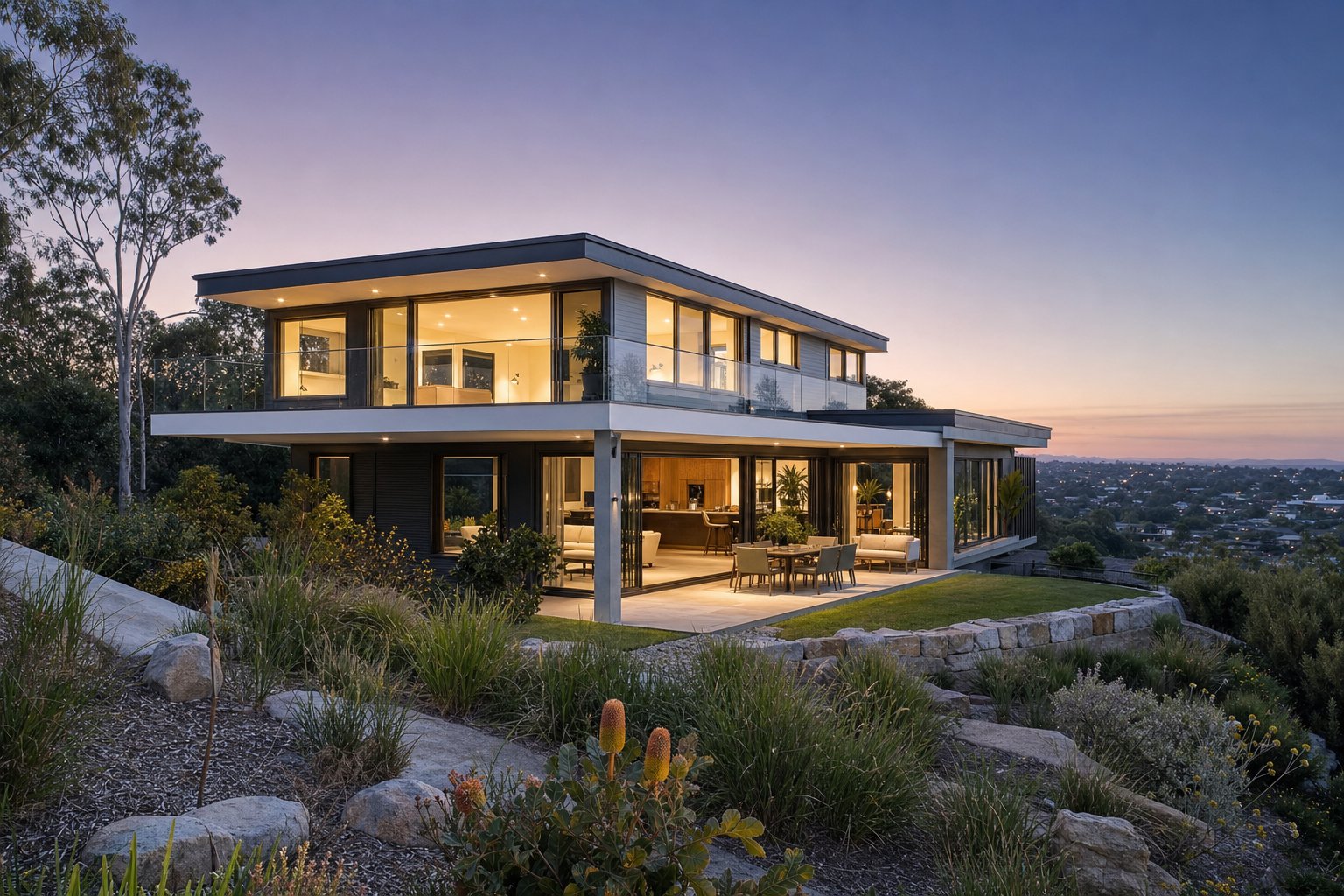
Choosing the Right Aluminium Windows for Your Queensland Project
Climate knowledge, compliance awareness, and material understanding all feed into one practical outcome: a specification document that tells your supplier exactly what your project needs. Whether you’re a homeowner replacing tired windows in a Queenslander renovation or a builder locking in joinery schedules for a multi-dwelling development, the path from research to installation follows the same logical sequence.
Steps to Specify Aluminium Windows for Your Queensland Project
A clear decision-making process prevents the costly back-and-forth that happens when windows are selected on aesthetics alone, then found non-compliant or poorly suited to the site. Follow this sequence from initial assessment through to final order:
- Confirm your wind zone classification. Your building designer, engineer, or certifier determines this based on site location, terrain category, elevation, and shielding. Every product you specify must meet or exceed this rating.
- Check for BAL requirements. If your block is in a designated bushfire-prone area, the BAL rating adds glazing and seal requirements on top of wind zone compliance. Get this confirmed early so it doesn’t derail selections later.
- Establish your NatHERS targets. For new builds, a 7-star minimum applies. Your energy assessor will advise on required U-values and SHGC figures for each elevation. This determines whether standard or thermally broken aluminium profiles are needed, and which glazing combinations will satisfy the energy budget.
- Map window types to each opening. Walk through the floor plan room by room. Consider orientation, prevailing wind direction, privacy requirements, and ventilation needs. Match each opening to the appropriate style: sliding, awning, casement, louvre, or fixed.
- Select frame profile and finish. Decide between standard and thermally broken profiles based on step three. Choose a powder coating grade appropriate to your distance from the coast, and confirm the supplier warrants the finish for your exposure level.
- Specify glazing. Clear single, tinted, low-E double glazed, or laminated: the glass choice follows directly from your energy assessment results and any BAL or acoustic requirements.
- Confirm hardware and security. Multi-point locking, keyed-alike cylinders, restrictor stays for child safety, and corrosion-resistant fittings for coastal zones all need specifying before manufacture begins.
- Get documented compliance. Request AS 2047 test reports, WERS ratings, and any cyclone or bushfire certification before signing off. A reputable aluminium windows Queensland supplier provides these without hesitation.
Renovation vs New Build Considerations
New builds have one significant advantage: the window openings haven’t been formed yet. Your designer can size and position openings to suit the ideal window type for each elevation, and structural framing accommodates whatever wind zone or BAL rating applies without retrofit complications.
Renovations introduce constraints. Existing openings may not match standard window sizes, structural lintels might limit weight, and heritage overlays in older suburbs can restrict visible frame changes. For homeowners replacing windows in established Brisbane homes, custom aluminium windows for builders and renovators become the practical solution. Frames manufactured to exact opening dimensions avoid the shimming, packing, and flashing compromises that come with trying to force standard-sized units into non-standard openings.
There’s also a compliance gap to navigate. A window replacement in a pre-1980s home won’t trigger full NCC compliance for the entire building, but the new windows themselves still need to meet current standards for structural performance and safety glazing under AS 2047 and AS 1288. If you’re replacing more than 50% of glazing in some council areas, broader energy efficiency requirements may also apply. Check with your certifier before assuming a straightforward like-for-like swap.
What to Look for in a Queensland Window Supplier
Not every supplier understands the full spectrum of Queensland conditions. A company that primarily services temperate southern markets may not stock cyclone-rated systems, carry marine-grade powder coatings, or have experience specifying for BAL-rated sites. When evaluating an aluminium windows Queensland supplier, these factors separate capable partners from those who’ll leave you exposed:
- Product range covering all wind zones. Can they supply N1 through C4 without outsourcing to a third party? Broader range means fewer complications on complex projects.
- Documented compliance on request. AS 2047 structural test reports, WERS energy ratings, and BAL certification should be available before you commit, not promised after the fact.
- Powder coating options suited to coastal exposure. Ask about coating thickness, warranty terms for marine environments, and whether they offer premium finishes for beachfront sites.
- Custom manufacturing capability. Queensland homes, particularly renovations and architecturally designed builds, frequently need non-standard sizes and configurations. A supplier who only stocks off-the-shelf dimensions limits your design flexibility.
- Local knowledge and technical support. Familiarity with Queensland council requirements, NatHERS climate zones, and common construction types (Queenslanders, brick veneer, rendered block) means fewer specification errors and smoother approvals.
- Clear warranty terms. What’s covered, for how long, and does the warranty reflect Queensland conditions? A ten-year powder coat warranty means little if it excludes coastal corrosion.
For homeowners, builders, architects, and project teams ready to move from research into product selection, MEICHEN’s aluminium windows page provides a practical next step. It covers window types, custom options, colour selections, and project integration for Australian residential and commercial builds, giving you a clear path from specification to supply.
Whether you buy window online or work through a local representative, the priority remains the same: match the product to the site, confirm compliance in writing, and choose a partner who treats Queensland’s climate as the starting point for every recommendation rather than an afterthought.
Frequently Asked Questions About Aluminium Windows in Queensland
1. What wind zone rating do I need for aluminium windows in Queensland?
Your wind zone rating depends on your site’s geographic location, terrain category, elevation, and surrounding shielding. South East Queensland suburban sites typically fall within N1 or N2, while exposed coastal areas may require N3. North of Mackay, cyclonic ratings from C1 through C4 apply, with C4 covering the most exposed sites in Townsville, Cairns, and the far northern coastline where wind gusts can exceed 250 km/h. A building designer or wind engineer confirms your specific classification during the design phase, and every aluminium window installed must meet or exceed that rating to satisfy NCC and QDC requirements.
2. Are aluminium windows suitable for cyclone-prone areas in North Queensland?
Yes, aluminium is the preferred framing material for cyclone-prone regions due to its high strength-to-weight ratio. Cyclone-rated aluminium windows use heavier-gauge profiles with hollow sections for added rigidity, reinforced corner joins, upgraded hardware, and tested anchorage systems. These frames form part of the building’s continuous load path and must withstand cyclic pressure loading that simulates thousands of pressure cycles. Standard off-the-shelf products cannot be used in cyclonic zones; every window needs documented compliance with AS 2047 and NCC Specification 4 for cyclonic areas.
3. How do thermally broken aluminium windows improve energy efficiency in Queensland?
Thermally broken aluminium profiles split the frame into two separate aluminium sections joined by an insulating polyamide bridge. This bridge interrupts the conductive pathway between the hot exterior face and the cooler interior face, reducing frame heat transfer by up to 60% compared with standard profiles. In Queensland’s climate, this means interior frame surfaces stay closer to room temperature, your cooling system cycles less frequently, and energy bills decrease. Paired with low-E double glazing, thermally broken frames help homes meet the NatHERS 7-star minimum energy rating required for new builds.
4. How often should I clean aluminium windows in coastal Queensland?
Coastal properties within one kilometre of the ocean should have aluminium frames washed monthly with warm water and a mild pH-neutral detergent, with quarterly vinegar rinses to neutralise accumulated salt residue. Sliding window tracks need particular attention as salt and grit collect there and impede operation. Inland properties can extend cleaning to every three to four months. Beyond cleaning, a seasonal maintenance routine covering hardware lubrication, seal inspection, and drainage channel clearing keeps frames performing optimally for decades. Marine-grade powder coatings at 80-120 microns thickness provide the best long-term protection for beachfront installations.
5. What is the difference between aluminium and uPVC windows for Queensland homes?
Aluminium offers superior structural rigidity, cyclone-rating capability up to C4, and dimensional stability in extreme heat. uPVC is non-corrosive and provides reasonable thermal insulation through multi-chambered profiles, but it softens at sustained temperatures above 70 degrees Celsius and lacks the structural strength for cyclone-rated openings in larger sizes. uPVC also offers fewer colour options and bulkier frame profiles that reduce visible glass area. While uPVC can be cheaper initially, aluminium’s 30-40 year lifespan, lower maintenance demands, and ability to comply with both cyclone and bushfire codes make it the more practical long-term choice for most Queensland applications.
More Window & Door Guides