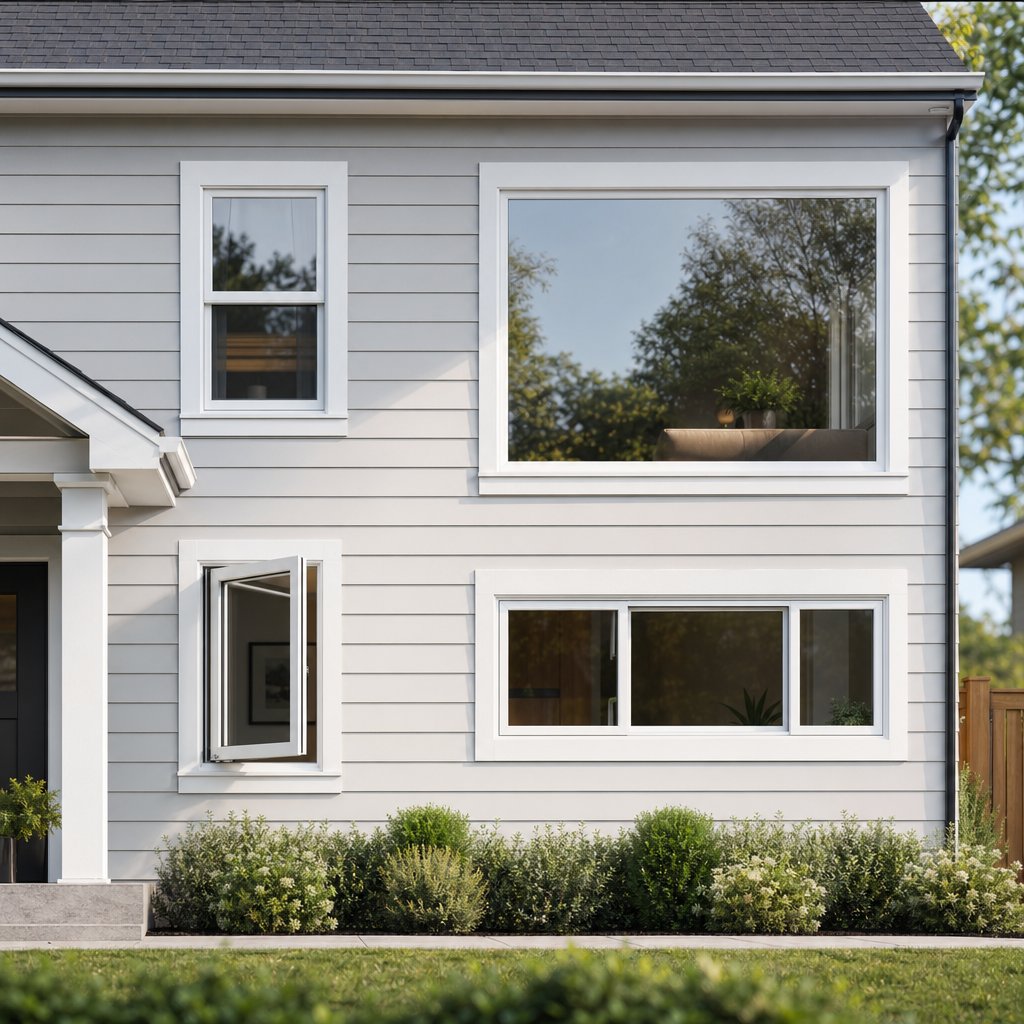
What Aluminium Window Ranges Actually Mean
Search for aluminium windows and you will find endless lists of casement, sliding, awning, and fixed options. Helpful, sure — but it skips a layer of decision-making that professionals rely on every day. Before you choose a window type, you need to choose a range.
An aluminium window range is a family of products built on a shared frame platform, designed to a common performance tier and aesthetic standard. It groups multiple window types — casement, sliding, awning, and others — under one engineered system with consistent thermal, structural, and hardware specifications.
Defining Aluminium Window Ranges
Think of it this way: a casement window is a style of opening. A range is the engineering platform behind it. The same casement design can appear in an entry-level range with a basic frame and single seal, or in a premium range with a thermally broken profile, multi-point locking, and heavy-duty hinges rated for coastal exposure. The window type stays the same; the range determines how it actually performs in your wall.
Manufacturers structure their catalogues this way because different projects demand different capabilities. A single-storey renovation in suburban Melbourne has very different structural and thermal needs compared to a multi-storey apartment block facing the Brisbane coastline. Ranges let suppliers — and buyers — match the right level of engineering to the right application without over-specifying or cutting corners.
Why Ranges Matter for Buyers and Specifiers
When you understand how ranges work, comparing quotes becomes far more straightforward. Two suppliers might both offer alu windows described as “casement, powder-coated, double-glazed” — yet one quote sits on an entry-level platform while the other draws from a premium architectural range with wider thermal breaks and superior weather seals. Without knowing the range tier, you are comparing apples to oranges.
For specifiers writing window schedules, selecting the correct range upfront avoids costly mid-project substitutions. For homeowners, it means understanding why one set of aluminium windows costs noticeably more than another that looks almost identical on paper. The difference lives inside the frame — in profile depth, thermal break width, hardware grade, and maximum span capability.
Those internal differences are exactly what separates one product family from the next, and they start with how manufacturers organise their offerings into structured tiers.
How Manufacturers Structure Their Product Ranges
Every aluminium windows manufacturer organises its catalogue around a handful of defining axes. These aren’t random marketing labels — they reflect real engineering decisions baked into the extrusion dies, hardware selections, and testing protocols behind each product family. Four primary axes shape the structure you’ll encounter across most aluminium window manufacturers in Australia and internationally.
The first axis is performance tier — entry, mid, or premium. The second is sightline width — how much frame you see from inside the room. The third is application type — residential, commercial, or architectural. And the fourth is opening mechanism family — casement, sliding, awning, fixed, and so on. A single range typically locks in a position on the first three axes and then offers multiple opening types within that envelope.
Here’s the critical point most product brochures gloss over: the same window type — a casement, for instance — can sit in three or four completely different ranges. An entry-level casement might use a 52 mm frame depth with a basic polyamide thermal break and standard friction stays. A premium-tier casement from the same manufacturer could feature a 72 mm profile, a multi-chamber thermal break, stainless steel heavy-duty hinges, and structural ratings suitable for high-rise applications. Same opening style, vastly different capability.
Performance Tiers From Entry-Level to Architectural Grade
Entry-level ranges target cost-sensitive residential projects — renovations, standard new builds, and smaller openings where extreme wind loads or acoustic demands aren’t a factor. Profiles are thinner, thermal breaks are narrower, and maximum panel sizes are more limited. They comply with the National Construction Code but don’t push far beyond minimum requirements.
Mid-range tiers step up in profile depth, seal complexity, and hardware durability. These suit most new residential builds across Australian climate zones, including coastal areas where corrosion resistance and weather performance matter. They accommodate thicker glazing units and offer better U-values without the price premium of top-tier systems.
Premium and architectural-grade ranges are engineered for demanding scenarios: multi-storey facades, large-span openings, cyclone-rated zones in northern Queensland, or design-driven projects where minimal sightlines and maximum glass area are non-negotiable. Testing to standards like NAFS performance classifications — which grade fenestration from residential (R) through to architectural window (AW) class — reflects the rigour built into these systems.
Sightline Width and Application Classifications
Sightline width — the visible face of the frame when the window is closed — is a tangible way to distinguish ranges at a glance. Slim-line ranges typically present 45–55 mm face widths, prioritising glass area and clean aesthetics. Standard ranges sit around 55–70 mm, balancing performance with visual weight. Robust or commercial profiles exceed 70 mm, accommodating deeper thermal breaks, heavier glass, and greater structural spans.
Application classification then layers onto this. A residential range assumes moderate wind loads, standard hardware cycles, and homeowner-level maintenance. A commercial range is built for higher usage intensity, stricter compliance documentation, and longer service life — thicker reinforced profiles designed for large glass panels and tall buildings with higher resistance to wind pressure and deflection. Architectural ranges blend the two: commercial-grade performance wrapped in slim residential aesthetics, typically at a significant cost premium.
| Categorisation Axis | Entry-Level Range | Mid-Range | Premium / Architectural Range |
|---|---|---|---|
| Performance tier | Meets minimum NCC requirements | Exceeds code; suits most climate zones | High-performance; cyclone, acoustic, or high-rise rated |
| Typical sightline width | 55–70 mm (standard) | 50–65 mm (standard to slim) | 45–55 mm (slim) or 70 mm+ (heavy-duty) |
| Application focus | Residential renovation, budget new builds | Residential new builds, low-rise commercial | Multi-storey, architectural, high-exposure |
| Thermal break | Basic or none (internal use) | Standard polyamide strip | Wide multi-chamber polyamide system |
| Hardware grade | Standard residential | Enhanced residential / light commercial | Heavy-duty, high-cycle commercial |
| Typical opening types offered | Casement, awning, sliding, fixed | All standard types plus bi-fold | Full suite including pivot, tilt-and-turn |
This grid isn’t universal — every manufacturer draws its boundaries slightly differently — but the logic is consistent. Understanding where a product sits across these four axes tells you more about what you’re actually buying than any glossy render ever will. And among those axes, frame profile dimensions deserve particular attention, because the physical depth of the extrusion is what ultimately determines glazing options, thermal break capacity, and maximum achievable span.
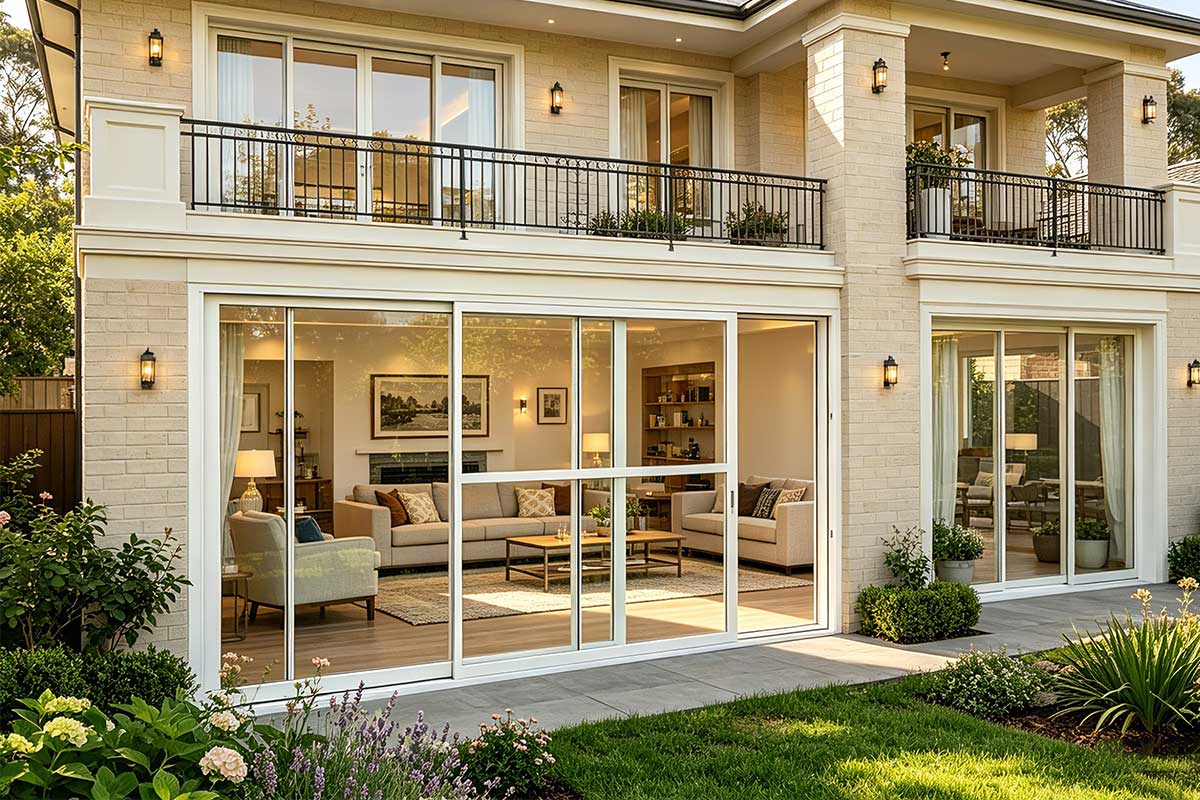
Window Types You Will Find Across Ranges
Knowing the types of aluminium windows is one thing. Knowing how the same type behaves in a budget frame versus a premium system — that’s where specification decisions get real. Every opening mechanism carries its own engineering demands, and range tier placement determines whether those demands are met with basic components or high-performance hardware designed for decades of reliable cycling.
Below is a quick reference showing where each type typically sits across range tiers:
- Fixed windows — Available across all tiers (entry, mid, premium). No moving parts, so tier differences show up in profile depth, glazing capacity, and maximum panel size rather than hardware.
- Casement windows — Available across all tiers. Entry-level uses friction stays and basic seals; premium tiers use concealed heavy-duty hinges, multi-point locks, and enhanced weather ratings.
- Awning windows — Available across all tiers. Hinge quality and maximum sash weight increase significantly with tier.
- Aluminium sliding windows — Available across all tiers. Track systems, roller quality, and interlock seals improve dramatically from entry to premium.
- Double-hung windows — Typically mid-range and above. Spiral balances and tilt-in hardware add complexity that entry ranges rarely support.
- Bi-fold windows — Mid-range and premium only. Multi-panel folding mechanisms require robust profiles and precision hardware.
- Pivot windows — Premium and architectural ranges only. Large panel weights and specialised pivot gear demand heavy-duty frame engineering.
Casement and Awning Windows Across Ranges
The aluminium casement window is arguably the most common opening type in Australian residential construction. In an entry-level range, you’ll typically find standard friction stays rated for sash weights up to around 20–25 kg, a single weather seal, and maximum panel heights limited to roughly 1200–1400 mm. These perform adequately for standard openings in sheltered locations.
Step into a mid-range system and the hardware shifts noticeably. Expect concealed or semi-concealed hinges rated for heavier sashes, dual weather seals improving water resistance, and panel sizes that stretch beyond 1500 mm in height. Premium architectural ranges push further — stainless steel concealed hinges handling sash weights above 50 kg, triple-seal weather systems tested to severe exposure ratings, and panel dimensions that allow floor-to-ceiling glazing in single sashes.
Awning windows follow a parallel trajectory. The top-hung hinge design means water management is critical — premium ranges incorporate chain winders or lever-controlled mechanisms with integrated drainage channels that entry-level systems simply don’t offer. In cyclone-prone regions of northern Australia, awning windows specified from premium ranges carry structural ratings that entry products can’t achieve, regardless of how they’re glazed.
Sliding and Double-Hung Aluminium Windows
An aluminium sliding window in an entry-level range typically rides on nylon rollers within a basic single track, with a simple brush or fin seal between panels. It works — but over time, rollers wear, tracks collect debris, and air infiltration increases. Mid-range systems upgrade to stainless steel tandem rollers, deeper tracks that resist deflection, and improved interlocking seals that significantly reduce air leakage and improve acoustic performance.
Premium sliding ranges take this further with features like lift-and-slide mechanisms where the sash lifts off its seals during operation for effortless movement, then drops back into compression when closed. Maximum panel widths expand considerably — where an entry range might cap at 1.5 m wide panels, an architectural system can support panels exceeding 3 m with appropriate glass thickness.
Aluminium double-hung windows add another layer of complexity. The vertical sliding mechanism requires balances (typically spiral or constant-force systems) to counterweight the sash, plus tilt-in functionality for cleaning access. This mechanical complexity explains why double-hung options rarely appear in entry-level ranges — the hardware simply doesn’t exist at that price point. Mid-range and premium tiers offer smooth operation through precision-engineered balance systems, with premium versions adding features like finger-tip tilt release and enhanced acoustic seals between meeting rails.
Specialty Types Including Bi-Fold and Pivot
Bi-fold and pivot windows occupy the upper end of most manufacturers’ catalogues for good reason. A bi-fold window system must support multiple hinged panels folding in sequence, which demands precise alignment, heavy-duty top and bottom track systems, and robust stacking hardware. The accumulated weight of three, four, or five glass panels folding together requires frame profiles with enough structural depth to prevent deflection — something slim entry-level extrusions simply cannot deliver.
Pivot windows present their own challenge. A centre-pivot or top-pivot sash rotates within the frame, meaning the hardware must support the full panel weight at a single pivot point while maintaining weather seals through the rotation arc. These mechanisms only appear in premium and architectural ranges where frame depth, hardware engineering, and manufacturing tolerances are tight enough to keep the system weather-tight over thousands of cycles.
This relationship between opening mechanism and range tier reinforces an important principle: you don’t just choose a window type — you choose a type within a range. And the physical envelope that makes specialty types possible starts with one fundamental measurement — the frame profile itself.
Frame Profiles From Slim-Line to Heavy-Duty
Frame profile dimensions are the DNA of any aluminium window range. The depth and face width of the extruded aluminium window frames dictate everything downstream — how much glass you can fit, how wide the thermal break can be, how large a span the frame can bridge without deflection, and ultimately how the window looks from both inside and outside the room.
Most aluminium frames for windows fall into three broad categories based on face width: slim-line (roughly 45–55 mm), standard (55–70 mm), and heavy-duty or commercial (70 mm and above). Each category represents a deliberate trade-off between visual minimalism and raw performance capability.
Slim-Line Profiles and Their Trade-Offs
Slim-line aluminium window frames exist to maximise the glass-to-frame ratio. With face widths as narrow as 45–50 mm, they deliver the clean, contemporary aesthetic that drives much of the demand for metal frame windows over bulkier alternatives. Industry comparisons show leading slim-line systems achieving fixed-frame sightlines between 39 mm and 54 mm — tight enough that the frame nearly disappears into the wall reveal.
The compromise? Physics. A shallower profile means less internal space for thermal break material, which limits insulation performance. It also reduces the moment of inertia — the frame’s resistance to bending under wind load — so maximum panel sizes are smaller. For standard residential openings in sheltered locations, slim-line profiles perform beautifully. Push them into exposed coastal sites or oversized openings and they hit their structural ceiling quickly.
Standard and Heavy-Duty Frame Systems
Standard profiles in the 55–70 mm range represent the workhorse tier for most Australian residential and low-rise commercial projects. The additional depth accommodates wider polyamide thermal breaks (typically 20–35 mm), thicker insulated glass units, and the hardware reinforcement needed for larger sashes. You get a meaningful improvement in weather resistance and energy performance without the visual bulk of a commercial section.
Heavy-duty profiles — 70 mm and deeper — unlock the full performance envelope. Engineering data from high-performance systems shows that a 71 mm frame depth can house thermal breaks up to 39 mm wide while supporting panel areas exceeding 8 m² per sash. These are the profiles specified for multi-storey facades, cyclone-rated zones, and architectural projects demanding floor-to-ceiling glazing at serious structural spans. An aluminium frame window in this class handles loads that would buckle a slim-line extrusion.
| Profile Category | Typical Face Width | Frame Depth | Glazing Capacity | Best-Fit Applications |
|---|---|---|---|---|
| Slim-line | 45–55 mm | 44–52 mm | Double glazed IGUs up to ~24 mm | Standard residential, design-driven projects, sheltered sites |
| Standard | 55–70 mm | 52–65 mm | Double glazed IGUs up to ~32 mm; some triple-glazed units | New residential builds, low-rise commercial, moderate exposure |
| Heavy-duty / Commercial | 70 mm+ | 65–80 mm+ | Triple glazed IGUs 36–44 mm+; laminated acoustic units | Multi-storey, high-wind zones, cyclone-rated, large-span openings |
Profile choice is never purely aesthetic or purely structural — it’s always both. A slim frame looks stunning in a protected courtyard elevation but may not satisfy NCC requirements on a wind-exposed upper storey. Conversely, specifying a heavy-duty commercial section for a ground-floor bathroom wastes budget and adds unnecessary visual weight. The skill lies in matching profile category to each opening’s actual demands.
What sits inside that profile depth matters just as much as the depth itself. The thermal break — the insulating barrier engineered into the heart of the aluminium extrusion — is where energy performance is won or lost, and its size is directly constrained by the frame category you select.
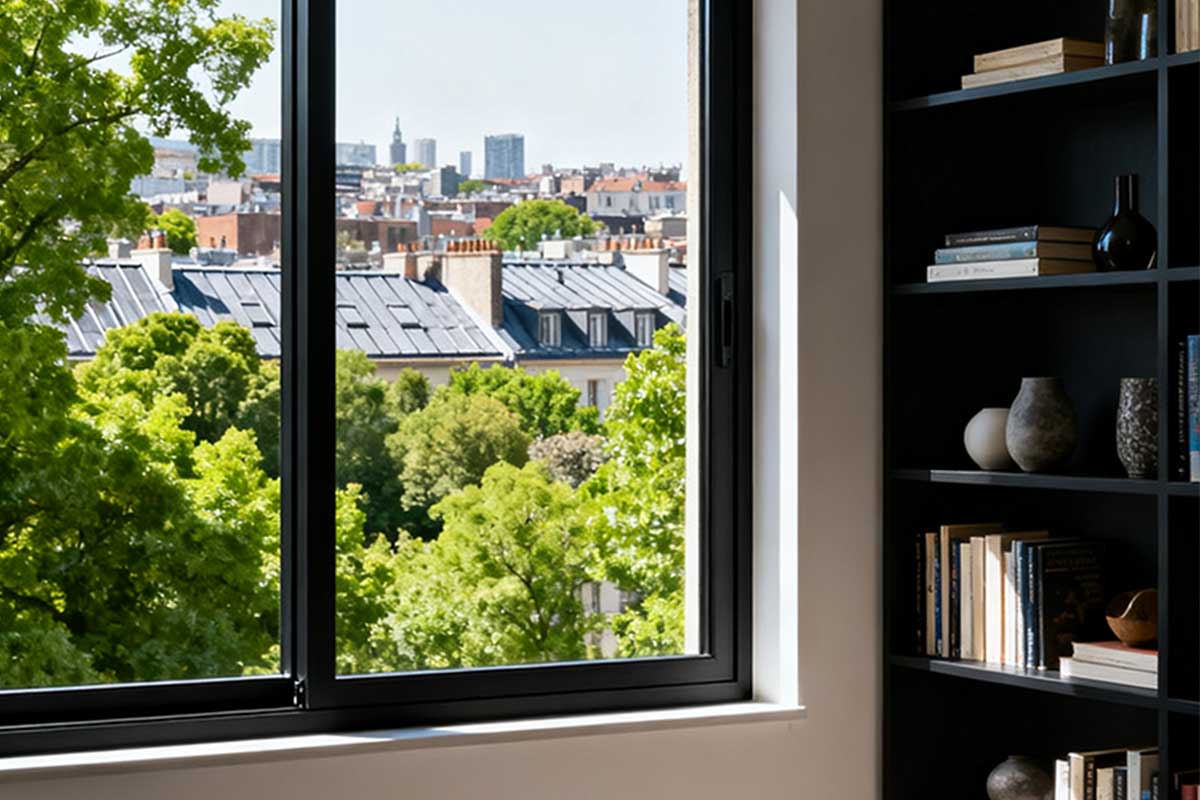
Thermal Break Technology and Energy Performance Tiers
Aluminium conducts heat roughly 1,000 times more efficiently than polyamide — the insulating material used to interrupt that conductivity inside the frame. This single fact explains why aluminium window framing without a thermal break performs so poorly in energy terms, and why the thermal break itself is the most consequential variable separating one range tier from another.
Anyone who has lived with 1970s aluminium windows knows the problem firsthand: ice-cold frames in winter, condensation streaming down the glass, and energy bills that reflect a building envelope working against you rather than for you. Modern thermally broken systems exist specifically to eliminate that legacy.
How Thermal Breaks Work in Aluminium Frames
A thermal break is a continuous strip of low-conductivity material — typically glass-fibre-reinforced polyamide — mechanically crimped between the interior and exterior aluminium profiles. It physically separates the two halves of the frame, creating an insulation zone that blocks conductive heat transfer through the aluminum window frame material.
The width of this strip matters enormously. Entry-level aluminium window ranges typically incorporate polyamide strips between 14 and 20 mm wide — enough to improve on a non-broken frame, but limited by the shallow profile depth available. Mid-range systems push to 20–24 mm, while premium multi-chamber thermal break designs in architectural ranges reach 30–35 mm or more, with complex geometries that extend the thermal pathway and sometimes include foam inserts for additional resistance.
Each millimetre of additional thermal break width translates directly to better insulation. It’s not a subtle difference — it’s the gap between a frame that merely complies with minimum NCC energy requirements and one that achieves passive-house-level performance.
Performance Differences Between Range Tiers
U-value — measured in W/m²K — quantifies how much heat passes through a window assembly. Lower numbers mean better insulation. The spread across aluminium ranges is dramatic:
- Non-thermally-broken aluminium (older systems or internal-only applications): frame U-values around 5.8–7.0 W/m²K
- Entry-level thermally broken ranges (basic polyamide strip, narrow profile): frame U-values around 2.5–3.5 W/m²K
- Premium multi-chamber ranges (wide thermal breaks, advanced geometry): frame U-values as low as 0.8–1.5 W/m²K
In practical terms, upgrading from a non-broken frame to a quality thermally broken system can reduce total window heat loss by 20–30 per cent. For homes with generous glazing — and aluminium double glazed windows are increasingly popular in Australian design — that reduction translates to measurably lower heating and cooling bills, fewer cold spots near glass walls, and near-total elimination of frame condensation.
This is where aluminium framed windows have closed the gap on inherently insulating materials like timber and uPVC. A premium aluminium glazed window with a 30 mm+ multi-chamber thermal break and high-performance double pane glass now rivals — or exceeds — the thermal performance of standard uPVC frames, while retaining aluminium’s structural advantages in strength, longevity, and slimmer sightlines.
Thermal performance sets the floor for what a window can achieve energy-wise. But the frame’s ability to accommodate different glass types — from standard aluminium double pane windows through to heavy acoustic laminates and triple-glazed units — is equally constrained by profile depth, and it opens another layer of specification decisions.
Glass Options and Glazing Compatibility
Frame depth doesn’t just determine structural capacity and thermal break width — it also dictates which glass configurations you can physically install. The relationship between aluminium and glass is governed by a simple constraint: the profile’s glazing rebate must be deep enough to accept the insulated glass unit (IGU) plus gaskets, drainage, and glazing beads. Choose a slim-line range and your glass options narrow. Specify a deeper profile and the full spectrum of high-performance glazing opens up.
How Frame Depth Determines Glazing Options
Every IGU has an overall thickness determined by its pane count, pane thickness, and cavity width. A standard residential double-glazed unit — two 4 mm panes with a 12–16 mm gas-filled cavity — typically measures 20–24 mm overall. This fits comfortably within slim-line aluminium frames designed around 44–52 mm profile depths.
Thicker double-glazed units with low-E coatings and wider argon-filled cavities (16–20 mm) push overall IGU thickness to 28–32 mm. These need a standard-depth aluminum glass frame — roughly 55–65 mm — to maintain proper gasket compression and drainage clearance. Try to force a 32 mm unit into a shallow rebate and you compromise the seal integrity that keeps moisture and air out.
Triple glazing adds a third pane and second cavity, producing IGUs between 36 and 44 mm thick. Premium triple-glazed aluminium systems employ three panes of 4–6 mm glass separated by 12–20 mm cavities filled with argon or krypton gas. Accommodating that kind of unit requires heavy-duty profiles — 65 mm depth or greater — which is why triple glazing rarely appears in entry-level or slim-line ranges. The frame simply can’t hold it.
Acoustic and Safety Glass Compatibility
Acoustic glass introduces laminated interlayers — PVB or specialist acoustic resin films — sandwiched between glass panes to dampen sound transmission. These interlayers add thickness and weight. A laminated acoustic IGU might measure 32–38 mm overall while weighing substantially more per square metre than a standard unit. The aluminum frame for glass of this weight needs reinforced mullions, heavier-duty hardware, and deeper glazing channels to distribute the load without frame deflection.
Safety glass requirements under AS 1288 mandate toughened or laminated panes in specific locations — near doors, at low level, in bathrooms, and in overhead glazing. Toughened glass doesn’t change thickness but laminated safety glass adds at least 0.76 mm of interlayer per bonded pair, which compounds across multi-pane IGUs. In applications requiring both acoustic attenuation and safety compliance, the glass aluminium frame combination must accommodate units pushing 40 mm or beyond — firmly in premium-range territory.
Here’s a practical reference for matching glazing types to minimum frame depths:
- Single glazing (4–6 mm) — Any frame depth; typically older or internal-only ranges
- Standard double glazing (20–24 mm IGU) — Minimum ~44 mm profile depth (slim-line ranges)
- Enhanced double glazing with low-E and wider cavity (28–32 mm IGU) — Minimum ~55 mm profile depth (standard ranges)
- Laminated acoustic double glazing (32–38 mm IGU) — Minimum ~60 mm profile depth (standard to heavy-duty ranges)
- Triple glazing (36–44 mm+ IGU) — Minimum ~65 mm profile depth (heavy-duty and premium ranges only)
The aluminium glass pairing you select isn’t just about thermal performance or noise control in isolation — it shapes the entire window specification. Thicker, heavier units demand beefier profiles, upgraded hardware, and sometimes structural reinforcement at the opening. This cascading effect is one reason aluminium window ranges exist as tiered systems in the first place: each tier is engineered to support a defined envelope of glass options without compromise.
Glass choice also intersects with the broader question of material performance. When buyers weigh aluminium against uPVC, timber, or composite frames, glazing capacity — particularly for oversized or heavy units — becomes one of aluminium’s clearest competitive advantages.
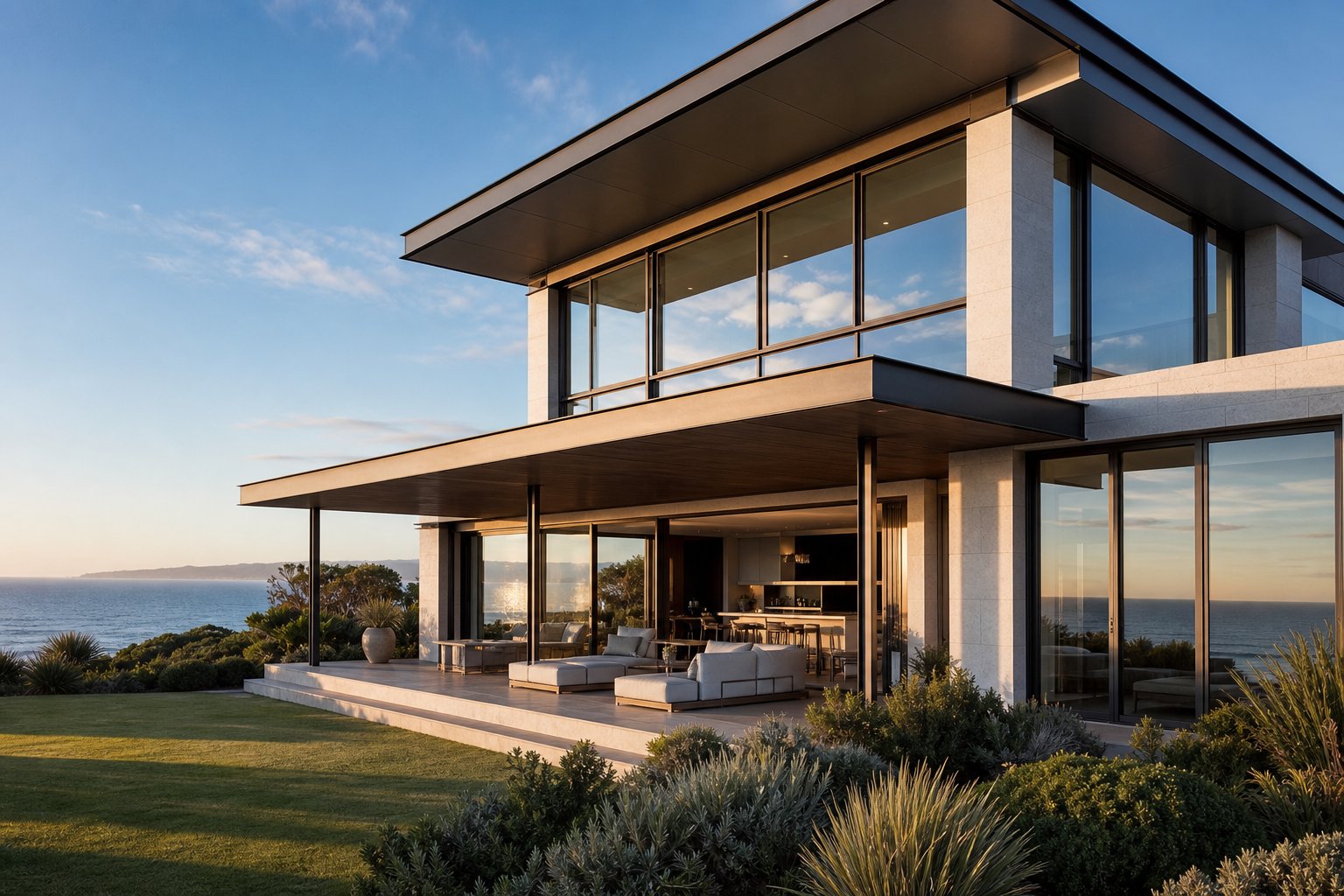
Aluminium Compared to Other Window Materials
Glazing capacity is one piece of the puzzle — but most buyers weighing aluminium doors and windows against the alternatives are asking a broader question: is aluminium actually the right material for my project, or am I paying a premium for something uPVC or timber could handle just as well? The honest answer depends on which performance criteria matter most to you.
Aluminium vs uPVC and Timber Frames
Aluminium’s core advantage is its strength-to-weight ratio. That structural efficiency allows frame profiles as slim as 35 mm — roughly half the face width of a typical uPVC section — which translates to up to 20 per cent more visible glass area for the same opening size. For contemporary aluminium windows where maximising natural light and views is the design intent, no other material comes close on sightlines.
Where aluminium concedes ground is thermal conductivity. The raw material conducts heat around 1,000 times faster than uPVC or timber. Without a thermal break, all aluminum windows would bleed energy at a rate that makes compliance with the NCC impossible in conditioned spaces. Modern thermally broken systems close this gap significantly — premium ranges achieve frame U-values approaching 1.4–1.6 W/m²K — but standard uPVC and timber frames still edge ahead at 1.2–1.4 W/m²K thanks to inherently insulating base materials.
On lifespan, aluminium dominates. Quality aluminium frames typically last 30–50 years with virtually no maintenance beyond occasional cleaning and hardware lubrication. uPVC delivers 20–35 years before seals degrade and frames potentially warp — at which point replacement is the only option, since uPVC cannot be repaired the way timber can. Hardwood timber matches aluminium on longevity (50–60 years for species like cedar or spotted gum) but demands repainting or oiling every 5–7 years to prevent moisture damage.
Timber-aluminium composite frames — sometimes marketed as an aluminum clad window system — attempt to combine the best of both: timber on the interior for warmth and aesthetics, aluminium on the exterior for weather resistance. They perform well thermally and suit heritage contexts, though at a cost premium that often exceeds even high-end aluminium window designs.
| Criteria | Aluminium (Thermally Broken) | uPVC | Timber (Hardwood) | Timber-Aluminium Composite |
|---|---|---|---|---|
| Expected lifespan | 40–50+ years | 20–35 years | 50–60+ years (maintained) | 40–50+ years |
| Maintenance | Minimal (clean and lubricate) | Minimal | High (repaint every 5–7 years) | Low to moderate |
| Typical frame U-value | 1.4–1.6 W/m²K | 1.2–1.4 W/m²K | 1.2–1.4 W/m²K | 1.2–1.5 W/m²K |
| Minimum sightline width | 35 mm | 70 mm+ | 55 mm+ | 55–65 mm |
| Maximum practical span | Very large (heavy-duty ranges) | Moderate (reinforcement needed) | Moderate to large | Large |
| Recyclability | Infinite (no quality loss) | Limited (10+ cycles possible) | Biodegradable; carbon-negative if sourced responsibly | Partially recyclable |
| Cost positioning | Mid to high | Low to mid | High | Highest |
When Aluminium Is the Strongest Choice
Material selection should follow project context rather than personal taste. Aluminium ranges outperform alternatives in several clearly defined scenarios:
- Large openings and floor-to-ceiling glazing — Structural strength supports oversized panels without the bulky reinforcement uPVC requires or the weight penalty of solid timber.
- Coastal and high-exposure sites — Marine-grade powder coating resists salt air corrosion far better than timber in equivalent conditions, and uPVC can become brittle under sustained UV. Aluminum residential windows with appropriate coastal specifications handle these environments comfortably over decades.
- Commercial and multi-storey applications — Fire resistance, structural ratings, and compliance with high-rise building codes often make aluminium the only practical option above a few storeys.
- Design-driven contemporary architecture — Minimal sightlines and virtually unlimited powder-coat colour choices give architects freedom that thicker-framed materials can’t match.
- Sustainability-conscious projects — Aluminium is infinitely recyclable without quality degradation, using only 5 per cent of the energy needed to produce virgin material. Most end-of-life uPVC still goes to landfill.
Conversely, if your project sits within a heritage overlay zone requiring traditional aesthetics, timber remains the appropriate choice. And for budget-driven standard replacements where maximum thermal efficiency matters more than sightline width or lifespan, uPVC delivers strong value at a lower entry point.
The takeaway: no single material wins on every axis. But for projects prioritising longevity, slim aesthetics, large spans, or low lifetime maintenance, aluminium ranges consistently come out ahead — especially once you move into mid-tier and premium systems where advanced thermal breaks neutralise the material’s one inherent weakness. Choosing the right range tier within aluminium, however, depends heavily on your specific project type and the demands it places on performance, compliance, and budget.
Matching the Right Range to Your Project Type
Material choice narrows the field. Range selection finishes the job. Two projects using thermally broken aluminium can still land on completely different product families depending on where they’re built, how tall they stand, what loads they face, and which codes they must satisfy. Project context — not personal taste — should drive the decision.
A homeowner renovating a single-storey weatherboard in suburban Adelaide faces a fundamentally different specification challenge than an architect detailing a 12-storey mixed-use tower in Parramatta. Both need aluminium windows. Neither needs the same range. Climate zone, NCC energy requirements, acoustic exposure, wind classification, bushfire attack level (BAL), and even council heritage overlays all act as filters that progressively eliminate unsuitable product families until the right tier emerges.
Residential Projects and Renovation Considerations
For new residential builds, mid-range systems suit the majority of Australian projects. These deliver compliant thermal performance, accommodate standard and enhanced double glazing, and offer the full suite of opening types — casement, awning, sliding, and bi-fold — in sizes appropriate for typical storey heights. Coastal properties within salt-spray zones need ranges with marine-grade powder coating and hardware rated for corrosive environments, which may push the specification from mid-range into premium territory even for a modest single-storey home.
Renovation projects introduce a different constraint: existing openings. Replacing old non-thermally-broken frames in a 1980s brick-veneer house rarely requires a premium architectural range — but it does demand a system flexible enough to accommodate non-standard reveal sizes without excessive packing or trimming. When sourcing an aluminium replacement window for an older home, confirm that the chosen range offers custom sizing down to the millimetre, because standard modular dimensions almost never align with existing brickwork openings.
Heritage restorations add another layer. Council heritage overlays sometimes mandate specific sightline widths, profile shapes, or colour finishes that replicate the original joinery character. Slim-line ranges with narrow face widths can satisfy these requirements while delivering modern thermal performance — a combination that bulkier standard profiles cannot achieve.
Commercial and Multi-Storey Range Requirements
Commercial aluminium windows operate under a stricter performance envelope. Wind load ratings escalate with building height, acoustic requirements tighten near arterial roads and flight paths, and fire-resistance provisions under the NCC add constraints that residential ranges are not engineered to meet. Commercial window frames must carry certification to AS 2047 at higher design pressures, and the testing documentation needs to be project-specific — not just generic catalogue data.
For multi-storey residential and commercial fit-outs, specifiers typically work within premium or architectural-grade ranges that support:
- Large-format commercial sliding windows with heavy-duty track systems rated for high-cycle operation in common areas
- Structural glazing solutions for aluminium storefront windows at ground level
- Acoustic-rated IGUs in deeper frame profiles for units facing traffic corridors
- Cyclone-rated assemblies for projects in northern Queensland and the NT
These projects also demand a different supplier relationship. A homeowner can select windows from a showroom display; a developer coordinating commercial aluminium windows and doors across 200 apartments cannot. The process starts with architectural drawings and window schedules, moves through system recommendations and material calculations, then into manufacturing coordination, quality control, and staged delivery planning aligned with construction sequencing.
Project-capable suppliers like MEICHEN support this full workflow — from initial drawings and window schedules through to system recommendations, manufacturing coordination, and logistics — helping professionals navigate range selection for complex builds where getting the specification wrong at tender stage means costly redesigns months later.
Whether the project is a modest kitchen renovation or a multi-storey commercial development, the selection logic follows the same principle: define the performance envelope first, then find the range that meets it. The difference is complexity — and the number of variables feeding into the quote that follows.
Working With Suppliers on Range Selection and Quotes
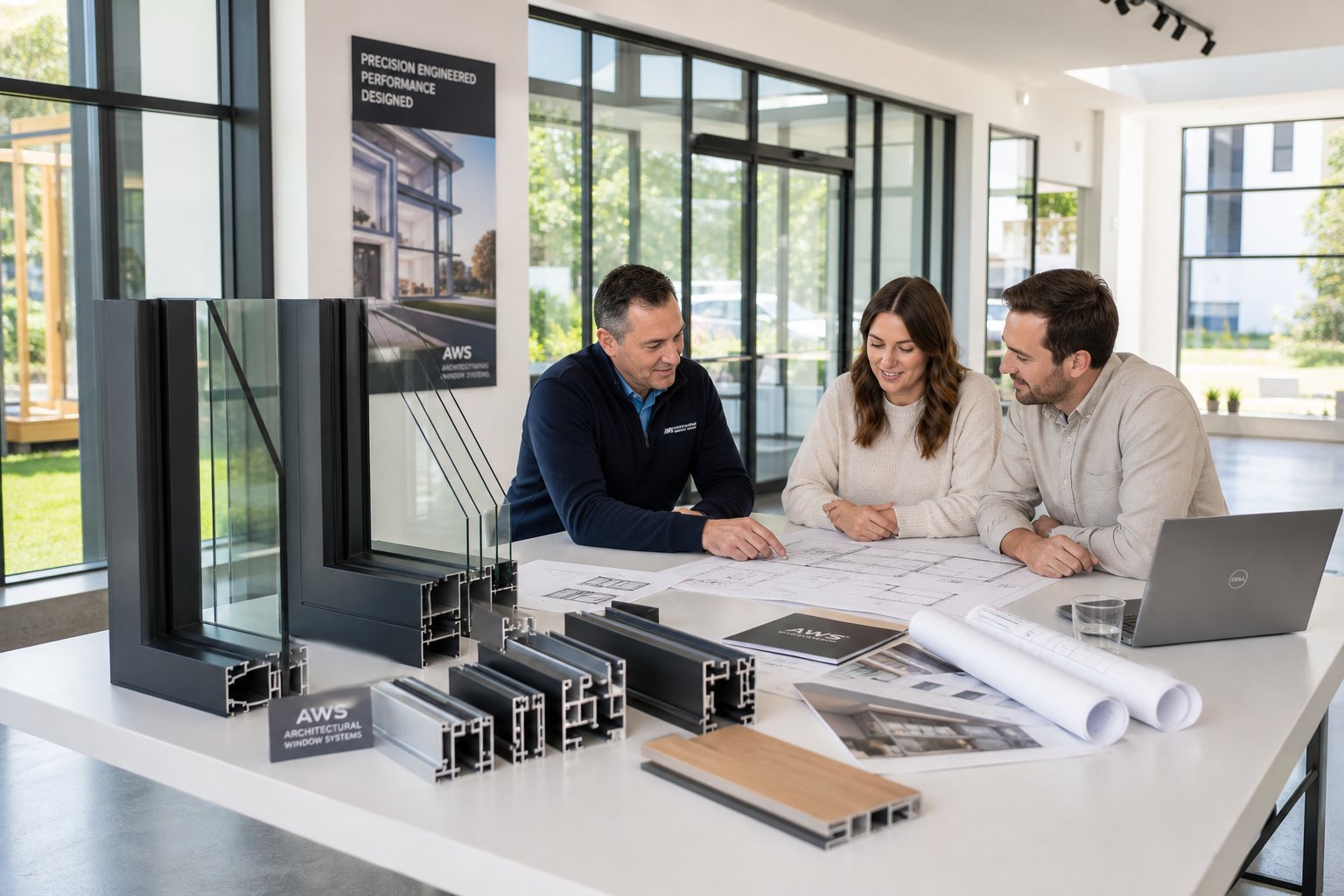
Selecting a range is a specification decision. Procuring it is a supplier relationship — and the gap between those two steps catches more buyers off guard than any technical detail in the frame profile. Most people expect aluminium window pricing to work like buying a commodity: pick a size, choose a colour, get a number. In reality, the quote process for aluminium window supplies involves a matrix of interdependent variables that shift the final figure dramatically depending on how — and how well — you brief your supplier.
What Drives an Aluminium Window Quote
A meaningful quote requires far more input than most buyers initially provide. Before approaching aluminium window suppliers, you should have the following ready:
- Window schedule — Every opening listed with dimensions, type (casement, awning, sliding, fixed), and location on plan
- Performance requirements — Wind classification, acoustic ratings, BAL rating if applicable, NCC energy compliance pathway
- Glazing specification — Double or triple glazed, low-E requirements, laminated or toughened per AS 1288 locations
- Finish preferences — Standard or custom aluminium window frame colours, coating grade (architectural vs standard powder coat), and whether interior/exterior finishes differ
- Hardware level — Security grading, chain winders vs manual stays, locking system preferences
- Installation context — New build or retrofit, wall construction type, access constraints, delivery staging needs
Each variable shifts the price. A project with 40 windows in three standard colours from one range tier will quote very differently to the same 40 windows spread across two ranges, five custom colours, mixed glazing specs, and non-standard hardware. This complexity is precisely why configuration differences can produce price variations of 30–200 per cent between superficially similar quotes. Fixed per-window pricing published online — the kind you see when browsing aluminium windows for sale — rarely survives contact with real project specifics.
Even something as seemingly simple as aluminium window frame kits for retrofit installations introduces variables around sub-sill adapters, packing depths, and flashing compatibility that a generic price list cannot account for.
Evaluating Supplier Capability Beyond Price
Price comparison only works when you’re comparing equivalent scope and capability. Two aluminium window suppliers might quote within ten per cent of each other, but one delivers bare frames to your kerb while the other provides full project coordination — drawings review, system recommendations, quality inspection, protected packaging, and staged delivery matched to your construction programme.
When evaluating an aluminium windows manufacturer or fabricator, look beyond the per-unit cost:
- Technical support — Can they advise on range selection based on your performance requirements, or do they simply price what you ask for?
- Fabrication quality — What QC processes sit between raw extrusion and finished product? Corner crimping precision, seal integrity, and hardware alignment matter more than most buyers realise until something fails on site.
- Lead time reliability — A cheap quote means nothing if windows arrive six weeks late, stalling your plasterer, painter, and handover deadline.
- Logistics and delivery coordination — Staged delivery to match floor-by-floor installation on a multi-storey project prevents site damage and storage headaches.
- Documentation — Compliance certificates, WERS ratings, test reports to AS 2047 — these aren’t optional extras. They’re what your certifier needs at completion.
For builders, developers, and procurement teams managing complex specifications, MEICHEN’s Services and Solutions page illustrates what comprehensive supplier support looks like in practice — covering the full arc from material calculation and system recommendations through to manufacturing coordination, quality control, and delivery planning. It’s a useful benchmark for understanding what to expect from a project-capable partner versus a supplier offering price-only quotations.
The difference between a smooth window procurement and a painful one almost always comes down to how early you engage the right supplier, how clearly you communicate your project’s specific demands, and whether your chosen partner has the depth of capability to solve problems before they reach the job site — not just ship product and move on.
Frequently Asked Questions About Aluminium Window Ranges
1. What is the difference between an aluminium window range and a window type?
A window type refers to how the window opens — casement, sliding, awning, or fixed. An aluminium window range is the engineered platform behind it: a family of products sharing the same frame depth, thermal break grade, hardware tier, and structural rating. The same casement window can exist in an entry-level range with basic seals and friction stays, or in a premium architectural range with concealed heavy-duty hinges, multi-point locking, and cyclone-rated weather performance. Range determines real-world capability; type determines how you open and close it.
2. How do I choose the right aluminium window range for my project?
Start with project context rather than personal preference. Your climate zone, NCC energy requirements, wind classification, acoustic exposure, bushfire attack level (BAL), and opening sizes all act as filters that narrow the field. Standard residential renovations in sheltered locations typically suit mid-range systems, while coastal homes, multi-storey buildings, and large-span openings require premium or architectural-grade ranges. Working with a project-capable supplier like MEICHEN — who can review your drawings, recommend systems, and coordinate manufacturing — helps ensure the specification matches your actual performance envelope without over-spending or under-specifying.
3. Why are some aluminium windows so much more expensive than others that look the same?
The visible differences between aluminium window ranges are subtle — most of the engineering sits inside the frame. Price variations stem from profile depth (which determines glazing capacity and structural span), thermal break width (the single biggest energy performance factor), hardware grade (standard residential vs heavy-duty commercial hinges and locks), seal complexity (single vs triple weather seals), and powder coating specification (standard vs architectural-grade finishes). Two windows can appear nearly identical externally while one delivers dramatically better thermal performance, weather resistance, and longevity due to its range tier.
4. Can aluminium windows achieve the same thermal performance as uPVC or timber?
Modern premium aluminium ranges with wide multi-chamber thermal breaks (30 mm or more) achieve frame U-values approaching 1.4–1.6 W/m²K, which closely rivals standard uPVC and timber frames at 1.2–1.4 W/m²K. The gap has narrowed significantly from the days of non-thermally-broken aluminium frames that sat around 5.8–7.0 W/m²K. While aluminium’s raw material conducts heat roughly 1,000 times faster than polyamide, the engineered thermal break in mid-to-premium ranges effectively neutralises this disadvantage for most Australian climate zones.
5. What information do I need before requesting an aluminium window quote?
Prepare a window schedule listing every opening with dimensions, type, and plan location. Include performance requirements such as wind classification, acoustic ratings, and BAL rating if applicable. Specify glazing preferences (double or triple, low-E, laminated locations per AS 1288), finish details including frame colours and coating grade, hardware level, and installation context (new build vs retrofit, wall type, access constraints). Without these details, quotes remain unreliable estimates. Configuration differences across these variables can produce price variations of 30–200 per cent between superficially similar specifications.
More Window & Door Guides