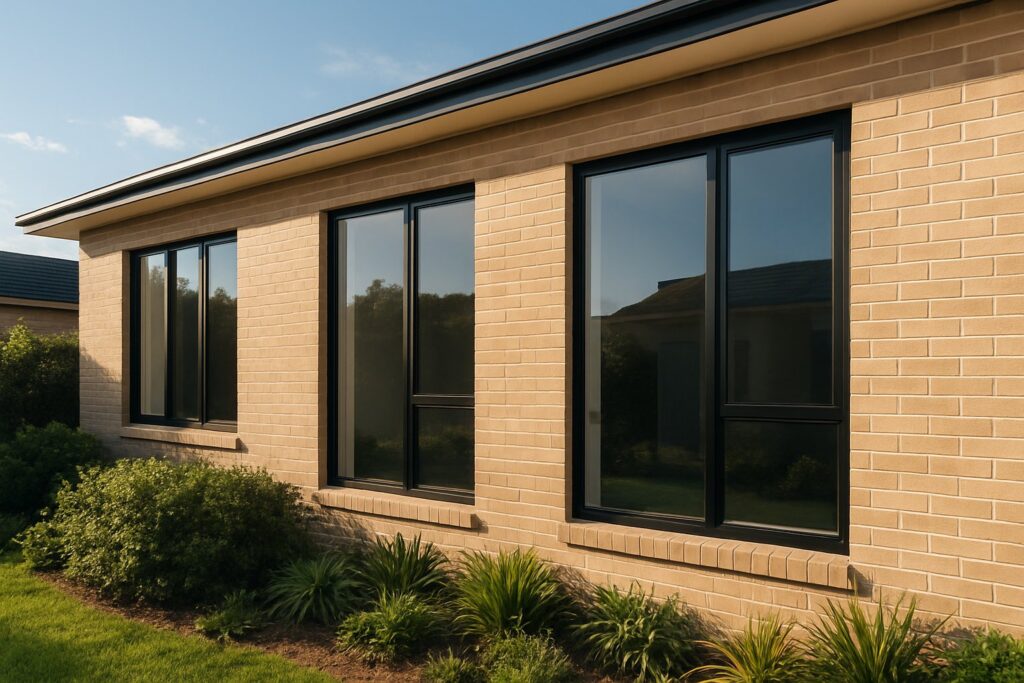
Aluminium vs UPVC Windows
Every renovation quote, every new-build specification sheet, and every builder’s conversation eventually lands on the same question: aluminium or uPVC windows for home projects? The answer shapes your property’s comfort, appearance, and running costs for decades. Yet most comparisons online hedge their bets, leaving you no closer to a decision than when you started searching.
Why This Comparison Matters for Your Project
Window frames account for roughly 20 to 30 percent of a window unit’s total thermal performance. Pick the wrong material for your climate, budget, or architectural style and you live with the consequences every time you open an energy bill or glance at your facade. Whether you are replacing weathered frames on a brick-veneer home in Melbourne or specifying glazing for a coastal new build in Queensland, understanding the aluminium vs uPVC windows pros and cons saves real money and real frustration.
What Makes This Guide Different
This is not a fence-sitting overview. Each section below evaluates one performance criterion and declares a clear winner based on current data, Australian conditions, and real-world trade-offs. By the end, you will know which is better aluminium or uPVC windows for your specific situation rather than settling for a vague “it depends.”
Here are the criteria we assess head to head:
- Thermal performance and energy efficiency (U-values, thermal breaks)
- Durability and expected lifespan under Australian conditions
- Aesthetics and design flexibility across property styles
- Upfront cost and total cost of ownership over 30 years
- Security and weather resistance (including coastal and cyclone exposure)
- Sustainability, recyclability, and environmental footprint
Each factor carries different weight depending on your property type, location, and priorities. The sections that follow break them down one by one, starting with the metric that matters most to energy-conscious Australian homeowners: thermal performance.
How We Evaluated Both Window Materials
Comparing frame materials by a single factor — price, appearance, or a neighbour’s recommendation — is the fastest way to end up with windows that underperform for your situation. A fair assessment needs structure. Here is how we approached the aluminium vs uPVC window performance criteria used throughout this guide.
Our Evaluation Criteria Explained
Each criterion below reflects what actually affects daily comfort, long-term costs, and property value for Australian homeowners. We ranked them in the order most buyers prioritise once they move past surface-level comparisons:
- Thermal performance — whole-window U-values, Solar Heat Gain Coefficient (SHGC), and compatibility with the Window Energy Rating Scheme (WERS) star ratings used in NatHERS modelling.
- Durability and lifespan — expected service life under real Australian conditions including UV exposure, salt air, and temperature cycling.
- Total cost of ownership — upfront supply-and-install pricing plus maintenance, repairs, and replacement timelines over 30 years.
- Design flexibility and aesthetics — sightline width, colour options, and suitability across common Australian home types from weatherboard cottages to contemporary rendered builds.
- Security ratings — frame strength, multi-point locking compatibility, and resistance to forced entry.
- Weather resistance — performance in coastal salt zones, cyclone-rated regions, bushfire-prone areas, and high-wind environments.
- Environmental impact — embodied energy in manufacturing, recyclability at end of life, and sustainability credentials for specification documents.
Where Australian Standards apply — AS 2047 for windows and doors, AS 1288 for glazing — we reference them directly rather than relying on overseas benchmarks.
How Property Type and Climate Affect the Verdict
There is no single best window material for my property type answer that works universally. A double-storey coastal home in northern NSW faces salt corrosion and cyclone loads that a single-storey brick-veneer in suburban Adelaide never will. A heritage-listed terrace in inner Sydney carries planning restrictions that a new estate in Perth’s outer suburbs does not.
Our recommendations account for these variables rather than treating every project identically. When you know how to compare window frame materials against your own climate zone, construction type, and budget ceiling, the right choice becomes far less ambiguous. The criteria above give that comparison a repeatable framework — and the first metric on the list, thermal performance, carries the most weight for energy-conscious builds across every Australian climate zone.
Thermal Performance and Energy Efficiency Compared
Thermal performance is where the aluminium vs uPVC debate gets genuinely technical — and where outdated assumptions lead people astray. The belief that aluminium frames bleed heat straight through your walls persists from an era before thermal break technology existed. The reality in 2025 is more nuanced, and the numbers tell a clearer story than opinions ever will.
Understanding U-Values and Thermal Breaks
A U-value measures how much heat passes through a building element per square metre for every degree of temperature difference between inside and outside. It is expressed in W/m²·K. Lower numbers mean less heat transfer — and better insulation. When comparing the aluminium window U-value vs uPVC U-value, you need to look at three distinct measurements:
- Uf — the thermal performance of the frame alone
- Ug — the thermal performance of the glass unit
- Uw — the whole-window value combining frame, glass, and spacers
Two windows can share identical glass yet deliver very different Uw results because the frame conducts heat differently. Raw aluminium has a thermal conductivity of roughly 160 to 200 W/m·K, while uPVC sits around 0.15 to 0.25 W/m·K. That gap — aluminium conducting heat hundreds of times more readily — is the source of the old reputation.
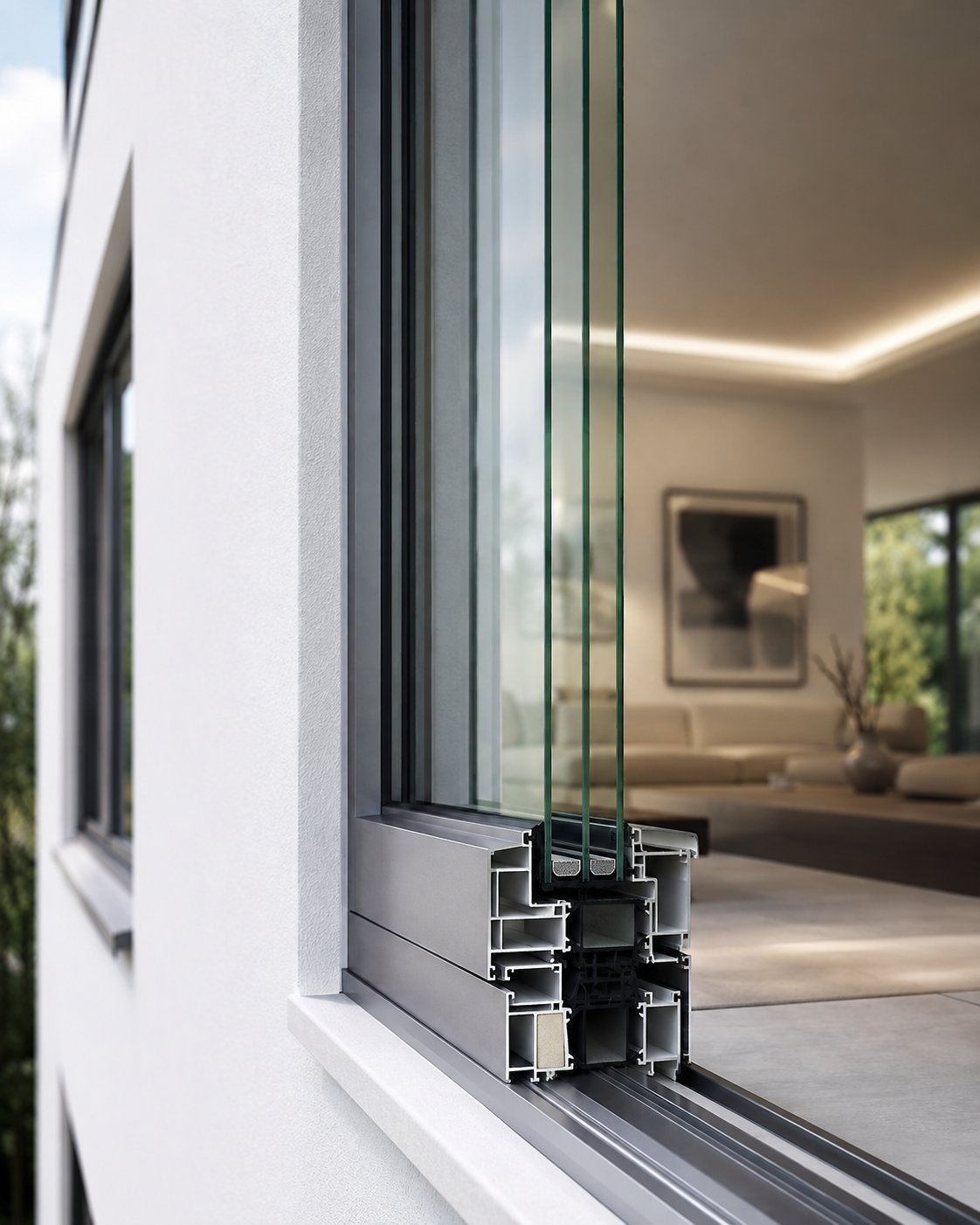
Modern thermally broken aluminium frames address this by inserting a polyamide strip between the interior and exterior aluminium sections. This insulating barrier severs the direct metal path, reducing conductivity by up to 60 percent and bringing frame performance far closer to uPVC. Without a thermal break, aluminium remains a poor insulator. With one, the gap narrows substantially — though it does not disappear entirely.
Double Glazing Performance by Frame Material
Double glazing improves any frame material, but the frame itself still accounts for a significant share of total heat transfer — particularly in window designs with heavy framing or narrow glass areas. Here is how the upvc vs aluminium windows thermal performance typically stacks up with standard double glazed configurations in Australia:
| Frame Type | Frame U-value (Uf) W/m²·K | Whole Window (Uw) W/m²·K | Notes |
|---|---|---|---|
| uPVC (multi-chamber) | 1.5 – 2.5 | 1.8 – 2.4 | Consistently low values without complex add-ons |
| Aluminium (non-thermally broken) | 5.5 – 7.0 | 3.0+ | Frame acts as a thermal bridge despite good glass |
| Aluminium (thermally broken) | 2.5 – 4.0 | 2.0 – 2.7 | Closes the gap; performance varies between systems |
Indicative ranges based on typical Australian residential products. Actual values depend on specific profiles, glass type, gas fill, spacers, and installation quality.
The double glazed aluminium window energy rating improves markedly with a thermal break — moving from a Uw above 3.0 down to the 2.0 to 2.7 range. That brings thermally broken aluminium frames energy efficiency into a comparable zone with uPVC, though multi-chamber uPVC profiles still tend to deliver slightly lower Uw values more consistently across standard residential designs.
High-performance uPVC systems paired with low-E coatings, argon gas fill, and warm-edge spacers can push whole-window values into the low 1s. Thermally broken aluminium achieves similar territory in premium configurations, but typically at a higher price point and with greater variation between manufacturers.
Building Regulation Compliance
Under the National Construction Code (NCC), window performance feeds into the overall energy efficiency requirements assessed through NatHERS modelling. There is no single mandated U-value for windows in Australia the way UK regulations specify a maximum of 1.4 W/m²·K. Instead, windows contribute to a whole-of-house energy rating, and the WERS star system helps quantify their thermal and solar performance for compliance purposes.
In practice, this means specifiers need verified performance data for the exact window configuration being installed — not just a generic claim about the frame material. A thermally broken aluminium system with documented Uw values gives architects and builders the numbers they need for NatHERS assessments. Certified aluminium systems with transparent thermal performance data, such as those detailed on MEICHEN’s compliance and certifications page, allow professionals to verify that specified products meet energy standards before installation rather than discovering shortfalls during assessment.
The thermal performance verdict: uPVC wins on raw insulation value for standard residential windows. Its multi-chamber design delivers predictable, low Uw figures without requiring premium upgrades. Thermally broken aluminium closes the gap convincingly — but you must specify it explicitly and verify the numbers. Non-thermally broken aluminium has no place in energy-conscious builds.
Thermal efficiency tells you how a window performs in place. What it does not tell you is how long that performance lasts — and that depends entirely on how each material ages under Australian sun, salt, and temperature extremes.
Durability and Lifespan
A window that insulates brilliantly on day one but degrades within fifteen years is no bargain. When comparing the upvc window lifespan vs aluminium window lifespan, the headline figures look straightforward — aluminium lasts longer. But the real story sits in the variables that push those numbers up or down: where you live, how the windows were installed, and whether anyone ever cleans them.
Expected Lifespan Under Real-World Conditions
How long do aluminium windows last? Industry data consistently places quality aluminium frames at 40 years and beyond, with many installations remaining structurally sound past the 45-year mark. uPVC frames typically deliver 20 to 35 years of reliable service before seals, hardware, or the profiles themselves begin to fail.
That range exists because lifespan is not determined by material alone. Three factors create the spread:
- Installation quality — poorly fitted frames allow moisture ingress that accelerates seal breakdown in both materials.
- Climate exposure — intense UV radiation (common across most of Australia), coastal salt air, and wide temperature cycling all stress frames differently. A window facing north in Darwin works harder than one sheltered on a south-facing Melbourne wall.
- Maintenance habits — even low-maintenance materials degrade faster when atmospheric deposits are left to accumulate year after year.
Maintenance Requirements Over Time
Neither material demands much from you, but the aluminium window maintenance requirements differ slightly from uPVC in practice.
uPVC needs periodic cleaning with soapy water — no repainting, no sealing, no specialist products. Its multi-chamber profiles resist rot and corrosion inherently. The trade-off is that once the material degrades, repair options are limited. You replace rather than restore.
Aluminium relies on its powder-coated finish for protection. A quality coating applied over proper pretreatment lasts decades without flaking or peeling. According to QUALICOAT, premium architectural powder coatings offer life expectancies well beyond thirty years when maintained with simple annual washing. In coastal or high-pollution environments, cleaning frequency should increase to quarterly intervals to prevent salt or contaminant build-up from etching the surface. Repainting is rarely needed before the 25 to 30 year mark, and even then it is cosmetic rather than structural.
Common Degradation Patterns to Watch For
Do uPVC windows yellow over time? This is one of the most persistent myths in the window industry. Early-generation uPVC from the 1980s and 1990s did yellow under prolonged UV exposure. Modern formulations include UV stabilisers that dramatically reduce discolouration. Slight fading can occur on heavily sun-exposed elevations after 15 to 20 years, but outright yellowing is largely a legacy issue rather than a current reality for quality products.
uPVC’s more common failure modes include seal degradation (causing draughts and condensation between panes), hardware wear on hinges and locks, and in extreme cases, warping of profiles exposed to sustained high temperatures — something worth noting in parts of northern and western Australia where surface temperatures on dark-coloured frames can exceed 80°C.
Aluminium does not warp, expand meaningfully, or become brittle with age. Its primary degradation pattern is cosmetic: UV-induced chalking of the powder coat surface, which appears as a faint whitening. This is not structural failure — it signals that cleaning has been neglected and the coating’s binder has migrated to the surface. Regular washing prevents it entirely.
| Criterion | Aluminium | uPVC |
|---|---|---|
| Expected lifespan | 40 – 45+ years | 20 – 35 years |
| Maintenance frequency | Annual wash (quarterly in coastal zones) | Occasional soapy water clean |
| Repainting needed | Rarely, after 25 – 30 years | Never (not paintable in the traditional sense) |
| Common failure modes | Surface chalking if neglected; seal wear on hardware | Seal failure; hardware wear; potential warping in extreme heat |
| Discolouration risk | Minimal with quality powder coat | Low with modern UV-stabilised profiles |
The durability verdict: aluminium wins. Its longer service life, structural stability across temperature extremes, and restorable finish give it a clear edge for Australian conditions — particularly in high-UV and coastal environments where uPVC faces its toughest challenges.
Longevity matters, but so does what you look at every day. The next consideration is how each material shapes the visual character of your home — and whether modern uPVC truly closes the aesthetic gap that aluminium has long owned.
Aesthetics and Design Flexibility Ranked
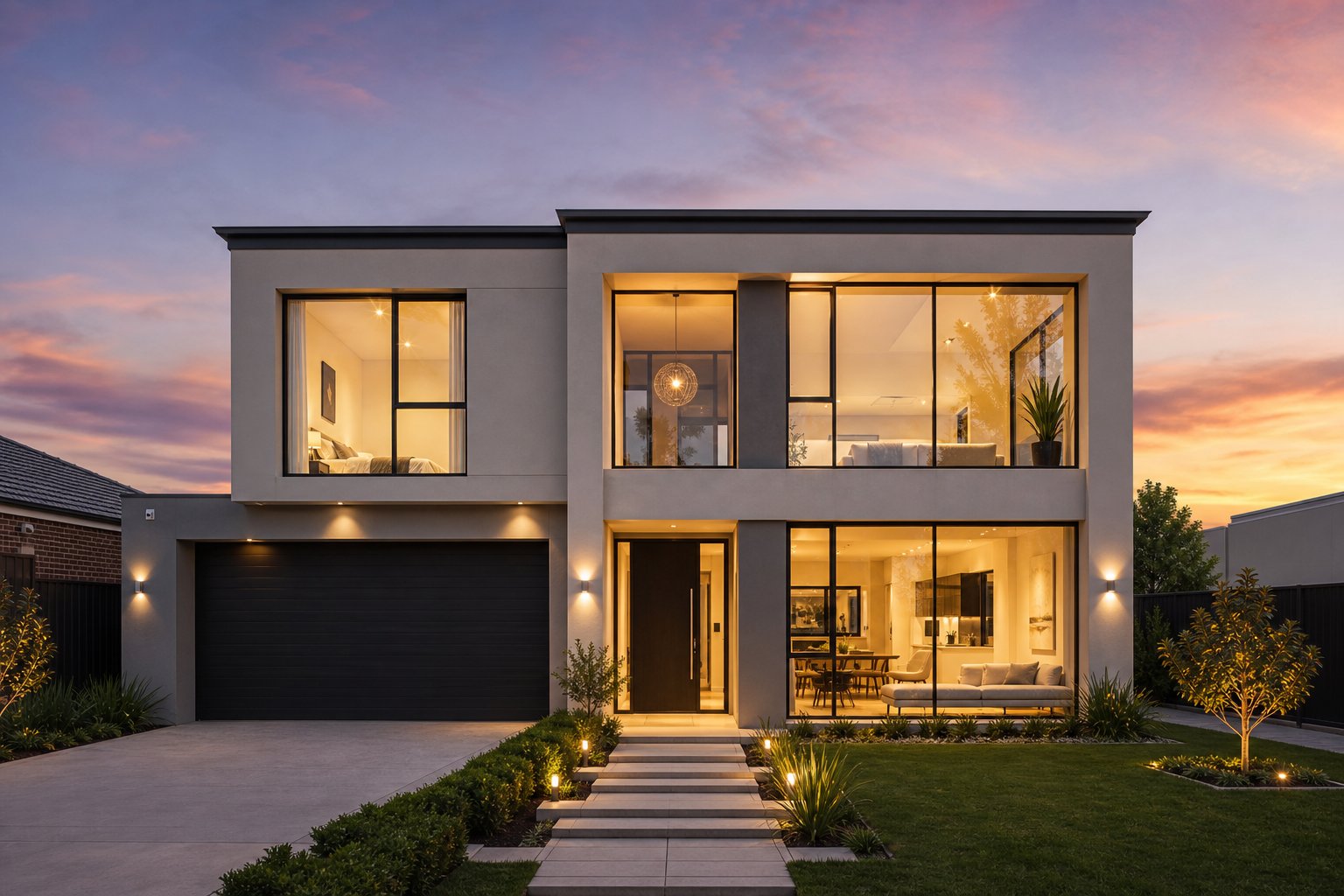
Windows define a facade more than most people realise. The frame material dictates how much glass you see, what colours are available, and whether the overall look reads as contemporary, traditional, or somewhere awkwardly in between. When comparing aluminium window slim sightlines vs uPVC, the visual difference is immediately obvious — and it flows through to every design decision that follows.
Sightlines and Glass Area Maximisation
Sightline refers to the visible width of the frame when the window is closed. Narrower sightlines mean more glass, more light, and a cleaner visual profile. Aluminium’s inherent strength allows frame faces as slim as 20 mm in some systems — roughly half the width of a standard uPVC profile, which typically sits between 60 mm and 80 mm. That difference compounds across a full elevation. A wall of aluminium windows or bi-fold doors reads as almost entirely glass, while the same opening in uPVC carries noticeably more frame bulk.
For anyone chasing floor-to-ceiling glazing, large sliding doors, or corner-opening configurations, aluminium handles the structural load without needing the chunky reinforcement that uPVC requires for spans beyond 600 mm. The result is the best window material for contemporary homes where maximising natural light and framing outdoor views are central to the design intent.
Colour and Finish Options for Each Material
Aluminium window colour options span the full RAL palette — hundreds of shades applied via powder coating that bonds permanently to the metal surface. Matt black, charcoal, monument grey, and surfmist are popular choices across Australian residential projects, and dual-colour options (one shade inside, another outside) are standard on most quality systems. The finish resists UV degradation, does not peel, and maintains colour consistency for decades.
uPVC starts life as white or cream extrusion. Colour is added through foil wrapping — a laminate film heat-bonded to the profile surface. Woodgrain effects, anthracite grey, and black foils are widely available and have improved significantly in recent years. However, foils can delaminate under sustained heat exposure, and the colour range remains narrower than powder-coated aluminium. Dark foils on north-facing elevations in hotter Australian climates carry a higher risk of heat-related warping, which limits practical colour choices in some regions.
The trend toward uPVC windows that look like aluminium — slim-profile systems with square-edged aesthetics and dark foils — has narrowed the visual gap at a glance. Up close, the thicker frame sections and visible weld lines still distinguish uPVC from genuine aluminium. Whether that matters depends on how closely your design vision demands a true minimalist finish.
Matching Window Material to Your Property Style
Material choice should respond to architectural context. A sleek aluminium frame on a Federation cottage looks as out of place as bulky white uPVC on a sharp-edged contemporary build. Here is a practical guide by property type:
- Contemporary new builds and architect-designed homes — aluminium. Slim profiles complement clean lines, flat roofs, and open-plan layouts.
- Weatherboard cottages and older character homes — uPVC in heritage-style profiles or timber-look foils. Replicates traditional proportions at lower cost than timber.
- Brick-veneer suburban homes (1970s–2000s) — either material works. uPVC for budget-conscious upgrades; aluminium for a modern refresh.
- Coastal properties and holiday homes — aluminium. Powder coating resists salt corrosion far better than foil-wrapped uPVC in exposed marine environments.
- Heritage-listed or conservation-area properties — check council requirements first. Many local authorities require replacement windows to match original materials, proportions, and opening methods. In heritage overlays, planning approval may restrict both material and colour, making early consultation with your local council essential before committing to either option.
The aesthetics verdict: aluminium wins for design flexibility, sightline minimalism, and colour durability. uPVC holds its own in traditional contexts and has closed the gap with slim-profile options — but it has not eliminated it. If visual refinement and architectural ambition drive your project, aluminium remains the material that delivers.
Appearance sets the tone, yet the budget determines what actually gets installed. The next consideration is whether aluminium’s premium price tag genuinely pays for itself over the life of your home — or whether uPVC’s lower entry cost makes more financial sense in the long run.
Cost Comparison and Long-Term Value
Price is where most homeowners start — and where many make their decision too early. The quote on your kitchen table shows one number: supply and install. It does not show the energy bills, the maintenance calls, or the replacement timeline that follow. When you compare aluminium windows cost vs uPVC windows cost properly, the picture shifts in ways that surprise people who assumed the cheapest quote was the smartest choice.
Upfront Price Ranges Per Window
In the Australian residential market, standard double glazed aluminium windows typically run $1,500 to $2,500 per window fully supplied and installed for common residential sizes. Double glazed uPVC sits higher at $2,200 to $3,500 per window — a premium of roughly 20 to 30 percent on most projects.
That gap catches people off guard. The assumption that aluminium costs more comes from the premium end of the market — thermally broken architectural systems with slim sightlines and custom powder coating. Those systems do exceed uPVC pricing. But for standard residential double glazing, uPVC actually carries the higher upfront cost in Australia because the material requires more complex multi-chamber engineering to achieve structural rigidity, and the local supply chain for quality uPVC profiles is smaller than for aluminium.
For a typical three-bedroom home with 10 to 15 windows, whole-of-house pricing lands in these ranges:
- Standard double glazed aluminium: $15,000 to $32,000 supplied and installed
- Double glazed uPVC: $20,000 to $40,000 supplied and installed
- Thermally broken aluminium (premium): $25,000 to $45,000+ depending on system and configuration
The upvc vs aluminium windows price per window varies significantly by state, supplier, and specification. Regional labour costs, access difficulty, and whether you are replacing existing frames or installing into new openings all shift the final figure. Always compare like-for-like: same glass type, same hardware grade, same installation scope.
Total Cost of Ownership Over 30 Years
The install price is the easiest number to compare. It is also the least useful one for a 30-year decision. Total cost of ownership aluminium windows versus uPVC requires adding three layers beyond the quote: energy performance, maintenance, and replacement timing.
Energy costs diverge based on frame thermal performance. As covered in the thermal section, uPVC delivers lower U-values in standard configurations, which translates to reduced heating and cooling expenditure. For a typical home with around 25 m² of glazing, the annual energy differential between standard aluminium and uPVC double glazing runs $300 to $600 per year in temperate climates like Melbourne or Sydney. Over 30 years, that compounds to $9,000 to $18,000 — enough to erode or even invert the upfront price gap.
Thermally broken aluminium narrows this energy differential substantially, bringing annual savings closer to $100 to $200 compared with uPVC. The 30-year energy gap then shrinks to $3,000 to $6,000 — a far less decisive figure.
Maintenance adds another layer. Aluminium powder coating may need attention in coastal zones after 15 to 20 years, with partial recoating running $300 to $800 per window if corrosion develops. Across a full home, that totals $1,500 to $3,000 over three decades. uPVC needs virtually nothing beyond soap and water — a maintenance cost approaching zero.
| Cost Component | Standard Aluminium (Double Glazed) | uPVC (Double Glazed) | Thermally Broken Aluminium |
|---|---|---|---|
| Supply and install (12 windows) | $15,000 – $20,000 | $20,000 – $28,000 | $25,000 – $35,000 |
| Energy cost differential (30 years) | +$9,000 – $18,000 | Baseline | +$3,000 – $6,000 |
| Maintenance (30 years) | $1,500 – $3,000 | $0 – $300 | $1,500 – $3,000 |
| IGU seal replacement (if needed) | $1,000 – $2,000 | $1,000 – $2,000 | $1,000 – $2,000 |
| Estimated 30-year total | $26,500 – $43,000 | $21,000 – $30,300 | $30,500 – $46,000 |
Figures based on a three-bedroom home with approximately 25 m² of glazing in a temperate Australian climate. Actual costs vary by location, supplier, and specification.
The numbers reveal something counterintuitive. Are aluminium windows worth the extra cost? For standard (non-thermally broken) aluminium, the answer is often no from a pure lifecycle cost perspective — the energy penalty accumulates faster than the upfront saving. For thermally broken aluminium, the equation depends on how much you value the longer frame lifespan, slimmer aesthetics, and structural advantages that justify the premium.
Impact on Property Resale Value
Window replacements consistently rank among the home improvements that return the highest proportion of their cost at resale. Industry data suggests returns of 50 to 75 percent of the investment when selling, though the exact figure depends on the local market and the condition of the windows being replaced.
In the Australian context, aluminium windows tend to signal higher perceived quality to buyers — particularly in contemporary homes, coastal properties, and architecturally designed builds where slim frames are expected. uPVC reads as a practical, sensible upgrade in suburban family homes and older properties where the priority is comfort over visual statement.
Neither material hurts resale value when installed well. But aluminium’s longer lifespan means it is more likely to still be in excellent condition at the point of sale, whereas uPVC installed 20 years prior may be approaching the end of its service life — a factor that savvy buyers and building inspectors will note.
The cost verdict: uPVC wins on 30-year total cost of ownership for standard residential projects in temperate climates. Its lower energy bills and near-zero maintenance offset the higher upfront price within 10 to 15 years. Thermally broken aluminium costs more across every metric but delivers a longer-lasting, aesthetically superior product — making it the better investment for homeowners planning to stay long-term or prioritising resale positioning in premium markets.
Cost quantifies the financial trade-off. What it cannot measure is how well each material protects your home against forced entry, extreme weather, and the specific environmental stresses that Australian conditions throw at window frames year after year.
Security and Weather Resistance Face-Off
A window can insulate perfectly and look stunning, yet still fail the two tests that matter most when conditions turn hostile: keeping intruders out and keeping the elements at bay. Security and weather resistance rarely headline the aluminium vs uPVC conversation, which is odd given how directly they affect safety, insurance premiums, and long-term structural integrity. Here is where each material genuinely stands.
Break-In Resistance and Frame Strength
Are aluminium windows more secure than uPVC? In raw material terms, yes. Aluminium’s tensile strength sits around 70 to 700 MPa depending on the alloy, while uPVC profiles — even with internal steel reinforcement — flex more readily under sustained force. A crowbar applied to an aluminium frame meets rigid resistance. The same tool applied to uPVC can deform the profile enough to compromise the locking mechanism, particularly on older or lower-grade systems.
That said, modern window security depends less on frame material alone and more on the locking hardware fitted to it. Both materials accept multi-point locking systems — mechanisms that engage at multiple positions around the sash rather than relying on a single central lock. Quality uPVC windows with steel-reinforced mullions and multi-point espagnolette locks achieve strong security ratings. Aluminium achieves equivalent or higher ratings with less reliance on internal reinforcement because the frame itself provides the structural backbone.
Aluminium Security Pros and Cons
- Inherently rigid frame resists prying and forced deflection
- Slim profiles accommodate heavy-duty multi-point locks without bulking up
- Maintains structural integrity over decades — no softening or warping that could loosen hardware
- Higher upfront cost for equivalent security-rated configurations
uPVC Security Pros and Cons
- Multi-chamber profiles with steel reinforcement achieve solid security ratings
- Lower cost to reach baseline security compliance for standard residential openings
- Wider frame accommodates concealed locking mechanisms easily
- Potential for frame deflection under sustained force if reinforcement is inadequate
- Long-term heat exposure can soften profiles, marginally reducing lock engagement precision over time
Insurance implications follow from these differences. Most Australian home insurers do not differentiate premiums based on frame material alone — they care about the lock type, glass specification, and whether the window meets AS 2047 requirements. However, if a claim arises from a forced-entry event and the insurer’s assessor finds substandard frames or hardware, the material’s resistance to deformation becomes relevant to the outcome.
Weather Resistance Across Different Climates
Australia throws everything at window frames: salt-laden coastal winds, cyclone-force gusts in the tropical north, extreme UV across most of the continent, and temperature swings that push 40°C in summer and drop near freezing in alpine regions. Each material responds differently.
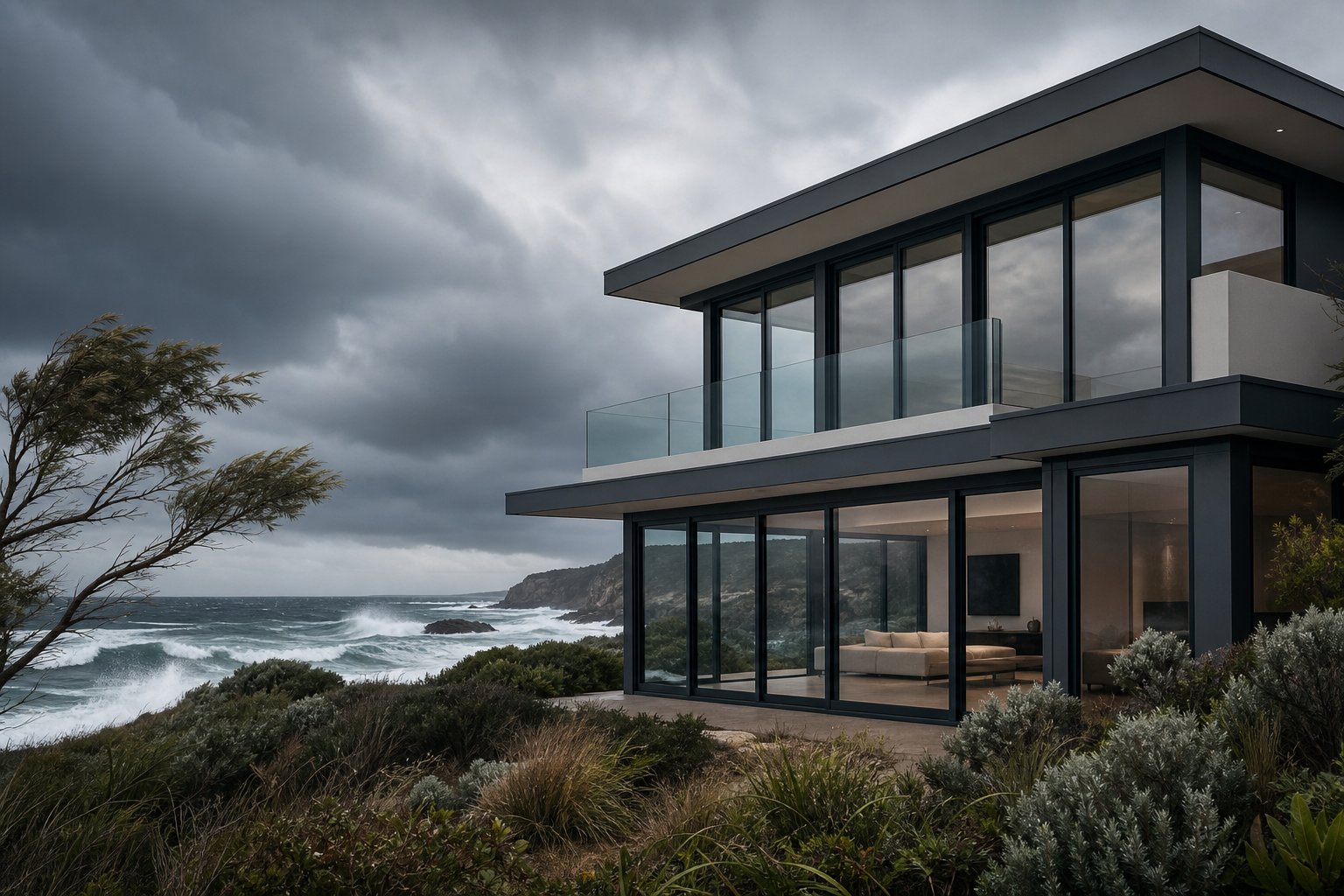
Coastal salt air corrosion: This is where aluminium earns its reputation as the best window material for coastal areas. Powder-coated aluminium frames resist salt corrosion effectively, and marine-grade coatings extend that protection further in severe exposure zones. uPVC does not corrode — it is inherently impervious to salt — but its hardware, internal steel reinforcement, and fixings can corrode if moisture penetrates the profile. In heavily exposed coastal locations (think beachfront properties in Queensland or the NSW South Coast), aluminium with appropriate coating specifications outperforms uPVC on overall system durability because every component is designed for the environment.
Extreme heat expansion: uPVC expands and contracts more than aluminium under temperature cycling. In regions where frame surface temperatures exceed 70 to 80°C on dark-coloured, north-facing elevations, uPVC profiles can soften slightly, leading to seal compression and — in worst cases — visible warping. Aluminium’s coefficient of thermal expansion is lower, and its rigidity means it holds shape even under sustained heat loads. This gives aluminium a practical edge in hotter Australian climates, particularly for dark-coloured frames.
Condensation in cooler climates: Without a thermal break, aluminium frames in Canberra, Hobart, or Melbourne’s outer suburbs can develop condensation on the interior face during cold mornings. Thermally broken systems largely eliminate this. uPVC rarely produces frame condensation because its low conductivity keeps the interior surface warmer — a genuine advantage in cooler climate zones.
Wind load capacity: When comparing aluminium vs uPVC windows wind resistance, aluminium handles higher wind pressures per millimetre of frame depth. This matters in cyclone-rated regions (northern Queensland, the NT, parts of WA) where windows must comply with specific wind classification requirements under AS 2047. Aluminium systems routinely achieve the higher wind classifications (N3 to N6) in slimmer profiles, while uPVC requires heavier reinforcement and wider frames to reach equivalent ratings — if it can reach them at all in the upper classifications.
Weight Considerations for Large Openings
The question of upvc or aluminium for bifold doors comes down to physics. Bi-fold panels, large sliding doors, and stacking configurations involve significant glass weight moving on tracks and hinges. Aluminium’s strength-to-weight ratio allows it to carry large glass panels on slimmer, lighter frames — reducing the load on rollers, tracks, and the structural lintel above the opening.
A typical four-panel aluminium bi-fold door weighs less per panel than an equivalent uPVC unit because the uPVC version needs thicker profiles and internal steel to achieve the same structural span. Over thousands of opening cycles, that weight difference translates to less hardware wear, smoother operation, and a longer service life for the moving components.
For openings beyond 2.4 metres in height or 6 metres in total width, aluminium is the standard specification in Australian residential construction. uPVC can work for smaller bi-folds and sliding doors — typically up to 2.1 metres high and 4 metres wide — but beyond those dimensions, the engineering compromises (heavier frames, wider sightlines, additional reinforcement) erode the cost advantage and aesthetic appeal that uPVC offers in standard window sizes.
Structural support requirements also differ. Aluminium’s lighter overall system weight places less demand on lintels and wall framing, which can reduce associated building costs in new construction. For retrofit projects in older homes with timber framing, the reduced weight of aluminium bi-folds may avoid the need for lintel upgrades that heavier uPVC alternatives would require.
The security and weather resistance verdict: aluminium wins both categories. Its superior frame rigidity delivers better forced-entry resistance, its corrosion-resistant coatings handle coastal and cyclone conditions with less compromise, and its strength-to-weight ratio makes it the only practical choice for large-span openings. uPVC performs adequately in standard residential security applications and mild climates, but it reaches its limits faster when conditions intensify.
Protection from weather and intruders addresses the present. The next question looks further ahead — at what happens to each material when its useful life ends, and which choice leaves a lighter footprint on the environment.
Sustainability and Environmental Impact
Choosing a window material is a decades-long commitment — and so is its environmental legacy. Are aluminium windows more sustainable than uPVC? The answer depends on which part of the lifecycle you measure. One material starts dirty and finishes clean. The other starts cleaner but leaves a messier end-of-life problem. Understanding both sides prevents greenwashing from clouding your decision.
Recyclability and End-of-Life Impact
This is where aluminium holds an advantage that no amount of uPVC engineering can replicate. Aluminium window recyclability vs uPVC is not a close contest at the disposal stage. Aluminium can be melted down and reformed into new window profiles indefinitely — without any degradation in structural quality or performance. The hundredth recycling cycle produces material identical to the first.
Aluminium is one of the few building materials that can be recycled infinitely without loss of quality. A window frame removed from a demolished home today can become a new high-performance frame tomorrow, retaining the same strength, corrosion resistance, and finish capability as virgin material.
uPVC tells a different story. It can be ground down and reprocessed — and some sources note that recycled uPVC actually becomes stronger — but the material degrades with each cycle. After several rounds of reprocessing, the polymer chains shorten and the material loses the properties needed for structural window profiles. It gets downcycled into lower-grade products: drainage pipes, garden furniture, or filler material. Eventually, it reaches a point where landfill or incineration becomes the only destination.
In Australia, uPVC window recycling infrastructure is still developing. The first dedicated uPVC window recycling facility has opened, but collection rates remain low compared to aluminium scrap, which has an established and profitable recycling stream driven by the metal’s inherent value. Old aluminium frames are worth money; old uPVC frames are a disposal cost.
Manufacturing Footprint and Embodied Energy
The environmental impact of uPVC window production is lower at the factory gate — and this is where the sustainability picture flips. Research into embodied energy aluminium vs uPVC frames consistently shows aluminium carrying a heavier manufacturing burden. Lifecycle analysis data places aluminium frames at approximately 161 kg CO₂e per standard window, while uPVC frames sit around 110 kg CO₂e — roughly 30 to 45 percent less embodied carbon at the point of installation.
That gap exists because primary aluminium smelting is extraordinarily energy-intensive. The Hall-Heroult electrolysis process demands vast amounts of electricity, and unless that power comes from renewable sources, the carbon footprint is substantial. uPVC production also relies on fossil fuel-derived feedstock (PVC is a petroleum-based plastic), but the total energy input per kilogram of finished frame is significantly lower.
Using recycled aluminium changes the equation dramatically. Secondary aluminium production requires only about 5 percent of the energy needed for primary smelting. Manufacturers sourcing high proportions of recycled content can slash their per-frame carbon footprint to levels approaching — or even matching — uPVC. This is why specifying recycled-content aluminium matters for projects with sustainability targets.
Sustainability Credentials for Specifiers
Commercial projects, government builds, and increasingly residential developments now require documented sustainability credentials in their specifications. Green Star ratings, NABERS assessments, and council planning requirements all push designers toward materials with transparent environmental data.
Aluminium benefits here from its established recycling narrative and the availability of Environmental Product Declarations (EPDs) from major extrusion suppliers. uPVC manufacturers are catching up, but the material’s limited recyclability and fossil-fuel origin make it harder to position favourably in lifecycle assessments — particularly for projects targeting high sustainability ratings.
For specifiers weighing both materials, the honest summary looks like this: uPVC wins on manufacturing carbon today, but aluminium wins on end-of-life circularity and long-term material stewardship. If your project values cradle-to-grave thinking over cradle-to-gate metrics alone, aluminium’s infinite recyclability and longer service life tilt the balance in its favour — provided you specify systems with verified recycled content where possible.
The sustainability verdict: a draw that leans toward aluminium for long-term environmental responsibility. uPVC’s lower embodied energy at manufacture is real and significant. But aluminium’s infinite recyclability, established scrap value, and longer lifespan mean fewer total frames produced and disposed of over a building’s life. Neither material is guilt-free — but aluminium offers a clearer path to circular material use.
Environmental credentials round out the individual performance criteria. What remains is pulling every factor together into a single comparison framework — and declaring an overall winner for each type of project.
Complete Side-by-Side Comparison Summary
Seven criteria. Two materials. One table that puts the full aluminium vs uPVC windows comparison table in front of you without hedging. The sections above explored each factor in depth — here is where the verdicts land when you stack them side by side.
Criterion-by-Criterion Winner Summary
Before diving into the table, a note on aluminium vs uPVC sound insulation — a factor that often gets buried in broader discussions. uPVC’s multi-chamber profiles and lower material density give it a slight acoustic edge in standard configurations. Typical Sound Transmission Class (STC) ratings for uPVC windows sit between 28 and 35, while aluminium ranges from 25 to 30 without thermal breaks and 30 to 35 with them. In practice, the glazing specification (laminated glass, varied pane thickness, gas fill) influences noise reduction far more than the frame material alone. For homes near busy roads or flight paths, either material performs well when paired with acoustic glass — but uPVC delivers marginally better results with standard double glazing.
| Criterion | Aluminium | uPVC | Winner |
|---|---|---|---|
| Thermal performance | Good with thermal break (Uw 2.0–2.7) | Excellent as standard (Uw 1.8–2.4) | uPVC |
| Durability and lifespan | 40–45+ years; structurally stable | 20–35 years; potential warping in heat | Aluminium |
| Aesthetics and design flexibility | Slim sightlines; full RAL palette; suits contemporary builds | Wider frames; foil-wrapped colours; suits traditional homes | Aluminium |
| Upfront cost (standard residential) | Lower for standard double glazed; higher for thermally broken | Higher upfront in Australian market | Aluminium (standard) / uPVC (thermally broken comparison) |
| Total cost of ownership (30 years) | Higher energy costs offset by longer lifespan | Lower energy bills and near-zero maintenance | uPVC |
| Security | Superior frame rigidity; resists prying | Adequate with steel reinforcement; can flex under force | Aluminium |
| Weather resistance | Excels in coastal, cyclone, and high-UV zones | Performs well in mild climates; limited in extreme heat | Aluminium |
| Sound insulation | STC 25–35 (thermal break dependent) | STC 28–35 as standard | uPVC (marginal) |
| Sustainability | High embodied energy; infinitely recyclable | Lower embodied energy; limited recycling cycles | Draw (aluminium leans ahead long-term) |
The best window material overall winner depends on which criteria carry the most weight for your project. Aluminium takes five categories outright. uPVC wins three. Sustainability lands as a draw. For performance-driven builds in demanding Australian conditions, aluminium edges ahead on balance — but uPVC remains the smarter financial choice for budget-conscious homeowners in temperate, low-exposure locations.
The Hybrid Approach – Using Both Materials
Here is something most guides skip entirely: can you mix aluminium and upvc windows in the same home? Absolutely — and it is more common than you might think. The strategy works particularly well for renovations and extensions where the existing house and the new addition serve different roles.
A typical hybrid approach looks like this:
- Front elevation: uPVC windows matching the existing streetscape, keeping costs manageable and maintaining neighbourhood consistency.
- Rear extension or living areas: aluminium bi-fold doors and large sliding panels where slim sightlines, structural strength, and indoor-outdoor flow matter most.
- Upper storeys: uPVC casements where frames are viewed from a distance and budget savings compound across multiple openings.
Colour matching makes this seamless. Aluminium powder coating and uPVC foil wrapping can be specified in near-identical shades — monument, matt black, or woodland grey — so the transition between materials is invisible from the street. The key is coordinating with your supplier early so colour samples are compared side by side before production.
Mixing materials lets you allocate budget where it delivers the greatest return: aluminium’s strength and aesthetics where you interact with the windows daily, uPVC’s thermal efficiency and value where visual impact is secondary. It is a pragmatic solution that avoids the all-or-nothing compromise most homeowners assume they are locked into.
With the full comparison laid out and the hybrid option on the table, the final step is translating these findings into a clear recommendation matched to your specific project type, location, and priorities.
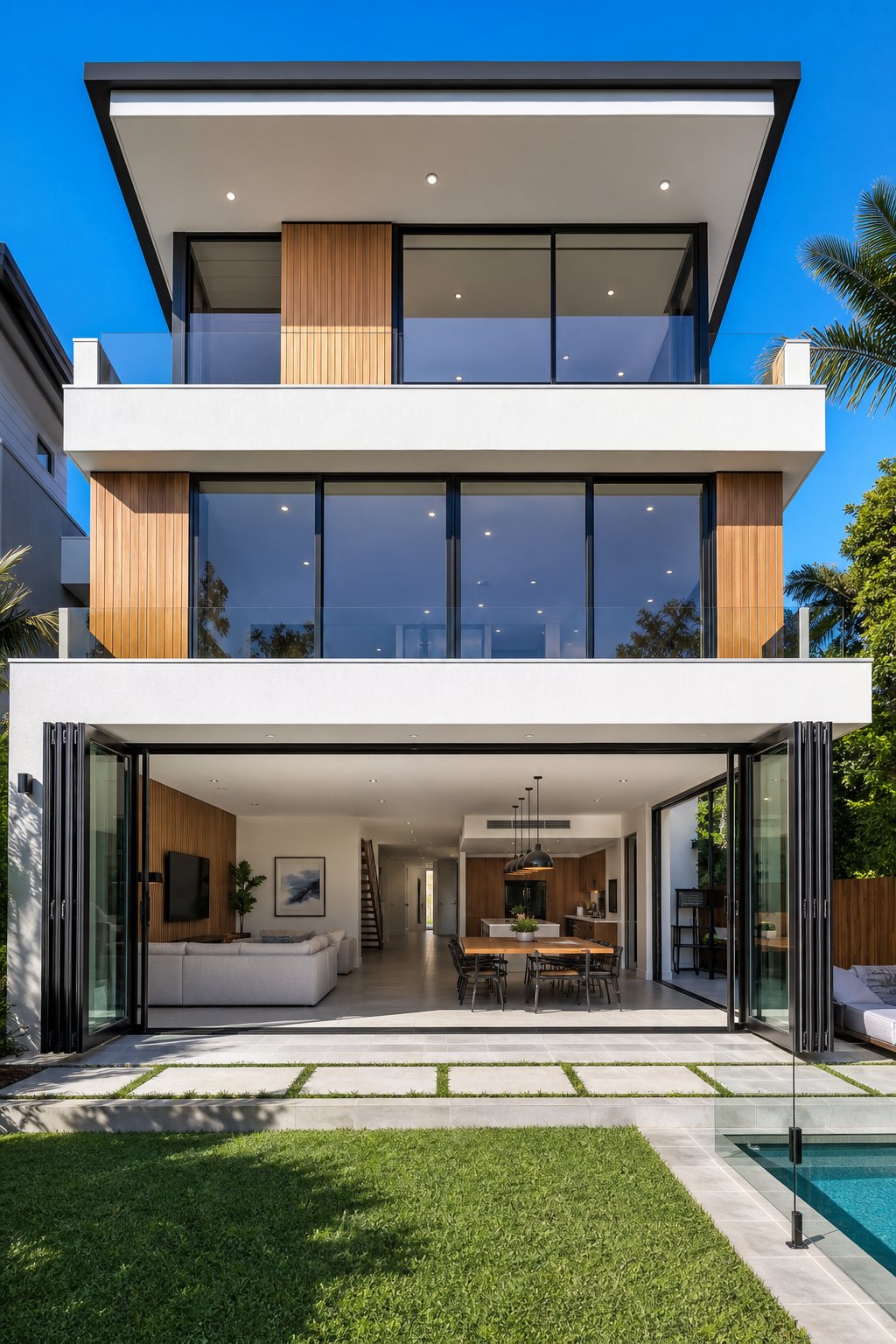
Final Verdict and Recommendations by Project Type
Nine criteria, hundreds of data points, and one persistent truth: the right material depends on what you are building, where you are building it, and how long you plan to stay. Rather than leaving you with a generic “it depends,” here is a decision framework ranked by the factors that matter most once the research is done.
- Project location and climate exposure — coastal salt, cyclone zones, and extreme UV narrow the field faster than any other variable.
- Opening size and configuration — large spans, bi-folds, and corner stackers demand structural performance that only one material delivers efficiently.
- Budget reality — not just the install quote, but what you can genuinely afford over 30 years including energy and maintenance.
- Aesthetic intent — whether your design demands minimalist sightlines or traditional proportions.
- Timeframe in the property — a five-year hold before selling calls for different logic than a forever home.
Choose Aluminium If Your Project Needs This
When to choose aluminium windows over uPVC becomes obvious once certain project characteristics align. Aluminium is the clear pick for:
- Contemporary new builds and architect-designed homes where slim frames and maximum glass define the facade — this is the best window material for new build homes pursuing a modern aesthetic.
- Coastal properties anywhere in Australia. Salt air, driving rain, and UV exposure are aluminium’s natural environment. For the best windows for coastal property Australia conditions, powder-coated aluminium with marine-grade hardware outperforms every alternative.
- Large openings — bi-fold doors, sliding stacker systems, and corner configurations beyond 2.4 metres high or 6 metres wide.
- Long-term investment properties where a 40-plus year frame lifespan avoids a second replacement cycle.
- Cyclone-rated regions in northern Queensland, the NT, and parts of WA where higher wind classifications demand aluminium’s structural rigidity.
- Projects targeting sustainability credentials, Green Star ratings, or documented lifecycle performance.
Choose UPVC If Your Priorities Are These
uPVC earns its place — and in certain scenarios, it is genuinely the smarter call. Aluminium or upvc windows for renovation projects often tips toward uPVC when:
- Budget is the binding constraint and you need the lowest 30-year total cost of ownership in a temperate climate.
- Thermal performance matters most and you want consistently low U-values without paying the thermally broken aluminium premium.
- The property is a traditional brick-veneer, weatherboard, or older character home where wider frame profiles suit the architectural proportions.
- You are doing a like-for-like replacement on standard-sized openings in a mild, non-coastal location.
- Noise reduction is a priority — uPVC’s multi-chamber profiles deliver a slight acoustic advantage with standard double glazing near busy roads.
- Condensation control in cooler climates (Melbourne fringe, Canberra, Tasmania) is a concern, where uPVC’s low conductivity keeps interior frame surfaces warmer.
Why Certified Performance Data Matters Most
Here is the insight that sits above the material debate entirely: a poorly specified aluminium window underperforms a well-specified uPVC one, and vice versa. The frame material sets the ceiling for potential performance. Whether that potential is actually delivered depends on the specific system, its tested ratings, and whether those ratings are documented transparently enough for your builder or energy assessor to verify.
For performance-critical projects — anything requiring NatHERS compliance, WERS star ratings for council approval, or wind classification certification under AS 2047 — the specification document matters more than the brochure. Builders and architects need verified U-values, SHGC figures, air infiltration data, and water penetration ratings for the exact configuration being installed. Generic claims about “aluminium” or “uPVC” as categories are insufficient.
This is where certified systems separate themselves from commodity products. Manufacturers who publish their compliance data openly — including test reports, certification numbers, and performance credentials — give specifiers the confidence to sign off on a system without guesswork. MEICHEN’s compliance and certifications page demonstrates this approach for aluminium systems: documented performance data accessible to professionals who need to verify that a specified product meets Australian standards before it reaches site.
Regardless of whether you land on aluminium or uPVC, demand the same transparency from your supplier. Ask for the tested Uw value of the specific window configuration quoted — not a range, not a brochure figure, but the number that will appear in your NatHERS assessment. Ask for the wind classification. Ask for the water resistance rating. If a supplier cannot provide these, the material choice becomes irrelevant because you cannot verify what you are actually getting.
The aluminium vs uPVC windows pros and cons laid out across this guide give you the framework. Your climate, your budget, and your design intent give you the filter. Certified performance data gives you the certainty. Use all three, and the decision stops being a dilemma and starts being obvious.
Frequently Asked Questions About Aluminium vs uPVC Windows
1. Which is better for Australian coastal homes, aluminium or uPVC windows?
Aluminium is the superior choice for coastal properties in Australia. Powder-coated aluminium frames with marine-grade hardware resist salt air corrosion far more effectively than uPVC systems. While uPVC itself does not corrode, its internal steel reinforcement, hardware, and fixings can deteriorate if moisture penetrates the profile in heavily exposed marine environments. For beachfront homes in Queensland or the NSW South Coast, aluminium with appropriate coating specifications delivers better overall system durability and longer service life under constant salt exposure.
2. Are aluminium windows more expensive than uPVC in Australia?
Contrary to common assumption, standard double glazed aluminium windows are actually less expensive than uPVC in the Australian market. Standard aluminium typically costs $1,500 to $2,500 per window supplied and installed, while uPVC sits at $2,200 to $3,500 per window. This is because uPVC requires complex multi-chamber engineering for structural rigidity and has a smaller local supply chain. However, premium thermally broken aluminium systems do exceed uPVC pricing. Over 30 years, uPVC often delivers lower total cost of ownership due to better thermal performance and near-zero maintenance costs.
3. Can you mix aluminium and uPVC windows in the same house?
Yes, combining both materials in one property is a practical and increasingly common strategy. A typical hybrid approach uses aluminium bi-fold doors and large sliding panels at the rear where slim sightlines and structural strength matter most, while uPVC windows cover the front elevation and upper storeys where budget savings compound across multiple openings. Colour matching between aluminium powder coating and uPVC foil wrapping in shades like monument or matt black makes the transition virtually invisible from the street. This approach allocates budget where it delivers the greatest return.
4. How long do aluminium windows last compared to uPVC?
Quality aluminium frames consistently deliver 40 to 45+ years of service life, while uPVC frames typically last 20 to 35 years before seals, hardware, or profiles begin to fail. Aluminium does not warp, become brittle, or expand meaningfully with age, making it particularly suited to Australian conditions with intense UV, wide temperature swings, and coastal salt exposure. Its powder-coated finish can be restored if needed, whereas uPVC cannot be repainted and must be replaced once degradation occurs. Both materials benefit from proper installation and periodic cleaning to maximise their lifespan.
5. Do thermally broken aluminium windows perform as well as uPVC for energy efficiency?
Thermally broken aluminium closes the energy efficiency gap significantly but does not quite match uPVC in standard configurations. Multi-chamber uPVC profiles achieve whole-window U-values of 1.8 to 2.4 W/m2K consistently, while thermally broken aluminium typically delivers 2.0 to 2.7 W/m2K. The difference translates to roughly $100 to $200 per year in energy costs for a typical home. For projects where verified thermal performance is critical, manufacturers like MEICHEN publish documented compliance data on their certifications page, allowing specifiers to confirm exact U-values for NatHERS assessments rather than relying on generic material claims.
More Window & Door Guides