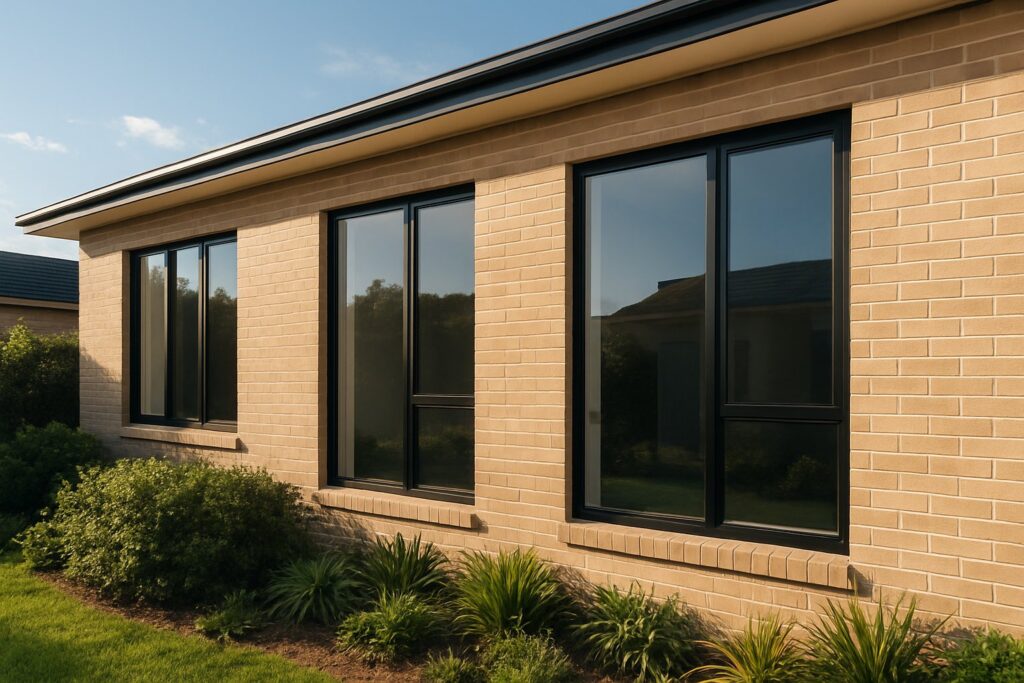
What Are Aluminium Tilt and Turn Windows
Imagine a single window that ventilates your home securely while you sleep, then swings wide open like a door when you want to clean the glass from inside. That is exactly what aluminium tilt and turn windows deliver. They are a dual-action window system built around one handle, one sash, and two distinct opening modes, all housed in a slim, high-strength aluminium frame.
Aluminium tilt and turn windows are dual-function window systems that use a single handle to either tilt the sash inward from the top for controlled ventilation or turn it inward from the side for full opening, secured by multi-point locking hardware mounted within a thermally broken aluminium frame.
This window style is the dominant residential standard across continental Europe and is steadily gaining ground in Australia, North America, and the UK as energy codes tighten and homeowners look for higher-performing alternatives to traditional casements and sliders. Yet most buyers outside Europe still misunderstand how the mechanism works, what makes aluminium the right frame material for it, and which specifications actually matter. This guide takes a material-and-engineering-first approach to fill those gaps.
How the Tilt and Turn Mechanism Works
The entire system revolves around a single handle and an espagnolette locking mechanism that runs around the perimeter of the sash. When you rotate the handle to a vertical position, the window is fully closed and locked at multiple points along the frame. Turn the handle 90 degrees to horizontal, and the sash tilts inward from the top, creating a narrow opening ideal for background ventilation. Rotate the handle a further 90 degrees to point straight down, and the sash swings fully inward on side hinges, just like a door.
What makes this possible is the multi-point espagnolette system. Rather than relying on a single latch, the hardware engages locking pins at several points around the sash perimeter. Each handle position activates a different combination of these pins and hinges. In tilt mode, the bottom pins stay locked while the top releases. In turn mode, the side hinges engage and all perimeter pins disengage. The result is two completely different opening behaviors from one piece of hardware, with no extra handles, levers, or switches.
This single-handle operation also means the window tilt turn mechanism is intuitive to use. You always know the window’s state by glancing at the handle position: up means locked, sideways means tilted, down means fully open.
Why Aluminium Frames Suit This Design
Tilt and turn windows place heavy demands on the frame. The sash must support multi-point locking hardware, carry the weight of double or triple glazing, and maintain precise alignment across two separate pivot axes over decades of use. That is where aluminium earns its place.
Aluminium’s strength-to-weight ratio is significantly higher than uPVC or timber. In practical terms, this means the frame profiles can be thinner while still handling the mechanical loads of the espagnolette system and the weight of large glass panels. Thinner profiles translate directly into slimmer sightlines and more visible glass area, which is why tilt turn windows in aluminium tend to look cleaner and let in more natural light than their uPVC equivalents.
Aluminium also resists the dimensional creep that can cause locking points to drift out of alignment over time. The frame stays true, the hardware stays calibrated, and the multi-point seals maintain their compression year after year. Later sections of this guide explore the material science, thermal break technology, and finish options that make aluminium the performance benchmark for this window type.
The European Engineering Heritage Behind Tilt and Turn Windows
A window style that dominates an entire continent does not get there by accident. Tilt and turn windows owe their near-universal presence in European homes to a specific set of engineering problems that emerged in post-war Germany, and the solutions that followed reshaped how an entire region thinks about ventilation, security, and energy performance.
Origins in Post-War German Engineering
The first tilt and turn hardware was designed in Germany in the 1950s, during a period of rapid residential reconstruction. Before this invention, German homes typically used two single-glazed windows installed one in front of the other, each opening separately. As manufacturers shifted to single-sash designs with double glazing to improve thermal performance, the need for a flexible opening mechanism became urgent. A window that could only swing open like a door was not enough. Builders needed controlled ventilation without sacrificing security or weather protection, especially in dense urban apartment blocks where exterior access for cleaning was limited.
The tilt and turn mechanism solved all of these problems with one elegant piece of hardware. A single handle gave occupants two distinct opening modes: a narrow inward tilt for draft-free ventilation and a full inward swing for maximum airflow, cleaning access, and emergency egress. The design spread quickly across central and northern Europe throughout the 1960s and 1970s, driven by its practical advantages and the region’s increasingly strict building energy codes.
By the late twentieth century, tilt and turn had become the default window type across Germany, Austria, Switzerland, Scandinavia, and much of Eastern Europe. The European window market, as one industry source puts it, never looked back. Frequent innovation followed, making the hardware available across a wide selection of frame materials including vinyl, timber, aluminium, and steel.
Why This Style Is Less Common in Some Markets
If tilt and turn windows are so effective, why are they still relatively unfamiliar in Australia, the UK, and North America? The answer is mostly historical rather than technical.
English-speaking markets developed their own window traditions long before the tilt and turn mechanism existed. In the UK, the outward-opening casement and the vertical sliding sash became architectural staples, often protected by heritage planning rules that discourage inward-opening designs. In the United States, the double-hung window has held a dominant market position for over a century. Australian homes gravitated toward sliding windows and windows that open outward, partly because mild coastal climates reduced the urgency for airtight, thermally optimized designs.
These preferences were reinforced by local supply chains, building codes written around existing styles, and simple familiarity. Builders specified what they knew, homeowners accepted what was available, and the cycle repeated.
That cycle is breaking down. Tightening energy codes in Australia and across the United States are pushing minimum thermal performance requirements closer to European levels. Homeowners researching tilt and turn windows in the USA and other non-European markets are discovering that the dual-opening design delivers measurable advantages their traditional windows simply cannot match. The growing availability of aluminium tilt and turn windows from manufacturers who build to both European and local standards is accelerating this shift.
The reasons European markets adopted tilt and turn as their standard are worth spelling out, because they apply just as strongly in any climate-conscious building project today:
- Thermal regulation — the multi-point seal compression creates an exceptionally airtight closure, reducing heat loss in winter and heat gain in summer.
- Ventilation control — tilt mode provides secure, draft-free airflow without fully opening the window, supporting natural ventilation strategies that reduce reliance on mechanical systems.
- Security — even in tilt position, the locking pins remain engaged at multiple points, making forced entry far more difficult than with a standard casement or slider.
- Cleaning access — the full inward turn allows exterior glass surfaces to be cleaned from inside, a practical necessity for upper-floor apartments and multi-storey homes.
- Egress compliance — the full turn opening provides an unobstructed escape route that meets emergency egress requirements in most jurisdictions.
These are not niche benefits tied to a particular climate or building tradition. They are universal performance characteristics, which is exactly why the technology is crossing borders. The real question for buyers outside Europe is not whether tilt and turn makes sense, but which frame material delivers the best long-term results for this demanding hardware system. That question starts with the material science of aluminium itself.
Why Aluminium Is the Ideal Frame Material for Tilt and Turn Windows
Not every frame material can handle what a tilt and turn window demands. The sash carries heavy double or triple glazing, pivots on two separate axes, and relies on multi-point locking hardware that must stay precisely aligned for decades. Plenty of materials work fine for a simple fixed pane or a basic slider. A tilt turn window is a different engineering challenge entirely, and aluminium meets it better than any alternative.
Strength-to-Weight Ratio and Slim Sightlines
Aluminium’s core advantage is structural. Its exceptional strength-to-weight ratio allows frame profiles to be remarkably thin while still supporting large glass panels and the mechanical loads of espagnolette hardware. Where uPVC needs bulky, multi-chambered profiles to achieve adequate rigidity, aluminium achieves the same structural integrity with significantly less material. The result is slimmer sightlines and a larger visible glass area, which means more natural light and cleaner aesthetics.
Think of it this way: if you want a floor-to-ceiling tilt and turn window in a living room, the frame has to carry a heavy sash without sagging, flexing, or pulling the locking points out of alignment. uPVC profiles thick enough to handle that load would eat into your glass area and dominate the visual frame. Timber would need even more depth for equivalent strength. Aluminium handles the same span with a profile that practically disappears into the wall opening.
This matters beyond aesthetics. Dimensional stability is what keeps multi-point locking hardware calibrated over time. Aluminium does not creep, warp, or swell with temperature and humidity changes. The locking pins, hinges, and seal compression points stay where they were set during installation. That consistency is critical for tilting windows that rely on precise mechanical engagement at every handle position.
The material also resists deflection under wind load, which is why aluminium frames are the go-to choice for high-rise and coastal applications where wind pressure would cause less rigid frames to flex and compromise seal integrity.
Finish Options and Long-Term Durability
One of the most persistent myths about aluminium is that it corrodes easily. In reality, aluminium naturally forms a thin oxide layer the moment it is exposed to air, and that layer acts as a built-in shield against further corrosion. Protective finishes build on this natural defense to deliver decades of maintenance-free performance.
You have three main finish options for a tilt and turn window in aluminium:
- Powder coating — a dry powder is electrostatically applied and heat-cured onto the profile, creating a tough, uniform finish. This method opens up the full RAL colour palette with over 450 colour and texture options, including matt, gloss, metallic, textured, and even wood-look finishes. Powder coating provides long-term protection against UV radiation, moisture, and scratching without the need for repainting.
- Anodising — an electrochemical process that thickens the natural oxide layer into a hard, protective surface. Anodised aluminium has a distinctive metallic sheen that preserves the look and feel of the raw metal. It offers excellent corrosion resistance and is particularly well-suited to contemporary architectural styles where a natural aluminium aesthetic is desired.
- Dual-colour (bicolour) finishing — the interior and exterior faces of the frame are coated in different colours. This lets you match the exterior to your facade while choosing a contrasting interior tone that complements your room decor. It is a practical option that timber and uPVC frames struggle to replicate with the same precision.
For properties in coastal areas or heavily polluted urban environments, some manufacturers combine pre-anodising with powder coating for maximum long-term protection against salt spray and airborne contaminants.
The maintenance story is equally straightforward. Unlike timber frames that need repainting or re-staining every few years to prevent rot and decay, aluminium profiles require nothing more than occasional cleaning with soapy water. They do not rot, do not swell, do not warp, and are immune to insect damage. Aluminium window systems typically last 40 to 50 years, compared to 20 to 35 years for uPVC, making them the lowest-maintenance, longest-lasting frame option available for tilt turn window applications.
Here are the key material properties that make aluminium the performance leader for this window type:
- High strength-to-weight ratio — supports larger glass panels with thinner frame profiles
- Dimensional stability — maintains hardware alignment across temperature extremes and over decades of use
- Natural corrosion resistance — oxide layer forms automatically, enhanced by powder coating or anodising
- Wind load resistance — rigidity prevents frame deflection under high pressure
- Full colour customisation — RAL palette, anodised metallic, wood-look, and dual-colour options
- Near-zero maintenance — no painting, sealing, or treatment required over the frame’s lifespan
- Infinite recyclability — aluminium can be recycled repeatedly without losing structural quality
There is one legitimate concern that buyers raise about aluminium, and it deserves an honest answer: thermal conductivity. Aluminium conducts heat far more readily than timber or uPVC, and older aluminium windows earned a fair reputation for being energy-inefficient. That reputation, however, belongs to a previous generation of profiles. Modern aluminium tilt and turn windows use thermal break technology — an insulating barrier built into the frame — that fundamentally changes the equation. How that technology works, and why it makes aluminium competitive with or superior to uPVC on energy performance, is worth its own explanation.
Thermal Break Technology in Aluminium Frames Explained
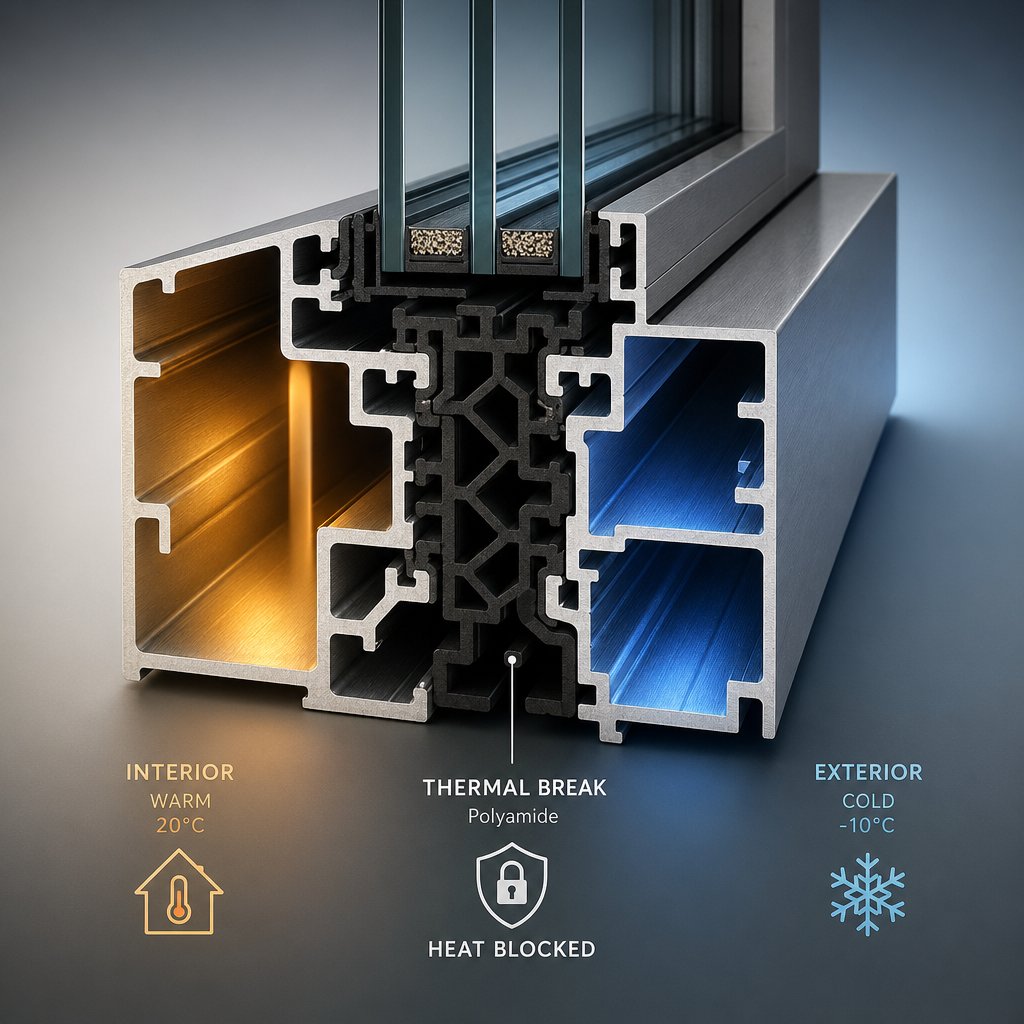
Aluminium conducts heat roughly 1,000 times more readily than uPVC. Left unaddressed, that conductivity would turn every aluminium frame into a highway for heat transfer, bleeding warmth out of your home in winter and letting it flood in during summer. For decades, this was the knock against aluminium windows, and it was a fair one. The fix, however, is not a compromise or a workaround. It is a precise piece of engineering called a thermal break, and it changes the energy performance equation entirely.
What a Thermal Break Actually Does
Imagine holding a metal spoon in a pot of boiling water. Within seconds, the handle gets too hot to touch because heat travels straight through the metal from one end to the other. A thermal break is the equivalent of cutting that spoon in half and joining the two pieces with a strip of plastic. The heat still reaches the break point, but it cannot cross the insulating barrier efficiently. Your hand stays cool.
In an aluminium window profile, the principle is identical. The frame is manufactured as two separate aluminium sections — one facing the interior of your home, the other facing the exterior. Between them sits a rigid strip of polyamide (a type of reinforced nylon), mechanically bonded to both aluminium sections. This polyamide barrier has extremely low thermal conductivity, so it blocks the rapid heat transfer that would otherwise flow through a solid aluminium profile.
The result is a frame that retains aluminium’s structural strength and slim sightlines on both sides of the break while behaving like an insulator across the critical junction between inside and outside. Tilt & turn windows depend on this technology because their multi-point locking hardware demands the rigidity of aluminium, yet their role as a primary building envelope element demands genuine thermal performance. The thermal break lets the frame deliver both.
How Thermal Breaks Affect Energy Ratings
The effectiveness of a thermal break comes down to two factors: the width of the polyamide strip and the quality of the polyamide material itself. Wider thermal breaks create a longer path that heat must attempt to cross, reducing the rate of transfer. Higher-density polyamide with internal reinforcement resists heat flow even further.
This directly impacts the frame’s U-value, which measures how much heat passes through a material per square meter per degree of temperature difference. Lower numbers mean better insulation. Standard aluminium frames without a thermal break can have U-values as high as 5.8 to 6.5 W/m²K, which is poor by any modern standard. Thermally broken aluminium frames drop that figure dramatically, typically landing between 1.8 and 3.2 W/m²K depending on the thermal break width and profile design. For context, uPVC frames generally achieve U-values around 1.2 to 1.3 W/m²K. Premium thermally broken aluminium profiles with wider breaks are closing that gap, and in some high-end systems, the difference becomes negligible in real-world performance.
Here is where many buyers get tripped up: the frame U-value is only part of the story. A window is not just a frame. It is a frame plus glazing, and the glass typically accounts for 70 to 80 percent of the total window area. The whole-window U-value, which is the number that actually determines your energy performance, combines the thermal performance of the frame, the glazing unit, and the edge spacer where glass meets frame. A thermally broken aluminium frame paired with high-performance double glazing or triple glazing can achieve whole-window U-values that satisfy even the strictest energy codes in Europe and Australia.
This is why evaluating tilt turn windows in the USA, Australia, or any market with tightening energy standards requires looking at the complete unit specification rather than fixating on frame material alone. A well-specified thermally broken aluminium window with quality glazing will outperform a poorly glazed uPVC window every time, despite aluminium’s raw conductivity disadvantage.
Modern thermally broken aluminium frames have resolved the historical conductivity concern. With quality polyamide thermal breaks and appropriate glazing, aluminium tilt and turn windows meet or rival the energy performance of uPVC while delivering superior strength, slimmer profiles, and a longer lifespan.
Double glazing handles most residential applications well, but for cold climates, high-altitude locations, or projects targeting passive house standards, triple glazing compatibility becomes important. Aluminium’s structural strength makes it naturally suited to carrying the extra weight of a triple-glazed unit without requiring thicker profiles, something uPVC frames often struggle with. The glazing specification you pair with your thermally broken frame is ultimately what fine-tunes the window’s energy rating to match your climate and building code requirements, a topic that deserves closer attention alongside the broader material comparison.
Aluminium vs uPVC vs Timber Tilt and Turn Windows Compared
Choosing a frame material for tilt windows is not the same as choosing one for a fixed pane or a basic slider. The dual-action mechanism places unique demands on the frame: it must hold multi-point hardware in alignment, carry heavy glazing across two pivot axes, and maintain airtight seal compression over decades. That context changes the comparison entirely. A material that works fine for a simple casement may fall short when asked to perform as a tilt and turn system.
Most guides compare aluminium, uPVC, and timber in generic terms. Here, the comparison is specific to tilt and turn applications, where structural precision and long-term dimensional stability are not optional extras but baseline requirements.
Frame Profile and Sightline Differences
When you stand in front of a window, the frame is everything you see that is not glass. Slimmer frames mean more daylight, better views, and a cleaner architectural line. This is where material strength directly translates into visual performance.
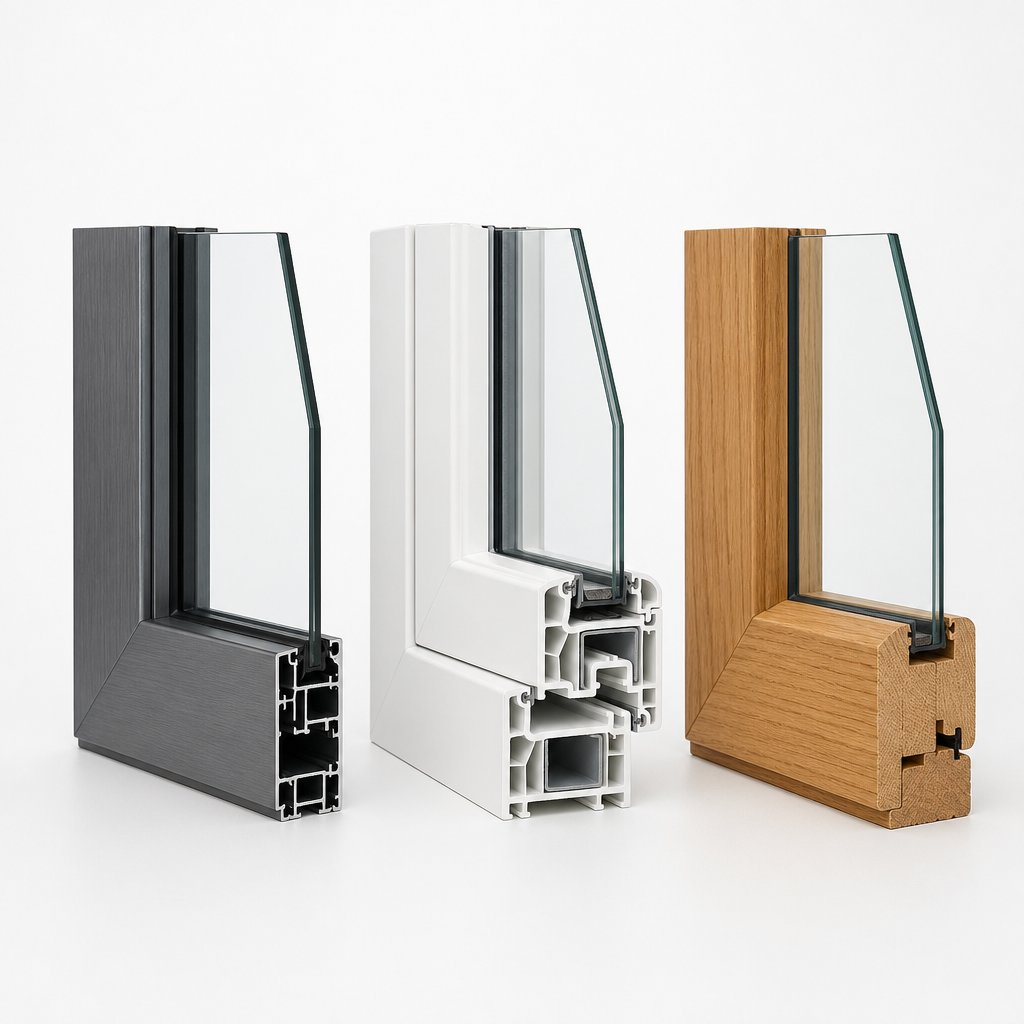
Aluminium’s superior strength-to-weight ratio allows frame profiles as narrow as 55 to 65 mm while still supporting large, heavy sashes. uPVC, by contrast, needs multi-chambered profiles typically 70 to 85 mm wide to achieve adequate rigidity for tilt and turn hardware. That extra 15 to 20 mm per side adds up quickly across a full window opening, reducing your glass area and creating a chunkier visual frame. Timber sits between the two, generally requiring 68 to 78 mm profiles depending on the species and engineering approach.
For homeowners who want floor-to-ceiling glazing or large-format windows that open outwards of conventional sizing expectations, aluminium is the only frame material that delivers expansive glass areas without compromising structural integrity. Ranges like MEICHEN’s aluminium window collection demonstrate how thermally broken aluminium profiles achieve slim sightlines while meeting Australian Standards for energy efficiency and structural performance, a combination that uPVC tilt and turn windows struggle to match at equivalent opening sizes.
There is also a practical ceiling on how large a uPVC tilt and turn sash can be. Because the material flexes under load, manufacturers impose maximum size limits that are significantly smaller than what aluminium allows. If your design calls for wide or tall openings, aluminium removes that constraint.
Maintenance, Lifespan, and Total Cost of Ownership
Upfront price is the number most buyers fixate on. It is also the number most likely to mislead you over a 30-year ownership period.
Timber tilt and turn windows demand repainting or re-staining every 5 to 7 years to prevent moisture ingress, rot, and hardware misalignment caused by swelling. Skip a cycle, and you risk structural damage that costs far more than the paint job would have. Over 30 years, that is four to five maintenance rounds at meaningful cost, plus the time and disruption involved.
uPVC tilt and turn windows require almost no maintenance in their early years, which is genuinely appealing. The problem emerges later. uPVC profiles can yellow under sustained UV exposure, and the material gradually becomes brittle. After 20 to 30 years, seals fail, frames warp, and repair is rarely viable. The entire unit typically needs replacing. In financial terms, uPVC is a 20 to 25-year instrument that may need a full second purchase within the lifespan of a single aluminium installation.
Aluminium frames last 40 to 50 years with negligible maintenance. An occasional wipe-down with soapy water is all they ask. No painting, no sealing, no risk of warping or rot. The powder-coated or anodised finish holds its colour and integrity for decades without intervention.
When you calculate total cost over 60 years, aluminium often emerges as the cheapest option despite its higher upfront price. uPVC’s “affordable” reputation is a function of initial outlay only. Factor in one or two full replacements, and the lifetime spend exceeds aluminium. Timber’s maintenance costs compound steadily, making it the most expensive option over the long run unless you value the aesthetic enough to justify the ongoing investment.
| Criteria | Aluminium | uPVC | Timber |
|---|---|---|---|
| Frame profile width | 55–65 mm (slimmest) | 70–85 mm (thickest) | 68–78 mm (mid-range) |
| Thermal performance | Good to excellent (with thermal break) | Excellent (inherent low conductivity) | Good (natural insulator) |
| Structural strength | Highest — supports largest openings | Moderate — size limits apply | Good — species-dependent |
| Maximum sash size | Largest available | Restricted by material flex | Moderate |
| Maintenance (30 years) | Occasional cleaning only | Occasional cleaning; potential seal replacement | Repaint/re-stain every 5–7 years |
| Expected lifespan | 40–50+ years | 20–30 years | 30–60+ years (if maintained) |
| Recyclability | Infinitely recyclable, no quality loss | Limited; most ends in landfill | Biodegradable; carbon-negative if FSC-sourced |
| Colour and finish options | Full RAL palette, anodised, dual-colour | Limited range; woodgrain foils available | Any paint or stain colour |
| Relative upfront cost | Medium-high | Low | High (bespoke) |
| Total cost of ownership (60 years) | Lowest (one install, no maintenance) | Mid (2–3 replacements) | Highest (ongoing maintenance) |
The table makes the trade-offs visible. uPVC wins on day-one price and inherent thermal insulation. Timber wins on natural beauty and carbon credentials at manufacture. Aluminium wins on nearly everything else: strength, lifespan, sightlines, finish durability, recyclability, and total cost of ownership. For tilt windows specifically, where hardware alignment and long-term dimensional stability are non-negotiable, aluminium’s advantages compound over time rather than diminish.
None of this means uPVC or timber are poor choices in every scenario. A budget-conscious renovation where the windows will be replaced again in 20 years may justify uPVC tilt and turn windows on pure economics. A heritage restoration where timber character is architecturally essential may warrant the maintenance commitment. But for buyers who want a tilt and turn system that performs at its best for the longest time with the least intervention, aluminium is the material the engineering points toward.
Material choice sets the performance ceiling. What determines whether you actually reach that ceiling is how the window handles your specific climate — coastal salt air, extreme heat, freezing winters, or relentless wind. That is where specification decisions get genuinely local.
Tilt and Turn vs Casement, Sliding, and Awning Windows
Knowing that aluminium is the strongest frame material for this hardware system is one thing. Knowing whether the tilt and turn mechanism itself is the right choice for your project is another question entirely. Every window style exists because it solves a particular problem well. The real decision is not which style is universally superior but which one matches the specific demands of each opening in your home.
Most buyers compare windows on looks alone. A more useful approach is to measure each style against the five things that actually affect daily life: ventilation control, security, cleaning access, emergency egress, and weather resistance. That framework reveals where tilt and turn windows genuinely outperform the alternatives and where a different style earns its place.
Ventilation and Security Advantages Over Casement Windows
Casement windows are the closest relative to the tilt and turn design. Both use hinged sashes and both seal tightly when closed. The difference is in how they open and what that means for everyday use.
A standard casement swings outward on side hinges, typically operated by a crank handle. It delivers strong, directional airflow when fully open, making it effective for cross-ventilation in summer. But here is the catch: a casement is essentially all-or-nothing. You either open it and accept whatever wind, rain, and security exposure comes with that, or you close it completely. There is no middle ground.
Tilt mode changes that equation. When you rotate the handle to tilt position, the sash opens inward at the top by roughly 100 to 150 mm. Air enters through the gap and circulates upward along the ceiling before mixing into the room, creating gentle, draft-free ventilation. The window remains locked at multiple points along the bottom and sides throughout. You get fresh air without the security vulnerability of a wide-open sash, without rain blowing directly onto your sill, and without wind gusts disturbing curtains or papers on a desk.
This combination of controlled airflow and maintained security is something casement windows simply cannot replicate. A casement that is open enough to ventilate is also open enough to be a security weak point, especially on ground floors or accessible upper levels. A tilting window in ventilation mode stays secured by its multi-point locking hardware, which is why the design became standard in European apartment buildings where windows face public streets and shared courtyards.
Security in the closed position also differs. Tilt and turn hardware engages locking pins at multiple points around the entire sash perimeter as standard. Many casement windows, particularly older or budget models, rely on a single or dual-point lock, which creates fewer barriers to forced entry. Premium casements can be specified with multi-point locks, but it is an upgrade rather than a default.
Key advantages of tilt and turn over casement windows:
- Precision ventilation — tilt mode delivers controlled, indirect airflow that casements cannot match without fully opening
- Security during ventilation — multi-point locks remain engaged in tilt position, keeping the sash secured while air circulates
- Rain protection — the inward tilt deflects rain away from the opening, while an outward-opening casement exposes the interior to weather when open
- Interior cleaning access — the full turn mode swings the sash inward, giving you direct access to the exterior glass face from inside the room
- No exterior obstruction — windows that open inward do not protrude into walkways, patios, or balconies the way outward-swinging casements do
Sliding windows present a different trade-off. They glide horizontally along a track, so they require zero swing clearance in either direction. That makes them practical for rooms where furniture sits close to the window or where an exterior walkway runs directly past the opening. Ventilation is adjustable by sliding the sash to any position along the track, and the opening never intrudes into the room or the outdoor space.
The downside is sealing performance. A sliding sash rides on a track rather than compressing against a frame, so the seal is inherently less airtight than a tilt and turn window that pulls tight against multi-point gaskets when closed. This affects both thermal performance and acoustic insulation. Sliding windows also typically offer only a single locking point, and the track mechanism limits how much of the total opening you can actually use for ventilation — usually no more than 50 percent of the frame width.
Awning windows tilt outward from the bottom, creating a canopy effect that allows ventilation during light rain. They approximate one half of what a tilt and turn window does, but only in one direction. You get rain-protected airflow, but you lose interior cleaning access, full-opening egress capability, and the security of an inward-tilting sash that stays locked at multiple points. Awning windows work well mounted high on a wall where reach is limited and ventilation is the sole priority, but they lack the versatility of a dual-action design.
Fixed windows deserve a mention because they are often paired with operable tilt and turn units in larger glazing configurations. A fixed pane offers maximum glass area, zero air leakage, and the slimmest possible frame profile since it carries no hardware. It cannot ventilate, clean from inside, or serve as an egress point. Its role is purely visual and thermal, and it excels at both. Combining fixed panels with operable tilt and turn sashes is a common strategy for wide openings where you want expansive views alongside functional ventilation.
Tilt and turn doors follow the same dual-action principle scaled up for full-height openings. They serve as balcony doors, terrace access points, or garden entries, offering the same tilt ventilation and full inward swing as their window counterparts. For homes where indoor-outdoor flow matters, tilt turn doors provide a practical alternative to traditional French doors or sliding patio doors, with the added benefit of secure tilt-mode ventilation when the door is not in full use.
Where Other Window Styles May Be a Better Fit
Honesty matters here. Tilt and turn is not the right answer for every opening in every home. The inward swing of the turn mode requires clear interior space in front of the window. If a kitchen counter, desk, or bed sits directly below the sill, a fully turned sash will collide with it. In those situations, a sliding window or an outward-opening casement avoids the clearance problem entirely.
Very wide openings — the kind you might want across a living room wall facing a garden — are better served by sliding doors, bifold systems, or a combination of fixed and operable panels. A single tilt and turn sash has practical size limits even in aluminium, and ganging multiple sashes side by side introduces mullions that break up the view.
Ground-floor rooms with direct patio or path access can also favour outward-opening casements. The sash swings away from the interior, preserving floor space and avoiding the need to move objects out of the swing path. In mild climates where security during ventilation is less of a concern, this simplicity has genuine value.
Scenarios where other window styles may be preferable:
- Limited interior clearance — sliding windows or outward casements avoid the inward swing space that tilt and turn requires
- Very wide openings — sliding doors, bifold systems, or fixed-plus-operable combinations deliver broader uninterrupted views
- High-wall ventilation only — awning windows mounted near the ceiling provide rain-protected airflow without needing reach-level access
- Budget-driven projects with simple requirements — standard casements or sliders cost less and may be sufficient where dual-action functionality is not needed
- Heritage or conservation areas — planning restrictions may mandate traditional styles like vertical sliding sash windows
The practical takeaway is straightforward. Tilt and turn windows earn their place in rooms where you need flexible ventilation, strong security, easy cleaning from inside, and reliable egress. That covers most bedrooms, bathrooms, kitchens, and upper-floor living spaces. For openings where swing clearance is tight, views need to be uninterrupted, or the budget does not justify dual-action hardware, other styles fill the gap without apology.
Identifying the right style for each opening is half the decision. The other half is matching each window to the room it serves — because a bathroom, a nursery, and a ground-floor living area each use the tilt and turn mechanism in fundamentally different ways.
Best Rooms and Applications for Tilt and Turn Windows
A tilt and turn window does not add the same value in every room. The dual-action mechanism shines brightest where you need ventilation and security simultaneously, or where cleaning access and egress would otherwise require a ladder or a compromise. Some rooms lean heavily on tilt mode. Others depend on the full turn. Knowing which mode matters most in each space helps you specify the right window for every opening rather than defaulting to the same solution everywhere.
Rooms Where Tilt Mode Ventilation Excels
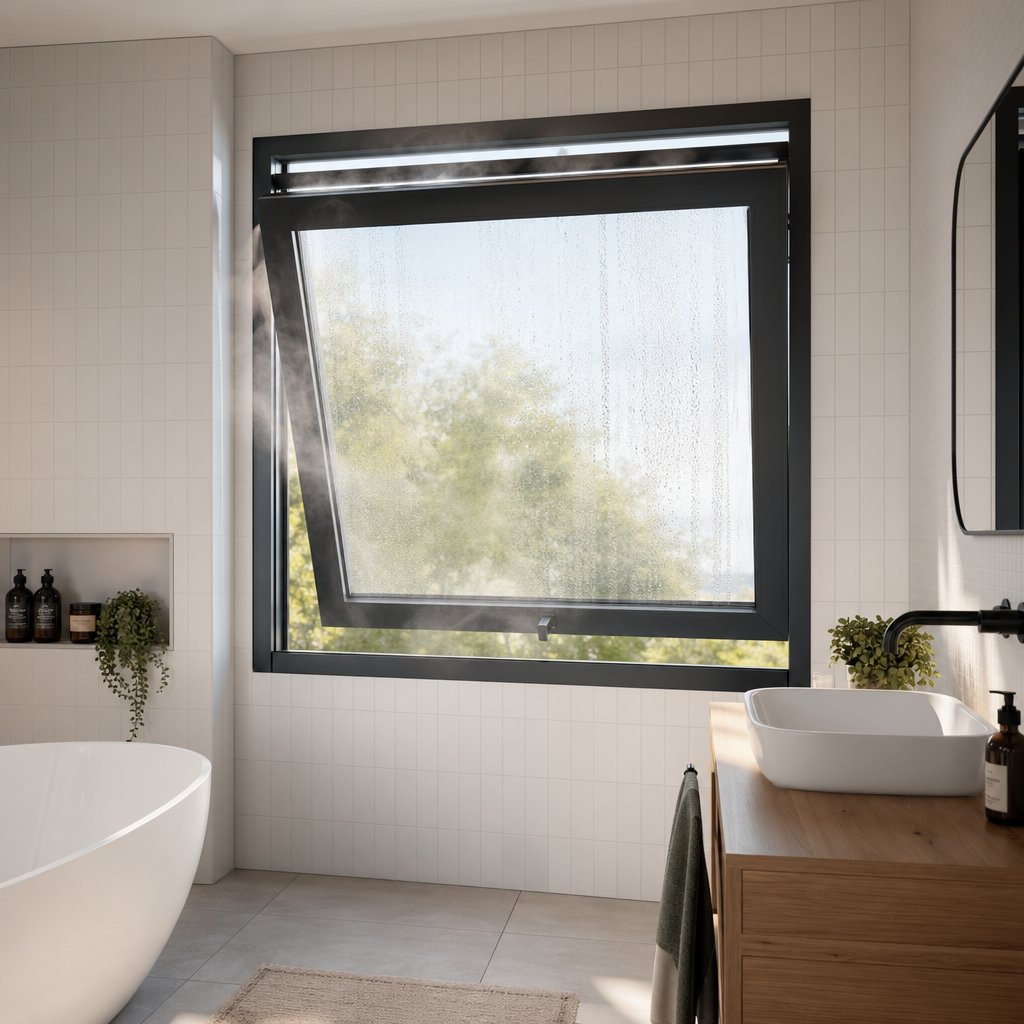
Tilt mode is the everyday workhorse. The sash opens inward at the top by roughly 100 to 150 mm, enough to move air continuously while the multi-point locks stay engaged along the bottom and sides. That combination of airflow and security makes it the ideal default position for rooms where the window stays cracked open for hours at a time.
Bathrooms are the clearest example. Moisture from showers and baths needs a reliable exit path, but a fully open window in a bathroom creates a privacy and security problem, especially on a ground floor or a street-facing wall. Tilt mode extracts humid air upward through the top gap without exposing the room. You can leave it open during and after every shower without a second thought.
Kitchens benefit in a similar way. Cooking generates heat, steam, and odours that need somewhere to go. A fully open casement next to a stovetop invites wind gusts that disturb gas flames, scatter lightweight items, and send curtains drifting toward heat sources. Tilt mode provides steady background ventilation without the turbulence. Air enters at ceiling height and mixes gently into the room, pulling cooking byproducts out without creating drafts at counter level.
Children’s rooms and nurseries are where the safety dimension becomes critical. The tilt opening is too narrow for a child to climb through, providing passive ventilation with a built-in physical barrier against falls. You do not need to add restrictors, cable locks, or aftermarket safety devices. The geometry of the tilt position itself is the safety feature, which is one reason european tilt and turn window designs became standard in residential buildings across the continent, where child safety regulations are strict.
Bedrooms round out the list. Overnight ventilation improves sleep quality, but leaving a window wide open through the night raises obvious security concerns, particularly on accessible floors. Tilt mode solves this cleanly. Fresh air circulates while the sash remains locked at multiple points. Rain deflects off the inward-angled glass rather than pooling on the sill, so you can leave tilt-turn windows open during a passing shower without waking up to a wet floor.
When Full Turn Mode Is Essential
Turn mode is less about daily convenience and more about the moments when you need the entire opening clear. The sash swings fully inward on side hinges, functioning like windows that open like doors, and three scenarios make this capability non-negotiable.
Emergency egress is the most important. Building codes in most jurisdictions require bedrooms and habitable basement rooms to have at least one window that provides an unobstructed escape route. The International Residential Code (IRC) mandates a minimum net clear opening of 5.7 square feet, at least 20 inches wide and 24 inches tall, with a sill height no greater than 44 inches from the finished floor. A tilt and turn window in full turn mode swings the entire sash clear of the frame, delivering 100 percent of the opening area for egress. Compare that to a sliding window, where only 50 percent of the frame width is ever available, or a double-hung, which faces the same limitation. For egress compliance, the full turn position is one of the most efficient solutions available.
Cleaning access is the second major use case. On upper storeys, reaching the exterior face of the glass typically means hiring a professional or setting up a ladder. Turn mode eliminates both. The sash swings inward far enough to bring the outside glass surface within arm’s reach from inside the room. You clean both faces standing safely on your own floor. For multi-storey homes and apartment buildings, this is not a luxury. It is a practical necessity that saves real money over the life of the window.
Maximum airflow during mild weather is the third scenario. When conditions are right, you want the opening fully clear to flood the room with fresh air. Turn mode delivers that without restriction, making it effective for rapid ventilation after painting, cleaning with chemicals, or simply airing out a stuffy room on a temperate day.
Living areas and open-plan spaces take this further. Large-format tilt and turn units, particularly tilt and turn doors sized for balcony or terrace access, create a near-seamless indoor-outdoor connection when swung fully open. In tilt position, the same door provides gentle background ventilation without committing the entire opening. This dual personality makes tilt turn doors a practical alternative to traditional French doors or sliding patio systems, especially where you want the option of secure partial ventilation alongside full-width access.
Ranking these applications by how much additional value the dual-opening mechanism delivers compared to a standard single-action window puts the decision in perspective:
- Children’s rooms and nurseries — tilt mode provides ventilation with a physical child-safety barrier that no single-action window replicates without aftermarket hardware
- Upper-floor bedrooms — overnight tilt ventilation with multi-point security plus interior-side cleaning access via turn mode eliminates ladders and compromises
- Bathrooms — continuous moisture extraction in tilt mode without sacrificing privacy or security on any floor level
- Kitchens — draft-free background ventilation at ceiling height keeps air moving without disturbing cooking or flame stability
- Multi-storey living spaces — turn mode cleaning access and egress compliance become increasingly valuable the higher the floor
- Balcony and terrace entries — tilt and turn doors offer secure partial ventilation and full-width opening from a single unit, replacing the need for separate ventilation and access solutions
The pattern is clear. Rooms where you need the window open for extended periods without compromising safety or security gain the most from tilt mode. Rooms on upper floors or with egress requirements gain the most from turn mode. And any room that needs both — which, in practice, covers most of a typical home — is where the dual-action design justifies its premium over simpler alternatives.
Room function tells you how you will use the window. Climate tells you how the window needs to perform. A bathroom in a coastal town and a bedroom in an alpine region place very different demands on the same hardware, and the specification choices that bridge that gap go well beyond which opening mode you favour.
How Aluminium Tilt and Turn Windows Perform Across Climates
A tilt window specified perfectly for a Melbourne suburb may underperform badly in a beachfront home on the Queensland coast. The same hardware, the same frame material, the same dual-action mechanism — yet the outcome differs because climate changes which features carry the load. Most buyers choose their windows based on aesthetics and price, then hope the specification holds up. A smarter approach is to start with your environment and work backward to the features that matter most in that specific context.
Aluminium tilt and turn windows are unusually well-suited to this kind of climate-first thinking. The frame material itself handles a wider range of environmental stresses than uPVC or timber, and the tilt and turn mechanism adds performance characteristics — airtight sealing, inward-opening wind resistance, controlled ventilation — that respond differently depending on what nature throws at them. Here is how the system performs across five distinct climate types and which specifications you should prioritise in each.
Coastal and High-Humidity Performance
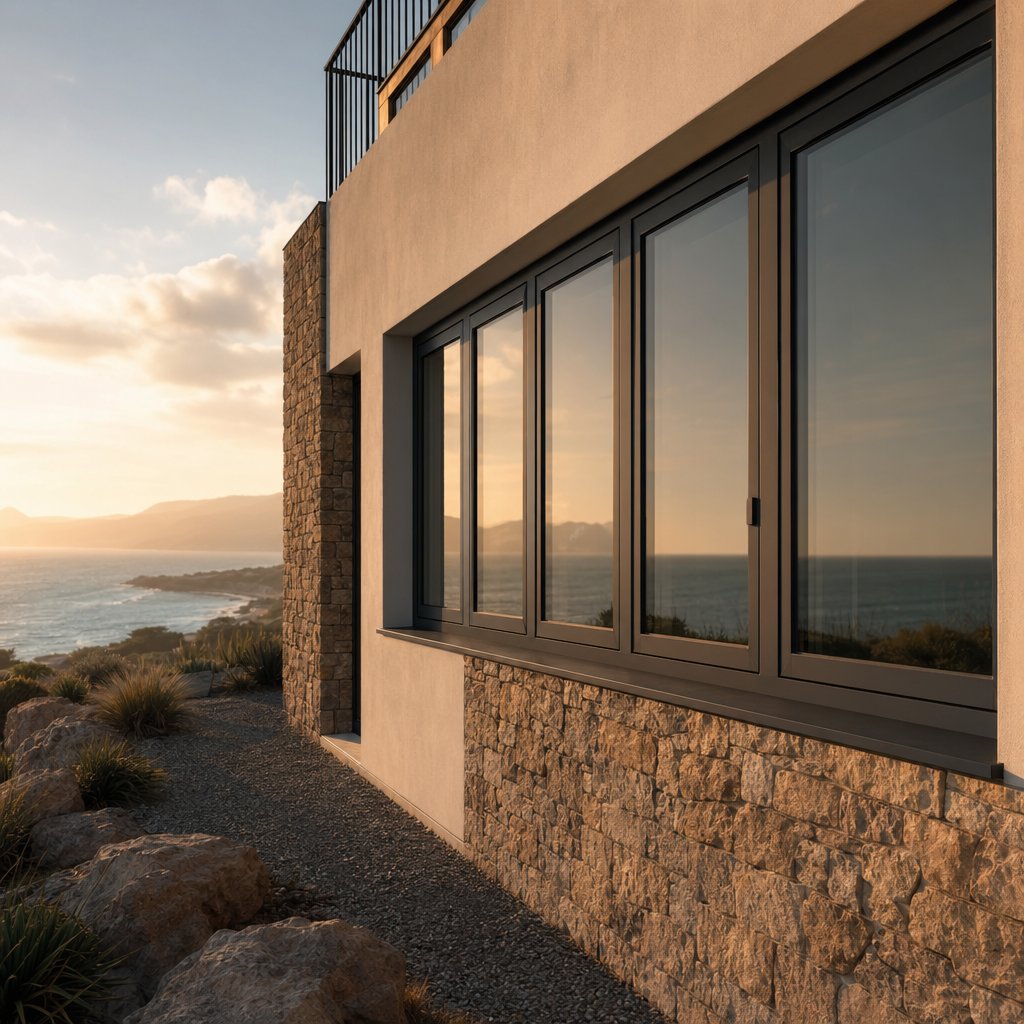
Salt-laden air is one of the most aggressive environments any building material can face. It accelerates corrosion in steel, degrades untreated timber, and attacks hardware finishes relentlessly. Coastal homes cycle between high humidity, direct salt spray, wind-driven rain, and intense UV exposure — often all in the same day.
Aluminium handles this better than any common frame material. The metal naturally forms a thin oxide layer the moment it contacts air, creating a self-healing barrier against further corrosion. Unlike steel, which rusts progressively once its protective coating is breached, aluminium’s oxide layer regenerates. Powder coating or anodising builds on this natural defense, adding a durable surface treatment that resists salt spray, UV degradation, and moisture penetration for decades.
For coastal installations, the combination matters. A powder-coated aluminium frame resists the salt air that would pit and corrode steel hardware within years. The tilt and turn mechanism’s multi-point locking system compresses gaskets tightly around the full sash perimeter, creating a seal that blocks wind-driven rain and salt-laden moisture from reaching interior surfaces. In tilt mode, you can ventilate during coastal breezes without inviting salt spray directly onto your furnishings — the inward angle of the sash deflects airborne moisture downward and away from the opening.
Stainless steel hardware components and marine-grade fasteners are worth specifying in severe coastal zones. The aluminium frame will outlast the building it sits in, but the screws, hinges, and locking pins need to match that durability. Ask your supplier whether the hardware package is rated for coastal exposure, not just the frame itself.
Extreme Heat, Cold, and High-Wind Considerations
Cold climates test a window’s ability to retain heat and resist condensation. The thermal break becomes the single most important specification in this environment. A wider polyamide strip — 24 mm or more in premium profiles — creates a longer insulating path between the cold exterior aluminium and the warm interior face, reducing the frame’s U-value and minimising the risk of interior condensation forming on the frame surface.
Pair that thermal break with triple glazing, and you have a window system capable of meeting passive house standards even in regions with sustained sub-zero temperatures. The tilt and turn mechanism contributes here in a way that is easy to overlook: when the handle rotates to the closed position, the espagnolette system pulls the sash inward against the gaskets at every locking point around the perimeter. That compression creates an exceptionally airtight closure that minimises air infiltration, one of the largest sources of heat loss in residential buildings. A sliding window riding on a track cannot replicate this level of seal compression, which is why tilt and turn consistently outperforms sliders on air leakage tests in cold-climate evaluations.
Hot climates flip the priority. Solar heat gain becomes the enemy, and the glazing specification does the heavy lifting. Low-E coatings reflect infrared radiation back toward the exterior, reducing the amount of solar energy that passes through the glass. Tinted or solar-control glazing options compatible with aluminium frames can cut solar heat gain by 50 percent or more without noticeably darkening the view. The frame itself contributes stability: aluminium does not warp, soften, or deform under sustained high temperatures the way uPVC can. In regions where exterior surface temperatures regularly exceed 60 degrees Celsius on sun-facing walls, uPVC profiles risk dimensional distortion that pulls locking hardware out of alignment. Aluminium stays dimensionally true regardless of heat exposure.
Tilt mode also earns its keep in hot climates. Opening the sash at the top during cooler evening hours creates a stack ventilation effect — warm interior air rises and exits through the top gap while cooler outside air enters lower in the room. This passive cooling strategy reduces reliance on air conditioning without the security compromise of a fully open window overnight.
High-wind zones reveal a structural advantage unique to inward-opening designs. When wind hits an outward-opening casement, the pressure pushes the sash away from the frame, stressing the hinges and potentially forcing the window open. An inward-opening tilt and turn sash experiences the opposite effect: wind pressure pushes the sash tighter against the seals and frame, actually improving the closure rather than fighting it. Aluminium’s rigidity compounds this advantage. Where a uPVC frame might flex under sustained wind load, allowing the gasket seal to break momentarily, aluminium resists deflection and maintains consistent seal compression even during severe gusts. For cyclone-prone regions in northern Australia or hurricane zones in the southeastern United States, this combination of inward opening geometry and frame rigidity provides a meaningful performance edge.
Urban environments present a different kind of stress: noise. Traffic, construction, nightlife, and aircraft paths create persistent sound pressure that degrades quality of life inside the home. The tight multi-point seal of a closed tilt and turn window already outperforms most sliding and single-point-locked casement windows on acoustic insulation. Pairing that seal with laminated glazing — where a PVB interlayer between glass panes dampens sound transmission — pushes acoustic performance further. Aluminium frames support heavier laminated glass units without the profile thickening that uPVC would require, so you get better noise reduction without sacrificing sightline width.
The following matrix maps the features that matter most to each climate type, giving you a practical starting point for specification conversations with your supplier:
| Climate Type | Priority Features | Glazing Focus | Frame and Hardware Notes |
|---|---|---|---|
| Coastal / salt air | Corrosion resistance, seal integrity against wind-driven rain | Double or triple glazing with toughened outer pane | Powder-coated or anodised finish; marine-grade stainless steel hardware and fasteners |
| Cold / alpine | Thermal break width, airtightness, condensation resistance | Triple glazing with argon or krypton gas fill and warm-edge spacers | Wide polyamide thermal break (24 mm+); multi-point seal compression critical |
| Hot / arid | Solar gain control, dimensional stability under heat | Low-E coatings, solar-control tint, double or triple glazing | Aluminium resists heat deformation; tilt mode enables passive evening cooling |
| High-wind / cyclone | Structural rigidity, inward-opening wind resistance, impact protection | Laminated or impact-rated glass; thicker glass units for wind load | Aluminium’s rigidity prevents frame deflection; wind pushes sash tighter against seals |
| Urban / high-noise | Acoustic insulation, airtight seal, vibration dampening | Laminated glazing with PVB interlayer; asymmetric glass thickness | Multi-point locking compression maximises acoustic seal; aluminium supports heavier glass |
You will notice that some features appear across multiple climate types. Multi-point seal compression matters everywhere. Thermal break quality matters in both hot and cold extremes. Aluminium’s dimensional stability is relevant whether the stress comes from heat, cold, humidity, or wind. These overlapping benefits are part of why aluminium tilt and turn windows work across such a broad range of environments — the base platform is inherently versatile, and the glazing and hardware specifications fine-tune it to local conditions.
Climate tells you what to specify. The remaining question is how to evaluate what suppliers are actually offering — which certifications to look for, which numbers to compare, and what separates a quality tilt and turn window from one that merely looks the part on a spec sheet.
How to Choose the Right Aluminium Tilt and Turn Windows
Spec sheets can blur together quickly when you are comparing turn and tilt windows from multiple suppliers. Every brochure promises “premium performance” and “superior quality,” but the numbers behind those claims vary enormously. The difference between a window that performs for 40 years and one that disappoints within a decade often comes down to a handful of measurable specifications and the credibility of the company standing behind them.
Here is a practical framework for cutting through the noise and evaluating what actually matters before you commit.
Key Specifications to Evaluate Before Buying
Start with the thermal break. As covered earlier, this polyamide strip is what transforms aluminium from a heat conductor into a genuine insulator. Ask for the thermal break width in millimetres — anything below 20 mm is entry-level, while 24 mm and above indicates a premium profile designed for serious energy performance. If a supplier cannot tell you the thermal break width, that is a red flag.
Next, look at the whole-window U-value rather than the frame U-value alone. The whole-window number accounts for the frame, glazing, and edge spacer working together. It is the figure that determines whether your tilt/turn windows will meet your local energy code requirements. In Australia, the National Construction Code references specific thermal performance thresholds depending on your climate zone, so confirm that the quoted U-value satisfies your zone’s minimum.
Hardware quality deserves as much scrutiny as the frame itself. The multi-point espagnolette system is the mechanical heart of every tilt and turn window. Ask which brand supplies the locking hardware, how many locking points engage around the sash perimeter, and whether the hinges are rated for the sash weight you are specifying. European hardware brands with decades of tilt and turn heritage tend to offer the most reliable long-term performance.
Glazing options should match your climate priorities. Double glazing with Low-E coating handles most Australian conditions. Triple glazing suits cold climates or projects targeting exceptional acoustic insulation. Laminated glass adds security and sound dampening. The right supplier will help you match glazing to your environment rather than offering a single default option.
Use this checklist when shortlisting products:
- Thermal break width (20 mm minimum; 24 mm+ for high performance)
- Whole-window U-value verified by independent testing
- Hardware brand, number of locking points, and weight rating
- Glazing options: double, triple, Low-E, laminated, tinted
- Frame profile width and maximum sash dimensions available
- Finish options: full RAL palette, anodised, dual-colour
- Compliance certification for your local building standards
- Warranty terms covering frame, hardware, glazing seals, and finish separately
Finding a Supplier That Meets Your Project Needs
Certifications are non-negotiable. In Australia, windows must comply with AS 2047 for structural performance, water penetration, and air infiltration, plus AS 1288 for glass selection and installation. These are not optional quality badges — they are mandatory for building approval. Any supplier who cannot provide documentation proving their tilt/turn windows meet these standards is not worth your time, regardless of price.
Beyond compliance, look for suppliers who offer genuine customisation. Tilt and turn windows are not one-size-fits-all. Your project may need non-standard dimensions, specific RAL colours, particular glazing configurations, or a window that opens outward on one floor and inward on another. A supplier with a rigid product menu will force compromises that a flexible manufacturer will not.
Warranty structure reveals confidence. Quality suppliers warrant the aluminium frame for 10 years or more, hardware for at least 5 years, and glazing seals separately. If a supplier bundles everything into a vague “5-year product warranty,” ask what is actually covered. Seals and hardware are the components most likely to need attention first, so specific coverage on those items matters.
For readers in Australia ready to explore options, MEICHEN’s aluminium windows collection is a practical starting point. Their range is built to Australian Standards and caters to homeowners, renovators, builders, and developers, making it relevant whether your project is a single bathroom renovation or a multi-unit development. The ability to browse energy-efficient, thermally broken aluminium systems designed for the local market saves the guesswork of adapting European-only specifications to Australian compliance requirements.
Professional installation is the final piece. Tilt and turn hardware demands precise frame alignment — the multi-point locking system only functions correctly when the frame is perfectly square and level. Even a few millimetres of deviation can cause locking points to miss their keeps, seals to compress unevenly, or the sash to bind during operation. This is not a window style that tolerates DIY installation or inexperienced fitting. Budget for qualified installers who understand espagnolette hardware, and confirm that your supplier either provides installation or partners with certified professionals in your area.
Pricing expectations should be realistic. Aluminium tilt and turn windows sit above standard casements, sliders, and windows that open upwards in cost. The dual-action hardware, thermally broken profiles, and multi-point locking system all add manufacturing complexity. But framing the price as a premium misses the point. Over a 40-year lifespan with virtually zero maintenance, no repainting, no seal failures from frame warping, and no mid-life replacement, the per-year cost of ownership is often lower than cheaper alternatives that demand ongoing attention or earlier replacement. You are not paying more — you are paying once.
Frequently Asked Questions About Aluminium Tilt and Turn Windows
1. How do tilt and turn windows work?
Tilt and turn windows operate through a single handle connected to a multi-point espagnolette locking system. Rotating the handle to a vertical position locks the window fully. Turning it 90 degrees to horizontal tilts the sash inward from the top, creating a narrow gap for ventilation while keeping locking pins engaged along the bottom and sides. A further 90-degree rotation swings the entire sash inward on side hinges like a door, providing full opening for cleaning, egress, or maximum airflow. The mechanism requires no additional handles or switches.
2. Are aluminium tilt and turn windows energy efficient?
Modern aluminium tilt and turn windows achieve strong energy efficiency through thermally broken profiles. A polyamide strip inserted between the interior and exterior aluminium sections blocks heat conduction, dropping frame U-values from around 5.8-6.5 W/m2K (non-broken) to 1.8-3.2 W/m2K. When paired with double or triple glazing, whole-window U-values satisfy strict energy codes in Australia and Europe. The multi-point locking hardware also compresses gaskets around the full sash perimeter, creating an exceptionally airtight seal that minimises air infiltration and heat loss.
3. How long do aluminium tilt and turn windows last compared to uPVC?
Aluminium tilt and turn windows typically last 40 to 50 years with minimal maintenance, requiring only occasional cleaning with soapy water. uPVC frames generally last 20 to 30 years before seals fail, profiles yellow under UV exposure, and the material becomes brittle. Over a 60-year period, aluminium often proves more cost-effective despite higher upfront pricing because it avoids the one or two full replacements that uPVC systems typically require. Suppliers like MEICHEN (meichenwindows.com.au/aluminium-windows/) offer Australian-standard-compliant aluminium systems built for this kind of long-term performance.
4. Are tilt and turn windows safe for children’s rooms?
Tilt and turn windows are considered one of the safest window types for children’s rooms. In tilt mode, the sash opens inward at the top by approximately 100 to 150 mm, creating a gap too narrow for a child to climb through. The multi-point locking pins remain engaged along the bottom and sides throughout, so the window cannot be pushed further open. This built-in physical barrier provides continuous ventilation without requiring aftermarket child-safety restrictors or cable locks, which is a key reason the design became standard in European residential buildings with strict child safety regulations.
5. What is the best frame material for tilt and turn windows?
Aluminium is the strongest frame material for tilt and turn applications because the dual-action mechanism demands precise hardware alignment, heavy glazing support across two pivot axes, and long-term dimensional stability. Aluminium’s strength-to-weight ratio allows slimmer profiles (55-65 mm vs 70-85 mm for uPVC), maximising glass area and natural light. It resists warping, swelling, and creep that can pull locking points out of alignment over time. While uPVC offers lower upfront cost and timber provides natural insulation, aluminium delivers the best combination of structural performance, lifespan, finish options, and total cost of ownership for this demanding hardware system.
More Window & Door Guides