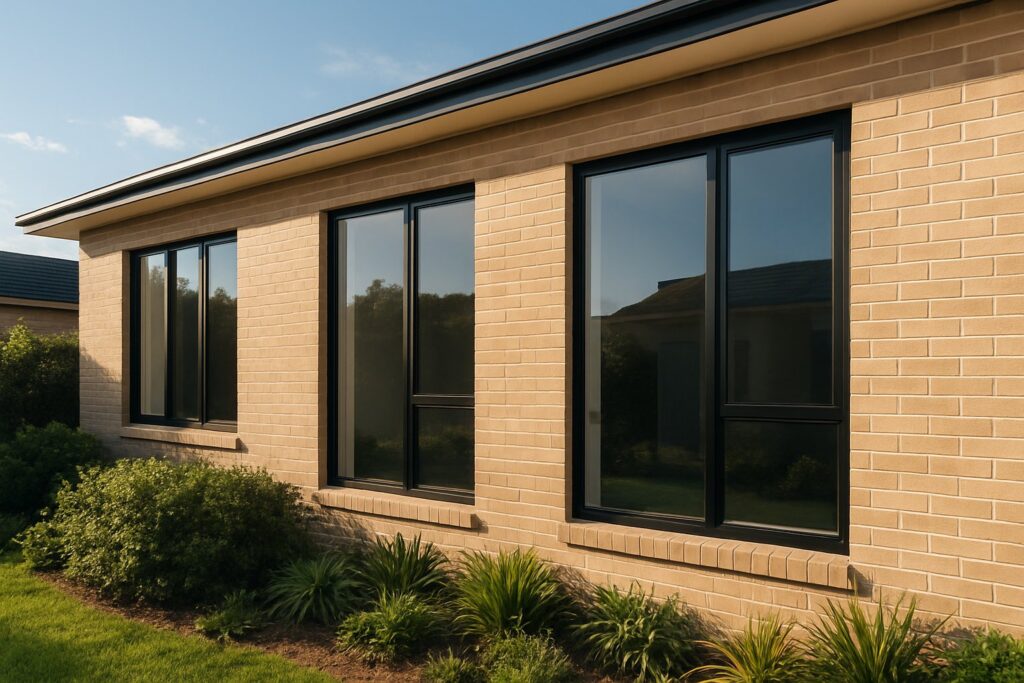
What Drives Aluminium Sliding Windows Price and Why It Matters
How much does an aluminium sliding window actually cost in Australia? The short answer: anywhere from around $165 for a small, basic unit (supply only) to well over $1,000 for larger, high-performance configurations. That is a wide spread, and it catches a lot of buyers off guard. Two quotes for what looks like the same window can land hundreds of dollars apart, and the reasons are rarely obvious at first glance.
Aluminium sliding window prices depend on far more than frame size — glass specification, thermal performance, hardware grade, and installation complexity all shape the final number.
What Aluminium Sliding Windows Actually Cost
Pricing data from Australian suppliers shows that supply-only aluminum sliding windows start at roughly $165 for a compact 514mm x 610mm unit and climb to around $680 or more for larger sizes like 2057mm x 2650mm. Add installation, glazing upgrades, and finishing, and the fully installed cost rises significantly. These figures give you a baseline, but the real story sits in the variables behind them.
Why Prices Vary So Much Between Quotes
Every aluminium sliding window is a combination of choices. Frame profile thickness, single versus double glazing, powder-coat colour, hardware quality, weathersealing grade, and whether you are buying a standard size or a custom-made unit all push the price up or down. Even the number of panels in your aluminum slider windows changes the equation. A 2-panel setup costs less than a 3- or 4-panel configuration, and the scaling is not always proportional.
Who This Pricing Guide Is For
This guide is built for anyone spending real money on windows in aluminium — homeowners replacing aging frames, renovators upgrading for energy efficiency, builders costing a new project, or developers pricing at scale. The goal is straightforward: give you a genuinely neutral breakdown of what shapes the cost of aluminium sliding windows across Australia, so you can read quotes with confidence and compare suppliers on a level playing field. Every factor that moves the price gets its own section ahead.
Key Factors That Shape Aluminium Sliding Window Pricing
You already know the price range is wide. The real question is: what exactly are you paying for when one aluminum sliding window quote comes in at $300 and another at $900 for a similar-looking unit? Each component of the window carries its own cost weight, and understanding these pieces turns a confusing quote into something you can actually evaluate.
Frame Profile and Thickness
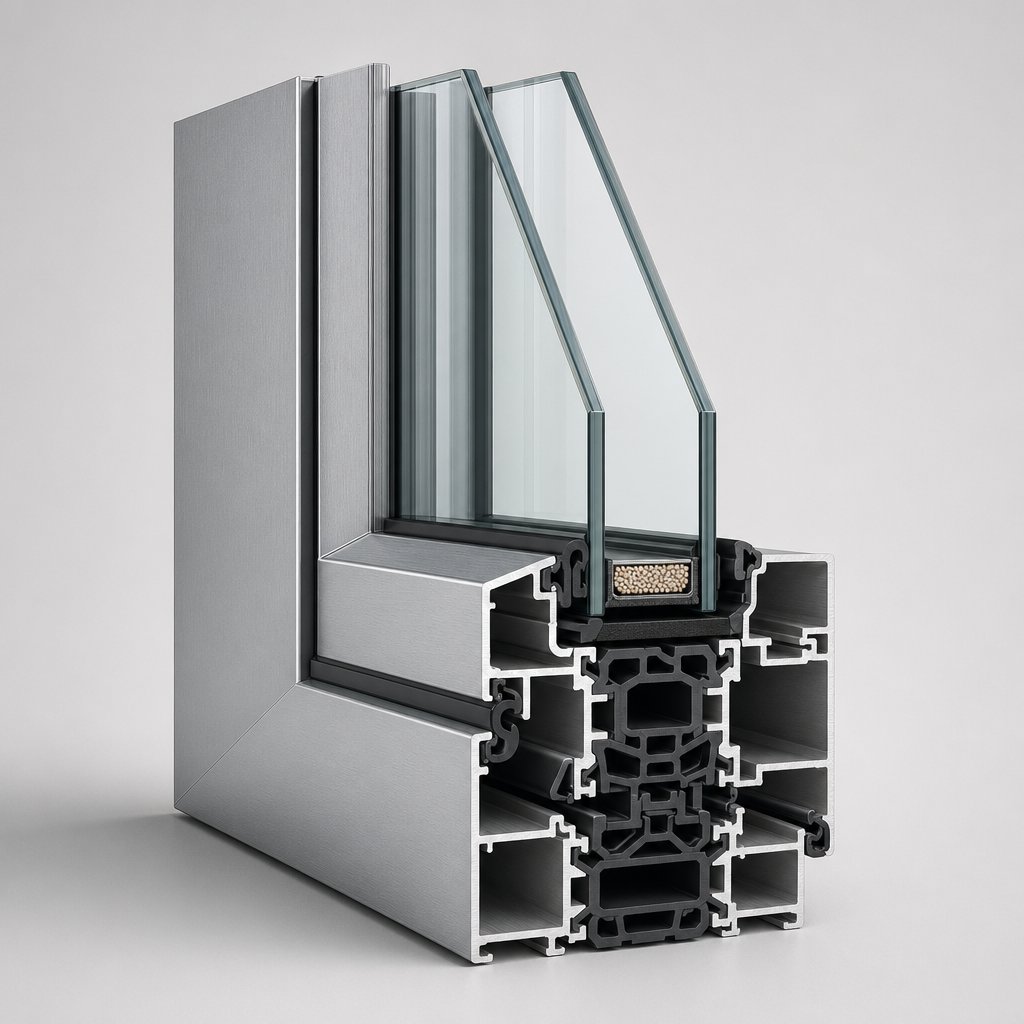
The aluminium frame itself is the skeleton of the window, and not all frames are created equal. Standard residential profiles typically use a wall thickness of around 1.4 mm, which suits most single-storey homes and moderate wind zones. Commercial-grade profiles step up to 1.8-2.0 mm wall thickness, offering greater structural rigidity for larger spans, upper-storey installations, or high wind-rated areas.
Thicker profiles require more raw aluminium and more precise extrusion, so the cost increase is real. You will also notice a difference in sightlines — the visible width of the frame. Slim-profile or “European-style” frames use high-strength 6063-T5 or 6063-T6 alloys to maintain structural integrity with less material, and that engineering precision comes at a premium. Expect slim-line frames to add 15-25% over standard profiles.
Glazing Options and Their Cost Impact
If the frame is the skeleton, the glass is the engine. Your choice of glazing can account for 25% to 40% of the total window cost, making it one of the biggest pricing levers you control.
- Single glazing — the most affordable option, but it offers minimal insulation and is increasingly uncommon in new builds due to energy efficiency requirements.
- Double glazing (e.g., 5+12+5 mm) — the current Australian standard for most residential projects. Two panes separated by an insulating gas-filled gap deliver a solid balance of thermal performance and cost.
- Triple glazing — adds a 15-30% premium over double glazing but delivers exceptional thermal and acoustic performance, often specified for passive house or net-zero builds.
- Low-E coatings — a microscopically thin metallic layer that reflects infrared heat while letting visible light through. A relatively inexpensive upgrade that meaningfully improves energy ratings.
- Laminated or toughened glass — required in certain applications for safety compliance, adding 10-30% to the glass component cost.
When you are comparing quotes for a sliding aluminum window, always check which glazing specification is included. A quote based on single glazing will look dramatically cheaper than one based on double-glazed Low-E units, even if the frame is identical.
Hardware, Finish, and Thermal Performance Premiums
Beyond the frame and glass, several other factors quietly shape the final number on your quote:
- Roller and track hardware — basic nylon rollers on a single track keep costs down but wear faster. Heavy-duty stainless steel roller systems on dual tracks glide more smoothly, handle heavier panels, and last significantly longer.
- Number of tracks — a 2-track system costs less than a 3-track configuration. More tracks allow more panels and wider openings, but each additional track adds material and hardware cost.
- Powder-coat finish — standard colours like white, black, or monument grey are the most affordable. Custom colours or dual-colour finishes (different colours on the interior and exterior) typically add 10-20% because of the additional treatment process.
- Anodised finish — offers superior corrosion resistance, especially valuable in coastal areas exposed to salt air. It carries roughly a 15% premium over standard powder coating.
- Thermal break technology — a polyamide or polyurethane insulating strip inserted between the inner and outer aluminium sections of the frame. This breaks the thermal bridge, improving frame efficiency by 60-80%. Thermally broken alum sliding window units can cost roughly double their non-thermally-broken equivalents, but they meet stricter energy codes and dramatically reduce condensation.
- Weathersealing grade — basic brush seals are standard on entry-level units. Upgraded compression seals or multi-fin weatherstripping improve air and water tightness, adding a modest cost but making a noticeable difference in comfort and energy performance.
Each of these factors shifts the price independently, and they compound when stacked together. A fully specced aluminum sliding window with thermally broken frames, double-glazed Low-E glass, heavy-duty hardware, and a custom powder-coat finish will sit at a very different price point than a basic single-glazed unit in a standard colour. Knowing which features matter for your specific project helps you spend where it counts and save where it does not.
With these individual cost drivers clear, the next layer to unpack is how window size and panel configuration combine to create distinct pricing tiers — because adding panels does not scale the way most buyers expect.
Price Ranges by Window Size and Configuration
Imagine two sliding windows aluminum frames sitting side by side on a showroom floor. Same colour, same brand — but one costs nearly twice as much. The difference? Size and panel configuration. These two variables create distinct pricing tiers that every buyer should understand before requesting quotes.
Standard Sizes and What They Typically Cost
Hardware stores and window suppliers stock a range of common “brick fit” modules designed to suit standard Australian openings. These off-the-shelf sizes ship faster and cost less because they are manufactured in bulk. Based on current Australian supplier data, here is what you can expect for a standard aluminium sliding window (supply only, single glazed):
- 600 x 1200 mm (bedroom or ensuite) — roughly $350 to $700
- 1800 x 1200 mm (living room or servery) — roughly $680 to $1,200
Those ranges reflect differences in frame profile, hardware quality, and supplier margin — even before you factor in glazing upgrades. A quote that lands above $800 for the smaller size likely includes premium features worth asking about.
How Panel Count and Configuration Affect Price
Here is where aluminium windows prices stop behaving intuitively. You might assume a 3-panel sliding window aluminium unit costs 50% more than a 2-panel version. In practice, the jump is steeper. Each additional panel introduces extra track hardware, interlocking seals, rollers, and a wider frame — all of which compound the cost rather than scaling it neatly.
The table below outlines indicative supply-only price relationships across panel configurations and feature tiers. Figures are based on available Australian market data for standard residential openings.
| Configuration | Basic Tier (Single Glazed, Standard Hardware) | Mid-Range Tier (Double Glazed, Quality Hardware) | Premium Tier (Double Glazed Low-E, Thermally Broken) |
|---|---|---|---|
| 2-Panel Sliding (1 fixed, 1 operable) | $350 – $700 | $700 – $1,100 | $1,100 – $1,600+ |
| 3-Panel Sliding (1 fixed centre, 2 operable) | $700 – $1,200 | $1,200 – $1,800 | $1,800 – $2,500+ |
| 4-Panel / Stacking Slider | $1,100 – $1,800 | $1,800 – $2,800 | $2,800 – $4,000+ |
Notice how the cost gap widens as you move from basic to premium within each configuration. A 4-panel stacking slider in the premium tier can cost four to five times more than a basic 2-panel unit — not because the glass area quadrupled, but because the engineering complexity, hardware demands, and thermal performance requirements all escalate together.
Corner sliding configurations sit even higher. They require specialised mullion-free corner posts, structural engineering, and precision fabrication that push pricing well above a standard 4-panel unit of equivalent total width.
Custom Dimensions and the Pricing Premium
Standard sizes keep costs down because manufacturers produce them in volume with minimal setup changes. The moment your opening deviates more than about 10 mm from a catalogue size, you are in custom territory. That means dedicated cutting, individual quality checks, and longer lead times — typically 10 to 20 working days compared to 2 to 5 days for stock modules.
The premium for custom-sized sliding windows aluminum units generally falls in the range of 10-25% above the equivalent standard size. It sounds steep, but there is a trade-off worth considering: a custom unit drops straight into the opening with minimal shimming, faster waterproofing, and a cleaner finish. Stock sizes that do not quite fit often require extra packers, foam, and trim work — costs that can quietly eat into the savings.
For renovations involving older brick courses, Hebel walls, or non-standard openings, custom sizing is often the smarter investment. For new builds where the architect has specified standard dimensions, stock modules deliver genuine savings without compromise.
Size and panel count set the baseline, but the type of sliding mechanism you choose layers another pricing dimension on top — one that most buyers never see coming.
Aluminium Sliding Window Types and How They Compare on Price
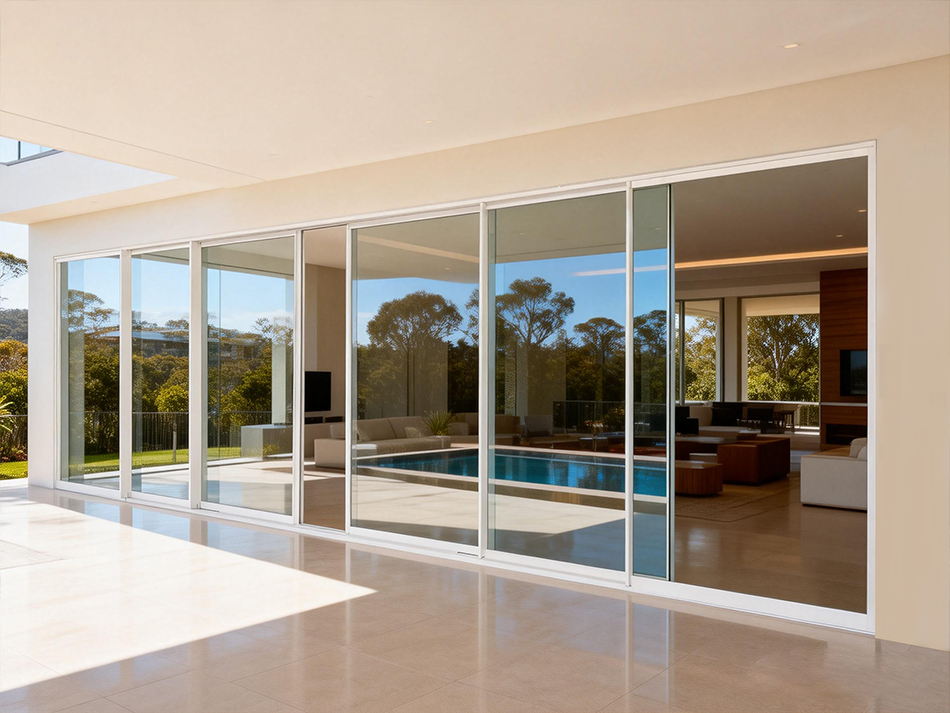
Most buyers shopping for aluminum windows sliding along a track picture one product: a standard horizontal slider. In reality, there are at least five distinct subtypes, each built around a different mechanism, and each sitting in its own price bracket. Knowing which type suits your project prevents you from overpaying for features you do not need — or underspecifying and regretting it later.
Here is how the main subtypes rank from most affordable to most expensive:
- Standard horizontal sliding window — panels glide along a fixed track using basic rollers. The simplest mechanism, the lowest cost, and the most common choice across AU windows and doors projects.
- Tilt-and-slide window — the sash tilts inward at the top for ventilation before sliding horizontally to open fully. The dual-action hardware adds a modest premium over a standard slider.
- Lift-and-slide window — a handle rotation lifts the panel off its seals before it slides, creating a tighter seal when closed. Mid-to-high price range due to advanced engineering.
- Slim-profile / minimal-frame design — ultra-narrow sightlines achieved through high-strength alloys and precision engineering. Premium pricing driven by material and fabrication complexity.
- Pocket or cavity sliding window — the sash disappears entirely into a wall cavity when opened. The highest cost bracket because of extensive structural modifications required during installation.
Standard Sliding vs Lift-and-Slide Systems
A standard horizontal slider is the workhorse of the aluminum windows price list. Panels ride on nylon or stainless steel rollers along one or two tracks, requiring minimal effort to operate. They suit bedrooms, kitchens, and living areas where you want a wide opening without the swing clearance a casement demands. For Sydney aluminium windows shoppers and buyers across every other capital, this is the entry point — affordable, reliable, and available in virtually every standard size.
Lift-and-slide systems step things up considerably. When you turn the handle, a cam mechanism lifts the panel slightly off its compression seals before it glides along the track. Close the handle and the panel drops back down, creating a much tighter seal against air and water infiltration. That improved seal translates to superior thermal insulation and energy efficiency compared to a conventional slider, which is why lift-and-slide units are increasingly specified for energy-conscious builds. The trade-off? Expect to pay roughly 40-70% more than a standard slider of equivalent size, reflecting the precision hardware and engineering involved.
Tilt-and-slide sits between the two. The tilt function lets you ventilate a room securely without fully opening the window — handy for ground-floor bedrooms or bathrooms. The added tilt mechanism pushes the price 15-25% above a basic slider, making it a practical mid-range option.
Slim-Profile and Minimal-Frame Designs
When architects want floor-to-ceiling glass with barely visible frames, slim-profile aluminium sliders deliver. These designs reduce frame sightlines to as little as 20-30 mm, maximising the glass area and creating a near-frameless aesthetic. Achieving that look without sacrificing structural performance requires high-strength alloy extrusions, tighter manufacturing tolerances, and often thermally broken profiles as standard.
The result is striking, but the cost reflects the complexity. Slim-profile aluminum windows sliding systems typically carry a 50-100% premium over standard-profile equivalents. They are most commonly specified in contemporary architect-designed homes, high-end renovations, and commercial shopfronts where visual impact justifies the investment.
Pocket and Cavity Sliding Windows
Pocket sliding windows represent the top of the pricing scale. When opened, the sash slides completely into a specially designed cavity within the wall structure, disappearing from view and leaving an entirely unobstructed opening. The effect is seamless — no visible sash, no hardware in the sightline.
That seamlessness comes at a cost. Installation requires precise framing modifications to create a wall pocket large enough to house the panel while maintaining structural integrity. Specialised track systems, advanced weatherproofing, and careful insulation around the cavity all add labour and material expense. A pocket sliding window can cost two to three times more than a standard slider of the same dimensions — and that is before factoring in the structural work to the surrounding wall.
Pocket systems make the most sense where traditional sliders would interfere with furniture placement, outdoor walkways, or a design concept that demands clean, uninterrupted openings. For most standard residential applications, the premium is hard to justify unless the architectural brief specifically calls for it.
Understanding which mechanism you actually need is one of the fastest ways to right-size your budget. Yet the window type is only one side of the cost equation — the framing material itself carries its own long-term financial implications that go well beyond the purchase price.
How Aluminium Stacks Up Against Other Window Materials on Cost
Sticker price is the number most buyers fixate on. But a window is not a one-time purchase — it is a 30- to 50-year commitment that includes maintenance, potential replacement, and ongoing energy costs. When you compare aluminium against uPVC, timber, and steel through that wider lens, the rankings shift in ways that surprise a lot of homeowners shopping for aluminium windows Melbourne, Sydney, or anywhere else across Australia.
Aluminium vs uPVC Sliding Windows
uPVC (unplasticised polyvinyl chloride) is often positioned as the budget-friendly alternative. On upfront cost alone, that reputation holds: uPVC sliding windows generally come in 10-20% cheaper than equivalent aluminium units for standard residential sizes. The frames are lighter, welded at the corners for a watertight seal, and require virtually no painting or sealing over their lifespan.
The catch shows up in longevity and climate suitability. Quality uPVC frames typically last 20 to 30 years before seal failure, discolouration, or brittleness sets in. Aluminium, by contrast, routinely delivers 35 to 50 years of service. In hot Australian climates — think western Sydney summers pushing well past 40 degrees — uPVC frames in darker colours can warp or distort above 35 degrees Celsius, a risk aluminium simply does not carry. Coastal buyers face an even starker gap: salt air accelerates uPVC degradation significantly, while powder-coated or anodised aluminium handles marine exposure with minimal fuss.
On thermal performance, modern thermally broken aluminium now achieves U-values within 7-12% of multi-chamber uPVC, narrowing what was once a decisive uPVC advantage. The annual energy cost difference in most Australian climate zones is modest — often under $30 per window — and easily offset by aluminium’s longer service life.
Aluminium vs Timber and Steel Alternatives
Timber sliding windows carry undeniable aesthetic warmth. They suit heritage homes, conservation areas, and buyers who value a natural material. The trade-off is cost — both upfront and ongoing. Timber frames typically cost 30-60% more than aluminium at the point of purchase, and they demand repainting or re-staining every 5 to 7 years to prevent rot, warping, and moisture damage. Skip a maintenance cycle and the frame deteriorates fast, especially in humid climates like Brisbane or coastal Adelaide. Well-maintained timber can last 50-plus years, but that longevity is entirely conditional on consistent upkeep — a real cost in both dollars and time.
Steel-framed windows occupy a niche at the premium end. They offer exceptional strength, the slimmest possible sightlines, and an industrial aesthetic popular in warehouse conversions and high-end architectural projects. Steel frames can cost 80-150% more than aluminium, and while they are incredibly strong, they are susceptible to corrosion without proper treatment. Ongoing rust prevention adds a maintenance layer that aluminium avoids entirely. For most residential sliding window applications, steel is overkill — beautiful, but hard to justify on a cost-per-year basis.
Aluminium sits in a practical middle ground: stronger and slimmer than uPVC, far less maintenance-intensive than timber, and significantly more affordable than steel. For aluminum windows Sydney buyers, aluminium windows Adelaide renovators, or anyone pricing a project nationally, that balance is what makes it the dominant framing material in Australian residential construction.
Total Cost of Ownership Over the Window’s Lifespan
The table below pulls these comparisons together. It focuses on relative cost positioning across the four materials for a standard sliding window over a 30-year ownership period.
| Factor | Aluminium | uPVC | Timber | Steel |
|---|---|---|---|---|
| Indicative Upfront Cost (Supply Only) | Mid-range | Lowest | High | Highest |
| Maintenance Frequency | Minimal (occasional clean, hardware lube) | Minimal (clean only; no repainting) | High (repaint/re-stain every 5-7 years) | Moderate (rust prevention every 8-10 years) |
| Typical Lifespan | 35-50 years | 20-30 years | 50+ years (if maintained) | 40-60+ years (if maintained) |
| Thermal Efficiency (with Double Glazing) | Good (excellent with thermal break) | Good to very good | Very good (natural insulator) | Poor without thermal break |
| Aesthetic Flexibility | Wide colour range; slim profiles available | Limited colours; thicker frames | Natural warmth; paintable to any colour | Ultra-slim sightlines; industrial character |
| 30-Year Total Cost of Ownership | Low to moderate | Moderate (replacement likely needed) | High (maintenance + potential repairs) | High to very high |
The key takeaway here is that the cheapest window to buy is rarely the cheapest window to own. uPVC saves money on day one but may need full replacement within 25 years — a capital cost that aluminium avoids entirely. Timber rewards patient, hands-on owners but punishes neglect. Steel delivers unmatched aesthetics for a premium few are willing to pay in a residential context.
For most Australian projects, aluminium delivers the lowest total cost of ownership when you factor in its lifespan, near-zero maintenance, and strong thermal performance with modern frame technology. That cost advantage becomes even clearer once you break down the difference between what you pay for the window itself and what you pay to get it properly installed — a distinction the next section unpacks in detail.
Total Installed Cost Breakdown You Need to Understand
Here is a scenario that plays out constantly across windows Australia wide: a homeowner sees a supply-only price of $600 for an aluminium sliding window, budgets accordingly, and then gets an invoice for $1,200 once the job is done. Nothing shady happened — the quote simply covered the window unit and nothing else. The gap between material-only cost and fully installed cost is one of the most misunderstood aspects of window pricing, and it catches first-time buyers harder than anyone.
Material-Only Cost vs Fully Installed Cost
When you see a price tag on a supplier’s website or in a showroom, you are almost always looking at the supply-only figure — the cost of the sliding frame in a window unit, manufactured, glazed, and ready to ship. That number does not include getting it from the warehouse to your site, preparing the opening, fitting the unit, sealing it against weather, or finishing the surrounding wall. Each of those steps carries its own cost, and together they can add 50-100% on top of the unit price.
Think of it like buying a kitchen benchtop. The slab price is one thing. Templating, cutting, delivery, installation, plumbing reconnection, and splashback finishing are all separate. Windows work the same way. A professional quote should break every component out as its own line item so you can see exactly where your money goes.
Here is what a complete, itemised quote for an aluminium sliding window installation should include:
- Window unit (supply only) — the manufactured frame, glazing, hardware, and weatherseals as a complete assembled product.
- Delivery and logistics — transport from the manufacturer or distributor to your site. Costs vary by distance, with regional and remote locations attracting higher freight charges.
- Structural preparation — enlarging, reducing, or reinforcing the rough opening to suit the new window dimensions. Older homes with non-standard openings often need lintels adjusted or brickwork modified.
- Removal and disposal of existing windows — pulling out old frames, cleaning the opening, and disposing of waste materials responsibly.
- Installation labour — fitting the new unit into the prepared opening, levelling, shimming, and mechanically fixing it in place. Installation labour typically adds $70 to $150 per window for straightforward fits, though complex or high-access jobs push that figure higher.
- Flashing and waterproofing — metal or flexible flashings installed around the frame perimeter to direct water away from the wall cavity. This is non-negotiable for compliance and long-term durability.
- Sealant and foam — expanding foam to fill gaps between the frame and the rough opening, plus external silicone or polyurethane sealant to create a weathertight seal.
- Hardware upgrades — if you have specified heavier-duty rollers, upgraded locks, or keyed-alike cylinders beyond what ships standard with the unit.
- Interior trim and finishing — architraves, reveals, or plaster patching around the inside of the new window. Interior finishing costs are frequently the homeowner’s responsibility and often left off the installer’s quote entirely.
- Exterior trim and cladding repair — repointing brickwork, patching render, replacing weatherboards, or fitting aluminium capping around the outside of the frame.
- Council or compliance fees — development applications or building certifier inspections where required, particularly for structural modifications to load-bearing walls or heritage-listed properties.
- Scaffolding or special access — upper-storey installations, steep sites, or hard-to-reach locations may require scaffolding, elevated work platforms, or crane access, each adding a separate hire cost.
When you line all of these up, the supply-only price suddenly looks like just one piece of a much larger puzzle. A $600 window can easily become a $1,000-$1,400 installed unit once every line item is accounted for.
Hidden Costs Most Quotes Leave Out
Even detailed quotes sometimes omit items that only surface once work begins. The most common surprises include:
- Structural repairs — removing an old window can reveal rotted timber framing, corroded steel lintels, or water damage in the wall cavity. These necessary repairs fall outside the standard installation scope and can add hundreds of dollars per opening.
- Hazardous material handling — homes built before the late 1980s may contain lead paint on existing window frames or asbestos in surrounding cladding. Safe removal requires licensed contractors and regulated disposal, both of which carry mandatory surcharges.
- Non-standard waterproofing — wet areas like bathrooms or laundries may need additional membrane work around the window opening to meet Australian Standards, particularly in shower recesses.
- Electrical or plumbing relocation — power points, light switches, or plumbing lines sitting within the wall near the window opening sometimes need to be moved before the new frame can be fitted.
- Painting and touch-ups — even a clean installation disturbs the surrounding wall finish. Repainting interior walls and exterior surfaces around the new window is almost always an additional cost.
The best way to minimise surprises? Ask your installer upfront whether the quote includes a contingency for unforeseen structural issues, and confirm in writing which finishing tasks are included and which fall to you.
Retail vs Wholesale and Bulk Pricing
Pricing scales very differently depending on whether you are a homeowner buying one or two windows at retail or a builder ordering 50 units for a multi-dwelling project. Understanding where you sit on that spectrum helps you set realistic expectations.
Retail buyers — typically homeowners and small renovators — pay the highest per-unit price. You are buying a single manufactured product with full retail margin, individual delivery, and one-off installation labour. There is limited room to negotiate because the supplier’s fixed costs (order processing, quality checks, transport) are spread across just one or two units.
Trade and small builder accounts usually unlock a discount of 10-20% off retail pricing once you establish an ongoing relationship with a supplier or hit a minimum order threshold. That threshold varies by manufacturer but commonly sits around 5-10 windows per order. At this level, you also gain access to trade delivery schedules and priority lead times.
Wholesale and project pricing kicks in for larger orders — typically 20 or more units, or orders above a set dollar value. Developers, commercial builders, and volume renovators operating at this scale can negotiate significantly more competitive unit pricing because the manufacturer benefits from production efficiency: fewer setup changes, bulk material purchasing, and consolidated shipping. Discounts of 25-40% off retail are realistic for large project orders, especially when you standardise sizes and specifications across the job.
Aluminium windows Perth buyers, for example, may find that a local manufacturer offers sharper pricing on bulk orders than a national distributor shipping from the east coast — the freight saving alone can offset any difference in unit cost. The same logic applies in every state: sourcing locally and ordering in volume are the two most reliable levers for reducing your per-window spend.
For homeowners replacing a single window, the retail price is the reality. For anyone managing a larger scope, the conversation shifts from “what does one window cost” to “what does the project cost per unit” — and that is where smart procurement makes a measurable difference. Knowing every line item on your quote is the first step; knowing how to compare quotes from different suppliers is the next.
How to Read and Compare Aluminium Window Quotes Like a Pro
You have three aluminium sliding window quotes open on your kitchen table. One is $4,200, another is $5,800, and the third lands at $7,100. All three claim to cover “supply and install” for the same openings. So which one is actually the best deal? You cannot answer that question by looking at the bottom line alone. The real skill is reading what sits above that number — and spotting what is missing entirely.
What a Professional Window Quote Should Include
A reliable aluminium sliding window quote reads like a recipe: every ingredient listed, every step accounted for. When an aluminium window supplier in Australia sends you a professional quotation, you should be able to trace exactly what you are paying for without guessing. Industry guidance on quote evaluation confirms that vague descriptions like “aluminium sliding windows” without technical detail make fair comparison nearly impossible.
Use this as your sliding window quote checklist — every item below should appear clearly in any quote worth considering:
- Window system and profile name — the specific aluminium profile series, not just “aluminium frame.”
- Frame dimensions — exact width and height for each unit, confirmed by site measurement.
- Glazing specification — single, double, or triple glazed, including glass thickness, cavity width, gas fill type, and any Low-E coatings.
- Thermal performance values — Uw value for the whole window, not just the glass (Ug). This is the number that reflects real-world performance.
- Hardware details — roller type, lock specification, handle style, and any security features like keyed cylinders or multi-point locking.
- Finish and colour — powder-coat colour code or anodised finish reference, including whether it is single or dual colour.
- Installation scope — what the installer will do: removal of old windows, structural preparation, fitting, flashing, waterproofing, sealing, and trim work.
- Compliance certifications — reference to AS 2047 testing for structural adequacy, water resistance, and air infiltration. For bushfire zones, BAL rating compliance should be stated.
- Warranty terms — separate warranty periods for the frame, glazing unit, hardware, and installation workmanship, plus clear details on what each covers.
- Lead time — manufacturing and delivery timeframe in weeks, not vague estimates.
- Payment schedule — deposit amount, progress payments, and final payment trigger clearly defined.
If a quote covers all of these points, you are dealing with a supplier who wants you to compare aluminium window prices on a level playing field. That transparency is a good sign in itself.
Red Flags When Comparing Supplier Quotes
A quote that looks too good to be true usually is. Pricing differences of 20-30% between quotes are common and often legitimate — they reflect genuine differences in specification and scope. But some gaps signal something less honest. Watch for these warning signs:
- Lump-sum pricing with no breakdown — a single total figure with no itemisation makes it impossible to see what you are actually getting.
- No glazing specification — if the quote does not state whether the glass is single or double glazed, assume the cheapest option has been priced.
- Missing Uw values — without whole-window thermal performance data, you cannot verify energy efficiency claims.
- No reference to AS 2047 or relevant Australian Standards — compliance is not optional for residential windows. A supplier who does not mention it may not be testing to it.
- Installation described as “supply and install” only — no detail on flashing, waterproofing, removal of old units, or finishing work. These omissions become surprise costs later.
- Unusually short or vague warranty — “12-month warranty” on an aluminium frame that should last decades is a red flag. So is a warranty with no written terms.
- No lead time stated — this can indicate the supplier has not actually confirmed manufacturing availability.
- Pressure to sign immediately — legitimate suppliers give you time to compare. High-pressure tactics often accompany quotes that will not hold up under scrutiny.
A lower price driven by genuinely simpler specifications is fine — that is a conscious trade-off. A lower price driven by missing scope is a problem you will pay for twice.
How to Normalise Quotes for a Fair Comparison
The reason most quote comparisons fall apart is scope mismatch. One supplier includes removal and disposal, another does not. One quotes double glazing, another prices single. One includes flashing and trim, another treats them as extras. You end up comparing apples to oranges and picking based on gut feel rather than data.
To compare aluminium window prices fairly, normalise every quote to the same scope before you look at the totals. Here is how:
- Create a master specification — write down the exact frame profile, glazing type, hardware, and finish you want. Send this to every supplier so each quote responds to the same brief.
- Define the installation scope — specify whether you need removal of existing windows, structural work, flashing, internal and external finishing. Ask each supplier to price against that identical scope.
- Request itemised pricing — ask every supplier to break their quote into the same categories: product cost, delivery, installation labour, flashings, sealant, trim, and any extras.
- Check compliance on every quote — confirm each supplier references AS 2047 and any zone-specific requirements (BAL, cyclone rating) relevant to your property.
- Align warranty terms — note the warranty period and coverage for each component. A quote with a 10-year frame warranty and a 5-year glazing seal warranty is not equivalent to one offering 2 years across the board, even if the sticker price is lower.
Once every quote sits on the same foundation, the price differences tell you something real — about manufacturing quality, installation standards, and after-sales support rather than about who left the most items off the page.
Even with perfectly normalised quotes in hand, one more variable can shift the final number significantly: where in Australia you are buying. The same window, same spec, same supplier network — and the price still moves depending on your postcode.
Regional Price Differences Across Australia
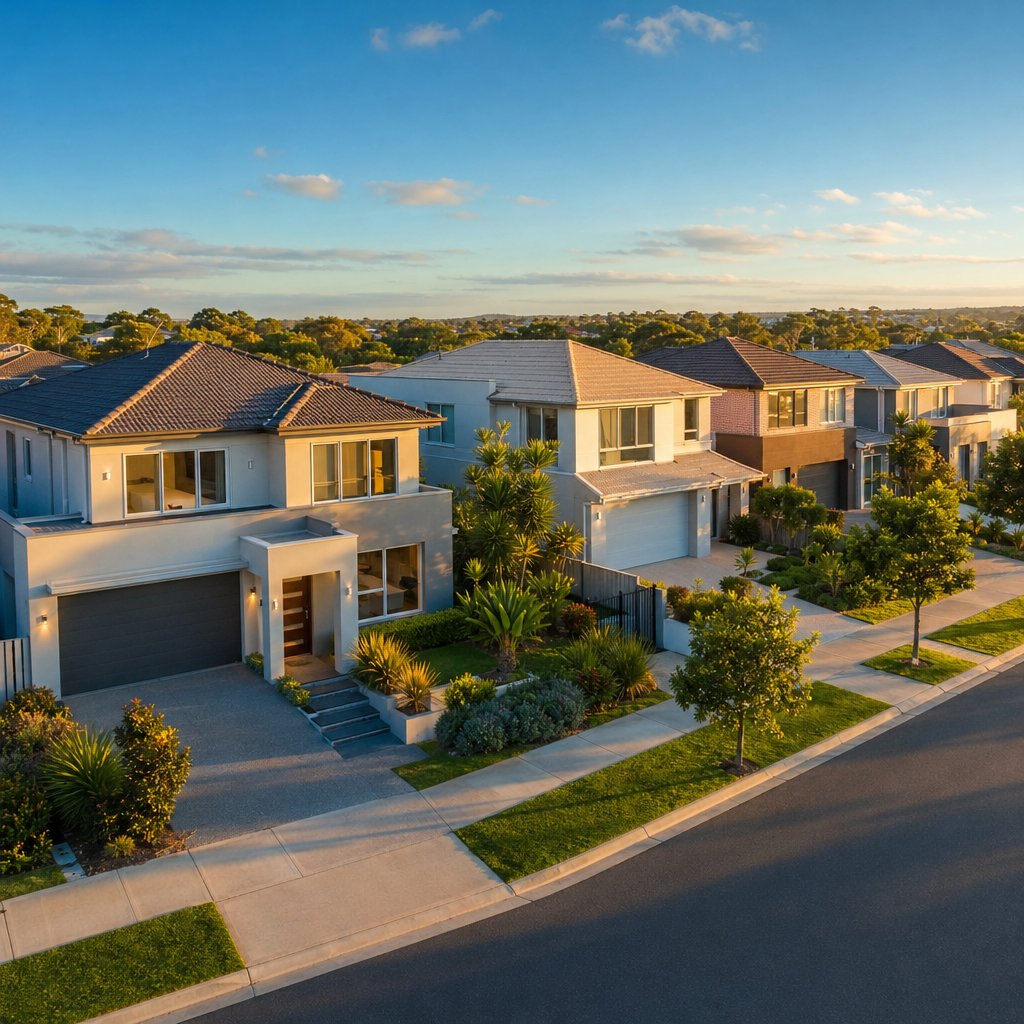
You could spec the exact same aluminium sliding window — identical profile, identical glazing, identical hardware — and get noticeably different installed prices in Sydney, Melbourne, Perth, Adelaide, and Brisbane. That is not a supplier ripping you off. It is geography, labour markets, compliance rules, and logistics all pulling the number in different directions depending on your postcode.
Why Prices Differ Between Sydney, Melbourne, Perth, and Adelaide
Three forces drive most of the regional variation in aluminium window prices by region across Australia.
Local labour rates. Installation labour is the single biggest variable between cities. Sydney and Perth consistently sit at the top of the scale, driven by strong construction pipelines competing for the same pool of skilled tradespeople. Rider Levett Bucknall’s national analysis forecasts construction cost increases of 5.4% in Perth and 4% in Sydney for 2026, with labour shortages remaining the sector’s most persistent constraint. Melbourne tracks close to Sydney at a forecast 4% increase, while Adelaide (5.1%) and Brisbane (5%) are seeing renewed pressure as major infrastructure and residential projects ramp up. Those percentages flow directly into what your window installer charges per opening.
Transport and logistics. Most aluminium window manufacturing in Australia is concentrated along the eastern seaboard, particularly in NSW, Victoria, and Queensland. If you are buying aluminium windows Brisbane or Sydney, freight costs are relatively modest because you are close to the source. Perth buyers face a different equation — shipping finished window units across the Nullarbor adds meaningful freight cost per unit, and that premium only grows for regional and remote WA locations. Adelaide sits somewhere in between, with reasonable access to Victorian manufacturers but still carrying a freight component that eastern capitals avoid.
Supplier density and competition. More suppliers in a market means more competitive pricing. Sydney and Melbourne have the highest concentration of aluminium window fabricators, distributors, and installers in the country, which keeps margins tighter and gives buyers genuine leverage when comparing quotes. Perth and Adelaide have fewer players, and that reduced competition can translate to slightly higher pricing even before freight enters the picture. Brisbane’s market is growing quickly — Olympics-related construction is pulling capacity and investment into South-East Queensland — but it has not yet matched the depth of Sydney or Melbourne.
State Compliance Requirements That Affect Cost
Beyond labour and logistics, state-specific building regulations layer additional costs onto aluminium sliding windows Australia wide. Two compliance areas stand out:
- Bushfire Attack Level (BAL) ratings — properties in designated bushfire-prone areas must use windows rated to their specific BAL level. BAL-29 and BAL-40 ratings require toughened glass, metal mesh screens, and specific frame sealing that can add 20-40% to the cost of a standard window. Large parts of the Adelaide Hills, Blue Mountains (NSW), outer Melbourne, and South-East Queensland fall within BAL zones. If your property has a BAL rating, your sliding windows price in Australia will reflect that compliance requirement regardless of which supplier you choose.
- Cyclone ratings — properties in northern Australia, including Far North Queensland, the Northern Territory, and parts of northern WA, must meet wind classification requirements under AS 4055. Cyclone-rated aluminium windows need heavier frame profiles, impact-resistant glazing, and reinforced hardware. These specifications push pricing 25-50% above standard residential units and limit the pool of suppliers who can fabricate to those standards.
- Energy efficiency requirements (NCC Section J) — the National Construction Code sets minimum energy performance standards that vary by climate zone. Homes in cooler zones like Canberra, Hobart, and the Victorian highlands often need thermally broken frames and higher-performance glazing to meet compliance, adding cost that buyers in milder coastal zones may avoid.
These are not optional upgrades — they are mandatory. A quote that does not reference the relevant compliance standard for your location is either incomplete or non-compliant, and either way it is not a quote you should sign.
Finding Local Suppliers to Reduce Freight Costs
One of the simplest ways to trim your installed cost is to source from a manufacturer or distributor who fabricates or stocks locally. A Perth-based fabricator shipping from a local workshop eliminates the cross-country freight premium entirely. A Melbourne buyer sourcing from a Victorian manufacturer avoids interstate logistics markups. The same logic applies in every capital.
Local sourcing also shortens lead times, simplifies warranty claims, and makes site measurements and after-sales service more practical. When you are comparing quotes, ask each supplier where the windows are actually manufactured and shipped from — not just where their sales office sits.
The table below summarises how these regional factors combine across Australia’s major cities.
| City | Relative Cost Index | Key Compliance Considerations | Supplier Availability |
|---|---|---|---|
| Sydney | Above average | BAL zones in western suburbs and Blue Mountains; NCC energy compliance for all new builds | High — largest concentration of fabricators and installers nationally |
| Melbourne | Average to above average | BAL zones in outer suburbs; stricter energy requirements in cooler climate zones | High — strong local manufacturing base with competitive pricing |
| Brisbane | Average to above average | Cyclone ratings in Far North QLD; BAL zones in hinterland areas | Growing — increasing capacity driven by infrastructure and residential pipeline |
| Perth | Above average | BAL zones in Perth Hills; cyclone ratings in northern WA | Moderate — fewer fabricators; freight from eastern states adds cost |
| Adelaide | Average | BAL zones in Adelaide Hills and peri-urban areas; standard NCC energy compliance | Moderate — smaller market but reasonable access to Victorian suppliers |
Regional pricing is the last major variable most buyers overlook — but once you account for it alongside specification, window type, and installation scope, you have every piece you need to build a realistic project budget from scratch.
Smart Budgeting and Getting the Best Value on Your Windows
Every pricing lever covered in this guide — frame profile, glazing spec, panel configuration, window type, installation scope, and regional variation — feeds into one practical question: how do you turn all of that knowledge into a reliable aluminium window cost estimate for your specific project? The answer is a structured approach that keeps you in control of the numbers rather than reacting to whatever lands in your inbox.
A Step-by-Step Framework to Estimate Your Project Cost
Whether you are replacing a single bedroom window or pricing 40 units across a multi-dwelling development, the budgeting process follows the same logic. Here is how to build your aluminium sliding window budget from the ground up:
- Map every opening. Walk through the property and list each window you need to replace or install. Record the width, height, and location (ground floor, upper storey, wet area, bushfire zone). This becomes your project schedule — the document every supplier will quote against.
- Choose your performance tier. Decide early whether you are targeting a basic, mid-range, or premium specification. A basic tier (single glazed, standard hardware) suits budget-conscious utility rooms. Mid-range (double glazed, quality rollers, standard powder coat) covers most living areas comfortably. Premium (double-glazed Low-E, thermally broken frames, heavy-duty hardware) is the right call for energy-conscious builds, exposed sites, or homes in stricter NCC climate zones. Mixing tiers across different rooms is a smart way to allocate spend where it matters most.
- Define the installation scope clearly. Write down exactly what you expect the installer to handle: removal of existing windows, structural preparation, flashing, waterproofing, internal trim, external cladding repair, and disposal. Send this scope to every supplier so each quote responds to the same brief.
- Get at least three itemised quotes. Three is the minimum for a meaningful comparison. Request line-by-line breakdowns covering product cost, delivery, labour, flashings, sealant, trim, compliance certifications, and warranty terms. Lump-sum quotes make fair comparison impossible — do not accept them.
- Compare on total installed cost, not unit price. A $500 window with $600 in installation extras is more expensive than a $650 window with $350 in installation costs. The only number that matters is the fully landed, fully finished price per opening. That is the figure you budget against.
- Add a contingency of 10-15%. Older homes almost always reveal surprises behind the existing frames — damaged lintels, moisture in the cavity, non-standard framing. A contingency buffer prevents these discoveries from derailing your project timeline or forcing you to downgrade specifications mid-job.
This framework works whether you are a first-time homeowner tackling a single room or a developer costing an entire apartment block. The discipline is the same: specify clearly, compare fairly, and budget on the total installed number.
Where to Start Comparing Real Product Options
Reading about pricing theory is useful, but at some point you need to look at actual products, real specifications, and live pricing. That is where the research shifts from education to action.
For Australian homeowners, renovators, builders, and developers looking for affordable aluminium sliding windows that meet current energy efficiency and compliance standards, MEICHEN’s aluminium windows collection is a practical starting point. Their product range covers multiple configurations and performance tiers — giving you a concrete reference point to compare against other suppliers using the quote checklist and normalisation steps outlined earlier in this guide. Being able to browse real specifications alongside indicative pricing helps you ground your aluminium sliding window budget in market reality rather than guesswork.
Whichever suppliers you shortlist, apply the same evaluation framework: check the glazing spec, confirm AS 2047 compliance, verify warranty terms, and insist on itemised installed pricing. The best value aluminium windows Australia has to offer are not necessarily the cheapest on paper — they are the ones that deliver the right performance for your climate, your opening sizes, and your long-term ownership expectations at a price that holds up under scrutiny.
Informed buyers who specify clearly, compare on total installed cost, and choose the right performance tier for each opening consistently get better value than those who chase the lowest sticker price.
Frequently Asked Questions About Aluminium Sliding Windows Price
1. How much does an aluminium sliding window cost in Australia?
Supply-only prices for aluminium sliding windows in Australia start at around $165 for a small 514mm x 610mm unit and climb to $680 or more for larger sizes like 2057mm x 2650mm. Once you add double glazing, quality hardware, installation labour, flashing, waterproofing, and finishing, the fully installed cost per window typically ranges from $1,000 to $2,500 or more depending on specification and complexity. Premium configurations with thermally broken frames and Low-E glass can exceed $4,000 per unit for larger multi-panel setups.
2. Why is there such a big price difference between aluminium sliding window quotes?
Price variation between quotes usually comes down to differences in specification and scope rather than one supplier overcharging. Key variables include glazing type (single vs double vs triple), frame profile thickness, thermal break technology, hardware grade, powder-coat colour, and the extent of installation work included. A quote based on single glazing with basic hardware and no installation will look dramatically cheaper than one covering double-glazed Low-E units with thermally broken frames, full flashing, waterproofing, and trim finishing. Always normalise quotes to the same scope before comparing totals.
3. Are aluminium sliding windows cheaper than timber or uPVC alternatives?
On upfront cost, uPVC is typically 10-20% cheaper than aluminium, while timber costs 30-60% more. However, total cost of ownership over 30 years tells a different story. Aluminium lasts 35-50 years with minimal maintenance, while uPVC may need full replacement within 25 years and timber demands repainting every 5-7 years. When you factor in maintenance costs, replacement cycles, and lifespan, aluminium generally delivers the lowest total cost of ownership for most Australian residential projects, particularly in hot or coastal climates where uPVC can warp and timber deteriorates faster.
4. What is the difference between supply-only and fully installed aluminium window pricing?
Supply-only pricing covers just the manufactured window unit with its frame, glass, and hardware. Fully installed pricing adds delivery, structural preparation, removal of old windows, installation labour ($70-$150 per window for straightforward fits), flashing, waterproofing, sealant, interior and exterior trim, and any compliance fees. The gap between supply-only and installed cost is typically 50-100% of the unit price. A $600 supply-only window commonly becomes a $1,000-$1,400 installed unit once every line item is accounted for. Always budget on the total installed figure.
5. How do I get the best value when buying aluminium sliding windows in Australia?
Start by mapping every opening and choosing the right performance tier for each room rather than applying one specification everywhere. Get at least three itemised quotes against an identical brief covering the same scope, glazing spec, and installation work. Compare on total installed cost per opening, not unit price alone. Source from local manufacturers to reduce freight costs, and consider bulk ordering if you have multiple windows to replace. Suppliers like MEICHEN (mcwindow.com.au/aluminium-windows/) offer multiple configurations and tiers, giving you a concrete reference point to benchmark other quotes against using a standardised comparison framework.
More Window & Door Guides