What Makes Aluminium Sliding Windows an Affordable Choice
Searching for cheap aluminium sliding windows can feel like a gamble. The word “cheap” carries two very different meanings in the building industry, and confusing them leads to regret. One meaning points to genuinely affordable, well-made products that deliver solid performance at a lower price tier. The other describes poorly manufactured windows that fail within a few years. This guide is about the first kind.
What Does Cheap Really Mean for Aluminium Sliding Windows
Budget-friendly aluminium sliding windows are not defective or inferior by default. They sit at a lower price point because aluminium as a raw material is abundant, lightweight, and straightforward to extrude into window profiles. Manufacturing processes for aluminium frames rely on mechanical crimping and simple assembly rather than the labour-intensive welding or complex moulding that other materials demand. That efficiency passes directly to the buyer.
A genuinely affordable sliding aluminium window still meets Australian Standards (AS 2047), carries proper weatherseals, rolls smoothly on its track, and holds up to the local climate. The difference between budget and premium usually comes down to profile thickness, glass specification, and hardware grade rather than fundamental structural integrity.
Aluminium offers one of the highest price-to-performance ratios of any window frame material. Its natural corrosion resistance, zero-maintenance surface, and 40 to 60 year service life mean that even entry-level alu windows can outperform more expensive alternatives on total cost of ownership.
Why Aluminium Frames Cost Less Than You Think
Several factors keep aluminium window pricing accessible. The material is infinitely recyclable, keeping raw input costs stable. Extrusion tooling is relatively inexpensive to produce and modify, so manufacturers can offer a wide range of standard profiles without heavy capital outlay. Aluminium is also roughly one-third the density of steel, which reduces shipping weight and simplifies installation, trimming labour costs on site.
Compared to timber frames that need kiln drying, sealing, and painting, or fibreglass frames that require specialised pultrusion equipment, aluminium production is faster and more scalable. For Australian homeowners, renovators, and builders, this translates into more competitive supply-only pricing and shorter lead times on standard sliding window sizes.
The real question is not whether affordable aluminium sliders exist. It is how to tell the difference between a smart buy and a corner-cutting product, and that distinction depends on understanding the specific cost drivers behind every window.
How Aluminium Sliding Windows Compare to Other Frame Materials
Understanding what drives aluminium pricing only tells half the story. The other half is context: how does a metal window frame stack up against vinyl, fibreglass, or timber when you compare like for like? Most buyers focus entirely on the sticker price, but the materials behave differently over 10, 20, or 40 years. A window that costs less today might cost more across its lifetime, and vice versa.
Aluminium vs Vinyl vs Fibreglass vs Wood on Cost
Each frame material occupies a different position on the price spectrum, and those positions shift depending on whether you are looking at supply-only cost, installed cost, or decade-over-decade ownership cost. The table below places aluminium windows alongside the three other common sliding window materials across the factors that matter most for Australian projects.
| Factor | Aluminium | Vinyl (uPVC) | Fibreglass | Timber |
|---|---|---|---|---|
| Upfront Cost Tier | Budget to Mid-range | Budget to Mid-range | Mid-range to Premium | Mid-range to Premium |
| Typical Lifespan | 30 to 50 years | 20 to 30 years | 40+ years | 30 to 60 years (maintained) |
| Maintenance Needs | Very low | Very low | Low | High (repaint every 3-7 years) |
| Thermal Performance (U-value) | Poor without thermal break; Good with thermal break | Good | Excellent | Good to Excellent |
| Durability in Coastal Areas | Good (powder-coated) | Excellent | Excellent | Poor without treatment |
| Frame Strength-to-Weight Ratio | Excellent | Moderate | Excellent | Good |
| Recyclability | Fully recyclable | Limited | Limited | Biodegradable |
Aluminium sits at the budget end for upfront supply cost, particularly in standard sliding configurations. Vinyl competes closely on price, but in Australia the aluminium market is far more established for residential framed windows, meaning wider product availability and more competitive local fabrication. Fibreglass commands a premium partly because fewer Australian manufacturers produce it, driving up both material and lead-time costs. Timber remains popular for heritage and high-end builds, yet ongoing maintenance makes it expensive to own over two or three decades.
Long-Term Value Beyond the Sticker Price
Upfront pricing is only one line in the ledger. When you assess windows and window frames over their full service life, aluminium’s combination of durability and near-zero maintenance shifts the equation heavily in its favour. A powder-coated aluminium slider requires little more than periodic cleaning with soapy water. Timber frames, by contrast, need sanding, repainting, and seal inspections every few years, adding hundreds of dollars per window per decade.
The one area where aluminium historically falls behind is thermal performance. Pure aluminium conducts heat roughly 1,000 times faster than wood, which can be problematic in climate zones with harsh winters. However, modern thermally broken aluminium profiles insert a polyamide strip between the interior and exterior frame sections, reducing U-values from a poor 4.0+ W/(m2K) down to 1.0 to 2.0 W/(m2K). For most Australian climates, particularly temperate and warm regions, standard aluminium windows perform adequately without thermal breaks. In colder areas like the Snowy Mountains, Canberra, or southern Tasmania, specifying a thermally broken profile adds a modest cost premium while dramatically improving energy performance and meeting NCC Section J requirements.
The takeaway for budget-conscious buyers is straightforward. Metal frame windows deliver the lowest total cost of ownership in most Australian conditions because they pair cheap upfront supply with decades of trouble-free service. Fibreglass matches aluminium on longevity but costs significantly more at the point of purchase. Vinyl is competitive on price yet may need earlier replacement. And timber, while beautiful, demands a maintenance commitment that adds real cost year after year. Knowing where each material wins and loses gives you a framework for deciding how much to spend, and where the real savings lie in the details of configuration and specification.
Factors That Drive Aluminium Sliding Window Pricing Up or Down
Knowing which frame material gives you the best value is a solid starting point. But two aluminium sliding windows sitting side by side on a supplier’s catalogue can differ in price by 50 to 200 per cent, even if they look nearly identical at a glance. The difference lives in the details: what glass sits in the frame, how thick the aluminium profile is, which hardware holds it together, and whether the window fits a standard opening or demands custom fabrication.
Not all of these factors carry equal weight on your final invoice. Some can double the cost of an aluminium window frame overnight, while others add only a modest premium. Understanding which levers move the price most helps you allocate budget where it genuinely matters for your project and skip the upgrades that do not.
Here are the key pricing drivers ranked from the highest to lowest cost impact, based on how much each factor typically shifts the total price of an aluminium sliding window in the Australian market:
- Glass type and specification – can add 25 to 100 per cent to the base window cost
- Window size and custom dimensions – oversized or non-standard openings add 20 to 60 per cent
- Frame profile thickness and thermal break inclusion – adds 15 to 35 per cent
- Hardware quality (rollers, locks, handles) – adds 10 to 20 per cent
- Finish and colour options – adds 5 to 15 per cent for non-standard colours
- Energy ratings and compliance level – adds 10 to 30 per cent depending on WERS star requirements
- Brand positioning and warranty coverage – adds 10 to 25 per cent for premium-tier branding
Glass Type and Its Impact on Window Cost
Glass accounts for the largest portion of a sliding window’s surface area, so it naturally carries the biggest influence on price. A basic single-pane glass window sliding into a budget aluminium frame represents the entry-level option. It works for mild climates, sheds, garages, or enclosed areas where thermal performance is not critical. In many parts of Queensland and northern Australia, single glazing still appears in project builds where cost control outweighs energy efficiency targets.
Step up to double glazing, and the cost picture changes substantially. Double-glazed units use two panes of glass separated by an air or argon gas gap, improving both insulation and noise reduction. This upgrade typically adds 30 to 60 per cent to the glass component cost compared to single pane. For homes in NCC climate zones 6 through 8 (southern VIC, TAS, ACT, and highland regions), double glazing is effectively mandatory to meet minimum energy efficiency requirements under NatHERS.
Low-E coatings push the price further. A low-emissivity coating applied to one or both panes reflects radiant heat, keeping interiors cooler in summer and warmer in winter. Expect an additional 10 to 20 per cent on top of standard double glazing. Laminated glass, which holds a plastic interlayer for safety and acoustic dampening, sits in a similar premium bracket. For windows with aluminium frame profiles facing busy roads or meeting bushfire zone requirements (BAL-12.5 and above), laminated or toughened glass is not optional; it is a compliance necessity that directly influences cost.
Frame Profile and Hardware Quality Differences
The aluminium window frame itself varies more than most buyers realise. Profile wall thickness ranges from about 1.2 mm on the lightest budget frames up to 2.0 mm or more on heavy-duty commercial-grade sections. Each incremental increase in thickness improves rigidity, wind-load resistance, and longevity, but also raises the raw aluminium content and therefore the unit cost. Industry data suggests each 0.2 mm increase adds roughly 8 to 12 per cent to the frame component price.
For standard residential aluminium window frames in low-rise Australian homes, 1.4 to 1.6 mm profiles provide a solid balance between structural performance and affordability. Multi-storey buildings or high-wind coastal locations typically demand 1.6 mm or above to satisfy AS 2047 structural requirements.
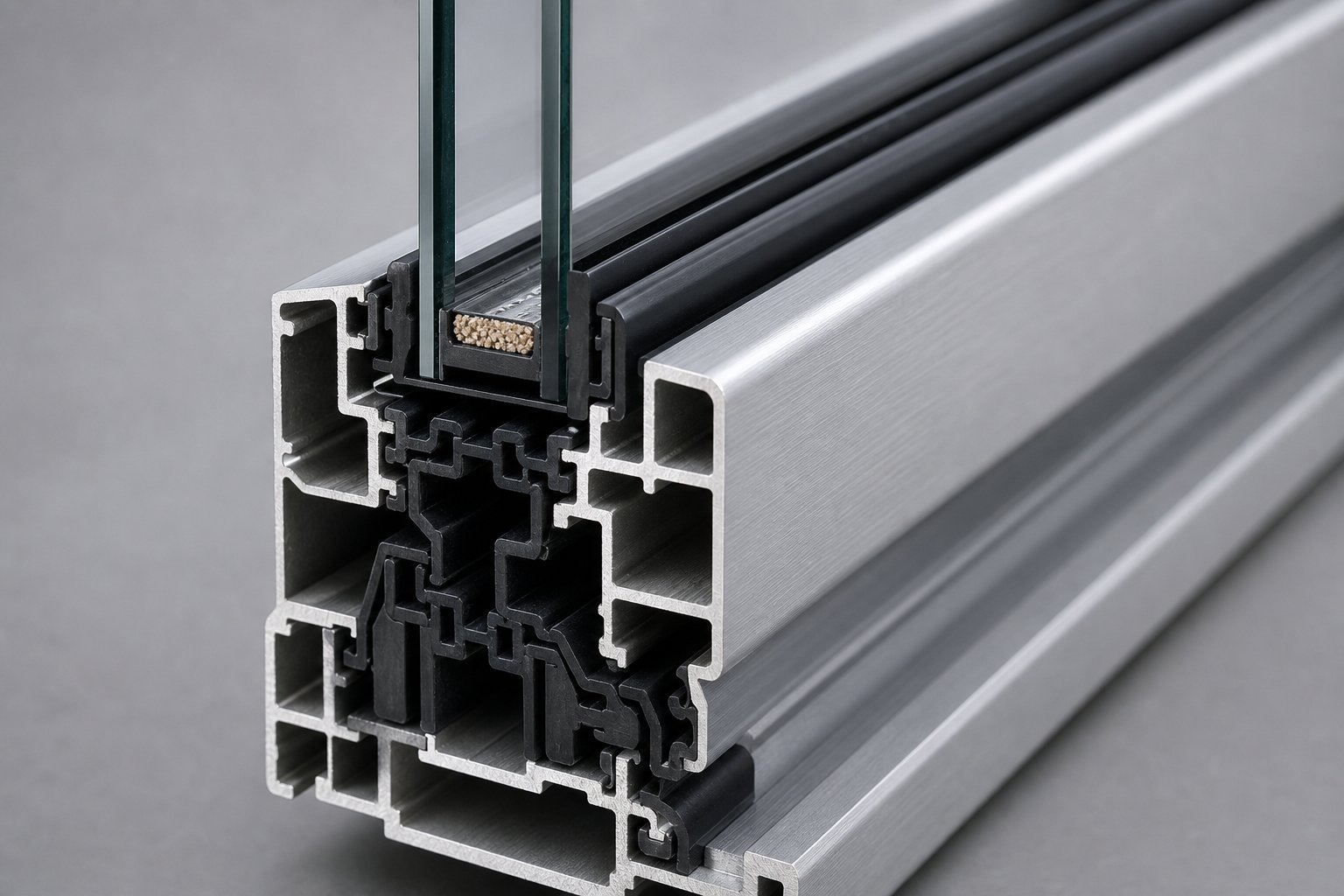
Thermal break technology represents a separate cost layer within the frame. A thermally broken profile uses a polyamide insulating strip between the inner and outer aluminium sections, preventing heat transfer through the frame. This addition typically increases frame cost by 20 to 35 per cent but is essential for meeting stringent WERS star ratings in cooler climate zones.
Hardware sits lower on the cost hierarchy but punches above its weight in terms of daily usability. Cheap rollers wear out quickly, making panels stiff and noisy to operate. Quality stainless-steel tandem rollers, multi-point locking mechanisms, and ergonomic handles might add 10 to 20 per cent to the overall window price, yet they extend the functional life of the window by years. Buyers shopping for aluminium window frame kits often overlook hardware specs in favour of frame and glass details. That is a mistake. A smooth, secure sliding action depends entirely on what is hidden in the track and handle mechanism.
Size and Customisation Price Multipliers
Standard aluminium sliding window sizes, typically ranging from 600 mm to 2400 mm wide and 600 mm to 1500 mm high, benefit from production-line efficiency. Manufacturers hold these dies and jigs permanently, so fabrication is fast and waste is minimal. The moment a project requires non-standard dimensions, the economics shift. Custom aluminium window frames incur additional cutting setup, may generate more offcut waste, and sometimes require bespoke glass ordering.
For renovators dealing with older Australian homes, particularly weatherboard, fibro, or Queenslander-style houses with non-standard opening sizes, the custom premium is often unavoidable. Expect a 20 to 40 per cent increase over equivalent standard sizes. Extremely large openings or unusual aspect ratios can push that figure higher still, particularly if structural reinforcement or additional mullions become necessary.
Colour and finish round out the pricing picture. Standard mill-finish or common powder-coat colours (white, black, monument grey) ship at no additional charge from most suppliers. Custom RAL colours, woodgrain finishes, or anodised textures add 5 to 15 per cent because they require separate batch runs in the coating line. If aesthetics are not a primary concern, sticking to stock colours is one of the simplest ways to keep costs down on aluminium window frame kits.
Prioritising where to spend depends entirely on your project. A coastal home in Wollongong benefits more from upgraded hardware and corrosion-resistant finishes than from triple-pane glass it will never need. A Canberra renovation gains far more value from thermally broken frames and double glazing than from premium handles. The most cost-effective approach is matching each specification to the conditions the window will actually face, rather than defaulting to the highest or lowest tier across the board.
Window Configurations and What They Mean for Your Budget
Pricing factors tell you what makes one window more expensive than another. Configuration tells you whether you are paying for functionality you will actually use. An aluminium sliding window can be assembled in several different ways, each offering a distinct balance of airflow, opening width, and cost. Picking the right setup for each room avoids spending money on capacity that sits idle.
Single Slider vs Double Slider Configurations
A single-slider aluminium sliding window has two panels: one fixed, one operable. You push one sash sideways to open the window, exposing roughly half the total opening to outside air. This is the most common and most affordable configuration for bedrooms, kitchens, and bathrooms where moderate ventilation meets the brief.
A double-slider gives both panels independent movement. Either side can open, or both can shift toward the centre simultaneously. The practical benefit is flexibility rather than extra airflow. Maximum ventilation still equals approximately one panel width regardless of configuration, because you cannot slide both panels off the frame entirely. What you gain is the ability to direct airflow from either side and tilt both sashes inward for cleaning on upper storeys.
Cost difference between the two is modest but real. Double-slider configurations require more moving parts: two sets of rollers, two locking points, and more complex weatherseals. Expect roughly 10 to 20 per cent more than an equivalent single-slider aluminium window. For rooms where cleaning access matters or where cross-ventilation benefits from adjustable airflow direction, that premium makes sense. For a laundry or ensuite, it rarely does.
Choosing Between 2-Track and 3-Track Systems
The track system determines how many panels the frame accommodates and how wide the opening can get. A 2-track sliding aluminium window holds two panels on two grooves. One panel slides, one stays put, and the maximum opening is 50 per cent of the frame width. It suits standard residential openings up to about 1800 mm wide and keeps the frame profile slim.
A 3-track system introduces a third groove, supporting three panels. Two of those panels can slide simultaneously, opening up to two-thirds of the total frame width. The result is significantly more airflow and a broader connection to outdoor spaces, making 3-track systems popular for living rooms and wide balcony openings.
The trade-off is frame depth. A 3-track aluminium sliding window requires a deeper rail section, which adds material cost and demands a slightly thicker wall reveal. Maintenance also increases: more grooves collect more dust and debris, requiring more frequent cleaning to keep panels running smoothly. Budget-wise, the jump from a 2-track to a 3-track system typically adds 20 to 35 per cent to the window cost, depending on overall width and glazing type.
For most standard bedrooms and kitchens, a 2-track alu slider delivers adequate ventilation at the lowest price point. Reserve 3-track systems for spaces where wide opening genuinely improves livability, like a north-facing living area or an entertainer’s balcony.
| Configuration | Panels | Max Opening | Typical Use Case | Ventilation | Relative Cost |
|---|---|---|---|---|---|
| Single slider, 2-track | 2 (1 fixed, 1 sliding) | 50% | Bedrooms, bathrooms, kitchens | Moderate | Lowest |
| Double slider, 2-track | 2 (both sliding) | 50% | Upper-storey rooms, easy-clean access | Moderate (flexible direction) | Low to Mid |
| 3-track, centre-fixed | 3 (1 fixed, 2 sliding) | 66% | Living rooms, wide balconies | High | Mid |
| 3-track, all sliding | 3 (all operable) | 66% | Large openings, indoor-outdoor flow | High | Mid to High |
| Fixed + slider combination | 2+ (mix of fixed and operable) | Varies | Feature windows, cost-controlled wide spans | Low to Moderate | Varies |
A fixed-plus-slider combination deserves mention for budget-conscious projects. Pairing a large fixed panel with a smaller operable aluminium slider window keeps costs down while still providing ventilation and an expansive glass area. This approach works particularly well for aluminum horizontal sliding windows in living spaces where the view matters more than maximum airflow.
When Double Glazing Is Worth the Extra Cost
Configuration choice and glazing choice interact directly. A 3-track double-glazed unit costs substantially more than a 2-track single-pane window, so understanding when double glazing genuinely pays off prevents unnecessary spending.
For homes in NCC climate zones 1 through 3 (tropical and subtropical Queensland, the Top End, coastal northern NSW), single-pane sliding aluminium windows often satisfy NatHERS requirements without difficulty. Heat loss through glass is less critical where winter barely registers, and solar heat gain can be managed with external shading or low-E coatings alone.
In climate zones 4 through 8 (Sydney basin, most of Victoria, Tasmania, ACT, highland regions), double glazing becomes increasingly necessary. The energy savings from double glazing reduce heating and cooling loads by 50 to 70 per cent compared to single-pane glass, and most new builds in these zones cannot achieve compliance without it. Retrofitting existing openings with double-glazed aluminium sliders adds 30 to 60 per cent to the glass cost but delivers measurable returns through lower energy bills and improved comfort.
The practical rule: if your project sits in a mild climate zone and budget is tight, single pane with quality weatherseals is a defensible choice. If you are building or renovating in a cooler region, treating double glazing as a non-negotiable baseline protects both compliance and long-term running costs. The extra spend on glazing almost always delivers better value than over-specifying the track system or hardware in rooms that do not need it.
Matching configuration to actual room requirements rather than defaulting to the most capable option is where real savings emerge. Yet configuration alone does not tell the full story. Even a well-chosen setup comes with trade-offs at lower price points, and understanding those compromises upfront keeps expectations realistic.
Trade-Offs to Expect When Buying Budget Aluminium Sliders
Every budget decision involves compromise. The key is knowing which compromises genuinely affect performance and which ones you will never notice. Cheap aluminium sliding windows can serve a project brilliantly, but they behave differently from premium-tier products in a few specific areas. Being honest about those gaps upfront saves frustration later.
Thermal Performance and Condensation Concerns
Aluminium conducts heat roughly 1,000 times faster than timber. In a budget sliding window without a thermal break, the frame becomes a bridge between outside air and your interior. During winter in cooler regions, that conductivity drops the internal frame temperature below the dew point, and condensation forms on the aluminium surface. Left unchecked, that moisture promotes mould growth, damages window sills, and stains surrounding paintwork.
For single pane aluminium windows, the problem compounds. Without the insulating air gap that double glazing provides, both the glass and the frame run cold. Aluminium double pane windows reduce glass-surface condensation significantly, but if the frame itself lacks a thermal break, moisture still collects along the sash rails and meeting stiles.
In practice, this trade-off matters most in NCC climate zones 6 through 8: southern Victoria, Tasmania, ACT, and highland NSW. In subtropical Brisbane or coastal Perth, standard aluminium frames rarely produce condensation issues because overnight temperature drops are modest. The trade-off is real but location-dependent.
Colour Options and Finish Durability at Lower Price Points
Budget aluminium sliders typically ship in a limited palette. White aluminium sliding windows and monument (dark grey) are almost universally available at base pricing. Black aluminium windows have become standard stock for most Australian fabricators as well. Beyond those three, options narrow quickly. Bronze aluminium windows, custom RAL colours, and woodgrain finishes all incur surcharge batch runs that push a budget window into mid-range territory.
Finish quality also varies. Premium powder coatings undergo multi-stage pretreatment and curing that resists UV degradation and chalking for decades. At the lowest price tier, inferior coatings can fade, chalk, or peel within a few years, especially in coastal salt-air environments or under intense Queensland sun. If the quote seems unusually cheap, ask whether the coating meets Australian standards for architectural-grade powder coating.
Climate Suitability and Regional Considerations
Aluminium performs exceptionally well in warm, temperate, and coastal Australian climates. It resists humidity, does not swell or warp, and shrugs off termite attack. These strengths make budget aluminium sliders a logical choice for the majority of Australian homes. Trouble emerges when buyers apply the same specification in genuinely cold regions without upgrading the thermal profile.
Thin frame windows at the budget end also face structural limitations in high-wind zones. Coastal northern Queensland (cyclone-rated areas) and exposed elevated sites demand thicker profiles and heavier-duty hardware to satisfy AS 2047 wind-load testing. A 1.2 mm profile that works perfectly in a sheltered suburban Melbourne home may not pass compliance for a beachfront property in Airlie Beach.
Replacing old aluminium window frames from the 1970s or 1980s with modern budget equivalents is still a significant upgrade. Those older frames lacked weatherseals entirely, used single glazing, and had no thought given to thermal performance. Even an entry-level modern slider outperforms them on every metric. The point is that “budget” today is not what “budget” meant 40 years ago.
Watch for these warning signs that a cheap window has cut corners that actually matter:
- Rollers made from brittle plastic rather than nylon or stainless steel
- Weatherseals that are glued in rather than mechanically retained in a gasket channel
- Frame wall thickness below 1.4 mm for residential applications
- No drainage slots in the outer track to clear water accumulation
- Locking hardware that flexes or feels loose on demonstration models
- Powder coat surface that feels rough, thin, or shows orange-peel texture
- No certification label referencing AS 2047 or WERS rating
None of these warning signs are visible in a product photo or a line-item quote. They only reveal themselves when you physically inspect a sample or ask pointed technical questions. That inspection process, knowing exactly what to look for and where to look, separates a smart budget purchase from an expensive mistake.
How to Spot Quality in a Cheap Aluminium Sliding Window
Knowing the warning signs of a poorly made window is half the equation. The other half is recognising what a genuinely good budget aluminium sliding window looks like when you find one. Not every affordable option cuts corners that matter, and some deliver remarkable durability at price points well below premium brands. The trick is knowing exactly where to look and what questions to ask before committing.
Quality Indicators That Separate Value From Junk
A cheap price tag does not automatically mean poor construction. Plenty of aluminium frame window products sit at a lower price point simply because the manufacturer operates on tighter margins, sells in volume, or skips the retail markup entirely. These windows can still be built to last decades. The quality indicators below help you tell them apart from products that will cause problems within a few years:
- Roller mechanism — Look for tandem stainless-steel or nylon rollers with sealed ball bearings. These glide quietly and handle panel weight without deforming. Brittle single-wheel plastic rollers are the most common failure point in low-grade sliders.
- Weatherseal type and retention — Quality budget windows use EPDM rubber seals that are mechanically retained in a dedicated gasket channel, not glued or friction-fitted. EPDM maintains compression over time and resists UV degradation far better than foam or PVC alternatives.
- Frame wall thickness — For residential aluminium sliding windows in Australia, a minimum of 1.4 mm profile wall thickness provides adequate structural rigidity. Anything thinner compromises long-term frame integrity, especially in wider openings or exposed locations.
- Glass edge sealing — In double-glazed units, inspect the perimeter spacer bar and secondary sealant. A clean, uniform seal with no visible gaps or butyl squeeze-out indicates proper insulated glass unit (IGU) construction. Poor edge sealing leads to seal failure, fogging between panes, and expensive replacement.
- Locking mechanism — A solid aluminium frame window uses a flush-mounted or recessed lock that engages positively without excessive force. Multi-point locks offer superior security over single-latch designs. The lock body should feel substantial, not hollow or rattly.
- Powder coat finish — Run your fingertip across the frame surface. Quality architectural-grade powder coating feels smooth, uniform, and sits at 60 to 80 microns thick. Orange-peel texture, rough patches, or areas where the underlying metal shows through signal inadequate surface preparation or thin application.
- Aluminium window track drainage — The outer track should include milled or punched drainage slots that allow water to exit. Without these, rainwater pools in the track and eventually overflows into the interior during heavy downpours.
Each of these elements is verifiable on a physical sample or through a detailed specification sheet. If a supplier cannot provide profile thickness, seal material, or roller specifications on request, treat that silence as information in itself.
What to Check Before Committing to a Budget Window
Beyond individual components, consider how the sliding frame in a window is assembled. A well-made aluminium slider has tight mitre joins or mechanical corner crimps with no visible gaps. The sash should slide with minimal effort and no lateral wobble. Lift the operable panel slightly; if it flexes noticeably or you can feel air movement at the interlock, the frame section is too light for the span.
Requesting a cross-section cutaway or detailed technical drawing reveals whether you are looking at a solid extruded profile or a hollow metal sliding window section with minimal internal webbing. More internal chambers within the extrusion generally means better rigidity and acoustic performance, even at budget price points. Profiles with multiple internal webs distribute stress more evenly and resist racking forces from wind load.
Metal window frames from reputable manufacturers typically come with documented specifications covering alloy grade (6063-T5 is standard for architectural aluminium), wall thickness, coating standard, and hardware brand. This documentation matters because it gives you something concrete to evaluate rather than relying on a salesperson’s assurance.
Project-based supply from manufacturers often delivers better value than buying through retail channels. When you order directly, you skip the distributor and retailer margins that can inflate pricing by 20 to 40 per cent. Manufacturers supplying builders, developers, and larger renovation projects can also offer consistency across multiple window units, batch-matched colour, and technical support during installation.
As an example of this approach, MEICHEN’s MA100 Sliding Window is a manufacturer-direct system with published specifications for track configuration, seal type, lock mechanism, and glazing options. Buyers can cross-reference the MA100’s documented details against the quality criteria above before ordering, which is the kind of transparency that separates a trustworthy budget option from a gamble. For homeowners and builders sourcing aluminium sliding windows on a project basis, having that level of specification available upfront removes guesswork from the purchasing decision.
Ultimately, the difference between a smart budget buy and a regrettable one comes down to verifiable details rather than brand prestige or price alone. A well-specified aluminum frame glass window at a competitive price point will outperform a poorly made product at twice the cost. The confidence to make that call comes from inspecting the components that matter and insisting on documentation that backs up the claims. Where you actually purchase those windows, and which channel gives you access to the best combination of price, specification, and support, is the next piece of the puzzle.
Where to Buy Cheap Aluminium Sliding Windows
Knowing what separates a quality budget window from a poor one is essential, but that knowledge only helps if you also know where to shop. The purchasing channel you choose affects price, customisation access, warranty terms, and lead times just as much as the product specification itself. Australian buyers have more options than ever, and each channel suits a different type of project.
Retail Stores vs Online Ordering vs Direct Supply
Five main channels compete for your aluminium sliding window order. Each operates on a different business model, which means different strengths and trade-offs depending on whether you are replacing a single bathroom window or fitting out an entire multi-storey development.
Big-box hardware stores like Bunnings and Mitre 10 stock limited ranges of standard-size aluminium sliders. They offer immediate availability and the convenience of walking in, inspecting a display, and walking out with a window the same day. The downside is narrow size selection, minimal customisation, and retail pricing that includes significant margin. You will not find the range of aluminium window suppliers that exist beyond the retail floor.
Online window retailers expand choice considerably. Dedicated fenestration websites list dozens of configurations, glass types, and colour options that physical stores cannot carry. Pricing tends to sit below retail because overheads are lower. However, you cannot physically inspect the product before purchasing, and warranty claims can be more difficult to resolve through a web-based intermediary.
Direct-from-manufacturer ordering removes the middleman entirely. Aluminium window manufacturers that sell to builders and homeowners on a project basis typically offer the most competitive pricing because you skip distributor and retailer margins. Customisation options are broadest here, since you are dealing directly with the production facility. The trade-off is that most manufacturers set minimum order quantities and lead times measured in weeks rather than days.
Local fabricators occupy a middle ground. They purchase raw aluminium profiles from extruders and assemble finished windows in their own workshop. Fabricators offer good customisation flexibility and can work to tight timelines for smaller orders. Pricing lands between retail and manufacturer-direct, and you get the advantage of face-to-face communication and local accountability.
Wholesale and trade supply channels cater specifically to licensed builders, developers, and commercial buyers. These channels offer volume pricing that sits well below retail, but access typically requires a trade account or ABN registration.
| Purchasing Channel | Price Level | Customisation Options | Warranty Coverage | Typical Lead Time | Minimum Order |
|---|---|---|---|---|---|
| Manufacturer-direct (e.g. MEICHEN MA100) | Lowest | Full (size, glass, track, colour) | Manufacturer-backed | 3 to 6 weeks | Project-based (multiple units) |
| Local fabricator | Low to Mid | Good (standard profiles, custom sizes) | Fabricator warranty | 1 to 3 weeks | Often single units |
| Wholesale / trade supply | Low | Moderate (stock range) | Manufacturer or distributor | 1 to 4 weeks | Usually multiple units or trade account |
| Online retailer | Mid | Moderate (pre-configured options) | Retailer-backed | 1 to 3 weeks | Single unit |
| Big-box retail (Bunnings, Mitre 10) | Highest | Very limited (stock sizes only) | Store return policy + manufacturer | Immediate (if in stock) | Single unit |
Australian buyers searching for aluminium windows for sale sometimes default to the most familiar channel, often a hardware chain, without realising that alternative purchasing routes can shave 20 to 40 per cent off the same specification. Unlike markets where chains such as Lowe’s carry extensive commercial aluminium windows ranges in-store, Australian big-box retailers stock a comparatively narrow selection of residential sizes. That gap pushes savvy buyers toward fabricators, online specialists, or direct supply.
Wholesale and Project-Based Buying for Better Pricing
Single-unit retail purchases carry the highest per-window cost because every link in the supply chain takes a margin. Manufacturers sell to distributors, distributors sell to retailers, and retailers sell to you. Each step adds 15 to 25 per cent. For a single replacement window, that markup may be acceptable in exchange for convenience. For a multi-window renovation or a new build requiring ten or more openings, the cumulative cost difference becomes substantial.
Project-based ordering flips that model. Builders, developers, and homeowners with larger scopes can approach an aluminium window supplier directly and negotiate pricing based on total order value. Wholesale sourcing typically requires confirming specifications upfront: frame system, glass configuration, hardware grade, colour, and delivery schedule. That upfront planning effort pays off in lower unit costs, batch-matched finishes, and a single point of accountability for warranty claims.
MEICHEN’s MA100 Sliding Window illustrates how manufacturer-direct project supply works in practice. Buyers review published specifications for track configuration, glazing options, seal systems, and lock hardware before placing an order. There is no guesswork about what arrives on site, because the product details are documented rather than hidden behind a generic retail listing. For builders coordinating aluminium windows across multiple openings, that transparency simplifies procurement and reduces the risk of specification mismatches between units.
Trade supply accounts through specialist aluminium window suppliers also unlock volume discounts unavailable at retail. In Australia, many fabricators and distributors offer tiered pricing that drops noticeably once an order crosses five or ten units. If your project timeline allows consolidation, ordering all windows in a single batch rather than piecemeal delivers both cost savings and colour consistency across the entire job.
The channel that makes sense depends on your project scale, timeline, and tolerance for coordination. A single replacement window for a rental property is easiest sourced from a local fabricator or online retailer. A full home renovation or development project benefits from the pricing and specification control that manufacturer-direct or wholesale channels provide. Either way, understanding where aluminium windows near you are actually coming from, and how many margins sit between you and the factory, determines how much value your budget actually buys.
Practical Ways to Cut Costs on Your Sliding Window Project
Choosing the right purchasing channel puts you in a stronger position. But regardless of where you buy, specific decisions during the specification and ordering process determine whether your final invoice lands at the top or bottom of the price range. These strategies work across every channel and project scale, from a single aluminium window replacement in a rental property to a full set of aluminium windows and doors for a new build.
Ranked from highest to lowest potential savings, here are the most effective ways to reduce your aluminium sliding window costs without giving up the quality indicators covered earlier:
- Order standard sizes instead of custom dimensions — saves 20 to 40 per cent over bespoke sizing
- Buy in bulk for multi-window projects — volume discounts of 10 to 25 per cent are common once orders exceed five units
- Choose climate-appropriate glass rather than defaulting to premium — avoids overspending 30 to 60 per cent on glazing you do not need
- Select stock colours (white, black, monument) — eliminates the 5 to 15 per cent custom colour surcharge
- Time your purchase for quieter periods — late autumn and winter ordering can unlock seasonal pricing flexibility
- Negotiate directly with suppliers on larger orders — consolidating your scope gives leverage for 5 to 15 per cent additional discount
- Source from interstate or international manufacturers where lead time allows — regional pricing differences across Australian states can be significant
Standard Sizes and Stock Options Save Significantly
The single biggest cost lever most buyers overlook is sizing. Manufacturers hold standard dies and jigs permanently, so producing a 1200 x 1200 mm or 1800 x 900 mm slider costs a fraction of what a non-standard dimension requires. Custom sizes demand individual glass cutting, profile waste, and setup time that inflates pricing quickly. If your openings can accommodate a standard size, or if you are framing new openings during a renovation, building to standard window dimensions delivers immediate savings with no compromise on quality.
The same logic applies to colour. Stock powder-coat finishes run through the coating line in large batches, spreading setup cost across thousands of units. A custom RAL colour runs as a separate small batch, and that inefficiency lands on your quote. For most projects, the standard palette of black, white, or monument covers the brief without issue.
Timing and Volume Strategies for Smarter Purchasing
Window fabricators and suppliers experience seasonal demand cycles. Spring and early summer are peak construction periods across most of Australia, and pricing reflects that demand. Ordering during quieter months, particularly May through August, often means shorter lead times and more willingness from suppliers to negotiate on price. Scheduling installations during off-peak seasons can also reduce labour costs as contractors have greater availability.
Volume purchasing amplifies the effect. Replacing old aluminium windows across an entire home in a single order, rather than room by room over several years, unlocks batch pricing that drops the per-unit cost noticeably. You also gain colour consistency across all openings and a single warranty start date. Builders managing multiple projects can consolidate orders across sites for even deeper volume breaks.
Matching Specifications to Actual Needs
Overspending on specification is just as wasteful as underspending. A home in coastal Cairns does not need triple glazing. A ground-floor bathroom in suburban Adelaide does not need commercial-grade multi-point locking. Every specification upgrade costs money, and the return diminishes rapidly once you exceed what your climate zone, building code, and daily use pattern actually demand.
For aluminium replacement windows in temperate zones, standard double glazing with a non-thermally-broken frame often satisfies NCC requirements perfectly. In warmer climate zones, single glazing with quality weatherseals remains a legitimate option. Matching the spec to the actual conditions your replacement windows face, rather than defaulting to the highest available tier, keeps budgets realistic without cutting into genuine performance.
Regional pricing differences also deserve attention. Fabrication costs in Melbourne or Sydney can run 15 to 20 per cent higher than equivalent products from Queensland or South Australian suppliers, largely due to differences in local overhead costs. If your timeline accommodates interstate freight, sourcing from a lower-cost region and shipping to site can offset the delivery charge and still save money overall. International sourcing from established aluminium window manufacturers in Asia offers even steeper savings on large orders, though it introduces longer lead times, import logistics, and the need for careful quality verification before shipment.
Cheap aluminium sliding windows do not have to mean compromised windows. They mean informed decisions. Buyers who understand what drives cost, where genuine quality lives at every price point, and how to match specifications to real-world requirements consistently get more value than those who either overspend on features they do not need or underspend on components that matter. The difference between a regrettable purchase and a smart one is never about finding the lowest possible price. It is about knowing exactly where to spend and where to save.
Frequently Asked Questions About Cheap Aluminium Sliding Windows
1. Are cheap aluminium sliding windows good quality?
Budget-friendly aluminium sliding windows can absolutely deliver good quality. The key is distinguishing between windows that are affordable due to efficient manufacturing and those that cut corners on critical components. A well-made budget aluminium slider still meets AS 2047 standards, uses mechanically retained EPDM weatherseals, rolls on stainless-steel or nylon tandem rollers, and carries a minimum 1.4 mm frame wall thickness. Look for documented specifications covering alloy grade, coating standard, and hardware brand. Manufacturer-direct options like MEICHEN’s MA100 Sliding Window publish full specifications for track, seal, and lock systems, allowing buyers to verify quality before ordering.
2. How much do aluminium sliding windows cost in Australia?
Aluminium sliding window pricing in Australia varies significantly based on glass type, frame profile, size, and purchasing channel. Standard-size single-glazed sliders sit at the budget end, while double-glazed thermally broken units with premium hardware reach mid-range territory. Glass specification alone can add 25 to 100 per cent to a base window cost, and custom dimensions add 20 to 60 per cent over standard sizes. Buying manufacturer-direct or through wholesale channels can reduce per-unit costs by 20 to 40 per cent compared to retail pricing at big-box stores.
3. What is the difference between single slider and double slider aluminium windows?
A single-slider aluminium window has one fixed panel and one operable panel that slides horizontally, opening approximately 50 per cent of the frame width. A double-slider allows both panels to move independently, offering flexible airflow direction and easier cleaning access on upper storeys. The double-slider configuration costs roughly 10 to 20 per cent more due to additional rollers, locking points, and weatherseal complexity. For most bedrooms, bathrooms, and kitchens, a single slider provides adequate ventilation at the lowest cost. Double sliders suit upper-storey rooms where cleaning access from inside is important.
4. Do aluminium windows cause condensation problems?
Aluminium conducts heat approximately 1,000 times faster than timber, which can cause condensation on frames in cold climates. Without a thermal break, the internal frame surface drops below dew point during winter, allowing moisture to form. This issue is most relevant in NCC climate zones 6 through 8, including southern Victoria, Tasmania, and the ACT. In subtropical and tropical Australian regions, standard aluminium frames rarely produce condensation because overnight temperature drops are modest. For colder areas, specifying a thermally broken aluminium profile with double glazing largely eliminates the problem at a modest cost premium.
5. Where is the cheapest place to buy aluminium sliding windows in Australia?
Manufacturer-direct ordering typically delivers the lowest per-unit pricing because it bypasses distributor and retailer margins that can inflate costs by 20 to 40 per cent. Wholesale and trade supply channels offer similar savings for buyers with trade accounts or larger orders exceeding five units. Local fabricators sit in a mid-price range with good customisation flexibility. Big-box retailers like Bunnings offer convenience and immediate availability but carry the highest markup and most limited size selection. For multi-window projects, consolidating your order into a single batch through a manufacturer or wholesale supplier unlocks volume discounts of 10 to 25 per cent.
More Window & Door Guides