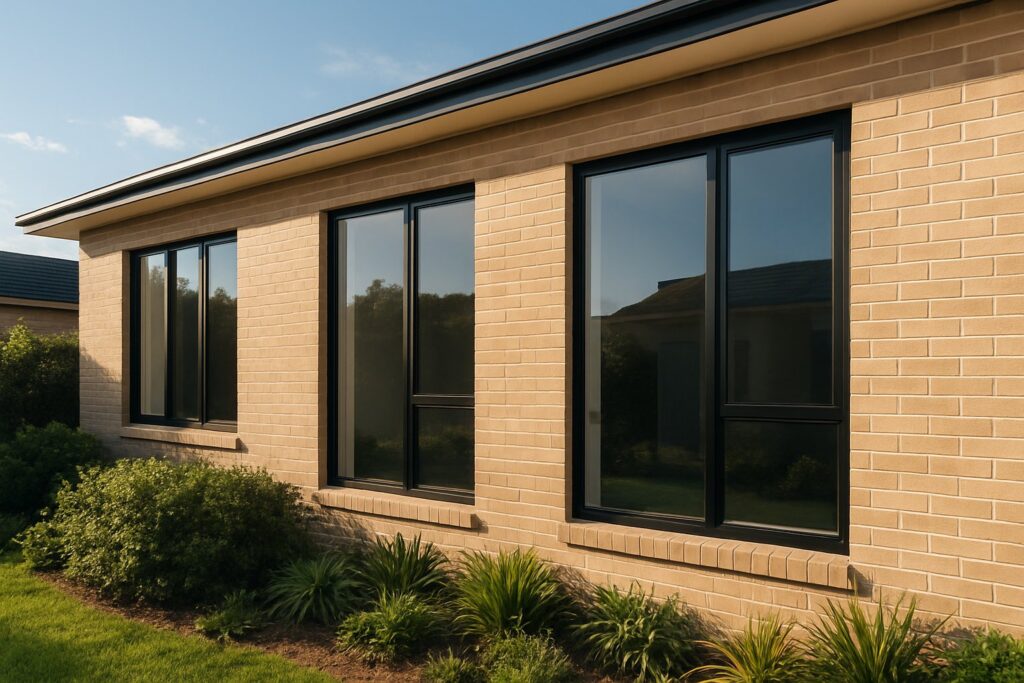
What Are Architectural Windows and Doors
You have probably seen the term “architectural grade” on a spec sheet or showroom tag and wondered what it actually means. Is it just marketing language, or does it point to something measurably different from the windows and doors already on the market?
Architectural windows and doors are custom-engineered fenestration products designed to meet project-specific structural, aesthetic, and performance requirements that standard residential or commercial-grade products cannot satisfy.
In practice, these are the products architects and builders specify when off-the-shelf sizing, performance ratings, or design profiles fall short of what a project demands. Whether it is a heritage renovation in Santa Fe requiring historically sensitive profiles or a high-rise tower facing extreme wind loads, architectural windows and doors bridge the gap between generic catalog options and the real-world conditions of a building.
What Makes a Window or Door Architectural Grade
The difference comes down to four things: custom sizing, enhanced structural ratings, premium materials, and alignment with a specific design intent. Architectural fenestration is purpose-built. Instead of choosing from a fixed list of standard dimensions, you work with a manufacturer to produce units tailored to your project’s exact openings, load requirements, and visual goals.
Think of it this way. A residential-grade window is designed to fit most homes. An architectural-grade unit is designed to fit your building. That distinction matters when you are dealing with oversized openings, unusual shapes, or demanding environmental exposure. Architectural steel windows and doors, for example, deliver ultra-slim sightlines and high structural strength that standard aluminium or vinyl frames simply cannot replicate at the same scale.
The Fenestration and Glazing Industry Alliance (FGIA) formalizes this hierarchy through the North American Fenestration Standard (NAFS), which classifies fenestration into four performance classes: R (Residential), LC (Light Commercial), CW (Commercial), and AW (Architectural). The AW class sits at the top, with the most stringent testing requirements across the board.
Architectural Grade vs Residential and Commercial Grade
Understanding where architectural grade sits relative to residential and commercial options helps you avoid both overspending and underspecifying. Here is how the three primary tiers compare across the criteria that matter most:
| Criteria | Residential Grade (R/LC) | Commercial Grade (CW) | Architectural Grade (AW) |
|---|---|---|---|
| Customization Level | Limited standard sizes | Moderate size and configuration options | Fully custom sizing, profiles, and configurations |
| Max Air Leakage (CFM/ft2) | 0.30 at 1.57 psf | 0.30 at 1.57 psf | 0.10 at 6.24 psf |
| Min Water Test Pressure | 2.92 psf (15% of DP) | 4.59 psf (15% of DP) | 8.15 psf (20% of DP) |
| Typical Applications | Single-family homes, townhouses | Low- to mid-rise commercial buildings | High-rise, institutional, and custom residential projects |
| Material Thickness and Hardware | Standard gauge, basic hardware | Heavier gauge, commercial-grade hardware | Premium gauge, heavy-duty or specialty hardware |
| Warranty Coverage | Typically 10-20 years limited | 5-10 years, project-dependent | Extended, often project-negotiated |
| Relative Price Range | $ | $$ | $$$ |
The air leakage numbers tell a clear story. AW-class products must hold to a maximum of 0.10 CFM/ft2 tested at 6.24 psf, while R and LC products are allowed three times that leakage rate at a fraction of the test pressure. Water penetration testing is equally revealing: architectural-grade units are tested at 20% of their design pressure, compared to 15% for every other class. These are not marginal differences. They translate directly into how a building performs during a storm, how much conditioned air escapes through the envelope, and how long the product lasts before seals and hardware degrade.
Suppliers of architectural windows and doors in Chicago, Santa Fe, and other markets with demanding climate or code conditions routinely specify AW-class products for exactly these reasons. The upfront cost is higher, but the performance gap over a 30-year building lifecycle makes the investment rational rather than extravagant.
Knowing the grade you need is only half the equation, though. The type of window or door you select within that grade shapes everything from ventilation strategy to how your building connects with its surroundings.
Types of Architectural Windows and Doors Explained
A performance grade tells you how tough a product is. It does not tell you how it opens, how much light it lets in, or whether it fits the way people actually move through a space. That is where type selection comes in, and it is the decision that most directly shapes how a building looks and feels day to day.
The world of architecture windows and doors offers far more variety than most people realize. Each type exists to solve a specific problem, whether that is maximizing a view, ventilating a tight room, or creating a seamless threshold between indoors and out. Choosing the wrong type for your situation leads to frustration that no amount of premium materials can fix.
Architectural Window Types and When to Use Each
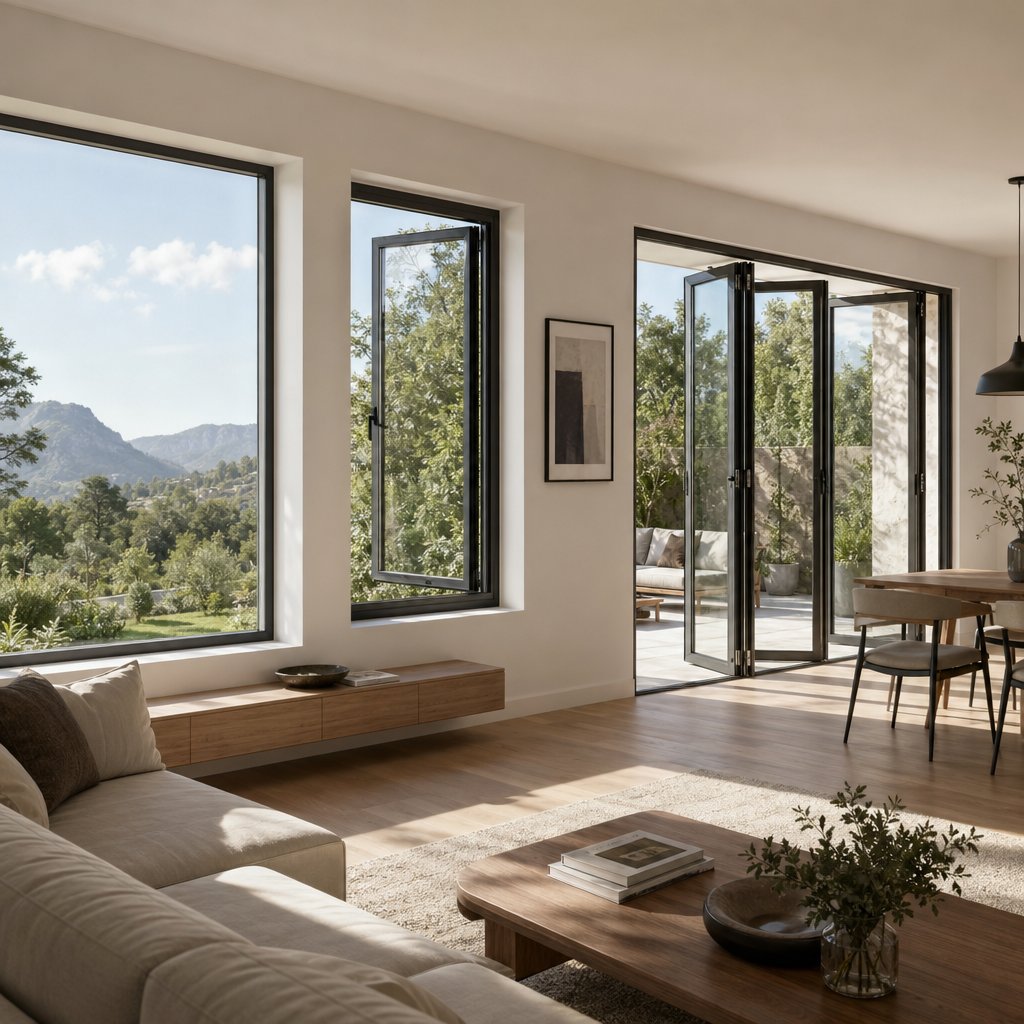
Imagine standing in front of a floor-to-ceiling glass wall overlooking a mountain range. That is a fixed picture window doing exactly what it was designed to do. But what if you also need airflow? That single decision splits into several directions, each with trade-offs worth understanding.
Here are the primary architectural window types, ordered from the most common residential applications to specialized commercial systems:
- Fixed picture windows — No operable mechanism. They deliver maximum glass area and unobstructed views, making them ideal for living rooms, stairwells, and any space where light matters more than ventilation.
- Casement windows — Hinged on one side, they crank outward to catch breezes effectively. A strong choice for bedrooms and kitchens where full-opening ventilation is a priority.
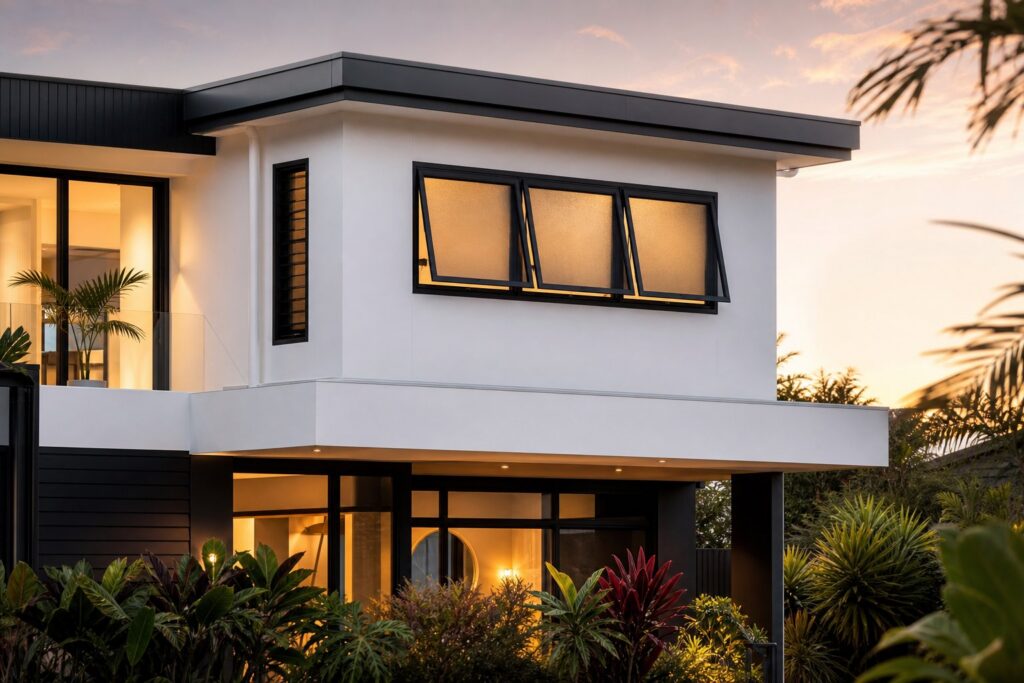
- Awning windows — Hinged at the top, they push outward from the bottom. You can leave them open during light rain without water entering, which suits bathrooms and basements well.
- Tilt-turn windows — These operate in two modes: tilting inward from the top for secure ventilation, or swinging inward like a door for full access. Popular across European-influenced projects and tight urban spaces in areas like Schaumburg and Hinsdale where architectural windows and doors must balance airflow with limited exterior clearance.
- Pivot windows — Rotating on a central vertical or horizontal axis, pivot windows make a dramatic design statement. They suit large openings in contemporary homes and loft conversions.
- Sliding windows — One or more sashes glide horizontally along a track. They work well in spaces where you cannot have a sash projecting outward, such as along walkways or patios.
- Lift-slide systems — Engineered for wide openings, the sash lifts off its seal and glides on a track to create expansive indoor-outdoor transitions. These are the go-to for modern homes designed around outdoor living.
- Bi-fold windows — Multiple panels fold and stack to one side, opening up nearly the entire frame width. Ideal for servery-style kitchen pass-throughs and entertainment areas.
- Curtain wall and storefront systems — Non-structural glass-and-frame assemblies that span entire building facades. These are specified for commercial towers, retail frontages, and institutional buildings where the envelope is a design feature in itself. Architectural steel windows and doors in Denver and other markets with strong modern-industrial aesthetics frequently appear in storefront configurations for their ultra-slim profiles.
Architectural Door Types for Residential and Commercial Projects
Doors do more than close off a room. They direct how people move through a building, influence accessibility, and set the tone the moment someone approaches an entrance. The right door type aligns with traffic patterns, clearance constraints, and the overall design language of the project.
- Entry doors — The primary access point for any building. Architectural-grade entry doors offer custom panel configurations, sidelights, and transoms that standard catalog doors cannot match.
- French doors — A pair of hinged doors that swing open from the center, creating a wide, elegant passage between rooms or onto a terrace. Best suited for traditional and transitional design styles.
- Pivot doors — Rotating on a floor-and-header pivot point rather than side hinges, these doors handle oversized and heavy panels that conventional hinges cannot support. They create a striking architectural focal point at building entries.
- Sliding door systems — Single or multi-track panels that glide horizontally, saving floor space while connecting interior rooms to decks, courtyards, or balconies. Multi-slide configurations can pocket entirely into a wall cavity for a completely open threshold.
- Folding door walls (bi-fold doors) — Multiple panels fold accordion-style to stack compactly at one or both ends of the opening. They transform an entire wall into an operable opening, which makes them a favorite for hospitality venues, restaurants, and open-plan residential designs.
Door selection also carries practical weight beyond aesthetics. Sliding and folding systems, for instance, eliminate the swing arc that hinged doors require, which directly affects furniture placement and ADA-compliant clearance zones in commercial settings. When you are reviewing architecture windows and doors for a project, matching the door mechanism to the room’s traffic flow prevents the kind of daily inconvenience that no design award can compensate for.
Type selection narrows your options, but the framing material you pair with that type determines how the product actually performs over decades of use, weather exposure, and maintenance cycles.
Comparing Framing Materials for Architectural Doors and Windows
A lift-slide door and a casement window can both be built from aluminium, steel, timber, or composite. Yet the material you wrap around that glass changes everything: how much heat bleeds through the frame, how often you pick up a paintbrush, how slim the sightlines can go, and how the product holds up twenty years from now. Picking the wrong material for your climate or project type is one of the most expensive mistakes in architectural design windows and doors, because you usually do not discover the problem until the warranty conversation gets uncomfortable.
Aluminium, Steel, Timber, and Composite Compared
Each framing material brings a distinct set of strengths and trade-offs. The table below lays them side by side across the criteria that matter most when specifying architectural fenestration:
| Material | Durability | Thermal Performance | Maintenance | Design Flexibility | Relative Cost | Best Applications |
|---|---|---|---|---|---|---|
| Aluminium | 30-45+ years; corrosion-resistant with powder coating or anodizing | Moderate alone; excellent with thermally broken profiles | Very low — periodic cleaning and hardware lubrication | Very high — slim sightlines, custom profiles, wide color range via powder coat | $$ | Modern residential, high-rise commercial, coastal projects, renovations |
| Steel | 50+ years; extremely strong but requires rust prevention | Moderate — lower conductivity than aluminium, but thermal breaks still recommended | Moderate — periodic inspection and protective coating renewal | High — ultra-slim profiles, heritage and industrial aesthetics | $$$-$$$$ | Heritage restorations, luxury residential, industrial-style commercial |
| Timber | 30-50 years with proper maintenance | Excellent — natural insulator with low conductivity | High — repainting or restaining every 3-5 years, regular moisture inspection | High — easily shaped, stained, or painted to match any style | $$$ | Traditional and heritage homes, Passive House projects, interior-facing frames |
| Composite | 30-50+ years; resistant to rot, warping, and pests | Very good — low conductivity, foam-fillable cavities | Very low — no painting, resists moisture damage | Moderate — improving, but fewer profile options than aluminium or timber | $$$ | Long-term residential, mixed climates, low-maintenance priority projects |
You will notice aluminium sits in the first row for a reason. It is the most widely specified architectural framing material globally, and that dominance is not accidental. Its strength-to-weight ratio allows fabricators to engineer remarkably slim profiles that maximize glass area without sacrificing structural integrity. For an american architectural window and door project demanding large spans of uninterrupted glass, aluminium often becomes the only practical choice short of steel, at a fraction of steel’s weight and cost.
Steel earns its place in heritage restorations and high-end residential projects where those impossibly thin sightlines carry real design value. A steel frame can achieve profiles as narrow as 20-25mm, creating an almost frameless appearance. The trade-off is weight, cost, and the need for ongoing rust prevention, especially in humid or coastal environments.
Timber remains a favorite for projects where natural warmth and superior insulation are non-negotiable. Wood frames insulate better than any metal without added thermal breaks, and they accept paint or stain in virtually any color. The catch is maintenance. Wood frames require repainting every 3-5 years and restaining every 1-2 years, and they are vulnerable to rot, mold, and pest damage if upkeep lapses.
Composite frames blend wood fibers with polymers to deliver strong thermal performance and rot resistance without the maintenance burden of solid timber. They are gaining traction in residential projects, though the range of available profiles and finishes still trails behind aluminium and wood.
Why Aluminium Dominates Modern Architectural Fenestration
So what makes aluminium the default choice for so many architects and builders? It comes down to a combination of practical advantages that no single competing material matches across the board.
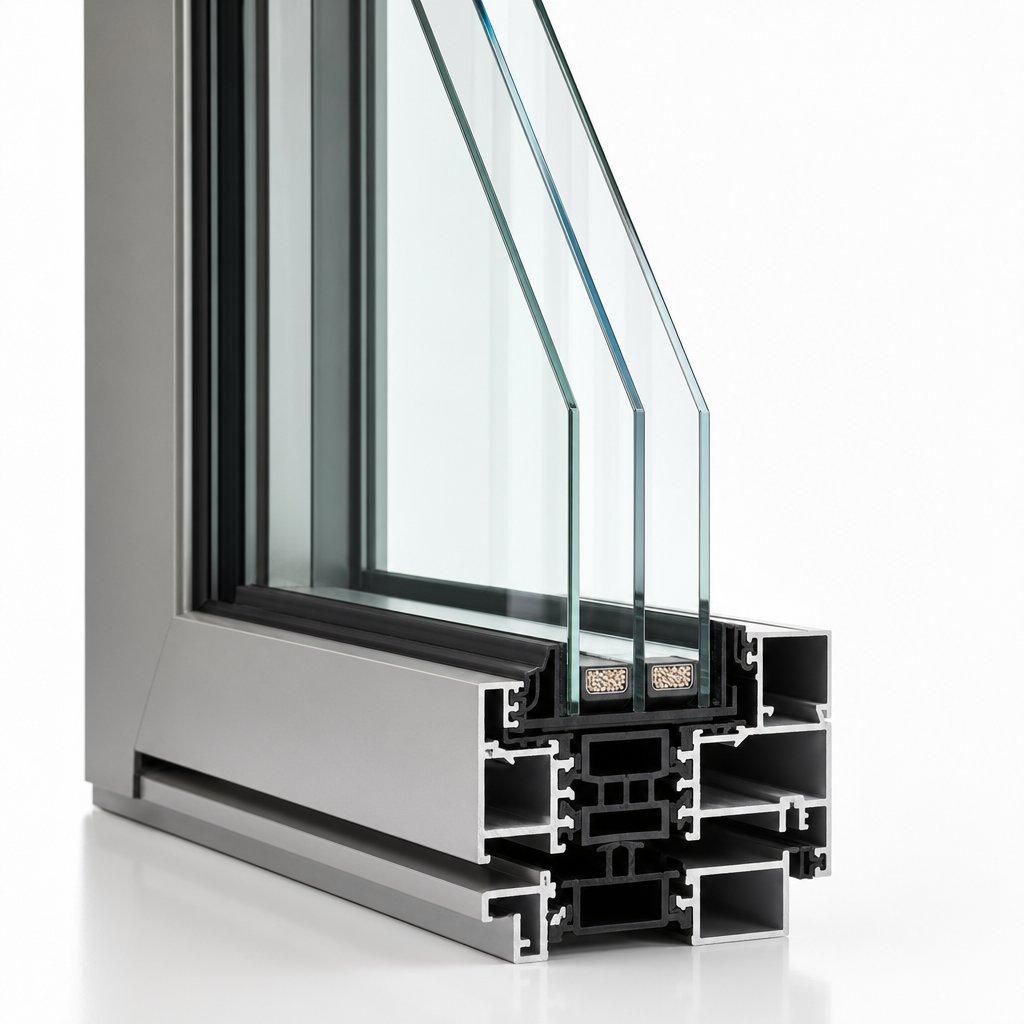
The biggest historical knock against aluminium was thermal conductivity. Raw aluminium transfers heat rapidly, which made it a poor insulator and a condensation magnet in cold climates. Thermally broken profiles changed that equation entirely. A thermally broken aluminium frame uses an insulating barrier, typically a polyamide strip, between the interior and exterior sections of the profile. This barrier dramatically reduces heat transfer through the frame, bringing aluminium’s energy performance in line with timber and composite alternatives.
Beyond thermal breaks, aluminium offers several advantages that compound over a building’s lifecycle:
- Powder-coated finishes resist UV degradation, chalking, and fading for decades, with color options that range from standard whites and blacks to custom RAL matches.
- Aluminium is fully recyclable without loss of quality, making it one of the more sustainable framing choices when lifecycle impact is considered.
- The material’s strength allows for larger spans and higher performance grades without the bulk that vinyl or timber frames require to achieve the same structural ratings.
- Maintenance demands are minimal. A periodic wash and hardware lubrication is typically all that is needed to keep aluminium frames performing well.
In markets that enforce rigorous testing standards, aluminium’s versatility really shines. In Australia, for example, aluminium window systems must comply with AS2047, which tests for structural adequacy, water penetration resistance, and air infiltration under simulated wind loads. Manufacturers like MEICHEN build their aluminium window range specifically to meet AS2047 compliance, offering thermally efficient systems across casement, sliding, awning, and fixed configurations for everything from single-home renovations to multi-unit developments. For homeowners and builders exploring aluminium options, that kind of standards-backed product ecosystem simplifies specification and ensures consistency across an entire project.
That said, aluminium is not the right answer for every situation. Without thermal breaks, it remains a poor insulator, and even thermally broken aluminium typically cannot match the raw insulating value of solid timber or foam-filled composite frames. It also costs more than basic vinyl, which means budget-driven projects with modest performance requirements may find better value elsewhere. And in architectural windows and doors projects in Rosemont or similar areas where a traditional aesthetic is paramount, timber or steel may deliver the visual character that aluminium’s modern lines cannot replicate.
The material you choose sets the performance ceiling for your fenestration. But that ceiling only matters if the product is tested and rated to prove it can actually reach it, which is exactly where performance grades and energy efficiency certifications enter the picture.
Performance Grades and Energy Efficiency Standards Decoded
You have probably seen labels stamped with numbers like PG40 or PG90 and acronyms like SHGC and NFRC. They show up on spec sheets, product stickers, and manufacturer brochures, yet almost nobody explains what they actually mean in terms you can act on. These ratings are not decoration. They are the hard evidence that a product can handle the forces your building will face, and they directly affect your energy bills, comfort, and long-term maintenance costs.
Understanding Performance Grade Ratings
Two major testing frameworks govern how fenestration products are rated. In North America, the North American Fenestration Standard (NAFS) sets the rules. In Australia, AS2047 serves a similar function. Both frameworks test the same core trio of performance factors:
- Structural wind load resistance — can the unit hold together under high wind pressure without bowing or failing?
- Water penetration resistance — at what pressure does water start getting past the seals?
- Air infiltration — how much conditioned air leaks through the product under pressure?
Under NAFS, every window and door is assigned both a performance class and a performance grade number. The class tells you what building type the product is engineered for. The PG number tells you how much pressure it can withstand, expressed in pascals (Pa). A product labeled PG50, for example, is rated to handle a design pressure of 50 pounds per square foot, roughly 2,394 Pa. Higher numbers mean greater resistance to wind, water, and air leakage.
Here is how the four NAFS performance classes break down:
| Performance Class | Designation | What It Tests For | Typical Building Types |
|---|---|---|---|
| Residential | R | Basic structural, water, and air resistance for low-rise sheltered locations | Single-family homes, townhouses |
| Light Commercial | LC | Moderate structural loads, standard water and air tightness | Low- to mid-rise residential, light commercial |
| Commercial | CW | Higher structural and water resistance, tighter air leakage limits | Mid-rise commercial, office buildings |
| Architectural | AW | Highest structural, water (20% of DP), and air infiltration standards | High-rise towers, institutional, custom residential |
The practical difference is significant. A CW-class product tested at PG40 might suit a three-story office in a sheltered suburb. That same rating would be dangerously inadequate for a coastal high-rise. Location, building height, and terrain exposure all dictate the minimum PG your local building code requires. In high-wind areas like Pincher Creek, Alberta, minimum requirements can reach PG45 or higher, while coastal regions like St. John’s, Newfoundland demand products that also exceed elevated water penetration thresholds.
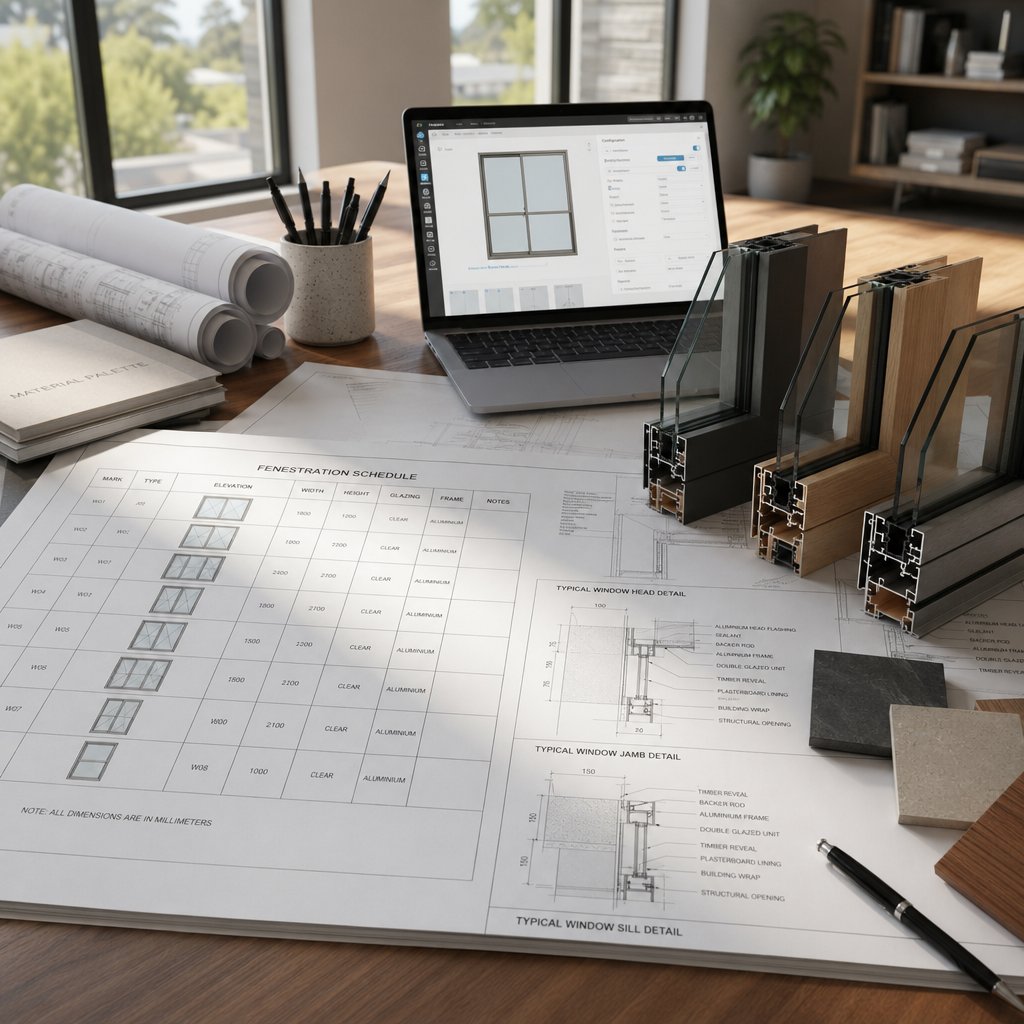
When architects draft architectural doors and windows symbols on construction drawings, those symbols reference a fenestration schedule that specifies the exact performance class and PG rating for every opening. Whether you are reviewing plans for a project in Maine or anywhere else, that schedule is the document that connects design intent to verified product performance. Suppliers of architectural doors and windows in Westbrook, Maine and similar coastal communities pay close attention to these numbers because the consequences of underspecifying are not theoretical — they show up as water damage, seal failure, and voided warranties.
Selecting the right performance grade is not about buying the most expensive product. It is about matching verified test data to your building’s actual exposure conditions, because a product that falls short of your local code requirements will cost far more to replace than it would have cost to specify correctly from the start.
Energy Efficiency Certifications That Matter
Performance grades address structural survival. Energy ratings address daily livability. Two different conversations, but both show up on the same product label.
The National Fenestration Rating Council (NFRC) operates a voluntary program that tests, certifies, and labels fenestration products based on energy performance. When you see an NFRC label on a window or door, it provides standardized ratings you can compare across any manufacturer:
- U-factor — measures the rate of non-solar heat transfer through the entire unit, including frame and spacer. Lower numbers mean better insulation. A U-factor of 0.25 keeps heat inside far more effectively than one rated 0.40.
- Solar Heat Gain Coefficient (SHGC) — the fraction of solar radiation that passes through the glazing and enters your home as heat. A lower SHGC blocks more solar heat, reducing cooling loads in summer. A higher SHGC lets more warmth in, which benefits heating-dominated climates.
- Visible Transmittance (VT) — how much natural light passes through the glass. Higher VT means brighter interiors without flipping a switch.
- Air Leakage (AL) — the rate of air movement around the product at a specific pressure. Lower is tighter.
ENERGY STAR qualification builds on NFRC data. Products earn the ENERGY STAR label by meeting minimum U-factor and SHGC thresholds that vary by climate zone. It is a voluntary program, but it gives homeowners a quick way to identify products that exceed baseline energy code requirements. Provincial and state energy codes, by contrast, are mandatory — your product must meet or exceed those local minimums regardless of whether it carries an ENERGY STAR sticker.
For projects pursuing broader sustainability goals, these same metrics feed into larger frameworks. LEED certification awards credits for high-performance building envelopes, and Passive House standards set some of the most demanding U-value and air tightness targets in the industry. Even if you are not chasing a specific certification, understanding U-factor and SHGC helps you make smarter trade-offs. A south-facing window in a cold climate benefits from a higher SHGC to capture free solar heat, while the same window facing west in a hot climate needs a low SHGC to keep cooling costs under control.
These numbers only tell the full story, though, when you read them against the climate your building actually sits in. A product that earns top marks in a temperate zone may underperform badly in a hurricane corridor or an alpine winter, which is exactly why climate-specific selection deserves its own conversation.
How Climate Shapes Your Architectural Window and Door Selection
A window rated for a mild suburban neighborhood in the Mid-Atlantic will not survive a decade on a beachfront in South Florida. Climate is not a secondary consideration in fenestration selection — it is the primary filter that determines which glazing, frame material, and performance grade your project actually needs. Get this wrong, and you are looking at premature seal failure, condensation damage, or energy bills that never match the projections.
Coastal and Hurricane Zone Requirements
Coastal and hurricane-prone regions impose the harshest demands on fenestration. In high-velocity hurricane zones, the Florida Building Code (Section 2411) requires that all exterior windows, doors, and glazing assemblies carry product approval and withstand design wind pressures calculated per Chapter 16. That means impact-rated glazing is not optional — it is code-mandated. Impact-rated units use laminated glass, typically with a polyvinyl butyral (PVB) or SentryGlas interlayer, designed to hold together even after being struck by windborne debris.
Beyond the glass itself, every component must resist corrosion. Salt air degrades unprotected steel hardware and fasteners within a few years. Aluminium framing has a clear advantage here: its natural oxide layer resists salt corrosion, and powder-coated or anodized finishes extend that protection further. Architectural steel windows and doors in Baltimore and other coastal-adjacent cities can perform well, but they require marine-grade protective coatings and more vigilant maintenance schedules than aluminium alternatives.
Performance grades in these zones run high. Expect minimum PG ratings of 50 to 70 for low-rise coastal structures, climbing to PG90 or above for upper floors of high-rise buildings exposed to unobstructed wind. The architectural schedule of doors and windows for any coastal project should specify both the design pressure and the missile-impact rating for every opening — two separate requirements that must both be satisfied.
Extreme Cold and Hot Arid Climate Considerations
Move inland to a cold-climate city like Minneapolis or Edmonton, and the threat shifts from flying debris to heat loss. U-factor becomes the dominant metric. You want the lowest U-factor you can reasonably afford, because every fraction of a point translates into less heat escaping through the glass and frame during months of sub-zero temperatures.
This is where triple glazing earns its cost premium. A triple-glazed insulated glass unit (IGU) with two low-E coatings and argon or krypton gas fill can achieve U-factors below 0.20, compared to roughly 0.27-0.30 for a high-quality double-glazed unit. Thermally broken frames are equally critical. Without that polyamide barrier separating the interior and exterior aluminium profiles, condensation forms on the inside face of the frame — and condensation in cold climates leads to mold, wood rot in surrounding trim, and eventual structural damage.
Flip the scenario to a hot, arid climate like Austin or Phoenix, and SHGC takes the lead. When cooling loads dominate your energy budget, you need glazing that blocks solar heat gain without killing natural light. A low SHGC (around 0.22-0.25) paired with a reasonable visible transmittance (0.40 or above) strikes that balance. Low-E coatings oriented on the outer glass surface reflect solar radiation before it enters the building, which is the opposite configuration from cold-climate low-E placement. Architectural steel windows and doors in Austin and similar sun-drenched markets benefit from spectrally selective coatings that filter infrared heat while preserving clarity.
Mixed Humid and Temperate Zone Selection
Temperate and mixed-humid zones — think the mid-Atlantic, Pacific Northwest, or southeastern Australia — present a different challenge. You are heating in winter and cooling in summer, so neither U-factor nor SHGC can be optimized in isolation. The goal is balance: a moderate U-factor (around 0.25-0.30) paired with a moderate SHGC (0.25-0.40), adjusted by facade orientation.
South-facing glass in these climates benefits from a slightly higher SHGC to capture passive solar heat during winter, while west-facing openings need lower SHGC to limit afternoon heat gain in summer. Versatile product lines that offer multiple glazing packages within the same frame system let you tune each elevation independently without switching manufacturers or frame profiles.
Here is how these climate zones compare across the key specification decisions:
| Climate Zone | Recommended Glazing | Ideal U-Factor Range | SHGC Priority | Frame Material Considerations | Min. Performance Grade |
|---|---|---|---|---|---|
| Coastal / Hurricane | Laminated impact-rated double glazed | 0.25 – 0.35 | Moderate (0.25 – 0.40) | Aluminium preferred for corrosion resistance; steel requires marine-grade coatings | PG50 – PG90+ |
| Extreme Cold | Triple glazed with argon/krypton fill and dual low-E | Below 0.20 | Higher on south-facing (0.30 – 0.42) to capture solar heat | Thermally broken aluminium or timber; condensation resistance is critical | PG40 – PG60 |
| Hot Arid | Double glazed with spectrally selective low-E | 0.25 – 0.35 | Low (0.20 – 0.25) to minimize solar heat gain | Aluminium with thermal break; composite also suitable | PG30 – PG50 |
| Mixed Humid / Temperate | Double glazed with low-E; triple optional for premium performance | 0.25 – 0.30 | Moderate, tuned by orientation (0.25 – 0.40) | All materials viable; aluminium and composite offer best maintenance balance | PG30 – PG50 |
Notice that no single product configuration works everywhere. A triple-glazed, high-SHGC unit perfect for a Minnesota winter would overheat a living room in Tucson. An impact-rated coastal unit adds unnecessary cost and weight to a sheltered inland project. Climate-aware specification is not about buying the highest-rated product available — it is about matching each rating to the specific forces your building will actually encounter.
Climate tells you what your fenestration must withstand. The next question is more practical: how do you move from knowing what you need to actually selecting and ordering the right product?
The Specification and Selection Process Step by Step
Knowing your climate zone, performance grade, and preferred framing material gives you a solid foundation. But that knowledge lives in your head until it gets translated into a formal document a manufacturer can actually build from. The gap between research and a finished product is where most costly mistakes happen — not because people choose the wrong window, but because the selection process itself breaks down.
How Architects Specify Architectural Fenestration
The specification workflow follows a logical sequence, whether you are an architect drafting construction documents or a homeowner working with a builder on a renovation.
It starts with design intent. What role does each opening play? Is it primarily about light, ventilation, a view, or a combination? That intent drives the window or door type, which in turn narrows the material and glazing options. From there, performance requirements get layered in: local building codes dictate minimum wind load ratings, energy codes set U-factor and SHGC thresholds, and site-specific conditions like salt exposure or noise levels add further constraints.
All of this information lands in a fenestration schedule — the formal specification document that communicates every detail to fabricators and installers. A well-built fenestration schedule lists each window and door by tag number, with columns for dimensions, frame material, glazing type, performance class, hardware set, fire rating where applicable, and detail markers referencing head, jamb, and sill conditions. Window tags typically identify a type rather than a single unit, so the same tag can appear at multiple locations. Door tags, by contrast, are unique to each opening — usually matching the room number they serve.
Timing matters here. Basic information like sizing, material, and frame type should be locked in during design development so the client and project team can review before drawings go out for bid. Detailed hardware sets and construction details are best finalized during the construction documents phase. Rushing this sequence — or skipping the review step — is how projects end up with incorrect hardware, mismatched ratings, or lead-time surprises that delay occupancy. Whether you are specifying architectural steel windows and doors in Dallas or a residential casement package in a quiet suburb, the schedule is the single document that keeps everyone aligned.
What to Ask Manufacturers Before You Buy
A fenestration schedule tells the manufacturer what you need. The questions below tell you whether that manufacturer can actually deliver it. Sounds straightforward, but skipping even one of these can lead to expensive surprises months down the line.
- Can you provide independent test reports and certifications for the specific product configuration I need? — Not marketing brochures. Actual NAFS, AS2047, or equivalent test documentation for the performance class and grade your project requires. If a supplier cannot produce these on request, that is a red flag.
- What are your warranty terms, and what voids them? — Warranty length matters less than what it actually covers. Ask whether the warranty includes labor for repairs, whether it is transferable to future owners, and what installation conditions must be met to keep coverage valid. Warranty fine print is where many buyers get caught — a 20-year warranty that excludes seal failure or hardware is not the protection it appears to be.
- What is the realistic lead time for my custom sizes and configurations? — Custom architectural products can take weeks to months. Get a firm timeline in writing, and ask what happens if production delays occur. Projects in high-demand markets for architectural steel windows and doors — Houston, New York, San Antonio — can face extended lead times during peak construction seasons.
- What thermal break technology do your frames use? — Not all thermal breaks are equal. Polyamide strips outperform PVC pour-and-debridge systems in both durability and insulating value. Ask for the specific material and width of the thermal break.
- What glazing options are available within this frame system? — You want to know whether the system supports double and triple glazing, laminated and tempered options, various low-E coating positions, and gas fills. A versatile glazing platform lets you tune each elevation to its specific climate exposure without switching product lines.
- Do you provide installation support or certified installer networks? — Architectural-grade products often require specialized installation techniques. Ask whether the manufacturer offers installation guides, on-site technical support, or a network of trained installers in your area. A product is only as good as its installation.
Custom Architectural Products vs Catalog Products
There is an important distinction between selecting from a manufacturer’s existing catalog and commissioning a fully bespoke product. Both fall under the architectural-grade umbrella, but they differ significantly in cost, lead time, and design freedom.
Catalog products are pre-engineered configurations — the manufacturer has already tested and certified specific combinations of frame profiles, sizes, and glazing options. You choose from that validated menu. This approach is faster, typically less expensive, and carries lower risk because the product has a proven performance record. For most residential projects and many commercial ones, a well-stocked architectural catalog covers the need.
Fully custom fenestration goes further. You are working with the manufacturer to develop a product that may not exist in their current lineup — an unusual shape, an oversized span, a non-standard finish, or a combination of performance requirements that no catalog item satisfies. Custom windows can start around $500 and easily exceed $1,000 per unit, with lead times stretching from weeks to months depending on complexity. The payoff is a product that fits your project exactly, with no compromises on dimension, profile, or performance.
The smart approach is to start with catalog options and go custom only where the project genuinely demands it. An oversized pivot door for a grand entry? Probably custom. Standard casement windows for bedrooms in the same house? Catalog is likely fine. Mixing the two keeps costs rational without sacrificing design intent where it counts most.
Selecting the right product and getting it delivered is only part of the equation. How that product gets installed — and how it is maintained over the following decades — determines whether your specification actually performs as intended.
Installation Considerations and Long-Term Maintenance
A perfectly specified product installed poorly performs worse than a mediocre product installed correctly. That is not an exaggeration — it is the pattern that building envelope consultants see repeated across projects of every scale. Architectural fenestration carries higher stakes during installation because the units are larger, heavier, and engineered to tighter tolerances than standard residential products. There is less room for error, and the consequences of getting it wrong show up faster.
Why Architectural Window Installation Differs from Standard
Imagine a lift-slide door panel weighing 200 kilograms being maneuvered into a rough opening three stories up. The structural support requirements alone set architectural installation apart. Larger glazed units impose significant dead loads on the surrounding wall framing, which means headers, jack studs, and sill plates often need to be engineered specifically for the fenestration they carry. A standard residential installer accustomed to dropping a 30-kilogram double-hung into a pre-framed opening may not recognize when structural reinforcement is needed — and that gap in experience is where failures begin.
The more critical issue, though, is how the window or door connects to the building envelope. Every opening is essentially a hole in your water, air, vapor, and thermal control layers. According to the Building America Solution Center (BASC), the general approach to incorporating windows into walls follows a clear priority sequence: install the unit to withstand wind and seismic loads, then connect the water control layer of the wall to the water control layer of the window, followed by air, vapor, and thermal control layers in that order.
Fluid-applied flashing membranes have become the industry standard for sealing rough openings. These products line the entire perimeter of the opening before the window is installed, wrapping from the interior framing face around the exterior edge and extending several inches over the face of the sheathing. A metal head flashing at the top of the opening directs water outward, while a back dam at the sill prevents water from pooling and migrating inward. The details vary by wall assembly — fluid-applied water barriers, mechanically attached house wraps, and self-adhered membranes each require slightly different sequencing — but the principle is universal: every layer must connect continuously from wall to window with no gaps.
Where things go wrong is compatibility and technique. Building envelope professionals frequently cite incompatible flashing and sealant products as one of the top causes of post-construction water infiltration claims. Some liquid-applied flashings use an alcohol cure that inhibits the curing of polyurethane or silicone perimeter sealants applied over them. If the installer does not know this — or if the specification does not call for compatible products — you end up with sealant that never fully cures and a wholesale failure across every opening on the project. UV stability is another overlooked factor: flashings that degrade under sun exposure before the window is installed can lose adhesion, creating a hidden weak point behind a product that looks perfectly installed from the outside.
This is exactly why hiring installers experienced with architectural-grade products matters. A general window installer may handle the mechanical fastening competently but miss the waterproofing integration that determines whether the unit performs over its full lifespan. When architectural symbols for doors and windows appear on construction drawings, they reference detailed head, jamb, and sill sections that specify exactly how each opening connects to the building envelope. Installers who cannot read and execute those details should not be handling architectural fenestration, regardless of how many standard windows they have installed. Improper installation is also one of the most common warranty exclusions — manufacturers will not cover failures caused by installation methods that deviate from their documented requirements.
Maintenance and Lifespan Expectations by Material
Architectural-grade products are built to outlast their residential counterparts by significant margins, but “built to last” and “will last without attention” are two very different things. Every framing material has a maintenance profile, and ignoring it shortens the product’s useful life dramatically.
Steel frames illustrate this point clearly. When properly maintained, steel windows can last 50 to 100 years or more. Without regular care, that lifespan can shrink to just 10 to 20 years. The difference is entirely about maintenance discipline. Architectural steel windows and doors in San Diego and other coastal-adjacent markets face accelerated corrosion risk from salt air, making protective coating upkeep even more critical.
Here is what realistic maintenance looks like for each major framing material:
- Aluminium
- Clean frames with mild soap and water every 3-6 months to remove dirt and salt deposits
- Lubricate hardware (hinges, locks, rollers) annually with a silicone-based lubricant
- Inspect weatherstripping and seals yearly; replace if cracked or compressed
- Check drainage weep holes for blockages, especially after storms
- Timber
- Repaint or restain exterior surfaces every 3-5 years, depending on exposure
- Inspect for signs of rot, mold, or pest damage at least twice a year
- Reseal joints and glazing putty as needed to prevent moisture ingress
- Sand and refinish interior faces when wear becomes visible
- Keep vegetation trimmed away from frames to reduce moisture retention
- Steel
- Clean frames monthly with a soft cloth and mild detergent; avoid abrasive cleaners that damage protective finishes
- Inspect for rust spots or paint chips at least quarterly; address immediately with a rust-inhibiting primer and touch-up paint
- Apply a protective wax or sealant coating annually to exposed surfaces
- Ensure proper drainage around frames to prevent standing water, which accelerates corrosion
- Lubricate all operable hardware with a non-corrosive lubricant every 6-12 months
Aluminium demands the least ongoing effort, which is one reason it dominates specification for projects where long-term maintenance budgets are limited. Timber demands the most, but rewards that effort with warmth and insulating performance that metal frames require engineering to match. Steel sits in between — less frequent intervention than timber, but more vigilant inspection than aluminium, especially in humid or salt-laden environments.
Regardless of material, one maintenance task applies universally: inspect the glazing seals. Insulated glass units rely on edge seals to keep moisture out of the airspace between panes. When those seals fail, you get fogging between the glass — a cosmetic and thermal performance issue that typically requires full IGU replacement rather than a simple repair. Catching seal degradation early, before visible fogging appears, extends the useful life of the glazing and avoids the cost of premature replacement.
How long you can expect these products to serve your building depends not just on maintenance, but on how well the fenestration matches the demands of the project itself — whether that is a single-family renovation or a mixed-use commercial facade with an entirely different set of performance expectations.
Residential and Commercial Applications for Architectural Fenestration
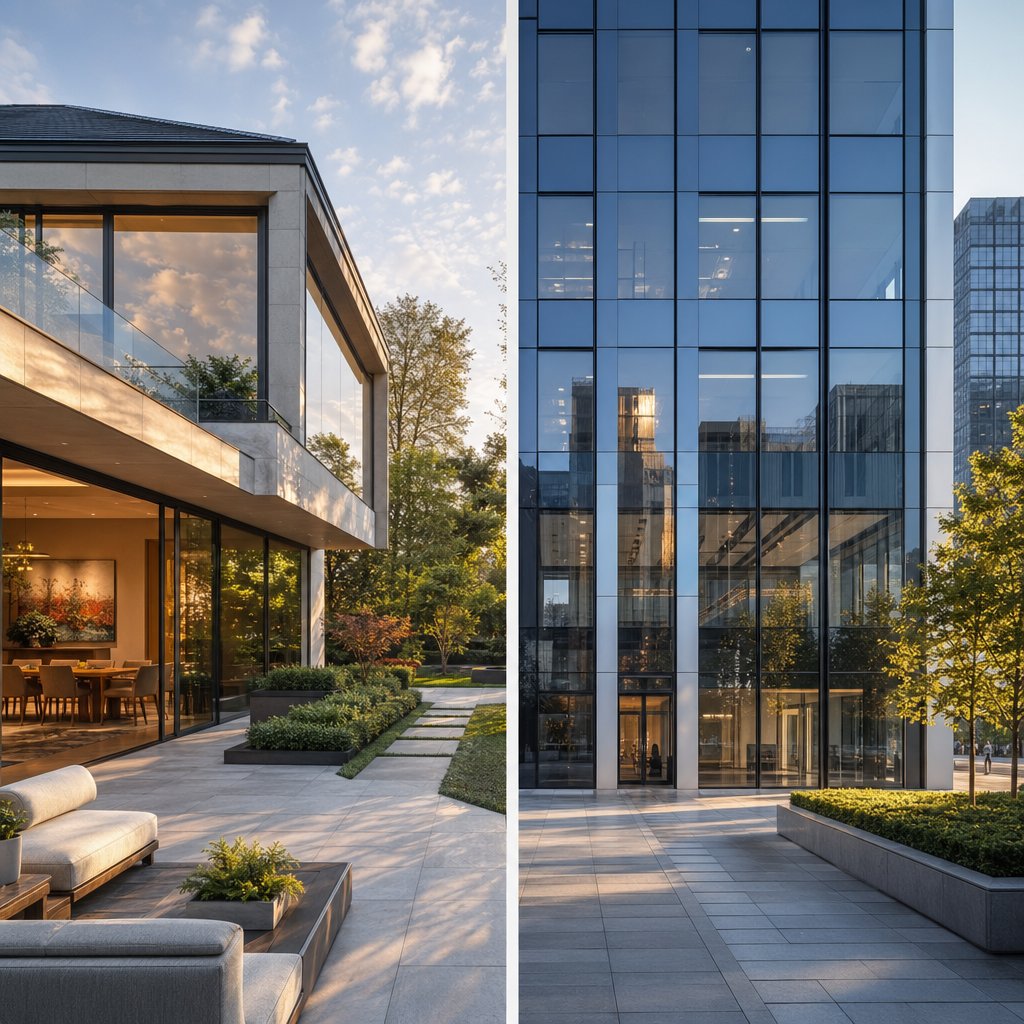
A heritage cottage with oddly sized openings and a 40-story mixed-use tower seem like they have nothing in common. Yet both regularly end up specifying architectural-grade fenestration — just for very different reasons. Understanding how these products serve each context helps you avoid either overbuilding a simple renovation or underspecifying a commercial facade that needs to perform under far greater scrutiny.
Residential Applications from Renovations to Custom Builds
For homeowners and renovators, the appeal of an architectural window and door package usually comes down to one thing: standard products do not fit the vision. Maybe you are designing a new build around a wall of floor-to-ceiling glass that opens onto a rear garden. Or you are renovating a 1920s bungalow where every opening is a non-standard dimension that no catalog product matches without awkward filler panels.
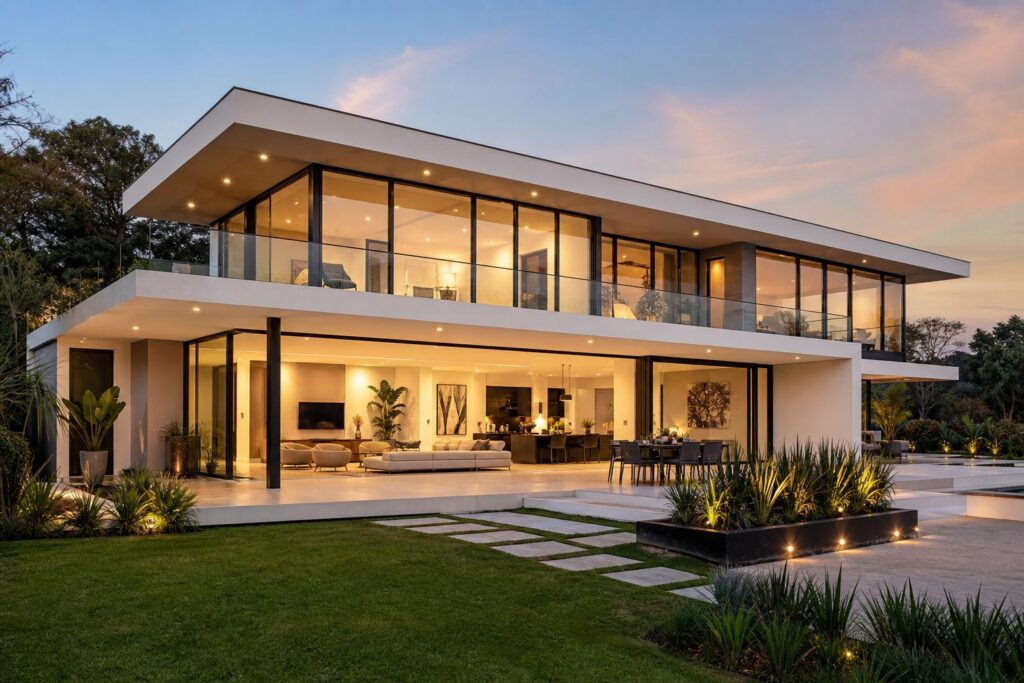
These are the scenarios where architectural-grade products earn their premium. Oversized fixed picture windows that flood a double-height living room with light. Minimal-frame lift-slide systems that erase the boundary between a kitchen and an outdoor entertaining area. Custom-shaped openings — arched transoms, raked glazing following a roofline, trapezoidal windows in a gable end — that give a home its character. Custom oversized windows deliver benefits beyond aesthetics, too: strategic placement supports passive temperature regulation, improved air circulation, and meaningful energy efficiency gains when paired with the right glazing package.
Replacement projects are another sweet spot. Older homes frequently have openings that fall outside modern standard sizing. Rather than reframing the rough opening to accept an off-the-shelf unit — which adds cost, disrupts interior finishes, and can compromise the building envelope — an architectural-grade replacement built to the existing dimensions preserves the original proportions while upgrading thermal and structural performance.
Commercial and Mixed-Use Project Requirements
Commercial projects operate under a different set of pressures. The fenestration is not just serving a single homeowner’s taste — it must satisfy building codes, fire ratings, acoustic standards, accessibility requirements, and the aesthetic expectations of tenants, investors, and the public simultaneously.
Storefront glazing systems are the most common entry point. These fixed, non-load-bearing assemblies — typically aluminium and glass — dominate ground-floor retail and hospitality spaces where visibility and natural light drive foot traffic. They span one to two stories, accommodate glazing infills from 1/4 inch to 1 inch, and are evaluated against ASTM E283 (air infiltration), ASTM E330 (structural), and ASTM E331 (water penetration) standards. They are economical and relatively quick to install, but their thermal and acoustic performance sits below more advanced systems.
For mid-rise and high-rise buildings, window wall and curtain wall systems take over. Window wall assemblies span floor-to-floor between slab edges and must pass seismic-related testing like AAMA 501.4 (interstory drift) and AAMA 501.6 (glazing fallout) — requirements that simply do not exist in residential work. Curtain wall systems hang from the building structure like a skin, spanning multiple stories and delivering the highest levels of air, water, and thermal performance among commercial glazing options. They are also the most expensive, but for architectural windows and doors for commercial properties where the facade is the brand identity, that investment is inseparable from the building’s market value.
Acoustic performance adds another layer. A residential casement window rarely needs to attenuate traffic noise beyond basic comfort. A hotel or office tower adjacent to a highway or flight path may require STC (Sound Transmission Class) ratings of 35 or higher, which demands thicker laminated glazing, wider airspaces, and heavier frame profiles. Fire ratings compound the complexity further — glazed openings in fire-rated walls or corridors must meet specific fire-resistance durations, often requiring specialty fire-rated glass and framing assemblies that fall outside standard product lines.
Here is how residential and commercial architectural fenestration compare across the criteria that shape specification decisions:
| Criteria | Residential Architectural | Commercial Architectural |
|---|---|---|
| Typical Performance Grade | PG25 – PG50 (R or LC class, occasionally AW for custom homes) | PG40 – PG90+ (CW or AW class) |
| Glazing Requirements | Double or triple glazed IGUs; low-E coatings; laminated where impact-rated | Double or triple glazed IGUs; laminated for safety and acoustic control; fire-rated glass where required |
| Code Considerations | Residential energy code (e.g., IECC); egress requirements for bedrooms; tempered glass at hazardous locations | Commercial energy code; fire-resistance ratings; seismic performance (AAMA 501.4/501.6); ADA accessibility |
| Customization Needs | Non-standard sizes, custom shapes, finish matching to interior design | Large-scale curtain wall or storefront layouts, integrated spandrel panels, blast or ballistic ratings for secure facilities |
| Budget Range (per unit) | $500 – $5,000+ depending on size and complexity | $50 – $150+ per square foot of glazed area, system-dependent |
The pricing structure itself reflects a fundamental difference in how these markets operate. Residential projects price by the unit — each window or door is a discrete line item. Commercial projects price by the square foot of glazed facade, because the fenestration functions as a system rather than a collection of individual openings. An architectural symbols for doors and windows PDF on a residential drawing set might show 15 to 30 tagged openings. A commercial drawing set for the same-sized building could reference hundreds of panels within a single curtain wall elevation, all governed by one system specification.
What both markets share is the consequence of poor selection. A residential homeowner who underspecifies ends up with drafty rooms and fogged glass. A commercial developer who underspecifies faces tenant complaints, code violations, and remediation costs that dwarf the original fenestration budget. The scale differs, but the principle holds: matching the product to the project’s actual demands — not its aspirational budget — is what separates a successful outcome from a regrettable one.
Making the Right Choice for Your Project
Every section of this guide points to the same truth: successful fenestration outcomes are not about finding the “best” product in the abstract. They are about matching verified performance to your specific building, your specific climate, and your specific design goals. Whether you are renovating a mountain home in Glenwood Springs or specifying a commercial facade in Jacksonville, the decision sequence stays the same.
Your Architectural Fenestration Decision Framework
Rather than jumping straight to a product catalog, work through these steps in order. Each one narrows the field so that by the time you are comparing manufacturers, you already know exactly what you need.
- Define your design intent. What does each opening need to accomplish — light, ventilation, a view, a dramatic threshold? This determines window and door type.
- Assess climate and code requirements. Identify your climate zone, local building code minimums for wind load and energy performance, and any site-specific exposures like salt air or extreme temperature swings.
- Select the appropriate framing material. Weigh durability, thermal performance, maintenance tolerance, and aesthetic fit against your project type and budget.
- Verify the performance grade. Match the NAFS class and PG rating (or AS2047 equivalent) to your building’s actual exposure conditions — not just the minimum code allows, but what the building genuinely needs.
- Evaluate manufacturers using the questions from your specification checklist. Request independent test reports, clarify warranty terms, confirm lead times, and verify installation support before committing.
- Plan for professional installation and long-term maintenance. Budget for experienced installers who understand building envelope integration, and establish a maintenance schedule appropriate to your chosen material.
This sequence works for a custom residential build in Jamaica just as well as it does for a mid-rise commercial project. The inputs change; the logic does not.
Where to Start Your Search
Your project type shapes where you begin. Homeowners and renovators exploring aluminium options benefit from starting with manufacturers who offer multiple window types — casement, sliding, awning, fixed — under one product ecosystem. This simplifies specification, ensures visual consistency across your facade, and means one warranty relationship instead of several.
For readers interested in energy-efficient, AS2047-compliant aluminium systems, MEICHEN’s aluminium windows collection is a practical starting point. Their range covers configurations from standard casements to larger sliding systems, built for homeowners, renovators, builders, and developers across diverse project scales. It is one strong option worth evaluating — but apply the same scrutiny you would to any supplier. Request test documentation, compare warranty terms, and verify that the specific product configuration meets your project’s performance requirements.
Prioritize verified performance data over brand marketing when selecting architectural fenestration. A product that can prove its ratings through independent testing will always be a safer investment than one that simply claims them.
The fenestration you choose will outlast most other finishes in your building. Flooring gets replaced, paint gets refreshed, fixtures get updated — but your windows and doors are structural commitments measured in decades. Take the time to work through the framework, ask the hard questions, and verify before you buy. That diligence is the single most reliable way to choose architectural windows and doors without costly regret.
Frequently Asked Questions About Architectural Windows and Doors
1. What is the difference between architectural grade and residential grade windows?
Architectural grade (AW class) fenestration undergoes the most rigorous testing under the NAFS standard, allowing a maximum air leakage of just 0.10 CFM/ft2 at 6.24 psf — three times tighter than residential grade products tested at a fraction of that pressure. Architectural units are custom-engineered for specific projects with premium materials, heavy-duty hardware, and fully custom sizing, while residential grade products use standard dimensions and basic hardware designed for typical single-family homes. The upfront cost is higher for architectural grade, but the performance gap over a 30-year lifecycle often makes it the more rational long-term investment, particularly in demanding climates or for non-standard openings.
2. How do I choose the right framing material for architectural windows and doors?
The best framing material depends on your climate, maintenance tolerance, design goals, and budget. Aluminium is the most widely specified option globally due to its slim sightlines, corrosion resistance, low maintenance, and compatibility with thermally broken profiles for energy efficiency. Steel delivers ultra-thin frames ideal for heritage and luxury projects but requires more upkeep and costs significantly more. Timber offers natural insulation and warmth but demands repainting every 3-5 years. Composite frames blend low maintenance with strong thermal performance, though profile options are more limited. For Australian projects, manufacturers like MEICHEN offer AS2047-compliant aluminium window systems across multiple configurations, making aluminium a versatile starting point for most residential and commercial builds.
3. What does the performance grade (PG) rating mean on a window or door?
A performance grade number indicates the maximum design pressure, in pounds per square foot, that a fenestration product can withstand. It is determined through standardized testing of three factors: structural wind load resistance, water penetration resistance, and air infiltration. For example, a PG50 rating means the product handles 50 psf of design pressure. Higher PG numbers indicate greater resistance. Your local building code, building height, terrain exposure, and climate zone dictate the minimum PG your project requires. Coastal and high-rise buildings typically need PG50 to PG90 or above, while sheltered low-rise residential projects may only require PG25 to PG40.
4. Why does climate matter when selecting architectural windows and doors?
Climate determines which glazing type, energy ratings, and performance grades your fenestration must meet. In hurricane zones, impact-rated laminated glass and high PG ratings are code-mandated. Extreme cold climates prioritize low U-factor values and triple glazing to prevent heat loss and condensation. Hot arid regions need low Solar Heat Gain Coefficient (SHGC) ratings to block solar heat without sacrificing natural light. Mixed humid and temperate zones require a balanced approach, often tuning glazing specifications by facade orientation. No single product configuration works everywhere, so matching each rating to your building’s actual exposure conditions prevents premature failure and excessive energy costs.
5. What questions should I ask a manufacturer before buying architectural windows or doors?
Start by requesting independent test reports and certifications for the exact product configuration you need — not just marketing materials. Ask about warranty terms in detail, including what voids coverage and whether labor for repairs is included. Get realistic lead times in writing, especially for custom sizes, as architectural products can take weeks to months. Inquire about the specific thermal break technology used in the frames, since polyamide strips outperform PVC pour-and-debridge systems. Confirm available glazing options within the frame system, including double and triple glazing, laminated and tempered glass, and various low-E coating positions. Finally, ask whether the manufacturer provides installation guides, on-site technical support, or a certified installer network in your area.
More Window & Door Guides