

What Thermally Broken Means and Why Buildings Need It
On a July morning in Canberra, the inside of an old aluminium window frame can feel almost as cold as the glass. Metal moves heat quickly from one side to the other, and the frame is showing you that. Thermally broken window frames exist to stop it. To see how they work, it helps to start with how heat moves through a window at all.
How Heat Moves Through a Window Frame
Heat crosses a window in three ways. Conduction carries heat directly through solid materials like glass, seals and the frame itself. Convection carries it through air. As Penn State explains, warm room air gives up energy against a cold pane, cools and sinks toward the floor. That cooled air is the draught people feel beside large windows in winter. Radiation moves heat as infrared energy through glass and across gaps, which is the job low-E coatings are designed to handle.
In the frame, conduction does most of the damage. Aluminium conducts heat roughly 1,000 times faster than wood or vinyl. A solid aluminium profile therefore carries outdoor temperatures almost straight through to the room side.
Thermal bridging is heat flowing through a building component that conducts heat faster than the materials around it. In a window, a continuous metal path from the outside face of the frame to the inside face lets heat bypass the insulation provided by the glass and surrounding wall.
The losses add up. Building specialists at AE Building Systems note that even airtight homes can lose 20 to 50 percent of their heat through thermal bridges.
What a Thermal Break Actually Does
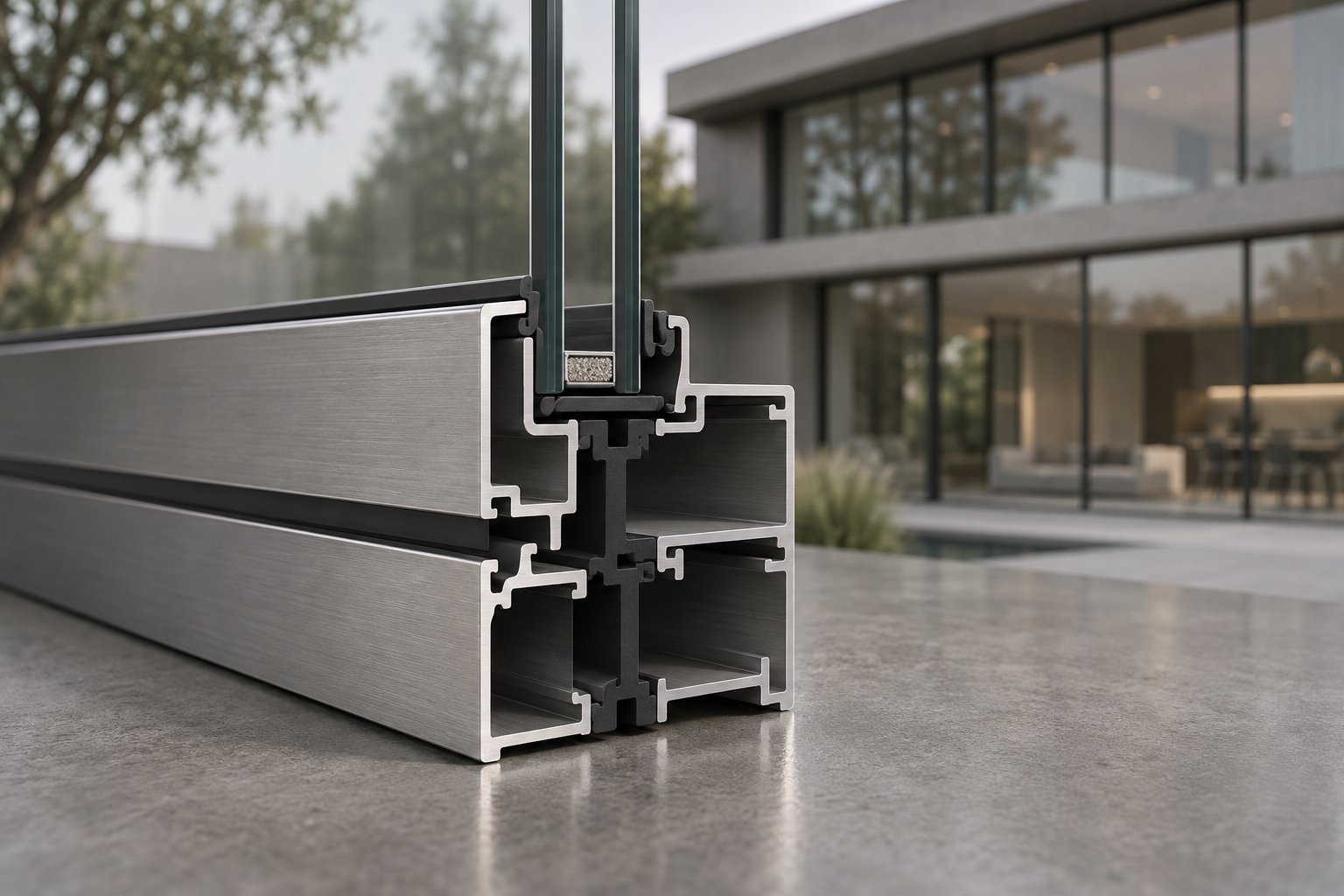
So what does thermally broken mean? A thermally broken frame is made of separate interior and exterior aluminium sections joined by a strip of low-conductivity material, usually polyamide or polyurethane. The strip interrupts the metal path. Heat has to cross a material that resists it instead of running freely through solid aluminium. From the street, thermal break windows look much like standard aluminium windows. The difference is hidden inside the profile.
Lower energy bills are the obvious benefit. Three others often matter more day to day:
- Condensation control. Water condenses on any surface colder than the dew point of the room air. A thermal break keeps the inside face of the frame warmer, so less water beads on frames and sills on cold mornings.
- Comfort near glass. A warmer frame cuts the chill and the draughts felt by people sitting beside big windows and sliding doors.
- Protection for interior finishes. Repeated condensation stains painted reveals, swells timber sills and plasterboard, and creates the damp conditions mould needs.
The benefit applies in warm climates too. Thermally broken windows in Sydney earn their place even though the winters are mild. In summer, a sun-baked frame on a west-facing wall conducts heat into the room. On still winter mornings, water still collects on the sills of conventional frames. Aluminium thermally broken windows reduce both problems. That is why thermally broken aluminium windows are now common well beyond Australia's coldest regions.
A frame cut into two metal halves still has to carry heavy glass and resist wind pressure. How well it does that depends largely on how the insulating strip is built into the profile during manufacture.
How Window Thermal Break Profiles Are Manufactured
Cut two thermally broken window frames in half and the insides may look nothing alike. One has stiff, dark strips clamped between the metal halves. The other has a band of solid resin where a strip of aluminium used to be. Both work as a window thermal break. They are made in very different ways.
Polyamide Strip Insertion and Crimping
The most common method starts with aluminium extrusions that have precise channels running along their edges. Polyamide strips slide into the channels, and the aluminium is pressed tight around them. Profile maker DIMEX breaks the assembly into four stages:
- Knurling. Hardened discs cut sharp teeth into the neck of each channel so the strip has something to grip.
- Insertion. The polyamide strips are fed into the channels.
- Rolling (crimping). Rollers close the aluminium around the strips. If the rollers are set badly, they can twist or crack the strips.
- Shear testing. Sample lengths are loaded to confirm the strips won't slip.
Knurling matters most. If the teeth are poorly formed, extra crimping pressure won't bring the shear strength back.
The strips are usually PA66 polyamide reinforced with about 25 percent glass fibre. This material became the industry standard because it expands and contracts with temperature at nearly the same rate as aluminium. The two materials move together through years of hot afternoons and cold nights, so the joint doesn't build up stress or work loose. The strips also survive powder-coating ovens at 180 to 200°C for up to about 20 minutes, so the frame can be coated after assembly. Strip height affects insulation too. Taller strips, such as 24 mm or 34 mm instead of 14.8 mm, put more distance between the metal halves.
Pour-and-Debridge Systems
The second method starts with a single hollow extrusion. A two-part polyurethane resin is poured into a channel in the profile and left to cure. A machine then mills away the aluminium bridge under the channel, leaving the resin as the only link between the inside and outside of the frame. Thermal barrier supplier Azon ranks polyurethane foam as the least conductive option, followed by solid polyurethane, then glass-filled polyamide. Because the resin goes in as a liquid, it takes the shape of whatever cavity the extrusion has. Some profiles include more than one cavity, which lets designers widen the insulated zone in certain profile shapes without ordering a custom strip.
Structural Implications of the Thermal Break
With the metal split in two, the thermal break is what holds the frame together, and every load the window carries has to pass through it. Wind pressing on a large pane bends the frame, which pushes the two aluminium halves to slide past each other (shear). Wind suction on the far side of a building tries to pull them apart (tension). These forces grow with opening size and exposure. Wide sliding doors, tall glazing in high-rise buildings, curtain walls and windows in the cyclone regions of north Queensland and the NT put the greatest demands on thermal breaks in windows.
A material data sheet can't predict how a finished joint will behave, because knurling, crimping and resin curing vary from factory to factory. Ask for shear and tensile test results for the specific profile series. Also ask for AS 2047 test results (AS 4284 for curtain wall) at the size and wind rating your project needs.
Those reports tell you whether a particular aluminium profile can carry the load. They don't tell you whether aluminium is the right material for the project compared with uPVC, fibreglass or timber.
Thermally Broken Aluminium Compared With uPVC, Fibreglass and Timber
Picture a builder pricing windows for a double-storey home in Geelong. Three quotes come back: one for thermally broken aluminium, one for uPVC and one for aluminium-clad timber. Each can perform well. Each also gives up something to get there, so the lowest price isn't automatically the best value.
Where Thermally Broken Aluminium Stands Among Frame Materials
Picking a frame material means weighing thermal performance, strength, appearance, upkeep and budget against each other. No material leads on every count. The table below ranks the main options in broad tiers. Results vary a lot between profile series and glass packages, so use it as a starting point and not as a verdict.
| Frame material | Thermal performance | Strength and span | Sightlines | Colour and finish range | Maintenance | Expected lifespan | Recyclability | Cost tier |
|---|---|---|---|---|---|---|---|---|
| Thermally broken aluminium | Moderate to high, depending on break width and glazing | High; suits very large openings | Slimmest | Very wide: powder coat, anodised, dual colour | Low: wash frames, lubricate hardware | Moderate to long; depends on finish and hardware quality | High | Mid to high |
| uPVC (vinyl) | High | Low to moderate; large sizes need steel reinforcement | Wide | Limited; some colours fade | Low | Moderate | Limited in practice | Low to mid |
| Pultruded fibreglass | High | High; stiff and dimensionally stable | Moderate | Moderate; factory paint finishes | Low | Long | Low; hard to reprocess | Mid to high; few local suppliers |
| Aluminium-clad timber | High | Moderate | Wide | Wide: clad colour outside, stained or painted timber inside | Moderate: interior timber needs refinishing | Long if kept dry and maintained | Moderate; materials must be separated | High |
Aluminium has the widest thermal range in the table because the thermal break and the glass vary so much. A narrow-strip profile with basic double glazing sits well behind a wide-strip profile with high-performance glass. Fibreglass is common in North America, but few Australian suppliers carry it, and that can rule it out on availability and lead times alone.
When Aluminium Outperforms the Alternatives
Thermally broken aluminium wins on merit in several situations:
- Large openings with slim sightlines. Aluminium is stiff enough to hold big panes in narrow sections. Window maker ROPO notes that uPVC insulates well at a lower price but can't match aluminium for floor-to-ceiling spans. Stacking doors, corner glazing and commercial shopfronts all play to this strength.
- Coastal and humid sites. Aluminium doesn't rot, swell or warp. Salt air still attacks poorly finished metal, so homes near the beach on the Gold Coast or in coastal Perth suburbs need an anodised or marine-grade powder-coat finish and stainless steel hardware.
- Custom colours. Powder coating can match most RAL and Dulux colours, and anodising gives a metallic finish that won't peel. Vinyl offers fewer colours, and builder C&L Ward warns that vinyl colours fade over time.
- Recycling at end of life. Aluminium can be melted down and reused many times over, and the polyamide strips can be separated out for their own processing stream.
- Bushfire-prone land. An aluminium frame doesn't burn, which can make it easier to meet a site's BAL rating under AS 3959. The glass, seals and screens must comply as well.
The other materials have strong cases of their own. For standard residential sizes, uPVC usually costs less up front. Fibreglass is stable and durable, with typical lifespans of 30 to 50 years. Aluminium-clad timber suits heritage homes and Federation-era renovations where the owner or council wants timber on show. On a tight-budget renovation with ordinary-sized windows, uPVC may be the more sensible choice than thermally broken windows.
Material tiers can only go so far, though. Two windows built from the same thermally broken profile can earn very different energy ratings, because the frame is only one part of the window. The glass and the spacer fitted into it count just as much.
How Frame, Spacer and Glass Create a Whole-Window Rating
A quote lists a U-value of 1.6 for your new double glazing. That sounds excellent. Many quotes for thermal broken windows lead with a figure like this, but it may describe only the glass. The window you actually install could lose a lot more heat than that number suggests.
Why Glass-Only U-Values Are Misleading
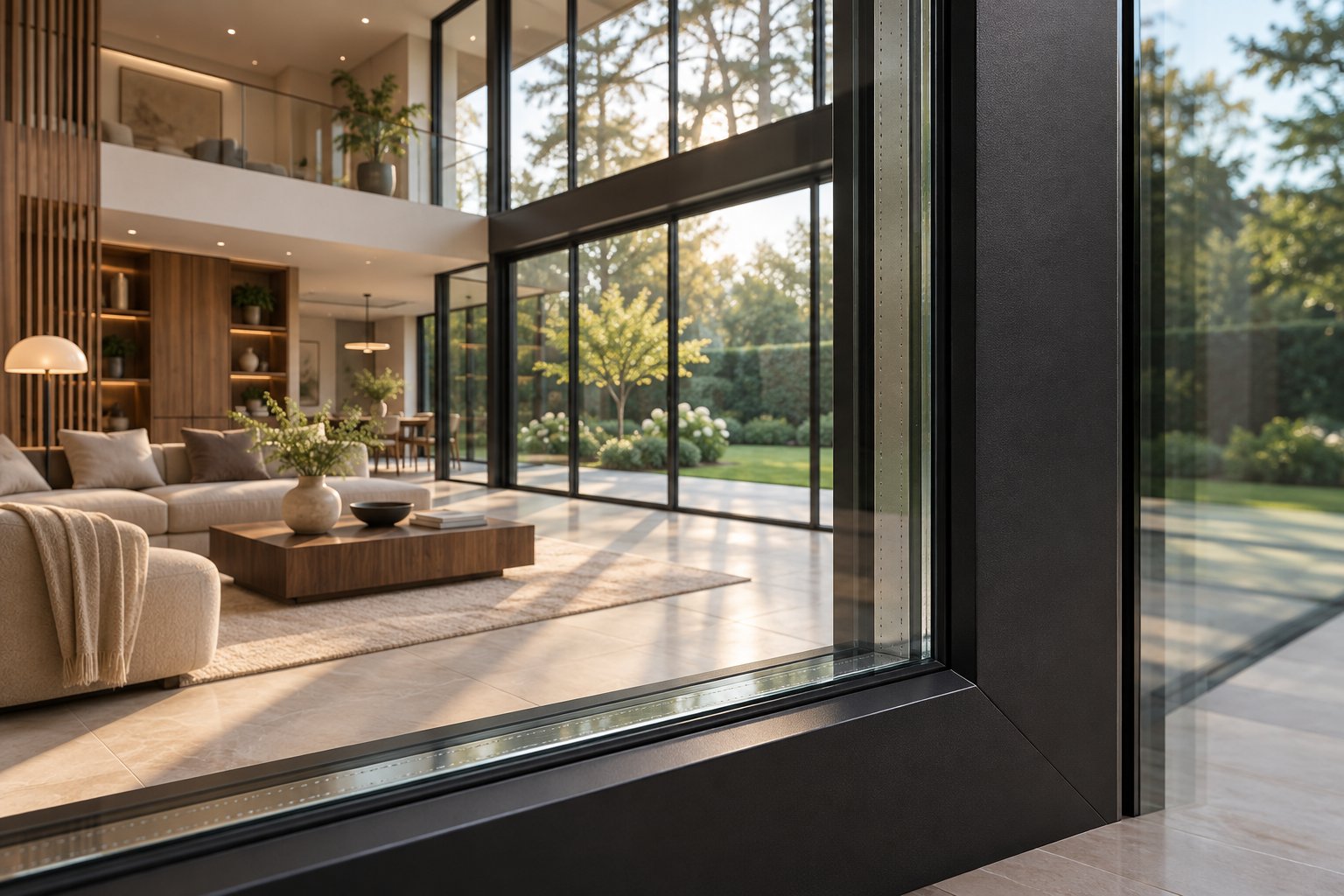
A centre-of-glass U-value measures the insulating glass unit (IGU) on its own: the panes, coatings, cavity and gas fill. The calculation assumes there is no edge seal and no frame. Every real window has both, and both conduct heat faster than the middle of the glass does.
The whole-window figure is called the total system U-value (Uw) in Australia. It is an area-weighted average of three zones: the frame, the edge of glass and the centre of glass. Under the rating method Technoform describes, the edge-of-glass zone is the 63.5 mm band of glass closest to the frame. Because the frame and edge leak more heat, the total system value is almost always higher, which means worse. Low-E double glazing typically rates about 1.4 to 1.7 W/m²K at the centre of glass. Curtain wall assemblies using the same glass range from roughly 1.7 to 2.6 W/m²K, depending on the thermal break and spacer.
Mixing the two numbers up causes real problems. In one cold-climate energy model from the US, entering the glass-only value of about 1.7 W/m²K in place of the true 2.6 W/m²K assembly value underestimated perimeter heating demand by 28 percent. Heating and cooling systems sized on figures like that end up too small. NCC energy provisions use total system U-value and SHGC, so ask whether a quoted figure covers the full assembly at the size and configuration you are ordering.
How Frame, Spacer and Glass Work as a System
Each component controls a different part of the heat path:
- Thermally broken frame. Reduces conduction around the perimeter. The width of the break and the profile design set the frame U-value, which is often the weakest zone in aluminium thermal break windows.
- Warm-edge spacer. Holds the panes apart at the edge of the IGU. In framed aluminium systems, a hybrid plastic and stainless steel spacer typically lowers the total system U-value by about 0.11 to 0.17 W/m²K compared with a conventional aluminium spacer. A plain stainless steel spacer saves around 0.06 W/m²K.
- Insulating glass unit. Low-E coatings cut radiant heat transfer, and argon or krypton in the cavity slows heat moving between the panes. Together they set the centre-of-glass value.
Because the rating is a weighted average, the weakest zone holds the result back. If you put triple glazing into a frame with a narrow thermal break, you gain less than the glass data promises, because the frame now accounts for a bigger share of the heat loss. You usually get better value by upgrading the frame, spacer and glass together.
Glazing Interactions With Thermally Broken Frames
One frame can take several glass packages, and each one changes the rating:
- Double or triple glazing. A third pane and a second low-E coating lower the U-value. Triple glazing also lets in less solar heat than double glazing with high-solar-gain low-E, which suits very cold sites such as alpine areas and the Tasmanian highlands better than most Australian homes.
- Low-E coating position. A coating on the inner face of the outer pane rejects more summer heat, which helps in Brisbane or Perth. A coating on the outer face of the inner pane keeps more heat indoors and lets in more winter sun, which suits Canberra or Hobart.
- Argon or krypton. Argon is the standard fill and works well in cavities of about 12 to 13 mm. Krypton costs more but insulates well in gaps of around 6 mm, so it helps triple units fit a frame's glazing pocket.
A single thermal broken aluminium window can therefore have several legitimate ratings, one for each glass package. The rating that applies to your quote should appear on the product's energy rating label, but only if you know what each number on it measures.
Certifications, Codes and How to Read a WERS Label
Every window rated under the Window Energy Rating Scheme (WERS) carries a label covered in numbers. Most buyers look at the stars and stop there. The figures underneath show how the frame, spacer and glass perform together, and each one is easy to read once you know what it measures.
Understanding WERS Labels and What the Numbers Mean
WERS ratings are calculated by accredited simulators using Australian Fenestration Rating Council (AFRC) procedures. They rate the complete window, so the frame counts as much as the glass. You'll sometimes see suppliers advertise "thermally broken glass". The thermal break is always in the frame. The glass gets its performance from coatings, gas fill and spacers, and the label rates all of them together.
- Total system U-value (Uw), in W/m²K. This is the rate of heat flow through the whole window. Lower is better. It matters most in heating-dominated places like Canberra and Hobart.
- Total system SHGC (SHGCw), on a scale of 0 to 1. This is the fraction of the sun's heat that gets through. A low value keeps summer heat out in Brisbane or Darwin. A higher value lets useful winter sun in through north-facing windows in cool climates.
- Visible transmittance (Tvw), on a scale of 0 to 1. This is the share of daylight that passes through. Dividing it by SHGC gives a light-to-solar-gain ratio. A higher ratio means the glass lets in more light for each unit of heat.
- Air infiltration, in L/s.m² at 75 Pa. This is how much air leaks through the closed window at the AS 2047 test pressure. A lower figure means fewer draughts.
- Heating and cooling star ratings. These summarise how the window affects the energy needed to heat and cool a typical home. More stars are better.
- Condensation resistance. Many labels don't show it. If condensation is a concern, for example in bathrooms or in cold inland towns, ask the supplier whether condensation resistance or interior frame temperature data is available.
All of these figures are calculated at a standard reference size. A narrow window has a larger share of frame, so with aluminium windows with a thermal break it will usually perform a little worse than the label suggests. A very large pane may perform slightly better. Ratings also change with every swap of glass, coating, gas or spacer, so compare ratings for the exact configuration you are buying.
AS 2047, NCC Climate Zones and Compliance
A WERS label says nothing about how a window handles a storm. That is covered by AS 2047, which tests structural strength under wind load, resistance to water penetration and air infiltration. Results are stated as pressures in pascals, and the window's rating must suit the site's wind classification. A sheltered suburban block might need an N2 rating. A house in cyclonic Townsville needs a C-class rating.
Energy compliance comes from the National Construction Code (NCC), which divides Australia into eight climate zones. They run from hot, humid zone 1 around Darwin to alpine zone 8. A home complies either through a NatHERS rating, where the software uses WERS data, or through the deemed-to-satisfy glazing provisions, which use total system U-value and SHGC. In NSW, BASIX sets the energy targets instead. In heating-dominated zones 6 and 7, which include Melbourne, Canberra and Hobart, a thermal break in windows is often what lets large glazed areas pass. In zones 1 and 2, SHGC usually decides the result, and a well-shaded home with good glass may comply without a thermal break.
Thresholds change between code editions, and states adopt those editions on different timelines. Confirm the current requirements with your NatHERS assessor or the ABCB glazing calculator. Don't rely on figures quoted in a brochure.
Before accepting a manufacturer's claims, check for:
- A current WERS rating whose product code matches the frame, glass and spacer on your quote
- Total system values, not centre-of-glass figures
- AFRC simulation results at your actual sizes for large or unusual openings
- An AS 2047 test report covering the profile series, size and wind rating
- Written confirmation that the rating still applies if any component is substituted
When buyers run a few thermal break window quotes through this checklist, many are surprised by how competitive the aluminium figures are. That surprise usually comes from beliefs about aluminium that took hold before thermal breaks were common.

Myths About Thermally Broken Aluminium Windows Worth Correcting
Ask someone who grew up with aluminium windows in the 1980s and they may remember frames dripping with condensation on winter mornings. They remember correctly. Those windows were a different product, though, and many objections to aluminium today are really objections to those old frames.
All Aluminium Windows Are Energy Wasters
When people search for what does thermally broken mean, they often want to know whether aluminium can be trusted at all. Standard aluminium does conduct heat readily. Its thermal conductivity is about 160 W/mK. The glass-fibre-reinforced polyamide used in a thermal break conducts heat roughly 500 times less. That difference changes the frame figures. Frame U-values (Uf) for aluminium without a break typically sit between 5.6 and 7.0 W/m²K. Entry-level thermally broken systems come in around 2.0 to 2.8, and deep multi-chamber profiles reach 1.3 to 1.6.
Paired with suitable glazing, thermally broken aluminium windows can help large glazed areas pass NCC energy requirements in cool zones such as Canberra and Melbourne. They belong in a different category from the single-piece frames in older homes. Judge them on tested total system values, not on what aluminium used to be like.
Thermal Breaks Make Frames Structurally Weak
It seems logical that cutting a frame into two halves would weaken it. In practice, an aluminium window thermal break is designed to carry shear and tension between the inner and outer metal, and the knurled, crimped joint locks the strips in place. Glazing specialist Altaglaze notes that modern systems keep, and in some cases improve, structural performance. Thermally broken profiles can be designed for wide stacking doors, high-rise glazing and high wind classifications. The AS 2047 test report for the specific profile series and size is what proves the strength. A material data sheet doesn't.
Thermally Broken Frames Are Only for Cold Climates
On a summer afternoon in Perth, a west-facing frame can get much hotter than the room behind it. Without a break, that heat conducts straight through to the inside face, and the air conditioner has to remove it. A thermal break slows that flow.
Humid climates add a second reason. In an air-conditioned home in Cairns or Brisbane, a conventional aluminium frame carries the room's coolness across its whole section. Wherever moist air touches a frame surface that has dropped below the dew point, water forms. Sweating frames are a common complaint in these cities. A thermal break keeps more of the frame closer to the temperature of the air around it, so less of it gets cold enough to collect water.
A thermal break slows heat in both directions. In Hobart it keeps warmth inside. In Darwin it keeps heat out. Depending on where you build, either job can be worth paying for.
That doesn't mean every home needs one. A well-shaded house in the tropics with good glass may get more from external shading than from a frame upgrade. Whether a thermal break is worth it for a particular project depends on the climate zone, the budget, and who is making the decision.
Matching Thermally Broken Frames to Climate Zone and Project Type
A homeowner in Ballarat, an architect working on a beachside apartment block and a builder fitting out a brick veneer house can all ask whether a thermal break is worth it. Each of them needs a different answer.
Homeowner Considerations
Start with your climate. Thermally broken windows for cold climates such as Ballarat, Canberra or the Tasmanian highlands usually pay their way through lower heating demand and drier sills. In mild coastal cities, the case depends more on summer heat and condensation. Then look at the windows you have now. Old single-glazed frames that leak air or sweat every winter morning leave much more room for improvement than double glazing that is a few years old and working well. Your own complaints are a good guide too: cold draughts near sliding doors, water pooling on sills, or a room that gets unbearable on summer afternoons.
Thermally broken window energy savings are only part of the return. Comfort, fewer mould problems and resale appeal also count. A simple payback estimate divides the cost of the upgrade by the expected annual saving. That saving depends on local energy prices, how the home is heated and how much glass it has, so payback periods vary widely from one project to the next. A NatHERS assessor can model your house before you commit.
What Architects and Specifiers Need to Know
Writing "thermally broken" on a drawing tells a supplier very little. As Windows Guy points out, the label confirms that a barrier exists but says nothing about its width or how the whole window performs. Clear thermally broken aluminium window specifications fill that gap:
- State the NCC climate zone, the site wind classification and the compliance path: NatHERS, deemed-to-satisfy or BASIX.
- Set a maximum total system U-value and an SHGC range for each elevation, rated for the exact frame, glass and spacer combination.
- Require the tender submission to list the thermal break material, the break width and the spacer type.
- Ask for condensation data for wet areas and cold sites, either a condensation resistance figure or interior surface-temperature simulations.
- Call up AS 2047 structural, water and air ratings, glass selection to AS 1288, and BAL compliance where it applies.
- Require AFRC simulations at the project's actual sizes for large or unusual openings, and forbid substitutions unless the window is re-rated.
Standard-size ratings can overstate the performance of narrow units and understate it for big ones, so the sizes you actually specify matter. On coastal sites, add a finish rated for marine exposure and stainless steel hardware. The best windows for coastal climate zones depend on finish and hardware as much as on thermal performance.
Contractor and Installer Priorities
A good profile can still underperform if it is installed badly. Pack at fixing points with stable plastic packers, because timber offcuts compress and rot. Uneven packing or over-tightened fixings can bow the frame, which strains the thermal break, opens gaps in the seals and stops sashes closing evenly. Before moving on, check that reveals are consistent on all sides and that each sash closes without racking.
The sill flashing should fall to the outside and lap correctly with the wall wrap. A continuous air seal around the frame then stops water and air from bypassing the break altogether. Builders on The Build Show suggest running a hose over the window head for several minutes while someone watches from inside. A visual check won't find the leaks this test catches. Confirm glazing, finishes and hardware within the manufacturer's system before ordering. Mixing components from different sources leads to mismatched gaskets, wrong glazing pocket depths and delays on site.
This advice is easiest to apply with a real data sheet in hand. Reading one line by line shows quickly whether a supplier can back up every item in your specification.
How to Evaluate Thermally Broken Windows Using a Real Data Sheet
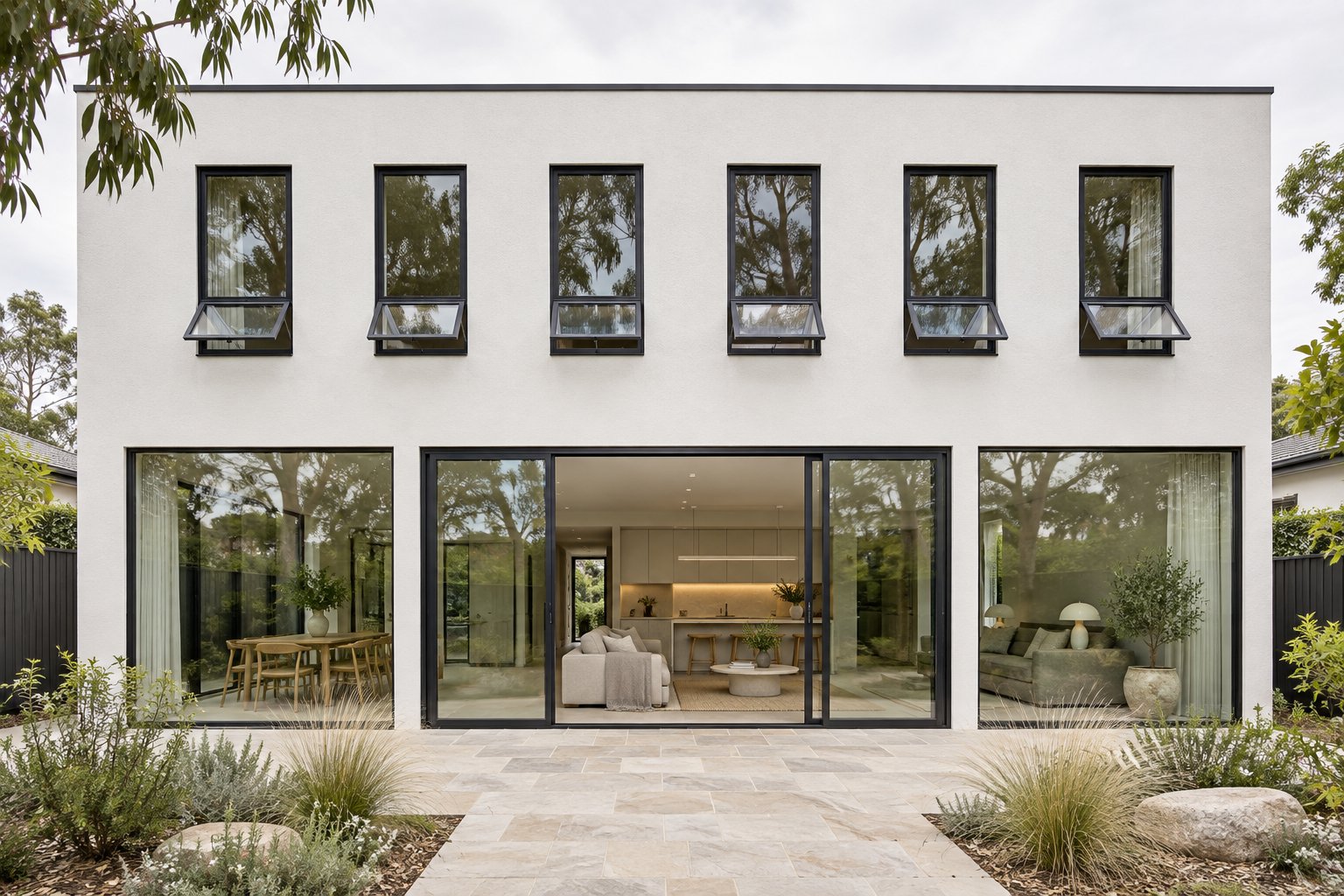
A product page can look complete and still leave the important questions unanswered. The fastest way to learn how to evaluate thermally broken windows is to take one real data sheet and run it through the checks from earlier sections. Meichen's MC100 Awning Window makes a useful practice case. It is a thermally broken aluminium awning window with published glass, colour and weather performance data. The page also states plainly what those figures don't cover.
Applying the Evaluation Framework to a Real System
Go through the sheet one item at a time. Write down what it shows, and write down what it leaves out.
| Check | What the MC100 data sheet shows | What to ask the manufacturer |
|---|---|---|
| Thermal break construction | System type listed as thermal break, with a powder-coated aluminium frame and sash | Is the break a polyamide strip or poured polyurethane? How wide is it? Are shear test results available for this series? |
| Energy performance | Winter night-time U-value of 1.85 W/m²K for the 5+12A+5 and 6+12A+6 build-ups, with visible transmittance of 63% and 72%. No SHGC is listed. The page notes these are glass figures, not whole-window ratings | Total system U-value and SHGC from a WERS rating or AFRC simulation for the exact frame, glass and spacer |
| Glazing packages | Three argon-filled double-glazed build-ups: 5mm+12Ar+5mm, 6mm+12Ar+6mm and 8mm+9Ar+8mm | Thermal values for the 8 mm build-up, low-E coating choices, spacer type and glass selection to AS 1288 |
| Weather performance | Water tightness 200 Pa. Ultimate pressure 2,000 Pa with no collapse. Air leakage of 9.38 L/s (positive) and 10.23 L/s (negative) at 75 Pa on a 6.0227 m² sample | The AS 2047 report itself. Does it cover this series and opening type at your sizes and wind classification? |
The air leakage figures need some care. If they are totals for the whole test sample, they work out to roughly 1.6 to 1.7 L/s.m², which is the unit used on WERS labels. Confirm this with the supplier before comparing the MC100 against other quotes. The page also says a compliance report for another model can't be used in place of one for this model. Treat every system you assess that way.
Matching System Features to Project Requirements
Next, compare the product against your brief. Picture a renovation of upstairs bedrooms in a double-storey rendered home in Sydney's west. Buyers comparing thermally broken aluminium windows in Sydney would check:
- Size and configuration. Confirm that ratings and test reports cover your actual opening sizes and any fixed-and-awning combinations shown in the configuration drawings.
- Thermally broken window glazing options. Only double-glazed build-ups are listed. That suits most Sydney homes, but for an alpine or Tasmanian highlands site, ask whether triple glazing is possible before you assume it is.
- Finishes. The standard colours are Pearl White, Monument and Black Mall, and custom powder coating is available. On coastal sites, ask for a finish rated for marine exposure.
- Hardware and operation. Standard and upgraded hardware are both offered. Check that there is room for the sash to swing outward, that opening restrictors are fitted where the NCC requires them on upper-storey bedrooms, and that fly screens or security screens fit the design.
The same process works for a single home or a larger residential or commercial window schedule. Send drawings showing the location, sizes, quantities, glazing, finishes and performance targets, and the quote is built from that scope. Energy performance still has to be verified for the complete frame-and-glass assembly at the proposed size. No data sheet can promise a fixed energy saving.
A data sheet describes the window as it leaves the factory. How well the thermal break works fifteen years later depends on how carefully it was installed and how well it has been maintained.
Thermally Broken Window Maintenance and Long-Term Frame Durability
Thermal breaks rarely fail all at once. A seal dries out or a strip loosens slightly, and a few winters later water is collecting on the sill again. If you know the early signs, you can fix the problem while it is still cheap.
What Happens When Thermal Breaks Fail
Poor manufacturing causes many failures. Strips with too little glass-fibre reinforcement can crack during crimping or later under wind load. Strips forced into channels that are too tight can be damaged even when the frame looks fine. Mismatched materials also cause trouble. Glass-filled polyamide expands at almost the same rate as aluminium, but unfilled polyurethane expands about seven times faster. In the 1970s, that difference made poured breaks shrink and let water into installed windows. Modern resins perform better, but low-grade materials can still work loose after years of hot days and cold nights.
Installation causes most of the remaining failures. When perimeter sealant fails, water can reach the frame cavity and sit against the joint between the strip and the metal. During routine inspections, homeowners and building managers should look for:
- Condensation or mould returning to the inside face of a frame that used to stay dry
- A hairline gap or step between the inner and outer aluminium sections
- Cracked or loose strips visible at the corners
- Water stains below the sill
- Sashes that no longer close evenly
Maintenance, Durability and End-of-Life Recyclability
Thermally broken frames are generally durable. Aluminium doesn't rust, and anodised or powder-coated finishes protect it further. Glass-reinforced polyamide also stands up well to sun. In accelerated weathering tests it kept around 92 percent of its tensile strength after 5,000 hours. Because the frame and strip last so well, the lifespan of a thermally broken aluminium window depends mostly on its finish, seals and hardware.
Extrusion maker Bor USA suggests cleaning frames once or twice a year inland and about every three months near the coast. Good thermally broken window maintenance includes these tasks:
- Clear the drainage slots. Blocked weep holes leave water sitting in the sill against the break.
- Clean and inspect the gaskets. Use water, a mild pH-neutral detergent and a soft cloth. Don't use solvents or abrasive pads. Replace any gasket that has split, shrunk or hardened.
- Check the sealant where the frame meets the wall. Do this once a year, and reseal any cracks before water finds a way in.
- Lubricate the operating hardware. A stiff awning stay or hinge puts strain on the sash every time someone forces it.
- Keep pressure washers back. If you use one, keep the pressure low and the nozzle well away from the frame. A close jet can force water past the seals.
Care starts on the building site. A good installation tip for thermally broken windows is to leave the protective film on until nearby trades have finished. Wash off mortar or cement splashes straight away, because these alkaline materials etch the finish.
At the end of the frame's life, it can be shredded and the polyamide separated from the aluminium, and each material is then reprocessed on its own. Aluminium can be recycled many times without losing quality. Spec sheets don't cover how a frame was installed, how it has been cleaned or what happens to it at the end, but these factors largely determine how long it keeps performing.
FAQs About Thermally Broken Window Frames
1. What does thermally broken mean on an aluminium window frame?
A thermally broken frame has no metal joining its inner and outer aluminium sections. They are held together by an insulating strip, usually glass-fibre-reinforced polyamide or poured polyurethane. The strip carries the structural load and slows the heat moving through the frame. Without it, the aluminium carries outdoor temperatures straight to the room side. With a thermal break, the inside face of the frame stays warmer in winter and less heat comes through it in summer. You also get less condensation on sills and reveals, and it's more comfortable to sit near large areas of glass. The break is hidden inside the profile, so from the outside a thermally broken window looks much like a standard one. The label alone tells you little about performance, so ask the supplier which material the break uses and how wide it is.
2. Are thermally broken windows worth it in warm cities like Sydney, Brisbane or Perth?
Often they are, though for different reasons than in cold climates. In warm cities the break stops a sun-heated frame from conducting heat into an air-conditioned room, which matters most on west-facing walls. In humid areas the break keeps frame surfaces from cooling below the dew point while the air conditioning runs, so you get fewer sweating frames and less mould. Standard aluminium frames can still collect water on still winter mornings, even in mild cities. Whether the upgrade pays off depends on orientation, the amount of glass, shading and budget. A well-shaded home with good glass in NCC climate zones 1 or 2 may comply without a thermal break. A NatHERS assessor, or a BASIX assessment in NSW, can model the home before you decide.
3. Why is the U-value on my window quote lower than the WERS rating?
The quote may be showing a centre-of-glass U-value. That figure covers only the insulating glass unit and leaves out the frame and edge seal. A WERS label shows the total system U-value (Uw), which averages three zones by area: the frame, the edge of the glass near the spacer, and the centre of the glass. The frame and edge zones lose heat faster than the middle of the glass, so the whole-window figure is almost always higher, which means worse. If the glass-only number goes into an energy model, the heating and cooling systems can end up too small. Ask for the total system U-value and SHGC for the exact frame, glass and spacer on your quote. The best evidence is a WERS rating whose product code matches the quote, or an AFRC simulation at your actual sizes for large openings.
4. Does a thermal break make an aluminium frame weaker?
Not if it is designed and made well. The insulating strips are engineered to carry shear and tension between the two aluminium halves. During manufacture, the channels that hold the strips are knurled, which cuts small teeth into the metal, and then crimped tight so the strips can't slip. The quality of that process varies from factory to factory, so a material data sheet can't prove the joint is strong. Testing does. For cyclone regions of north Queensland and the NT, high-rise glazing or wide stacking doors, ask for shear and tensile test results for the profile series. Also ask for an AS 2047 report at your window size and wind classification, or AS 4284 for curtain wall. A test report for a different model doesn't count as proof for the one you are buying.
5. What should I check on a thermally broken awning window data sheet before buying?
A real data sheet makes good practice. Meichen's MC100 Awning Window, for example, lists a thermal break system, a powder-coated aluminium frame and sash, three argon-filled double-glazed build-ups and weather performance results. It also states that its U-values describe the glass, not the whole window. For any product, work through these checks. Confirm the thermal break type and width. Get the total system U-value and SHGC for the exact configuration you are ordering. Make sure the glazing options suit your climate, and ask about triple glazing for alpine sites. Check that the finish is rated for coastal exposure if you live near the sea. Confirm the hardware and opening restrictors suit upper-storey bedrooms. Request the AS 2047 report for the profile series. No data sheet can promise a fixed energy saving, so have performance verified for the full frame-and-glass assembly at your proposed size.