

Why Aluminium's Energy Reputation Is Only Half Right
Energy efficient aluminium windows are aluminium-framed windows built with thermal breaks, insulated glazing and effective seals. These parts work together so the complete window assembly limits heat transfer and air leakage, instead of relying on the frame alone.
Ask someone who grew up in an older brick veneer home about aluminium windows, and you may hear about icy sliders, fogged-up glass and damp sills on winter mornings. Ask an architect working on a new double-storey build, and you might get a very different answer. Both views come from real experience. Neither tells the whole story.
Where the Inefficient Aluminium Myth Comes From
The criticism has a solid basis. Aluminium is a highly conductive metal, so heat moves through it easily and pushes up a window's overall U-value. In cool weather, a plain aluminium frame can get cold enough for moisture or even frost to form on its inside surface. The team at Efficient Windows points out that this condensation problem, even more than heat loss, is what pushed manufacturers to develop better-insulated frames. Combine a basic frame with single glazing and worn seals, and you get the draughty, sweating windows many Australians remember.
What Makes Aluminium Windows Energy Efficient
Modern systems take a different approach. The frame is split into separate interior and exterior sections, joined by a less conductive material. That single change has roughly halved frame heat loss with standard thermal breaks, from about 11.4 to around 5.7 W/m²K. The frame is only one part of the solution, though. Three engineering responses do most of the work:
- Thermal breaks that interrupt the metal path heat would otherwise follow
- Whole-window glazing systems combining double glazing, coatings, gas fills and spacers
- Sealing and installation that stop air leaking around the sash and frame
Are Aluminium Windows Good for Energy Performance Today
It depends on what you buy and how it goes in. The old reputation still applies to non-thermally broken frames, single glazing and poor installation. Some building science voices, such as Green Building Advisor, still rate aluminium below wood or vinyl for very cold climates. Across much of Australia, however, solar heat gain often matters as much as winter heat loss, and a thermally broken system with double glazing can perform well. In hot climates, better glazing frequently counts for more than extra frame insulation.
Most information about windows in aluminium comes from the companies that sell them. This guide aims to explain how the technology works so you can judge products on evidence. That starts with the thermal break itself, because not all of them are built the same way.

How Thermal Breaks Turn Aluminium Into a Better Insulator
Leave a metal spoon in a hot cup of tea and the handle warms up within a minute. A plain aluminium frame works the same way. It carries outdoor heat or cold straight through to your living room. A thermal break fixes this, and the idea behind it is simple.
How a Thermal Break Interrupts Heat Flow in Aluminium Window Frames
The frame is built as two aluminium sections. One faces outside and one faces in. A low-conductivity material sits between them and holds them together. With no continuous metal path, heat has to cross the insulating layer, which slows it down a lot. The inside face of the frame stays closer to room temperature. That holds on a frosty Canberra morning and on a scorching summer afternoon in western Sydney.
Polyamide Strips vs Poured and Debridged Polyurethane
Manufacturers mainly use two methods to create that separation:
- Polyamide strips: Pre-made bars of glass-fibre-reinforced polyamide, usually PA 6.6, are crimped into knurled grooves on the inner and outer profiles. This locks the two halves together mechanically.
- Pour and debridge: A liquid two-part polyurethane is poured into a channel in the extrusion and cured in place. The metal bridge at the base of the channel is then cut away, so only the resin connects the two sides.
Thermal barrier specialist Azon ranks polyurethane foam as the least conductive of these materials, followed by solid polyurethane and then glass-filled polyamide. Both methods are proven in windows and curtain wall, so the method alone does not decide quality. If you are trying to work out which aluminium window is reliable, look at how well the break is engineered and manufactured. That matters more than which type it uses.
Why Strip Width and Multi-Chamber Profiles Matter
Two frames can both have a thermal break and still perform very differently. A wider insulating barrier puts more distance between the inner and outer metal, so less heat gets across. Multi-chamber profiles add hollow pockets inside the frame that trap air and break up the heat path further. Deeper frames make room for those chambers and for thicker glazing units. Some systems also fill the cavities with insulating foam inserts.
This is why buying guides tell you to check profile depth and thermal break width, not just whether a break exists. These refinements also help explain why the aluminium vs fibreglass windows debate is closer than it used to be. A well-designed aluminium frame narrows the gap with naturally less conductive materials, though it does not always close it.
| Factor | Thermally Broken Aluminium | Non-Thermally Broken Aluminium |
|---|---|---|
| Interior frame surface temperature | Stays closer to room temperature | Tracks the outdoor temperature and can feel cold or hot to the touch |
| Condensation risk | Lower, especially with suitable glazing | Higher, particularly on cool, humid mornings |
| Climate suitability | Suits most Australian climates, from cool Hobart and Melbourne to hot inland regions | Best kept to mild climates with modest comfort demands |
| Typical use cases | Living areas, bedrooms, new builds and energy-focused renovations | Garages, sheds, interior partitions and unconditioned spaces |
Key insight: The thermal break is the single feature that separates modern aluminium window systems from the older designs that earned the bad reputation.
Even the best-insulated frame covers only part of the window, though. Most of the surface is glass, and that is where much of a window's performance is won or lost.
Glazing, Spacers and Frames Working as One System
Picture two windows fitted with identical glass. One sits in a thermally broken frame with warm-edge spacers and firm seals. The other sits in a plain frame with tired gaskets. On paper the glass matches. In your lounge room, they feel nothing alike. Building scientists keep returning to the same point: frame, glass, spacer and seals behave as one system, and the weakest part often sets the result.
Double vs Triple Glazing in Aluminium Framed Windows
Double glazing pairs two panes with a sealed gap between them, forming an insulating glass unit (IGU). That trapped layer slows heat far better than a single pane. Triple glazing adds a third pane and a second gap, cutting heat loss further. It also adds weight and cost, though aluminium frame windows carry heavy units well thanks to the metal's strength. For most Australian homes, a well-specified double-glazed unit is the practical sweet spot. Triple glazing tends to earn its keep in alpine areas, the coldest parts of Tasmania and Victoria, or builds chasing very high energy targets.
Low-E Coatings, Gas Fills and Warm-Edge Spacers
A low-E coating is a microscopically thin layer of metals or metal oxides that reflects long-wave heat while letting daylight through. Ordinary clear glass has an emissivity of about 0.84, while some high-performance coatings get down to roughly 0.02, as glass maker Vitro explains. Lower emissivity means less radiant heat crosses the glass.
Where the coating sits changes how it behaves. Placed on the inner face of the outer pane, it generally turns solar heat away before it enters, lowering the Solar Heat Gain Coefficient (SHGC). That suits a west-facing living area in Brisbane or Perth. Placed on the outer face of the inner pane, it typically admits more winter sun while still holding indoor warmth, which can help in Melbourne or Canberra.
Gas fills swap the air in the gap for argon or krypton. Both conduct heat less readily than air. Argon is the common, affordable choice, while krypton works well in narrow gaps and appears more often in triple glazing.
Then there is the spacer, the strip holding the panes apart around the edge. Traditional aluminium spacers conduct heat freely, leaving a cold edge where condensation forms first on chilly mornings. Warm-edge spacers made from plastics, stainless steel hybrids or other low-conductivity materials keep that edge warmer. In framed systems, they typically trim the whole-window U-value by around 0.11 to 0.17 W/m²K compared with aluminium spacers, based on figures converted from US units in this warm-edge explainer. Seals finish the job. Sound gaskets block draughts and help stop salty moisture lingering in the frame, a common starting point for aluminium window corrosion near the coast.
Heat takes four main routes through a window, and each one has its own fix:
- Through the centre of the glass: radiant and conducted heat crossing the panes. Addressed by double or triple glazing, low-E coatings and gas fills.
- Around the edge of the glass: heat flowing through the spacer. Addressed by warm-edge spacers.
- Through the frame: conduction through the metal. Addressed by thermal breaks and multi-chamber profiles.
- Through air gaps: leaks between sash, frame and wall. Addressed by gaskets, compression seals and careful installation.
Centre-of-Glass vs Whole-Window Ratings
This is where many buyers get caught out. Double-glazed low-E glass commonly sits around 1.4 to 1.7 W/m²K at the centre of the pane. That number describes only the middle of the glass. It ignores the frame and the edge zone, where spacer losses show up. Glass scientist Helen Sanders warns that substituting centre-of-glass figures for whole-assembly figures can substantially underestimate heating demand. A high-performing glass unit set in a poorly insulated frame can still disappoint.
So always ask what a quoted figure actually covers. In Australia, WERS ratings describe the complete window, frame and glass together, which makes them a fairer basis for comparing aluminium windows.
Warning: Compare whole-window U-values and SHGC only. A glass-only figure will always flatter the window you actually end up living with.
Whole-window figures appear on energy labels and spec sheets, yet a strong number for Hobart can be the wrong number for Darwin. Reading them against your own climate is a skill of its own.
Reading WERS Labels and Climate Zone Targets for Aluminium Windows
A window spec sheet can look like a wall of decimals. Uw 4.1. SHGC 0.52. Tv 0.61. Air infiltration 1.5. Each number answers a different question. Once you know which question each one answers, comparing products gets much easier.
Decoding the WERS Label on Aluminium Windows
In Australia, the Window Energy Rating Scheme (WERS) is the main independent source of whole-window figures. Ratings cover the complete product, frame and glass together, using procedures set by the Australian Fenestration Rating Council. A WERS certificate for an aluminium window typically lists:
- Uw (whole-window U-value): how readily heat passes through the window, in W/m²K. Lower is better.
- SHGCw (Solar Heat Gain Coefficient): the share of the sun's heat that gets through, on a scale from 0 to 1. Lower blocks more heat.
- Tvw (Visible Transmittance): how much daylight comes in. Higher means a brighter room.
- Air infiltration: how much air leaks through the closed window under test pressure, measured under AS 2047. Lower is tighter.
- Heating and cooling star ratings: a quick comparison against a basic single-glazed aluminium window.
Imported North American products may also show a condensation resistance score. It runs from 0 to 100, and a higher score means less moisture build-up, as the ENERGY STAR program explains.
| Rating | What It Measures | Better Result | Where It Matters Most |
|---|---|---|---|
| Uw (U-value) | Heat flow through the whole window | Lower | Cool climates such as Canberra, Hobart, Melbourne and alpine areas |
| SHGCw | Solar heat admitted through the window | Lower for heat control, higher for winter sun in cool zones | Hot climates such as Darwin, Brisbane and Perth, plus west-facing glass anywhere |
| Tvw | Daylight passing through | Higher | Everywhere, especially when tinted glass is used to cut heat |
| Air infiltration | Air leakage when closed | Lower | Windy coastal sites, cold climates and upper storeys |
| Condensation resistance | Resistance to moisture build-up (some imported labels) | Higher | Cool, humid mornings, bathrooms and Tasmanian winters |
Matching U-Value and SHGC to Your Climate Zone
The National Construction Code (NCC) splits the country into eight climate zones. They run from hot, humid zone 1 around Darwin to alpine zone 8. New homes generally have to meet NCC energy requirements, often through a NatHERS rating, and window Uw and SHGC values feed straight into that assessment.
The logic is simple. Low U-values matter most where winters bite. Low SHGC matters most where cooling dominates. Orientation fine-tunes the choice. The orientation guidance published for the northern hemisphere flips for Australia, where north is the sunny side:
- Cool climates: north-facing glass can carry a higher SHGC to capture winter sun, paired with a low U-value. South-facing windows get little direct sun, so the lowest affordable U-value matters most.
- Hot climates: choose a low SHGC for north, east and west glass, and shade generously. A low U-value still helps by keeping heat out.
- Everywhere: west-facing windows cop the harshest afternoon sun and need a low SHGC or good shading.
What about cold places like Canberra, Ballarat or the Tasmanian highlands? Thermally broken aluminium window frames with low-E double glazing and warm-edge spacers can be viable there. Just insist on verified WERS figures for the exact configuration, not a brochure claim.
Uw Values, EN 14351-1 and Passive House Benchmarks
European alu windows quote Uw in W/m²K too, calculated under EN ISO 10077, and carry CE marking under EN 14351-1, which declares thermal, air and water performance. The units match WERS, but test conditions differ, so ask for Australian ratings where compliance matters. US labels are trickier. Their U-factor uses imperial units, so multiply by about 5.68 to convert. A US figure of 0.30 equals roughly 1.70 W/m²K.
Passive House sets the high-water mark. Its whole-window limits tighten with climate, from 1.00 to 1.20 W/m²K in warm-temperate and warm zones to 0.80 in cool-temperate Central Europe. A fibreglass frame maker notes that no aluminium system, thermally broken or not, reaches the frame performance the cool-temperate limit demands. That belongs on any honest list of windows pros and cons, even if most Australian homes never need that level.
Takeaway: Read Uw and SHGC against your climate zone and orientation, and only compare like-for-like units.
One figure deserves a closer look. Air infiltration often varies more between window styles than between frame materials, because the way a sash closes decides how tightly it seals.
Which Aluminium Window Styles Seal Best Against Air Leakage
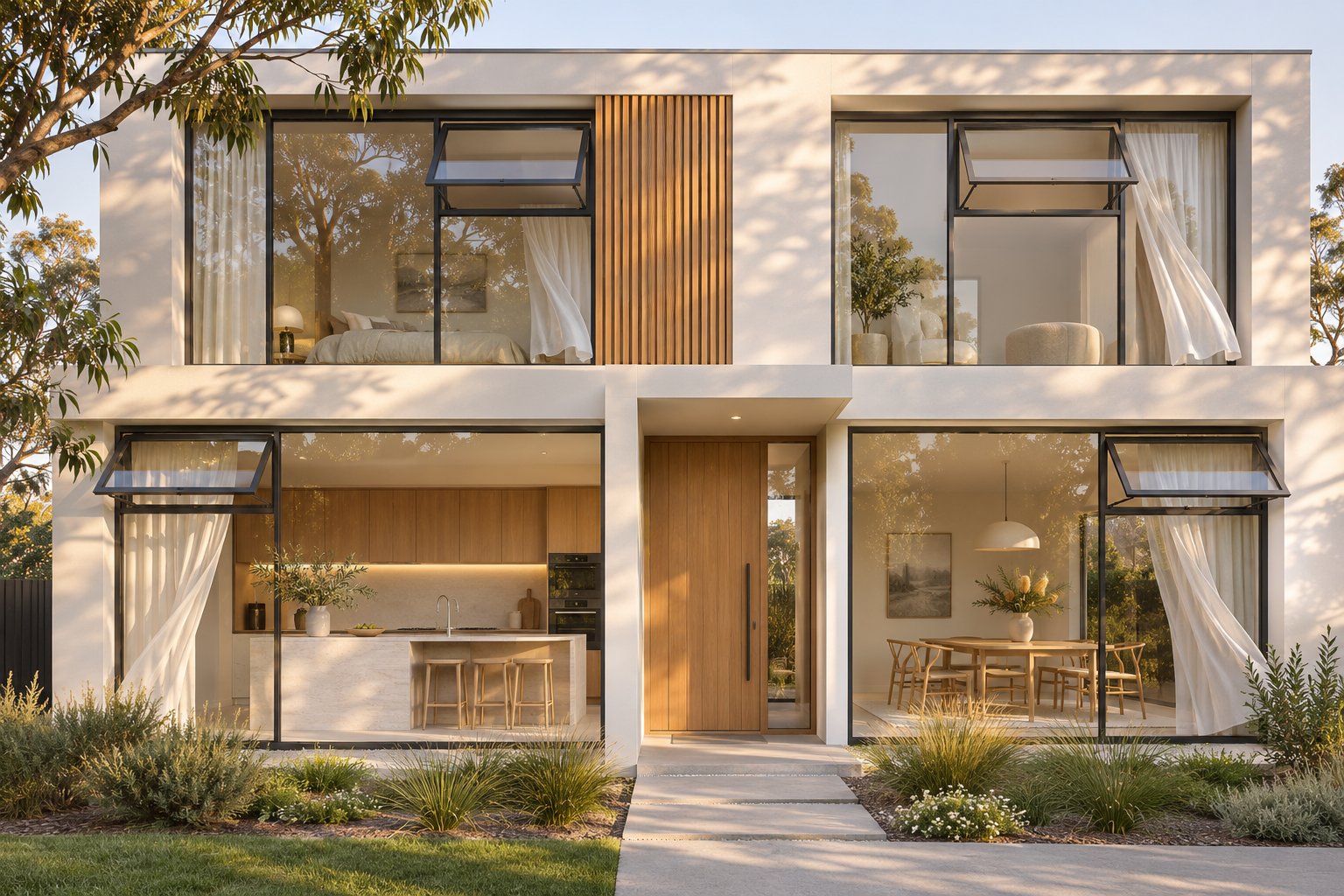
Stand beside a closed sliding window on a blustery Melbourne afternoon and you might feel a faint stream of air along the meeting rail. Stand beside a closed casement in the same wind and there is often nothing at all. Same frame material. Same glass. A very different result. The difference comes down to how the sash meets the frame.
Compression Seals vs Sliding Seals
Casement, awning and tilt-and-turn windows close by pressing the sash straight onto rubber gaskets. Once locked, that pressure squeezes the seal tight. Many use multi-point locking, where one turn of the handle engages hooks or rollers at several points along the sash. A multi-point locking explainer notes that this spreads compression evenly around the whole perimeter, rather than only near the handle. Adjustable cams also let installers fine-tune the seal as gaskets settle over time.
Sliding windows can't work that way. The sash has to glide along a track, so it needs a small running clearance. Brush or pile weatherstrips fill that gap, but they let more air through than a compressed gasket, as this casement vs sliding comparison points out. Fixed windows sidestep the issue entirely. With no moving sash, the glass is sealed permanently into the frame. Industry air leakage comparisons generally rank fixed windows tightest, casements next and sliders as the leakiest of the common styles.
Awning, Casement and Tilt-and-Turn Windows Compared
All three rely on compression seals, so the choice usually comes down to the room. Casements hinge at the side and open fully, catching cross breezes in bedrooms and living areas. Awnings hinge at the top and push out from the bottom, so they can stay open during light rain. That's why you see them above kitchen benches and in bathrooms right across Australia. Tilt-and-turn windows tilt inward at the top for secure ventilation, then swing fully inward for cleaning. They suit upper storeys where reaching the outside glass is awkward.
| Style | Seal Type | Air Leakage Tendency | Ventilation | Typical Placement | Maintenance Notes |
|---|---|---|---|---|---|
| Casement | Compression gasket, often multi-point locking | Low | Excellent, full sash opens | Bedrooms, living areas, tall narrow openings | Check hinges, winders and gaskets periodically |
| Awning | Compression gasket | Low | Good, works in light rain | Kitchens, bathrooms, below fixed panes | Keep chain winders and hinges clean and moving freely |
| Tilt-and-turn | Compression gasket with multi-point locking | Low | Flexible, tilt or full swing | Upper storeys, apartments, hard-to-reach glass | Hardware may need occasional adjustment |
| Sliding | Brush or pile weatherstrip | Moderate to higher | Moderate, usually about half the opening | Balconies, walkways, wide horizontal openings | Clean tracks, keep weep holes clear, watch for roller wear |
| Fixed | Glazed permanently into frame | Lowest | None | Views, stairwells, clerestory glass | Minimal, inspect perimeter seals |
Sliders still earn their place. They don't project outward, so they work beside paths, decks and balconies where a swinging sash would get in the way. Near the coast, just expect to clear sand and salt from the tracks more often.
When Fixed Aluminium Windows Make Sense
Fixed panes shine wherever you want light and views but not airflow. On their own, though, they can leave a room stuffy in a humid Brisbane or Darwin summer. A popular answer is pairing: a large fixed pane above or beside a smaller awning. The fixed glass delivers airtightness across most of the opening, while the compression-sealed awning lets breezes in when you need them.
Style tendencies are only a starting point. Whatever the window, aluminium windows seal only as well as their gaskets, hardware and adjustment allow, and a well-built slider can beat a poorly made casement. So compare the tested air infiltration result for the specific product, measured under AS 2047 and shown on its WERS certificate, or the EN 14351-1 declaration for imported European units. It's one of the more practical pros and cons of aluminium: the metal's rigidity helps a sash stay true against its seals, yet only a test figure proves it. Even energy efficient aluminium windows with excellent glazing lose ground when the opening style leaks.
Tip: Choose the style for the room, then let the tested air infiltration figure make the final call.
On a single home, mixing awnings and fixed panes is a simple design decision. Stretch that same thinking across a multi-storey facade exposed to coastal winds, and sealing becomes just one of many demands competing for the same frame.
Residential vs Commercial Aluminium Window Needs
The same aluminium extrusion can frame a kitchen window in a Hobart weatherboard and a wall of glass on a Brisbane apartment tower. The material barely changes. What it has to achieve changes a lot.
Energy Priorities for Residential Aluminium Windows
At home, comfort leads the list. People want rooms that hold their warmth in winter, stay cooler in summer and don't leave puddles of condensation on the sills. New homes and major renovations also need to satisfy NCC energy requirements, usually through a NatHERS rating. Looks matter, and so does retrofit fit. Replacement windows have to suit existing openings in brick veneer, weatherboard or rendered walls, and heritage areas may require council approval. For most houses, wind loads are classified under AS 4055 and windows are rated to AS 2047.
Performance Demands in Commercial and High-Rise Projects
Scale reshuffles the priorities. Building science guidance from Pacific Northwest National Laboratory puts fire safety and structure first, followed by water, air, vapour and thermal control. Wind pressure climbs with height, so frames and glass must resist bigger loads and limit deflection, designed under AS/NZS 1170.2 with glass selected to AS 1288. Many towers use curtain wall, a non-load-bearing aluminium-framed skin that hangs from the floor slabs, while ground floors often use storefront systems, as The Construction Specifier outlines. Acoustic control near busy roads, NCC fire and safety provisions, and field testing of installed systems add further layers.
Aluminium's strength is both the opportunity and the catch. Its stiffness supports slim sightlines and large openings that timber struggles to match, one of the clearer benefits of aluminium window frames vs wood. More glass and more metal also create more paths for heat. On big facades, thermal breaks and glazing choices decide whether occupants stay comfortable. Solar heat gain usually dominates in cooling-heavy commercial buildings, while condensation resistance becomes critical in high-rise apartments, hotels and hospitals. Get those choices wrong and the old disadvantages of aluminium simply reappear at a larger scale.
| Residential | Commercial, Multi-Residential and High-Rise |
|---|---|
| Comfort and condensation control in living areas and bedrooms | Comfort across large glazed facades, with condensation control vital in apartments, hotels and hospitals |
| Wind classification under AS 4055, windows rated to AS 2047 | Higher wind pressures, engineered design under AS/NZS 1170.2 and strict deflection limits |
| Standard window and door openings | Curtain wall, storefront and window wall integration |
| NCC energy compliance, usually via NatHERS | NCC energy provisions plus fire, safety and acoustic requirements |
| Retrofit fit within existing walls | Commissioning and field testing of installed systems |
| Homeowner and builder decide, often from standard ranges | Architects, engineers and developers coordinate through a window schedule |
Coordinating Window Schedules With Architects and Developers
Larger projects run on a window, or fenestration, schedule. It is a register of every opening that links each mark to its dimensions, operation, glazing, finish, hardware, performance targets and sill details, as this guide to fenestration schedules explains. A good schedule prevents costly assumptions, such as confusing unit size, rough opening and visible glass area. Wind loads should come from the project's structural engineer rather than the window supplier, and early collaboration keeps an ambitious design buildable.
Key point: Residential windows are judged mostly on comfort and fit. Commercial windows must also prove structural, fire and acoustic performance.
Weighing the pros and cons aluminium brings to each building type still leaves one question open. Timber, fibreglass and uPVC each make their own case, and some of them start with a thermal head start that aluminium has to engineer its way towards.
Aluminium Compared With Fibreglass, uPVC and Timber
Walk through any window showroom and every material has a convincing pitch. Timber feels warm. uPVC sounds affordable. Fibreglass promises toughness. Aluminium offers slim frames and big panes of glass. Each claim holds some truth, and each material gives something up in return. What matters is which tradeoffs suit your home and your climate.
Aluminium vs Fibreglass Windows on Energy and Durability
On raw thermal performance, fibreglass starts ahead. Manufacturer Cascadia Windows & Doors claims fibreglass is around 500 times less conductive than aluminium before any thermal break is added. It also says the material handles temperatures from minus 40 to roughly 177 degrees Celsius without turning brittle or soft, as reported in gb&d magazine. Those figures come from a fibreglass maker, so read them as a best-case comparison against plain, unbroken aluminium.
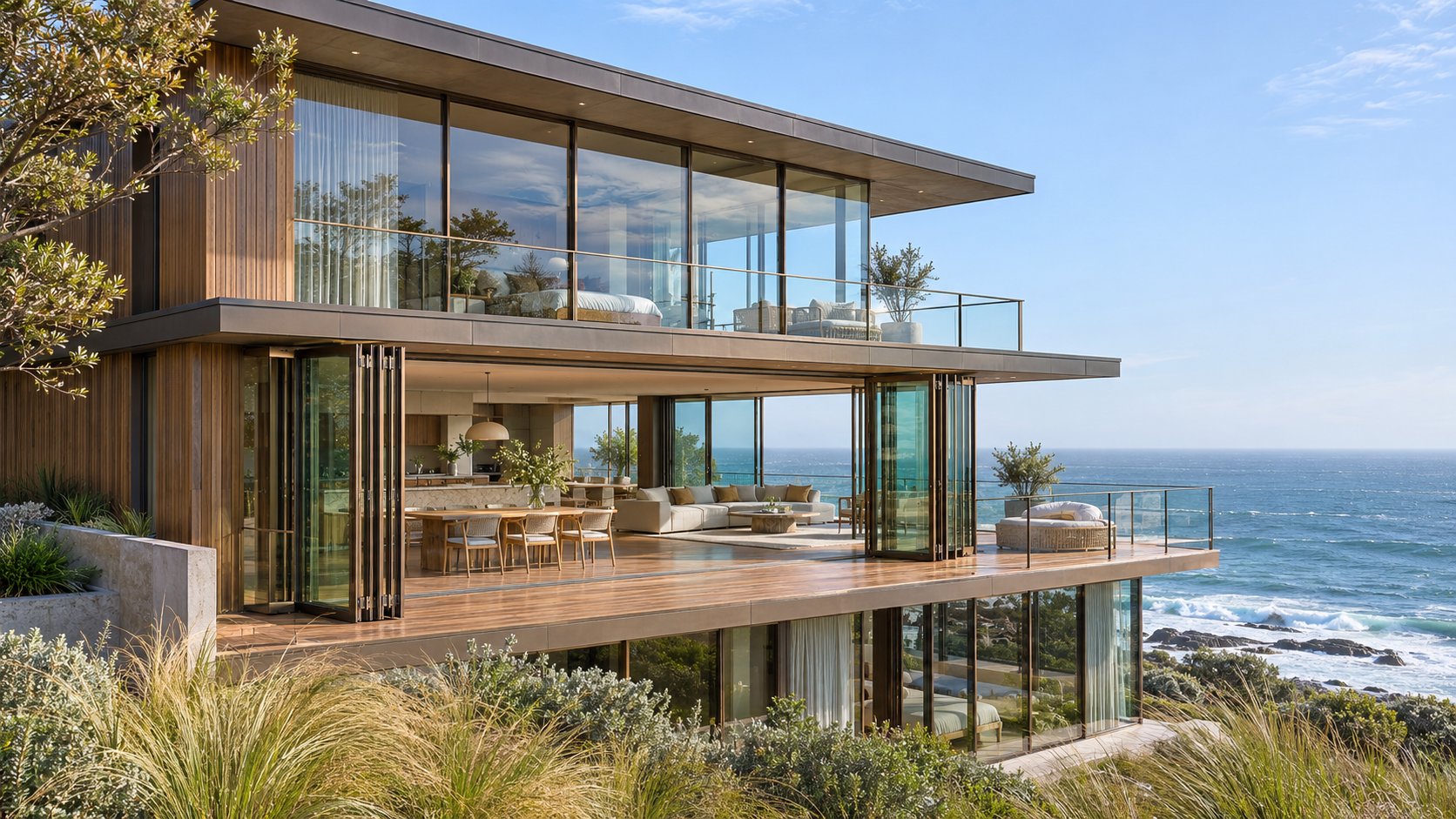
Aluminium has closed much of that gap through engineering. Thermal breaks first entered aluminium framing as a response to the 1970s energy crisis. YKK AP's Steve Schohan argues that thermal performance and condensation resistance have since grown into considerable strengths. Strength is where the metal really shines. Its rigidity allows thin sightlines and large sashes, which is why architects so often specify alum windows and doors for wide openings and stacking sliders.
uPVC and timber sit elsewhere on the spectrum. uPVC insulates well and often costs less, but it is less rigid, so frames tend to be bulkier on larger openings. It can also be more sensitive to heat and UV in harsh Australian sun. Timber is a natural insulator with genuine character, yet it needs regular painting or oiling to fend off rot and weathering.
Aluminium-Clad Timber Window Systems Benefits
Clad systems try to take the best of both worlds. A timber frame faces the room, bringing warmth, a natural look and lower conductivity. A thin aluminium skin wraps the outside, shielding the wood from rain, UV and salt. The result needs far less exterior upkeep than bare timber. The tradeoffs are cost, which usually sits at the premium end, and the need for careful detailing so moisture never gets trapped between the cladding and the wood.
| Frame Material | Thermal Performance | Strength | Maintenance | Best-Fit Applications |
|---|---|---|---|---|
| Thermally broken aluminium | Moderate. The break cuts heat flow, but the frame stays more conductive than fibreglass or timber | Very high. Slimmest profiles and largest spans | Low. Periodic washing and seal checks, more often on the coast | Large openings, sliding and stacking doors, contemporary homes, multi-storey projects |
| Fibreglass | High. Inherently low conductivity | High. Dimensionally stable | Low. Resists rot, insects and corrosion | Cool climates, coastal sites, high-performance builds |
| uPVC | High. Low-conductivity multi-chamber frames | Moderate. Bulkier frames for bigger sizes | Low. No painting, though sensitive to heat and UV | Budget-conscious projects, standard-size openings, cooler regions |
| Timber | High. Natural insulator | Moderate to high, depending on species | High. Regular painting or oiling | Heritage homes, Queenslanders, character renovations |
| Aluminium-clad timber | High. Timber interior with a protective metal skin | High | Low outside, moderate inside | Premium homes wanting timber interiors with weather-resistant exteriors |
How Long Do Aluminium Windows Last and What About Corrosion
There is no single answer. One manufacturer guide puts the typical lifespan at 20 to 40 years, while Cascadia claims fibreglass can reach 50 to 80. Both are industry estimates, not guarantees. Real longevity depends on profile quality, finish, hardware, seals, installation and exposure. Seals and hardware usually wear out well before a sound frame does, and they can often be replaced.
Corrosion is the bigger worry near the sea. Salt-laden air on Gold Coast beachfronts, Newcastle headlands or Perth's coastal suburbs settles on frames. Sheltered ledges that rain never rinses tend to collect the most deposits. Two finishes do most of the protecting:
- Anodising: an electrochemical process that builds up aluminium's protective oxide layer and keeps a metallic look.
- Powder coating: an organic coating applied over pretreated metal and cured, offering a wide colour and texture range. In Australia, ask whether the coating complies with AS 3715.
Neither finish is corrosion-proof. This coastal finish guide stresses that suitability depends on alloy, pretreatment, coating class or anodic thickness, detailing and cleaning. No finish can make up for blocked drainage or incompatible fasteners from dissimilar metals. Wash frames with warm water, mild detergent and a soft sponge, skip abrasive cleaners, keep weep holes clear and inspect seals after storms. Coastal homes simply need that routine more often, ideally at the interval the finish supplier recommends.
Weighing up aluminium pros and cons for your own project comes down to a handful of clear points.
Aluminium Pros
- Strong and rigid, allowing slim frames and large glazed areas
- Won't warp, crack or rot like timber can
- Low maintenance with simple washing
- Highly recyclable at the end of its life
- Broad colour and finish choice through powder coating and anodising
- Thermally broken versions suit most Australian climates
Aluminium Cons
- Conducts heat freely without a thermal break
- Higher condensation risk in basic frames
- Coastal corrosion if finish, detailing or cleaning falls short
- Even thermally broken frames trail fibreglass and timber on raw frame insulation
- Quality thermally broken systems cost more than basic aluminium
Picking the right frame material settles only part of the outcome. Much of what energy efficient aluminium windows deliver in real life is decided in the few centimetres between frame and wall, where a rushed install can let air and moisture slip past even the best-rated product.
Installation Quality and Emerging Aluminium Window Technologies
A window can carry an excellent WERS rating and still feel draughty in its first winter. The rating describes a product tested in a lab and sealed perfectly into a test wall. Your home gets whatever the installer leaves behind.
Installation and Air Sealing Make or Break Efficiency
The gap between frame and wall is the usual weak spot. The Applied Building Technology Group notes that windows tend to leak, or will leak over time, so the opening needs its own water plan. Sill pan flashing catches anything that slips past the frame and drains it outside. An air seal around the inside of the gap lets wind pressure equalise, so wind-driven rain isn't forced through the frame or its junction with the wall. That same seal connects the wall's air barrier to the window, ground the NCC's building sealing provisions also cover.
A sound install, whether into brick veneer or weatherboard, generally follows these steps:
- Prepare the opening: check it is square, level and plumb, with room for packers and sealant.
- Flash for water: fit sill flashing that falls to the outside and lap wall wrap so water always runs out and down.
- Seal the perimeter: fill the gap with low-expansion foam or backer rod and sealant, then join the frame to the air barrier with compatible tapes or membranes.
- Avoid thermal bridging: set the frame in line with the wall insulation where possible, and avoid metal trims or fixings that carry heat around the thermal break.
- Adjust every sash: confirm gaskets compress evenly all the way around and locks engage without force.
- Keep drainage open: make sure weep holes aren't blocked by sealant or render.
Skip one of these and a well-rated window can leak air and water around its edges, no matter how good the frame is.
Common Disadvantages of Aluminium and How to Mitigate Them
So are aluminium windows good once they're installed properly? Largely, yes, with honest caveats. One Melbourne supplier's rundown of disadvantages flags conductivity, condensation in uninsulated frames, a higher upfront price than uPVC and finishes that can scratch. It also stresses that aluminium frames should always be paired with quality glazing. In any fibreglass windows vs aluminium decision, these tradeoffs remain:
- Conductivity: offset with a thermally broken frame and low-E double glazing.
- Condensation: warm-edge spacers, firm seals and good ventilation keep surfaces drier.
- Cost: quality systems cost more than uPVC, balanced by strength, slim profiles and longevity.
- Cosmetic damage: powder coat can chip, so protect frames during building work.
- Frame insulation ceiling: aluminium still trails fibreglass, uPVC and timber, so glazing and installation must pick up the slack.
Smart and Dynamic Glazing on the Horizon
Picture a west-facing Perth living room whose glass darkens on its own as the afternoon sun arrives. Electrochromic glazing does this by applying a small voltage that moves ions within a thin coating between the panes. Lawrence Berkeley National Laboratory explains it can manage both daylight and solar heat gain, and it holds a chosen tint without drawing power continuously.
The catch is maturity. Residential availability remains limited, and the US Department of Energy cites high cost, durability, colour and manufacturing challenges as barriers. Researchers are also exploring glass that filters near-infrared heat while admitting daylight. For residential aluminium windows today, proven double glazing and low-E coatings remain the practical choice.
Whichever glass ends up in the frame, a spec sheet and a sales pitch are only as useful as the questions you ask before signing a quote.

How to Choose and Verify an Efficient Aluminium Window
Two quotes land in your inbox for the same renovation. Both promise thermally broken frames and energy-efficient double glazing. One is noticeably cheaper. Without the right questions, you can't tell whether you're looking at a genuine bargain or two very different windows wearing the same labels.
Which Aluminium Window Is Reliable and How to Tell
Reliability shows up in documentation, not adjectives. The phrase 'thermal break' describes how a frame is built rather than how well it performs, as one thermal-break buyer's guide points out. Before you approve any system, put these questions to the supplier:
- What thermal break does the frame use? Ask for the type, such as a polyamide strip or poured polyurethane, along with its width and a profile section drawing. A painted line or thin gasket is not a structurally integrated thermal break.
- Are whole-window figures available for this exact window? Request Uw, SHGCw and air infiltration results, ideally from a WERS certificate, for the proposed size, operating type and glass build-up. A large fixed pane and an opening sash from the same range can rate quite differently.
- Which glazing options are offered? Confirm the low-E coating and its position, the gas fill, the spacer type and any laminated or toughened glass needed to meet AS 1288.
- What finishes, hardware and warranty apply? Check the powder coat or anodising specification, especially for coastal homes. Find out how long the frame, glass unit, hardware and finish are each covered.
- Who installs the windows, and how? Ask about flashing, perimeter sealing and sash adjustment, and whether installation is included or quoted separately.
Spec Sheet Items and Red Flags to Check
Some warning signs are easy to spot once you know where to look:
- No thermal break details beyond a marketing phrase
- Only glass-only or centre-of-glass U-values quoted
- No WERS rating for locally supplied products, or no EN 14351-1 declaration for imported European units
- Vague claims like 'halve your power bills' with no assumptions behind them
Comparing quotes fairly takes a little discipline. Line them up opening by opening, using the same sizes, configurations, glazing specs and installation scope. If one quote covers supply and install, including flashing and removal of old frames, while another is supply only, the lower price may simply reflect a smaller job.
Evaluating a Thermally Broken Awning and Fixed System
Running a real product through the checklist makes it concrete. The MEICHEN MC100 Awning Window is a thermally broken aluminium system offered in awning and fixed configurations. That's the compression-sealed awning and fixed-pane pairing covered earlier, which balances airtightness with ventilation. Its listed double-glazing options, finishes and hardware can be coordinated with a residential or commercial window schedule.
The same questions still apply in full. Ask for the thermal break section, confirm the glazing build-up you plan to use and request whole-window figures for the actual sizes on your plans. A U-value for the double-glazed unit alone is not a whole-window rating, because the frame, spacer and seals all shift the final number. Any energy savings will depend on your climate zone, orientation, shading and installation quality, so treat them as an outcome to verify rather than a fixed promise. Good aluminium window framing earns its place when the paperwork backs it up.
Takeaway: Verify whole-window ratings, match them to your climate zone and orientation, and insist on quality installation. Those three steps separate genuinely efficient aluminium windows from the ones that earned the old bad rap.
Energy Efficient Aluminium Windows: Frequently Asked Questions
1. Are aluminium windows energy efficient enough for Australian homes?
They can be, provided the whole window is designed for performance rather than just the frame. Plain aluminium transfers heat readily, which is why older single-glazed frames feel cold in winter and hot in summer. Modern systems pair a thermal break with low-E double glazing, warm-edge spacers and compression seals, and together these parts dramatically change how the window behaves. Across much of Australia, where blocking summer sun matters as much as holding winter warmth, a well-specified thermally broken system can deliver very good comfort. In the coldest regions, such as alpine areas or the Tasmanian highlands, look closely at verified figures, because aluminium frames still insulate less than fibreglass, uPVC or timber and the glazing and installation need to compensate.
2. What is the difference between thermally broken and standard aluminium windows?
A standard aluminium frame is one continuous piece of metal, so outdoor heat or cold travels straight through to the room. A thermally broken frame is made from separate inner and outer aluminium sections joined by a low-conductivity barrier, typically glass-fibre-reinforced polyamide strips or polyurethane poured into a channel with the metal bridge later cut away. This barrier keeps the inside face of the frame much closer to room temperature, cutting heat transfer and reducing condensation. Not every thermal break performs equally, so ask about barrier width, chamber design and profile depth rather than accepting the term as proof of efficiency.
3. Why do aluminium windows get condensation, and how can I reduce it?
Condensation appears when warm, humid indoor air touches a cold surface and the moisture settles out. Non-thermally broken frames, single panes and traditional aluminium spacers all create those cold spots, especially on cool winter mornings. Replacing them with thermally broken frames, double glazing and warm-edge spacers lifts interior surface temperatures and makes moisture far less likely to form. Everyday habits help too: run exhaust fans in kitchens and bathrooms, air out rooms regularly, keep gaskets in good condition and make sure weep holes stay clear so any water can drain away instead of sitting on the sill.
4. How should I compare energy ratings when buying aluminium windows in Australia?
Start with a WERS certificate, because it rates the complete window, frame and glass together. Compare the Uw value (lower means less heat flow), SHGCw (lower keeps out more solar heat), visible transmittance for daylight and the air infiltration result tested to AS 2047. Request figures that match the actual size, opening style and glass build-up you plan to use, since a fixed pane and an opening sash from the same range can rate differently. Then read those numbers against your NCC climate zone and the orientation of each window. Treat centre-of-glass values with caution, and remember that US U-factors use imperial units and cannot be compared directly with Australian Uw figures.
5. Which aluminium window style is the most energy efficient?
Fixed windows usually seal the tightest because there is no moving sash to leak air. Among opening styles, casement, awning and tilt-and-turn windows close by pressing the sash firmly against rubber gaskets, often with multi-point locking, so they generally allow less air through than sliding windows that rely on brush weatherstrips. Many designers combine a large fixed pane with a smaller awning to get airtightness and ventilation in one opening, an arrangement offered in thermally broken awning and fixed systems such as the MEICHEN MC100. Whatever style you choose, confirm the tested whole-window figures for your exact size and configuration, and make sure the installer adjusts each sash so the seals compress evenly.