
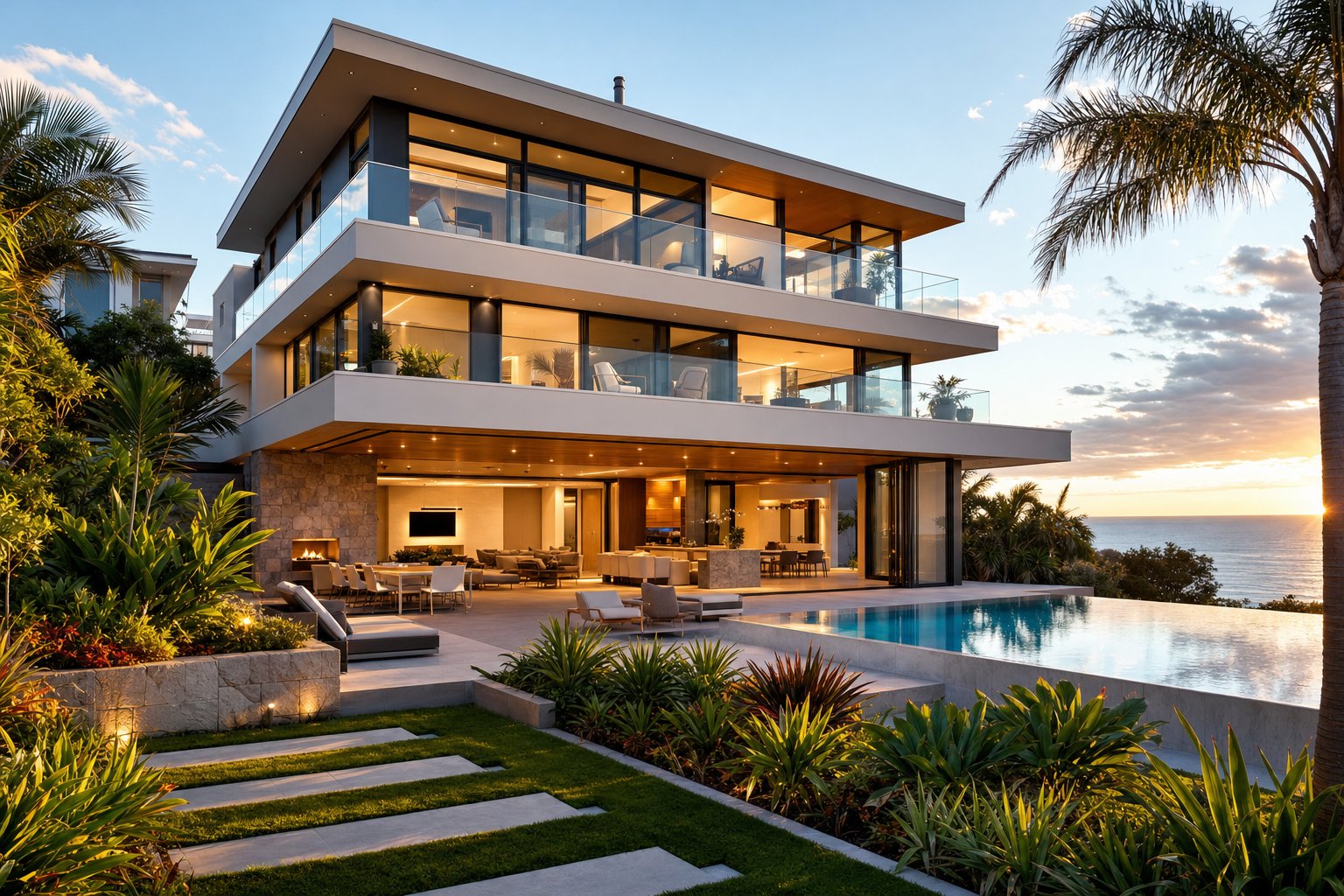
What Are Aluminium Windows and Why Gold Coast Homes Rely on Them
Aluminium windows are exactly what the name suggests — window systems built around frames made from extruded aluminium alloy. The manufacturing process involves heating aluminium billets until malleable, then forcing the metal through precision-engineered steel dies under immense hydraulic pressure. What emerges is a continuous profile with a specific cross-sectional shape, cut to length and assembled into the frames that hold your glass in place.
The result is a window frame that's lightweight yet structurally rigid, capable of supporting large panes of glass without the bulk that timber or plastic alternatives demand. A typical aluminium window consists of three core components: the extruded aluminium frame profiles, the glazing (your glass, which can range from single-pane to double-glazed units with specialised coatings), and the hardware (handles, locks, hinges, and sealing systems that make everything operate smoothly).
This guide exists as an independent educational resource for Gold Coast homeowners, renovators, and builders researching their options. No sales pitch — just the information you need to make a confident decision about aluminium windows and doors for Gold Coast properties.
What Makes Aluminium Windows Different From Other Frame Materials
Aluminium stands apart from timber and plastic frame materials through a combination of physical properties that few other metals can match. It delivers a high strength-to-weight ratio, meaning frames can be slimmer while still carrying heavy glazing loads. A typical aluminium frame holds glass packages weighing up to 50-60 kg/m² without flexing or sagging over time.
The material naturally forms a thin oxide layer on its surface when exposed to air — a self-healing protective skin that resists corrosion without any human intervention. It won't rot, warp, swell, or attract termites. And at end of life, aluminium is 100% recyclable without any loss in quality, making it one of the more sustainable framing choices available. Roughly 75% of all aluminium ever produced remains in active use today through recycling.
Why Gold Coast Properties Favour Aluminium
The Gold Coast's subtropical coastal environment creates a specific set of demands that not every window material can handle gracefully. Salt-laden air, persistent humidity, intense UV radiation, and seasonal storm events all test building materials relentlessly. Aluminium's inherent properties align directly with these challenges — a relationship we'll explore in detail later in this article.
For now, here's a snapshot of why aluminium windows on the Gold Coast have become the dominant choice for both residential and commercial construction:
- Corrosion resistance that handles salt air exposure without the rot or decay that plagues timber frames in coastal zones
- Dimensional stability in high humidity — no swelling, contracting, or sticking that disrupts operation
- UV resistance that prevents warping and discolouration under the Gold Coast's intense sun
- Slim frame profiles that maximise glass area, natural light, and unobstructed views
- Minimal maintenance requirements suited to the relaxed coastal lifestyle — a periodic wash with soapy water is typically all that's needed
These advantages explain why an aluminium window on the Gold Coast isn't just a popular option — it's become the practical baseline for coastal construction. But popularity alone doesn't make something the right choice for every situation. The type of aluminium window, its coating specification, glazing selection, and thermal performance all matter enormously depending on your property's distance from the shoreline and its specific exposure conditions.
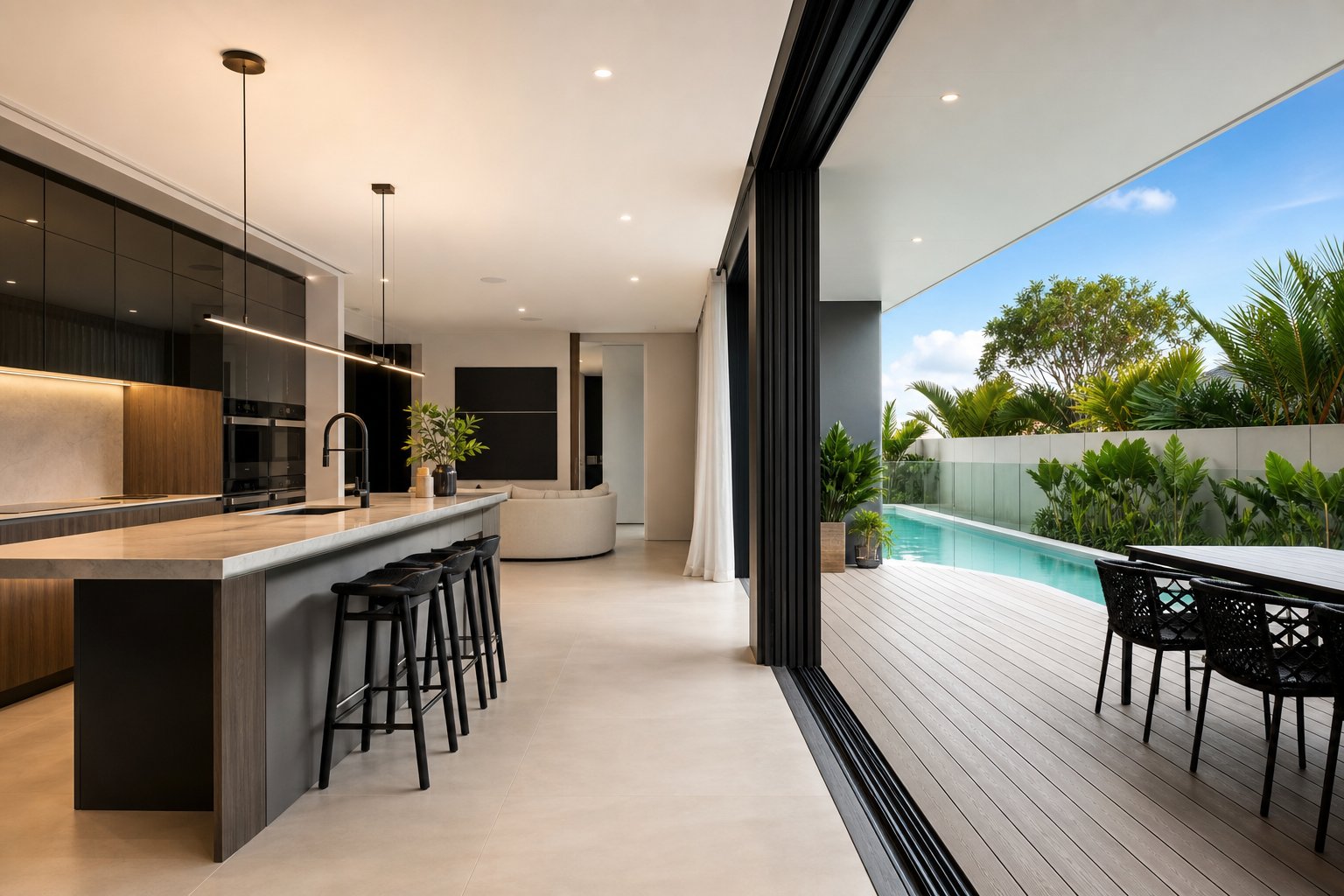
Types of Aluminium Windows Available for Gold Coast Homes
Knowing that aluminium suits the Gold Coast climate is one thing. Choosing the right style of aluminium window for each room in your home is an entirely different decision — and one that affects daily comfort far more than most people expect. A window that works brilliantly in a living room facing the hinterland may be completely wrong for a bathroom three streets from the beach.
Gold Coast homes typically use a mix of window types throughout a single property, each selected for how a particular space is used, what direction it faces, and how much airflow or weather protection it needs. Here's how the main options break down.
Sliding and Bi-Fold Windows for Indoor-Outdoor Living
The Gold Coast lifestyle revolves around blurring the line between inside and outside. Pool areas, covered patios, outdoor kitchens — these spaces demand windows that open wide and get out of the way. That's where sliding and bi-fold configurations earn their place.
Aluminium sliding windows operate on horizontal tracks, with one or more sashes gliding sideways to create an opening. They don't protrude inward or outward, which makes them ideal alongside walkways, verandas, and tight outdoor spaces where a swinging sash would be impractical. Their wide glass panels let in generous natural light, and aluminium's structural strength supports larger spans with slimmer frames than plastic alternatives can manage. For living rooms, master bedrooms, and any space opening onto a deck, aluminium sliding windows on the Gold Coast remain one of the most popular configurations.
Bi-fold windows take the concept further. Multiple panels fold and stack neatly to one side — accordion-style — creating an unobstructed opening across the full width of the frame. When you want your kitchen servery to open completely onto an outdoor entertaining area, or your living room to merge with a poolside deck, aluminium bifold windows on the Gold Coast deliver that seamless transition. Aluminium's strength is critical here because bi-fold systems span wide openings and need rigid frames to operate smoothly under their own weight over years of use.
Both styles suit the Gold Coast's emphasis on indoor-outdoor flow, but they serve slightly different purposes. Sliding windows work well for everyday ventilation in bedrooms and living areas. Bi-folds are the statement piece — transforming a wall into an opening for entertaining and lifestyle moments.
Louvre and Awning Windows for Ventilation and Weather Protection
Humidity is a constant companion on the Gold Coast. Keeping air moving through a home isn't a luxury — it's how you prevent mould, reduce reliance on air conditioning, and maintain comfort during those sticky summer months. Louvre and awning windows each solve this problem differently.
Louvre windows consist of horizontal glass blades that tilt open simultaneously, controlled by a single handle mechanism. The angled blades direct airflow precisely while still offering rain protection when partially closed. They're a favourite in subtropical and coastal regions for good reason — maximum ventilation with minimum fuss. Bathrooms, laundries, enclosed verandas, and kitchens all benefit from louvres. Modern aluminium louvre systems also incorporate robust locking mechanisms that address the security concerns older designs were known for.
Awning windows take a different approach. Hinged at the top, they swing outward from the bottom, creating a canopy effect over the opening. This means you can leave them open during a rain shower without water entering the room — a genuine advantage during Gold Coast storm season when afternoon downpours arrive without much warning. They're commonly placed higher on walls for privacy in bathrooms and bedrooms, or paired with fixed panes below to combine views with ventilation.
Fixed, Casement and Double-Hung Options
Not every window needs to open. Fixed aluminium windows exist purely to frame views and flood rooms with natural light. With no moving parts, they offer the tightest seal against weather and the slimmest possible frame profile — meaning more glass and less obstruction. Stairwells, feature walls, and living areas with scenic outlooks toward the hinterland or ocean are natural candidates. They're often combined with operable windows nearby so you still get ventilation where needed.
Casement windows are hinged on the side and crank or push outward, opening like a small door. When fully open, the entire sash area becomes ventilation space — no other operable window type matches that airflow-to-size ratio. They seal tightly when closed, which helps with both weather resistance and energy performance. Bedrooms and living spaces benefit from casements, particularly on elevations that catch prevailing breezes.
Double-hung windows feature two sashes that slide vertically within the frame. You can open the top, the bottom, or both simultaneously. This flexibility allows warm air to escape from the top while cooler air enters from below — a simple but effective natural ventilation strategy. Their traditional proportions suit heritage-style homes, Queenslanders, and any property where a classic aesthetic matters. The vertical operation also means nothing protrudes beyond the wall line, making them practical for windows facing footpaths or narrow side passages.
| Type | Best Room Placement | Ventilation Rating | Weather Resistance | Gold Coast Suitability |
|---|---|---|---|---|
| Sliding | Living rooms, bedrooms, areas beside walkways | Moderate | Good | Excellent — suits indoor-outdoor living and tight external spaces |
| Bi-Fold | Entertaining areas, kitchen serveries, pool zones | High (when fully open) | Good (when closed) | Excellent — creates wide openings for subtropical lifestyle |
| Louvre | Bathrooms, laundries, kitchens, enclosed verandas | Very High | Moderate | Excellent — maximises airflow in humid conditions |
| Awning | Bathrooms, bedrooms (high placement), above fixed panes | Moderate | Very High | Excellent — ventilation during rain events |
| Fixed | Feature walls, stairwells, scenic view positions | None | Excellent | High — maximises views and light with best weather seal |
| Casement | Bedrooms, living areas catching prevailing breezes | High | Good | High — strong airflow and tight seal when closed |
| Double-Hung | Heritage homes, street-facing walls, narrow side passages | Moderate to High | Good | High — classic proportions with practical vertical operation |
Most Gold Coast homes end up with a combination of three or four types working together — sliding or bi-fold windows where indoor-outdoor connection matters, louvres or awnings where ventilation and weather protection take priority, and fixed panes where the view deserves an uninterrupted frame. The right mix depends on your floor plan, orientation, and how each room actually gets used day to day.
Selecting the right type is only half the equation, though. How each of these window styles performs over time depends heavily on what the Gold Coast's coastal atmosphere throws at them — and that's where material choice and protective coatings start to matter enormously.
How Gold Coast Climate Makes Aluminium the Practical Choice
The Gold Coast doesn't just test window materials — it interrogates them. Salt-laden onshore winds, humidity that rarely drops below 60%, UV radiation intense enough to degrade plastics within years, and storm events that can drive rain horizontally into every gap and seal. Each of these forces attacks different weaknesses in different materials. Timber swells and rots. Certain plastics warp and discolour. Low-grade metals corrode and pit. Aluminium, by contrast, responds to this environment with a kind of chemical stubbornness that makes it uniquely suited to coastal subtropical construction.
Understanding exactly how aluminium handles each of these challenges — and where its limits lie — helps you make informed decisions about aluminium doors and windows for Gold Coast properties, particularly when your home sits within a few kilometres of the shoreline.
Salt Air and Coastal Corrosion Resistance
Salt air is the silent aggressor in coastal construction. Microscopic salt particles carried by onshore breezes settle on every exposed surface, and when combined with moisture, they create an electrolyte solution that accelerates corrosion in susceptible metals. Steel rusts. Iron pits. Even some aluminium alloys can suffer if left unprotected in severe marine environments.
Aluminium's primary defence is chemical rather than mechanical. The moment fresh aluminium contacts oxygen, it forms a thin aluminium oxide layer across its entire surface — typically just a few microns thick, but remarkably hard and chemically stable. This oxide film acts as a barrier between the underlying metal and the corrosive environment.
Aluminium's natural oxide layer is self-healing. If the surface gets scratched or abraded, a new oxide film forms almost instantly over the exposed metal, restoring protection without any human intervention. Few other construction metals offer this kind of autonomous repair.
That said, properties within close proximity to the Gold Coast shoreline face more aggressive salt exposure than the oxide layer alone can comfortably manage over decades. This is where additional protective treatments become essential. Two primary options exist:
- Powder coating — a durable polymer finish electrostatically applied and heat-cured onto the aluminium profile, creating a thick physical barrier against salt, moisture, and UV. Marine-grade powder coating specifications provide enhanced film thickness and adhesion for properties in severe coastal zones.
- Anodising — an electrochemical process that thickens the natural oxide layer from a few microns to 20-25 microns, creating a much harder, more corrosion-resistant surface that's integral to the metal itself rather than sitting on top of it.
Both approaches dramatically extend the service life of aluminium window frames in coastal environments. The choice between them often comes down to colour requirements and aesthetic preferences — powder coating offers a wider colour palette, while anodising produces a distinctive metallic finish that some architectural styles demand.
Humidity, UV and Storm Performance
Salt gets the headlines, but humidity does the quiet daily damage to less resilient materials. The Gold Coast's year-round relative humidity causes timber frames to absorb moisture, swell against their seals, and then contract again as conditions shift — a cycle that eventually distorts the frame, compromises weather seals, and makes windows difficult to operate. Aluminium is dimensionally inert in humid conditions. It doesn't absorb moisture, doesn't swell, and doesn't contract with seasonal changes. An aluminium window that operates smoothly on installation day will operate the same way fifteen years later, assuming hardware is maintained.
UV radiation presents a different challenge. The Gold Coast receives some of the highest UV index readings in Australia, and prolonged exposure degrades many polymer-based materials. Some uPVC frames can become brittle, chalk, or discolour after years of direct sun exposure — particularly on north and west-facing elevations. Aluminium itself is unaffected by UV radiation. The metal doesn't degrade, become brittle, or lose structural integrity regardless of sun exposure. Quality powder coat finishes are formulated with UV stabilisers that resist fading and chalking, though colour longevity still varies depending on the coating specification chosen.
Storm performance is where aluminium's structural strength becomes critical. The Gold Coast falls within Wind Region B under AS/NZS 1170.2:2021, classified as an intermediate wind zone with higher wind speeds than inland areas. Windows installed in this region must be engineered to meet specific wind load requirements under AS 2047, the Australian Standard governing window performance. Aluminium's high strength-to-weight ratio allows frames to be designed for these loads without becoming excessively bulky — maintaining slim sightlines while still resisting the pressure differentials that storm events and strong onshore winds generate.
During driving rain events — common in Gold Coast storm season — aluminium window awnings and casement-style configurations provide ventilation without water ingress, while the frame material itself remains completely unaffected by water contact. There's no swelling, no water absorption, no gradual deterioration of the frame structure. Aluminium louvre windows on the Gold Coast take particular advantage of this, allowing airflow management during wet weather without any risk to the frame material.
This combination of salt resistance, humidity indifference, UV stability, and structural wind performance explains why aluminium dominates coastal construction along the entire Gold Coast corridor. But dominance doesn't mean every alternative is without merit — and understanding where other materials genuinely outperform aluminium helps you weigh the trade-offs with clear eyes.
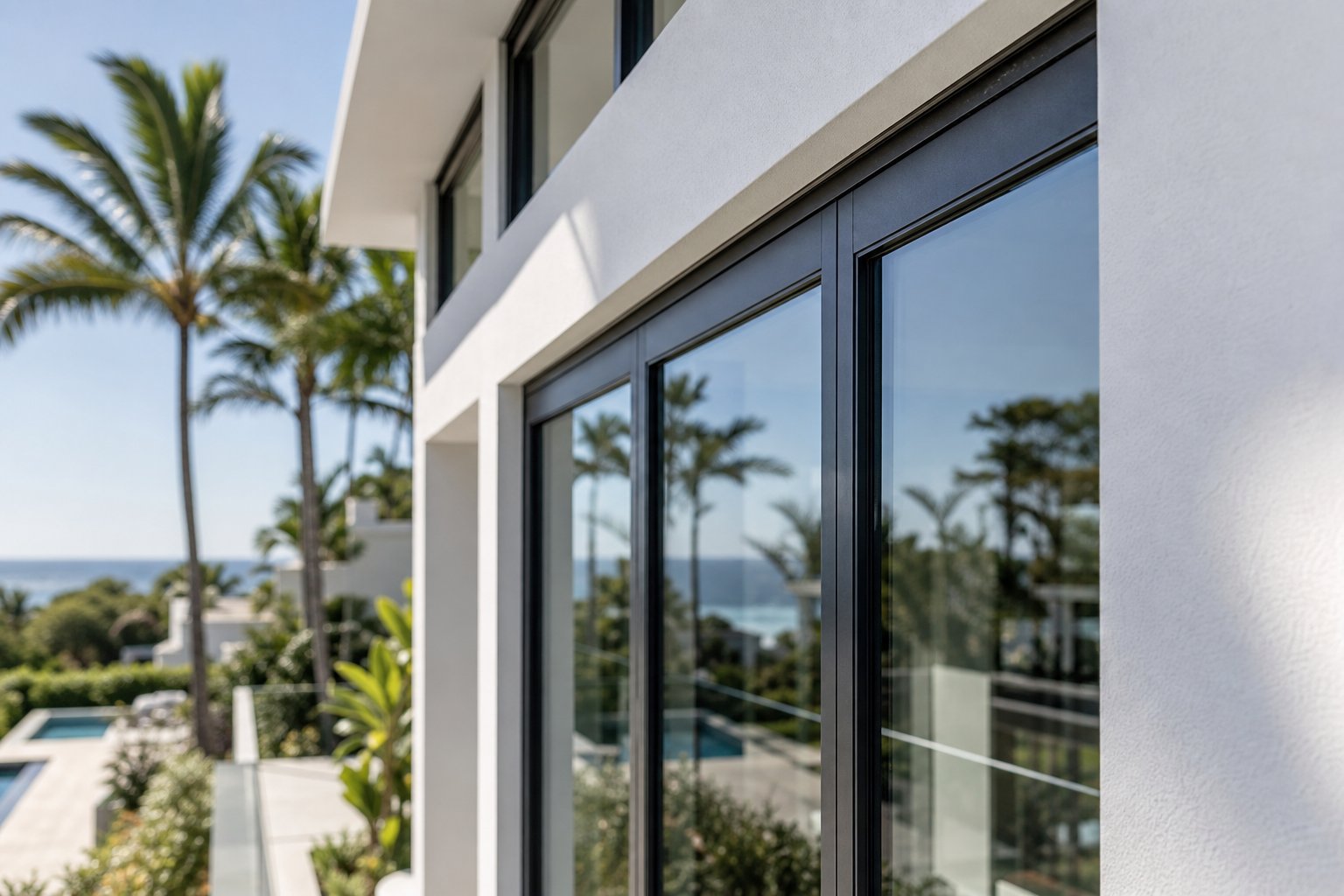
Aluminium vs Timber vs uPVC for Gold Coast Conditions
Every frame material has conditions where it thrives and conditions where it struggles. The Gold Coast's coastal subtropical environment amplifies both strengths and weaknesses in ways that matter far more here than in a temperate inland city. If you're comparing aluminium windows for sale on the Gold Coast against timber or uPVC alternatives, the honest answer isn't that one material wins across every category — it's that each involves trade-offs worth understanding before you commit.
Aluminium vs Timber Frames on the Gold Coast
Timber has an undeniable aesthetic warmth. Nothing else replicates the grain, texture, and visual depth of natural wood — and for heritage-style homes, Queenslanders, or properties where architectural character demands it, timber frames carry a presence that aluminium simply can't match.
The problem is what the Gold Coast does to timber over time. Year-round humidity causes wood to absorb moisture, swell against its seals, then shrink again as conditions shift. That cycle distorts frames, cracks paint finishes, and eventually makes windows difficult to operate. Termites — active across most of South East Queensland — present a constant structural threat that requires ongoing chemical treatment. And maintenance isn't optional: timber frames need repainting or resealing every three to five years to prevent moisture ingress and surface degradation.
Aluminium demands none of that. No painting, no sealing, no termite risk. A wash with soapy water a few times a year is the extent of it. For homeowners who value low-effort longevity in a demanding climate, that difference in upkeep commitment is significant.
Aluminium vs uPVC Frames in Coastal Conditions
uPVC deserves credit where it's earned. Its multi-chambered profile design delivers genuinely superior thermal insulation compared to standard aluminium — the plastic frame itself doesn't conduct heat the way metal does. For energy-conscious homeowners, that's a real advantage.
But the Gold Coast's intense UV radiation creates problems for uPVC that don't exist in milder climates. Prolonged sun exposure can cause lower-grade uPVC profiles to become brittle, chalk on the surface, or yellow over time — particularly on north and west-facing elevations that cop direct afternoon sun. Research into uPVC degradation confirms that UV performance depends heavily on the quality of UV stabilisers used during manufacturing, and budget-grade profiles are especially vulnerable in high-UV environments.
Colour options are another limitation. While uPVC ranges have expanded, they still can't match the breadth of powder-coated aluminium finishes. And structurally, uPVC's lower rigidity means frames must be thicker and bulkier to span the same openings — limiting maximum glass area and restricting the slim-profile aesthetic that contemporary Gold Coast architecture favours.
That said, if thermal performance is your primary concern and you're willing to accept the aesthetic and structural trade-offs, quality uPVC from a reputable manufacturer remains a legitimate option — particularly for inland Gold Coast properties with less severe UV and salt exposure.
When Hybrid or Composite Frames Make Sense
For homeowners who refuse to compromise, hybrid systems attempt to deliver the best of both worlds. Aluminium-clad timber features a timber interior (warm to the touch, naturally insulating) protected by an aluminium exterior shell that handles weather exposure. You get timber's character inside without the external maintenance burden.
Thermally broken aluminium takes a different approach — inserting a polyamide insulating strip between the inner and outer sections of an all-aluminium frame. This dramatically reduces heat conductivity while retaining aluminium's slim profiles, colour range, and coastal durability. It's increasingly specified for Gold Coast projects where energy performance and coastal resilience both matter.
Both hybrid options carry a price premium. Whether that premium is justified depends on your specific priorities, your property's exposure conditions, and how long you plan to stay.
| Criteria | Aluminium | Timber | uPVC | Hybrid / Composite |
|---|---|---|---|---|
| Coastal Durability | Excellent (with powder coating) | Poor without intensive maintenance | Good (if UV-stabilised) | Excellent |
| Maintenance Needs | Very Low | High (repaint every 3-5 years) | Low | Low to Moderate |
| Thermal Performance | Moderate (standard) / Good (thermally broken) | Good (natural insulator) | Excellent | Good to Excellent |
| Colour Options | Extensive (full powder coat range) | Unlimited (paint or stain) | Limited | Extensive |
| Lifespan | 40-50+ years | 30-50 years (with maintenance) | 20-30 years | 40-50+ years |
| Relative Cost | Mid-range | Mid to High | Lower | Higher |
Searching for cheap aluminium windows on the Gold Coast or considering second hand aluminium windows on the Gold Coast? Price matters — but so does context. A bargain frame that lacks marine-grade coating or adequate thermal performance will cost more in replacements and energy bills over a decade than a properly specified system costs upfront. The comparison table above isn't about declaring a winner. It's about matching the right material to your property's actual exposure, your maintenance tolerance, and your budget horizon — because on the Gold Coast, the wrong choice doesn't just underperform. It deteriorates.
Thermal Performance and Energy Efficiency Explained
Aluminium's one genuine weakness as a window frame material is thermal conductivity. Metal conducts heat efficiently — that's basic physics. A standard aluminium frame creates a direct thermal bridge between the outside air and your interior, allowing heat to travel through the frame itself. In a Gold Coast summer, that means the frame absorbs exterior heat and radiates it inward. It's a legitimate concern, and one that older aluminium window installations handle poorly.
But writing off aluminium on thermal grounds alone ignores two decades of engineering progress. Modern aluminium window systems address conductivity through frame design and glazing technology working together — and the solutions available today make thermal performance a solvable problem rather than a dealbreaker.
Understanding Thermally Broken Aluminium Frames
A thermal break is a continuous strip of insulating material — typically glass-reinforced polyamide — mechanically crimped between the interior and exterior aluminium sections of a window frame. It physically separates the two metal components so heat can no longer travel directly through the profile. The polyamide barrier is roughly 500 to 1,000 times less conductive than aluminium, creating a substantial insulation zone within what still looks and performs like a standard aluminium frame on the outside.
The result is dramatic. Non-thermally broken aluminium frames typically have U-values around 5.8-7.0 W/m²K, while quality thermally broken systems can achieve values between 1.5 and 2.5 W/m²K — a reduction in heat transfer of 60% or more through the frame alone. Structural integrity isn't compromised either; modern crimping techniques bond the polyamide strips securely while accommodating different thermal expansion rates between materials.
Is the upgrade worth it on the Gold Coast? It depends on your specific situation. The Gold Coast sits within NCC Climate Zone 2, a cooling-dominant zone where energy demands differ from Melbourne or Hobart. Southern cities prioritise retaining interior warmth during long winters. Here, the primary job is keeping heat out during extended summers while still maintaining comfort on cooler winter mornings. Thermally broken frames reduce both heat ingress and heat loss, but the cost-benefit calculation shifts depending on your home's orientation, glazing area, and how heavily you rely on air conditioning. Properties with large west-facing glass expanses or custom aluminium windows on the Gold Coast designed around floor-to-ceiling glazing benefit most — the larger the frame area relative to glass, the more a thermal break pays for itself in reduced cooling loads.
Glazing Options That Improve Energy Performance
Here's what many homeowners miss: the frame accounts for only a fraction of a window's total thermal performance. The glass — which makes up 70-80% of the window area — does the heavy lifting. Choosing the right glazing configuration matters more on the Gold Coast than almost any other single decision in your window specification.
Because solar heat gain is the dominant energy concern in this climate rather than heat loss, glazing choices here look different from what you'd specify in Canberra or Tasmania. The goal is controlling how much solar radiation enters through the glass while still admitting natural light and maintaining clear views. The Window Energy Rating Scheme (WERS), administered by the Australian Glass and Window Association, rates whole-window performance using U-values and Solar Heat Gain Coefficient (SHGC) — giving you a standardised way to compare products regardless of brand.
Here are the main glazing options and how each performs in Gold Coast conditions:
- Single glazing — one pane of glass with no insulating air gap. Minimal thermal resistance and no meaningful solar control. Still found in older homes but increasingly inadequate for meeting current NCC energy requirements. Often the trigger for aluminium window repairs on the Gold Coast when homeowners upgrade aging systems.
- Double glazing — two panes separated by an insulating air or gas-filled gap (typically 10-16 mm). Significantly reduces heat transfer compared to single glazing and improves acoustic performance. The sealed air gap does most of the insulating work, and argon gas fills improve performance further.
- Low-E coatings — microscopically thin metallic layers applied to glass surfaces that reflect infrared heat while allowing visible light through. Solar-control Low-E coatings are particularly relevant for the Gold Coast, as they reflect short-wave solar radiation back outdoors before it enters the home. This reduces cooling loads without darkening the room or blocking views.
- Tinted glass — glass with colour added during manufacturing to absorb a portion of solar energy. Grey and green tints reduce glare and heat gain, though they also reduce visible light transmission. Useful for west-facing windows that cop intense afternoon sun.
- Laminated glass — two glass layers bonded with an interlayer that holds fragments together if broken. Provides UV filtering, acoustic benefits, and safety compliance. Often combined with Low-E coatings for a multi-function glazing package.
The most effective approach for Gold Coast properties typically combines double glazing with a solar-control Low-E coating — blocking unwanted heat while preserving the natural light and outlook that make coastal living worthwhile. For aluminium window glass repair on the Gold Coast, upgrading from single to double-glazed Low-E units within existing frames can deliver a noticeable improvement in comfort and energy bills without requiring full frame replacement.
Australian standards under the NCC set minimum energy performance requirements for windows based on climate zone, and WERS provides the rating framework to verify compliance. When specifying or replacing windows, asking for WERS-rated products ensures you're comparing verified performance data rather than relying on marketing claims alone.
Thermal performance is the engineering side of the equation. But there's another dimension to aluminium windows that affects both longevity and street appeal — the protective finish that stands between the metal and the Gold Coast's relentless coastal atmosphere.
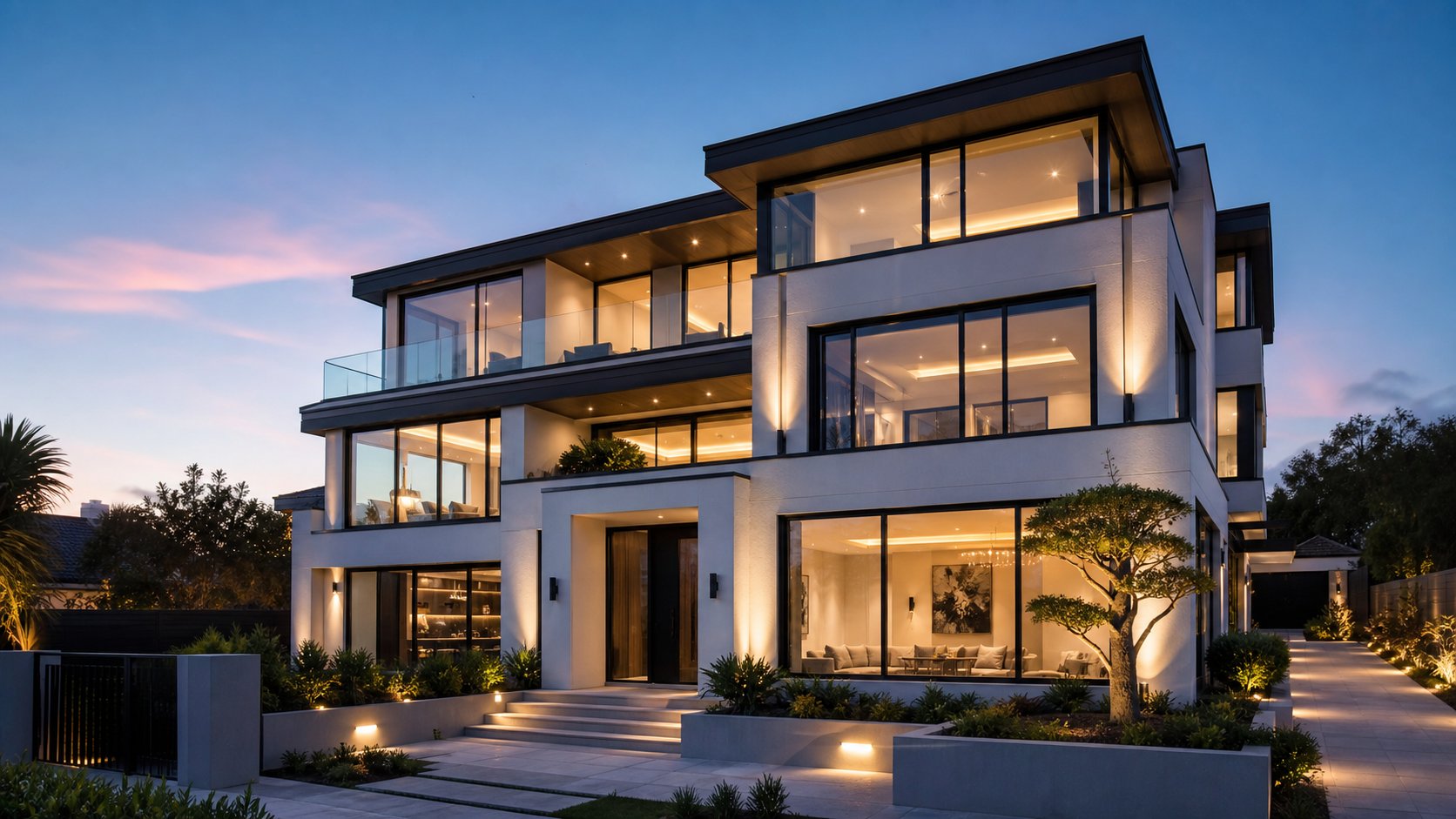
Powder Coating Colours and Coastal Finish Durability
A bare aluminium frame relies on its natural oxide layer for protection — and in mild inland environments, that's often enough. On the Gold Coast, it isn't. The combination of airborne salt, relentless UV, and high moisture demands an additional barrier between the metal and the atmosphere. Powder coating provides that barrier while simultaneously giving you control over how your windows look against your facade.
Getting the colour right matters. Getting the coating specification right matters more — because a beautiful finish that fails within five years is worse than a plain one that lasts twenty.
How Powder Coating Protects Aluminium in Coastal Environments
Powder coating works by electrostatically spraying a dry polymer powder onto the aluminium profile, then curing it in an oven where the particles melt and fuse into a continuous, hard protective film. Unlike liquid paint — which sits on the surface at just 1 to 2 mils per coat — powder coating produces a layer typically 2.5 to 6 mils thick, bonding directly to the metal substrate. The result resists chipping, scratching, and UV degradation far better than any brush-applied alternative.
For Gold Coast properties close to the shoreline, standard powder coating isn't always sufficient. Marine environments — generally defined as within 50 metres to 2,000 metres of the sea — fall under Corrosion Class 4, where chloride ions in the coastal atmosphere accelerate a specific failure mode called filiform corrosion. This appears as fine, thread-like lines creeping beneath the coating surface, typically starting at cut edges or scratches where moisture and salt penetrate to the base metal.
Marine-grade powder coating specifications address this through two mechanisms: increased film thickness (a minimum of 60 microns for coastal applications) and enhanced pre-treatment. The pre-treatment process involves etching the aluminium surface to remove the deformation layer and excess alloy elements that act as seeding sites for corrosion. This deeper preparation — combined with sealing all cut edges — dramatically improves filiform resistance and can extend finish warranties to 25 years in coastal zones.
If your Gold Coast property sits within a few hundred metres of the beach, asking your supplier specifically about marine-grade pre-treatment and coating thickness isn't optional — it's the difference between a finish that lasts decades and one that starts failing within years. Anyone considering whether to paint aluminium windows on the Gold Coast rather than specifying factory-applied marine-grade powder coating should weigh that durability gap carefully. Aluminium window frame painting on the Gold Coast using liquid paint simply cannot replicate the adhesion, thickness, or corrosion resistance of a properly specified factory finish.
Choosing Colours and Finishes for Your Gold Coast Home
Modern powder coating technology offers an enormous colour palette — hundreds of standard RAL colours plus custom-matched options that can replicate virtually any shade. The days of choosing between white, cream, or dark bronze are long gone. Contemporary aluminium windows come in everything from matte charcoals and deep blacks to bold architectural colours and remarkably convincing woodgrain finishes achieved through sublimation transfer printing over a powder-coated base.
Colour choice isn't purely aesthetic on the Gold Coast, though. It has a direct physical consequence. Darker colours absorb significantly more solar radiation than lighter ones, raising the surface temperature of the frame on hot days. That elevated temperature increases thermal stress on rubber seals and weatherstripping over time, and causes slightly more thermal expansion in the frame profile itself. It's not a reason to avoid dark colours — aluminium handles thermal movement without distortion — but it's a factor worth discussing with your supplier, particularly for west-facing windows that cop intense afternoon sun.
Here are the popular colour categories and how they perform in Gold Coast coastal conditions:
- Whites and off-whites — lowest heat absorption, most forgiving for dust visibility, and the broadest resale appeal. Excellent long-term colour stability in UV-intense environments.
- Greys and charcoals — currently the most popular architectural choice. Mid-range heat absorption. Quality powder coats in these shades hold up well, though lighter greys outperform darker ones for fade resistance over time.
- Black — bold and high-contrast against light facades. Highest heat absorption of any standard colour. Demands quality UV-resistant powder coating to avoid chalking or greying after years of direct sun exposure. Shows dust and water spots more readily than lighter options.
- Bronze and metallic finishes — warm tones that complement brick, stone, and earth-toned renders. Good UV stability and moderate heat absorption. Hides dust well.
- Woodgrain transfers — deliver the visual warmth of timber without the maintenance burden. Performance depends on the quality of the base powder coat underneath. Best suited to sheltered elevations; high-UV exposure can shorten the visual lifespan of the transfer layer compared to solid colours.
- Bold and custom colours — greens, blues, reds, and custom-matched shades for distinctive architectural statements. Availability and fade warranties vary by supplier and pigment type.
Suppliers like MEICHEN offer extensive colour ranges and custom configurations, allowing homeowners to match frames precisely to their architectural style while meeting coastal durability requirements. When evaluating any supplier's colour capabilities, ask specifically about marine-grade options for coastal properties, fade warranties on darker shades, and whether dual-colour configurations (different colours on interior and exterior faces) are available — a feature that gives you street-facing impact without committing every room to the same tone.
Aluminium window painting on the Gold Coast — recoating existing frames with liquid paint — remains an option for cosmetic refreshes on older windows with structurally sound frames. But for new installations or full replacements, factory-applied powder coating is the clear performance leader. The finish you choose today will define your home's appearance for decades, so matching the right colour to the right specification for your property's exposure is a decision worth getting right the first time.
Colour and coating specification inevitably feed into the broader question every homeowner asks next: what does all of this actually cost?
What Influences Aluminium Window Costs on the Gold Coast
Pricing aluminium windows on the Gold Coast isn't as simple as picking a number from a catalogue. Two windows that look identical in a showroom can carry vastly different price tags depending on what's behind the glass and inside the frame. The variables stack up quickly — and understanding which ones move the needle most helps you allocate your budget where it genuinely matters rather than overspending on features that won't improve your daily experience.
Key Factors That Influence Aluminium Window Pricing
Every quote you receive reflects a combination of decisions — some yours, some dictated by your property's location and exposure. Here are the cost drivers ranked roughly from most to least impactful on your final aluminium windows Gold Coast prices:
- Window size and type — larger openings require more material, heavier glass, and stronger hardware. Bi-fold and sliding systems with multiple panels cost significantly more than a single fixed or awning window of the same width.
- Glazing specification — single glazing sits at the low end. Double glazing adds meaningfully to cost, and adding Low-E coatings, argon gas fills, or laminated safety glass pushes it further. On the Gold Coast, solar-control glazing is often the smartest spend for long-term comfort.
- Thermal break inclusion — thermally broken aluminium profiles cost more than standard profiles due to the additional polyamide inserts and more complex manufacturing. The premium is justified for large glazed areas or heavily air-conditioned homes where energy savings compound over time.
- Custom vs standard sizing — standard sizes manufactured in volume cost less per unit. Custom dimensions require individual fabrication setups, adding to both material waste and labour time.
- Frame colour and finish — standard colours (white, black, common greys) are typically included in base pricing. Custom colours, woodgrain transfers, dual-colour configurations, and marine-grade coating specifications all attract surcharges.
- Hardware quality — basic handles and locks versus premium multi-point locking systems, stainless steel hinges rated for coastal environments, and soft-close mechanisms all affect the final figure.
- Coastal-grade specifications — marine pre-treatment, increased powder coat thickness, and stainless steel fasteners add cost upfront but protect the investment against premature failure in salt-exposed locations.
That last point deserves emphasis. Specifying coastal-grade finishes and hardware for a beachside property isn't a luxury upgrade — it's baseline protection. Skipping it to save a few dollars per window invites corrosion, hardware seizure, and early replacement costs that dwarf the original saving.
Budget Considerations for Different Project Scales
How you're buying matters almost as much as what you're buying. Replacing a single damaged window as a one-off job carries higher per-unit costs than a whole-home renovation or new build specification. Fabricators set up production runs, and a single window still requires the same quoting, measuring, manufacturing setup, and installation mobilisation as a batch of ten.
Whole-project quotes — whether for a full renovation or new construction — typically offer better value per opening because suppliers can optimise cutting layouts, batch colour runs, and schedule installation efficiently. Builders specifying aluminium windows across an entire new Gold Coast home benefit from volume pricing that individual replacement buyers simply can't access.
For renovations, the scope decision also affects cost. Repainting aluminium windows on the Gold Coast — refreshing existing frames cosmetically — costs far less than full replacement, but only makes sense when the underlying frame, seals, and hardware remain structurally sound. If frames show pitting, seal failure, or hardware corrosion, painting aluminium window frames on the Gold Coast is a cosmetic bandage over a structural problem. Full replacement with correctly specified new units delivers better long-term value in those situations.
The cheapest aluminium window option rarely represents best value in a coastal environment. Salt air doesn't negotiate — it finds every shortcut in specification and exploits it. Spending appropriately on coating, glazing, and hardware upfront protects your investment for decades. Cutting corners protects your budget for about three years before the problems start.
When requesting quotes, ensure you're comparing like-for-like specifications. A lower price often reflects thinner glass, standard (non-marine) coating, or basic hardware rather than a genuine saving. Ask every supplier to itemise glazing type, coating specification, and hardware grade so you can see exactly where pricing differences originate — and decide which trade-offs you're comfortable making for your property's specific conditions.
Cost clarity helps you budget realistically. But the way those costs play out differs substantially depending on whether you're replacing windows in an existing home or specifying them fresh for a new build — two scenarios with very different decision sequences and practical constraints.
Renovation Replacement vs New Build Window Decisions
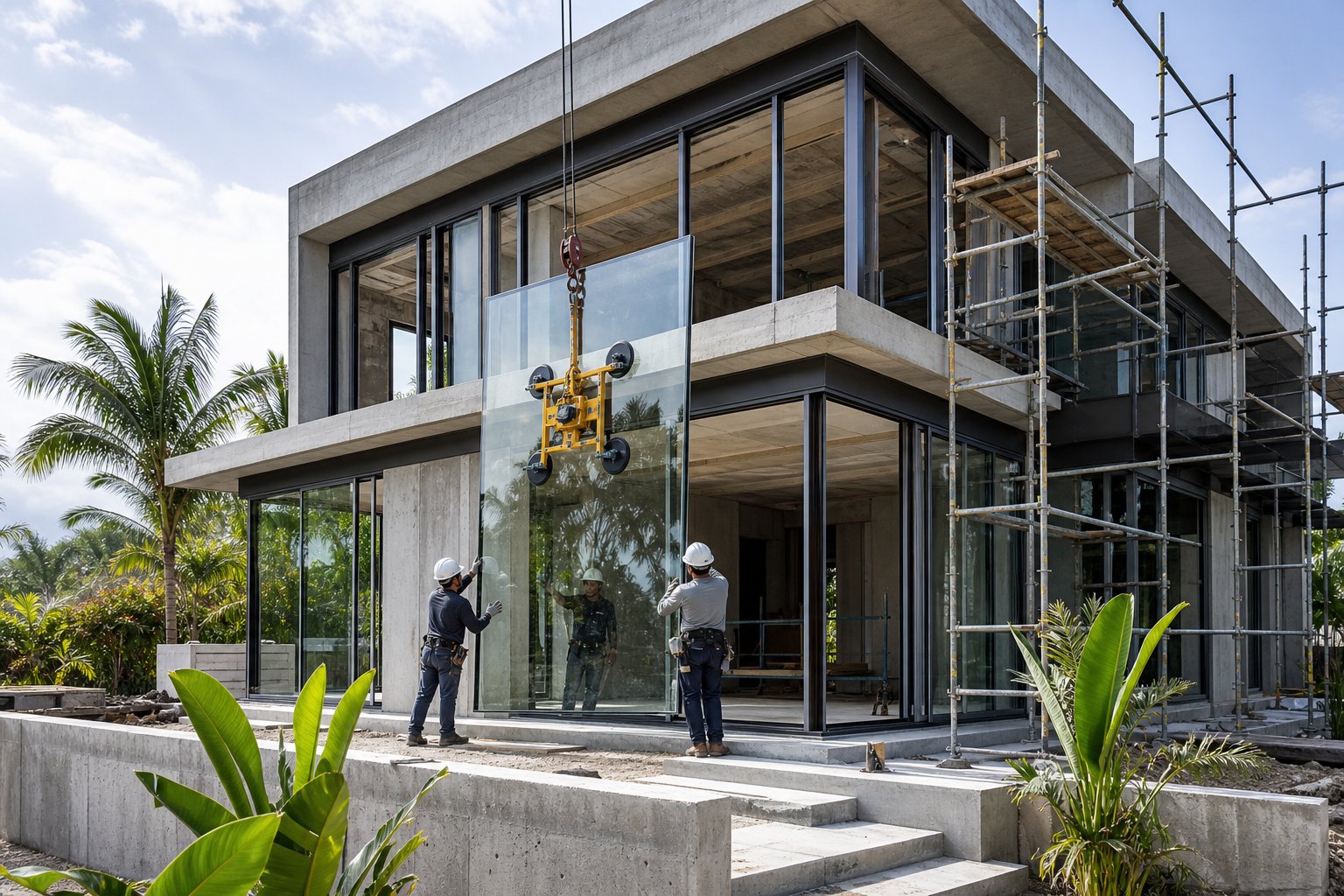
Replacing aluminium windows in a 1990s brick veneer home on the Gold Coast is nothing like specifying them for a new two-storey build going up from slab. The end product might look similar — aluminium frames, quality glazing, coastal-rated hardware — but the path to get there involves completely different constraints, decision sequences, and potential headaches. Knowing which scenario you're in shapes everything from how you measure, what approvals you need, and how much disruption to expect during the process.
Aluminium Window Replacement in Existing Gold Coast Homes
Renovation projects start with a fundamental reality that new builds don't face: you're working with what's already there. The openings exist. The wall structure is fixed. And decades of settlement, thermal movement, and coastal exposure may have shifted things just enough to make nothing perfectly square anymore.
That gap between what the original plans say and what a tape measure reveals on site is where aluminium window replacement on the Gold Coast gets complicated. Here's the sequence of decisions that typically produces the smoothest outcome:
- Assess existing frame condition — before deciding between full replacement and reglazing, determine whether the current frames are structurally sound. Look for pitting, corrosion at corners, seal degradation, and hardware that no longer locks securely. Frames with surface-level wear but solid structural integrity may be candidates for restoration rather than removal.
- Measure existing openings accurately — older Gold Coast homes (particularly weatherboard, fibro, and early brick veneer construction) often have openings that aren't standard sizes. A window built in 1985 might sit in an opening that's 5-10 mm off what any current standard product fits. Custom fabrication solves this, but it needs precise measurements taken on site rather than pulled from old plans.
- Decide between insert replacement and full-frame replacement — an insert window fits inside the existing frame, which is faster and less disruptive but slightly reduces your glass area. Full-frame replacement removes everything back to the rough opening, giving you maximum glass and a fresh weather seal — but it involves more labour, potential render or cladding repair, and higher cost. The condition of the existing frame usually makes this decision for you.
- Check council approval requirements — changing window sizes, positions, or styles on street-facing elevations may trigger a development application (DA) or require compliance with local planning overlays. Like-for-like replacements (same size, same position) typically don't need approval, but confirm with your local council before committing to changes.
- Plan for installation disruption — aluminium window installation on the Gold Coast renovation projects means living with temporary weather protection while openings are exposed. A competent installer can typically replace a standard window in a few hours, but whole-home projects may leave sections of your home open for a day or more. Schedule around weather forecasts and have tarps or temporary boarding ready.
Aluminium window restoration on the Gold Coast deserves a mention as a middle path. If your existing aluminium frames are structurally sound — no corrosion pitting, no warping, hardware mounting points still solid — restoration involves stripping the old finish, applying fresh marine-grade powder coating, replacing seals and hardware, and upgrading the glazing within the existing frame. It costs less than full replacement, generates less waste, and avoids the disruption of removing frames from walls. The trade-off is that you're limited to the original frame's thermal performance and opening size. For homes where the frames are genuinely in good shape but the glass is outdated single-pane, restoration paired with a double-glazed upgrade can deliver a meaningful performance improvement without the full replacement price tag.
Specifying Aluminium Windows for New Gold Coast Builds
New construction flips the equation entirely. Instead of adapting to existing constraints, you're designing the constraints themselves. Window openings can be sized precisely for the products you want. Wall framing accommodates the exact frame depth. Flashing and weather barriers integrate seamlessly because everything goes in at the right stage of construction.
That freedom is powerful — but it also means decisions need to happen earlier than most people expect. Windows specified late in the design process force compromises. Windows specified early shape the entire building's performance, appearance, and liveability.
- Specify windows during design development, not after — window positions, sizes, and types should be locked in while floor plans and elevations are still being refined. This allows your architect or designer to optimise openings for cross-ventilation, capture views, manage solar heat gain on western elevations, and meet NCC energy requirements without awkward last-minute compromises.
- Coordinate with building envelope performance — the NCC requires whole-of-building energy assessments (typically via NatHERS), and windows are usually the weakest thermal link in the envelope. Selecting glazing specifications and frame types early lets your energy assessor model accurate performance rather than guessing — avoiding the scenario where you fail compliance at the eleventh hour and need expensive upgrades.
- Select consistent hardware and colour across the project — a new build gives you the luxury of specifying one hardware suite and one or two frame colours that carry through every room. This consistency looks intentional and professional. It also simplifies future maintenance because replacement parts and touch-up materials are identical throughout the home.
- Confirm lead times and coordinate with your builder's schedule — custom aluminium windows aren't off-the-shelf products. Fabrication lead times on the Gold Coast typically run several weeks, and complex projects with non-standard sizes or special coatings may take longer. Your builder needs windows on site at a specific construction stage — after framing and weather wrap, before internal lining. Late delivery stalls the entire build sequence.
- Specify coastal-grade finishes from the start — in new construction, there's no excuse for under-specifying. You know the property's distance from the shoreline before the first slab is poured. Marine-grade powder coating, stainless steel fasteners, and appropriate glazing should be written into the specification from day one rather than value-engineered out during budget reviews.
New builds also offer the opportunity to think about windows as a system rather than individual units. How does the bi-fold in the living room relate to the awning windows in the bathroom? Do the louvres in the laundry create a cross-ventilation path with the casements in the hallway? Designing airflow paths, light penetration, and privacy zones across the whole floor plan — rather than choosing windows room by room — produces a home that breathes and functions as a cohesive whole.
Whether you're renovating or building new, the decisions you make about window type, specification, and installation approach all funnel toward one final question: who actually supplies and delivers the product? The supplier you choose determines what's available to you, how well it's made, and whether it arrives when you need it — which makes evaluating your options carefully the logical next step.
How to Choose the Right Aluminium Window Supplier
A perfectly specified window means nothing if the supplier behind it can't deliver on quality, timing, or coastal suitability. The Gold Coast has no shortage of aluminium window suppliers — from national chains to local fabricators to online-only operations — and the gap between the best and worst is wide enough to determine whether your windows last five years or fifty. Knowing what separates a capable supplier from a mediocre one saves you from expensive lessons learned after installation.
What to Look for in a Gold Coast Aluminium Window Supplier
Not every supplier operates at the same depth. Some stock a narrow range of standard products. Others offer full custom fabrication with project-level coordination. The right fit depends on your project's complexity, but certain capabilities signal a supplier worth your time regardless of scope.
Range matters first. A supplier offering sliding, bi-fold, awning, casement, louvre, fixed, and double-hung configurations under one roof means you're not cobbling together products from multiple sources with mismatched finishes and hardware. For larger renovations and new builds, that consistency across every opening in the home is difficult to achieve when you're splitting the order between two or three different aluminium window manufacturers on the Gold Coast.
Customisation capability separates project-ready suppliers from catalogue resellers. Non-standard sizes, specific glazing build-ups, marine-grade coating specifications, and dual-colour frame configurations all require a supplier with genuine fabrication flexibility — not just a price list of off-the-shelf units. Suppliers like MEICHEN offer comprehensive aluminium window ranges with custom configurations, multiple glazing choices, and colour options for both residential and commercial Gold Coast projects — a useful benchmark for what a well-equipped supplier looks like when you're comparing options.
Compliance is non-negotiable. Every window installed in Australia must meet AS 2047 (windows and external glazed doors) and AS 1288 (glass in buildings). Ask any potential supplier directly whether their products are tested and certified to these standards. A reputable aluminium windows Gold Coast supply operation will provide documentation without hesitation. Vague answers or deflection on compliance should end the conversation.
Finally, consider whether the supplier handles both residential and commercial projects. Suppliers experienced in commercial work — where tolerances are tighter, documentation requirements are stricter, and delivery scheduling is critical — tend to bring that discipline to residential projects as well. It's a quality signal worth noting.
Getting Quotes and Comparing Options Effectively
Quotes for aluminium windows can vary by 20-30% between suppliers for what appears to be the same product. In most cases, those differences hide in specification details rather than reflecting genuine value gaps. Comparing effectively means ensuring you're looking at like-for-like specifications before drawing any conclusions about price.
Here's a checklist of questions to ask every potential supplier before accepting a quote:
- What aluminium profile system are you quoting, and what is the frame depth?
- Is the glazing single, double, or double with Low-E coating? What is the specific glass build-up?
- What powder coating specification is included — standard or marine-grade? What film thickness?
- What hardware brand and grade is specified? Are hinges and fasteners stainless steel for coastal use?
- Are thermally broken profiles included, or is this a standard aluminium frame?
- Does the quote include installation, or is it supply only? If installation is included, who performs it?
- What warranty applies to the frame, glazing, hardware, and powder coating separately?
- What is the current lead time from order confirmation to delivery?
- Can you provide test reports or certification confirming AS 2047 compliance for the quoted products?
- For properties near the coast — what specific corrosion protection measures are included in this specification?
A supplier who answers these clearly and completely — without hedging or redirecting — is demonstrating the transparency that matters for a long-term investment. A quote missing glazing details, coating specifications, or hardware grades isn't necessarily cheaper. It's just less honest about what you're getting.
When evaluating aluminium window suppliers on the Gold Coast, resist the pull of lowest price alone. The supplier's ability to specify correctly for your property's coastal exposure, deliver on schedule, and stand behind their product with meaningful warranty terms carries more weight than a few hundred dollars saved on a quote that leaves critical details unspecified. Your windows will outlast your relationship with the supplier by decades — but only if the specification was right from the start.
Frequently Asked Questions About Aluminium Windows on the Gold Coast
1. How long do aluminium windows last on the Gold Coast?
Properly specified aluminium windows with marine-grade powder coating and stainless steel hardware typically last 40 to 50 years or more on the Gold Coast. Longevity depends heavily on the coating specification and distance from the shoreline. Properties within a few hundred metres of the beach require enhanced pre-treatment and increased powder coat film thickness (minimum 60 microns) to resist filiform corrosion caused by salt-laden air. Standard inland specifications may fail prematurely in these conditions, so confirming coastal-grade finishes with your supplier is essential for maximising lifespan.
2. Are aluminium windows energy efficient in Gold Coast summers?
Standard aluminium frames conduct heat readily, but thermally broken aluminium systems reduce heat transfer by 60% or more through the frame by inserting a polyamide insulating barrier between inner and outer sections. On the Gold Coast, where cooling loads dominate energy use, pairing thermally broken frames with double glazing and solar-control Low-E coatings significantly reduces air conditioning demand. The glazing itself accounts for 70-80% of a window's thermal performance, so selecting the right glass build-up matters even more than the frame type in this cooling-dominant climate zone.
3. What is the best type of aluminium window for coastal Gold Coast homes?
Most Gold Coast homes use a combination of three or four window types tailored to each room's function. Sliding and bi-fold aluminium windows suit living areas and entertaining zones where indoor-outdoor connection matters. Louvre windows maximise airflow in bathrooms and laundries during humid months. Awning windows allow ventilation during rain without water ingress. Fixed windows frame ocean or hinterland views with the slimmest possible profiles. Suppliers like MEICHEN offer the full range of configurations with custom sizing and coastal-rated finishes, allowing you to specify the right type for every opening in a single coordinated order.
4. Do aluminium windows need maintenance in salt air environments?
Aluminium windows require minimal maintenance compared to timber or steel alternatives. Routine care involves washing frames with mild soapy water every few months to remove salt deposits before they accumulate and potentially affect seals or hardware. Lubricating tracks, hinges, and locking mechanisms annually with a silicone-based spray keeps operation smooth. No repainting or resealing is required when marine-grade powder coating is specified correctly. However, properties very close to the beach should be washed more frequently, as heavy salt buildup left unchecked can eventually affect hardware and weatherstripping.
5. How do I compare aluminium window quotes on the Gold Coast?
Price differences of 20-30% between suppliers often reflect hidden specification gaps rather than genuine value differences. To compare effectively, ask each supplier to itemise the aluminium profile system and frame depth, glazing build-up (single, double, Low-E), powder coating specification (standard or marine-grade with film thickness), hardware brand and grade, and whether installation is included. Confirm AS 2047 compliance certification and ask about separate warranty terms for frames, glazing, hardware, and coating. A lower quote missing these details may indicate thinner glass, non-coastal coating, or basic hardware rather than a real saving.