
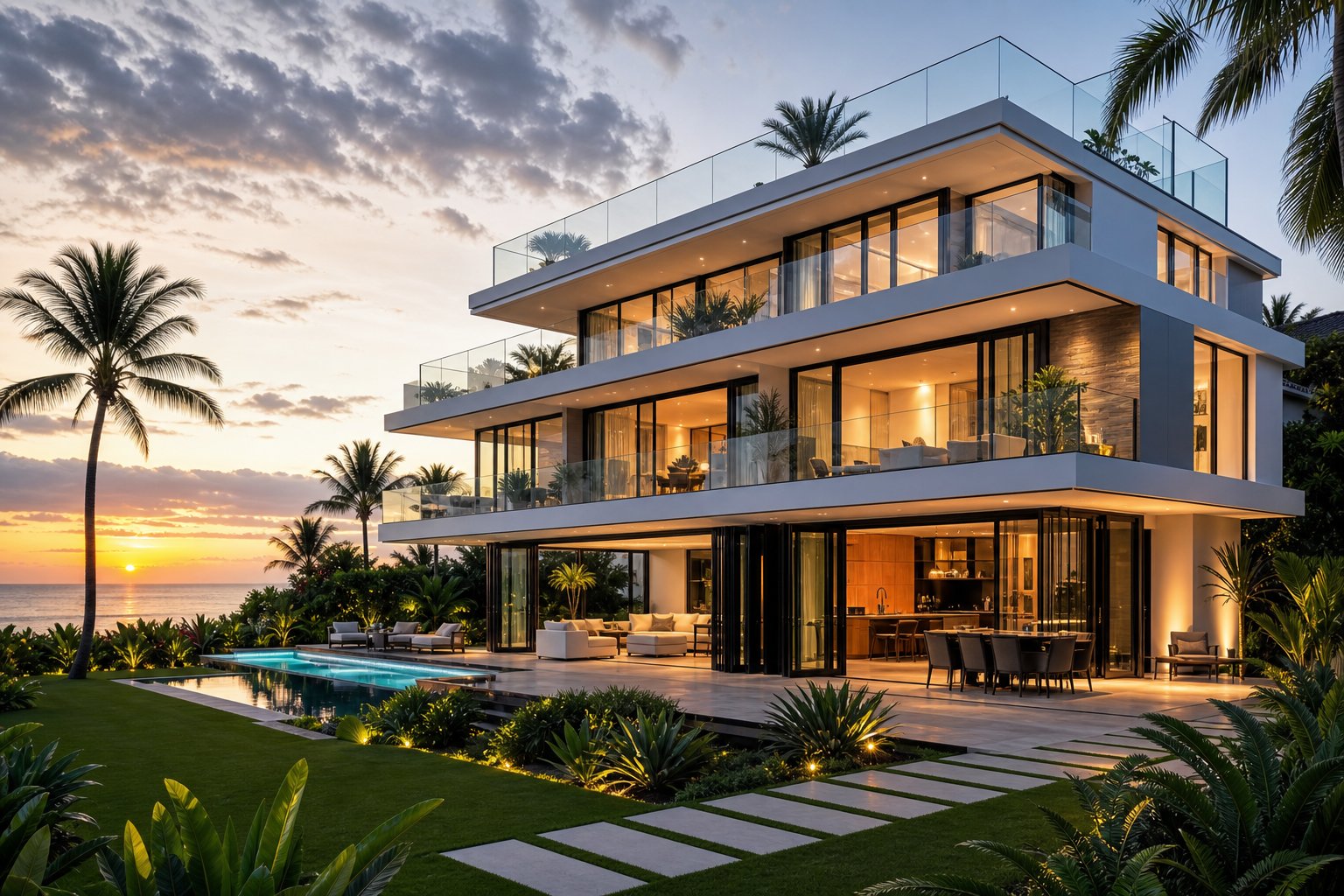
Why Aluminium Windows Are the Go-To Choice in Geelong
Aluminium windows use extruded aluminium alloy profiles as their structural frame, holding glass panels in place while providing the mechanism for opening, closing, and sealing against the elements. They account for the vast majority of window installations across Australian residential and commercial construction, and Geelong is no exception.
Why Aluminium Dominates Window Framing in Geelong
The reasons come down to material science. Aluminium delivers an exceptional strength-to-weight ratio, meaning frames can be slimmer without sacrificing structural integrity. Thinner profiles translate to more glass area, more natural light, and cleaner sightlines. The material is naturally resistant to corrosion, a critical advantage for properties exposed to Geelong's coastal salt air along the Bellarine Peninsula and Surf Coast corridor. It won't rot, warp, or attract termites the way timber can, and it holds powder-coated finishes for decades with minimal upkeep.
Aluminium is the dominant framing material in Australian coastal regions because it resists salt-air corrosion, requires almost no maintenance, and supports the slim-profile aesthetic that modern architecture demands.
Design flexibility rounds out the picture. Aluminium can be shaped into virtually any window configuration, from expansive bifold systems to narrow casement profiles, and finished in hundreds of colours. That versatility makes it equally at home in a contemporary Newtown renovation and a large-scale commercial fitout along Moorabool Street.
Who This Resource Is For
This guide is built for homeowners weighing aluminium windows for a Geelong residential project, builders specifying frames for new builds, and architects balancing performance with aesthetics. Rather than a sales pitch, it covers the practical details suppliers rarely explain upfront: window types, climate considerations, realistic cost factors, compliance requirements, installation realities, and long-term maintenance. The goal is to give you the knowledge to compare quotes, ask sharper questions, and make a confident decision suited to your property and budget.
Aluminium Window Types Explained in Plain Language
Knowing that aluminium is the right framing material is only half the decision. The other half is choosing the window style that actually suits each room, each wall orientation, and each functional need across your home. Geelong suppliers stock seven core aluminium window types, and each one operates differently, ventilates differently, and fits different architectural contexts. Here's how they break down.
Sliding and Bifold Windows for Open-Plan Living
Sliding windows run on a horizontal track. One or more panels glide sideways past a fixed pane, so nothing protrudes inward or outward. That makes them a natural fit for rooms facing walkways, decks, or tight side passages where an outward-swinging sash would get in the way. Bedrooms, living areas, and hallways all benefit from their simple, low-profile operation. Ventilation is moderate since only half the opening can be clear at any time, but the trade-off is minimal moving parts and easy maintenance.
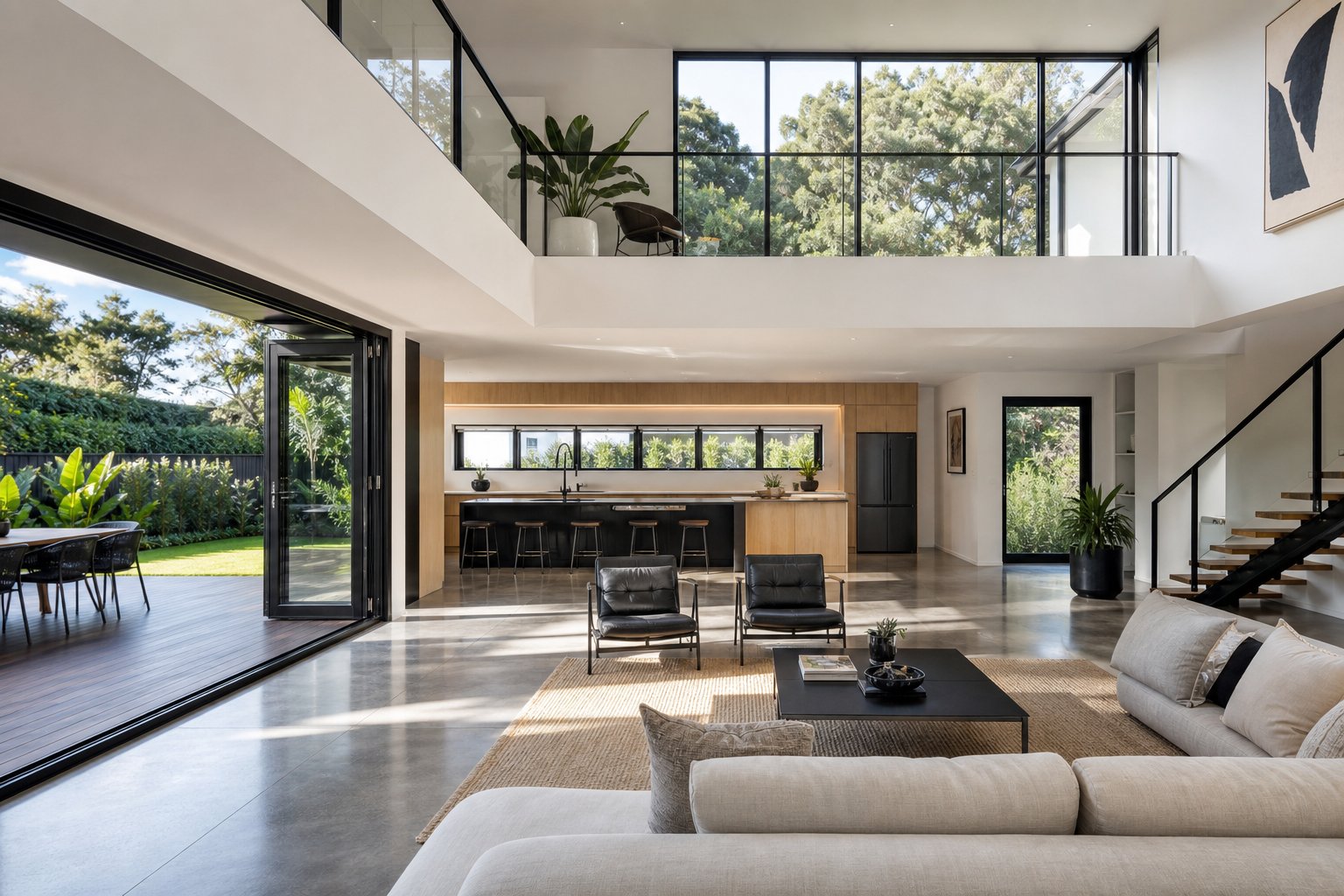
Bifold aluminium windows take the concept further. Multiple panels fold back on themselves like an accordion, stacking neatly to one side and leaving the entire opening clear. For Geelong homes designed around open-plan living and indoor-outdoor flow, bifolds create a seamless connection between kitchen or dining areas and an outdoor entertaining space. Aluminium's strength is essential here because the frame must support wide spans without flexing. When closed, a well-sealed bifold still delivers solid insulation and weather protection.
Awning, Casement and Fixed Windows for Targeted Ventilation
The casement window vs awning window difference trips up a lot of homeowners, but the distinction is straightforward. A casement window is hinged on the side and cranks outward like a narrow door. The entire sash opens, delivering maximum airflow. Casements work brilliantly above kitchen benches or in bathrooms where you want to direct a breeze inward without reaching awkwardly.
Awning windows are hinged at the top and swing outward from the bottom. That top-hinged design acts as a small canopy, letting you leave the window open during light rain without water entering the room. Bathrooms, laundries, and high-set positions above fixed panes are their sweet spot. They're also a strong choice for the best aluminium window style for ventilation in rooms that need constant airflow regardless of weather.
Fixed windows don't open at all. Their purpose is purely visual: maximising natural light and framing a view with the slimmest possible aluminium profile. Stairwells, feature walls, and living rooms with scenic outlooks use fixed panes, often paired with operable windows nearby to handle ventilation duties.
Double-Hung and Louvre Options for Period Homes
Double-hung windows feature two sashes stacked vertically, both of which slide up and down independently. Opening the top sash lets warm air escape while the bottom draws cooler air in, creating natural convection. This style suits period homes across Geelong's older suburbs, where the vertical proportions echo traditional timber-framed originals without the maintenance burden.
Louvre windows use a series of horizontal glass blades that tilt open in unison, offering precise control over airflow direction and volume. They're common in wet areas, pool rooms, and tropical-influenced designs where maximum ventilation is the priority. Commercial applications like school buildings and community facilities also rely on louvres for consistent cross-ventilation.
| Type | Mechanism | Best Room | Ventilation Level | Ideal For |
|---|---|---|---|---|
| Sliding | Panels glide horizontally on a track | Bedrooms, living areas, hallways | Moderate | Both |
| Bifold | Multiple panels fold and stack to one side | Kitchen, dining, entertaining areas | High (when fully open) | Residential |
| Casement | Side-hinged, cranks outward | Kitchen, bathroom, living room | High | Both |
| Awning | Top-hinged, swings outward from bottom | Bathroom, laundry, above fixed panes | Moderate to high | Both |
| Fixed | Does not open | Stairwells, feature walls, scenic views | None | Both |
| Double-Hung | Two sashes slide vertically | Period homes, bedrooms, front-facing walls | Moderate to high | Residential |
| Louvre | Horizontal glass blades tilt open in unison | Wet areas, pool rooms, schools | Very high | Both |
Most Geelong homes end up with a combination of types rather than a single style throughout. A sliding window might suit the bedroom corridor, bifolds open up the rear living zone, and awning windows handle the bathroom. The right mix depends on room function, wall orientation, and how much airflow each space actually needs, which leads directly into the next consideration: how Geelong's coastal climate shapes the specifications behind whichever style you choose.
How Geelong's Coastal Climate Affects Your Window Choice
Geelong sits in a temperate coastal zone, but the conditions your windows face vary dramatically depending on exactly where your property is. A home in Drysdale on the Bellarine Peninsula cops salt-laden air almost daily, while a property backing onto the You Yangs deals more with dust, UV, and temperature swings. The specifications that protect your aluminium frames long-term depend entirely on which combination of environmental stresses your site throws at them.
Coastal Salt Air and Marine-Grade Protection
Salt air is the single biggest threat to any metal surface near the coast. Properties within a few kilometres of the shoreline along the Bellarine Peninsula and Surf Coast corridor are exposed to airborne chlorides that accelerate corrosion if the frame finish isn't up to the task. This is where the choice between powder coating grades and anodising becomes critical.
Standard powder coating works well for inland Geelong suburbs, but coastal homes need a marine-grade powder coat that meets higher durability standards. High-quality marine-grade powder coatings provide a thick, uniform barrier against salt spray, though any chip or scratch in the coating can expose raw aluminium to corrosive attack underneath. Anodising takes a different approach. It converts the aluminium surface itself into a hard oxide layer that becomes part of the metal rather than sitting on top of it. That integrated layer won't peel or chip, and it offers innate resistance to salt corrosion that powder coating alone can't match.
For Bellarine Peninsula window specifications, many fabricators recommend either anodised frames or premium-tier powder coating for marine environments. Some suppliers offer both treatments combined for maximum protection. The key takeaway: if your property is within five kilometres of the coast, standard finishes aren't enough.
Wind Loads and Thermal Performance for Geelong's Climate Zone
Geelong's prevailing south-westerly winds can be relentless, particularly on elevated or exposed sites along the coast. Wind-rated windows for the Geelong coast need to meet specific performance classifications under AS 2047, which tests resistance to wind pressure, water penetration, and air infiltration. Exposed properties may require higher wind ratings than sheltered suburban blocks just a few streets back from the water.
Temperature is the other factor that rarely gets discussed at the quoting stage. Geelong experiences genuine seasonal variation, with summer days regularly exceeding 35°C and winter mornings dropping close to zero. That range creates thermal stress on frames and, more importantly, drives heat transfer through the window assembly. Standard aluminium conducts heat rapidly, meaning frames can feel hot in summer and cold in winter, contributing to uncomfortable room temperatures and condensation risk during cooler months.
Thermal break aluminium frames address this directly. A polyamide insulating strip separates the interior and exterior aluminium sections, interrupting the conductive pathway. For Geelong's climate zone, thermally broken frames reduce heat flow through the frame edges and help maintain more stable indoor temperatures year-round. They also lower the risk of condensation forming on the inside face of the frame during cold mornings.
Here's a practical summary of the environmental challenges Geelong properties face and the aluminium window specification that responds to each:
- Salt air corrosion (coastal properties): Marine-grade powder coating or anodised finish; stainless steel or marine-grade hardware
- High wind exposure: Higher wind-rated window systems tested to AS 2047 for the specific site classification
- UV intensity and sun exposure: UV-stable powder coat formulations that resist fading and chalking over decades
- Temperature fluctuations (0°C to 35°C+): Thermally broken aluminium frames to reduce heat transfer and condensation risk
- Driving rain and storm events: Adequate drainage channels, quality seals, and correct installation flashing to prevent water ingress
Getting these specifications right at the ordering stage costs relatively little extra compared to the expense of premature frame deterioration or poor thermal comfort. The challenge is that not every quote spells out which grade of coating, which wind rating, or whether thermal breaks are included, and that's where understanding the real cost drivers behind aluminium window pricing becomes essential.
Understanding Aluminium Window Costs in the Geelong Region
Pricing is the part of the conversation most suppliers keep vague. You'll often receive a lump-sum quote with little explanation of what's actually driving the number up or down. That lack of transparency makes it nearly impossible to compare quotes meaningfully or know where you can trim costs without sacrificing performance. So let's pull the curtain back on what actually determines how much aluminium windows cost in Geelong.
What Drives the Price of Aluminium Windows
Not all cost factors carry equal weight. Some shift your total by thousands, others by a few hundred dollars. Here they are ranked from most to least impactful on your final pricing:
- Window size and configuration — Larger openings require more aluminium, more glass, and potentially structural reinforcement. Custom or oversized dimensions push costs significantly higher than standard sizes because they can't be mass-produced.
- Glazing type — Single-glazed panels sit at the lowest price point. Double-glazed units with argon gas fills and Low-E coatings cost substantially more but deliver measurable energy savings. Laminated or tinted glass adds further again, depending on security and UV requirements.
- Number of operable panels — Every panel that opens needs its own hardware, seals, tracks, and hinges. A four-panel bifold costs considerably more than a single awning window of similar total area because of the additional moving components and engineering involved.
- Installation complexity and access — Straightforward ground-floor installations on new builds are the cheapest to fit. Retrofitting into older brick veneer or weatherboard homes, working at height, or dealing with structural modifications all increase labour time and cost.
- Frame finish — Standard powder-coated colours (typically black, white, or monument) are included in base pricing. Custom colours, woodgrain effects, or anodised finishes for coastal protection attract a premium, often adding 10 to 20 percent to the frame cost.
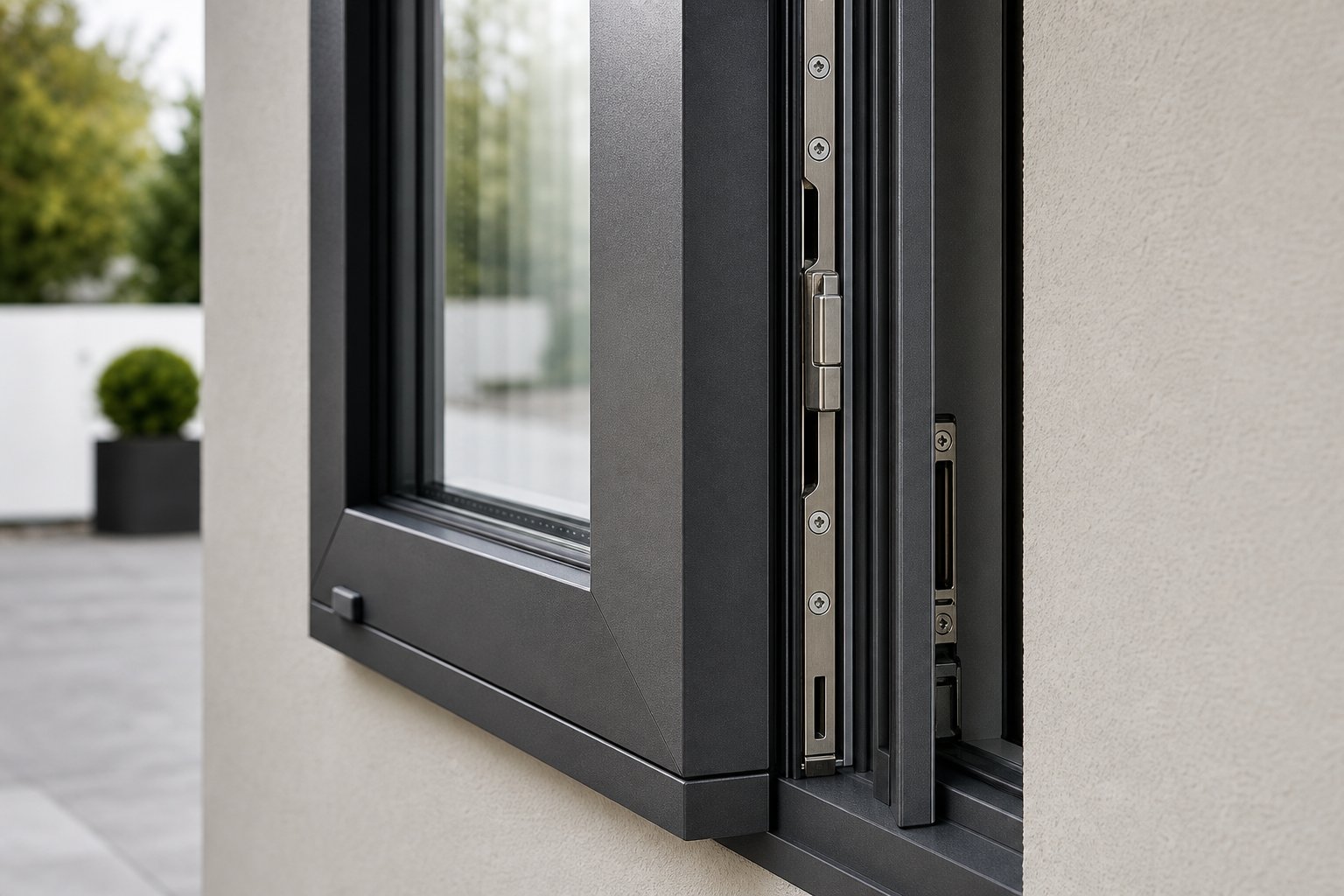
- Hardware quality — Budget hardware does the job initially but wears faster, particularly in salt-air environments. Marine-grade stainless steel handles, multi-point locking systems, and commercial-grade rollers all add to the per-window price.
- Additional features — Flyscreens, security mesh, key-lockable handles, and integrated blinds are extras that individually seem minor but accumulate across a full-home project.
Understanding these aluminium window cost factors for Geelong projects gives you the ability to make deliberate trade-offs rather than blindly accepting whatever a supplier puts in front of you.
Budget vs Mid-Range vs Premium Tiers
Rather than quoting specific dollar figures that shift with material costs and supplier margins, it's more useful to understand what each pricing tier actually delivers. The differences are tangible and affect how your windows perform over their lifespan.
| Characteristic | Budget | Mid-Range | Premium |
|---|---|---|---|
| Glass Type | Single glazed, clear float | Double glazed, standard spacer | Double glazed with Low-E coating, argon fill, or triple glazed |
| Frame Finish | Standard powder coat (limited colours) | Standard or custom powder coat | Marine-grade powder coat, anodised, or woodgrain effect |
| Hardware | Basic zinc alloy handles and locks | Mid-grade hardware with key locks | Stainless steel or marine-grade, multi-point locking |
| Thermal Performance | No thermal break | Optional thermal break | Thermally broken frames standard |
| Warranty | 5 to 7 years (frame only) | 10 years (frame and hardware) | 10 to 15+ years comprehensive |
Budget aluminium windows suit investment properties, sheds, or secondary rooms where thermal performance and longevity aren't the priority. Mid-range products hit the sweet spot for most Geelong homeowners: double-glazed aluminium window pricing at this level delivers genuine energy efficiency without the cost of full premium specifications. Premium tiers make sense for coastal properties, architecturally significant homes, or anyone planning to stay long-term and wanting the lowest possible maintenance burden.
The gap between budget and premium isn't just about upfront spend. Cheaper hardware wears out faster in coastal conditions, single glazing drives up heating and cooling bills year after year, and basic powder coats may chalk or fade within a decade on exposed elevations. The real question is total cost of ownership over 20 to 30 years, not just the invoice on installation day.
When Second-Hand Windows Are Worth Considering
Recycled aluminium windows appear on Gumtree, Facebook Marketplace, and through demolition salvage yards around Geelong at prices well below new supply. On the surface, the savings look attractive. In practice, they come with serious caveats.
Most second-hand aluminium windows entering the market are single-glazed units pulled from older homes. They won't meet current energy efficiency requirements under the National Construction Code, which now demands performance levels that effectively require double glazing and thermally broken frames for any work requiring a building permit. If your project triggers a permit, recycled single-glazed windows simply aren't compliant.
There's also the practical side. Salvaged windows rarely match your exact opening dimensions, meaning you either modify the frame or modify the wall, both of which add cost. Seals degrade over time, hardware may be obsolete, and you inherit whatever wear the previous installation accumulated. As one Geelong-based window manufacturer has noted, the small upfront savings on second-hand windows are usually consumed within a year by higher energy bills alone.
That said, second-hand windows can make sense in limited scenarios: a shed or garage where energy ratings don't apply, a heritage restoration where matching original profiles matters more than thermal performance, or salvaging decorative stained-glass panels as feature elements rather than functional openings. Outside those cases, the aluminium window replacement cost factors almost always favour investing in new, correctly specified units that meet current standards and come with a manufacturer's warranty.
Cost clarity is one piece of the puzzle. The other is knowing how aluminium stacks up against the main alternative framing material still popular across Geelong's older suburbs: timber.
Aluminium vs Timber Windows for Geelong Properties
Timber still holds a genuine place in Geelong's window landscape, particularly across established suburbs where character homes line the streets. Dismissing it outright would be dishonest. The real question isn't which material is universally better but which one suits your specific property, location, and lifestyle. Here's how they compare when you strip away the marketing from both sides.
Durability and Maintenance Over a 30-Year Lifespan
Both materials can last decades, but the effort required to get them there differs dramatically. Aluminium frames resist rot, warping, and termite damage without any intervention. A wash with soapy water a few times a year keeps them looking sharp. The powder-coated finish holds its colour for 20 to 30 years on well-specified products, and the frame itself can perform for 40 years or more before replacement becomes a conversation.
Timber demands more from you. Expect to sand, repaint, or re-stain every three to five years to prevent moisture penetration, and more frequently on weather-exposed elevations. Skip that maintenance cycle and you're looking at swelling, cracking, and eventually rot. In Geelong's coastal pockets, untreated timber deteriorates faster than homeowners anticipate. High-quality hardwood frames can match aluminium's lifespan if maintained religiously, but timber without regular care is vulnerable to moisture, termites, and decay, particularly in coastal or high-humidity areas.
For anyone prioritising low maintenance window frames in Geelong, aluminium wins this category outright. It's a fit-and-forget material in a way timber simply isn't.
Thermal performance is where timber has a natural edge. Wood insulates far better than raw metal, meaning a standard timber frame transfers less heat than a standard aluminium frame. However, modern thermally broken aluminium systems close that gap significantly. The polyamide break inside the frame interrupts heat conduction, and when paired with double glazing, thermally broken aluminium achieves energy ratings that satisfy NCC requirements comfortably. Timber still edges ahead on raw insulation value, but the practical difference in a well-specified aluminium system is marginal for Geelong's temperate climate zone.
When Timber Suits Better Than Aluminium
Heritage overlays across suburbs like Newtown, Geelong West, and parts of East Geelong sometimes require window replacements to match original profiles and materials. Council planning officers in the City of Greater Geelong may insist on timber for street-facing elevations of heritage-listed properties. In those cases, timber isn't just a preference; it's a compliance requirement. The warmth and grain of natural wood also appeals to homeowners restoring period homes to their original character, where aluminium's sleek lines would look out of place.
For everything else, particularly modern builds, coastal properties, and renovations where ongoing upkeep isn't welcome, aluminium or wood windows in coastal homes is a straightforward comparison. Aluminium handles salt air, UV, and temperature swings without degrading, while timber in the same environment needs constant vigilance.
There's also a middle path worth knowing about. Aluminium clad timber windows combine a solid timber interior with a protective aluminium shell on the exterior. You get the natural warmth and insulation of wood inside the home and the weather-resistant durability of aluminium facing the elements. These hybrid systems suit homeowners who want timber's aesthetic without its maintenance burden. They're more common in higher-end projects across Australia and carry a premium price tag, but for properties where both heritage character and coastal resilience matter, aluminium clad timber windows offer a genuine compromise rather than a forced choice between the two.
| Factor | Aluminium | Timber |
|---|---|---|
| Lifespan | 40+ years with minimal intervention | 30 to 40+ years with consistent maintenance |
| Maintenance Frequency | Annual wash only | Sand and repaint every 3 to 5 years |
| Coastal Suitability | Excellent (with marine-grade finish) | Poor to moderate (requires intensive upkeep) |
| Heritage Compatibility | Limited (though heritage-profile options exist) | Excellent (matches original period detailing) |
| Thermal Performance | Good with thermal break; moderate without | Naturally high (wood is a poor heat conductor) |
| Relative Cost (over 30 years) | Lower total cost due to minimal maintenance | Higher total cost when factoring ongoing upkeep |
Neither material is wrong in every situation. The decision comes down to your property's location, any heritage constraints, your tolerance for ongoing maintenance, and how long you plan to own the home. What both options share is a need to comply with local building regulations, and in Geelong, those regulations carry some specific requirements that catch homeowners off guard.
Geelong Building Regulations and Window Compliance
Replacing or installing windows in the Greater Geelong area isn't always as simple as choosing a product and booking an installer. Depending on your property's location, its planning overlays, and the scope of work involved, you may need a building permit, a planning permit, or both. Getting this wrong can mean costly rework, council enforcement notices, or insurance complications down the track. Here's what actually triggers compliance requirements for a Geelong planning permit window installation.
BAL Ratings and Bushfire-Prone Area Requirements
Parts of Greater Geelong sit within designated Bushfire Prone Areas (BPAs), particularly properties toward the You Yangs, the northern corridors around Lara and Anakie, and some pockets along the Bellarine's rural fringe. If your property falls within a BPA, any new building work, including window installation, must meet construction standards based on your site's Bushfire Attack Level.
The Victorian Building Authority defines BAL ratings on a scale from BAL-Low through to BAL-FZ (Flame Zone), determined by factors like vegetation type, slope, and proximity to bushland. All new homes in a BPA must be built to a minimum of BAL 12.5, which requires sealing around doors and windows and screening openings against ember attack. Higher ratings demand progressively more robust glazing and frame specifications.
For BAL rated aluminium windows in Geelong, this means specific requirements around glass thickness, frame sealing, and in some cases the use of tempered or wired safety glass. At BAL-40 and BAL-FZ, windows may need to withstand direct flame contact and extreme radiant heat exposure up to and beyond 40 kW/m². Properties within a Bushfire Management Overlay also require a planning permit on top of the building permit, with potential referral to fire authorities for site-specific requirements.
Heritage Overlays and Planning Permits in Established Suburbs
Geelong's older suburbs carry a different kind of regulatory layer. Properties in heritage precincts across Newtown, Geelong West, Chilwell, and parts of East Geelong are often covered by a Heritage Overlay in the local planning scheme. Under these overlays, heritage overlay window requirements in Geelong mean that replacing windows with a different material or style typically requires a planning permit from council.
The logic is straightforward: heritage controls aim to preserve the visible character of streetscapes. Swapping original timber-framed windows for aluminium on a street-facing elevation changes the building's appearance, and that change needs council approval. Heritage guidelines from Victorian councils confirm that replacing windows with new materials of different appearance requires a planning permit, while repairing existing windows with matching materials generally does not.
If your property sits under a Heritage Overlay, speak with the City of Greater Geelong's planning department before committing to any window order. A pre-application meeting can clarify whether aluminium is acceptable, whether heritage-profile aluminium frames might satisfy the overlay, or whether timber is the only compliant option for visible elevations.
Energy Efficiency Compliance Under the National Construction Code
The NCC energy efficiency requirements for windows in Victoria apply to all new homes and to substantial renovations or extensions. Since May 2024, new residential buildings must achieve a 7-star NatHERS energy rating plus a whole-of-home rating of at least 60. Windows play a major role in meeting those targets because they're the weakest thermal link in any wall assembly.
In practice, hitting 7 stars in Geelong's climate zone almost always requires double glazing and, depending on orientation and glass area, thermally broken aluminium frames. Single-glazed windows rarely achieve the U-values and Solar Heat Gain Coefficients needed to pass an energy assessment. If your renovation triggers NCC compliance, whether because it exceeds 50 percent of the existing floor area or involves a full window replacement across the home, your window specifications need to satisfy these performance benchmarks.
The Window Energy Rating Scheme (WERS) provides standardised ratings that energy assessors use to model your home's performance. Choosing windows with verified WERS ratings simplifies the compliance pathway and avoids last-minute specification changes during the permit process.
Here's a quick reference for when a building permit is and isn't required for window work in Greater Geelong:
- Building permit required: Installing new window openings in external walls; enlarging existing openings (structural modification); full window replacement as part of a renovation exceeding 50% of floor area; any window work in a Bushfire Prone Area; work that alters the building's structural integrity
- Building permit generally not required: Like-for-like replacement of a window within the same opening size and structural frame; replacing glass only within existing aluminium frames; minor hardware or seal repairs; installing flyscreens or security screens over existing windows
- Planning permit required (separate from building permit): Window replacement on properties within a Heritage Overlay where materials or appearance change; window work on properties within a Bushfire Management Overlay; changes to street-facing facades in design overlay areas
When in doubt, a registered building surveyor can confirm which permits apply to your specific project. Getting this sorted before ordering windows saves time, money, and the headache of discovering mid-installation that your chosen product doesn't meet the regulatory bar for your site.
What to Expect During Aluminium Window Installation
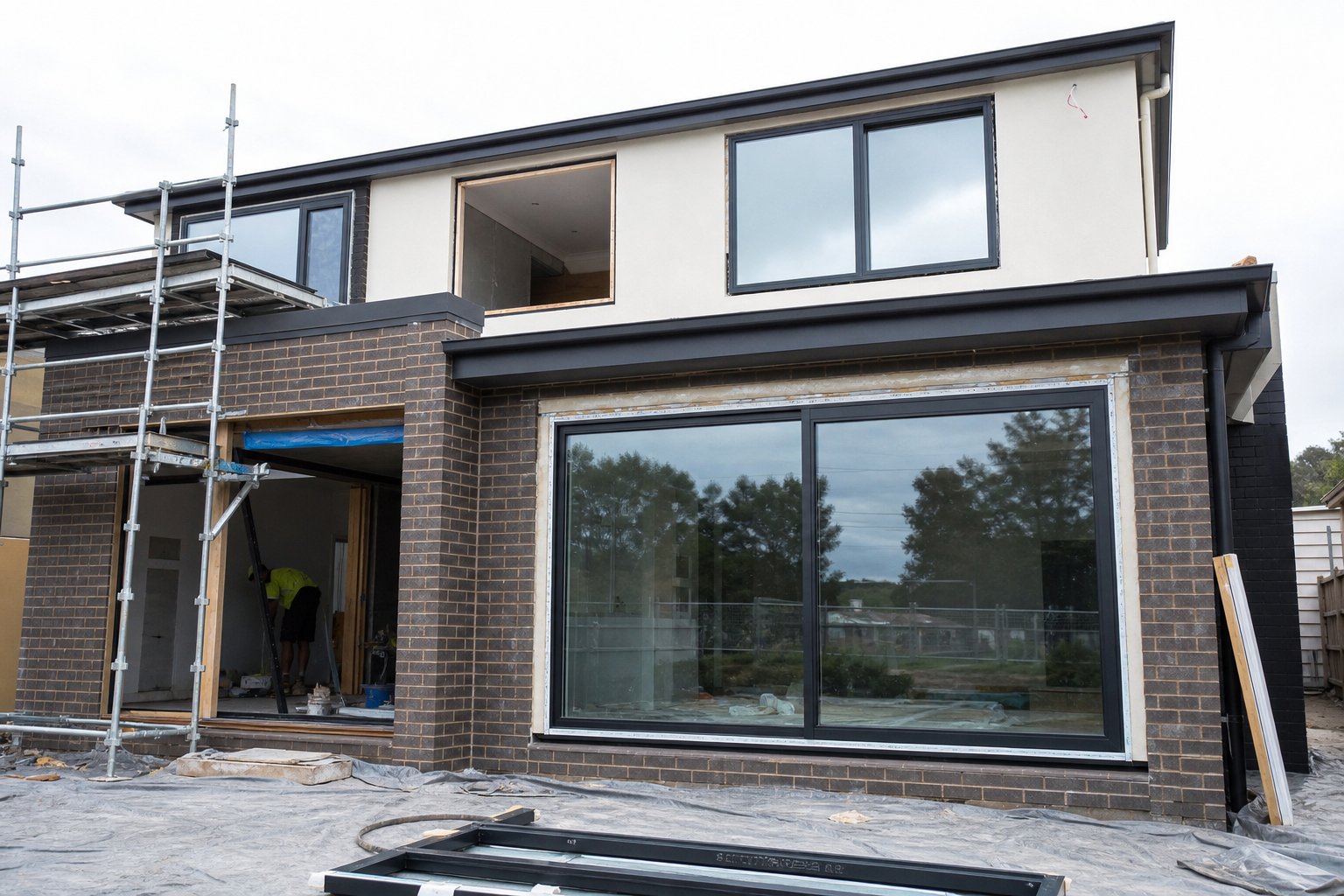
Permits sorted, specifications locked in, supplier chosen. The next question most Geelong homeowners ask is deceptively simple: how long will this actually take, and what happens at each stage? The aluminium window installation process follows a predictable sequence whether you're replacing a single bathroom window or refitting an entire home, but the timeline stretches or compresses depending on your property's construction type, access conditions, and how many openings are involved.
The Installation Timeline From Measure to Completion
A single window replacement in a straightforward opening can be completed in a day. A full-home refit across 10 to 15 openings typically runs one to three weeks from first measurement through to final sign-off, with the actual on-site installation occupying roughly three to five days of that window. The rest is lead time for fabrication and delivery.
Here's the typical sequence from start to finish:
- Initial site measure — A technician visits your property and measures every opening individually. As the Window and Door Manufacturers Association notes, measurement errors account for 78% of window installation problems and warranty claims, so this step can't be rushed. Each opening is measured at multiple points for width, height, and diagonals because walls shift over time and two openings in the same room are rarely identical.
- Quote and specification confirmation — You receive a detailed quote covering frame profiles, glazing type, hardware, colour, and any compliance requirements specific to your site. This is your opportunity to confirm thermal breaks, wind ratings, and coating grades before manufacturing begins.
- Fabrication and lead time — Custom aluminium windows are manufactured to your exact measurements. Standard lead times in the Geelong region typically run three to six weeks depending on complexity, colour choices, and glazing specifications. Peak building seasons can push this out further.
- Site preparation — Before the installation crew arrives, clear furniture and belongings away from window areas. Remove curtains, blinds, and any wall-mounted items near the openings. Lay drop sheets to protect flooring. If external access is restricted by gardens or fencing, discuss this with your installer ahead of time so scaffolding or alternative access can be arranged.
- Old window removal — The existing window is taken apart in stages rather than ripped out in one piece. Sashes and glass come out first, then the frame is carefully detached from the wall substrate. Installers score through old sealant lines before prying frames free to avoid damaging surrounding brickwork or plaster.
- Opening inspection and preparation — With the old window out, the installer checks the rough opening for square, level, and any hidden damage like rot in timber reveals or crumbling mortar in brick. The opening is cleaned of old sealant, foam residue, and debris.
- New frame installation — The aluminium frame is positioned, shimmed level and plumb, and secured with fixings matched to your wall type. Every operable sash is tested for smooth operation before screws are fully tightened. Sealing follows: exterior silicone with backer rod around the perimeter, low-expansion foam in the interior gap, and flashing tape where required.
- Hardware, screens, and finishing — Handles, locks, flyscreens, and any security stays are fitted. Interior reveals or trims are installed or made good. The installer tests every moving part one final time.
- Final inspection and sign-off — A walkthrough with the homeowner confirms everything operates correctly, seals are complete, and the finish is clean. Any compliance documentation or warranty paperwork is handed over at this stage.
For a single window replacement, steps five through eight happen within one to two hours for a straightforward retrofit. A full-frame replacement where the entire opening is stripped back to the rough framing takes closer to two to four hours per window because of the additional preparation and flashing work involved.
Retrofitting Aluminium Windows Into Older Geelong Homes
Older properties across Newtown, Geelong West, and East Geelong present challenges that newer builds simply don't. Period homes were constructed with different methods, different materials, and different tolerances than modern residential builds, and those differences surface the moment an installer starts removing the original windows.
Brick veneer homes are the most common construction type across Geelong's mid-century suburbs. Replacing windows in brick veneer homes means working with a masonry skin over a timber or steel structural frame. The window typically sits against a timber reveal that bridges the gap between the brick and the internal frame. If that reveal has deteriorated, swollen, or shifted over decades, it needs repair or replacement before the new aluminium frame can be fitted properly. Masonry anchors or dynabolts secure the frame into the brickwork, and because brick surfaces are never perfectly flat, generous sealant application with backer rod is essential to achieve a weathertight junction.
Weatherboard homes bring a different set of complications. Aluminium window installation in a weatherboard house requires careful integration with the existing cladding and building wrap. Removing the old window often means cutting back weatherboards around the opening, and the new frame needs to be flashed correctly into the weather-resistant barrier behind the cladding. The shingle-lapping sequence of flashing tape, bottom first, then sides, then head, ensures water always runs over each layer rather than behind it. Timber framing in older weatherboard homes may also have shifted or settled, meaning openings that were once square no longer are. Minor deviations can be corrected with shims, but anything beyond about 6mm out of square may require reframing before the new window goes in.
Period homes with decorative features add an aesthetic layer to the practical challenges. Original window openings in Victorian and Edwardian homes often have arched heads, ornate mouldings, or non-standard proportions that don't align with off-the-shelf aluminium sizes. Custom fabrication solves the sizing issue but adds lead time and cost. Where heritage overlays apply, the installer also needs to work within planning constraints that may dictate frame profiles, colours, or materials on street-facing elevations.
One distinction worth understanding before your project begins: retrofit installation versus new-construction installation. A retrofit slides the new aluminium window into an existing frame opening, keeping the surrounding wall intact. It's faster, less disruptive, and less expensive. A new-construction approach strips everything back to the raw rough opening, integrates full flashing and weatherproofing from scratch, and anchors the frame directly into the structural framing. The trade-off is more time and cost, but a more thorough seal and the opportunity to address any hidden damage behind the old frame. For most older Geelong homes where the existing opening is structurally sound, a retrofit approach delivers a quality result with minimal disruption. Where there's any doubt about the condition of the framing or evidence of past water damage, going full-frame is the safer long-term investment.
Regardless of your property type, the installation itself is only as good as the people doing it and the product they're fitting. That brings up the question most homeowners wrestle with next: how do you actually evaluate and compare the suppliers quoting on your project?
How to Choose the Right Aluminium Window Supplier in Geelong
A well-specified window means nothing if the supplier behind it cuts corners on fabrication, communication, or aftercare. Choosing an aluminium window supplier in Geelong involves more than picking the cheapest quote. It means understanding what's actually included in that quote, where the product is made, and whether the supplier can deliver the exact configuration your project demands.
What to Look for When Comparing Supplier Quotes
The first red flag is a lump-sum quote with no breakdown. A professional supplier provides an itemised document that separates frame cost, glazing, hardware, powder coating, installation labour, and any extras like flyscreens or security mesh. Without that detail, you can't tell whether one quote is cheaper because it uses inferior glass or simply because the supplier runs a leaner operation.
When comparing aluminium window quotes, check whether each one specifies the same things: glass type and thickness, powder coat grade, hardware brand, thermal break inclusion, and warranty scope. Two quotes at different price points might actually be for two very different products. A transparent supplier will happily detail exactly what's included and won't bury critical specifications in fine print.
Here are the key questions every homeowner should ask before signing off:
- Is this quote itemised, and does it include both supply and installation?
- What powder coat grade is specified, and is it suitable for my distance from the coast?
- Are thermally broken frames included, or are they an optional upgrade?
- What glazing is quoted: single, double, Low-E, laminated?
- Where are the frames manufactured: locally, interstate, or overseas?
- What does the warranty cover, and for how long? Does it include hardware and seals or just the frame?
- Can I see a physical product sample or visit a completed project?
- Is the installer a direct employee or a subcontracted third party?
- What happens if measurements are wrong or a product arrives damaged?
- Are you licensed, insured, and compliant with AS 2047 and AS 1288?
Asking these upfront separates serious suppliers from those relying on vague pricing to win jobs they'll cut corners on later.
Local Fabrication vs Imported Frames
Not every supplier quoting on your Geelong project actually makes the windows. Some fabricate locally, cutting and assembling aluminium profiles in their own workshop. Others import pre-made frames from interstate or overseas factories and act primarily as a sales and installation intermediary.
Local fabrication offers several practical advantages. Lead times are shorter because there's no shipping delay. If a measurement error occurs or a frame arrives damaged, the replacement can be produced quickly without waiting on international freight. You also get direct access to the people who built the product, which simplifies warranty claims and custom adjustments.
Imported frames aren't inherently inferior. Many overseas manufacturers hold Australian certifications including AS 2047 and produce high-quality aluminium systems at competitive prices. The trade-off is longer lead times, less flexibility for last-minute changes, and potentially more complex communication if issues arise post-installation. The key is verifying that any imported product carries valid Australian compliance certification, not just a claim of equivalence.
Ask your supplier directly: do you fabricate these frames, or are they manufactured elsewhere? Neither answer is automatically wrong, but it changes what you should expect around timelines, customisation flexibility, and accountability.
Custom Configuration and Colour Options
Standard off-the-shelf windows work for straightforward openings in common sizes. Most Geelong projects, though, involve at least some custom requirements: non-standard dimensions, specific glazing for energy compliance, or a colour that matches existing architectural elements.
A capable supplier offers genuine customisation depth beyond just adjusting width and height. That includes frame profile selection, glass configuration choices (clear, tinted, Low-E, laminated, or acoustic), hardware systems matched to your security and aesthetic preferences, and a full powder coat colour range rather than a handful of stock options. Suppliers like MEICHEN provide project-based aluminium window systems with extensive colour ranges, multiple glazing configurations, and custom sizing for both residential and commercial builds across Geelong, giving homeowners and builders the flexibility to match precise architectural requirements rather than compromising on what's available off the shelf.
Colour deserves particular attention. Standard colours like black, white, and monument are typically included in base pricing. Custom colours, textured finishes, or woodgrain effects attract a surcharge but allow your windows to integrate seamlessly with cladding, roofing, or interior design schemes. If you're building in a coastal area, confirm that the custom colour you want is available in a marine-grade powder coat formulation, not just a standard residential coating in a non-standard shade.
Seeing physical samples matters more than most people realise. Colour swatches on a screen look different under natural light, and the feel of hardware, the smoothness of a sliding mechanism, or the heft of a locking handle can't be judged from a brochure. Any supplier confident in their product will encourage you to visit a showroom, handle samples, or inspect a recent installation nearby.
Choosing the right supplier sets the foundation for decades of performance. But even the best-specified, best-installed aluminium windows need ongoing attention to deliver on that promise, particularly in Geelong's salt-air environment where neglect accelerates wear faster than most homeowners expect.
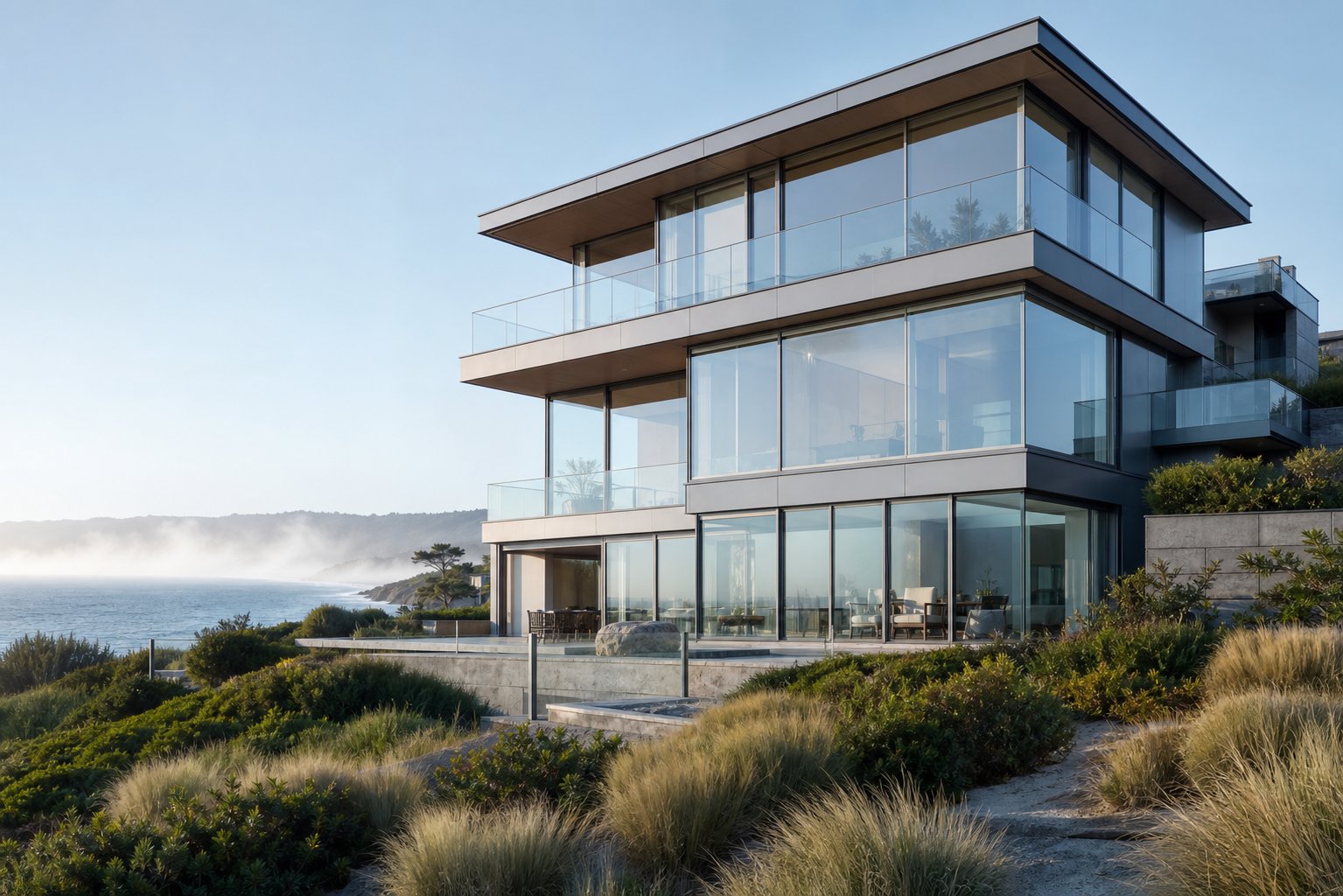
Maintaining and Repairing Aluminium Windows in Coastal Conditions
Aluminium frames are low maintenance, not no maintenance. That distinction matters in Geelong's coastal environment, where salt deposits, UV exposure, and seasonal temperature swings quietly degrade seals, hardware, and finishes if left unchecked. A basic routine keeps your windows operating smoothly for decades. Ignore that routine, and you'll face repairs or premature replacement that could have been avoided entirely.
Seasonal Cleaning and Lubrication Schedule
How often you need to clean aluminium window frames depends on your proximity to the coast. Properties on the Bellarine Peninsula or within a few kilometres of the shoreline should follow a monthly cleaning cycle for tracks and hardware, with a full frame wash at least quarterly. Homes in sheltered inland suburbs like Highton or Belmont can stretch to quarterly cleans with a thorough inspection every six months.
Here's a practical seasonal maintenance checklist for aluminium window maintenance in a coastal climate:
- Monthly (coastal properties): Wipe down frames and sills with warm soapy water and a soft cloth to remove salt residue. Clear visible grit from sliding tracks using a soft brush or vacuum with a crevice attachment.
- Quarterly: Lubricate all sliding tracks, rollers, hinges, and locking mechanisms with a silicone-based spray. Avoid petroleum-based lubricants as they attract dust and gum up over time. Check drainage holes at the base of frames and clear any blockages so water can escape freely.
- Biannually (spring and autumn): Inspect weather seals and rubber gaskets around every operable sash. Look for cracking, hardening, or sections that have pulled away from the frame. Test each window for smooth operation and note any that feel stiffer than usual.
- Annually: Examine the powder coat finish for chalking, fading, or any chips that expose bare aluminium. Check hardware screws for tightness. Inspect glass seals for signs of moisture ingress or separation from the frame.
The cleaning itself is straightforward. Warm water with a mild household detergent and a non-abrasive cloth is all you need for frames. Avoid solvent-based cleaners, abrasive pads, or high-pressure hoses directed at seals, as these can strip protective coatings or force water past gaskets. For aluminium window track lubrication, a light application of silicone spray on rollers and channels restores smooth sliding action and prevents the metal-on-metal grinding that wears components prematurely.
When to Repair vs When to Replace
Not every problem means new windows. Many common issues are repairable without touching the frame itself, and knowing the difference saves thousands.
Repairable issues (DIY or professional):
- Stiff sliding windows caused by dirty tracks or dry rollers — clean and lubricate
- Minor drafts from worn weather seals — replace the rubber gaskets without replacing the frame
- Loose handles or latches — tighten or swap hardware
- Surface oxidation appearing as white powdery deposits — treat with aluminium-safe polish and apply protective wax
- Blocked drainage weep holes — clear with a thin wire or compressed air
- Condensation on glass surfaces (exterior face) — this is normal physics, not a fault
Replacement indicators:
- Condensation trapped between double-glazed panes — the sealed unit has failed and cannot be repaired
- Deep pitting corrosion that has compromised the structural integrity of the aluminium section
- Frame warping or distortion preventing the sash from seating square
- Persistent water entry after seal replacement and flashing remediation
- Windows approaching 25 to 30 years with multiple concurrent issues
Aluminium window seal replacement in Geelong is one of the most common professional repairs. Seals harden and crack after 10 to 15 years of UV exposure, losing their compression and allowing drafts and moisture past the frame. A glazier can source compatible gasket profiles and refit them in under an hour per window, restoring the original weathertight performance at a fraction of replacement cost.
Condensation between panes is the one issue homeowners often misread. If moisture appears inside the glass unit where you can't wipe it, the sealed unit has failed and the insulating gas has escaped. The window is effectively single-glazed at that point. No amount of maintenance fixes this. The glass unit needs replacing, though if the aluminium frame is structurally sound, only the glazing unit requires swapping rather than the entire window assembly.
Protecting Your Investment for Decades
Powder coat finishes are durable but not invincible. On north and west-facing elevations that cop the most UV, you may notice slight chalking or colour fading after 15 to 20 years. This doesn't mean the frame is failing. A specialist can clean, prepare, and re-coat the existing frame in situ, extending its life by another decade or more without the disruption of full removal.
The tipping point between ongoing repair and full replacement comes down to a simple calculation. If a window has one fixable issue and the frame is otherwise sound, repair it. If you're dealing with multiple problems simultaneously — failed seals, corroded hardware, chalked coating, and stiff operation — on a frame that's already 20-plus years old, the cumulative repair cost approaches or exceeds the price of a new, better-performing unit. At that stage, replacement becomes the smarter long-term investment.
When maintenance is no longer enough and replacement is the clearer path, suppliers like MEICHEN offer aluminium window systems with modern glazing options and extensive colour ranges that can upgrade older installations to current energy and performance standards. It's worth exploring what's available before defaulting to patching a window that's already past its practical lifespan.
The difference between a 20-year window and a 40-year window often isn't the product itself. It's whether someone spent 30 minutes each season keeping salt off the frames, lubricant in the tracks, and an eye on the seals. That small investment of time protects a much larger investment in your home.
Frequently Asked Questions About Aluminium Windows in Geelong
1. What type of aluminium window is best for coastal homes in Geelong?
For coastal Geelong properties, particularly along the Bellarine Peninsula and Surf Coast, awning and casement windows with marine-grade powder coating or anodised finishes perform best. These styles handle salt-air exposure while providing excellent ventilation. Thermally broken frames paired with double glazing offer the strongest protection against corrosion, heat transfer, and driving rain. Stainless steel or marine-grade hardware is also essential to prevent premature deterioration from airborne chlorides.
2. Do I need a building permit to replace aluminium windows in Geelong?
A like-for-like replacement within the same opening size generally does not require a building permit in Greater Geelong. However, permits are required when creating new openings, enlarging existing ones, undertaking major renovations exceeding 50% of floor area, or working on properties in Bushfire Prone Areas. Properties under a Heritage Overlay also need a separate planning permit if the window material or appearance changes, particularly on street-facing elevations.
3. How long do aluminium windows last in Geelong's climate?
Well-specified aluminium windows with appropriate coastal-grade finishes can last 40 years or more in Geelong's climate with minimal maintenance. The key factors affecting longevity are the powder coat grade, hardware quality, and whether regular cleaning removes salt deposits before they cause damage. Properties closer to the coast should follow a monthly cleaning schedule for tracks and hardware, while inland homes can maintain quarterly. Seal replacement every 10 to 15 years extends the window's effective lifespan significantly.
4. What is the difference between thermally broken and standard aluminium window frames?
Standard aluminium frames are a single continuous metal profile that conducts heat rapidly between indoors and outdoors. Thermally broken frames incorporate a polyamide insulating strip that separates the interior and exterior aluminium sections, interrupting heat flow. For Geelong's climate zone with temperatures ranging from near zero to above 35 degrees Celsius, thermally broken frames reduce energy costs, improve indoor comfort, and lower condensation risk during cold mornings. They are effectively required to meet current NCC 7-star energy ratings for new builds.
5. How do I choose between aluminium and timber windows for my Geelong home?
The decision depends on your property location, heritage constraints, and maintenance tolerance. Aluminium suits coastal properties, modern builds, and homeowners wanting minimal upkeep, offering 40-plus years of performance with just an annual wash. Timber suits heritage restorations where council overlays mandate original materials on visible elevations. Over a 30-year lifespan, aluminium typically costs less overall because timber requires sanding and repainting every three to five years. Aluminium-clad timber is a hybrid option combining timber's interior warmth with aluminium's exterior durability.