
What Steel Look Aluminium Windows Actually Are
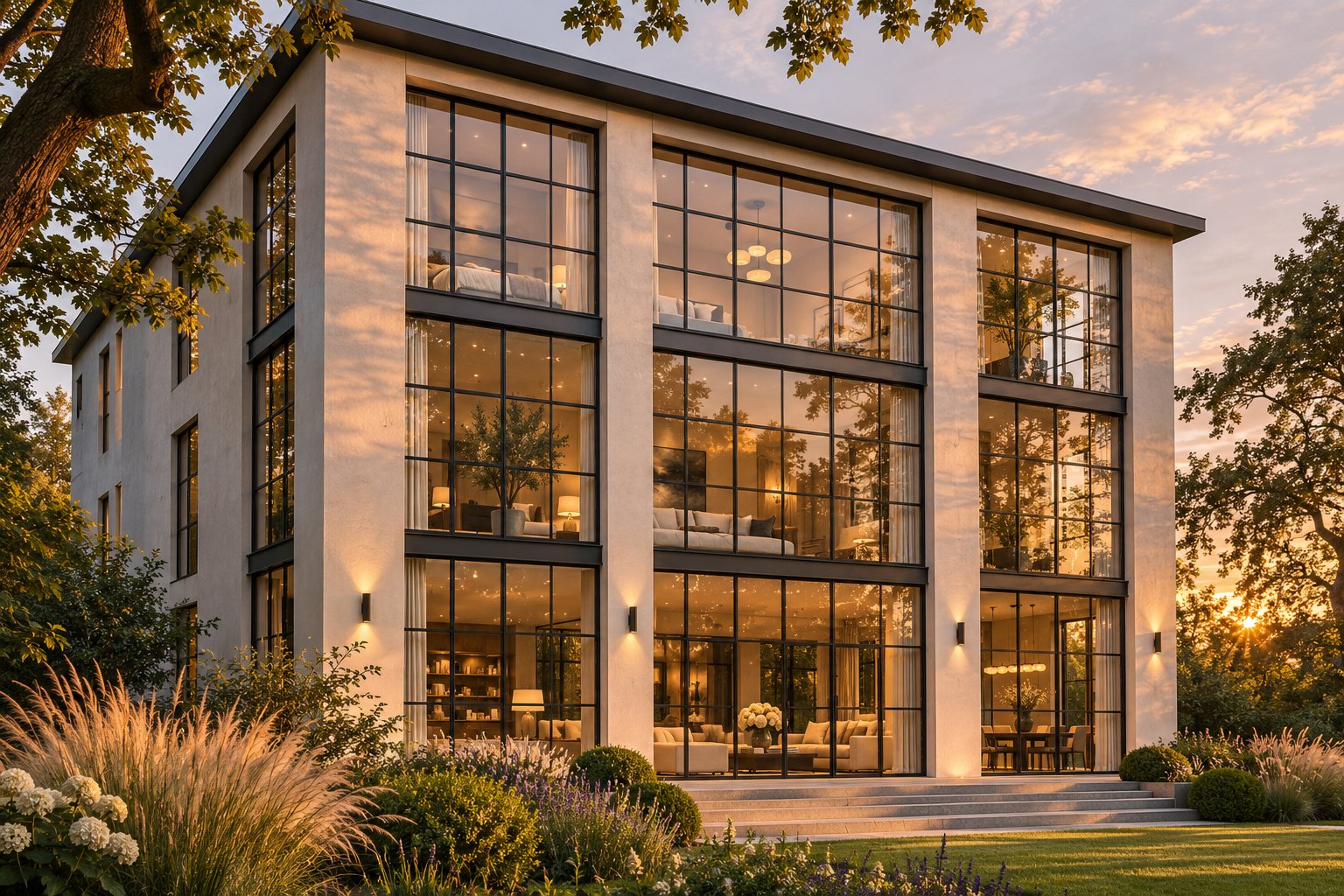
Steel look aluminium windows are aluminium-framed windows purpose-engineered with narrow sightlines, square-edged profile geometry, and detailing that replicates the aesthetic of traditional hot-rolled steel windows. The key distinction is this: a genuine steel-look result depends on profile shape, muntin proportions, and the shadow lines cast by the frame—not simply a black powder coat applied to a standard aluminium extrusion.
That difference matters more than most supplier brochures let on. As SMIRO's analysis of steel-look labelling points out, the term "steel-look" is a trade description, not a defined grade tied to any Australian standard. Two windows can both carry the label while delivering very different visual outcomes—one with carefully proportioned divided-lite bars echoing heritage factory glazing, the other little more than a conventional frame in a dark colour.
This guide walks through the full landscape: every type of steel-look alternative available, thermal performance explained in plain language, finish technology, honest limitations, and a practical decision framework for choosing the right option.
What Makes a Window Truly Steel-Look
Several visual markers separate a steel-look aluminium window from an ordinary aluminium window with dark paint. Narrow sightlines sit at the top of that list—the thinner the visible frame, the closer the resemblance to traditional steel. Square-edged profiles matter just as much; rounded or bevelled edges immediately read as modern aluminium rather than industrial steel. Putty-line detailing, where the glazing bead mimics the angled sealant line found on old metal frame windows, adds another layer of authenticity. Finally, divided-lite patterns—those grid bars reminiscent of warehouse and factory glazing—complete the look. When these elements come together in a purpose-designed extrusion, the result can closely approximate custom steel windows at a fraction of the weight and maintenance burden.
Who Is Searching for Steel-Look Aluminium Windows and Why
The audience here is broader than you might expect. Homeowners chasing an industrial or heritage aesthetic for a kitchen renovation or living area make up one group. Architects specifying for new builds, adaptive reuse projects, or contemporary commercial fit-outs represent another—they need replica windows that satisfy a design intent without blowing out the programme with steel's lead times and installation complexity. Builders, meanwhile, want something installation-friendly that sidesteps the structural demands of genuine steel framing. Even owners of older homes looking to replace deteriorating old aluminium windows often land on steel-look systems as a way to upgrade performance while adding character rather than losing it.
A black frame does not equal a steel-look window—profile geometry and sightline width are what create the authentic appearance.
Getting the visual right, though, is only half the equation. The material behind that appearance carries its own set of performance characteristics—thermal behaviour, structural capacity, finish durability—that vary dramatically depending on the system you choose.
Why the Industrial Steel Window Aesthetic Endures
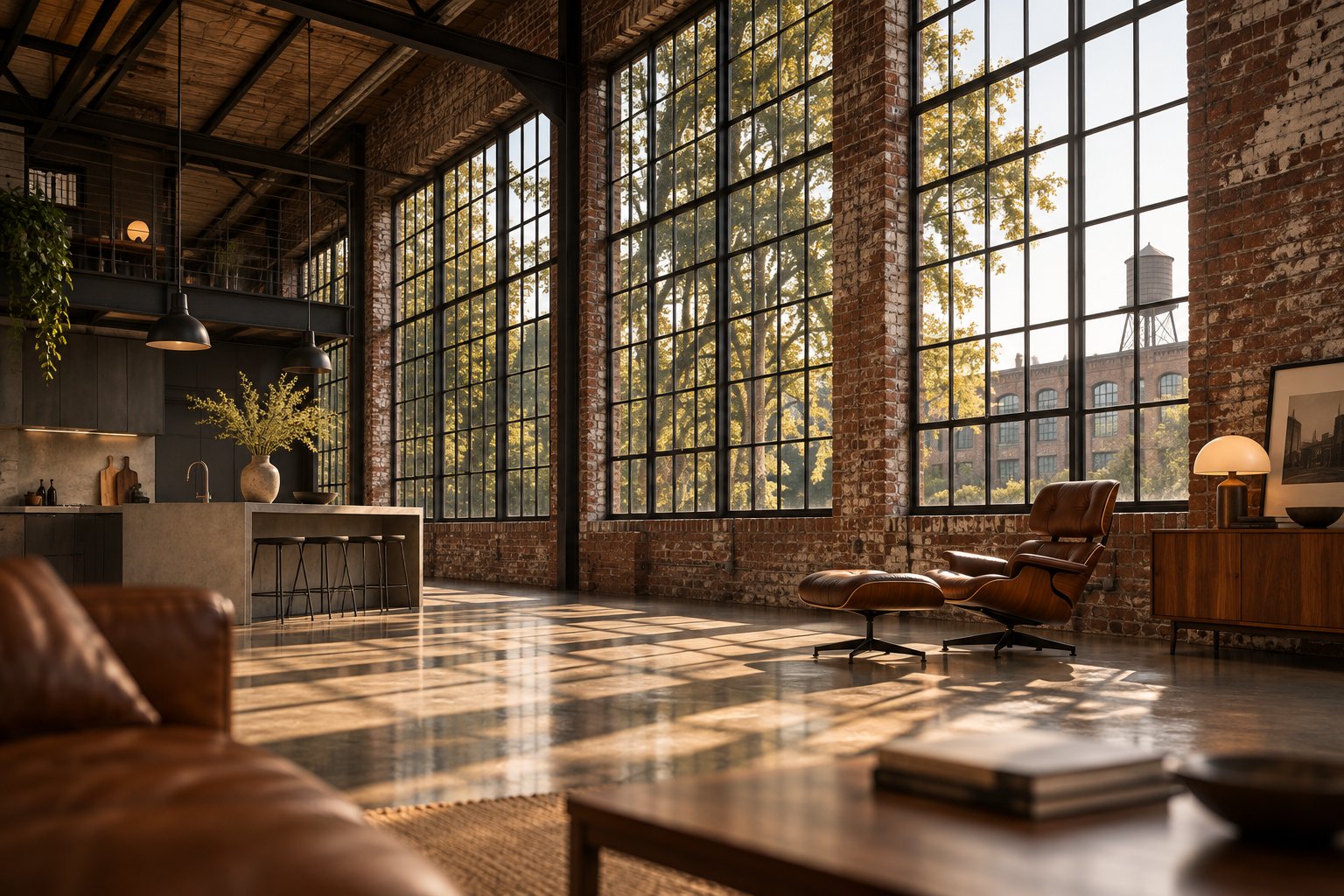
Every design trend has a backstory, and few are as grounded in physical architecture as the steel window aesthetic. Those slim black frames, divided-lite grids, and expansive glass panels weren't conceived in a design studio—they emerged from the practical demands of 19th and early 20th century industry. Factories, warehouses, and mills needed daylight to reach deep floor plates, and steel framing delivered it. The material's strength allowed for narrow profiles supporting large panes, flooding workspaces with natural light while maintaining structural integrity across wide openings.
What nobody predicted was that a solution born from industrial necessity would become one of the most enduring visual languages in residential architecture more than a century later.
From Factories to Modern Homes
The shift began quietly. In the 1960s and 1970s, artists and creative professionals in cities like New York and London started converting abandoned factories and warehouses into live-work spaces, drawn by affordable rents and expansive interiors. Those original steel windows—tall, gridded, often stretching across entire walls—became defining features rather than relics. The loft movement transformed what had been purely utilitarian glazing into a sought-after design element, and the Crittall-style window became synonymous with a certain kind of urban sophistication.
In Australia, the same pattern played out in inner-city precincts across Sydney, Melbourne, and Brisbane. Former wool stores in Teneriffe, boot factories in Collingwood, and industrial buildings in Surry Hills were reimagined as apartments, studios, and offices. Each conversion preserved the character of those original custom metal windows and exposed frameworks—and each one planted the aesthetic deeper into the mainstream imagination.
The influence didn't stay confined to loft conversions. Architects working on new residential projects began borrowing the visual language of steel replica windows: narrow frames, dark finishes, divided lites. Kitchens gained internal steel-look partitions. Living areas featured floor-to-ceiling glazing grids that echoed warehouse proportions. The factory-window look migrated from adaptive reuse into purpose-built homes, appearing in everything from contemporary Melbourne townhouses to coastal Queensland builds where expansive glazing meets an industrial edge.
Crittall Windows, the brand most closely associated with this heritage, traces its steel glazing work back to 1849—a lineage that speaks to just how deeply rooted the aesthetic is. The slim black frame endures not because it's trendy in the fleeting sense, but because it solves a visual problem exceptionally well: maximum glass, minimum frame, clean geometric order.
The Renovation Challenge with Original Metal Frames
For homeowners living with original old metal frame windows from mid-century or earlier builds, the appeal of the aesthetic isn't theoretical—it's already part of their home. The problem is that the frames themselves are often failing. Steel corrodes. Single glazing offers almost no thermal or acoustic insulation. Air infiltrates around warped or poorly sealed sashes. And finding replacement parts for systems that haven't been manufactured in decades ranges from difficult to impossible.
Common reasons homeowners replace original metal frames include:
- Poor thermal performance from single glazing and non-thermally-broken steel profiles, leading to condensation and discomfort
- Corrosion and rust that compromise structural integrity and visual appearance
- Difficulty sourcing replacement hardware, seals, and components for discontinued systems
- Inability to accept modern double-glazed units, ruling out a simple reglaze
- Air infiltration and water ingress around deteriorating seals and warped frames
The emotional dimension matters too. Owners of character homes—whether a 1930s brick dwelling in Adelaide, a mid-century flat in Sydney's eastern suburbs, or a renovated Queenslander—often feel strongly about preserving the visual identity of their property. Ripping out old metal windows and replacing them with a standard aluminium or vinyl frame can feel like an aesthetic downgrade, even when the performance gain is significant. That tension between honouring the original look and achieving modern energy performance is precisely where steel-look aluminium systems have carved out their role.
The question, of course, is whether those systems—and the alternatives alongside them—actually deliver on the promise. The answer depends entirely on which type of product you're evaluating.
Every Type of Steel-Look Window Option Explained
Four broad categories of window can deliver the industrial steel aesthetic, yet they differ sharply in construction, performance, weight, and cost. Understanding what each category actually offers—rather than relying on marketing labels—prevents expensive specification errors and sets realistic expectations before quotes land on your desk.
Genuine Hot-Rolled Steel Windows
Traditional hot-rolled steel remains the benchmark for the thinnest possible sightlines. Profiles can achieve visible frame widths as narrow as 18–25 mm because steel's tensile strength allows slender sections to span large openings without structural reinforcement. European manufacturers such as Ottostumm produce frames with visible sections of just 18 mm formed from solid 2 mm sheet steel.
The trade-offs are real. Solid steel conducts heat aggressively—interior frame surfaces drift toward outdoor temperatures, collecting condensation and even frost in colder months. Weight is substantial, often requiring structural support at the head and jambs that lighter framing materials skip entirely. Maintenance demands are ongoing: steel corrodes without diligent recoating, and coastal environments like those found along much of Australia's populated coastline accelerate that process significantly. For all its visual purity, genuine hot-rolled steel suits projects where the aesthetic is non-negotiable and the budget accommodates both the upfront premium and decades of upkeep.
Thermally Broken Steel Frames
Insert a polyamide thermal break between the interior and exterior steel faces and the energy story changes dramatically. The insulating barrier interrupts the heat path through the frame, keeping the interior surface closer to room temperature, reducing condensation risk, and improving the window's overall thermal performance.
Modern thermally broken steel systems have narrowed the profile gap that once made specifiers choose between slim aesthetics and energy compliance. Jansen's Arte 2.0 system, for example, achieves face widths as narrow as 25 mm on fixed glazing at a 60 mm basic depth—dimensions that would have been unthinkable for a thermally broken profile a decade ago. The heavier Arte 66 companion supports turn-and-tilt sashes up to 2,300 mm tall with fixed-lite face widths of 30 mm.
Profile depth does increase slightly to house the thermal break, and fabrication costs rise accordingly. Still, for any exterior opening in a conditioned building—residential or commercial—a thermally broken steel frame is the responsible specification. In Australian terms, it's the difference between a window that helps you meet NCC energy requirements and one that actively fights against them.
Steel-Look Aluminium Profiles
Purpose-designed aluminium extrusions represent the most practical route for most Australian residential and commercial projects chasing the steel aesthetic. These aren't standard aluminium frames with a coat of black powder—they're extrusions engineered with specific profile geometry, square edges, and narrow sightlines that mimic steel proportions.
The advantages stack up quickly. Aluminium weighs roughly a third of steel, simplifying installation and reducing the structural demands on surrounding walls. Corrosion resistance is inherently superior—a critical consideration given Australia's extensive coastline and high-UV environment. Compatibility with standard double-glazed units is straightforward, and commercial windows in aluminium can be sourced through established Australian supply chains with shorter lead times than European steel systems.
Honesty demands a caveat, though. As SMIRO notes, steel-look aluminium typically has slightly thicker profiles than true steel because aluminium lacks the same tensile strength. Joints are mechanically fastened rather than welded, which creates subtle visual differences at close range. Sightlines that might sit at 20–25 mm in genuine steel typically land at 30–50 mm in aluminium equivalents—still slim, but not identical. For the vast majority of installations viewed at normal distances, the difference is negligible. For purists standing nose-to-frame, it's detectable.
Other Alternatives Worth Knowing
Fiberglass frames with steel-look geometry have emerged as a niche option. Fiberglass expands and contracts at a rate similar to glass, which reduces seal stress over time, and its strength-to-weight ratio allows reasonably narrow profiles. The material accepts paint well and resists corrosion, making it a durable choice. However, availability in Australia is more limited than aluminium, customisation options tend to be narrower, and pricing often sits at a premium tier without the brand recognition or proven local supply chains that aluminium enjoys.
Vinyl windows for metal buildings and shed-to-house conversions occasionally enter this conversation too. Vinyl can be manufactured with applied muntin grids and dark colour finishes that approximate an industrial look from a distance. The material is lightweight and low-maintenance. But vinyl's inherent flexibility limits maximum span sizes, profiles tend to be noticeably thicker than aluminium or steel, and the aesthetic falls short under closer inspection. For budget-conscious projects—particularly conversions of 1970s aluminium windows or older commercial structures—vinyl with metal-look cladding offers a functional if visually compromised entry point.
| Feature | Genuine Hot-Rolled Steel | Thermally Broken Steel | Steel-Look Aluminium | Fiberglass / Vinyl Alternatives |
|---|---|---|---|---|
| Typical Sightline Width | 18–30 mm | 25–35 mm | 30–50 mm | 40–70 mm |
| Approximate Weight (per m²) | High (40–60 kg) | High (45–65 kg) | Moderate (15–25 kg) | Low to moderate (10–20 kg) |
| Thermal Break Available | No | Yes (polyamide) | Yes (most systems) | Varies by product |
| Corrosion Resistance | Low — requires ongoing protective coatings | Low to moderate — coatings required | High — inherent to aluminium | High (fiberglass) / High (vinyl) |
| Maximum Span Potential | Excellent — high tensile strength | Excellent | Good — may need wider mullions for large spans | Limited — reduced structural rigidity |
| Maintenance Level | High — regular recoating and rust treatment | Moderate — periodic inspection and recoating | Low — powder coat is largely maintenance-free | Very low |
| Relative Cost Tier (AUD) | $$$$ | $$$$$ | $$–$$$ | $–$$ |
The table makes one thing clear: each category occupies a distinct position on the performance-versus-practicality spectrum. Genuine steel delivers unmatched sightlines but demands structural accommodation and ongoing care. Thermally broken steel adds energy performance at a higher price point. Steel-look aluminium balances aesthetics, performance, and real-world buildability for the widest range of projects. And the fiberglass or vinyl alternatives serve specific budget or conversion scenarios where close visual fidelity matters less than function.
Choosing between these categories narrows the field, but within each one—particularly aluminium—the thermal performance story varies enormously depending on whether a thermal break is present, how it's designed, and what glazing it accepts.
Understanding Thermally Broken Aluminium in Plain Language
Aluminium conducts heat roughly 1,000 times more efficiently than timber. That's a useful property if you're manufacturing cookware—less so if you're building a window frame designed to separate a climate-controlled interior from a 38°C Adelaide afternoon or a 4°C Canberra winter morning. In a standard aluminium frame without any intervention, outdoor temperatures travel through the metal almost unimpeded, turning the frame itself into a radiator in summer and a cold bridge in winter.
This is precisely why thermally broken aluminium exists—and why understanding it matters even more when the frame in question is a steel-look profile engineered to be as narrow as possible.
What a Thermal Break Does Inside an Aluminium Frame
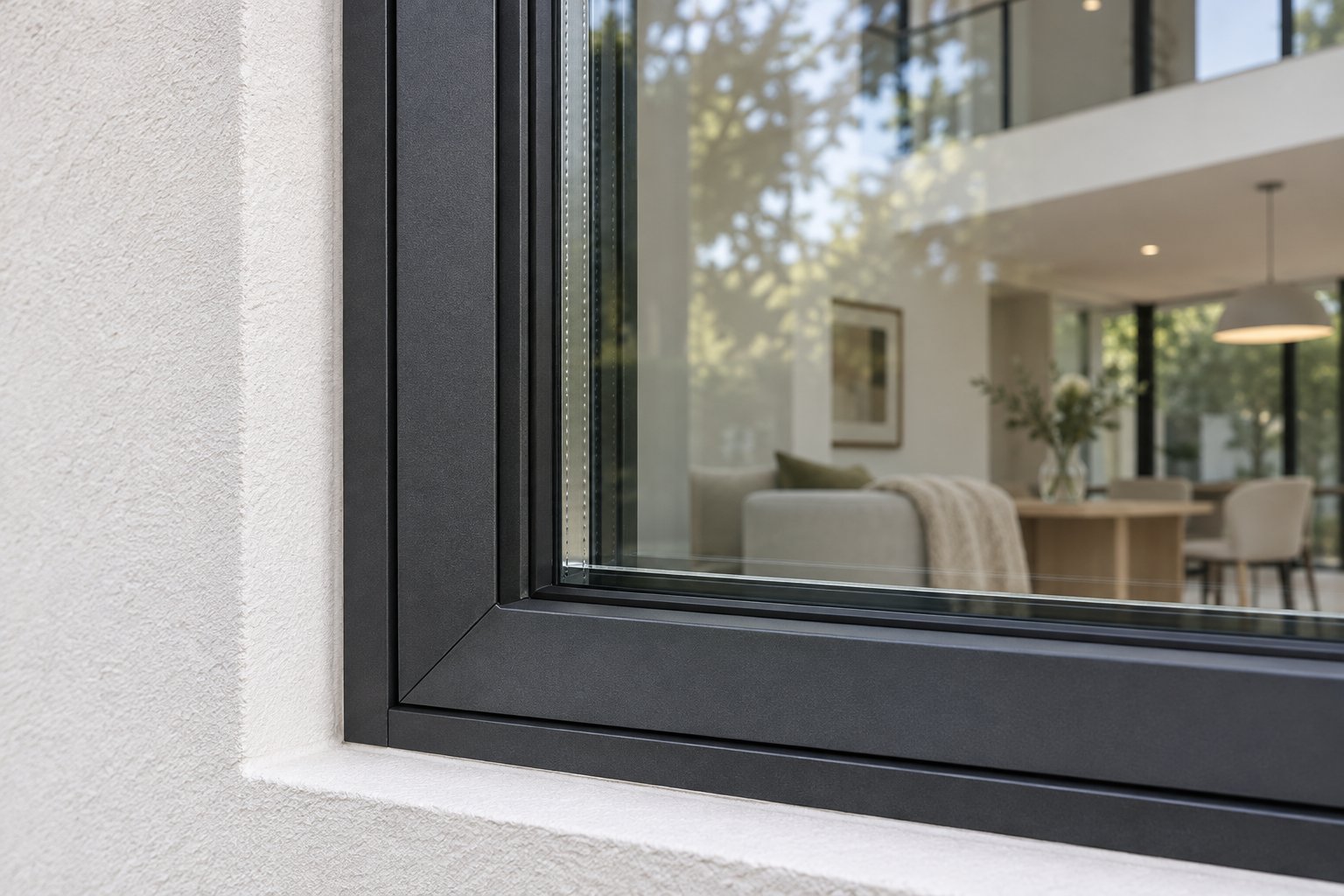
Think of a thermal break as a gate that stops heat from walking across a bridge. In a thermally broken aluminium window, the frame is split into two separate aluminium sections—one facing outside, one facing inside—connected by a strip of polyamide, a rigid plastic with extremely low thermal conductivity. That polyamide barrier interrupts the conductive pathway between the exterior and interior faces of the frame, preventing heat energy from flowing freely through the metal.
The effect is straightforward. In winter, the interior aluminium surface stays closer to room temperature instead of plummeting toward outdoor conditions. In summer, it resists absorbing the heat radiating off a sun-baked exterior face. The practical benefits flow directly from that single material interruption:
- Condensation resistance: When the interior frame surface stays warm, it's far less likely to drop below the dew point—the temperature at which moisture in the air condenses into visible water droplets. Condensation on old metal windows is one of the most common complaints from owners of non-thermally-broken frames, and over time that moisture promotes mould growth and damages surrounding finishes.
- Energy efficiency: A frame that doesn't bleed heat outward in winter or inward in summer reduces the load on heating and cooling systems. Industry research suggests thermally broken frames can reduce heat loss through the frame by up to 60% compared to non-broken aluminium—a figure that translates directly into lower energy bills and better alignment with NCC energy performance requirements under NatHERS modelling.
- Occupant comfort: Cold frames radiate discomfort. Anyone who has sat near old aluminium windows on a cold night knows the sensation—a persistent chill that no amount of heating seems to resolve. A thermally broken frame eliminates that cold-surface effect, making the space near the window genuinely liveable year-round.
Without a thermal break, none of this happens. The aluminium acts as a continuous conductor, faithfully transferring whatever temperature exists outside directly to the interior surface. In a non-thermally-broken frame, you're essentially paying for a high-performance double-glazed unit and then short-circuiting its insulation at every square centimetre of frame contact.
Why Thermal Performance Varies Between Systems
Here's where the conversation gets more nuanced—and where steel-look aluminium profiles face a specific engineering challenge. Not every thermally broken aluminium system delivers the same performance. The thermal break is not a single standardised component; it's a design variable that shifts from system to system depending on several factors:
- Break width: A wider polyamide strip provides greater separation between the exterior and interior aluminium faces, improving insulation. Some systems use breaks as narrow as 10 mm; others exceed 30 mm.
- Profile depth: Deeper profiles create more room for insulating chambers and wider thermal breaks. A retro window replacement system with a shallow 40 mm depth offers less thermal break real estate than a 70 mm commercial-grade profile.
- Number of air chambers: Multiple hollow chambers within the profile trap still air, adding insulating layers beyond the polyamide strip itself. More chambers generally mean better thermal performance, but they also add profile bulk.
- Glazing compatibility: A system that accepts thicker insulated glass units—double or triple glazed with Low-E coatings and argon fill—will outperform one limited to thinner glass packages, regardless of how good the frame's thermal break might be.
Steel-look aluminium profiles introduce an additional constraint. Their defining characteristic is narrowness—slim sightlines and compact geometry that approximate the proportions of traditional steel. That slimness leaves less physical space inside the profile for wide thermal breaks and multiple air chambers. Engineers designing the best windows for metal buildings and residential steel-look applications must balance two competing goals: keep the frame thin enough to look convincing and pack enough thermal performance into that tight envelope to satisfy energy codes.
Some systems solve this elegantly. Others compromise. The only way to tell the difference is to review the specific system's performance data—not a generic claim on a product page, but documented ratings evaluated under recognised testing frameworks. In Australia, the Window Energy Rating Scheme (WERS) provides standardised U-values and Solar Heat Gain Coefficients for complete window assemblies, making system-to-system comparison possible on a level playing field. A lower U-value indicates better resistance to heat transfer through the entire assembly—frame, glass, and seals combined.
Thermal break design is not one-size-fits-all—the narrower profiles that create a steel aesthetic require purpose-engineered thermal break solutions.
This engineering reality carries a practical implication worth repeating: two steel-look aluminium windows can appear nearly identical from the outside yet perform very differently in thermal terms. One might feature a 24 mm polyamide break with multi-chambered construction and compatibility with high-performance glazing. Another might rely on a minimal break inserted into a profile designed primarily for visual effect. Both could carry a black powder-coat finish and divided-lite bars. Only one delivers comfort and energy efficiency that justify the investment.
Thermal performance, then, is a hidden variable—invisible once the window is installed, but felt every day through energy bills, condensation levels, and the simple experience of sitting comfortably near your glazing. Getting the thermal story right matters. But even the best-performing frame falls flat as a steel-look product if the finish doesn't hold up its end of the bargain.
Finish Options That Create an Authentic Steel Appearance
A steel-look aluminium window lives or dies on its surface. Get the profile geometry right, specify a quality thermal break, choose excellent glazing—and then apply the wrong finish, and the entire effort reads as "painted aluminium" rather than factory steel windows. The finish isn't decorative afterthought; it's the single most visible element of the product, the thing every visitor notices first, and the layer most exposed to Australia's punishing UV, salt air, and temperature swings.
Yet most product pages treat finish as a colour swatch and a checkbox. That gap between what's marketed and what actually determines long-term authenticity is worth closing.
Beyond Black Paint — Achieving Authentic Steel Patina
Traditional hot-rolled steel doesn't look like gloss black paint. It has a slightly muted, subtly textured surface with depth—a low-sheen quality that absorbs light rather than bouncing it. Fresh steel reads as a dense charcoal-black with fine grain. Aged steel picks up patina: warmer undertones, micro-texture from oxidation, a surface that tells you it's metal without trying. Replicating either of those looks on aluminium requires deliberate choices well beyond selecting "black" from a dropdown menu.
Powder coating is the dominant finish system for steel-look aluminium profiles, and for good reason. As a dry finishing process, it applies electrostatically charged pigment and resin particles to the aluminium surface, which are then cured in an oven to form a hard, uniform skin. The result bonds chemically and mechanically to the substrate—far tougher than liquid paint and free of the volatile organic compounds (VOCs) that make traditional wet painting an environmental concern.
The visual trick lies in three variables working together: colour, texture, and sheen.
Colour seems straightforward, but subtle differences matter enormously. A standard gloss black—say RAL 9005 in a smooth finish—looks crisp and modern. It also looks unmistakably like coated aluminium. To approximate the depth of real steel, specifiers often turn to off-blacks, anthracite tones, or dark iron-grey formulations closer to RAL 7021 (Black Grey) or RAL 7016 (Anthracite Grey). These darker greys carry the warmth and complexity that pure black lacks, mimicking the way light interacts with ferrous metal rather than a painted surface. Some manufacturers offer proprietary colour matches specifically designed to replicate historic replica windows finishes—formulations calibrated against the spectral profile of aged steel rather than a generic colour chip.
RAL textured powder coatings push the authenticity further. A fine texture on a dark frame adds depth and a tactile quality that smooth coatings can't match. The micro-texture scatters light across the surface in a way that closely resembles the grain structure of rolled steel. It also carries a practical benefit: textured finishes disguise minor surface imperfections, handling marks from installation, and the small scratches that accumulate over years of use. For old aluminium windows being replaced with steel-look systems, that textured finish often makes the new frame blend more convincingly with surrounding heritage fabric than a pristine smooth coat ever could.
Sheen level seals the illusion. Genuine steel—whether freshly fabricated or decades old—sits firmly in the matte-to-satin range, roughly 10–30% gloss. A semi-gloss or high-gloss finish immediately signals "coating" to the eye, no matter how perfectly the colour is matched. Specifying a matte or low-satin sheen keeps light reflection soft and diffused, mimicking how steel absorbs rather than mirrors its surroundings. This single specification decision separates factory style windows that convince from those that merely approximate.
Finish Longevity and Climate Considerations
A beautiful finish means nothing if it chalks, fades, or blisters within a few years. Australia's climate zones subject window frames to conditions that test every coating technology to its limits—and those conditions vary dramatically depending on where the window is installed.
Powder-coated aluminium has proven UV stability, with quality architectural-grade coatings tested for over 2,000 hours of accelerated UV exposure with minimal colour change. In practical terms, that translates to years of Queensland sun or Western Australian coastal glare without significant fading. Temperature cycling is handled comfortably too—high-quality powder coats perform reliably from well below 0°C through to sustained exposure above 100°C, a range that covers every Australian climate zone from alpine Tasmania to the tropical Top End.
Coastal environments present the toughest challenge. Salt-laden air accelerates corrosion on any metal surface, and while aluminium is inherently more resistant than steel, the finish coating remains the primary barrier. Australian Standards address this through distinct durability classifications. Coatings intended for windows within 1 km of a surf coast or within 200 m of still saltwater require enhanced pre-treatment and coating specifications compared to inland applications. Warranty terms typically reflect this: a powder coat system warranted for 15–25 years in an inland suburb may carry a shorter guarantee or require more frequent maintenance inspections in a beachside installation along the NSW South Coast or Perth's northern corridor.
Maintenance itself is minimal—periodic rinsing with fresh water and mild detergent is usually sufficient to remove salt deposits and airborne grime before they attack the coating layer. No repainting is required under normal conditions, which marks a significant departure from genuine steel windows that demand cyclical protective recoating to stave off rust.
Anodised finishes offer an alternative path for those who want a different aesthetic or enhanced durability in specific conditions. Anodising creates a protective aluminium oxide layer through an electrochemical process rather than applying an external coating. The result is a hard, integral surface that won't peel or chip in the way a coating theoretically could. Anodised aluminium carries a distinctly metallic, slightly lustrous appearance—closer to brushed steel than to the matte factory-window look most homeowners associate with the industrial aesthetic. Colour options are more limited than powder coating's virtually unlimited palette, and the finish tends toward cooler, more modern tones rather than the warm patina of aged steel. For contemporary projects where a polished industrial look suits the design intent, anodising is worth considering; for heritage-inspired work replicating old metal frame windows, powder coat with the right texture and sheen usually wins.
When specifying any steel-look aluminium window, the finish conversation should cover each of these variables explicitly:
- Colour: RAL number or proprietary code—confirm the exact formulation rather than accepting a generic "black"
- Texture: Smooth, fine texture, or coarse texture—fine texture best replicates steel grain
- Sheen level: Matte, satin, or semi-gloss—matte to low satin reads most authentically as steel
- Coating standard: Confirm compliance with relevant Australian Standards for the project's exposure category, distinguishing between coastal and non-coastal durability ratings
- Warranty terms: Clarify what's covered (fade, chalk, peel, blister) and whether terms adjust based on proximity to the coast
These five specification points might seem granular, but they're the difference between a steel-look aluminium window that ages gracefully over decades and one that reveals itself as an imitation within a few seasons. Getting the surface right protects the investment underneath—and it's worth the same attention you'd give the thermal break or the glazing package.
Of course, even the most convincing finish can't override the physical realities of aluminium as a material. There are genuine limitations to how closely these systems replicate steel, and pretending otherwise doesn't serve anyone making a specification decision.
Honest Limitations of Steel-Look Aluminium Windows
No product serves every project perfectly, and steel-look aluminium is no exception. The previous sections have outlined genuine strengths—lighter weight, superior corrosion resistance, lower maintenance, and compatibility with modern thermally broken glazing systems. Those advantages are real and well-documented. But treating them as the whole story would be dishonest, and dishonesty has a way of catching up with you mid-build when the finished window doesn't quite deliver what the render promised.
This section covers the trade-offs plainly. Some matter enormously depending on your project. Others are negligible in practice. Knowing which is which—before you sign a supply contract—saves money, manages expectations, and occasionally redirects a project toward genuine steel or thermally broken steel when the situation genuinely demands it.
Sightline Width — The Visible Trade-Off
This is the limitation that defines the category. Steel's extraordinary tensile strength—roughly three times that of aluminium in window applications—allows it to support glass with less material. That material advantage translates directly into narrower visible frame sections. A genuine hot-rolled steel fixed lite might present a sightline of just 18–25 mm. A bespoke steel windows system from a specialist European fabricator can push even lower in some configurations. Aluminium, even in purpose-engineered steel-look profiles, typically lands between 30 and 50 mm.
Is that difference noticeable? It depends entirely on context. Stand 3 metres back from a window wall and the distinction between a 25 mm and a 35 mm muntin bar is essentially invisible—the eye reads both as "slim dark line against glass." Move to within arm's reach and the proportional difference becomes apparent, particularly on divided-lite patterns where multiple bars create a cumulative visual weight. A grid of twelve panes divided by 35 mm aluminium bars reads perceptibly heavier than the same grid in 22 mm steel, because the total frame area visible across the entire assembly is significantly greater.
For most residential installations—a kitchen servery window, a feature partition, a living room facade viewed from the street or from across a room—the aluminium sightline sits comfortably within the range that reads as authentically industrial. The proportions work. The shadow lines behave correctly. Visitors don't register the material; they register the aesthetic.
Where the gap becomes problematic is in large format windows with extensive divided-lite grids, especially when installed alongside or adjacent to genuine steel frames. Renovation projects that retain original vintage aluminium windows or steel windows on one elevation while introducing steel-look aluminium on another can expose the sightline mismatch in direct comparison. If your project involves mixing materials across visible sight lines, request profile cross-section drawings for both systems and assess them side by side before committing.
Structural and Span Limitations
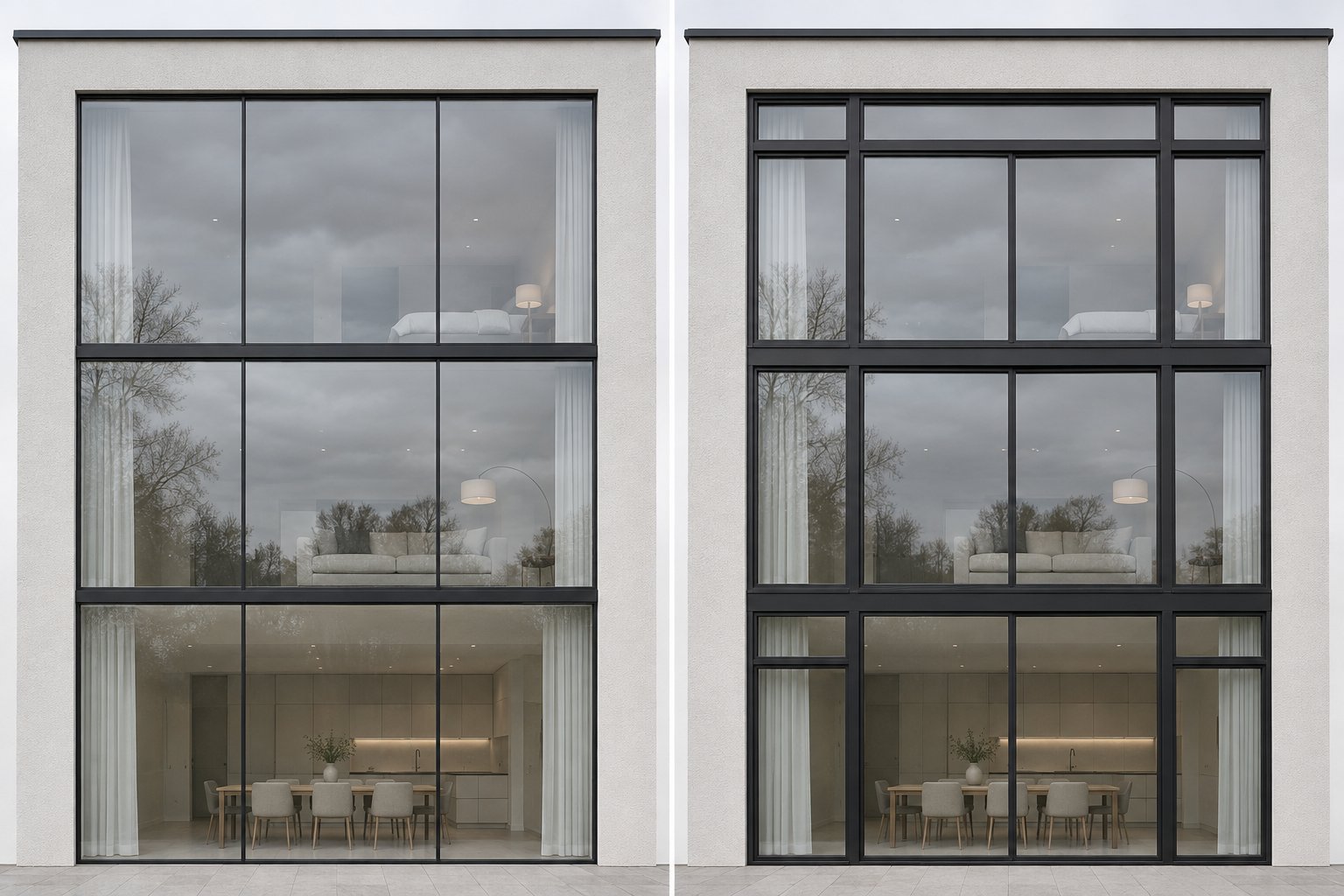
Steel frames can span openings that aluminium simply cannot match without adding structural mullions or increasing profile dimensions—and those additions erode the slim aesthetic that motivated the steel-look choice in the first place.
The physics are straightforward. Steel's superior rigidity means a relatively slender frame section can support a large, heavy pane of glass without deflecting under wind load or self-weight. Industry data shows steel window systems supporting fixed panes up to approximately 3,200 mm high by 1,300 mm wide without a transom bar—dimensions that allow dramatic floor-to-ceiling glazing in a single uninterrupted lite. Aluminium can reach similar overall sizes, but typically requires either a deeper profile, additional intermediate mullions, or both to achieve the structural stiffness needed to meet Australian wind load requirements under AS 2047.
This matters most in three scenarios. First, large industrial windows in adaptive reuse projects—converting a warehouse in inner-city Melbourne or a wool store in Teneriffe—where the original steel frames spanned wide openings with minimal framing. Replacing those with aluminium may require introducing mullions that weren't part of the original design, altering the visual rhythm of the facade. Second, contemporary residential designs that call for expansive fixed panels of glass with virtually no visible frame—the kind of wall-to-wall glazing that high-end architects specify for living rooms and master bedrooms in two-storey or three-storey homes. Steel handles this elegantly; aluminium may need visible reinforcement. Third, any application where structural glass fins or minimal framing are part of the design intent—situations where every additional millimetre of frame undermines the concept.
For standard residential window sizes—casements, awnings, and fixed lites up to roughly 1,500 mm x 2,000 mm—aluminium performs confidently within its structural envelope. The limitation surfaces at the extremes, and it's at those extremes where genuine steel or thermally broken steel retains a clear structural rationale.
Heritage and Preservation Compliance
Heritage-listed buildings operate under a different set of rules. In Australia, properties on Commonwealth, state, or local heritage registers are subject to conservation management plans and heritage overlay provisions that can dictate not just how a replacement window looks, but what it's made of.
The principle embedded in international preservation standards—and reflected in Australian practice through the Burra Charter and state heritage guidelines—is material authenticity. For primary facades and highly visible elevations, preservation authorities commonly require that replacement windows match the originals in material as well as design: metal for metal, timber for timber. A steel-look aluminium frame, no matter how visually convincing, may not satisfy this requirement if the original windows were steel. The reasoning is philosophical as much as practical—heritage conservation values the continuity of materials, not just appearances.
That said, the assessment is rarely all-or-nothing. Heritage review bodies in NSW, Victoria, and Queensland often apply a hierarchy of significance. Street-facing facades on a listed building typically demand the closest material match. Secondary elevations with limited public visibility may accept substitute materials provided the replacement is compatible in size, configuration, and general character. Internal windows, partitions, and non-original openings usually offer the most flexibility.
For homeowners renovating a character home that isn't formally heritage-listed but sits within a heritage overlay zone, the rules may be less prescriptive. Council development application (DA) requirements in these areas often focus on external appearance and streetscape compatibility rather than mandating specific materials. In many of these cases, a well-specified steel-look aluminium system with appropriate sightlines and finish detailing will satisfy the planning assessment. But if your property appears on a heritage register—or you're seeking heritage tax incentives or grant funding—confirm the material requirements with your heritage consultant and the relevant authority before specifying aluminium as a replacement for original steel.
It's also worth noting that some historic window manufacturers specialise in fabricating genuine steel replacements that closely replicate discontinued profiles. If your project demands material-for-material fidelity on a primary elevation, these specialist fabricators offer a path—albeit at a cost premium and with longer lead times than aluminium alternatives.
Taken together, the primary limitations of steel-look aluminium windows are worth stating clearly:
- Wider sightlines: Even the slimmest aluminium steel-look profiles are typically 5–20 mm wider than genuine hot-rolled steel equivalents, creating a perceptible difference in divided-lite grids and side-by-side comparisons
- Reduced maximum span for unsupported glass: Aluminium's lower rigidity relative to steel means larger panels may require additional mullions or deeper profiles, potentially altering the intended design proportions
- Potential non-compliance for strict heritage reviews: Formally listed buildings on primary elevations may require material-for-material replacement that aluminium cannot satisfy, regardless of visual similarity
- Subtle profile geometry differences visible at close range: Mechanical joints rather than welded connections, slightly rounded internal corners, and minor dimensional variances distinguish aluminium from steel under close inspection
None of these limitations disqualify steel-look aluminium from the vast majority of projects. They do, however, define the boundaries of where the material excels and where it gives way to genuine steel. Understanding those boundaries is what separates a specification that delivers lasting satisfaction from one that leaves a nagging sense of compromise—and it's the foundation for choosing the right window type for your specific situation.
A Decision Framework for Choosing the Right Steel Look Windows
Knowing what each window type can and can't do is useful. Knowing which one belongs in your project is what actually prevents regret. The previous sections laid out the performance characteristics, finish variables, and honest limitations of every steel-look category. This section pulls those threads into a single decision logic you can apply whether you're a homeowner weighing renovation options, an architect finalising a specification, or a builder costing an installation programme.
Six variables drive the decision: project type, budget tier, climate zone, aesthetic priority level, span requirements, and maintenance tolerance. Not every variable carries equal weight on every job—but ignoring any of them tends to surface problems after contracts are signed rather than before.
Matching Window Type to Project Requirements
Start with the project itself, because it narrows the field faster than any other factor.
Heritage restoration under formal review. If the property sits on a Commonwealth, state, or local heritage register and the windows in question are on a primary facade, genuine steel or thermally broken steel is likely the only path that satisfies heritage authority requirements. Material authenticity is the governing principle here, and aluminium—however convincing visually—may not clear that bar. Confirm the specific requirements with your heritage consultant and the relevant approval body before proceeding. Secondary elevations and non-original openings often carry more flexibility, potentially opening the door to steel-look aluminium if the sightlines and finish detailing align with the conservation management plan.
New-build residential seeking the industrial aesthetic. This is where steel-look aluminium sits most comfortably. No heritage constraints dictate material choice. Modern thermally broken aluminium profiles meet NCC energy requirements, handle Australian coastal and high-UV conditions without the maintenance burden of steel, and arrive on site lighter, faster, and at a significantly lower cost. For the homeowner building a contemporary two-storey home in suburban Melbourne or a coastal retreat in Byron Bay, aluminium delivers the factory-window character without the ongoing recoating schedule or structural reinforcement that steel demands.
Adaptive reuse and industrial conversion. Converting a warehouse in Surry Hills or a former mill in Fortitude Valley into residential or commercial space presents a hybrid challenge. Original openings may be large industrial windows that genuine steel spanned effortlessly with minimal framing. Aluminium can replicate the look for most standard-sized openings, but very wide spans may require additional mullions that alter the original visual rhythm. Evaluate span-by-span: steel-look aluminium for standard openings, with genuine thermally broken steel reserved for hero panels where uninterrupted glazing defines the character of the space.
Commercial and retail projects. Offices, hospitality fit-outs, and retail storefronts chasing the steel aesthetic typically prioritise speed of delivery, cost control, and compliance with current energy codes. Commercial aluminium systems with steel-look geometry tick every box. Lead times are shorter—typically 8 to 12 weeks for aluminium versus 16 to 24 weeks for custom steel—and installation is faster because the frames weigh roughly a third as much.
Metal building conversions. Shed-to-house conversions, farm buildings repurposed as studios, and light industrial structures being fitted for habitation occupy a growing niche in regional Australia. Here the priority is often getting a functional, weather-tight, and thermally adequate window into a steel-framed structure at a reasonable budget. Steel-look aluminium works well for those wanting an aesthetic upgrade. For purely functional requirements, standard commercial aluminium or even vinyl windows for metal buildings offer simpler, more economical solutions without the steel-look premium.
Budget and Total Cost of Ownership
Purchase price dominates most budget conversations, but it's a misleading headline number when the products being compared carry vastly different installation costs and lifetime maintenance profiles.
Installation complexity varies dramatically by material. A genuine steel window frame weighing 50–60 kg per square metre demands structural support—often steel lintels, reinforced jambs, and sometimes crane access for upper-storey installations on multi-level builds. Aluminium at 15–25 kg per square metre can frequently be manhandled into position by two installers using standard residential techniques. That weight difference cascades into labour hours, scaffolding requirements, and programme duration. On a project with twenty or more openings, the cumulative installation cost difference can rival the material cost gap itself.
Ongoing maintenance is the sleeper cost that most quotes don't mention. Steel requires periodic protective recoating—typically every 5 to 10 years depending on exposure—to prevent corrosion. In coastal locations, that cycle shortens. Each recoating episode involves preparation, priming, and painting, often at height, often requiring scaffold access. Over a 30-year ownership period, maintenance costs on steel frames can approach or exceed the original purchase price. Aluminium powder coat, by contrast, is largely maintenance-free beyond occasional washing with fresh water and mild detergent. No repainting. No rust treatment. No scaffold hire for cyclical touch-ups.
Glazing replacement logistics deserve a mention too. Steel frames often use proprietary glazing details that require specialist handling when a sealed unit eventually fails and needs replacement. Aluminium systems generally accept standard double-glazed units (IGUs) sourced from local glass suppliers, keeping future replacement straightforward and competitively priced.
Specific pricing varies significantly by region, project scale, and specification complexity across Australia. A steel-look aluminium casement window in a standard residential size will sit at a very different price point than a 3-metre-wide fixed panel in thermally broken steel. Rather than anchoring expectations to generic dollar-per-square-metre figures that may not reflect your local market, obtain project-specific quotes from at least two suppliers for each material you're considering—and ask each to itemise installation and projected maintenance costs separately from the supply price.
| Project Type | Recommended Window Type | Key Consideration | Budget Impact |
|---|---|---|---|
| New Residential Build | Steel-look aluminium (thermally broken) | Best balance of aesthetics, thermal performance, and low lifetime maintenance for Australian climates | Moderate |
| Commercial / Retail Fit-Out | Steel-look aluminium or commercial aluminium | Shorter lead times, lighter weight simplifies installation on multi-level sites, meets NCC energy requirements | Moderate |
| Heritage Renovation (Listed) | Genuine steel or thermally broken steel (primary facades); steel-look aluminium possible on secondary elevations | Material authenticity requirements from heritage authorities; confirm with heritage consultant before specifying | High to very high |
| Adaptive Reuse / Industrial Conversion | Steel-look aluminium for standard openings; thermally broken steel for hero spans exceeding aluminium's structural limits | Span size dictates material choice opening by opening; assess original frame dimensions against aluminium capabilities | Moderate to high |
| Metal Building / Shed Conversion | Steel-look aluminium, standard commercial aluminium, or vinyl | Budget sensitivity is typically high; match aesthetic ambition to available spend; ensure framing compatibility with steel structure | Low to moderate |
The table isn't a prescription—it's a starting filter. Every project carries its own blend of constraints, and the right answer often involves mixing categories across different openings within the same build. A heritage conversion might specify thermally broken steel on the street-facing elevation, steel-look aluminium on the rear extension, and standard aluminium for internal partitions. A new residential project might use steel-look aluminium across the facade and switch to conventional aluminium for side windows that nobody sees from the street.
What matters is matching the specification to the requirement at each opening, rather than locking the entire project into a single material category based on the aesthetic of the hero window alone. That kind of opening-by-opening thinking keeps budgets honest and outcomes aligned with intent—and it only works when you know the right questions to ask your supplier before placing an order.
How to Source and Specify Steel Look Window Profiles Correctly
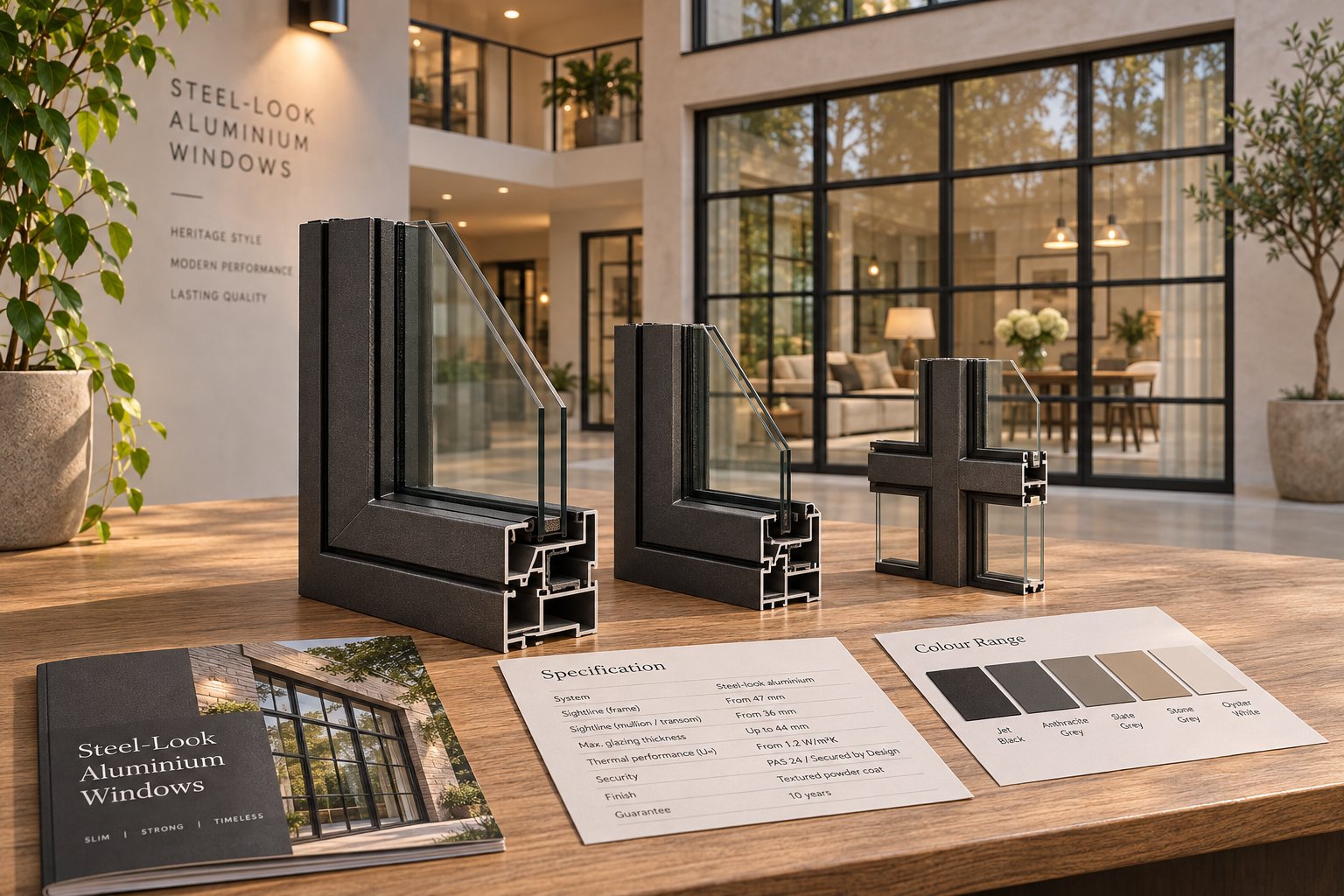
Supplier conversations tend to follow a predictable pattern. A brochure arrives. The photos look stunning—slim dark frames, divided-lite grids, dramatic interior shots with morning light pouring through factory-style glazing. A colour swatch confirms "matt black" is available. A quote follows. And somewhere between that quote and the installed product, the gap between expectation and reality opens wide.
The gap exists because most buyers evaluate steel-look aluminium windows the way they'd evaluate any window: by appearance in marketing images and by price on a spreadsheet. Neither tells you whether the product actually delivers the steel-look geometry that justifies the specification. A standard aluminium frame powder-coated in black is not the same product as a purpose-engineered steel-look aluminium system with specific sightline dimensions, square-edged profiles, and putty-line detailing. They may photograph identically. In person, they read very differently—and only one will satisfy the design intent that brought you to this product category in the first place.
Sorting one from the other requires asking the right questions early, requesting the right documentation, and—critically—seeing the product in person before committing.
What to Ask Any Steel-Look Window Supplier
The questions that separate a genuine steel-look aluminium system from a rebadged standard frame aren't complicated. They're just not the questions most buyers think to ask. Colour and price dominate early conversations; aluminium window specifications that actually determine the visual outcome—profile geometry, sightline proportions, thermal break design—tend to surface only after a deposit has been paid.
Flip that sequence. Before shortlisting any supplier, work through these five specification questions:
- What are the exact sightline dimensions of the frame and mullion profiles? Ask for millimetre figures, not descriptive language like "slim" or "narrow." A sightline of 32 mm and one of 48 mm both qualify as slim in some catalogues, but the visual difference on a divided-lite grid is substantial. Request dimensions for the outer frame, the meeting rail (on operable sashes), and any muntin or glazing bars separately—they're often different widths.
- Is the system thermally broken, and what is the thermal break width? A "yes" answer isn't sufficient. The polyamide break might be 10 mm wide or 30 mm wide, and that range produces dramatically different thermal performance outcomes. Ask for the specific break width and, ideally, the system's WERS-rated U-value for the complete assembly rather than an isolated glass-only figure.
- What is the maximum panel size for fixed and operable configurations? Steel-look aluminium profiles are inherently narrower than standard aluminium, which can limit maximum span. A system that handles a 1,200 mm x 1,800 mm casement comfortably might struggle with a 2,400 mm x 2,800 mm fixed lite without additional structural mullions. Confirm limits for each configuration type you need—fixed, casement, awning, sliding—because they differ.
- What finish systems are available, and what are the warranty terms? Get the specific RAL or proprietary colour code, confirm whether textured finishes are offered, and ask how warranty terms adjust for coastal versus inland installations. As discussed in the finishes section, a matte fine-textured powder coat in an off-black tone creates a fundamentally different steel-look result than a smooth gloss black, even on the same profile.
- Can you provide a profile cross-section drawing? This is the single most revealing document a steel window supplier can share. A cross-section drawing shows the actual shape of the extrusion: frame depth, glazing pocket dimensions, thermal break location, gasket positions, and the square-edged geometry that distinguishes a steel-look profile from a standard one. If a supplier cannot or will not provide this, treat it as a signal that the product may be a cosmetically modified standard frame rather than a purpose-engineered system.
These five questions do most of the filtering work. A supplier offering a genuine steel-look aluminium system will answer them readily and back up the answers with documentation. A supplier selling standard custom aluminium window frames in a dark finish will either deflect or provide numbers that reveal the product isn't what the marketing implies.
Physical samples matter just as much as documentation. Digital images compress sightline proportions, flatten texture, and eliminate the shadow lines that define the steel aesthetic in real life. Request a corner sample—a short section of the actual profile with the specified finish applied—and assess it in the lighting conditions where your windows will live. Better still, visit a showroom or completed project where the system is installed. The difference between evaluating a product on a screen and standing in front of it is the difference between browsing a paint chip and seeing it on a wall. Scale, light, and context change everything.
Exploring Aluminium Window Collections for Your Project
One of the more practical steps in the sourcing process is browsing comprehensive aluminium window collections that let you compare across multiple system types—casement, sliding, awning, fixed, and combination configurations—rather than evaluating isolated products in a vacuum. Steel-look suitability varies by opening type: a profile geometry that creates a convincing factory-window aesthetic on a fixed lite may look quite different on a sliding sash where track mechanisms and meeting rails add visual bulk. Seeing the full range of configurations within a single system helps you assess consistency across your project's mix of opening types.
For Australian residential and commercial projects, MEICHEN's aluminium window collection is one sourcing avenue worth exploring. The range supports custom sizing across casement, sliding, awning, fixed, and other configurations, with finishes including Black Mall available for projects chasing a darker aesthetic. Custom opening layouts, glazing options, and hardware can be coordinated within the same system—useful when a project calls for multiple window types that need to read as a cohesive family across a facade.
A word of editorial honesty applies here, though, and it applies equally to any supplier you evaluate. A black finish option does not, on its own, establish a steel-look appearance. The steel-look effect depends on steel look window profiles with specific sightline dimensions, square-edged geometry, and appropriate detailing—details that require project-specific confirmation with the manufacturer. When browsing any collection, apply the same five specification questions listed above: request sightline dimensions, confirm thermal break details, verify maximum panel sizes, assess finish options beyond colour name alone, and ask for profile cross-section documentation. These steps hold regardless of brand.
Sourcing steel-look aluminium well isn't about finding the cheapest quote or the most impressive brochure photography. It's about verifying that the product behind the image delivers the geometry, performance, and finish quality your project demands. The suppliers who make that verification easy—through transparent documentation, physical samples, and honest answers about what their system can and cannot do—are the ones worth keeping on your shortlist.
With the right product identified and specified, the final step is pulling together the key lessons from this entire evaluation into actionable takeaways—organised by role, so every member of the project team knows exactly what to prioritise.
Putting It All Together for Your Project
Every chapter of this guide has circled the same core truth from a different angle: the distance between a convincing steel-look aluminium window and a black-painted standard frame is measured in profile millimetres, thermal break engineering, and finish specification—not marketing language. Whether you're a homeowner replacing deteriorating old metal windows on a 1940s brick veneer, an architect specifying for a contemporary two-storey build in coastal NSW, or a builder pricing a warehouse conversion in inner Melbourne, the actionable steps are surprisingly consistent. They just carry different emphasis depending on your role.
Key Takeaways for Homeowners and Renovators
Your risk as a homeowner isn't choosing the wrong brand. It's choosing a product based on a colour swatch and a render image without verifying the details that actually determine the steel-look result. Aluminium windows for renovation projects succeed or fail on specification, not on promises.
- Demand profile cross-section documentation — if a supplier can't show you the actual extrusion shape with millimetre dimensions, the product may be a standard frame in a dark finish rather than a purpose-engineered steel-look system
- Request physical samples — evaluate the profile, finish texture, and shadow lines in person, ideally in the lighting conditions where your windows will be installed
- Evaluate thermal break specifications — ask for the break width and the system's WERS-rated U-value for the complete assembly, not just the glass; this determines condensation resistance, comfort, and energy performance
- Confirm steel-look geometry rather than relying on colour alone — square-edged profiles, narrow sightlines, and putty-line detailing are what create authenticity; a matte black powder coat on a rounded standard extrusion won't deliver the same effect
- Factor in total cost of ownership — aluminium's near-zero maintenance profile means the upfront price is close to the lifetime price, unlike genuine steel where cyclical recoating adds substantially over 20–30 years
Steel-look aluminium is the clear winner for most residential projects: new builds chasing the industrial aesthetic, kitchen and living area renovations, and period homes where the goal is to honour the original character without inheriting the problems of ageing steel. The exceptions—formally heritage-listed facades requiring material-for-material replacement, and ultra-large spans where steel's structural rigidity is irreplaceable—are real but affect a small minority of residential projects.
Key Takeaways for Architects and Specifiers
Specification is where the steel-look promise either holds or collapses. A schedule that reads "aluminium windows, black powder coat, steel look" without dimensional detail leaves too much room for substitution and disappointment. Residential steel window alternatives in aluminium perform beautifully—but only when the specification is tight enough to ensure the installed product matches the design intent.
- Verify sightline dimensions against project intent — document the exact frame, mullion, and muntin sightline widths you need and confirm the selected system delivers them; specify minimum and maximum acceptable dimensions rather than relying on descriptive terms like "slim"
- Confirm performance ratings for the specific system — request WERS-rated U-values and Solar Heat Gain Coefficients for the actual window configuration being quoted, not a generic system figure; different sizes and opening types within the same product range produce different thermal results
- Assess configuration options per opening type — a steel-look profile that reads convincingly on a fixed lite may behave differently on a casement or awning sash where hardware, meeting rails, and hinge mechanisms add visual weight; review each configuration separately
- Document finish specifications including texture and sheen — specify the RAL or proprietary colour code, texture grade (smooth, fine texture, coarse texture), and sheen level (matte or satin); confirm the coating system meets the relevant Australian Standard durability classification for the project's exposure category, particularly for coastal sites
- Assess compliance requirements early — for projects within heritage overlay zones or on listed registers, confirm material acceptability with the heritage consultant and approval authority before locking in aluminium; secondary elevations and non-original openings frequently offer more flexibility than primary street-facing facades
Builders and procurement teams benefit from one additional lens: logistics. Aluminium's lighter weight, shorter lead times, and compatibility with standard installation methods mean fewer programme risks than genuine steel. On multi-opening projects, that logistical advantage compounds—fewer crane lifts, simpler structural support, and standard IGU replacements down the track. Price the installation and maintenance trajectory, not just the supply line item.
Teams evaluating aluminium window systems for Australian residential or commercial projects can explore MEICHEN's aluminium window collection to compare casement, sliding, awning, fixed, and other configurations with custom sizing and finish options including Black Mall. Steel-look profile suitability, sightline geometry, and industrial-duty applications require project-specific confirmation with the manufacturer—apply the same specification questions outlined throughout this guide to ensure the selected system delivers on both aesthetic and performance requirements.
The best steel-look aluminium window is the one specified correctly—profile geometry, thermal performance, and finish quality matter far more than brand name alone.
This steel look aluminium window guide has covered every layer of the decision: what defines the aesthetic, why it endures, how every alternative compares, where thermal breaks matter, which finishes convince, what limitations exist, and how to source and specify with confidence. The industrial steel window look isn't going anywhere—it's too deeply rooted in architectural history and too visually compelling to fade. Your job is simply to make sure the product behind that look is engineered, finished, and specified well enough to earn its place on your facade for decades to come.
Frequently Asked Questions About Steel Look Aluminium Windows
1. What is the difference between steel look aluminium windows and standard aluminium windows painted black?
The distinction lies in profile engineering rather than colour. Steel look aluminium windows use purpose-designed extrusions with narrow sightlines (typically 30-50 mm), square-edged geometry, putty-line glazing beads, and divided-lite patterns that replicate traditional hot-rolled steel proportions. A standard aluminium frame in a dark finish retains its rounded or bevelled edges, wider sightlines, and conventional profile shape — details that read unmistakably as modern aluminium regardless of colour. When evaluating suppliers, request a profile cross-section drawing showing exact sightline dimensions and edge geometry to confirm the system is genuinely steel-look rather than cosmetically modified.
2. Are steel look aluminium windows as thermally efficient as standard aluminium windows?
Thermal efficiency depends on whether the system includes a thermally broken profile, not on the steel-look styling itself. A thermally broken steel look aluminium window — featuring a polyamide barrier separating the interior and exterior aluminium faces — can reduce frame heat loss by up to 60% compared to non-broken aluminium. However, narrower steel-look profiles leave less physical space for wide thermal breaks and multiple air chambers, so performance varies between systems. Always check the specific system's WERS-rated U-value for the complete assembly rather than relying on generic claims. A lower U-value means better insulation, reduced condensation risk, and improved compliance with NCC energy requirements.
3. How much do steel look aluminium windows cost compared to genuine steel windows in Australia?
Steel look aluminium windows typically sit in a moderate cost tier ($$-$$$), while genuine hot-rolled steel windows occupy the premium tier ($$$$) and thermally broken steel sits at the highest level ($$$$$). Beyond purchase price, total cost of ownership diverges further. Steel frames require protective recoating every 5-10 years — more frequently in coastal locations — and their heavier weight (40-60 kg per square metre versus 15-25 kg for aluminium) demands structural support and potentially crane access during installation. Aluminium powder coat is largely maintenance-free beyond occasional washing. Over a 30-year ownership period, steel maintenance costs can approach the original purchase price. For accurate project-specific figures, obtain itemised quotes from at least two suppliers covering both supply and installation.
4. Can steel look aluminium windows be used on heritage-listed buildings in Australia?
It depends on the heritage listing level and which elevation is involved. Properties on Commonwealth, state, or local heritage registers are typically governed by conservation management plans that may require material-for-material replacement on primary facades — meaning genuine steel for original steel windows. However, heritage review bodies in NSW, Victoria, and Queensland often apply a hierarchy of significance: street-facing facades demand the closest material match, while secondary elevations and non-original openings may accept steel look aluminium provided the sightlines, configuration, and finish detailing align with the conservation plan. Homes within heritage overlay zones but not formally listed usually face less prescriptive council DA requirements focused on external appearance rather than specific materials. Always confirm with your heritage consultant before specifying.
5. What finish creates the most authentic steel appearance on aluminium windows?
Three finish variables work together to replicate genuine steel: colour, texture, and sheen. Pure gloss black (RAL 9005 smooth) reads as coated aluminium, so specifiers often choose off-blacks or anthracite tones such as RAL 7021 (Black Grey) or RAL 7016 (Anthracite Grey) for the depth and warmth of real ferrous metal. A fine-textured powder coat scatters light across the surface in a way that closely mimics rolled steel grain, while a matte or low-satin sheen (10-30% gloss) keeps reflections soft — genuine steel never displays a high-gloss mirror finish. For Australian coastal installations, confirm the coating meets the relevant Australian Standard durability classification and check how warranty terms adjust for proximity to saltwater.