
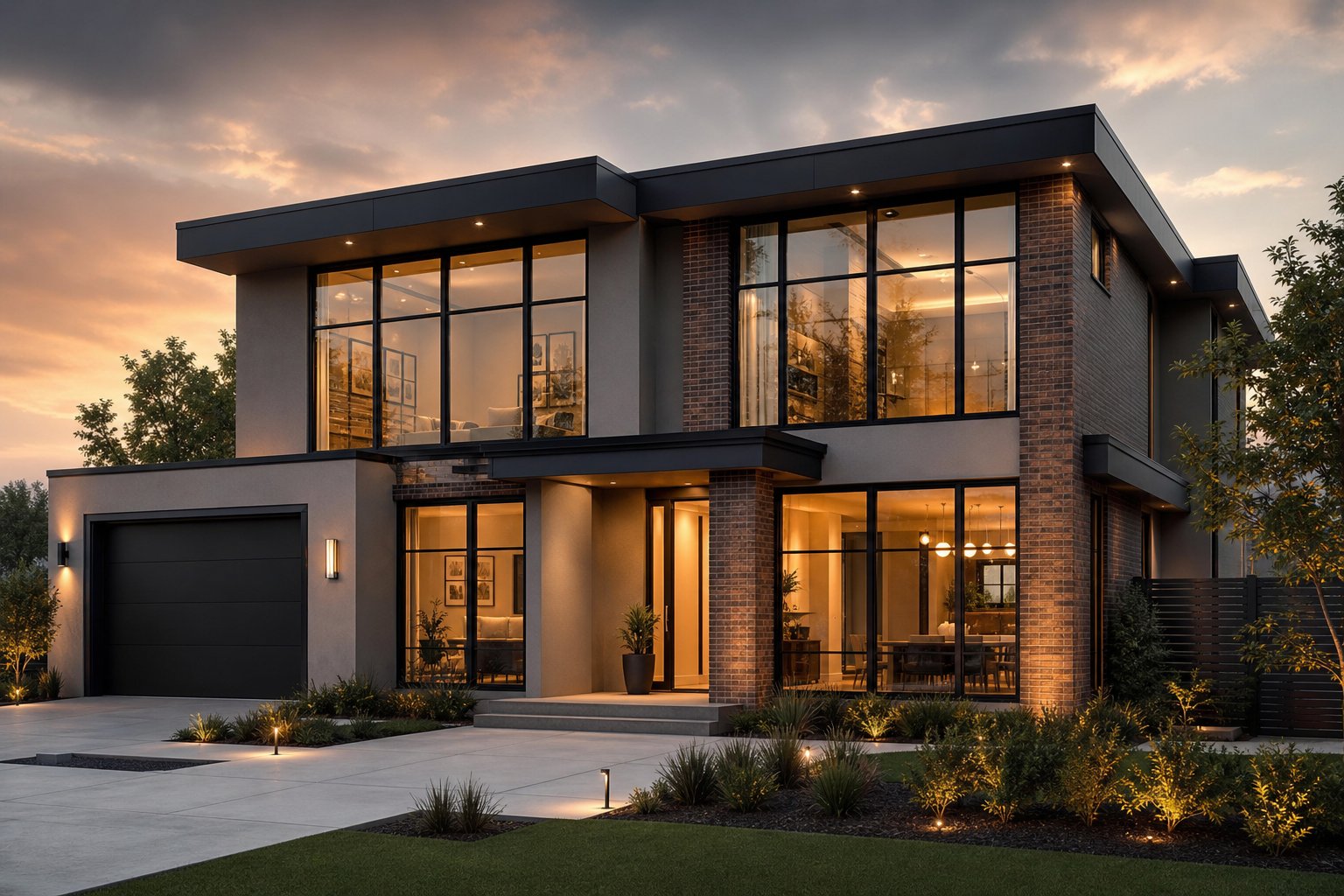
What Steel Look Actually Means for Your Windows
Picture the slender, geometric frames of a converted warehouse or a heritage-era factory building. Those crisp lines and expansive glass panels define a look that architects and homeowners have admired for over a century. Steel look aluminium windows capture that exact aesthetic — not through a surface coating or decorative veneer, but through the engineering of the aluminium extrusion itself. The profiles are shaped to be ultra-slim, the sightlines kept deliberately narrow, and the overall proportions designed to echo traditional steel fenestration in every visible detail.
Steel look aluminium windows are aluminium-framed windows designed with ultra-slim profiles that visually mimic traditional steel fenestration while delivering superior thermal and maintenance performance.
This distinction matters. You are not buying a standard aluminium window with a steel-coloured finish slapped on top. The entire frame geometry — its depth, its width, its corner detailing — is purpose-built to replicate the proportions that make steel windows so visually compelling.
Defining the Steel Look Aesthetic
Several visual hallmarks set these windows apart from conventional aluminium frames. Thin glazing bars divide the glass into grid-style panels, recreating the multi-pane character of early 20th-century industrial glazing. Frame visibility is minimised so that glass dominates the opening. Lines are crisp and geometric, with sharp corners and clean intersections rather than the rounded profiles typical of standard residential aluminium. The overall effect is bold yet refined — strong architectural definition without visual bulk.
Dark finishes reinforce the illusion. Matte black, anthracite grey, and textured metallic coatings are the most popular choices because they closely replicate the patina and weight of aged steel. Combined with slim horizontal bars and large glazed panels, the result is a window that reads as steel from any normal viewing distance.
Why Aluminium Replicates Steel So Effectively
Aluminium's strength-to-weight ratio is the key enabler. Because the material is inherently strong yet lightweight, manufacturers can extrude profiles thin enough to approach genuine steel proportions while still supporting heavy double or triple-glazed units. Traditional steel windows earned their slender elegance from the metal's rigidity — aluminium achieves a similar outcome through smart engineering rather than brute material density.
The category exists because homeowners and architects want that slender elegance without the trade-offs. Genuine steel windows conduct heat readily, demand periodic repainting to prevent corrosion, and cost considerably more to fabricate and install. Aluminium alternatives deliver modern thermal performance through polyamide thermal breaks, require only occasional cleaning to maintain their finish, and come in at a significantly lower price point. For most residential projects, the visual compromise is negligible while the practical gains are substantial.
Property Types That Benefit Most
Industrial style windows suit a surprisingly broad range of projects. Period home renovations gain character without sacrificing energy efficiency. Warehouse and loft conversions stay true to their architectural heritage while meeting current building standards. Contemporary new builds use the aesthetic to add depth and contrast — particularly when paired with materials like exposed brick, timber cladding, or polished concrete. Kitchen extensions and open-plan living areas benefit from the maximised glass area and clean sightlines that flood interiors with natural light.
Even internal applications have gained traction. Glass partitions and room dividers framed in slim aluminium profiles bring the industrial style windows look inside the home, separating spaces without blocking light or creating visual heaviness. Whether the project is a full new build or a single rear extension, the steel look adapts to the scale and character of the property rather than dictating a single design direction.
That adaptability raises an important question: with so many manufacturers using terms like "slim profile" and "narrow sightlines," how do you actually decode the technical language and compare products on a level playing field?
Window Terminology Decoded for Homeowners
Every steel frame window brochure and product page is loaded with technical terms that rarely get explained. Manufacturers assume you already know what a "32mm sightline" or a "polyamide thermal break" means. Most homeowners do not — and that knowledge gap makes it nearly impossible to compare products with confidence. Here is a plain-language breakdown of the terms you will encounter most often when researching metal framed windows.
- Sightlines — The visible width of frame material you see when the window is closed. Measured in millimetres, this is the strip of aluminium (or steel) that sits between the glass and the edge of the opening.
- Mullions — Vertical dividing bars that separate a window into two or more sections side by side.
- Transoms — Horizontal dividing bars that split a window into upper and lower sections.
- Thermal break — An insulating barrier built into the frame to interrupt heat transfer between the exterior and interior sections of the profile.
- Glazing bars — Bars that divide glass panes into smaller panels, either for structural support or purely for visual effect.
- Profile depth — The measurement from the front face of the frame to the back. A shallower profile means less frame intrusion into the wall reveal and a closer approximation to genuine steel proportions.
Sightlines and Why Millimetres Matter
Sightline width is the single most important number when judging how closely metal windows replicate the look of traditional steel. Genuine steel frames can achieve sightlines as narrow as 20mm because of the material's exceptional rigidity. Aluminium alternatives typically sit between 30mm and 45mm, though the slimmest systems now push below 35mm. Every millimetre shaved off the sightline means more glass and less frame — which is exactly what creates that distinctive, light-filled industrial character.
Mullions, Transoms, and Glazing Bars
Mullions and transoms form the structural grid of a window. They carry load and define the opening configuration. Glazing bars, on the other hand, can be either structural or applied. Structural (solid) glazing bars physically divide the sealed unit into separate panes, each independently glazed. Applied bars — sometimes called stick-on or astragal bars — sit on the surface of a single large glass unit with a dummy spacer bar between the panes to simulate the through-glass appearance. Applied bars allow slimmer widths (as thin as 16mm) and avoid the thermal penalties of multiple sealed units, making them the more common choice in modern metal framed windows designed for energy efficiency.
Understanding Thermal Breaks in Metal Frames
Steel and aluminium both conduct heat readily. Without intervention, a metal frame becomes a direct bridge for energy loss — warm air escapes in winter, and heat floods in during an Australian summer. A thermal break solves this by inserting a low-conductivity material (typically polyamide, with a conductivity around 0.25 W/mK compared to steel's roughly 50 W/mK) between the inner and outer frame sections. This dramatically reduces heat transfer, lowers U-values, and keeps internal frame surfaces warmer — which in turn minimises condensation risk during cooler months. For any steel look aluminium window system intended for habitable rooms, a thermally broken profile is not optional; it is essential for compliance with NCC energy performance requirements and for genuine occupant comfort.
These terms form the vocabulary you will need when reading spec sheets and asking suppliers the right questions. The next step is understanding what those numbers actually look like in practice — what does a 38mm sightline mean when you are standing in front of the window?
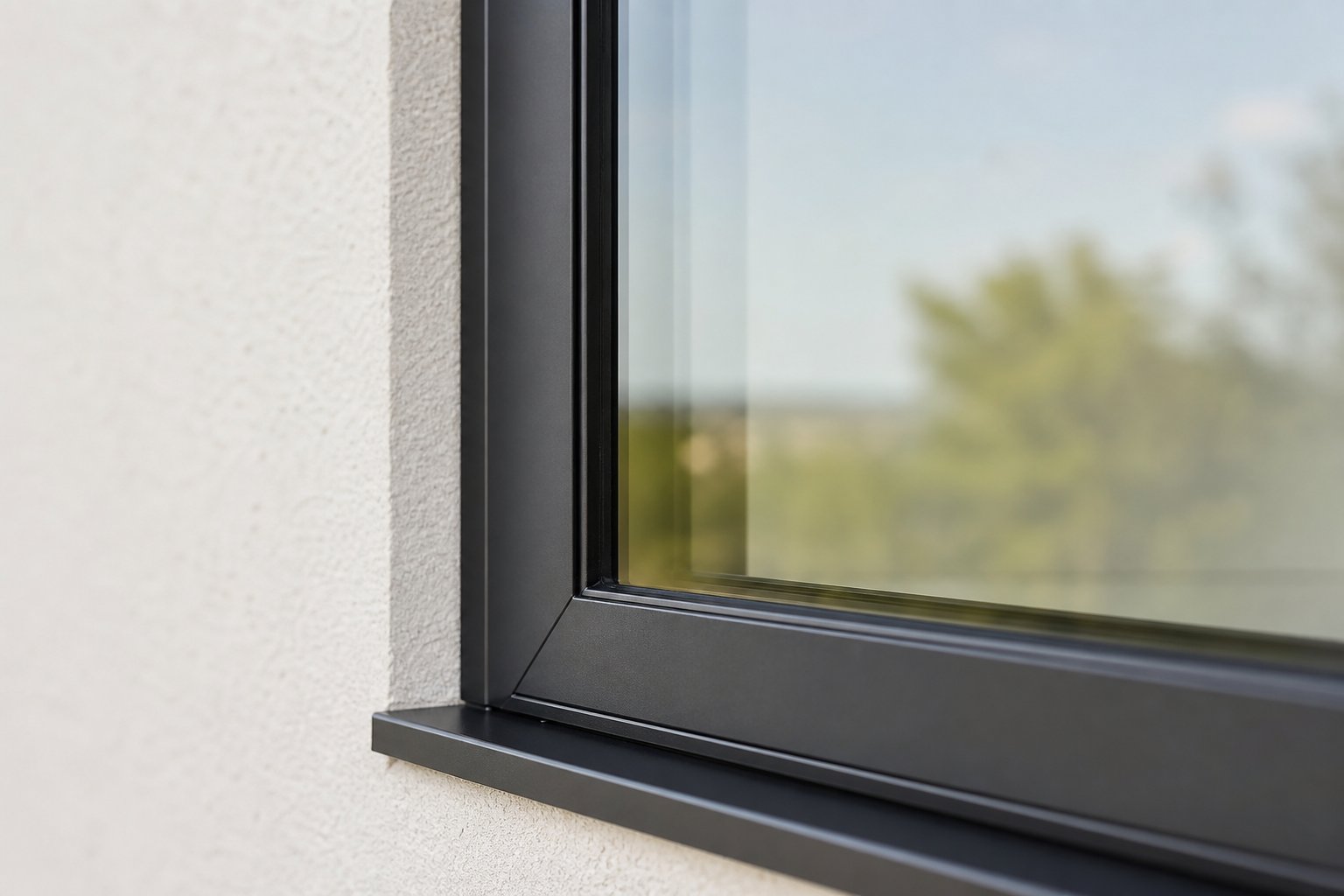
Profile Dimensions and Sightlines Explained
A spec sheet that reads "38mm sightlines" tells you very little until you can picture it. Hold your thumb sideways against a window frame — that is roughly 20mm. Now imagine just under two thumb-widths of visible aluminium between the glass edge and the wall reveal. That is what 38mm looks like in real life. It is slim enough to let glass dominate the opening, yet wide enough to house the structural chamber and thermal break that keep the window performing under load.
What Frame Depth Numbers Mean in Practice
Profile depth — the measurement from the outer face of the frame to the inner face — typically ranges from 45mm to 70mm in steel framed windows made from aluminium. A shallower depth means the frame sits more flush within the wall, reducing visual bulk from both inside and outside the home. Deeper profiles accommodate thicker glazing units and larger panel sizes but project further into the reveal.
Architects obsess over the glass-to-frame ratio because it directly determines how much natural light enters a room and how closely the window replicates the proportions of original steel metal windows. A system with 32mm sightlines and a 50mm depth delivers noticeably more glass area than one with 45mm sightlines and a 65mm depth — even when the overall opening size is identical. In percentage terms, the difference can amount to 10-15% more visible glass, which transforms the character of a facade.
Performance Ratings Translated
In Australia, windows must comply with AS 2047, which tests for resistance to wind load, water penetration, and air infiltration. Each window receives a classification based on the pressures it can withstand — expressed in Pascals (Pa). A higher rating means the frame holds its shape and seal under greater force, which matters significantly in coastal, cyclone-prone, or high-rise applications.
Narrower sightlines generally indicate a more authentic steel appearance, but they may limit maximum glass panel sizes — the frame simply has less structural material to support larger, heavier sealed units under wind load.
For a typical single-storey or double-storey home in a non-cyclonic region, a window rated to N3 or N4 under AS 2047 handles standard conditions comfortably. Homes in exposed coastal areas or northern Queensland may require higher ratings. The key takeaway: do not assume that a slimmer profile automatically compromises structural performance. Well-engineered systems achieve both narrow sightlines and robust ratings through optimised chamber geometry within the extrusion.
How Aluminium Extrusions Mimic Steel Profiles
Simulated steel windows do not rely on a single trick. The illusion comes from a combination of deliberate design choices applied during the extrusion and fabrication process. First, the extrusion die shapes the aluminium into a flat-fronted, square-edged profile rather than the rounded or bevelled forms common in standard residential frames. This produces the sharp, angular face that characterises traditional steel.
Corner detailing plays an equally important role. Mechanical joints — where mitred corners are crimped and sealed rather than welded — create a tighter, more defined intersection that mirrors the look of original metal casement window construction. Some manufacturers add a fine surface texture during powder coating to replicate the slightly granular finish of painted hot-rolled steel, eliminating the overly smooth appearance that can betray a modern aluminium frame at close range.
Together, these elements — flat extrusion geometry, mechanical corner joints, and textured coatings — allow a metal casement window in aluminium to pass as steel from normal viewing distances. The difference only becomes apparent on close tactile inspection, and even then, only to someone who knows what to look for. For the vast majority of residential and commercial projects, the visual result is indistinguishable from the genuine article.
Appearance, however, is only half the equation. How these slim profiles interact with the glass they hold — and what glazing options remain viable within such tight dimensional constraints — is where many homeowners encounter unexpected trade-offs.
Steel Look Aluminium vs Genuine Steel Side by Side
Knowing how aluminium mimics steel visually is useful — but the real decision comes down to how the two materials perform once they are installed in your wall. Weight, thermal efficiency, maintenance burden, and cost all diverge significantly between genuine steel and its aluminium counterpart. The table below lays out the key differences across the factors that matter most for residential steel windows projects in Australia.
| Factor | Steel Look Aluminium | Genuine Steel |
|---|---|---|
| Frame weight (density) | ~2.7 g/cm³ — significantly lighter, easier handling and installation | ~7.8 g/cm³ — roughly 3x heavier, requires additional structural support |
| Typical sightlines | 30–45 mm (slimmest systems below 35 mm) | 20–35 mm — marginally narrower due to higher material strength |
| Thermal performance (thermally broken) | U-values 1.5–2.5 W/m²K with double glazing | U-values 1.2–2.0 W/m²K (thermally broken steel is rare and costly) |
| Maintenance | Minimal — occasional wash, no repainting required | Periodic repainting every 5–10 years to prevent corrosion |
| Corrosion resistance | Excellent — natural oxide layer plus powder coat protection | Poor without ongoing maintenance; rusts readily in coastal environments |
| Lifespan | 40–60 years with minimal upkeep | 50–100+ years with diligent maintenance |
| Indicative cost (supply and install, per m²) | $800–$1,800 AUD | $3,500–$8,000+ AUD |
| Typical lead time | 4–8 weeks | 10–20+ weeks (bespoke fabrication) |
| Colour options | Hundreds of RAL powder coat colours, dual-colour available | Limited to site-applied paint; fewer factory finish options |
Weight and Installation Differences
Aluminium is roughly one-third the density of steel. In practical terms, a steel window of the same dimensions can weigh nearly three times as much. That extra mass complicates transport, demands heavier lintels and structural fixings, and increases labour time on site. For upper-storey installations or projects where crane access is limited, the lighter aluminium frame simplifies logistics considerably — often trimming a full day off installation schedules for a typical home.
Maintenance and Longevity Compared
A genuine steel window can last a century — but only if you commit to regular upkeep. Steel corrodes when its protective coating is compromised, and in Australian coastal zones with salt-laden air, rust can appear within a few years of a missed repaint cycle. Aluminium window systems sidestep this entirely. The material forms a natural aluminium oxide layer that resists corrosion without intervention, and factory-applied powder coating adds decades of colour stability on top. For homeowners who prefer a fit-and-forget approach, the maintenance equation strongly favours aluminium.
Suppliers like MEICHEN demonstrate the flexibility that modern aluminium window systems offer — custom configurations, multiple glazing choices, and extensive colour ranges that allow Australian residential and commercial projects to achieve an authentic steel aesthetic without locking into the maintenance cycle that genuine steel demands.
Cost Considerations for Each Material
Steel windows cost substantially more than aluminium alternatives. Based on current Australian market pricing, genuine architectural steel typically runs four to five times the cost of a comparable aluminium system — a gap driven by labour-intensive welded fabrication, anti-corrosion treatments, and longer lead times. For a standard four-window installation, the difference can easily exceed $15,000 AUD. Custom steel windows push that premium even higher when bespoke sizing or complex configurations are involved.
That said, honesty matters here. Genuine steel does offer marginally slimmer sightlines and a tactile solidity that discerning purists notice. The welded corners, the weight of the frame, the subtle texture of hot-rolled metal — these qualities carry a material authenticity that aluminium approximates but does not perfectly replicate. For most homeowners, the visual difference at normal viewing distance is negligible. For architects specifying landmark projects where every millimetre and every material truth counts, the steel premium may be justified.
Cost and maintenance tell a compelling story for aluminium — but neither factor matters if the glazing inside the frame cannot deliver the thermal and acoustic performance your home requires. Slim profiles impose real constraints on what glass you can specify, and those limits deserve careful attention.
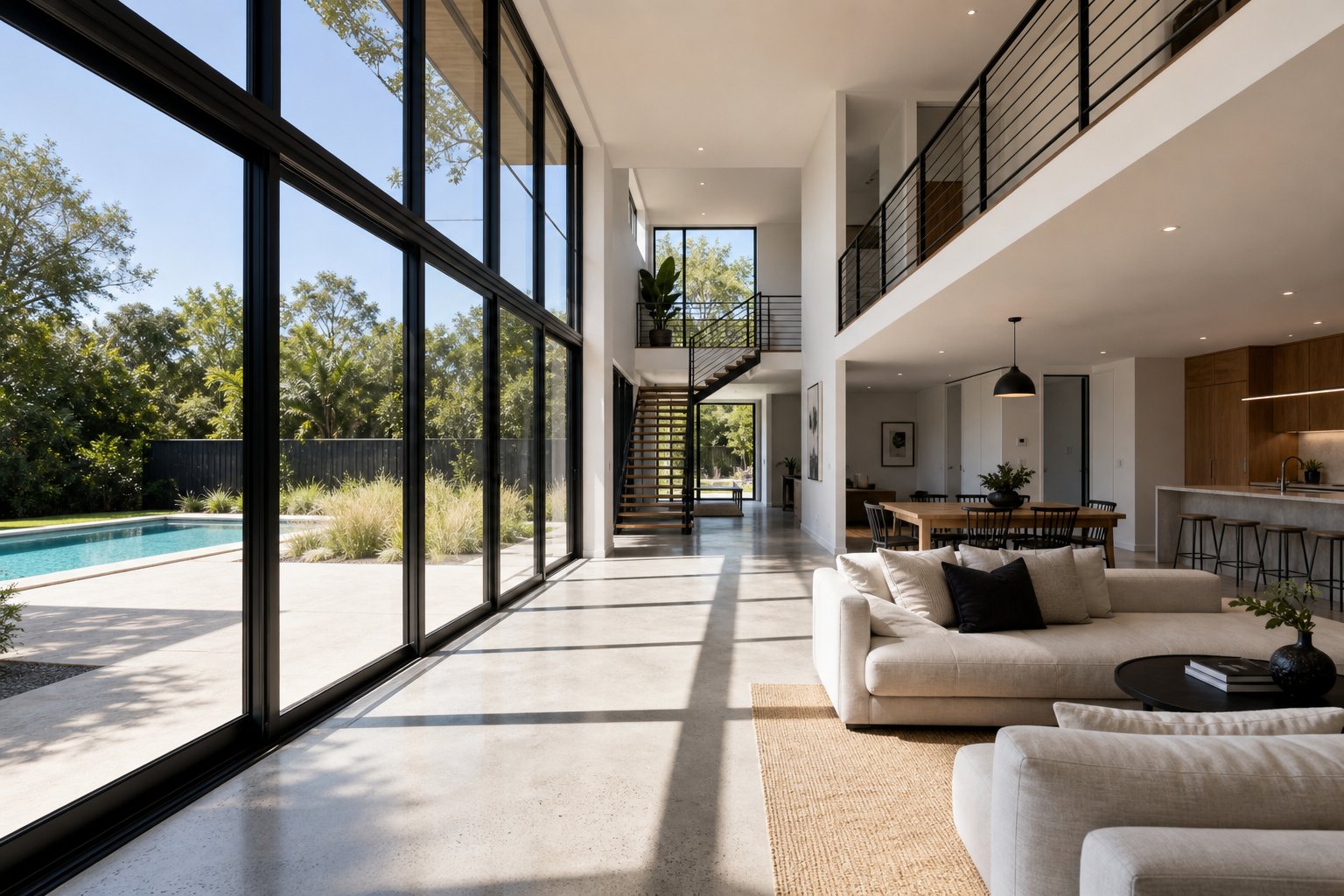
Glazing Choices for Slim-Profile Frames
The relationship between steel and glass windows has always been defined by proportion — maximum glass, minimum frame. That principle holds true for steel look aluminium systems, but it introduces a practical constraint that many homeowners overlook during the selection process. The slimmer the profile, the less internal space available to house the sealed glazing unit. Your choice of glass directly affects which frame system you can use, and vice versa.
Double vs Triple Glazing in Slim Frames
A standard double-glazed unit (also called an insulated glass unit or IGU) typically measures 20mm to 28mm in total thickness — two panes of glass separated by a gas-filled cavity. Most slim-profile aluminium systems accommodate this comfortably. Triple glazing adds a third pane and a second cavity, pushing total unit thickness to 36mm or more. That extra depth matters when the frame rebate — the channel that holds the glass — is engineered to be as shallow as possible.
Ultra-slim systems designed to replicate steel glass windows at their most authentic may only accept IGUs up to 24mm or 28mm thick. This rules out standard triple-glazed configurations unless you move to a slightly deeper profile. The trade-off is real: you gain better insulation but sacrifice a few millimetres of sightline width. For most Australian climates, high-performance double glazing with a Low-E coating delivers excellent thermal results without forcing a profile compromise. In cooler regions like Tasmania or the Victorian highlands, triple glazing may justify the marginally wider frame.
Weight compounds the issue. A triple-glazed unit is significantly heavier than its double-glazed equivalent, placing greater stress on hinges, hardware, and the frame itself. Stronger internal reinforcement may be needed, which can add 2–5mm to the visible sightline. Before committing to triple glazing, confirm with your supplier that the specific frame system supports the unit weight at your required panel size.
Glass Coatings and Gas Fills Worth Considering
Regardless of whether you choose double or triple glazing, several upgrades improve performance without affecting unit thickness in any meaningful way:
- Low-E coating — A microscopically thin metallic layer applied to one or more glass surfaces. It reflects radiant heat back toward its source, keeping interiors cooler in summer and warmer in winter. Virtually invisible, it improves U-values without adding weight or thickness.
- Argon gas fill — Argon is denser than air and conducts heat less readily. Filling the cavity between panes with argon (rather than standard air) reduces convective heat transfer by roughly 30%, improving insulation at negligible additional cost.
- Acoustic interlayer (laminated glass) — A PVB or EVA resin layer bonded between two glass sheets dampens sound transmission. Particularly valuable for commercial metal frame windows facing busy roads or flight paths, it adds only 1–2mm to pane thickness.
- Solar control tint — Reduces solar heat gain coefficient (SHGC) on north and west-facing elevations, limiting heat build-up without relying solely on external shading. Useful across most Australian climate zones.
- Toughened or laminated safety glass — Required by AS 1288 in certain locations (near floor level, in wet areas, above a certain height). Does not affect unit thickness but does influence weight and cost.
Balancing Aesthetics with Glazing Performance
The ideal outcome is a window that looks as slender as possible while still meeting your thermal, acoustic, and safety requirements. In practice, this means starting with your performance targets — the U-value and SHGC you need for NCC compliance and comfort — then selecting the thinnest IGU configuration that achieves them. A well-specified double-glazed unit with Low-E coating and argon fill often hits the sweet spot for Australian conditions, delivering U-values around 1.4–1.8 W/m²K within a 24mm unit that fits comfortably inside the slimmest aluminium profiles.
If your project demands triple glazing or thicker laminated panes, accept that the frame will be a few millimetres wider. The visual difference between a 35mm and a 40mm sightline is subtle at normal viewing distance — far less noticeable than the comfort difference between a well-insulated and a poorly insulated window on a cold Canberra morning or a scorching Perth afternoon.
Glass performance, though, is only one piece of the thermal puzzle. The frame itself plays an equally critical role in determining how much energy your windows gain or lose — and that is where the material comparison between aluminium and steel becomes most consequential.
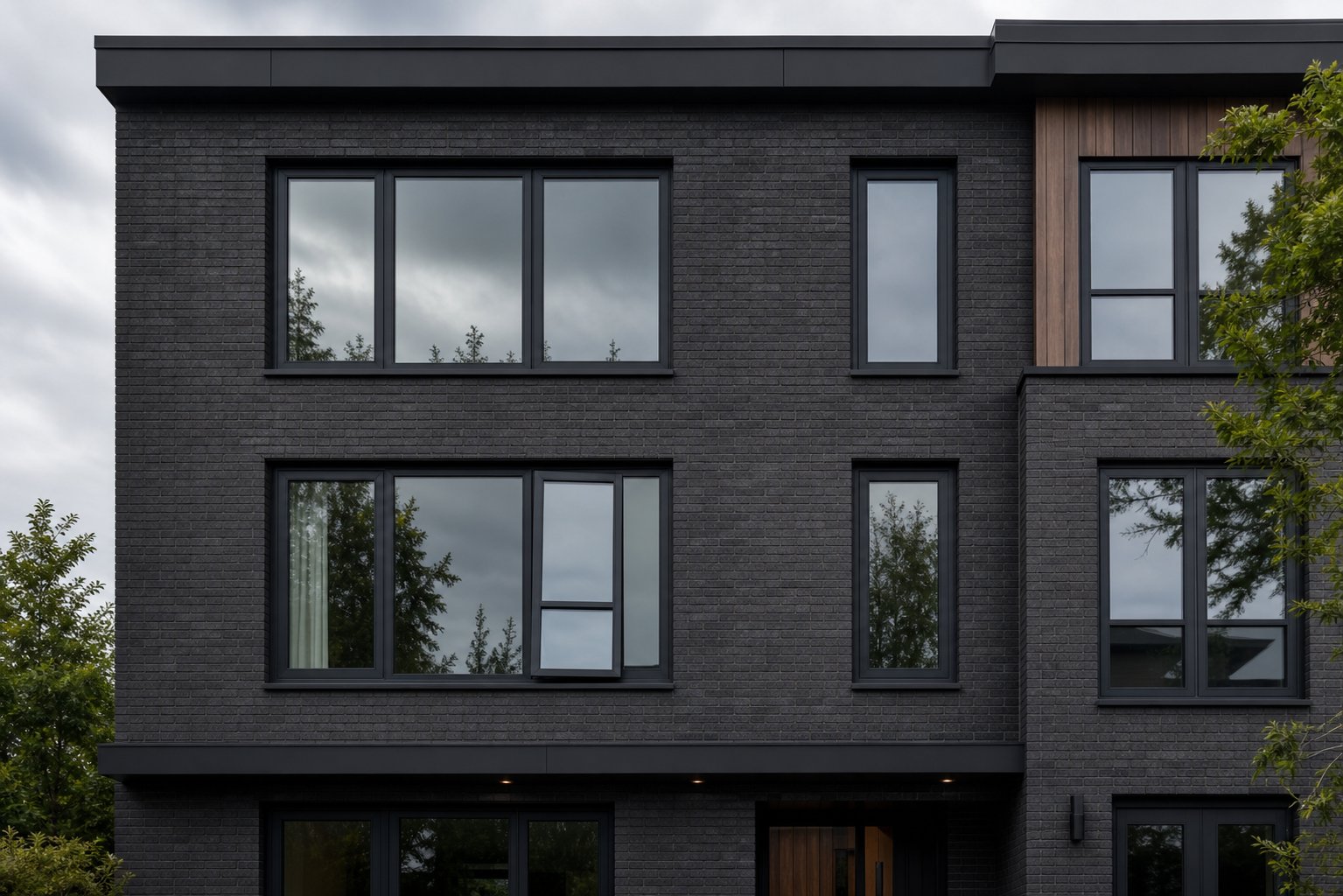
Colour and Finish Options That Last
A steel look aluminium window can have perfect proportions and the slimmest sightlines on the market — but if the finish looks wrong, the illusion falls apart. Colour and surface texture do as much work as profile geometry in convincing the eye that a frame is steel rather than aluminium. The good news: aluminium offers far more finishing flexibility than genuine steel, and the results last significantly longer without intervention.
Powder Coating vs Anodising Explained
Two primary finishing methods dominate the aluminium window industry, each with distinct characteristics.
Powder coating is the standard for most residential and commercial projects. Electrostatically charged dry paint particles are applied to the aluminium surface in a factory environment, then cured at high temperature to form a hard, uniform film. The process produces no volatile organic compounds and delivers a finish available in hundreds of RAL colours — from matte black to heritage green to custom-matched shades. Dual-colour options allow a different colour on the interior and exterior faces, letting you match internal decor while maintaining a traditional dark exterior that replicates old style aluminium windows or original steel frames.
Anodising takes a different approach. The aluminium is submerged in an acidic solution and treated with an electrical current, forming a protective oxide layer that becomes part of the metal itself. This produces a rich, lustrous metallic appearance — translucent, with the base metal visible beneath. The finish cannot peel or flake because it is not a separate coating sitting on top of the surface. However, colour options are limited to metallic tones: clear, champagne, bronze, and dark bronze being the most common. For projects aiming to replicate the raw, slightly industrial patina of vintage steel casement windows, anodised bronze or dark bronze delivers a convincingly metallic sheen that powder coating cannot quite match.
Popular Colours for Authentic Steel Aesthetics
Colour choice directly affects how convincingly aluminium reads as steel. Darker, matte finishes absorb light in the same way painted steel does, minimising reflections that might reveal the aluminium beneath. The most popular options for achieving an authentic look:
- Matte black (RAL 9005) — The definitive black steel windows colour. It replicates the appearance of traditional painted steel fenestration and works across every property style from warehouse conversions to contemporary new builds.
- Anthracite grey (RAL 7016) — Slightly softer than pure black, this shade suits heritage renovations where jet black feels too stark against aged brickwork or sandstone.
- Bronze and dark bronze — Available in both powder coat and anodised finishes, bronze tones evoke the aged patina of original steel sash windows and pair well with timber and natural stone.
- Heritage green (RAL 6009) — A deep, muted green historically associated with period steel fenestration in institutional and residential buildings.
Textured matte finishes outperform gloss or satin options for authenticity. A fine-grain texture replicates the slightly rough surface of painted hot-rolled steel, while a high-gloss finish looks unmistakably modern — which may be desirable for contemporary projects but undermines the vintage steel casement windows aesthetic in period renovations.
Long-Term Finish Durability Compared
Genuine steel windows rely on site-applied paint that degrades under UV exposure and moisture. In Australian coastal conditions, repainting cycles of five to ten years are common to prevent corrosion from taking hold. Factory-applied aluminium finishes operate on an entirely different maintenance timeline.
- Anodised aluminium — Longest lasting. The oxide layer is integral to the metal, resists UV degradation, and does not peel. Surfaces can be rejuvenated with mild detergent and light abrasive cleaning after decades of exposure. Difficult to repair if physically damaged — replacement is often the only option.
- Powder-coated aluminium — Extremely durable, with quality polyester powder coatings retaining colour and integrity for 25–30 years in typical Australian conditions. Minor chips or scratches can be touched up on site without recoating the entire frame. Available in a vastly wider colour range than anodising.
- Site-applied paint on steel — Shortest maintenance-free lifespan. Requires recoating every 5–10 years depending on exposure. Coastal and tropical environments accelerate degradation. Ongoing cost of maintenance can exceed the initial price premium of the steel frame itself over a 30-year period.
For homeowners who want the look of black steel windows without the upkeep, powder-coated aluminium in a matte black finish delivers the closest visual match with the least long-term effort. The finish holds its depth and uniformity for decades while the equivalent steel frame would be on its third or fourth repaint cycle.
Finish durability protects the frame's appearance — but it is the thermal performance beneath that surface which determines whether your windows actually keep your home comfortable and your energy bills in check.
Thermal Performance and Energy Efficiency Ratings
A window can look flawless and still fail the home it sits in. If the frame conducts heat like a radiator fin, no amount of visual authenticity compensates for the discomfort and wasted energy on the other side of the glass. Thermal performance is where steel look aluminium windows pull furthest ahead of their genuine steel counterparts — and where the decision between the two materials has the most tangible daily impact on your household.
U-Values and What They Mean for Comfort
U-value measures how readily heat passes through a window assembly — frame, glass, and all. The number is expressed in watts per square metre per degree Kelvin (W/m²K), and the rule is simple: lower means better insulation. A window with a U-value of 1.6 W/m²K loses far less heat than one rated at 3.5 W/m²K.
Steel conducts heat at roughly 50 W/mK — around 250 times more readily than the polyamide thermal breaks used in modern aluminium systems (approximately 0.25 W/mK). Without an insulating barrier, a steel frame acts as a direct thermal bridge between your climate-controlled interior and the outside air. Thermally broken steel windows do exist, but the engineering required to interrupt that conductive path in steel is complex and expensive. Most residential steel window systems on the Australian market either lack a thermal break entirely or use a basic void-based separation that delivers modest improvement at best.
Thermally broken aluminium frames, by contrast, routinely achieve whole-window U-values between 1.5 and 2.5 W/m²K when paired with quality double glazing. That range comfortably meets NCC Section J energy efficiency requirements for metal windows residential applications across most Australian climate zones. Equivalent performance from genuine steel typically demands a premium thermally broken system — adding significant cost to an already expensive frame.
Thermally broken aluminium typically outperforms steel on energy efficiency at a lower price point — delivering better U-values, reduced condensation risk, and NCC compliance without the engineering complexity and cost premium that thermally broken steel windows demand.
Australia's Window Energy Rating Scheme (WERS) provides a star-based system that simplifies comparison. Windows earn separate heating and cooling star ratings (up to 10 stars each), accounting for U-value, solar heat gain coefficient, and air infiltration in a single score. When comparing insulated steel windows against aluminium alternatives, check the WERS rating rather than relying on a single U-value figure — it gives a more complete picture of real-world performance in your specific climate zone.
Condensation Risk in Metal Frames
Condensation forms when warm, moisture-laden indoor air contacts a surface cold enough to drop below the dew point. Metal frames without thermal breaks are prime candidates. On a cool winter morning in Melbourne or Canberra, a non-thermally-broken steel frame can become cold enough to draw moisture out of the air, leaving water pooling on sills and eventually promoting mould growth around the reveal.
Thermally broken aluminium largely eliminates this problem. Because the insulating polyamide barrier keeps the interior face of the frame closer to room temperature, the surface rarely drops low enough to trigger condensation under normal humidity levels. For anyone considering steel replacement windows to upgrade older single-glazed steel frames, this condensation improvement alone often justifies the switch to a thermally broken aluminium system — you gain the same visual character without the damp sills and maintenance headaches that plagued the originals.
Climate Considerations for Frame Selection
Australia spans eight NatHERS climate zones, and thermal priorities shift dramatically between them. A north-facing window wall in Darwin needs to reject solar heat gain above all else — U-value matters less than SHGC and shading strategy. The same window orientation in Hobart prioritises heat retention, making a low U-value critical for winter comfort and energy savings.
For metal windows residential projects in temperate zones (Sydney, Melbourne, Adelaide, Perth), a thermally broken aluminium frame with Low-E double glazing strikes the best balance between winter insulation and summer solar control. In tropical northern regions, frame thermal performance is less critical than glazing SHGC, but the condensation resistance of a thermally broken profile still matters during air-conditioned cooling cycles — cold interior surfaces in a humid environment invite moisture problems just as readily as cold winter frames do in the south.
Steel replacement windows make particular sense in cooler climates where the original steel frames were never thermally broken. Swapping to a thermally broken aluminium system that replicates the steel aesthetic delivers a measurable comfort upgrade — warmer internal surfaces, lower heating bills, and no more morning condensation — while preserving the architectural character of the building.
Thermal performance confirms that aluminium holds a clear practical advantage for most projects. Yet there are specific circumstances where genuine steel remains the right material — situations where no aluminium alternative, however well engineered, can satisfy the brief.
When Genuine Steel Windows Are the Better Choice
Aluminium wins on thermal performance, maintenance, and cost for the vast majority of projects. That does not make it the right answer every time. Certain situations demand genuine steel — not as a luxury preference, but as a compliance requirement or a non-negotiable design principle. Knowing where that line falls helps you avoid specifying the wrong material and facing costly revisions later.
Heritage and Conservation Compliance
In Australia, properties listed on state or local heritage registers — or located within heritage conservation areas — are subject to controls that can dictate window materials down to the profile shape. Many councils and state heritage bodies apply a like-for-like replacement principle: if the original windows were steel, the replacements must also be steel. A development application proposing aluminium alternatives, regardless of how closely they replicate the appearance, may be refused on material authenticity grounds alone.
This mirrors established conservation practice internationally, where planners on listed buildings generally prefer replacements that match the existing as closely as possible — including material. In practice, securing approval for a substitute material on a primary street-facing elevation of a heritage-listed property is difficult. Early consultation with your local council's heritage adviser is essential before assuming aluminium will be accepted.
When Only Genuine Steel Sightlines Will Do
Steel's tensile strength exceeds aluminium's by a significant margin. That structural advantage allows genuine steel frames to achieve sightlines as narrow as 20mm while still supporting large glass panels under wind load. Even the slimmest aluminium systems struggle to drop below 30–32mm without compromising structural ratings or limiting maximum panel dimensions.
For architectural steel windows on landmark commercial projects — hotel lobbies, gallery facades, high-end retail frontages — those extra millimetres matter. When the design intent demands absolute minimalism in the frame and maximum uninterrupted glass, steel delivers proportions that aluminium cannot yet match. Bespoke steel windows fabricated to project-specific dimensions offer a level of precision and slenderness that remains beyond current aluminium extrusion technology.
Restoration Projects Requiring Authentic Materials
Period properties with surviving original steel fenestration — Art Deco apartments, interwar bungalows, former industrial buildings — sometimes require steel replica windows that precisely match the existing profiles. This is particularly true when only a portion of the building's windows need replacement and the new units must sit alongside retained originals without visible inconsistency.
Manufacturers can still produce hot-rolled steel profiles that replicate historic sections, including rare or unusual patterns. In some cases, bespoke steel windows with custom-rolled profiles are the only way to achieve an accurate match. Even iron windows from the late 19th century can be replicated through specialist casting if the project warrants the expense.
Consider genuine steel the right choice when your project falls into any of these categories:
- The property is heritage-listed and council requires like-for-like material replacement
- The building sits within a heritage conservation area with strict material controls
- Sightlines below 30mm are a non-negotiable design requirement
- New windows must visually match retained original steel frames on the same facade
- The architect has specified material authenticity as a core design principle for a high-end project
- Historic replica windows must replicate rare or unusual steel profiles that aluminium extrusions cannot reproduce
For everyone else — and that includes the overwhelming majority of Australian residential renovations, extensions, and new builds — steel look aluminium delivers the aesthetic without the constraints. The practical question then shifts from material choice to supplier selection: finding a system and a partner that can configure the right combination of profile, glazing, and finish for your specific project.
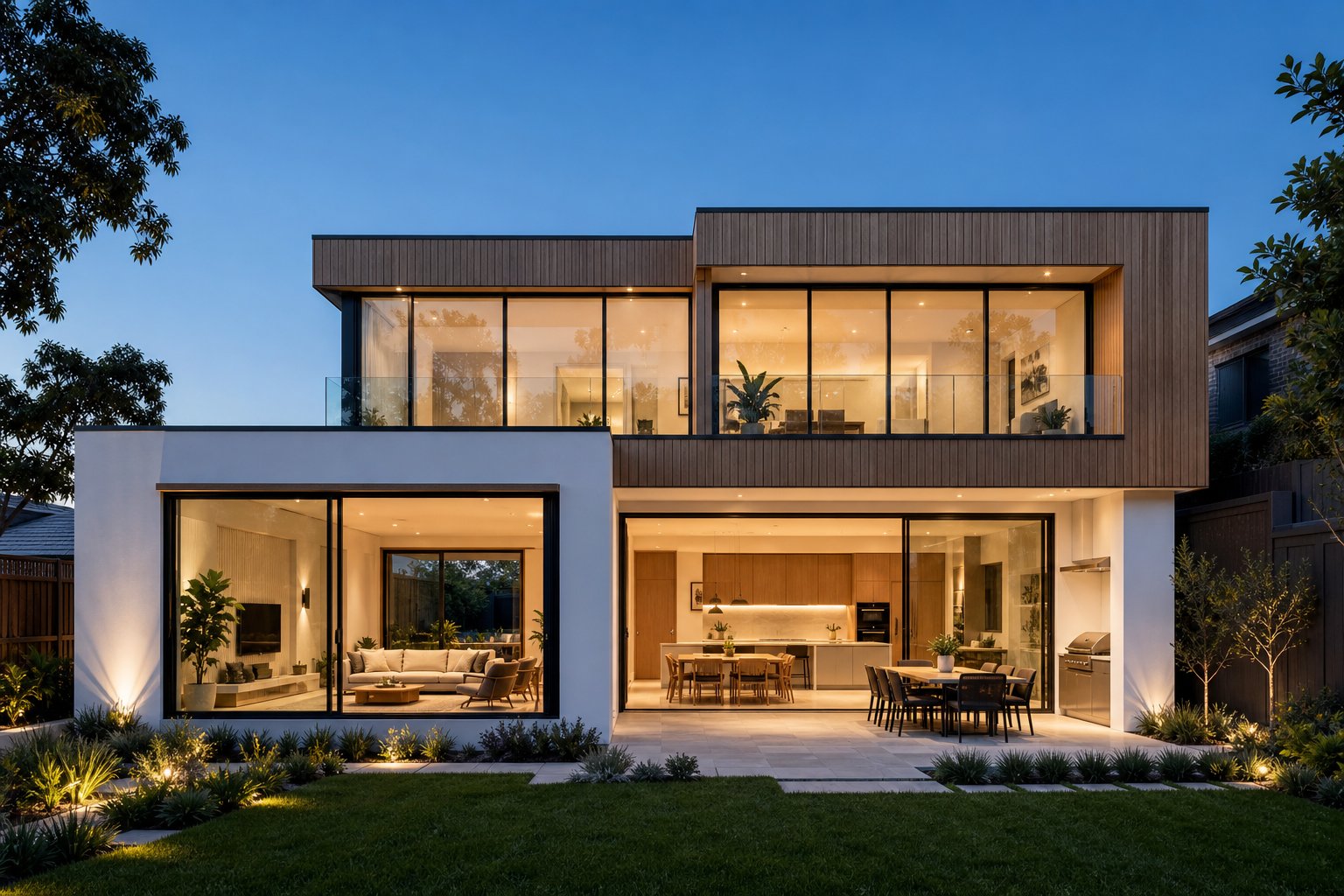
Finding the Right Steel Look Aluminium Window Supplier
Choosing the material is only half the job. The supplier you work with determines whether that material arrives configured correctly for your openings, finished to the standard you expect, and delivered within a timeframe that keeps your build on track. Not all steel window suppliers operate the same way — some stock prefabricated windows in standard sizes, while others engineer every unit to project-specific dimensions. The gap between those two approaches can mean the difference between a seamless installation and weeks of costly delays.
Key Questions to Ask Window Suppliers
Before requesting a quote, you need answers that reveal whether a supplier can actually deliver what your project demands. Ask about testing and certification first. In Australia, every window must comply with AS 2047 for structural performance and AS 1288 for glazing safety. A credible supplier will provide test reports and certification documentation without hesitation — if they cannot, move on. Beyond compliance, ask how they handle quality control across production runs. Consistency matters enormously when you are ordering multiple units for the same facade.
Enquire about lead times and how they shift with order complexity. A simple fixed-lite panel might ship in four weeks; a full house lot of custom metal windows with non-standard configurations could take eight to twelve. Suppliers who manufacture locally or hold strong relationships with dedicated fabrication partners tend to offer more predictable scheduling than those relying on generic import channels.
Configuration Options That Matter Most
The range of opening types available within a single system tells you a lot about its versatility. A comprehensive aluminium window system should offer casement, awning, fixed, and sliding configurations — all sharing the same slim-profile aesthetic so that different window types on the same elevation look cohesive rather than mismatched.
Prioritise your evaluation criteria in this order:
- Custom configuration capability — Can the supplier build to your exact opening sizes, or are you limited to prefabricated windows in set dimensions? Custom sizing ensures proper fit, correct sightline proportions, and no unsightly packing or trimming on site.
- Glazing thickness compatibility — Confirm the maximum IGU depth the frame accepts. If you need acoustic laminated glass or triple glazing, the system must accommodate the unit thickness without compromising seal integrity.
- Available sightline widths — Not every system within a supplier's range offers the slimmest profiles. Clarify which product line delivers the narrowest sightlines and whether that line supports your required panel sizes.
- Colour range and finish options — Look for suppliers offering full RAL colour matching, dual-colour capability, and both matte and textured finishes. Limited colour options restrict your ability to achieve an authentic steel aesthetic.
- Minimum and maximum panel sizes — Large openings need frames engineered to handle the glass weight and wind load. Confirm the upper limits before designing oversized panels that the system cannot structurally support.
- Hardware and opening mechanism quality — Hinges, stays, locks, and handles should be commercial-grade and matched to the sash weight. Cheap hardware on a premium frame undermines the entire investment.
Matching the System to Your Project Scale
A single replacement window for a kitchen renovation has different supply requirements than a full new build with thirty openings across two storeys. For larger projects, look for suppliers with genuine project-based supply capabilities — the capacity to coordinate drawings, manage staged deliveries, and maintain finish consistency across an entire order. Suppliers like MEICHEN offer this kind of comprehensive service for Australian residential and commercial projects, combining custom configurations, multiple glazing choices, and extensive colour options under one supply agreement. That integrated approach reduces the coordination burden on builders and architects compared to sourcing individual components from separate vendors.
For smaller jobs — a single window or a pair of doors — project-scale supply matters less, but custom configuration still does. Even when browsing metal windows for sale through smaller suppliers, verify that the product is made to your measurements rather than adapted from a nearest-fit stock size. A 10mm discrepancy between frame and opening might sound trivial, but it translates to visible packing, compromised weathersealing, or an installation that never quite sits flush.
Ultimately, the right supplier combines technical capability with transparent communication. They answer questions about AS 2047 compliance without deflecting, provide clear lead time commitments, and demonstrate that their aluminium window systems have been tested and installed across projects similar to yours. That track record — not the lowest quote — is what separates a reliable partner from a risky one.
Steel Look Aluminium Windows: Frequently Asked Questions
1. What is the difference between steel look aluminium windows and genuine steel windows?
Steel look aluminium windows use purpose-engineered aluminium extrusions with ultra-slim profiles to replicate the appearance of traditional steel fenestration. The key differences lie in weight (aluminium is roughly one-third the density of steel), maintenance (aluminium requires no repainting while steel needs recoating every 5-10 years), thermal performance (thermally broken aluminium achieves better U-values more affordably), and cost (genuine steel typically runs four to five times the price of comparable aluminium systems). Aluminium sightlines range from 30-45mm versus steel's 20-35mm, though the slimmest aluminium systems now push below 35mm. For most Australian residential projects, the visual difference at normal viewing distance is negligible while the practical and financial advantages of aluminium are substantial.
2. Are steel look aluminium windows suitable for heritage properties in Australia?
It depends on the heritage listing and local council requirements. Properties on state or local heritage registers, or within heritage conservation areas, may be subject to like-for-like material replacement rules that mandate genuine steel. Some councils refuse development applications proposing aluminium alternatives on heritage-listed facades regardless of visual similarity. However, for properties that are not formally listed or where heritage controls are less restrictive, steel look aluminium windows can achieve an authentic period aesthetic while delivering modern thermal performance and minimal maintenance. Early consultation with your local council's heritage adviser is essential before specifying any material.
3. What sightline width should I look for in steel look aluminium windows?
Sightline width is the most important visual metric for authenticity. Genuine steel achieves sightlines as narrow as 20mm, while aluminium systems typically range from 30-45mm. The slimmest aluminium profiles now sit below 35mm, which is close enough to read as steel from normal viewing distances. However, narrower sightlines may limit maximum glass panel sizes because the frame has less structural material to support heavy sealed units under wind load. For most Australian homes, a system offering 35-38mm sightlines provides the best balance between authentic steel proportions and practical panel size flexibility.
4. Can steel look aluminium windows accommodate triple glazing?
Some can, but not all. Ultra-slim aluminium profiles designed for maximum steel authenticity may only accept insulated glass units up to 24-28mm thick, which rules out standard triple-glazed configurations (typically 36mm or more). If triple glazing is required, you may need to step up to a slightly deeper profile, adding 2-5mm to the visible sightline. For most Australian climates, high-performance double glazing with Low-E coating and argon gas fill delivers excellent thermal results within the slimmest frames. Triple glazing is generally only justified in cooler regions like Tasmania or the Victorian highlands where the insulation benefit outweighs the minor aesthetic compromise.
5. What is the best colour finish for steel look aluminium windows in Australia?
Matte black (RAL 9005) is the most popular choice for replicating traditional painted steel fenestration and works across all property styles. Anthracite grey (RAL 7016) offers a softer alternative that pairs well with heritage brickwork or sandstone. Bronze tones suit period renovations, while heritage green (RAL 6009) references institutional steel fenestration. The finish type matters as much as colour — textured matte powder coating most convincingly replicates the slightly rough surface of painted hot-rolled steel. Anodised bronze or dark bronze delivers a metallic sheen closer to raw steel. Powder-coated aluminium maintains its finish for 25-30 years in typical Australian conditions without repainting, making it ideal for coastal and high-UV environments.