
Why the Timber vs Aluminium Cost Gap Is Not Straightforward
Ask five window suppliers about the cost difference between timber and aluminium windows and you will likely get five different answers. That is not because anyone is lying. It is because the question itself hides layers of complexity that a single dollar figure cannot capture.
Why Sticker Price Misleads Window Buyers
Most buyers start by comparing the quoted supply price of timber or aluminium windows. On the surface, this seems logical. But sticker price only tells you what leaves your account on day one. It says nothing about maintenance cycles, energy performance over decades, installation variables, or how long the frame will actually last before needing replacement. The difference between timber and aluminium windows extends well beyond the initial invoice, and treating purchase price as the full picture leads to budget surprises years down the track.
The cheapest upfront option is not always the cheapest long-term choice. True cost includes every dollar spent across the full life of the window, from purchase through maintenance to eventual replacement.
What This Cost Comparison Actually Covers
This article uses a total cost of ownership framework to break down every layer that shapes what you actually pay when choosing timber vs aluminium windows. Rather than handing you a flat per-unit number, we will walk through material and manufacturing costs, installation labour, ongoing maintenance, energy efficiency impact, and the hidden expenses most quotes leave out. Think of it as a complete aluminium vs timber joinery window upgrades comparison built for Australian conditions, specifications, and pricing realities.
Whether you are pricing a full new build or weighing up a renovation swap, the goal is simple: give you enough detail to compare these two materials on genuinely equal terms. The real cost story starts with understanding what goes into each frame before it ever reaches your site.
Material and Manufacturing Cost Breakdown
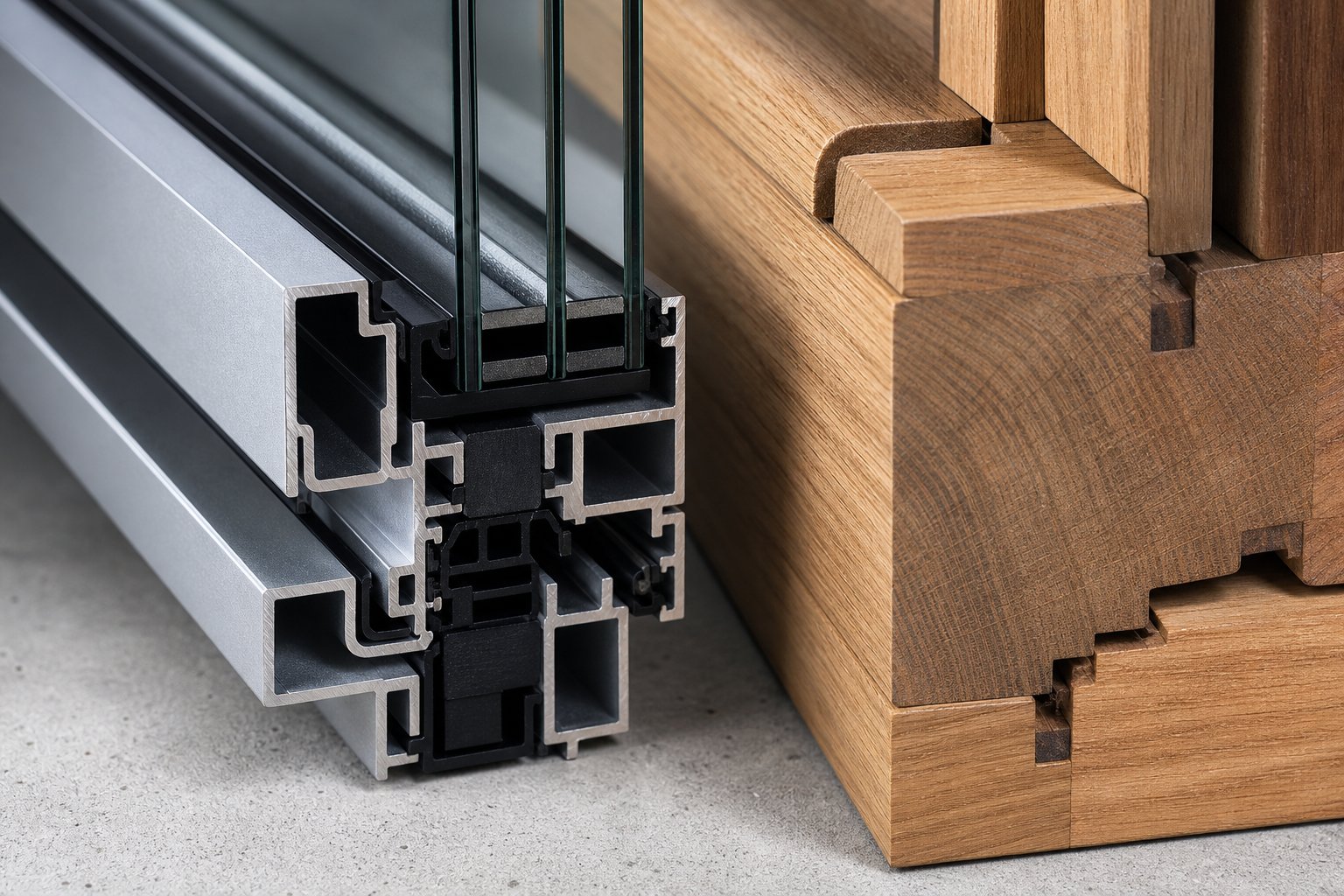
Every window frame carries three distinct cost layers before it reaches your site: raw material, fabrication, and finishing. These layers behave differently for timber and aluminium windows, and understanding where the money goes explains why quotes for seemingly similar products can vary by thousands of dollars.
Timber Species and How They Affect Frame Pricing
The species you select shifts the material baseline dramatically. Softwood options like pine or European redwood sit at the lower end. They are lighter, easier to machine, and grow faster, which keeps supply costs down. Hardwoods such as meranti, spotted gum, or western red cedar cost significantly more per cubic metre due to slower growth cycles, denser grain structures, and additional processing requirements.
According to Bereco's timber comparison data, softwood is the go-to for cost-conscious projects and multi-unit developments, while hardwood commands a premium driven by raw material scarcity and the extra machining its density demands. In Australia, locally sourced hardwoods can push frame costs 40 to 60 percent above equivalent softwood profiles. That gap widens further for stain-grade finishes where the timber's natural grain becomes the feature.
Aluminium Grade and Finish Cost Factors
Aluminium pricing follows a different logic. The raw material cost tracks global commodity markets, specifically the price of aluminium ingot, which fluctuates with supply and demand cycles. On top of that base sits the extrusion and processing fee, which varies by profile complexity and brand tier.
Three variables push aluminium frame costs higher:
- Thermal break technology — Thermally broken profiles use an insulating polyamide strip between the inner and outer aluminium sections. This adds meaningful cost per frame but is essential for meeting NCC energy requirements in most Australian climate zones.
- Surface treatment — Standard powder coating is the baseline. Premium finishes like fluorocarbon coating or woodgrain-effect powder coating (used on aluminium coated timber windows alternatives) increase the finishing cost progressively.
- Profile depth and section size — Larger or more complex sections use more material per lineal metre and require more sophisticated die tooling.
Industry cost breakdowns from thermal break window pricing analysis show that profiles typically account for 30 to 40 percent of the finished aluminium window cost, with glass at 15 to 20 percent and hardware at 8 to 10 percent. The thermal break component alone can add a notable premium over non-thermally-broken equivalents.
Supply Chain Influences on Both Materials
Timber and aluminium respond to entirely different market forces. Timber pricing depends on forestry supply, seasoning time (kiln-drying adds weeks and cost), and transport distance from mill to manufacturer. Australian hardwood availability can tighten seasonally, and imported species carry shipping and customs costs that fluctuate with freight rates.
Aluminium, by contrast, is a globally traded commodity. Ingot prices shift with energy costs, smelter output, and international demand. Australian fabricators buy extrusions priced against these benchmarks, meaning aluminium timber windows can see quote variations month to month even when specifications stay identical. This volatility makes fixed-price comparisons between the two materials unreliable unless both quotes are dated within the same period.
For hybrid products like aluminium clad timber window frames, both supply chains converge. The timber core follows forestry pricing while the external aluminium shell tracks commodity markets, compounding the variability.
| Cost Component | Timber Windows | Aluminium Windows |
|---|---|---|
| Raw material | Varies widely by species; softwood significantly cheaper than hardwood | Tied to global ingot price; relatively consistent across grades |
| Fabrication complexity | Higher labour input; CNC machining of joints, mortise and tenon work | Lower labour per unit; extrusion and cut-to-length assembly |
| Finishing and coating | Multi-coat paint or stain system; factory-applied for durability | Powder coating standard; premium for woodgrain or fluorocarbon finishes |
| Typical lead time | Longer — timber seasoning, machining, and multi-stage finishing | Shorter — extrusion stock availability and faster assembly |
| Price sensitivity | Forestry supply, species availability, freight from mill | Commodity market cycles, energy costs, import duties on extrusions |
These cost layers stack differently depending on project scale. A single replacement window absorbs setup and finishing costs across one unit, inflating the per-window price for both materials. Larger orders spread those fixed costs, often narrowing the gap between aluminium and timber windows in ways that small-project quotes never reveal. That scaling effect becomes especially relevant when installation labour enters the equation.
Installation and Labour Cost Factors for Each Frame Type
Material cost and installation cost are two separate line items, yet many buyers lump them together when comparing quotes. The reality is that fitting a window into a wall involves labour time, site conditions, and structural considerations that differ substantially between timber and aluminium frames. These variables can add hundreds of dollars per opening or shave them off, depending on the scenario.
Labour Time and Frame Weight Considerations
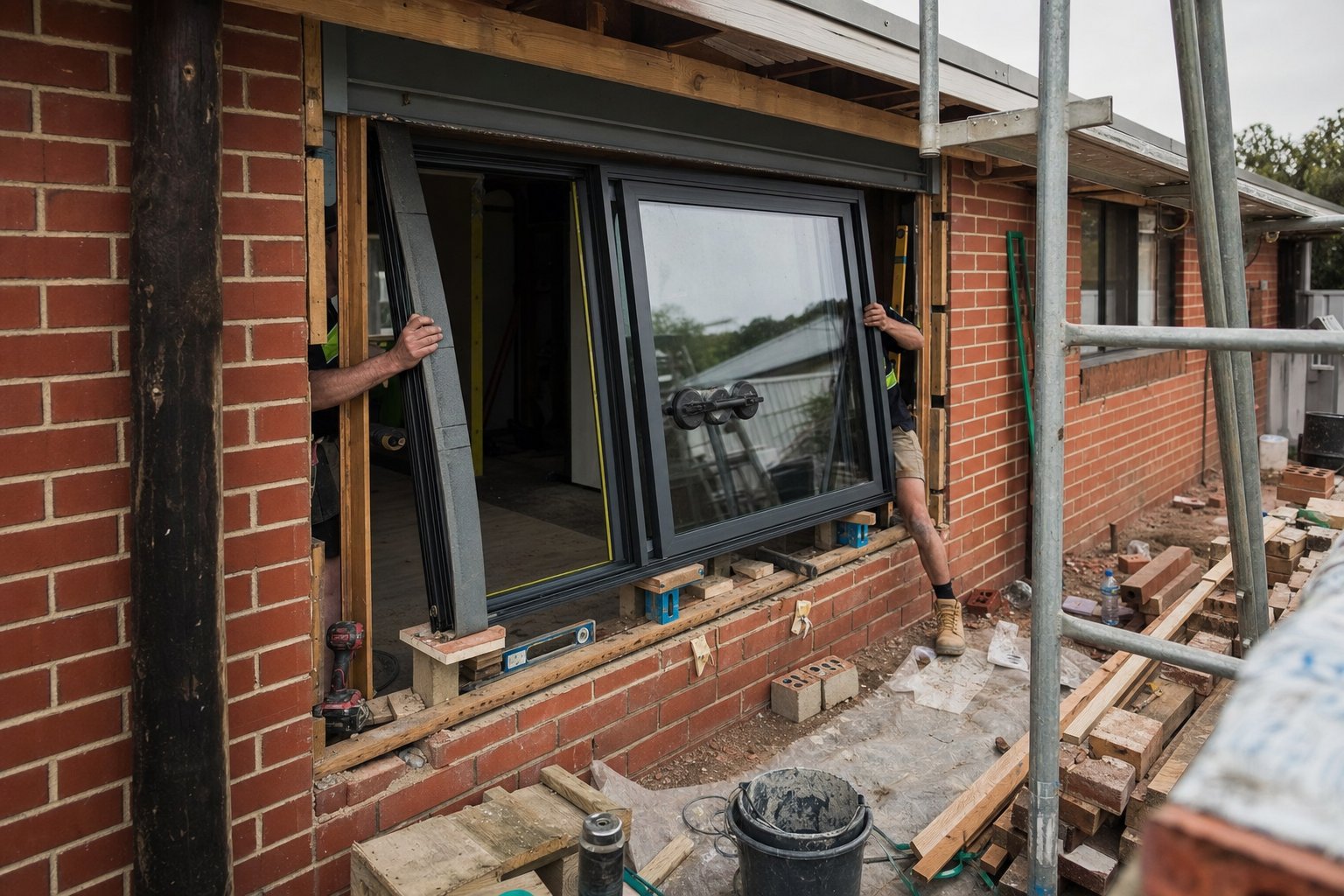
Timber frames are heavier. A standard hardwood casement window can weigh 30 to 50 percent more than an equivalent aluminium unit, and that weight compounds across a full house of openings. Heavier frames demand more hands on site, slower lifting into position, and occasionally mechanical assistance for upper-storey installations. Each of these factors adds labour hours to the job.
Aluminium frames arrive lighter and with tighter manufacturing tolerances. Because they are factory-fabricated to precise dimensions using extruded profiles, there is less on-site adjustment required. Installers can typically position, level, and fix an aluminium window faster than a timber equivalent. Industry observations consistently note that aluminium windows are quicker and easier to install because they arrive ready to fit, cutting down on installation time and labour costs.
Timber frames, particularly in custom or heritage applications, may require additional sealing, shaping, or on-site trimming to achieve a proper fit. That handwork is skilled labour, billed at trades rates that reflect the expertise involved. For a project with ten or more openings, the cumulative time difference between the two materials becomes a meaningful budget item.
New Build vs Renovation Installation Costs
In a new build, the cost gap between installing timber and aluminium narrows considerably. Openings are designed to suit the chosen window dimensions from the start. There are no old frames to remove, no damaged reveals to repair, and no surprises hidden behind plaster. Both materials install into clean, purpose-built openings with relatively predictable labour requirements.
Renovations tell a different story. The cost of replacing timber windows with aluminium introduces variables that new builds simply do not face. Removing existing frames can reveal rotted studs, cracked render, or non-standard opening sizes that need correction before new windows go in. Real-world project data shows that replacement projects carry higher per-unit installation costs precisely because of dismantling, disposal, and remediation work around existing structures.
Fitting aluminium windows into timber frame openings is a common renovation scenario in Australian homes, particularly older weatherboard and brick veneer properties originally built with timber joinery. The aluminium unit rarely matches the exact rebate dimensions of the old timber frame, so packers, new reveals, and adapted flashing details are needed to bridge the gap. Timber reveals for aluminium windows are often required to line the internal opening neatly, adding both material and carpentry time to the installation.
Like-for-like replacements, where timber replaces timber or aluminium replaces aluminium, are simpler because the opening geometry already suits the frame type. Switching materials mid-renovation is where adaptation costs accumulate.
- Structural modifications — heavier timber frames in upper storeys may need lintel upgrades or additional support; aluminium-to-timber swaps in lightweight walls can require reinforcement
- Flashing and sealing requirements — different frame profiles demand different flashing configurations; material swaps often mean new head and sill flashings rather than reusing existing ones
- Scaffolding needs — multi-storey installations require scaffolding regardless of material, but heavier timber frames may extend hire time due to slower handling
- Waste disposal of old frames — removing old timber windows generates bulky waste requiring skip bins or tip runs; old aluminium frames are lighter but may still incur disposal fees unless recycled
These installation variables rarely appear in a supply-only quote, which is why comparing window costs without factoring in the fitting scenario gives an incomplete picture. The total installed price depends as much on what is already in the wall as it does on what is going into it. And once the windows are in place, the spending story shifts again, this time measured in years rather than hours.

Total Cost of Ownership Over 10 to 30 Years
Installation day is not the finish line. It is the starting point of a spending timeline that stretches decades into the future. The aluminium vs timber windows cost comparison only becomes meaningful when you map every dollar across the full lifespan of the product, not just the first invoice. A window that costs less to buy but more to maintain can quietly overtake a pricier alternative within a single decade.
Maintenance Cycles and Cumulative Costs
Timber windows demand regular intervention to stay functional and attractive. The frequency depends heavily on species and exposure. Softwood frames, the most budget-friendly timber option, typically need sanding and repainting every 3 to 5 years. Hardwood frames are more resilient, stretching that cycle to 5 to 7 years under normal conditions. Maintenance cost data from GB Joinery puts the professional repainting cost at roughly $200 to $280 AUD per window when you factor in labour, premium exterior paint, and preparation materials. Over 30 years, a traditional hardwood window may require six full painting cycles, accumulating $1,200 to $1,680 AUD in maintenance alone per opening.
That figure assumes no rot repair. In coastal or high-humidity areas common across much of eastern Australia, moisture ingress can degrade timber sections between paint cycles. Patching or splicing rotted timber adds $300 to $800 AUD per repair depending on severity and access difficulty. Even one rot event per decade shifts the lifetime maintenance bill substantially upward.
Modern engineered timbers like Accoya can extend repainting intervals to 12 to 15 years, cutting the 30-year cycle count from six down to two or three. But these species carry a higher purchase price, so the saving on maintenance partially offsets the premium paid upfront.
Aluminium frames, by contrast, require almost nothing. No painting, no staining, no rot risk. The maintenance regime amounts to periodic cleaning with soapy water and occasional lubrication of hinges and locking hardware. ETC's comparison guide notes that quality aluminium windows can perform well for 40 years or more with minimal care. The cumulative maintenance cost over 30 years is effectively negligible, often under $50 AUD per window across the entire period.
For anyone asking are aluminium windows more expensive than timber windows, the answer depends entirely on which decade you are measuring. The purchase price may favour timber in some configurations, but the maintenance ledger almost always favours aluminium over time.
Energy Efficiency and Heating Cost Impact
Thermal performance is the less visible cost layer, but it compounds every single day the window is in the wall. Timber is a natural insulator. Its cellular structure resists heat transfer without any additional engineering, which means even a basic timber frame contributes positively to a home's thermal envelope. Paired with double glazing, timber windows achieve strong U-values that satisfy NCC requirements across most Australian climate zones without needing specialised frame construction.
Aluminium conducts heat readily. Without intervention, a standard aluminium frame acts as a thermal bridge, allowing heat to pass through the wall at the window location. This is why thermally broken aluminium frames exist. The polyamide strip between the inner and outer aluminium sections disrupts that conductivity, bringing the frame's thermal performance in line with or close to timber. However, thermally broken profiles cost more than non-broken equivalents, and the cost of aluminium windows versus timber narrows or widens depending on whether you are comparing basic aluminium or thermally broken aluminium against timber.
In practical terms, a home fitted with non-thermally-broken aluminium windows in a temperate climate like Melbourne or Canberra will spend more on heating and cooling than the same home with timber or thermally broken aluminium. The difference per window is modest in isolation, perhaps $30 to $60 AUD annually depending on window size and orientation. But multiply that across 10 to 15 openings over 20 years and the energy cost gap becomes a four-figure sum that belongs in any honest total cost comparison.
For projects targeting high NatHERS ratings or Passive House certification, the thermal performance of the frame is non-negotiable. In these scenarios, the cost of timber windows vs aluminium windows shifts because thermally broken aluminium becomes the minimum acceptable specification, eliminating the cheaper non-broken option from consideration entirely.
Warranty Coverage and Long-Term Risk
Warranty terms reveal how manufacturers assess their own product's longevity, and the gap between aluminium versus timber windows is telling. Most aluminium window manufacturers in Australia offer structural warranties of 10 to 15 years on frames and 7 to 10 years on powder-coat finishes. Some premium brands extend frame coverage to 20 years or beyond. These warranties typically cover defects in materials and manufacturing, corrosion of the frame, and failure of the thermal break bond.
Timber window warranties tend to be shorter and more conditional. A 10-year warranty is common, but it almost always requires documented evidence of regular maintenance. Fail to repaint within the specified cycle and the warranty may be voided. Rot, warping, or joint failure caused by deferred maintenance is rarely covered. This conditionality introduces risk: the warranty exists on paper, but its practical value depends on the owner's commitment to upkeep.
Hardware warranties for both materials typically sit at 5 to 10 years, covering mechanisms like hinges, locks, and stays. Glazing unit warranties (covering seal failure and fogging in double-glazed units) are usually separate and range from 5 to 15 years regardless of frame material.
| Cost Category | Timber Windows | Aluminium Windows (Thermally Broken) |
|---|---|---|
| Initial purchase (per window, standard size) | Moderate to high depending on species | Moderate to high depending on profile system |
| Installation | Slightly higher due to weight and fitting time | Slightly lower due to lighter weight and tolerances |
| Maintenance per decade | $400–$560 AUD (2 paint cycles, softwood) or $200–$280 AUD (1 cycle, hardwood) | Under $20 AUD (cleaning and hardware lubrication) |
| Energy cost impact (per window, per decade) | Lower heating/cooling spend due to natural insulation | Comparable when thermally broken; higher without thermal break |
| Estimated lifespan before replacement | 30–40+ years with diligent maintenance | 40–50+ years with minimal intervention |
| Warranty (typical structural) | 10 years, conditional on maintenance records | 10–20 years, fewer conditions |
The pattern is clear when you step back from the purchase receipt and look at the full ownership timeline. Timber can match or beat aluminium on energy performance and carries a warmth that many homeowners value. But its maintenance demands create a recurring cost stream that aluminium simply does not generate. Whether that stream tips the total cost balance depends on how many windows you are maintaining, how exposed they are to weather, and how honestly you assess your willingness to keep up with repainting schedules every few years.
These lifecycle figures assume you stick with one material for the duration. But a growing number of buyers are asking whether a hybrid approach, combining timber's insulating properties with aluminium's durability, might offer a better cost position than either material alone.
Timber-Look Aluminium and Composite Window Alternatives
That hybrid question is not hypothetical. The market already offers several configurations designed to deliver timber aesthetics without timber maintenance costs, or aluminium durability without sacrificing interior warmth. These middle-ground products sit at different price points and suit different project priorities, so understanding what each one actually is matters more than knowing they exist.
Powder-Coated Timber-Look Aluminium Explained
Aluminium windows that look like timber use advanced powder-coating technology to replicate natural woodgrain texture and colour on the frame surface. The process applies a sublimation film or specialist multi-layer coating that mimics species like oak, walnut, or western red cedar. From a metre away, the visual effect is convincing. Up close, the texture lacks the depth of real grain, but for many applications the trade-off is worthwhile.
Timber look aluminium windows cost more than standard single-colour powder coating, typically adding 15 to 30 percent to the finishing component of the frame price. That premium is a one-off expense. Unlike genuine timber, there is no repainting cycle, no rot risk, and no ongoing maintenance cost beyond occasional cleaning. Over a 30-year ownership period, the total spend on a woodgrain-finish aluminium window often lands well below an equivalent real timber frame once you factor in cumulative maintenance.
The limitation is tactile. Aluminium still feels like aluminium when you touch it, and the interior face lacks the warmth that real timber provides in a living space. For projects where the timber aesthetic matters primarily on the exterior, such as streetscape compliance or neighbourhood character overlays, this solution delivers the look at a fraction of the long-term cost. Specialist aluminium fabricators like MEICHEN can advise on available woodgrain finishes and custom colour matching, helping buyers identify which coating delivers the appearance they want within their project budget.
Composite Window Systems and Their Cost Position
Composite timber aluminium windows take the hybrid concept further by physically combining both materials in a single frame. Two main configurations exist, and they serve different purposes at different price points.
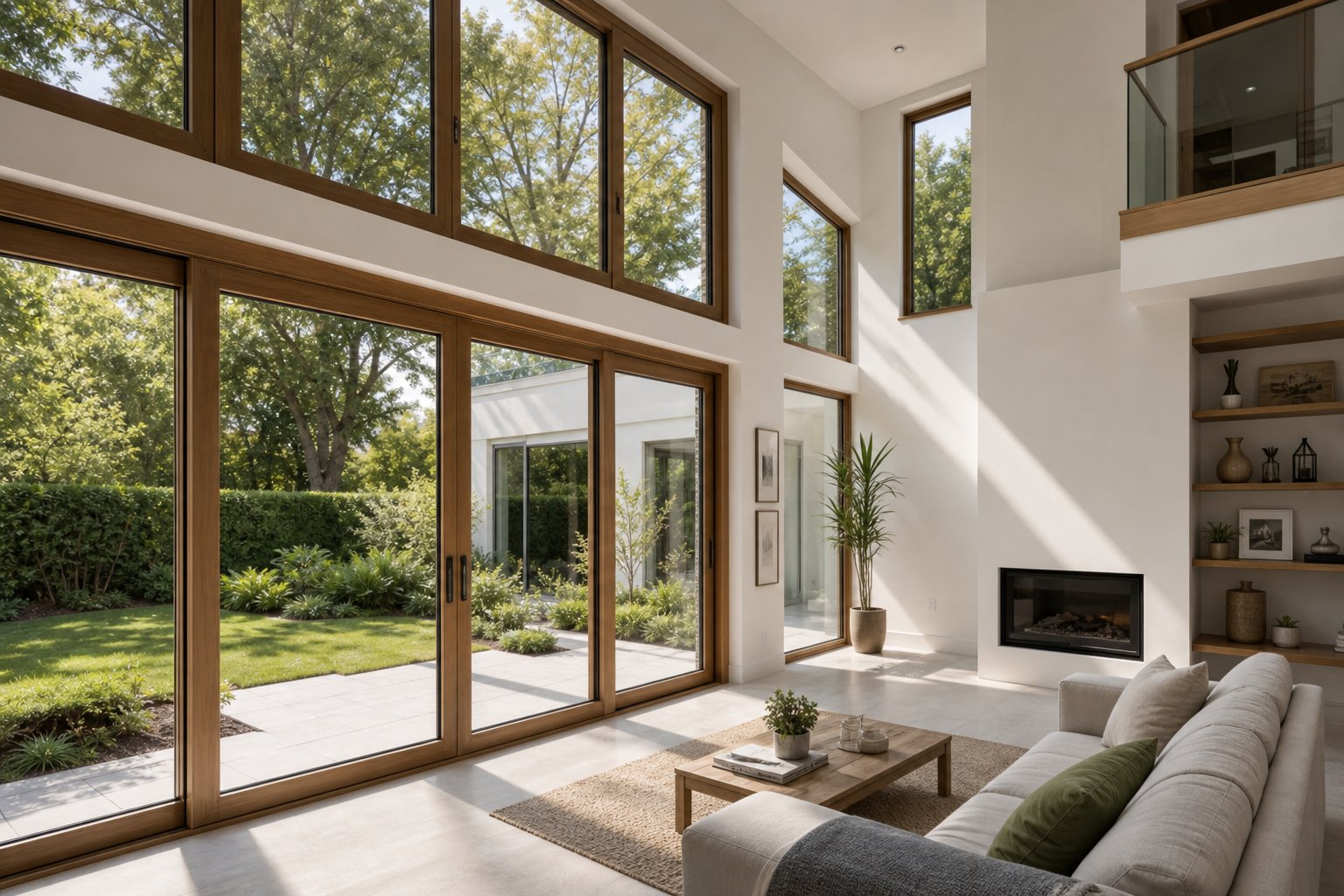
Aluminium-clad timber windows use a structural timber core with an external aluminium shell bonded or mechanically fixed to the outside face. The timber handles insulation and interior aesthetics. The aluminium handles weather protection. This is the more established composite approach, widely used in Scandinavian and European markets and increasingly specified in Australian projects targeting high thermal performance. Aluminium clad timber windows typically cost 20 to 40 percent more than equivalent pure timber frames due to the additional material layer and more complex manufacturing process. Their cost positioning sits above both standard timber and standard aluminium, but the reduced maintenance requirement can offset that premium within 10 to 15 years.
Timber-clad aluminium windows reverse the arrangement. The structural core is aluminium, providing strength and dimensional stability, while a timber lining is applied to the interior face for visual warmth. This configuration is less common in Australia but appeals to projects wanting aluminium's low-maintenance exterior with a natural interior finish. Timber clad aluminium windows generally cost slightly less than full aluminium-clad timber systems because the aluminium core simplifies fabrication, though the interior timber still requires periodic refinishing.
Both configurations fall under the broader category of aluminium and timber composite windows. Industry data from composite window manufacturers indicates these systems are designed for service lives of 30 to 50 years or more, with some engineered systems targeting 70-year lifespans when correctly maintained.
Pros and Cons of Each Hybrid Approach
Timber-look powder-coated aluminium:
- Lowest long-term cost of all hybrid options
- Zero timber maintenance required
- Wide range of woodgrain colours and textures available
- Lacks genuine timber warmth on interior surfaces
- Coating can fade or chip under extreme UV exposure over decades
Aluminium-clad timber (timber core, aluminium exterior):
- Genuine timber interior with natural insulating properties
- Aluminium exterior eliminates external painting cycles
- Strong thermal performance, often exceeding pure aluminium or pure timber
- Higher upfront cost than either single-material option
- Interior timber still needs periodic oiling or lacquering
Timber-clad aluminium (aluminium core, timber interior lining):
- Aluminium structural strength suits large openings and sliding configurations
- Interior timber lining provides visual warmth without full timber frame weight
- Slightly lower cost than full aluminium-clad timber systems
- Interior timber lining requires maintenance similar to standard timber frames
- Less widely available in the Australian market
Timber aluminium composite windows make the most financial sense on projects where both aesthetics and low maintenance are non-negotiable, where the home faces harsh weather exposure, or where the owner values interior timber warmth but has no appetite for exterior upkeep. For projects where budget is the primary driver and interior appearance is secondary, standard aluminium with a woodgrain finish often delivers better value. For heritage projects requiring authentic timber profiles, composites may not satisfy council requirements regardless of how convincing they look.
The right configuration depends on your specific priorities, exposure conditions, and budget horizon. Exploring aluminium timber composite windows with a project-capable fabricator who understands profile options and custom finishes, such as MEICHEN's services team, helps clarify which system aligns with your goals before you commit to a quote.
These hybrid options add nuance to the cost comparison, but they do not eliminate the need to understand when pure timber or pure aluminium still wins outright. Certain project scenarios tilt the balance decisively toward one material, regardless of what composites offer.
When Timber Is Cheaper and When Aluminium Wins
The cost difference between timber and aluminium windows is not a fixed number with one material always sitting above the other. It shifts depending on project scale, location, climate exposure, and regulatory context. Treating either material as universally cheaper leads to poor decisions. The smarter question is not "which costs less" but "which costs less for my specific situation."
Scenarios Where Timber Costs Less
Timber holds a genuine price advantage in several well-defined situations that Australian buyers encounter regularly.
Standard softwood casements in regions with strong local supply. In areas close to plantation timber sources, particularly across parts of Victoria, Tasmania, and southern NSW, locally milled softwood frames can undercut aluminium on supply price. The short transport distance, established milling infrastructure, and absence of import duties keep material costs low. A basic pine casement window in these regions may cost 15 to 25 percent less than an equivalent thermally broken aluminium unit, supply only.
Heritage and conservation areas. Council overlays in heritage precincts often mandate timber joinery to maintain streetscape character. While this sounds like a cost imposition, it can actually be cheaper than the alternative. Heritage-compliant aluminium profiles, designed to replicate period moulding details with slim sightlines, carry a significant premium over standard aluminium sections. In many cases, a traditional timber sash built to heritage specifications costs less than an aluminium profile engineered to mimic the same proportions. When comparing top sash window materials compared timber vs aluminium in these contexts, timber frequently wins on both compliance simplicity and price.
Small single-window replacements. Aluminium fabrication involves setup costs: programming CNC saws, configuring corner crimping or welding equipment, and batching powder-coat runs. For a single replacement window, those fixed costs are absorbed by one unit, inflating the per-window price disproportionately. A local joiner producing one timber casement from stock material faces lower setup overhead, making timber the more economical choice for isolated one-off replacements.
Scenarios Where Aluminium Wins on Price
Aluminium or timber windows? For many project types, aluminium delivers a lower total cost once you account for installation efficiency, maintenance elimination, and structural savings.
Large-scale projects with repetitive window sizes. The advantages of aluminium windows over timber windows become most pronounced at volume. When a multi-unit development or large home requires 20, 40, or 100 windows of the same specification, aluminium's factory efficiency shines. Extrusion stock is cut to length, corners are crimped or welded in minutes, and powder coating runs in bulk. The per-unit cost drops sharply with quantity. Timber fabrication, by contrast, scales less efficiently because each frame still requires individual machining, assembly, and multi-coat finishing regardless of batch size.
Coastal and high-exposure locations. Along Australia's extensive coastline, salt-laden air accelerates timber degradation. Maintenance cycles compress from every 5 to 7 years down to every 2 to 3 years in severe salt zones. That escalation transforms timber's maintenance cost from manageable to punishing over a 30-year ownership period. Marine-grade powder-coated aluminium, by contrast, resists salt corrosion with no additional upkeep. For properties within 1 kilometre of the coast, are aluminium windows cheaper than timber? Almost always, once you factor in the compressed repainting schedule and elevated rot risk.
Multi-storey buildings. Lighter aluminium frames reduce dead load on upper-level walls and lintels. In multi-storey residential construction, this weight saving can eliminate the need for structural upgrades that heavier timber frames would demand. The cost saving is indirect but real: fewer steel lintels, less reinforcement, and faster crane time during installation.
Large-span openings. Sliding doors, stacking panels, and corner-opening configurations exceeding 3 metres in width favour aluminium's structural strength-to-weight ratio. Achieving the same span in timber requires substantially thicker sections, adding both material cost and visual bulk. Aluminium delivers slimmer profiles at wider spans without compromising structural integrity.
Regional Factors That Shift the Balance
Geography plays a larger role in the aluminium vs timber windows equation than most buyers realise. Pricing is not uniform across Australia, and several regional variables can flip the cost advantage from one material to the other.
In Melbourne's competitive market, strong demand for both materials keeps pricing relatively tight. Aluminium timber windows Melbourne suppliers offer aggressive volume pricing due to high market density, while local timber fabricators benefit from proximity to Victorian plantation softwood. The gap between materials here is often narrower than in less competitive regional markets.
In tropical Queensland and the Northern Territory, cyclone compliance requirements under AS 2047 push both materials toward heavier-duty specifications. However, aluminium's inherent strength means it meets these ratings with less material addition than timber, which needs significantly beefier sections to achieve equivalent structural performance in high wind zones.
For projects in bushfire-prone areas rated BAL-29 or above, aluminium holds a compliance advantage. Timber frames require additional protection measures or specific species selections to meet BAL requirements, adding cost. Aluminium is non-combustible by nature, simplifying compliance without price penalties.
Aluminium clad timber windows Australia buyers should note that these hybrid products carry import premiums in most states, as the majority of composite systems are manufactured in Europe. Freight, customs duty, and local certification costs push their landed price above both domestic timber and domestic aluminium options, limiting their cost competitiveness to projects where performance or aesthetics justify the premium.
- Project scale — single window favours timber; 10+ windows favours aluminium
- Weather exposure — coastal and tropical locations favour aluminium; sheltered inland sites reduce timber's maintenance penalty
- Regulatory context — heritage overlays favour timber; bushfire and cyclone zones favour aluminium
- Local supply proximity — nearness to plantation timber or aluminium fabricators shifts pricing for each material
- Opening size and configuration — large spans and sliding systems favour aluminium; standard casements keep timber competitive
- Labour market — metro areas with competitive installer availability narrow the gap; regional areas with limited trades can widen it
These factors interact rather than operate in isolation. A coastal heritage property in Sydney faces conflicting pressures: the heritage overlay pushes toward timber while the salt exposure pushes toward aluminium or a composite solution. A large inland development near plantation timber country might find timber competitive on material cost but still choose aluminium for installation speed and zero maintenance across dozens of units.
The cost comparison only tells the full truth when you layer these situational variables onto the raw numbers. And even then, several hidden costs lurk beneath the surface of most quotes, quietly reshaping the budget equation in ways that neither the timber nor the aluminium sticker price reveals.
Hidden Costs That Shift the Budget Equation
Quotes rarely tell the whole story. Beyond material, fabrication, and installation line items sits a layer of indirect expenses that only surface once a project is underway. These hidden costs can add 20 percent or more to the final bill, and they behave differently depending on whether you are working with timber or aluminium frames. Overlooking them is how budgets blow out and timelines stretch.
Structural and Weight-Related Costs
Heavier frames impose structural demands that lighter ones do not. In renovation projects, upgrading from single-glazed timber to modern double or triple-glazed timber windows can push the total unit weight well beyond what the original lintel and wall framing were designed to carry. A standard air-filled triple-glazed aluminium-clad timber window, for example, weighs roughly 50 percent more than an older double-glazed unit of the same dimensions. That additional mass may require lintel reinforcement, additional noggins in lightweight framed walls, or even structural engineer sign-off before installation can proceed.
These modifications are not cosmetic. A steel lintel upgrade in a brick veneer wall can cost $400 to $800 AUD per opening depending on span and access. Multiply that across several windows on an upper storey and the structural bill alone rivals the cost of the windows themselves. Aluminium frames, being lighter for equivalent strength, often avoid triggering these upgrades entirely, particularly in multi-storey renovations where dead load matters.
The aluminium window in timber frame detail also introduces hidden cost when the two materials meet. Fitting a new aluminium unit into an opening originally built for a heavier timber frame means the surrounding structure may be over-engineered for the lighter product, which sounds like a benefit until you realise the reveal dimensions, packer requirements, and flashing geometry all need reworking. Knowing how to attach timber reveal to aluminium windows properly requires skilled carpentry, and that labour adds to the installation bill in ways a supply-only quote never captures.
Lead Times and Project Scheduling Impact
Time is money on a building site, and lead time differences between timber and aluminium create real financial consequences that never appear on a window quote. Custom timber windows, particularly hardwood or heritage-profile units, commonly carry lead times of 12 to 16 weeks due to timber seasoning, multi-stage machining, and layered finishing processes. Aluminium windows in standard configurations can arrive in 4 to 8 weeks, with stock-profile units sometimes available even faster.
That gap matters because windows sit on the critical path of most builds. As construction scheduling research highlights, a delay at the window stage stalls exterior cladding, insulation, internal lining, and flooring. Every week of idle time costs money: trades standing down or moving to other jobs, scaffolding hire extending at $500 to $1,500 AUD per week depending on the setup, and loan draw schedules pushing back.
Aluminium clad timber sash windows sit at the longer end of the lead time spectrum because they combine timber fabrication with aluminium cladding and finishing, often requiring 16 to 24 weeks from order confirmation to site delivery. If your project timeline is tight, that extended manufacturing period can force costly schedule adjustments or require you to order months before framing even begins.
Builders who fail to account for these differences often face a painful choice: pay premium freight for expedited delivery, accept weeks of idle site costs, or substitute a faster product at the expense of their original specification. All three options cost more than simply planning the lead time into the programme from the start.
Heritage Compliance and Glazing Pairing Costs
Heritage and conservation overlays introduce cost pressures that operate independently of material pricing. In areas governed by heritage controls, councils may mandate timber joinery to preserve streetscape character. That mandate removes aluminium from consideration regardless of its cost advantage, but it also locks the project into timber's maintenance obligations and longer lead times.
The reverse scenario is equally expensive. When a heritage property owner wants aluminium for its low maintenance but must satisfy conservation requirements, the solution is typically a custom aluminium profile engineered to replicate period moulding details. These heritage-compliant aluminium sections cost substantially more than standard commercial profiles because they require bespoke die tooling and specialised finishing. The cost of replacing aluminium windows with timber in a heritage context, or vice versa, is rarely a straightforward swap.
Glazing specification adds another hidden variable. Double glazing is standard across most Australian residential projects, but triple glazing is gaining traction in climate zones where heating loads are high or where acoustic performance matters. Technical data from triple-glazing manufacturers confirms that triple-glazed units weigh approximately 50 percent more than double-glazed equivalents. Timber frames handle this additional weight reasonably well due to their inherent structural depth, but the frame sections may still need upsizing. Aluminium frames require careful profile selection to ensure the section can carry the heavier glass without deflection, and deeper profiles cost more per lineal metre.
Components like aluminium glazing beads for timber windows add a smaller but often overlooked cost layer. These beads, used to secure glass panes within timber sash or casement frames, need to be precisely matched to the glazing unit thickness. Upgrading from double to triple glazing often means replacing existing beads with deeper sections, adding both material and fitting cost to what seems like a simple glass upgrade.
- Structural reinforcement — lintel upgrades, additional framing, and engineer assessments triggered by heavier frame or glazing combinations
- Extended scaffolding hire — longer lead times or slower installation of heavy frames can add weeks of hire charges
- Idle trade costs — downstream trades unable to proceed until windows are installed and the building is weather-tight
- Old window disposal — skip bin hire, tip fees, and potential hazardous material handling for older painted timber frames
- Heritage compliance — custom profiles, conservation officer consultations, and development application fees for non-standard materials
- Glazing upgrade flow-on costs — deeper beads, heavier-duty hardware, and frame upsizing when moving from double to triple glazing
- Reveal and trim rework — internal lining adjustments when switching frame materials or depths during renovation
- Expedited delivery surcharges — premium freight costs when lead times are underestimated and the site cannot wait
Each of these items is individually manageable. The problem is that most buyers encounter them as surprises mid-project rather than planned line items in the original budget. A detailed quote that accounts for site-specific conditions, frame weight implications, and realistic lead times eliminates most of these shocks before they hit your bank account. Getting that level of detail requires knowing what to ask for and who to ask.
What Drives a Real-World Window Quote
Knowing what hidden costs exist is one thing. Getting a quote that actually accounts for them is another. The gap between a generic online estimate and a project-specific quotation can run into thousands of dollars, and the difference comes down to how much real information the supplier has to work with. Whether you are pricing an aluminium timber window system or a pure timber specification, the variables that shape your final number are the same. Understanding them puts you in a stronger position to evaluate what you are being quoted and why.
Key Variables That Shape Your Window Quote
Fabricators do not pull prices from a fixed list. Every quote is a calculation built from overlapping inputs, each one shifting the total in a different direction. The main drivers include:
- Window dimensions — Larger units use more material per frame and require heavier glazing. A 600 mm x 600 mm bathroom window and a 2400 mm x 1800 mm living room unit are not the same product at different scales. They demand different profiles, different glass thicknesses, and different hardware ratings.
- Opening style — A fixed pane is the simplest and cheapest to fabricate. Awning, casement, sliding, and bi-fold configurations each add mechanical complexity, more hardware, and tighter tolerance requirements. The more moving parts, the higher the cost per opening.
- Glazing specification — Single glazing is rare in new Australian residential work. Double glazing is standard, but the specific makeup matters: glass thickness, air gap width, Low-E coatings, argon fill, and acoustic interlayers all affect the unit price. Triple glazing adds another layer of cost and weight.
- Hardware grade — Basic friction stays and cam locks sit at one end. Commercial-grade multi-point locking systems, heavy-duty rollers for large sliding panels, and restricted opening mechanisms for child safety sit at the other. Hardware can account for 8 to 12 percent of the finished window cost.
- Finish and colour — Standard powder-coat colours from common ranges cost less than custom colour matching. Woodgrain sublimation finishes, dual-colour options (different colour inside versus outside), and premium coatings like fluorocarbon all carry progressive surcharges.
- Quantity and repetition — Ten identical windows cost less per unit than ten unique sizes. Repetitive specifications allow batch processing in fabrication and finishing, reducing setup time and waste. This is where aluminium clad timber windows prices become more competitive at volume, as the complex manufacturing process benefits significantly from economies of scale.
- Delivery logistics — Site access, distance from the fabrication facility, crane requirements for upper-storey delivery, and staging needs all factor into the delivered price. A ground-floor suburban project and a third-storey inner-city apartment carry very different logistics costs for the same product.
Each of these variables interacts with the others. A large bi-fold door with triple glazing, dual-colour finish, and commercial hardware is a fundamentally different pricing exercise from a row of standard fixed-lite windows in a single colour. Lumping them into one per-unit average produces a number that is accurate for neither.
Why Generic Price Estimates Fall Short
Online window cost calculators ask you to select broad categories: small, medium, or large; single or double glazed; basic or premium. What they cannot capture is the reality of your specific project. As industry analysis of replacement cost calculators points out, these tools deal with standardised assumptions that rarely match real-world conditions. They cannot factor in non-standard opening sizes common in older Australian homes, site-specific access constraints, or the bundled pricing available when multiple window types are ordered together.
The cost of aluminium clad timber windows, for instance, varies enormously depending on the timber species used for the core, the aluminium profile system selected for the exterior, and whether the project requires one unit or forty. No calculator captures that interaction. Similarly, aluminium timber composite windows price estimates found online typically reflect European manufacturing costs and do not account for Australian import duties, local certification requirements, or freight to your state.
Generic estimates also ignore project coordination. A real quote from a capable fabricator includes manufacturing scheduling aligned to your build programme, staged delivery to match installation sequencing, and allowances for site measurements that confirm or adjust factory dimensions. These coordination elements carry cost, but they also prevent the expensive surprises covered in the previous section. A quote that omits them is not cheaper. It is incomplete.
For builders, developers, architects, and procurement teams working on projects where accuracy matters, the path to reliable pricing follows a clear sequence:
- Prepare drawings or a window schedule — Include opening sizes, styles, and any performance requirements (acoustic rating, BAL compliance, thermal targets). Even hand-drawn sketches with dimensions are more useful than verbal descriptions.
- Specify your glazing and hardware requirements — State whether you need double or triple glazing, any Low-E or acoustic specifications, and the hardware level required for each opening type.
- Identify site conditions — Note the storey level of each opening, access constraints, whether scaffolding is already on site, and any heritage or bushfire overlay requirements that affect specification.
- Request a project quote rather than a per-unit price — A project quote accounts for batch efficiencies, delivery staging, and coordination with your build programme. Per-unit pricing from a catalogue does not.
- Engage a fabricator early in the design phase — Aluminium clad timber window manufacturers and aluminium fabricators alike can advise on profile options, lead times, and cost-saving specification adjustments before designs are locked in. Early engagement avoids expensive redesigns later.
Project-capable aluminium window partners like MEICHEN support this process from initial drawings through to system recommendations, material calculation, manufacturing coordination, and delivery planning. Rather than offering a generic per-window figure, their approach builds a quote around your actual project specifications, site conditions, and programme requirements. For readers who have worked through the cost layers in this article and are ready to move from research to real numbers, that services page is a practical next step for exploring accurate aluminium window pricing tailored to your project.
The cost difference between timber and aluminium windows is not a single figure you can look up in a table. It is the product of every variable discussed across this article: material selection, fabrication method, installation scenario, maintenance trajectory, energy performance, hidden site costs, and the quality of the quote you obtain. Armed with that understanding, you are positioned to compare materials on genuinely equal terms and make a decision grounded in your project's actual conditions rather than someone else's average.
Frequently Asked Questions About Timber vs Aluminium Window Costs
1. Are aluminium windows more expensive than timber windows upfront?
Not always. Standard softwood timber casements in regions with strong local supply can be 15 to 25 percent cheaper than thermally broken aluminium equivalents on a supply-only basis. However, thermally broken aluminium and hardwood timber often sit at similar price points. The upfront gap depends heavily on timber species, aluminium profile system, thermal break inclusion, and project quantity. Larger orders with repetitive sizes tend to favour aluminium due to factory batch efficiencies, while single-window replacements can favour timber because aluminium fabrication setup costs are spread across fewer units.
2. What is the total cost of ownership for timber vs aluminium windows over 30 years?
Over 30 years, timber windows accumulate significant maintenance costs that aluminium avoids. Softwood frames need repainting every 3 to 5 years at roughly $200 to $280 AUD per window per cycle, totalling $1,200 to $2,800 AUD per opening over three decades. Hardwood stretches cycles to 5 to 7 years but still accumulates $800 to $1,680 AUD. Aluminium maintenance over the same period is typically under $50 AUD per window, limited to cleaning and hardware lubrication. When you add potential rot repairs at $300 to $800 AUD per event, timber's lifetime cost often exceeds aluminium's even when the purchase price was lower. Energy performance and warranty conditions further influence the total equation.
3. Is it cheaper to replace timber windows with aluminium or like-for-like timber?
Like-for-like replacements are generally cheaper in the short term because the existing opening geometry suits the same frame type, reducing adaptation work. Switching from timber to aluminium introduces costs for new reveals, packers, adjusted flashing details, and potentially timber reveal carpentry to line the internal opening. However, the long-term calculation may still favour aluminium if the property is in a coastal or high-exposure location where timber maintenance cycles compress to every 2 to 3 years. For heritage-listed properties, council mandates may remove the choice entirely, requiring timber regardless of cost preference.
4. Do aluminium windows save money on energy bills compared to timber?
It depends on the aluminium specification. Non-thermally-broken aluminium frames act as thermal bridges, increasing heating and cooling costs by an estimated $30 to $60 AUD per window annually compared to timber. Thermally broken aluminium, which uses an insulating polyamide strip between inner and outer sections, performs comparably to timber in thermal terms. For projects targeting high NatHERS ratings or Passive House certification, thermally broken aluminium is the minimum acceptable specification. Timber naturally insulates without additional engineering, giving it an inherent advantage over basic aluminium but not over thermally broken systems.
5. How can I get an accurate quote comparing timber and aluminium window costs for my project?
Generic online calculators cannot account for site-specific variables like non-standard opening sizes, access constraints, or batch pricing efficiencies. For accurate comparison, prepare a window schedule with opening dimensions, styles, glazing requirements, and hardware specifications. Note site conditions including storey level, heritage overlays, and bushfire ratings. Then request project quotes from fabricators rather than per-unit catalogue prices. Project-capable suppliers like MEICHEN can provide detailed pricing based on actual specifications, coordinating system recommendations, material calculations, and delivery planning around your build programme. Ensure both timber and aluminium quotes are dated within the same period to avoid commodity price distortion.