

What Aluminium Sliding Windows Are and Why They Matter
Picture a wall of glass that opens with a single fingernip push—no crank handle, no outward swing, no clearance drama. That is the fundamental promise of the aluminium sliding window, and it explains why this window type turns up in everything from beachside Queensland holiday homes to high-rise apartments in Melbourne's CBD.
An aluminium sliding window is a horizontally operating window system in which two or more sashes are seated in parallel tracks within an aluminium frame. One or more panels glide sideways along those tracks while the remaining panels stay fixed, delivering ventilation and daylight without any outward or inward projection.
That simplicity has made these windows a mainstay across Australian residential and commercial construction for decades. Yet the conversation around them is surprisingly muddled—especially when it comes to thermal performance. This article cuts through the noise. We will walk through how the sliding window mechanism actually works, weigh genuine strengths against honest limitations, explore glazing and energy-efficiency options, assess climate suitability from Darwin to Hobart, cover long-term maintenance, and lay out clear selection criteria so you can specify with confidence.
Defining the Aluminium Sliding Window
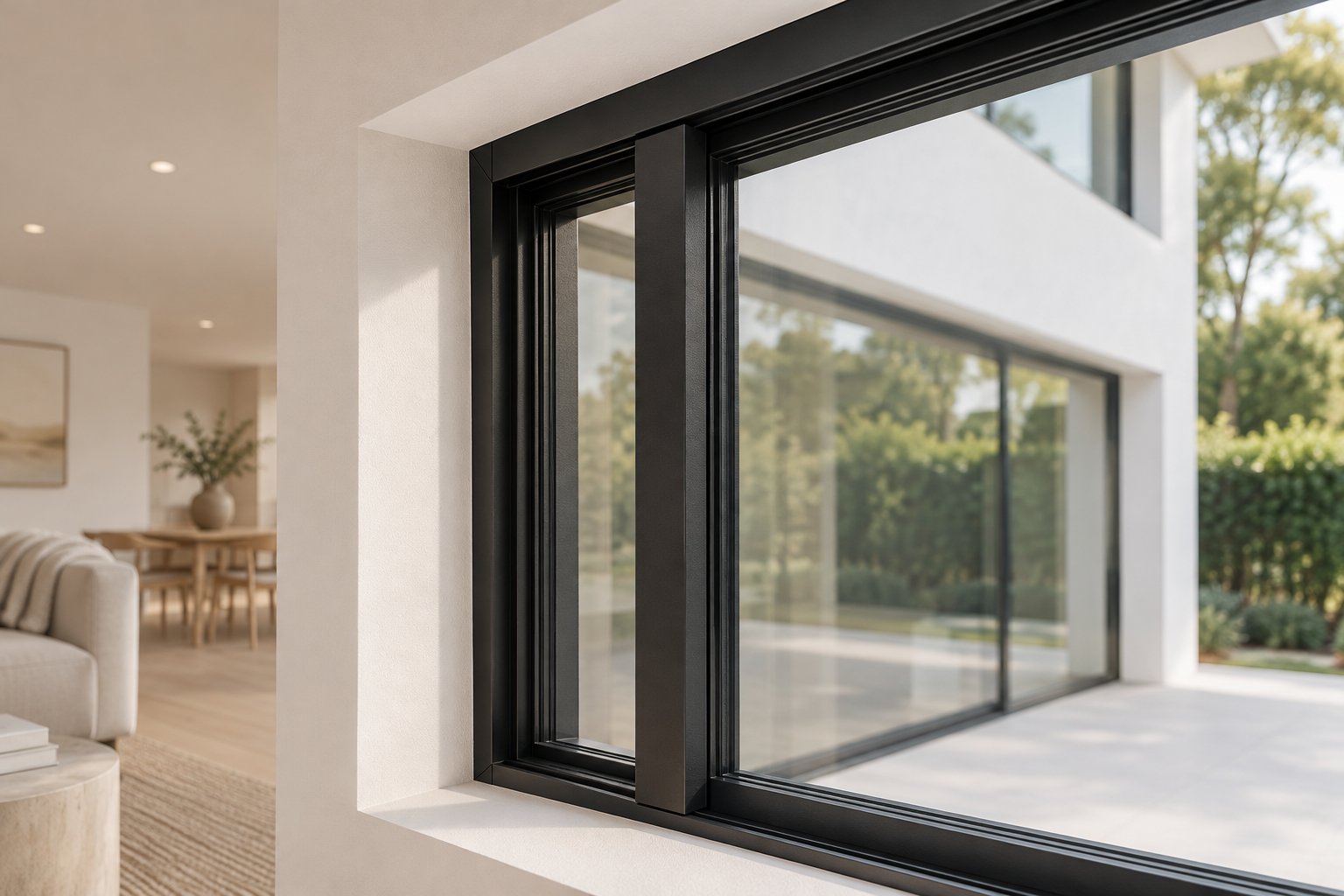
At its core, the system is mechanical common sense. Two or more sashes sit on parallel tracks—one fixed, one (or more) operable. The operable panel rides on rollers recessed into the sill track, gliding horizontally rather than hinging outward. Because the sash never projects beyond the wall plane, aluminium sliders are ideal where exterior clearance is tight: beside walkways, overlooking patios, along narrow setback facades, or above kitchen benchtops. They also work well as sliding windows for sunroom enclosures, where multiple panels can line up to maximise both glass area and cross-ventilation.
Sliding basement windows follow the same principle in a compact format, providing light and emergency egress to lower-level rooms without the swing arc that a casement would demand in a window well.
Why Aluminium Remains a Leading Frame Material
Aluminium's popularity is no accident. Its strength-to-weight ratio allows manufacturers to keep frame profiles remarkably slim—often noticeably thinner than vinyl or timber alternatives—while still supporting large, heavy glass panels. That slimness translates directly into more visible glass and less visual obstruction, a quality that fans of black metal window frames and contemporary metal windows find particularly compelling.
Beyond aesthetics, the material resists corrosion, will not rot or warp, and is fully recyclable at end of life. Modern manufacturing processes—powder-coating in virtually any colour, anodising for a natural metallic finish, and the addition of optional thermal breaks—have pushed aluminium well past its mid-century reputation. Today's aluminium sliding window, sometimes searched under the shorthand alumital window, bears little resemblance to the single-glazed, non-insulated frames of the 1970s. It is a refined building product that can be specified to meet current National Construction Code (NCC) energy provisions and achieve strong Window Energy Rating Scheme (WERS) scores when paired with the right glazing package.
How that glazing package and track system come together to deliver real-world performance, however, depends on details most product brochures gloss over—starting with the mechanics inside the frame itself.
How Aluminium Sliding Windows Actually Work
Every window type is, at its heart, a piece of engineering—and aluminium sliders are no exception. The smooth, almost effortless glide you feel when pushing a panel open is the result of several components working in precise coordination. Understanding those components helps you spot quality differences between products and troubleshoot issues down the track.
Track Systems and Panel Movement
Horizontal sliding windows rely on a track-and-roller mechanism rather than hinges or pivots. The operable sash sits on small rollers—typically nylon or stainless-steel wheels—recessed into the bottom rail of the panel. These rollers bear the full weight of the sash and travel along an extruded aluminium sill track, while a corresponding head track at the top keeps the panel aligned and prevents it from swinging inward or outward.
Track count determines how many panels can move independently:
- Single-track (one fixed, one operable): The most common residential layout. One panel slides; the other stays put.
- Two-track (two operable panels): Both sashes glide, doubling the effective ventilation opening—useful for wider spans.
- Three-track (three-panel configurations): Designed for oversized openings where maximum airflow or flexible access is the priority.
Track profile geometry matters more than most buyers realise. The shape of the rail must match the roller wheel precisely; a poor fit causes lateral wobble, accelerated wear, and that annoying rattle you hear in cheap sliding windows. Heavier glass packages—double-glazed units, for instance—also demand roller assemblies rated for the additional load, so the track system and glazing choice are inseparable decisions.
Here are the key components inside a typical aluminium slider:
- Head track (upper guide rail)
- Sill track (lower bearing rail)
- Interlock rail (where operable and fixed panels overlap)
- Roller assembly (wheels and housing recessed into the sash)
- Weatherstrip (sealing element around the sash perimeter)
- Latch and lock hardware (secures the operable panel when closed)
Unlike casement aluminium windows, which rely on hinge arms and friction stays to hold the sash open against wind loads, a slider's operation is entirely lateral. There is no mechanical resistance from hinges, which is why well-built sliders feel almost weightless to operate—even with large, heavy panels. That same lateral simplicity is also what makes them popular in configurations similar to milgard sliding patio doors, where wide openings and easy one-hand operation are essential.
Weatherstripping, Locking, and Ventilation Control
A sliding panel creates gaps by design—it has to, in order to move. Sealing those gaps when the window is closed falls to the weatherstripping system. Most aluminium sliders use one of two types:
- Fin-type (blade) weatherstripping: Thin, flexible fins compressed between the sash and frame when the window is shut. Effective at blocking driven rain and air infiltration.
- Pile (brush) weatherstripping: Dense fibre strips that fill the gap with a cushion of material. Common along interlock rails where the two panels overlap.
Quality weatherstripping quietly does enormous work. It reduces draughts, dampens sound transmission, and keeps dust and insects from creeping in around the edges. When it wears out—typically visible as light gaps or felt draughts around the perimeter—replacing it is one of the simplest and most cost-effective upgrades you can make to an older single hung aluminium windows unit or any ageing slider.
Security hardware has evolved well beyond a basic latch. Modern sliders typically use cam-action or hook locks: when you turn the handle, a hook extends from the operable sash into a keeper plate on the frame, pulling the panel tightly against the weatherstrips. That compression is what creates the seal—so lock quality directly affects weatherproofing, not just security. Look for hardware that meets Australian Standards (AS 4420 series) for forced-entry resistance.
Many homeowners overlook a handy feature built into better-quality sliders: half-open locking positions. These intermediate lock points let you leave the window slightly ajar for controlled ventilation without fully opening the sash—a practical compromise between fresh air and security, particularly at night or when you are away from home. Screen options, usually fixed or sliding mesh panels mounted on the outermost track, keep insects out while the window is cracked open.
All of these mechanical details—rollers, tracks, seals, locks—work together as a system. A premium roller on a cheap track will not perform well, and the best track in the world cannot compensate for degraded weatherstripping. That system-level thinking is exactly what separates a slider that still glides beautifully after fifteen years from one that starts grinding within three—and it is the same thinking you will need when weighing the broader strengths and trade-offs of aluminium as a frame material.
Strengths and Weaknesses of Aluminium Sliding Windows
A window that glides effortlessly on its track is satisfying to use—but smooth operation alone does not make a product right for every project. Choosing aluminium over vinyl, timber, or composite framing involves real trade-offs, and too many product pages present only half the picture. Below is the balanced assessment you actually need, covering what aluminium sliding windows do brilliantly and where they genuinely fall short.
Advantages of Choosing Aluminium Frames
Aluminium's dominance in commercial glazing and its growing share of the residential market are both grounded in measurable material properties. Here is what works in its favour:
- Slim profiles that maximise glass area. Because aluminium has a far higher strength-to-weight ratio than vinyl or timber, manufacturers can keep frame sections narrow—sometimes as slim as 45 mm—without sacrificing structural integrity. The result is a metal framed windows aesthetic that maximises natural light and minimises visual clutter, delivering the thin-frame look that contemporary Australian architecture prizes.
- Structural strength for larger panel sizes. A metal window frame resists flex and bow under load far better than PVC. This means individual sash panels can span wider and taller openings, an advantage that becomes critical when specifying a large horizontal window for an open-plan living area or a floor-to-ceiling slider overlooking the coast.
- Corrosion and rot resistance. Unlike timber, aluminium will not swell, split, or rot when exposed to moisture. With a quality powder-coat or anodised finish, frames routinely last 30 to 50 years in service—even longer in temperate inland climates where environmental stress is lower.
- Minimal maintenance demands. Forget sanding, repainting, or sealing. Aluminium sliders need little more than periodic cleaning with mild detergent and water. The powder-coat colour is baked onto the surface, so it will not peel or blister the way painted timber can.
- Genuine recyclability. Aluminium is 100 per cent recyclable without any loss of quality, and recycling it requires only about 5 per cent of the energy used to produce the primary metal. For homeowners and specifiers concerned about embodied carbon, recycled-content aluminium extrusions offer a measurably lower environmental footprint than PVC-based alternatives, which mostly end up in landfill.
- Design versatility through colour matching. Powder-coating technology means custom aluminium windows can be finished in virtually any RAL colour to coordinate with facades, joinery, or interior palettes. Black, charcoal, and bronze remain the most popular choices in Australia, but whites, creams, and timber-look finishes are all readily available—even on project-specific orders.
Honest Limitations to Consider
No frame material is perfect, and aluminium has genuine weak points that deserve straightforward discussion rather than a glossy dismissal.
- Higher thermal conductivity without a thermal break. Aluminium conducts heat roughly 1,000 times faster than wood and around 200 times faster than PVC. In a non-thermally-broken frame, that conductivity creates a direct pathway for heat to move between indoors and outdoors. The practical consequence is a higher whole-window U-value, meaning more energy is needed to maintain comfortable interior temperatures—particularly in heating-dominated climates like Tasmania or the Victorian highlands.
- Condensation risk in cold conditions. When the interior surface of a non-thermally-broken aluminium frame drops below the dew point of the room air, moisture condenses on the metal. In a well-sealed, humidity-controlled home this may be manageable; in a poorly ventilated space during a Canberra winter, it can lead to mould and damage to surrounding finishes. Thermally broken profiles largely eliminate this problem by keeping the interior face of the frame closer to room temperature.
- Generally higher unit cost than basic vinyl sliders. Entry-level PVC sliding windows are typically cheaper to manufacture and purchase than their aluminium equivalents. The gap narrows—and sometimes reverses—at the architectural and commercial grade level, where aluminium's structural capacity and longevity offset the upfront premium. Still, for a straightforward budget renovation, the price difference is real and worth factoring in.
- Limited colour options on economy product lines. While premium ranges offer extensive colour palettes, budget-tier aluminium windows may ship in only a handful of stock finishes—often white, black, and one or two neutrals. Buyers seeking a specific colour at the lower end of the market may need to step up to a mid-range or custom tier, unlike products such as milgard ultra single hung windows that offer broader standard palettes within their vinyl lines.
The critical takeaway? Most of these limitations are addressable through smarter specification rather than being fundamental deal-breakers. Adding a thermally broken frame, selecting a high-performance glazing package, and choosing a reputable manufacturer's mid-range or upper-range aluminium windows can resolve the thermal and condensation concerns almost entirely. The question is not whether aluminium sliders are "good" or "bad"—it is whether the specification matches the demands of the project, the local climate, and the budget.
That question becomes much easier to answer once you understand the range of configurations available—from simple single-sliders to multi-track, corner-meet systems designed for expansive openings.
Types and Configurations of Aluminium Sliding Windows
Not every opening calls for the same layout. A compact bathroom window on a single-storey brick veneer home in suburban Adelaide operates on entirely different constraints than a three-metre-wide sliding glass window framing ocean views in a Noosa beach house. Matching the right configuration to your opening is where the real decision-making begins—and where many buyers either overspend or underperform by picking a layout based on looks alone rather than function.
Single-Slider and Two-Track Configurations
The single-slider is the workhorse of the residential aluminium window market. One panel sits permanently fixed in its track while the other glides horizontally to open. It is the simplest, most cost-effective configuration, and it covers the vast majority of standard openings—bedrooms, kitchens, hallways, and laundries. Because only one sash moves, the interlock rail between the two panels can be sealed tightly, and there is only one set of rollers to maintain over the life of the window.
The trade-off is ventilation. With a single-slider, you can only ever open half the total window width. For many rooms that is perfectly adequate. But in spaces where maximum cross-breeze matters—think a sunroom overlooking the garden, or a wide living area oriented to catch prevailing summer winds—a two-track system changes the equation entirely.
In a two-track configuration, both panels are operable. Each sash rides on its own dedicated track, so you can slide both open simultaneously and expose roughly the full width of the opening to airflow. The effective ventilation area nearly doubles compared to a single-slider of the same overall dimensions. This layout is particularly popular in aluminium windows specified for contemporary open-plan homes where indoor-outdoor flow is a design priority.
MEICHEN's MA100 Sliding Window is one example of a two-track aluminium slider designed around this principle. It ships with a fixed high-transparency screen, offers a choice of double-glazing packages, and comes in powder-coated finishes with project-specific sizing—making it a practical option for both new construction and replacement sliding windows where the rough opening needs a tailored fit rather than an off-the-shelf guess. It is worth noting that the MA100 is a non-thermally broken system, so buyers in cooler climate zones should weigh that against their energy performance targets and confirm suitability through a project review with the supplier before committing.
Whether you opt for a single-slider or two-track alu slider, the golden rule is the same: confirm actual opening dimensions, panel weights, and structural requirements with your manufacturer before ordering. Product names and brochure photos cannot substitute for a proper site assessment.
Three-Panel, Multi-Track, and Specialty Layouts
When openings stretch beyond roughly 1,800 mm in width, two panels start to become impractical. Each individual sash gets too heavy, roller wear accelerates, and the glass area per panel exceeds comfortable handling limits during installation. This is where three-panel and multi-track configurations earn their place.
A triple-slider typically uses three panels across two or three tracks. The most common arrangement is XOX—two operable end panels flanking a fixed centre panel that occupies about half the total width. The fixed centre pane delivers an uninterrupted view, while the operable ends provide ventilation on both sides. An alternative is the OXO layout, where the centre panel slides and the ends stay fixed, though this is less common in residential work.
For truly expansive openings—wide-format living rooms, entertainment areas, or commercial shopfronts—OXXO configurations use four panels on two or three tracks. Corner-meet sliding systems take the concept further still, wrapping glass around a building corner with no fixed post at the junction, creating a seamless panoramic connection between indoors and out. These are architecturally striking but require careful structural engineering and specialist hardware.
Sliding transom windows deserve a mention too. Mounted above doors or fixed panels, these narrow horizontal sliders add daylight and ventilation to entries and hallways without sacrificing wall space. They are a smart solution in Queenslander-style renovations where maximising airflow through the upper portion of a room helps manage heat in tropical climates.
The table below provides a quick-reference comparison across the main configurations:
| Configuration | Typical Track Count | Best Use Case | Ventilation Area (%) |
|---|---|---|---|
| Two-Track Slider (both panels operable) | 2 | Living areas, sunrooms, wide replacement openings | ~100% (both panels slide) |
| Single-Slider (one fixed, one operable) | 1 | Bedrooms, kitchens, bathrooms, hallways | ~50% |
| XOX Triple-Slider (centre fixed, ends operable) | 2–3 | Open-plan living rooms, dining areas, scenic walls | ~50% |
| OXXO Four-Panel Slider | 2–3 | Commercial shopfronts, entertainment spaces | ~50% |
| Corner-Meet System | 2+ (per wing) | Architect-designed homes, premium indoor-outdoor transitions | Varies by design |
| Sliding Transom | 1 | Above-door daylighting, Queenslander renovations | ~50% |
Sizing Considerations
Standard aluminium sliding window sizes in the Australian market typically range from around 600 mm x 600 mm for compact utility openings up to approximately 2,400 mm x 1,500 mm for large two-panel residential units. Three-panel configurations can stretch to 3,000 mm wide or more, though panels beyond about 1,200 mm in individual sash width start demanding heavier-duty roller assemblies and thicker glass to stay within safe operational limits.
Older Australian homes—particularly weatherboard cottages, fibro dwellings, and post-war brick veneer—often have rough openings that do not align with today's standard sizing. In these situations, custom aluminium windows fabricated to your exact measurements are almost always a better solution than trying to patch a standard unit into a non-standard hole with excessive packing or bulky timber infills. The result is cleaner visually, tighter thermally, and far less likely to develop water-ingress problems over time.
For oversized units—say, a sliding glass window exceeding 2,400 mm in a single span—structural engineering review is strongly recommended. The weight of large double-glazed panels places significant load on the sill track, the lintel above the opening, and sometimes the surrounding wall framing. This is especially important when converting a smaller window to a wider aluminium window opening during a renovation, where existing framing may not have been designed for the additional span. Your window supplier and a qualified structural engineer should both sign off before fabrication begins.
Buyers sometimes compare aluminium sliders against milgard vinyl windows or similar PVC-framed products and notice that vinyl options tend to cap out at smaller maximum panel dimensions. That size ceiling is a direct consequence of PVC's lower structural rigidity—it flexes under load in ways aluminium simply does not. If your project calls for wide, tall panels with minimal frame intrusion, aluminium remains the material of choice, and in many cases it is the only practical option.
Ultimately, configuration and sizing are two halves of the same decision. The layout determines how the window operates and ventilates; the dimensions determine whether that layout is structurally viable in your specific opening. Getting both right is essential—and it is also the foundation for the next critical choice: what goes inside the frame. Because the glass you select will influence thermal performance, acoustics, and comfort far more than most people expect.
Glass and Glazing Options That Pair With Aluminium Frames
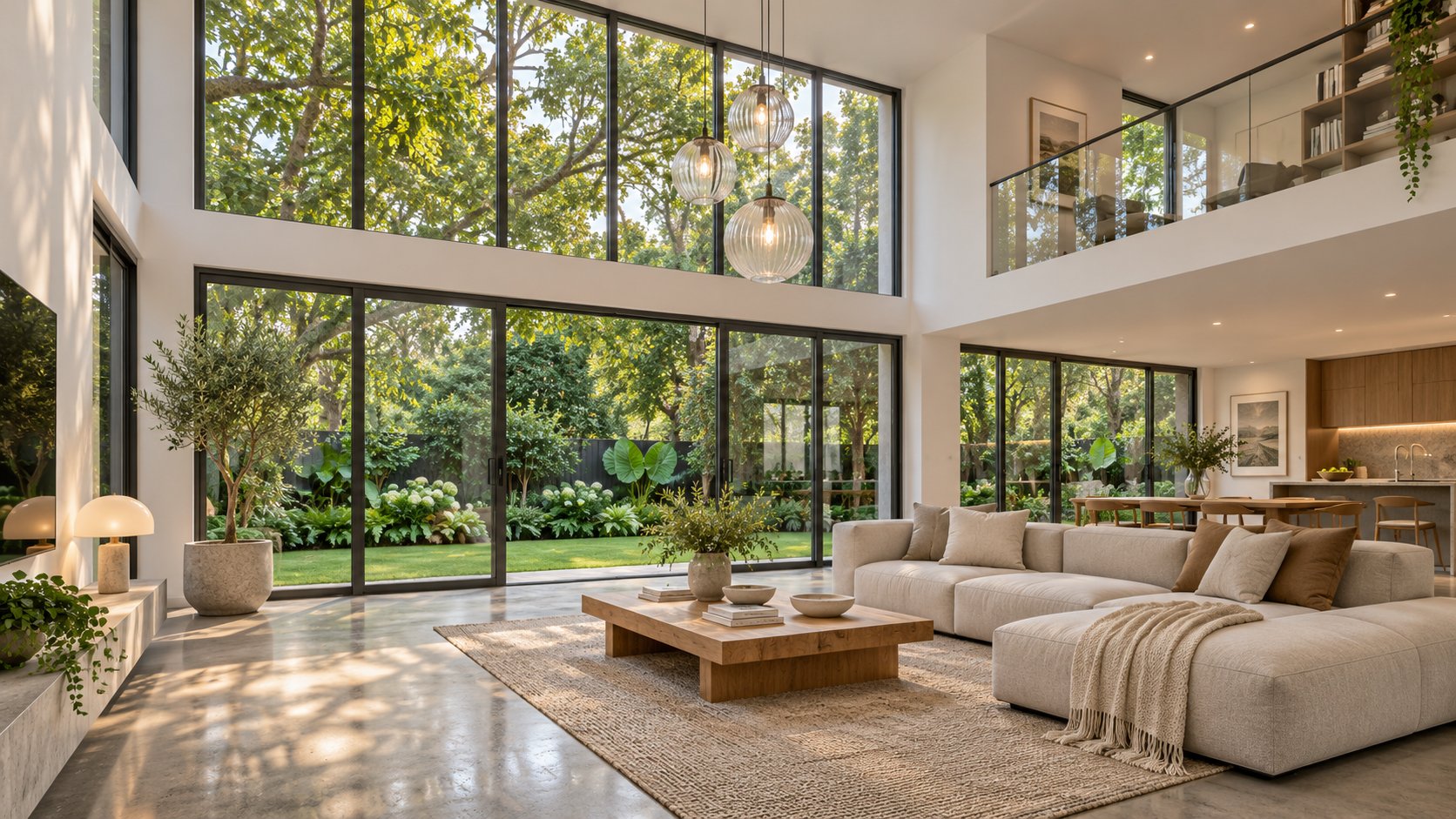
Most of the thermal debate around aluminium sliders fixates on the frame—yet the frame typically accounts for only 10 to 25 per cent of the total window area. The remaining 75 to 90 per cent is glass. That ratio alone should shift your attention. Whatever the window frame metal happens to be, the glazing package you specify will have a far greater influence on U-value, solar heat gain, condensation resistance, and acoustic comfort than the extrusion material ever could.
Single-Pane, Double-Pane, and Laminated Glass
Single-pane glass is the legacy standard that still appears in older slider windows, mild-climate utility buildings, and carport enclosures. It offers no insulating air gap and minimal sound reduction—essentially a single sheet of glass between you and the outdoors. In most Australian states, single glazing alone no longer satisfies the energy provisions of the National Construction Code (NCC) for habitable rooms, so its use in new residential work is increasingly limited.
Double-pane insulating glass units (IGUs) are the current baseline for quality aluminium frame windows. Two lites of glass are separated by a spacer bar, and the sealed cavity between them—typically 10 to 16 mm wide—can be filled with air or an inert gas to slow heat transfer. The jump in thermal performance from single-pane to double-pane is substantial, making IGUs the single most impactful upgrade you can specify on any aluminium slider, including compact formats like an aluminum sliding transom window above a doorway.
Laminated glass adds a clear polymer interlayer between two sheets of glass. If the pane breaks, the interlayer holds the fragments in place rather than letting them shatter into the room. Beyond safety, that interlayer dampens sound transmission noticeably—a real benefit in homes near busy roads, flight paths, or construction zones. Laminated glass can be incorporated into either single-pane or double-pane assemblies, and it pairs well with aluminium frames in both residential and commercial settings.
Tempered (toughened) glass is worth noting separately because Australian Standard AS 1288 requires it in specific locations: windows within 500 mm of a doorway, glazing with a sill height below 800 mm above the floor, and any pane exceeding certain size thresholds relative to its proximity to walkable surfaces. Tempered glass can coexist with Low-E coatings and lamination, so safety compliance never forces you to sacrifice energy performance.
Low-E Coatings and Gas Fills
Low-E—short for low emissivity—refers to a microscopically thin metallic coating applied to one or more glass surfaces inside the IGU. The coating reflects infrared energy while still allowing visible light through, which keeps interiors cooler in summer by bouncing radiant heat back outside and warmer in winter by reflecting room heat back in. Different coating formulations suit different climates: a high-solar-gain Low-E is better for heating-dominated regions like Hobart, while a low-solar-gain variant performs well in Brisbane or Darwin where rejecting heat is the priority.
Gas fills take performance a step further. Argon gas is denser than air and reduces convective heat transfer inside the IGU cavity—when used in a Low-E IGU instead of air, the insulating value can improve by up to 16 per cent. Krypton gas performs even better (up to 27 per cent improvement), but its scarcity makes it impractical for most residential projects due to cost. For the vast majority of Australian windows sliding into both new builds and renovations, argon-filled double glazing hits the sweet spot between performance and budget.
Here is the point worth stressing: every one of these upgrades—Low-E coatings, argon fills, laminated interlayers—is fully compatible with aluminium frames. Specifiers sometimes assume that choosing aluminium means settling for inferior glass options, perhaps because older single-glazed aluminium sliders gave the material a poor reputation. That assumption is simply wrong. The same high-performance IGU you would pair with a timber or vinyl frame can sit just as effectively inside an aluminium extrusion. Even products as specific as milgard aluminum casement right windows demonstrate that aluminium and advanced glazing coexist seamlessly across window types.
Matching Glass to Project Goals
Selecting the right glass comes down to understanding what your project demands most—thermal insulation, solar control, noise reduction, safety, or some combination of all four. The table below provides a quick-reference comparison to help you match glass type to purpose.
| Glass Type | Thermal Benefit | Acoustic Benefit | Typical Application |
|---|---|---|---|
| Single-Pane (annealed) | Minimal insulation | Low sound reduction | Utility buildings, mild-climate enclosures, carports |
| Double-Pane IGU (air-filled) | Moderate—sealed air cavity slows heat transfer | Moderate improvement over single-pane | Standard residential slider windows, light commercial |
| Double-Pane IGU (argon-filled, Low-E) | High—up to 16% better insulation than air-filled IGU | Moderate improvement | Energy-conscious homes, NCC Section J compliance |
| Laminated Glass (single or double-pane) | Comparable to equivalent non-laminated assembly | High—polymer interlayer dampens sound | Roadside facades, upper-storey safety glazing, bushfire zones |
| Tempered (Toughened) Glass | Same as equivalent annealed assembly | Same as equivalent annealed assembly | Code-required locations per AS 1288—near doors, low sills, wet areas |
Because the glass area dominates the total window surface, upgrading from a basic air-filled IGU to an argon-filled, Low-E unit will usually deliver a bigger improvement in whole-window performance than switching to a more expensive frame material. That is especially relevant for non-thermally-broken aluminium systems, where a strong glazing package compensates meaningfully for the frame's higher conductivity.
Glass selection and frame specification are two sides of one coin, though—and neither tells the full story without understanding how their combined performance is actually measured. That brings us to the numbers behind the marketing: U-values, Solar Heat Gain Coefficients, and the thermal-break technology that can reshape aluminium's energy profile entirely.
Energy Efficiency and the Thermal Performance Question
"Aluminium is a terrible insulator." You will hear this repeated in almost every window showroom, online forum, and renovation blog across Australia. And technically, the raw metal is a highly efficient conductor of heat—that part is true. What gets lost is the distance between a bare aluminium extrusion and a finished aluminium window assembly with modern glazing, weatherstripping, and optional thermal-break technology. The difference is enormous, and collapsing those two things into a single dismissal has cost Australian homeowners access to a frame material that often suits their project better than any alternative.
Understanding U-Value and SHGC in Aluminium Sliders
Two numbers matter most when comparing the energy performance of any window—whether it is an aluminium sliding window, a set of timber casements, or vinyl gliding windows on a suburban renovation.
- U-value measures the rate of total heat transfer through the complete window assembly—frame, glass, edge spacer, and all. It is expressed in watts per square metre per degree Kelvin (W/m²K). A lower U-value means less heat escapes in winter and less heat enters in summer. In Australia, the Window Energy Rating Scheme (WERS) and the National Construction Code (NCC) both use whole-window U-values when assessing compliance, because centre-of-glass numbers alone paint an incomplete picture.
- Solar Heat Gain Coefficient (SHGC) indicates how much solar radiation passes through the window and becomes indoor heat. It ranges from 0 to 1—lower values mean less solar heat admitted. In cooling-dominated climates like Brisbane, Darwin, or Perth, a low SHGC is critical for keeping air-conditioning loads manageable. In heating-dominated areas such as Hobart or the Victorian highlands, a moderately higher SHGC on north-facing windows can contribute useful passive warmth during winter.
Here is the nuance most critics miss: a window's U-value is not the U-value of the frame alone. It is a composite figure that blends frame performance, glass performance, and edge-of-glass performance into a single rating. Because glass typically covers 75 to 90 per cent of the window area, the glazing package dominates the final number. An aluminium slider with argon-filled, Low-E double glazing will post a dramatically better U-value than the same frame fitted with single-pane clear glass—even if the aluminium extrusion itself has not changed at all.
The same principle applies to SHGC. Frame material has a negligible effect on solar heat gain; it is the glass coatings and tinting that do the heavy lifting. So when someone compares the SHGC of a premium vinyl window against a budget aluminium window with inferior glass, the comparison tells you almost nothing about the frame and almost everything about the glazing specification.
Thermal Break Technology Explained
If U-value is the scoreboard, the thermal break is the engineering play that moved aluminium from the back of the field to genuine competition with vinyl and timber.
A thermal break is an insulating barrier inserted into the aluminium extrusion to interrupt the conductive path between the exterior and interior faces of the frame. Without it, heat travels freely through the metal—like gripping a metal spoon sitting in a hot cup of tea. With it, the spoon is effectively cut in half and rejoined with a non-conductive material, so the handle stays cool.
Two main methods are used in commercial production, as outlined by the Aluminum Extruders Council:
- Pour-and-debridge: A liquid polyurethane polymer is poured into a channel designed into the extrusion. Once the polymer hardens, the aluminium bridge at the base of the channel is mechanically removed, leaving the hardened polyurethane as the sole thermal connection between the inner and outer halves of the frame.
- Polyamide strip: Rigid nylon (polyamide) strips are mechanically crimped between two separate aluminium profiles, locking them together structurally while preventing metal-to-metal heat conduction. This method has been in use globally for over 30 years.
Thermally broken aluminium frames can achieve whole-window U-values that sit comfortably alongside vinyl and composite alternatives—often in the range required for NCC Section J compliance and strong NatHERS star ratings. For homeowners in temperate and cold Australian climates, specifying a thermally broken aluminium window is the single most effective way to retain the material's structural and aesthetic benefits while meeting demanding energy targets.
Honesty demands the flip side too. Non-thermally-broken aluminium systems will have higher frame conductivity. That is a physical fact, not a myth. In cold weather, the interior face of a non-broken frame can cool enough to cause condensation when indoor humidity is elevated. For projects using non-thermally-broken profiles—common in warmer climate zones from Sydney northward—glazing quality and weatherstripping become even more important compensating factors. The glass has to do more of the thermal work, and it can, provided the IGU specification is up to the task.
How to Evaluate Energy Performance Before You Buy
Marketing language is unreliable. Brochure claims like "energy efficient" or "thermally superior" carry no standardised meaning in Australia unless they are backed by tested data. Here is how to cut through the noise:
- Request WERS-rated performance data. The Window Energy Rating Scheme provides independently modelled U-values, SHGC figures, and star ratings for heating and cooling across Australian climate zones. A WERS label lets you compare any aluminium window—slider, casement, or aluminum single hung windows variant—against products of a completely different frame material on a level playing field.
- Check NCC compliance for your climate zone. Australia's eight climate zones each have different glazing and frame performance thresholds under the NCC. A product that sails through compliance in zone 1 (tropical, cooling-dominated) may not meet requirements in zone 7 (alpine, heating-dominated). Always verify compliance for your specific location, not the manufacturer's default zone.
- Compare whole-window U-values, not centre-of-glass figures. Centre-of-glass values strip out the frame and edge-of-glass contribution, making every product look better than it actually performs once installed. Whole-window values—what WERS reports—include the full assembly. This distinction matters for every aluminium window on the market, from entry-level non-broken sliders to premium thermally broken systems competing against products like milgard sliding doors in the high-performance segment.
- Ask about condensation resistance. If you are building or renovating in a cooler region, request condensation modelling or at minimum confirm whether the frame profile is thermally broken. This is especially relevant for bedrooms and bathrooms where humidity tends to spike overnight.
The combination of frame design, glazing package, and installation quality determines real-world energy performance—not frame material alone. Judging an aluminium window by its frame conductivity is like judging a house by its front door: it is one component in a much larger system.
Armed with actual performance data rather than material prejudice, the next logical step is matching that data to where you actually live. Climate shapes which specifications matter most—and aluminium sliding windows respond to different Australian climate zones in ways that might surprise you.
Climate Suitability and Architectural Design Advantages of Aluminium Sliding Windows
Performance data on a spec sheet tells you what a window can do. Climate tells you what it must do. An aluminium slider that performs beautifully in a Cairns apartment may struggle in a Hobart hillside home—not because the product is flawed, but because the demands are fundamentally different. Matching your specification to your region is where theory meets reality, and it is the step most buyers skip.
Hot and Humid Climates
Aluminium was practically made for the tropics. High temperatures cause PVC frames to soften, sag, and discolour over time, while timber swells, warps, and invites termite damage in moisture-laden air. Aluminium does none of these things. Its dimensional stability under sustained heat and its natural corrosion resistance make it the go-to frame material across NCC climate zones 1 and 2—think Townsville, Darwin, Broome, and the coastal corridor from Mackay to Cooktown.
In these cooling-dominated regions, the thermal priority flips. Keeping heat out matters far more than keeping it in, which means your glazing specification—specifically a low SHGC—carries most of the performance burden. A non-thermally-broken aluminium frame is less penalising here because heating loads are minimal or non-existent. The few watts of additional heat conduction through the frame pale beside the kilowatts of solar energy that the right Low-E, tinted, or reflective glass can reject.
Ventilation also earns a higher priority in humid climates. A slider window that opens fully on two tracks, paired with a high-transparency insect screen, delivers the steady cross-breeze that mechanical ventilation alone cannot replicate in a Queenslander renovation. For homeowners considering an aluminium basement window replacement in a tropical dwelling where the lower level doubles as a rumpus or utility room, sliding panels offer controllable airflow without the outward projection that casements demand in tight sub-floor clearances.
Cold Climates and Condensation Management
Head south into NCC climate zones 6, 7, and 8—Canberra, the Blue Mountains, Alpine Victoria, Tasmania—and the equation reverses. Here, minimising heat loss through the building envelope is paramount, and every component of the window assembly faces scrutiny.
Thermally broken aluminium frames paired with argon-filled, Low-E double-glazed IGUs are effectively non-negotiable in these zones. Without a thermal break, the interior face of the aluminium profile can drop well below the dew point of conditioned indoor air during overnight lows. Moisture condenses on the cold metal, trickles into the sill track, and over time fosters mould growth on surrounding plasterboard and timber reveals. The issue is not the aluminium itself—it is the absence of the insulating barrier that would keep the interior surface warm enough to prevent condensation.
Interior humidity management plays an equally important role. A household running an unflued gas heater, drying laundry indoors, or cooking without adequate range-hood extraction pushes indoor relative humidity well above 50 per cent. At that level, even thermally broken frames can show trace condensation on extremely cold mornings. The solution is systemic: specify a thermally broken slider window, install quality weatherstripping, choose a high-performance IGU, and manage indoor moisture sources. One measure alone rarely solves the problem in genuinely cold climates.
For sliding replacement windows in older homes across southern Australia—where original single-glazed aluminium frames are common—upgrading to a thermally broken, double-glazed aluminium slider can transform comfort levels almost overnight. The improvement in draught sealing, thermal insulation, and condensation resistance often rivals the gains homeowners expect only from a full wall insulation retrofit.
Coastal and Salt-Air Environments
Australia has over 34,000 kilometres of coastline, and a significant share of its population lives within a few kilometres of the ocean. Salt-laden air is a relentless adversary for building materials. Steel rusts aggressively, timber rots or splits, and even stainless-steel hardware can pit in severe marine exposure. Aluminium, by contrast, forms a stable oxide layer that resists salt corrosion far more effectively—provided the surface treatment is up to the task.
Marine-grade powder-coat finishes are essential for any aluminium slider installed within one kilometre of breaking waves. Standard interior-grade coatings can fail within months under direct salt spray, so look for finishes that comply with AS 3715 (the Australian Standard for powder-coating of aluminium) and ideally meet Qualicoat Class 2 or higher for severe coastal environments. Stainless-steel hardware—rollers, lock mechanisms, and fasteners—should be grade 316 rather than the more common 304, which still pits in concentrated salt exposure.
For beachfront and waterfront projects, some specifiers also consider a duplex system: anodising first to create a hard, chemically bonded oxide layer, then powder-coating over the top for UV and colour protection. This approach adds roughly 30 to 40 per cent to the surface treatment cost but extends service life significantly in aggressive marine zones like the Gold Coast foreshore, Sydney's Northern Beaches, or Fremantle's harbour precinct.
Maintenance habits matter here too. Even the best-finished aluminium windows and doors will deteriorate faster if salt residue is left to accumulate. A simple monthly rinse with fresh water and a wipe-down with mild detergent—nothing more sophisticated than what you would use on a car—dramatically extends the life of the coating and the hardware beneath it.
Architectural Design Advantages
Climate suitability gets aluminium onto the shortlist. Design capability is what keeps it there—and often pushes it to the top.
Aluminium's strength-to-weight ratio allows frame profiles as slim as 45 to 55 mm in visible sightline, significantly narrower than what PVC or timber can achieve at equivalent structural performance. Those few extra millimetres of glass per panel may sound trivial on paper, but across a wall of floor-to-ceiling sliders, the cumulative effect is striking: more unobstructed daylight, cleaner views, and a lighter, more contemporary facade.
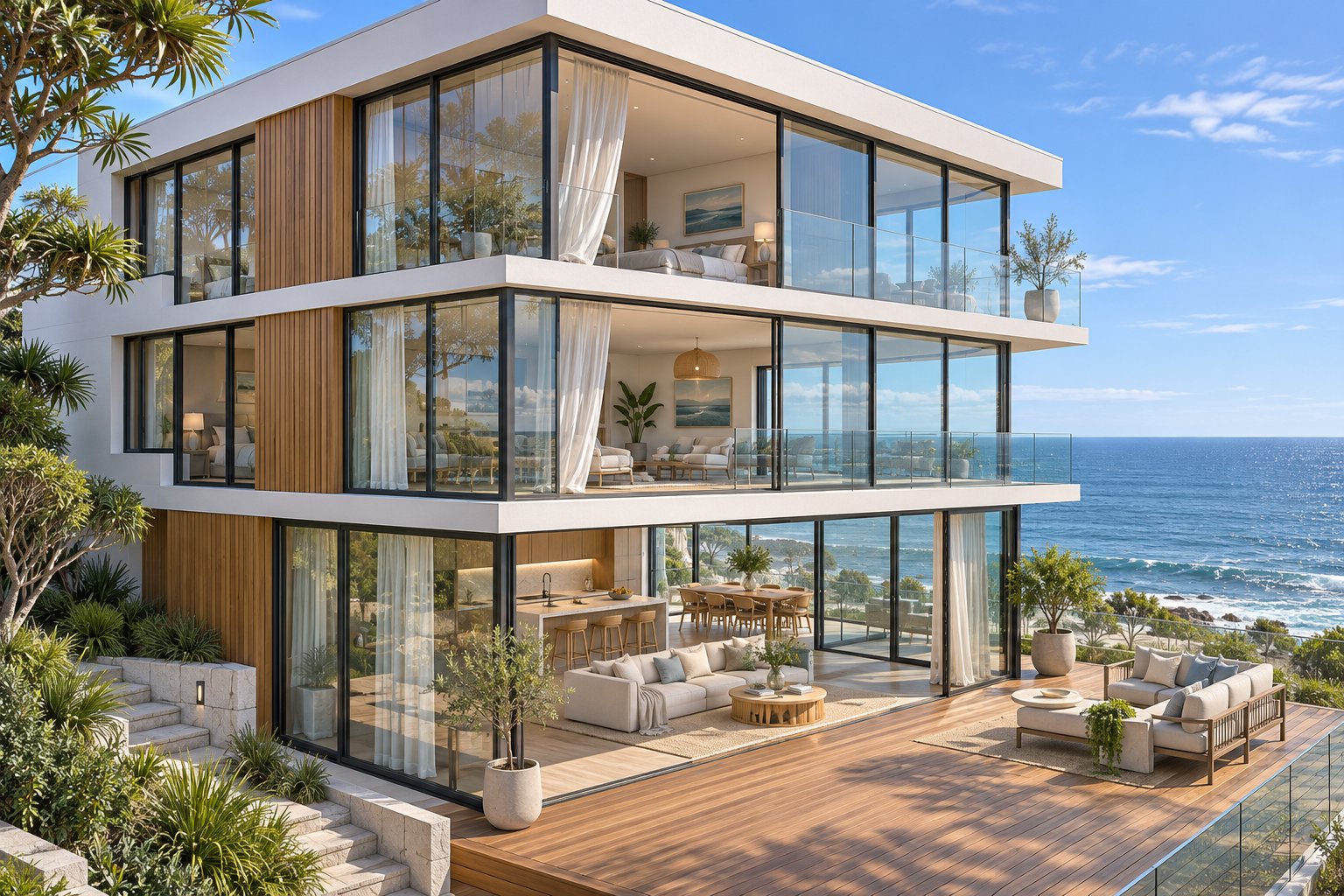
This is why architects consistently specify aluminium for projects where glazing defines the character of the building. Large-format slider windows that span three metres or more, corner-meet systems that dissolve the boundary between a living room and a wraparound deck, seamless indoor-outdoor transitions for coastal entertaining areas—all of these depend on a frame material strong enough to support oversized glass panels without bowing, sagging, or requiring chunky mullions. Vinyl cannot deliver that at scale. Timber can, but at a maintenance cost aluminium avoids entirely.
Colour coordination is another advantage that quietly elevates a project. Any reputable aluminium window maker offers powder-coating in an extensive RAL palette—matte blacks, charcoals, bronzes, and warm timber-look finishes are all standard requests in the Australian residential market. That colour flexibility lets builders and designers match window frames to cladding, roofing, fascia, and interior joinery without compromise. Even niche aesthetic goals—say, pairing aluminium double hung windows on the heritage-facing elevation with wide-format sliders on the rear contemporary extension—become straightforward when both window types share the same frame material and finish.
Products like milgard ultra picture windows demonstrate the global appetite for large, uninterrupted glass panels with minimal framing, and Australian aluminium systems compete directly in that space. The difference locally is that Australian-made and Australian-certified aluminium sliders are tested and rated under NCC and WERS protocols, ensuring the architectural ambition aligns with verified energy and structural performance rather than relying on overseas certifications that may not translate to local conditions.
Ultimately, climate dictates the thermal specification, and design ambition dictates the frame choice. Aluminium sliding windows sit at the intersection of both—adaptable enough to perform in Darwin's wet season and refined enough to anchor a minimalist double-storey facade in Mosman. The real question is not whether aluminium suits your climate, but whether you have specified the right combination of thermal break, glazing, finish, and hardware to match it. And once the window is installed, keeping it performing at that level comes down to one underrated factor: maintenance.
Maintenance and Long-Term Care for Aluminium Sliding Windows
A well-specified aluminium slider can last decades—but only if it receives a modest amount of ongoing attention. The good news is that "modest" really does mean modest. Unlike timber frames that demand cyclical sanding, priming, and repainting, or PVC profiles that can yellow and become brittle under intense UV, aluminium asks for little more than regular cleaning and the occasional hardware check. Neglect those basics, though, and even a premium horizontal sliding window will start to grind, rattle, and leak air long before its frame material gives out. The culprit is almost never the aluminium itself. It is the debris, dried lubricant, and worn seals that accumulate quietly around the moving parts.
Routine Cleaning for Frames and Tracks
Track contamination is the number-one cause of a stiff, noisy slider. Over the course of a year, sill channels collect an impressive cocktail of fine grit, insect fragments, pollen, cooking residues, and—in coastal areas—salt crystals that act like sandpaper against rollers and track surfaces. This debris is cumulative and abrasive, gradually scoring the track floor and wearing roller wheels out of true. By the time you notice increased resistance, the damage is already well underway.
A simple routine performed monthly prevents most of that deterioration. Follow these steps in order—dry extraction first, then wet cleaning—because reversing the sequence turns loose dust into a paste that is harder to remove.
- Vacuum debris from sill and head tracks. Use a crevice nozzle to reach the full depth of both the lower bearing rail and the upper guide channel. Pay extra attention to the end stops at each side of the track, where compacted material builds up fastest. Households with pets should treat this step as non-negotiable—hair wound around roller bearings can lock a wheel completely.
- Wipe tracks with a damp cloth and mild detergent. A warm solution of neutral dishwashing liquid loosens the adhesive film that vacuuming leaves behind. For mineral scale or salt residue, diluted white vinegar (roughly one part vinegar to one part water) works more effectively. Work a narrow brush or cloth-wrapped scraper into the inside corners of each channel.
- Clean frame surfaces with a non-abrasive soap solution. A soft sponge and the same mild detergent used on the tracks will handle most surface grime on powder-coated or anodised aluminium. Avoid steel wool, scouring pads, and solvent-based cleaners—these scratch or dissolve the protective coating, exposing the bare metal beneath.
- Rinse thoroughly and dry. Wipe every cleaned surface with a damp rinse cloth, then follow immediately with a dry, absorbent towel. This step matters more than people realise: residual moisture creates a tacky surface that bonds fresh dust within hours, undoing most of the cleaning effort.
That is the entire frame-care routine. Aluminium does not need painting, staining, or sealing—ever. The powder-coat finish is factory-baked and will hold its colour for decades provided you keep abrasive cleaners and harsh solvents away from it. For homes near the coast or in dusty regional areas, fortnightly track cleaning during the worst exposure months (summer storms, harvest season) is a worthwhile adjustment to the schedule.
Roller and Hardware Maintenance
Smooth, fingertip-light operation depends on the health of the roller assemblies seated in the bottom rail of each operable sash. These small wheels bear the full panel weight every time the window slides open or shut, and they are the first component to suffer when lubrication lapses or grit infiltrates the bearings.
Lubrication chemistry matters enormously here. Silicone-based sprays form a low-friction boundary film that repels dust and will not degrade the EPDM rubber seals used in most quality aluminium sliders. Oil-based and petroleum-based penetrating sprays—the kind many people reflexively reach for—are the wrong choice. Hydrocarbon oils oxidise over time, forming a varnish-like residue that traps grit and ultimately creates more drag than a dry track. Worse still, petroleum distillates attack elastomeric weatherstrips, leaching plasticisers and causing the rubber to shrink and crack prematurely.
Apply silicone spray sparingly onto a lint-free cloth—not directly into the track—and wipe along the track floor and across the roller housing points. Cycle the sash fully open and closed three to five times to distribute the lubricant evenly, then wipe away any excess from the track ends. Twice a year—once in spring, once in autumn—is adequate for most Australian climates. In particularly dusty or sandy environments, a third application mid-summer is a sensible addition.
Roller height adjustment is the other maintenance task homeowners tend to overlook. Most aluminium sliders have small adjustment screws accessible through the bottom rail of the operable panel. Turning these screws raises or lowers the roller housing, which in turn changes the sash height relative to the head track and the interlock rail. If a panel starts dragging along the sill, binding at the top, or closing unevenly, a quarter-turn adjustment is often all that is needed to restore alignment. A grinding noise during operation usually points to bearing wear inside the roller, while a squeak confined to the last few centimetres of travel suggests a flat-spotted wheel—both signs that the roller assembly should be replaced rather than adjusted.
Weatherstripping deserves the same seasonal inspection. Close the window fully and look for daylight gaps around the perimeter where the sash meets the frame. If you can see light, or if you feel a distinct draught with the window locked, the weatherstrip has lost its compression and should be replaced. On many glass window sliding systems, the pile or fin-type seals along the interlock rail and stile edges are available as aftermarket strips that press or slide into existing grooves—making replacement a straightforward job for a competent DIYer or a quick call-out for a glazier.
When Repair Becomes Replacement
Aluminium is durable, but it is not immortal. Older horizontal slide windows—especially non-thermally-broken units from the 1980s and 1990s—eventually reach a point where ongoing repairs cost more in time and frustration than a new window would cost outright. Recognising that tipping point saves money and prevents the slow creep of comfort and efficiency losses that homeowners often tolerate for years without realising how much they are paying in higher energy bills and reduced liveability.
Here are the clearest signs that an aluminium slider has crossed from "repairable" into "replace":
- Persistent air infiltration despite new weatherstripping. If fresh seals still cannot stop draughts, the frame itself may have distorted—warped by years of thermal cycling, structural settlement, or impact damage. No amount of new rubber will seal a frame that is no longer square.
- Visible frame corrosion or pitting. Surface oxidation on aluminium appears as a white or grey, chalky buildup. Light surface corrosion can often be cleaned and recoated. Deep pitting that has weakened the extrusion walls—particularly around corners and lock-strike areas—compromises structural integrity and sealing ability beyond practical repair.
- Fogged insulating glass units. A persistent haze or moisture droplets trapped between the panes of a double-glazed unit mean the perimeter seal has failed. The gas fill has escaped, and the insulating value of the IGU has collapsed. Reglazing is possible, but if the frames are also showing their age, replacing the entire window is usually more cost-effective.
- Hardware that no longer locks securely. Worn cam-action locks, stripped keeper plates, or handles that spin without engaging the hook mechanism are security vulnerabilities as well as weatherproofing failures. Replacement hardware is available for some models, but discontinued product lines—common with aluminium sliding windows commercial buildings installed two or three decades ago—may leave you with no parts source.
One practical consolation: because aluminium frames do not swell or distort the surrounding wall the way rotting timber can, aluminium window replacement typically reuses the existing rough opening with minimal structural modification. A qualified installer removes the old frame, checks the reveals and flashing, and fits the new unit into the same opening. For many renovations across suburban Australia, this means the project scope stays contained—a new slider window, fresh sealant, and perhaps a reveal trim update—rather than ballooning into wall repairs and replastering.
Maintenance keeps a good window performing. But even the best-maintained slider will eventually need replacing, and when that day arrives, knowing what to look for in a replacement—and how to navigate the quoting and specification process—makes the difference between a smooth upgrade and a costly misadventure. That is exactly where clear selection criteria earn their keep.
How to Choose the Right Aluminium Sliding Window
Knowing what aluminium sliders can do and understanding how they perform in your climate is genuinely useful—but it still leaves you standing in front of a wall of product brochures wondering which one to actually buy. The gap between theoretical knowledge and a confident purchase decision is bridged by a clear specification process, realistic budgeting, and an honest assessment of whether you need professional installation or can handle the job yourself. Here is how to close that gap without overpaying, underspecifying, or ending up with a window that looked great on a screen but falls short in your wall.
Key Specification Factors to Evaluate
Every aluminium slider sits at the intersection of a dozen variables, and the right combination depends entirely on your project type—new build or replacement, residential or commercial, single-storey brick veneer or multi-level contemporary. Rather than evaluating products by brand name alone, work through these criteria systematically and rank them by priority for your specific opening:
- Track configuration. Single-track for standard rooms, two-track for maximum ventilation, triple slider window layouts for wide-format openings. Match the configuration to the room's airflow needs and the structural capacity of the lintel above.
- Thermal break presence. Essential in NCC climate zones 6 through 8 (Canberra, alpine Victoria, Tasmania). Optional but still beneficial in temperate zones. Less critical in tropical northern Australia where cooling loads dominate.
- Glazing options. Confirm whether the supplier offers air-filled, argon-filled, and Low-E IGU packages—and whether laminated or toughened glass is available for code-required positions. The glazing package will influence your whole-window U-value more than any other single factor.
- Finish palette. If your design calls for bronze aluminium windows, charcoal, matte black, or a custom RAL colour, confirm availability before committing. Stock colours ship faster; custom powder-coat orders can add two to four weeks to lead times.
- Maximum panel dimensions. Aluminium's strength permits larger individual sashes than vinyl, but every manufacturer has upper limits dictated by roller capacity and glass weight. Verify that the product you are quoting actually supports the panel size your opening requires.
- Screen type. Fixed screens are simpler and cheaper; sliding screens allow full unobstructed glass when insects are not a concern. High-transparency mesh preserves views better than standard fibreglass screen but costs more.
- Hardware security rating. Look for locks and keepers tested to AS 4420. If you are replacing windows that slide on an accessible ground-floor facade, multi-point locking and restrictor stays deserve priority.
- Warranty terms. Separate the aluminium window frame warranty from the glazing seal warranty and the hardware warranty—they often have different durations. A ten-year frame warranty means little if the IGU seal is only covered for five.
For a replacement project in an older home, add two more considerations to that list: whether the new unit fits the existing rough opening without structural modification, and whether the supplier's standard sizes align with your non-standard opening dimensions. Many post-war Australian homes have openings that sit outside current standard ranges, making project-specific fabrication the smarter path.
Professional Installation vs. DIY
Aluminium sliding windows are sometimes marketed as DIY-friendly because the panels simply slide into tracks—no complex hinge alignment, no friction-stay tensioning. That impression is misleading. The sash operation may be simple, but the installation behind it is anything but.
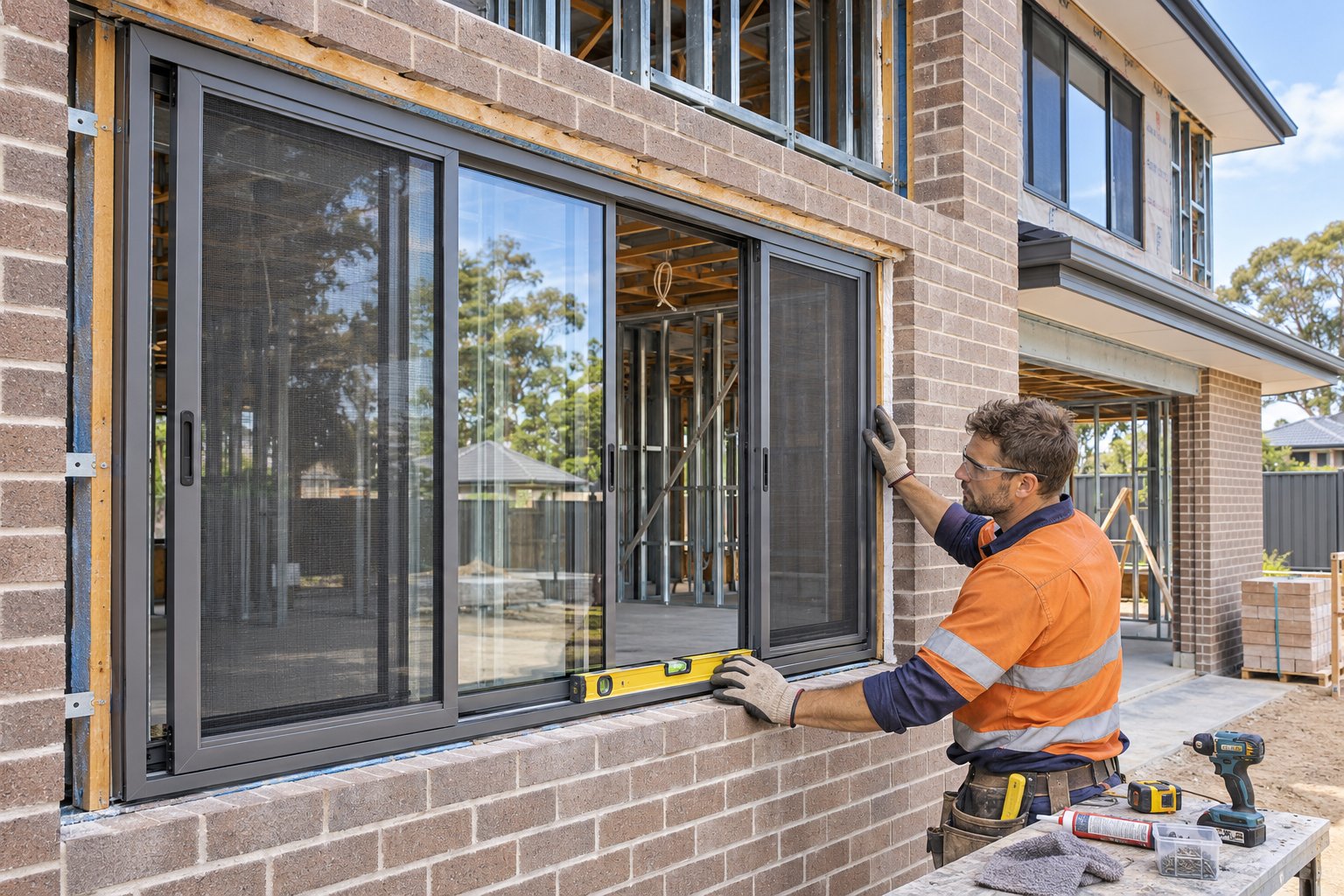
A properly fitted aluminium slider requires precise shimming to keep the frame square, continuous perimeter flashing integrated with the wall's moisture barrier, low-expansion foam insulation in the gap between frame and structure, and correctly torqued fasteners at specified centres. Clearances of roughly 20 mm wider and 30 mm taller than the frame must be maintained in the rough opening to allow for levelling and thermal movement—too tight and the frame binds; too loose and the seals cannot perform.
Incorrect installation is the single fastest way to void a manufacturer's warranty. It also compromises weathertightness, creates air-infiltration pathways that undermine your glazing investment, and can lead to water ingress that damages surrounding wall framing and plasterboard. Even if you are a capable renovator, the risk-reward ratio favours professional fitting for any window larger than a small utility opening.
Before signing an installation contract, confirm that the installer carries appropriate licensing for your state—in NSW that means a licensed glazier or builder; in Victoria, a registered building practitioner for windows above certain thresholds. Ask whether the quote includes removal of the existing window, disposal, flashing integration, internal and external sealing, and a final operational check. Replacement fit and installation scope should always be confirmed through a project review with the supplier, not assumed from catalogue dimensions.
Budgeting and Getting Accurate Quotes
Aluminium slider pricing varies widely, and the variation is not random—it tracks directly to the specification decisions listed above. Frame size, track count, glazing tier, powder-coat finish, hardware grade, screen inclusion, and whether the unit is a stock size or custom-fabricated all move the number. Installation labour adds another layer, influenced by access difficulty, storey height, wall construction type, and the condition of the existing opening.
The most common budgeting mistake is comparing headline totals from different suppliers without checking that those totals describe the same scope. One quote might bundle supply, delivery, and full installation into a single figure, while another covers supply only, leaving you to source and pay an installer separately. The only reliable comparison method is an itemised quote that separates product cost from installation labour, lists every inclusion and exclusion, and references the same opening schedule.
Here is a practical approach:
- Prepare a window schedule listing each opening by ID—width, height, configuration, glazing requirement, finish, and screen preference.
- Send that identical schedule to at least three suppliers.
- Request itemised responses that break out unit cost, delivery, installation, flashing, sealing, trim, removal of existing windows, and disposal.
- Flag any substitution, allowance, or exclusion before comparing bottom lines.
Suppliers offering project-specific sizing tend to produce more accurate quotes because they account for the realities of your openings rather than rounding to the nearest stock dimension. MEICHEN's MA100 Sliding Window is one example of this approach—a two-track aluminium slider with a fixed high-transparency screen, double-glazing choices, and powder-coated finishes, all sized to your project rather than pulled from a standard catalogue grid. It is worth considering as a reference point when evaluating how different suppliers structure their quoting process. That said, the MA100 is a non-thermally broken system, so if your project sits in a cooler climate zone or if condensation management is a priority, weigh that limitation against your energy performance targets before requesting a quote. A project review with the MEICHEN team can clarify whether the system suits your specific conditions.
Whether you are pricing a single sliding pass through window for a kitchen servery, replacing a row of tired single hung aluminium windows across a Federation-era verandah, or specifying a full elevation of windows that slide open to a rear entertaining deck, the process is the same: define the scope first, then compare like with like. Products as different as a milgard sliding glass door and a compact two-track aluminium slider can both be excellent choices—the question is always whether the specification matches the opening, the climate, the budget, and the long-term performance you expect from the building envelope.
Aluminium sliding windows have earned their place in Australian construction not by being perfect, but by being extraordinarily adaptable. The thermal myth that opened this article—aluminium equals poor energy performance—collapses the moment you look past the raw metal and examine the complete assembly: frame design, thermal break, glazing package, weatherstripping, and installation quality working together as a system. Specify thoughtfully, install professionally, maintain consistently, and an aluminium slider will reward you with decades of effortless operation, generous daylight, and a building envelope that performs exactly as well as the care you put into choosing it.
Frequently Asked Questions About Aluminium Sliding Windows
1. Are aluminium sliding windows energy efficient?
Aluminium sliding windows can be highly energy efficient when specified correctly. While raw aluminium conducts heat readily, the whole-window energy rating depends on the complete assembly — frame design, glazing package, weatherstripping, and installation quality combined. Thermally broken aluminium frames paired with argon-filled, Low-E double-glazed IGUs achieve U-values competitive with vinyl and timber alternatives. In Australia, buyers should request WERS-rated performance data and compare whole-window U-values rather than centre-of-glass figures to get an accurate picture of real-world thermal performance.
2. How long do aluminium sliding windows last?
Quality aluminium sliding windows with a powder-coated or anodised finish routinely last 30 to 50 years in service, and even longer in temperate inland climates with lower environmental stress. The aluminium frame itself resists corrosion, rot, and warping, so longevity is usually limited by hardware wear, weatherstrip degradation, and IGU seal life rather than the frame material. Regular maintenance — monthly track cleaning, biannual silicone-based roller lubrication, and timely weatherstrip replacement — extends operational life significantly.
3. Do aluminium windows cause condensation?
Non-thermally-broken aluminium frames can cause interior condensation in cold climates because the metal conducts heat quickly, allowing the inside surface to drop below the room's dew point. This risk is highest in poorly ventilated spaces with elevated indoor humidity. Thermally broken aluminium profiles largely eliminate the problem by inserting an insulating polymer barrier into the extrusion, keeping the interior face closer to room temperature. Managing indoor moisture sources — such as unflued heaters, indoor laundry drying, and cooking without extraction — is equally important in condensation-prone regions like Canberra, Tasmania, and the Victorian highlands.
4. What is the difference between a single-track and two-track aluminium slider?
A single-track aluminium slider has one fixed panel and one operable panel, allowing you to open roughly 50 per cent of the total window width for ventilation. A two-track configuration gives both panels their own dedicated rail so both can slide independently, nearly doubling the effective ventilation area. Two-track systems like the MEICHEN MA100 Sliding Window are particularly popular for living areas and sunrooms where maximum cross-breeze and indoor-outdoor flow are priorities. The choice depends on room airflow needs, opening width, and budget.
5. How do you maintain aluminium sliding windows?
Maintenance is straightforward and requires no painting, staining, or sealing. Monthly, vacuum debris from sill and head tracks using a crevice nozzle, then wipe tracks with a damp cloth and mild detergent. Clean frame surfaces with a non-abrasive soap solution, rinse, and dry thoroughly. Twice a year, apply silicone-based spray lubricant to rollers and tracks — avoid petroleum-based products, which attract grit and damage weatherstrips. Inspect weatherstripping seasonally for light gaps or draughts, and adjust roller height screws if the sash starts dragging or binding. Coastal homes should increase cleaning frequency to prevent salt buildup.