
What Aluminium Windows Price Calculators Do and Why They Matter
Planning a window project without a budget feels like driving without a map. An aluminium windows price calculator gives you that starting point — it's an online tool that generates preliminary cost estimates based on inputs you provide, such as window dimensions, frame type, glazing preferences, and sometimes your postcode. Think of it as a window prices calculator that narrows the gap between "no idea" and "ballpark figure" before you ever pick up the phone to request a formal quote.
These tools pull from manufacturer price lists, historical project data, or regional averages to produce their numbers. They're fast, free, and available around the clock. But here's the thing: they work on assumptions. Default values, simplified configurations, and static pricing data mean the estimate you see on screen rarely matches the final installed cost dollar for dollar. The gap between a window cost calculator output and a real-world quote can catch people off guard if they treat the number as gospel rather than a guide.
This article unpacks what sits behind those estimates — the mechanics driving the calculations, aluminium-specific factors that shift pricing, how aluminium stacks up against other materials on total value, and the preparation steps that make any windows cost estimator more accurate. By the end, you'll know how to use a window price calculator as the budgeting tool it's designed to be, and how to bridge the distance between that initial figure and a confident purchasing decision.
Who Benefits From Online Window Estimators
Different people use these tools for different reasons, and each gets something distinct from the exercise:
- Homeowners — quick budget reality checks during renovation planning, helping decide whether aluminium fits the financial picture before engaging installers.
- Builders and contractors — early-stage cost scoping for client proposals, especially when comparing material options across multiple openings.
- Architects and designers — preliminary feasibility assessments that inform specification decisions before detailed documentation begins.
- Property developers — bulk project budgeting across multiple dwellings, where even small per-unit variances compound at scale.
Regardless of who's using them, the value lies in speed and accessibility. But accuracy depends entirely on what you bring to the tool — and what the tool leaves out. That's where the real story begins.
How Aluminium Window Price Calculators Actually Work
Behind every window estimate calculator sits a formula — a set of rules that takes your inputs, matches them against stored pricing data, and spits out a range. The logic isn't mysterious, but it is simplified by design. Understanding what's happening under the hood helps you interpret the output with the right level of confidence.
Variables and Inputs That Drive Calculator Estimates
Most aluminium window pricing calculators ask you to specify a handful of variables, and each one shifts the final number in a predictable direction:
- Window dimensions (height and width in mm) — larger openings require more aluminium profile, more glass, and heavier hardware, so cost scales with size.
- Opening type — a fixed panel is the cheapest baseline; casement, awning, sliding, and tilt-and-turn configurations add mechanical complexity and hardware cost.
- Glazing specification — single glazing versus double glazing versus triple glazing, plus coatings like low-E or tinting, each step up adds material cost.
- Colour and finish — standard powder coat colours (white, black, monument) are typically base price; custom RAL colours or anodised finishes attract a premium.
- Hardware grade — basic residential hardware versus commercial-grade or bushfire-rated fittings changes the per-unit cost noticeably.
The calculator multiplies your selections against stored unit rates, adds them together, and presents a range. Some tools also factor in window count to apply basic volume logic. A window installation calculator may layer labour hours on top, estimating install time per opening based on type and size. But the key word here is "estimate" — the tool is pattern-matching your inputs against averages, not quoting your specific project.
Where Online Calculators Source Their Pricing Data
The numbers behind a window pricing calculator have to come from somewhere. Typically, three data layers feed the output:
- Manufacturer price lists — wholesale or recommended retail pricing from profile system manufacturers and fabricators, updated periodically (often quarterly or annually).
- Historical project data — aggregated costs from completed installations, sometimes drawn from installer networks or industry platforms that track real quotes.
- Regional averages — labour rates and material costs adjusted by location, though in Australia this often defaults to state-level or capital-city-versus-regional distinctions rather than postcode-level precision.
The challenge is freshness. Aluminium prices fluctuate with global commodity markets, and Australian labour rates vary significantly between, say, inner Sydney and regional Tasmania. A window installation cost calculator built on data that's six months old may already be drifting from current market reality. Static tools simply can't reflect live supply chain conditions the way a fabricator working from today's material costs can.
Understanding the Margin of Error in Automated Estimates
Here's where expectations need calibrating. Industry data from calculator methodology studies suggests that automated estimates contain the actual project cost roughly 82% of the time — meaning nearly one in five projects falls outside the predicted range. The typical variance sits around 30 to 40 percent within most regions, driven by contractor-specific pricing, existing frame condition, and seasonal demand shifts.
What a window installation labor cost calculator cannot model includes:
- Site access difficulty — scaffolding for upper-storey windows, narrow laneways, heritage overlays requiring council approval
- Structural modifications — enlarging or reducing openings, lintel replacement, addressing water damage in timber frames
- Regulatory requirements — NCC compliance upgrades, BAL-rated glazing in bushfire zones, cyclone-rated fixings in northern Australia
- Existing condition surprises — rot, corrosion, or non-standard framing only visible once old windows are removed
Quotes that land above the calculator range typically reflect these real-world complexities. Quotes below it often signal a narrower scope of work or a contractor absorbing risk they haven't communicated clearly.
Treat every window estimate calculator result as a directional budgeting tool — useful for comparing options and setting expectations, but never a substitute for a specification-based quote from a fabricator or installer who has assessed your actual project.
The gap between algorithmic pricing and bespoke quoting isn't a flaw in the tool. It's a feature of how complex real projects are. What matters is knowing which variables the calculator captured accurately and which ones it glossed over — because those hidden factors are often where the biggest cost surprises live.
Aluminium-Specific Pricing Factors Every Buyer Should Know
Those hidden variables the calculator glosses over? Many of them live inside the aluminium profile itself. Two windows can look identical from the street yet differ dramatically in engineering, thermal performance, and cost. The specification choices baked into an aluminium frame — profile system, thermal break construction, finish type, glazing package, and hardware grade — create a layered pricing structure that most online tools flatten into a single "aluminium window" category. Knowing what each layer adds helps you read calculator results with sharper eyes.
Thermal Break Technology and Profile Systems
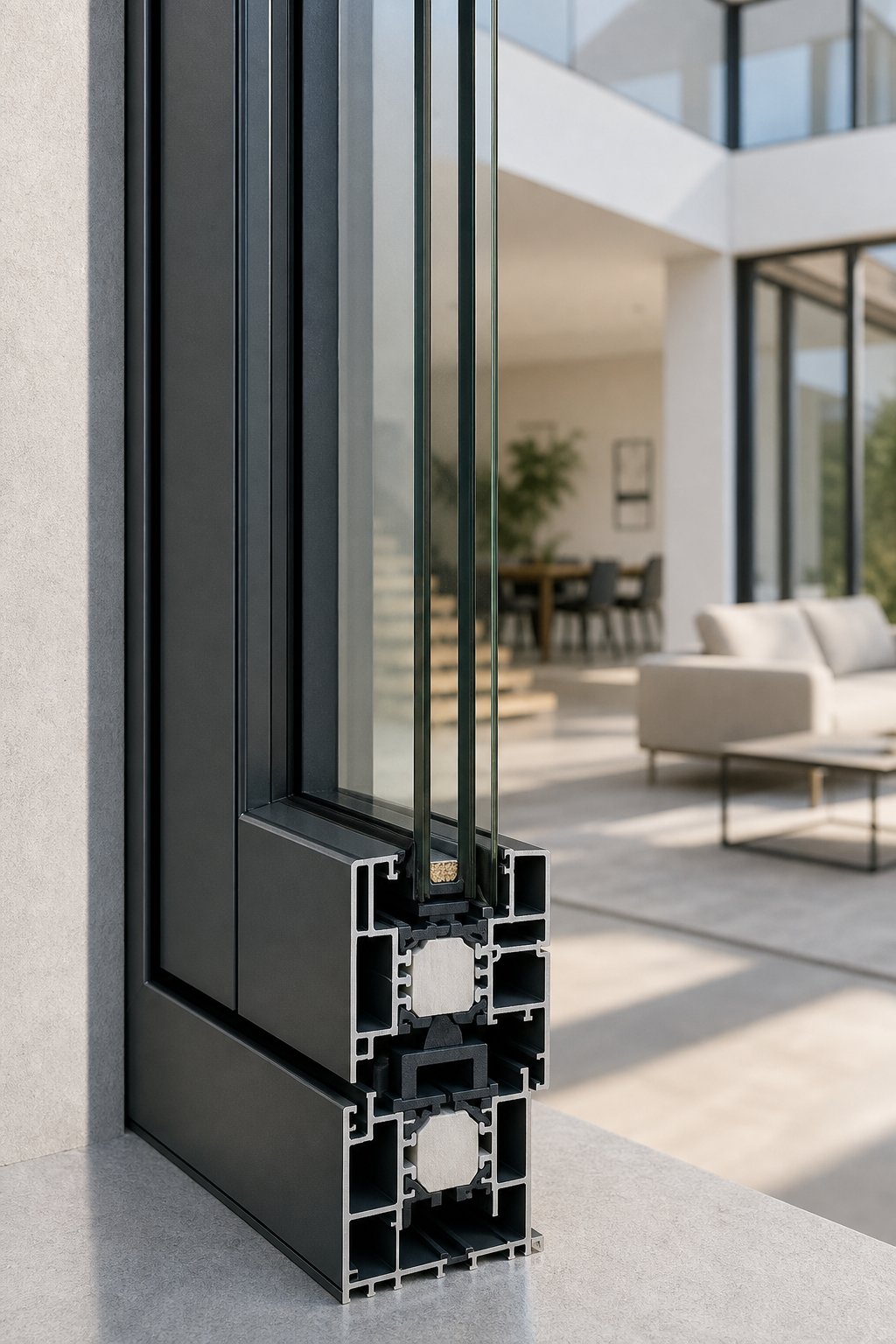
Aluminium conducts heat roughly 1,000 times more efficiently than timber. Without intervention, a solid aluminium frame becomes a thermal bridge — pulling heat into your home in summer and letting it escape in winter. Thermal break technology solves this by splitting the profile into two separate aluminium sections connected by polyamide (PA66) insulating strips. These strips, typically reinforced with glass fibre, create a physical barrier that dramatically reduces heat transfer through the frame.
The performance difference is substantial. A non-thermally-broken aluminium window might achieve a frame U-value around 5.0 to 7.0 W/m²K, while a thermally broken equivalent drops to 2.5 to 4.0 W/m²K depending on the system. For Australian homes chasing NatHERS star ratings or meeting NCC Section J energy requirements, this distinction matters — and it carries a price tag. Thermally broken profiles typically add a moderate to significant premium over standard aluminium, reflecting the additional materials, more complex extrusion process, and tighter manufacturing tolerances involved.
Profile system depth compounds the cost further. A 50mm system uses less material and suits standard residential applications. Step up to a 65mm or 70mm system and you gain wider thermal break cavities, better acoustic performance, and capacity for heavier glazing units — but each jump in depth means more aluminium per metre of frame and more complex corner joinery. Multi-chamber profile engineering, where the internal geometry of the extrusion creates isolated air pockets, adds another performance layer and another cost increment.
Most calculators let you select "thermally broken" or "standard" at best. They rarely distinguish between profile system depths or multi-chamber configurations, which means two thermally broken windows at very different price points can produce the same calculator estimate.
Finish Options and Their Price Impact
The surface treatment on an aluminium window affects both aesthetics and longevity, and the two dominant options — powder coating and anodising — sit at different price points for good reason.
Powder coating applies a dry pigmented powder (typically polyester for exterior use) electrostatically to the aluminium surface, then cures it in an oven to form a durable, uniform layer of 60 to 120 microns. It offers an enormous colour range, including custom RAL matches, and handles impact well. Standard colours — your blacks, whites, and monument greys — are base-price options because fabricators batch them efficiently. Custom colours require dedicated spray runs, adding lead time and cost.
Anodising takes a different approach entirely. Rather than adding a layer on top, it converts the aluminium surface into a hard oxide layer through an electrochemical process. The result is a metallic, natural-looking finish with excellent UV stability and scratch resistance. Anodised finishes maintain their appearance for decades in harsh Australian conditions, including coastal salt-air environments. The trade-off is a narrower colour palette (silvers, bronzes, blacks) and a higher per-unit cost driven by tighter process control and smaller batch sizes.
For projects in coastal areas of Queensland, NSW, or Western Australia where salt spray accelerates corrosion, the finish choice becomes a durability decision as much as an aesthetic one. Marine-grade powder coating or anodising rated to AS 3715 can add a noticeable premium, but it protects the frame's integrity over a 25-plus year lifespan.
Glazing and Hardware Upgrades as Cost Multipliers
Glass accounts for the largest surface area of any window, so glazing specification is one of the most powerful cost levers. A double glazing quote for standard clear glass in a 4mm-12mm-4mm configuration represents the baseline in most Australian aluminium window systems. From there, every performance upgrade multiplies cost:
- Low-E coatings — a microscopically thin metallic layer applied to the glass surface that reflects radiant heat. Adds a moderate increase to the glass cost while significantly improving thermal performance and WERS ratings.
- Argon gas fill — replacing the air cavity between panes with argon reduces convective heat transfer. A minor cost addition per unit, but it compounds across a full-house specification.
- Triple glazing — adds a third glass pane and second gas-filled cavity. For those wondering how much do triple glazed windows cost relative to double, expect a significant premium (often in the range of 25 to 40 percent more than equivalent double-glazed units). The cost of triple glazed windows reflects additional glass, spacer bars, sealant, and the heavier hardware needed to support the extra weight.
- Laminated or toughened glass — required for compliance with AS 1288 in certain locations (near doors, at low levels, in wet areas), and mandatory in BAL-rated bushfire zones. Adds a moderate increase per pane.
- Acoustic interlayers — specialised PVB or resin interlayers for noise reduction near roads, flight paths, or rail corridors. A notable premium, particularly in thicker configurations.
A double-pane window cost calculator might let you toggle between "double" and "triple" glazing, but it rarely captures the compounding effect of combining low-E coatings with argon fill and laminated inner panes — a common specification for high-performance Australian homes. Each addition is individually modest, but stacked together they can push glazing costs well above the base estimate.
Hardware tells a similar story. Standard residential friction stays and cockspur handles sit at the entry level. Step up to multi-point locking systems, heavy-duty stainless steel hinges for coastal environments, or keyed-alike security hardware across an entire home, and the per-window hardware cost climbs noticeably. For projects requiring compliance with AS 5039 (forced-entry resistance) or bushfire-rated hardware, the premium is more pronounced still.
- Standard residential hardware — baseline cost; suits most single-storey homes in low-risk areas.
- Multi-point locking systems — moderate increase; improves air tightness and security simultaneously.
- Heavy-duty or stainless steel fittings — moderate to significant increase; essential for coastal or high-corrosion environments.
- Security-rated hardware (AS 5039) — significant premium; required for ground-floor windows in some insurance and compliance scenarios.
- Bushfire-rated components — significant premium; non-negotiable in BAL-12.5 and above zones across much of regional Australia.
The pattern here is consistent: every step up from base specification improves performance, longevity, or compliance — and adds cost that a generic calculator either underestimates or ignores entirely. When your online estimate shows a figure for "aluminium double-glazed casement," it's almost certainly pricing the simplest version of that window. The version that actually meets your climate, site, and regulatory requirements may sit considerably higher.
Understanding these layers doesn't just help you interpret calculator outputs more accurately. It equips you to have informed conversations with fabricators about where to invest and where a base specification genuinely suffices — decisions that only make sense when you know what each upgrade delivers relative to its cost.
Aluminium Versus Other Window Materials on Price and Value
If you've ever plugged the same window dimensions into a cost of new windows calculator and toggled between material options, you've seen the pattern: aluminium comes back higher than uPVC, sometimes dramatically so. That sticker shock leads plenty of Australian homeowners to dismiss aluminium before understanding what the higher number actually buys. The real question isn't how much does window cost at the point of purchase — it's how much does that window cost you over 25, 40, or even 60 years of ownership.
Upfront Cost Versus Total Cost of Ownership
Upfront pricing tells one story. Total cost of ownership tells a very different one. uPVC windows prices sit at the accessible end of the market, making them the default choice for budget-conscious projects. Timber commands a premium for its natural aesthetic. Aluminium lands in the mid-to-high range on day one. Composite (aluminium-clad timber) sits at the top.
But windows aren't a one-time purchase in the way a piece of furniture is. They endure decades of UV exposure, thermal cycling, coastal salt air, and daily mechanical use. Over that lifespan, maintenance costs, replacement frequency, and retained performance all factor into the true economic picture. A life cycle assessment from Napier University found that aluminium windows achieve a mean service life of approximately 44 years with minimal maintenance, while PVC windows average around 24 years before requiring full replacement. Timber sits between the two at roughly 40 years — but only with consistent upkeep every five to seven years.
In practical terms, a home fitted with uPVC today will likely need a complete window replacement within 20 to 30 years. That second purchase — including removal, disposal, and reinstallation — often exceeds the original price difference between uPVC and aluminium. When you compare online upvc window prices against aluminium on a per-year-of-service basis, the gap narrows considerably or reverses entirely.
Material Performance Across Key Metrics
Price is only one axis. Durability, maintenance burden, thermal capability, design flexibility, and end-of-life recyclability all shape the value equation. Here's how the four main frame materials compare across the metrics that matter most for Australian conditions:
| Metric | Aluminium | uPVC | Timber | Composite (Alu-Clad Timber) |
|---|---|---|---|---|
| Typical Price Range (supply and install) | Medium-High | Low-Medium | High | Premium |
| Expected Lifespan | 40-60+ years | 20-30 years | 30-60 years (with maintenance) | 45-60+ years |
| Maintenance Frequency | Occasional cleaning only | Occasional cleaning only | Painting/sealing every 5-7 years | Occasional external cleaning; internal timber care |
| Thermal Performance (with thermal break) | Good to High | Good to High | Naturally High | High |
| Design Flexibility | Excellent — slim profiles, large spans, wide colour range | Moderate — bulkier profiles, limited spans | Good — custom shapes, natural finish | Excellent — combines slim exterior with warm interior |
| Recyclability | Infinitely recyclable without quality loss | Limited — complex recycling, often landfill | Biodegradable if untreated; limited reuse | Aluminium exterior recyclable; timber biodegradable |
| UV and Weather Resistance | Excellent (powder coated or anodised) | Moderate — discolouration over time | Low without regular treatment | Excellent externally |
A few points stand out for Australian buyers specifically. PVC is sensitive to high temperatures and UV radiation, which can break its molecular bonds and cause embrittlement and discolouration — a real concern across most of the Australian climate. Timber performs beautifully in temperate southern regions but demands vigilant maintenance in tropical or coastal areas where moisture and termites accelerate degradation. Aluminium, particularly with quality powder coating or anodising rated to AS 3715, handles the full spectrum of Australian conditions — from Darwin's humidity to Perth's coastal salt air to Melbourne's temperature swings — without structural compromise.
On recyclability, aluminium holds a distinct advantage. It can be recycled repeatedly with virtually no loss of quality, and the recycling process requires only about 7% of the energy needed for primary production. In contrast, most end-of-life uPVC windows still end up in landfill due to the complexity of separating their composite materials.
The cheapest window to buy is rarely the cheapest window to own. When a cost of new windows calculator shows aluminium at a higher figure than uPVC, it's pricing a single moment in time — not the 40-plus years of maintenance-free performance, retained appearance, and avoided replacement costs that follow.
This lifecycle perspective doesn't mean aluminium is the right choice for every project. A rental property with a short hold period might genuinely benefit from uPVC's lower entry cost. A heritage renovation might demand timber for council compliance. But for owner-occupiers planning to stay in their home long-term — particularly in harsh Australian climates — the aluminium premium often pays for itself well before the halfway mark of the frame's service life.
Understanding where each material sits on both the upfront and lifecycle cost spectrum gives you the context to interpret any new window cost calculator result intelligently. The number on screen reflects today's purchase price. The value equation plays out over decades — and that's a calculation no online tool can run for you.
Your Pre-Calculator Preparation Checklist for Accurate Results
Knowing what drives aluminium window pricing is one thing. Feeding that knowledge into a calculator correctly is another. The single biggest reason online estimates diverge from real quotes isn't a flaw in the tool — it's incomplete or vague inputs from the user. Default values and rough guesses produce rough numbers. Precise specifications produce useful ones.
Before you open any aluminium windows price calculator, there's a preparation step that separates informed buyers from those blindsided by quote discrepancies weeks later. It takes 30 to 60 minutes of focused work, and it pays for itself many times over in budgeting accuracy. Think of it as gathering the ingredients before you start cooking — skip this, and the result won't resemble what you expected.
Measurements and Quantities You Need Ready
Dimensions are the foundation of every estimate for windows, and getting them right matters more than most people realise. A 50mm measurement error on a single opening can shift the price noticeably — multiply that across ten or fifteen windows and the cumulative drift becomes significant.
For each window opening, you need three width measurements (top, middle, bottom of the opening) and three height measurements (left, centre, right). Use the smallest figure in each direction as your working dimension — this accounts for openings that aren't perfectly square, which is common in Australian homes, particularly older brick veneer and weatherboard construction. Measure in millimetres, not centimetres, to avoid rounding errors that compound across a project.
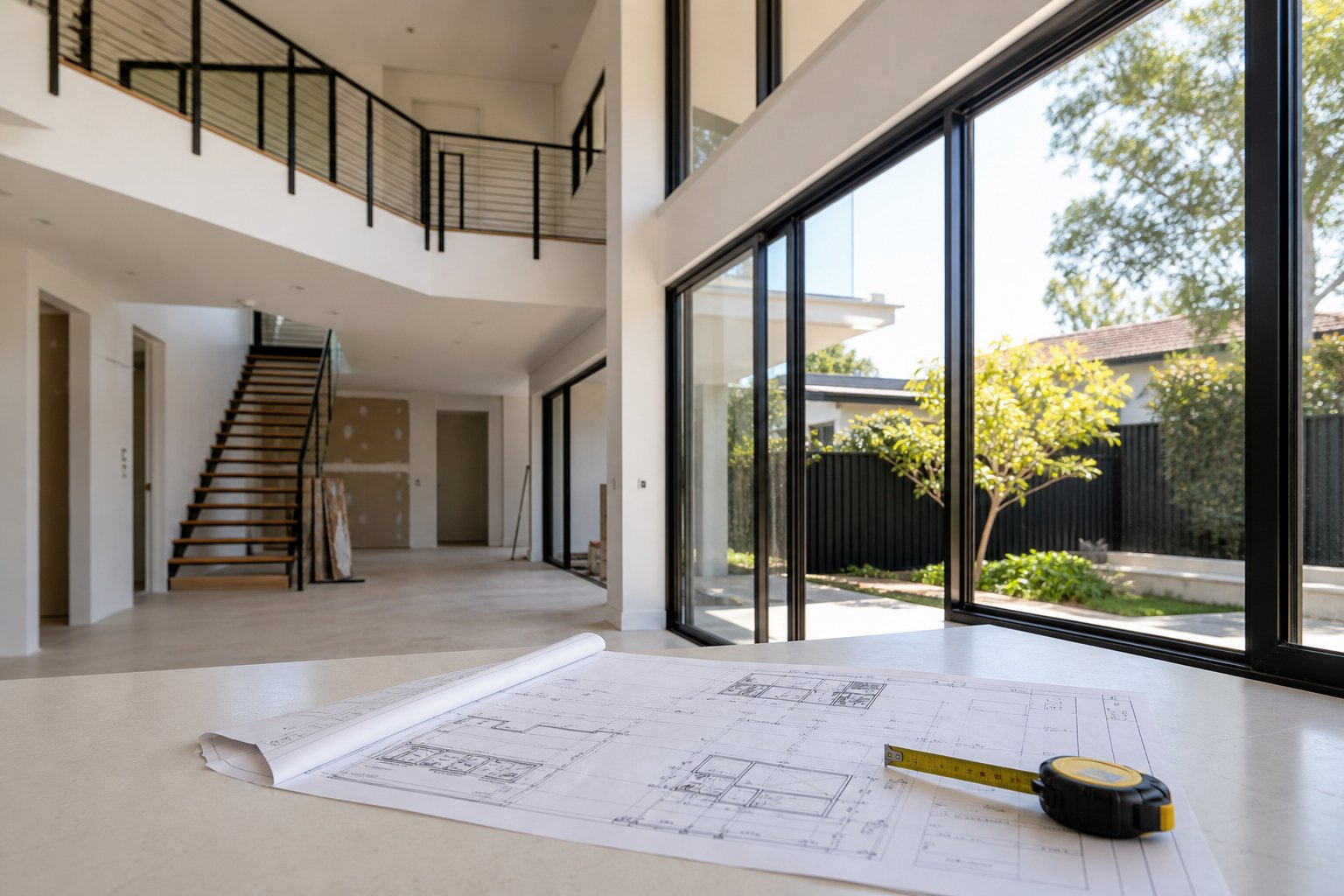
A replacement window size calculator is only as good as the numbers you feed it. If you're replacing existing windows, measure the structural opening (jamb to jamb, head to sill) rather than the old frame's outer dimensions. For new openings in a renovation or extension, work from your architect's drawings and confirm dimensions on site before ordering — drawings and as-built conditions don't always agree.
Record the total quantity of each size. Fabricators price differently for one-off custom sizes versus repeated standard dimensions, so grouping identical openings together gives you a clearer picture of where volume efficiencies apply.
Design Decisions That Affect Calculator Accuracy
Beyond raw dimensions, the configuration and specification choices you make per window dramatically shift the output of any custom window price calculator. Leaving these as defaults — or worse, guessing — introduces the kind of variance that makes calculator results unreliable.
Here's what to lock down before you start:
- Confirm the opening type for every window. Decide whether each opening will be casement, awning, sliding, tilt-and-turn, bi-fold, or fixed. Each type carries different hardware, engineering, and manufacturing costs. A fixed panel is the cheapest; a bi-fold is among the most expensive. Don't assume "standard" — specify per opening.
- Select your glazing specification. At minimum, decide between double and triple glazing. Then consider whether you need low-E coatings (likely yes for NCC compliance in most climate zones), argon gas fill, laminated inner panes for security or acoustic performance, or toughened glass for AS 1288 compliance near doors and at low levels.
- Choose your colour and finish. Standard powder coat colours (matt black, surfmist, monument, white) are base-price options. Custom RAL colours, dual-colour frames (different inside and outside), or anodised finishes all attract premiums. Decide before calculating, not after.
- Determine hardware and security requirements. Standard residential hardware suits most applications, but multi-point locking, keyed-alike cylinders, heavy-duty stainless hinges for coastal sites, or AS 5039 security-rated fittings all change the per-window cost. Check your insurance requirements and local conditions.
- Identify any compliance requirements. BAL ratings for bushfire zones, cyclone-rated fixings for northern Queensland or the NT, acoustic ratings for properties near major roads or flight paths — each of these mandates specific glass, hardware, or frame configurations that a generic custom window cost calculator won't assume unless you tell it.
Every field left at its default value is a field where the calculator is guessing on your behalf. The more decisions you finalise upfront, the tighter the estimate for windows becomes — and the less likely you are to experience sticker shock when a formal quote arrives.
Site and Installation Variables to Consider
Even a perfectly specified window can produce an inaccurate estimate if site conditions aren't factored in. Most online tools ignore installation complexity entirely, or apply a flat labour rate regardless of difficulty. Real projects don't work that way.
Before using a house window replacement cost estimator, assess these site-specific variables:
- Access difficulty — Are any windows above ground level? Upper-storey installations may require scaffolding or elevated work platforms, adding meaningful cost. Narrow side passages, steep blocks, or properties without rear vehicle access also increase labour time and logistics expense.
- Structural modifications — Will any openings need to be enlarged, reduced, or created from scratch? Lintel installation, brickwork removal, or structural engineer involvement transforms a straightforward replacement into a construction project with additional trades and council approval requirements.
- Existing frame condition — Timber sub-frames with rot, aluminium frames with corroded fixings, or openings that are significantly out of square all require remediation before new windows can be installed. A thorough site survey identifies these issues early; a calculator never will.
- Internal and external obstacles — Electrical wiring near openings, curtain tracks, built-in cabinetry, external awnings, or security screens that need removal and refitting all add time and cost to the installation scope.
- Weatherproofing and finishing — Does the project require new flashings, reveals, internal plaster repairs, or external render patching? These finishing trades are rarely included in a calculator's output but always appear on a real quote.
The pattern is clear: a calculator prices the product. A quote prices the project. The gap between the two is filled by site conditions, compliance requirements, and finishing work that only a physical assessment — or at minimum, detailed photos and documentation — can capture.
Run through this preparation checklist before you touch any online tool, and you'll get an output that's genuinely useful for budgeting rather than a number that evaporates the moment reality enters the picture. More importantly, when you do request formal quotes from fabricators, you'll be comparing apples with apples — because every supplier will be pricing the same clearly defined scope.
How Window Type and Configuration Change the Price
You've locked in your measurements, chosen your glazing, and selected a finish. But there's another variable that swings the cost just as hard as any of those: the type of window itself. A fixed pane and a bi-fold opening might share identical dimensions and the same aluminium profile system, yet the bi-fold can cost three to four times more. Configuration is where mechanical complexity meets engineering demand — and where many online calculators start to lose accuracy or drop options entirely.
Cost Ranking by Window Configuration Type
Not all window types are created equal in terms of manufacturing effort, hardware requirements, or structural engineering. The table below ranks common aluminium window configurations from least to most expensive, with the key factor driving each price position:
| Window Type | Relative Cost Level | Key Cost Driver | Typical Use Case |
|---|---|---|---|
| Fixed panel | Low | No moving parts or hardware — glass and frame only | Feature windows, highlight panels, stairwells |
| Sliding window | Low-Medium | Simple track mechanism with minimal hardware | Bedrooms, kitchens, general ventilation openings |
| Awning/casement window | Medium | Hinged operation requires friction stays, locks, and weather seals | Living areas, bathrooms, above benchtops |
| Tilt-and-turn window | Medium-High | Dual-mode hardware with complex multi-point locking | Upper storeys, apartments, high-performance homes |
| Bay window | High | Structural framing, angled joinery, and multiple sash units | Feature living rooms, heritage-style renovations |
| Bi-fold window | High-Premium | Multiple folding panels, heavy-duty tracks, complex hardware sets | Kitchen servery openings, indoor-outdoor entertaining |
A casement window cost estimator will typically produce a figure that sits comfortably in the middle of the range. Fixed panels anchor the low end — supply-only pricing for a standard fixed aluminium window can start from around $150 for a small 600 x 600mm unit, while sliding windows of similar size begin around $165. Hinged and awning windows start slightly higher again, reflecting the additional hardware and sealing requirements. At the upper end, bi-fold configurations can reach $1,250 per square metre or more for quality aluminium systems with double glazing.
Why Complexity and Size Drive Price Differences
The cost gap between a fixed panel and a bi-fold isn't arbitrary. It reflects tangible differences in what goes into each window:
- Moving parts multiply cost. Every hinge, roller, track, locking point, and seal adds material and assembly time. A fixed window has zero moving components. A bi-fold with four panels might have 20 or more individual hardware items per opening, each requiring precise alignment during fabrication and installation.
- Structural requirements escalate. Bay windows project outward from the building envelope, requiring structural support — either a dedicated bay pole set, cantilevered floor framing, or a suspended head support. A bay window cost calculator needs to account for this structural framing on top of the glazing itself, which is why bay configurations often surprise buyers who only priced the glass and aluminium. Similarly, large bi-fold openings need reinforced head beams to carry the load above the span.
- Engineering for size adds weight. Oversized fixed panels — popular in contemporary Australian homes for capturing views — require thicker glass (often 6mm or 8mm toughened), heavier aluminium profiles to resist wind loads, and sometimes structural glazing techniques. A bay window price calculator or large-format fixed panel estimate must factor in these engineering upgrades that standard-size windows don't need.
- Weather sealing becomes harder. More moving parts mean more potential points of air and water infiltration. Bi-fold and tilt-and-turn windows require sophisticated multi-point compression seals and drainage systems to maintain weather performance, adding both material cost and quality-control complexity during manufacturing.
Basic online calculators handle this unevenly. Most offer fixed, sliding, and casement as standard options. Tilt-and-turn may appear in tools from European-system fabricators but is often absent from generic Australian estimators. Bay and bi-fold configurations — the most expensive and complex types — are frequently excluded altogether or reduced to a simple per-square-metre rate that doesn't capture the structural and hardware realities. If your project includes these configurations, treat any online figure as a rough floor rather than a reliable midpoint.
Volume Pricing and Project Scale Effects
Configuration type sets the per-unit cost, but project scale determines how much leverage you have on that number. A single replacement casement window ordered in a custom size carries the full weight of setup costs, delivery logistics, and minimum-order thresholds. Order fifteen windows for a full-house specification and the economics shift in your favour.
Fabricators achieve efficiencies at scale through several mechanisms:
- Batch cutting and machining — running multiple identical or similar profiles through CNC equipment in a single setup reduces per-unit fabrication time.
- Consolidated powder coating — grouping all frames in the same colour into one spray run eliminates repeated setup and colour-change downtime.
- Optimised glass ordering — larger glass orders from IGU (insulated glass unit) suppliers attract better per-square-metre rates and reduce offcut waste.
- Logistics consolidation — delivering twenty windows to one site costs marginally more than delivering two, so the per-unit freight component drops significantly at volume.
For developers or builders specifying across multiple dwellings, the per-window cost can drop meaningfully compared to a single-unit retail price. Even homeowners replacing all windows in one project rather than piecemeal over several years benefit from this consolidation effect — both in product pricing and installation labour, since the installer mobilises once rather than repeatedly.
Most aluminium windows price calculators apply a flat per-unit rate regardless of quantity. They don't model the volume breaks that fabricators routinely offer on orders above five, ten, or twenty units. This means a full-house estimate generated by multiplying a single-window price by your total count will almost always overstate the real project cost. Conversely, pricing a single replacement window using a tool calibrated for project-scale orders may understate what you'll actually pay for a one-off.
The takeaway: configuration type and order volume interact to shape your final cost in ways that static calculators handle poorly. Knowing where your project sits on both axes — complexity per window and total number of openings — gives you a more realistic mental model before any formal quotes land on your desk. And those quotes, when they do arrive, will reflect supply chain realities and geographic factors that add yet another layer of variance to the picture.
Supply Chain and Location Factors Calculators Often Miss
Every aluminium window passes through multiple hands before it reaches your wall — and each set of hands adds cost. A window replacement calculator treats the final price as a single number, but in reality that number is built from distinct layers, each influenced by different market forces, geographic conditions, and timing. Understanding these layers explains why two identical window specifications can produce different installed prices depending on where you live, when you order, and who you buy from.
Understanding the Supply Chain Price Layers
The journey from raw bauxite to an installed aluminium window involves at least four pricing stages, each contributing margin and each subject to its own cost pressures:
- Raw material (aluminium billet and ingot) — Global commodity pricing on the London Metal Exchange sets the baseline. Australia produces aluminium domestically, but pricing still tracks international benchmarks. Tariff shifts, energy costs at smelters, and global demand all move this figure independently of anything happening in the window industry itself. Recent tariff increases on steel and aluminium in key trading markets have added upward pressure across the supply chain.
- Profile system manufacturer (extruder) — Companies that design and extrude the aluminium profile systems add engineering, tooling, and quality-control costs. Premium European-origin systems carry higher licensing fees than locally designed profiles, and this difference flows directly into the per-metre rate fabricators pay for their stock.
- Fabricator — The business that cuts, machines, assembles, glazes, and finishes your windows. Fabrication costs reflect labour rates, equipment investment, powder coating or anodising processes, glass procurement, and hardware sourcing. This is where specification choices translate into actual production cost — and where volume efficiencies or inefficiencies hit hardest.
- Installer — The trade that delivers, fits, seals, and commissions the finished product on site. Installation adds labour, transport, consumables (sealants, fixings, flashings), scaffolding if required, and waste removal. Installer margin varies widely based on local competition and demand.
A replacement windows cost calculator typically collapses all four layers into a single supply-and-install rate. It can't show you where margin is concentrated or where market pressure is currently pushing costs up. When aluminium commodity prices spike — as they did through 2022-2023 and again with 2025 tariff escalations — the effect ripples through every layer with a lag of weeks to months. A static calculator built on last quarter's data simply won't reflect that movement.
Geographic and Market Factors in Window Pricing
Where your project sits on the map matters more than most buyers expect. A replacement window costs calculator might ask for your postcode, but even those that do rarely model the full geographic picture. Several location-driven variables create real price divergence across Australia:
Labour rate variation. Installation labour in Sydney or Melbourne's inner suburbs commands a premium over regional centres. A window installer in metropolitan Perth faces higher overheads — insurance, parking, travel time between jobs — than one operating in a smaller coastal town. These differences can shift the installation component by 20 to 40 percent between locations, yet most replacement window pricing calculator tools apply a single national average.
Transport and logistics costs. Fabrication facilities tend to cluster in industrial areas of capital cities. If your project is in regional NSW, coastal Queensland, or remote Western Australia, freight adds a meaningful per-unit cost that scales with distance and access difficulty. Oversized panels and insulated glass units are heavy and fragile, requiring specialised transport that compounds the logistics expense.
Building regulation differences. A home in Darwin's cyclone zone requires windows engineered and tested to far higher wind-load ratings than one in suburban Adelaide. Properties in BAL-29 or BAL-40 bushfire zones need specific glazing, frame, and seal configurations that standard products don't meet. These compliance requirements aren't optional — they're mandated by the NCC and enforced through council approval processes — and they add genuine cost that a generic window replacement calculator has no way to anticipate without detailed site information.
Local market competition. In areas with multiple fabricators and installers competing for work, pricing pressure keeps margins tighter. In regions with fewer operators — particularly outside capital cities — reduced competition can mean higher quotes simply because alternatives are limited. An impact windows cost calculator designed for cyclone-prone regions might reflect this dynamic, but general-purpose tools rarely do.
Order timing and material availability. Aluminium window pricing isn't fixed year-round. Lead times stretch during peak building seasons (typically spring and early summer across southern Australia), and fabricators may apply surcharges when demand outstrips capacity. Glass supply disruptions, hardware shortages from overseas suppliers, or sudden spikes in powder coating demand can all extend lead times and inflate costs temporarily. None of these fluctuations appear in a static online tool — they only surface when you request a live quote.
This is precisely why experienced buyers treat any impact windows cost calculator or general replacement window pricing calculator as a starting point rather than a conclusion. The number on screen reflects a simplified, averaged version of reality. Your actual project exists in a specific location, at a specific time, with specific compliance requirements and logistical constraints that no algorithm can fully model from a few dropdown selections. The real price emerges when those layers are priced against your actual circumstances — which is exactly what the next step in the process, turning estimates into confident decisions, is designed to achieve.
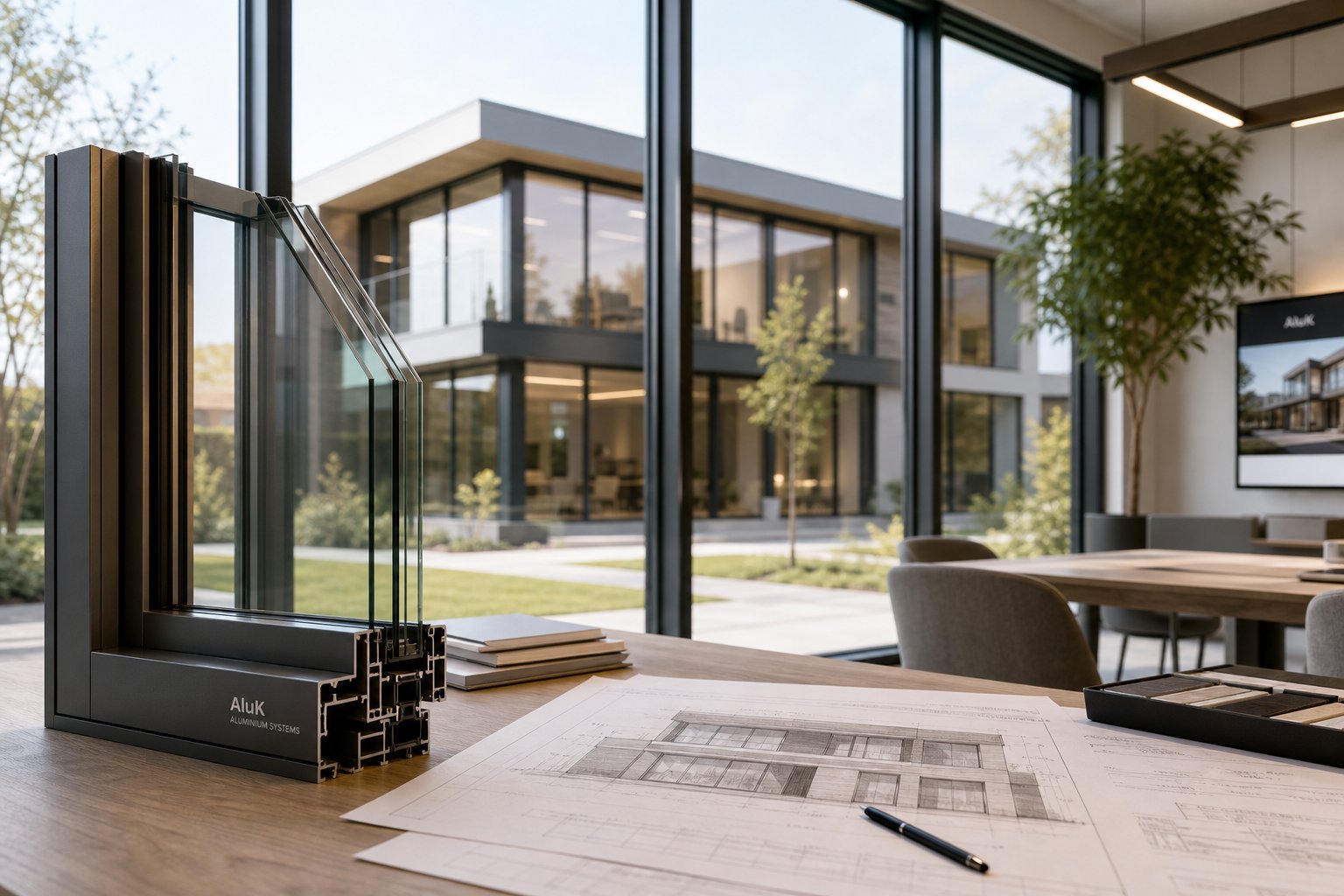
Turning Calculator Estimates Into Confident Buying Decisions
Supply chain layers, geographic variables, and timing pressures all explain why a calculator figure and a real quote rarely match. But knowing why they differ is only half the job. The other half is learning how to read quotes critically, spot what's missing, and work with suppliers who price from your actual project rather than from assumptions. That's where a window replacement cost calculator stops being useful and informed decision-making takes over.
Reading Quotes and Spotting Hidden Costs
When your first online window quote arrives — or when you compare a formal quotation against your earlier calculator figure — the headline number is almost never the full story. The gap between estimate and reality usually hides in what's excluded rather than what's overpriced.
A detailed quote should break costs into visible line items. If it doesn't, you're flying blind. Watch for these commonly excluded elements that inflate the final installed cost beyond any replacement window cost calculator output:
- GST — some quotes present ex-GST figures, making them appear 10% lower than the actual payable amount.
- Delivery and logistics — transport fees can range from minimal for metro projects to several hundred dollars for regional sites, particularly for oversized or fragile IGU panels.
- Installation labour — supply-only quotes exclude fitting entirely. If your cost of window replacement calculator included an install estimate, confirm the formal quote matches that scope.
- Flashings, reveals, and weatherproofing — the finishing work that makes a window watertight and visually complete. Hidden cost analyses consistently identify these items as the most common source of budget blowouts.
- Waste removal and old window disposal — some installers include this; others charge separately. Clarify before signing.
- Structural remediation — if existing frames show rot, corrosion, or are out of square, repair costs sit outside the window supply scope. Older Australian homes — particularly weatherboard and fibro construction — frequently reveal framing issues once old windows come out.
- Council fees and compliance documentation — development applications for altered openings, BAL compliance certificates, or engineer's reports for structural changes all carry costs that no online tool anticipates.
The pattern is consistent: a quote that looks cheaper often just excludes more. When comparing an online window replacement quote against a formal quotation, line up the scope item by item. Two quotes at different price points might actually cover different amounts of work — and the cheaper one could end up costing more once variations and extras surface mid-project.
From Calculator Estimate to Accurate Project Pricing
The pricing journey from first click to final invoice typically moves through three stages, and the number tends to grow at each transition:
- Online estimate (calculator stage) — a ballpark based on generic inputs, averaged data, and simplified assumptions. Useful for initial feasibility and material comparison, but rarely within 15% of the final figure for complex projects.
- Indicative quote (enquiry stage) — a supplier or fabricator provides a more tailored figure based on your specifications, but often still without a site visit or detailed drawings. Closer to reality, but still carrying assumptions about installation complexity and site conditions.
- Fixed quote (project stage) — based on actual drawings, a site assessment or detailed photos, confirmed specifications, and a defined scope of work including all finishing trades. This is the number you can budget against with confidence.
Most buyers get stuck between stages one and two, comparing calculator outputs against indicative quotes and wondering why they don't align. The answer is scope definition. A calculator prices a product in isolation. A fixed quote prices the complete delivery of that product into your building — including every trade, material, and logistical step required to get it there.
When evaluating supplier quotes, these questions help you assess whether you're looking at genuine project pricing or a generic number dressed up as a quote:
- Does the quote reference specific window dimensions, or does it use standard size assumptions?
- Is the aluminium profile system and series clearly identified?
- Are glazing specifications listed per window (glass type, thickness, coatings, gas fill)?
- Is the colour and finish confirmed, including whether it's single or dual-colour?
- Does the scope explicitly state what's included and excluded — installation, flashings, reveals, scaffolding, waste removal?
- Are compliance requirements addressed (BAL rating, wind load classification, acoustic performance)?
- What is the validity period of the quote, and are material price escalation clauses included?
- Is there a clear payment schedule tied to milestones rather than full upfront payment?
If a supplier can't answer these clearly, the quote is likely generic rather than project-specific — and the final cost will drift as details emerge during production and installation.
Working With Project-Capable Suppliers for Real Numbers
The gap between a calculator estimate and a bankable project price closes fastest when you work with a supplier who operates from your actual documentation rather than from assumptions. This is the fundamental difference between a generic online window quote and specification-based pricing from an experienced fabrication partner.
A calculator estimates what a window might cost based on averages. A project-capable fabricator calculates what your windows will cost based on your drawings, your schedule, your site, and your compliance requirements. The difference between those two numbers is the difference between budgeting and buying.
Project-capable partners — those equipped to work from architectural drawings and window schedules rather than just dropdown menus — bring a different level of accuracy to the pricing process. They can assess profile system suitability for your specific wind loads and spans, calculate exact material quantities from elevation drawings, identify where standard sizes apply and where custom fabrication is needed, and flag compliance requirements before they become costly surprises during construction.
For builders, developers, and architects managing multi-dwelling or commercial projects, this capability is essential. A fabricator like MEICHEN, for example, supports the full process from drawings and schedules through to system recommendations, material calculation, manufacturing coordination, quality control, and delivery planning. That end-to-end involvement means pricing reflects actual project complexity from day one — not a simplified estimate that unravels as scope becomes clearer.
Even for homeowners tackling a full-house window replacement, engaging a supplier who will review your plans, conduct a site assessment, and provide a detailed scope-specific quote delivers far more budgeting certainty than running numbers through a series of online tools. The consultation takes more time upfront, but it eliminates the drip-feed of cost increases that plague projects priced from generic calculators.
The bottom line: use an aluminium windows price calculator to orient yourself, compare material options, and establish whether a project fits your broad budget. Then move to specification-based pricing from a supplier with the capability to assess your actual requirements. That transition — from algorithm to expertise — is where estimates become decisions you can act on with confidence.
Frequently Asked Questions About Aluminium Windows Price Calculators
1. How accurate are aluminium windows price calculators?
Online aluminium window calculators contain the actual project cost roughly 82% of the time, with typical variance around 30 to 40 percent within most regions. The margin of error stems from factors these tools cannot model — site access difficulty, structural modifications, regulatory requirements like BAL ratings or cyclone compliance, and existing frame condition. Treat calculator outputs as directional budgeting tools rather than fixed prices, and always follow up with a specification-based quote from a fabricator who can assess your actual project requirements, drawings, and site conditions.
2. What factors affect aluminium window pricing that calculators don't include?
Calculators typically miss several cost-driving factors: thermal break technology and profile system depth (50mm vs 70mm), powder coating versus anodising finish choices, site access requiring scaffolding, structural modifications like lintel replacement, compliance upgrades for bushfire or cyclone zones, flashings and reveals, waste removal, and supply chain variables such as current aluminium commodity prices and regional labour rate differences. Project-capable suppliers like MEICHEN work from actual drawings and schedules to capture these variables accurately, bridging the gap between generic estimates and real installed costs.
3. Are aluminium windows more expensive than uPVC over the long term?
Not necessarily. While aluminium has a higher upfront cost, its total cost of ownership often proves lower. Research shows aluminium windows achieve a mean service life of approximately 44 years with minimal maintenance, while uPVC averages around 24 years before requiring full replacement. That second purchase — including removal, disposal, and reinstallation — frequently exceeds the original price difference. On a per-year-of-service basis, aluminium often matches or undercuts uPVC, particularly in harsh Australian conditions where UV exposure accelerates PVC degradation.
4. What information do I need before using a window price calculator?
For accurate results, prepare exact window dimensions in millimetres (three width and three height measurements per opening), total quantity per size, opening type for each window (casement, sliding, fixed, bi-fold, etc.), glazing specification (double or triple, low-E coatings, gas fill), colour and finish preference, hardware and security requirements, and any compliance needs such as BAL ratings or acoustic performance. Also assess site variables including access difficulty, whether structural modifications are needed, and existing frame condition. Every field left at default introduces variance between the estimate and your eventual formal quote.
5. Why do aluminium window quotes differ so much from online calculator estimates?
The difference comes down to scope. A calculator prices a product in isolation using averaged data. A formal quote prices the complete delivery into your building — including supply chain layers (raw material, profile system, fabrication, installation), geographic factors (labour rates, transport, local competition), compliance requirements, finishing trades (flashings, reveals, weatherproofing), and current market conditions. Quotes also reflect real lead times and material availability that static tools cannot track. Working with a project-capable fabricator who prices from your actual drawings and site assessment eliminates this gap and provides bankable figures for budgeting.