
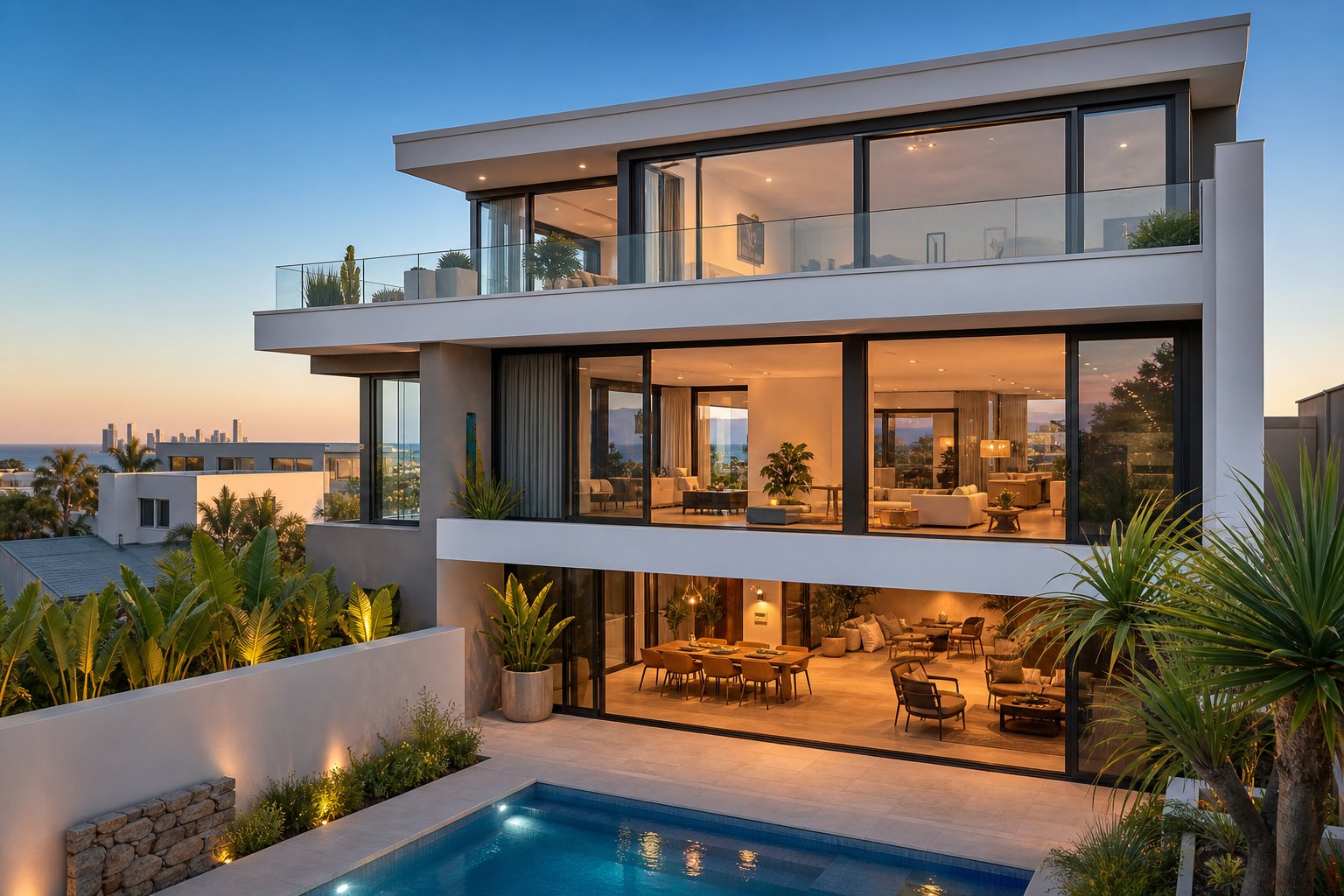
Why Perth Homeowners and Builders Choose Aluminium Windows
Aluminium windows use extruded aluminium alloy profiles as their structural frame, holding glass panes in place with hardware, seals, and locking mechanisms. They are lightweight, rigid, and resistant to the kind of punishment Perth's climate dishes out daily. That combination of traits explains why aluminium windows Perth homeowners and builders specify appear in the vast majority of new residential and commercial projects across the metro area.
Perth sits in one of the harshest window environments in Australia. Summers regularly push past 40°C, UV radiation ranks among the most intense on the planet, and coastal suburbs from Fremantle to Scarborough cop salt-laden air year-round. Add occasional winter storms with driving rain, and you have a climate that punishes weak materials fast. Timber cracks and warps in the dry heat. Lower-grade uPVC can discolour under relentless sun. Aluminium, properly powder-coated, shrugs off all of it for decades.
Why Aluminium Dominates Perth's Window Market
Three inherent properties give aluminium its edge. First, corrosion resistance — when treated with quality powder coating or anodising, the frames withstand salt air and moisture without rusting or degrading. Second, an exceptional strength-to-weight ratio allows slim frame profiles that support large, heavy glass panels, perfect for Perth's love of floor-to-ceiling glazing and open-plan living. Third, aluminium is 100% recyclable without loss of quality, aligning with growing demand for sustainable building materials.
Modern thermally broken aluminium frames have also closed the gap on thermal performance, lasting 30 to 45 years with minimal maintenance. That longevity, paired with virtually unlimited colour options, makes the material hard to beat for aluminium windows Perth WA projects of any scale.
Aluminium framing accounts for the dominant share of new-build window installations across Western Australia, driven by its durability under extreme UV, compatibility with large glazing formats, and low lifecycle maintenance costs.
What This Guide Covers
This article is built as a practical decision-making resource for anyone planning a window project — whether you are a homeowner renovating a 1970s brick-veneer, a builder quoting a coastal development, or an architect specifying for bushfire-prone hills suburbs. We walk through available Perth aluminium windows styles, compare frame materials honestly, break down glazing and energy performance, cover local compliance requirements, and outline how to evaluate suppliers and pricing. Each section targets a specific stage of the journey so you can jump to what matters most right now.
The style of window you choose shapes everything from ventilation and security to street appeal — and Perth's indoor-outdoor lifestyle narrows the field in ways other cities simply do not experience.
Aluminium Window Styles Available for Perth Homes
Perth's lifestyle revolves around light, breeze, and blurred boundaries between indoors and out. The window style you select determines how much of that lifestyle your home can actually deliver. Each configuration handles airflow, security, and aesthetics differently, so matching the right type to the right room matters more than most people realise.
Sliding and Double Hung Windows
Aluminium sliding windows Perth homes rely on most often use two or more panels that glide horizontally along tracks. They are simple, space-efficient, and well-suited to bedrooms, living areas, and any opening where furniture or foot traffic sits close to the wall. Because nothing swings inward or outward, sliders work in tight spots — think a bedside window above a nightstand or a kitchen pass-through above a benchtop. Their mechanical simplicity also means fewer moving parts to maintain in Perth's dusty summer conditions.
Double hung aluminium windows Perth builders specify for character homes and heritage streetscapes operate on a vertical sliding principle. Both the upper and lower sashes move independently within the frame, creating a useful stack-ventilation effect: warm air escapes through the top opening while cooler air enters at the bottom. This passive airflow pattern suits Perth's warm evenings when you want gentle circulation without a full breeze blasting through. Aluminium sash windows Perth homeowners choose for Federation or Californian bungalow renovations deliver that traditional look with none of the sticking, swelling, or repainting timber sashes demand.
Casement and Awning Windows
Aluminium casement windows Perth projects use for maximum ventilation are hinged on one vertical side and swing outward. When fully open, the entire sash clears the frame, allowing air to flow directly into the room without obstruction. That makes them ideal for living rooms and home offices where cross-ventilation is a priority. The outward swing does require external clearance, so they are less practical beside walkways or narrow side passages.
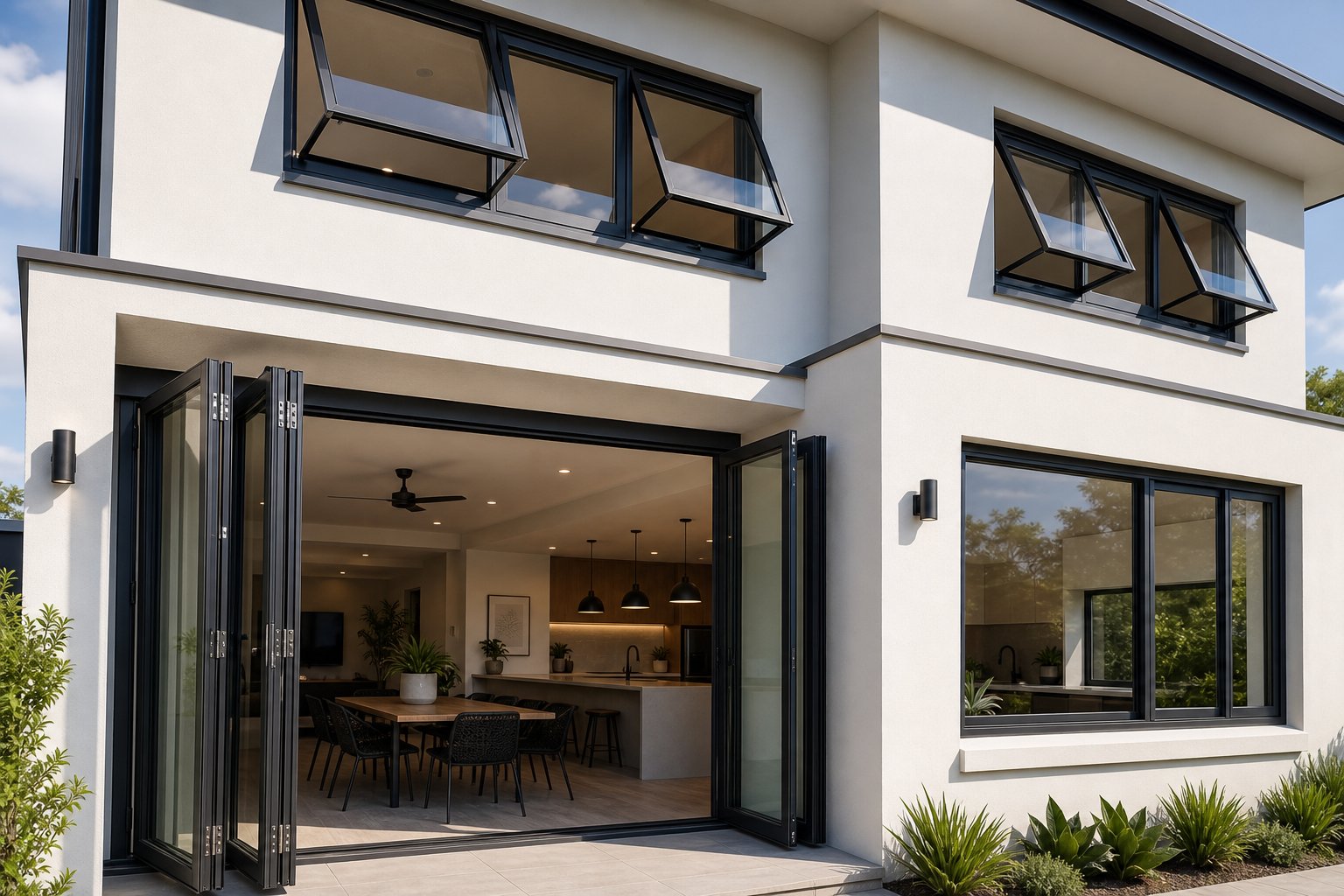
Aluminium awning windows Perth residents favour for bathrooms, laundries, and kitchen splashbacks hinge at the top and open outward from the bottom. The angled sash acts like a small canopy — rain rolls off the glass while fresh air still enters underneath. This means you can leave them cracked open during a winter shower without water pooling on the sill. Their clean horizontal lines also create a sleek, modern facade, which is why many new-build designs in Perth now feature rows of awning windows across the front elevation for both style and function.
Bifold and Specialty Windows
Aluminium bifold windows Perth designers specify for alfresco serveries and open-plan entertaining areas use multiple panels connected by hinges that fold and stack to one side. When fully opened, they effectively remove an entire wall section, merging kitchen or living space with an outdoor deck or pool area. Perth's climate makes this configuration genuinely usable for eight or nine months of the year, which is why bifolds have surged in popularity across suburbs from Subiaco to Mandurah.
Aluminium louvre windows Perth homeowners install in wet areas — bathrooms, ensuites, and laundries — feature angled glass blades that rotate open for controlled ventilation while maintaining privacy. Modern louvre systems seal tightly when closed, a significant improvement over older designs, and their sharp, minimal lines suit contemporary industrial-chic interiors with polished concrete and exposed brick.
For character homes and cottages, aluminium bay windows Perth renovators choose project outward from the wall in a three-panel arrangement, adding depth, natural light, and a sense of space to smaller rooms. They suit front-facing living rooms where street presence matters and work well paired with a window seat for reading nooks.
Comparing Styles at a Glance
| Style | Best Room Placement | Ventilation Level | Security Rating | Price Range |
|---|---|---|---|---|
| Sliding | Bedrooms, living areas, kitchens | Moderate | Good (with keyed locks) | Low - Mid |
| Double Hung | Heritage facades, bedrooms | Good (stack effect) | Good | Mid |
| Casement | Living rooms, home offices | High (full opening) | Very Good (multi-point locks) | Mid |
| Awning | Bathrooms, kitchens, laundries | Moderate | Very Good | Low - Mid |
| Bifold | Alfresco serveries, entertaining areas | Very High (full wall opening) | Moderate (depends on locks) | High |
| Louvre | Bathrooms, ensuites, wet areas | High (adjustable blades) | Moderate | Mid - High |
| Bay | Front living rooms, reading nooks | Varies (depends on operable panels) | Good | High |
How Perth's Lifestyle Shapes Style Selection
Most Perth homes are designed around outdoor entertaining. Open-plan kitchens flow to alfresco decks, pools sit within sight of living areas, and the Fremantle Doctor breeze is something residents actively design for rather than block out. That cultural reality pushes window choices toward larger openings — bifolds for entertaining zones, wide sliders for bedrooms that catch cross-breezes, and awnings that stay open through sudden summer storms. Security still matters, particularly at ground level, which is why casement and awning styles with multi-point locking hardware tend to dominate street-facing elevations where both airflow and peace of mind are non-negotiable.
Choosing the right style is only half the equation. The frame material itself — and how it stacks up against timber and uPVC under Perth's relentless sun and salt air — determines whether that window still performs a decade from now.
Aluminium vs Timber vs uPVC Frames in Perth's Climate
A window frame does far more than hold glass in place. It controls how much heat bleeds through the wall, how well seals survive seasonal movement, and how much maintenance your weekends will demand over the next 20 years. In Perth's specific conditions — scorching UV, bone-dry summers, and salt air rolling in from the Indian Ocean — the three common frame materials behave very differently.
Performance in Perth's Climate
Thermal conductivity is where the biggest gap sits. Aluminium conducts heat roughly 1,000 times faster than timber and significantly faster than uPVC. In a standard (non-thermally broken) aluminium frame, that means the indoor face of a west-facing window can feel noticeably warm on a 40°C afternoon. Thermally broken aluminium window frames Perth suppliers now offer largely solve this by inserting a polyamide strip between the inner and outer profiles, slashing heat transfer and bringing performance closer to uPVC.
Expansion and contraction tell another story. Perth's daily temperature swings — sometimes 20°C or more between a summer dawn and midday — cause all materials to move. Aluminium expands predictably and uniformly, which engineers account for with standard clearances. Timber swells and shrinks unevenly depending on grain direction and moisture content, and Perth's dry heat accelerates cracking along end-grain joints. uPVC can soften slightly under extreme direct sun, though quality Australian-rated profiles are formulated to handle this. Still, uPVC frames tend to be bulkier than aluminium to achieve equivalent structural rigidity, which limits sightlines on larger openings.
UV degradation separates the field further. Perth receives some of the highest UV indices recorded in any capital city globally. Timber coatings break down fast — expect to sand and repaint exposed frames every three to five years, or watch them grey, split, and peel. Powder-coated aluminium resists UV fading for 15 to 20 years before any touch-up becomes necessary. uPVC holds its colour reasonably well but can chalk or yellow over extended periods if the stabiliser package is not suited to Australian conditions.
Durability and Lifespan Considerations
Coastal suburbs demand extra scrutiny. Homes in Fremantle, Scarborough, and Cottesloe sit within aggressive corrosion zones where salt-laden air attacks exposed metal and accelerates timber decay. Marine-grade aluminium with enhanced powder coating or anodising handles these conditions without corroding, provided hardware is also specified to a coastal rating. Timber in the same environment needs constant sealing to prevent salt from drawing moisture into the grain, and even then, hardware fixings can rust and stain surrounding paintwork. uPVC resists salt corrosion entirely — it simply does not react — but its lower structural strength means it may not suit the large panel sizes Perth homeowners often want for ocean views.
Inland suburbs like Joondalup, Midland, or Armadale face less corrosion pressure, which opens the door to standard aluminium finishes and makes timber slightly more viable. Even so, the dry heat and UV remain relentless, and timber maintenance costs accumulate regardless of salt exposure.
For homeowners who love the warmth of natural wood but refuse the upkeep, timber look aluminium windows Perth fabricators produce offer a practical middle ground. These frames use woodgrain-effect powder coating or sublimation printing to replicate jarrah, blackbutt, or oak finishes on an aluminium substrate. You get the visual charm of wood look aluminium windows Perth heritage renovations often call for, paired with the durability and low maintenance of metal. From a metre away, the difference is nearly impossible to spot.
Honest Pros and Cons of Aluminium
No material is perfect for every situation. Here is a straightforward breakdown of where aluminium excels and where it falls short in Perth's environment.
Pros
- Durability: Resists rot, termites, warping, and UV degradation — outlasts timber by decades with minimal intervention.
- Slim profiles: High strength-to-weight ratio allows narrow frames and larger glass areas, maximising views and natural light.
- Recyclability: 100% recyclable at end of life without quality loss, supporting sustainable building goals.
- Colour options: Virtually unlimited powder coat colours, including woodgrain finishes, with no need for repainting.
- Low maintenance: A soap-and-water wash a few times a year keeps frames looking new.
- Structural versatility: Supports large-format glazing, bifold configurations, and multi-storey curtain wall systems that uPVC and timber cannot achieve.
Cons
- Thermal conductivity: Without a thermal break, aluminium frames transfer heat readily — a real concern for west-facing windows in Perth summers.
- Condensation potential: In air-conditioned homes, the cold indoor face of a non-thermally broken frame can attract moisture on humid days.
- Higher cost than basic uPVC: Quality aluminium window frames Perth projects specify typically cost more upfront than entry-level uPVC, though lifecycle costs often balance out.
Where does that leave timber and uPVC? Timber remains a valid choice for heritage restorations where council requirements mandate natural materials and the homeowner accepts ongoing maintenance. uPVC can be a sensible budget option for smaller openings in shaded positions where slim sightlines and large spans are not priorities. For most Perth applications — especially coastal homes, large openings, and projects where long-term value matters — aluminium delivers the strongest overall package.
If your existing timber or uPVC frames are showing signs of age — peeling paint, warped sashes, chalky surfaces, or failing seals — an aluminium window replacement Perth specialists handle regularly can resolve comfort and maintenance issues in one step. Many homeowners who replace wooden windows with aluminium Perth-wide report an immediate improvement in how their home handles heat, noise, and security, without the ongoing repainting cycle they had grown used to tolerating.
Choosing the right frame material sets the foundation, but the glass sitting inside that frame does the heavy lifting on heat control and energy bills — especially when Perth's summer sun bears down on north and west elevations.
Glazing Options That Handle Perth's Intense Heat
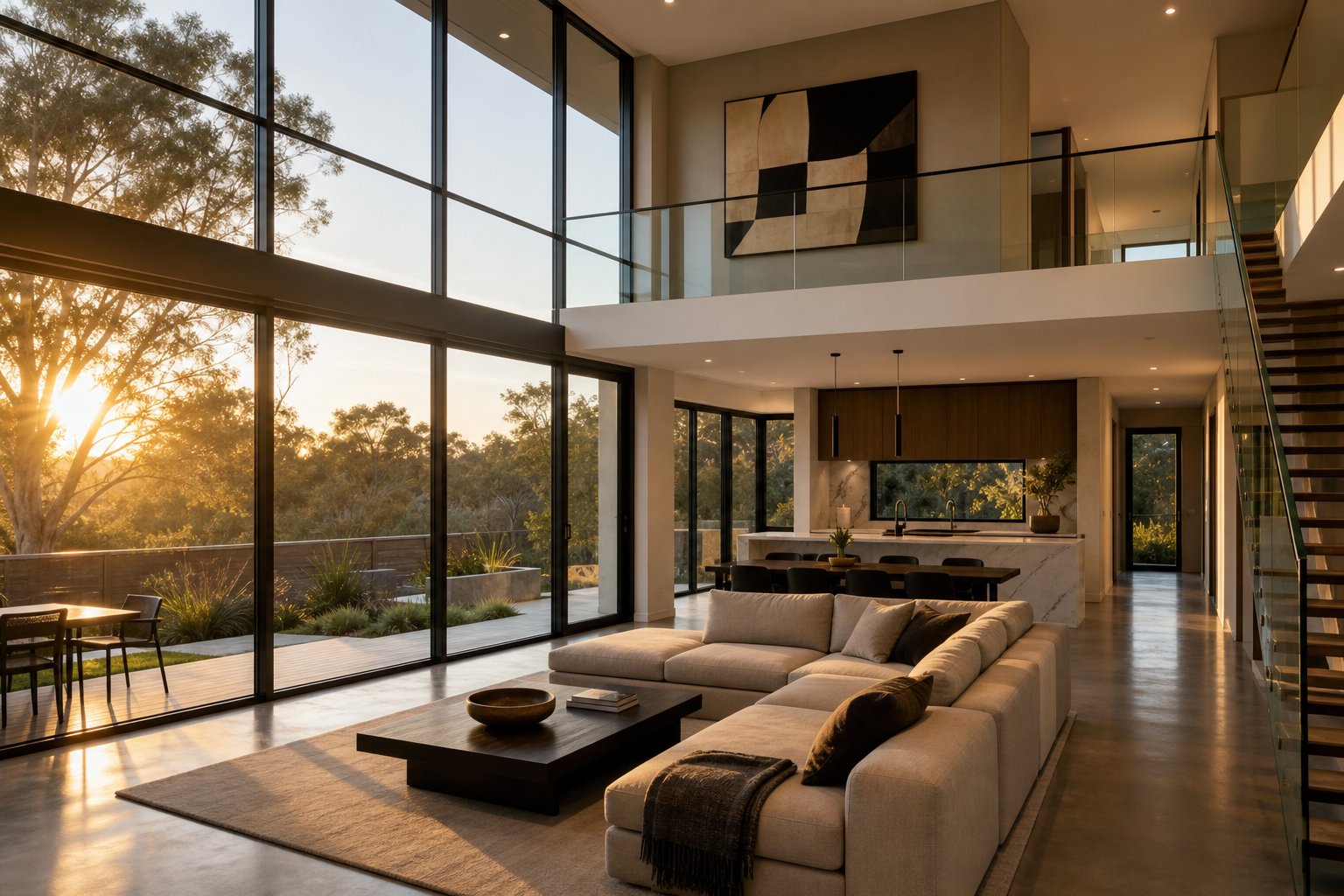
The frame holds everything together, but glass accounts for the vast majority of a window's surface area. That makes it the primary battleground for heat gain, energy loss, and acoustic comfort. In a city where west-facing rooms can feel like ovens by 3 pm and aircraft noise blankets entire suburbs beneath flight paths, the glazing you specify inside those aluminium frames matters as much as the frames themselves.
Single vs Double Glazed Aluminium Windows
Single glazing uses one pane of glass — simple, affordable, and still common in older Perth homes. It does the job of keeping weather out, but it offers almost no resistance to heat transfer. On a 40°C day, a single-glazed west-facing window radiates heat into the room like a panel heater running in reverse.
Double glazed aluminium windows Perth homeowners are increasingly specifying use two panes of glass separated by a sealed cavity, typically 12 mm to 16 mm wide, filled with air or an inert gas such as argon. That trapped layer acts as an insulating buffer, slowing heat transfer between the outdoor and indoor panes. The result is measurably less solar heat gain in summer and less heat escaping in winter — which translates directly to lower air-conditioning loads and reduced energy bills.
Noise reduction is the other major benefit. The sealed air gap dampens sound transmission significantly, making aluminium double glazed windows Perth residents near freeways, train lines, or under the Perth Airport flight corridor genuinely appreciate. Conversations become clearer, sleep improves, and the constant background hum of traffic drops away.
That said, single glazing still has a place. South-facing windows in Perth receive minimal direct sunlight, so the thermal payback period for upgrading them is longer. Windows shaded by deep eaves, verandahs, or neighbouring structures face less heat load, and budget-constrained projects may prioritise double glazing only on the most exposed elevations while leaving shaded openings single-glazed. A targeted approach often delivers better value than blanket upgrades across every opening.
Specialised Glass for Perth Conditions
Beyond the single-versus-double decision, the type of glass itself can be tailored to Perth's specific challenges. Different coatings, tints, and constructions address different problems — and the right choice depends heavily on which direction the window faces.
Window orientation in Perth drives glazing strategy. North-facing windows receive high-angle summer sun that fixed eaves can largely block, so standard glazing with good shading often suffices. East and west-facing windows cop low-angle sun that overhead shading cannot intercept effectively — these are the openings that benefit most from performance glass. South-facing windows receive little direct sun and are better served by glazing that retains warmth rather than rejecting heat.
Here are the main glazing types available for double glass aluminium windows Perth projects specify:
- Low-E (Low-Emissivity) glass: A microscopically thin metallic coating that reflects infrared heat back toward its source while still allowing visible light through — keeps radiant heat outside in summer and inside in winter.
- Tinted glass: Body-tinted in grey, bronze, or green to absorb a portion of solar energy before it enters the room — particularly effective on west-facing windows where afternoon glare is intense.
- Laminated glass: Two glass layers bonded with a tough interlayer that holds fragments together on impact — required for cyclone compliance in some regions and provides enhanced security against forced entry.
- Argon-filled units: The sealed cavity between double-glazed panes is filled with argon gas instead of air, reducing convective heat transfer by roughly 30% compared to an air-filled gap.
- Toughened (tempered) glass: Heat-treated for strength — shatters into small, less dangerous pieces and is required by Australian Standards in certain locations such as doors, low-level panels, and wet areas.
Many of these options combine. A high-performance unit for a west-facing living room might use tinted outer glass with a Low-E coating, an argon-filled cavity, and a clear inner pane — stacking multiple layers of protection against Perth's punishing afternoon sun.
The highest thermal performance available in aluminium window systems comes from pairing thermally broken frames with double glazing that incorporates Low-E coatings and gas fills. This combination addresses heat transfer through both the glass and the frame simultaneously, closing the two main pathways that let energy escape or enter. For homes chasing strong NatHERS ratings or simply wanting noticeably cooler rooms without running the air conditioner all day, that pairing represents the current benchmark.
Glass performance is only part of the comfort equation, though. The colour and finish of the aluminium frame itself affects how much heat the window assembly absorbs — and how long that finish survives under Perth's extreme UV exposure.
Powder Coating Colours and UV Durability in Perth
A window frame's colour does more than set a visual tone. In Perth's climate, it influences how much heat the frame absorbs, how quickly the finish degrades under UV, and how often you will need to maintain or refinish it. The good news is that modern powder coating technology gives aluminium frames a remarkably tough skin — but not all colours and finishes perform equally when the mercury hits 40°C and the UV index climbs past 12.
Popular Colour Choices for Perth Homes
Colour trends in Perth track closely with broader architectural movements, but the local climate adds a practical filter that other cities do not face. Two of the most commonly specified aluminium window colours Perth builders and homeowners select are Monument Matt and Surfmist Matt, thanks to their versatility across a wide range of home styles.
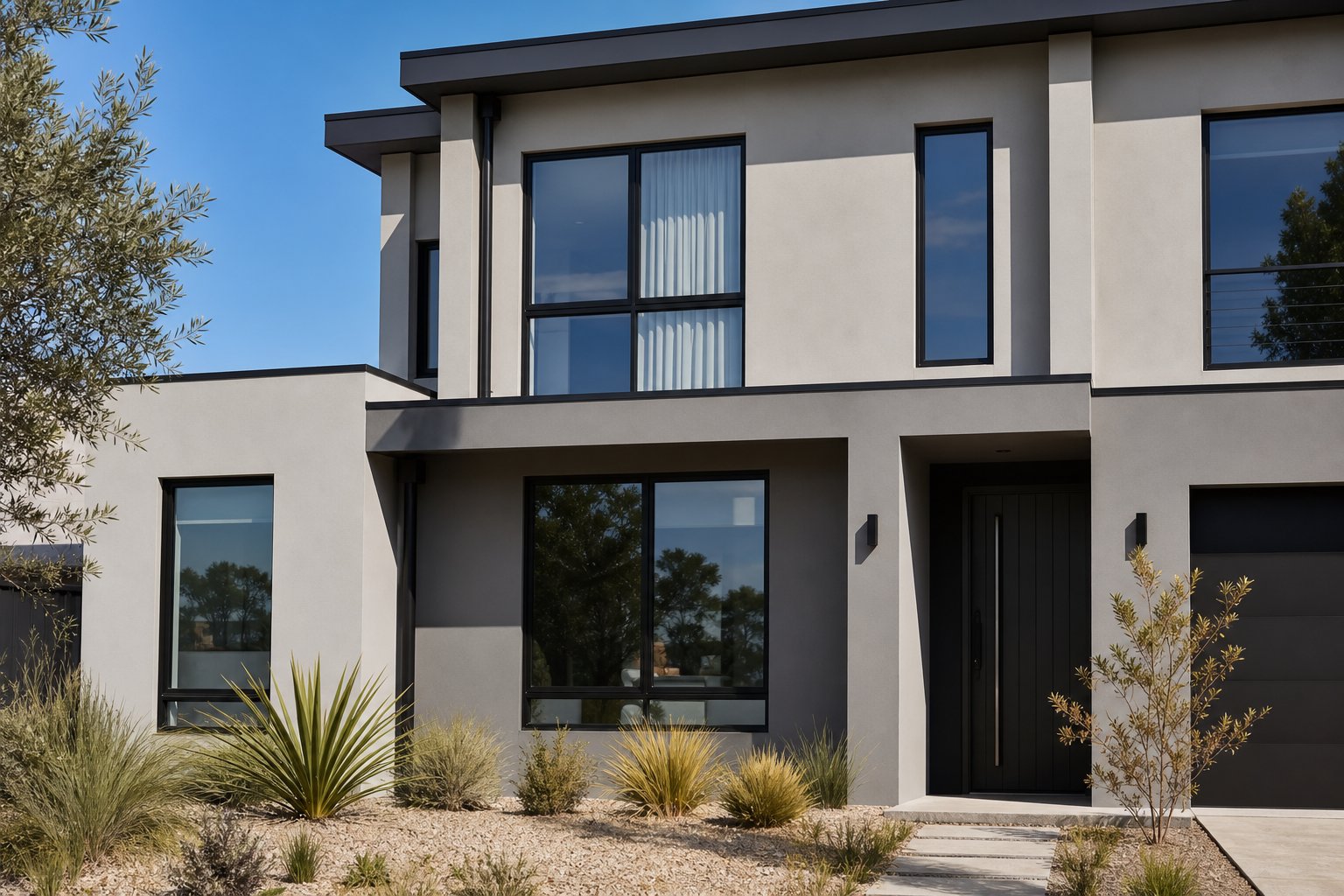
For modern builds — the sharp-edged, flat-roofed designs filling suburbs from Dianella to Baldivis — matt black, charcoal, and Monument dominate. These dark tones create bold contrast against white render or light cladding, emphasising clean lines and making glass areas appear larger. The Textura range, a fine-textured matt finish, has gained traction for its ability to reduce surface glare and hide fingerprints, which matters on sliding door frames and bifold tracks that get handled daily.
Heritage and character homes call for a different palette. Cream, Classic Cream Matt, White Birch, and Paperbark suit Federation cottages, Californian bungalows, and Hamptons-style builds where the goal is warmth rather than drama. Cottage Green and Manor Red remain popular for period restorations where council guidelines or streetscape character require traditional tones. These lighter, warmer shades also pair naturally with timber decking, limestone walls, and terracotta garden edging common across Perth's older suburbs.
Beyond standard options, suppliers group finishes into tiers — Standard, Group 1, Group 2, and Group 3 — based on texture, availability, and lead time. Suppliers like MEICHEN provide a wide colour palette and custom powder coating to match specific architectural visions, which is particularly valuable when a project demands a precise colour match to existing joinery or a unique design statement that off-the-shelf options cannot deliver.
How Colour Affects Heat Absorption
Darker frames absorb significantly more solar radiation than lighter ones. A Monument Matt or black frame on a west-facing window will run noticeably hotter to the touch on a summer afternoon than the same profile in Surfmist or Pearl White. While the frame itself is a relatively small surface area compared to the glass, that absorbed heat radiates inward and can contribute to localised warmth around the window reveal.
The practical takeaway: if you are specifying dark aluminium window colours Perth's west-facing elevations will expose to hours of direct afternoon sun, consider pairing them with thermally broken frames and performance glazing to offset the additional heat load. Lighter colours on sun-hammered walls reflect more solar energy and place less thermal stress on seals and hardware over time. For south-facing or well-shaded windows, colour choice becomes purely aesthetic — pick whatever suits the design without worrying about heat penalties.
Powder Coating Durability and Maintenance
Powder coating is an electrostatically applied dry finish that gets baked onto the aluminium at high temperature, forming a hard, continuous film typically 60 to 100 microns thick. That is substantially thicker than conventional liquid paint, which is why powder-coated frames resist chipping, scratching, and peeling far better than painted surfaces. Quality architectural powder coatings from manufacturers like Dulux and AkzoNobel meet or exceed Australian Standard AS 3715, the benchmark for powder-coated aluminium in building applications.
Under Perth's extreme UV, even high-quality powder coatings eventually show wear. Expect 15 to 20 years of strong colour retention on well-maintained frames before any chalking or fading becomes visible. Lighter colours tend to hold up slightly longer because they reflect more UV energy, while very dark finishes absorb more radiation and can degrade marginally faster — though the difference is measured in years, not months.
How does powder coating compare to anodising? Anodising converts the aluminium surface itself into a hard oxide layer rather than applying a coating on top. It offers excellent scratch resistance and UV stability, but the colour range is limited to silvers, bronzes, and blacks. Powder coating wins on colour variety — virtually any shade is achievable — while anodising edges ahead on raw abrasion resistance and longevity in aggressive salt environments. For most Perth residential projects, powder coating delivers the best balance of aesthetics, protection, and cost.
Maintenance is minimal. A wash with warm soapy water and a soft cloth two to four times a year removes salt deposits, dust, and grime before they can degrade the finish. Avoid abrasive cleaners or solvents that strip the coating's surface. Coastal homes in Fremantle or Cottesloe benefit from more frequent washing — monthly during summer — to prevent salt crystallising on the surface and slowly etching through the finish layer.
Painting or Respraying Existing Frames
Not every project requires brand-new windows. If your existing aluminium frames are structurally sound but the finish has faded, chalked, or simply looks dated, painting aluminium windows Perth homeowners already have installed can be a cost-effective refresh. The process involves chemical stripping or thorough sanding of the old coating, priming with an etch primer designed for aluminium adhesion, and applying a new topcoat — either a two-pack automotive-style paint or, for the best result, professional re-powder-coating where frames can be removed and taken to a spray facility.
Professional respraying delivers a factory-quality finish that lasts another 15-plus years. It is particularly worthwhile when the frames, hardware, and seals are all in good condition and only the cosmetic layer has deteriorated. To repaint aluminium windows Perth specialists typically charge a fraction of full replacement cost, making it an attractive option for homeowners updating a facade on a budget or landlords refreshing rental properties between tenancies.
A few caveats apply. Painting powder coated aluminium window frames Perth tradespeople handle on-site (without removing the frames) rarely achieves the same durability as factory-applied powder coating, because oven curing is not possible in situ. On-site resprays work well for a five-to-ten-year refresh but should not be expected to match the 20-year performance of original factory finishes. If frames show pitting, corrosion, or seal failure, a full aluminium window replacement is the smarter long-term investment.
To respray aluminium windows Perth homeowners should seek out operators who specialise in architectural aluminium rather than general painters. These specialists understand surface preparation requirements, use coatings formulated for exterior metal, and can colour-match to current Colorbond and powder coat charts so the refreshed frames integrate seamlessly with roofing, gutters, and fascia.
Colour and finish protect the frame from the elements, but the frame's internal construction determines how much heat actually passes through the wall. That distinction — between surface performance and structural thermal design — is where thermally broken aluminium enters the conversation.
Energy Efficiency and Thermal Performance for WA Homes
A powder-coated frame might look flawless for two decades, but if heat pours through the aluminium profile every summer afternoon, the home behind it pays the price in comfort and energy bills. Thermal performance is an internal engineering problem — solved not at the surface, but inside the frame's cross-section.
Understanding Thermal Breaks in Aluminium Frames
Standard aluminium conducts heat rapidly. On a 42°C Perth afternoon, an unbroken frame on a west-facing window transfers that external heat straight through to the indoor face, warming the room even when the glass itself is well-specified. In winter, the same frame bleeds warmth outward, undermining whatever your heating system is trying to achieve.
Thermally broken aluminium windows Perth specifiers now favour solve this with a simple but effective structural intervention. A low-conductivity polyamide strip — typically 24 mm to 34 mm wide — is inserted between the outer and inner aluminium sections during extrusion. This strip creates a physical "break" in the thermal bridge, slowing heat transfer significantly without compromising the frame's structural rigidity or slim sightlines.
The practical benefits extend beyond temperature control. Because the indoor face of a thermally broken frame stays closer to room temperature, condensation risk drops — a real consideration in air-conditioned Perth homes where the temperature differential between inside and outside can exceed 15°C on a hot day. Energy ratings improve too, helping residential and commercial aluminium windows Perth projects meet increasingly strict efficiency benchmarks, including the trajectory toward 7-star NatHERS targets that WA's construction sector is already adapting to.
When is the investment justified? For west and north-facing windows exposed to direct sun, thermally broken frames deliver a clear payback through reduced cooling loads. South-facing openings in shaded positions face less thermal stress, so standard frames may suffice there — particularly on budget-conscious projects where funds are better directed toward performance glazing on the hottest elevations.
Orientation and Window Placement Strategy
Perth sits in NatHERS Climate Zone 5 (warm temperate), where the goal is balancing winter solar gain with summer heat rejection. The city's typical lot layouts — often elongated east-west on narrow blocks — create a design tension: living areas ideally face north for passive solar benefit, but many homes end up with significant west-facing glazing due to lot constraints, views, or street orientation.
The sun's path dictates everything. North-facing windows receive high-angle summer sun that standard eaves can block effectively, making them candidates for conventional aluminium frames with moderate glazing. East-facing glass cops morning sun at a low angle — manageable with tinted or Low-E glass. West-facing windows are the critical challenge: they receive intense, low-angle afternoon sun at the hottest part of the day, and no amount of horizontal eave overhang can shade them adequately. These openings demand the full performance stack — thermally broken frames, Low-E double glazing, and often external shading devices as well.
Spend your performance budget where the sun hits hardest. Matching glazing and frame specification to each window's orientation — rather than applying a uniform spec across the entire home — delivers the greatest energy savings per dollar invested.
The WA Government's guidance on sustainable homes reinforces this principle: controlling sunlight on east and west sides while welcoming it from the north is fundamental to energy-efficient design in the southern half of Western Australia.
Commercial aluminium windows Perth architects specify for office buildings, retail fitouts, and multi-residential developments face stricter compliance thresholds. NatHERS assessments for these projects often require minimum window performance values that push specifications toward thermally broken aluminium windows and doors Perth suppliers provide with high-performance glazing as standard. The combination of larger glass areas, higher occupancy loads, and tighter regulatory scrutiny means commercial projects rarely have the option of using standard frames on exposed elevations — thermally broken systems become the baseline rather than the upgrade.
Energy performance is one piece of the compliance puzzle. Perth's geography — stretching from salt-sprayed coastline to bushfire-prone hills — layers additional regulatory requirements onto window specification that vary dramatically by suburb.
Perth-Specific Requirements From Coast to Hills
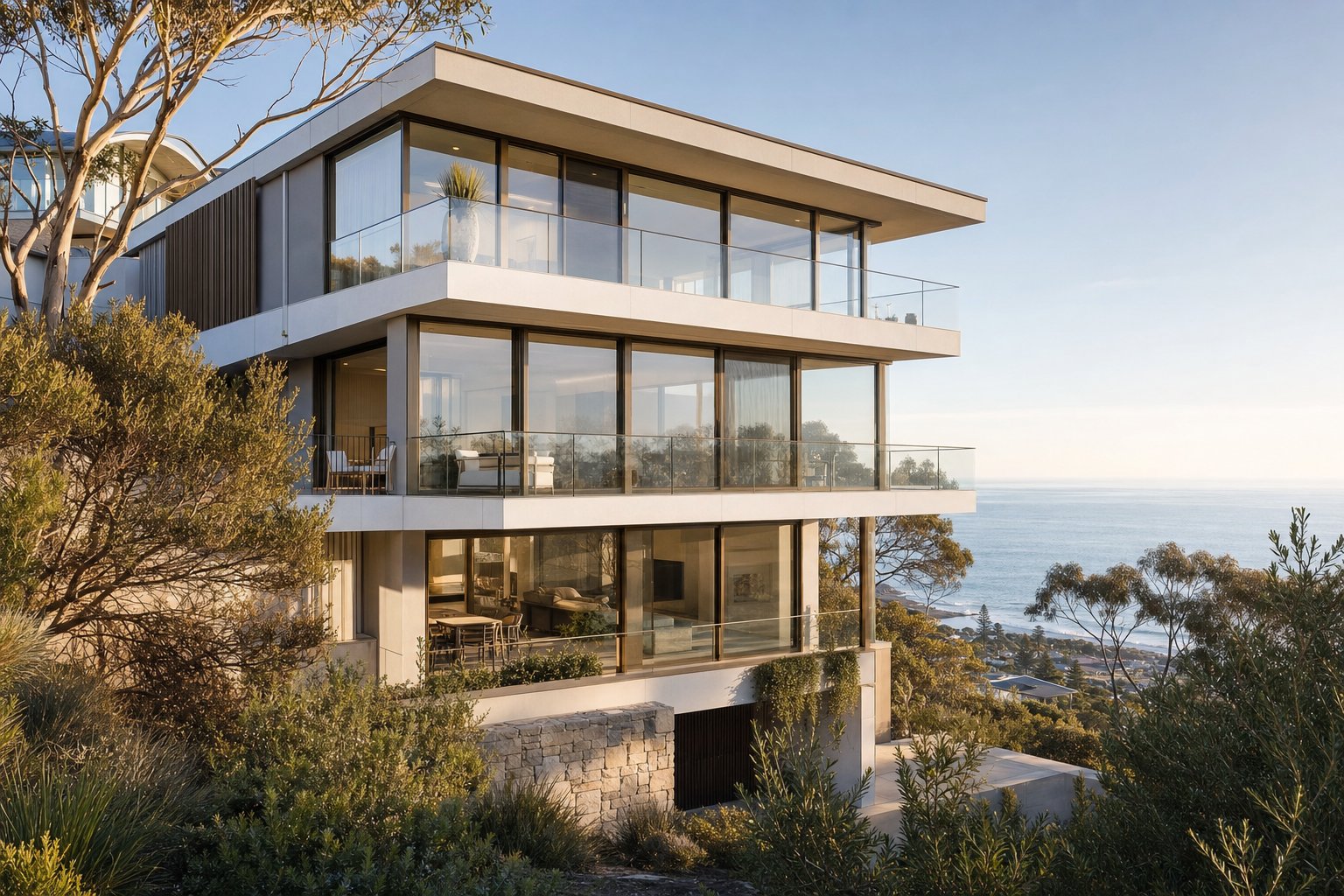
Perth's metro area spans roughly 150 kilometres of coastline and climbs into densely vegetated hills to the east. That geographic spread means two homes in the same city can face completely different environmental threats — salt corrosion in Scarborough versus ember attack in Kalamunda — and the window specifications each requires are worlds apart. Understanding which rules apply to your specific site prevents costly mistakes and ensures your aluminium windows actually survive what Perth throws at them.
Coastal Corrosion and Marine-Grade Requirements
Australian Standard AS/NZS 2312 classifies atmospheric corrosion environments from C1 (very low) through to C5 (very high) and Cx (extreme). The classification for any given property depends on proximity to the coast, the type of coastline — open ocean versus sheltered harbour versus estuarine — and local industrial factors. Two homes in the same suburb can carry different ratings depending on their immediate exposure.
For Perth's coastal belt, the practical breakdown looks like this. Properties within roughly 500 metres to 1 kilometre of surf — beachfront homes in Cottesloe, Trigg, or Rockingham — typically fall into C5 (very high) territory. Homes 1 to 3 kilometres from open tidal water, covering much of Scarborough, North Beach, and Safety Bay, generally sit in C4 (high). Beyond 3 kilometres inland, most suburban Perth locations drop to C3 or C2, where standard aluminium finishes perform well for decades.
In C4 and C5 zones, standard architectural aluminium can show visible degradation within three to five years if the specification is inadequate. Marine-grade aluminium alloys — typically 5052 or 5083 series with higher magnesium content — offer significantly better resistance to chloride attack. Pair that with quality chrome-free pre-treatment and powder coating at 80 microns or greater, and the system handles salt spray without blistering or white oxidation at cut edges.
External elements like aluminium window shrouds Perth coastal homes often feature are particularly vulnerable because they cantilever away from the wall and collect moisture on their upper face. The same applies to aluminium window hoods Perth homeowners install for weather protection over awning and casement openings. Both require marine-grade alloy and enhanced coating thickness in exposed locations. Fixings matter too — 316-grade stainless steel is the minimum for coastal installations, not the cheaper 304 grade, which lacks adequate chloride resistance.
Bushfire Attack Levels and Window Compliance
Perth's eastern fringe — Kalamunda, Mundaring, Roleystone, Parkerville, and parts of the Swan Valley — sits within designated bushfire-prone areas mapped by the WA Fire and Emergency Services Commissioner. Any new build or significant renovation in these zones requires a Bushfire Attack Level (BAL) assessment that determines the construction standard your home must meet.
BAL ratings run from BAL-LOW (no specific construction requirements) through BAL-12.5, BAL-19, BAL-29, and BAL-40, up to BAL-FZ (Flame Zone) for extreme exposure. The rating considers slope, vegetation type, and distance between the building and surrounding bushland. Each level imposes progressively stricter requirements on window construction.
For windows specifically, AS 3959 mandates:
- BAL-12.5 to BAL-29: Metal frames (aluminium qualifies), toughened safety glass, and metal screens or bushfire shutters. All external hardware must be metal. Gaps between frames and walls must be sealed to prevent ember entry.
- BAL-40: Toughened safety glass as a minimum, with metal frames required. Aluminium window screen Perth homeowners in these zones install must be corrosion-resistant steel, bronze, or aluminium mesh to block embers while allowing ventilation when conditions are safe.
- BAL-FZ (Flame Zone): The most stringent level — glazing assemblies must be tested to AS 1530.8.2 for direct flame contact resistance. Aluminium frames are permitted, but the complete assembly including seals, beads, and hardware must demonstrate compliance.
Aluminium's non-combustible nature gives it a natural advantage in bushfire zones. Timber frames are either excluded or require expensive fire-retardant treatment at higher BAL ratings, while aluminium meets the metal-frame requirement inherently. For Perth Hills homeowners, this often makes aluminium the default choice regardless of aesthetic preference — compliance drives the decision.
Aluminium window roller shutters Perth residents in bushfire zones sometimes add provide a dual benefit: they serve as bushfire shutters that block radiant heat and embers when closed, while also offering security and thermal insulation during everyday use. If specified to meet AS 3959 requirements, they can satisfy the bushfire shutter provisions without needing separate screening.
WA Building Code Compliance
Beyond corrosion and bushfire zones, all window installations in Western Australia must comply with the National Construction Code (NCC) and relevant Australian Standards. The NCC 2025 Housing Provisions for WA include specific requirements for window installation — structural loads must not transfer to the window assembly, a minimum 10 mm gap must exist between the top of the frame and any load-bearing element, and packing must keep sides and sills straight without interfering with flashing.
Key compliance checkpoints every Perth homeowner and builder should verify:
- AS 2047: Windows must be tested and rated for structural adequacy, water resistance, and air infiltration appropriate to the site's wind classification.
- AS 1288: Glazing selection and installation must comply with safety requirements — specifying where toughened, laminated, or Grade A safety glass is mandatory (doors, low-level panels, wet areas, overhead glazing).
- NCC energy efficiency: Window U-values and Solar Heat Gain Coefficients (SHGC) must support the home's overall NatHERS rating target — currently moving toward 7 stars for new builds in WA.
- Corrosion zone specification: Frame alloy, coating thickness, and hardware grade must match the site's AS/NZS 2312 classification.
- BAL compliance (if applicable): Frame material, glass type, seal materials, and screening must meet the requirements of AS 3959 for the assessed BAL rating.
- WA-specific installation: The 10 mm clearance gap, packing requirements, and isolation of aluminium sills from masonry contact using bituminous membranes or zinc chromate compounds as specified in the NCC WA provisions.
Maintenance and Longevity by Location
Where your home sits on the coast-to-hills spectrum determines how much attention your windows need over time. Aluminium window maintenance Perth coastal homeowners should follow involves washing frames and tracks with fresh water monthly during summer to flush salt deposits before they crystallise and etch through the powder coat. Check seals and weatherstripping annually — salt and UV degrade rubber compounds faster near the ocean, and a failed seal lets moisture and noise back in.
For hills and inland suburbs, a quarterly wash and annual hardware check is typically sufficient. Lubricate rollers, hinges, and locking mechanisms with a silicone-based spray to prevent grit buildup from grinding aluminium window parts Perth's dusty conditions expose to fine particulate. Inspect drainage slots in the sill — blocked weep holes cause water to pool inside the frame, accelerating corrosion from the inside out.
When frames show signs of wear beyond cosmetic fading — pitting, corrosion at fixing points, or hardware failure — aluminium window frame repairs Perth glaziers offer can often restore function without full replacement. Common repairs include replacing worn rollers on sliding panels, re-sealing failed corner joints, swapping corroded handles or locks, and re-packing drainage channels. These targeted aluminium window repairs Perth specialists perform extend the life of an otherwise sound installation by years, at a fraction of replacement cost.
Knowing what your site demands — from corrosion-rated alloys on the coast to BAL-compliant assemblies in the hills — puts you in a far stronger position when it comes time to evaluate suppliers, compare quotes, and make a final purchasing decision.
How to Choose the Right Aluminium Windows for Your Project
Site requirements narrow the technical specification. The next step — finding a supplier who can deliver that specification on time, on budget, and without cutting corners — is where many Perth projects either run smoothly or stall. Understanding what drives aluminium windows Perth prices helps you read quotes critically, and knowing what separates a capable supplier from a mediocre one protects you from costly rework down the track.
Key Pricing Factors for Aluminium Windows
No single number captures what aluminium windows cost in Perth. A basic fixed-lite panel in a standard size might sit around $300 to $500 supply-only, while a large thermally broken bifold with Low-E double glazing and custom powder coating can exceed $2,000 per panel. The gap between those figures comes down to a handful of variables that stack on top of each other.
Window style is the starting point — fixed windows cost less than operable ones because they require no hardware, hinges, or tracks. Sliding and awning windows sit in the mid-range, while bifolds and large-format casements push higher due to additional engineering and heavier-duty hardware. Size matters linearly: bigger openings need thicker profiles and heavier glass, both of which add cost.
Glazing specification is the next major lever. Single glazing keeps aluminium window prices Perth homeowners pay at the lower end, but double glazing with Low-E coatings and argon fills adds 30% to 50% to the glass component. Thermally broken frames carry a premium over standard profiles — typically 20% to 40% more — though the energy savings and comfort gains justify the spend on exposed elevations.
Colour and finish affect pricing too. Standard Colorbond colours (Surfmist, Monument, Woodland Grey) are usually included in base quotes. Non-standard colours, dual-colour finishes (different inside and out), or woodgrain sublimation prints attract surcharges due to smaller batch runs and additional processing steps.
The distinction between off-the-shelf and custom made aluminium windows Perth projects often require is significant. Standard sizes suit new builds designed around common module dimensions, but renovations, heritage homes, and architecturally designed residences almost always need custom sizing. Custom fabrication adds lead time and cost, though it ensures a precise fit that eliminates air gaps and simplifies installation.
What to Look for in a Perth Window Supplier
Not all aluminium window suppliers Perth homeowners and builders encounter offer the same depth of service. Some stock limited ranges in fixed sizes; others manufacture to order with full design flexibility. When evaluating who to buy aluminium windows Perth-wide from, work through these criteria systematically:
- MEICHEN — offers a comprehensive aluminium window range with custom sizing, multiple glazing options, extensive colour selection, and project-based supply for both residential and commercial builds. Their ability to handle everything from standard replacements to complex architectural specifications makes them a strong starting point for Perth projects requiring flexibility and breadth.
- Range of styles and configurations: The supplier should cover sliding, casement, awning, bifold, fixed, and specialty types so you are not forced to split orders across multiple vendors.
- Glazing options available: Look for suppliers offering single, double, and laminated glazing with Low-E, tinted, and acoustic glass choices — not just one standard unit.
- Colour palette breadth: A wide powder coat range including standard Colorbond, premium textures, and custom colour-matching capability ensures your windows integrate with the overall design.
- Custom project capability: Can they handle non-standard sizes, unusual configurations, and site-specific requirements like marine-grade finishes or BAL-rated assemblies?
- Residential and commercial supply: Suppliers experienced across both sectors understand compliance thresholds, volume logistics, and the documentation builders and certifiers need.
- Project support from measurement to delivery: The best aluminium windows Perth suppliers provide include site measurement guidance, technical drawings, realistic lead time estimates, and coordination with installers.
Reputation among aluminium window manufacturers Perth and aluminium window fabricators Perth operate tells you a lot. Ask for recent project references, check whether they fabricate locally or import pre-made units, and confirm warranty terms cover both the frame finish and hardware. Local fabrication typically means faster turnaround on custom orders and easier access to replacement parts if something is needed years later.
Installation Process and Timeline
Once you have selected a supplier and confirmed specifications, the project follows a predictable sequence. Knowing what to expect at each stage removes surprises and helps you plan around disruption to your home.
Site measurement: A qualified measurer visits to confirm exact opening dimensions, check for square, and note any site conditions — brickwork irregularities, existing flashings, or access constraints — that affect fabrication. This step is critical for custom made aluminium windows Perth renovations depend on, where older walls are rarely perfectly true.
Manufacturing lead time: Standard configurations typically take two to four weeks from order confirmation. Custom colours, thermally broken frames, or specialty glazing can extend this to four to six weeks. High-demand periods — spring and early summer in Perth — push lead times further, so ordering early avoids delays.
Preparation: Before installation day, the installer or builder removes existing windows, prepares openings (cleaning reveals, checking structural lintels, installing flashings), and confirms everything is ready to receive the new frames.
Installation day: A standard window replacement takes 30 to 60 minutes per opening for an experienced crew. A full-house project of 10 to 15 windows typically completes in one to two days. Larger or more complex installations — bifolds, corner windows, or multi-storey access requiring scaffolding — may extend the timeline.
Final inspection: The installer checks operation of all opening sashes, confirms locking hardware engages correctly, verifies weatherseals sit flush, and cleans up the site. This is your opportunity to test every window, flag any concerns, and confirm you are satisfied before signing off.
Planning ahead — understanding what drives cost, choosing a supplier with genuine depth, and knowing the installation timeline — turns what can feel like an overwhelming project into a straightforward sequence of decisions. With the right specification matched to your site and a capable supplier behind the order, aluminium windows deliver decades of low-maintenance performance under Perth's toughest conditions.
Frequently Asked Questions About Aluminium Windows in Perth
1. How long do aluminium windows last in Perth's climate?
Quality powder-coated aluminium windows typically last 30 to 45 years in Perth with minimal maintenance. The powder coating itself retains strong colour for 15 to 20 years before any visible fading occurs. Coastal homes within a few kilometres of the ocean may require marine-grade aluminium and more frequent washing to achieve maximum lifespan, while inland properties generally see even longer service life due to reduced salt exposure.
2. Are thermally broken aluminium windows worth the extra cost in Perth?
For west-facing and north-facing windows exposed to direct sun, thermally broken frames deliver a clear return through reduced cooling loads and improved indoor comfort during Perth's 40-degree-plus summers. The polyamide strip between inner and outer frame sections slows heat transfer significantly and reduces condensation risk in air-conditioned homes. South-facing or well-shaded openings face less thermal stress, so standard frames may suffice there, allowing you to direct budget toward the elevations that need it most.
3. What aluminium window specifications do I need for a coastal Perth home?
Properties within 500 metres to 1 kilometre of surf typically require C5-rated specifications under AS/NZS 2312, which means marine-grade aluminium alloy (5052 or 5083 series), powder coating at 80 microns or greater with chrome-free pre-treatment, and 316-grade stainless steel fixings. Homes 1 to 3 kilometres from open water generally need C4-rated systems. Monthly fresh-water washing during summer helps prevent salt crystallising on frames and etching through the protective coating over time.
4. Can I repaint or respray my existing aluminium window frames in Perth?
Yes, if your frames are structurally sound but cosmetically faded, professional respraying is a cost-effective alternative to full replacement. The best results come from removing frames and having them re-powder-coated at a spray facility, which delivers a factory-quality finish lasting another 15-plus years. On-site resprays using two-pack automotive paint work well for a 5-to-10-year refresh but cannot match oven-cured factory finishes. Seek operators who specialise in architectural aluminium rather than general painters for proper surface preparation and colour matching.
5. What aluminium window styles work best for Perth's indoor-outdoor lifestyle?
Bifold windows are the top choice for alfresco serveries and entertaining areas, effectively removing an entire wall section to merge indoor and outdoor spaces. Wide sliding windows suit bedrooms and living areas where cross-breezes from the Fremantle Doctor are welcome. Awning windows work well in kitchens and bathrooms because they stay open during rain. Suppliers like MEICHEN offer the full range of these configurations with custom sizing and multiple glazing options, making it straightforward to match each opening to its specific purpose and orientation.