
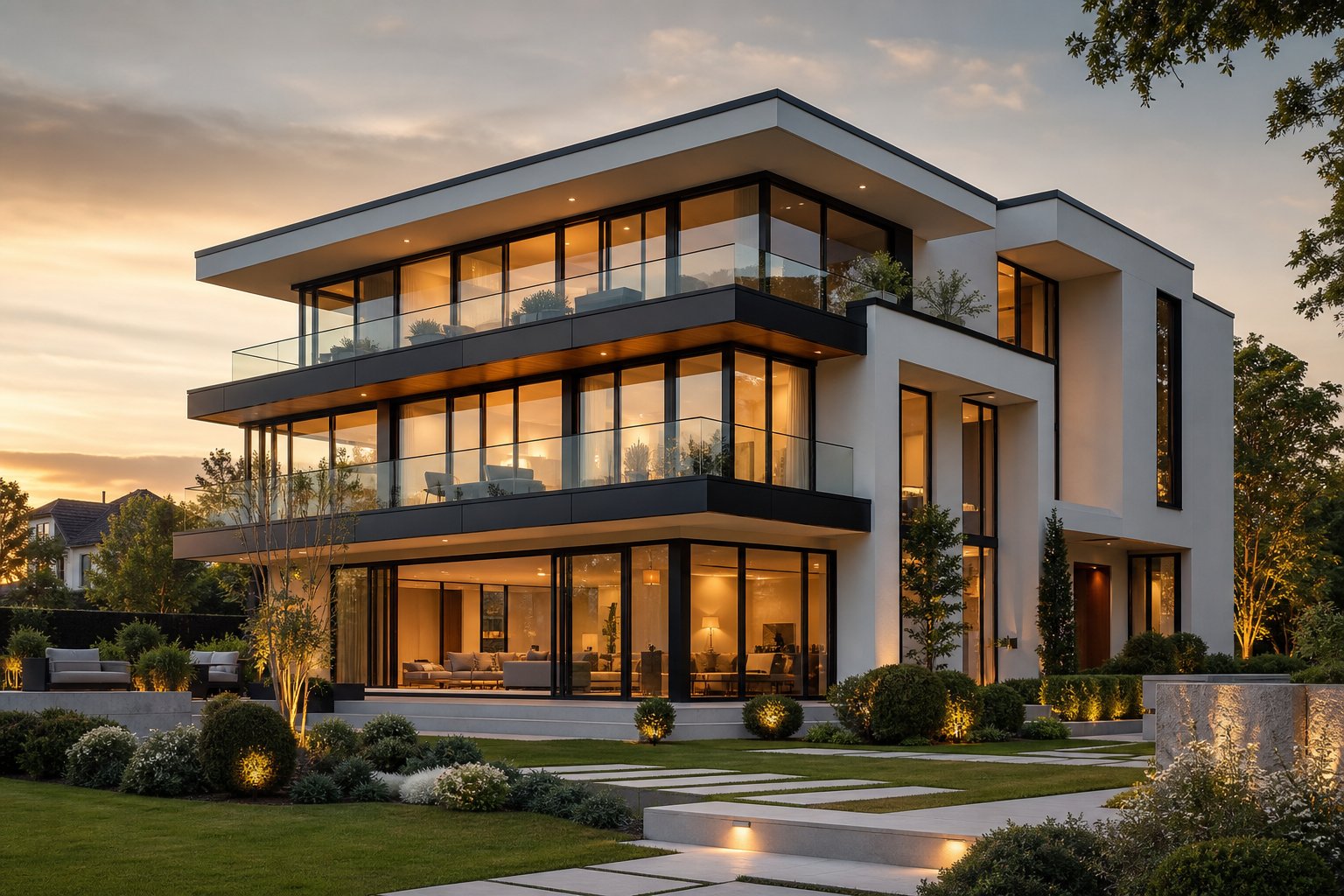
Understanding Powder Coated Aluminium Window Pricing
Most buyers shopping for aluminium windows treat the finish as an afterthought, something picked from a colour swatch at the end of the process. That assumption quietly inflates budgets. The reality is that how much powder coated aluminium windows cost depends heavily on the coating specification itself, not just the frame size or glass type. Finish selection is a performance decision with direct cost consequences, and it deserves attention far earlier in the procurement process.
What Makes Powder Coated Windows Different
Powder coating is an electrostatically applied dry finish. Fine particles of resin and pigment are sprayed onto the aluminium frame, where they cling through static charge, then cured under heat in an oven. The result is a hard, uniform shell that bonds to the metal at a molecular level. This is fundamentally different from wet paint, which sits on the surface as a film, or anodising, which converts the aluminium's own surface into a protective oxide layer.
The distinction matters for pricing because the process demands specialised equipment, controlled environments, and strict pre-treatment of the aluminium before any powder touches the surface. As Vertik-al notes, improper pre-treatment can cause blisters and adhesion failures, which is why quality applicators invest heavily in preparation stages. That investment flows directly into the cost per frame.
Why Powder Coating Prices Are Hard to Find
Search for a powder coated window pricing guide and you will mostly find generic aluminium window cost pages that lump every finish together. Mill finish, anodised, painted, and powder coated frames all get bundled into a single price range, leaving buyers with no way to isolate the aluminium window finish price difference between a raw extrusion and a fully coated product. This gap exists because coating costs vary by grade, colour, and application method, making a single number misleading without context.
Finish specification is one of the most overlooked pricing variables in window procurement. Two identical aluminium frames can differ by 15 to 40 percent in cost based solely on the coating grade and colour selected.
This article breaks that variable open. Rather than quoting a flat dollar figure, the sections ahead isolate each factor that moves the price of powder coating vs standard aluminium windows, from certification tier and colour choice through to project scale and regional market conditions.
How Powder Coating Affects Your Window Price
Every aluminium window quote contains two cost layers that most buyers never see separated: the base frame and the finish applied to it. The frame accounts for material, extrusion, fabrication, glazing, and hardware. The finish sits on top as a distinct line item, even when suppliers roll it into a single number. Understanding how much does powder coating add to window cost gives you leverage when comparing quotes, because it reveals where the real pricing flexibility lives.
How Much Powder Coating Adds to Base Window Price
A mill-finish aluminium frame, the raw silver extrusion straight from the press, represents the lowest possible material cost. Adding a standard powder coat in a common colour like matt black or white typically increases the per-window price by 10 to 20 percent over that raw baseline. For a standard casement window priced around $400 to $900 AUD supply-only, that translates to roughly $40 to $180 in coating cost baked into the unit price.
The percentage climbs when you move beyond stock colours or basic certification grades. Dual-colour finishes, where the interior and exterior receive different coatings, add 10 to 20 percent again due to the double treatment process. Specialty textures or architectural-grade specifications push the coating component higher still. In practical terms, the powder coating cost per aluminium window can range from a minor surcharge on a simple unit to a substantial portion of the total price on a high-spec project.
Industry data for aluminium profile coating puts the process cost at approximately $10 to $25 USD per square metre of coated surface, which translates to roughly $15 to $40 AUD per square metre once currency conversion and local market conditions are factored in. Australian labour rates and compliance requirements tend to push this toward the upper end, particularly for smaller batch runs where setup costs are spread across fewer frames.
Factory-Applied vs Aftermarket Powder Coating Costs
Buyers face a choice: order windows pre-finished from the manufacturer, or source raw or mill-finish frames and have them coated by a local applicator. Each path carries different cost structures and trade-offs.
Factory-applied coating happens during production, before the window is assembled. The frame passes through pre-treatment, electrostatic spray, and curing as part of the manufacturing line. This approach is more efficient per unit because the infrastructure already exists, and the coating is applied before glazing and hardware installation, which eliminates masking complexity. Manufacturers also batch similar colours together, reducing changeover waste.
Aftermarket coating means sending assembled or unglazed frames to a separate powder coating shop. This route makes financial sense in specific scenarios: matching an existing colour on a renovation, recoating weathered frames to extend their life, or sourcing frames from an overseas supplier that ships in mill finish. However, the per-unit cost is typically higher because the applicator handles smaller volumes, and frames may need disassembly to coat properly. Warranty implications also differ significantly, as aftermarket coating rarely carries the same coverage as a factory-applied finish.
| Factor | Factory-Applied Coating | Aftermarket Coating |
|---|---|---|
| Indicative cost per m² of frame surface | $15–$30 AUD | $30–$55 AUD |
| Turnaround time | Included in manufacturing lead time (4–8 weeks) | Additional 5–15 business days after frame delivery |
| Warranty coverage | Typically 10–25 years depending on grade | Often limited to 2–5 years from the applicator |
| Colour availability | Full RAL range plus manufacturer stock colours | Dependent on applicator's powder inventory and minimum batch sizes |
For most new-build and renovation projects in Australia, factory-applied coating delivers better value per dollar spent. The aluminium window frame powder coating price per square metre is lower, the warranty is stronger, and the finish quality is more consistent because it is applied under controlled factory conditions rather than adapted to an already-fabricated frame. Aftermarket coating earns its place primarily in maintenance scenarios or when a very specific colour match is needed for heritage or design continuity reasons.
These cost differences, however, only tell part of the story. The certification grade of the powder itself, whether it meets basic residential standards or full architectural specifications, creates another pricing tier that many buyers never realise exists until quotes come back wildly different for what appears to be the same product.
Powder Coating Quality Grades and What They Cost
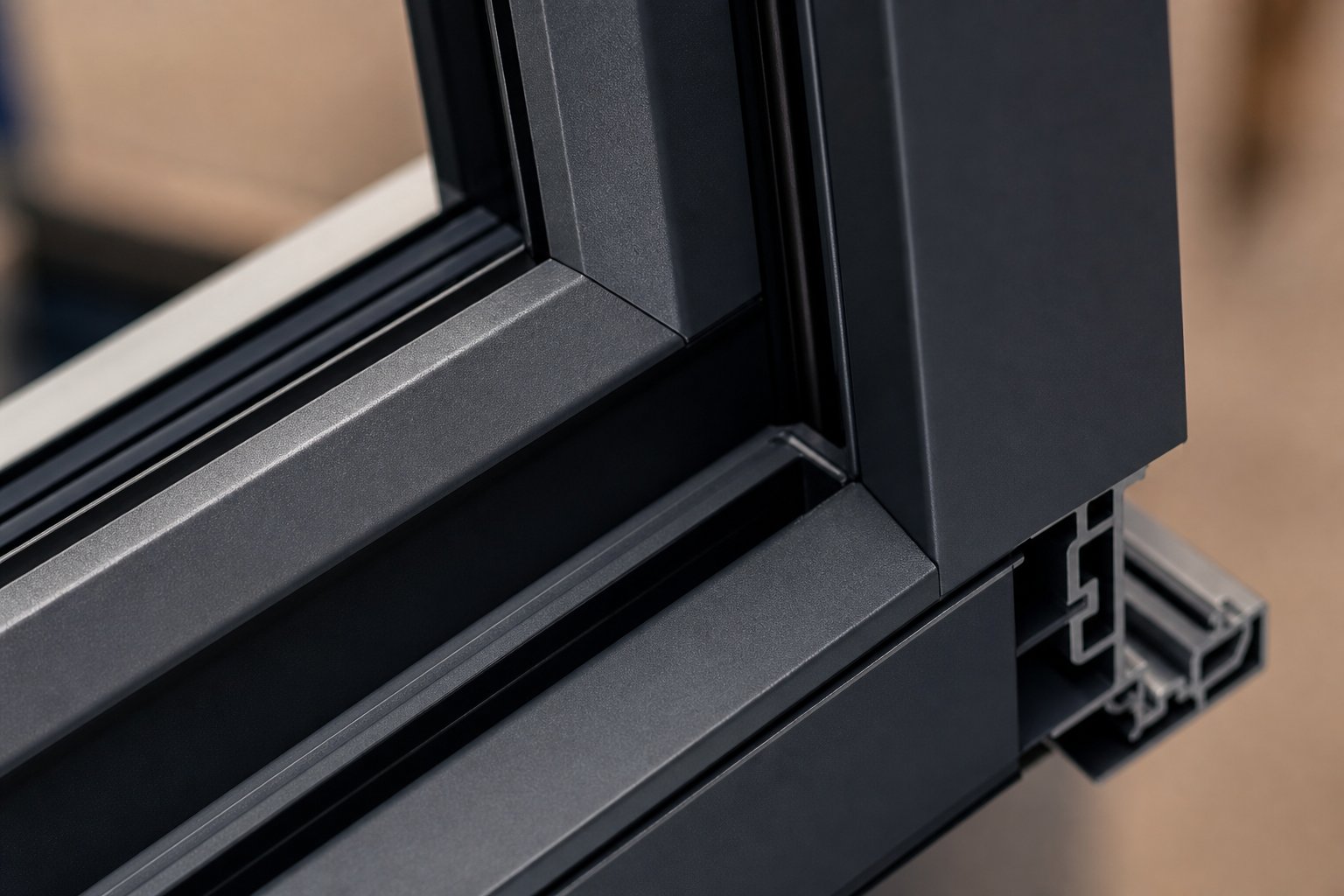
Two quotes for seemingly identical black aluminium windows can differ by 25 percent or more, and the explanation often hides in a single line item: the coating specification. Powder coatings are graded by international performance standards, and each tier uses different resin chemistry, demands different film thickness, and undergoes vastly different testing before certification. The grade you specify, or the grade your supplier defaults to, is one of the largest hidden drivers of aluminium powder coated windows prices.
AAMA 2603 vs 2604 vs 2605 Certification Grades
The American Architectural Manufacturers Association (AAMA) publishes three performance tiers that function as a good, better, best framework for powder coatings on aluminium extrusions. While these originate in the US market, they are widely referenced by Australian suppliers and specifiers, particularly on commercial and multi-residential projects.
AAMA 2603 is the entry-level specification. It uses standard polyester resins, requires a minimum film thickness of just 20 microns, and is tested for only one year of Florida weathering exposure. This grade suits interior applications or protected exterior elements where long-term colour retention is not critical. Think interior window frames in climate-controlled environments or windows shielded by deep eaves.
AAMA 2604 steps into high-performance territory. Formulated with super durable polyester resins, it demands a minimum 30-micron film thickness and must survive five consecutive years of outdoor exposure testing along with 3,000 hours each of humidity and salt spray testing. For most Australian residential and light commercial projects, AAMA 2604 represents the sweet spot between cost and durability, carrying a five-year performance warranty.
AAMA 2605 is the architectural grade powder coating for windows cost that sits at the top of the pricing scale. These coatings typically use fluoropolymer (FEVE) resins or advanced resin technologies engineered to resist moisture, UV radiation, and ozone at the highest level. Testing requirements double those of AAMA 2604, with 10 years of Florida exposure testing, 6,000 hours of humidity resistance, and 4,000 hours of salt spray. The 10-year performance warranty makes it the specification of choice for coastal homes, high-rise curtain walls, and any project where recoating access is difficult or expensive.
The AAMA 2604 vs 2605 powder coating cost difference is substantial. Expect AAMA 2605 to add 30 to 60 percent over AAMA 2604 pricing for the coating component alone, driven by the premium resin systems and the more rigorous quality control required during application. Only certified applicators can provide the manufacturer's warranty at any tier, which limits the supply chain and keeps pricing firm.
Qualicoat and International Standards
Outside North America, the Qualicoat label serves a similar gatekeeping function. Maintained by an international association, Qualicoat certification covers the entire coating process: pre-treatment, powder application, and final film properties. It is the dominant quality benchmark across the UK, Europe, and increasingly in the Australian and South African markets.
Where AAMA grades focus primarily on the coating's weathering performance, Qualicoat takes a broader view of the production chain. It mandates specific pre-treatment protocols, controls the curing process, and sets minimum standards for adhesion, hardness, and resistance to mortar and chemicals. Products carrying Qualicoat certification can offer durability guarantees of 15 to 25 years, even in harsh conditions like coastal salt air or high-UV environments common across much of Australia.
For qualicoat certified aluminium window pricing, the premium over non-certified products reflects both the coating material quality and the applicator's investment in maintaining certification. Facilities must pass regular audits, and any failure means losing the right to apply the label. That overhead flows into per-unit costs, but it also means buyers receive a product backed by an independent quality assurance system rather than just a manufacturer's self-assessed claim.
Australian specifiers working on projects that require compliance with AS 2047 or NCC energy provisions should note that neither AAMA nor Qualicoat is mandated by Australian building codes. However, specifying one of these standards gives you a measurable benchmark for comparing supplier quotes and holding manufacturers accountable for finish longevity.
How Coating Thickness Affects Price
Film thickness is the physical variable that ties resin chemistry to real-world durability, and it has a direct relationship with cost. More microns means more powder material consumed per frame, longer curing times, and tighter quality control to maintain even coverage across complex window profiles.
The powder coating thickness and price relationship follows a predictable pattern across the certification tiers:
- 20–30 microns (single coat, standard polyester): AAMA 2603 level. Adequate for protected or interior applications. Expected service life of 5 to 10 years in exposed conditions. Lowest material cost per frame.
- 30–50 microns (single coat, super durable polyester): AAMA 2604 and Qualicoat Class 1 level. Suitable for most Australian residential exteriors. Expected service life of 15 to 20 years with normal maintenance. Moderate cost increase over basic tier.
- 50–80 microns (single or dual coat, fluoropolymer or advanced systems): AAMA 2605 and Qualicoat Class 2/3 level. Specified for severe coastal, industrial, or high-rise environments. Expected service life of 25 years or more. Highest material and application cost, but lowest lifecycle cost for demanding exposures.
Dual-coat systems, where a primer layer is applied before the topcoat, push thickness toward the upper end of these ranges and add a second pass through the spray booth and oven. The additional labour and energy consumption can increase coating costs by 20 to 35 percent over a single-coat application at the same specification grade.
For buyers comparing quotes, asking one simple question cuts through the confusion: what AAMA or Qualicoat grade is included in this price? If the answer is vague or absent, the quote likely defaults to the cheapest available option. Specifying the grade upfront ensures you are comparing like with like, and it explains why a supplier quoting architectural-grade coating legitimately charges more than one offering a basic polyester finish on an otherwise identical frame.
Certification grade sets the performance floor, but it does not account for another major cost variable that catches buyers off guard: the specific colour sitting on top of that certified system.
How Colour Choice Impacts Your Final Price
A certified coating system at the right thickness sets the durability baseline, but the colour you pick on top of that system can swing the final bill by 20 to over 100 percent on the coating component alone. Most buyers assume colour is cosmetic. In reality, it is one of the sharpest cost levers in the entire window specification.
Standard Colours vs Custom RAL Selections
Manufacturers keep a handful of popular shades in constant rotation: matt black, satin white, monument grey, charcoal, and bronze account for the vast majority of residential orders across Australia. These stock colours are pre-purchased in bulk, which keeps material costs low and eliminates batch setup charges. When your colour falls within this standard palette, the coating adds no premium beyond the base finish price already built into the window quote.
Step outside that palette and the economics shift. The RAL colour system offers over 2,500 standardised shades, but ordering a non-stock option means the applicator must source a specific powder batch, often with minimum order quantities of 20 to 25 kilograms regardless of how many frames you need coated. Industry pricing data shows custom-matched powders running two to three times the cost of standard RAL shades per kilogram, before factoring in the setup and changeover time at the spray line. The custom RAL colour powder coated window price therefore reflects not just pigment rarity but production inefficiency: your small run interrupts the applicator's workflow.
For projects requiring fewer than eight to ten windows in a non-stock colour, expect a surcharge of 15 to 30 percent on the coating component. Larger orders absorb the batch minimum more efficiently, bringing the per-window premium down toward 8 to 12 percent.
Textured and Metallic Finish Premiums
Beyond flat colour, specialty finishes introduce additional material complexity and cost. Each category carries its own pricing logic.
Woodgrain effects use a sublimation transfer process applied over a base powder coat. The frame is coated in a solid colour first, then wrapped in a printed film and heated again so the pattern bonds into the surface. This double-process approach makes woodgrain finish aluminium windows pricing significantly higher, typically 40 to 70 percent above a standard single-colour coat, because it demands two separate curing cycles and careful handling to avoid pattern distortion.
Metallic finishes incorporate aluminium flake or mica particles into the powder formulation. These bonded metallics require specialised mixing and tighter application control to achieve consistent sparkle distribution across every frame. The metallic powder coating windows extra cost generally sits at 20 to 40 percent above standard colours, with metallic powders priced from approximately $5 to $13 AUD per pound compared to $4 to $6 AUD for standard polyester.
Dual-colour options, where the interior face receives a different colour from the exterior, effectively double the coating labour. Each side must be masked and sprayed separately, then cured. The dual colour aluminium window cost premium runs 25 to 50 percent above a single-colour finish and adds several days to production lead times. This option is popular on Australian projects where owners want a dark exterior to match the facade but a lighter interior to complement internal joinery.
Solar-Reflective and Specialty Coatings
Colour choice can also serve a functional purpose. Solar-reflective powder coatings use pigments engineered to reflect near-infrared radiation rather than absorbing it, reducing heat transfer through the frame itself. Research from Penn State University demonstrates that advanced reflective coatings on building elements can reduce heat gain by 12 to 20 percent compared to conventional finishes, a meaningful contribution in Australian climates where cooling loads dominate energy bills for much of the year.
Solar-reflective powder coats carry a premium of 15 to 25 percent over standard colours. However, on north and west-facing windows in Australian homes, the reduced thermal load can translate into measurable savings on air conditioning costs over the window's lifespan, particularly in Queensland, Western Australia, and inland NSW where summer temperatures are extreme. The upfront cost premium often pays for itself within five to eight years through lower energy consumption.
Other specialty options include anti-graffiti coatings for ground-floor commercial windows and antimicrobial finishes for healthcare facilities. These niche products sit at the top of the pricing scale but serve specific functional requirements beyond aesthetics.
| Finish Type | Cost Premium Over Standard Colour | Minimum Order Consideration | Lead Time Impact |
|---|---|---|---|
| Standard stock colours (black, white, charcoal, bronze) | None (base price) | No minimum | No additional time |
| Custom RAL colour | 15–30% | 20–25 kg powder batch minimum | +1 to 2 weeks for powder sourcing |
| Textured / matte finish | 20–35% | Similar to custom RAL | +1 week |
| Metallic / bonded metallic | 20–40% | Specialised powder required; batch minimums apply | +1 to 2 weeks |
| Woodgrain sublimation | 40–70% | Film stock availability; minimum 6–8 frames typical | +2 to 3 weeks |
| Dual-tone (different interior/exterior) | 25–50% | No powder minimum beyond standard, but labour-intensive | +3 to 5 days production |
| Solar-reflective | 15–25% | Specialised formulation; batch minimums apply | +1 to 2 weeks |
Colour decisions made early in the design phase give suppliers time to source non-stock powders without rush charges and allow batch coordination across multiple window units. Leaving colour selection until the last minute almost guarantees a premium, either through expedited powder freight or through production schedule disruption fees. The finish you choose shapes the price, but when you choose it matters nearly as much as what you choose.
Colour and coating grade account for the finish cost, yet they interact with another set of variables that scale with the physical characteristics of the windows themselves: size, profile complexity, and how many moving parts each unit contains.
Size and Complexity Factors That Drive Costs
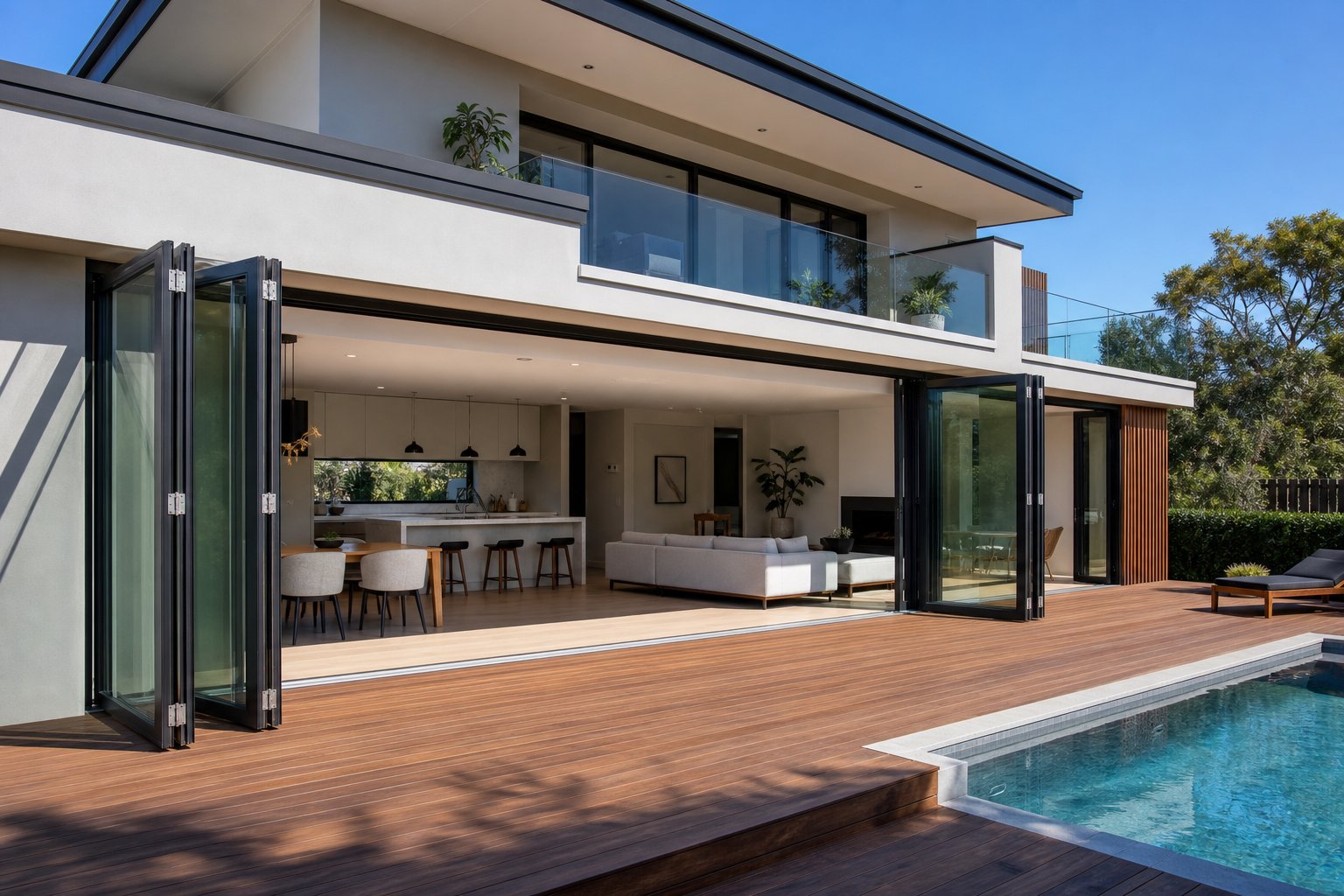
A standard casement window and a three-metre-wide bi-fold door might receive the exact same powder coating specification, yet the coating cost on the bi-fold can be four to five times higher. The finish price is not just about what goes onto the aluminium; it is about how much aluminium needs coating, how difficult that aluminium is to coat evenly, and how many individual pieces must pass through the spray booth. These physical and project-level variables often outweigh colour or grade selection in their impact on the final number.
Window Size and Frame Profile Complexity
Powder coating is charged by surface area. A larger window means more frame perimeter, more mullions, and more square metres of aluminium passing through pre-treatment, electrostatic spray, and curing. The large aluminium window powder coating cost scales roughly in proportion to the coatable surface, but not linearly. Oversized frames require longer oven dwell times and sometimes custom jig setups to hang properly on the coating line, adding labour that smaller units avoid.
Profile complexity compounds the issue. A simple fixed-lite frame has flat, accessible surfaces that coat quickly and evenly. A thermally broken profile with deep channels, multiple chambers, and snap-in gasket grooves demands more careful powder penetration into recesses. Applicators may need to adjust gun settings, use additional passes, or employ specialised nozzles to reach hidden surfaces. Each of these adjustments increases booth time per frame. For complex multi-chamber profiles common in high-performance Australian window systems, coating labour can run 30 to 50 percent higher than on a basic single-chamber extrusion of the same overall dimensions.
Opening Configurations and Hardware Cutouts
Every operable section in a window unit multiplies the number of individual components requiring coating. A fixed window is essentially one frame. A single casement adds a sash, hinges, and a keep. A bi-fold door with four panels introduces eight or more separately coated elements: four frames, four sashes, plus associated hardware mounting plates that must be masked or coated independently.
The powder coated bifold door price per panel reflects this multiplication. Each panel is an individual piece that must be hung on the coating line, sprayed, cured, inspected, and handled separately. Hardware cutouts for locks, handles, and friction stays create masking requirements where powder must be kept off machined surfaces to maintain tolerances. More cutouts mean more masking tape, more labour, and more risk of rework if powder bleeds into a machined pocket.
Awning and casement windows sit in the middle of the complexity scale. Sliding windows, despite their larger overall size, often have fewer individual coated components because the sashes are simpler rectangular frames without complex hinge preparations. The configuration you choose affects not just the window's function but the per-unit coating cost embedded in your quote.
Bulk Ordering and Project Scale Pricing
Volume changes everything in powder coating economics. A single residential window order carries the full weight of line setup, colour changeover, and quality inspection overhead spread across one or two units. Order 30 identical windows for a townhouse development and that overhead virtually disappears on a per-unit basis.
The bulk order powder coated aluminium windows discount typically follows a tiered structure. Residential single-window orders pay full retail coating rates. Small multi-unit projects of 10 to 20 windows might see 8 to 15 percent savings on the coating component. Multi-residential developments ordering 50 or more units in the same colour can negotiate 20 to 30 percent reductions, particularly when the order allows the manufacturer to batch an entire production run without colour changes.
Commercial project aluminium window pricing tiers operate on a different scale entirely. A 200-unit apartment complex or a commercial office fitout with hundreds of identical frames gives the manufacturer maximum efficiency: single colour setup, continuous line operation, and bulk powder purchasing at wholesale rates. At this scale, the per-window coating cost can drop to less than half of what a one-off residential buyer pays for the same specification. Industry guidance confirms that larger orders attract more competitive unit pricing through consolidated sourcing and standardisation.
For builders and developers managing multiple projects, consolidating window orders across sites into a single purchase order, even if delivery is staged, can unlock volume pricing that individual project orders would never reach.
- Project volume and batch size — the single largest lever; determines how setup and changeover costs are amortised across units.
- Total coatable surface area — directly scales material consumption and booth time per window.
- Number of individual components per unit — more operable sections and hardware cutouts multiply handling and masking labour.
- Profile complexity — deep channels and multi-chamber systems increase application difficulty and rework risk.
- Colour standardisation across the order — mixed colours within a single order reduce batching efficiency and reintroduce changeover costs.
These physical variables interact with the coating grade and colour decisions covered earlier. A large bi-fold in a custom metallic finish at AAMA 2605 specification sits at the absolute top of the pricing curve, while a batch of standard casements in stock black at AAMA 2604 represents the most cost-efficient combination for typical Australian residential projects. Understanding where your project falls across all these dimensions is what separates a realistic budget from a quote that shocks on arrival.
These cost drivers operate within local market conditions, and what constitutes a competitive price varies significantly depending on where in the world the project sits.
Regional Price Differences Across Key Markets
Powder coated window prices by country vary far more than most buyers expect. The same aluminium frame with the same coating grade can cost dramatically different amounts depending on local labour rates, dominant certification systems, supply chain maturity, and climate-driven specification requirements. For Australian buyers sourcing internationally or comparing quotes from overseas suppliers, understanding these regional dynamics prevents misleading comparisons.
Australian Market Pricing Context
Australia is one of the few residential markets where aluminium dominates over timber and uPVC for new construction. That market maturity means a well-established local supply chain for powder coated aluminium windows, with competitive pricing driven by volume and multiple domestic fabricators. The powder coated aluminium windows price in Australia for a standard casement window (approximately 1200 mm x 1200 mm, double glazed, thermally broken) typically falls between $600 and $1,200 AUD supply only, depending on the coating grade and colour selection. Supply and install pushes that range to $900 to $1,800 AUD per opening for standard residential configurations.
Several factors keep Australian pricing distinct. Local fabricators operate under AS 2047 compliance requirements, which adds testing and certification overhead. High labour costs relative to Asian manufacturing hubs mean that coating application, quality inspection, and handling all carry a premium. Coastal projects across much of Queensland, NSW, and Western Australia frequently specify higher-grade coatings to handle salt air exposure, pushing the average specification, and therefore the average price, above what inland projects require. The WERS rating system does not directly govern finish selection, but energy-conscious builds increasingly pair high-performance coatings with thermally broken frames to maximise the overall window system performance.
UK and European Market Considerations
The aluminium window cost UK vs Australia comparison reveals interesting structural differences. In the UK, aluminium competes aggressively with uPVC, which dominates the residential replacement market at roughly half the price point. UK market data places aluminium casement windows at £600 to £1,400 GBP supply and install (approximately $1,150 to $2,700 AUD), with powder coating included as standard on virtually all aluminium products. The UK market rarely sells mill-finish aluminium to end consumers, so the coating cost is always embedded rather than itemised.
Qualicoat certification dominates European and UK specification. This raises the baseline quality compared to markets where uncertified coatings are common, but it also means buyers pay for that quality floor whether they specifically request it or not. Lead times for custom RAL colours in the UK run four to eight weeks, similar to Australia, though the deeper European powder supply chain means fewer surcharges on non-stock shades compared to the Australian market where specialty powders often require international freight.
US and Middle Eastern Markets
The US market operates under the AAMA certification framework discussed earlier. Pricing tends to sit lower than Australia for equivalent specifications due to larger manufacturing volumes and lower labour costs, but direct comparison is complicated by different glazing standards, imperial sizing conventions, and the dominance of vinyl (uPVC) in the residential segment. Aluminium remains concentrated in commercial and high-end residential applications where AAMA 2605 is frequently specified.
Middle Eastern projects represent the extreme end of the specification and pricing scale. Regional conditions including summer temperatures reaching 45 to 50 degrees Celsius, intense UV radiation, salt-laden coastal humidity, and abrasive sand exposure demand premium coating systems as a baseline rather than an upgrade. Aluminium window pricing for Middle East specifications routinely requires AAMA 2605 or equivalent fluoropolymer coatings, marine-grade hardware, and thick anodising on exposed components. These requirements can push the coating component alone to 25 to 40 percent of the total window cost, compared to 10 to 20 percent in temperate Australian markets. Colour preferences in the Gulf states lean heavily toward bronze, champagne, and sand tones that reflect solar radiation, with dark colours rarely specified due to extreme surface temperatures under direct sun.
| Market | Typical Specification Grade | Dominant Colour Preferences | Price Position vs Alternatives | Key Certification |
|---|---|---|---|---|
| Australia | AAMA 2604 / Qualicoat Class 1 | Matt black, monument, charcoal, white | Premium over uPVC but standard for new builds | AS 2047, WERS, Qualicoat |
| United Kingdom | Qualicoat Class 1–2 | Anthracite grey (RAL 7016), black, white | 50–100% premium over uPVC | Qualicoat, BS 6496, PAS 24 |
| Europe (general) | Qualicoat Class 1–3 | Grey tones, white, dark bronze | Comparable to timber; premium over PVC | Qualicoat, EN 12206-1 |
| United States | AAMA 2604 residential / 2605 commercial | White, bronze, black, dark bronze | Premium segment; vinyl dominates residential | AAMA 2604/2605 |
| Middle East | AAMA 2605 / marine-grade anodising | Bronze, champagne, sand, light metallic | High absolute cost; no budget alternative viable | AAMA 2605, Gulf GSO standards |
For Australian buyers, the practical takeaway is this: local pricing reflects a mature, competitive market with moderate specification requirements for most residential projects. Quotes from overseas suppliers may appear cheaper on paper, but they often exclude the coating grade, certification, or corrosion resistance that Australian conditions demand. A like-for-like comparison requires matching not just the frame dimensions and glass type, but the specific coating standard, colour, and warranty coverage. Without that alignment, the cheapest quote frequently delivers the shortest-lived finish.
Regional pricing sets the market context, but it does not answer the question buyers ultimately care about most: how does powder coating stack up against the other finish options available for aluminium windows, and which delivers the best value over the life of the product?
Powder Coating vs Other Aluminium Finishes Compared
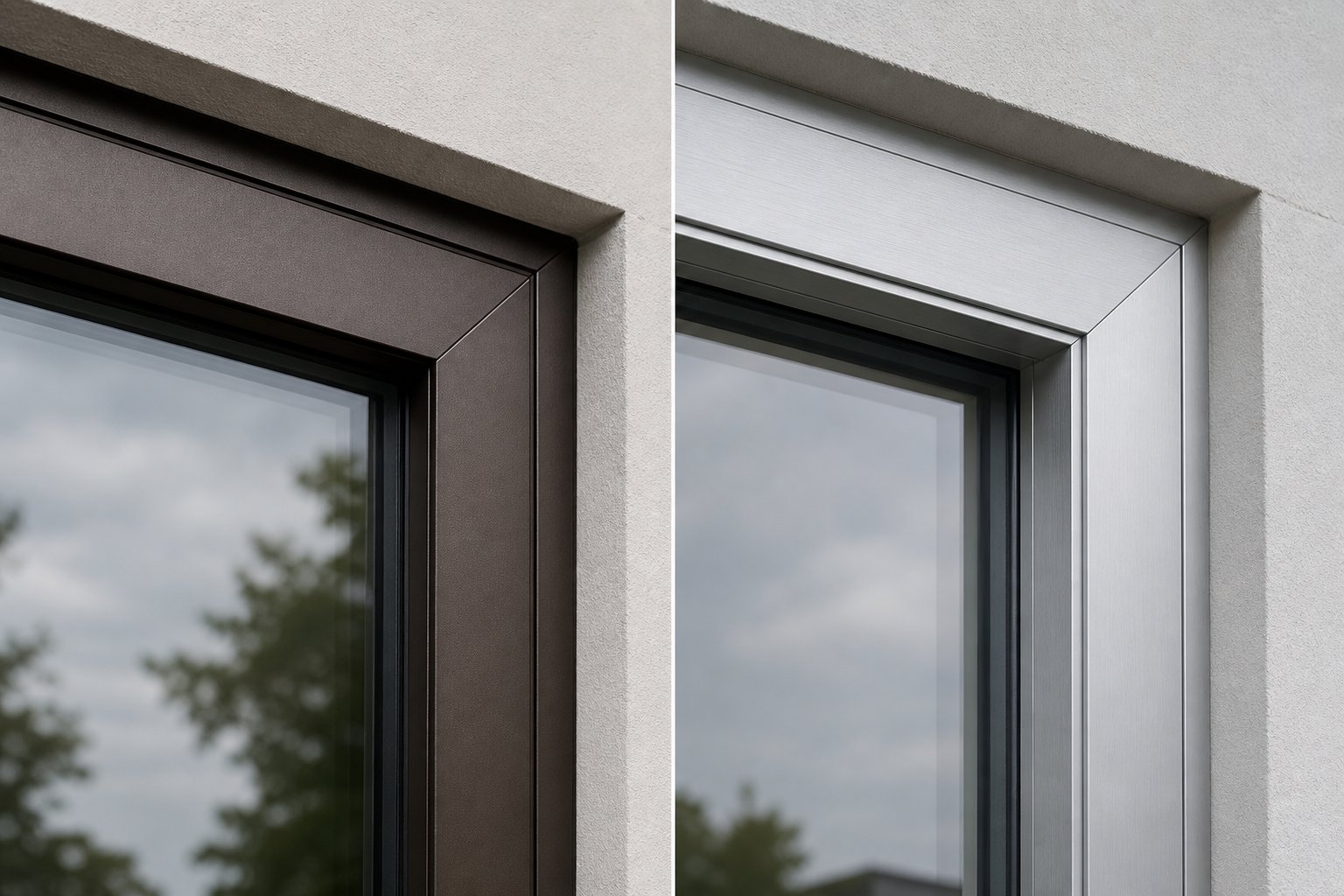
Powder coating is not the only way to protect an aluminium window frame. Anodising, wet painting, and leaving the metal in its raw mill-finish state all remain options, each with a different cost profile and performance envelope. The aluminium window finish comparison chart below lays out the trade-offs, but the numbers only tell part of the story. Understanding why each finish costs what it does, and how that upfront figure relates to what you will spend over 20 or 30 years, is what separates a smart specification from a regrettable one.
Powder Coating vs Anodising Costs
Anodising converts the aluminium surface into a hard oxide layer that becomes part of the metal itself. It cannot peel or flake because there is no separate coating to delaminate. Cherwell Windows notes that anodised finishes routinely last 40 years or more, even in coastal or urban environments, with maintenance limited to occasional soap-and-water cleaning. That longevity comes at a price: anodising typically costs 20 to 40 percent more than powder coating per square metre of frame surface for architectural-grade finishes.
The powder coating vs anodising aluminium windows cost equation tips in different directions depending on the project. Anodising makes economic sense on high-rise facades, coastal commercial buildings, or any application where recoating access is prohibitively expensive. Its colour range, however, is limited to metallic tones: silver, bronze, black, gold, and champagne. If your design calls for a specific RAL colour, a textured finish, or a bold non-metallic hue, anodising simply cannot deliver. Powder coating wins on colour freedom and upfront affordability, while anodising wins on raw longevity and zero-maintenance performance.
Repair tells a similar story. A scratch on a powder coated frame exposes bare aluminium and requires touch-up paint or localised recoating. A scratch on an anodised frame is less visually disruptive because the oxide layer extends into the metal, but deep damage cannot be spot-repaired without re-anodising the entire piece, which means removal and factory processing.
Powder Coating vs Wet Paint and Mill Finish
At the budget end sits mill-finish aluminium: the raw, uncoated extrusion straight from the press. It costs nothing extra because no finishing process is applied. But that saving evaporates quickly. Uncoated aluminium oxidises within months, developing a dull grey patina that looks neglected and offers no protection against pitting in salt air or industrial atmospheres. The powder coated vs raw aluminium window lifespan difference is stark. A quality powder coat protects for 15 to 25 years; raw aluminium in a coastal Australian environment can show visible corrosion within two to three years.
Wet paint occupies the middle ground. It is cheaper to apply than powder coating, requires less specialised equipment, and can be done on-site. So why is it rarely specified for aluminium windows? Durability is the short answer. Vertik-al's comparison confirms that wet paint does not offer the same level of protection or environmental resistance as powder coating. Liquid paint films are thinner, more prone to chipping on impact, and degrade faster under UV exposure. A wet-painted aluminium window might need recoating every 5 to 10 years, while a powder coated equivalent at AAMA 2604 specification holds its colour and integrity for 15 to 20 years without intervention. Is powder coating better than painting aluminium windows? For any exterior application exposed to Australian sun and weather, the answer is unambiguous.
Wet paint also introduces VOC emissions during application and requires careful environmental controls to achieve an even finish. Powder coating generates virtually no VOCs and produces less waste because overspray powder can be reclaimed and reused. These environmental advantages do not directly affect the buyer's wallet, but they do affect the availability of qualified applicators: most architectural coating facilities have moved entirely to powder systems, making wet paint increasingly difficult to source for window-specific work.
| Finish Type | Cost per m² (AUD, indicative) | Available Colours | Expected Lifespan | Maintenance Required | Repair Difficulty | Typical Warranty |
|---|---|---|---|---|---|---|
| Powder coating (AAMA 2604) | $15–$40 | Virtually unlimited (full RAL range, metallics, textures) | 15–25 years | Low; periodic wash | Moderate; touch-up paint or localised recoat | 10–15 years |
| Anodising (architectural grade) | $25–$55 | Limited metallic tones (silver, bronze, black, gold) | 40+ years | Minimal; soap and water | Difficult; requires factory re-processing | 20–25 years |
| Wet paint (acrylic or polyurethane) | $10–$25 | Wide range but less durable colour retention | 5–10 years before recoat | High; regular inspection and recoating | Easy; sand and repaint on-site | 2–5 years |
| Mill finish (raw aluminium) | $0 (no finish applied) | None; natural silver/grey only | Cosmetic degradation within 2–5 years | High; oxidation management | Not applicable; no finish to repair | None for finish |
Total cost of ownership favours powder coating for the majority of residential and commercial window applications. Its upfront cost sits well below anodising, its lifespan far exceeds wet paint, and its maintenance demands are negligible compared to either alternative. For most Australian projects, powder coating delivers the optimal balance of price, performance, and design flexibility.
The consistency of that finish across an entire project matters as much as the specification on paper. A single window coated perfectly means little if the next 30 units in the order show colour variation or thickness inconsistency. This is where the manufacturing process behind the coating becomes critical. Working with a supplier that manages finish specification as part of an integrated service, handling everything from system recommendation through manufacturing and quality control, ensures the correct coating grade is applied uniformly across every frame in the order. MEICHEN's end-to-end project support exemplifies this approach, covering drawings through to delivery so that builders and developers receive consistent finish quality without coordinating separate coating vendors.
Upfront cost comparisons are useful, but they only capture a single moment in the window's life. The real financial picture emerges when you extend the timeline to 20 or 30 years and account for every dollar spent on maintenance, recoating, and eventual replacement.
Long-Term Value and Total Cost of Ownership
A window quote captures one number on one day. It tells you nothing about what that window will cost to maintain over the next two decades, whether the finish will still look presentable in year 15, or how much you will spend if it does not. The total cost of ownership for aluminium windows depends heavily on the finish applied at the factory, and powder coating's upfront premium over cheaper alternatives pays dividends that compound quietly over the building's lifespan.
Maintenance Savings Over the Window Lifespan
Powder coated finishes demand remarkably little ongoing attention. Under normal conditions, a wash with clean water or a pH-neutral detergent solution once or twice a year is sufficient to keep the surface performing and looking sharp. Qualicoat's maintenance guidance confirms that in standard urban environments, an annual wash-down during routine window cleaning is enough to prevent atmospheric pollutants from etching into the coating surface. Compare that to wet-painted frames requiring inspection and touch-up every few years, or raw aluminium that needs oxidation management almost from day one.
The powder coated aluminium window maintenance cost over a 25-year period is essentially the cost of soap and water. No sanding, no primer, no recoating labour. For a typical Australian home with 10 to 15 window openings, that translates to thousands of dollars in avoided maintenance compared to painted alternatives that need professional recoating every 5 to 10 years at $150 to $400 per opening each time.
Coastal and industrial environments change the equation, but not as dramatically as many buyers fear. Homes within five kilometres of the ocean or near industrial zones should increase cleaning frequency to every three months. Qualicoat recommends at least quarterly cleaning for marine environments, as salt deposits are more corrosive and need removal before they can attack the coating. Even at this elevated frequency, the maintenance burden remains a fraction of what painted or uncoated frames demand in the same exposure conditions. Specifying a Qualicoat Seaside-rated or AAMA 2605 coating for coastal projects adds upfront cost but dramatically reduces the risk of premature finish failure that would trigger expensive remediation.
Warranty Coverage and What It Means for Value
Warranty periods for powder coated windows vary enormously depending on the coating grade, and those differences directly reflect how long the finish is engineered to last. Understanding the powder coated window warranty coverage years attached to each tier helps buyers assess whether the upfront premium for a higher grade is justified by the protection it provides.
Basic polyester coatings at AAMA 2603 level typically carry warranties of 2 to 5 years, covering only gross defects like peeling or blistering rather than colour fade or gloss loss. Mid-range super durable polyester at AAMA 2604 extends coverage to 10 to 15 years, with measurable limits on allowable colour change and chalking. Architectural-grade coatings at AAMA 2605 push warranties to 20 to 25 years, and some premium products carry 15-year warranties with expected performance well beyond 20 years under proper maintenance.
For procurement decisions, warranty length serves as a proxy for confidence. A manufacturer offering 20 years of coverage on a coating has priced the risk of failure into their product and determined it is low enough to underwrite. A 3-year warranty signals the opposite. On projects where window access is difficult or expensive, such as upper storeys, stairwell glazing, or commercial facades requiring scaffolding or abseil access for any remediation, the cost of a warranty claim far exceeds the cost of specifying a higher grade upfront. A $50 to $100 per-window premium for AAMA 2605 over AAMA 2604 looks trivial against a $2,000 to $5,000 scaffolding bill to recoat a single failed unit at height.
When Recoating Becomes Necessary
How long does powder coating last on windows before intervention is needed? Under normal maintenance and appropriate specification for the environment, quality powder coatings hold their colour and integrity for 15 to 30 years. Premium powder compositions using robust materials can offer life expectancies well beyond thirty years, often matching the lifespan of the building itself.
The first visible sign of ageing is typically a gradual reduction in gloss level, followed by slight colour shift on heavily UV-exposed elevations. This is not failure; it is normal weathering. True failure presents as chalking (a white powdery residue on the surface), adhesion loss, or visible corrosion at the aluminium substrate. If cleaning has been neglected, chalking can appear earlier than expected, but specialist restoration companies can often clean and restore the surface without full recoating.
When recoating does become necessary, the process involves stripping the existing finish through chemical or abrasive methods, re-preparing the aluminium surface, and applying a fresh powder coat. Australian restoration specialists report that professional recoating costs 70 to 80 percent less than full window replacement, making it a financially sound option when the frame itself remains structurally sound. For a typical opening, restoration and respraying runs $300 to $800 AUD compared to $1,500 to $4,000 AUD for complete replacement. Given that older aluminium frames were often built with heavier wall thicknesses than modern extrusions, restoration frequently delivers a better long-term outcome than replacement with a lighter contemporary profile.
The decision between recoating and replacement depends on the frame's structural condition, the cost of access, and whether the existing window meets current energy performance requirements. A frame with sound aluminium but a failed coating is an ideal restoration candidate. A frame with corroded joints, worn hardware, and single glazing may justify replacement regardless of coating condition.
- Touch-up kits and spot repair: $30 to $80 AUD per kit; needed for isolated scratches or impact damage during the window's life. Often overlooked at purchase but essential for maintaining warranty validity on some products.
- Cleaning products and equipment: $50 to $150 AUD annually for pH-neutral detergents and soft-bristle tools across a whole home. Minimal, but a real ongoing cost that buyers rarely budget for.
- Potential full recoating: $300 to $800 AUD per opening if needed after 20 to 30 years. Avoidable with proper specification and maintenance, but a contingency worth understanding.
- Insurance implications of finish warranties: Some home insurance policies require evidence of maintained finishes for corrosion-related claims. A lapsed coating warranty due to neglected maintenance can void coverage for water ingress caused by frame deterioration.
- Energy savings from reflective coatings: Solar-reflective powder coats can reduce cooling costs by 8 to 15 percent on north and west-facing windows, accumulating $1,500 to $4,000 AUD in energy savings over a 25-year window lifespan in hot Australian climates. This hidden return partially offsets the higher upfront coating cost.
The total cost of ownership for aluminium windows with a quality powder coat finish consistently undercuts alternatives when measured over a realistic timeframe. A $100 premium per window for a higher-grade coating that eliminates one recoating cycle over 25 years saves $200 to $700 per opening in avoided maintenance. Multiply that across a full home or a multi-unit development and the lifecycle savings become substantial, turning what appeared to be a more expensive specification into the most economical choice over the building's life.
These long-term economics only materialise, though, if the right specification is locked in from the start. Getting there requires knowing exactly what to ask for, what information to prepare, and how to read the quotes that come back.
How to Get Accurate Quotes for Your Project
Knowing what drives powder coated window costs is one thing. Translating that knowledge into a quote that reflects your actual project is another. Vague requests produce vague numbers, and vague numbers produce budget blowouts. If you want to know how to get a quote for powder coated aluminium windows that you can actually rely on, the answer starts with the information you put in front of the supplier before they ever open a spreadsheet.
What to Include in Your Pricing Request
Suppliers cannot price what they cannot see. A request that says "quote me some black aluminium windows" forces the manufacturer to guess at dimensions, configuration, coating grade, and quantity, and every guess introduces a margin buffer that inflates your price. The more complete your specification package, the tighter and more competitive the returned quote will be.
Here is what to ask when ordering powder coated windows, distilled into the details that directly affect pricing accuracy:
- Window dimensions: Height and width in millimetres for each opening, including whether sizes are structural opening or finished frame dimensions.
- Configuration type: Fixed, casement, awning, sliding, bi-fold, or combination units. Each type carries different coating complexity.
- Coating grade specification: AAMA 2604, AAMA 2605, Qualicoat Class 1, or equivalent. If unsure, state the environment (coastal, urban, inland) and let the supplier recommend.
- Colour selection: Stock colour name or RAL number. Flag early if you need a custom match, dual-tone, or specialty finish.
- Quantity per type: Exact unit counts allow batch pricing. Even preliminary numbers help.
- Project timeline: When you need delivery affects whether rush charges apply or whether the order can slot into a standard production run.
- Glazing requirements: Double glazed, laminated, low-E, or tinted. Glass specification interacts with frame selection and overall system pricing.
Industry guidance from manufacturers confirms that quotation accuracy improves dramatically when buyers organise information by opening type, size, quantity, finish, and glass requirement rather than sending fragmented notes across multiple emails. A single structured package reduces revision rounds and gives you a number you can budget against with confidence.
Evaluating and Comparing Supplier Quotes
Two quotes for the same project can look wildly different and still both be "correct" because they are pricing different assumptions. Comparing aluminium window supplier quotes effectively means looking beyond the bottom-line number to understand what each figure actually includes.
Check whether the coating specification is itemised or buried in the frame price. A quote that separates the coating component lets you see exactly what grade and colour you are paying for. One that bundles everything into a single per-window figure may be hiding a lower-grade coating to appear competitive on price.
Key elements to verify in every quote:
- Is the coating grade explicitly stated (AAMA tier or Qualicoat class)?
- What warranty coverage applies specifically to the finish, separate from the frame or hardware warranty?
- Does the quote cover supply only, or supply and install?
- Are delivery, packaging, and any applicable freight charges included?
- Is the colour confirmed as stock or custom, and are any batch surcharges noted?
- Does the supplier handle the full chain from material calculation through manufacturing and delivery, or will you need to coordinate separate vendors for coating?
A quote that covers the complete supply chain, from engineering coordination through quality control and logistics, eliminates the hidden costs that appear when multiple parties handle different stages. Gaps between vendors are where specifications get lost, colours shift between batches, and warranty responsibility becomes unclear.
Choosing Between Pre-Finished Supply and Separate Coating
The final decision is structural: do you source windows already coated from an integrated manufacturer, or purchase raw frames and arrange powder coating independently?
For most new-build and renovation projects, integrated supply wins on cost, consistency, and accountability. A manufacturer that controls the coating process as part of their production line applies the finish before assembly, under factory conditions, with batch consistency across every unit. Warranty coverage is singular and clear. There is no finger-pointing between a frame supplier and a separate coating shop if something fails.
Separate coating makes sense in narrow circumstances: heritage colour matching on a restoration project, recoating existing frames that are structurally sound, or situations where a specific local applicator holds a proprietary colour formula. Outside those scenarios, the integrated powder coating window supplier benefits, including consolidated pricing, single-point accountability, and guaranteed specification compliance, outweigh any perceived savings from splitting the process.
For builders, developers, and procurement teams managing multi-unit projects, an integrated supplier like MEICHEN handles the full process from drawings to delivery, including system recommendation, material calculation, manufacturing, and quality control. This approach consolidates finish specification into the overall window package, delivering transparent pricing without the complexity of coordinating separate coating vendors. It is particularly valuable on projects where dozens or hundreds of units must arrive with identical colour, gloss, and film thickness across every frame.
- Define your window schedule: dimensions, configurations, quantities, and opening types for every unit on the project.
- Specify the coating requirement: grade (AAMA or Qualicoat tier), colour (stock or custom RAL), and any specialty finish needs (dual-tone, metallic, solar-reflective).
- State the project environment: coastal, urban, inland, bushfire zone, or cyclone region. This guides the supplier's coating recommendation.
- Set your timeline: design stage (budgetary quote acceptable) or procurement stage (firm pricing needed for contract).
- Send a complete package to your shortlisted suppliers simultaneously, using the same specification document for each to enable genuine like-for-like comparison.
- Review returned quotes against the checklist above, verifying that coating grade, warranty, colour, and supply scope are explicitly addressed.
- Clarify any assumptions or exclusions in writing before accepting a quote. Ask specifically: "What coating grade is included in this price?"
- Confirm lead time, delivery staging (if applicable), and payment terms before placing the final order.
The difference between a budget surprise and a smooth procurement process almost always traces back to this preparation stage. Buyers who invest an hour assembling a clear specification package save weeks of revision cycles and thousands of dollars in avoided scope changes. The coating is not an afterthought to sort out later. It is a performance specification that belongs in your very first conversation with any supplier.
Frequently Asked Questions About Aluminium Powder Coated Window Prices
1. How much does powder coating add to the cost of aluminium windows?
Powder coating typically adds 10 to 20 percent over a raw mill-finish aluminium frame for standard stock colours like matt black or white. For a standard casement window priced between $400 and $900 AUD supply-only, that equates to roughly $40 to $180 per unit. The premium increases with custom RAL colours (15 to 30 percent extra), dual-tone finishes (25 to 50 percent extra), or architectural-grade specifications like AAMA 2605. Factory-applied coating costs approximately $15 to $30 AUD per square metre of frame surface, while aftermarket coating from a separate applicator runs $30 to $55 AUD per square metre due to smaller batch volumes and additional handling.
2. How long does powder coating last on aluminium windows?
Longevity depends on the coating grade and environmental exposure. A standard super durable polyester coating (AAMA 2604 or Qualicoat Class 1) lasts 15 to 20 years in typical Australian residential conditions with minimal maintenance. Architectural-grade coatings at AAMA 2605 specification can perform for 25 to 30 years or more, with some premium formulations offering life expectancies beyond thirty years. Coastal homes or properties in industrial zones may see earlier signs of weathering, but quarterly cleaning significantly extends finish life. Proper specification matched to your environment is the single biggest factor in coating longevity.
3. What is the difference between AAMA 2604 and AAMA 2605 powder coating?
AAMA 2604 uses super durable polyester resins with a minimum 30-micron film thickness, tested for five years of outdoor exposure. It suits most Australian residential and light commercial projects and carries a 10 to 15 year warranty. AAMA 2605 uses fluoropolymer (FEVE) resins, demands 50 to 80 microns of film thickness, and undergoes ten years of exposure testing plus 6,000 hours of humidity resistance. It carries a 20 to 25 year warranty and is specified for coastal homes, high-rise buildings, and harsh environments. The cost difference is substantial: AAMA 2605 adds 30 to 60 percent over AAMA 2604 on the coating component alone.
4. Is powder coating better than anodising for aluminium windows?
Each finish excels in different scenarios. Powder coating offers virtually unlimited colour options, lower upfront cost, and easier spot repairs for scratches or damage. Anodising provides superior longevity (40+ years), zero-maintenance performance, and a finish that cannot peel because it becomes part of the metal itself. However, anodising is limited to metallic tones and costs 20 to 40 percent more per square metre. For most Australian residential projects where colour choice and budget matter, powder coating delivers the best balance. Anodising makes more economic sense on high-rise facades or coastal commercial buildings where recoating access would be prohibitively expensive.
5. How can I get an accurate quote for powder coated aluminium windows?
Provide suppliers with a complete specification package including exact window dimensions in millimetres, configuration types (casement, awning, sliding, bi-fold), desired coating grade (AAMA 2604 or 2605), specific colour selection (stock or custom RAL number), unit quantities, project timeline, and glazing requirements. Send identical specifications to multiple suppliers simultaneously for genuine like-for-like comparison. When evaluating returned quotes, verify whether the coating grade is explicitly stated, check warranty terms specific to the finish, and confirm whether the price covers supply only or supply and install. Working with an integrated manufacturer like MEICHEN that handles everything from system recommendation through manufacturing and quality control at https://meichenwindows.com.au/services/ simplifies this process by consolidating finish specification into a single transparent quote.