
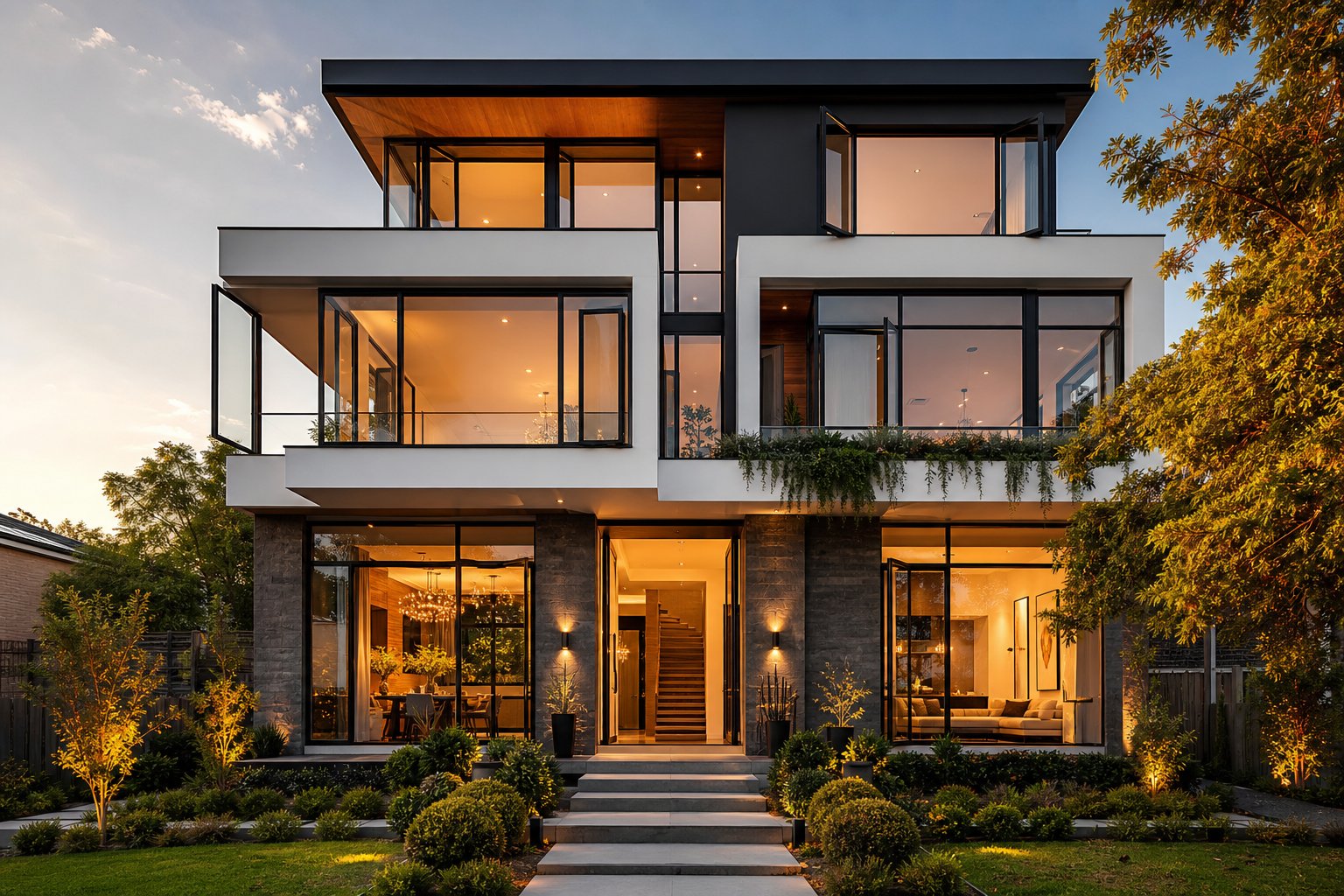
What Are Aluminium Casement Windows and How Do They Work
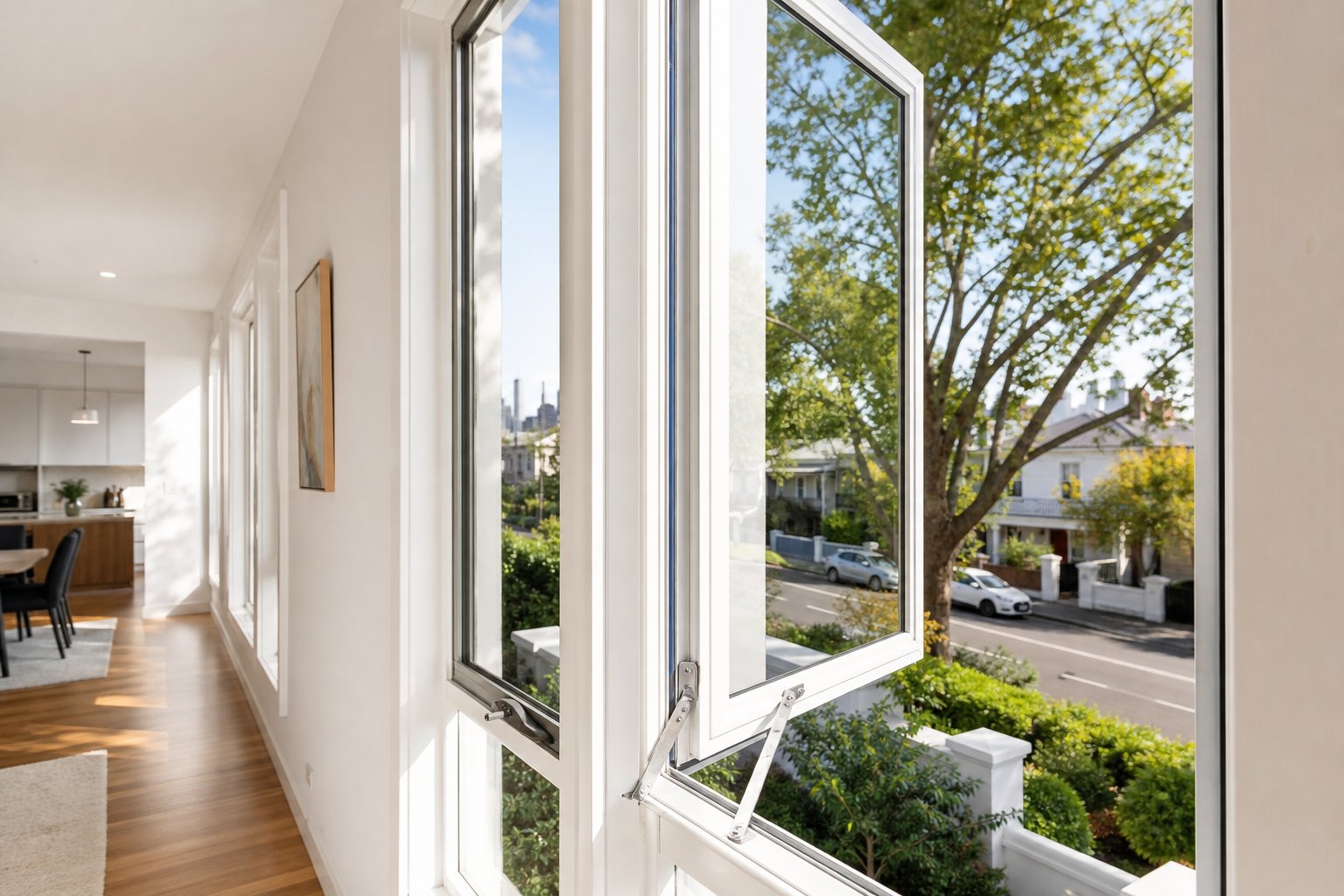
An aluminium casement window is a side-hinged window with a sash that swings outward (or occasionally inward) on vertical hinges, operated by a crank mechanism or friction stay. Unlike sliding or double-hung windows that move along tracks, casement aluminium windows open their entire sash area to the outside, functioning more like a narrow door than a traditional window.
This distinction matters more than most Melbourne homeowners realise when they start comparing quotes.
What Makes a Casement Window Different
The defining feature is the hinge-and-crank operation. Turn the handle, and the sash swings open on side-mounted hinges, providing a full unobstructed opening for ventilation. Sliding windows only ever expose half their frame area. Double-hung windows move vertically in tracks, limiting airflow to roughly 50% of the opening. Awning windows hinge at the top and push outward from the bottom, which is great for rain protection but restricts the opening angle.
Casement windows aluminium frames support offer something different altogether:
- Full 90-degree opening for maximum airflow and cross-ventilation
- Single sash design with no central rail, providing uninterrupted views
- Multi-point locking that engages at several points along the frame for a tight seal
- Interior-mounted screens that stay protected from weather and are easy to remove for cleaning
- Superior energy efficiency when closed, thanks to compression seals that press tighter as the lock engages
Why Melbourne Homeowners Choose Aluminium Frames
Melbourne's architectural landscape runs from ornate Victorian terraces in Fitzroy to sharp-edged apartments in Southbank. Aluminium casement windows suit this diversity because the material allows for slim frame profiles that maximise glass area without sacrificing structural integrity. The strength-to-weight ratio of aluminium means manufacturers can achieve sightlines as narrow as 45mm, letting more light through compared to bulkier timber or uPVC alternatives.
In a city influenced by coastal air drifting in from Port Phillip Bay, corrosion resistance is not optional. Aluminium naturally forms a protective oxide layer, and when finished with quality powder coating, a casement window aluminium frame resists rust, warping, and UV degradation across decades of Melbourne's variable conditions. These frames do not swell in humidity or shrink in dry heat, so the crank mechanism operates smoothly year-round.
That operational consistency is worth understanding in detail, because Melbourne's specific climate puts demands on window performance that generic product brochures rarely address.
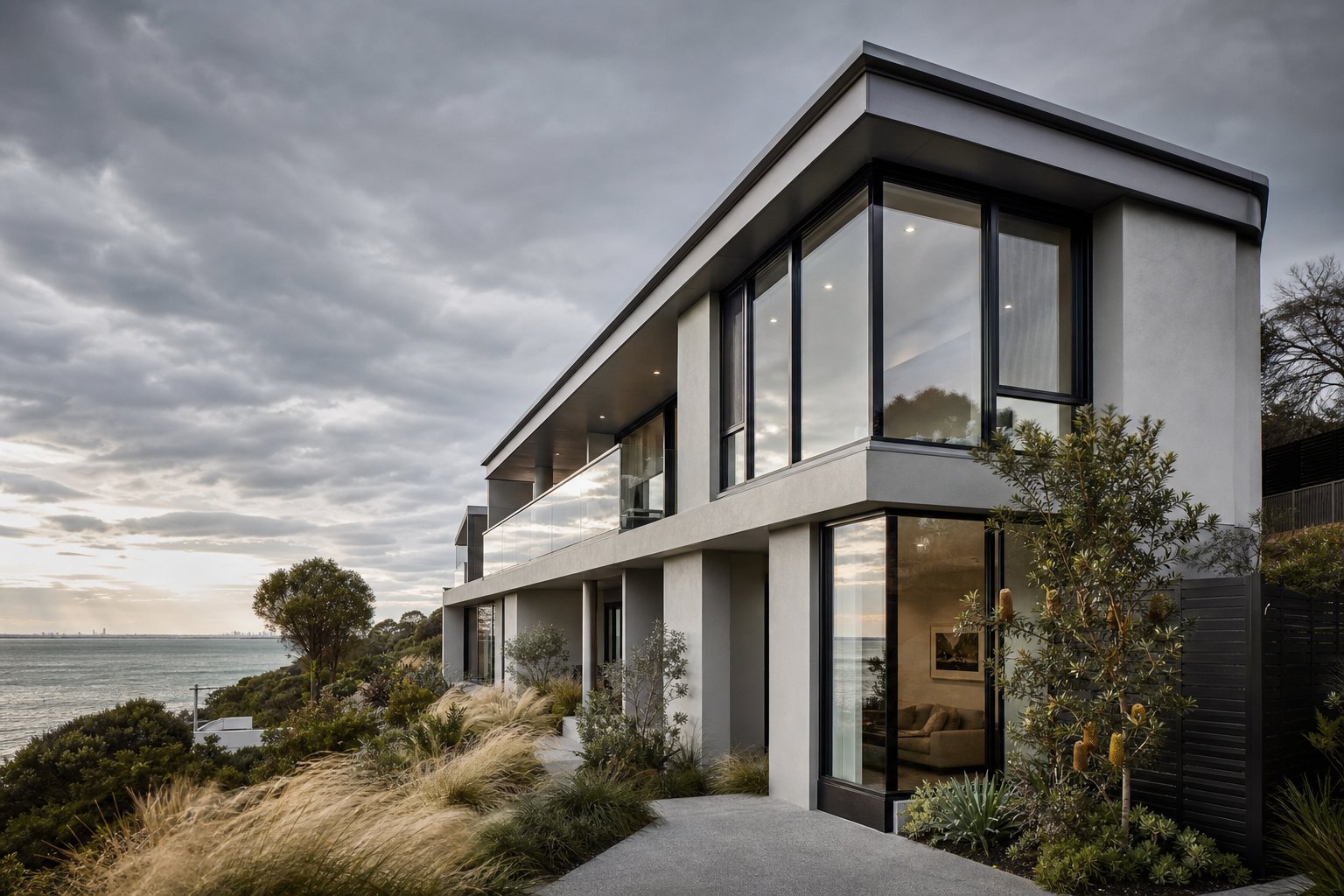
How Melbourne's Climate Affects Aluminium Casement Window Selection
Melbourne sits in NCC climate zone 6, a mild temperate classification that masks some genuinely punishing weather variability. A single day can swing from 14°C in the morning to 38°C by mid-afternoon during summer, then drop back sharply after a southerly change rolls in off Bass Strait. Winter mornings regularly dip below 5°C in outer suburbs like Warrandyte and Eltham, while inner-city areas stay a few degrees warmer thanks to the urban heat island effect. This range, roughly 0°C to 45°C across the year, puts real stress on any window system.
Most aluminium casement windows Australia-wide are manufactured to handle these conditions, but not all are specified correctly for Melbourne's particular combination of temperature cycling, wind-driven rain, and salt-laden air. Getting the specification right at the quoting stage prevents problems that only show up two or three years after installation.
Melbourne's Variable Weather and Window Performance
Aluminium expands and contracts with temperature changes. The coefficient of thermal expansion for aluminium is approximately 23 x 10⁻⁶ per degree Celsius, roughly twice that of steel. On a 1200mm wide aluminium frame casement window, a 40-degree temperature swing produces around 1.1mm of dimensional change. That sounds trivial, but it accumulates across the frame perimeter and affects how tightly the sash seats against its weather seals.
Quality aluminium casement window weather seals are designed to accommodate this movement. Compression seals made from EPDM rubber or silicone maintain contact across the expansion range, while cheaper foam seals can compress permanently and lose their recovery. Melbourne's rapid temperature cycling, especially during spring and autumn when hot days follow cold nights in quick succession, accelerates seal fatigue in lower-grade products.
Prevailing winds add another layer. Melbourne's dominant weather comes from the west and southwest, driving rain horizontally against west-facing windows. Suburbs on the western plains, Werribee, Point Cook, Tarneit, cop stronger gusts with less shelter than established inner suburbs. For casement windows on exposed western elevations, wind load ratings and drainage capacity in the sill become critical specification items rather than afterthoughts.
Coastal Proximity and Corrosion Considerations
Port Phillip Bay stretches across Melbourne's southern edge, and salt-laden air travels further inland than most homeowners expect. Under AS/NZS 2312 corrosion classification, properties within 1 to 3 kilometres of tidal water fall into category C4 (high), while those within 500 metres to 1 kilometre of surf or open water reach C5 (very high). Suburbs like Williamstown, St Kilda, Brighton, and Sandringham sit squarely in these elevated zones.
For aluminium casement window materials in C3 environments (most Melbourne suburbs beyond 3 to 10 kilometres from the coast), standard architectural-grade aluminium alloy 6063 with quality powder coating at 60 microns or above performs well for decades. In C4 and C5 zones, the specification needs to step up: marine-grade alloys, chrome-free immersion pre-treatment for better powder coat adhesion, and coating thickness of 80 microns or greater. Fixings should be 316-grade stainless steel rather than standard 304, and dissimilar metals need isolation to prevent galvanic corrosion at contact points.
The durability of aluminium casement windows depends heavily on these finish specifications. Two windows can look identical on installation day, but the one with inadequate pre-treatment and thinner powder coating will show blistering, white oxidation at cut edges, and corrosion at fixing points within three to five years in a coastal suburb. This is exactly the kind of detail that a quote's line items rarely spell out.
BAL Ratings and Bushfire-Prone Areas
Melbourne's outer fringe, the Dandenong Ranges, Kinglake, Warrandyte, Eltham, and parts of the Yarra Valley, falls within designated bushfire-prone areas. Properties here receive a Bushfire Attack Level (BAL) rating under AS 3959, ranging from BAL-Low through to BAL-FZ (Flame Zone). The rating determines construction requirements for every building element, including windows.
Aluminium frames perform well in bushfire zones because the material resists ember attack and maintains structural integrity under radiant heat far better than timber or uPVC. At BAL-29 and above, windows require heat-resistant frames, toughened glazing of increased thickness, ember-resistant metal mesh screens, and precision-engineered seals that prevent ember penetration. Casement windows, with their compression seal design and multi-point locking, inherently provide tighter closure than sliding types, which is an advantage when ember resistance matters.
For Melbourne properties in NCC climate zone 6, the current glazing requirements under NCC 2022 demand improved U-values and SHGC (Solar Heat Gain Coefficient) compared to the previous code. Analysis of the NCC 2022 Glazing Calculator shows that climate zones 2 to 7 require approximately 20% improvement in window U-value and 30% improvement in SHGC over NCC 2019 levels. In practical terms, this means many new builds and major renovations in Melbourne now need double glazing with Low-E coatings as a minimum to achieve compliance, pushing the specification bar higher than it was just a few years ago.
Melbourne homeowners should consider three climate factors when specifying aluminium casement windows: the corrosion classification of their suburb (C2 through C5 based on coastal proximity), any applicable BAL rating for bushfire-prone properties, and the NCC climate zone 6 glazing performance requirements that set minimum U-value and SHGC thresholds for energy compliance.
These climate-driven requirements shape what belongs in a properly specified quote. The material advantages of aluminium are real, but they only deliver long-term performance when the finish grade, seal quality, and glazing configuration match the specific demands of the site. That balance between advantage and limitation is worth examining more closely.
Advantages and Limitations of Aluminium Casement Windows
Every frame material involves trade-offs. Understanding the advantages and disadvantages of aluminium casement windows alongside timber and uPVC helps you read a quote with sharper eyes, because the cheapest option on paper is not always the smartest choice for a Melbourne property over a 30-year timeframe.
Structural and Aesthetic Advantages
The core aluminium casement window advantages stem from the material's strength-to-weight ratio. Because aluminium is structurally rigid at thin cross-sections, manufacturers can produce aluminium casement windows slimline profiles with sightlines as narrow as 45mm. That means more glass, more light, and cleaner visual lines compared to timber or uPVC frames that need bulkier sections to achieve the same structural rating.
This is why flush casement aluminium windows have gained traction in contemporary Melbourne builds. The sash sits flush with the outer frame rather than projecting forward, creating a flat, minimalist facade that suits modern architecture. Aluminium flush casement windows also work well on heritage-style renovations where a sleek profile mimics traditional timber proportions without the ongoing maintenance burden.
Other advantages of aluminium casement windows worth noting:
- Powder coating offers virtually unlimited colour options, including dual-colour finishes for different interior and exterior tones
- Aluminium does not warp, rot, swell, or shrink regardless of humidity or temperature changes
- The material is 100% recyclable without loss of quality, making it a strong choice for environmentally conscious projects
- Frames maintain dimensional stability over decades, so hardware and seals continue to function as designed
- Slim profiles support larger glass panes, improving both natural light and energy performance through increased glazed area
Honest Limitations to Consider
Aluminium conducts heat roughly 1,000 times more efficiently than polyamide, the insulating material used in thermal breaks. Without a thermal break, an aluminium frame acts as a direct thermal bridge between inside and outside air. In Melbourne's winter, that means cold frames, potential condensation on interior surfaces, and higher heating costs.
The solution is polyamide thermal break technology, which physically separates the inner and outer aluminium sections with an insulating barrier. Thermally broken aluminium casement windows achieve whole-window U-values between 1.2 and 1.6 W/m²K with double glazing, comparable to timber and approaching uPVC performance. Without a thermal break, that figure blows out to 5.0 W/m²K or worse, which no longer meets NCC requirements for Melbourne's climate zone.
Cost is the other honest consideration. Aluminium casement windows typically sit above uPVC on price, particularly once thermal breaks and quality powder coating are factored in. However, the longer lifespan and lower maintenance costs often close that gap over time. uPVC frames can discolour, become brittle under UV exposure, and are harder to repair if damaged, while timber demands regular painting or staining every few years to prevent deterioration.
| Criteria | Aluminium (thermally broken) | Timber | uPVC |
|---|---|---|---|
| Durability | 30-40+ years with minimal degradation | 20-30 years with regular maintenance | 20-25 years; UV degradation over time |
| Maintenance | Low — occasional cleaning | High — painting/staining every 3-5 years | Low — cleaning only, but not repairable |
| Thermal performance (Uw) | 1.2-1.6 W/m²K (double glazed) | 1.4-1.8 W/m²K | 1.2-1.5 W/m²K |
| Sightline width | 45-65mm (slimmest available) | 55-80mm | 70-100mm (bulkiest) |
| Colour options | Virtually unlimited via powder coating | Any paint colour, but requires recoating | Limited range; foil wraps available |
| Cost range (supply) | Mid to high | High | Low to mid |
| Recyclability | 100% recyclable, repeatedly | Biodegradable but limited recycling | Recyclable but rarely recycled in practice |
No single material wins every category. Timber offers natural warmth and excellent insulation but demands upkeep. uPVC delivers thermal performance at a lower price point but sacrifices aesthetics and longevity. Aluminium strikes a balance between durability, design flexibility, and long-term value, particularly when specified with thermal breaks appropriate to Melbourne's climate zone requirements.
The real question for most homeowners is not which material is objectively best, but which configuration delivers the performance they need within their architectural context. That configuration starts with profile style, colour, and glazing choices, areas where aluminium offers more design freedom than any alternative.
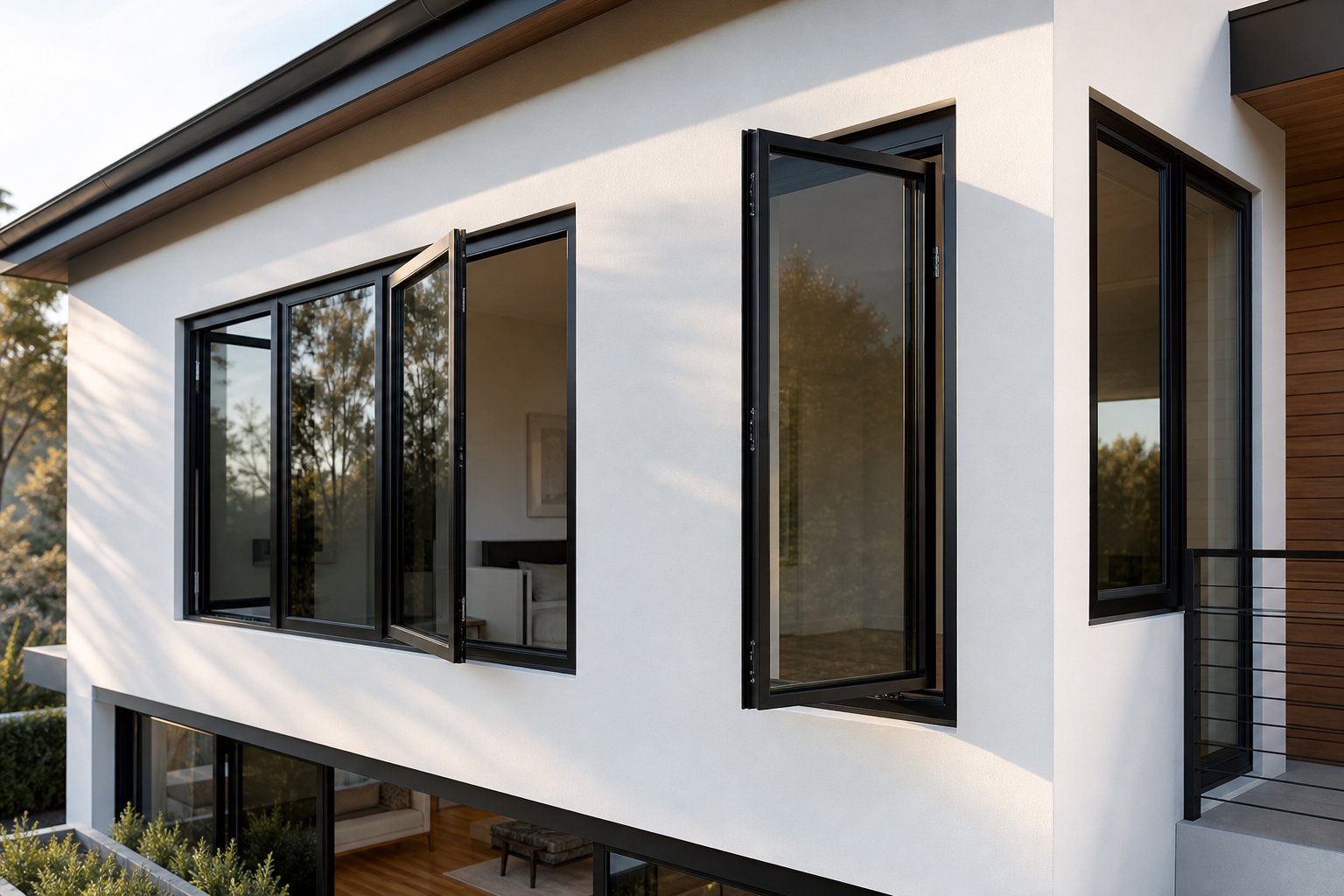
Design Options and Customisation for Melbourne Homes
Aluminium casement window design is where this window type genuinely separates itself from the competition. The material's structural properties allow manufacturers to offer profile variations, colour combinations, and glazing configurations that timber and uPVC simply cannot match at the same scale. For Melbourne homeowners navigating quotes, understanding these options helps you recognise what is standard, what is premium, and what is worth paying extra for.
Profile Styles From Slimline to Heritage
Three main profile categories define the aluminium casement windows design landscape in Melbourne:
Standard profiles feature frame depths of 50 to 72mm and sightlines around 55 to 65mm. They suit most residential applications and offer the broadest range of hardware compatibility. For a typical suburban home in Doncaster or Glen Waverley, standard profiles deliver solid performance without unnecessary cost.
Slimline profiles push sightlines down to 45mm or less, maximising the glass-to-frame ratio. These are the go-to choice for contemporary builds in suburbs like South Yarra, Richmond, and Prahran, where architects want expansive glazing with minimal visual interruption. The aluminium casement window frame design in slimline systems uses precision-engineered sections that maintain structural integrity and weather performance despite the reduced material cross-section.
Heritage and flush profiles replicate the proportions of traditional timber casements, with putty-line detailing and ovolo or chamfered mouldings built into the aluminium extrusion. For properties under heritage overlays in Boroondara, Stonnington, or Port Phillip, these profiles can satisfy council requirements while delivering modern thermal and acoustic performance behind a period-appropriate facade.
Colour and Finish Options
Powder coating gives aluminium casement windows a colour palette that no other frame material can rival. The process electrostatically bonds pigment particles to the aluminium surface, then cures them at around 200°C to create a finish that resists chipping, fading, and chalking for decades.
Melbourne's current design preferences lean heavily toward darker tones. Black aluminium casement windows in matt or satin finishes dominate contemporary projects, while Monument (a dark charcoal from the Colorbond palette) runs a close second for homes that want depth without the starkness of true black. White aluminium casement windows remain popular for coastal properties in Brighton and Sandringham, and for interiors where a lighter frame keeps rooms feeling open.
Other colours trending across Melbourne projects include Surfmist (a warm off-white), Woodland Grey (a mid-tone grey-green), and Basalt (a softer charcoal). Dual-colour options allow different finishes inside and out, so you might run matt black externally to match dark cladding while keeping a white or light grey interior frame to complement internal joinery.
Popular colour and profile combinations for different Melbourne home styles:
- Victorian terrace (heritage overlay): Heritage profile in Monument or Pale Eucalypt with ovolo detailing, dual-colour with white interior
- Art Deco apartment: Standard profile in Surfmist or cream, with curved-corner glazing bars where appropriate
- Contemporary new build: Slimline profile in matt black or Basalt, flush sash, minimal hardware
- Coastal home: Standard or slimline profile in white or Dune, marine-grade powder coating at 80+ microns
- Renovated weatherboard: Standard profile in Woodland Grey or Monument, dual-colour with interior to match existing timber tones
Suppliers like MEICHEN provide extensive colour and configuration flexibility for Melbourne projects, offering the full powder coat spectrum alongside dual-colour options and custom colour matching for both residential and commercial applications. This depth of customisation means homeowners and builders are not locked into a limited palette when specifying aluminium casement windows.
Glazing Configurations and Hardware
The glass you put inside the frame matters as much as the frame itself. Aluminium smart casement windows pair advanced glazing with intelligent hardware to balance thermal performance, security, and ease of operation.
Glazing options range from single glazing (increasingly rare in new installations due to NCC requirements) through double glazing to triple glazing for maximum thermal and acoustic performance. Double glazing with a Low-E coating on surface 2 or 3 and an argon gas fill is the current sweet spot for Melbourne's climate zone 6, delivering whole-window U-values between 1.2 and 1.6 W/m²K in thermally broken aluminium frames. Triple glazing pushes that below 1.0 W/m²K but adds weight and cost that is harder to justify outside extreme noise or thermal scenarios.
Low-E coatings deserve specific attention. A Low-E coating on the inner pane surface reflects radiant heat back into the room during winter, reducing heat loss. On the outer pane surface, it reflects solar radiation in summer, reducing cooling loads. The orientation of your windows determines which configuration works best: north-facing casements benefit from a higher Solar Heat Gain Coefficient to capture winter warmth, while west-facing windows need lower SHGC to reject harsh afternoon sun.
Hardware choices directly affect daily operation and long-term security. Friction stays (the hinged arms that hold the sash open) come in various grades, from standard 200mm stays for smaller windows to heavy-duty 600mm stays for large sashes. Multi-point locking systems engage bolts at multiple positions around the frame perimeter when the handle is turned, creating a compression seal that improves both weather resistance and break-in resistance compared to single-point latches.
Aluminium smart casement windows can also integrate restricted opening hardware for child safety compliance (required under Victorian building regulations for windows above 2 metres from ground level), night-vent positions that allow a narrow gap for airflow while maintaining lock engagement, and concealed hinges for a cleaner aesthetic on flush-profile designs.
The interplay between profile, colour, glazing, and hardware is where aluminium casement window design becomes genuinely project-specific. A quote that simply lists "aluminium casement window, powder coated, double glazed" without specifying the profile system, coating thickness, glass makeup, and hardware brand leaves too much ambiguity for meaningful comparison. Understanding what energy ratings actually mean, and what numbers to look for on a Melbourne specification, makes that comparison far more straightforward.
Energy Ratings Explained for Melbourne Homeowners
Window energy ratings look intimidating on paper. A quote might list numbers like Uw 1.4, SHGC 0.39, and a WERS star rating without explaining what any of it means for your heating bills or summer comfort. These figures matter more than most homeowners realise, because two aluminium casement window systems that look identical can perform very differently depending on their glazing makeup and frame construction. Here is what those numbers actually tell you.
Understanding U-Values and What They Mean for Your Bills
A U-value measures how quickly heat passes through a complete window system, frame and glass combined. Lower numbers mean better insulation. Think of it as a leakiness score: a window with a Uw of 1.4 loses heat roughly four times slower than one rated at 5.0.
The difference between aluminium casement window profiles with and without thermal breaks is dramatic. According to data from Cooee Architecture, a standard aluminium frame with double glazing delivers a U-value around 4.8 W/m²K. Add a thermally broken or composite frame and that drops to approximately 3.6 W/m²K. Pair thermally broken aluminium with Low-E double glazing and argon gas fill, and whole-window values between 1.2 and 1.6 W/m²K become achievable, approaching the performance of timber and uPVC.
For context, even a thermally broken double-glazed window loses heat roughly eight times faster than a typical insulated brick veneer wall. That is why window specification has such an outsized impact on overall energy performance, and why the aluminium casement window section of your building plans deserves careful attention during the design phase rather than being treated as a last-minute selection.
SHGC and WERS Ratings Explained Simply
While U-values deal with conductive heat loss, the Solar Heat Gain Coefficient (SHGC) measures how much of the sun's radiant energy passes through the glass. It is expressed as a number between 0 and 1. A window with an SHGC of 0.6 admits 60% of solar radiation; one rated at 0.3 blocks 70% of it.
Melbourne homeowners need to balance these two numbers based on window orientation. North-facing windows benefit from a higher SHGC to capture free winter warmth, paired with a low U-value to keep that warmth inside. West-facing windows need a lower SHGC to reject punishing afternoon sun in summer, reducing cooling loads. An aluminium casement window calculation that optimises both values for each elevation can meaningfully reduce annual energy costs, which is exactly what an energy assessor does when modelling your home.
The Window Energy Rating Scheme (WERS) wraps these technical values into a consumer-friendly star system. Managed by the Australian Glass and Window Association (AGWA), WERS rates windows on a scale of up to 10 stars for both heating and cooling performance. A window might score 7 stars for heating (good at retaining warmth) but only 4 stars for cooling (admits too much solar heat), or vice versa. The scheme uses computer simulation validated against laboratory testing to generate ratings across different Australian climate zones, so a WERS rating specific to Melbourne reflects local conditions rather than a national average.
How to Read a Window Energy Label
A WERS label displays several pieces of information, each with practical meaning:
- Heating stars: Higher is better. More stars mean the window retains interior warmth effectively, reducing winter heating costs.
- Cooling stars: Higher is better. More stars mean the window rejects unwanted solar heat, reducing summer cooling costs.
- U-value (Uw): The whole-window thermal transmittance. Look for values below 2.0 W/m²K for thermally broken aluminium casement window systems in Melbourne.
- SHGC: Solar heat gain. The ideal number depends on orientation, but values between 0.25 and 0.45 cover most Melbourne applications.
When comparing quotes, request the full aluminium casement window details including WERS data for each product. A supplier who cannot provide these numbers is either using unrated products or has not submitted their systems for independent testing, both of which should raise questions. The aluminium casement window calculation behind these ratings uses the same validated software employed internationally, so the numbers are reliable and directly comparable across brands.
For Melbourne properties in NCC climate zone 6, Section J energy provisions generally require whole-window U-values at or below 2.0 W/m²K and orientation-appropriate SHGC values. Aim for aluminium casement windows with a minimum of 5 WERS heating stars and 4 cooling stars as a practical baseline. Thermally broken frames with Low-E double glazing will meet these thresholds comfortably, while non-thermally-broken aluminium frames with standard glass will not pass compliance regardless of other building measures.
Energy ratings translate directly into long-term running costs, but they also determine whether your windows comply with current building regulations. For renovation projects and heritage properties, the compliance pathway looks different depending on the scope of work and the council involved, which brings its own set of considerations for Melbourne homeowners.
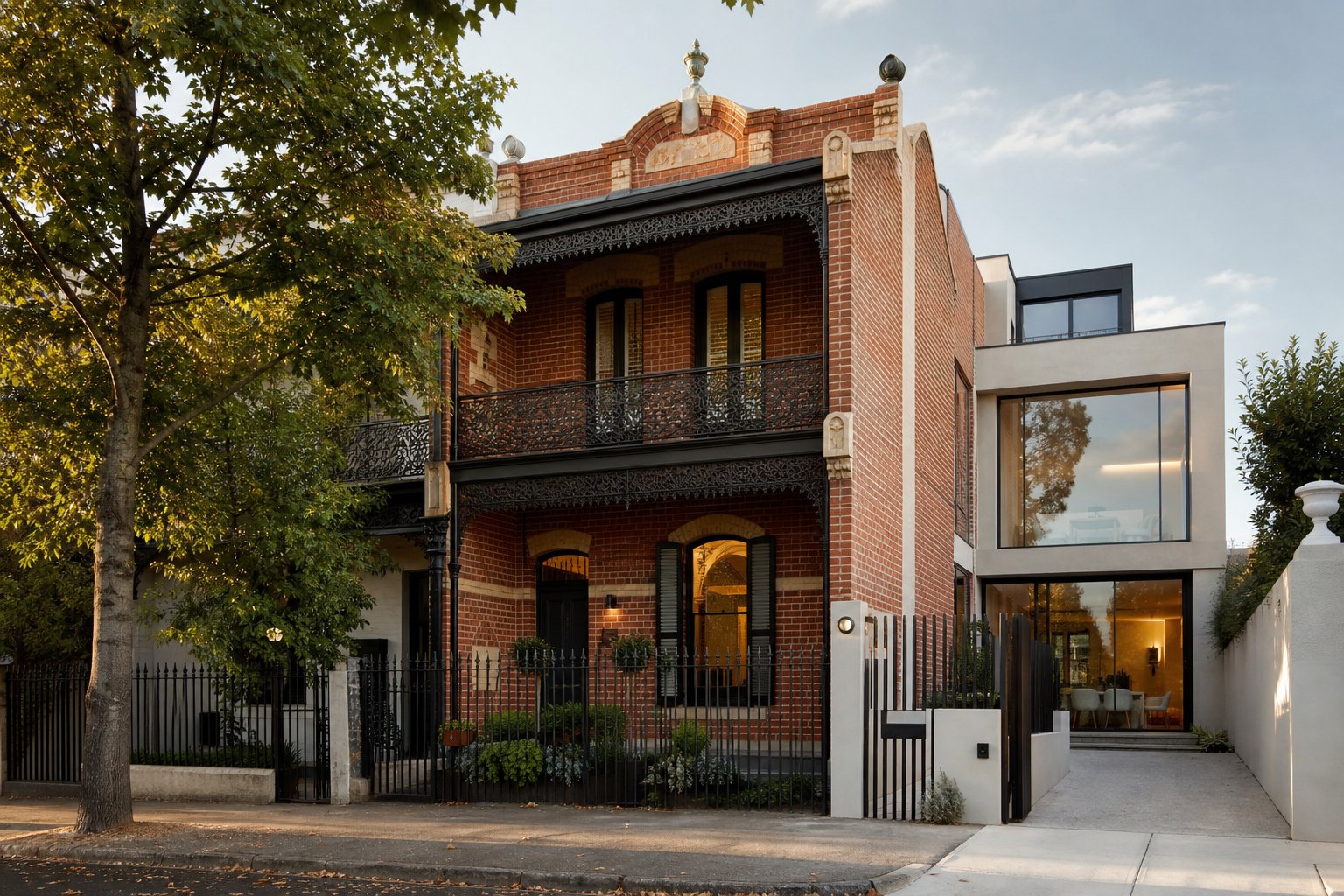
Choosing Aluminium Casement Windows for Different Melbourne Property Types
The compliance pathway for aluminium casement window installation varies dramatically depending on whether you are building from scratch, renovating an existing home, or upgrading windows in a strata apartment. Each scenario carries its own regulatory framework, approval process, and specification priorities. A quote that ignores these distinctions is incomplete at best.
New Builds and Modern Developments
For new dwellings, aluminium casement windows integrate cleanly into the construction timeline. Your builder or project manager will develop a window schedule during the design documentation phase, specifying every opening by type, size, glazing makeup, and hardware. This schedule feeds directly into the NCC Section J energy compliance modelling, where each window's U-value and SHGC contribute to the overall NatHERS star rating.
Since 2024, new Victorian homes must achieve a minimum 7-star NatHERS rating. Thermally broken aluminium casement window and door systems with Low-E double glazing meet this threshold comfortably on most orientations. The key is locking in specifications early. Changing window types or glazing configurations after the energy assessment has been lodged means re-modelling, re-certification, and potential delays to your building permit.
Working with your builder to finalise the window schedule before slab stage gives manufacturers adequate lead time, typically four to eight weeks for custom configurations, and avoids the costly scenario of frames arriving on site that do not match the approved plans.
Renovations and Heritage Overlay Properties
Renovation projects introduce a layer of complexity that new builds avoid entirely. If your property sits under a heritage overlay, the external appearance of the building is controlled by your local council. In Melbourne, councils including Boroondara, Stonnington, Port Phillip, and Yarra administer heritage overlays that govern what can be altered on the facade, and original windows are almost always considered significant heritage fabric.
This does not automatically rule out aluminium casement windows replacement of existing timber frames. It does mean the process requires careful navigation. Heritage officers assess proposals based on visual impact, material appropriateness, and whether the change is reversible. Aluminium heritage-profile casements with period-appropriate proportions and detailing, such as ovolo mouldings or putty-line sightlines, are increasingly accepted where the original windows are beyond practical repair.
For properties where original timber windows are intact but underperforming, some councils prefer restoration with upgraded glazing over full replacement. Aluminium and timber casement windows can coexist on the same property, with aluminium used on rear additions or non-visible elevations while restored timber remains on the street-facing facade.
The typical steps for determining whether aluminium casement windows suit a heritage overlay property:
- Confirm the heritage overlay applies to your property through a title search and review of the local planning scheme
- Identify which elements are controlled, specifically whether windows are listed as contributory heritage fabric
- Request a pre-application meeting with your council's heritage officer to discuss the proposed window replacement scope
- Engage a heritage consultant or architect experienced in overlay applications to prepare supporting documentation
- Select an aluminium profile type that replicates the proportions and detailing of the original windows
- Submit a planning permit application with technical drawings, material specifications, and a heritage impact statement
- Await council decision, noting that neighbour notification and potential objection periods may extend the timeline
As heritage building specialists note, a pre-application discussion with the council heritage officer before drawings are lodged is one of the most valuable steps a project team can take. It clarifies the council's likely position before you commit to a design direction that may need revision after formal submission.
Apartments and Multi-Residential Projects
Apartment aluminium casement window installations carry a distinct set of constraints. In most Victorian strata buildings, windows are classified as common property under the Owners Corporations Act 2006, meaning you cannot replace them without formal approval from the Owners Corporation, typically requiring a special resolution with 75% or more of lot entitlements voting in favour.
Beyond the approval process, the technical requirements differ from house-level installations. Upper-floor apartments face higher wind loads, and the type of aluminium casement window specified must carry an appropriate wind classification under AS 2047. A window rated N3 for a ground-floor suburban home will not satisfy the structural demands of a tenth-floor apartment facing prevailing westerlies.
Acoustic performance also becomes a primary driver in apartment contexts. Properties facing tram corridors, arterial roads, or rail lines need glazing configurations that deliver meaningful noise reduction. Asymmetric double glazing, with different glass thicknesses on each pane, shifts the resonance frequency and improves sound attenuation compared to symmetric setups. Laminated acoustic interlayers add further dampening, particularly for mid-frequency traffic noise.
Body corporate conditions often require that any replacement maintains the external facade appearance. This can dictate colour, profile depth, and even glass reflectivity to ensure uniformity across the building. Aluminium casement window installation in apartment settings therefore demands early engagement with your strata manager to confirm what is permissible before investing in detailed quotes.
Whether your project is a new build, a heritage renovation, or an apartment upgrade, the specification needs to match the regulatory and physical context of the property. That specification is ultimately what you are paying for when you accept a quote, which raises the question of how to read those quotes critically and compare them on equal terms.
How to Evaluate Aluminium Casement Window Quotes
A quote lands in your inbox. It lists a price, a few product names, maybe a line about installation. Another quote arrives from a different company, hundreds or even thousands of dollars apart, for what appears to be the same window. The frustration is real, and it is almost universal among Melbourne homeowners shopping for aluminium casement windows. The problem is not that one supplier is ripping you off. It is that quotes rarely describe the same scope of work in the same language, making genuine comparison nearly impossible without knowing what to look for.
What to Look for in Supplier Specifications
Every aluminium casement window quote should specify a set of technical details that directly affect performance, longevity, and compliance. If any of these are missing or vaguely described, you are not comparing like with like.
Frame depth and profile system: A 52mm frame performs differently from a 72mm frame in terms of structural capacity and glazing thickness it can accept. The quote should name the specific profile system or series, not just say "aluminium casement."
Thermal break presence: As covered in earlier sections, a thermally broken frame and a non-thermally-broken frame are fundamentally different products. If the quote does not explicitly state "thermally broken" or reference a polyamide break, assume it is not included.
Glazing specification: "Double glazed" is not a specification. You need glass thicknesses for each pane (e.g., 5mm/12mm gap/5mm), the gas fill type (air or argon), Low-E coating position, and whether any panes are toughened or laminated. These details determine the U-value and SHGC the window actually delivers.
Hardware brand and type: Friction stays, handles, and multi-point locks vary enormously in quality. A quote listing "standard hardware" tells you nothing. Look for named brands and specific lock types.
Weather seals: EPDM compression seals outperform foam alternatives by a wide margin in Melbourne's temperature cycling. The seal material and configuration should be stated.
Compliance certifications: Under Australian Standard AS 2047, every window must carry a performance label showing its wind and water resistance ratings. AS 1288 governs glazing selection for safety. A compliant aluminium casement window manufacturer will provide certificates of compliance and test reports from NATA-accredited laboratories. If a supplier cannot confirm AS 2047 compliance for their product, that is a disqualifying issue regardless of the aluminium casement window price.
Understanding Price Factors
The aluminium casement windows cost on a quote reflects a stack of variables, not a single product decision. Understanding what drives pricing helps you identify where a cheaper quote might be cutting corners versus where it is genuinely more efficient.
Key factors that influence aluminium casement windows price:
- Window size: Larger sashes require heavier-duty hardware, thicker glass, and stronger frame sections. A 1200mm x 1500mm casement costs meaningfully more than a 600mm x 900mm unit.
- Glazing type: Single glazing is cheapest but rarely compliant for new work. Double glazing with Low-E and argon adds cost over clear double glazing. Triple glazing adds further again.
- Colour and finish: Standard colours from the manufacturer's stock range cost less than custom colour matching. Dual-colour finishes (different inside and outside) add a premium because the frame requires two separate coating passes.
- Thermal break inclusion: Thermally broken profiles cost more than standard aluminium due to the additional polyamide inserts and more complex extrusion process.
- Hardware grade: Commercial-grade multi-point locks and stainless steel friction stays cost more than residential-standard fittings, but last longer and operate more smoothly.
- Installation complexity: Ground-floor access on a single-storey home is straightforward. Upper-floor apartments requiring scaffolding, crane lifts, or restricted-access scheduling add significant labour cost.
- Quantity: Larger orders across a whole-house project typically attract better per-unit pricing than a single replacement window.
The cheapest aluminium casement window quotes often achieve their price by specifying thinner glass, omitting thermal breaks, using unbranded hardware, or excluding items like flashing, internal trims, and waste removal. These exclusions may not be obvious until installation day, when variations start appearing. A quote that looks $200 per window cheaper can easily become $400 more expensive once the extras are added back in.
Conversely, the most expensive quote is not automatically the best. It may include over-specification for your situation, premium hardware you do not need, or simply reflect higher overheads. The goal is not to find the cheapest or most expensive option but to identify the quote that is most transparent, most complete, and most appropriate for your property.
Questions to Ask Your Window Supplier
When you have two or three aluminium casement window quotes in front of you, these questions help expose the real differences hiding behind headline prices. Ask every supplier the same questions so you can compare answers directly.
- What specific profile system and series are you quoting, and what is the frame depth?
- Are the frames thermally broken? If so, what is the thermal break material and width?
- What is the complete glazing makeup — glass thicknesses, coatings, gas fill, and spacer type?
- Can you provide the tested Uw value and SHGC for this window configuration?
- What hardware brand and locking system is included? How many locking points per sash?
- What seal material is used, and how many seal lines does the frame incorporate?
- Does this product carry AS 2047 compliance certification, and can you supply the test report?
- Is the powder coating warranty backed by the coating applicator or the window manufacturer?
- What is included in the installation scope — removal, disposal, flashing, internal trims, and making good?
- Where could costs change after the quote is accepted, and how are variations communicated?
- What warranty periods apply separately to frames, hardware, seals, and glazing units?
- Who is responsible if a window does not fit correctly or fails to perform as specified?
Reputable aluminium casement window suppliers welcome these questions because they have clear answers. Vague responses, particularly around compliance certifications and glazing specifications, often signal that the product has not been independently tested or that the quote is based on assumptions rather than a confirmed specification.
Do not expect an aluminium casement window pricelist to tell the full story either. A pricelist gives you unit costs for standard configurations, but your project likely involves custom sizes, specific colours, and site-specific installation requirements that a generic list cannot capture. Treat pricelists as a starting reference, not a final comparison tool.
For Melbourne homeowners, builders, and architects who want to explore configuration options in detail before committing, suppliers like MEICHEN offer transparent specification detail and project-based supply for both residential and commercial projects. Their aluminium windows range allows you to compare profile systems, glazing options, and colour selections against your specific requirements, which is exactly the kind of information you need to make aluminium casement window quotes genuinely comparable.
Choosing the right specification and supplier sets you up for decades of reliable performance. But even the best-specified window needs proper care to deliver on that promise, and Melbourne's conditions create maintenance demands that are worth understanding before installation day arrives.
Maintenance and Lifespan of Aluminium Casement Windows in Melbourne
One of the strongest selling points of aluminium casement windows is low maintenance. That claim is accurate, but "low" does not mean "none." Melbourne's combination of salt air, dust, temperature swings, and seasonal pollen creates conditions that gradually degrade seals, hardware, and finishes if left completely unattended. The good news is that a simple routine, taking less than an hour per quarter, keeps everything operating smoothly for decades.
Routine Maintenance for Melbourne Conditions
The aluminium casement window frame itself is the least demanding component. Powder-coated aluminium does not rot, warp, or require repainting. But the finish still benefits from regular cleaning to remove grime, airborne pollutants, and salt deposits that can dull the surface over time.
A practical maintenance routine involves three areas: frames and tracks, hardware, and seals.
Frames and tracks: Wash the aluminium casement window frame with warm soapy water and a soft non-abrasive cloth or sponge. Avoid solvent-based cleaners, which can damage powder coating. Clear the sill drainage slots of any debris so water drains freely rather than pooling against seals. For homes in suburbs like Williamstown, St Kilda, or Brighton, where salt spray accelerates surface degradation, monthly frame washing prevents the white oxidation spots that develop when salt sits on cut edges or fixing points.
Hardware: The aluminium casement window hinges, friction stays, and multi-point lock mechanisms need periodic lubrication to operate smoothly. A light application of silicone-based spray lubricant on hinge pivot points and lock engagement points keeps everything moving freely. Avoid petroleum-based oils or WD-40, which attract dust and gum up over time. The aluminium casement window handle and crank mechanism should turn without resistance. If you notice stiffness developing, a quick spray into the lock body usually resolves it before the mechanism wears prematurely.
Seals: EPDM compression seals around the sash perimeter are what keep drafts, rain, and dust out when the window is locked closed. Inspect them visually once or twice a year for cracking, flattening, or sections pulling away from their groove. A thin coat of silicone-based seal conditioner helps maintain elasticity, particularly through Melbourne's hot summers when UV exposure accelerates rubber degradation.
Expected Lifespan and Warranty Considerations
Well-maintained aluminium casement windows have a typical service life of 20 to 30 years or more. The aluminium frame itself can last well beyond that, often 40 years or longer, because the material does not fatigue or degrade structurally under normal residential conditions. What limits overall lifespan is usually the hardware and seals rather than the frame.
Several factors influence how long your windows perform at their best:
- Powder coating quality: A properly pre-treated and coated finish at 60 microns or above resists chalking and fading far longer than thinner or poorly adhered coatings
- Hardware grade: Commercial-grade aluminium casement window fastener and locking components outlast budget fittings by a significant margin, particularly in coastal environments where salt attacks unprotected steel parts
- Seal material: EPDM and silicone seals maintain their compression recovery for 10 to 15 years under normal conditions, while cheaper foam alternatives may need replacement within 5 years
- Installation quality: Correct flashing, drainage, and frame fixing at installation prevents water ingress that can corrode concealed fixings and degrade surrounding building fabric
- Maintenance consistency: Properties in coastal or industrial areas that skip regular cleaning see accelerated deterioration compared to those on a quarterly schedule
Standard warranty coverage in the Australian market typically separates into three categories. Frame and finish warranties commonly run 7 to 10 years for powder coating against peeling, blistering, or excessive fading. Hardware warranties, covering the aluminium casement windows fastener mechanisms, handles, and friction stays, typically sit at 5 to 7 years. Insulated glass unit (IGU) warranties against seal failure and internal fogging generally range from 5 to 10 years depending on the manufacturer. Some premium suppliers offer longer coverage, but always read the conditions. Warranties often require evidence of regular maintenance and may exclude properties in high-corrosion zones unless marine-grade specifications were originally supplied.
Signs Your Aluminium Casement Windows Need Attention
Catching problems early keeps repair costs low and prevents secondary damage to surrounding walls and floors. These indicators suggest your windows need maintenance or component replacement:
- Drafts around the closed sash: You can feel air movement near the frame edges, indicating seals have lost compression or the aluminium casement window stopper is no longer seating correctly against the frame
- Difficult operation: The handle requires excessive force, the sash sticks partway through its swing, or the locking mechanism does not engage smoothly. This points to worn hinges, debris in the track, or misalignment from building settlement
- Visible seal degradation: Cracked, flattened, or brittle rubber seals around the sash perimeter. Once seals lose their elasticity, they cannot maintain the compression needed for weather resistance
- Condensation between glass panes: Moisture or fogging inside a double-glazed unit means the perimeter seal of the IGU has failed. The gas fill has escaped and humid air has entered. The glass unit needs replacement, though the aluminium frame typically remains sound
- White powder or blistering on the frame: Early signs of corrosion beneath the powder coating, most common at cut edges, drainage holes, or where dissimilar metals contact the aluminium
- Water leaking during rain: Blocked drainage slots, failed seals, or deteriorated flashing allowing water past the frame. Check drainage holes first, as clearing a blockage often resolves the issue immediately
Most of these issues are repairable without replacing the entire window. Seals can be re-fitted, hardware swapped out, and IGUs replaced within the existing aluminium frame. Full window replacement is typically only warranted when the frame itself shows structural corrosion or the profile system is so outdated that replacement parts are no longer available.
A seasonal maintenance checklist tailored to Melbourne's climate keeps you ahead of these problems:
- Spring (September-November): Clean frames and glass after winter grime buildup. Clear drainage slots. Inspect seals for cracking after cold-weather contraction cycles. Lubricate all aluminium casement window hinges and lock mechanisms with silicone spray.
- Summer (December-February): Check seals for UV degradation, particularly on north and west-facing windows. Wipe salt residue from coastal-exposed frames. Ensure friction stays hold the sash securely at full extension against summer breezes.
- Autumn (March-May): Remove leaf litter and debris from sills and drainage channels before winter rains. Test that all locking points engage fully. Clean tracks and lubricate moving parts before the wet season.
- Winter (June-August): Monitor for condensation on interior glass surfaces, which may indicate inadequate ventilation rather than window failure. Check that weather seals are maintaining contact when the sash is locked. Inspect external flashing for any lifting or gaps.
This level of care is minimal compared to timber windows that demand sanding and repainting on a multi-year cycle. It is the practical reality behind the "low maintenance" claim, and it is the difference between aluminium casement windows that still operate perfectly at 25 years and ones that feel tired at 10.
Frequently Asked Questions About Aluminium Casement Windows in Melbourne
1. How much do aluminium casement windows cost in Melbourne?
Aluminium casement window pricing in Melbourne depends on several variables: window size, glazing type (single, double, or triple with Low-E coatings), thermal break inclusion, powder coating colour and finish, hardware grade, and installation complexity. Standard colours and configurations cost less than custom colour matching or dual-colour finishes. Rather than relying on a generic pricelist, request itemised quotes from multiple suppliers specifying the exact profile system, glazing makeup, hardware brand, and installation scope. This allows genuine like-for-like comparison. Suppliers such as MEICHEN offer project-based quoting with transparent specification detail for Melbourne residential and commercial projects.
2. Are aluminium casement windows suitable for heritage overlay properties in Melbourne?
Yes, but with conditions. Melbourne councils including Boroondara, Stonnington, Port Phillip, and Yarra control external alterations on heritage overlay properties. Aluminium casement windows with heritage-style profiles featuring ovolo mouldings or putty-line detailing can satisfy council requirements when original timber windows are beyond practical repair. The process involves confirming the overlay applies to your property, meeting with the council heritage officer, engaging a heritage consultant, and submitting a planning permit application with technical drawings and a heritage impact statement. Some councils prefer restoration of original timber on street-facing facades while accepting aluminium on rear or non-visible elevations.
3. Do aluminium casement windows need thermal breaks in Melbourne's climate?
For any new build or major renovation in Melbourne (NCC climate zone 6), thermally broken aluminium frames are effectively mandatory to meet current energy compliance requirements. Without a thermal break, an aluminium frame delivers a U-value around 4.8 W/m²K — well above the NCC threshold of approximately 2.0 W/m²K. Thermally broken aluminium casement windows with Low-E double glazing achieve whole-window U-values between 1.2 and 1.6 W/m²K, meeting compliance comfortably. The polyamide thermal break also prevents interior condensation during Melbourne's cold winter mornings by eliminating the direct thermal bridge between inside and outside air.
4. How long do aluminium casement windows last in Melbourne conditions?
Quality aluminium casement windows have a typical service life of 20 to 30 years or more, with the aluminium frame itself often lasting 40 years or longer. The limiting factors are usually hardware components and seals rather than the frame. In Melbourne's coastal suburbs (Williamstown, St Kilda, Brighton), salt-laden air accelerates surface degradation if maintenance is neglected. A quarterly cleaning routine, regular hardware lubrication, and periodic seal inspection extend lifespan significantly. Powder coating quality, hardware grade, seal material (EPDM over foam), and correct installation all influence long-term durability.
5. What energy rating should I look for in aluminium casement windows for Melbourne?
For Melbourne properties in NCC climate zone 6, aim for aluminium casement windows with a whole-window U-value at or below 2.0 W/m²K, a minimum of 5 WERS heating stars, and at least 4 WERS cooling stars. The ideal Solar Heat Gain Coefficient (SHGC) depends on window orientation: north-facing windows benefit from higher SHGC (around 0.4-0.5) to capture winter warmth, while west-facing windows need lower SHGC (around 0.25-0.35) to reject summer heat. Thermally broken aluminium frames with Low-E double glazing and argon gas fill meet these thresholds. Always request tested Uw and SHGC values from your supplier rather than relying on generic claims.